The Ultimate Sun-Dried Tomato Olive Oil Bread Dip Recipe for Any Occasion
Imagine tearing a piece of warm, crusty bread and dragging it through a pool of rich, golden olive oil that is studded with savory sun-dried tomatoes and fragrant herbs. This sun-dried tomato olive oil bread dip recipe for any occasion is more than just an appetizer; it is an experience that brings people together around the table. The combination of fruity olive oil, umami-packed tomatoes, and aromatic garlic creates a symphony of flavors that dances on your palate and leaves you reaching for just one more piece of bread. Therefore, this dip has become a staple in my kitchen for everything from casual weeknight dinners to festive holiday gatherings, and once you try it, you will understand why.
What makes this particular rendition of a classic bread dip so special is the careful balance of ingredients and the quality of the components that you choose to include. Indeed, the sun-dried tomatoes provide a chewy texture and a concentrated burst of sweetness, while the olive oil acts as a lush, peppery canvas for the other flavors to shine. Consequently, every single dip of bread delivers a complex and satisfying taste that is both rustic and sophisticated. Whether you are hosting a game-day party or enjoying a quiet evening at home, this dip promises to elevate the simplest of meals into a memorable culinary event, and it is remarkably simple to prepare in just a few minutes.
Furthermore, this recipe for a sun-dried tomato olive oil bread dip encourages you to get creative with your ingredients and adapt them to your personal preferences. You can easily adjust the heat with some red pepper flakes or add a splash of balsamic vinegar for extra depth, as the foundational technique remains forgiving and foolproof. Because the recipe requires no cooking and relies on the quality of the ingredients, it is an excellent starting point for novice cooks and a satisfyingly quick option for experienced chefs. Therefore, I am thrilled to share with you my comprehensive guide, which is filled with professional tips, cultural background, and abundant variations to ensure that your next appetizer is an absolute triumph.
Quick Recipe Highlights
- Flavor Profile: This sun-dried tomato olive oil bread dip boasts a savory and slightly sweet taste that is defined by the concentrated umami of the tomatoes and the grassy, peppery notes of a quality extra virgin olive oil. The garlic adds a subtle spiciness, while fresh herbs like rosemary or thyme contribute an earthy fragrance. Furthermore, a hint of salt and pepper rounds out the flavors, creating a deliciously complex yet familiar profile that pairs perfectly with rustic bread.
- Texture: The texture is wonderfully varied, as the smooth, luxurious oil is punctuated by the chewy, slightly firm sun-dried tomatoes. Additionally, the herbs offer tiny bursts of softness, and the minced garlic provides a subtle bite. Consequently, each mouthful has a satisfying interplay between the silky liquid and the substantive mix-ins, which makes this dip so engaging and moreish.
- Aroma: The aroma of this dip is immediately intoxicating and inviting. As soon as you combine the ingredients, the fruity and slightly floral scent of the extra virgin olive oil mingles with the intensely sweet and tangy smell of the sun-dried tomatoes. The sharp, pungent fragrance of fresh garlic and the pine-like notes of rosemary are released as well, creating a captivating bouquet that promises a delicious flavor experience.
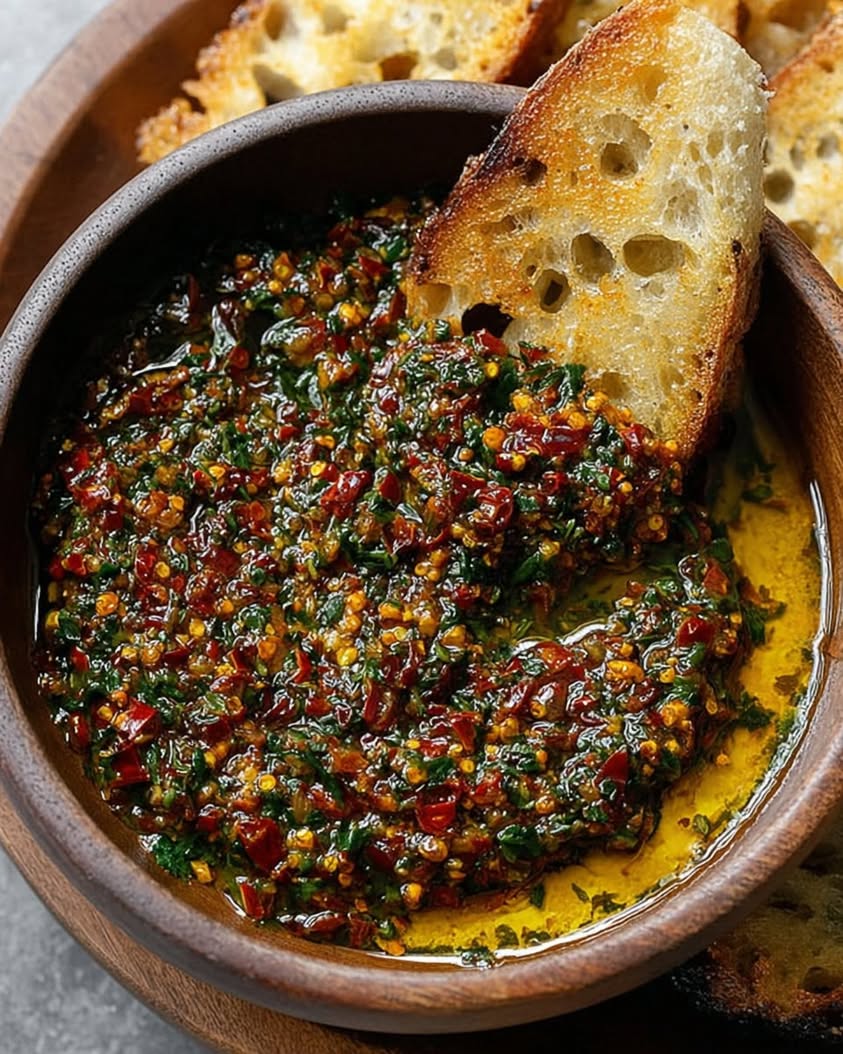
- Visual Appeal: Visually, the dip is a stunning display of rustic Mediterranean colors. The vibrant green-gold hue of the olive oil is studded with the deep red and purple tones of the chopped sun-dried tomatoes, flecked with the bright green of herbs. Therefore, when presented in a beautiful shallow bowl with a drizzle of extra oil on top, the dip is a simple yet elegant addition to any table spread.
- Skill Level Needed: This recipe is designed for absolute beginners, requiring only basic knife skills to mince garlic and chop herbs. You do not need any technical culinary expertise or specialized techniques, as the entire process is about combining ingredients. Consequently, any home cook can master this sun-dried tomato olive oil bread dip on the very first attempt with stunning results.
- Special Equipment: The only required equipment is a good quality chef’s knife, a cutting board for prepping, and a shallow serving bowl or plate to present the dip. You might also want a citrus juicer if you choose to add a squeeze of fresh lemon juice for brightness, but it is not necessary. Therefore, no fancy appliances or cookware are necessary, simplifying the cleanup.
Recipe Overview
- Difficulty Level: The difficulty is rated as very easy because there is absolutely no cooking involved, and the method is as simple as stirring ingredients together. Indeed, the most challenging part of the entire recipe is sourcing the best quality sun-dried tomatoes and olive oil. Therefore, this is an accessible recipe for children to help with, and it is an excellent confidence booster for anyone just beginning their culinary journey.
- Category: This recipe falls primarily into the category of appetizers and starters, as it is designed to be served before a main course or enjoyed as a snack. Additionally, it works beautifully as a component of an antipasto platter, a mezze spread, or a grazing table. Because of its versatility, you can also classify it as a condiment or a sauce, since it pairs well with many dishes beyond just bread.
- Cuisine: The culinary tradition behind this dip is deeply rooted in Italian and Mediterranean cuisine, where the ritual of dipping bread into olive oil is a time-honored practice. Although the specific addition of sun-dried tomatoes is a more modern variation, the core ingredients of olive oil, garlic, and herbs are fundamental to the region’s cooking. Therefore, the dish reflects the Mediterranean philosophy of simplicity and celebrating high-quality, fresh ingredients.
- Cost: The overall cost of this dip is relatively low, as it primarily uses pantry staples like dried herbs. The two main expenses will be a decent bottle of extra virgin olive oil and the sun-dried tomatoes, which can be found in jars or in bulk. Consequently, the cost can vary depending on your choices, but you can easily prepare a generous amount for a fraction of the price of a similar appetizer at a restaurant.
- Season: While you can certainly enjoy this sun-dried tomato olive oil bread dip year-round, it tastes particularly wonderful in the summer and autumn. The availability of fresh herbs from the garden and the arrival of fresh tomatoes at their peak make it a natural choice for these months. Nonetheless, the sun-dried nature of the tomatoes and the shelf-stable oil mean that it is a perfect and satisfying option even in the dead of winter.
- Occasion: This dip is perfect for countless occasions, from casual family gatherings and potlucks to more formal dinner parties. As a result, it is the ultimate choice for game-day snacks, holiday appetizers, or a romantic picnic. Its simplicity makes it a go-to for unexpected guests, yet its flavor profile is elegant enough for a celebratory feast. Therefore, it truly suits any occasion that calls for delicious, shareable food.
Why You’ll Love This Recipe
The primary reason to adore this sun-dried tomato olive oil bread dip is its phenomenal taste combined with its incredible simplicity. There is immense satisfaction in creating something so deeply flavorful and impressive with just a handful of ingredients and no cooking required. Therefore, you can spend less time in the kitchen and more time socializing with your guests, making it the perfect stress-free appetizer. Moreover, the dip is highly customizable, which means you can tweak the seasonings to ensure it perfectly matches your palate every single time.
From a convenience perspective, this recipe is a lifesaver. The most time-consuming task is chopping a few ingredients, which takes only minutes. For instance, you can prepare this dip at the very last minute, or you can mix it several hours in advance to allow the flavors to meld together, making it incredibly flexible for entertaining. Furthermore, the ingredients are all shelf-stable, so you can easily keep them on hand for emergencies. Indeed, having these items in your pantry guarantees that you are always prepared to whip up a delicious appetizer in a pinch.
Nutritionally, this dip offers several advantages, primarily because it is based on heart-healthy extra virgin olive oil. Olive oil is rich in monounsaturated fats and antioxidants, which are known for their anti-inflammatory properties and overall health benefits. In addition, sun-dried tomatoes are packed with lycopene, vitamins, and minerals, making them a nutrient-dense addition to any dish. Consequently, this dip allows you to enjoy a tasty indulgence that also provides a boost of beneficial nutrients, especially when paired with a hearty, whole-grain bread.
When it comes to social value, this dip has a unique ability to act as an icebreaker and a centerpiece for conversation. Serving a beautiful bowl of fragrant olive oil instantly signals that you have put thought and care into the gathering, creating a warm and welcoming atmosphere. The act of sharing a communal bowl and tearing bread to dip is a deeply social and convivial experience that encourages connection among guests. Therefore, this simple appetizer can elevate your gathering from ordinary to memorable through a shared culinary moment.
Finally, the cost-effectiveness and accessibility of this recipe are unbeatable. As a result, you can create a lavish-tasting appetizer without a lavish grocery bill. Most of the ingredients are inexpensive, and you likely already have many of the spices in your cabinet. This accessibility means that anyone, regardless of cooking skill or budget, can create an impressive dish that tastes like it came out of a high-end kitchen. Therefore, this recipe is an essential addition to any collection, offering an exceptional value for minimal effort and investment.
Historical Background and Cultural Significance
The tradition of dipping bread in olive oil is as ancient as the cultivation of the olive itself, with roots tracing back to the earliest Mediterranean civilizations. For thousands of years, olive oil has been a fundamental staple, often referred to as “liquid gold” for its value and nutritional importance. Consequently, the simple act of consuming bread with olive oil became a basic method of nourishment that crossed class boundaries. In ancient Greece and Rome, this practice was common, and it remains a daily ritual for many people across the Mediterranean region today, solidifying its cultural significance as a symbol of hospitality and shared sustenance.
Sun-dried tomatoes, the other key component of this dip, have a more recent but equally fascinating history. Before the advent of modern refrigeration, preserving the abundant summer tomato harvest was essential for survival. Furthermore, the practice of drying tomatoes in the sun originated in southern Italy, where the hot, dry climate provided the perfect conditions. The resulting chewy, intensely flavored dried tomatoes became a way to enjoy the taste of summer during the winter months. Consequently, this preservation method not only extended the shelf life of tomatoes but also created a unique and delicious ingredient that would become deeply embedded in Italian culinary culture.
The evolution from these ancient practices to the modern sun-dried tomato olive oil bread dip is a natural one. As culinary trends embraced rustic, flavorful ingredients, chefs and home cooks began combining these preserved staples with fresh herbs and spices. Therefore, the dip is a testament to the ingenuity of Mediterranean cooks who learned to elevate the simplest components into something luxurious. The marriage of rich olive oil and concentrated tomatoes is a perfect example of how necessity and resourcefulness can lead to delightful culinary discoveries that continue to be enjoyed generations later.
Regional variations of this dip are common across Italy and the broader Mediterranean. For instance, cooks in Tuscany might emphasize the use of fresh rosemary and a peppery Tuscan olive oil, while those in the south may opt for dried oregano and a more robust olive oil. Moreover, some versions incorporate balsamic vinegar, capers, or chopped olives, reflecting the local ingredients available in each area. Despite these differences, the fundamental principle remains unchanged; this sun-dried tomato olive oil bread dip is a celebration of simple, high-quality ingredients that have been cherished for centuries. Thus, every bite connects us to a rich tapestry of culinary history.
Ingredient Deep Dive
Extra virgin olive oil is the undeniable star of this dish, and its quality directly dictates the final flavor. Culturally and historically, olive oil has been a cornerstone of the Mediterranean diet for millennia, and it is deeply woven into the region’s social and economic fabric. Nutritionally, it is celebrated for its high content of heart-healthy monounsaturated fats, particularly oleic acid, and its potent antioxidants that can reduce inflammation. When selecting a bottle, you should always look for “extra virgin” as a designation of highest quality and purity. Consequently, choose an oil that smells fruity and fresh, with a peppery finish that tickles the back of your throat, as this indicates a high level of polyphenols. To keep it at its best, store the oil away from heat and light in a cool, dark cabinet and use it within a few months of opening. If you need an alternative, a good quality regular olive oil or a neutral oil like avocado oil can be used, though the flavor profile will be noticeably different.
Sun-dried tomatoes are the signature flavor of this dip, providing an intense burst of sweet and tangy umami. Historically, these tomatoes were created out of necessity to preserve the summer harvest, a practice that originated in southern Italy. Their concentrated flavor is rich in glutamates, which accounts for their savory depth. Additionally, they are an excellent source of lycopene, a powerful antioxidant, as well as vitamins C and K. When choosing sun-dried tomatoes, you have two main options: those dry-packed in bags or those preserved in oil. For this recipe, the oil-packed ones are ideal because they are softer, more flavorful, and require no rehydration, which makes them easier to chop and incorporate. If you only have dry-packed tomatoes, you should soak them in warm water or a little olive oil for about 30 minutes to rehydrate them. Consequently, they will plump up and become tender enough to use. Keep any unused tomatoes submerged in oil in the refrigerator to prevent spoilage, and they will keep for several weeks.
Garlic provides a pungent, aromatic base that is essential for building flavor. It is one of the most widely used ingredients in the world, with a history that stretches back over 5,000 years, having been prized for both its culinary and medicinal properties in ancient cultures. Garlic contains allicin, a compound that is released when it is crushed or chopped and is responsible for its distinct smell and many of its health benefits. To choose the best garlic for this recipe, look for heads that feel firm and heavy with tight, unbroken skin. Store it in a cool, dry place with plenty of air circulation, and it will last for months. When preparing the dip, you can finely mince the garlic to distribute its flavor evenly, or you could slice it thinly for a more intermittent burst of flavor. Consequently, the way you chop will influence the final taste, with minced garlic providing a more uniform sharpness throughout the dip.
Fresh herbs like rosemary and thyme are integral to the aromatic profile of this sun-dried tomato olive oil bread dip. These herbs are native to the Mediterranean region and have been used for both culinary and medicinal purposes since ancient times. Rosemary is known for its pine-like, slightly citrusy scent, while thyme offers a more earthy and subtle minty flavor. Both are rich in antioxidants and vitamins. When selecting fresh herbs, you want vibrant green sprigs without any yellowing or wilting. To keep them fresh, trim the stems and place them in a glass of water in the refrigerator, or wrap them in a damp paper towel. If you need a substitution, dried herbs are a reliable alternative; use about one-third of the amount given for fresh herbs, as they are much more potent. However, the delicate, bright flavor of fresh herbs is truly irreplaceable in this recipe, so it is worth seeking them out.
Kosher salt and freshly ground black pepper are the final elements that bring all the flavors into focus. While they may seem mundane, the quality and form of your salt and pepper can drastically affect the dish. Kosher salt is favored by many cooks because its large, flaky crystals are easier to control and distribute evenly. Moreover, its pure taste is free from the metallic notes that can sometimes be found in iodized table salt. Black pepper adds a gentle, aromatic heat that enhances the other ingredients. For the best results, use a high-quality coarse salt and grind your black pepper fresh from whole peppercorns right before serving. Therefore, you should always season the dip to taste, starting with less salt than you think you’ll need and adjusting as you go, as the sun-dried tomatoes and some cheeses can already contribute significant saltiness.
Common Mistakes to Avoid
- Using low-quality olive oil is the most frequent error. This is a huge mistake because the oil is the base of the dish and its flavor will be the most dominant. Therefore, sacrificing quality here will result in a bland or bitter dip that cannot be masked by the other ingredients.
- Not drying oil-packed sun-dried tomatoes before chopping them can make the dip oily and muddy. Too much excess oil can overwhelm the fresh herbs and garlic. Therefore, you should always pat them gently with a paper towel to remove excess oil and allow their natural flavor to stand out.
- Chopping the garlic and herbs too far in advance can lead to a loss of flavor and pungency. The essential oils in these ingredients begin to oxidize and degrade once they are cut. Therefore, it is best to prepare them just before mixing the dip to ensure maximum freshness and aromatic impact.
- Being too heavy-handed with the salt is an easy pitfall. This is especially true if you use salt-packed or oil-packed sun-dried tomatoes, which can already be very salty. Consequently, you should always hold back on seasoning initially and taste the dip before adding more salt to prevent a dish that is too salty to enjoy.
- Skipping the resting time can result in a less harmonized flavor. Although this dip is quick to make, letting it sit allows the garlic and herbs to infuse into the oil. Therefore, completely ignoring this step will lead to a dip where the flavors taste separate rather than having a cohesive and fully developed profile.
- Adding the baking spice nutmeg, which is not a common mistake but using old, stale spices will ruin the dish. Ground spices lose their volatile oils and potency over time, leading to a dull flavor profile. Therefore, you should always check the dates on your dried herbs and replace them once a year for the best results.
- Serving the dip ice cold straight from the refrigerator is a common oversight. Olive oil thickens and can even solidify when chilled, which mutes its aromatic qualities. Therefore, you should allow the dip to come to room temperature for at least 30 minutes before serving to allow its full flavor and aroma to develop.
- Not using a wide, shallow bowl for serving can lead to an unsatisfying dip. If you use a deep bowl, you have to plunge the bread straight down and you cannot coat the bread well. As a result, you will not get enough of the herby topping and the dip experience will be less enjoyable, so always opt for a plate or shallow dish.
- Ignoring the quality of your bread is a missed opportunity. A “sun-dried tomato olive oil bread dip” is only as good as the bread you use to dip into it. A bland, low-quality loaf will not adequately showcase your delicious dip. Therefore, always buy a fresh, crusty artisan loaf or make some homemade focaccia to serve alongside it.
- Omitting the citrus element could lead to a one-dimensional flavor. While a squeeze of fresh lemon juice is optional, it is a brilliant addition that brightens the rich flavors and lifts the whole dish. Consequently, forgetting this small but potent ingredient can leave the dip feeling heavy and unbalanced.
Essential Techniques
The technique of mincing garlic correctly is fundamental to the success of this sun-dried tomato olive oil bread dip. Why it is important is that a fine, consistent mince ensures that the potent garlic is distributed throughout the oil, providing a balanced flavor in every bite without having to worry about a large chunk of raw garlic that overwhelms the palate. To master it, you should first smash the clove with the flat side of a chef’s knife to loosen the skin, then make a series of horizontal slices into the clove, followed by vertical slices, and finally, rock your knife back and forth to achieve a fine mince. A common pitfall is chopping too slowly, which can crush the garlic and make it turn bitter, so swift movements are key. The visual cue for success is a uniform, paste-like consistency that is light in color, indicating that the garlic hasn’t been bruised.
Equally important is the technique of chopping the sun-dried tomatoes properly. You want to cut them into small, irregular, bite-sized pieces, roughly within the range of a standard pea. The reason this is important is twofold; firstly, they will distribute more easily throughout the oil rather than clumping in one spot, and secondly, they will not be so large that they are difficult to scoop up with a bread slice. Therefore, patting the tomatoes dry first is essential. To master this, you should stack a few pieces on top of each other and run your knife through them using a rocking motion until they are all uniformly chopped. A common pitfall is leaving them in large chunks, which can be rubbery and hard to chew, or mincing them too finely, which turns the oil cloudy and loses their textural appeal. The visual cue is that all pieces are small and consistent, and you can see the interior flesh without long stringy bits.
After all your ingredients are prepped, the technique of combining or assembling the dip is crucial, despite its simplicity. You should not just dump everything into a bowl and stir vigorously, as this can make the oil cloudy and a bit flat. Instead, the importance lies in gently layering the flavors. Indeed, you can add the herbs, garlic, and tomatoes to a bowl, sprinkle them with salt and pepper, and then pour over the oil. Consequently, this allows the heavier ingredients to settle at the bottom, creating a beautiful presentation where they remain visible. Use a spoon to give one or two gentle strokes, just to ensure that everything is coated in the oil without forcing a full emulsion. The goal is to have an attractive, chunky-looking dip rather than a muddy paste, so the visual cue is to see each individual ingredient suspended in the clear, golden oil.
Finally, the technique of tasting and adjusting the seasoning is perhaps the most important step for any cook to master. You cannot assume that the saltiness of your sun-dried tomatoes is the same as someone else’s, so the need to taste for balance is paramount. To perform this crucial step, you should use a piece of your serving bread rather than a spoon, as this mimics how the dip will actually taste when consumed. Dip the bread into the oil, ensuring you scoop up a piece of tomato and a bit of herb, and taste it. As a result, you can assess if it needs more salt, a pinch of pepper, a splash of lemon to brighten it, or perhaps an extra drizzle of oil to mellow out a strong flavor. A pitfall is tasting just the oil alone, which will be completely different from tasting it with the mix-ins. The visual cue is that you should not feel the need to keep adding more of any ingredient after you have adjusted it to your taste, meaning it is balanced and harmonious.
Pro Tips for Perfect The Ultimate Sun-Dried Tomato Olive Oil Bread Dip Recipe for Any Occasion
To elevate your dip, warm the olive oil gently in a saucepan along with the crushed garlic cloves and herbs. This is a game-changer because it gently infuses the oil with flavor without cooking the ingredients, resulting in a more complex and mellow taste. Therefore, simply heat the oil and aromatics on the lowest possible setting for five minutes, then let it cool to room temperature before serving. This extra step makes the dip taste like it has been simmering for hours.
Another excellent tip, particularly for the best texture, is to rehydrate dry-packed sun-dried tomatoes using a combination of warm water and a splash of red wine vinegar. This simple step adds a subtle tang and softens the tomatoes perfectly, making them more supple and easier to chew. The result is a dip with superior texture and a slightly brighter flavor profile. Always pat them completely dry after soaking to avoid watering down your oil.
Do not overlook the power of lemon zest. Adding a half teaspoon of finely grated lemon zest along with the juice adds an incredible aromatic pop that cuts through the richness of the olive oil. This tip is a bit of a secret weapon that professional chefs use to enhance all sorts of dishes. Therefore, the bright, citrusy notes will lift the entire dip and make you wonder why you never added it before.
To create a truly beautiful presentation, reserve some of the prettiest sun-dried tomato pieces and a few whole herb sprigs for the top of your dip. Once you have mixed everything in your serving bowl, you can artfully arrange these garnishes on the surface and drizzle with your best-quality oil. Consequently, this simple finishing touch will make your sun-dried tomato olive oil bread dip look like it was professionally crafted.
If you are planning to serve this dip at a party, consider making double the batch. It will be eaten much faster than you anticipate, and having a second bowl ready is a lifesaver. Furthermore, a huge, bountiful bowl of dip acts as a stunning centerpiece for the table. Therefore, don’t be shy with the quantity; people will always want more of this delicious appetizer.
Consider toasting the bread before you serve it, even if it is already a crusty artisan loaf. A quick toast under the broiler for a minute or two on each side adds a smoky, crispy texture that is perfect for scooping. As a result, this contrast between the crunchy, warm bread and the smooth, room-temperature oil is a textural delight that will seriously elevate the entire experience.
Finally, always serve this dip in a shallow, wide bowl or on a rimmed plate. The large surface area allows for easy dipping and ensures that every piece of bread can be coated with a good mix of oil and toppings. Therefore, avoid deep, narrow bowls, which make it awkward to dip and leave you with only oil at the bottom. A wide, unassuming vessel is your best friend here.
Variations and Adaptations
Regional variations of this dip are abundant, with each area of Italy adding its own local touch. In some regions, you might find a few tablespoons of grated Parmigiano-Reggiano cheese mixed into the oil, adding a nutty, salty depth. In other coastal areas, anchovies are added, contributing a deep, savory umami that is not fishy but rather complex. Furthermore, you might also see chopped kalamata olives or capers mixed in for a briny flavor. Therefore, you can easily adapt the traditional sun-dried tomato olive oil bread dip to suit the specific culinary traditions of your own family or the contents of your pantry.
Seasonal adaptations are easy to implement and can add a wonderful freshness to the dip. During the summer, you can swap the fresh herbs for basil or parsley, which have a more vibrant and peppery flavor. Additionally, consider adding a couple of finely chopped fresh tomatoes, such as cherry or Roma, alongside the sun-dried tomatoes for a juicy pop of sweetness. In the fall, a sprig of fresh sage or a pinch of smoked paprika can be added to bring warm, earthy notes to the dish, making it feel more autumnal and cozy.
Dietary modifications are straightforward, as the base recipe is naturally vegetarian, vegan, and gluten-free. For a vegan version, you simply need to ensure that you are using a high-quality plant-based olive oil and avoiding the addition of traditional cheeses. Moreover, because the recipe is already gluten-free, it is suitable for people with celiac disease, as long as you serve it with gluten-free bread. Consequently, this makes it an incredibly inclusive appetizer for parties where guests have a variety of dietary needs.
Flavor variations are limited only by your imagination. You can add a pinch of red pepper flakes for a delightful kick of heat, or a teaspoon of smoked paprika for a smoky, barbecue-like flavor. For a more elegant touch, a drizzle of fig balsamic vinegar on top can introduce a sweet, tangy complexity. Alternatively, you could roast a clove of garlic until it is soft and mashed, then swirl it into the oil for a sweet, caramelized flavor. This is a fantastic way to transform the dip into something new and exciting each time.
Texture modifications can also be made to suit your preferences. If you prefer a smoother dip, you can pulse the sun-dried tomatoes, garlic, and herbs in a food processor with a small amount of the oil until you reach a coarse paste, then stir this mixture into the remaining oil. This creates a more cohesive, thick dip that clings to the bread beautifully. On the other hand, if you enjoy more crunch, you could sprinkle some toasted pine nuts or slivered almonds on top right before serving to add a nutty crispness that contrasts beautifully with the smooth oil.
When it comes to presentation, you can offer the dip in a hollowed-out round loaf of bread. This not only looks spectacular and rustic but provides more bread for dipping. After filling the hollowed center with the dip, you can cut the removed bread into cubes and arrange them around the bowl. Therefore, this is a fantastic presentation idea for a casual gathering or a themed party. It turns your sun-dried tomato olive oil bread dip into a self-contained and interactive appetizer.
Serving and Presentation Guide
For the plating technique, you should always opt for a wide, shallow bowl, or even a traditional wooden board with a slight lip. The technique is to pour the oil into the center and then use the back of a spoon to create a slight well in the center. Consequently, the heavier ingredients like the sun-dried tomatoes will fall into the bottom and create a vibrant layer that is beautifully showcased. This method is far more attractive than just pouring everything in and hoping for the best, as it creates a curated and intentional look.
Garnishing ideas are essential for creating a truly memorable presentation. Before serving, you can add a final drizzle of your highest-quality peppery olive oil over the top, which will create a sheen that catches the light. Furthermore, a few small sprigs of fresh rosemary or thyme placed on top not only look beautiful but release a fragrant aroma when the diners get close, building anticipation. You can also scatter a pinch of flaky sea salt, like Maldon, over the top for a bit of texture and a final touch of bright saltiness. These simple garnishes elevate the dish from everyday to elegant.
Traditional accompaniments are pretty straightforward, with the classic pairing being high-quality crusty bread. You can serve a variety of breads to offer a selection of flavors and textures, like a classic sourdough baguette, thick slices of grilled ciabatta, or even soft, pillowy focaccia with dimples for catching the oil. Additionally, you can include a platter of raw vegetables, such as cucumber spears, carrot sticks, and slices of bell pepper, making the dip a more veg-forward offering. Therefore, this ensures there is something for everyone, even those who might be watching their carb intake.
Modern serving suggestions might include offering the dip alongside your other favorite starters. You can place it on a large charcuterie board alongside salami, prosciutto, and various cheeses, creating a massive visual and flavorful spread. Another modern idea is to serve the oil in individual small glass jars or ramekins for each guest. This not only makes for a beautiful and hygienic presentation but also allows everyone to have their own personal dipping dish, which is very trendy for cocktail parties and modern gatherings.
Temperature considerations are extremely important. This sun-dried tomato olive oil bread dip is best served at room temperature, which is generally between 65 and 68 degrees fahrenheit. Therefore, if you have stored the dip in the refrigerator, you must allow it to sit at room temperature for at least 30 minutes, but preferably an hour, before serving to allow the olive oil to become liquid again and the aromatics to bloom. Serving it cold from the refrigerator will thicken the oil and mute the flavors, which is a common mistake that ruins a good dip.
Portion control tips can help you provide the right amount of food for your guests. A good rule of thumb is to estimate about 1/4 to 1/3 cup of the oil mixture per person. That means for a party of 8, you will need about 2 to 3 cups of oil. While this may sound like a lot, remember that it is meant to be shared and it is generally the main appetizer. Consequently, you would rather have too much than too little, as this recipe is so beloved that it will never be left untouched.
Wine and Beverage Pairing
When it comes to wine pairings, you cannot go wrong with a chilled, crisp white wine that can cut through the rich olive oil and complement the acidic tomatoes. A Sauvignon Blanc, with its zesty citrus notes and herbaceous character, is an excellent choice as it mirrors the fresh herbs in the dip. Additionally, a dry, light-bodied Pinot Grigio is another classic option, offering a clean and subtle profile that won’t overpower the dish. These wines provide a refreshing counterpoint to the savory, oily richness of the dip, creating a harmonious and delightful mouthfeel.
For red wine enthusiasts, a light-bodied, low-tannin red is the safest bet, as heavy tannins can clash with the oil and taste bitter. A glass of chilled or lightly chilled Pinot Noir, with its earthy, cherry flavors, pairs beautifully with the rustic, herby nature of the dip. Alternatively, an Italian Valpolicella, which is light and fruity with a touch of almond bitterness, makes for an authentic regional pairing. Therefore, you should steer clear of big, bold reds like Cabernet Sauvignon, which can overwhelm the delicate balance of the ingredients.
If you prefer bubbly or are looking for a cocktail, a classic Negroni or a Spritz makes a fantastic pairing. The bitter and botanical notes of Aperol in a Spritz provide a fantastic contrast to the savory dip, cleansing the palate between bites. A dry Prosecco, with its light bubbles, Print
Sun-Dried Tomato Olive Oil Bread Dip
- Total Time: 10 minutes (plus resting time)
- Yield: 8
Description
A rich and savory bread dip infused with sun-dried tomatoes, garlic, and herbs, perfect for sharing with crusty bread.
Ingredients
- 1/2 cup sun-dried tomatoes (oil-packed), drained and finely chopped
- 1 cup extra-virgin olive oil
- 4 cloves garlic, minced
- 1 teaspoon dried oregano
- 1 teaspoon dried basil
- 1/2 teaspoon red pepper flakes (optional)
- 1/2 teaspoon salt
- 1/4 teaspoon black pepper
- 1 tablespoon balsamic vinegar
- Fresh parsley for garnish (optional)
Instructions
- In a small bowl, combine the chopped sun-dried tomatoes, olive oil, minced garlic, oregano, basil, red pepper flakes, salt, and black pepper.
- Stir in the balsamic vinegar until well blended.
- Cover and let the dip sit at room temperature for at least 30 minutes to allow flavors to meld.
- Before serving, stir again and garnish with fresh parsley if desired.
- Serve with warm crusty bread for dipping.
Notes
You can customize the seasonings to taste. For a smoother dip, blend all ingredients in a food processor.
- Prep Time: 10 minutes
- Cook Time: 0 minutes
- Method: Appetizer
- Cuisine: Italian