Quick & Easy Spaghetti with Garlic & Spinach Recipe: A 25-Minute Weeknight Wonder
This Quick & Easy Spaghetti with Garlic & Spinach Recipe delivers restaurant-quality flavor in your own kitchen on a busy weeknight. Imagine tender strands of pasta twirled through golden, fragrant olive oil that carries the sweet, mellow bite of slowly sautéed garlic and the bright, earthy freshness of wilted spinach. Each forkful balances richness with lightness, comfort with simplicity, and effort with reward. Whether you need a fast family dinner, a cozy solo meal, or an impressive dish to serve unexpected guests, this spaghetti with garlic and spinach recipe earns a permanent spot in your rotation.
The moment the garlic hits the warm oil, your kitchen fills with an aroma that pulls everyone toward the stove. That familiar, toasty fragrance signals comfort food is on its way, and it takes only twenty-five minutes from start to finish. Because this quick and easy spaghetti with garlic and spinach recipe relies on pantry staples, you likely already have everything you need. Fresh spinach adds vibrant color and a subtle vegetal sweetness, while red pepper flakes and Parmesan add depth and a gentle kick. This recipe proves that simple ingredients handled well always outperform complicated cooking.
Home cooks of every skill level can master this spaghetti with garlic and spinach recipe because it teaches a fundamental technique: emulsifying starchy pasta water with olive oil to build a silky sauce without cream or butter. Once you learn this method, you unlock dozens of variations. The dish also works as a flexible canvas, so you can fold in cherry tomatoes, lemon zest, grilled chicken, or toasted breadcrumbs whenever you want. Best of all, the finished plate looks elegant enough for company yet comes together with the ease of everyday comfort food.
Quick Recipe Highlights
- Flavor Profile: A savory, savory-sweet blend of toasted garlic, grassy olive oil, and earthy spinach defines this spaghetti with garlic and spinach recipe. Red pepper flakes add a gentle warmth that lingers without overwhelming, while Parmesan contributes a nutty, salty finish. The result tastes bright, satisfying, and deeply savory all at once.
- Texture: Al dente pasta provides a pleasant chew that contrasts beautifully with the tender, silky spinach leaves. The emulsified sauce coats every strand with a light glaze rather than weighing it down, giving the dish a glossy, supple mouthfeel. Crisp toasted garlic slivers, if you include them, add an occasional delightful crunch.
- Aroma: Warm garlic dominates the nose first, followed by the fresh, green scent of spinach and the herbal notes of good olive oil. Parmesan releases a subtle tangy fragrance as it melts into the pasta. The overall impression smells like a classic Italian trattoria.
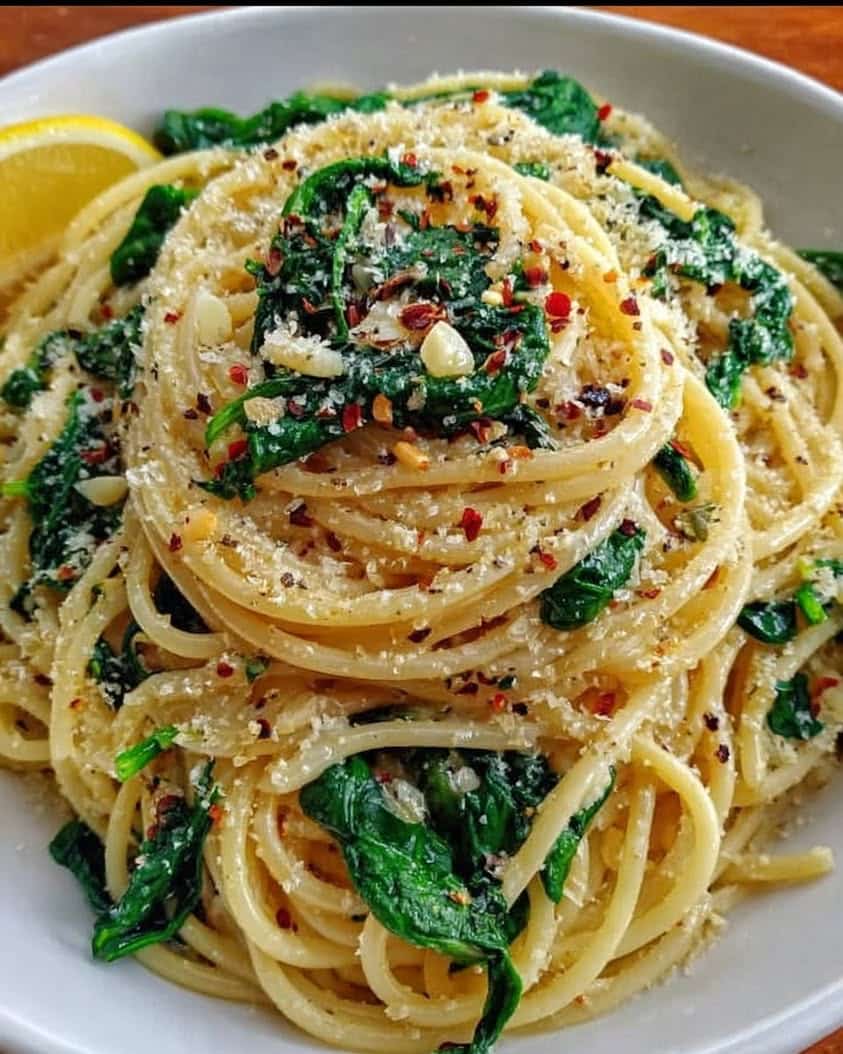
- Visual Appeal: Deep green spinach ribbons wrap around golden, pepper-flecked pasta strands for a striking, rustic presentation. A dusting of snowy Parmesan and a drizzle of glossy oil complete the look. The dish photographs beautifully, which makes it a favorite for food blogs and social feeds.
- Skill Level Needed: This spaghetti with garlic and spinach recipe suits beginners because it requires only basic boiling, sautéing, and tossing skills. The most advanced step involves reserving pasta water and whisking it into the oil, which anyone can learn in minutes. No knife skills beyond rough chopping are necessary.
- Special Equipment: You need a large pot for boiling pasta, a wide skillet or sauté pan for the garlic and spinach, and a colander for draining. Tongs and a ladle for reserving pasta water make the process smoother. None of the equipment is specialty or expensive.
Recipe Overview
- Difficulty Level: We rate this spaghetti with garlic and spinach recipe as easy because it uses one pot and one pan with minimal chopping. The technique of emulsifying pasta water into olive oil sounds fancy, but it takes only seconds and rarely fails. Beginners succeed on the first attempt, and experienced cooks appreciate how fast it comes together. The forgiving nature of the recipe means small timing errors cause no real damage.
- Category: The dish fits perfectly into weeknight dinner, quick lunch, and meatless main categories. It also works as a side dish for grilled proteins when you serve smaller portions. Because it needs no oven, the recipe qualifies as a stovetop meal and a one-pan dinner.
- Cuisine: This spaghetti with garlic and spinach recipe draws from classic Italian cucina povera, the humble peasant cooking tradition that builds big flavor from inexpensive staples. Aglio e olio, the famous garlic and oil pasta, serves as the direct ancestor. Italian cooks have paired greens with pasta for centuries, especially in southern regions. The dish honors that tradition while remaining approachable for American kitchens.
- Cost: The ingredient list stays budget friendly, with pasta and olive oil carrying most of the cost. Spinach, garlic, and Parmesan add moderate expense, yet a family of four eats well for under ten dollars in most U.S. markets. Pantry staples like red pepper flakes and salt cost pennies per serving.
- Season: This spaghetti with garlic and spinach recipe shines year round because fresh spinach stays available in every season. Spring and summer bring especially tender spinach, while autumn and winter offer a comforting, warming meal. The bright flavors cut through heavy holiday eating, making the dish welcome on any calendar date.
- Occasion: Serve it for casual family dinners, meatless Mondays, date nights at home, or as an easy dish when friends drop by. The recipe scales up for small gatherings and works as a potluck contribution at room temperature. It also makes a smart choice for busy back-to-school evenings.
Why You’ll Love This Recipe
Taste and texture make this spaghetti with garlic and spinach recipe unforgettable. The garlic melts into the olive oil and turns sweet and mellow rather than sharp, so even people who normally avoid garlic appreciate the flavor. Spinach contributes a subtle mineral earthiness that keeps the dish grounded, while red pepper flakes add a spark of heat that wakes up the palate. Then Parmesan steps in with its nutty, savory depth, and the starch from the pasta water binds everything into a cohesive, glossy sauce. The contrast between the tender greens and the firm bite of al dente spaghetti keeps every mouthful interesting, and the flavors layer in a way that tastes far more complex than the short cook time suggests.
Convenience sets this quick spaghetti with garlic and spinach recipe apart from other pasta dishes. You boil pasta while you sauté garlic in a single skillet, so the whole meal uses two vessels and requires minimal cleanup. The entire process takes twenty-five minutes, which means dinner lands on the table faster than most delivery orders arrive. No marinating, no baking, and no advance planning are required because the ingredients live in your pantry and refrigerator already. Busy parents, students, and professionals love that this dish covers the gap between a long day and a satisfying evening meal without compromise on flavor.
Nutritional advantages give this spaghetti with garlic and spinach recipe genuine substance. Spinach delivers iron, folate, vitamin K, and heart-healthy antioxidants, and a generous handful wilts down into a full serving of greens. Olive oil supplies monounsaturated fats that support cardiovascular health, and garlic brings antimicrobial compounds linked to immune support. Pasta provides the energy and fiber that make the meal satisfying, while Parmesan adds protein and calcium. You can adjust the oil and cheese upward or downward to hit personal wellness goals, so the dish bends to fit most eating plans.
Social and entertaining value make this spaghetti with garlic and spinach recipe a favorite for gatherings. It looks beautiful on a platter, smells incredible, and invites people to gather around the table. Guests with vegetarian diets eat it happily, and picky eaters enjoy the mild, familiar flavors. You can serve it family style, letting everyone drizzle extra olive oil and sprinkle additional Parmesan at the table, which turns dinner into a shared experience. Hosts love that the dish never keeps them trapped in the kitchen during a party.
Cost effectiveness keeps this spaghetti with garlic and spinach recipe in regular rotation for budget-conscious households. A box of dried pasta often costs under two dollars, and a bunch of fresh spinach runs about three. Garlic, olive oil, and Parmesan stretch across many meals, so the per-serving cost works out remarkably low. Compared with takeout, the recipe saves significant money while delivering higher quality. Accessibility also matters, because common grocery stores and even convenience marts stock every ingredient, and the technique requires no special tools or training.
Historical Background and Cultural Significance
The origin story of this spaghetti with garlic and spinach recipe traces back to southern Italy, where cooks built meals from little more than flour, water, olive oil, and garlic. Pasta aglio e olio emerged as a quintessential peasant dish in regions like Campania and Puglia, where families stretched limited resources into hearty dinners. Cooks added whatever greens grew nearby, and spinach found a natural place alongside the pasta because it grew readily in kitchen gardens and added bulk and nutrients. The dish embodies the resourcefulness that defines Italian home cooking and eventually traveled with immigrants to the United States.
Cultural importance surrounds this spaghetti with garlic and spinach recipe because it represents cucina povera, the philosophy that humble ingredients deserve respect and care. Italian families serve simple pasta dishes as expressions of love and hospitality rather than shortcuts. In many American Italian households, garlic and oil pasta became a beloved Friday tradition and a fallback comfort meal passed from grandparents to grandchildren. The dish also connects cooks to a broader Mediterranean diet pattern that emphasizes vegetables, olive oil, and modest portions of starch.
The evolution of this spaghetti with garlic and spinach recipe reflects how cooking changes across generations and borders. Traditional versions focused solely on garlic, oil, and dried red pepper. Over time, cooks embraced spinach for its color, texture, and nutrition, and Parmesan became a common addition outside strict vegetarian households. American cooks added lemon zest, cherry tomatoes, and wine reductions to suit local tastes. Restaurant versions often introduce toasted breadcrumbs for crunch, which demonstrates how a simple concept invites endless refinements.
Regional variations of this spaghetti with garlic and spinach recipe appear across the Mediterranean world. In Italy, cooks in Naples favor more garlic and a looser sauce, while cooks in Puglia lean on abundant olive oil and possibly breadcrumbs. In Spain, similar dishes use Swiss chard and pine nuts. Greek cooks fold in feta and dill for a different profile. American homes often adapt the dish with cremini mushrooms, roasted red peppers, or grilled chicken, and each variation keeps the same core spirit and quick preparation.
Ingredient Deep Dive
Spaghetti forms the backbone of this spaghetti with garlic and spinach recipe, and semolina-based dried pasta offers the ideal texture and price. Italians have made dried pasta for centuries, and its long shelf life supported both peasant kitchens and modern pantries. Spaghetti provides a moderate amount of complex carbohydrates, some protein, and a small dose of fiber. Choose bronze-die pasta when you can, because the rough texture holds sauce beautifully. Store dried pasta in an airtight container away from moisture, and substitute linguine, bucatini, or any long pasta confidently.
Fresh spinach brings color, nutrition, and earthy flavor to this spaghetti with garlic and spinach recipe, and it stands culturally as one of the most beloved greens in Mediterranean cooking. Spinach delivers iron, folate, vitamin K, and lutein, which supports eye health. Choose leaves that look crisp, deep green, and dry rather than wilted or slimy. Store spinach loosely wrapped in a paper towel inside a sealed bag in the refrigerator crisper drawer, and use it within a few days. Kale, Swiss chard, or arugula make excellent substitutes, though cooking times shift slightly with tougher greens.
Garlic drives the signature character of this spaghetti with garlic and spinach recipe, and cultures around the world have prized the bulb for flavor and folklore for thousands of years. Garlic supplies allicin and other sulfur compounds associated with immune and cardiovascular benefits. Select heads that feel firm and heavy with tight, unbroken papery skin. Store garlic in a cool, dry, well-ventilated spot rather than the refrigerator, and substitute shallots or garlic scapes if you want a milder profile.
Extra virgin olive oil carries the sauce in this spaghetti with garlic and spinach recipe, and the Mediterranean world has produced it for more than four thousand years. Fresh olive oil delivers monounsaturated fats and polyphenol antioxidants. Choose a peppery, robust oil for flavor and check for a harvest date on the label. Store the bottle in a cool, dark cabinet away from the stove, and replace butter or avocado oil only if you must, because olive oil defines the dish.
Parmesan cheese finishes this spaghetti with garlic and spinach recipe with savory depth, and the cheese carries centuries of Italian artisan tradition. Parmesan provides protein, calcium, and a concentrated source of umami. Buy a wedge and grate it fresh whenever possible, because pre-grated cheese often clumps and tastes flat. Wrap the wedge tightly in parchment or foil and refrigerate it, and substitute Pecorino Romano or a vegetarian rennet product to cover different diets.
Red pepper flakes add lively heat to this spaghetti with garlic and spinach recipe, and the spice brings a warm carry-through that balances the oil and cheese. Pepper flakes offer a small amount of vitamin A and add flavor with almost no calories. Choose flakes that look vibrant rather than dusty brown. Store them away from sunlight, and substitute a pinch of cayenne or a chopped fresh chili when you want a fresher bite.
Common Mistakes to Avoid
- Burning the garlic tops the list of mistakes for this spaghetti with garlic and spinach recipe because scorched garlic turns acrid and bitter. Keep the heat gentle and stir constantly, and pull the pan off the burner the moment the edges turn pale gold. Burnt garlic cannot be rescued, so start over rather than serving a ruined dish.
- Overcooking the pasta robs the dish of texture and causes the strands to break apart. Set a timer one minute less than the package suggests and taste before draining. Al dente pasta gives the sauce a firm, satisfying foundation.
- Skipping the reserved pasta water prevents the sauce from emulsifying properly. Without starchy water, the oil sits separate and greasy on the plate. Ladle out at least a cup before draining, even if you think you will not need it all.
- Draining the pasta dry and skipping the toss in the pan means the flavors never marry. Finish cooking the spaghetti for a minute or two in the skillet with garlic, spinach, and pasta water. This step builds the cohesive, glossy coating that defines the recipe.
- Using too little spinach undersells the dish and leaves it looking sparse. Fresh spinach shrinks dramatically, so add more than feels reasonable, roughly four generous handfuls for four servings. The greens should look abundant once tossed with the pasta.
- Crowding the pan with spinach causes steaming instead of sautéing. Add the leaves in batches and toss gently, letting each handful wilt before adding the next. Steam escapes and the greens keep their vivid color.
- Adding cheese over high heat makes it clump and stick. Turn off the burner or move the pan away before stirring in Parmesan. Gentle residual heat melts the cheese smoothly into the sauce.
- Under-seasoning the water leaves the pasta bland from the inside out. Salt the boiling water generously, roughly one tablespoon per gallon, so the pasta absorbs flavor as it cooks. Pasta seasoned only at the end always tastes flat.
- Rushing the spin dry on washed spinach lets excess water water down the sauce. Spin the leaves in a salad spinner or pat them thoroughly dry with towels before adding them to the pan. Wet spinach creates a thin, cloudy sauce.
- Doubling the recipe without adjusting the pan size leads to uneven cooking and soggy results. Use a larger skillet or cook in two batches when scaling up, and keep the heat moderate to maintain control.
Essential Techniques
Gently blooming garlic in warm oil forms the flavor base of this spaghetti with garlic and spinach recipe. Cook the sliced garlic over medium-low heat until the edges turn pale gold, roughly two to three minutes, and never let it brown deeply. This technique matters because garlic transforms from sharp and raw to sweet and round when heated slowly. Master it by keeping your heat lower than you think necessary and stirring constantly. Visual cues matter, so watch for the garlic to soften, turn translucent, and release a toasty aroma before you move on.
Emulsifying pasta water with olive oil creates the silky sauce that elevates this spaghetti with garlic and spinach recipe. Add a splash of hot, starchy pasta water to the skillet and toss vigorously until the liquid turns cloudy and glossy. This step matters because water and oil normally repel each other, but starch acts as a bridge that binds them. Master the technique by adding water gradually and tossing continuously with tongs. Success shows as a light, even coating that clings to the pasta rather than pooling at the bottom of the pan.
Wilting spinach properly preserves color and texture in this spaghetti with garlic and spinach recipe. Add dry leaves in batches to the warm garlic oil and toss just until they collapse, about one to two minutes per batch. This approach matters because overcooked spinach turns dark, mushy, and dull. Master it by using medium heat and moving the leaves constantly. The visual cue is bright, glossy green spinach that stays slightly tender rather than limp.
Finishing pasta in the pan marries sauce and starch in this spaghetti with garlic and spinach recipe. Transfer the drained spaghetti directly into the skillet with a bit of pasta water and toss over medium heat for one minute. This technique matters because the pasta absorbs flavor while the starch thickens the sauce. Master it by keeping the pan moving and adding water a tablespoon at a time if the sauce tightens. The dish should look lightly sauced and shiny, never dry or swimming.
Pro Tips for Perfect Spaghetti with Garlic & Spinach
- Salt the pasta water generously before it boils, because properly seasoned water flavors the pasta from within. Taste the water occasionally and adjust until it resembles a gentle sea breeze.
- Slice the garlic evenly, about an eighth of an inch thick, so every piece cooks at the same rate and nothing burns. Thin slices melt into the oil, while thick chunks stay raw and pungent.
- Reserve more pasta water than you need, at least one full cup, because extra water never hurts and running short can leave the sauce dry. Keep the reserved water hot so it blends smoothly.
- Warm the serving bowls or plates with hot water before plating. Warm bowls keep the pasta hot longer and help the aromas rise at the table.
- Grind fresh black pepper at the end rather than the beginning. Freshly cracked pepper keeps its bright bite and blooms with the residual heat of the pasta.
- Grate Parmesan finely on a microplane so it melts instantly into the sauce. Coarse shreds sit on top and clump rather than integrating.
- Add lemon zest just before serving for a bright, floral lift that cuts through the oil. Grate only the yellow exterior and avoid the bitter white pith below.
- Serve immediately, because pasta dishes lose their glossy sauce and firm texture as they sit. Call everyone to the table before you toss the final ingredients.
Variations and Adaptations
Regional variations enrich this spaghetti with garlic and spinach recipe without changing its core identity. Neapolitan cooks add anchovy fillets that melt into the oil and deepen the savory base. Pugliese versions lean on toasted breadcrumbs for a crunchy contrast known as mollica. Sicilian cooks incorporate golden raisins and pine nuts for a sweet-savory balance, while Greek adaptations fold in feta and dill. Each regional touch shows how a simple pasta dish absorbs local ingredients and preferences.
Seasonal adaptations keep this spaghetti with garlic and spinach recipe fresh all year. Spring invites asparagus tips, peas, and fresh basil stirred in at the end. Summer calls for halved cherry tomatoes, zucchini ribbons, and a squeeze of lemon. Autumn welcomes roasted squash cubes and sage browned in the oil, and winter benefits from wilted kale and extra pepper flakes for warmth. Adjusting vegetables seasonally makes the dish feel new each month.
Dietary modifications let more people enjoy this spaghetti with garlic and spinach recipe. Gluten-free pasta and a certified gluten-free Parmesan convert the dish for celiac diners. Nutritional yeast replaces Parmesan for vegan and dairy-free versions, and it adds a savory, cheesy flavor. Low-carb cooks use zucchini noodles or hearts of palm spaghetti and reduce the pasta water accordingly. Each swap keeps the spirit of the original while meeting specific needs.
Flavor variations let you steer this spaghetti with garlic and spinach recipe in exciting new directions. Add a teaspoon of anchovy paste for a deeper umami punch, or stir in harissa or gochujang for smoky heat. A splash of dry white wine deglazes the pan and adds acidity, and toasted fennel seed brings an aromatic lift. Choose one or two additions at a time so the dish stays balanced.
Texture modifications make this spaghetti with garlic and spinach recipe more interesting. Toasted panko or coarse breadcrumbs scatter over the top for crunch. Toasted pine nuts or slivered almonds add richness and snap. Crispy fried shallots bring a sweet, brittle contrast, and a handful of fresh herbs adds lightness. Each addition layers new sensations onto the silky pasta and tender greens.
Presentation alternatives help this spaghetti with garlic and spinach recipe suit different occasions. Serve it family style on a large warm platter for casual dinners. Twirl individual portions into nests using tongs for an elegant plated look. A shallow pasta bowl concentrates the aroma, and a wide rim leaves room for garnishes. Choose the presentation style that fits the mood of your meal.
Serving and Presentation Guide
Plating techniques make this spaghetti with garlic and spinach recipe look as good as it tastes. Twirl portions with tongs and place them slightly off center for a modern, artful look. Leave a small pool of sauce at the base so each strand stays glossy. Keep the spinach visible on top rather than buried underneath, and work quickly so the dish reaches the table hot.
Garnishing ideas lift this spaghetti with garlic and spinach recipe from homey to memorable. Shower the top with finely grated Parmesan and a crack of black pepper. Scatter fresh basil or parsley for color, or add a pinch of red pepper flakes for visual warmth. A drizzle of your best olive oil at the table adds shine and signals care.
Traditional accompaniments round out the meal with Italian character. Begin with a simple green salad dressed in lemon and olive oil, and serve crusty bread to mop up the garlicky oil. A small plate of olives and roasted peppers adds a classic antipasto touch. Keep sides light so the pasta remains the star of the meal.
Modern serving suggestions give this spaghetti with garlic and spinach recipe contemporary appeal. Pair it with a crisp, dry white wine and a cheese board for a casual supper. Add grilled shrimp or seared scallops on top for an elegant upgrade. For brunch, serve smaller portions alongside a poached egg and broiled tomatoes.
Temperature considerations matter because this spaghetti with garlic and spinach recipe tastes best hot from the pan. Warm your bowls and plates so the pasta stays hot through the meal. Serve immediately after the final toss, and avoid holding the dish over low heat because the spinach dulls and the pasta softens. If you must wait, undercook the pasta slightly and finish it just before serving.
Portion control tips help you serve this spaghetti with garlic and spinach recipe sensibly. A typical serving of dried pasta weighs about two ounces per person, though hearty appetites may want three. Pair larger portions with a salad and bread, and smaller portions with a protein side. Serving with tongs lets guests take exactly what they want and reduces waste.
Wine and Beverage Pairing
Wine pairings for this spaghetti with garlic and spinach recipe favor bright, mineral-driven whites. A Vermentino or Sauvignon Blanc cuts through the olive oil and matches the green spinach. Falanghina from Campania nods to the dish’s Italian roots with citrus and almond notes. A light red like Frappato or a young Dolcetto works if you prefer red, because the tannins stay gentle and do not fight the garlic.
Non-alcoholic alternatives make this spaghetti with garlic and spinach recipe welcoming to everyone. Sparkling water with lemon and a sprig of rosemary feels festive and cleanses the palate. Iced green tea or a mint and cucumber cooler balances the olive oil’s richness. A tart cherry spritzer brings a bright, fruity note that complements the garlic without overpowering it.
Coffee and tea pairings may seem unexpected, but they can work beautifully. A light-bodied green tea or a floral jasmine tea refreshes between bites. For an after-dinner cup, an espresso with a lemon twist echoes Italian tradition. Keep tea and coffee unsweetened so the flavors stay clean rather than cloying.
Temperature considerations shape beverage service for this spaghetti with garlic and spinach recipe. Serve white wines lightly chilled, roughly fifty to fifty-five degrees Fahrenheit, so aromas stay open. Reds taste best just below room temperature. Non-alcoholic drinks should arrive very cold for the fizz and freshness that resets the palate.
Serving suggestions complete the beverage experience. Pour wine into stemmed glasses so aromas gather and the meal feels special. Offer water glasses alongside every drink, because the garlic and pepper make guests thirsty. Set drinks before the food arrives so guests settle in as the pasta finishes on the stove.
Storage and Shelf Life
Storage methods determine how well leftovers of this spaghetti with garlic and spinach recipe hold up. Cool leftovers within two hours and move them into shallow, airtight containers. Press plastic wrap against the surface if you store in a bowl, and refrigerate promptly. Properly stored pasta keeps its flavor and texture far better than loosely covered bowls left on the counter.
Temperature requirements for this spaghetti with garlic and spinach recipe are straightforward. Refrigerate at forty degrees Fahrenheit or below, and never leave the dish in the temperature danger zone for more than two hours. Keep containers toward the back of the fridge where temperatures stay most consistent. Both pasta and cooked spinach spoil quickly at room temperature.
Container recommendations protect texture as well as safety. Glass containers with tight lids keep moisture in and odors out, and they reheat evenly. Divide large batches into smaller containers so the food cools quickly and you thaw only what you need. Avoid thin plastic bags for this dish because the oil makes them messy and hard to seal.
Signs of spoilage help you judge leftovers of this spaghetti with garlic and spinach recipe. Discard the dish if you notice sour smells, slick or slimy textures, or visible mold. Spinach darkens as it ages, but a sour odor is the clear warning. When in doubt, throw it out, because reheated pasta can hide spoilage until it is too late.
Reheating instructions keep this spaghetti with garlic and spinach recipe enjoyable the next day. Warm leftovers in a skillet over medium heat with a splash of water to loosen the sauce. Cover the pan briefly so the steam refreshes the pasta. A microwave works in a pinch, but stop and stir every thirty seconds to avoid rubbery spots.
Freezing guidelines for this spaghetti with garlic and spinach recipe extend storage to about two months. Freeze cooled pasta in portion-size airtight containers, and press out as much air as possible. The spinach softens further on thawing, so plan to serve the thawed dish with fresh greens stirred in. Thaw overnight in the refrigerator and reheat gently in a skillet.
Make Ahead Strategies
A clear prep timeline makes this spaghetti with garlic and spinach recipe even easier on busy days. Wash and dry the spinach, slice the garlic, and grate the cheese up to a day ahead. Measure the red pepper flakes and salt, and set them beside the stove. Grouped prepped ingredients turn the actual cooking into a fast, stress-free ten-minute sprint.
Storage between steps preserves freshness during make-ahead prep. Keep washed spinach in a sealed bag lined with paper towels so it stays crisp. Store sliced garlic in a small container in the refrigerator and use it within a day to keep the flavor bright. Hold grated Parmesan in a covered container, and refrigerate it until needed.
Quality impact assessment helps you decide what to make ahead. Washed spinach and grated cheese lose nothing overnight, and sliced garlic stays nearly fresh. Fully cooked pasta, however, softens and loses its bite, so boil the pasta fresh whenever possible. Prep the components ahead and cook the dish on demand for the best result.
Assembly tips keep the final cook quick even after prep work. Arrange ingredients in the order you will use them, starting with oil and garlic. Place the colander in the sink and set out tongs and a ladle before you turn on the pot. This mise en place approach shaves minutes off the cook time.
Reheating guidelines matter if you fully cook the dish ahead. Store cooked pasta with a little extra olive oil and reheat it gently in a skillet with a splash of water. Add fresh spinach at the end so it wilts fresh rather than suffering a double cook. Taste and add salt and pepper before serving to restore balance.
Fresh element additions revive any make-ahead version of this spaghetti with garlic and spinach recipe. Fold in raw spinach, fresh herbs, lemon zest, or a final drizzle of oil at serving time. These last-minute touches bring back the lively, just-made quality that makes the dish special.
Scaling Instructions
Halving this spaghetti with garlic and spinach recipe works easily for two servings. Cut pasta, oil, and spinach by half, but keep most of the garlic and Parmesan so the flavor stays bold. Use a smaller skillet so the spinach still fits comfortably. Cooking time stays nearly the same because the water and pan heat adjust quickly.
Doubling or tripling this spaghetti with garlic and spinach recipe takes planning rather than guesswork. Cook pasta in a larger pot or in batches to avoid crowding, and use your widest skillet for the garlic and spinach. Increase the oil moderately and add spinach in more batches. Keep the ratio of pasta water to oil consistent to protect the emulsified sauce.
Equipment adjustments support larger batches. A wide braising pan or rondeau gives spinach room to wilt without steaming. A second set of tongs helps when tossing bigger volumes, and a large colander or a second one prevents backups at the sink. Pre-warm serving platters so large portions stay hot.
Timing modifications keep scaled versions of this spaghetti with garlic and spinach recipe on track. Larger pots of water take longer to boil, so start the water first. Sauté garlic slightly longer over gentler heat to flavor more oil. Toss the final dish in batches if needed, adding each new batch to the skillet only when the last one is coated.
Storage considerations grow with larger batches. Divide extra portions into small containers for easier cooling and quicker reheating. Label containers with dates and keep the oldest portions in front. Share extras with neighbors or freeze them, since this spaghetti with garlic and spinach recipe rewards generosity.
Nutritional Deep Dive
The macro breakdown of this spaghetti with garlic and spinach recipe looks approachable for most eating plans. A serving supplies roughly four hundred to five hundred calories, with carbohydrates making up about half, fats around thirty percent, and protein holding near fifteen percent. Olive oil and cheese drive the fat content, while pasta and spinach split the carbohydrates. Each serving lands around ten grams of protein, a modest figure that rises with extra Parmesan or an added protein.
Micronutrient analysis shows why this spaghetti with garlic and spinach recipe earns praise. Spinach loads the dish with vitamin K, vitamin A, folate, iron, and magnesium. Parmesan adds calcium and vitamin B12, and olive oil contributes vitamin E and polyphenols. Garlic brings trace minerals and sulfur compounds. Together, the ingredients cover a wide nutrient profile few simple meals can match.
Health benefits of this spaghetti with garlic and spinach recipe align with Mediterranean eating patterns. Olive oil and garlic support heart health, and spinach delivers antioxidants tied to eye and bone health. The moderate fat content helps absorb fat-soluble vitamins, and the dish avoids heavy cream or butter. Portion size remains the main variable, so a balanced serving keeps the meal squarely in healthy territory.
Dietary considerations depend on your specific needs. The base recipe suits vegetarians, and small swaps cover vegan and gluten-free eaters. Sodium content rises with Parmigiano and salted pasta water, so people watching salt can reduce cheese and skip added salt. Those managing blood sugar benefit from al dente pasta and extra spinach, which lower the glycemic load.
Portion analysis helps diners enjoy this spaghetti with garlic and spinach recipe wisely. A standard serving uses two ounces of dried pasta, a generous handful of spinach, and a tablespoon of oil. Heartier appetites can move to three ounces of pasta and add a side salad. Measure pasta before cooking, because dry pasta doubles in weight once it absorbs water.
Weight management tips center on balance and awareness. Fill half the plate with spinach and other vegetables, and measure olive oil with a spoon rather than pouring freely. Add lean protein like shrimp or chicken to increase satiety without much fat. Eating slowly and using smaller bowls helps portions feel larger and meals feel more satisfying.
Dietary Adaptations
The gluten-free version of this spaghetti with garlic and spinach recipe swaps in rice, corn, or chickpea pasta. Check that the pasta brand is certified gluten-free, and verify that the Parmesan carries no gluten-based additives. Taste the pasta early since gluten-free strands soften faster. The sauce and spinach require no changes, and the dish tastes just as vibrant.
The dairy-free version replaces Parmesan with a Print
Spaghetti with Garlic & Spinach
- Total Time: 45 minutes
- Yield: 4
Description
A quick and flavorful pasta dish featuring garlic-infused olive oil, fresh spinach, and spaghetti, finished with Parmesan.
Ingredients
- 12 oz spaghetti
- 4 cloves garlic, thinly sliced
- 1/4 cup olive oil
- 8 cups fresh spinach
- 1/2 teaspoon red pepper flakes
- Salt and black pepper to taste
- 1/4 cup grated Parmesan cheese
Instructions
- Cook spaghetti in salted boiling water according to package directions; reserve 1 cup pasta water before draining.
- Meanwhile, heat olive oil in a large skillet over medium-low heat and cook garlic until fragrant and lightly golden, about 2 minutes.
- Add red pepper flakes and spinach; toss until wilted.
- Add drained spaghetti and a splash of pasta water; toss to coat, season with salt and pepper.
- Serve topped with Parmesan cheese.
Notes
You can customize the seasonings to taste.
- Prep Time: 15 minutes
- Cook Time: 30 minutes
- Method: Main
- Cuisine: American