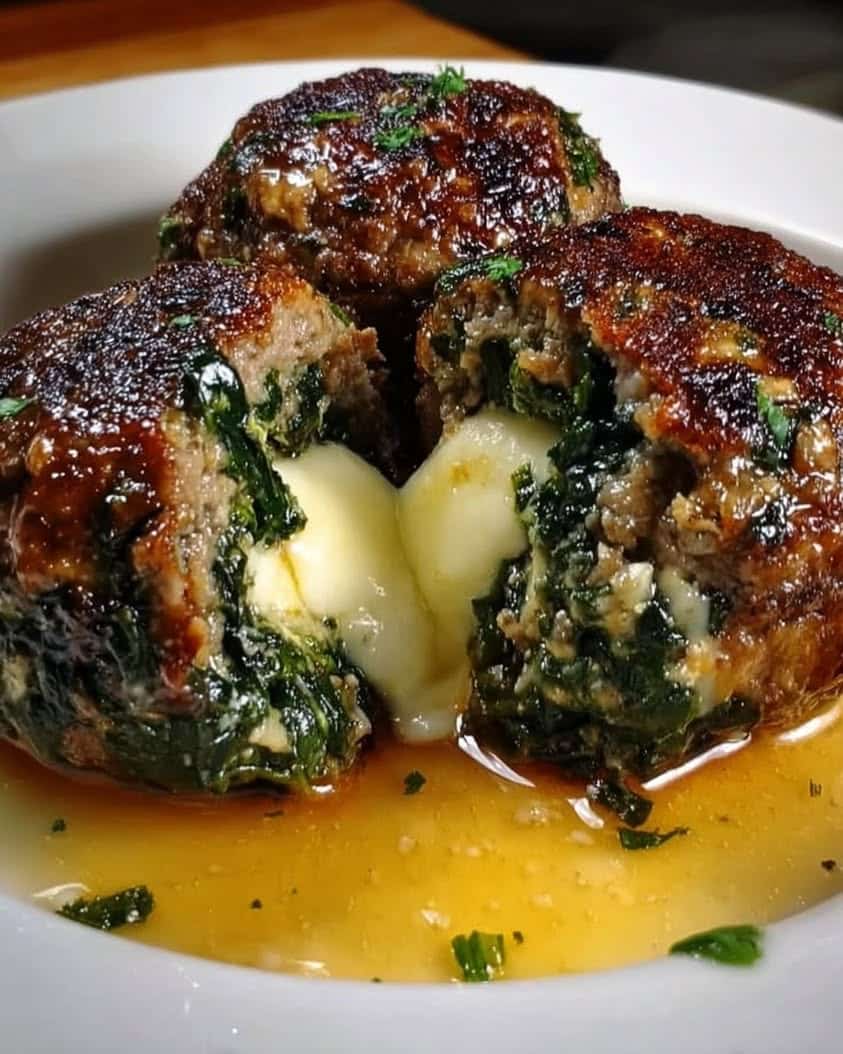
The Ultimate Spinach Garlic Meatballs Stuffed with Mozzarella Recipe
The Ultimate Spinach Garlic Meatballs Stuffed with Mozzarella Recipe transforms a classic comfort dish into something truly spectacular. You will discover that these meatballs bring together the earthy goodness of fresh spinach, the sharp bite of garlic, and the delightful surprise of molten mozzarella cheese in every single bite. The combination creates a symphony of flavors that dance across your palate, making this dish an instant favorite for weeknight dinners and special occasions alike.
When you first cut into these golden-brown spheres of perfection, the cheese pulls away in long, satisfying strands that signal the gooey treasure waiting inside. The aroma of garlic and herbs fills your kitchen with an irresistible invitation that draws everyone to the table. Furthermore, this recipe offers remarkable versatility, serving beautifully over pasta, nestled in crusty sandwiches, or enjoyed straight from the pan with nothing more than a fork.
What sets this Spinach Garlic Meatballs Stuffed with Mozzarella recipe apart is its thoughtful balance of ingredients and accessible preparation method. You do not need to be a professional chef to achieve restaurant-quality results right in your own kitchen. The process flows smoothly, from mixing the savory meat mixture to the satisfying sizzle when the meatballs hit the hot skillet. Consequently, even novice cooks can master this dish with confidence and impress their family and friends with minimal stress.
The cultural significance of meatballs spans across many cuisines, from Swedish köttbullar to Italian polpette and Middle Eastern kofta. This particular preparation honors that rich heritage while adding a contemporary twist that modern home cooks crave. Additionally, the incorporation of spinach adds both nutritional value and visual appeal, creating those beautiful green flecks throughout the meat that signal freshness and care. The garlic delivers that aromatic punch that forms the backbone of Mediterranean cooking, making every mouthful deeply satisfying.
Moreover, this recipe excels at delivering maximum flavor with minimal ingredients. You probably have most of them in your pantry and refrigerator already, which makes this an excellent go-to meal when you need something reliable and delicious. The cost-effectiveness of homemade meatballs compared to store-bought versions cannot be overstated, especially when you consider the premium price of quality prepared foods. Therefore, this Spinach Garlic Meatballs Stuffed with Mozzarella recipe represents both culinary excellence and practical value for your household budget.
Quick Recipe Highlights
- Flavor Profile: This Spinach Garlic Meatballs Stuffed with Mozzarella recipe delivers a powerful combination of savory meat, aromatic roasted garlic, and earthy spinach that creates a deeply satisfying umami experience. The addition of herbs like oregano and basil brightens the overall taste while the cheese adds a creamy, rich dimension that balances the robust flavors beautifully.
- Texture: You will appreciate the contrast between the slightly crisp, caramelized exterior and the tender, juicy interior of these meatballs. The spinach adds a pleasant toothsome quality while the melted cheese creates a luxurious, velvety center that provides wonderful textural interest in every single bite.
- Aroma: As these meatballs cook, they release an irresistible fragrance of garlic, herbs, and savory meat that will make your entire home smell wonderful. The aroma builds layers of anticipation and excitement, making it almost impossible to wait before diving in. The scent is warm, inviting, and deeply comforting.
- Visual Appeal: The golden-brown exterior with charred edges signals perfect caramelization and promises incredible flavor. When you cut into a meatball, you reveal the vibrant green flecks of spinach and the beautiful white, stretchy mozzarella center that creates a gorgeous presentation on any plate. This visual appeal makes the dish Instagram-worthy without any special styling.
- Skill Level Needed: Even though this Spinach Garlic Meatballs Stuffed with Mozzarella recipe looks impressive, the actual technique remains quite accessible for home cooks of all experience levels. You need basic mixing and shaping skills plus simple stovetop cooking abilities. The recipe includes detailed instructions that guide you through each step with clarity.
- Special Equipment: You will need a large mixing bowl, a sharp knife for mincing garlic, and a heavy-bottomed skillet such as cast iron for even browning. Additional helpful tools include a cookie scoop for uniform sizing, meat thermometer for checking doneness, and parchment paper for easy cleanup but none of these are strictly required.
Recipe Overview
- Difficulty Level: This Spinach Garlic Meatballs Stuffed with Mozzarella recipe rates as easy to moderate difficulty because the techniques involved are straightforward and accessible. Even first-time cooks can succeed because the recipe provides clear guidance on meatball formation and doneness indicators. The main challenge involves shaping the meatballs evenly while ensuring the cheese stays centered inside. However, with a little practice and patience, you will develop the rhythm quickly and produce consistently beautiful results every time.
- Category: These meatballs function as a versatile main course perfect for family dinners, impressive enough for entertaining guests, and practical for meal preparation on busy weekends. They work wonderfully served over spaghetti, in sub sandwiches, alongside roasted vegetables, or even as party appetizers on toothpicks with dipping sauce. The dish spans casual comfort food and elegant entertaining beautifully.
- Cuisine: The preparation draws heavily from Italian-American culinary traditions while incorporating contemporary adaptations that elevate the classic concept. Italian meatballs typically use a combination of ground meats, herbs, garlic, and cheese, all of which appear prominently in this recipe. The addition of spinach represents a modern health-conscious twist that maintains authentic flavors while adding nutritional value and visual appeal. This fusion creates something familiar yet fresh.
- Cost: This recipe costs approximately eight to twelve dollars total, making it excellent value for the quality and quantity of food produced. Ground beef or turkey typically costs between four and six dollars per pound, fresh spinach around two dollars per bunch, and mozzarella cheese around three to four dollars for a ball. The remaining ingredients are pantry staples that cost little individually. When you compare this to restaurant prices for comparable dishes, the savings become immediately apparent.
- Season: While you can enjoy this Spinach Garlic Meatballs Stuffed with Mozzarella recipe year-round, it shines particularly during autumn and winter months when you crave warm, hearty dishes. The comforting nature of meatballs with melted cheese appeals especially during cooler weather. That said, lighter variations featuring ground turkey or chicken make excellent spring and summer meals when served with fresh salads and grilled vegetables.
- Occasion: These meatballs suit countless occasions, including informal weeknight family dinners, festive holiday gatherings, Super Bowl parties, potluck events, and celebratory dinners with friends. Their versatility means you can dress them up with elegant sauces and garnishes for formal entertaining or keep them simple and rustic for casual family meals. Kids love them because of the cheese surprise while adults appreciate the sophisticated flavor combinations.
Why You’ll Love This Recipe
The taste experience of this Spinach Garlic Meatballs Stuffed with Mozzarella recipe simply cannot be beaten. Each bite delivers savory meat juices mingling with aromatic garlic and fresh herbs while the melted cheese provides a creamy counterpoint that smooths out the bold flavors. The spinach contributes an earthy freshness that prevents the dish from feeling too heavy. This combination of tastes creates a harmonious balance that satisfies comfort food cravings while still feeling elevated and special. You will find yourself craving these meatballs again and again, planning meals around them, and happily sharing them with everyone you love.
Convenience stands out as another compelling reason to embrace this recipe enthusiastically. The active preparation time remains modest, roughly twenty minutes, before you let the skillet do most of the work. You can easily double the batch and freeze half for busy weeknights when cooking feels overwhelming. Furthermore, the ingredient list stays manageable, requiring nothing exotic or difficult to source at any standard grocery store. This accessibility means you can decide to make these meatballs even without advance planning, making them perfect for spontaneous dinner decisions and last-minute entertaining needs.
Nutritionally, these meatballs offer several advantages over typical meatball recipes that rely heavily on breadcrumbs and fatty meats. The spinach adds significant amounts of vitamins A, C, and K along with iron and antioxidants that support overall health. Ground turkey or chicken versions provide lean protein that keeps you full and satisfied while supporting muscle maintenance and growth. When you pair these meatballs with whole-grain pasta and a side salad, you create a balanced meal that nourishes your body without sacrificing flavor or enjoyment. This alignment between taste and nutrition makes the recipe feel responsible rather than indulgent.
From an entertaining perspective, this Spinach Garlic Meatballs Stuffed with Mozzarella recipe makes you look like a culinary genius with relatively modest effort. Guests will marvel at the impressive presentation and the delightful cheese pull when they cut into their first meatball. The dish travels well, meaning you can bring it to parties and gatherings without worrying about complicated logistics. Additionally, the recipe scales easily, allowing you to feed a crowd of twenty just as easily as you can feed a family of four. This flexibility makes it an invaluable addition to your entertaining repertoire.
Financially, homemade meatballs consistently outperform store-bought versions in both cost and quality. Pre-made meatballs from the grocery store often contain fillers, preservatives, and lower-quality meats while costing significantly more per serving. When you make your own, you control exactly what goes into the mixture, selecting premium ingredients that match your dietary preferences and ethical standards. The cost savings become even more dramatic when you consider that leftover meatballs transform into other meals like sandwiches, pasta bakes, or soup add-ins, stretching your food budget even further while reducing food waste.
Historical Background and Cultural Significance
The history of meatballs spans thousands of years and countless cultures, making them one of humanity’s most universal comfort foods. Ancient Romans documented recipes for meatballs as early as the first century, combining minced meat with bread soaked in wine and various seasonings. From Persia to China, different civilizations developed their own versions using locally available meats and spices. However, the Italian polpette tradition most directly influences this Spinach Garlic Meatballs Stuffed with Mozzarella recipe, representing a culinary heritage that prioritizes simplicity, quality ingredients, and family-centered cooking.
Italian immigrants brought their meatball traditions to America in the late nineteenth and early twentieth centuries, transforming American food culture forever. In Italy, meatballs typically appeared as a second course rather than being served over spaghetti, which remains something of an Italian-American invention. The adaptation to American tastes involved larger portions, richer sauces, and the incorporation of more cheese. This recipe carries forward that immigrant legacy, representing the beautiful fusion of old-world techniques with new-world creativity and abundance that defines so much of American comfort food.
The evolution of meatball recipes demonstrates remarkable adaptability across time and place. During periods of economic hardship, thrifty cooks stretched meat with breadcrumbs, eggs, and inexpensive vegetables like spinach. Hard times created the foundation for many beloved recipes. The addition of vegetables not only extended the budget but also improved texture and nutritional content. Consequently, what began as practical necessity evolved into culinary preference, and today we recognize that spinach actually enhances the flavor and moisture of meatballs in ways that all-meat versions cannot match.
Regional variations of meatballs reflect local ingredients, cooking methods, and cultural preferences. Swedish meatballs use warming spices like allspice and nutmeg and are served with creamy gravy. Chinese lion’s head meatballs feature pork and water chestnuts, braised in soy-based broth. Middle Eastern kofta incorporates warm spices and fresh herbs, often served with yogurt sauce. Turkish köfte uses lamb with mint and cumin while Spanish albondigas swim in tomato-almond sauce. This diversity demonstrates the incredible flexibility of the meatball form, adapting to local tastes while maintaining its essential comfort-food character across all cultures.
Ingredient Deep Dive
Garlic has been treasured by civilizations for over five thousand years, appearing in Egyptian, Greek, Roman, and Chinese medicinal traditions. Ancient cultures recognized garlic’s powerful antimicrobial properties and used it to treat everything from wounds to digestive complaints. Modern science confirms that garlic contains allicin, a compound with impressive health benefits including immune system support, blood pressure regulation, and improved cholesterol profiles. When you cook garlic, it becomes sweeter and less pungent, developing a rich, savory depth that transforms dishes. This Spinach Garlic Meatballs Stuffed with Mozzarella recipe uses garlic generously, knowing that the cooking process will mellow its intensity while preserving its aromatic essence.
Selecting quality garlic makes a significant difference in your final result. Look for bulbs that feel firm with tight, papery skins and no signs of sprouting. The cloves should be plump and moist, not dried out or shriveled. When you crush a clove, it should release that distinctive aroma and yield easily. Store garlic in a cool, dark, dry place with good air circulation, but avoid the refrigerator where moisture can cause mold. Fresh garlic will keep for several months under proper conditions, though you should use it promptly once you break the bulb apart. Garlic powder can substitute in emergencies, but fresh garlic provides superior flavor and should be preferred whenever possible.
Fresh spinach represents a nutritional powerhouse packed with vitamins K, A, C, and B9 (folate), minerals including iron, calcium, and magnesium, plus beneficial antioxidants. The Egyptians cultivated spinach as early as the eighth century but the Persians originally developed it. Moors introduced spinach to Spain in the eleventh century, after which it quickly spread throughout Europe. Modern health research connects spinach consumption with reduced oxidative stress, improved blood sugar regulation, lowered cancer risk, and bone health support. The slight bitterness of mature spinach balances well with fatty meats while baby spinach provides a milder, more tender alternative suited for this recipe.
Choosing fresh spinach requires attention to leaf quality and color. Look for vibrant, deep-green leaves without yellowing, wilting, or sliminess. Avoid bunches with signs of insect damage or excessive moisture in the packaging. Baby spinach requires minimal preparation, just a quick rinse and pat dry, while mature leaves may require stem removal before chopping. Store fresh spinach unwashed in a plastic bag with a paper towel to absorb excess moisture, keeping it in the refrigerator crisper drawer for up to five days. Frozen spinach works acceptably but requires thorough draining before using to prevent the meatballs from becoming soggy.
Mozzarella cheese originates in southern Italy, specifically the Campania region near Naples, where water buffalo provided rich milk for traditional production. Today most commercial mozzarella comes from cow’s milk but still maintains that soft, milky character prized for pizza and other Italian dishes. Mozzarella contains high-quality protein, calcium, and phosphorus, providing essential nutrients even though it also brings saturated fat and sodium. Low-moisture mozzarella, which comes in blocks or bags, melts beautifully while maintaining a chewy texture, making it ideal for stuffing meatballs.
Ground meat forms the essential foundation of this Spinach Garlic Meatballs Stuffed with Mozzarella recipe, and quality matters immensely. Ground beef with 80 to 85 percent lean content provides enough fat to keep meatballs moist and flavorful without becoming greasy. Ground turkey offers a leaner alternative that works well when you add extra moisture through eggs and vegetables. The critical factor involves choosing fresh meat from a reputable source and using it promptly. Slightly higher-quality grass-fed or organic options provide better flavor and environmental benefits if budget allows.
Parmesan cheese adds sharp, salty complexity that enhances all the other ingredients in these meatballs. This hard Italian cheese originated in the regions of Parma and Reggio Emilia, where producers follow strict aging processes lasting at least twelve months. The resulting cheese develops crystalline texture and deep umami flavor. Low moisture content and high fat make it ideal for adding richness without overwhelming the mixture. Finely grated fresh Parmesan melts better than pre-grated versions, which often contain anti-caking agents that affect melting and flavor.
Fresh herbs, particularly parsley, oregano, and basil, add brightness that cuts through the richness of the meat and cheese. Parsley brings clean, slightly peppery notes while also helping digestion. Oregano contributes that distinctive Mediterranean earthiness with hints of mint and lemon. Basil adds sweetness with notes of anise that complement tomatoes beautifully. Dried versions work in emergencies but fresh herbs provide superior flavor and appearance. Buy herbs fresh and use them within a few days, wrapping them in damp paper towels stored in the refrigerator for maximum longevity.
Common Mistakes to Avoid
- Overmixing the mixture: Many home cooks overwork the meat mixture, which ends up producing tough, dense meatballs. When you handle ground meat excessively, the proteins tighten and squeeze out moisture, making your meatballs dry and rubbery rather than light and tender. Mix just until all ingredients are evenly distributed, and resist the urge to keep stirring. Use your hands gently, combining with a light folding motion rather than vigorous kneading actions. Your goal is a cohesive mixture without overdevelopment.
- Skipping the spinach draining: Fresh spinach contains significant water that releases when you cook it, and if you do not remove this moisture, it will turn your meatball mixture soggy and unstable. After cooking the spinach, press it firmly to extract all excess liquid, then chop it finely before adding to the meat. The difference between dry spinach and wet spinach dramatically affects your final result, with wet spinach causing meatballs to fall apart during cooking while dry spinach maintains beautiful texture.
- Using cheese that melts too much: High-moisture mozzarella labeled for pizza or caprese will melt into liquid and leak out during cooking, creating a mess and losing the intended cheese surprise. Instead, choose low-moisture mozzarella in block form, which holds its shape when melted and creates that beautiful stretchy pull. Shred it yourself rather than purchasing pre-shredded bags, which often contain potato starch that prevents melting properly. The right cheese makes all the difference in your final presentation.
- Making meatballs too large: Oversized meatballs may look impressive raw, but they pose cooking problems because the outside cooks much faster than the inside. You end up with burnt exteriors and raw centers or overdone meat that dries out while attempting to cook through. Aim for meatballs around two tablespoons of mixture or slightly smaller, ensuring even cooking and manageable portion sizes. Smaller portions also allow the cheese to melt perfectly without leaking out.
- Overcrowding the pan: When you add too many meatballs to the skillet at once, they steam rather than brown, losing that delicious caramelized crust that adds so much flavor. The moisture released causes the temperature to drop, and the meatballs never achieve proper browning. Cook in batches, leaving plenty of space between meatballs so hot air circulates around each one. This patience pays off in superior flavor and texture that justifies the extra time.
- Neglecting to brown properly: The Maillard reaction that creates that beautiful golden-brown color also develops deep, complex flavors that elevate the entire dish. If you rush this step or cook at too low a temperature, your meatballs will look pale and taste flat. Give the meatballs adequate time in a hot pan, turning them only when deeply browned on each side. Trust the process and allow proper browning to develop before moving on to the next steps.
- Using stale or improper breadcrumbs: Breadcrumbs serve multiple functions in meatballs, soaking up moisture and providing structure while contributing texture and flavor. Stale breadcrumbs fail to absorb properly while fresh breadcrumbs made from good bread provide superior results. Additionally, seasoned versus unseasoned breadcrumbs change the final flavor profile, so choose accordingly and adjust seasoning to match. Consider panko for a lighter textured result that produces tender meatballs.
- Adding egg incorrectly: Eggs serve as binders but adding whole eggs without mixing them first leads to uneven distribution throughout the meatball mixture. Beat your eggs well before incorporating, ensuring they spread evenly and bind all ingredients together consistently. Use the egg at room temperature if possible, as cold eggs shock cold meat and make mixing difficult. This simple preparation step improves your final texture noticeably.
- Skipping the resting period: After mixing, the meatball mixture benefits from a short rest that allows the breadcrumbs to absorb moisture and the flavors to meld together. This rest period prevents your seasonings from tasting raw and ensures a properly hydrated mixture. Thirty minutes in the refrigerator also firms up the fat, making portioning and shaping easier. Additionally, shaped meatballs benefit from chilling before cooking, which helps them maintain their shape during searing.
- Not tasting for seasoning: Seasoning errors become evident only after cooking, and adjusting afterward does not work. Many cooks remain afraid to taste raw meat mixtures, but a small, quickly sautéed sample can save your entire batch. Cook a tiny portion in the pan, taste it, and adjust seasoning before shaping all your meatballs. This simple step ensures well-balanced flavor and prevents disappointing results from underseasoned or oversalted meatballs.
Essential Techniques
Prepping the spinach properly represents a foundational technique for this Spinach Garlic Meatballs Stuffed with Mozzarella recipe. Start by thoroughly washing your spinach leaves, removing any grit or dirt that may cling to them. Heat a dry pan over medium-high heat and add the spinach while it is still slightly wet, allowing it to wilt quickly while stirring constantly. The cooking process takes only one to two minutes, just until the leaves collapse and release their water. Immediately transfer the cooked spinach to a colander and press firmly to squeeze out all excess liquid, an essential step that prevents soggy meatballs. After squeezing, chop the spinach finely on a cutting board, ensuring it disperses evenly throughout the meat mixture rather than forming concentrated pockets of green.
Aromatics release unlocks the full flavor potential of garlic and onions in your meatball mixture. Mince garlic cloves finely, reaching a consistency almost like a paste, which allows essential oils to release and distribute fully. When sautéing aromatic vegetables, heat your oil gently before adding, avoiding burning that will create bitter flavors. Soften onions until translucent without allowing browning, which changes their sweetness into caramelization that might overwhelm the other flavors. Add herbs during this cooking process to help release their volatile oils, creating a fragrant base that infuses your entire meatball mixture. This technique ensures every bite delivers the complex aromatic flavor that makes this dish special.
Shaping the perfect meatball requires a delicate but deliberate touch that produces even, consistent portions. Use a cookie scoop or measuring spoon to divide the mixture uniformly, ensuring all meatballs cook at the same rate. Wet your hands slightly with cold water before shaping to prevent sticking and create a smooth exterior surface. Roll gently between your palms with just enough pressure to compact the meat and eliminate air pockets without overworking. If stuffing with cheese, make sure the cheese cube sits completely centered with meat fully covering it on all sides. Place shaped meatballs on a parchment-lined tray and refrigerate for at least fifteen minutes before cooking.
Even cooking and temperature management determines whether you achieve juicy, perfectly cooked meatballs or dry, tough disappointments. Begin by heating your oil until it shimmers, signaling that the pan is hot enough for proper browning. Add meatballs in a single layer without crowding, which allows air to circulate and promotes even cooking. Let meatballs brown undisturbed for three to four minutes before turning, allowing a proper crust to develop that releases easily from the pan. Use tongs for turning, flipping carefully to maintain the spherical shape. Test doneness with a meat thermometer reading 160 degrees for beef or 165 for poultry, ensuring food safety without overcooking.
Proper pan management keeps your meatballs delicious and prevents burning or mediocre taste. Use heavy-bottomed pans like cast iron or stainless steel material that holds heat evenly and does not create hot spots. Add oil with a high smoke point like canola or avocado oil, which can handle the high temperatures needed for proper browning without burning. Work in batches to avoid overcrowding the pan, accepting that patience creates quality results. Remove cooked meatballs to a wire rack rather than a paper towel, which traps steam and softens the crust while turning them soggy. These small techniques make noticeable differences in your final eating experience.
Pro Tips for Perfect Spinach Garlic Meatballs Stuffed with Mozzarella
Grate your own Parmesan cheese rather than purchasing pre-grated versions for significant flavor improvement. Freshly grated Parmigiano-Reggiano melts into the meat mixture with a richer, more complex taste than shelf-stable alternatives. The anti-caking additives in pre-shredded cheeses prevent smooth melting and leave a slightly chalky mouthfeel that detracts from your final dish.
Make breadcrumbs from crusty artisan bread rather than using the commercial variety in cans. Process day-old bread in a food processor until you achieve a fine, even crumb that absorbs flavors beautifully. For texture variation, toast the breadcrumbs lightly before adding them to your mixture, which adds nutty notes and extra structure while preventing the meatballs from becoming mushy.
Season in layers by incorporating salt and spices into each component individually rather than adding everything at the end. Salt the spinach while cooking, season the meat before mixing, and taste the mixture to adjust before shaping. Building seasoning throughout the process creates depth and complexity that cannot be achieved by simply tossing spices in at the end.
Allow your meatball mixture to rest in the refrigerator for at least thirty minutes before shaping and cooking. This resting period allows the breadcrumbs to fully hydrate, the flavors to meld and marry, and the fat to firm up for easier handling. Well-rested meatballs hold their shape better during cooking, brown more evenly, and deliver juicier results with better structure.
Use an ice cream scoop with a trigger release to form uniform meatballs quickly and easily. These scoops come in various sizes and create perfectly portioned spheres that cook evenly each time. If you want that perfect round shape, roll lightly between your palms after scooping, just enough to smooth the ball without compacting it too tightly.
Brush your meatballs with a little olive oil before cooking rather than adding excess oil to the pan. This technique ensures even coating while allowing you to control the amount of fat used. The oil promotes browning and helps the crust develop with a beautiful golden color that enhances both flavor and presentation.
Variations and Adaptations
Italian-style adaptations might incorporate additional traditional ingredients to your Spinach Garlic Meatballs Stuffed with Mozzarella recipe that deepen cultural authenticity. You could add a pinch of red pepper flakes to the mixture for gentle heat that builds gradually rather than overwhelming. Some regional recipes in Italy use pine nuts and raisins for sweet and nutty contrast. Alternatively, consider incorporating pancetta or prosciutto finely minced, adding saltiness and pork richness that creates even more complex depth of flavor that stays rooted in classic Italian traditions.
Fresh seasonal variations can transform this meatball recipe across the calendar year. In spring, replace spinach with sautéed arugula or Swiss chard for a peppery kick that surprises your palate. Summer calls for adding fresh basil and sun-dried tomatoes for Mediterranean sunshine in every bite. Autumn introduces the possibility of incorporating roasted butternut squash or pumpkin into the mixture for sweetness and creamy texture. Winter allows for adding mushrooms quickly sautéed with thyme that creates earthiness perfect for cold weather comfort. These seasonal adjustments maintain the core structure while using local, peak-flavor produce.
Dietary modifications accommodate various dietary restrictions and preferences without compromising flavor. For gluten sensitivity, replace traditional breadcrumbs with gluten-free versions or use almond flour for a lower-carbohydrate alternative. Dairy-free eaters can substitute plant-based cheese that melts, nutritional yeast for flavor, or simply omit the cheese center entirely. Egg-free versions may use ground flaxseed mixed with water as a binder, creating a gel that holds meatballs together effectively. Ground turkey or chicken replaces beef easily, while ground tofu or mushroom mixtures approximate the texture for plant-forward adaptation.
Global flavor variations can completely reinvent these meatballs while maintaining the foundational technique. Add ginger, garlic, soy sauce, and scallions for an Asian-inspired version that pairs well with rice noodles. Include harissa paste, cumin, and cilantro for North African flair served with couscous and yogurt. Use garam masala, ginger, and mint with ground lamb for Indian-style kofta that pairs beautifully with basmati rice or naan. The beauty of this recipe remains that the stuffing technique and cooking method stay constant while seasoning changes transport your taste buds around the globe.
Sauce and serving variations create completely different dining experiences from the same base recipe. Classic marinara sauce always pleases, but consider a creamy mushroom sauce for rich indulgence or a light lemon-butter sauce for freshness. Serve over spaghetti, pappardelle, or zucchini noodles depending on your carbohydrate preferences. Transform leftovers into meatball sandwiches with melted provolone on crusty rolls, or crumble into stuffed peppers, lasagna, or soups. The versatility here means this meatball recipe evolves with your cooking creativity and specific cravings.
Serving and Presentation Guide
Plating techniques that elevate your spinach garlic meatballs from casual to restaurant-worthy require a bit of attention to composition and color. Start with a bed of pasta, polenta, or creamy mashed potatoes that provides a neutral canvas for the beautiful meatballs. Arrange three or four meatballs slightly overlapping on each plate, letting their golden surfaces catch the light. Create visual interest by pooling sauce around rather than completely covering the meatballs, allowing the caramelized exterior to remain visible as a testament to careful cooking technique only. Keep some breathing room on the plate to avoid busy, crowded appearance.
Garnishing ideas add freshness, color, and professional polish that makes your dish memorable. Fresh basil leaves torn by hand rather than chopped create appealing color pops that complement the red sauce. Shaved Parmesan curls made with a vegetable peeler add elegance and dairy-rich saltiness. A drizzle of high-quality extra-virgin olive oil finishes the dish with peppery brightness and sheen. Finely chopped flat-leaf parsley offers subtle green contrast, while a sprinkle of red pepper flakes signals a hint of heat for adventurous diners. Crushed toasted breadcrumbs add texture and professional plating finish to any pasta dish.
Traditional accompaniments for Italian-style meatballs include spaghetti or linguine tossed with simple tomato sauce. Serve alongside crusty bread for mopping up every drop of sauce, and perhaps a simple green salad dressed with lemon vinaigrette to refresh the palate between bites. Grilled vegetables like zucchini, eggplant, or bell peppers add Mediterranean authenticity and additional nutrition. These classic side dishes allow meatballs to shine as the main attraction while providing satisfying variety. Consider also serving over creamy polenta, which the Italian tradition embraces especially in northern regions.
Modern serving suggestions update this classic dish for contemporary preferences and occasions. Create meatball sliders with small brioche buns, provolone cheese, and giardiniera for irresistible party appetizers. Serve over zucchini noodles for low-carb alternative that keeps the flavors but lightens the meal. English muffin pizzas topped with sliced meatballs become a playful weekday dinner. Transform into a hearty grain bowl with farro, roasted tomatoes, and garlicky yogurt sauce for health-conscious entertaining that satisfies deeply.
Temperature considerations affect how your meatballs taste and present. Serve meatballs fresh from the pan when the cheese is molten and glorious, providing that memorable pull that makes the dish special. Allow meatballs to rest for five minutes before serving, letting juices redistribute while maintaining the cheese in melted state. Do not serve cold or room-temperature meatballs because the cheese becomes rubbery and the flavor profile dulls significantly as the meat loses its warmth and aroma. Warm plates further help maintain appropriate temperature throughout serving.
Portion control tips ensure everyone gets enough while avoiding food waste. Standard adult entree portions include about four or five meatballs depending on size, typically totaling around eight ounces of meat for hungry appetites. Consider serving these meatballs as appetizers at three per guest with dipping sauce, allowing people to self-regulate their intake. When planning for guests, calculate roughly six meatballs per adult and four for children, or adjust based on other dishes being served. Leftovers freeze beautifully for future meals.
Wine and Beverage Pairing
Wine pairing options abound for this Spinach Garlic Meatballs Stuffed with Mozzarella recipe, thanks to its versatile flavor profile with the inherent flexibility of the ingredients. Medium-bodied red wines work beautifully with beef or turkey meatballs, providing enough structure to stand up to the meat while letting the mushroom sauce or tomato sauce complement the wine’s fruitiness and acidity. An Italian red like Sangiovese from Chianti, which possesses moderate tannins, prominent acidity, and dried cherry and herb notes, pairs elegantly with the savory meat and herbs. Valpolicella from Veneto, with its bright cherry and subtle almond notes, complements the richness of meatballs without overwhelming them, representing another excellent choice from the classics.
For those seeking a white wine alternative, full-bodied whites with appropriate weight and flavor intensity might surprise you with their delicious pairing potential. An oaked Chardonnay from California, with its creamy texture, hints of vanilla, and supple mouthfeel, pairs wonderfully with the cheese center of the meatballs. Alternatively, a white Rioja made from Viura that has seen some oak, offers similar weight and texture, making it a robust white choice. A dry Verdicchio from the Marche region provides fresh citrus notes and a slightly saline finish that cleanses the palate nicely. Naturally, if you prepare the turkey and mushroom version with a cream-based sauce, these rich whites will harmonize perfectly.
An approachable and food-friendly Pinot Noir from Oregon or New Zealand provides a refined red alternative if your guests do not love big, oaky wines. Light-bodied California Zinfandel, with its jammy fruit and lower acidity, offers a mellow pairing as well. Rosé wines continue to have their moment in popular culture because they pair impeccably with meatballs, with the mixture of red fruit, balancing acidity, and, in the case of spicier versions, a gentle savory note all working in harmony. Lighter-bodied styles feel satisfying without overpowering and hold up well to the spinach and herbs.
Non-alcoholic considerations extend well beyond water to create a full beverage integration. A sparkling water with a squeeze of lemon, lime, or orange provides palate cleansing that refreshes between rich bites. Italian sodas made with San Pellegrino and a fruit syrup present a festive, alcohol-free option that feels celebratory. Rich, earthy mushroom tea, simple iced tea, or an alcohol-free mocktail crafted with cranberry and rosemary offer sophisticated pathways for designated drivers and sober guests to drink admirably. High-quality apple cider, with its brisk acidity and subtle spice, works surprisingly well because the juice’s inherent Print
Spinach Garlic Meatballs Stuffed with Mozzarella
- Total Time: 40 minutes
- Yield: 4
Description
Juicy meatballs packed with spinach and garlic, each one hiding a gooey center of melted mozzarella. Perfect for a hearty dinner served over pasta, in a sandwich, or with a side of marinara.
Ingredients
- 1 lb ground beef
- 1/2 cup breadcrumbs
- 1/4 cup grated Parmesan cheese
- 1 egg, beaten
- 3 cloves garlic, minced
- 1 cup fresh spinach, chopped
- 1/2 teaspoon salt
- 1/2 teaspoon black pepper
- 1/2 teaspoon Italian seasoning
- 8 small cubes of mozzarella cheese (about 1/2 inch each)
Instructions
- Preheat oven to 400°F (200°C). Line a baking sheet with parchment paper.
- In a large bowl, mix together the ground beef, breadcrumbs, Parmesan, egg, garlic, spinach, salt, pepper, and Italian seasoning until well combined. Do not overmix.
- Take a small handful of the meat mixture and flatten it in your palm. Place one cube of mozzarella in the center, then shape the meat around the cheese, rolling into a ball. Repeat with remaining mixture and cheese.
- Place the meatballs on the prepared baking sheet, spacing them evenly.
- Bake for 20-25 minutes, or until the meatballs are cooked through and the tops are golden brown.
- Let rest for 5 minutes before serving. The cheese will be hot and melted.
Notes
You can customize the seasonings to taste. For extra flavor, try adding a pinch of red pepper flakes or a few chopped fresh basil leaves. If you prefer, you can pan-sear the meatballs in oil before baking for a crunchier exterior.
- Prep Time: 15 minutes
- Cook Time: 25 minutes
- Method: Main
- Cuisine: Italian-American