Spaghetti with Garlic & Spinach: A Quick and Easy Weeknight Wonder
If you need a dinner that comes together faster than delivery, this Spaghetti with Garlic & Spinach recipe delivers bold flavor in thirty minutes flat. Imagine tender spaghetti tossed in golden olive oil that carries the sweet bite of sautéed garlic, the earthy richness of wilted spinach, and a whisper of red pepper heat. Therefore, every twirl of your fork brings comfort without heaviness. Moreover, you likely already own every ingredient in your pantry and refrigerator right now.
The aroma alone sells this dish before the first bite. As the garlic hits warm oil, your kitchen fills with a nutty, savory perfume that pulls everyone toward the stove. Meanwhile, the spinach folds into the pasta and turns silky while keeping a gentle chew. Consequently, this Spaghetti with Garlic & Spinach becomes the kind of meal you crave on busy Tuesdays and lazy Sundays alike. In addition, the ingredient list stays short, affordable, and flexible.
Above all, this recipe proves that simple food often tastes the best. You need no fancy technique, no specialty store run, and no hours of simmering. Instead, you rely on quality olive oil, fresh garlic, and a handful of spinach to build deep flavor fast. Furthermore, the dish works as a light main course or a hearty side for chicken, fish, or sausage. As a result, it earns a permanent spot in your weekly rotation.
Quick Recipe Highlights
- Flavor Profile: This Spaghetti with Garlic & Spinach balances savory garlic, peppery olive oil, and the mild earthiness of spinach. Moreover, a pinch of red pepper flakes adds gentle warmth that lingers pleasantly. Finally, a squeeze of lemon brightens every bite.
- Texture: The pasta stays perfectly al dente, offering a satisfying chew. Meanwhile, the wilted spinach turns tender and silky against the slick, glossy noodles. In addition, toasted breadcrumbs, if you add them, bring a crisp contrast.
- Aroma: Fresh garlic sizzling in olive oil creates the signature scent of this dish. Furthermore, the spinach releases a subtle green freshness as it wilts. Consequently, the kitchen smells like a rustic Italian trattoria.
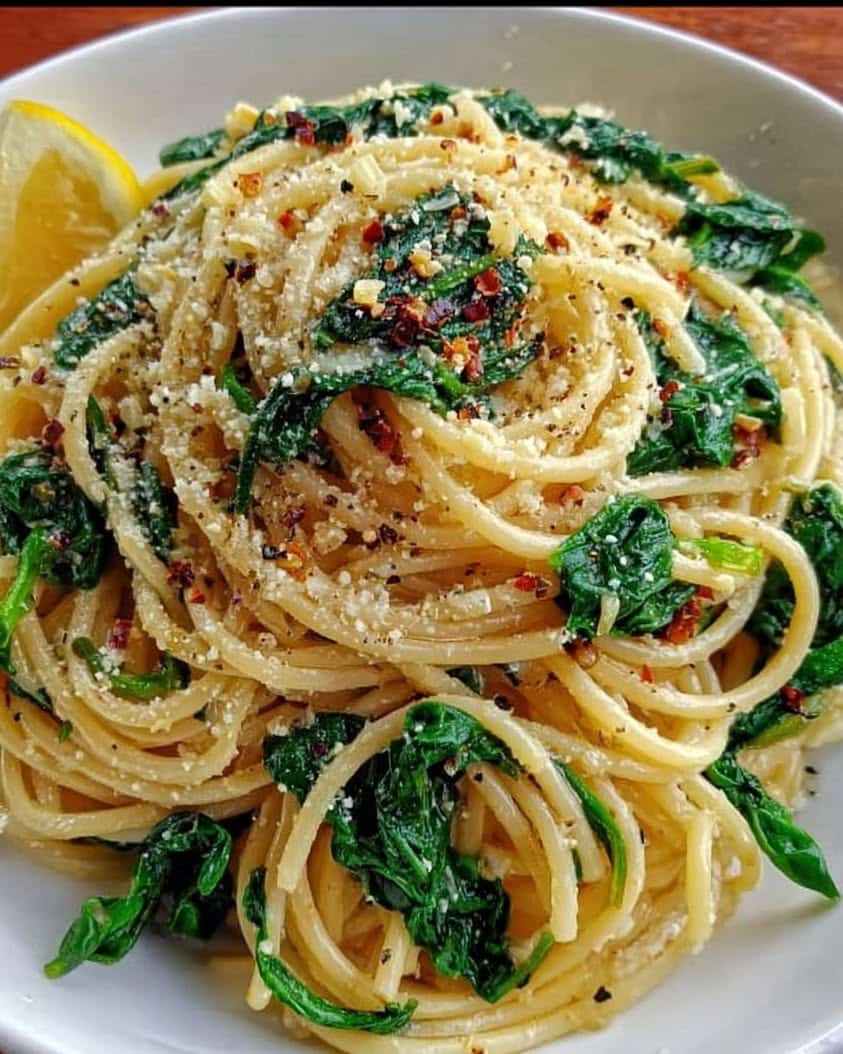
- Visual Appeal: Deep green spinach ribbons wrap around pale golden spaghetti strands. In addition, flecks of red pepper and pale garlic slices add color contrast. As a result, the finished plate looks vibrant yet effortless.
- Skill Level Needed: You only need basic boiling and sautéing skills for this Spaghetti with Garlic & Spinach. Therefore, complete beginners can succeed on the first try. Furthermore, experienced cooks can refine the dish with small upgrades.
- Special Equipment: A large pot for boiling pasta and a wide skillet for the sauce cover your needs. Additionally, a colander, tongs, and a wooden spoon make the process smooth. Meanwhile, a microplane helps if you prefer grated garlic over sliced.
Recipe Overview
- Difficulty Level: This recipe ranks as easy because it uses few ingredients and simple steps. Moreover, the whole dish cooks in the time it takes to boil water and pasta. Since the sauce comes together in minutes, you face little risk of burning or overcooking. As a result, even a first-time cook can serve this Spaghetti with Garlic & Spinach with confidence.
- Category: This dish works as a main course for lunch or dinner, yet it also shines as a side. Furthermore, you can serve it as a meatless entrée or pair it with protein. Consequently, it fits many spots on your weekly menu.
- Cuisine: The recipe draws from classic Italian aglio e olio traditions, which pair garlic and olive oil with pasta. Meanwhile, adding spinach nods to Italian cucina povera, where cooks stretch humble ingredients into full meals. Over time, American home cooks embraced the combo for its speed and affordability. Therefore, this Spaghetti with Garlic & Spinach blends Old World roots with modern convenience.
- Cost: The total cost usually lands between three and five dollars for four servings. In addition, pantry staples like olive oil, garlic, and dried pasta keep the price low. Spinach adds a small expense, yet frozen spinach cuts it further. Consequently, this recipe suits tight budgets without sacrificing flavor.
- Season: You can enjoy this dish year-round, although spring and early summer showcase the best fresh spinach. Furthermore, autumn and winter versions feel cozy with a touch of heat. Since the ingredients stay available in every season, the recipe never goes out of style.
- Occasion: Weeknight dinners, potlucks, and casual date nights all welcome this Spaghetti with Garlic & Spinach. Moreover, it works as a Meatless Monday staple or a quick lunch after a workout. Because it looks elegant on a plate, it even suits small dinner parties.
Why You’ll Love This Recipe
The taste and texture of this Spaghetti with Garlic & Spinach win people over at the first bite. Garlic turns mellow and sweet once it meets warm olive oil, losing its harsh raw edge. Meanwhile, the spinach softens into ribbons that cling to each strand of pasta. Consequently, you get a harmonious mix of savory, peppery, and slightly bright notes. In addition, the glossy coating of oil carries flavor into every crevice, so no bite feels plain. Above all, the dish tastes far richer than its short ingredient list suggests.
Convenience and preparation benefits make this recipe a weeknight hero. You boil pasta, sauté aromatics, and combine everything in one pan within thirty minutes. Furthermore, cleanup stays minimal because the sauce cooks in a single skillet. Since the ingredients keep well in the pantry and fridge, you can make this Spaghetti with Garlic & Spinach on a whim. Moreover, the recipe needs no marinating, no oven time, and no complicated timing. As a result, it beats takeout on speed and cost.
Nutritional advantages add another reason to love this dish. Spinach delivers iron, vitamin K, vitamin A, and folate, while olive oil offers heart-healthy monounsaturated fats. Additionally, garlic brings antioxidants and supports immune health. Because you control the salt and oil, you build a lighter meal than most restaurant versions. Consequently, this Spaghetti with Garlic & Spinach fits balanced eating without feeling like a sacrifice. Furthermore, adding protein or extra vegetables boosts the nutrition even more.
Social and entertaining value sets this recipe apart from ordinary pasta nights. Guests love the rustic presentation, and the aroma builds anticipation before serving. Moreover, you can plate it family-style in a big bowl and let everyone serve themselves. Since the dish suits vegetarians, it pleases mixed crowds with ease. In addition, you can pair it with wine and appetizers for a relaxed dinner party. Therefore, this Spaghetti with Garlic & Spinach earns compliments without stressing the host.
Cost-effectiveness and accessibility make the recipe truly universal. Dried spaghetti, garlic, olive oil, and spinach rank among the cheapest items in any grocery store. Furthermore, most households already stock these staples, so you rarely need a special trip. Since the method relies on basic equipment, renters and dorm cooks can manage it too. Meanwhile, the dish scales up cheaply for a crowd. As a result, this Spaghetti with Garlic & Spinach delivers maximum value for minimal spend.
Historical Background and Cultural Significance
The origin story of this Spaghetti with Garlic & Spinach traces back to southern Italy, where cooks built meals from what they had. Garlic, olive oil, and pasta formed the backbone of aglio e olio, a dish born from necessity rather than luxury. Moreover, families added whatever greens grew nearby, including spinach, kale, and broccoli rabe. Consequently, the combination of pasta, garlic, and greens became a staple across Italian regions. Over generations, the recipe traveled with immigrants to the United States and evolved further.
Cultural importance surrounds simple pasta dishes like this one because they represent Italian home cooking at its core. In Italy, cooks treat garlic and olive oil with respect, using them to highlight rather than mask flavors. Furthermore, the dish belongs to cucina povera, a tradition that celebrates frugality and ingenuity. Meanwhile, families pass these recipes down orally, adjusting them to taste. As a result, no single official version exists, and that flexibility keeps the tradition alive.
The evolution of the recipe reflects changes in kitchens and lifestyles over the decades. Early versions relied on hand-chopped garlic and stovetop patience, while modern cooks slice garlic thin for even browning. Additionally, pre-washed baby spinach and boxed pasta shortened prep time dramatically. In the 1990s, food magazines popularized quick pasta dinners like this Spaghetti with Garlic & Spinach for busy professionals. Consequently, the dish became a symbol of practical, modern home cooking.
Regional variations showcase how cooks around the world adapt the same idea. In Rome, cooks often add pecorino and black pepper for a cacio e pepe style twist. Meanwhile, Sicilian versions may include raisins and pine nuts for sweet-salty contrast. In the United States, cooks frequently add Parmesan, lemon zest, and red pepper flakes. Furthermore, some versions include anchovies for depth or cherry tomatoes for brightness. Therefore, this Spaghetti with Garlic & Spinach welcomes endless personal touches.
Ingredient Deep Dive
Spaghetti forms the foundation of this dish, and its history stretches across centuries of Italian cooking. Traditional pasta makers dried durum wheat semolina into long, thin strands that hold sauce beautifully. Nutritionally, spaghetti provides carbohydrates for energy plus some protein and fiber, especially in whole wheat versions. When selecting pasta, look for bronze-cut varieties that create a rough surface for sauce to cling to. Furthermore, store dry pasta in an airtight container away from moisture and heat. If you need a substitute, use linguine, fettuccine, or penne with equal success.
Garlic gives this Spaghetti with Garlic & Spinach its defining punch and carries deep cultural weight. Ancient cooks used garlic for medicine and flavor long before it became a kitchen staple. Moreover, garlic offers manganese, vitamin B6, and antioxidant compounds like allicin. When choosing garlic, pick firm, plump heads with tight skin and no green sprouts. In addition, keep whole heads in a cool, dry, dark spot rather than the refrigerator. If you run out, shallots, garlic powder, or garlic paste can step in, though fresh garlic tastes best.
Olive oil binds the sauce and carries the garlic flavor across every strand of pasta. Mediterranean cultures have pressed olives for oil for thousands of years, and the ingredient remains central to their diets. Furthermore, extra virgin olive oil provides monounsaturated fats and polyphenol antioxidants. For selection, choose cold-pressed extra virgin oil with a peppery finish and a harvest date on the label. Meanwhile, store the bottle away from light and heat to preserve freshness. If needed, avocado oil or a light vegetable oil works as a substitute, yet the flavor shifts noticeably.
Spinach adds color, nutrients, and earthy flavor to this Spaghetti with Garlic & Spinach. Persian cooks cultivated spinach centuries ago, and it spread through Europe and Asia along trade routes. Nutritionally, spinach packs iron, calcium, vitamin K, and folate into very few calories. When buying fresh spinach, choose crisp, deep green leaves without yellow spots or slime. Furthermore, refrigerate it in a breathable bag and use it within a few days. Frozen spinach works as a convenient substitute, and kale, arugula, or Swiss chard make fine alternatives.
Red pepper flakes bring gentle heat that lifts the whole dish and balances the oil. Cultures worldwide dry and crush chilies to preserve them and add warmth to meals. Moreover, capsaicin in chili peppers may support metabolism and reduce inflammation. Look for flakes with vibrant color and a strong aroma, which signal freshness. Store them in a sealed jar away from sunlight for up to a year. If you avoid heat, simply omit them or use sweet paprika instead.
Parmesan cheese adds salty umami that ties the ingredients together in this Spaghetti with Garlic & Spinach. Italian cheesemakers have aged wheels of Parmigiano-Reggiano for at least twelve months for centuries. Furthermore, the cheese supplies protein, calcium, and a concentrated savory flavor. Choose a wedge with a crumbly texture and a nutty scent rather than pre-shredded bags. Wrap the wedge tightly and refrigerate it for months. Nutritional yeast or Pecorino Romano make strong substitutes for different diets.
Common Mistakes to Avoid
- Burning the garlic tops the list of pitfalls in this Spaghetti with Garlic & Spinach. Garlic turns bitter within seconds once it browns too far. Therefore, keep the heat low and stir constantly.
- Overcooking the pasta ruins the texture of the entire dish. Mushy noodles cannot hold up to tossing and coating. Consequently, boil pasta one minute short of the package time and finish it in the skillet.
- Skipping the pasta water leaves your sauce thin and watery. Starchy water binds oil and garlic into a silky coating. As a result, always reserve at least one cup before draining.
- Using too little oil makes the dish dry and clumpy. Olive oil carries the flavor and creates the glossy finish. Therefore, measure generously rather than drizzling sparingly.
- Adding wet spinach creates a soupy mess in the pan. Excess water dilutes the garlic oil and steams the greens. Consequently, dry the leaves well or squeeze frozen spinach before adding it.
- Underseasoning the finished dish flattens every flavor note. Salt, pepper, and a squeeze of lemon wake up the whole bowl. Thus, taste and adjust right before serving.
- Crowding the pan prevents even cooking and browning. Too much spinach or pasta steams instead of sautés. Therefore, work in batches if your skillet runs small.
- Neglecting to toast the garlic properly leaves raw, harsh notes. Gentle golden browning develops sweetness and depth. As a result, watch the pan closely and pull it off heat at the right moment.
- Discarding the lemon misses a chance to balance richness. Acid cuts through oil and sharpens the garlic. Consequently, keep a wedge handy for the final toss.
- Rushing the emulsions leads to greasy, separated sauce. Tossing pasta with oil and water takes a full minute of stirring. Therefore, patience at this step rewards you with a creamy texture.
Essential Techniques
Boiling pasta properly sets the stage for this Spaghetti with Garlic & Spinach. You need a large pot with plenty of water so strands move freely and cook evenly. Moreover, salt the water generously once it boils, since seasoned water flavors pasta from the inside out. Stir during the first minute to prevent sticking, and taste a strand a minute before the package time ends. Consequently, you catch the perfect al dente moment and avoid mushy noodles.
Slicing garlic thinly, rather than mincing, prevents burning and delivers even golden color. Thin slices cook at the same rate, so no piece scorches while another stays raw. Furthermore, the slices turn sweet and crisp at the edges, adding texture to the sauce. Use a sharp knife and steady pressure for uniform pieces, and discard any green sprouts. As a result, your Spaghetti with Garlic & Spinach gains a mellow, nutty garlic flavor instead of bitterness.
Sautéing garlic in warm oil requires patience and attention because the window between golden and burnt is narrow. Heat the oil over medium-low, add the slices, and wait for a gentle sizzle rather than a violent pop. Stir often, and pull the pan off the heat the second the edges turn pale gold. Additionally, the residual heat continues cooking the garlic as you add other ingredients. Therefore, mastering this step transforms the entire dish.
Wilting spinach correctly keeps its color, nutrients, and texture intact. Add the greens in batches to the warm garlic oil and toss with tongs until they collapse. Moreover, stop cooking while the leaves still hold some structure, since they soften further in the hot pasta. If the spinach releases water, raise the heat briefly to evaporate it. Consequently, the final dish stays glossy rather than soggy.
Emulsifying the sauce with pasta water turns separate ingredients into a creamy, cohesive coating. Starch from the cooking water bonds with olive oil, creating a light sauce that clings to each strand. Furthermore, this step requires vigorous tossing in the warm pan, not just a gentle stir. Add water a splash at a time until the noodles glisten and slide easily. As a result, your Spaghetti with Garlic & Spinach tastes like a restaurant plate.
Pro Tips for Perfect Spaghetti with Garlic & Spinach
Start with the best olive oil you can afford, because its flavor dominates this Spaghetti with Garlic & Spinach. A peppery extra virgin oil adds character that cheap blends cannot match. Consequently, the dish tastes vibrant rather than flat.
Toast the red pepper flakes with the garlic for a few seconds to bloom their oils. This small step deepens the heat and spreads it evenly through the sauce. Furthermore, it prevents a raw, dusty taste in the final bowl.
Grate the Parmesan finely so it melts into the hot pasta instead of clumping. Microplane graters work well for a fluffy texture that blends fast. Therefore, every bite carries a whisper of salty umami.
Reserve more pasta water than you think you need, since extra liquid stores easily. You can always add more during tossing, yet you cannot recover water you poured down the drain. In addition, a splash revives leftovers the next day.
Finish the dish with fresh lemon zest right before serving to add aromatic brightness. The zest lifts the garlic and spinach without adding sourness to the sauce. Meanwhile, a squeeze of juice balances the oil in the bowl itself.
Serve immediately in warm bowls, since pasta cools fast and oil firms as it sits. Warm bowls keep the noodles glossy and the sauce fluid through the last bite. Consequently, guests enjoy the dish at its peak.
Add a handful of toasted breadcrumbs for crunch if you want textural contrast. Toasted crumbs soak up garlic oil and add a rustic, satisfying bite. Moreover, they cost almost nothing and use up stale bread.
Variations and Adaptations
Regional variations of this Spaghetti with Garlic & Spinach appear across Italy and beyond. In Naples, cooks might add cherry tomatoes and a pinch of oregano for a southern feel. Meanwhile, Roman versions lean on Pecorino Romano and generous black pepper. Sicilian cooks occasionally toss in raisins, pine nuts, and a hint of saffron. Consequently, the same base recipe adapts to local pantries and tastes.
Seasonal adaptations keep the dish fresh throughout the year. Spring brings tender baby spinach and fresh peas, while summer welcomes cherry tomatoes and basil. In autumn, roasted squash or mushrooms add heartiness to the bowl. Furthermore, winter versions benefit from hearty greens like kale and chard. As a result, this Spaghetti with Garlic & Spinach never feels repetitive.
Dietary modifications let nearly everyone enjoy this recipe. Use gluten-free spaghetti for a celiac-friendly version and check the Parmesan for rennet if needed. Meanwhile, omit the cheese to make the dish dairy-free and vegan. Additionally, choose whole wheat pasta for extra fiber and a nuttier flavor. Therefore, small swaps open the dish to more eaters.
Flavor variations expand the profile without changing the method. Add anchovies to the oil for a deeper, savory backbone. Meanwhile, a teaspoon of soy sauce or miso brings umami and richness. For a smoky note, use smoked paprika instead of red pepper flakes. Consequently, you tailor the dish to your mood.
Texture modifications suit different preferences. Toasted pine nuts or almonds add crunch, while a drizzle of cream yields a silkier mouthfeel. Moreover, charring the spinach briefly in a hot pan creates crispy edges. Some cooks prefer chopped spinach for a finer texture in the sauce. As a result, texture becomes a personal design choice.
Presentation alternatives turn the same recipe into something new. Serve it as a cold pasta salad with lemon vinaigrette for summer picnics. Alternatively, shape it into a frittata or bake it with mozzarella for a casserole spin. You can also plate small portions as an appetizer on crostini. Therefore, one recipe yields many serving styles.
Serving and Presentation Guide
Plating techniques matter because this Spaghetti with Garlic & Spinach looks as good as it tastes. Use tongs to twirl a portion and place it gently in the center of a warm bowl. Moreover, leave a small nest of spinach and garlic visible on top for color contrast. A shallow bowl works better than a deep one, since it spreads the sauce evenly. Consequently, the dish appears intentional and appetizing.
Garnishing ideas range from simple to elegant depending on the occasion. A dusting of finely grated Parmesan and a pinch of red pepper flakes covers the basics. Furthermore, fresh parsley or basil adds a pop of green and a fresh aroma. Toasted breadcrumbs give a rustic finish, while lemon zest adds a bright edge. As a result, a few small touches elevate the plate.
Traditional accompaniments include crusty Italian bread and a simple green salad. The bread soaks up leftover garlic oil, and the salad adds cool crunch. Additionally, a glass of sparkling water with lemon cleanses the palate between bites. Some cooks serve antipasto or olives before the pasta for a full Italian meal. Meanwhile, garlic bread makes a hearty side for bigger appetites.
Modern serving suggestions fit casual and trendy tables alike. Pair the pasta with roasted cherry tomatoes or a burrata plate for a cafe-style spread. Furthermore, a soft-poached egg on top turns the dish into a brunch favorite. You can also serve it in small mason jars for a picnic or meal-prep lunch. Consequently, the recipe moves easily between settings.
Temperature considerations affect how the dish tastes and feels. Serve it hot straight from the pan so the oil stays fluid and the cheese melts. Moreover, warm the bowls briefly in the oven or with hot water for a restaurant touch. Cold versions work well as pasta salad, yet they need extra dressing. As a result, choose your temperature based on the occasion.
Portion control tips help you serve balanced plates without waste. A typical main-course portion runs about one and a half cups of finished pasta per person. Furthermore, side portions shrink to three-quarters of a cup for lighter meals. Use a measuring cup or a pasta fork to keep servings consistent. Meanwhile, extra portions store well for next-day lunches.
Wine and Beverage Pairing
Wine pairings for this Spaghetti with Garlic & Spinach favor crisp, acidic whites that stand up to garlic. A dry Pinot Grigio or Vermentino cuts through the olive oil beautifully. Furthermore, Sauvignon Blanc brings herbal notes that echo the spinach. For red lovers, a light Sangiovese or Barbera works without overpowering the dish. Consequently, the right pour sharpens every flavor.
Non-alcoholic alternatives keep the meal refreshing and family-friendly. Sparkling water with lemon or lime cleanses the palate between bites. Additionally, an iced green tea with mint offers gentle bitterness that balances the oil. Some diners enjoy a grapefruit spritzer for a tart, bright contrast. As a result, everyone at the table has a fitting drink.
Coffee and tea pairings may sound unusual, yet they work for lunch or late suppers. A light green tea echoes the spinach and adds grassy notes. Meanwhile, a mild black tea with lemon provides structure without heaviness. If you serve the dish cold as a salad, an iced hibiscus tea adds tartness. Therefore, tea drinkers need not feel left out.
Temperature considerations apply to drinks just as they do to food. Serve white wine well chilled around fifty degrees for maximum crispness. Furthermore, red wines taste best slightly cool rather than room warm when paired with garlic. Sparkling water should arrive cold with plenty of ice. As a result, temperature shapes the entire tasting experience.
Serving suggestions include offering water pitchers on the table and pouring wine in small glasses. Moreover, let guests choose their own pairings rather than pre-pouring. A small tray with lemon wedges and mint sprigs invites customization. Consequently, the table feels welcoming and relaxed.
Storage and Shelf Life
Storage methods for this Spaghetti with Garlic & Spinach determine how well leftovers keep their texture. Cool the pasta within an hour of cooking, then transfer it to shallow airtight containers. Moreover, press plastic wrap directly onto the surface to limit air exposure. As a result, the noodles stay moist and the spinach keeps its color.
Temperature requirements for food safety call for refrigeration below forty degrees Fahrenheit. Never leave pasta sitting at room temperature for more than two hours. Furthermore, store it on a middle shelf rather than the door, where temperatures fluctuate. As a result, you avoid bacterial growth and preserve quality.
Container recommendations favor glass with locking lids for the cleanest results. Glass resists stains and odors better than plastic, and it reheats evenly in the microwave. Additionally, portion leftovers into single servings so you only reheat what you need. Consequently, the dish tastes fresher every time.
Signs of spoilage include sour smells, slimy textures, and dull or grayish spinach. Mold appears as fuzzy patches in white, green, or black. Furthermore, any off odor means it is time to discard the container. Therefore, when in doubt, throw it out.
Reheating instructions begin with a splash of water or broth in the pan or bowl. Cover and warm gently over medium-low heat or in short microwave bursts. Moreover, stir often so the pasta heats evenly without drying at the edges. A drizzle of fresh olive oil at the end restores gloss. As a result, leftovers taste nearly as good as day one.
Freezing guidelines allow you to store portions for up to two months. Freeze the pasta in flat, freezer-safe bags for fast thawing. Furthermore, thaw overnight in the refrigerator rather than on the counter. Reheat gently with added liquid to revive the texture. Consequently, you build a stash of quick meals.
Make Ahead Strategies
A prep timeline makes this Spaghetti with Garlic & Spinach even faster on busy nights. Wash and dry spinach, slice garlic, and grate cheese up to two days ahead. Moreover, measure spices and store them in a small dish for grab-and-go cooking. As a result, the actual cooking window shrinks to about twenty minutes.
Storage between steps requires airtight containers and refrigerator space. Keep sliced garlic in oil in a small jar for up to three days, though fresh is best. Furthermore, store washed spinach in a paper-towel-lined container to absorb moisture. Grated cheese keeps well in a sealed bag for a week. Consequently, each component stays fresh until you need it.
Quality impact assessment shows that most prepped ingredients hold up beautifully. Garlic loses a bit of punch after slicing, yet it still tastes strong in the finished dish. Spinach may soften slightly, but cooking hides the difference. Cheese keeps full flavor when stored properly. Therefore, make-ahead work rarely costs you quality in this recipe.
Assembly tips help you combine everything quickly when hunger strikes. Boil pasta while you warm the skillet and add garlic to the oil. Furthermore, toss spinach into the pan just as the pasta finishes. Then combine everything with pasta water and cheese in one smooth motion. As a result, dinner lands on the table without stress.
Reheating guidelines for prepped components differ from reheating finished leftovers. Warm the garlic oil gently before adding fresh-cooked pasta for the best texture. Additionally, avoid reheating spinach twice, since it turns mushy and dull. If you must, add it at the very end of the warm-up. Consequently, you protect color and flavor.
Fresh element additions make reheated portions taste new again. A squeeze of lemon, a pinch of chili flakes, or a shower of parsley revives the bowl. Moreover, a tablespoon of fresh olive oil restores the glossy finish. Some cooks add cherry tomatoes or olives for a quick change. Therefore, leftovers never feel boring.
Scaling Instructions
Halving the recipe for this Spaghetti with Garlic & Spinach suits two diners or a light meal. Use half the pasta, garlic, oil, and spinach, yet keep the pasta water generous. Furthermore, a smaller skillet heats faster, so lower the flame slightly. As a result, the sauce stays balanced and the pasta cooks evenly.
Doubling or tripling the recipe works well for parties and meal prep. Use your largest pot and cook pasta in batches if needed to avoid sticking. Moreover, increase the garlic gradually rather than doubling it outright, since flavor intensity grows fast. Add pasta water in splashes until the sauce coats everything. Consequently, a big batch tastes just as good as a small one.
Equipment adjustments matter when you scale up. A wide, deep skillet or a braising pan handles double batches better than a small sauté pan. Furthermore, long tongs make tossing large volumes easier and safer. Use a second burner for a backup pan if your main one fills up. As a result, you keep the process smooth and controlled.
Timing modifications shift slightly when quantities change. Large pots of water take longer to boil, so start them earlier. Meanwhile, bigger batches of spinach wilt unevenly, so add them in stages. Tossing also takes longer with more pasta, so allow an extra minute or two. Therefore, plan ahead and avoid rushed mistakes.
Storage considerations for scaled batches call for extra containers and fridge space. Cool large volumes quickly by spreading pasta on sheet pans before refrigerating. Furthermore, label containers with dates to track freshness. Portion into single servings for easy reheating. As a result, big batches feed you for days.
Nutritional Deep Dive
The macro breakdown for this Spaghetti with Garlic & Spinach lands around 420 calories per serving. Each portion delivers roughly 60 grams of carbohydrates, 12 grams of protein, and 14 grams of fat. Furthermore, fiber from spinach and pasta adds about 4 grams per serving. Sodium depends on your cheese and salt use, so adjust to taste. Consequently, the dish fits a moderate-calorie eating plan.
Micronutrient analysis reveals a nutrient-dense plate despite the simple ingredients. Spinach supplies vitamin K, vitamin A, folate, iron, and calcium. Moreover, olive oil delivers vitamin E and polyphenol antioxidants. Garlic contributes manganese, vitamin B6, and selenium. As a result, the dish supports bone, heart, and immune health.
Health benefits extend beyond basic nutrition in this Spaghetti with Garlic & Spinach. Olive oil supports cardiovascular health and may reduce inflammation. Furthermore, garlic compounds show antimicrobial and antioxidant properties in studies. Spinach promotes eye health through lutein and zeaxanthin. Consequently, the recipe earns a place in a balanced diet.
Dietary considerations include gluten, dairy, and sodium for some eaters. Standard spaghetti contains gluten, though gluten-free brands work fine. Parmesan adds dairy and salt, so vegans and low-sodium diners can adjust. Furthermore, portion size matters for anyone managing blood sugar. Therefore, simple tweaks keep the dish suitable for many needs.
Portion analysis helps you match the recipe to your goals. A one-and-a-half-cup serving suits active adults and hungry teens. Meanwhile, a one-cup portion works for lighter appetites or weight management. Add a side salad or lean protein to stretch smaller servings. As a result, you control the plate without changing the recipe.
Weight management tips focus on balance rather than restriction. Fill half your plate with extra vegetables, such as roasted peppers or arugula. Furthermore, use whole wheat pasta for slower-digesting carbs and more fiber. Measure oil rather than free-pouring to keep calories in check. Consequently, this Spaghetti with Garlic & Spinach supports sensible eating.
Dietary Adaptations
For a gluten-free version, swap standard spaghetti for brown rice, corn, or lentil pasta. These options cook quickly, so check them a minute early to avoid mushiness. Furthermore, verify that your Parmesan and seasonings contain no hidden gluten. Use a clean pot and colander to prevent cross-contact. As a result, everyone at the table can enjoy the dish safely.
For a dairy-free version, skip the Parmesan or use a dairy-free alternative. Nutritional yeast adds a cheesy, savory note without any milk. Moreover, check that your pasta and spices carry no dairy additives. A drizzle of olive oil at the end keeps the dish rich and glossy. Consequently, the recipe stays satisfying without cheese.
For a vegan version, combine the gluten-free and dairy-free swaps for a fully plant-based meal. Nutritional yeast replaces Parmesan, and the garlic oil carries the flavor. Furthermore, add toasted nuts or breadcrumbs for body and texture. Taste and adjust salt, since plant-based versions often need a little more seasoning. As a result, vegans enjoy a hearty, flavorful plate.
For a low-carb version, replace spaghetti with zucchini noodles, spaghetti squash, or hearts of palm noodles. These options cook fast, so warm them briefly rather than boiling. Moreover, reduce the oil slightly and lean on lemon and herbs for brightness. Add protein like chicken or shrimp to keep you full. Therefore, this Spaghetti with Garlic & Spinach fits low-carb plans.
For a keto version, choose low-carb noodles and boost fat with extra olive oil and cheese. Furthermore, keep portions moderate and count total carbs carefully. Add grilled chicken or sausage for protein without carbs. Season generously, since keto palates need bold flavor. As a result, the dish suits ketogenic macros with small changes.
For a paleo version, use spiralized vegetables or sweet potato noodles instead of pasta. Additionally, skip the Parmesan and finish with olive oil, lemon, and herbs. Toasted almonds or walnuts add paleo-friendly crunch. Meanwhile, cook the noodles lightly to keep their bite. Consequently, paleo eaters get a satisfying bowl.
For a low-FODMAP version, limit garlic to garlic-infused oil, which carries flavor without the fructans Print
Spaghetti with Garlic & Spinach
- Total Time: 25 minutes
- Yield: 4
Description
A quick and flavorful pasta dish featuring spaghetti tossed with sautéed garlic and fresh spinach, finished with a touch of olive oil and Parmesan cheese.
Ingredients
- 12 ounces spaghetti
- 1/4 cup olive oil
- 6 cloves garlic, thinly sliced
- 10 ounces fresh spinach, stems removed
- 1/2 teaspoon red pepper flakes (optional)
- Salt and black pepper to taste
- 1/2 cup grated Parmesan cheese (optional)
Instructions
- Cook spaghetti in a large pot of salted boiling water according to package instructions until al dente. Reserve 1/2 cup of pasta water, then drain.
- While pasta cooks, heat olive oil in a large skillet over medium heat. Add garlic and red pepper flakes (if using). Cook until garlic is fragrant and lightly golden, about 1-2 minutes. Be careful not to burn.
- Add spinach to the skillet and cook until wilted, about 2-3 minutes. Season with salt and black pepper.
- Add the cooked spaghetti to the skillet with the spinach mixture. Toss well to combine, adding reserved pasta water as needed to loosen the sauce.
- Remove from heat and stir in Parmesan cheese, if desired. Serve immediately.
Notes
You can customize the seasonings to taste.
- Prep Time: 10 minutes
- Cook Time: 15 minutes
- Method: Main
- Cuisine: Italian