Orange-Cranberry Braised Beef Short Ribs with Ginger and Garlic: A Crowd-Pleasing Comfort Classic
Orange-Cranberry Braised Beef Short Ribs with Ginger and Garlic deliver deep, savory satisfaction with a bright, tangy twist. Therefore, this dish earns a permanent spot in your cold-weather rotation. The meat falls apart at the touch of a fork, while the sauce balances rich beef flavor against citrus zest and tart cranberries. Moreover, the ginger and garlic add a warm, aromatic backbone that keeps every bite interesting. If you want a showstopping dinner that still feels approachable, this recipe delivers exactly that.
Furthermore, this recipe rewards patience rather than technical precision. You brown the short ribs, build a fragrant braising liquid, and let the oven do the heavy lifting. Consequently, you gain three hours to prep sides, set the table, or simply relax. The orange-cranberry braised beef short ribs with ginger and garlic also fill your kitchen with an irresistible aroma that signals comfort is on the way. Meanwhile, the sauce reduces into a glossy, spoon-coating glaze that makes the final plate look restaurant-worthy.
Additionally, this dish suits both weeknight dinners and holiday gatherings. The ingredient list stays short and affordable, yet the results taste luxurious. Because short ribs contain plenty of collagen, the long braise transforms tough cuts into silky, tender meat. In addition, the cranberry-orange combination brings a festive note that pairs beautifully with mashed potatoes, polenta, or crusty bread. As a result, home cooks of moderate experience can serve this orange-cranberry braised beef short ribs with ginger and garlic with total confidence.
Quick Recipe Highlights
- Flavor Profile: Rich beef umami meets bright orange zest, tart cranberry, and warm ginger-garlic depth, creating a savory-sweet balance that never turns cloying.
- Texture: The short ribs turn fork-tender and almost gelatinous from slow braising, while the reduced sauce coats each piece with a silky, luxurious glaze.
- Aroma: Citrus oils, toasted garlic, and fresh ginger mingle with red wine and herbs, filling the kitchen with an inviting fragrance long before serving time.
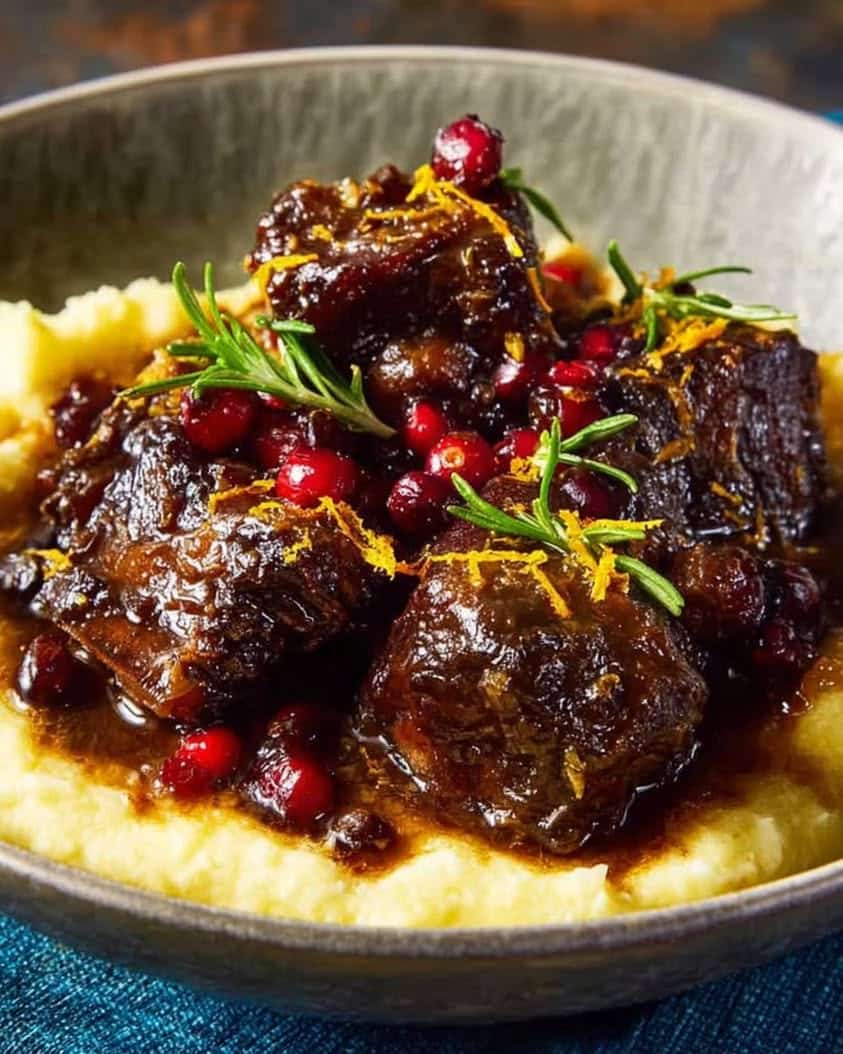
- Visual Appeal: Deep mahogany ribs glisten beneath jewel-toned cranberry sauce, especially when scattered with orange zest and fresh parsley for contrast.
- Skill Level Needed: Intermediate cooks will feel comfortable with browning and braising, though beginners can succeed by following the temperature and timing cues closely.
- Special Equipment: A heavy Dutch oven provides even heat, while tongs, a fine-mesh strainer, and a good chef knife make the process smoother and safer.
Recipe Overview
- Difficulty Level: We rate this recipe intermediate because it involves searing, deglazing, and a long covered braise. However, none of these steps require advanced knife skills or pastry technique. The main challenge lies in patience and temperature control, and the payoff justifies the effort.
- Category: This dish works as a main course for dinner, and it also shines as a holiday centerpiece or Sunday supper. Home cooks often serve it alongside starches and greens for a complete plate.
- Cuisine: The recipe blends American comfort cooking with French braising technique and a cranberry-orange pairing rooted in New England tradition. Ginger and garlic add an Asian-inspired aromatic layer. Consequently, the dish reads as modern American fusion with global influences.
- Cost: Short ribs remain an economical cut compared to steaks or roasts, often costing less per pound at butcher counters. Pantry staples like orange, cranberries, ginger, and garlic keep the total budget friendly. Budget roughly for six generous servings at a moderate grocery cost.
- Season: Fall and winter suit this recipe best because cranberries peak in autumn and the hearty braise warms cold evenings. However, you can make it year-round using frozen cranberries and fresh citrus.
- Occasion: Holidays, dinner parties, birthdays, and cozy family weekends all fit this dish. Because it holds well and reheats beautifully, it also suits potlucks and make-ahead entertaining.
Why You’ll Love This Recipe
First, the taste and texture hit every note a comfort-food lover craves. The beef develops a concentrated, beefy richness through slow braising, and the collagen melts into a velvety sauce. Meanwhile, the orange and cranberry cut through the fat with bright acidity. Consequently, each bite feels rich yet balanced, never heavy or greasy. The ginger adds a subtle warmth at the finish, and the garlic rounds out the savory base. Without a doubt, this orange-cranberry braised beef short ribs with ginger and garlic recipe turns an inexpensive cut into a memorable meal.
Second, convenience plays a big role in this recipe’s appeal. You do most of the work in the first thirty minutes, and the oven handles the rest unattended. Therefore, you gain freedom to multitask or entertain while dinner cooks. In addition, the dish holds beautifully for hours on low heat, which removes the stress of precise timing. Cleanup stays manageable because the whole meal cooks in one pot. Furthermore, leftovers taste even better the next day, giving you a second dinner with zero extra effort.
Third, the nutritional profile offers real advantages for a hearty dish. Short ribs supply ample protein, iron, and zinc, along with collagen that supports joint health. Moreover, the sauce relies on fruit and aromatics rather than heavy cream or butter. As a result, the dish delivers richness without excessive dairy. The cranberries add antioxidants, and the orange contributes vitamin C, which also aids iron absorption. When you pair the ribs with vegetables, you create a well-rounded plate that satisfies both body and appetite.
Fourth, this recipe shines as a social and entertaining centerpiece. Presenting a Dutch oven of glistening short ribs at the table draws gasps and starts conversations. In addition, the dish accommodates dietary preferences with easy adjustments, so hosts can please mixed guests. The bold orange-cranberry flavor also appeals to people who usually find braised beef too heavy. Because the recipe scales easily, you can feed a crowd without extra stress. Ultimately, serving this orange-cranberry braised beef short ribs with ginger and garlic makes guests feel cared for and impressed.
Fifth, cost-effectiveness keeps this recipe in regular rotation. Short ribs cost far less than premium steaks, yet they deliver a more dramatic result. The remaining ingredients live in most pantries, and the cranberries work fresh or frozen. Therefore, you can serve an elegant dinner for six without straining your budget. Additionally, the dish uses the whole cut, including bone and connective tissue, which rewards slow cooking rather than waste. In short, this recipe proves that smart shopping and patient cooking beat expensive ingredients every time.
Historical Background and Cultural Significance
Braised short ribs trace their roots to European peasant cooking, where families transformed tough, inexpensive cuts into tender meals. French cooks perfected the technique of low, slow braising in covered pots, calling it braiser. Over time, the method traveled to American kitchens, where home cooks adapted it to local ingredients. Consequently, short ribs became a staple of soul food, Sunday suppers, and rustic farmhouse tables across the country.
The cranberry-orange pairing carries its own cultural weight in the United States. Native American communities used cranberries long before European settlers arrived, and the fruit became central to New England cooking. By the twentieth century, cranberry sauce with orange zest appeared on holiday tables nationwide. Therefore, combining this flavor profile with braised beef connects European technique with distinctly American ingredients. The dish tells a story of immigration, adaptation, and regional pride on a single plate.
Moreover, ginger and garlic reflect the global influences that shaped American cooking. Garlic arrived with Mediterranean and Eastern European immigrants, while ginger entered through Asian culinary traditions and the spice trade. Both ingredients now anchor countless American recipes. When you add them to a French braise with New England fruit, you create a modern fusion dish. Subsequently, the recipe honors old-world methods while embracing a multicultural pantry.
Finally, regional variations of this dish appear across the country. Southern cooks often add molasses or bourbon, while New England versions lean into maple and cider. West Coast chefs might finish with citrus segments and fresh herbs. Regardless of region, the core idea remains the same: tough beef, bright fruit, and aromatic spices transform into something remarkable. As a result, this orange-cranberry braised beef short ribs with ginger and garlic recipe joins a long lineage of American braises while standing proudly on its own.
Ingredient Deep Dive
Beef Short Ribs: Short ribs come from the chuck, rib, or plate section of the cow, and they contain abundant connective tissue and marbling. Historically, butchers reserved this cut for working families because it demanded long cooking. Today, chefs prize short ribs for their deep flavor and luxurious texture after braising. Nutritionally, they deliver protein, iron, zinc, and collagen, though they also carry significant fat. When selecting ribs, look for meaty bones with even marbling and a bright red color. Choose bone-in English-cut ribs for the best braise, and store them in the coldest part of your fridge for up to three days. If short ribs stay unavailable, substitute chuck roast, oxtail, or lamb shanks with adjusted timing.
Oranges: Oranges originated in Southeast Asia and spread through trade routes to the Mediterranean and the Americas. Consequently, citrus became a signature flavor in many cuisines, from Moroccan tagines to Cuban mojo. The fruit provides vitamin C, fiber, and antioxidants, especially in the zest. For this recipe, choose navel or Valencia oranges with firm skin and fragrant zest. Store them at room temperature for a week or in the fridge for a month. When oranges are out of season, use tangerines or a blend of lemon and orange juice.
Cranberries: Native American communities used cranberries for food, medicine, and dye long before colonists arrived. The tart berry later became a Thanksgiving icon and a New England agricultural staple. Cranberries offer vitamin C, fiber, and polyphenols linked to urinary and heart health. Fresh cranberries should feel firm and bounce when dropped, while frozen berries work equally well in braises. Keep fresh berries refrigerated for up to a month or frozen for a year. Dried cranberries, unsweetened cherry juice, or pomegranate seeds make solid substitutes.
Ginger: Ginger has anchored Asian, Indian, and Caribbean cooking for thousands of years, prized for its warmth and digestive benefits. The rhizome contains gingerol, a compound with anti-inflammatory properties. Fresh ginger should feel heavy and smell sharp, with smooth skin and no mold. Store it in the fridge for three weeks or freeze it whole for months. Ground ginger works in a pinch, but fresh delivers far more brightness. If you run out, galangal or a mix of cinnamon and cardamom can approximate the warmth.
Garlic: Garlic originated in Central Asia and spread across the ancient world, becoming foundational in Mediterranean, Asian, and Latin American cuisines. Beyond flavor, garlic provides allicin, a compound studied for cardiovascular and immune benefits. Choose firm, tight heads with papery skin and no green sprouts. Store garlic in a cool, dry, ventilated spot away from sunlight. Pre-minced garlic saves time but tastes flatter, so fresh cloves remain the gold standard. Shallots or leeks offer milder substitutes when needed.
Common Mistakes to Avoid
- Crowding the pot during searing: When short ribs touch each other, they steam instead of brown. Therefore, sear in batches and give each piece space.
- Skipping the pat-dry step: Wet meat resists browning and produces a pale, bland crust. Dry the ribs thoroughly with paper towels first.
- Using high heat for the entire braise: Boiling toughens the meat and breaks the sauce. Keep the oven low and the liquid at a gentle simmer.
- Under-seasoning the braise: The liquid needs bold seasoning because the meat absorbs salt slowly. Taste and adjust before the oven step.
- Adding all the cranberries at the start: Early berries dissolve into mush and lose their tart pop. Reserve some for the final thirty minutes.
- Forgetting to deglaze: The browned bits hold enormous flavor, so scrape them into the sauce with wine or stock.
- Opening the oven too often: Each peek drops the temperature and extends cooking time. Trust the timer and keep the lid on.
- Serving straight from the oven: Resting the ribs for fifteen minutes lets juices redistribute and the sauce settle.
- Skipping the skim: Fat rises to the surface after braising, and skimming keeps the sauce clean and glossy.
- Reheating at high heat: Gentle reheating preserves tenderness, while boiling ruins the texture.
Essential Techniques
Searing builds the flavor foundation for the entire dish. High heat triggers the Maillard reaction, which creates hundreds of savory compounds on the meat’s surface. To master searing, pat the ribs dry, season generously, and heat oil until it shimmers. Place each rib down away from your body, then leave it undisturbed for three to four minutes. Visual cues matter: look for a deep brown crust and easy release from the pan. Avoid crowding and resist the urge to flip repeatedly, since constant movement prevents browning.
Deglazing lifts the browned bits from the pot bottom and dissolves them into the sauce. Those caramelized fragments carry concentrated flavor, so skipping this step wastes them. After searing, pour wine or stock into the hot pot and scrape with a wooden spoon while it bubbles. Watch for the liquid to darken and the bits to release cleanly. Common pitfalls include using cold liquid, which slows the process, or failing to scrape thoroughly. Once the surface looks clean, add the remaining ingredients and proceed.
Braising combines moist heat with low temperature to break down collagen over time. Collagen converts to gelatin between 160 and 180 degrees Fahrenheit, which creates that silky, lip-smacking texture. Maintain a gentle simmer, never a rolling boil, and keep the pot covered to trap steam. Check doneness with a fork: it should slide in with almost no resistance. Pitfalls include impatience, insufficient liquid, and uneven oven heat. Therefore, use an oven thermometer and add liquid if the pot runs dry.
Reducing the sauce concentrates flavor and creates a glossy finish. After removing the ribs, strain the liquid and simmer it until it coats a spoon. Stir occasionally and skim fat as it rises. Visual cues include a slight thickening and a darker color. Avoid over-reducing, which makes the sauce salty and sticky. A finished sauce should taste bright, beefy, and balanced, with clear orange and cranberry notes.
Pro Tips for Perfect Orange-Cranberry Braised Beef Short Ribs with Ginger and Garlic
Season the ribs a full day ahead when possible. Overnight salting penetrates the meat and seasons it from within. Consequently, the final dish tastes deeper and more uniform. Pat them dry again before searing for an even crust.
Brown the tomato paste and aromatics briefly before adding liquid. This step caramelizes sugars and blooms the spices. In addition, it removes the raw canned taste from the paste.
Use a combination of stock and wine for the braising liquid. The wine adds acidity and complexity, while stock provides body. Therefore, the sauce tastes layered rather than flat.
Add half the cranberries early and half near the end. Early berries thicken the sauce, while late berries keep their tart character and shape. This two-stage approach builds complexity.
Nestle the ribs bone-side up in the pot. This orientation keeps the meat submerged and protects it from drying. Moreover, it encourages even cooking throughout the braise.
Skim the fat twice, once after braising and once after chilling. The result is a clean, glossy sauce that tastes bright rather than greasy. If you chill overnight, the fat solidifies and lifts off easily.
Finish the sauce with a small knob of cold butter and fresh orange zest off the heat. The butter adds silkiness, and the zest restores brightness lost during cooking. Whisk gently until the sauce shines.
Serve in warmed bowls or on warm plates. Warm vessels keep the rich sauce fluid and the meat hot through the meal. Cold plates dull the experience quickly.
Variations and Adaptations
Regional variations bring local character to the dish. Southern cooks often add a splash of bourbon and a spoonful of molasses for deeper sweetness. New England versions may include apple cider and maple syrup instead of wine. On the West Coast, chefs finish with fresh tangerine segments and cilantro. Because the base recipe stays flexible, you can adapt it to your pantry and your region.
Seasonal adaptations keep the dish fresh year-round. In autumn, use fresh cranberries and add roasted squash on the side. During summer, swap in cherries and serve over grilled corn polenta. Spring calls for citrus-forward versions with extra zest and fresh herbs. Winter begs for the classic cranberry-orange pairing with root vegetables braised alongside the meat.
Dietary modifications expand the recipe’s reach. Gluten-free cooks should use certified stock and skip flour, relying on reduced sauce for body. Dairy-free versions replace butter with olive oil or coconut oil. Low-carb eaters serve the ribs over cauliflower puree instead of potatoes. Each change preserves the core orange-cranberry-braised-beef identity while meeting specific needs.
Flavor variations let you tailor the profile. Add star anise for a licorice note, or smoked paprika for warmth. A tablespoon of soy sauce deepens umami, while a spoonful of Dijon mustard sharpens the sauce. Because the braise is forgiving, small additions rarely overwhelm it.
Texture modifications matter for different preferences. Shredding the meat into the sauce creates a ragu perfect for pasta. Leaving ribs whole keeps the dramatic bone-in presentation. Similarly, blending some of the braised vegetables into the sauce thickens it naturally. Each approach yields a distinct eating experience with the same flavor DNA.
Presentation alternatives suit various occasions. Family-style service in the Dutch oven feels rustic and generous. Individually plated portions with sauce swooshes look elegant for dinner parties. Slider-style servings on brioche buns turn the recipe into upscale party food. In every case, the orange-cranberry braised beef short ribs with ginger and garlic remain the star.
Serving and Presentation Guide
Plating technique sets the tone for the meal. Place a mound of mashed potatoes or polenta in the center, then lean one or two ribs against the starch. Spoon the sauce over the meat so it cascades naturally. Therefore, the sauce becomes part of the visual story rather than an afterthought.
Garnishing ideas elevate the plate without clutter. Use orange zest curls, fresh parsley, and a few whole cranberries for color. A scatter of pomegranate seeds adds sparkle and crunch. Additionally, a sprig of thyme ties the herb notes back to the braise.
Traditional accompaniments include mashed potatoes, buttered egg noodles, and crusty bread for sopping. Creamy polenta offers a gluten-free alternative that mirrors the richness. In addition, braised greens such as collards or kale bring color and acidity.
Modern serving suggestions push the recipe in fresh directions. Serve over farro with roasted Brussels sprouts for a grain-bowl approach. Pile the meat onto creamy risotto or spoon it over smashed sweet potatoes. Consequently, the dish fits casual and upscale menus alike.
Temperature considerations matter for the final experience. Serve the ribs hot, with the sauce steaming and the meat glistening. Warm the plates if possible, and keep extra sauce hot at the table. Because the dish cools quickly, mindful serving preserves its appeal.
Portion control keeps the meal balanced. One large bone-in rib per person generally satisfies, while two suit heartier appetites. For buffets, slice the meat off the bone and let guests serve themselves. As a result, portions stretch further without skimping on flavor.
Wine and Beverage Pairing
Wine pairings should match the dish’s richness and acidity. A bold Zinfandel offers jammy fruit that echoes the cranberry. Meanwhile, a Syrah with peppery notes complements the ginger. Cabernet Sauvignon works for its tannin and depth, which cut through the fat beautifully.
For a lighter approach, try a dry Riesling or an off-dry Chenin Blanc. These whites carry enough acidity and fruit to balance the sweet-tart sauce. Gamay or Pinot Noir also work well when you want dinner to feel less heavy. Therefore, choose based on the season and your guests’ preferences.
Non-alcoholic alternatives deserve equal attention. Sparkling cranberry-orange mocktails mirror the dish perfectly. Spiced apple cider, served warm, adds a seasonal touch. Bitter Italian sodas cleanse the palate between bites and refresh.
Coffee and tea pairings may sound unusual, but they work. A medium-roast black coffee echoes the deep braise with subtle bitterness. Strong black tea with orange peel offers a lighter parallel. Moreover, both choices suit an afternoon serving of leftovers.
Temperature considerations apply to all beverages. Serve reds slightly below room temperature to avoid amplifying alcohol heat. Whites and mocktails should be well chilled. Warm drinks should be genuinely hot, not lukewarm, to complement the dish.
Serving suggestions include decanting reds young and tannic for thirty minutes. Chill whites in an ice bath for quick results. Pour mocktails over crushed ice with orange slices for a festive look. Consequently, drinks become part of the experience rather than an accessory.
Storage and Shelf Life
Storage methods determine how well the dish keeps. Cool the ribs and sauce separately, then transfer to airtight containers. Therefore, the sauce chills faster and the fat separates cleanly. Label containers with the date to avoid guessing later.
Temperature requirements remain strict for safety. Refrigerate within two hours of cooking and keep the fridge at 40 degrees Fahrenheit or below. Store the pot on a middle shelf where cold air circulates. Consequently, the dish stays safe for up to four days.
Container recommendations favor glass or heavy plastic with tight seals. Keep the ribs in one container and the sauce in another for flexibility. If freezing, leave an inch of headspace for expansion. Therefore, containers resist cracks and leaks.
Signs of spoilage include sour smells, slimy textures, or cloudy sauce. If anything looks or smells off, discard it rather than risk illness. Normal fat caps and congealed gelatin are safe signs, so do not confuse them with spoilage.
Reheating instructions matter for texture. Warm gently on the stovetop over low heat or in a 300-degree oven until steaming. Avoid boiling, which toughens meat and breaks the sauce. Add a splash of stock if the sauce thickens too much.
Freezing guidelines work well for this dish. Freeze ribs and sauce together for up to three months. Thaw overnight in the fridge, then reheat gently. Because the flavors deepen over time, frozen portions taste nearly as good as fresh.
Make Ahead Strategies
Prep timeline advantage begins with ingredient setup. Chop onions, garlic, and ginger a day ahead and store them sealed in the fridge. Zest and juice the oranges the same day you cook for brightness. Therefore, the cooking session feels quick and organized.
Storage between steps keeps everything safe and fresh. Brown the ribs, cool them, and refrigerate overnight for a fast next-day braise. Keep braising liquid separate until cooking day. Consequently, you split the work and simplify the schedule.
Quality impact assessment shows little downside to making this dish ahead. In fact, braises taste better after a day because flavors meld. The only caution involves reheating, which should stay gentle. When handled well, make-ahead versions rival fresh batches.
Assembly tips focus on the final warm-up. Reheat the ribs in their sauce, then adjust seasoning with fresh orange juice or a pinch of salt. Add fresh cranberries during reheating for texture and tartness. Therefore, the finished dish feels lively, not leftover.
Reheating guidelines stay consistent across methods. Low and slow wins every time, whether on the stove or in the oven. Stir the sauce gently and baste the ribs to keep them moist. Avoid microwaving large portions, which heats unevenly.
Fresh element additions restore the dish after storage. Add orange zest, herbs, or a squeeze of citrus at the end. A handful of pomegranate seeds or sliced scallions brings color. Consequently, no one guesses the dish was made days earlier.
Scaling Instructions
Halving the recipe works easily for smaller households. Use three ribs and a smaller Dutch oven, and reduce the liquid by about half. However, keep the braise time similar because the liquid depth matters more than the amount of meat. Check for doneness with a fork as always.
Doubling or tripling requires larger equipment and extended timing. Use a larger pot or divide between two Dutch ovens to avoid crowding. Add twenty to thirty minutes to the braise, then check tenderness. Consequently, the sauce may need extra reduction before serving.
Equipment adjustments prevent common problems. A larger pot exposes more surface area, which speeds evaporation. Therefore, keep extra stock warm and top off the braise as needed. Tongs and a wide strainer help with larger batches too.
Timing modifications account for thermal mass. Larger pots take longer to heat and cool, so expect a slower rise to simmer. Similarly, cooling before storage takes more time. Plan ahead and let science guide your schedule.
Storage considerations change with volume. Bigger batches need more containers and more fridge space. Cool the sauce separately to save room and speed chilling. As a result, you avoid overloading shelves.
Flavor adjustments apply when scaling. Salt and spices do not always double linearly, so taste as you go. Acid needs may increase with volume, so keep extra orange juice handy. Consequently, a large batch stays balanced.
Nutritional Deep Dive
Macro breakdown for this dish centers on protein and fat. A typical serving provides substantial protein from the beef, along with fat from marbling and sauce. Carbs come mostly from cranberries and aromatics, keeping totals moderate. Because portions vary, use a tracker if you monitor macros closely.
Micronutrient analysis highlights iron, zinc, and vitamin C. Beef supplies heme iron and zinc, which support energy and immunity. Cranberries and orange add vitamin C and antioxidants. Consequently, the dish offers more than comfort alone.
Health benefits extend beyond basic nutrition. Collagen from braised short ribs supports joints and skin, while ginger offers anti-inflammatory compounds. Orange zest contributes flavonoids. In moderation, the dish fits a varied, whole-food approach.
Dietary considerations invite small tweaks. Those watching saturated fat can skim the sauce thoroughly and choose leaner ribs. Sodium-conscious cooks can use low-sodium stock. Therefore, the recipe adapts without losing identity.
Portion analysis keeps expectations realistic. One bone-in rib with sauce and a modest starch serving suits most adults. Pair with generous vegetables to balance the plate. Consequently, the meal feels satisfying without excess.
Weight management tips include serving the sauce sparingly and choosing vegetable-heavy sides. Because the flavor is intense, smaller portions satisfy fully. Slow eating and warm plates also enhance satiety. Therefore, enjoyment and moderation coexist.
Dietary Adaptations
Gluten-free versions require certified stock and wine, plus skipping flour-based thickeners. Reduce the sauce for body instead, or use a cornstarch slurry. Check labels on cranberry products too. Consequently, the dish fits gluten-free needs without compromise.
Dairy-free preparation avoids finishing butter and replaces it with olive oil or a vegan butter. The braise itself contains no dairy, so changes stay minimal. Taste the sauce before serving and adjust salt. As a result, richness remains intact.
Vegan adaptations are challenging because beef defines the dish. However, thick-sliced portobello mushrooms or jackfruit braised in the same sauce offer a plant-based echo. Add chickpeas for protein and body. Therefore, the flavor profile survives the transformation.
Low-carb versions serve the ribs over cauliflower rice, pureed celeriac, or greens. Skip starchy sides and watch added sugars in cranberry products. The sauce’s natural tartness means little sweetener is needed. Consequently, carbs stay low while flavor stays high.
Keto adaptations align closely with low-carb choices. Use grass-fed butter for finishing and choose unsweetened cranberries. Monitor onion quantities and pair with high-fat sides like cauliflower mash. Therefore, keto diners enjoy a compliant comfort meal.
Paleo versions skip wine and refined thickeners, using bone broth and arrowroot instead. Choose grass-fed beef and organic produce when possible. Serve with roasted vegetables rather than grains. Consequently, the dish fits paleo principles.
Low-FODMAP adaptation requires caution with garlic and onion. Use garlic-infused oil and the green tops of scallions instead. Limit cranberry portions if sensitivity occurs. As a result, sensitive diners can still enjoy the meal.
Other specific diets may need small swaps. Whole30 cooks skip wine and sweeteners entirely, leaning on orange juice for brightness. Mediterranean-style eaters pair the ribs with greens and whole grains. Each adjustment keeps the orange-cranberry braised beef short ribs with ginger and garlic spirit alive.
Troubleshooting Guide
Texture issues usually stem from heat or time. Tough meat needs more braising time at a lower temperature, while mushy meat signals overcooking. Check with a fork every twenty minutes near the end. Consequently, you catch problems before they escalate.
Flavor balance problems fall into salty, sweet, or flat categories. Too salty calls for more unsalted stock or a potato simmer. Too sweet needs acid, so add orange juice or vinegar. Flat flavors need salt, zest, and fresh herbs. Therefore, taste and adjust in small increments.
Temperature problems arise from ovens that run hot or cold. Verify with an oven thermometer and calibrate if needed. Keep the braise at a gentle simmer, never a boil. As a result, collagen breaks down properly.
Equipment challenges include thin pots that scorch and lids that seal poorly. Use a heavy Dutch oven and a tight-fitting lid, or add parchment under the lid. Check liquid levels more often in thin pots. Consequently, even heat protects the sauce.
Ingredient substitutions can shift flavor and texture. Dried cranberries need rehydration, and bottled orange juice lacks zest brightness. Fresh ingredients always win, but add zest or acid to compensate. Therefore, substitutions work when you adjust thoughtfully.
Timing concerns often involve hungry guests and stubborn meat. Start earlier than you think necessary, since braises hold well. If the ribs finish early, lower the oven to 200 degrees and hold them covered. As a result, dinner stays warm and tender.
Recipe Success Stories
Community feedback highlights how often this dish becomes a holiday tradition. Readers report making it for Christmas Eve and New Year’s Day with rave reviews. Many note that guests ask for the recipe before dessert arrives. Consequently, the orange-cranberry braised beef short ribs with ginger and garlic earn repeat appearances.
Variation successes include bourbon-spiked versions and slow-cooker adaptations. One reader swapped cranberries for cherries with excellent results. Another added chipotle for a smoky kick. Therefore, the recipe proves flexible across tastes.
Adaptation stories show the dish traveling well. A reader in Florida serves it over grits, while one in Vermont pairs it with maple-glazed carrots. Others freeze portions for new parents and busy weeks. As a result, the recipe fits many lifestyles.
Reader suggestions include searing on a grill for smoky depth and adding a parmesan crust before broiling. Some recommend making it a day ahead for easier entertaining. Each idea builds on the original without breaking it. Consequently, the community keeps improving the dish.
Photography tips help readers capture the meal’s beauty. Shoot in natural light and angle the camera low to show the ribs’ height. Use a shallow depth of field to blur the background. Garnish with orange zest just before the shot. Therefore, home photos look magazine-ready.
Frequently Asked Questions
Can I use boneless short ribs for this recipe? Yes, boneless short ribs work well and often come from the chuck. However, they cook faster and may dry out, so check for doneness around the two-hour mark. Bone-in ribs deliver deeper flavor and a more dramatic presentation.
What if I cannot find fresh cranberries? Frozen cranberries perform beautifully and need no thawing. Dried cranberries work too, though they add sweetness, so reduce any added sugar. Tart cherry juice or pomegranate seeds also bring similar acidity and color.
Can I make this in a slow cooker? Absolutely. Sear the ribs on the stove first, then transfer everything to the slow cooker. Cook on low for seven to eight hours, then reduce the sauce on the stovetop. The flavor stays rich and the meat turns tender.
How do I know when the short ribs are done? A fork should slide in with almost no resistance, and the meat should pull away from the bone easily. The internal temperature typically reaches around 200 degrees Fahrenheit. If the meat clings to the bone, keep braising and check again in twenty minutes.
Why did my sauce turn out greasy? Short ribs release a lot of fat during braising. Skim the surface after cooking, or chill the sauce and lift off the solid fat. Print
Orange-Cranberry Braised Beef Short Ribs with Ginger and Garlic
- Total Time: 45 minutes
- Yield: 4
Description
Tender beef short ribs braised in a rich sauce of orange, cranberry, ginger, and garlic. A comforting and flavorful main dish perfect for special occasions.
Ingredients
- 4 lbs bone-in beef short ribs
- 1 teaspoon salt
- 1/2 teaspoon black pepper
- 2 tablespoons vegetable oil
- 1 large onion, chopped
- 4 cloves garlic, minced
- 1 tablespoon grated fresh ginger
- 1 cup orange juice
- 1 cup cranberry juice
- 1/2 cup dried cranberries
- 1/4 cup soy sauce
- 2 tablespoons brown sugar
- 1 tablespoon orange zest
- 2 cups beef broth
- 2 tablespoons cornstarch mixed with 2 tablespoons water (optional, for thickening)
Instructions
- Preheat oven to 325°F (165°C). Season short ribs with salt and pepper. In a large Dutch oven, heat oil over medium-high heat. Brown short ribs on all sides, working in batches. Remove and set aside.
- Reduce heat to medium. Add onion and cook until softened, about 5 minutes. Add garlic and ginger and cook for 1 minute until fragrant.
- Stir in orange juice, cranberry juice, dried cranberries, soy sauce, brown sugar, orange zest, and beef broth. Bring to a simmer, scraping up browned bits.
- Return short ribs to pot, cover, and transfer to oven. Braise for 2.5 to 3 hours, until meat is very tender.
- Remove ribs from pot and skim fat from sauce. If desired, thicken sauce with cornstarch mixture and simmer until thickened. Serve sauce over ribs.
Notes
You can customize the seasonings to taste.
- Prep Time: 15 minutes
- Cook Time: 30 minutes
- Method: Main
- Cuisine: American