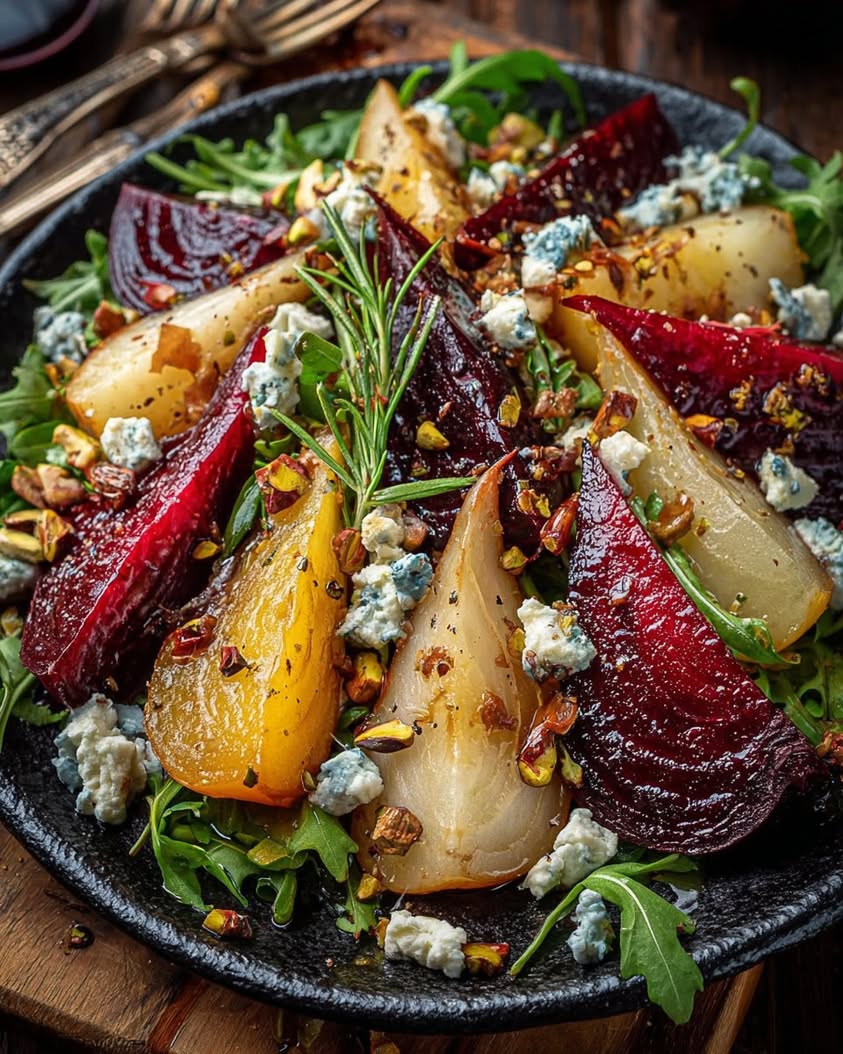
Roasted Beet and Caramelized Pear Salad with Feta and Pistachios: A Symphony of Sweet and Savory
This Roasted Beet and Caramelized Pear Salad with Feta and Pistachios is a stunning dish that transforms simple ingredients into a gourmet experience. Moreover, it masterfully balances earthy, sweet, tangy, and crunchy elements in every single bite. Consequently, this salad is perfect for anyone wanting to elevate their lunch or dinner with minimal effort. Ultimately, it delivers a beautiful presentation alongside a complex flavor profile that will impress any guest.
The journey of this salad begins with sweet, earthy beets roasted to tender perfection. Next, juicy pears get a quick caramelization in a hot pan, developing a rich, golden-brown exterior. Then, these warm components get tossed with peppery arugula, creamy feta cheese, and crunchy pistachios. Finally, a simple honey-balsamic vinaigrizzle ties everything together with a perfect sweet-tart finish. This Roasted Beet and Caramelized Pear Salad with Feta and Pistachios is not just a side dish; it’s a vibrant, satisfying meal.
Furthermore, this recipe is incredibly versatile and adapts beautifully to the seasons. For instance, you can serve it warm in the fall and winter or at room temperature during spring and summer gatherings. Additionally, it’s packed with nutrients, fiber, and healthy fats, making it a wholesome choice. Therefore, whether you need a show-stopping starter for a dinner party or a nutritious main course for a weeknight, this salad delivers on all fronts. In essence, it’s a celebration of texture and taste that you’ll want to make again and again.
Quick Recipe Highlights
- Flavor Profile: This salad offers a sophisticated dance of flavors. Earthy roasted beets meet the deep sweetness of caramelized pears. Meanwhile, tangy feta cheese and a honey-balsamic dressing provide the perfect counterbalance.
- Texture: Every forkful is a textural adventure. You get the tender, dense bite of the beets, the soft give of the warm pears, the crisp freshness of arugula, the creamy crumble of feta, and the satisfying crunch of pistachios.
- Aroma: The cooking process fills your kitchen with incredible aromas. First, the earthy scent of roasting beets emerges, followed by the sweet, buttery fragrance of pears caramelizing. Finally, the nutty toastiness of pistachios and the sharp tang of balsamic vinegar complete the sensory experience.
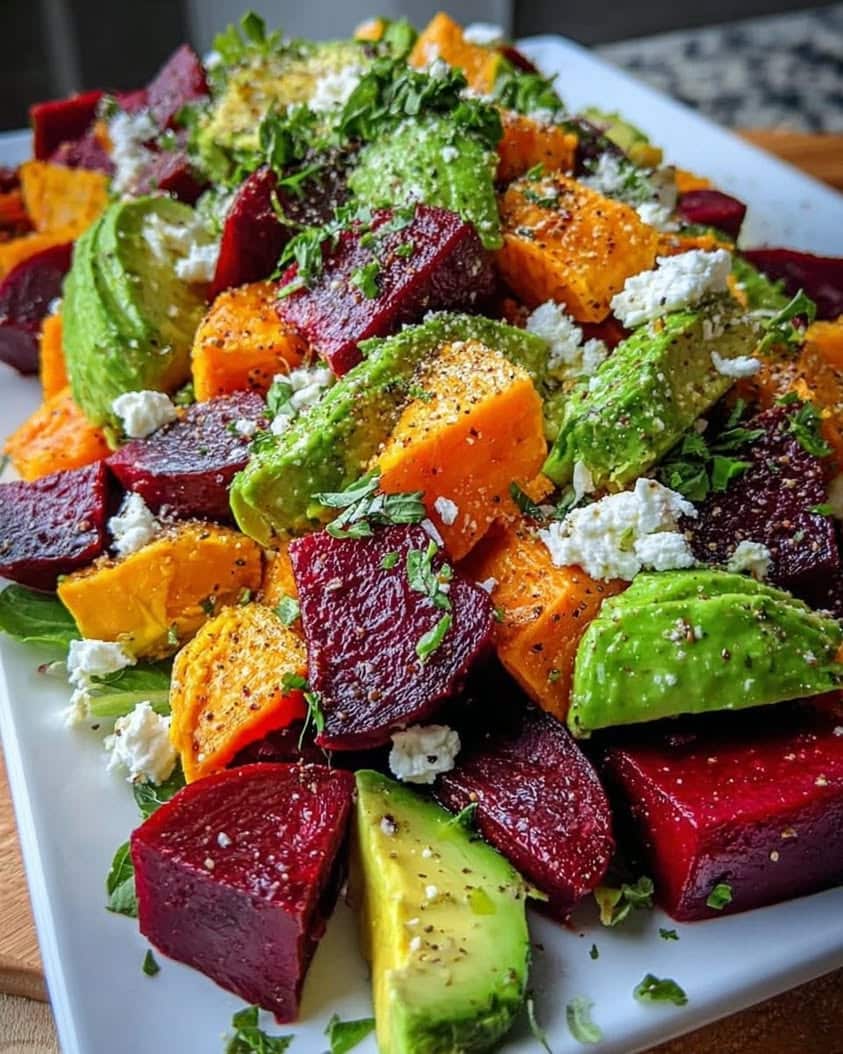
- Visual Appeal: This dish is a feast for the eyes with its stunning color contrast. Vibrant magenta and golden yellow beets create a beautiful base, accented by the green arugula, white feta, and green pistachios. It looks as impressive as it tastes.
- Skill Level Needed: This is an accessible recipe for most home cooks. The techniques are straightforward: roasting, simple pan-caramelizing, and whisking a dressing. No advanced culinary skills are required, just a bit of patience for the roasting time.
- Special Equipment: You only need basic kitchen tools. A baking sheet, parchment paper, a medium skillet, and a small mixing bowl are essential. A good chef’s knife for prepping the beets and pears is the most important tool.
Recipe Overview
- Difficulty Level: We rate this recipe as “Easy” because it involves fundamental techniques. Roasting beets is largely hands-off, and caramelizing pears requires only occasional attention. The assembly is simple layering and tossing. Therefore, even novice cooks can achieve fantastic results with this guide.
- Category: This dish fits beautifully into several meal categories. It’s substantial enough to be a light vegetarian main course for lunch or dinner. Alternatively, it serves as an elegant starter or a standout side dish alongside roasted chicken, pork, or fish.
- Cuisine: This salad draws inspiration from modern American and Mediterranean culinary traditions. The use of feta cheese and olive oil nods to the Mediterranean, while the technique of caramelizing fruit and combining sweet and savory elements is a hallmark of contemporary American cuisine.
- Cost: This is a moderately priced recipe that feels luxurious. Beets, pears, and arugula are typically affordable, especially in season. Feta cheese and pistachios are the pricier components, but a little goes a long way. Overall, you get restaurant-quality presentation and flavor for a fraction of the cost.
- Season: This Roasted Beet and Caramelized Pear Salad with Feta and Pistachios is truly an autumn and winter masterpiece. Beets and firm pears are at their peak during these cooler months. The warm components make it comforting when the weather turns cold, though it’s delightful year-round.
- Occasion: This salad is incredibly versatile for entertaining. It’s perfect for holiday meals like Thanksgiving or Christmas as a vibrant, fresh side. It also shines at dinner parties, potlucks, or even as a special weekend lunch to treat yourself.
Why You’ll Love This Recipe
First and foremost, the taste and texture appeal of this Roasted Beet and Caramelized Pear Salad with Feta and Pistachios is undeniable. Each component brings a unique element to the plate, creating a harmonious and exciting eating experience. The natural sweetness of the roasted beets and pears is perfectly cut by the salty, tangy feta. Meanwhile, the peppery arugula adds a fresh, slightly bitter note that grounds the dish. Finally, the honey-balsamic dressing and crunchy pistachios tie every flavor together, ensuring no single bite is boring or monotonous.
Secondly, the convenience and preparation benefits are significant. Although the total time is over an hour, most of it is inactive roasting time. You can prep the dressing and other ingredients while the beets roast. Furthermore, you can roast the beets a day or two in advance, making assembly on the day you serve it incredibly quick. This make-ahead flexibility is a huge advantage for busy hosts who want to serve something impressive without last-minute stress.
Nutritional advantages are another compelling reason to make this salad. Beets are a powerhouse of nutrients, including folate, manganese, and dietary nitrates that support heart health. Pears provide a good source of fiber and vitamin C. Arugula is rich in vitamins A, C, and K, and feta offers protein and calcium. Pistachios contribute healthy fats, protein, and antioxidants. Consequently, this dish is not only delicious but also nourishing and balanced.
Moreover, the social and entertaining value of this salad is high. Its stunning visual presentation—a mosaic of deep reds, bright greens, and creamy whites—immediately signals care and quality to your guests. It’s a conversation starter and a dish that people remember. Serving a beautiful, homemade salad like this shows thoughtfulness and culinary skill, elevating any simple gathering into a more special occasion.
Finally, the cost-effectiveness and accessibility of the ingredients make this a practical choice. You don’t need rare or expensive items. Most components are available at any standard grocery store. By transforming these humble ingredients through simple techniques like roasting and caramelizing, you create a dish that tastes far more expensive and complex than it actually is. This Roasted Beet and Caramelized Pear Salad with Feta and Pistachios is proof that eating well doesn’t require a huge budget, just a bit of creativity.
Historical Background and Cultural Significance
The origin story of combining beets and pears in a salad is relatively modern, rooted in the farm-to-table and New American cuisine movements. Historically, beets were primarily used in Eastern European cuisines, often boiled or pickled. Pears, with their long cultivation history across Europe and Asia, were typically eaten fresh, baked, or poached. The innovation of roasting beets to concentrate their sweetness and then pairing them with caramelized fruit is a contemporary chef’s technique designed to highlight and contrast natural sugars in vegetables and fruits.
Cultural importance for this dish lies in its embodiment of seasonal, vegetable-forward eating. It reflects a growing global appreciation for plant-based meals that are center-of-the-plate worthy. The inclusion of feta cheese connects it to the Mediterranean diet, one of the world’s most studied and celebrated patterns of eating for health and longevity. This salad, therefore, sits at a cultural crossroads: it utilizes ancient ingredients like beets and pistachios with modern preparation methods and presentation styles.
The evolution of the recipe follows broader food trends. Initially, beet salads might have featured goat cheese and walnuts—a classic combination. The substitution of pear for apple and pistachio for walnut represents a subtle evolution, offering a slightly different flavor and texture profile. The act of caramelizing the pear, rather than adding it raw, is a key development that adds depth and warmth, making the salad more suitable for colder months and more complex in taste.
Regional variations of this concept are plentiful. In the Middle East, a similar salad might feature pomegranate molasses in the dressing and sumac-dusted nuts. In Northern Europe, a dollop of crème fraîche might replace the feta, and dill could be the herb of choice. The basic template of roasted root vegetable + sweet fruit + cheese + nut + green is incredibly adaptable. This particular version with honey, balsamic, and arugula has a distinctly Californian or modern bistro feel, emphasizing bright, clean, and balanced flavors.
Ingredient Deep Dive
Beets: Beets have a history dating back to ancient times, originally cultivated for their greens. The root itself became popular in Roman cuisine. Nutritionally, they are rich in folate, essential for cell growth, and contain betalains, pigments with potent antioxidant and anti-inflammatory properties. When selecting beets, choose firm, smooth globes with vibrant, unwilted greens attached if possible. Store them unwashed in the refrigerator’s crisper drawer. For a substitution, try roasted sweet potatoes or carrots, though the color and earthy flavor will differ.
Pears: Pears are one of the oldest cultivated fruits, with evidence of consumption dating back to prehistoric times. They symbolize immortality in Chinese culture. A good source of dietary fiber and vitamin C, pears also contain copper and potassium. For this recipe, choose firm, barely ripe pears like Bosc or Anjou that will hold their shape during caramelization. Store at room temperature until ripe, then refrigerate. Apples are the most straightforward substitute, offering a similar texture and caramelizing ability.
Arugula: Also known as rocket, arugula has been a staple in Mediterranean diets since Roman times, valued for its peppery flavor. It’s packed with vitamins A, C, and K, as well as calcium and folate. The peppery bite helps cut through the richness of the other ingredients. Select bunches with bright, perky leaves and no signs of yellowing. Store it loosely wrapped in a damp paper towel in a plastic bag in the fridge. Baby spinach or mixed greens can be used, but they will provide a milder flavor.
Feta Cheese: Feta is a brined curd cheese with a protected designation of origin (PDO) in Greece, traditionally made from sheep’s milk or a sheep-goat blend. It provides a salty, tangy punch and creamy texture that contrasts beautifully with the sweet components. It offers protein, calcium, and beneficial fatty acids. Look for feta packed in brine for the best flavor and texture. For storage, keep it submerged in its brine in the refrigerator. Goat cheese (chèvre) is an excellent alternative, offering a similar tangy creaminess.
Pistachios: Pistachios are ancient nuts, mentioned in the Bible and beloved in Middle Eastern cuisine. They are a great source of healthy fats, protein, fiber, and antioxidants like lutein. Their vibrant green color and slight sweetness enhance the salad’s visual and taste appeal. Buy raw, unsalted pistachios for this recipe to control seasoning. Store them in an airtight container in a cool, dark place or the refrigerator to prevent rancidity. Walnuts or pecans make good substitutes, though their flavor is more robust and earthy.
Common Mistakes to Avoid
- Overcooking the Beets: Roasting beets until they are mushy destroys their pleasant, dense texture. They should be tender enough to pierce easily with a knife but still hold their shape when cubed. Check them a few minutes before the recommended time ends.
- Using Overripe Pears: Soft, juicy pears will turn to mush in the hot skillet. You need firm, slightly underripe pears that can withstand the heat and caramelize without disintegrating. Bosc or Anjou varieties are ideal for their firm flesh.
- Not Drying the Beets After Peeling: Skipping the step of patting the roasted and peeled beets dry can waterlog your salad. Excess moisture will dilute the dressing and make the greens soggy. Always take a moment to dry them thoroughly with paper towels.
- Crowding the Skillet with Pears: Adding all the pear slices at once will steam them instead of caramelizing them. For proper browning, cook in a single layer with space between slices. You may need to work in batches for the best results.
- Adding Dressing Too Early: Pouring the dressing over the warm beets and pears and then letting the salad sit will cause the arugula to wilt dramatically. For the freshest texture, dress the salad just before serving, or serve the dressing on the side.
- Using Pre-Crumbled Feta: Pre-crumbled feta is often drier and less flavorful than a block stored in brine. For the best creamy texture and tangy taste, buy a block of feta and crumble it yourself just before adding it to the salad.
- Neglecting to Toast the Pistachios: Raw pistachios are fine, but toasting them unlocks a deeper, nuttier flavor and enhances their crunch. Simply toast them in a dry skillet over medium heat for 3-5 minutes, watching carefully to prevent burning.
- Imprecise Dressing Emulsification: Simply stirring the dressing ingredients together won’t create a cohesive emulsion. Whisk vigorously as you slowly stream in the olive oil, or shake everything in a sealed jar. This creates a smooth, unified dressing that clings to the ingredients.
Essential Techniques
Roasting Beets: Roasting is crucial for developing the beets’ natural sweetness and concentrating their earthy flavor. Wrapping them in foil creates a mini-steam oven that cooks them evenly and makes the skins slip off easily. The key is to roast until a paring knife inserts with slight resistance. Under-roasting leaves them hard and difficult to peel; over-roasting makes them watery and bland. A visual cue for doneness is the ability to easily pierce the center of the largest beet.
Caramelizing Pears: This technique transforms the pears’ sugar into a complex, rich, golden-brown coating. The high heat of the skillet causes the pear’s natural sugars and the added honey to undergo the Maillard reaction, creating new flavor compounds. The common pitfall is moving the pears too often; let them sit undisturbed to develop a proper sear. Success is visible: you want deep golden spots on each slice, not a pale, steamed appearance.
Emulsifying a Vinaigrette: An emulsion is a stable mixture of two liquids that don’t normally combine, like oil and vinegar. Proper emulsification ensures the dressing coats the salad evenly and doesn’t separate in the bowl. The technique involves slowly incorporating the oil into the acid while whisking vigorously to break the oil into tiny droplets. If your dressing breaks, simply add a teaspoon of warm water or more mustard and re-whisk to bring it back together.
Pro Tips for Perfect Roasted Beet and Caramelized Pear Salad
Wear disposable gloves when peeling and cubing the roasted beets to prevent your hands from staining pink for days. This simple trick saves a lot of cleanup hassle.
Use a mandoline slicer for the pears to get uniformly thin slices. Consistent thickness ensures even caramelization, so every piece gets that perfect golden-brown edge without some burning while others remain pale.
Let the roasted beets cool completely before cubing them. If you cube them while too warm, they can bleed color excessively onto the other salad components, muddying the beautiful visual contrast.
Toast the pistachios in a dry skillet until fragrant. This deepens their flavor and adds an extra layer of warmth and crunch that raw nuts simply cannot provide.
If preparing components ahead, store the dressed beets and pears separately from the arugula, feta, and nuts. Assemble just before serving to maintain optimal texture—crisp greens, crunchy nuts, and distinct components.
Season each component layer. Lightly salt the roasted beets after cubing and the caramelized pears after cooking. This builds seasoned layers of flavor rather than relying solely on the dressing.
Use the pear’s core and trimming scraps. Simmer them with a little water, honey, and vinegar to make a quick pear-infused syrup. You can reduce it and add a drizzle to the finished salad for an extra flavor boost.
For a more substantial meal, add a protein. Grilled chicken breast, pan-seared halloumi cheese, or flaked smoked trout pair wonderfully with the sweet and savory flavors of this salad.
Variations and Adaptations
Regional Variations: For a Middle Eastern twist, replace the honey in the dressing with pomegranate molasses and sprinkle the salad with sumac and fresh mint. A French-inspired version might use toasted walnuts, Roquefort cheese, and a sherry walnut vinaigrette. Meanwhile, a Nordic adaptation could feature a dollop of horseradish crème fraîche and fresh dill.
Seasonal Adaptations: In spring, use roasted baby golden beets and substitute the pear with caramelized apricots. For summer, try grilled beet slices and fresh, uncaramelized peaches or nectarines. In deep winter, use hearty kale massaged with the dressing instead of arugula, as it holds up better to the warm ingredients.
Dietary Modifications: For a vegan version, omit the feta or use a firm vegan cheese alternative, and ensure the honey in the dressing is replaced with maple syrup or agave nectar. To make it nut-free, substitute toasted pumpkin seeds (pepitas) or sunflower seeds for the pistachios.
Flavor Variations: Introduce different herbs like tarragon or thyme into the dressing for an aromatic lift. Add a teaspoon of orange zest to the vinaigrette for a citrusy note. For a savory umami kick, crumble a little crispy prosciutto or bacon over the top before serving.
Texture Modifications: For added creaminess without more cheese, add slices of ripe avocado just before serving. For extra crunch, include homemade croutons or crispy fried shallots. If you prefer a softer overall texture, use massaged kale or butter lettuce instead of arugula.
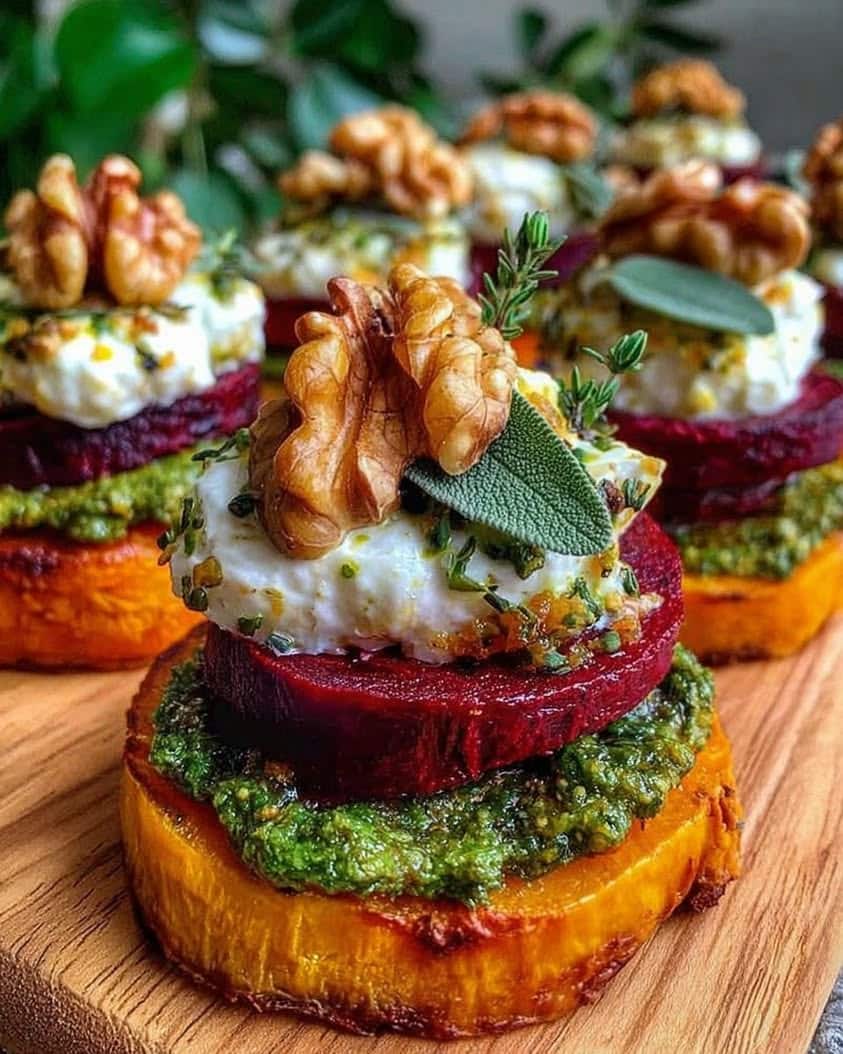
Presentation Alternatives: Serve the salad deconstructed on a large platter, arranging each ingredient in its own section for a stunning, modern presentation. Alternatively, for individual servings, use a ring mold to create a tall, elegant stack in the center of each plate.
Serving and Presentation Guide
Plating Techniques: For a family-style presentation, use a large, wide, shallow bowl or a beautiful platter. Start with a base of arugula, then artfully scatter the warm beets and pears over the top. This prevents the greens from wilting prematurely. Finally, sprinkle with feta and pistachios, letting some ingredients tumble over others for a rustic, abundant look.
Garnishing Ideas: Beyond the pistachios, consider a final flourish of fresh, delicate herbs. Microgreens, edible flowers, or small whole leaves of mint, chervil, or dill add a professional touch. A final crack of black pepper or a light drizzle of high-quality extra virgin olive oil just before serving enhances both flavor and sheen.
Traditional Accompaniments: This salad pairs classically with simply prepared proteins. Serve it alongside herb-roasted chicken, pan-seared salmon, or a grilled pork tenderloin. The salad’s brightness and complexity cut through the richness of the meat, creating a balanced plate.
Modern Serving Suggestions: For a contemporary vegetarian meal, top the salad with a soft-poached or jammy boiled egg. The runny yolk acts as a rich, additional dressing. Alternatively, serve it as a starter before a creamy soup, like butternut squash or mushroom, for a textural contrast.
Temperature Considerations: This salad is best served immediately after assembly while the beets and pears are still slightly warm (not hot) and the greens are crisp. The gentle warmth from the roasted components slightly wilts the arugula at the edges, which is desirable, but you want to avoid a fully wilted, soggy salad.
Portion Control Tips: As a main course, plan for about 1.5 to 2 cups of the assembled salad per person. As a side dish, 3/4 to 1 cup is sufficient. Remember, the beets and pears are satisfying, so a little goes a long way. You can always offer seconds if needed.
Wine and Beverage Pairing
Wine Pairings: The sweet and earthy notes in this Roasted Beet and Caramelized Pear Salad with Feta and Pistachios call for wines with good acidity to cut through the richness. A dry Rosé from Provence, with its bright red fruit and crisp finish, is a fantastic match. Alternatively, a Pinot Noir with its light body and earthy undertones complements the beets beautifully. For white wine lovers, an off-dry Riesling or a Gewürztraminer can mirror the fruitiness of the pears while balancing the tangy feta.
Non-Alcoholic Alternatives: Sparkling water with a twist of lemon or a splash of pomegranate juice provides a refreshing, palate-cleansing effervescence. For a more crafted option, try a honey-ginger lemonade; the ginger adds a spicy kick that plays well with the salad’s flavors. Iced herbal tea, like mint or hibiscus, also makes a delightful, refreshing companion.
Coffee/Tea Pairings: While not a typical pairing for salad, if serving this for a brunch or lunch, consider a light roast coffee with bright, fruity notes. For tea, a green tea like Sencha or a white tea would be lovely, as their delicate, vegetal flavors won’t overpower the dish. Avoid heavy, bitter coffees or strongly tannic black teas that could clash with the salad’s sweetness.
Temperature Considerations: Serve white wines and Rosés well-chilled, between 45-50°F. Red wines like Pinot Noir should be served slightly cooler than room temperature, around 55°F, to keep their freshness. Non-alcoholic beverages are best served cold or over ice to provide a refreshing contrast to the warm components of the salad.
Serving Suggestions: Always offer water alongside any other beverage to cleanse the palate. When serving wine, pour a small taste first to allow guests to experience how it interacts with the salad. For a party, consider creating a signature mocktail or cocktail that incorporates pear or honey to tie the drink menu to the food theme.
Storage and Shelf Life
Storage Methods: Store leftover components separately for the best quality. Place cooled roasted beets and caramelized pears in airtight containers in the refrigerator. Keep the crumbled feta, toasted pistachios, and undressed arugula in their own containers. The dressing can be stored in a sealed jar in the fridge.
Temperature Requirements: All components must be refrigerated at or below 40°F. The dressed salad, once assembled, does not keep well and should be consumed immediately. The individual prepped ingredients, however, will last for several days when stored properly in the cold environment of your refrigerator.
Container Recommendations: Use glass containers with tight-fitting lids for the beets and pears, as they can sometimes stain plastic. A salad spinner is ideal for storing the washed and dried arugula. For nuts, a small mason jar or a zip-top bag with the air pressed out will maintain their crunch.
Signs of Spoilage: Discard any component that develops an off odor, slimy texture (especially the greens or beets), or visible mold. The dressing may separate when cold; this is normal. Simply bring it to room temperature and shake vigorously to re-emulsify before using.
Reheating Instructions: If you wish to serve the salad warm again, gently reheat the beets and pears in a microwave in short bursts or in a skillet over low heat just until warmed through. Do not overheat, as this can further soften them. Always re-add them to fresh, cold greens and other toppings.
Freezing Guidelines: Freezing is not recommended for this salad. The high water content in the beets and pears will cause them to become mushy and watery upon thawing. The arugula and nuts will lose all texture. This is a dish best enjoyed fresh or from fridge-stored components within a few days.
Make Ahead Strategies
Prep Timeline: You can prep nearly this entire Roasted Beet and Caramelized Pear Salad with Feta and Pistachios 1-2 days in advance. Roast, peel, and cube the beets. Caramelize the pears and let them cool. Toast and chop the pistachios. Crumble the feta. Make the dressing. Wash and thoroughly dry the arugula. Store each element separately.
Storage Between Steps: As mentioned, the key to successful make-ahead is separate storage. The beets and pears can be combined in one container once completely cool. The dressing should be in its own jar. The arugula, feta, and nuts must remain separate to prevent sogginess and loss of texture.
Quality Impact Assessment: Prepping ahead has minimal negative impact if done correctly. The beets and pears may soften slightly but retain their flavor. The nuts may lose a bit of crunch, so you can re-toast them quickly in a dry pan before serving if needed. The overall flavor often improves as the beets have time to marinate in their own juices.
Assembly Tips: On the day of serving, take the beets and pears out of the fridge 30 minutes prior to let them come closer to room temperature. This prevents them from being ice-cold when served. Give the dressing a good shake. In your serving bowl, layer the arugula, then the beets and pears, then drizzle with dressing and toss gently. Finally, top with the feta and pistachios.
Reheating Guidelines: If you prefer the salad warm, you can briefly microwave the beets and pears (in a microwave-safe dish) for 30-45 seconds just to take the chill off. Do not make them hot, or they will wilt the greens instantly. Toss with the room-temperature dressing.
Fresh Element Additions: The arugula, feta, and pistachios are the “fresh” elements that should only be added at the last moment. This ensures the greens stay crisp, the cheese doesn’t dissolve, and the nuts retain their satisfying crunch. Even if you pre-crumble the feta, add it at the end.
Scaling Instructions
Halving the Recipe: Halving this Roasted Beet and Caramelized Pear Salad with Feta and Pistachios is straightforward for a smaller meal. Use one medium beet and one pear. Halve all other ingredient quantities. The roasting time for a single beet may be slightly less, so start checking for doneness at 35 minutes. Use a smaller skillet for caramelizing the pears to maintain good pan contact.
Doubling or Tripling: For a crowd, simply multiply the ingredients. Key consideration: roast the beets on multiple baking sheets, ensuring they are in a single layer and not crowded. You may need to roast in batches or use multiple oven racks, rotating the sheets halfway through. Caramelize the pears in batches to avoid steaming. Mix the dressing in a larger bowl or jar.
Equipment Adjustments: When scaling up, ensure you have a bowl or platter large enough to toss and serve the salad. A very large mixing bowl or a clean kitchen sink liner can be used for tossing a huge batch. For dressing, a blender or immersion blender can help emulsify a large quantity quickly.
Timing Modifications: The prep time will increase linearly when doubling. However, the roasting time for beets may increase slightly if the baking sheet is very crowded, as steam will build up. Allow a few extra minutes and rely on the knife-tenderness test. Caramelizing pears in batches will add active cook time.
Storage Considerations: A large batch means more leftovers. Plan your storage containers in advance. It’s even more critical to store components separately if you anticipate having leftovers, as a large dressed salad will wilt quickly and not keep.
Nutritional Deep Dive
Macro Breakdown: This salad provides a balanced mix of macronutrients. The healthy fats come primarily from the olive oil, pistachios, and feta cheese. Complex carbohydrates and fiber are supplied by the beets, pears, and arugula. A moderate amount of protein is present from the feta and pistachios. It’s a meal that provides sustained energy without a heavy, bloated feeling.
Micronutrient Analysis: This dish is a micronutrient powerhouse. Beets are rich in folate and manganese. Pears contribute vitamin C and copper. Arugula is loaded with vitamins A, C, and K, as well as calcium. Feta provides calcium and phosphorus. Pistachios offer B vitamins and antioxidants like lutein. Together, they support immune function, bone health, vision, and energy metabolism.
Health Benefits: The combination of ingredients promotes several health benefits. The dietary nitrates in beets may help lower blood pressure. The fiber from the pears, beets, and arugula supports digestive health. The monounsaturated and polyunsaturated fats from the olive oil and nuts are heart-healthy. The antioxidants throughout the dish combat oxidative stress and inflammation.
Dietary Considerations: This salad is naturally gluten-free. It is vegetarian but not vegan due to the feta and honey. It can be adapted to be low-carb by reducing the amount of pear and beet, though they are nutrient-dense carbohydrates. For those monitoring sodium, you can reduce the amount of feta or opt for a lower-sodium variety.
Portion Analysis: A serving as a main course provides a substantial volume of food that is satisfying due to its fiber, fat, and protein content. This helps with satiety and can prevent overeating later. As a side dish, it adds valuable nutrients and flavor without an excessive amount of calories, making it a superior choice to heavier, starch-based sides.
Weight Management Tips: This salad is an excellent ally for weight management. Its high fiber and water content promote fullness. The healthy fats slow digestion, further enhancing satiety. To reduce calories slightly, you can use a light hand with the olive oil in the dressing or increase the proportion of arugula, which is very low in calories.
Dietary Adaptations
Gluten-free: This recipe is naturally gluten-free as written. Simply ensure that all packaged ingredients, like pre-crumbled feta or pre-toasted nuts, are certified gluten-free, as cross-contamination can sometimes occur in processing facilities.
Dairy-free: Omit the feta cheese. For a creamy, tangy element, add a drizzle of tahini-lemon sauce or use crumbled dairy-free feta alternative. Nutritional yeast can also be sprinkled on top for a cheesy flavor note without the dairy.
Vegan: To make this Roasted Beet and Caramelized Pear Salad vegan, replace the feta with a vegan cheese or spiced chickpeas. Substitute the honey in both the caramelizing step and the dressing with maple syrup or agave nectar. Ensure the sugar used for caramelizing is vegan (most granulated sugar is, but some is processed with bone char).
Low-carb/Keto: Reduce the amount of beet and pear significantly, as they are higher in natural sugars. Increase the arugula and add more nuts and cheese for fat and protein. Use a keto-friendly sweetener like erythritol or allulose in place of honey for caramelizing the pears and in the dressing.
Paleo: Omit the cheese and dairy. Ensure the dressing is made with raw honey. The rest of the ingredients—beets, pears, arugula, pistachios, olive oil—are paleo-friendly. You could add avocado or grilled chicken for additional healthy fats and protein.
Low-FODMAP: This recipe can be tricky for a strict low-FODMAP diet due to the beets, pears, and honey. Use a small serving of roasted carrots instead of beets. Replace the pear with a small amount of orange segments. Use maple syrup instead of honey, and ensure the serving size of pistachios is limited (about 10-15 nuts per serving).
Troubleshooting Guide
Texture Issues (Soggy Salad): If Print
Roasted Beet and Caramelized Pear Salad with Feta & Pistachios
- Total Time: 45 minutes
- Yield: 4
Description
A vibrant and elegant salad featuring earthy roasted beets, sweet caramelized pears, creamy feta cheese, and crunchy pistachios, all tossed in a tangy balsamic vinaigrette.
Ingredients
- 3 medium beets, peeled and cubed
- 2 ripe pears, cored and sliced
- 2 tablespoons olive oil, divided
- 1 tablespoon honey
- 4 cups mixed greens (e.g., arugula, spinach)
- 1/2 cup crumbled feta cheese
- 1/4 cup shelled pistachios, roughly chopped
- 2 tablespoons balsamic vinegar
- 1 teaspoon Dijon mustard
- Salt and black pepper to taste
Instructions
- Preheat oven to 400°F (200°C). Toss cubed beets with 1 tablespoon olive oil, salt, and pepper. Spread on a baking sheet and roast for 25-30 minutes until tender, then let cool.
- While beets roast, heat remaining olive oil in a skillet over medium heat. Add pear slices and honey, cooking for 5-7 minutes until caramelized and golden, stirring occasionally. Remove from heat.
- In a small bowl, whisk together balsamic vinegar, Dijon mustard, salt, and pepper to make the vinaigrette.
- In a large salad bowl, combine mixed greens, roasted beets, caramelized pears, feta cheese, and pistachios. Drizzle with balsamic vinaigrette and toss gently to coat.
- Serve immediately as a refreshing side or light main dish.
Notes
You can customize the seasonings to taste.
- Prep Time: 15 minutes
- Cook Time: 30 minutes
- Method: Main
- Cuisine: American