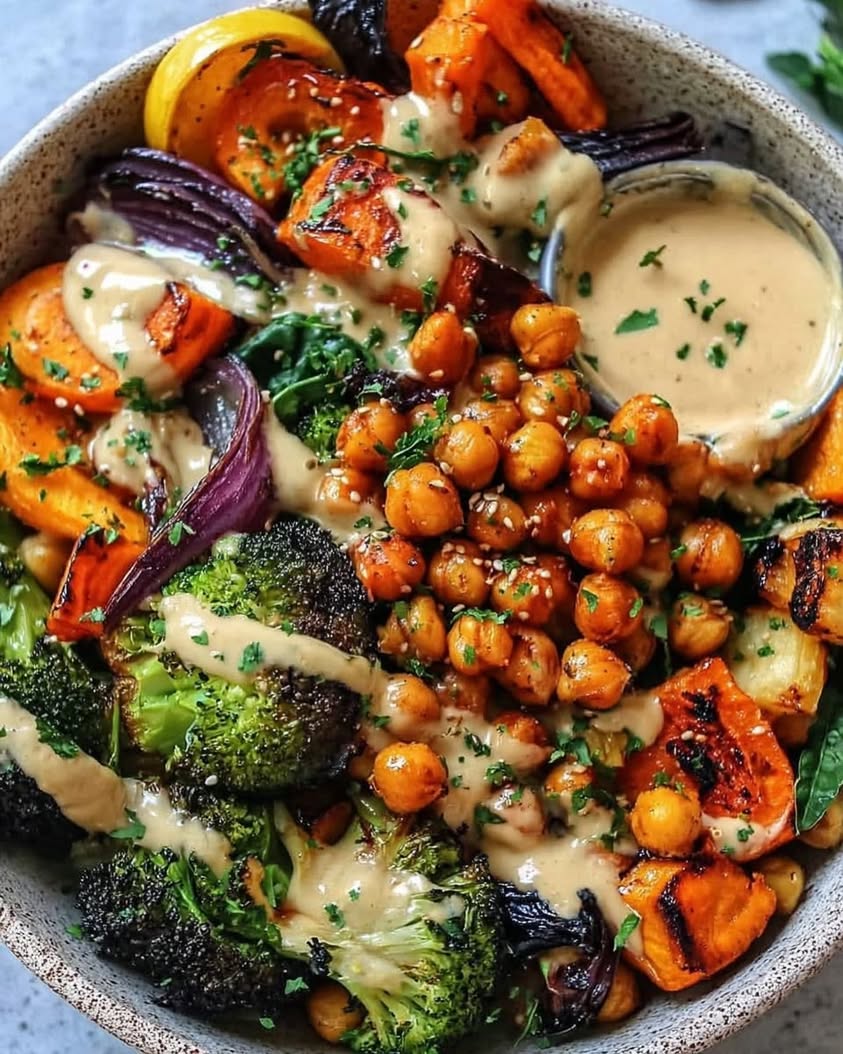
Roasted Veggie & Chickpea Bowls with Maple Tahini Dressing: A Vibrant and Satisfying Meal
Imagine a meal that is both a feast for the eyes and a powerhouse of nutrition. This recipe for Roasted Veggie & Chickpea Bowls with Maple Tahini Dressing delivers exactly that. It transforms simple, wholesome ingredients into a colorful and deeply satisfying dinner. The process begins with roasting, which caramelizes the natural sugars in the vegetables. Consequently, you get sweet, tender bites with deliciously crispy edges. Meanwhile, the chickpeas become wonderfully crunchy. Finally, everything gets drizzled with a creamy, dreamy dressing that ties the whole bowl together.
This dish is the ultimate answer to the question of what to make for a healthy, flavorful weeknight meal. It is incredibly versatile, allowing you to use whatever vegetables are in season or hiding in your crisper. Moreover, the maple tahini dressing is so good you will want to put it on everything. It strikes a perfect balance between tangy, sweet, and savory. Ultimately, these bowls are a celebration of plant-based eating that feels indulgent and nourishing all at once. They are a guaranteed way to make vegetables the star of your plate.
Beyond taste, these bowls are a masterclass in meal prep efficiency. You can roast the vegetables and chickpeas in a single pan. Simultaneously, you can whisk together the dressing in just a minute. As a result, you have a fantastic foundation for lunches or quick dinners all week long. The combination of fiber-rich veggies, protein-packed chickpeas, and healthy fats from the tahini creates a truly balanced meal. It will keep you full and energized for hours. This recipe proves that eating well does not have to be complicated or time-consuming.
Quick Recipe Highlights
- Flavor Profile: These bowls offer a symphony of tastes. You get the sweet, caramelized notes from the roasted vegetables, the savory, earthy depth from the chickpeas, and the bright, tangy creaminess from the maple tahini dressing. Each component complements the others perfectly for a complex and satisfying bite.
- Texture: The texture contrast is a key part of the appeal. Expect tender-crisp roasted vegetables alongside crunchy, crispy chickpeas. The creamy dressing and fluffy grain base provide a smooth and soft counterpoint, creating a delightful mouthfeel in every forkful.
- Aroma: As the vegetables and chickpeas roast, your kitchen will fill with an irresistible, warm fragrance. The scent of sweet potatoes and red onion caramelizing mingles with the earthy aroma of roasting chickpeas and dried herbs. It is the comforting smell of a healthy, homemade meal.
- Visual Appeal: This dish is a rainbow on a plate. The vibrant orange of sweet potato, deep purple of red onion, and green of broccoli create a stunning visual contrast. Drizzled with the pale, creamy dressing and garnished with fresh herbs, it is as beautiful as it is delicious.
- Skill Level Needed: This is a beginner-friendly recipe ideal for anyone new to cooking. The techniques are straightforward: chopping vegetables, tossing ingredients with oil, and roasting. Furthermore, the dressing simply requires whisking. No advanced culinary skills are required for success.
- Special Equipment: You need only basic kitchen tools. A large baking sheet, a good chef’s knife, a cutting board, and a mixing bowl are essential. Additionally, a small bowl or jar for the dressing and a whisk or fork to combine it will complete your setup.
Recipe Overview
- Difficulty Level: We classify this recipe as easy for several important reasons. First, the steps are simple and sequential with no complicated techniques. Second, most of the cook time is hands-off while the oven does the work. Finally, the ingredient list is composed of whole foods requiring minimal prep, making it accessible for cooks of all levels.
- Category: This dish fits beautifully into multiple meal categories. It is a stellar main course for a plant-based lunch or dinner. Alternatively, it works wonderfully as a hearty side dish or salad. Its components also make it an exceptional candidate for weekly meal prep, providing ready-to-eat nutritious meals.
- Cuisine: While not tied to one specific tradition, this bowl draws inspiration from Mediterranean and Middle Eastern culinary styles. The use of tahini, chickpeas, and olive oil is classic to those regions. However, the preparation method and vegetable combinations give it a modern, global fusion feel that is widely appealing.
- Cost: This is a remarkably budget-friendly meal. Staples like sweet potatoes, onions, and broccoli are inexpensive, especially in season. Canned chickpeas and pantry spices keep costs low. Tahini and maple syrup are the only potential splurges, but a little goes a long way, making the cost per serving very reasonable.
- Season: This recipe is fantastic year-round but shines brightest in the fall and winter. Root vegetables like sweet potato are at their peak, offering the best flavor and value. Conversely, you can easily adapt it for spring and summer by swapping in seasonal produce like zucchini, bell peppers, or asparagus.
- Occasion: These bowls are perfect for casual weeknight family dinners, healthy lunch prep, or even a simple dinner party. They are substantial enough to please a crowd yet easy enough to prepare without stress. Their vibrant presentation makes them feel special, while their simplicity keeps them grounded.
Why You’ll Love This Recipe
First and foremost, the taste and texture combination is utterly irresistible. The roasting process unlocks a deep, caramelized sweetness in the vegetables that is incredibly satisfying. Paired with the salty, crispy chickpeas, each bite offers a perfect contrast. Then, the maple tahini dressing swoops in with its creamy tang and subtle sweetness, uniting all the elements. It is a flavor profile that is both familiar and exciting, guaranteed to become a household favorite. You will find yourself craving the mix of savory, sweet, and earthy notes long after the bowl is empty.
From a convenience standpoint, this recipe is a true weeknight hero. The prep is minimal, involving mostly chopping and tossing. Once the ingredients are on the sheet pan, the oven takes over, freeing you up for other tasks. This hands-off cooking method is a game-changer for busy evenings. Moreover, the entire meal comes together on one pan, meaning cleanup is a breeze. You get a delicious, home-cooked dinner without spending hours in the kitchen or facing a mountain of dishes afterward.
Nutritionally, these bowls are a powerhouse. They are packed with fiber from the assortment of vegetables and chickpeas, which supports digestive health and promotes lasting fullness. The chickpeas provide a solid source of plant-based protein, essential for muscle repair and energy. Additionally, the healthy fats from the olive oil and tahini help your body absorb the fat-soluble vitamins from the veggies. This meal is a perfect example of how delicious food can also be incredibly nourishing for your body.
For entertaining or social meals, this recipe offers fantastic flexibility. You can easily double or triple the ingredients to feed a crowd without complicating the process. The bowls are naturally beautiful, requiring little effort to present impressively. You can also set up a “bowl bar” with all the components separated, allowing guests to build their own creations. This interactive element makes dinner fun and ensures everyone gets exactly what they love. It is a stress-free way to host that feels both thoughtful and modern.
Finally, the cost-effectiveness and accessibility of this dish cannot be overstated. It relies on affordable, whole-food ingredients that are easy to find at any grocery store. You can adapt the vegetable selection based on what is on sale or in season, making it even more budget-friendly. This approach reduces food waste and encourages creative cooking. Ultimately, this recipe proves that eating vibrant, healthy meals does not require expensive or hard-to-find ingredients. It is accessible, sustainable, and deeply rewarding.
Historical Background and Cultural Significance
The concept of the “grain bowl” or “Buddha bowl” has roots in various global food traditions, though its modern popularity is a relatively recent phenomenon. Essentially, the idea of combining a grain, protein, vegetables, and a sauce in one vessel is a practical and balanced approach to eating found in many cultures. For instance, Korean bibimbap mixes rice, vegetables, protein, and a spicy sauce. Similarly, Hawaiian poke bowls combine rice, raw fish, and vegetables. Our Roasted Veggie & Chickpea Bowls with Maple Tahini Dressing sits within this contemporary, fusion-inspired tradition, prioritizing plant-based, whole-food ingredients.
Culturally, the rise of the bowl meal reflects a shift towards mindful, customizable eating. It moves away from the rigid structure of a protein-centric plate with sides. Instead, it embraces a more holistic and visually appealing presentation where all components hold equal importance. This style of eating aligns with modern nutritional understanding, emphasizing variety, color, and balance. The bowl format encourages the inclusion of diverse food groups in a single meal, making it easier to consume a wide range of nutrients. It is a format that feels both ancient in its simplicity and thoroughly modern in its execution.
The recipe itself has evolved from the growing popularity of plant-based and vegetarian diets. As more people seek to reduce meat consumption, dishes centered on legumes and vegetables have moved to the forefront. Chickpeas, a staple in Middle Eastern and Mediterranean cuisines for millennia, have become a global superstar due to their versatility and nutritional profile. The technique of roasting vegetables to intensify their flavor is a cornerstone of many culinary traditions. Combining these elements with a creamy tahini-based dressing creates a fusion dish that honors its ingredients’ histories while feeling entirely new.
Regional variations of this concept are endless. In the Mediterranean, you might find a bowl with roasted eggplant, zucchini, and a lemon-tahini sauce. A North African version could feature roasted squash with harissa-spiced chickpeas. The maple in our dressing adds a North American twist, showcasing how local ingredients can influence a global template. This adaptability is key to the bowl’s significance. It is less about a fixed recipe and more about a template for healthy, delicious, and creative eating that can be personalized to any palate or pantry.
Ingredient Deep Dive
Sweet Potato: This vibrant root vegetable is native to Central and South America and has been cultivated for over 5,000 years. It is an excellent source of beta-carotene, which your body converts to vitamin A, crucial for vision and immune function. Additionally, sweet potatoes provide vitamin C, potassium, and fiber. When selecting, choose firm potatoes with smooth, unblemished skin. Store them in a cool, dark, well-ventilated place—not the refrigerator. For a variation, you can substitute with butternut squash, carrots, or regular potatoes.
Chickpeas (Garbanzo Beans): A dietary cornerstone across the Middle East, India, and the Mediterranean for thousands of years, chickpeas are nutritional powerhouses. They are rich in plant-based protein, fiber, iron, and folate. Their mild, nutty flavor and creamy texture make them incredibly versatile. For this recipe, canned chickpeas are perfectly convenient; just be sure to rinse and drain them well to remove excess sodium and the starchy liquid. Dried chickpeas, soaked and cooked, are a great alternative. Store any leftovers in their liquid in the refrigerator for up to four days.
Tahini: Tahini is a paste made from ground sesame seeds and is a fundamental ingredient in cuisines from the Levant to North Africa. It is rich in healthy fats, calcium, and antioxidants. The quality of tahini varies greatly; look for a brand made from 100% hulled sesame seeds with no added oils or stabilizers. A good tahini should be pourable and have a smooth, not bitter, taste. Stir it well before using, as the oil naturally separates. Store opened jars in the refrigerator to prevent rancidity. In a pinch, you can use a natural, creamy almond or cashew butter.
Maple Syrup: Pure maple syrup is the boiled-down sap of sugar maple trees, a tradition pioneered by Indigenous peoples of North America. It contains antioxidants and minerals like manganese and zinc, unlike refined sugar. For the best flavor, always opt for “pure maple syrup” rather than pancake syrup, which is primarily corn syrup and flavoring. Its complex sweetness balances the tahini’s bitterness perfectly. Store it in the pantry after opening. For a vegan alternative without maple, agave nectar or date syrup will work, though the flavor profile will shift slightly.
Broccoli & Red Onion: Broccoli, part of the cruciferous vegetable family, is famed for its potential cancer-fighting compounds and high levels of vitamins C and K. Red onions add a sharp, pungent flavor that mellows and sweetens beautifully when roasted. They also contain quercetin, a flavonoid with antioxidant properties. Choose broccoli with tight, dark green florets and firm stalks. Select red onions that are firm with dry, papery skins. Both should be stored in the refrigerator’s crisper drawer. Excellent substitutes include cauliflower, Brussels sprouts, or shallots.
Common Mistakes to Avoid
- Crowding the Pan: Overfilling your baking sheet is a critical error. If the vegetables and chickpeas are piled on top of each other, they will steam instead of roast. Consequently, you will miss out on the coveted caramelization and crispy texture. Always use a large enough pan and spread the ingredients in a single, even layer.
- Using Wet Chickpeas: Failing to rinse and thoroughly dry the canned chickpeas leads to steaming. Pat them completely dry with a clean kitchen towel or paper towels after rinsing. This extra step is essential for achieving those perfectly crispy, roasted chickpeas that add great texture to the bowl.
- Neglecting to Preheat the Oven: Starting with a cold oven drastically changes the cooking process. A properly preheated oven ensures immediate searing and caramelization. If you add the pan to a cold oven, the vegetables will start to cook slowly and may become mushy before they brown.
- Underseasoning the Vegetables: Vegetables need ample seasoning to taste their best. Do not be shy with the salt, pepper, and dried herbs before roasting. Seasoning before cooking allows the flavors to penetrate the food. Remember, you can always adjust seasoning at the end, but you cannot fix bland, undersalted roasted veggies.
- Overcomplicating the Dressing: The maple tahini dressing is simple by design. A common mistake is adding too many other ingredients, which can muddy its clean, balanced flavor. Stick to the core components: tahini, lemon juice, maple syrup, water, and seasoning. Whisk until perfectly smooth and creamy.
- Skipping the Lemon Juice in the Dressing: The acidity from fresh lemon juice is non-negotiable. It cuts through the richness of the tahini and balances the sweetness of the maple. Bottled lemon juice often has a flat or metallic taste. Always use fresh lemon juice for the brightest, most vibrant flavor.
- Not Tasting as You Go: Always taste your dressing before serving. Tahini brands vary in bitterness, and lemon juice varies in acidity. You may need to adjust with a pinch more salt, a drizzle more maple, or a squeeze more lemon to achieve the perfect balance for your palate.
- Forgetting to Reserve Dressing for Serving: Drizzle only a portion of the dressing over the roasted components before serving. Keep the rest on the side. This allows individuals to add more as desired and prevents leftovers from becoming soggy if you plan to store them for meal prep.
Essential Techniques
Uniform Chopping: Cutting your vegetables into consistently sized pieces is arguably the most important technique for this recipe. Similarly sized pieces ensure even cooking; smaller pieces will burn before larger ones are tender. Aim for ¾-inch to 1-inch cubes or florets. This attention to detail guarantees that every bite of sweet potato and broccoli is perfectly cooked through and caramelized at the same rate. Use a sharp chef’s knife and take your time for the best results.
High-Heat Roasting: Roasting at a high temperature (400-425°F) is crucial for developing flavor. This technique causes the natural sugars in the vegetables to caramelize, creating complex, sweet, and savory notes. It also quickly evaporates surface moisture, leading to crispy edges rather than steamed, soggy vegetables. Do not be afraid of a little dark spotting on the edges; that is where the flavor lives. The high heat also transforms the chickpeas into crispy, crunchy little nuggets of protein.
Emulsifying the Dressing: Creating a smooth, creamy tahini dressing relies on proper emulsification. Start by whisking the tahini and lemon juice together vigorously. Initially, the mixture will seize up and become very thick—this is normal. Then, slowly add the water while continuing to whisk. The sauce will thin out and become luxuriously smooth and creamy. The key is patience and gradual liquid addition. This technique ensures a cohesive dressing that clings to the vegetables instead of separating.
Pro Tips for Perfect Roasted Veggie & Chickpea Bowls
First, for the crispiest chickpeas, take an extra minute to remove the loose skins after rinsing. Simply rub them gently in a clean kitchen towel; the thin skins will easily come off. This allows for maximum crispiness all over the chickpea.
Second, consider using two baking sheets if your vegetables seem crowded. Giving them ample space is the single biggest factor in achieving good caramelization rather than steaming. Alternatively, roast in batches if necessary.
Third, add delicate greens or fresh herbs after roasting. For instance, toss a handful of fresh baby spinach or arugula into the warm bowl to let it wilt slightly. Then, garnish with fresh parsley or cilantro for a burst of color and fresh flavor.
Fourth, warm your serving bowls. Placing your finished bowl components into a warm bowl keeps the meal hot longer and enhances the overall eating experience. Simply place your empty bowls in the turned-off oven for a few minutes before assembling.
Fifth, customize your spice profile. While the recipe calls for basic dried herbs, feel free to experiment. Smoked paprika, cumin, curry powder, or za’atar can completely transform the flavor of the roasted veggies and chickpeas to match your mood.
Sixth, make extra dressing. This maple tahini dressing is so versatile you will want it for salads, grain bowls, or as a dip for days. It stores beautifully in the refrigerator for up to a week, so double the batch while you are at it.
Variations and Adaptations
Regional Variations: Travel your taste buds by changing the spice profile. For a Moroccan twist, toss the veggies and chickpeas with ras el hanout and serve over couscous. For a Mexican-inspired bowl, use chili powder and cumin on the veggies, swap in black beans, and top with avocado and a lime-cilantro crema. The basic template remains, but the flavors transport you.
Seasonal Adaptations: Embrace what is fresh. In spring, use asparagus, snap peas, and radishes. Summer bowls can feature zucchini, bell peppers, and cherry tomatoes. Fall is perfect for this recipe’s sweet potato and broccoli, while winter welcomes hardy roots like parsnips, turnips, and beets. Adjust roasting times slightly based on the vegetable’s density.
Dietary Modifications: This bowl is naturally vegetarian and easily made vegan (ensure your maple syrup is vegan). For a gluten-free version, serve it over quinoa, rice, or simply more greens instead of farro or wheat berries. To increase protein, add a scoop of cooked quinoa to the bowl or a side of baked tofu or tempeh.
Flavor Variations: Change up the dressing for a whole new experience. Try a creamy avocado cilantro lime dressing, a spicy peanut sauce, or a simple lemon vinaigrette. You can also add flavor boosters to the bowl itself, such as kalamata olives, sun-dried tomatoes, pickled red onions, or a sprinkle of nutritional yeast for a cheesy flavor.
Texture Modifications: If you prefer softer chickpeas, add them to the pan later in the roasting process. For extra crunch, add toasted nuts or seeds like pepitas, slivered almonds, or sunflower seeds as a garnish. You can also serve the components over something with a different texture, like creamy polenta or mashed cauliflower.
Presentation Alternatives: Instead of a deconstructed bowl, toss all the roasted components with the dressing and serve it as a warm salad. Alternatively, wrap the mixture in a large collard green leaf or whole-wheat tortilla for a hearty wrap. For a more formal plated presentation, arrange the vegetables artfully around a mound of grains and drizzle the sauce in a zigzag pattern.
Serving and Presentation Guide
Begin with your base. Spoon a generous portion of your chosen grain—like quinoa, brown rice, or farro—into the bottom of a wide, shallow bowl. This creates a foundation and soaks up any extra dressing beautifully. Alternatively, for a low-carb option, use a bed of fresh baby spinach or massaged kale.
Next, artfully arrange the roasted vegetables and chickpeas. Do not just dump them in. Instead, place the sweet potatoes in one section, the broccoli in another, and scatter the chickpeas throughout. This intentional placement highlights each ingredient’s unique color and shape, making the bowl visually stunning.
Now, drizzle the maple tahini dressing. Use a spoon to create zigzags or concentric circles over the vegetables. Reserve some dressing in a small pitcher or bowl on the side for those who want extra. The contrast of the pale, creamy dressing against the vibrant vegetables is key to the appeal.
Finally, add your garnishes. A sprinkle of fresh chopped parsley, cilantro, or green onion adds a pop of green and fresh flavor. For additional texture and visual interest, add a sprinkle of sesame seeds, red pepper flakes, or a wedge of lemon on the side. Serve the bowls immediately while the vegetables are still warm.
Wine and Beverage Pairing
For wine pairings, focus on bottles that complement the earthy, sweet, and tangy notes of the bowl. A crisp, dry Riesling with its bright acidity and slight stone fruit notes can cut through the tahini’s richness beautifully. Alternatively, a light-bodied Pinot Noir with its red fruit and earthy undertones pairs wonderfully with the roasted vegetables. For a non-alcoholic option, a sparkling water with a squeeze of lemon or lime cleanses the palate between bites. Iced herbal tea, like mint or lemon verbena, is another refreshing choice.
Coffee and tea can also be lovely companions, especially if serving this as a lunch. A medium-roast coffee with low acidity won’t compete with the dish’s flavors. For tea, consider a green tea like sencha or a floral white tea. The key is to choose beverages that are refreshing and not overly sweet or heavy, allowing the complex flavors of the Roasted Veggie & Chickpea Bowls with Maple Tahini Dressing to shine.
Storage and Shelf Life
Store the components separately for the best results. Place the cooled roasted vegetables and chickpeas in an airtight container in the refrigerator; they will keep for 3-4 days. The maple tahini dressing can be stored in a separate jar or container for up to 1 week. If the dressing thickens in the fridge, simply whisk in a teaspoon of warm water to loosen it back up.
Signs of spoilage include an off smell, significant moisture or slime on the vegetables, or mold. The dressing may separate, which is normal—just re-whisk. To reheat, spread the vegetables and chickpeas on a baking sheet and warm in a 350°F oven for 10-15 minutes to restore some crispiness. You can also microwave them, though they will soften. I do not recommend freezing the assembled roasted components, as the vegetables will become mushy upon thawing.
Make Ahead Strategies
This recipe is a meal prep superstar. You can roast the vegetables and chickpeas up to 4 days in advance. Let them cool completely before storing in the fridge. The dressing can be made up to a week ahead. When ready to serve, reheat the roasted components in the oven to maintain texture, then assemble your bowls fresh. This strategy ensures you have a healthy, delicious meal ready in minutes.
For the best quality, add any fresh elements—like a handful of greens or fresh herbs—only during final assembly. If you plan to store fully assembled bowls for lunches, keep the dressing in a separate small container and add it just before eating to prevent sogginess. This make-ahead approach makes enjoying these nutritious bowls effortless throughout a busy week.
Scaling Instructions
This recipe scales up or down very easily. To halve it, simply use half of each ingredient. You may need to reduce the roasting time slightly, as a less crowded pan will cook a bit faster. Keep a close eye on it after the 20-minute mark. For doubling or tripling, use multiple baking sheets and rotate them in the oven halfway through cooking to ensure even browning. You may also need to add a few extra minutes to the cook time.
The dressing scales linearly—double the ingredients for a double batch of bowls. When scaling up for a crowd, consider preparing the vegetables and dressing the day before. Then, all you need to do on the day of your event is roast the components and assemble. This makes entertaining stress-free and allows you to enjoy your guests.
Nutritional Deep Dive
This bowl is a balanced meal from a macronutrient perspective. The chickpeas and whole grain provide complex carbohydrates and a solid amount of plant-based protein, essential for sustained energy and muscle health. The vegetables contribute minimal calories but are dense in fiber, vitamins, and minerals. The healthy fats from the olive oil and tahini aid in nutrient absorption and promote satiety. One serving provides a good mix of all three macros, making it a complete and satisfying meal.
Micronutrient-wise, you are getting a powerhouse of nutrition. Sweet potatoes are loaded with Vitamin A (as beta-carotene) and Vitamin C. Broccoli adds more Vitamin C, Vitamin K, and folate. Chickpeas contribute iron and magnesium. Tahini provides calcium and copper. This combination supports immune function, bone health, energy production, and overall cellular function. It is a meal that truly nourishes your body from the inside out.
Dietary Adaptations
Gluten-Free: This recipe is naturally gluten-free if you choose a certified gluten-free grain like quinoa, rice, or buckwheat as your base. Ensure all packaged ingredients, like spices or tahini, are labeled gluten-free to avoid cross-contamination.
Dairy-Free & Vegan: The recipe is inherently dairy-free and vegan as written. Just confirm that your maple syrup is 100% pure and not processed with animal-derived filters (most major brands are vegan).
Low-Carb/Keto: For a lower-carb version, omit the grain base and increase the volume of non-starchy vegetables like broccoli. Use only a small amount of sweet potato or substitute with lower-carb options like cauliflower. Reduce or omit the maple syrup in the dressing, using a keto-friendly sweetener instead.
Paleo: Omit the chickpeas (legumes are not Paleo) and grain. Serve the roasted vegetables over a bed of greens or spiralized zucchini noodles. Replace the maple syrup in the dressing with a small amount of raw honey.
Low-FODMAP: This requires more modification. Omit the red onion and chickpeas. Use garlic-infused oil instead of plain olive oil for flavor. Replace the chickpeas with roasted tofu or a low-FODMAP protein. Ensure the tahini is made from hulled sesame seeds and use only a small amount, as tahini can be high in FODMAPs in larger servings.
Troubleshooting Guide
Vegetables Are Soggy: This is almost always due to overcrowding the pan. The vegetables release moisture as they cook, and if they are too close together, they steam in that moisture. Solution: Always use a large enough baking sheet and spread ingredients in a single layer. For next time, consider using two pans.
Chickpeas Are Not Crispy: The likely culprit is moisture. Ensure you rinse and then thoroughly dry the chickpeas with a towel. Also, make sure they are in a single layer on the pan, not hiding under vegetables. If they are still soft, you can pop them back in the oven on their own for an extra 5-10 minutes.
Dressing Is Too Thick: Tahini dressing often seizes up when first mixed with lemon juice. Do not worry. Simply continue whisking and slowly add water, one tablespoon at a time, until it reaches a smooth, pourable consistency. It will transform from a thick paste to a creamy sauce.
Dressing Is Too Bitter: The bitterness comes from the tahini. Balance it by adding a bit more maple syrup and a pinch of salt. Whisk well and taste. The sweetness and salt will counteract the bitter notes effectively.
Vegetables Are Burning: If the edges are charring before the centers are tender, your oven temperature may be too high, or your pieces may be too small. Check your oven’s accuracy with a thermometer. Next time, cut vegetables into slightly larger, uniform pieces and roast at 400°F.
Recipe Success Stories
Readers and home cooks love the adaptability of this recipe. One home cook shared how she uses the basic formula to clean out her fridge every Sunday, roasting whatever veggies she has left. She calls it her “Clean-Out Bowl” and says the maple tahini dressing makes everything taste amazing. Another reader with a gluten intolerance was thrilled to find a flavorful, satisfying meal that required no special substitutions.
Many have found success by doubling the batch for easy weekday lunches. One person noted that the roasted components and dressing held up perfectly for four days, making her work lunches something she actually looked forward to. Others have gotten creative with the dressing, adding a clove of roasted garlic or a spoonful of miso paste for an extra umami kick, proving this recipe is a wonderful canvas for personalization.
Frequently Asked Questions
Q: Can I use a different vegetable oil?
A: Absolutely. While olive oil is recommended for its flavor, you can use avocado oil, grapeseed oil, or any other high-heat cooking oil. The roasting process will work the same. Avoid using oils with low smoke points, like extra virgin olive oil, if your oven runs very hot.
Q: My tahini dressing is super thick and pasty. Did I do something wrong?
A: No, this is completely normal! Tahini often seizes and thickens dramatically when first mixed with acidic lemon juice. Just keep whisking and slowly add the water. It will magically turn into a smooth, creamy sauce. Be patient and add water until it reaches your desired consistency.
Q: Can I make this without tahini?
A: Yes, though the flavor profile will change. For a similar creamy, nutty dressing, you can substitute with natural, unsweetened almond butter or cashew butter. The result will be slightly different but still delicious. For a nut-free option, try sunflower seed butter.
Q: How do I reheat these bowls without making the veggies mushy?
A: The oven or toaster oven is your best friend for reheating. Spread the roasted veggies and chickpeas on a small baking sheet and warm at 350°F for 10-15 minutes. This will help re-crisp them. The microwave will work in a pinch but will soften the texture.
Q: What other grains work well as a base?
A: Almost any whole grain is fantastic. Quinoa, brown rice, farro, barley, and wheat berries are all excellent choices. For a lower-carb option, try cauliflower rice or a bed of hearty greens like kale or spinach.
Q: Can I add other proteins to this bowl?
A: Definitely. This bowl is a perfect template. Feel free to add roasted tofu, tempeh, shredded chicken, or a fried egg on top. The maple tahini dressing pairs well with a wide variety of proteins.
Q: Is this recipe kid-friendly?
A: It can be! The sweet potatoes and the slightly sweet dressing often appeal to kids. You can serve the components deconstructed and let them choose what to eat. Sometimes, calling the chickpeas “crunchy beans” helps. It is a great way to introduce new vegetables in a flavorful way.
Q: How can I make the chickpeas extra crispy?
A: Two pro tips: First, after rinsing, dry them thoroughly with a kitchen towel and gently rub to remove any loose skins. Second, toss them in a little oil and spread them on the pan, ensuring they are not touching each other or hidden under vegetables.
Q: Can I freeze the leftovers?
A: I do not recommend freezing the assembled roasted vegetables, as they will become very soft and watery upon thawing. The dressing can be frozen, but it may separate when thawed and require vigorous re-whisking. This dish is best enjoyed fresh or refrigerated for a few days.
Q: What can I do with leftover maple tahini dressing?
A: So many things! Use it as a salad dressing, a dip for raw vegetables or pita, a sauce for grilled chicken or fish, or a spread for sandwiches and wraps. It is incredibly
Print
Roasted Veggie & Chickpea Bowls with Maple Dijon Tahini Dressing
- Total Time: 45 minutes
- Yield: 4
Description
A hearty, plant-based bowl featuring roasted sweet potatoes, broccoli, and chickpeas, topped with a creamy, tangy maple Dijon tahini dressing.
Ingredients
- 2 medium sweet potatoes, peeled and cubed
- 1 head of broccoli, cut into florets
- 1 can (15 oz) chickpeas, drained and rinsed
- 2 tbsp olive oil
- 1 tsp smoked paprika
- 1/2 tsp garlic powder
- Salt and black pepper to taste
- 1/2 cup tahini
- 2 tbsp maple syrup
- 1 tbsp Dijon mustard
- Juice of 1 lemon
- Water as needed to thin dressing
- Cooked quinoa or rice for serving
- Fresh parsley for garnish
Instructions
- Preheat oven to 400°F (200°C). Line two baking sheets with parchment paper.
- In a large bowl, toss sweet potatoes, broccoli, and chickpeas with olive oil, smoked paprika, garlic powder, salt, and pepper. Spread evenly on baking sheets.
- Roast for 25-30 minutes, stirring halfway, until vegetables are tender and chickpeas are crispy.
- While roasting, make the dressing: In a small bowl, whisk together tahini, maple syrup, Dijon mustard, and lemon juice. Add water 1 tbsp at a time until desired consistency is reached.
- Assemble bowls: Divide cooked quinoa or rice among bowls, top with roasted veggies and chickpeas, drizzle with dressing, and garnish with fresh parsley.
Notes
You can customize the seasonings to taste.
- Prep Time: 15 minutes
- Cook Time: 30 minutes
- Method: Main
- Cuisine: American