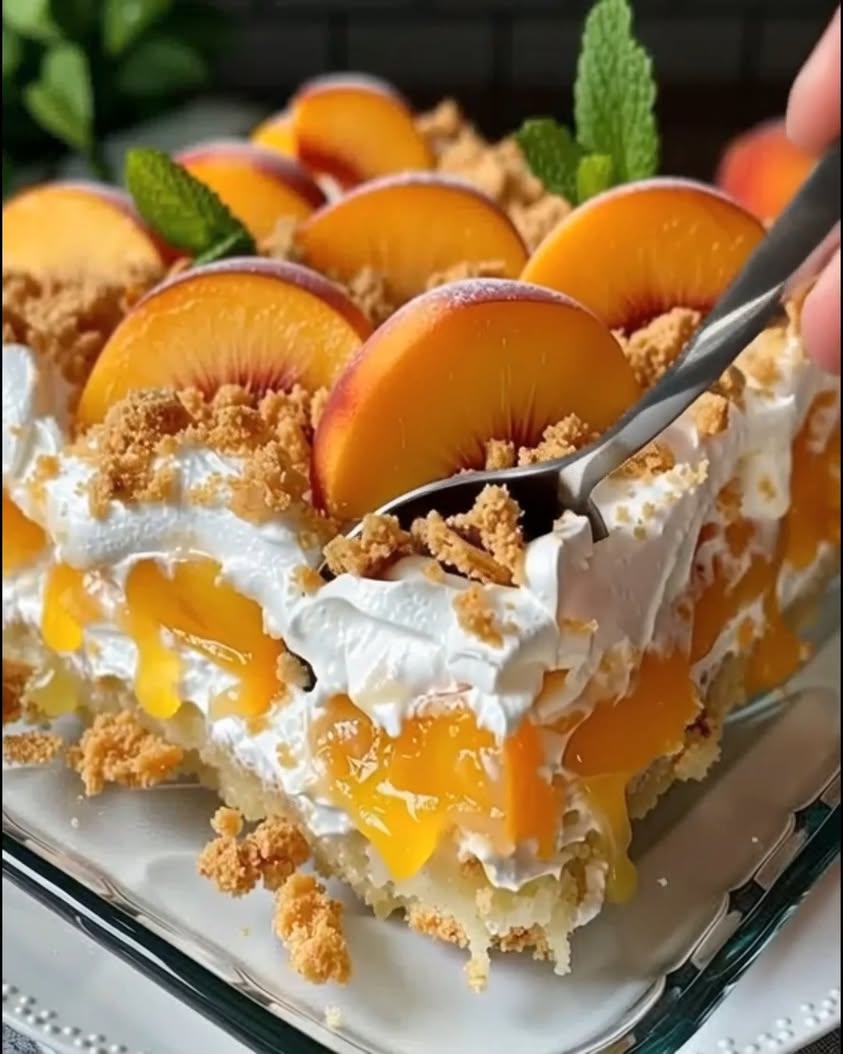
Peach Cobbler Cake: A Moist, Juicy Dessert Perfect for Potlucks
Imagine a dessert that captures the very essence of summer in a single, comforting bite. This peach cobbler cake does exactly that. It combines a tender, moist cake base with a layer of juicy, sweet peaches, all crowned by a buttery, crumbly topping. Ultimately, this dessert offers the best of both worlds: the homestyle comfort of a classic cobbler and the satisfying structure of a cake. Consequently, it has become a staple for family gatherings and a guaranteed crowd-pleaser at any potluck.
The magic of this recipe lies in its beautiful simplicity and incredible flavor. As the cake bakes, the peaches release their sweet juices, which then soak into the tender crumb below. Meanwhile, the cobbler-style topping bakes into a golden, crisp, and buttery blanket. The result is a symphony of textures and tastes in every forkful. For this reason, it fills your kitchen with an irresistible aroma of cinnamon, brown sugar, and ripe fruit. This peach cobbler cake is not just a dessert; it is a warm, edible hug.
Furthermore, this dessert travels exceptionally well, making it the ultimate potluck superstar. You can bake it in a standard 9×13-inch pan, cover it, and transport it with zero fuss. In fact, it often tastes even better the next day as the flavors continue to meld. Whether you serve it warm with a scoop of vanilla ice cream or enjoy it at room temperature with a cup of coffee, this peach cobbler cake promises to be the highlight of the table. It is sweet, cozy, and utterly unforgettable.
Quick Recipe Highlights
- Flavor Profile: This peach cobbler cake delivers a perfect balance of sweet, fruity, and buttery notes. The ripe peaches provide a bright, summery flavor, while the brown sugar and cinnamon in the crumble add deep, warm caramel tones. Additionally, a hint of vanilla in the cake base ties all the elements together harmoniously.
- Texture: Expect a delightful contrast in every bite. The cake layer is supremely moist and tender, having absorbed the peach juices. Conversely, the cobbler-style crumble on top is crisp, buttery, and provides a satisfying crunch. This combination of soft and crunchy textures is what makes the dessert so special.
- Aroma: While baking, the dessert fills your home with an intoxicating scent. Key aromatic notes include the sweet, jammy fragrance of cooking peaches, the rich smell of brown sugar caramelizing, and the warm, comforting spice of cinnamon. Ultimately, the aroma alone will have everyone asking when dessert is ready.
- Visual Appeal: This dessert is a rustic beauty. The golden-brown, craggy crumble topping cracks to reveal glimpses of the bubbling, jewel-toned peaches beneath. When sliced, the cross-section shows the distinct, juicy layer nestled on the moist cake. A dusting of powdered sugar or a scoop of white ice cream creates a stunning visual contrast.
- Skill Level Needed: This is a beginner-friendly recipe designed for home cooks of all levels. It requires no special pastry skills, no finicky techniques, and uses straightforward mixing methods. Basically, if you can measure ingredients and use a hand mixer, you can absolutely master this peach cobbler cake.
- Special Equipment: You need only basic kitchen tools. Essential items include a 9×13-inch baking pan, a mixing bowl, a hand mixer or whisk, and a pastry cutter or fork for making the crumble. Notably, you do not need a stand mixer, food processor, or any other specialized gadget.
Recipe Overview
- Difficulty Level: We rate this peach cobbler cake as “Easy” because it breaks down into three simple components that anyone can assemble. The cake batter is a straightforward mix of wet and dry ingredients. The peach layer often uses canned or fresh slices with minimal prep. Finally, the crumble topping requires just a few ingredients rubbed together. There is no yeast, no intricate decorating, and no complex steps, making it a very approachable recipe for bakers at any stage.
- Category: This dessert falls squarely into the category of comfort food and baked desserts. It is perfect for casual family dinners, festive holiday meals, and community potlucks. Moreover, it can easily transition from a weekday treat to a celebratory centerpiece depending on how you present and serve it.
- Cuisine: This recipe draws its inspiration from classic American home baking, particularly Southern and Midwestern traditions. The concept of a fruit cobbler is deeply rooted in American culinary history, often utilizing seasonal, readily available fruit. This version innovates by combining it with a cake base, creating a hybrid dessert that honors tradition while offering a new twist.
- Cost: This is a very cost-effective dessert to make. The base ingredients like flour, sugar, butter, and eggs are pantry staples. Using canned peaches in syrup or frozen peach slices during the off-season keeps costs low and ensures year-round availability. Overall, you can create a stunning dessert that feeds a crowd for a fraction of the price of a store-bought bakery cake.
- Season: While peaches are synonymous with summer, this peach cobbler cake is truly a dessert for all seasons. You can make it with fresh, ripe peaches at their peak in July and August for the ultimate flavor. However, high-quality canned or frozen peaches work beautifully in fall, winter, and spring, bringing a taste of sunshine to colder months.
- Occasion: This dessert is incredibly versatile for events. It is the perfect potluck contribution because it travels well and serves many. It is ideal for summer barbecues, Thanksgiving feasts, birthday parties, and casual weekend gatherings. Essentially, any occasion that calls for a comforting, shareable sweet treat is the right occasion for this cake.
Why You’ll Love This Recipe
First and foremost, the taste and texture of this peach cobbler cake are utterly divine. Each forkful delivers a multi-sensory experience. You get the soft, juice-soaked cake, the sweet and slightly tangy burst of peach, and the final, satisfying crunch of the buttery crumble. This combination creates a dessert that is far more interesting than a standard cake or a plain cobbler. The flavors are warm and comforting, reminiscent of childhood and home. Ultimately, it is the kind of dessert that people request again and again because it feels both nostalgic and excitingly delicious.
Another significant benefit is the sheer convenience and simplicity of preparation. Unlike layer cakes that require frosting and delicate assembly, this dessert comes together in one pan. You mix the batter, scatter the peaches, sprinkle the crumble, and bake. There is no need for fancy decorating skills. Furthermore, it uses common ingredients you likely already have on hand. This accessibility means you can decide to make it on a whim without a special grocery trip. For busy home cooks, this ease is a major win.
From a nutritional perspective, this dessert does offer some advantages when enjoyed in moderation. Peaches are a wonderful source of vitamins A and C, fiber, and antioxidants. Using them as the star ingredient adds natural sweetness and moisture, which can allow you to slightly reduce the added sugar in other components. Of course, this is a treat, but knowing it contains real fruit can make it feel like a slightly more wholesome indulgence compared to desserts made solely with processed elements.
The social and entertaining value of this peach cobbler cake cannot be overstated. It is designed for sharing. Baking it in a large 9×13-inch pan means you have plenty to feed a group. Its rustic, inviting appearance makes it look homemade and generous. At a potluck or party, it encourages conversation and community as people gather around to enjoy a slice. It is a dessert that fosters connection and creates happy memories, which is perhaps the sweetest ingredient of all.
Finally, this recipe is remarkably cost-effective and accessible. You do not need expensive equipment or rare, imported ingredients. A bag of flour, some sugar, butter, and a can of peaches are incredibly affordable. This allows you to create an impressive, crowd-feeding dessert on a tight budget. For families, students, or anyone looking to entertain without breaking the bank, this peach cobbler cake is a brilliant solution. It proves that incredible flavor and comfort do not have to come with a high price tag.
Historical Background and Cultural Significance
The origin story of cobblers in America is deeply tied to practicality and resourcefulness. Early settlers, lacking the ingredients and equipment for traditional European pastries like pies, invented simpler fruit desserts. They would stew seasonal fruit and top it with a rough biscuit or dumpling dough, which, when baked, resembled a cobblestone street—hence the name “cobbler.” This dessert was a way to preserve and enjoy the bounty of fruit harvests, especially peaches in the South. It required no pie tin, which was often a luxury, and could be cooked in a Dutch oven over a fire. Consequently, the cobbler became a staple of pioneer and frontier cooking.
The cultural importance of the peach cobbler, in particular, is immense, especially in the Southern United States. The peach tree found an ideal home in the warm climate of the American South, with Georgia famously adopting the moniker “The Peach State.” Peach cobbler became a symbol of Southern hospitality, summer gatherings, and family reunions. It represented generosity and the joy of sharing a abundant harvest. Serving a warm cobbler to guests was, and still is, a gesture of welcome and comfort. This dessert is woven into the fabric of Southern food culture, appearing at church suppers, holiday tables, and on restaurant menus across the region.
The evolution of the recipe from a simple fruit-and-dough dessert to this peach cobbler cake reflects modern baking trends and preferences. Traditional cobblers can vary, with some having a bottom crust, a top crust, or just a dropped biscuit topping. The innovation of adding a cake base underneath the fruit and crumble is a more recent development that caters to a love for moist, tender cake textures. This hybrid version offers the best elements of a buckle (a cake with fruit mixed in), a cobbler, and a crisp. It is an example of how classic recipes adapt over time, incorporating new techniques and ingredient availability to suit contemporary tastes while honoring their rustic roots.
Regional variations of fruit cobblers and similar desserts are fascinating. In the North, you might find a “buckle” or a “slump.” In the UK, the closest relative is the “crumble.” In the American Midwest, a “crisp” with an oat-based topping is popular. The Southern cobbler often features a sweeter, pie-like filling and a flakier biscuit topping. This specific peach cobbler cake recipe is a fantastic fusion. It takes the juicy peach filling from the South, combines it with a simple vanilla cake base, and tops it with a buttery crumble that nods to Northern crisps. This blending creates a universally appealing dessert that transcends its specific regional origins.
Ingredient Deep Dive
Peaches: Peaches have a rich history, originating in China over 8,000 years ago and symbolizing immortality and unity. They traveled along the Silk Road to Persia and eventually to the Americas with Spanish explorers. Nutritionally, they are low in calories but high in vitamins A and C, potassium, and fiber, which aid vision, immunity, and digestion. For this recipe, select peaches that are fragrant and yield slightly to gentle pressure. You can use fresh, frozen (thawed and drained), or canned peaches in natural juice. If using canned, drain most of the syrup to prevent a soggy cake. Store fresh peaches at room temperature until ripe, then refrigerate for a few days to extend freshness.
All-Purpose Flour: Flour is the structural backbone of both the cake and the crumble. Milled from wheat, it has been a dietary staple for millennia, forming the basis of breads and pastries across cultures. It provides carbohydrates for energy and contains some protein (gluten) which gives baked goods structure. For a tender cake, use regular all-purpose flour and be sure to measure it correctly by spooning it into the cup and leveling it off. This prevents a dense, dry cake. Store flour in a cool, dry place in an airtight container. For a gluten-free version, a reliable 1:1 gluten-free flour blend can typically be substituted with good results.
Butter: Butter adds indispensable richness, flavor, and texture. Historically a prized commodity, it is made by churning cream and is central to European and American baking. It provides fat that tenderizes the cake crumb and creates the flaky, crisp texture in the crumble topping. For the best flavor, use unsalted butter so you can control the salt level in the recipe. Ensure your butter is at the correct temperature: softened for the cake batter, and very cold for the crumble. Cold butter is key to achieving a crumbly, not greasy, topping. Vegan butter or high-quality margarine can work as a dairy-free substitute in most cases.
Brown Sugar: Brown sugar, essentially white sugar with molasses added back in, brings deep caramel notes and moisture. The molasses content gives it a slightly acidic quality that helps tenderize baked goods. In this recipe, it sweetens the cake, enhances the peach flavor, and is crucial for the crumble’s crispness and color. You can use light or dark brown sugar; dark will impart a stronger molasses flavor. To keep brown sugar soft, store it in an airtight container. If it hardens, place a slice of bread or a damp paper towel in the container overnight to soften it. In a pinch, you can make your own by mixing white sugar with a tablespoon of molasses per cup.
Common Mistakes to Avoid
- Using Overly Wet Peaches: Failing to drain canned or thawed frozen peaches adequately is a common error. The excess liquid will seep into the cake batter during baking, resulting in a soggy, undercooked bottom layer. Always drain peaches well and even pat them dry with a paper towel if they seem very juicy.
- Overmixing the Cake Batter: Once you combine the wet and dry ingredients, mix only until just incorporated. Overmixing develops the gluten in the flour, leading to a tough, dense cake instead of a light and tender crumb. A few small lumps in the batter are perfectly fine.
- Using Soft Butter for the Crumble: The crumble topping requires cold, cubed butter. If you use softened or melted butter, the topping will spread and melt into the cake, losing its distinctive crunchy, crumbly texture. For perfect crumbs, keep your butter in the fridge until the moment you need it.
- Not Preheating the Oven: Placing the cake in an oven that hasn’t reached the correct temperature can cause uneven baking. The cake may rise poorly, and the crumble may not crisp up properly. Always allow your oven to fully preheat for at least 15-20 minutes before baking.
- Overbaking or Underbaking: Relying solely on time instead of visual cues can lead to dryness or a raw center. The cake is done when the crumble is golden brown, the edges are pulling away from the pan, and a toothpick inserted into the cake layer (not through a peach) comes out clean or with moist crumbs.
- Cutting the Cake While Hot: The cake needs time to set as it cools. If you cut into it immediately after baking, it will be messy and may fall apart. Allow it to cool in the pan on a wire rack for at least 30-45 minutes before serving. This allows the juices to thicken slightly.
- Skimping on the Salt: Salt is a flavor enhancer that balances sweetness and deepens all the other flavors. Omitting it or reducing it too much will leave your dessert tasting flat and one-dimensionally sweet. Always include the salt called for in the recipe.
- Using a Different Pan Size: Using a smaller, deeper pan will increase the baking time significantly and may cause the center to remain undercooked. Using a larger, shallower pan will result in a thinner cake that may overbake quickly. Stick to the standard 9×13-inch size for reliable results.
Essential Techniques
Properly Draining Fruit: This technique is crucial for achieving the perfect texture in your peach cobbler cake. Excess liquid from the peaches will steam during baking and be absorbed by the cake batter, preventing it from setting properly. To master this, drain canned peaches in a colander for at least 10-15 minutes. For an extra step, spread them on a double layer of paper towels and gently pat them dry. If using thawed frozen peaches, you may need to squeeze them gently in a clean kitchen towel to remove ice crystals. The visual cue for success is fruit that looks moist but not sitting in a pool of juice.
Cutting in Cold Butter: This is the method used to create the crumbly topping. The goal is to distribute small, cold pieces of fat throughout the dry ingredients without melting it. You can use a pastry cutter, two forks, or even your fingertips. The key is to work quickly so the butter stays cold. Rub the butter into the flour-sugar mixture until it resembles coarse sand with some pea-sized lumps remaining. These butter pieces will melt in the oven, creating steam pockets that result in a flaky, crisp texture. If the mixture starts to look like a smooth paste, the butter was too warm, and your topping will be dense.
The “Muffin Method” for Cake Batter: This simple mixing technique ensures a tender cake. First, you whisk together all your dry ingredients in one bowl. In a separate bowl, you whisk together all the wet ingredients (eggs, milk, melted butter, vanilla). Then, you make a well in the dry ingredients and pour the wet mixture in. Stir gently with a spatula just until the flour is moistened and no dry streaks remain. The batter will be lumpy, and that’s perfect. Overmixing is the common pitfall here, as it develops gluten and leads to toughness. The batter should be thick but pourable.
Pro Tips for Perfect Peach Cobbler Cake
Boost Peach Flavor: Add a teaspoon of almond extract to the cake batter along with the vanilla. Almond extract has a natural affinity for stone fruits like peaches and will make the peach flavor taste more intense and rounded.
Prevent a Soggy Bottom: For an extra layer of protection against juicy peaches, you can very lightly sprinkle a tablespoon of the dry cake mix (flour, sugar, etc.) over the batter before adding the peach layer. This thin barrier will help absorb some initial moisture.
Create Deeper Flavor: Toss your drained peach slices with a tablespoon of the brown sugar and a pinch of cinnamon from the crumble mixture before scattering them over the batter. This macerates them slightly and ensures every piece is perfectly seasoned.
Ensure Even Baking: Rotate your baking pan halfway through the estimated baking time. Most ovens have hot spots, and rotating the pan promotes even browning and cooking from all sides.
Test for Doneness Accurately: When testing with a toothpick, aim for the cake portion near the center, avoiding the juicy peach layer. The toothpick should come out clean or with a few moist crumbs attached. If it comes out wet with batter, it needs more time.
Let it Rest: Resist the urge to serve the cake piping hot from the oven. Allowing it to cool for 30-45 minutes lets the structure set, the juices thicken slightly, and the flavors meld. It will be much easier to cut and serve neat slices.
Re-crisp the Topping: If you have leftovers stored in the fridge, reheat individual portions in a toaster oven or conventional oven at 350°F for about 10 minutes. This will restore the crispness of the crumble topping, which can soften in the refrigerator.
Variations and Adaptations
Regional Variations: To give this dessert a Southern twist, add a cup of chopped pecans to the crumble topping. For a Northern-style crisp influence, replace half the flour in the crumble with old-fashioned rolled oats. You could also add a tablespoon of bourbon or rum to the peach mixture for a Kentucky-inspired flavor profile.
Seasonal Adaptations: This recipe is wonderfully adaptable beyond peaches. In the fall, use thinly sliced apples or pears tossed with apple pie spice. For a summer berry medley, use a mix of blueberries, raspberries, and blackberries (toss them in a tablespoon of flour to prevent excessive juiciness). In winter, well-drained canned cherries or apricots make a beautiful alternative.
Dietary Modifications: For a gluten-free peach cobbler cake, use a certified gluten-free 1:1 flour blend for both the cake and crumble. To make it dairy-free, substitute the butter with a high-quality vegan butter stick and use a non-dairy milk like almond or oat milk. Ensure your sugar is vegan-certified if needed.
Flavor Variations: Infuse the cake batter with the zest of one lemon or orange for a bright, citrusy note. Add a teaspoon of ground ginger or cardamom to the crumble mixture for a warm, exotic spice. For a decadent twist, sprinkle ½ cup of white or dark chocolate chips over the peach layer before adding the crumble.
Texture Modifications: If you prefer a more cake-dominant dessert, reduce the peaches to 3 cups. For a fruit-forward, juicier result, increase the peaches to 5-6 cups. If you love extra crumble, simply make 1.5 times the crumble recipe and pile it on generously.
Presentation Alternatives: Bake individual portions in greased muffin tins (fill ⅔ full) for personal peach cobbler cakes, reducing the bake time to 20-25 minutes. For a more elegant presentation, bake in a round springform pan and serve wedges with a dollop of whipped cream.
Serving and Presentation Guide
Plating Techniques: For a family-style presentation, serve the peach cobbler cake directly from the baking dish placed on a trivet or decorative tray. Use a large serving spoon or pie server to scoop out portions. For individual plates, use a sharp knife to cut clean squares or rectangles. Wipe the knife between cuts for neat edges. Slide a flat spatula underneath each piece to transfer it to a plate without breaking the crumble topping.
Garnishing Ideas: A simple dusting of powdered sugar just before serving adds a beautiful, snowy finish. Fresh mint leaves provide a pop of color and a refreshing contrast. For a professional touch, add a quenelle of whipped cream or a small scoop of ice cream off to the side. A drizzle of caramel sauce or a sprinkle of toasted sliced almonds also elevates the presentation.
Traditional Accompaniments: A scoop of high-quality vanilla ice cream is the classic and perfect pairing—the hot/cold contrast is sublime. Alternatively, a dollop of freshly whipped cream or a pour of cold heavy cream over the top is a simpler, equally delicious option. In the South, a slice of sharp cheddar cheese served on the side is a beloved traditional pairing.
Modern Serving Suggestions: For a brunch dessert, serve a smaller square alongside a cup of strong coffee. Turn it into a decadent sundae by crumbling a piece into a bowl and layering it with vanilla ice cream and salted caramel sauce. For a dinner party, plate individual slices with a raspberry coulis drizzle and a sprig of thyme for a gourmet look.
Temperature Considerations: This dessert is versatile. It is fantastic served warm (not scalding hot) when the crumble is at its crispiest and the ice cream melts beautifully. It is also excellent at room temperature, where the flavors are more pronounced. Chilled leftovers have a firmer texture and make a great cold snack, though the crumble will soften.
Portion Control Tips: A standard 9×13-inch pan cut into 12 rectangles offers a satisfying dessert portion. For a larger crowd or as part of a bigger dessert spread, you can cut it into 15 or 20 smaller squares. Using a smaller serving utensil can naturally guide guests toward taking a modest first portion, with the option to come back for more.
Wine and Beverage Pairing
Wine Pairings: The sweet, fruity, and spicy notes of this peach cobbler cake pair beautifully with dessert wines. A late-harvest Riesling or a Moscato d’Asti, with their bright acidity and peach/apricot flavors, will complement the dessert without overpowering it. For a richer pairing, try a cream sherry or a tawny port, whose nutty caramel notes mirror the brown sugar crumble. If you prefer red wine, a light, low-tannin Brachetto d’Acqui is a fantastic choice. Avoid dry, high-tannin reds, as they can clash with the sweetness.
Non-Alcoholic Alternatives: Sparkling apple cider or ginger ale provides a festive, fizzy contrast that cleanses the palate. A homemade peach iced tea, sweetened lightly, echoes the main flavor of the dessert. For a warm option, a chai latte or a cup of cinnamon-spiced coffee makes a cozy companion, especially in cooler weather.
Coffee/Tea Pairings: A medium-roast coffee with notes of caramel or nut is ideal. The bitterness of the coffee balances the cake’s sweetness. For tea, a classic Earl Grey offers a bergamot citrus note that cuts through the richness. A rooibos tea, naturally sweet and caffeine-free, with its vanilla or honey notes, is another excellent match.
Temperature Considerations: Serve chilled beverages like dessert wine, iced tea, or cider well-chilled, around 45-50°F. This cool temperature provides a refreshing counterpoint to the warm cake. Coffee and tea should be served hot to maintain the comforting experience. Always offer ice cream cold, directly from the freezer, to maximize the temperature contrast.
Serving Suggestions: Offer a choice of pairings when hosting. You might set up a small coffee and tea station with cream and sugar. For a dinner party, consider pre-pouring a small glass of dessert wine at each place setting. For casual gatherings, have a cooler with assorted non-alcoholic sparkling waters and iced teas readily available for guests to help themselves.
Storage and Shelf Life
Storage Methods: Once completely cooled, cover the baking pan tightly with plastic wrap or aluminum foil. Alternatively, transfer individual slices to an airtight container. You can leave it at room temperature for up to 2 days, but refrigeration is recommended for longer storage to prevent spoilage, especially in warm climates.
Temperature Requirements: For short-term storage (1-2 days), a cool, dry pantry or countertop is fine. For storage beyond 2 days, you must refrigerate the cake. The cold environment of the refrigerator will preserve the dessert for 4-5 days. Always bring it to room temperature or reheat it before serving for the best texture and flavor.
Container Recommendations: The best container is the original baking pan covered very securely with a lid or heavy-duty foil. For stacked slices, use a rigid, airtight container with a snap-on lid. Separate layers with parchment paper to prevent them from sticking together. Avoid using only plastic wrap for more than a day, as it can trap moisture and make the crumble soggy.
Signs of Spoilage: Discard the cake if you notice any visible mold growth (fuzzy spots in white, green, or blue). A sour, fermented, or “off” smell is a clear indicator of spoilage. If the texture becomes unpleasantly mushy or slimy, it has gone bad. When in doubt, it is always safer to err on the side of caution and throw it out.
Reheating Instructions: To restore warmth and crispness, reheat individual portions in a toaster oven or conventional oven at 325°F for 8-12 minutes. You can also use an air fryer for 4-5 minutes at 320°F. Microwave reheating is not recommended, as it will steam the cake and make the crumble very soft.
Freezing Guidelines: This peach cobbler cake freezes very well for up to 3 months. Freeze the entire cooled cake in the pan, wrapped first in plastic wrap and then in foil. Or, freeze individual slices on a parchment-lined baking sheet before transferring them to a freezer bag. Thaw overnight in the refrigerator and reheat as directed above.
Make Ahead Strategies
Prep Timeline: You can prepare components 1-2 days in advance. Mix the dry ingredients for the cake and the crumble in separate zip-top bags. Prepare the peach layer and store it drained in a container in the fridge. Cube the cold butter for the crumble and keep it refrigerated. On baking day, simply combine the wet and dry ingredients for the cake, assemble the layers, and bake. This cuts active prep time to under 10 minutes.
Storage Between Steps: Store the pre-measured dry ingredients at room temperature. Keep the prepared peaches and cubed butter in the refrigerator. The wet ingredients for the cake (eggs, milk, vanilla) can be mixed and stored in a jar in the fridge. Let the cold wet ingredients sit out for 15 minutes before using to take the chill off.
Quality Impact Assessment: Making components ahead has minimal impact on the final quality. In fact, allowing the peaches to macerate in their own juices with a little sugar can enhance their flavor. The key is to keep the crumble butter very cold until the moment you rub it into the dry mix to ensure a flaky texture.
Assembly Tips: When ready to bake, preheat your oven. Start by making the cake batter with your pre-mixed wet and dry ingredients. Spread it in the pan. Scatter the chilled peaches evenly over the top. Finally, make the crumble by cutting the cold butter into your pre-mixed dry crumble ingredients, then sprinkle it over everything. Proceed to bake immediately.
Reheating Guidelines: If you bake the entire cake a day ahead, let it cool completely, cover, and store at room temperature. The next day, you can serve it at room temperature or warm it, covered with foil, in a 300°F oven for 15-20 minutes to refresh it. Add a fresh scoop of ice cream when serving.
Fresh Element Additions: If making ahead, add any fresh garnishes like mint leaves, powdered sugar, or whipped cream just before serving. This ensures they look their best and maintain their texture. The contrast of a cold, fresh garnish on a warm, made-ahead cake is particularly delightful.
Scaling Instructions
Halving the Recipe: To make a smaller peach cobbler cake, simply divide all ingredient quantities by two. Bake it in an 8×8-inch or 9×9-inch square baking pan. The baking time will be slightly reduced; start checking for doneness at the 35-minute mark. All other techniques and temperatures remain the same. This is perfect for a small family or couple.
Doubling or Tripling: For a very large crowd, you can double the recipe. Use two separate 9×13-inch pans—do not try to bake a double batch in one pan, as it will not cook through properly. You may need to bake them on separate oven racks and rotate the pans halfway through. Tripling would require three pans. Mix the batter in batches to avoid overmixing a huge quantity at once.
Equipment Adjustments: When scaling, ensure you have enough mixing bowls and baking pans. For a double batch, you might need to use a stand mixer or mix the cake batter in two separate bowls. Make sure your oven can accommodate multiple pans with enough space for air circulation between them and the oven walls.
Timing Modifications: A halved recipe in a smaller pan may bake 5-10 minutes faster. Doubled recipes in multiple pans may require a few extra minutes of baking time, as the oven temperature drops when the door is opened. Always rely on visual and toothpick tests rather than the timer alone when scaling recipes.
Storage Considerations: A halved recipe will be consumed more quickly, so room-temperature storage for 1-2 days is usually sufficient. For doubled or tripled recipes, you will likely have more leftovers, so plan for adequate refrigerator or freezer space. Portion and freeze leftovers soon after baking for best quality.
Nutritional Deep Dive
Macro Breakdown: A typical serving of this peach cobbler cake provides carbohydrates from the flour, sugar, and fruit, which supply energy. The butter and egg yolks contribute fats, necessary for nutrient absorption and satiety. Eggs and milk offer a modest amount of protein, important for tissue repair. This dessert is energy-dense, so it is best enjoyed as an occasional treat within a balanced diet. The exact numbers will vary based on specific ingredients and portion size.
Micronutrient Analysis: The peaches are the primary source of beneficial micronutrients. They provide vitamin A for eye health, vitamin C for immune function and collagen production, and potassium for heart and muscle function. Using whole milk and butter adds small amounts of vitamins A, D, and E. The flour may be enriched with B vitamins like folate and iron, depending on the brand.
Health Benefits: When enjoyed mindfully, this dessert can contribute to overall well-being by providing pleasure and satisfaction, which are important aspects of a healthy relationship with food. The peaches Print
Peach Cobbler Cake
- Total Time: 45 minutes
- Yield: 4
Description
A moist cake soaked with juicy peaches, topped with a buttery cobbler-style crumble—sweet, cozy, and perfect for potlucks.
Ingredients
- 1 cup all-purpose flour
- 1 cup granulated sugar
- 1 teaspoon baking powder
- 1/2 teaspoon salt
- 1/2 cup milk
- 1/4 cup unsalted butter, melted
- 2 cups fresh or canned peach slices, drained
- 1/2 cup brown sugar
- 1/2 cup rolled oats
- 1/4 cup cold unsalted butter, cubed
- 1 teaspoon ground cinnamon
Instructions
- Preheat oven to 350°F (175°C) and grease a 9×9-inch baking dish.
- In a bowl, mix flour, granulated sugar, baking powder, and salt. Stir in milk and melted butter until smooth, then pour into the baking dish.
- Arrange peach slices evenly over the batter.
- In another bowl, combine brown sugar, oats, cubed butter, and cinnamon. Use fingers to crumble mixture over the peaches.
- Bake for 30-35 minutes until golden and a toothpick inserted comes out clean. Let cool slightly before serving.
Notes
You can customize the seasonings to taste.
- Prep Time: 15 minutes
- Cook Time: 30 minutes
- Method: Dessert
- Cuisine: American