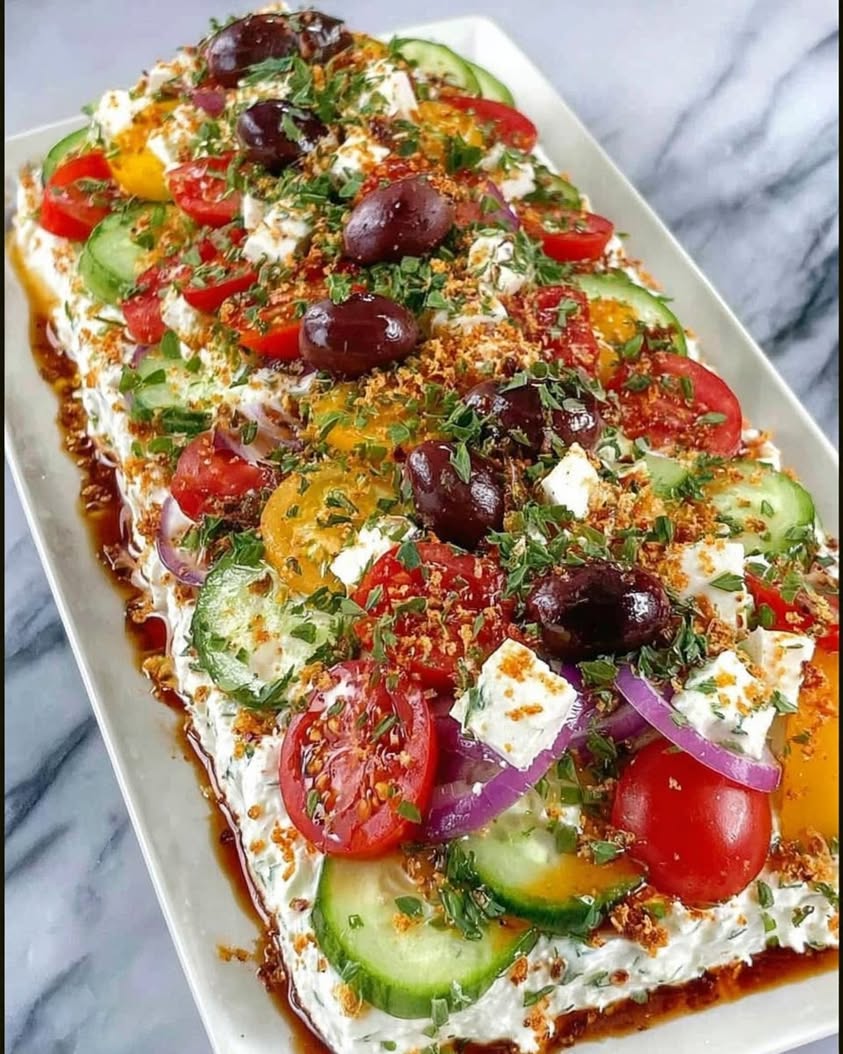
Greek Feta Board with Hot Honey and Crispy Fried Onions: The Ultimate Crowd-Pleasing Appetizer
Imagine a dish that perfectly captures the essence of Greek cuisine while delivering a modern, show-stopping wow factor. This Greek Feta Board with Hot Honey and Crispy Fried Onions is exactly that. It transforms a simple block of feta into a stunning centerpiece. The combination of salty, creamy cheese with spicy-sweet honey and crunchy onions is simply irresistible. Consequently, it has become my go-to appetizer for entertaining. It promises to be the first thing your guests devour at any gathering.
This recipe is a celebration of contrasting textures and bold flavors. You start with a foundation of rich, briny feta cheese. Then, you add a generous drizzle of homemade hot honey, which provides a gentle warmth and floral sweetness. Finally, you crown it with a heap of golden, crispy fried onions for an addictive crunch. The result is a harmonious bite that excites every part of your palate. Ultimately, this dish proves that impressive food doesn’t require complicated techniques or hours in the kitchen.
Furthermore, this Greek Feta Board is incredibly versatile. You can serve it as a dramatic appetizer with warm pita bread. Alternatively, you can present it as part of a larger Mediterranean-inspired spread. The visual appeal is undeniable, with vibrant colors and varied textures inviting everyone to dig in. Whether you’re hosting a casual game night or an elegant dinner party, this board delivers on flavor and presentation. It’s a guaranteed conversation starter that will have everyone asking for the recipe.
Quick Recipe Highlights
- Flavor Profile: This board masterfully balances salty, creamy, spicy, and sweet notes. The tangy feta cheese provides a savory base, while the hot honey introduces a complex sweetness with a subtle kick. The crispy onions add a savory, umami-rich finish that ties everything together beautifully.
- Texture: The experience is all about delightful contrasts. You get the firm yet creamy crumble of the feta against the sticky, viscous flow of the honey. Then, the shatteringly crisp fried onions offer a perfect counterpoint, creating a satisfying mouthfeel that keeps you coming back for more.
- Aroma: As soon as you bring this board to the table, enticing scents fill the air. You’ll notice the sharp, milky aroma of the feta mingling with the warm, floral fragrance of the honey. The fried onions contribute a deeply savory, almost nutty scent that is incredibly appetizing.
- Visual Appeal: This dish is a feast for the eyes before it even reaches the palate. The stark white feta provides a stunning canvas. Meanwhile, the glossy amber honey and golden-brown onions create a gorgeous color contrast. Garnished with fresh thyme, it looks both rustic and elegant.
- Skill Level Needed: This is a beginner-friendly recipe that requires minimal culinary expertise. The most involved step is frying the onions, which simply requires attention. Otherwise, assembly is intuitive and forgiving. Anyone can create this impressive-looking dish with confidence.
- Special Equipment: You only need a few basic tools. A medium saucepan is ideal for frying the onions and making the hot honey. Additionally, a slotted spoon or spider strainer helps drain the onions. A beautiful wooden board or serving platter is essential for presentation.
Recipe Overview
- Difficulty Level: We classify this Greek Feta Board as easy for good reason. The steps are straightforward and sequential. You fry onions, infuse honey, and assemble. There’s no precise baking or finicky techniques. Even a first-time cook can achieve fantastic results by following the simple instructions.
- Category: This dish fits perfectly into multiple categories. Primarily, it’s an outstanding appetizer or meze. It also works wonderfully as part of a cheese board or a festive holiday spread. For a lighter meal, you can even serve it as a shared salad or side dish with grilled proteins.
- Cuisine: The recipe is rooted in Greek and broader Mediterranean culinary traditions. Feta cheese is a Protected Designation of Origin (PDO) product of Greece. The concept of serving cheese with honey and nuts is classic in the region. We’ve simply added a modern twist with the crispy element.
- Cost: This is a very cost-effective appetizer for a crowd. A block of feta, an onion, and honey are inexpensive staples. The spices are pantry essentials. Compared to buying premium prepared cheeses or appetizers, making this Greek Feta Board at home offers significant savings and superior flavor.
- Season: This board is truly a year-round superstar. In summer, it pairs beautifully with grilled meats and fresh salads. During the fall and winter, its warm, comforting flavors are ideal for holiday parties. It brings a taste of the Mediterranean sun to your table in any season.
- Occasion: It’s perfect for virtually any social event. Think casual potlucks, elegant cocktail parties, festive holiday gatherings, or even a romantic date night at home. Its shareable nature encourages interaction, making it ideal for breaking the ice and bringing people together over great food.
Why You’ll Love This Recipe
First and foremost, the taste and texture appeal is off the charts. Each component of this Greek Feta Board with Hot Honey and Crispy Fried Onions plays a crucial role. The feta delivers a satisfying salty punch that makes your mouth water. Then, the hot honey cuts through that richness with a sweet and spicy flourish. Finally, the crispy onions provide a crunch that is utterly addictive. This combination creates a symphony in your mouth that is both complex and deeply satisfying. You’ll find it impossible to stop at just one bite, especially when scooped up with warm, fluffy pita bread.
Next, consider the sheer convenience and preparation benefits. This entire stunning dish comes together in about twenty-five minutes. You don’t need to marinate anything or wait for dough to rise. The steps are simple and mostly hands-off. For instance, you can fry the onions and prepare the hot honey simultaneously. Consequently, you can whip up an impressive appetizer even when guests arrive unexpectedly. The assembly is intuitive and allows for personal creativity. Ultimately, it delivers maximum impact with minimal kitchen stress.
Additionally, this Greek Feta Board offers several nutritional advantages when enjoyed as part of a balanced diet. Feta cheese is a good source of calcium and protein. It also contains beneficial probiotics. The honey provides natural antioxidants and a quick energy source. Using olive oil for frying adds heart-healthy monounsaturated fats. When served with whole-grain pita and fresh vegetable crudités, this board becomes a more complete snack. It’s a far healthier and more flavorful option than many processed appetizers or chips and dip.
Moreover, the social and entertaining value of this dish is immense. Food presented on a board is inherently inviting and encourages sharing. Placing this Greek Feta Board with Hot Honey in the center of the table instantly creates a focal point. It gets people talking, reaching, and interacting. It takes the pressure off the host, as guests can serve themselves at their own pace. This style of eating feels relaxed, communal, and festive. It transforms a simple appetizer into an experience that enhances the entire gathering.
Finally, the cost-effectiveness and accessibility of the ingredients make this recipe a winner. You likely have many of the components like honey, flour, and spices in your pantry already. A block of quality feta and a couple of onions are very affordable. Compared to ordering a similar appetizer at a restaurant or buying a pre-made gourmet cheese spread, the savings are substantial. You can easily double or triple the recipe to feed a large group without breaking the bank. This accessibility means you can enjoy this luxurious-tasting treat anytime the craving strikes.
Historical Background and Cultural Significance
The story of this dish begins with its cornerstone ingredient: feta cheese. Feta has a history in Greece stretching back thousands of years. Homer’s Odyssey even references a cheese-making process similar to feta’s. Traditionally, feta was made from sheep’s milk or a blend with goat’s milk, stored in wooden barrels or metal tins with brine. This method preserved the cheese and gave it its characteristic tangy, salty flavor. The name “feta” itself comes from the Italian word “fetta,” meaning slice, reflecting how the cheese was typically cut and served. In 2002, feta earned a Protected Designation of Origin (PDO) status in the European Union, meaning only cheese made in specific regions of Greece following traditional methods can bear the name.
The cultural importance of cheese and honey in Greek cuisine cannot be overstated. Combining cheese with something sweet, like honey or fruit, is a classic flavor pairing found across Mediterranean and Middle Eastern cultures. In Greece, a simple plate of feta drizzled with thyme honey is a common dessert or meze. Honey has been revered since ancient times, often associated with the gods. Meanwhile, fried onions are a staple in many global cuisines, adding depth and texture. This recipe modernizes these ancient, beloved elements. It brings together historical staples in a new, shareable format that honors their origins while appealing to contemporary tastes.
The evolution of the cheese board concept provides the final piece of the puzzle. The modern “charcuterie” or cheese board has exploded in popularity, moving beyond cold cuts and crackers to include hot elements, dips, and composed salads. Our Greek Feta Board with Hot Honey and Crispy Fried Onions sits perfectly within this evolution. It takes a traditional cheese presentation and adds warmth, crispiness, and a spicy kick. This reflects a broader culinary trend towards interactive, component-based eating. It’s a dish that respects tradition but isn’t afraid to innovate, using classic ingredients in a new, visually dramatic way.
Regional variations of this concept abound throughout the Mediterranean. In Turkey, one might find a similar dish with beyaz peynir cheese. In the Middle East, fried halloumi with honey or date syrup is a popular treat. The French have their baked goat cheese with honey. Our version is distinctly Greek-inspired, leveraging the PDO status and unique flavor of authentic feta. The addition of crispy fried onions adds a textural element that is less common in the traditional versions, offering a delightful crunch that makes this recipe stand out. This shows how a simple idea can travel and adapt, picking up local influences to create something new and exciting.
Ingredient Deep Dive
Let’s start with the star: Feta Cheese. Authentic Greek feta is a brined curd cheese made primarily from sheep’s milk, often blended with up to 30% goat’s milk. This composition gives it a tangy, sharp, and slightly salty flavor with a creamy yet crumbly texture. Nutritionally, it is a good source of calcium, protein, phosphorus, and vitamin B12. It also contains beneficial bacteria from the aging process. When selecting feta, look for the PDO label to ensure authenticity. For the best flavor and texture, choose feta sold in blocks submerged in brine. Store it in its brine in the refrigerator; it can last for several weeks. If you need a substitute, other brined cheeses like Bulgarian sirene or a firm goat cheese can work, though the flavor profile will shift.
The Hot Honey is the transformative element. Honey’s history as a sweetener dates back over 8,000 years, and it held immense value in ancient Greek culture. For this recipe, we infuse pure honey with red pepper flakes and a touch of vinegar. The heat from the peppers (capsaicin) contrasts wonderfully with the honey’s sweetness, while the vinegar adds a subtle brightness that balances the richness. Honey contains antioxidants and has natural preservative qualities. Use a good-quality, raw honey for the best flavor. You can control the spice level by adjusting the amount of red pepper flakes or by using different chili varieties like Aleppo pepper for a fruitier heat. Store homemade hot honey in a sealed jar at room temperature.
Crispy Fried Onions provide the essential crunch. Onions are a foundational vegetable in Greek cooking, offering a savory, sweet depth when cooked. Slicing them thinly and frying them in olive oil until golden brown transforms them into a crispy, umami-rich garnish. Frying caramelizes their natural sugars, creating complex flavors. They add a satisfying textural contrast to the soft cheese and sticky honey. For the best results, use a large yellow or white onion and slice it as thinly as possible, using a mandoline for consistency if you have one. Pat the slices dry before dredging in flour to ensure maximum crispiness. While you can use store-bought fried onions in a pinch, homemade are vastly superior in flavor and texture.
Supporting ingredients complete the board. Extra Virgin Olive Oil is used for frying, imparting a fruity, peppery note that is quintessentially Mediterranean. Its monounsaturated fats are considered heart-healthy. Warm Pita Bread is the traditional vehicle for scooping, its soft, chewy texture perfect for grabbing every last bit. Finally, fresh herbs like thyme or oregano add a pop of color and a fragrant, earthy aroma that ties all the Greek flavors together. They should be added just before serving for maximum visual and aromatic impact.
Common Mistakes to Avoid
- Using Pre-Crumbled Feta: Pre-crumbled feta is often drier, coated in anti-caking agents, and lacks the creamy texture of a block in brine. Always buy a solid block of feta stored in liquid. Crumble it yourself with your hands for the best texture and flavor in your Greek Feta Board.
- Overcrowding the Pan When Frying Onions: Adding too many onion slices to the oil at once drops the temperature drastically. This results in soggy, greasy onions instead of crispy ones. Fry in small, manageable batches to maintain the oil’s heat and ensure each piece becomes perfectly golden and crisp.
- Burning the Hot Honey: Honey can burn quickly if heated over too high a flame. The goal is to warm it gently just until it becomes fluid enough to infuse with the chili flakes. Use low to medium-low heat and stir frequently. If it starts to smoke or smell acrid, it has burned and must be discarded.
- Skipping the Flour Dredge for the Onions: A light coat of flour is crucial for achieving the signature crispy, lacy texture on the fried onions. It creates a delicate coating that fries up golden brown. Skipping this step will result in onions that are merely softened or burnt, lacking that essential shattering crunch.
- Assembling the Board Too Early: If you assemble the entire Greek Feta Board with Hot Honey and Crispy Fried Onions too far in advance, the crispy onions will lose their crunch from the honey’s moisture. For optimal texture, assemble just before serving. You can prepare all components ahead and combine them at the last moment.
- Using a Weak or Flavored Honey: The honey is a primary flavor component. Using a bland, commercial honey or one with a very strong, distinct flavor (like buckwheat) can overpower the dish. Opt for a good-quality, pure clover or wildflower honey that will provide a clean, sweet base for the chili heat.
- Not Draining the Fried Onions Properly: After frying, the onions must be drained on a paper towel-lined plate. If left in a bowl or on a non-absorbent surface, they will steam and become soft. Spread them in a single layer to allow excess oil to be absorbed, preserving their delightful crispness.
- Forgetting to Warm the Pita Bread: Cold, stiff pita is difficult to tear and less enjoyable to eat. Always warm your pita bread before serving. You can quickly heat it in a dry skillet, oven, or microwave. Warm pita is more pliable, fragrant, and provides a comforting contrast to the cool cheese and warm honey.
Essential Techniques
Mastering the fry for the crispy onions is your first key technique. The goal is to achieve a golden-brown color and a shatteringly crisp texture without burning. Start by heating your oil to the correct temperature, around 350-375°F (175-190°C). A breadcrumb should sizzle vigorously when dropped in. Dredge the thinly sliced, dried onions in just enough flour to coat them lightly, shaking off the excess. Fry in small batches to prevent the oil temperature from plummeting. The onions are done when they turn a uniform golden brown and the bubbling in the oil significantly subsides. Use a slotted spoon to transfer them immediately to a paper towel-lined plate and sprinkle with a pinch of salt while still hot. The common pitfall is impatience, leading to overcrowding and soggy results.
Creating the infused hot honey is a simple but important technique. Gently warming the honey allows the flavors of the red pepper flakes to bloom and integrate without cooking away the honey’s delicate notes. Combine honey, red pepper flakes, and a splash of vinegar in a small saucepan. Heat over low heat, stirring frequently, just until the mixture becomes thin and runny and you can smell the chili aroma, about 3-5 minutes. Do not let it simmer or boil. Remove it from the heat and let it steep as it cools; the flavor will continue to develop. The visual cue for success is a fluid honey with visible chili flakes throughout, not a bubbling, darkened syrup. This technique ensures a balanced spice that permeates the sweetness.
The assembly of the Greek Feta Board itself is the final technique for maximum impact. Place the whole block or crumbled feta slightly off-center on your board or platter to create visual interest. Drizzle the warm hot honey generously over the cheese, allowing it to pool around the base. Just before serving, pile the crispy fried onions high on top and around the feta, letting them spill over naturally. This preserves their crunch. Finally, scatter fresh herbs over everything. The technique here is about creating height, texture, and inviting abundance. Avoid arranging components too neatly; a rustic, generous look is most appealing and encourages guests to dive in.
Pro Tips for Perfect Greek Feta Board with Hot Honey and Crispy Fried Onions
For an extra flavor dimension, add a strip of lemon zest or a sprig of fresh rosemary to the honey while it warms. Remove it before drizzling. This adds a subtle citrusy or piney note that complements the feta beautifully.
Use a mix of oils for frying the onions. Try mostly olive oil for flavor with a splash of a neutral oil with a higher smoke point, like avocado or grapeseed oil. This prevents the olive oil from burning while retaining its characteristic taste.
If your feta block is very thick, consider slicing it horizontally into two thinner slabs before placing it on the board. This increases the surface area for the honey to cover and makes it easier for guests to scoop.
Make a double batch of the crispy fried onions. They are addictive on their own and make a fantastic topping for salads, soups, or grilled meats later in the week. Store any extra in an airtight container at room temperature.
For a stunning presentation, place your board on a bed of fresh grape leaves or sprinkle some whole pink peppercorns and toasted sesame seeds over the finished dish. These small touches elevate the visual appeal dramatically.
If serving to a group with varying spice tolerances, serve the hot honey on the side in a small pitcher. This allows everyone to control the heat level on their own portion, making the board more universally enjoyable.
Always taste your feta before assembling. Salt levels can vary between brands. If it’s exceptionally salty, you can soak the block in cold water or milk for 10-15 minutes to draw out some salt, then pat it dry.
Have a small bowl of high-quality extra virgin olive oil and a dish of dried oregano on the table alongside the board. Guests can drizzle a little extra oil and sprinkle oregano on their pita for an authentic Greek taverna experience.
Variations and Adaptations
Explore regional variations by changing the cheese base. For a Cypriot twist, use halloumi. Lightly pan-fry slices until golden, then drizzle with hot honey and top with crispy onions. For an Italian version, try a baked round of creamy burrata or fresh mozzarella. In the French style, a baked goat cheese (chèvre) log works wonderfully. Each cheese brings its own texture and flavor, creating a completely different but equally delicious experience. The hot honey and crispy onion toppings are versatile enough to complement a wide range of cheeses.
Consider seasonal adaptations to keep your board fresh year-round. In spring, garnish with edible flowers and fresh peas. During summer, add juicy cherry tomatoes and cucumber ribbons. For fall, incorporate roasted grapes or figs and toasted walnuts. In winter, a sprinkle of pomegranate arils adds a festive pop of color and juicy burst. You can also infuse the honey with seasonal spices—a cinnamon stick in autumn, fresh thyme in spring. These adaptations connect the dish to the time of year and available produce.
Dietary modifications are straightforward. For a gluten-free Greek Feta Board, use cornstarch or a gluten-free flour blend to dredge the onions. Ensure your pita bread is a certified gluten-free brand. For a vegetarian board, the recipe is already perfect. To make it vegan, substitute the feta with a firm, brined vegan cheese alternative (though the flavor will differ). You can also use thick, creamy coconut yogurt as a base. The hot honey can be made with agave syrup, though the flavor profile will be less complex.
Experiment with flavor variations by altering the infused honey. Instead of red pepper flakes, use sliced fresh jalapeño, smoked paprika, or a spoonful of harissa paste. Add a splash of balsamic vinegar for a deeper tang, or a bit of orange juice for citrus notes. For the onions, toss them with different spices after frying, such as sumac, za’atar, smoked salt, or garlic powder. These small tweaks can take the board on a culinary journey from Greece to the Middle East, North Africa, or Mexico.
Serving and Presentation Guide
Plating techniques are key for visual drama. Choose a beautiful wooden board, a slab of marble, or a large, rustic ceramic platter as your canvas. Place the feta block or crumbles slightly off-center. Drizzle the hot honey in a zig-zag or circular motion, allowing it to cascade over the cheese and onto the board. Pile the crispy onions high in a mound on top, letting them tumble down naturally. This creates height and a sense of abundance. Scatter the fresh herbs last for a pop of green. Remember, a “messy” or rustic look is more inviting than a perfectly symmetrical arrangement.
Garnishing ideas extend beyond fresh thyme. Consider adding whole sprigs of rosemary for fragrance, scattered Kalamata olives for a salty contrast, or toasted walnut halves for extra crunch. A few whole chili peppers or a twist of lemon peel adds color. For a luxurious touch, add a drizzle of high-quality aged balsamic glaze alongside the honey. The garnish should complement the flavors and enhance the board’s visual appeal without cluttering it.
Traditional accompaniments are essential for scooping and balancing flavors. Warm, soft pita bread, cut into wedges, is the classic choice. Offer a variety, including whole wheat or za’atar-spiced pita. Also include crisp vegetable crudités like cucumber spears, bell pepper strips, and endive leaves for a refreshing, low-carb option. These fresh elements cleanse the palate between rich, flavorful bites of the Greek Feta Board with Hot Honey.
Modern serving suggestions might include adding other small bowls to the spread. A bowl of whipped feta dip, a small dish of olive tapenade, or some marinated artichoke hearts can turn the board into a more substantial meze platter. You can also serve it alongside grilled shrimp or lamb meatballs for a heartier appetizer course. The board becomes the star around which other complementary flavors orbit.
Wine and Beverage Pairing
Wine pairings for this bold dish should balance its salty, spicy, and sweet notes. A crisp, acidic white wine like Assyrtiko from Santorini is a perfect match from Greece itself. Its citrus and mineral notes cut through the richness of the feta. A dry Rosé with bright red fruit flavors also works beautifully. For red wine lovers, choose a light-bodied, low-tannin red like a Greek Xinomavro or a Beaujolais. The key is to avoid oaky or heavily tannic wines that will clash with the cheese and spice. Serve whites and rosés well-chilled, and reds slightly cool.
Non-alcoholic alternatives are just as important. Sparkling water with a squeeze of lemon or lime is always refreshing. For a more crafted option, try a minty lemonade or a cucumber-infused spa water to cleanse the palate. An iced herbal tea, like peach or passionfruit, can complement the honey’s sweetness. For a festive mocktail, mix ginger beer with a splash of pomegranate juice and a lime wedge. These beverages provide a cooling counterpoint to the warm spices in the dish.
While not traditional, certain coffees or teas can pair surprisingly well after the meal. A strong, sweet Greek coffee is a classic way to end a Mediterranean feast. A cup of mint tea is light and digestive. For a tea pairing, consider a chamomile tea with honey, which echoes the flavors on the board in a soothing way. The goal with post-meal beverages is to offer something that settles the palate rather than competes with the strong flavors just enjoyed.
Storage and Shelf Life
Storage methods for leftovers require separating the components. Store any uneaten feta (without toppings) in an airtight container submerged in fresh brine or water in the refrigerator; it will last up to a week. The hot honey can be stored in a sealed jar at room temperature for several weeks. The crispy fried onions will lose their crunch quickly; store them in a paper towel-lined airtight container at room temperature for 1-2 days, but they are best eaten immediately. Do not store the fully assembled board, as the onions will become soggy.
Signs of spoilage are important to recognize. For the feta, look for any off smells (sour or ammonia-like), significant darkening, or an overly slimy texture. Mold is a definite discard signal. The hot honey is very stable due to honey’s natural preservative qualities, but if you see any fermentation (bubbling) or mold, throw it out. Soggy onions are not a safety issue but a quality one; they can be revived briefly in a hot oven to re-crisp. Always use your best judgment and when in doubt, throw it out.
Reheating instructions apply only to the crispy onions if they have softened. Spread them on a baking sheet and place in a preheated 375°F (190°C) oven for 3-5 minutes, watching closely to prevent burning. The feta and honey should not be reheated. You can bring the feta to room temperature for about 20 minutes before serving again to improve its texture. Gently warm the honey jar in a bowl of hot water to make it pourable again if it has solidified.
Make Ahead Strategies
Your prep timeline can be spread over two days for effortless entertaining. Day 1: Make the hot honey and let it cool completely, then jar it. Thinly slice the onion and store it in an airtight container in the fridge. Measure out your flour and spices. Day 2 (2 hours before guests arrive): Fry the crispy onions and let them drain/cool on paper towels. Store them loosely covered at room temperature. Cut the pita bread and prepare any vegetable crudités. 15 minutes before serving: Assemble the board. Warm the honey slightly if needed, crumble the feta, and combine everything. This strategy ensures every component is at its peak.
Understand the quality impact of prepping each element. The hot honey’s flavor improves with a day of steeping, making it an ideal make-ahead component. The sliced onions can be prepared a day ahead without issue. However, frying the onions should be done the day of serving for optimal crunch. The feta should be crumbled just before assembly to maintain its texture. Pita bread is best warmed just before serving. By knowing what holds well and what doesn’t, you can plan your time efficiently without sacrificing the final quality of your Greek Feta Board.
Assembly tips for last-minute perfection are simple. Have all your prepped components lined up. Start with the board, then place the feta. Drizzle with honey while it’s slightly warm for easier flow. Immediately pile on the crispy onions so they stick to the honey slightly. Finally, add the fresh herbs and any other garnishes. Carry the board directly to the table. This swift assembly in the final moments guarantees the onions remain crisp and the presentation looks fresh and inviting.
Scaling Instructions
Halving the recipe is simple for a smaller gathering. Use half a block of feta (about 4 oz), one small onion, and reduce the honey and oil proportionally. The cooking times will be slightly shorter due to smaller batch sizes, especially for the onions. Keep a close eye on them. A small board or even a dinner plate can serve as your platter. This is perfect for a romantic appetizer for two or a small family snack.
Doubling or tripling the recipe for a party is easy, but requires strategy. Do not double the batch size for frying the onions. Instead, fry them in three or four separate, small batches to maintain oil temperature and crispiness. Use multiple pans or work sequentially. You may need to make the hot honey in two separate pots to prevent over-crowding and ensure even heating. For presentation, consider creating two separate boards or one very large, abundant platter. This prevents the board from looking messy and ensures guests can access it from multiple sides.
Equipment adjustments are necessary when scaling. For a large batch, use a large, deep Dutch oven for frying to prevent oil splatter and accommodate more onions per batch (though still fry in portions). Have a baking sheet lined with multiple layers of paper towels ready for draining the increased volume of onions. For a small batch, a medium saucepan is sufficient. Ensure your serving platter is appropriately sized—too large a platter for a small amount looks sparse, and too small a platter for a large batch looks cramped and messy.
Nutritional Deep Dive
A macro breakdown for a serving (assuming 6 servings) highlights its richness. The feta provides a significant amount of fat and protein, contributing to satiety. The honey adds carbohydrates in the form of simple sugars. The fried onions add more fat and a small amount of carbs from the flour and the onion itself. The olive oil used for frying is a source of monounsaturated fats. This makes the board energy-dense, so it’s best enjoyed as a shared appetizer rather than a main course. Pairing it with fresh vegetables and lean proteins can create a more balanced nutritional profile for your meal.
The micronutrient analysis reveals some benefits. Feta is an excellent source of calcium, crucial for bone health, and provides phosphorus, vitamin B12, and riboflavin. Onions contain vitamin C, B vitamins, and potassium. Honey offers small amounts of antioxidants and minerals. Olive oil is rich in vitamin E and polyphenols. While not a “health food” due to its saturated fat and sugar content, the Greek Feta Board with Hot Honey does provide more nutritional value than many processed snack foods when the ingredients are high-quality.
Dietary considerations are important for those with specific needs. The dish is naturally vegetarian and high in calcium. However, it is high in sodium (from the feta), saturated fat (from the cheese), and added sugars (from the honey). Individuals managing blood pressure, cholesterol, or blood sugar should be mindful of portion size. It contains dairy and gluten (from the flour dredge). For those with lactose intolerance, feta is often better tolerated than softer cheeses due to its aging process, but reactions vary. Always consider your guests’ dietary restrictions when serving.
Dietary Adaptations
For a gluten-free version, the adaptation is simple. Use cornstarch, arrowroot powder, or a certified gluten-free all-purpose flour blend to dredge the onion slices before frying. Ensure that all other ingredients, like the red pepper flakes, are certified gluten-free, as cross-contamination can occur. Serve with gluten-free pita bread or crackers. All other components of the Greek Feta Board are naturally gluten-free, making this an easy switch.
A dairy-free or vegan adaptation requires replacing the feta. Several brands make solid, brined vegan “feta” cheeses from ingredients like almonds, tofu, or coconut oil. Their flavor and texture differ from traditional feta but can be quite good. Another option is to use thick, strained vegan yogurt (like coconut or soy) as a base, though it will be softer. The hot honey can be made with agave nectar or maple syrup, though the flavor profile will change. All other components remain the same.
For a low-carb or keto adaptation, focus on the onions and honey. The onions can still be fried, but dredge them in a keto-friendly coating like crushed pork rinds, almond flour, or unflavored protein powder. The honey is high in sugar, so replace it with a sugar-free syrup (like monk fruit or allulose-based) infused with red pepper flakes. Serve the board with low-carb vegetable crudités like cucumber, bell peppers, and celery instead of pita bread. The feta itself is keto-friendly in moderation.
Troubleshooting Guide
If your fried onions are soggy, the issue is likely oil temperature or overcrowding. Ensure your oil is hot enough (350-375°F) before adding the onions. Use a thermometer for accuracy. Always fry in small batches. If they’ve already turned out soggy, you can try to salvage them by spreading them on a baking sheet and placing them in a 400°F oven for 5-10 minutes to re-crisp. Watch them closely to prevent burning. For future attempts, also make sure the onion slices are thoroughly dried after washing and are lightly but evenly coated in flour.
If the flavor balance seems off, assess each component. Is the feta too salty? Soak it briefly next time. Is the hot honey not spicy enough? Let it steep longer or add more chili flakes; remember the heat will infuse more as it sits. Is the dish too sweet? Drizzle less honey or use a more savory garnish like extra olives. Is it too rich? Serve with more acidic accompaniments like lemon wedges or a side of Greek yogurt. Balancing this Greek Feta Board is about adjusting the ratios of salty, sweet, spicy, and creamy to your personal taste.