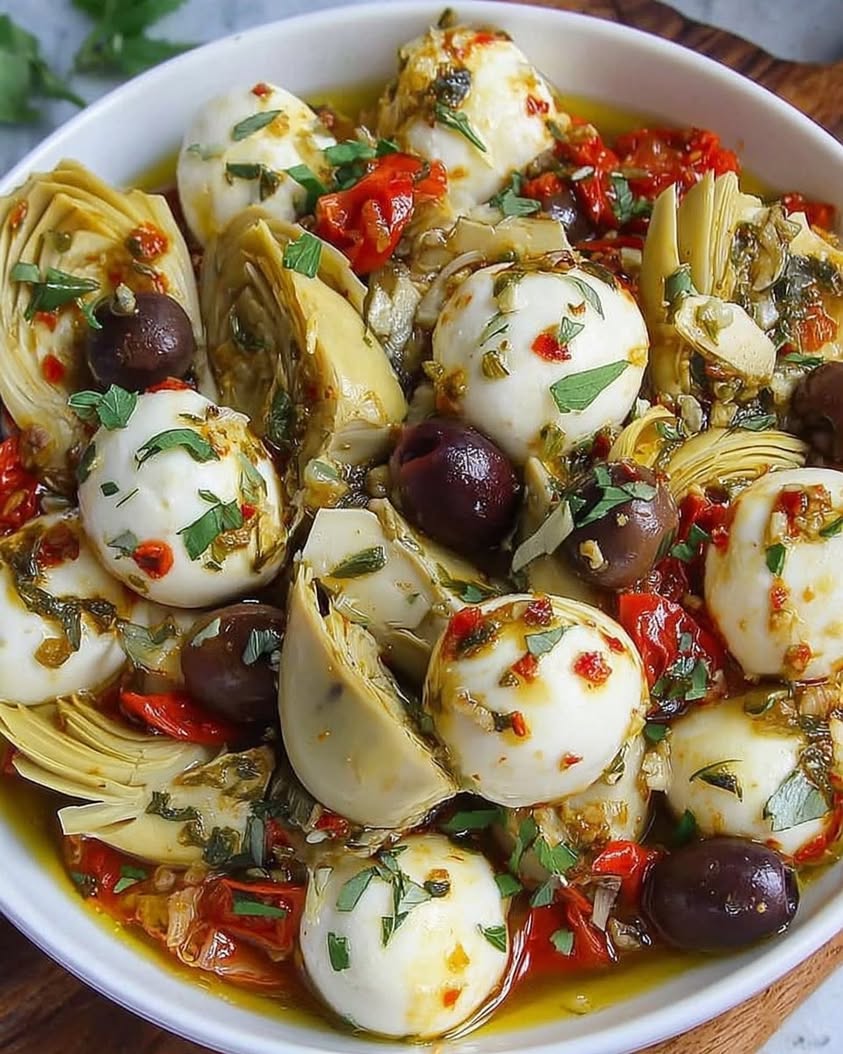
Marinated Mozzarella Balls, Artichokes, and Olives Easy Appetizer Recipe
Imagine a platter that bursts with Mediterranean sunshine, creamy textures, and briny, earthy flavors. This marinated mozzarella balls artichokes and olives easy appetizer recipe delivers exactly that. You can create a stunning antipasto spread in just fifteen minutes by combining simple, high-quality ingredients with a vibrant, herby marinade. This approach transforms everyday staples into a sophisticated starter that impresses guests without demanding hours in the kitchen. The key to this dish lies in the harmonious marriage of tender mozzarella, tangy artichokes, and savory olives, all infused with fresh herbs and robust olive oil. It is a celebration of simple, honest ingredients that come together to create something truly memorable.
This marinated mozzarella balls artichokes and olives easy appetizer recipe is perfect for busy weeknights, last-minute dinner parties, or holiday gatherings. You do not need any cooking skills or special equipment. The process involves layering ingredients in a container, whisking a simple dressing, and letting time do the heavy lifting. The results are consistently rewarding, offering a versatile dish that works as a standalone snack, a component of a cheese board, or a topping for crusty bread and salads. The bright, zesty flavors and satisfying textures make this appetizer a universal crowd-pleaser, appealing to both seasoned foodies and casual eaters.
The sensory experience of this appetizer is truly enchanting. As you open the container, the aroma of fresh basil, garlic, and lemon zest wafts upward. Each bite of the marinated mozzarella balls offers a creamy, milky burst that contrasts beautifully with the firm, tangy artichoke hearts. The briny pop of olives adds a salty depth that ties everything together. The marinade itself becomes a flavorful oil, perfect for dipping bread. This recipe is not just about feeding people. It is about creating a moment, a shared experience around a plate of beautiful, delicious food that speaks to the heart of Mediterranean hospitality. The visual appeal is equally compelling, with vibrant greens, creamy whites, and deep purples creating a mosaic of color.
Quick Recipe Highlights
Flavor Profile: This dish delivers a complex balance of creamy, tangy, briny, and herbaceous notes. The mild mozzarella absorbs the zesty lemon and garlic, while the artichokes provide a subtle sourness. Olives contribute a distinct saltiness that rounds out the palate beautifully.
Texture: You will experience a delightful interplay of textures in every forkful. The mozzarella balls are soft and yielding, the artichoke hearts offer a tender yet firm bite, and the olives provide a pleasant firmness. This variety keeps each mouthful interesting and satisfying.
Aroma: The aromatic profile is dominated by fresh herbs, particularly basil and oregano, mingling with the pungent scent of garlic and the bright citrus of lemon. High-quality extra virgin olive oil provides a fruity, peppery base note that anchors the entire dish.
Visual Appeal: The presentation is a feast for the eyes. You have the stark white of the mozzarella, the pale green and sage tones of the artichokes, and the dark olives creating a beautiful contrast. Fresh herbs and red pepper flakes add vibrant pops of color.
Skill Level Needed: This recipe requires absolutely no cooking experience. Anyone can master this with basic knife skills for mincing garlic and herbs. The process is intuitive and forgiving, making it an excellent choice for beginner cooks and children helping in the kitchen.
Special Equipment: You only need a large bowl or a jar with a tight-fitting lid for mixing and marinating. A sharp knife and cutting board for preparing the herbs and garlic are also necessary. No other specialized tools are required for this simple preparation.
Recipe Overview
Difficulty Level: This recipe is classified as easy because it involves no heat and no precise measurements. You can adjust ingredients to your taste without affecting the final outcome. The process is purely about assembly and allowing time for flavors to meld. There is no risk of overcooking or under-seasoning if you taste as you go. It is the definition of a foolproof recipe.
Category: This dish fits perfectly as an appetizer, antipasto, or mezze component. It also serves wonderfully as a salad topping, a sandwich filling, or a simple snack. You can serve it as a side dish alongside grilled meats or fish. Its versatility makes it a staple in many cuisines.
Cuisine: The culinary tradition here is firmly rooted in Italian and broader Mediterranean cooking. The combination of olive oil, herbs, garlic, and preserved vegetables is a hallmark of Italian antipasti. Similar preparations appear in Greek and Moroccan cuisines, using local herbs and olives. This recipe honors those simple, rustic traditions.
Cost: The cost is moderate but can be managed by choosing store brands for the jarred items. Fresh mozzarella and high-quality olive oil are the most expensive components. You can often find artichoke hearts and olives in bulk to save money. Buying ingredients in season, especially the herbs, can further reduce the cost.
Season: While available year-round, this recipe shines brightest in the summer and early fall. This is when fresh herbs like basil are at their peak. The light, refreshing nature of the dish is perfect for warm-weather gatherings. It also makes a bright counterpoint to heavier winter fare during the holiday season.
Occasion: This appetizer is ideal for any social gathering. It is fantastic for cocktail parties, picnics, potlucks, and holiday buffets. You can serve it as an elegant starter for a formal dinner or a casual snack for game day. It is also a wonderful gift for hosts when placed in a decorative jar.
Why You Will Love This Recipe
The taste and texture combination in this appetizer is simply irresistible. You get the luscious, creamy richness of the mozzarella, which melts in your mouth. This is immediately countered by the firm, slightly fibrous texture of the artichoke hearts. The olives add a final layer of chewy, salty resistance. Every bite offers a different experience due to the alternating textures. The marinade coats everything evenly, ensuring each piece is bursting with flavor. It is a perfect medley that satisfies a wide range of palate preferences.
Convenience is another major reason to adore this recipe. You can prepare it in under fifteen minutes with no cooking involved. This makes it a lifesaver for last-minute entertaining or busy weeknights. You can mix the ingredients in the morning and let them marinate all day. When guests arrive, you simply transfer the mixture to a serving bowl. The hands-off nature of the recipe allows you to focus on other dishes or on your guests themselves.
Nutritionally, this appetizer offers a smart balance of healthy fats, protein, and fiber. The mozzarella provides a good source of calcium and protein for satiety. Olive oil is rich in monounsaturated fats and antioxidants, which are excellent for heart health. Artichokes are packed with fiber, vitamins C and K, and powerful antioxidants. Olives contribute healthy fats and vitamin E. This combination makes it a satisfying snack that supports a healthy diet without feeling heavy or guilty. It fits well into a Mediterranean diet pattern.
This recipe holds immense social and entertaining value. It looks impressive on a platter with its vibrant colors and varied shapes. It allows guests to serve themselves, encouraging a casual, interactive dining experience. The shared act of dipping bread into the flavorful oil creates a communal feeling. It is also a great conversation starter, as people often ask about the ingredients and preparation. You appear to have put in far more effort than you actually did, enhancing your reputation as a gracious and skilled host.
Finally, this appetizer is remarkably cost-effective and accessible. You can easily halve or double the recipe to fit your budget and guest count. The ingredients are widely available in any grocery store, usually in the deli or canned goods aisles. You can use budget-friendly store brands for the artichokes and olives without sacrificing quality. The fresh herbs are optional and can be substituted with dried spices. This makes it an affordable luxury that everyone can enjoy.
Historical Background and Cultural Significance
The tradition of marinating vegetables and cheese in oil dates back to ancient Mediterranean civilizations. Before refrigeration, preserving food in olive oil and vinegar was a common method for extending shelf life. This technique allowed people to enjoy seasonal flavors year-round. Artichokes, olives, and cheese were staples in these regions, making them natural candidates for preservation. The practice evolved from a necessity into a celebrated culinary art form. Today, it is a beloved tradition that highlights the region’s agricultural bounty.
Culturally, these marinated items form the backbone of the Italian antipasto course, which literally means “before the meal.” Antipasto is a social ritual designed to stimulate the appetite and encourage conversation before the main course. It reflects the Italian emphasis on slow, communal dining and appreciation for quality ingredients. Each region of Italy boasts its own variations, using local olives, cheeses, and herbs. This particular recipe is a modern, simplified version of that classic tradition, making it accessible to home cooks everywhere while retaining its cultural essence.
The recipe has evolved significantly over time. Originally, people used raw vegetables that required long periods of pickling. Modern versions use jarred or canned artichokes, which are already preserved and ready to eat. This drastically reduces the preparation time from days to mere minutes. The rise of global availability of ingredients like fresh mozzarella balls has also shaped the recipe. Cookbooks and food blogs from the late 20th century popularized this exact combination, cementing its place in American home entertaining culture.
Regional variations of this marinade are vast and fascinating. In southern Italy, you might find it enriched with sun-dried tomatoes, capers, and fiery peperoncino. Greek versions often substitute the mozzarella with tangy feta cheese and add dill or mint to the marinade. North African adaptations might include warm spices like cumin and coriander. Each variation reflects the local palate and available ingredients. This recipe is a flexible template that encourages you to adapt it to your own taste preferences and cultural heritage.
Ingredient Deep Dive
Fresh Mozzarella Balls: Mozzarella has a rich history dating back to the 12th century in southern Italy, specifically in the regions of Campania and Puglia. It was traditionally made from water buffalo milk, giving it a distinctive richness and tenderness. Nutritionally, mozzarella provides a good source of protein, calcium, and phosphorus, which are vital for bone health. It is lower in fat and sodium than many aged cheeses, making it a healthier option for daily consumption. When selecting mozzarella, look for pearls or ciliegine (cherry-sized) balls that are firm, plump, and sitting in milky whey. The color should be a pristine, pearly white. Avoid any that look discolored or feel slimy. For storage, keep them refrigerated in their original liquid and use them within a few days of opening. If you cannot find fresh mozzarella, you can substitute it with firm, drained bocconcini or even small chunks of mild provolone or halloumi (which will add a different, saltier texture).
Artichoke Hearts: Artichokes are the flower buds of a thistle plant, native to the Mediterranean region. Their cultivation goes back thousands of years, appearing in ancient Greek and Roman texts. They are packed with dietary fiber, antioxidants (like cynarin and silymarin), and essential vitamins like folate and vitamin C. This high fiber content aids digestion and helps regulate blood sugar levels. When selecting jarred or canned artichokes, seek out “hearts” in brine or water for the best texture. Quartered or halved hearts work well for this recipe. Avoid those that are heavily marinated already, as they will conflict with your own marinade. For storage, transfer any unused portion to a glass container, cover with fresh water or brine, and refrigerate for up to a week. A suitable substitute is grilled or roasted red peppers, which offer a similar tender texture and sweet, smoky flavor. Frozen artichoke hearts, thawed and patted dry, also work perfectly.
Olives: Olives are a cornerstone of Mediterranean cuisine, with evidence of cultivation dating back to the Bronze Age. They are a drupe fruit, and their flavor profile varies dramatically depending on the variety, ripeness, and curing method. Nutritionally, olives are rich in monounsaturated fats, vitamin E, and powerful antioxidants, which combat inflammation and support heart health. For this recipe, a mix of green Castelvetrano olives (which are buttery and mild) and Kalamata olives (which are fruity and intense) creates a beautiful balance. When shopping, look for olives that are plump and shiny, avoiding any that are wrinkled or overly soft. Stored in their brine in a sealed container, olives can last for months in the refrigerator. You can substitute any pitted olive variety you prefer, such as Manzanilla, Gaeta, or Niçoise olives. Just be mindful of the salt level and adjust your marinade accordingly.
Extra Virgin Olive Oil: This is the lifeblood of the marinade, providing its primary source of flavor and fat. Extra virgin olive oil is the highest grade, extracted from the first cold pressing of olives without heat or chemicals. It must meet strict chemical and sensory standards. It is rich in polyphenols, which are potent antioxidants, and healthy monounsaturated fats. When selecting olive oil, look for a harvest date on the bottle, not just a “best by” date. A dark glass bottle protects it from light degradation. The aroma should be grassy, fruity, or peppery. Do not use light or extra light olive oil, as they lack the robust flavor needed for this dish. Store olive oil in a cool, dark cupboard, not near the stove. You can substitute the oil with a quality avocado oil, which has a neutral flavor but a similar healthy fat profile.
Fresh Basil and Oregano: These herbs are essential for imparting the classic Mediterranean flavor. Basil originates from India and Asia but became a staple in Italian cuisine. Oregano is native to the Mediterranean region. Both are packed with antioxidants and have anti-inflammatory properties. Basil provides a sweet, slightly peppery and anise-like flavor. Oregano offers a pungent, earthy, and slightly bitter note. When selecting fresh herbs, look for bright, vibrant leaves without any wilting or yellowing. To store, trim the stems and place them in a glass of water, covering the leaves loosely with a plastic bag in the refrigerator. They will last about a week. If you cannot find fresh herbs, you can substitute with dried versions. Use one teaspoon of dried oregano and one teaspoon of dried basil for every tablespoon of fresh, but the final flavor will be less vibrant.
Common Mistakes to Avoid
- You should not skip patting the mozzarella balls dry. Excess whey will dilute your marinade and create a watery, bland dressing that does not coat the ingredients well.
- You must avoid using low-quality olive oil. A cheap, rancid, or bland oil will ruin the entire dish. Invest in a good extra virgin olive oil for the best results.
- You need to resist the urge to use pre-shredded or pre-minced garlic from a jar. Freshly minced garlic provides a pungent, aromatic bite that is crucial for the flavor profile.
- You should not add salt to the marinade without tasting first. The olives, artichokes, and sometimes the mozzarella are already salty. You risk making the dish inedible.
- You must avoid marinating for too little time. Even 30 minutes helps, but the flavors need at least 2 hours to fully develop and infuse the ingredients. Overnight is ideal.
- You should not use a metal bowl for marinating. The acid in the lemon juice and vinegar can react with the metal, imparting an off-flavor. Use glass, ceramic, or plastic.
- You need to avoid cutting the mozzarella balls if they are already small. Leave them whole to prevent them from becoming too saturated and breaking apart in the oil.
- You must not serve the dish straight from the refrigerator. The cold dulls the flavors and solidifies the olive oil. Remove it 20 minutes before serving to bring it to room temperature.
Essential Techniques
Mincing Garlic and Herbs: This technique is fundamental for releasing the aromatic oils and flavors. To mince garlic, smash a clove with the flat side of your knife to loosen the skin. Remove the skin, then slice the clove thinly. Finally, rock your knife over the slices in a chopping motion until they are finely minced. For herbs like basil and oregano, stack the leaves, roll them tightly into a cigar shape, and slice thinly to create a chiffonade. This prevents bruising the leaves. Mastering this ensures your marinade has a balanced, pervasive flavor without large, unpleasant chunks. You will achieve a more uniform infusion of taste.
Creating a Vinaigrette Marinade: The marinade is essentially a simple vinaigrette that needs proper emulsification. In a small bowl, combine your fresh minced garlic, dried oregano, red pepper flakes, and salt. Whisk in the lemon juice and red wine vinegar. While whisking continuously, stream in the extra virgin olive oil in a thin, steady drizzle. This forces the oil and acid to combine temporarily into a creamy, cohesive dressing. A well-emulsified vinaigrette coats each piece of cheese and vegetable evenly. If your dressing separates, do not worry. Just give it a vigorous whisk right before pouring it over your ingredients. The key is to create a harmonious blend where every ingredient is equally seasoned.
Layering for Maximum Flavor Infusion: The order in which you combine the ingredients matters more than you might think. Start by placing a single layer of the mixed mozzarella, artichokes, and olives in your chosen container. Drizzle a portion of the marinade over this layer. Scatter some fresh herbs on top. Repeat these layers until you have used all ingredients. This technique ensures that the marinade is distributed evenly throughout the dish. It prevents ingredients at the bottom from sitting in a pool of oil while the top remains dry. Finally, pour any remaining marinade over the top. Gently stir to ensure everything is coated, then seal the container.
Marinating and Timing: Patience is the most important technique here. After combining everything, place the sealed container in the refrigerator. The minimum marinating time is 2 hours, but 4 to 8 hours is significantly better. Overnight marination yields the most profound flavor. During this time, the mozzarella absorbs the bright lemon and herbs, the artichokes soften further, and the olives release some of their brine into the oil. You can gently stir the mixture once or twice during the process to redistribute the marinade. About 20 to 30 minutes before serving, remove the container from the fridge to allow the oil to liquefy and the flavors to bloom at room temperature. This final step is crucial for peak taste.
Pro Tips for Perfect Marinated Mozzarella Balls Artichokes and Olives Easy Appetizer Recipe
First, you should always taste your olives and artichokes before you start. If they are extremely salty, you might want to give them a quick rinse under cold water. This prevents the final dish from becoming overly briny. This small step saves you from a ruined batch.
Second, for the best visual appeal, try to use a variety of olive colors and sizes. Mixing buttery green Castelvetranos with deep purple Kalamatas or black Gaetas creates a more interesting plate. This variety also adds different flavor notes to the mix.
Third, you can add a strip of lemon zest to the marinade for an extra burst of citrus aroma. Use a vegetable peeler to remove a long strip of the yellow zest, avoiding the bitter white pith. Remove it before serving.
Fourth, consider toasting some pine nuts or slivered almonds to sprinkle on top just before serving. This adds a delightful crunch and nutty flavor that contrasts perfectly with the creamy cheese and tender vegetables. It elevates the dish significantly.
Fifth, do not discard the leftover marinade oil after you finish the appetizer. It is a golden flavored oil perfect for dipping crusty bread, drizzling over grilled vegetables, or using as a base for salad dressings. Store it in the fridge for up to a week.
Sixth, if you are preparing this for a party, double the recipe and serve it in a large, shallow bowl. This allows guests to easily see and access all the different ingredients. A wide platter also helps the oil distribute evenly.
Variations and Adaptations
Regional Variations: You can give this dish a distinctly Greek twist by substituting the mozzarella with large cubes of feta cheese. You should also add dried mint and a bit of dried dill to the marinade. A splash of lemon juice is essential here. For a taste of Southern Italy, include some chopped sun-dried tomatoes packed in oil and a teaspoon of capers. You can also grill the artichoke hearts quickly for a smoky flavor before marinating.
Seasonal Adaptations: During the spring, add some thin slices of fresh fennel and a handful of fresh peas that have been blanched quickly. In the summer, incorporate fresh cherry tomatoes, halved, and a generous amount of fresh, torn basil. During the fall, you can roast some red pepper strips and add them to the mix. Winter is an excellent time to add some preserved lemon rind and roasted garlic cloves.
Dietary Modifications: This recipe is naturally gluten-free, making it safe for celiacs. To make it dairy-free, simply omit the mozzarella balls. You can add extra firm tofu cubes, boiled and cubed potatoes, or marinated mushrooms to supplement the texture. For a vegan version, use the same substitutions as the dairy-free option and ensure your artichokes and olives contain no added cheese or honey.
Flavor Variations: Spice lovers can add a pinch of Aleppo pepper or a finely chopped fresh chili like a serrano or Thai bird chili. For an herby twist, try using fresh thyme, rosemary, and parsley instead of basil and oregano. An Asian-inspired variation could include a splash of toasted sesame oil, rice vinegar, and a bit of fresh ginger, though this moves away from the traditional Mediterranean profile.
Texture Modifications: If you prefer a softer bite, you can blanch the artichoke hearts in boiling water for two minutes before adding them. For a firmer texture, use jarred olives that are already pitted but still relatively firm. You can also add some toasted bread cubes or croutons to the platter just before serving to introduce a crunchy element. Consider adding roasted, skinned walnuts for a rich, earthy crunch.
Presentation Alternatives: Instead of a bowl, you can serve this appetizer in individual shooter glasses for a modern, elegant look at a cocktail party. Layer the ingredients for a beautiful visual effect. Alternatively, you can spoon the mixture onto slices of grilled baguette or sturdy crackers to make easy, ready-to-eat canapés. Skewering a mozzarella ball, an olive, and an artichoke quarter on a toothpick makes for a perfect finger food.
Serving and Presentation Guide
For the most effective plating, use a large, wide, shallow bowl or a wooden serving board. Spread the marinated mixture out so it is not piled too high. This allows guests to easily see and pick the pieces they want. Drizzle a little of the flavorful herbed oil from the container over the top just before serving to give it a fresh, glossy look. The visual appeal of the contrasting white, green, and purple against a dark board or a white bowl is stunning.
Garnishing is an excellent way to enhance the presentation. A generous scattering of fresh, whole basil leaves or torn mint adds a touch of green elegance. A few sprigs of fresh oregano or rosemary create a rustic feel. You can also sprinkle some flaky sea salt, like Maldon, and a crack of black pepper right before serving for a final touch of flavor and texture. Edible flowers, such as nasturtiums, can add a surprising and beautiful pop of color.
Traditional accompaniments are simple but crucial for a complete experience. You must provide a basket of warm, crusty bread for sopping up the delicious marinade oil. Excellent choices include a crusty sourdough, a ciabatta, or a grilled focaccia. You can also offer a bowl of crispy, salted crackers or breadsticks. A small dish of extra virgin olive oil for dipping on the side is always a welcome addition.
A modern serving suggestion is to use this medley as a topping for a robust green salad. Spoon it over a bed of arugula or mixed greens, and you have a light but satisfying main course. You can also serve it alongside grilled chicken or fish skewers. Another idea is to use it as a filling for a wrap or a panini, adding some fresh greens and a drizzle of balsamic glaze.
Temperature is a critical consideration. You should never serve this appetizer directly from the refrigerator. The cold oil will become cloudy and thick, coating the ingredients in a waxy layer that dulls the flavor. Remove the dish from the fridge at least 20 to 30 minutes before serving. Room temperature allows the oil to become liquid and glossy, and the flavors of the herbs and garlic to fully bloom and become aromatic.
For portion control, plan on about a quarter cup of the mixture per person as part of a larger appetizer spread. If it is the only appetizer, you should double that amount. This dish is incredibly moreish, so it is always wise to prepare a bit more than you think you need. Leftovers are fantastic the next day on salads or sandwiches.
Wine and Beverage Pairing
The bright, herbaceous, and tangy flavors of this appetizer pair beautifully with crisp, dry white wines. A classic choice is a Pinot Grigio from the Veneto region of Italy, with its clean, mineral finish. Another excellent option is a Sauvignon Blanc from New Zealand or the Loire Valley, whose grassy and citrus notes mirror the herbs and lemon in the marinade. For a more aromatic experience, a dry Vermentino from Sardinia or a Gavi di Gavi from Piedmont are perfect companions. The wine should have enough acidity to cut through the creamy richness of the mozzarella.
If you prefer red wine, choose a light-bodied, fruity option with low tannins. A Bardolino or a young Dolcetto from Italy works wonders, as does a Pinot Noir from California or Oregon. These wines are best served slightly chilled, which enhances their refreshing qualities. The key is to avoid heavy, oaky reds that would overpower the delicate flavors of the vegetables and cheese. A chilled light red like a Lambrusco (a dry version, not the sweet one) is a surprisingly delightful and authentic pairing.
For non-alcoholic alternatives, a sparkling water with a generous squeeze of lemon or lime is a classic palate cleanser. A high-quality Italian soda like San Pellegrino Aranciata (orange) or Limonata (lemon) provides a sweet and tart counterpoint. A dry, crisp apple cider can also be a fantastic match. For a more sophisticated option, try a kombucha with a ginger or herbal flavor profile. The bubbles and acidity in these drinks effectively refresh the palate between bites of the rich, oily appetizer.
If you are serving this as part of a brunch or lighter affair, consider a chilled herbal tea. A mint iced tea or a lemongrass and ginger infusion are excellent choices. They are light, aromatic, and do not compete with the food. A simple glass of cold-pressed green juice with a touch of apple also works well. The goal is to provide a refreshing, unsweetened beverage that complements the savory, tangy ingredients without overwhelming them.
Temperature is paramount for the beverage. White wines and rosés should be well-chilled, around 45 to 50 degrees Fahrenheit. Red wines should be served slightly cool, around 55 to 60 degrees. Non-alcoholic drinks should be served ice-cold. The cold temperature provides a refreshing contrast to the richness of the olive oil and cheese. Always serve the wine in proper stemware to allow the aromas to develop and to keep the drink cool for longer.
Storage and Shelf Life
Storing your marinated mozzarella balls artichokes and olives easy appetizer recipe properly is key to maintaining its quality and freshness. You must transfer the mixture to an airtight glass or BPA-free plastic container. Glass is the best choice as it does not absorb odors. Ensure the container has a tight-fitting lid to prevent the garlic and herb aromas from spreading to other foods in your refrigerator. Never store it in a metal container, as the acidity can cause a reaction.
Temperature requirements are specific for this dish. You must refrigerate the marinated mixture at all times when not serving. The ideal temperature range is between 34 and 40 degrees Fahrenheit. Leaving it at room temperature for more than two hours is not safe, especially with the fresh cheese. If you are serving it at a party, place the bowl on a bed of ice to keep it cool. The cold environment preserves the mozzarella’s texture and prevents bacterial growth.
Choosing the right container is important for longevity. A wide-mouthed jar or a Tupperware-type container with a secure seal works best. You want to minimize the amount of air in the container. If you have extra space, you can add a little more olive oil to ensure all ingredients remain fully submerged. This prevents the top layer from drying out and oxidizing. A layer of plastic wrap pressed directly onto the surface before sealing the lid also helps exclude air.
Recognizing signs of spoilage is essential for food safety. The most obvious sign is a sour or off odor, which indicates bacterial fermentation. If you see any mold growth, particularly on the mozzarella or at the top of the oil, discard the entire batch immediately. A change in the texture of the mozzarella, such as it becoming slimy or very hard, is also a bad sign. The oil itself can become cloudy, which is normal when chilled, but should be clear and bright when returned to room temperature.
Reheating is not necessary for this cold appetizer, but if you are using leftovers in a warm dish, you can gently warm them. To warm the marinated ingredients, you should not microwave them, as this can destroy the texture of the cheese. Instead, place them in a skillet over very low heat for just a minute or two, just until the oil is liquid and the ingredients are slightly warmed. You can also add them to a hot pasta or grain dish at the very end of cooking to warm them through.
Freezing this appetizer is not recommended. The high water content in the mozzarella will cause it to become rubbery and grainy upon thawing. The artichokes will also lose their tender texture and become mushy. The oil can separate and become grainy. The only component that freezes well is the olives. If you have a large batch, it is better to store the olives and cheese separately from the marinade if you must freeze, but overall, fresh is best.
Make Ahead Strategies
The best part about this recipe is that it is designed to be made ahead. For optimal flavor, you should plan to prepare this appetizer at least 4 to 6 hours before you intend to serve it. However, you can make it up to 2 days in advance. The flavors will continue to meld and deepen over time, creating a more complex and harmonious taste. Just remember to bring it to room temperature before serving.
The storage between the preparation and serving is simple. After you combine all the ingredients and seal the container, place it directly in the refrigerator. No intermediate steps are required. This makes it an incredibly efficient dish for entertaining. You can assemble it in the morning and forget about it until your guests arrive. The only thing you need to do is take it out of the fridge about 20 to 30 minutes before serving to allow the oil to liquefy.
Assessing the quality impact is important. The dish will not suffer from being made ahead. In fact, it will be better. The mozzarella will absorb more of the marinade, becoming more flavorful. The artichokes will soften slightly, becoming even more tender. The only ingredient that might lose some of its initial brightness is the fresh herbs. To combat this, you can reserve a small handful of fresh basil or mint and add it just before serving to refresh the visual and aromatic appeal.
Assembly tips for a make-ahead schedule include keeping your fresh herb garnish separate. You should also consider storing the dish in a container that you can serve it from directly, like a nice glass bowl with a lid. This eliminates the need to transfer the mixture later, which can disturb the layers. If you are adding any toasted nuts, you must absolutely store them separately and add them just before serving, otherwise they will become soggy.
Reheating guidelines do not really apply here, but you might need to gently stir the mixture after it comes to room temperature. The oil and vinegar may have separated slightly in the cold. A gentle stir will recombine them into a cohesive dressing. If the oil looks a little solid, just let it sit at room temperature for a bit longer, and it will return to its beautiful liquid state. Do not rush this process with heat.
Adding fresh elements just before serving is a wonderful way to elevate the Print
Marinated Mozzarella Balls, Artichokes, and Olives
- Total Time: 45 minutes
- Yield: 4
Description
A flavorful and easy appetizer featuring creamy mozzarella balls, tangy artichokes, and briny olives marinated in herbs and olive oil.
Ingredients
- 8 oz fresh mozzarella balls (bocconcini or ciliegine)
- 1 can (14 oz) artichoke hearts, drained and quartered
- 1 cup mixed olives (such as Kalamata and green olives)
- 1/2 cup extra virgin olive oil
- 2 tablespoons red wine vinegar
- 2 cloves garlic, thinly sliced
- 1 teaspoon dried oregano
- 1/2 teaspoon red pepper flakes
- Salt and black pepper to taste
- 2 tablespoons fresh parsley, chopped
Instructions
- In a medium bowl, combine mozzarella balls, artichoke hearts, and olives.
- In a small bowl, whisk together olive oil, red wine vinegar, garlic, oregano, red pepper flakes, salt, and pepper.
- Pour the marinade over the cheese and vegetable mixture and toss gently to coat.
- Cover and refrigerate for at least 30 minutes to allow flavors to meld.
- Before serving, sprinkle with fresh parsley and toss again. Serve chilled or at room temperature.
Notes
You can customize the seasonings to taste.
- Prep Time: 15 minutes
- Cook Time: 0 minutes
- Method: Appetizer
- Cuisine: Italian