Sweet Potato and Beet Stacks with Pesto, Burrata, and Walnuts: A Show-Stopping Vegetarian Appetizer
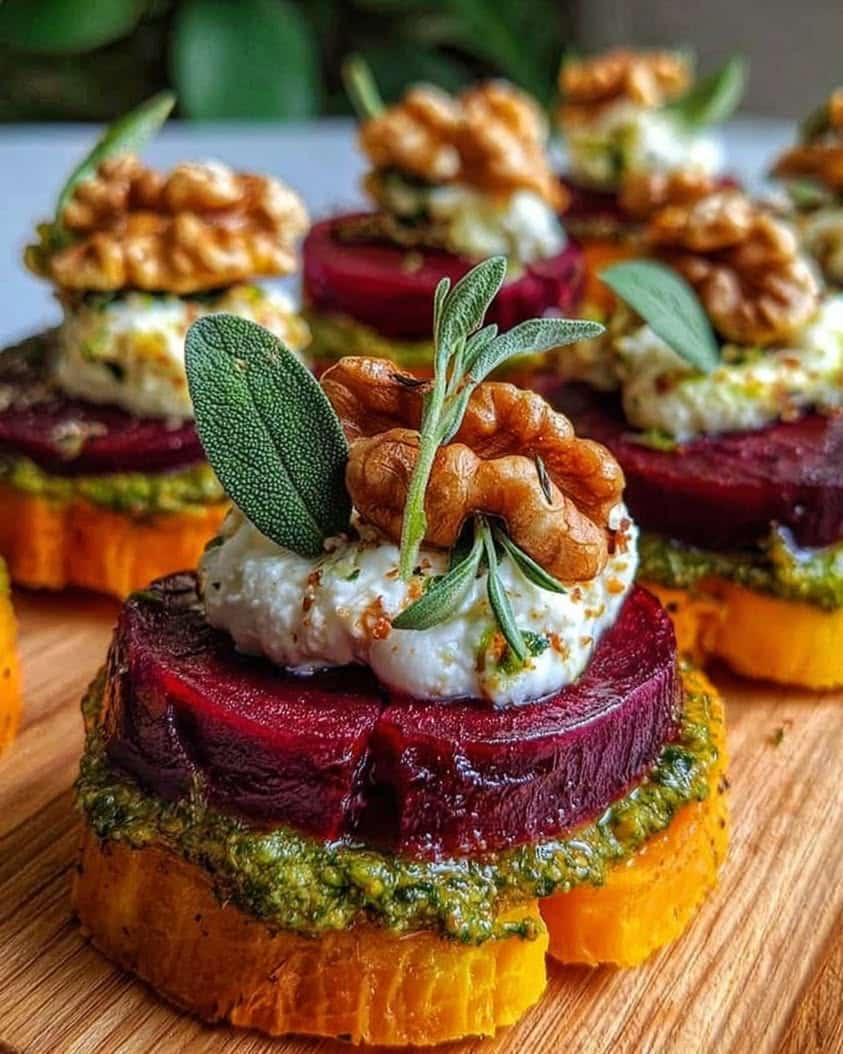
Imagine a dish that combines the earthy sweetness of roasted root vegetables with the creamy decadence of fresh burrata and the vibrant kick of homemade pesto. These Sweet Potato and Beet Stacks with Pesto, Burrata, and Walnuts deliver exactly that, and they do so with stunning visual appeal. Every layer tells a story, from the caramelized edges of the sweet potato to the tender, jewel-toned beet round. This is not just a recipe; it is an experience designed to impress your guests and satisfy your deepest cravings for something both wholesome and indulgent.
The magic of these Sweet Potato and Beet Stacks begins in the oven. As the vegetables roast, their natural sugars concentrate, creating a rich, savory-sweet foundation. This process transforms simple ingredients into a complex flavor profile. A drizzle of good olive oil and a pinch of sea salt is all they need to become perfectly tender. The pesto adds a bright, herbaceous layer that cuts through the richness, while the burrata provides a luxurious, milky finish. Finally, crunchy walnuts offer a textural contrast that makes every bite unforgettable.
Assembling these stacks is surprisingly simple, making them perfect for both a weeknight dinner upgrade and a special occasion centerpiece. You can prepare the components ahead of time, which takes the stress out of entertaining. The recipe is naturally vegetarian and adaptable to various dietary needs, ensuring everyone at your table can enjoy a serving. With its balance of colors, textures, and flavors, this dish truly stands out as a modern classic. Let us explore how to create this masterpiece in your own kitchen.
Quick Recipe Highlights
- Flavor Profile: The flavor is a beautiful dance of sweet, savory, and earthy notes. The roasted sweet potato and beet provide a natural sweetness that pairs perfectly with the herbaceous, garlicky pesto. The burrata adds a mild, milky richness that ties everything together, while the walnuts contribute a nutty, slightly bitter counterpoint.
- Texture: This dish offers a fantastic variety of textures in every forkful. The sweet potato and beet are tender and caramelized on the outside yet soft inside. The burrata is incredibly creamy and luscious. The walnuts provide a satisfying, crunchy pop, and the pesto adds a smooth, saucy element that moistens the entire stack.
- Aroma: The aroma of these Sweet Potato and Beet Stacks is incredibly inviting, filling your kitchen with the scent of roasting root vegetables. When combined, the aroma evolves to include the fresh basil and garlic from the pesto, along with the earthy, nutty scent of walnuts. The final dish has a warm, comforting, and appetizing fragrance.
- Visual Appeal: These stacks are a feast for the eyes, featuring vibrant layers of orange sweet potato and deep red beet. The bright green pesto and the stark white burrata create a stunning color contrast. A final sprinkle of chopped walnuts and fresh basil leaves adds the perfect finishing touch, making each plate look like a work of art.
- Skill Level Needed: You will need a moderate skill level for this recipe, specifically for creating a smooth pesto and ensuring the vegetables are sliced uniformly. However, the assembly process is very straightforward. If you are comfortable with a knife and a food processor, you can absolutely master this dish with ease.
- Special Equipment: A sharp chef’s knife or a mandoline slicer is crucial for achieving uniformly thin rounds of sweet potato and beet. You will also need a food processor or a high-powered blender to make the pesto. A baking sheet lined with parchment paper is necessary for roasting the vegetables to perfection.
Recipe Overview
- Difficulty Level: I have classified this recipe as medium difficulty. The primary challenge lies in slicing the sweet potato and beet into even rounds, which ensures they cook at the same rate. Making the pesto from scratch is simple but requires a bit of technique to achieve the right consistency. Once those steps are done, the rest of the process is pure assembly, making it very approachable for a confident home cook.
- Category: This dish fits perfectly into the appetizer or starter category, as it is elegant and beautifully portioned. It also works wonderfully as a light main course, especially when paired with a side salad or some crusty bread. Given its rich ingredients, it is best suited for occasions where you want to serve something special.
- Cuisine: These Sweet Potato and Beet Stacks draw inspiration from modern American and Italian cuisines. The use of pesto and burrata is a clear nod to Italian culinary traditions. The roasting of root vegetables and the stack presentation, however, are techniques often found in contemporary American cooking, creating a unique and delightful fusion.
- Cost: The cost for this recipe is moderate. Sweet potatoes and beets are very affordable root vegetables. Basil, pine nuts or walnuts, and Parmesan cheese for the pesto can add up, as can a ball of quality burrata. Walnuts are also a cost-effective nut to use. Overall, this is a budget-friendly way to create a luxurious-looking dish.
- Season: This recipe is best enjoyed in the fall and winter when sweet potatoes and beets are at their peak freshness and sweetness. The hearty, warming nature of the roasted vegetables is especially comforting during the cooler months. However, you can make it year-round using high-quality produce from any grocery store.
- Occasion: These stacks are perfect for a wide range of occasions, from a romantic dinner for two to a festive holiday gathering. They are an impressive vegetarian option for Thanksgiving or Christmas. They also make a wonderful appetizer for dinner parties, brunches, or any time you want to serve a dish that looks as good as it tastes.
Why You Will Love This Recipe
You will adore the extraordinary taste and texture combination found in these Sweet Potato and Beet Stacks. First, the tender sweetness of the roasted vegetables is a perfect counterpoint to the creamy richness of the burrata. Then, the bright and herbaceous pesto adds a layer of freshness that prevents the dish from feeling too heavy. The walnuts provide a much-needed crunch that makes each bite exciting. This is a dish that engages all your senses, offering a truly memorable eating experience.
Convenience is a huge benefit of this recipe, despite its impressive appearance. You can easily roast the sweet potato and beet slices and make the pesto a day ahead of time. This makes last-minute assembly a breeze, allowing you to spend more time with your guests. The recipe requires only a few simple steps and uses common kitchen tools. It is a fantastic example of a high-impact dish that does not require hours of complex preparation.
From a nutritional standpoint, this dish is a powerhouse of vitamins and minerals. Sweet potatoes are loaded with vitamin A and fiber, while beets are rich in folate, potassium, and antioxidants. The walnuts provide healthy omega-3 fatty acids, and the basil in the pesto offers anti-inflammatory benefits. Burrata, while indulgent, provides protein and calcium. This is a meal that feels both decadent and health-conscious, satisfying your cravings without the guilt.
These Sweet Potato and Beet Stacks are absolute showstoppers for any social gathering. Their towering, layered presentation makes them a guaranteed conversation starter. They are an elegant addition to a buffet table or a beautiful plated starter for a seated dinner. Sharing this dish makes you feel like a true culinary artist, and your friends and family will be incredibly impressed by the effort and creativity it represents.
Finally, this recipe is incredibly cost-effective and accessible. You do not need expensive cuts of meat or rare ingredients to create a luxurious dish. Root vegetables, fresh herbs, nuts, and cheese are all pantry staples that you can find easily. The cost per serving is quite low compared to restaurant-quality appetizers, yet the dish feels incredibly special. This makes it a perfect choice for entertaining on a budget or for elevating a simple weeknight meal.
Historical Background and Cultural Significance
The origin of this specific dish is rooted in modern culinary creativity rather than ancient tradition. It represents the fusion of techniques and ingredients from different cultures. The concept of stacking roasted vegetables likely emerged from the modernist cuisine movement, where chefs began to deconstruct and reconstruct classic dishes. This idea of creating vertical layers from simple components is a signature of contemporary gastronomy, aiming to surprise and delight the diner with both presentation and flavor.
The cultural importance of this recipe lies in its celebration of seasonal, plant-based eating. Both sweet potatoes and beets have deep histories in various cuisines, from Native American to Eastern European. This dish honors those roots by placing them at the center of the plate. It also reflects a growing global trend towards vegetarian and vegetable-forward cooking, where the main ingredient is no longer just a side dish but the star of the show. It is a dish for the modern, mindful eater.
The evolution of this recipe can be traced through the increasing popularity of ingredients like pesto and burrata outside of traditional Italian contexts. Pesto, originating in Genoa, Italy, was once a simple sauce of basil, garlic, pine nuts, parmesan, and olive oil. Today, it is a global staple used in countless ways. Burrata, a fresh mozzarella cheese filled with cream and stracciatella, has also become a trendy item. Combining these Italian classics with American root vegetables is a perfect example of how recipes evolve through cultural exchange.
Regional variations of this concept are abundant. Some cooks might use a sundried tomato pesto or a chimichurri instead of classic basil pesto. Others may substitute the beet with parsnip or carrot for a different sweetness profile. In the American South, one might see a pecan pesto and goat cheese instead of walnut and burrata. Each variation reflects local ingredients and taste preferences, proving that the core idea of a vegetable stack is a versatile canvas for culinary expression across the globe.
Ingredient Deep Dive
Sweet Potato. The sweet potato has a rich history dating back thousands of years to Central and South America. It is a staple crop in many cultures worldwide, from the Caribbean to East Asia. Nutritionally, it is a superstar, packed with beta-carotene (vitamin A), vitamin C, potassium, and fiber. Its natural sweetness intensifies beautifully when roasted. For this recipe, choose firm, smooth sweet potatoes without any soft spots or sprouts. Store them in a cool, dark, and well-ventilated place, but do not refrigerate them. If you cannot find sweet potatoes, regular orange-fleshed yams work perfectly as a substitute.
Beet. Beets have been cultivated since ancient times, originally for their leaves and later for their medicinal roots. They are deeply embedded in Eastern European cuisine, often featured in borscht. Nutritionally, beets are incredible for their high levels of folate, manganese, and nitrates, which can help lower blood pressure. They offer an earthy, slightly sweet flavor that pairs wonderfully with pesto and cheese. Look for beets that are firm, smooth, and heavy for their size, with fresh, unwilted greens if attached. Store them in a plastic bag in the refrigerator for up to two weeks. Golden beets or chioggia beets can be used for a different color and slightly milder flavor.
Basil Pesto. Pesto, meaning pounded or crushed in Italian, originates from Genoa in the Liguria region. It is a celebration of fresh summer basil, garlic, pine nuts, hard cheese, and olive oil. The key nutritional benefits come from the basil (antioxidants), olive oil (healthy fats), and nuts (vitamin E and magnesium). To select the best basil, look for bright green, unblemished leaves with a strong, fragrant aroma. For storage, you can keep pesto in the refrigerator with a thin layer of olive oil on top for a week. A great substitution for pine nuts is walnuts, which is exactly what we use in this recipe to save on cost and add a unique flavor.
Burrata. Burrata is a fresh Italian cheese made from mozzarella and cream. Its name means buttered, which perfectly describes its rich, luscious interior. It originated in the Apulia region of Italy as a way to use up leftover mozzarella scraps. Nutritionally, it provides significant protein and calcium, though it is also high in fat. Choosing the best burrata is crucial; look for a ball that feels heavy for its size and has a slightly soft, yielding texture when gently squeezed. The outer shell should be white and shiny. Store it in its liquid in the refrigerator and consume it within a day or two of purchase for maximum freshness. If burrata is unavailable, fresh mozzarella is an acceptable, though less creamy, substitute.
Walnuts. Walnuts are one of the oldest tree foods known to humans, with a history stretching back to ancient Persia. They are highly symbolic in many cultures, often representing wisdom and intellect. They are a true superfood, being the only nut that contains a significant source of alpha-linolenic acid (ALA), a plant-based omega-3 fatty acid. This makes them excellent for heart and brain health. When selecting walnuts, look for ones that feel heavy for their size and do not have a rancid smell. Store them in an airtight container in the refrigerator or freezer to extend their shelf life. Pecans or hazelnuts would be excellent substitutes.
Common Mistakes to Avoid
- Not Slicing Vegetables Evenly: If you slice the sweet potato and beet into uneven rounds, they will cook at different rates. Some pieces will be burnt and crisp while others remain hard and undercooked, ruining the texture of your stacks. Always aim for uniform thickness, ideally using a mandoline slicer for perfect consistency.
- Overcooking the Vegetables: Roasting the sweet potato and beet slices for too long will make them mushy and difficult to stack. They will lose their structure and collapse. You want them to be fork-tender but still firm enough to hold their shape when layered. A good check is that they should bend slightly but not break.
- Using a Bland Pesto: Relying on a store-bought pesto can be a huge letdown. Homemade pesto is incredibly easy to make and has a freshness that cannot be replicated. If your pesto is bland, your entire dish will lack the bright, herbaceous kick that makes it special. Always taste and adjust your pesto with extra salt, lemon juice, or garlic.
- Forgetting to Pat Vegetables Dry: After washing and slicing the sweet potato and beet, it is important to pat them dry with a paper towel. Excess moisture on the surface will cause them to steam instead of roast. This prevents the beautiful caramelization that adds so much flavor and texture to the stacks.
- Skipping the Salt and Oil: Do not be shy with the salt and olive oil when roasting the vegetables. These two ingredients are essential for drawing out the natural sweetness and creating a golden, crispy exterior. Underseasoning will result in a flat-tasting dish, so be generous with your seasonings.
- Overcrowding the Baking Sheet: Placing all the sweet potato and beet slices on a single sheet pan in a crowded layer is a common error. This traps steam and prevents proper browning. You must give each slice a little space so that hot air can circulate around it, promoting even cooking and caramelization.
- Using Low-Quality Burrata: You should not skimp on the quality of your burrata. Low-quality burrata can be rubbery and have a bland, watery interior. Invest in a high-quality ball from a good deli or Italian market. The creamy, rich center is a key component of the final dish. A poor substitute will be very noticeable.
- Assembling Stacks Too Early: Assembling the Sweet Potato and Beet Stacks too far in advance can lead to sogginess. The moisture from the burrata and pesto will soak into the roasted vegetables over time. It is best to assemble them just before serving so that every element maintains its distinct texture and integrity.
- Crushing the Burrata: When you place the burrata on top of the stack, you should not press down too hard. The goal is to keep it intact until the moment it is cut into. Gently place it on top so it retains its ball-like shape. A gentle hand is key to a beautiful presentation.
- Not Toasting the Walnuts: Using raw walnuts is a missed opportunity. Toasting them in a dry pan for a few minutes unlocks their natural oils and enhances their nutty flavor significantly. This simple step adds a depth of flavor and an extra layer of crunchy texture that is well worth the minimal effort.
Essential Techniques
Even Slicing with a Mandoline. Using a mandoline slicer is the most effective way to achieve perfectly uniform rounds of sweet potato and beet. This consistency is critical for even cooking. To master it, always use the hand guard to protect your fingers and set the blade to a thickness of about 1/8 inch. A common pitfall is pressing down too hard, which can crush the vegetables. For success, look for slices that are all the same thickness, allowing for a smooth, translucent appearance.
Proper Roasting for Caramelization. Roasting root vegetables correctly is all about high heat and space. The oven should be preheated to 400 degrees Fahrenheit. Toss the slices with olive oil and salt, then spread them in a single layer on a parchment-lined baking sheet. The visual cue for success is a golden-brown edge and a tender center. Avoid the pitfall of flipping them too early; let the first side develop a good crust before turning them over halfway through the cooking time.
Making a Classic Pesto. The key to a perfect pesto is balance. Start by toasting the walnuts gently to enhance their flavor. Then, pulse the basil, garlic, and walnuts in a food processor until coarsely chopped. With the motor running, slowly drizzle in the olive oil until the mixture is smooth. Finally, add the Parmesan cheese and a squeeze of lemon juice. A common mistake is over-processing the basil, which can cause it to become bitter and release too much water. The visual cue for success is a vibrant, thick green sauce that is not too watery.
Handling and Plating Burrata. Burrata is delicate and should be handled with care. Remove it from its liquid and gently pat it dry with a paper towel. Do not squeeze it, as this can break the outer shell and cause the creamy center to leak out. To plate, place the whole ball on top of your vegetable stack. The visual cue for a perfect burrata is a taut, shiny outer shell that feels soft to the touch. The pitfall is letting it sit out too long at room temperature, which can cause it to lose its shape.
Layering for Stability. Building a stable stack requires a thoughtful approach. Start with the largest, most stable base layer, which is usually a slice of sweet potato. Alternate the layers with beet and pesto, pressing down gently after each addition to ensure the stack is secure. The goal is to create a flat, even top surface for the burrata. A common problem is a wobbly stack. To fix this, use a small dab of pesto between each layer as a glue to help everything stay firmly in place.
Pro Tips for Perfect Sweet Potato and Beet Stacks
For the best flavor, always toast your walnuts in a dry skillet over medium heat until they become fragrant, which should take about 3 to 4 minutes. This simple step deepens their nutty taste and provides a much better texture against the creamy burrata.
When making your pesto, do not be afraid to taste and adjust the seasoning. The perfect pesto should be bright, salty, and slightly garlicky. You can add a squeeze of fresh lemon juice to brighten it up or a pinch of red pepper flakes if you want a little heat.
To ensure your sweet potatoes roast evenly, do not overcrowd the baking sheet. Give each slice a little bit of space so that steam can escape and the edges can caramelize properly. If necessary, use two baking sheets to avoid overcrowding.
Allow the roasted sweet potato and beet slices to cool slightly on the baking sheet before you start assembling the stacks. If they are too hot, they will cause the pesto to wilt and the burrata to melt, ruining the fresh, distinct layers of your dish.
Use a generous amount of pesto between each layer. This adds flavor and acts as a glue to help hold your stack together. You do not want the stacks to be dry, so a nice spread of green sauce in the center of each slice is key to a moist, delicious bite.
When plating, consider using a small ring mold to help shape the stacks. This ensures a perfectly round and tall presentation every time. If you do not have a ring mold, just use your hands to gently shape and compress the layers as you build them.
For the best texture, serve these Sweet Potato and Beet Stacks immediately after assembling. The contrast between the warm vegetables and the cool, creamy burrata is truly magical. If you wait too long, the dish will become lukewarm and less exciting.
Variations and Adaptations
Regional Variations: In the American Southwest, you could swap the traditional basil pesto for a cilantro and pepita pesto, using pumpkin seeds instead of walnuts. This would add a bright, slightly spicy flavor that complements the sweet vegetables beautifully. You could also add a sprinkle of cotija cheese on top for a salty finish, changing the entire profile of the dish.
Seasonal Adaptations: During the summer months, you can substitute the roasted sweet potato and beet with grilled zucchini and eggplant slices. The pesto will still work perfectly, but the overall dish will be lighter and fresher. In the winter, consider adding a layer of roasted butternut squash or parsnip for a different kind of earthy sweetness.
Dietary Modifications: To make this recipe vegan, simply use a homemade pesto made with nutritional yeast instead of Parmesan cheese. You can also find high-quality vegan mozzarella or cashew-based cheese to replace the burrata. The roasted vegetables and walnuts are already fully plant-based, making this a simple adaptation.
Flavor Variations: If you want a spicy kick, add a chopped chipotle pepper in adobo sauce to your pesto. This will give the dish a smoky, fiery flavor that contrasts nicely with the creamy burrata. For a sweeter twist, drizzle a small amount of balsamic glaze over the finished stacks just before serving.
Texture Modifications: For a crunchier texture, you can bread and bake the sweet potato and beet slices instead of just roasting them plain. Dip them in an egg wash and then in seasoned breadcrumbs or panko before baking. This will create a crispy, savory crust that is a fantastic contrast to the soft interior and creamy cheese.
Presentation Alternatives: Instead of stacking the vegetables in a tower, you can fan them out on the plate in a circular pattern. Place a dollop of pesto in the center, top it with the burrata, and sprinkle with walnuts. This deconstructed version is equally beautiful and much easier to eat, making it perfect for a more casual gathering.
Serving and Presentation Guide
For a classic and elegant plated presentation, build your Sweet Potato and Beet Stacks directly on the center of each serving plate. Use a small ring mold to ensure a perfectly round shape. Place a whole ball of burrata on top. Drizzle any remaining pesto around the plate in a decorative swoop. This creates a clean, professional look that is sure to impress.
When it comes to garnishing, a few simple additions can make a big difference. Sprinkle the toasted walnuts generously over the top and around the plate. Add a few fresh basil leaves or microgreens for a pop of green. A final crack of black pepper and a pinch of flaky sea salt will enhance all the flavors and add a beautiful finishing touch.
Traditional accompaniments for this dish include a slice of crusty sourdough or a baguette, which is perfect for soaking up any extra pesto and creamy cheese. You might also serve a simple arugula salad with a lemon vinaigrette on the side. The peppery greens and bright acidity help to cut through the richness of the burrata and balance the meal.
For a modern serving suggestion, consider serving these stacks as part of a larger mezze platter. Place them alongside other small dishes like marinated olives, roasted red peppers, and grilled artichokes. This turns the dish into a shareable appetizer that encourages conversation and grazing, which is ideal for a party atmosphere.
Temperature is a crucial consideration. The sweet potato and beet slices should be served warm or at room temperature. Do not serve them piping hot, as they will melt the burrata. The burrata itself should be served at room temperature for the best creamy texture. Remove it from the refrigerator about 30 minutes before you plan to serve the dish.
For portion control, this recipe is designed to serve four people as an appetizer. Each stack is quite substantial and rich. If you are serving it as a main course, you might want to double the recipe and serve each person two stacks. For a large gathering, you can halve the recipe and make smaller, two-inch stacks for a more manageable finger food option.
Wine and Beverage Pairing
A crisp, herbaceous white wine is an excellent choice to pair with these Sweet Potato and Beet Stacks. A Sauvignon Blanc from New Zealand or the Loire Valley works wonderfully, as its grassy notes complement the basil pesto. A dry Pinot Grigio is also a fantastic option, offering a clean, light body that will not overpower the delicate flavors of the burrata and vegetables.
For a red wine lover, a light-bodied, chilled red is the way to go. A Valpolicella or a Bardolino from Italy has notes of red fruit and a slight bitterness that can stand up to the earthy beets. Another excellent option is a Pinot Noir from a cooler climate, like Oregon or Burgundy, which has enough acidity to cut through the richness of the cheese.
If you prefer a non-alcoholic option, a sparkling water with a splash of elderflower cordial and a squeeze of lemon is a refreshing choice. The bubbles help cleanse the palate between bites, and the floral notes are a lovely pairing with the herbaceous pesto. A good quality sparkling apple cider or a dry ginger ale are also excellent alternatives.
For a tea pairing, consider a cup of chamomile or mint tea. The gentle floral notes of chamomile or the cool, refreshing character of mint can help balance the richness of the meal. These herbal teas are especially suitable if you are serving this dish as a light lunch or a dinner on a warmer evening.
When serving any beverage, ensure it is served at the correct temperature. White wines and rosés should be well-chilled, but not ice-cold. Red wines can be lightly chilled for 15 to 20 minutes before serving, which helps to soften the tannins and make them more refreshing. Sparkling water should be served very cold with plenty of ice.
Storage and Shelf Life
It is best to store the components of this dish separately to maintain the best quality. Leftover roasted sweet potato and beet slices can be stored in an airtight container in the refrigerator for up to three days. The pesto should be stored in a separate container, with a thin layer of olive oil poured on top to prevent it from turning brown, and it will last for about a week.
Temperature requirements are important for food safety. The burrata must be kept refrigerated at all times until you are ready to serve it. The roasted vegetables can be left at room temperature for a few hours after cooking, but they should be refrigerated for longer storage. The pesto is best kept in the refrigerator because of the cheese and fresh herbs it contains.
For container recommendations, use glass or plastic containers that have a tight-fitting lid. For the pesto, a wide-mouth jar is ideal so you can easily press a piece of plastic wrap against the surface of the sauce before putting the lid on. This minimizes air exposure and helps to keep it looking vibrant green.
Signs of spoilage are easy to spot. The roasted vegetables will develop a sour smell or become slimy if they have gone bad. The pesto will lose its bright green color, turning a dull brown, and may develop a rancid smell if the oils have oxidized. The burrata will have a strong, unpleasant smell and a very runny texture if it spoils.
Reheating instructions are simple. You can reheat the roasted sweet potato and beet slices in a 350 degree Fahrenheit oven for about 5 to 7 minutes, or in a dry skillet over medium heat until warmed through. You should never microwave them, as they will become mushy. The pesto and burrata should never be heated; they should be served fresh from the refrigerator or at room temperature.
Freezing guidelines are limited. You can freeze the roasted vegetables in a single layer on a baking sheet, then transfer them to a freezer bag for up to a month. However, their texture will become softer upon thawing. The pesto freezes very well in ice cube trays; once frozen, pop the cubes out and store them in a bag. Burrata should never be frozen, as it will become watery and grainy upon thawing.
Make Ahead Strategies
A smart prep timeline is the key to stress-free hosting. Up to two days before, you can roast the sweet potato and beet slices and store them in the refrigerator. You can make the pesto a day in advance. This leaves only the assembly and the final toasting of the walnuts for the day you plan to serve the dish. This approach saves you a significant amount of active cooking time.
Storage between steps is crucial for maintaining quality. Once the roasted vegetables have cooled completely, store them in a single layer between sheets of parchment paper in an airtight container. This prevents them from sticking together. The pesto should be stored as described, with a protective layer of oil. Keep both in the refrigerator.
There will be a minimal quality impact if the components are made ahead. The flavors of the pesto actually meld and improve over a day or two. The roasted vegetables will be a little less crisp on the edges after being refrigerated, but they will still be delicious. You can easily refresh them in a hot oven for a few minutes before assembling to bring back some of that texture.
Assembly tips are important for the final presentation. Take the roasted vegetables out of the refrigerator about 15 minutes before assembling to take the chill off. Gently reheat them if desired. Then, build your stacks directly on the serving plates. Do not add the burrata until the very last minute, just before you bring the plates to the table.
For reheating guidelines, you should only reheat the vegetable components. You can do this in a 350 degree Fahrenheit oven for about five minutes. Allow them to cool down slightly before you start layering. The burrata and pesto should remain cold or at room temperature. The contrast between the warm vegetables and cool cheese is a highlight of the dish.
Adding fresh elements at the end is a smart way to make a pre-prepared dish feel vibrant. Just before serving, toast your walnuts and let them cool. Chop some fresh basil. Give the stacks a final pinch of flaky salt and a crack of black pepper. These last-minute touches of freshness and crunch make a world of difference in the final eating experience.
Scaling Instructions
Halving the recipe is very straightforward. Simply use half the number of sweet potatoes and beets, and halve the ingredient amounts for the pesto. The cooking time will remain about the same, but you may need to check them a few minutes early. The assembly process is identical, and you will end up with two generous servings of these beautiful Sweet Potato and Beet Stacks.
Doubling or tripling the recipe for a larger crowd is easy, but it requires some adjustments. You will need to use two or three baking sheets to avoid overcrowding the vegetables. Additionally, you should not double the pesto recipe in a standard food processor, as it may not fit. It is better to make the pesto in two separate batches. The assembly time will, of course, increase with the number of stacks you need to build.
Equipment adjustments are necessary when scaling up. You may not have a baking sheet large enough to hold all the vegetables in a single layer. Using multiple racks in your oven is fine, but you should rotate the pans halfway through the cooking time to ensure even browning. You might also need a larger mixing bowl to toss all the vegetable slices in oil and salt.
Timing modifications are important for large batches. The roasting time for the vegetables will remain roughly the same as long as they are in a single layer. However, if you are using two ovens or two racks, the cook time may take a minute or two longer. The most significant time change comes from the assembly, so allow yourself an extra 15 to 20 minutes for stacking if you are making a large quantity.
Storage considerations change when you scale up. If you are making a large batch for a party, you should plan to serve them immediately. Leftovers from a triple batch will take up a lot of refrigerator space, and the texture of the vegetables will degrade more quickly. It is best to roast the vegetables and make the pesto in advance but Print
Sweet Potato & Beet Stacks with Pesto, Burrata & Walnuts
- Total Time: 40 minutes
- Yield: 4
Description
A vibrant and elegant dish featuring roasted sweet potato and beet rounds stacked with creamy burrata, fresh pesto, and crunchy walnuts. Perfect as an appetizer or light main course.
Ingredients
- 2 medium sweet potatoes, sliced into 1/4-inch rounds
- 2 medium beets, peeled and sliced into 1/4-inch rounds
- 3 tablespoons olive oil, divided
- Salt and black pepper to taste
- 8 ounces burrata cheese, drained
- 1/2 cup basil pesto (store-bought or homemade)
- 1/3 cup walnuts, toasted and roughly chopped
- Fresh basil leaves for garnish
- 2 tablespoons balsamic glaze (optional)
Instructions
- Preheat oven to 400°F (200°C). Line two baking sheets with parchment paper.
- In a large bowl, toss sweet potato and beet rounds with 2 tablespoons olive oil, salt, and pepper until well coated.
- Arrange slices in a single layer on the prepared baking sheets. Roast for 20-25 minutes, flipping halfway, until tender and lightly browned. Let cool slightly.
- To assemble stacks, place a sweet potato round on a serving plate, top with a small spoonful of pesto and a piece of burrata. Add a beet round, more pesto, and burrata. Repeat layers to form a stack of 3-4 rounds per serving.
- Drizzle remaining 1 tablespoon olive oil over the stacks. Sprinkle with toasted walnuts and garnish with fresh basil leaves. Add a drizzle of balsamic glaze if desired. Serve immediately.
Notes
You can customize the seasonings to taste. For a vegan version, replace burrata with cashew-based cheese or omit. Leftover stacks can be stored in the fridge for up to 2 days; reheat gently.
- Prep Time: 15 minutes
- Cook Time: 25 minutes
- Method: Appetizer
- Cuisine: Italian-American