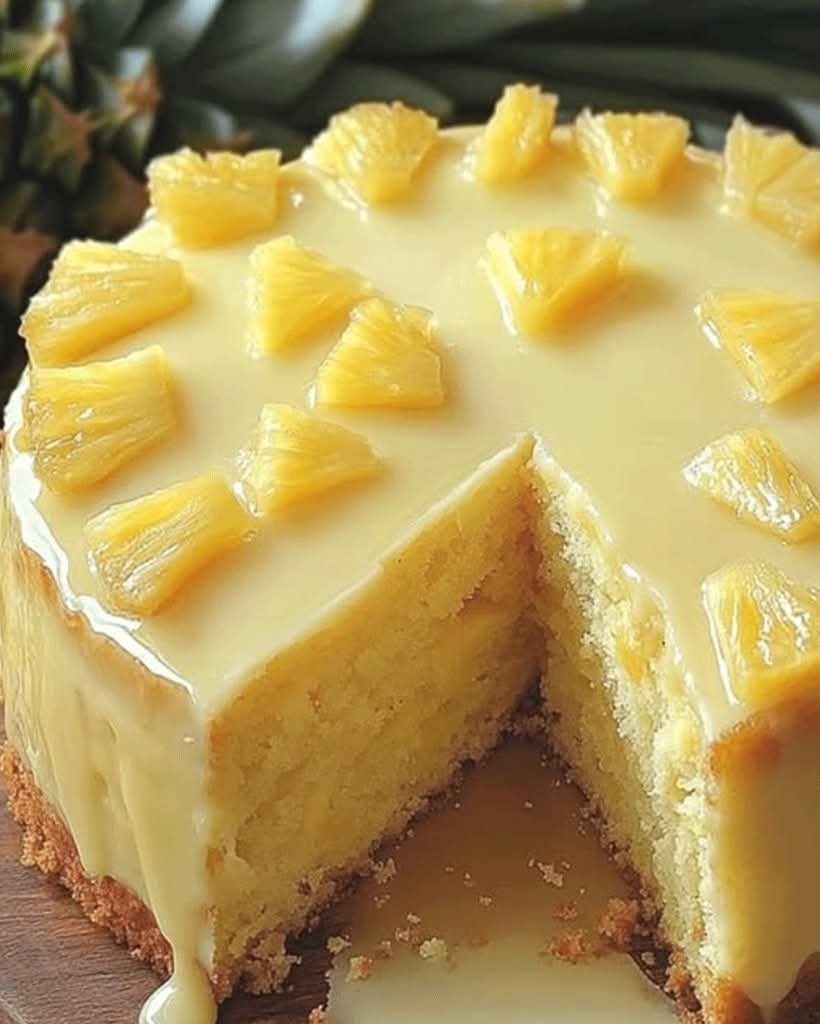
Juicy Pineapple Cake: A Moist Tropical Dessert Recipe
Imagine a dessert that captures the essence of a sunny tropical getaway in every single bite. This Juicy Pineapple Cake delivers exactly that experience, promising a wonderfully moist crumb and a burst of sweet, tangy flavor. Moreover, the recipe transforms simple pantry staples into a show-stopping treat that feels both special and comforting. Consequently, whether you are hosting a summer barbecue or simply craving a slice of sunshine, this cake is your perfect baking project.
This Juicy Pineapple Cake recipe stands out because it uses crushed pineapple in its juice, which guarantees incredible moisture and authentic fruit flavor. The result is a tender, golden cake where every forkful is infused with the bright, sunny taste of pineapple. Additionally, the straightforward mixing method means you can have this dessert ready for the oven in about fifteen minutes. Ultimately, this easy pineapple cake recipe is a foolproof way to bring a taste of the tropics to your table with minimal effort and maximum reward.
Quick Recipe Highlights
- Flavor Profile: This cake offers a perfect balance of sweet and tangy notes, primarily from the crushed pineapple. The vanilla extract adds a warm, aromatic depth that complements the fruit beautifully. Furthermore, the brown sugar in the batter introduces a subtle caramel undertone that enhances the overall taste.
- Texture: Expect an exceptionally moist and tender crumb thanks to the pineapple and its juice. The cake is dense yet soft, avoiding any dryness. Importantly, the pieces of fruit throughout provide little bursts of juicy texture that make each bite interesting.
- Aroma: As it bakes, your kitchen will fill with the inviting scents of sweet pineapple and warm vanilla. The aroma is distinctly tropical and comforting. Additionally, the caramelized notes from the brown sugar add a layer of cozy, baked-good fragrance.
- Visual Appeal: The cake bakes to a lovely golden-brown color, often with visible specks of pineapple. For presentation, a simple dusting of powdered sugar mimics a light snowfall on a tropical island. Alternatively, you can garnish with a fresh pineapple ring or a maraschino cherry for a classic touch.
- Skill Level Needed: This is a beginner-friendly recipe requiring only basic baking skills. You simply mix the wet and dry ingredients separately before combining them. Therefore, no special techniques like creaming butter or folding egg whites are necessary.
- Special Equipment: You only need standard kitchen tools: two mixing bowls, a whisk or spatula, and an 8×8 inch baking pan. A can opener is essential for the pineapple. Of course, an oven and a cooling rack are the only other mandatory items.
Recipe Overview
- Difficulty Level: We classify this Juicy Pineapple Cake as easy because it uses a simple “dump and stir” method. There is no need for a stand mixer or complex steps like separating eggs. Consequently, even novice bakers can achieve perfect results on their first attempt.
- Category: This recipe falls squarely into the dessert and snack categories. It is perfect for an afternoon tea, a potluck contribution, or a sweet ending to a family meal. Furthermore, it can easily double as a coffee cake for a leisurely weekend breakfast.
- Cuisine: While pineapple cakes have roots in various global cuisines, this version is a classic American home baking recipe. It draws inspiration from Southern Hummingbird Cake and Midwestern “Dump Cakes.” Ultimately, it represents a simple, comforting tradition of using canned fruit to create delicious desserts.
- Cost: This is an incredibly budget-friendly dessert. The main expense is the can of crushed pineapple, with the rest of the ingredients being common pantry items. Therefore, you can create a stunning cake for a fraction of the cost of a bakery version.
- Season: While pineapple is available year-round, this cake feels particularly fitting for spring and summer. Its bright, sunny flavor evokes warm weather and outdoor gatherings. However, it also serves as a wonderful tropical escape during the colder winter months.
- Occasion: This versatile cake suits countless occasions, from casual weeknight desserts to birthday parties and picnics. It is a stellar potluck dish because it travels well and appeals to all ages. Moreover, its unpretentious appearance makes it ideal for informal get-togethers.
Why You’ll Love This Recipe
First and foremost, the taste and texture of this Juicy Pineapple Cake are utterly irresistible. The cake remains supremely moist for days, avoiding the common pitfall of dry, crumbly cake. Each bite delivers a harmonious blend of sweet cake and tangy fruit, creating a flavor profile that is both familiar and exciting. The simplicity of the ingredients allows the true, vibrant taste of pineapple to shine through without competition. Ultimately, this dessert satisfies a sweet tooth while feeling slightly fruity and fresh.
From a convenience standpoint, this easy pineapple cake recipe is a true winner. You can prepare the entire batter in one bowl with just a few minutes of active effort. Furthermore, it uses ingredients you likely already have in your cupboard, eliminating the need for a special grocery trip. The baking time is standard, and the cake requires no elaborate frosting or decoration to be delicious. This makes it the perfect last-minute dessert solution when unexpected guests arrive or when you need a quick baking project.
While it is a dessert, this Juicy Pineapple Cake does offer some nutritional advantages over heavily frosted alternatives. Pineapple is a good source of vitamin C and manganese, and using the fruit in its juice adds natural sweetness. You can also make simple swaps, like using whole wheat flour or reducing the sugar slightly, to tailor it to your dietary preferences. The cake provides a satisfying treat that feels a bit more wholesome than many other options.
The social and entertaining value of this cake is exceptionally high. It is a universally loved dessert that prompts requests for the recipe. Bringing this Juicy Pineapple Cake to a gathering guarantees it will be devoured quickly. It serves as a fantastic conversation starter about simple, classic baking. Moreover, baking it with children is a joy because of the straightforward, no-fail process.
Finally, the cost-effectiveness and accessibility of this recipe cannot be overstated. You can bake an entire pan of delicious dessert for just a few dollars. The ingredients are available at every grocery store, with no exotic or hard-to-find items. This accessibility ensures that anyone, regardless of their baking experience or budget, can enjoy a homemade tropical treat. It proves that incredible flavor does not require expensive components.
Historical Background and Cultural Significance
The origin story of pineapple-based cakes in America is deeply intertwined with the advent of canned fruit. After the commercial canning of pineapple began in the early 20th century, this tropical fruit became a pantry staple across the country. Home cooks, particularly during the mid-century, embraced recipes that used canned crushed pineapple for its consistent quality, sweetness, and convenience. Consequently, recipes for “Pineapple Upside-Down Cake” and similar moist pineapple cakes became fixtures in community cookbooks and family recipe boxes, symbolizing a touch of affordable luxury.
The cultural importance of this Juicy Pineapple Cake lies in its representation of American home baking ingenuity. It is a dessert born from practicality, using shelf-stable ingredients to create something special. These cakes were often featured at church socials, potlucks, and family reunions, becoming part of shared community experiences. The cake evokes a sense of nostalgia for many, reminding them of grandmothers’ kitchens and simpler times. Therefore, it holds a place in the culinary heritage as a beloved, humble classic.
The evolution of the recipe shows how home bakers adapted to changing tastes and available ingredients. Early versions might have used butter or shortening, while modern takes sometimes incorporate yogurt or oil for added moisture. The core principle, however, remains unchanged: combining crushed pineapple with a simple cake batter to achieve maximum juiciness. Over time, variations have emerged, including adding coconut, nuts, or a cream cheese frosting, but the essential, moist character of the pineapple cake is a constant.
Regional variations of this concept are fascinating. In the Southern United States, it closely relates to the Hummingbird Cake, which adds bananas and pecans. In Hawaii, a similar cake might feature fresh pineapple or a macadamia nut crunch. Some European versions incorporate rum-soaked fruit or a sponge cake base. This global appeal underscores the universal love for the sweet-and-tangy combination that pineapple provides in baked goods. Each culture adds its own signature, but the foundation is the same irresistible, juicy cake.
Ingredient Deep Dive
Crushed Pineapple in Juice is the undisputed star of this Juicy Pineapple Cake. Pineapple originated in South America and was spread across the globe by European explorers, becoming a symbol of hospitality. Nutritionally, it is rich in vitamin C, manganese, and bromelain, an enzyme that can aid digestion. For the best cake, always choose canned pineapple packed in its own juice, not heavy syrup, to control sweetness. You can store an unopened can in the pantry for years. If you need a substitution, well-drained crushed peaches or mangoes can work in a pinch, though the flavor profile will shift.
All-Purpose Flour provides the structure for our easy pineapple cake. Wheat cultivation is ancient, forming the backbone of many global food cultures. Flour gives the cake its crumb and body through gluten formation when mixed with liquid. While not a significant source of vitamins, enriched flour provides added B vitamins and iron. For best results, spoon the flour into your measuring cup and level it off to avoid a dense cake. Store flour in a cool, dry place. For a gluten-free version, use a reliable 1:1 gluten-free flour blend to maintain the texture.
Granulated and Brown Sugar work together to sweeten and moisten the batter. Sugar cane has a long history, originally cultivated in Southeast Asia. Granulated sugar provides straightforward sweetness, while brown sugar, with its molasses content, adds moisture, a deeper flavor, and aids in browning. These sugars are pure carbohydrates, offering quick energy. When measuring brown sugar, pack it firmly into the cup. Store sugars in airtight containers to prevent hardening. You can use all granulated sugar in a pinch, but you will lose the caramel notes and some moisture from the molasses.
Vegetable Oil is the fat source that guarantees a moist Juicy Pineapple Cake. Unlike solid fats, oil remains liquid at room temperature, contributing to a tender texture that stays soft for days. It is a source of essential fatty acids. Use a neutral oil like canola, vegetable, or grapeseed so it doesn’t overpower the pineapple flavor. There is no special storage needed for oil beyond keeping it in a cool, dark cupboard. For a different flavor profile, melted coconut oil can be a delicious tropical substitution, though it may solidify if the batter is cold.
Eggs act as a binder and leavening agent in this recipe. Eggs have been a dietary staple across cultures for millennia. They provide structure, richness, and protein to the cake. Eggs also contribute to the golden color of the crumb. For the best results, use large eggs at room temperature to ensure even mixing into the batter. Store eggs in their carton in the refrigerator. For a vegan adaptation, a commercial egg replacer or a flax egg can work, though the texture may be slightly denser.
Common Mistakes to Avoid
- Using Pineapple Packed in Syrup: This is a critical error. Heavy syrup will make the cake excessively sweet and can alter the liquid balance. Always opt for pineapple in its own 100% juice for the perfect flavor and moisture level in your Juicy Pineapple Cake.
- Not Draining the Pineapple: While you use the juice in the batter, you must drain the crushed pineapple first. Adding it straight from the can without draining includes too much liquid. Consequently, measure the juice after draining for accuracy.
- Overmixing the Batter: Once you combine the wet and dry ingredients, mix just until no flour streaks remain. Overmixing develops the gluten in the flour, leading to a tough, chewy cake instead of a tender, moist crumb.
- Incorrectly Measuring Flour: Scooping flour directly with the measuring cup packs it down, resulting in too much flour. This is a common cause of dry cake. Always spoon the flour into the cup and level it off with a knife for a light, accurate measure.
- Using Cold Ingredients: Eggs and other dairy (if used in variations) should be at room temperature. Cold ingredients do not incorporate as evenly, which can cause the batter to separate or result in an uneven bake.
- Overbaking the Cake: This is the surest way to ruin the “juicy” quality. Start checking the cake a few minutes before the timer ends. The cake is done when a toothpick inserted into the center comes out with a few moist crumbs, not completely clean.
- Skipping the Cooling Step: Cutting into the cake while it’s hot will cause it to steam and become gummy. Let the Juicy Pineapple Cake cool in the pan on a wire rack for at least 20 minutes before slicing. This allows the structure to set.
- Forgetting to Grease the Pan: Even with a non-stick pan, a light coating of butter or baking spray is essential. This simple step ensures your beautiful cake releases cleanly without sticking and breaking.
Essential Techniques
The “Muffin Method” of mixing is the core technique for this easy pineapple cake. This involves whisking all the dry ingredients in one bowl and all the wet ingredients in another before combining them. The importance of this method is that it minimizes gluten development, which is key for a tender, soft cake rather than a bread-like texture. To master it, simply make a well in the center of your dry ingredients and pour the wet mixture in. Gently fold with a spatula just until combined; a few small lumps are perfectly fine. The common pitfall is overmixing, which makes the cake tough. The visual cue for success is a thick, pourable batter with no visible pockets of dry flour.
Properly preparing the pineapple is another essential technique. You must drain the crushed pineapple over a bowl or measuring cup to reserve the precious juice. This step controls the liquid content in your Juicy Pineapple Cake batter. The importance lies in balancing moisture; the juice adds flavor and sweetness to the wet ingredients, while the drained fruit provides texture without waterlogging the cake. To master it, simply place a fine-mesh strainer over a bowl and pour in the canned contents. Let it drain for a minute or two. The common mistake is squeezing the pineapple, which removes too much juice. The visual cue is having separate bowls of fluffy crushed fruit and golden pineapple juice ready for your recipe.
Pro Tips for Perfect Juicy Pineapple Cake
For an extra flavor boost, add a teaspoon of grated fresh ginger or a half teaspoon of ground cinnamon to the dry ingredients. These warm spices complement the pineapple beautifully and add a layer of complexity to your easy pineapple cake.
To ensure even baking and a flat top, gently tap the filled cake pan on the counter a few times before putting it in the oven. This releases any large air bubbles that could cause uneven rising or tunneling in the crumb.
If you love coconut, fold in half a cup of sweetened shredded coconut into the batter along with the drained pineapple. This addition enhances the tropical vibe and adds a lovely chewy texture to every slice of your Juicy Pineapple Cake.
For a beautiful presentation and a textural contrast, sprinkle a tablespoon of turbinado sugar over the batter just before baking. It will create a delightful, sparkling, crunchy crust on top of the moist cake.
Always use a light-colored metal baking pan for this recipe. Dark pans absorb more heat and can cause the edges to overbake or burn before the center is fully set, compromising the perfect texture.
Let the cake cool completely before storing it. Trapped heat in an airtight container creates condensation, which can make the top of your Juicy Pineapple Cake soggy instead of maintaining its ideal moistness.
Variations and Adaptations
For delightful regional variations, consider the Southern approach by adding a cup of chopped pecans and a mashed ripe banana to the batter, transforming it into a Hummingbird Cake cousin. A Hawaiian twist might include a cup of toasted macadamia nuts and a tablespoon of rum extract. Alternatively, a Caribbean-inspired version could feature a pinch of nutmeg and allspice along with a rum glaze drizzled over the cooled cake. These adaptations show how the basic Juicy Pineapple Cake recipe serves as a versatile canvas for global flavors.
Seasonal adaptations are simple and effective. In the summer, top the cooled cake with fresh berries and a dollop of whipped cream. For a fall version, add warm spices like cinnamon, ginger, and cloves to the dry ingredients. A winter holiday adaptation could include dried cranberries and orange zest in the batter, finished with a citrus glaze. These modifications keep this easy pineapple cake feeling fresh and appropriate all year round.
Dietary modifications are straightforward. For a gluten-free Juicy Pineapple Cake, substitute the all-purpose flour with a high-quality 1:1 gluten-free baking blend. To make it dairy-free, ensure any added frosting or glaze uses plant-based ingredients; the base cake often already is. For a vegan version, use a flax egg and a plant-based milk if your recipe variation calls for it. A lower-sugar option can be made by reducing the granulated sugar by a quarter cup and using a sugar substitute in the rest.
Serving and Presentation Guide
Plating techniques for this humble cake can elevate it instantly. Serve a simple square on a plain white plate for a rustic look, or use a round cookie cutter to create a neat cylinder for a more refined presentation. Drizzling a plate with a thin caramel or vanilla sauce before placing the cake adds a professional restaurant touch. For family-style serving, present the entire cake in the baking pan lined with parchment paper for easy lifting.
Garnishing ideas range from minimalist to elaborate. A light dusting of powdered sugar through a fine-mesh sieve is classic and elegant. A single fresh pineapple leaf or a thin slice of dried pineapple adds instant tropical appeal. For a party, top each slice with a dollop of freshly whipped cream or a scoop of vanilla ice cream. A sprinkle of toasted coconut or chopped macadamia nuts provides both visual interest and a delightful crunch.
Storage and Shelf Life
Proper storage is key to maintaining the moist quality of your Juicy Pineapple Cake. Once completely cooled, cover the cake tightly with plastic wrap or store it in an airtight container at room temperature. Under these conditions, the cake will stay fresh and delicious for up to 3 days. The natural sugars and oil in the recipe help preserve its tenderness. Avoid refrigeration, as it can actually dry out the crumb faster.
For longer storage, this easy pineapple cake freezes exceptionally well. Wrap individual slices or the entire cooled cake (without glaze or powdered sugar) tightly in plastic wrap, then in a layer of aluminum foil or a freezer bag. It can be frozen for up to 3 months. Thaw overnight in the refrigerator or for a few hours at room temperature. Add any fresh garnishes or a dusting of powdered sugar just before serving.
Make Ahead Strategies
You can easily prepare this Juicy Pineapple Cake a day in advance. Bake the cake as directed and let it cool completely. Wrap it tightly in plastic wrap and store it at room temperature overnight. The flavors often meld and improve, making the cake even more moist and flavorful the next day. This makes it a perfect stress-free dessert for entertaining.
For component prep, you can measure out all the dry ingredients and store them in a zip-top bag a week ahead. Drain the pineapple and store the juice and fruit separately in airtight containers in the refrigerator for up to two days before baking. On the day of serving, simply combine the pre-measured components for a quick and easy assembly.
Scaling Instructions
This Juicy Pineapple Cake recipe scales beautifully for different crowd sizes. To make a half batch for a smaller household, simply divide all ingredient quantities by two and bake in a loaf pan. Reduce the baking time to 25-30 minutes, checking for doneness early. The texture and flavor will remain perfectly intact.
To double the recipe for a large gathering, double all ingredients and bake in a 9×13 inch pan. The baking time may increase to 45-50 minutes. Ensure your oven rack is in the center position for even heat distribution. Always use the toothpick test to determine doneness rather than relying solely on the timer when scaling recipes.
Nutritional Deep Dive
A typical slice of this Juicy Pineapple Cake provides a balance of carbohydrates, fats, and a small amount of protein. The primary energy comes from the carbohydrates in the flour, sugar, and pineapple. The vegetable oil contributes healthy unsaturated fats, which aid in nutrient absorption and help create the moist texture. While it is a dessert, the pineapple does add a dose of vitamin C and manganese, along with dietary fiber, especially if you use whole wheat flour.
For those monitoring intake, consider that the sweetness comes from both added sugars and the natural sugars in the pineapple juice. You can moderately reduce the granulated sugar by 1/4 cup without drastically affecting the texture. Portion control is easy with this cake, as it is satisfying and rich in flavor, so a standard square is often enough. Pairing a slice with a source of protein, like a glass of milk or a handful of nuts, can help balance the glycemic response.
Dietary Adaptations
For a gluten-free Juicy Pineapple Cake, replace the all-purpose flour with a certified gluten-free 1:1 baking flour blend. Ensure your baking powder is gluten-free as well. The result will be a slightly denser but equally moist and delicious cake that everyone can enjoy.
To make this cake dairy-free, the standard recipe is often already compliant, as it uses oil instead of butter. Simply verify that any added toppings or glazes are made with plant-based ingredients. A simple dusting of powdered sugar made without cornstarch or a glaze with powdered sugar and citrus juice keeps it fully dairy-free.
A vegan adaptation requires replacing the eggs. A “flax egg” (1 tbsp ground flaxseed mixed with 2.5 tbsp water per egg) works well here. Combine the flax egg with the other wet ingredients and proceed as usual. The cake may be slightly more dense but will retain its signature moistness and flavor.
Troubleshooting Guide
If your cake is too dense or gummy, the most likely culprit is overmixing the batter or using cold ingredients. Overmixing develops gluten, while cold ingredients can cause the batter to seize up. Next time, ensure all ingredients are at room temperature and fold the wet and dry mixtures together just until combined. Also, verify your baking powder is fresh, as expired leavening agents won’t provide proper lift.
If the cake is dry, it may have been overbaked or had too much flour. Always use the spoon-and-level method for measuring flour and set a timer to check for doneness a few minutes early. The toothpick should have a few moist crumbs attached, not come out completely clean. Additionally, using pineapple packed in juice, not syrup, is crucial for the right moisture balance.
If the cake sinks in the middle, it could be due to underbaking, opening the oven door too early, or an excess of leavening agent. Ensure your oven temperature is accurate with an oven thermometer. Avoid opening the oven door during the first 25 minutes of baking. Also, measure your baking powder carefully; too much can cause the cake to rise rapidly and then collapse.
Frequently Asked Questions
Can I use fresh pineapple instead of canned? Yes, but it requires more work. You’ll need to finely chop or crush about 1.5 cups of fresh pineapple. Gently cook it with a few tablespoons of water and sugar until softened to mimic the texture of canned. The juice released can be used in the batter. The flavor will be brighter but less consistent than canned.
Can I make this cake into cupcakes? Absolutely. This batter makes about 12 standard cupcakes. Line a muffin tin with papers and fill each cup 2/3 full. Bake at 350°F (175°C) for 18-22 minutes, or until a toothpick comes out clean. They will be wonderfully moist and perfect for individual servings.
Why did my cake turn out oily? An oily cake usually indicates an issue with the fat measurement or type. Ensure you are using the correct type of measuring cup for liquids (a clear cup with a spout) for the oil. Also, using a very heavy, unrefined oil can sometimes lead to a greasy feel. Stick with light vegetable or canola oil.
Can I add frosting to this cake? While delicious plain, a cream cheese frosting is a classic and fantastic pairing. A simple vanilla buttercream or a drizzle of vanilla glaze also works beautifully. Just ensure the cake is completely cool before frosting to prevent it from melting and sliding off.
How do I know when the cake is done baking? The best test is the toothpick test. Insert a toothpick or thin skewer into the center of the cake. It should come out with a few moist crumbs clinging to it, but not with wet batter. The edges will also be pulling slightly away from the sides of the pan, and the top will be springy to the touch.
Can I use a different pan size? Yes, but adjust the baking time accordingly. For a 9-inch round pan, bake for 30-35 minutes. For a loaf pan, bake for 50-60 minutes. Always rely on visual and toothpick cues rather than just the timer when changing pan shapes and sizes.
My pineapple sank to the bottom. How can I prevent this? To prevent sinking, ensure your batter is thick enough (not over-mixed and runny). You can also toss the drained pineapple in a tablespoon of the measured flour before folding it into the batter. This light coating helps suspend the fruit pieces throughout the cake.
Is it necessary to use both white and brown sugar? The brown sugar adds moisture and a caramel flavor that enhances the cake. However, if you only have white sugar, you can use 1 cup total of granulated sugar. The cake will still be good but may be slightly less moist and complex in flavor.
Additional Resources
If you loved this Juicy Pineapple Cake, you might enjoy exploring other fruit-based desserts like a classic Blueberry Buckle, a rustic Peach Cobbler, or a tangy Lemon Pound Cake. Each of these recipes celebrates the natural sweetness and moisture of fruit in a simple, homestyle format. They are perfect for building a repertoire of easy, crowd-pleasing baked goods.
For mastering foundational baking techniques that apply to this and many other recipes, consider researching guides on the “muffin method” of mixing, proper ingredient measurement, and oven temperature calibration. Understanding these basics will improve your consistency and confidence in the kitchen, turning every baking project into a success.
PrintJuicy Pineapple Cake
- Total Time: 45 minutes
- Yield: 4
Description
A moist and flavorful cake bursting with sweet pineapple pieces, perfect for dessert or a sweet treat.
Ingredients
- 2 cups all-purpose flour
- 1 cup granulated sugar
- 1 cup crushed pineapple with juice
- 1/2 cup vegetable oil
- 2 large eggs
- 1 teaspoon baking soda
- 1/2 teaspoon salt
- 1 teaspoon vanilla extract
Instructions
- Preheat oven to 350°F (175°C) and grease a 9×9 inch baking pan.
- In a large bowl, mix flour, sugar, baking soda, and salt.
- Add pineapple with juice, oil, eggs, and vanilla extract. Stir until just combined.
- Pour batter into prepared pan and bake for 30-35 minutes, or until a toothpick inserted comes out clean.
- Let cool in pan for 10 minutes, then transfer to a wire rack to cool completely.
- Serve warm or at room temperature.
Notes
You can customize the seasonings to taste.
- Prep Time: 15 minutes
- Cook Time: 30 minutes
- Method: Main
- Cuisine: American