Juicy Greek Chicken Meatballs with Creamy Homemade Tzatziki: A Mediterranean Dinner Winner
Juicy Greek Chicken Meatballs with Creamy Homemade Tzatziki bring the warm, sun-soaked flavors of the Mediterranean straight to your dinner table. Imagine biting into a tender, herb-packed meatball that bursts with oregano, garlic, and fresh parsley, then swiping it through a cool, tangy yogurt sauce that cools every savory note. This dish delivers big flavor without heavy effort, so it works beautifully for a busy weeknight or a relaxed weekend gathering. Because the meatballs use ground chicken instead of beef or lamb, they stay lighter while still tasting rich and satisfying.
The magic of this Juicy Greek Chicken Meatballs with Creamy Homemade Tzatziki recipe lives in the balance between hot and cold, savory and bright, hearty and fresh. The meatballs sear in a hot skillet until golden on the outside, yet they remain moist and tender inside thanks to a clever mix of breadcrumbs, egg, and grated onion. Meanwhile, the homemade tzatziki comes together in one bowl with thick Greek yogurt, crisp cucumber, lemon juice, and dill. As a result, you get a restaurant-quality meal that costs far less than takeout and comes together in about thirty-five minutes. In short, this is the kind of dinner that makes you feel like a Mediterranean home cook, even on your first try.
Whether you serve these chicken meatballs over fluffy rice, tucked into warm pita, or piled on a crisp salad, they adapt to almost any craving. The creamy homemade tzatziki ties everything together with a cooling, garlicky finish that keeps you coming back for more. Additionally, the recipe uses simple pantry staples, so you probably already own most of the ingredients. Consequently, this Juicy Greek Chicken Meatballs with Creamy Homemade Tzatziki recipe earns a permanent spot in your weekly rotation. Let us walk through every detail, from ingredient selection to plating, so you can nail it the first time and every time after that.
Quick Recipe Highlights
- Flavor Profile: These meatballs deliver a savory, herb-forward taste with bright lemon, punchy garlic, and earthy oregano. The tzatziki adds a cool, tangy counterpoint that balances every bite. Together, the flavors taste fresh, bold, and unmistakably Greek.
- Texture: Each meatball stays tender and juicy inside while developing a lightly browned crust outside. The tzatziki brings a thick, creamy mouthfeel with tiny crunchy bits of cucumber. As a result, every bite offers a satisfying contrast of soft, crisp, and smooth.
- Aroma: As the meatballs sear, garlic and oregano fill the kitchen with a warm, inviting scent. Fresh dill and lemon zest in the tzatziki add a clean, grassy note on top. Consequently, the aroma alone makes everyone wander toward the stove.
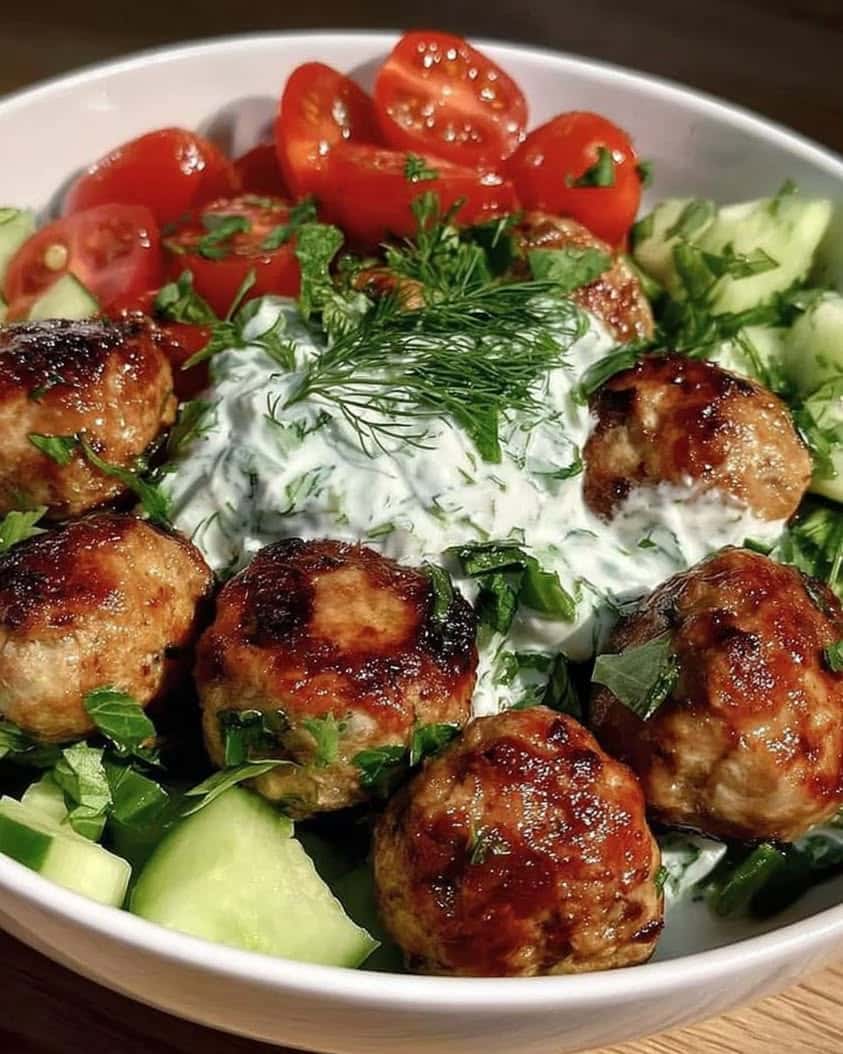
- Visual Appeal: Golden-brown meatballs stacked on a platter look rustic and appetizing. The snowy white tzatziki, flecked with green cucumber and dill, adds a striking contrast. A final scatter of parsley and a lemon wedge makes the whole plate pop.
- Skill Level Needed: This recipe suits beginners because it relies on mixing, shaping, and pan-searing. You only need basic knife skills and a hot skillet to succeed. Even a first-time cook can produce impressive results here.
- Special Equipment: A large mixing bowl, a sturdy skillet, and a box grater cover almost everything you need. A small cookie scoop helps shape uniform meatballs, though your hands work fine too. No special appliances or fancy tools are required.
Recipe Overview
- Difficulty Level: This dish lands squarely in the easy category because the steps stay simple and forgiving. You mix the meatball ingredients in one bowl, shape them, and sear them in a skillet. The tzatziki requires only grating, stirring, and chilling. Therefore, anyone with basic kitchen confidence can make it well.
- Category: These meatballs work as a main course for lunch or dinner, and they also shine as an appetizer for parties. You can serve them as part of a mezze spread alongside hummus, olives, and warm pita. Additionally, they make a fantastic meal-prep protein for the week ahead.
- Cuisine: Greek cuisine inspires this recipe, drawing on the Mediterranean tradition of combining grilled or seared meats with yogurt sauces. Greek cooking prizes oregano, lemon, garlic, and olive oil, and all four appear here. The tzatziki itself has roots across Greece, Turkey, and the broader Eastern Mediterranean. As a result, the dish carries authentic cultural flavor while staying approachable for American kitchens.
- Cost: Ground chicken typically costs less than beef or lamb, which keeps this meal budget-friendly. Greek yogurt, cucumbers, lemons, and dried herbs are affordable and widely available. Overall, you can feed four people for roughly twelve to fifteen dollars depending on your region.
- Season: These meatballs suit every season because they cook indoors on the stovetop. In summer, they pair beautifully with fresh tomatoes and grilled vegetables. In cooler months, they bring a bright, warming contrast to hearty comfort food.
- Occasion: This recipe fits casual family dinners, game-day spreads, and holiday gatherings alike. It also works well for potlucks since the meatballs hold up at room temperature for a while. For a fancier dinner, serve them plated with rice and a drizzle of tzatziki.
Why You Will Love This Recipe
First and foremost, the taste and texture of these Juicy Greek Chicken Meatballs with Creamy Homemade Tzatziki will win you over instantly. Ground chicken tends to dry out quickly, but the grated onion, egg, and breadcrumbs lock in moisture beautifully. Each meatball stays plump and tender, while the skillet gives it a golden, slightly crisp exterior. The tzatziki then adds a cooling, creamy layer that melts into every bite. Frankly, the combination of warm spices and cold sauce creates a flavor experience that feels far more complex than the effort suggests.
Beyond flavor, this recipe offers serious convenience for busy home cooks. You need one bowl for the meatballs and one bowl for the sauce, which means minimal cleanup afterward. The entire dish comes together in about thirty-five minutes from start to finish. Furthermore, you can prep the tzatziki ahead of time and let it chill while you cook. Consequently, this meal fits neatly into a hectic weeknight schedule without cutting corners on taste.
Nutritionally, these chicken meatballs deliver a solid source of lean protein with far less saturated fat than traditional beef or lamb versions. Greek yogurt adds probiotics, calcium, and protein to the sauce, supporting gut health and keeping you full. Cucumber contributes hydration and fiber, while olive oil provides heart-healthy monounsaturated fats. Because you control the salt and sugar, the dish stays clean and wholesome. Therefore, you can enjoy a rich, satisfying dinner without any guilt afterward.
Socially, this recipe shines when you entertain because it invites shared, hands-on eating. Set out warm pita, sliced tomatoes, red onion, and a bowl of tzatziki, and let guests build their own plates. The meatballs also hold well on a buffet line, so you can relax instead of hovering over the stove. Meanwhile, the bright colors and fresh garnishes make the spread look impressive with very little styling. As a result, guests always assume you spent hours cooking, even though you did not.
Finally, the cost-effectiveness and accessibility of this recipe make it a genuine everyday winner. Ground chicken, plain Greek yogurt, and dried oregano rank among the most affordable staples at any grocery store. You can find every ingredient in a standard supermarket, so no specialty shopping trip is necessary. Additionally, the recipe scales up easily for a crowd without doubling your workload. For all these reasons, this Juicy Greek Chicken Meatballs with Creamy Homemade Tzatziki recipe earns its place as a repeat favorite.
Historical Background and Cultural Significance
Meatballs appear in nearly every culinary tradition around the world, and Greece claims its own beloved versions. The Greek word for meatball, keftedes, describes seasoned ground meat shaped by hand and fried or baked. Historically, Greek cooks made keftedes with lamb, beef, or pork, depending on the region and the family budget. Over time, home cooks began experimenting with chicken to create lighter variations. Consequently, the chicken meatball emerged as a modern twist on a very old idea.
In Greek culture, meatballs carry deep significance as a food of hospitality and celebration. Families serve keftedes at name days, Easter gatherings, and Sunday meals shared with extended relatives. They often appear as part of a mezze table, where small plates encourage grazing and conversation. The act of shaping meatballs by hand also connects generations, since grandmothers teach grandchildren the technique. Therefore, this dish represents far more than dinner; it embodies tradition and togetherness.
The evolution of this recipe reflects broader changes in how people cook and eat today. As health consciousness grew, cooks swapped heavier red meats for leaner poultry without sacrificing flavor. Meanwhile, the rise of Greek yogurt as a supermarket staple made tzatziki easier to prepare at home. Food bloggers and chefs also popularized Mediterranean diets, which boosted interest in herb-forward, olive-oil-based cooking. As a result, chicken meatballs with tzatziki became a familiar modern favorite.
Regional variations abound across Greece and the wider Mediterranean. In some areas, cooks add mint instead of dill to the meat mixture. In others, they fold feta directly into the ground chicken for a salty, creamy surprise. Some versions use grated zucchini to keep the meatballs extra moist, while others rely on soaked bread instead of breadcrumbs. No matter the variation, the spirit stays the same: simple ingredients, bold herbs, and a cool yogurt sauce to finish.
Ingredient Deep Dive
Ground chicken forms the heart of this recipe, and selecting the right type matters a great deal. Dark meat ground chicken contains more fat, which translates to juicier meatballs, while white meat offers a leaner option. Many supermarkets sell a blend of both, and that blend often delivers the best balance. Chicken has played a central role in Mediterranean cooking for centuries because it adapts to countless flavor profiles. Nutritionally, ground chicken provides high-quality protein, B vitamins, and minerals like selenium and zinc. When you shop, look for fresh meat with a pink color and no strong odor, and check the sell-by date carefully. Store ground chicken in the coldest part of your refrigerator and use it within one to two days, or freeze it for up to three months. If you prefer turkey, ground turkey works as a direct substitute with nearly identical results.
Greek yogurt gives the tzatziki its signature tang and creamy body, so choose a thick, full-fat variety when possible. Traditional Greek cooks strain yogurt to remove whey, which creates that dense, spoonable texture. Beyond Greece, strained yogurt appears in Indian, Turkish, and Middle Eastern cuisines under different names. Greek yogurt delivers protein, calcium, and live probiotic cultures that support digestive health. At the store, pick plain yogurt without added sugar or flavorings, and check that the label lists active cultures. Keep it refrigerated and use it within a week or two of opening. If you need a dairy-free option, thick coconut yogurt or a strained almond yogurt can stand in, though the flavor will shift slightly.
Cucumber brings crunch, freshness, and hydration to the tzatziki, and it deserves careful attention. In Mediterranean cooking, cucumbers appear in salads, dips, and cold soups throughout the hot summer months. They contain mostly water, along with vitamin K and antioxidants that support skin health. When selecting cucumbers, choose firm, dark green ones without soft spots or wrinkles. English cucumbers work best here because they have thinner skins and fewer seeds. After grating, always squeeze out the excess water, or your tzatziki will turn thin and watery. Store cucumbers in the refrigerator crisper drawer and use them within a week for the best texture.
Fresh dill and oregano define the herbal character of this dish, and both bring distinct gifts. Dill carries a grassy, slightly sweet note that pairs naturally with yogurt and cucumber across Greek and Middle Eastern cooking. Oregano, meanwhile, delivers a peppery, earthy punch that anchors the meatballs in Mediterranean tradition. Nutritionally, both herbs supply antioxidants and small amounts of vitamins A, C, and K. When buying fresh dill, look for bright green fronds with no wilting, and choose dried oregano with a strong aroma. Store fresh dill in a damp paper towel inside the refrigerator, and keep dried oregano in a cool, dark cabinet. If you lack dill, mint or parsley make fine substitutes, and marjoram can replace oregano in a pinch.
Common Mistakes to Avoid
- Overmixing the ground chicken ranks as the most common error, and it leads to dense, tough meatballs. Mix the ingredients just until everything combines, then stop. A light hand keeps the texture tender and airy.
- Skipping the grated onion deprives the meatballs of moisture and flavor. Onion adds both liquid and sweetness that keep the chicken juicy. Always grate it finely so no large chunks remain.
- Using wet hands to shape meatballs creates a sticky mess and uneven results. Lightly oil your palms or dampen them with water before rolling. This small step makes shaping fast and clean.
- Crowding the skillet steams the meatballs instead of browning them. Leave space between each one so the heat circulates properly. Cook in batches if your pan runs small.
- Not chilling the shaped meatballs lets them fall apart in the pan. A short rest in the refrigerator firms them up and helps them hold shape. Even fifteen minutes makes a noticeable difference.
- Adding too much salt to the tzatziki early on causes the cucumber to release water. Salt the cucumber first, squeeze it dry, then season the yogurt. This order keeps the sauce thick and creamy.
- Using thin, watery yogurt ruins the texture of the tzatziki. Strain regular yogurt through a coffee filter or cheesecloth if Greek yogurt is unavailable. Thick yogurt clings to the meatballs far better.
- Overcooking the meatballs dries out the chicken and creates a crumbly bite. Sear them until just cooked through and no pink remains. An instant-read thermometer should read 165 degrees Fahrenheit at the center.
- Neglecting to rest the meatballs before serving lets the juices escape onto the plate. Give them five minutes to settle after cooking. This brief pause keeps every bite moist.
- Serving the tzatziki straight from the fridge mutes its flavor. Let it sit at room temperature for ten minutes before serving. The garlic and herbs bloom and taste much brighter.
Essential Techniques
Grating onion directly into the meat mixture stands as a foundational technique for juicy chicken meatballs. Grating breaks down the onion into tiny shreds that distribute evenly and release moisture throughout the protein. If you chop onion by hand instead, you risk large chunks that create pockets and cause meatballs to crack. To master this, hold a box grater over your mixing bowl and rub the onion against the large holes, catching all the juice. A common pitfall involves grating your knuckles along with the onion, so stop when the piece gets small. You will know you succeeded when the mixture looks glossy and smells sharply of sweet onion.
Pan-searing builds the golden crust that makes these meatballs look and taste irresistible. High heat triggers the Maillard reaction, a chemical process that browns food and creates deep, savory flavor. To master searing, preheat your skillet until a drop of water sizzles and evaporates on contact, then add oil. Place meatballs in the pan without moving them for two to three minutes so the crust forms fully. A common pitfall involves flipping too early, which tears the meatball and loses the crust. You will know you succeeded when each meatball releases easily from the pan and shows a rich brown surface.
Squeezing grated cucumber removes the excess water that would otherwise thin your tzatziki. This technique matters because yogurt sauces depend on a thick, spoonable consistency to cling to meatballs. To master it, wrap the grated cucumber in a clean kitchen towel or several layers of cheesecloth and twist firmly over the sink. A common pitfall involves skipping this step and ending up with a soupy dip. You will know you succeeded when the cucumber feels dry and the towel wrings out a surprising amount of liquid.
Pro Tips for Perfect Juicy Greek Chicken Meatballs with Creamy Homemade Tzatziki
Chill your ground chicken for fifteen minutes before mixing, because cold meat holds its shape far better. Warm meat turns soft and sticky, which makes shaping a chore. A brief chill keeps everything firm and manageable.
Toast your dried oregano in a dry pan for thirty seconds before adding it to the mix. This quick step wakes up the oils and deepens the herb’s aroma. The difference in flavor is subtle but noticeable.
Use a small cookie scoop to portion meatballs of equal size, which guarantees even cooking. Uneven sizes mean some meatballs dry out while others stay raw in the middle. Consistency solves that problem instantly.
Add a tablespoon of olive oil to the meat mixture for extra richness and moisture. The fat coats the protein and helps it stay tender under high heat. This small addition makes a big difference in texture.
Let the tzatziki chill for at least thirty minutes before serving so the flavors marry. Garlic, dill, and lemon need time to meld with the yogurt. A short rest transforms a good sauce into a great one.
Sear the meatballs in batches and never stack them in the pan. Overcrowding traps steam and prevents browning, which dulls both flavor and appearance. Patience here pays off handsomely.
Finish the meatballs with a squeeze of fresh lemon right before serving. The acid cuts through the richness and brightens every bite. Skip bottled juice and use a real lemon for the best result.
Warm your pita or flatbread in the same skillet after cooking the meatballs. The bread soaks up the pan drippings and tastes far better than cold bread. This trick adds almost no extra work.
Variations and Adaptations
Regional variations offer endless ways to reinterpret this dish while keeping its Mediterranean soul. In some Greek households, cooks add crumbled feta directly into the meat mixture for a salty, creamy surprise. Others fold in fresh mint alongside the dill, which lends a cooler, sweeter note. Turkish versions of similar meatballs often include cumin and paprika for warmth. You can also swap the oregano for za’atar to nod toward Levantine cooking. Each twist keeps the core idea intact while introducing new character.
Seasonal adaptations let you enjoy these meatballs year-round with the best produce available. In summer, serve them over a bed of sliced tomatoes, cucumbers, and red onion with extra lemon. In autumn, pair them with roasted squash or a warm farro salad. During winter, tuck them into a bowl of lemony chicken broth with rice for a comforting soup. In spring, scatter fresh peas and herbs across the plate for a lighter feel.
Dietary modifications make this recipe accessible to nearly everyone at the table. For gluten-free meatballs, replace breadcrumbs with almond flour or crushed pork rinds. For dairy-free tzatziki, use coconut yogurt or a cashew-based alternative with lemon and garlic. For a low-carb version, skip the breadcrumbs entirely and add an extra egg. Each swap changes the texture slightly, so adjust the moisture as needed.
Flavor variations let you customize the profile without abandoning the recipe’s spirit. Add harissa or red pepper flakes for heat, or stir sun-dried tomatoes into the meat mixture for sweetness. A splash of balsamic vinegar in the tzatziki introduces a tangy depth. Smoked paprika brings a subtle smokiness that pairs well with grilled vegetables. Feel free to experiment boldly once you master the base.
Texture modifications suit different preferences and serving styles. For crunchier meatballs, sear them longer over medium-high heat to build a thicker crust. For softer, poached-style meatballs, simmer them gently in tomato sauce instead of frying. You can also shape them into small patties for burgers or flatten them for quick cooking. Each approach changes the eating experience while preserving flavor.
Presentation alternatives keep the dish fresh and photo-ready. Serve the meatballs in lettuce cups for a light, handheld option. Skewer them with cherry tomatoes and cucumber for party bites. Layer them over naan with tzatziki and pickled onions for a casual wrap. A rice bowl with hummus and olives rounds out a heartier plate.
Serving and Presentation Guide
Plating techniques elevate this dish from weeknight fare to guest-worthy centerpiece. Spread a generous swoosh of tzatziki across the bottom of a shallow bowl, then nestle the meatballs on top. This style, common in modern Mediterranean restaurants, frames the food beautifully. Add a drizzle of olive oil and a sprinkle of fresh dill for contrast. The white sauce against golden meatballs creates instant visual appeal.
Garnishing ideas bring color, freshness, and aroma to the final plate. Scatter chopped parsley, mint, or dill over the meatballs for a bright green pop. Thin lemon slices or a wedge on the rim add a citrus accent. Crumbled feta and a few kalamata olives deepen the Greek theme. Toasted sesame seeds or pine nuts add texture and a nutty note.
Traditional accompaniments anchor the meal in authentic Greek eating. Warm pita bread, sliced tomatoes, red onion, and cucumbers form the classic mezze setup. A simple horiatiki salad with feta and olives rounds out the table. Lemon rice or roasted potatoes soak up the tzatziki beautifully. Pickled peppers or pepperoncini add a tangy kick on the side.
Modern serving suggestions open the door to creative, fusion-friendly meals. Stuff the meatballs into a pita with tzatziki, lettuce, and tomato for a Greek-style wrap. Serve them over quinoa or farro for a grain-bowl approach. Layer them on flatbread with hummus and arugula for a shareable appetizer. You can also thread them onto skewers with vegetables for a fun party presentation.
Temperature considerations affect how the dish tastes and feels in your mouth. Serve the meatballs hot from the skillet and the tzatziki chilled or at cool room temperature. This contrast of hot and cold defines the experience, so timing matters. If serving buffet-style, keep the meatballs warm in a covered dish. Let the tzatziki sit out no longer than one hour for food safety.
Portion control tips help you plate confidently for any group size. Plan on three to four meatballs per person for a main course, or two per guest for an appetizer. Pair each serving with about two tablespoons of tzatziki. Add a half-cup of rice or one pita per person for a complete plate. Adjust upward for hearty appetites or athletic crowds.
Wine and Beverage Pairing
Wine pairings for these meatballs favor crisp, bright whites that cut through the creamy sauce. A dry Assyrtiko from Santorini offers zesty acidity and a mineral finish that echoes Greek terroir. Sauvignon Blanc brings herbal notes that complement the dill and parsley. Dry rosé, especially from Provence or Greece, pairs beautifully with the lemon and herb flavors. If you prefer red, choose a light-bodied Xinomavro or a chilled Beaujolais. Avoid heavy tannic reds, which clash with the yogurt sauce.
Non-alcoholic alternatives keep the meal refreshing and inclusive for every guest. Sparkling water with lemon and fresh mint mirrors the dish’s bright flavors. A cucumber-lime cooler or homemade lemonade adds a cooling touch. Iced hibiscus tea brings tartness that balances the richness of the meatballs. Sparkling apple cider, served cold, offers gentle sweetness without overpowering the herbs. Any of these options make the meal feel festive without alcohol.
Coffee and tea pairings might seem unusual, but they work well after the meal. A cup of Greek coffee, strong and slightly bitter, cleanses the palate after the creamy tzatziki. Mint tea, popular across the Mediterranean, aids digestion and echoes the herb notes in the dish. Similarly, a light green tea with lemon complements the citrus undertones. Serve these warm beverages after dinner rather than alongside the meal for the best experience.
Temperature considerations matter for both wine and non-alcoholic options. Serve white wine well chilled, around forty-five to fifty degrees Fahrenheit, to preserve its crispness. Rosé tastes best slightly colder, while light reds benefit from a light chill. Sparkling water and coolers should be ice cold for maximum refreshment. Warm beverages, by contrast, should steam gently without scalding.
Serving suggestions tie the drinks to the meal seamlessly. Offer wine in stemmed glasses to enhance the aroma and presentation. Set out a pitcher of sparkling water with lemon slices for self-service ease. Place mint tea or coffee cups near the dessert course, if you serve one. Let guests choose their own pairing so everyone feels considered.
Storage and Shelf Life
Storage methods determine how well leftovers hold their flavor and texture over time. Place cooled meatballs in an airtight container and refrigerate them within two hours of cooking. Keep the tzatziki in a separate container to prevent the meatballs from turning soggy. Press plastic wrap directly onto the surface of the tzatziki to limit air exposure. Label the containers with the date so you can track freshness easily.
Temperature requirements keep food safe and preserve quality. Refrigerate both meatballs and tzatziki at or below forty degrees Fahrenheit. Never leave them at room temperature for more than two hours, or one hour if the room exceeds ninety degrees. A refrigerator thermometer helps you confirm the internal temperature. Proper chilling slows bacterial growth and extends shelf life significantly.
Container recommendations affect how long food stays fresh and appetizing. Glass containers with tight-fitting lids work best because they resist stains and odors. BPA-free plastic containers also work well if they seal properly. For the tzatziki, choose a container just large enough to minimize air space. For meatballs, a shallow container prevents them from crushing one another.
Signs of spoilage tell you when to discard leftovers without hesitation. Sour or off smells indicate bacterial growth, especially in dairy-based sauces. Slimy textures on the meatballs or watery separation in the tzatziki signal trouble. Visible mold or discoloration means the food has gone bad. When in doubt, throw it out rather than risk illness.
Reheating instructions help you restore the meatballs to near-fresh quality. Warm them gently in a skillet over medium-low heat with a splash of water or broth. Cover the pan to trap steam and keep them moist. Alternatively, microwave them in short bursts until heated through. Avoid high heat, which dries out the chicken quickly.
Freezing guidelines let you plan meals well in advance. Freeze cooked meatballs on a baking sheet until firm, then transfer them to a freezer bag for up to three months. Thaw overnight in the refrigerator before reheating. Tzatziki does not freeze well because the yogurt separates, so make it fresh each time. Alternatively, freeze the meatballs raw after shaping and cook them straight from frozen, adding a few extra minutes.
Make Ahead Strategies
A prep timeline keeps you organized and stress-free on serving day. Two days ahead, make the tzatziki and store it covered in the refrigerator. One day ahead, mix and shape the meatballs, then refrigerate them on a tray. On serving day, sear the meatballs and warm the pita just before everyone sits down. This staggered approach spreads the work across several days.
Storage between steps protects quality and prevents spoilage. Keep shaped raw meatballs covered and refrigerated for up to twenty-four hours before cooking. Store tzatziki in an airtight container for up to four days. If you grate the cucumber ahead, squeeze it dry and keep it separate from the yogurt until mixing. These small habits keep every component fresh.
Quality impact assessment helps you decide which steps truly benefit from advance work. Tzatziki actually improves after a day as the flavors meld, so making it early is a bonus. Raw meatballs hold up well overnight, though the onion may soften slightly. Cooked meatballs lose a bit of crust texture after reheating, so serve them fresh when possible. Overall, most components handle advance prep gracefully.
Assembly tips streamline the final moments before serving. Warm the pita in a dry skillet or oven while the meatballs rest. Set out garnishes like parsley, lemon wedges, and sliced onion in small bowls. Arrange the tzatziki in a wide bowl for easy dipping. With everything ready, plating takes only minutes.
Reheating guidelines keep make-ahead meatballs tasting their best. Warm them covered in a skillet with a tablespoon of water over low heat. Stir gently to coat them in the steam, which restores moisture. Avoid the microwave on high, which toughens the exterior. Aim for an internal temperature of 165 degrees Fahrenheit.
Fresh element additions brighten make-ahead meals and restore vibrancy. Add a squeeze of fresh lemon juice to the tzatziki right before serving. Scatter newly chopped herbs over the meatballs for color and aroma. Warm the pita at the last minute so it stays soft. These finishing touches make the dish taste freshly made.
Scaling Instructions
Halving the recipe suits smaller households or a light dinner for two. Cut every ingredient in half, but keep the egg amount flexible since half an egg is awkward. Use one small egg or beat a whole egg and add half of it. Reduce the skillet size so the meatballs still sear rather than steam. Cooking time stays roughly the same because the meatball size does not change.
Doubling or tripling the recipe works well for parties and large families. Multiply all ingredients by two or three, and use a wide skillet or cook in multiple batches. Expect the mixing and shaping to take longer, so budget extra prep time. Consider making the tzatziki in a larger bowl to stir comfortably. The overall cooking time per batch remains unchanged.
Equipment adjustments keep results consistent when you scale up. A larger skillet or a Dutch oven handles bigger batches without crowding. If you lack a big enough pan, use two skillets at once over separate burners. Sheet-pan baking at 400 degrees Fahrenheit offers an alternative for large quantities. This method frees your stovetop and simplifies cleanup.
Timing modifications matter when volume increases. Allow extra minutes for chopping, grating, and shaping when you double the recipe. Rest meatballs in the refrigerator in shifts if your space runs limited. Start cooking earlier than usual so everything lands on the table hot. A little planning prevents last-minute scrambling.
Storage considerations shift when you scale up and end up with leftovers. Use multiple containers so the food cools faster and stays fresher. Divide large batches of tzatziki into smaller jars for easier serving. Label each container with dates and contents. Frozen meatballs last up to three months, which makes big batches a smart investment.
Nutritional Deep Dive
The macro breakdown of this dish favors lean protein with moderate fat and low carbs. Each serving of four meatballs with tzatziki delivers roughly thirty-five grams of protein. Fat lands around fifteen grams, mostly from olive oil and yogurt. Carbohydrates stay near eight grams, driven by breadcrumbs and vegetables. These numbers make the meal a solid choice for balanced eating.
Micronutrient analysis reveals a surprisingly rich profile for such a simple dish. Chicken supplies B vitamins, selenium, and zinc, which support immunity and energy metabolism. Greek yogurt adds calcium, phosphorus, and probiotics for bone and gut health. Cucumber contributes vitamin K and antioxidants, while herbs bring vitamin C and polyphenols. Olive oil rounds out the list with vitamin E and healthy fats.
Health benefits extend beyond basic nutrition for many eaters. The high protein content promotes satiety, which helps control appetite and supports muscle repair. Probiotics in the yogurt may improve digestion and immune function over time. Reduced saturated fat compared to beef or lamb versions supports heart health. Meanwhile, herbs and olive oil deliver anti-inflammatory compounds linked to longevity.
Dietary considerations vary by individual needs and preferences. People watching sodium should use low-sodium breadcrumbs and season the tzatziki lightly. Those managing lactose intolerance may tolerate Greek yogurt better than milk because of its lower lactose content. Individuals with gluten sensitivity can swap breadcrumbs for almond flour. Always check labels on yogurt and breadcrumbs for hidden additives.
Portion analysis helps you fit the dish into your daily targets. A serving of four meatballs with two tablespoons of tzatziki contains about three hundred calories. Add half a cup of rice, and you reach roughly four hundred and ten calories. Pair it with a large salad instead for a lighter total. Adjust portions based on hunger, activity level, and goals.
Weight management tips make this meal a helpful ally rather than a splurge. Fill half your plate with vegetables and a quarter with meatballs to control calories naturally. Choose white meat ground chicken for a leaner option. Skip the pita and use lettuce wraps to cut carbs. The tzatziki adds flavor without heavy dressings, so you rarely need extra sauces.
Dietary Adaptations
Gluten Print
Greek Chicken Meatballs with Homemade Tzatziki
- Total Time: 35 minutes
- Yield: 4
Description
Juicy and flavorful Greek-style chicken meatballs, seasoned with oregano, garlic, and lemon, served with a cooling homemade tzatziki sauce. Perfect for a healthy and delicious meal.
Ingredients
- For the meatballs: 1 lb ground chicken
- 1/2 cup breadcrumbs
- 1/4 cup grated onion
- 2 cloves garlic, minced
- 1/4 cup chopped fresh parsley
- 1 teaspoon dried oregano
- 1/2 teaspoon salt
- 1/4 teaspoon black pepper
- 1 large egg
- 2 tablespoons olive oil (for cooking)
- For the tzatziki: 1 cup Greek yogurt
- 1 cucumber, grated and squeezed dry
- 1 clove garlic, minced
- 1 tablespoon olive oil
- 1 tablespoon lemon juice
- 1 tablespoon chopped fresh dill
- Salt and pepper to taste
Instructions
- In a large bowl, combine ground chicken, breadcrumbs, grated onion, minced garlic, parsley, oregano, salt, pepper, and egg. Mix until well combined.
- Shape the mixture into 1-inch meatballs. Heat olive oil in a large skillet over medium heat. Cook meatballs for 8-10 minutes, turning occasionally, until browned and cooked through.
- While meatballs cook, prepare tzatziki: In a medium bowl, mix Greek yogurt, grated cucumber, garlic, olive oil, lemon juice, dill, salt, and pepper. Stir well.
- Serve meatballs warm with tzatziki sauce on the side or drizzled over.
Notes
You can customize the seasonings to taste.
- Prep Time: 20 minutes
- Cook Time: 15 minutes
- Method: Main
- Cuisine: Greek