Crispy Hot Honey Lemon Feta Chicken Tenders: The Ultimate Weeknight Dinner Upgrade
If you have been searching for a dinner recipe that delivers crunch, tang, sweetness, and a little heat all in one bite, then these Crispy Hot Honey Lemon Feta Chicken Tenders are exactly what your kitchen has been missing. This recipe combines golden, panko-crusted chicken tenders with a drizzle of spicy hot honey, a burst of fresh lemon, and a generous sprinkle of salty feta cheese. Consequently, every single bite delivers a flavor explosion that keeps you coming back for more. Whether you serve them on a busy Tuesday night or at a weekend gathering with friends, these tenders steal the show every single time.
Furthermore, this recipe proves that simple ingredients can create something truly extraordinary. You only need a handful of pantry staples, a hot skillet or baking sheet, and about thirty-five minutes of your time. As a result, even beginner cooks can pull off a restaurant-quality meal without stress or complicated techniques. The combination of hot honey and lemon feta chicken tenders creates a sweet, spicy, and savory experience that feels both indulgent and refreshing. In addition, the crispy coating locks in juicy flavor, so each tender stays moist on the inside while crunching beautifully on the outside.
Above all, this dish fits seamlessly into almost any menu plan. You can pair these Crispy Hot Honey Lemon Feta Chicken Tenders with a fresh salad, roasted vegetables, rice, or even a stack of warm pita bread. Meanwhile, the hot honey drizzle and creamy feta crumbles add a gourmet touch that guests always notice. Consequently, this recipe has become a favorite among home cooks who want maximum flavor with minimum fuss. Once you try it, you will understand why so many people rave about hot honey lemon feta chicken tenders.
Quick Recipe Highlights
- Flavor Profile: These tenders balance sweet, spicy, tangy, and savory notes in perfect harmony. The hot honey brings a gentle burn that lingers, while the lemon adds brightness and the feta delivers a salty, creamy finish. Together, they create a layered taste experience that never feels one-dimensional.
- Texture: Each tender offers a shattering crispy exterior thanks to the panko coating and hot skillet sear. Inside, the chicken stays juicy and tender because the quick cook time prevents drying. The feta crumbles add a soft, creamy contrast that rounds out every bite.
- Aroma: As the tenders cook, the scent of toasted panko and sizzling chicken fills the kitchen. Then, the hot honey and lemon zest release bright, citrusy, and spicy notes that make your mouth water instantly. The feta adds a subtle tang that deepens the overall aroma.
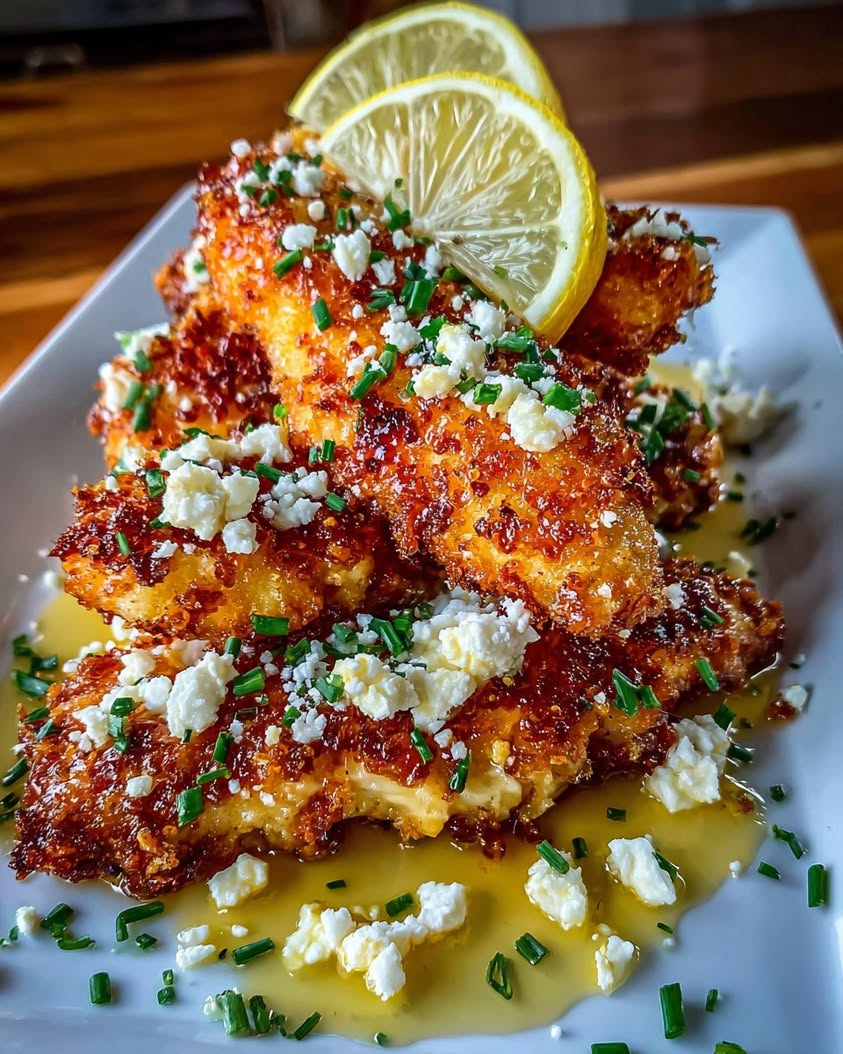
- Visual Appeal: The golden-brown crust creates a beautiful base, and the glossy hot honey drizzle catches the light. Bright yellow lemon slices and white feta crumbles add color contrast that looks stunning on any plate. Fresh herbs like parsley or basil finish the look with a pop of green.
- Skill Level Needed: This recipe suits beginners and experienced cooks alike because the steps remain simple and forgiving. You only need basic knife skills and the ability to manage a skillet or oven. Even if you have never breaded chicken before, the process is straightforward and hard to mess up.
- Special Equipment: A large skillet or baking sheet handles the cooking, and a shallow dish set works for breading. You also need a wire rack if you want maximum crispiness, though paper towels work fine too. A small saucepan helps warm the hot honey for drizzling.
Recipe Overview
- Difficulty Level: This recipe lands firmly in the easy category because it uses common techniques like dredging and pan-frying. You do not need advanced knife work, complex sauces, or professional equipment. The entire process moves quickly, so timing stays manageable even for new cooks. As a result, anyone can make these Crispy Hot Honey Lemon Feta Chicken Tenders with confidence.
- Category: These tenders work as a main course for lunch or dinner, and they also shine as an appetizer for parties. You can slice them into strips for a shareable platter or keep them whole for a hearty plate. Furthermore, they fit well in meal prep routines because they reheat beautifully.
- Cuisine: This recipe draws inspiration from Southern fried chicken traditions, Mediterranean flavors, and modern American fusion cooking. The hot honey trend traces back to Southern soul food, while the lemon and feta bring a Greek and Middle Eastern influence. Consequently, the dish feels both familiar and exciting at the same time. It represents the kind of creative home cooking that blends cultures on one plate.
- Cost: The ingredients remain affordable and easy to find at any grocery store. Chicken tenders usually cost less than other cuts, and pantry staples like panko, honey, and spices last through many meals. Therefore, this recipe delivers impressive flavor without breaking your weekly food budget.
- Season: These tenders work year-round, but they taste especially wonderful in spring and summer when lemons peak in freshness. During colder months, the hot honey brings a cozy warmth that satisfies comfort food cravings. As a result, you can enjoy this dish in any season without adjustment.
- Occasion: This recipe suits casual family dinners, game day spreads, birthday parties, and even elegant date nights. Because the flavors feel elevated yet approachable, guests always assume you spent hours cooking. Meanwhile, the quick prep makes it practical for busy weeknights too.
Why You’ll Love This Recipe
The taste and texture of these Crispy Hot Honey Lemon Feta Chicken Tenders create an unforgettable eating experience. Each bite starts with a satisfying crunch from the panko crust, and then the juicy chicken releases its savory flavor. Next, the hot honey hits your tongue with a sweet and spicy kick that awakens your senses. Finally, the lemon and feta add brightness and tang that balance everything beautifully. Consequently, you get a dish that never tastes boring or repetitive, even if you make it every week.
Convenience and preparation benefits make this recipe a true weeknight hero. You can prep the breading station in under ten minutes, and the chicken cooks in about twenty minutes total. Moreover, you do not need any special marinating time or overnight waiting. As a result, you can decide to make this dish at five in the afternoon and still eat by six. Additionally, the cleanup stays minimal because you use just a few dishes and one skillet.
Nutritional advantages also give this recipe strong appeal for health-conscious eaters. Chicken tenders provide lean protein that supports muscle growth and keeps you full longer. The lemon adds vitamin C, and the feta contributes calcium and beneficial fats in moderation. Furthermore, you control the amount of honey and oil, so you can lighten the dish whenever you want. Therefore, these tenders fit into balanced diets without feeling like a cheat meal.
Social and entertaining value sets this recipe apart from ordinary chicken dishes. When you serve these Crispy Hot Honey Lemon Feta Chicken Tenders at a party, guests always ask for the recipe. The presentation looks impressive, and the flavors spark conversation because they feel unique and modern. In addition, you can set up a topping bar with extra honey, feta, and lemon so guests customize their plates. Consequently, this dish becomes a memorable centerpiece that brings people together.
Cost-effectiveness and accessibility round out the reasons to love this recipe. You likely already own most of the ingredients, such as flour, eggs, panko, honey, and spices. Chicken tenders rank among the most affordable proteins at the grocery store, and feta lasts a long time in the fridge. As a result, you can feed four people a restaurant-quality meal for a fraction of the price. Meanwhile, the simple ingredient list means you never need to hunt down specialty items.
Historical Background and Cultural Significance
The origin story of this dish begins with the beloved Southern tradition of fried chicken. Cooks in the American South perfected the art of coating chicken in seasoned flour and frying it until golden and crispy. Over time, this technique spread across the country and inspired countless variations. Eventually, home cooks began experimenting with new coatings like panko and new flavor profiles like hot honey. Consequently, the modern chicken tender emerged as a versatile canvas for creative cooking.
Cultural importance plays a major role in how hot honey became a beloved condiment in American kitchens. Hot honey originated in Southern barbecue culture, where cooks infused honey with chili peppers for a sweet and spicy glaze. As the trend grew, chefs started drizzling it over fried chicken, pizza, and even cheese boards. Meanwhile, the lemon feta combination brings a Mediterranean influence that reflects Greek and Middle Eastern culinary traditions. Therefore, this recipe represents a beautiful fusion of Southern and Mediterranean flavors.
The evolution of this recipe shows how home cooking adapts to modern tastes and trends. Initially, chicken tenders served as a kid-friendly finger food with simple dipping sauces. However, creative cooks began elevating them with gourmet toppings and bold flavor combinations. Today, the hot honey lemon feta chicken tenders reflect this evolution perfectly because they blend nostalgia with sophistication. Furthermore, social media platforms like TikTok and Instagram accelerated the popularity of hot honey dishes. As a result, this recipe now sits at the intersection of comfort food and trendy cuisine.
Regional variations of this dish appear across the United States and beyond. In the South, cooks often add extra cayenne or hot sauce to the honey for a stronger kick. Meanwhile, West Coast versions sometimes use goat cheese instead of feta for a creamier texture. In the Mediterranean, similar recipes use oregano, olive oil, and lemon zest to season the chicken before grilling. Consequently, you can adapt this dish to reflect your own regional preferences and available ingredients.
Ingredient Deep Dive
Chicken tenders form the heart of this recipe and offer both convenience and nutritional value. These small, tender strips come from the chicken breast and naturally stay juicy because of their size. Historically, cooks prized this cut for quick cooking and mild flavor that absorbs seasonings well. Nutritionally, chicken tenders deliver high-quality protein, B vitamins, and minerals like selenium and phosphorus. When selecting tenders, look for firm, pink meat with no off odors, and choose organic or antibiotic-free options when possible. Store raw chicken in the coldest part of your fridge and use it within two days, or freeze it for up to three months.
Furthermore, chicken tenders offer excellent substitution options for different dietary needs. You can swap them for chicken thighs if you prefer darker meat with more richness. Alternatively, use firm tofu or cauliflower florets for a vegetarian version that still delivers crunch. Additionally, turkey tenders work beautifully as a leaner alternative. Therefore, this recipe adapts easily to whatever protein you have on hand.
Hot honey brings the signature sweet and spicy element that defines this dish. This condiment originated in Southern kitchens where cooks simmered honey with chili flakes and vinegar. Culturally, hot honey represents the modern love for bold, layered flavors in everyday cooking. Nutritionally, honey provides natural sugars and trace antioxidants, while chili peppers add capsaicin, which may support metabolism. When buying hot honey, check labels for real honey and natural chili infusions rather than artificial flavorings. Store it in a cool, dark pantry for up to a year, and warm it gently before drizzling.
Moreover, you can make hot honey at home by warming regular honey with chili flakes, cayenne, and a splash of apple cider vinegar. This homemade version lets you control the heat level and avoid additives. If you prefer a milder option, reduce the chili flakes or use smoked paprika instead. Consequently, you can tailor the spice to suit every palate at your table.
Lemon adds brightness and acidity that cuts through the richness of fried chicken and honey. This citrus fruit has a long history in Mediterranean and Middle Eastern cooking, where cooks use it to brighten savory dishes. Nutritionally, lemons provide vitamin C, fiber, and antioxidants that support immune health and digestion. When selecting lemons, choose ones that feel heavy for their size with smooth, bright yellow skin. Store them in the fridge for up to three weeks, or leave them at room temperature for about a week. You can substitute lime or orange for a different citrus twist.
Feta cheese contributes a salty, creamy, and tangy element that ties the whole dish together. This brined cheese originated in Greece and has been made for thousands of years using sheep or goat milk. Culturally, feta plays a central role in Greek salads, spanakopita, and mezze platters. Nutritionally, feta offers calcium, protein, and beneficial probiotics when made with unpasteurized milk. When buying feta, look for blocks packed in brine rather than pre-crumbled versions because they taste fresher and creamier. Store feta in its brine in the fridge for up to two weeks, and rinse it before use if you want a milder flavor. For a dairy-free option, try almond-based feta or omit it entirely.
Panko breadcrumbs give these tenders their signature light and airy crunch. Unlike traditional breadcrumbs, panko has a flaky, coarse texture that fries up crispier and absorbs less oil. Japanese cooks developed panko centuries ago, and it became a global favorite for fried foods. Nutritionally, panko provides carbohydrates and a small amount of protein, though it contains less fiber than whole wheat versions. When selecting panko, choose unseasoned varieties so you control the salt and spices. Store panko in an airtight container in a cool pantry for up to six months. For a gluten-free option, use crushed rice cereal or gluten-free panko.
Common Mistakes to Avoid
- Overcrowding the pan causes the chicken to steam instead of fry, which results in soggy coatings. Always cook in batches and leave space between each tender. As a result, the crust stays crispy and golden.
- Skipping the flour and egg steps weakens the coating’s grip on the chicken. The flour creates a dry surface for the egg to cling to, and the egg holds the panko in place. Therefore, never rush this three-step breading process.
- Using cold chicken straight from the fridge lowers the oil temperature and creates uneven cooking. Let the tenders sit at room temperature for ten minutes before breading. Consequently, they cook faster and more evenly.
- Adding too much honey at once drowns the crispy coating and makes it soggy. Drizzle the hot honey lightly right before serving instead of during cooking. Meanwhile, serve extra honey on the side for dipping.
- Underseasoning the breading leads to bland tenders even with the toppings. Season the flour, egg, and panko with salt, pepper, garlic powder, and paprika. As a result, every layer carries flavor.
- Frying at the wrong temperature burns the outside while leaving the inside raw. Use a thermometer and keep the oil between 350 and 375 degrees Fahrenheit. Furthermore, adjust the heat as needed throughout cooking.
- Not resting the chicken on a wire rack traps steam underneath and softens the crust. Place cooked tenders on a rack over a baking sheet instead of flat on a plate. Consequently, air circulates and preserves crispiness.
- Cutting the chicken too thick causes uneven cooking and dry edges. Pound thicker pieces to an even thickness before breading. Additionally, this step ensures every tender cooks in the same amount of time.
- Skipping the lemon zest misses a chance to layer bright flavor into the coating. Add zest to the panko mixture for a citrusy boost. As a result, the lemon flavor runs through the entire dish, not just on top.
- Reheating in the microwave destroys the crispy texture within seconds. Instead, reheat in a hot oven or air fryer to restore crunch. Therefore, always plan for oven reheating when you have leftovers.
Essential Techniques
The three-step breading technique forms the foundation of crispy chicken tenders. This method involves coating the chicken in flour, then egg, then panko before cooking. Each layer serves a purpose, and skipping one weakens the final result. To master this technique, set up three shallow dishes and keep one hand dry for dredging and one hand wet for egg dipping. Common pitfalls include clumpy hands and uneven coating, so work steadily and shake off excess at each stage. You know you have succeeded when the panko layer looks even, dry, and fully adhered to the chicken.
Pan-frying at the correct temperature makes the difference between greasy and perfectly crispy tenders. When oil reaches 350 to 375 degrees Fahrenheit, the chicken sears immediately and seals in juices. To master this technique, use a thermometer and monitor the heat throughout cooking. Common pitfalls include oil that smokes or drops too low when chicken enters the pan. Visually, you know the oil is ready when a panko crumb sizzles and rises to the surface within seconds.
Making hot honey requires gentle warming to blend the chili flavor without burning the honey. When honey overheats, it turns bitter and loses its floral notes. To master this technique, warm the honey over low heat with chili flakes for two to three minutes. Common pitfalls include scorching the honey or adding too many flakes at once. You know the honey is ready when it thins slightly and smells fragrant with a gentle spicy kick.
Drizzling techniques matter because they determine how the toppings distribute across each tender. A steady, thin stream from a spoon or squeeze bottle gives you control and even coverage. To master this technique, hold the spoon high and move quickly across the plate. Common pitfalls include dumping too much honey in one spot or waiting too long before serving. You know you have nailed it when each tender gets a glossy ribbon of honey without soaking the crust.
Crumbling feta properly ensures even distribution and a polished presentation. Pre-crumbled feta often feels dry, so buy a block and break it by hand for the best texture. To master this technique, hold the block over the plate and crumble with your fingers in small, irregular pieces. Common pitfalls include using cold feta that crumbles too finely or applying too much pressure. You know the feta is right when the pieces hold their shape and feel soft yet firm.
Pro Tips for Perfect Crispy Hot Honey Lemon Feta Chicken Tenders
First, toast the panko in a dry skillet before breading for a deeper golden color and nutty flavor. This step adds just two minutes, yet it elevates the final crunch dramatically. Consequently, your tenders look and taste like they came from a restaurant kitchen.
Second, press the panko firmly onto each tender with your fingertips so it adheres completely. Loose crumbs fall off during frying and leave bald spots on the chicken. As a result, pressing ensures full coverage and maximum crunch.
Third, add lemon zest to the panko mixture for a burst of citrus in every bite. The zest releases oils that perfume the coating as it fries. Meanwhile, the juice goes into the hot honey for a bright, tangy finish.
Fourth, warm the hot honey right before serving so it drizzles smoothly over the crispy coating. Cold honey clumps and pulls the crust apart, so gentle warming makes a real difference. Furthermore, the warmth helps the honey seep slightly into the crevices for flavor in every bite.
Fifth, use a wire rack over a baking sheet to rest the cooked tenders and keep them crispy. This setup lets air circulate underneath and prevents steam from softening the crust. Additionally, you can keep the tenders warm in a low oven until serving time.
Sixth, season each layer of the breading station so flavor builds from the inside out. Salt the chicken itself, season the flour, and season the panko. Therefore, you never end up with bland spots or uneven seasoning.
Seventh, pair the tenders with a creamy dipping sauce like tzatziki or ranch to balance the heat. The cool, tangy dip complements the spicy honey and salty feta beautifully. As a result, each bite feels fresh and balanced.
Eighth, squeeze fresh lemon juice over the finished tenders right before serving for a final burst of brightness. This small step wakes up all the flavors and adds a fresh, zesty aroma. Consequently, the dish tastes vibrant and complete.
Variations and Adaptations
Regional variations of this recipe let you explore flavors from around the world. For a Greek-inspired version, add oregano and garlic to the breading and serve with tzatziki. Meanwhile, a Southern twist might include buttermilk in the egg mixture for extra tang and tenderness. If you love Korean flavors, swap the hot honey for gochujang glaze and top with sesame seeds. Consequently, the same base recipe transforms into entirely different dishes with just a few swaps.
Seasonal adaptations help you enjoy these tenders year-round with the best ingredients available. In summer, pair them with fresh tomato salad and grilled corn for a light, bright meal. During fall, serve them over roasted sweet potatoes and drizzle with maple hot honey. In winter, add extra cayenne and pair with creamy mashed potatoes for comfort food vibes. Therefore, you can adjust the sides and toppings to match the season.
Dietary modifications make this recipe accessible to nearly everyone at the table. For a gluten-free version, use gluten-free panko and almond flour in place of all-purpose flour. If you avoid dairy, skip the feta or use a plant-based alternative and serve with dairy-free dip. For a lower-carb option, coat the chicken in crushed pork rinds instead of panko. As a result, you can customize the dish to fit any dietary need without losing flavor.
Flavor variations let you play with different spice and citrus combinations. Try lime and cotija cheese for a Mexican-inspired version with chipotle honey. Alternatively, use orange zest and ricotta salata for a sweeter, milder profile. If you love heat, add cayenne and smoked paprika to the breading for a bold kick. Meanwhile, a honey mustard version swaps the hot honey for a tangy mustard glaze.
Texture modifications help you achieve the perfect mouthfeel for your preferences. For extra crunch, double-dip the tenders in egg and panko before frying. If you prefer a lighter coating, use a single layer of seasoned cornstarch instead of panko. Additionally, air frying yields a lighter texture with less oil while still delivering crispiness. Therefore, you can adjust the method to match your texture goals.
Presentation alternatives make this dish suitable for any occasion. Serve the tenders whole on a platter for family-style dining or slice them into strips for appetizers. For a sandwich version, stack them in brioche buns with slaw and extra hot honey. You can also skewer bite-sized pieces for party-friendly picks. Consequently, the same recipe works for casual snacks and elegant plated dinners alike.
Serving and Presentation Guide
Plating techniques turn these tenders into a stunning centerpiece that impresses every guest. Start with a bed of greens, rice, or mashed potatoes to anchor the plate. Then, arrange three to four tenders in a fan shape for visual interest. Next, drizzle the hot honey in a zigzag pattern and scatter feta crumbles across the top. Finally, add lemon wedges and fresh herbs for color. As a result, the plate looks balanced, colorful, and professional.
Garnishing ideas elevate the dish with simple touches that add color and freshness. Chopped parsley, basil, or mint bring a bright green pop against the golden crust. Thin lemon slices add a sunny accent, and extra chili flakes signal the spicy kick. For a creamy element, add a dollop of tzatziki or ranch on the side. Consequently, these small details make the dish look as good as it tastes.
Traditional accompaniments include Greek-style sides like horiatiki salad, warm pita, and olives. These options complement the lemon feta flavors and create a cohesive Mediterranean meal. Meanwhile, Southern sides like coleslaw, baked beans, and cornbread work just as well. Therefore, you can choose a side theme that matches your mood or menu.
Modern serving suggestions bring a fresh, trendy feel to the table. Try serving the tenders over a grain bowl with quinoa, roasted chickpeas, and tahini drizzle. Alternatively, pile them onto flatbread with arugula and pickled onions for a fun dinner. You can also wrap them in lettuce cups for a lighter, handheld option. As a result, this recipe fits both traditional and contemporary dining styles.
Temperature considerations matter because these tenders taste best hot and fresh from the pan. Serve them within ten minutes of cooking so the crust stays crispy and the honey stays warm. If you must hold them, keep them in a 200-degree oven on a wire rack. Furthermore, warm the honey right before drizzling so it flows smoothly. Consequently, every serving delivers the ideal contrast of hot, crispy, and cool.
Portion control tips help you plan the right amount for your guests. For an appetizer, plan two to three tenders per person. For a main course, serve four to five tenders per adult with generous sides. If kids join the table, three tenders usually satisfy them. Meanwhile, keep extra hot honey and feta on hand so guests can add more as they like.
Wine and Beverage Pairing
Wine pairings for these Crispy Hot Honey Lemon Feta Chicken Tenders focus on balance and contrast. A dry Riesling works beautifully because its slight sweetness tames the heat while its acidity cuts the fried coating. Alternatively, a Sauvignon Blanc brings citrus and herbal notes that echo the lemon and feta. If you prefer red, choose a light-bodied Pinot Noir with bright cherry notes and low tannins. Consequently, the wine complements rather than competes with the bold flavors.
Non-alcoholic alternatives keep the meal refreshing and family-friendly. Sparkling water with lemon and mint offers effervescence and citrus that mirror the dish. Sweet tea with a squeeze of lemon delivers Southern charm and balances the spice. Additionally, a cucumber-lime mocktail adds a cool, crisp contrast to the hot honey. Therefore, everyone at the table can enjoy a thoughtful pairing.
Coffee and tea pairings may seem unusual, but they work surprisingly well with this dish. An iced green tea with honey provides a light, grassy backdrop that complements the lemon. Meanwhile, a cold brew coffee brings deep, roasty notes that stand up to the spicy honey. If you prefer warm drinks, a jasmine tea adds floral aromas that lift the palate. As a result, you can enjoy this meal any time of day.
Temperature considerations play a key role in how beverages interact with the food. Serve white wines well chilled at around 45 to 50 degrees Fahrenheit for maximum refreshment. Red wines taste best slightly cool at 55 to 60 degrees, which keeps them lively. For non-alcoholic drinks, plenty of ice keeps things crisp and cooling. Consequently, the right temperature enhances every sip and bite.
Serving suggestions include offering a small beverage station so guests pour their own drinks. Set out wine glasses, a pitcher of sparkling water, and lemon wedges for a relaxed vibe. You can also pre-pour a signature mocktail in a pitcher for easy refills. Meanwhile, keep extra ice and garnishes within reach. Therefore, hosting feels effortless and guests feel pampered.
Storage and Shelf Life
Storage methods determine how well these tenders hold up after cooking. The key is to separate the crispy chicken from the wet toppings so the coating stays intact. Place cooled tenders in an airtight container lined with paper towels, and store the hot honey and feta separately. Consequently, you can reheat the chicken without turning it soggy.
Temperature requirements keep the chicken safe and fresh for several days. Store the tenders in the refrigerator at 40 degrees Fahrenheit or below. Keep the hot honey at room temperature in a sealed jar, and refrigerate the feta in its brine. Therefore, each component stays at its ideal temperature for quality and safety.
Container recommendations include glass containers with tight lids for best results. Glass does not absorb odors and cleans easily, which keeps flavors pure. For the honey, use a small squeeze bottle or jar with a lid. Meanwhile, keep the feta submerged in brine in its original container. As a result, everything stays organized and fresh.
Signs of spoilage help you know when to toss leftovers. Cooked chicken should smell mild and look normal, so discard it if you notice a sour odor or slimy texture. Feta develops a stronger smell as it ages, but mold or pink spots mean it is past its prime. Honey rarely spoils, though crystallization is normal and safe. Consequently, checking these signs keeps your meals safe.
Reheating instructions preserve the crispy texture better than a microwave ever could. Preheat your oven to 375 degrees and place the tenders on a wire rack over a baking sheet. Heat for eight to ten minutes until hot and crispy again. Alternatively, use an air fryer at 375 degrees for four to five minutes. Therefore, you can enjoy leftovers that taste nearly as good as the first time.
Freezing guidelines let you prepare these tenders in advance for future meals. Freeze cooked tenders in a single layer on a baking sheet, then transfer them to a freezer bag. They keep well for up to three months. When ready to eat, reheat directly from frozen in the oven or air fryer. Meanwhile, freeze the hot honey separately in a small container if you want to save it too.
Make Ahead Strategies
The prep timeline for this recipe allows you to break the work into stages across the day. In the morning, bread the chicken tenders and store them in a single layer in the fridge. Then, mix the hot honey and crumble the feta so everything waits for you. As a result, dinner comes together in twenty minutes when you are ready to cook.
Storage between steps keeps each component fresh without sacrificing quality. Place breaded tenders on a parchment-lined baking sheet and cover loosely with plastic wrap. Keep the hot honey in a sealed jar at room temperature and the feta in the fridge. Consequently, you avoid last-minute scrambling and keep the kitchen calm.
Quality impact assessment helps you decide which steps truly benefit from advance work. Breading the chicken ahead works beautifully because the coating sets and adheres even better. However, frying ahead softens the crust over time, so cook fresh whenever possible. Meanwhile, the hot honey actually improves after a day as the chili flavor deepens. Therefore, focus your make-ahead efforts on prep rather than cooking.
Assembly tips keep the final plate looking and tasting perfect when guests arrive. Reheat the tenders in the oven, warm the honey, and crumble fresh feta right before serving. Add lemon wedges and herbs at the last second for maximum freshness. As a result, the dish looks vibrant even though you prepped it hours earlier.
Reheating guidelines for make-ahead tenders mirror the standard method for leftovers. Use the oven or air fryer at 375 degrees and heat until crispy and hot. Avoid the microwave because it ruins the texture within seconds. Consequently, your guests never know the dish was prepped in advance.
Fresh element additions bring life to make-ahead meals. Squeeze fresh lemon juice over the hot tenders, scatter new herbs, and add a cool dip right before serving. These small touches make the dish taste like you just cooked everything from scratch. Therefore, your make-ahead strategy stays invisible to everyone at the table.
Scaling Instructions
Halving the recipe works well when you cook for two people or want a smaller batch. Simply cut all ingredients in half, including the chicken, panko, and honey. However, keep the egg mixture at one full egg because half an egg is hard to measure. Meanwhile, use a smaller skillet so the oil depth stays correct. As a result, the tenders cook just as evenly as a full batch.
Doubling or tripling the recipe requires a few smart adjustments to keep quality high. Use a larger skillet or cook in more batches to avoid overcrowding. Additionally, increase the oil slightly and monitor the temperature between batches. You may also want to warm extra honey in a bigger saucepan. Consequently, you can feed a crowd without sacrificing crispiness.
Equipment adjustments make larger batches manageable and stress-free. Use two skillets at once if you have them, or keep finished tenders warm in a low oven while you fry the rest. A larger wire rack and baking sheet hold more pieces at once. Meanwhile, a bigger breading station with wider dishes speeds up the process. Therefore, scaling up stays efficient and organized.
Timing modifications matter because bigger batches take longer from start to finish. Add about ten minutes to the total time for each additional batch you fry. Keep the oven at 200 degrees to hold finished tenders while you work. Furthermore, warm the honey at the very end so it stays glossy and hot. As a result, everything reaches the table at the same time.
Storage considerations for scaled recipes help you plan for leftovers or future meals. Doubled batches freeze beautifully, so pack half for a busy night later in the month. Use freezer bags and label them with the date for easy reference. Meanwhile, store the honey separately so you can reheat it without affecting the chicken. Therefore, scaling up saves you time on future dinners too.
Nutritional Deep Dive
The macro breakdown for these tenders shows a well-balanced profile that fits most diets. Each serving delivers roughly 35 to 40 grams of protein from the chicken, which supports muscle repair and keeps you satisfied. Carbohydrates come mainly from the panko and honey, adding up to about 30 to 35 grams per serving. Fat content lands around 15 to 20 grams, mostly from the oil, egg, and feta. Consequently, the dish provides steady energy without feeling overly heavy.
Micronutrient analysis reveals several important vitamins and minerals in this recipe. Chicken offers B vitamins like niacin and B6, plus minerals such as selenium and phosphorus. Lemon contributes vitamin C and antioxidants, while feta adds calcium and probiotics. Additionally, honey provides trace amounts of antioxidants and natural enzymes. Therefore, this dish supports immune function, bone health, and overall wellness.
PrintCrispy Hot Honey Lemon Feta Chicken Tenders
- Total Time: 45 minutes
- Yield: 4
Description
These crispy chicken tenders are coated in a spicy, sweet, and tangy hot honey lemon glaze, then topped with salty feta cheese. Perfect for a flavorful weeknight dinner or game day snack.
Ingredients
- 1.5 lbs chicken tenders
- 1 cup all-purpose flour
- 2 large eggs, beaten
- 2 cups panko breadcrumbs
- 1 teaspoon garlic powder
- 1 teaspoon paprika
- 1/2 teaspoon salt
- 1/4 teaspoon black pepper
- 1/2 cup honey
- 1/4 cup hot sauce (such as Frank's RedHot)
- 2 tablespoons fresh lemon juice
- 1 tablespoon lemon zest
- 1/2 cup crumbled feta cheese
- Fresh parsley, chopped (for garnish)
- Cooking spray or oil for frying
Instructions
- Preheat oven to 400°F (200°C). Line a baking sheet with parchment paper and spray with cooking spray.
- In a shallow dish, mix flour, garlic powder, paprika, salt, and pepper. In another dish, beat eggs. In a third dish, place panko breadcrumbs.
- Dredge each chicken tender in flour mixture, then dip in eggs, then coat with panko, pressing gently to adhere. Place on prepared baking sheet.
- Spray the tops of the tenders generously with cooking spray. Bake for 15-20 minutes, flipping halfway, until golden and cooked through (internal temperature 165°F).
- While chicken bakes, make the hot honey lemon glaze: In a small saucepan over low heat, combine honey, hot sauce, lemon juice, and lemon zest. Stir until warm and well combined. Remove from heat.
- Once chicken is done, brush each tender generously with the glaze. Sprinkle crumbled feta over the top.
- Return to oven for 2-3 minutes, just until feta softens slightly.
- Garnish with fresh parsley and serve immediately.
Notes
You can customize the seasonings to taste. Adjust hot sauce amount for desired spiciness. For extra crispy tenders, you can double-coat by dipping in egg and panko again.
- Prep Time: 15 minutes
- Cook Time: 30 minutes
- Method: Main
- Cuisine: American