Creamy Shrimp Avocado Salad: A Fresh, Protein-Packed Delight
If you crave a dish that feels indulgent yet stays light and refreshing, this Creamy Shrimp Avocado Salad delivers exactly that. Imagine tender shrimp kissed with lemon and herbs, folded into a silky dressing, then tossed with buttery avocado chunks and crisp vegetables. The first bite offers a cool, creamy richness that gives way to bright citrus notes and a subtle hint of garlic. Because it comes together in just twenty minutes, this salad fits beautifully into busy weeknights, yet it looks impressive enough for weekend gatherings. Whether you serve it as a main course or a side, this Creamy Shrimp Avocado Salad brings restaurant-quality flavor straight to your kitchen table.
Readers often tell me they want meals that satisfy without weighing them down, and this recipe answers that call perfectly. The shrimp bring lean protein to the bowl, while avocado contributes healthy fats that keep you full for hours. Meanwhile, the creamy dressing ties everything together without relying on heavy mayonnaise alone. You get a colorful, nutrient-dense dish that works for lunch, dinner, or even a light brunch. Furthermore, the ingredient list stays short and budget-friendly, so you can pull this Creamy Shrimp Avocado Salad together without a special trip to the store. In short, it checks every box for flavor, speed, and everyday practicality.
What makes this salad truly stand out is its versatility. You can plate it over greens for a fuller meal, spoon it into lettuce cups for a fun appetizer, or pile it onto toasted bread for an open-faced sandwich. The creamy shrimp avocado combination also holds up well in the fridge for a day or two, which makes it a smart choice for meal prep. Beyond convenience, the dish brings a refreshing contrast to rich, heavy foods, making it a welcome addition to potlucks and summer cookouts. Once you master the basic method, you can adjust the herbs, spice, and dressing to match your mood. Ultimately, this Creamy Shrimp Avocado Salad earns a permanent spot in your rotation because it balances comfort and freshness so effortlessly.
Quick Recipe Highlights
- Flavor Profile: The dressing brings a creamy, tangy richness with bright lemon and a gentle garlic undertone. Fresh dill and a pinch of salt lift the shrimp, while avocado adds a mellow, buttery finish. Overall, the flavors stay balanced and never overpower one another.
- Texture: Plump, tender shrimp contrast with the smooth, creamy avocado and the slight crunch of celery and red onion. The dressing coats every ingredient without turning the salad soggy. Each bite feels satisfying yet light.
- Aroma: Lemon zest and fresh dill fill the bowl with a clean, garden-like scent. A hint of garlic and seafood sweetness rounds out the nose. The aroma alone signals a fresh, vibrant dish.
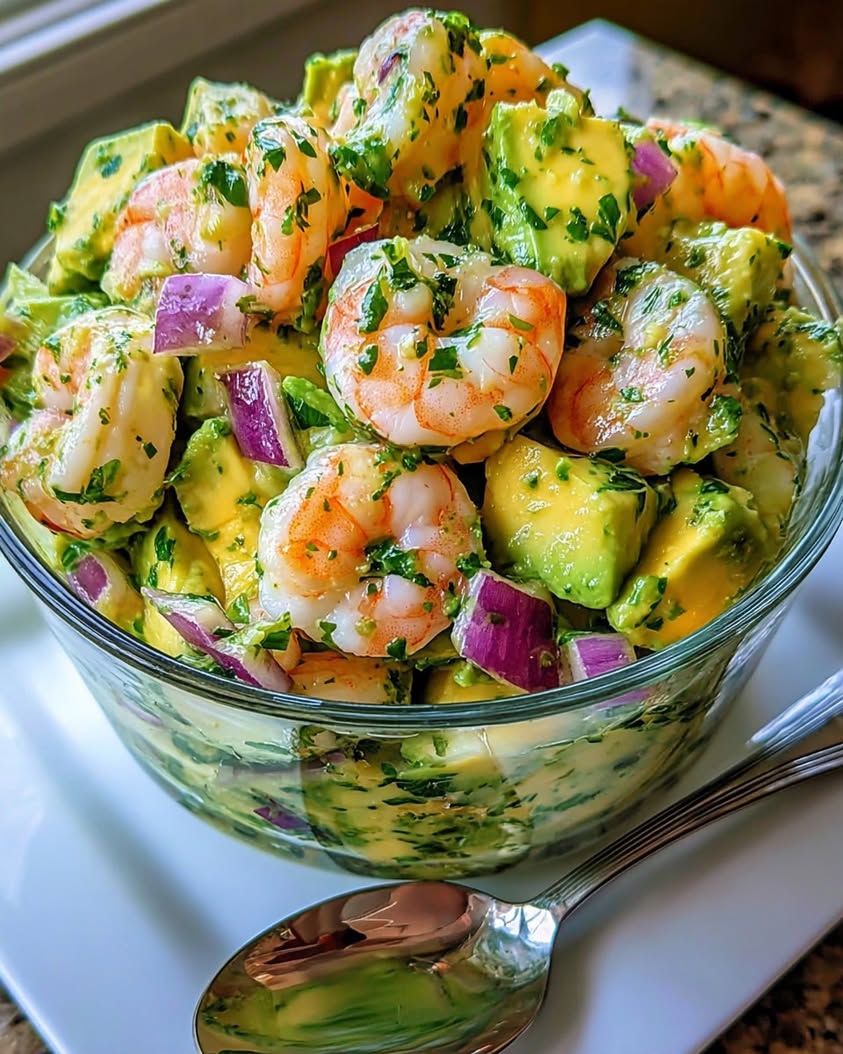
- Visual Appeal: Pink shrimp, green avocado, and pops of red onion create a striking color palette. A sprinkle of fresh herbs on top adds a finished, polished look. The creamy white dressing ties the colors together beautifully.
- Skill Level Needed: The recipe requires only basic knife skills and a quick saute. You simply cook the shrimp for a few minutes and stir the dressing. Beginners can succeed on the first try.
- Special Equipment: You need a large skillet, a mixing bowl, and a whisk or fork for the dressing. A sharp knife and cutting board make quick work of the vegetables and avocado. No fancy tools are required.
Recipe Overview
- Difficulty Level: This dish earns an easy rating because the steps stay simple and forgiving. You cook shrimp for just a few minutes, and the dressing comes together with a whisk. Since there is no baking or complex technique, even new cooks can serve it with confidence. The only real skill is avoiding overcooked shrimp, which a quick watch solves.
- Category: This recipe works as a main-course salad, a side dish, or a light appetizer. It suits lunch, dinner, and even brunch tables. Because it travels well, it also fits picnic and potluck categories. You can serve it cold or slightly chilled, which adds flexibility.
- Cuisine: The dish draws on coastal American cooking with Mediterranean influences. Creamy seafood salads appear in many seaside regions, and avocado points to California and Latin American kitchens. The lemon-herb dressing echoes Greek and Italian traditions. Together, these influences create a modern, globally inspired salad.
- Cost: Shrimp prices vary by season and region, but frozen shrimp offers an affordable option. Avocados, lemons, and pantry staples like sour cream and mayo keep the overall cost modest. The recipe feeds four for roughly the price of a single restaurant entree. Budget cooks can also stretch it with extra vegetables.
- Season: Summer is the natural season for this salad because avocados peak and the cool, creamy texture refreshes on hot days. Spring also works well thanks to fresh dill. In fall and winter, you can rely on frozen shrimp and still enjoy bright flavor. The dish remains accessible year-round.
- Occasion: Serve it for casual weeknight dinners, weekend brunches, or holiday appetizer spreads. It shines at baby showers, cookouts, and potlucks. Because it looks colorful, it suits celebrations, yet it stays simple enough for everyday meals. Few recipes cover so many occasions.
Why You’ll Love This Recipe
The taste and texture of this Creamy Shrimp Avocado Salad create a truly memorable bite. Juicy shrimp deliver a sweet, oceanic flavor that pairs naturally with rich avocado. The dressing adds tang and creaminess, while celery and red onion contribute crunch. Because each ingredient offers a distinct texture, the salad never feels one-note. Every spoonful balances soft, crisp, creamy, and juicy elements. That harmony keeps you coming back for more.
Convenience sets this recipe apart from fussier seafood dishes. You need only twenty minutes from start to finish, and most of that time involves simple chopping. The stove work takes just a few minutes for the shrimp. Cleanup stays light because you use one skillet and one bowl. In addition, the ingredients come from any standard grocery store, so you avoid specialty shopping. This combination of speed and simplicity makes the recipe a reliable weeknight hero.
Nutritional advantages give this salad real staying power. Shrimp provide high-quality protein with very little fat, which supports muscle maintenance and satiety. Avocado supplies heart-healthy monounsaturated fats and fiber. Lemon juice adds vitamin C, and the vegetables contribute additional fiber and antioxidants. Because the dish avoids heavy breading or sugary sauces, it fits clean-eating plans. Therefore, you can enjoy a creamy, satisfying meal without guilt.
Social and entertaining value makes this salad a host’s best friend. The vibrant colors create a beautiful centerpiece on any table. Guests can serve themselves easily, and the dish holds up well at room temperature for a short time. You can set out tortilla chips, lettuce cups, or toasted bread for a build-your-own station. Because the recipe doubles effortlessly, you can feed a crowd without stress. Hosts love dishes that look impressive but demand little effort, and this salad delivers exactly that.
Cost-effectiveness and accessibility round out the appeal. Frozen shrimp often costs less than fresh, and it tastes just as good after a quick thaw. Avocados remain affordable in most U.S. markets, especially in season. The dressing uses pantry staples like sour cream, mayonnaise, lemon, and garlic. You likely already own most of the seasonings. Consequently, you can feed four people well without breaking your food budget. That combination of value and quality makes this recipe a smart everyday choice.
Historical Background and Cultural Significance
The origin story of creamy shrimp salad traces back to coastal communities where fishermen needed quick, shelf-stable meals. Early versions combined cooked seafood with mayonnaise and served it chilled. As refrigeration spread across American kitchens in the twentieth century, these salads became popular picnic and luncheon fare. Shrimp salads appeared in community cookbooks and diner menus along the Atlantic and Gulf coasts. Over time, cooks added avocado and citrus to brighten the rich dressing.
Cultural importance shows up in how different regions claim their own version. In the American South, shrimp salad often includes celery, onion, and a touch of Old Bay seasoning. California cooks lean on avocado and lime for a fresher, Latin-inspired flavor. Mediterranean kitchens contribute olive oil, lemon, and dill to the seafood-and-avocado pairing. Each region treats the dish as a celebration of local seafood and produce. Consequently, the recipe carries a sense of place wherever it lands.
The evolution of this recipe reflects changing tastes around health and convenience. Mid-century versions relied heavily on mayonnaise, but modern cooks lighten the dressing with sour cream, yogurt, or citrus. Avocado entered the mix as demand for healthy fats grew. Home cooks also began adding herbs, spices, and crunchy vegetables to build complexity. Today, the dish sits comfortably between classic American seafood salad and fresh California cuisine. That blend of tradition and innovation keeps it relevant.
Regional variations highlight the recipe’s flexibility. Gulf Coast cooks might add Cajun seasoning or pickled okra. Hawaiian versions incorporate macadamia nuts or pineapple for sweetness. Mediterranean twists use feta, olives, and oregano. Latin American adaptations bring in cilantro, jalapeno, and lime. Because each region adjusts the dressing and add-ins, the Creamy Shrimp Avocado Salad becomes a living recipe that welcomes local flavor. This adaptability explains its enduring popularity across diverse tables.
Ingredient Deep Dive
Shrimp carry deep cultural significance in coastal communities around the world. Fishing families have built livelihoods around shrimp harvests for generations, and shrimp appear in celebration dishes from the Gulf Coast to Southeast Asia. Nutritionally, shrimp deliver lean protein, selenium, and vitamin B12 with very little fat. When selecting shrimp, look for firm flesh, a clean sea scent, and no signs of freezer burn. Store fresh shrimp on ice in the fridge and use it within two days. Frozen shrimp keeps for months and works beautifully as a substitute, so keep a bag on hand for this Creamy Shrimp Avocado Salad.
Substitutions for shrimp include cooked crab, lobster, or even shredded chicken for non-seafood eaters. For a vegetarian version, chickpeas or hearts of palm mimic the texture. Always thaw frozen shrimp under cold running water rather than at room temperature. Pat the shrimp dry before cooking, because moisture prevents browning. These simple steps protect both flavor and texture. Given shrimp’s versatility and nutrition, it deserves a regular spot in your kitchen.
Avocado holds cultural importance in Mexico and Central America, where it has been cultivated for thousands of years. Today, avocados appear in dishes worldwide, from salads to smoothies. Nutritionally, avocado offers monounsaturated fats, fiber, potassium, and vitamins E and K. When selecting avocado, choose fruit that feels heavy and yields slightly to gentle pressure. Avoid avocados with deep dents or mushy spots. Store ripe avocados in the fridge for up to five days, and keep unripe ones on the counter. For this Creamy Shrimp Avocado Salad, ripe but firm avocado works best because it holds its shape when tossed.
If avocado is unavailable, consider substitutes like diced mango, hearts of palm, or even roasted zucchini. Each option changes the texture but preserves the creamy quality. To slow browning, toss avocado pieces with lemon or lime juice right before serving. Remember that avocado browns quickly once cut, so add it last. These practical tips help you get the most from this beloved fruit.
Lemon juice brings brightness and cultural history to the bowl. Mediterranean cooks have used lemon for centuries to lift seafood and cut richness. Nutritionally, lemon adds vitamin C and antioxidants. Choose lemons that feel heavy and have smooth skin, which signals juiciness. Store lemons in the fridge crisper for up to two weeks. When you need a substitute, lime juice offers a slightly different but equally bright flavor. Always use fresh juice for the best result in this Creamy Shrimp Avocado Salad.
Sour cream and mayonnaise form the creamy base of the dressing. Sour cream, rooted in Eastern European dairy traditions, brings tang and body. Mayonnaise, a French staple, adds richness and stability. Together they create a balanced dressing that clings to the shrimp. Nutritionally, both contribute fat and calories, so measure carefully if you watch intake. Store sour cream and mayonnaise in the fridge and check expiration dates. Greek yogurt makes a lighter substitute for sour cream without losing creaminess.
Fresh dill carries a long history in Scandinavian and Eastern European cooking. It pairs naturally with seafood and adds a bright, grassy note. Dill provides vitamin A and antioxidants, though in small amounts. Choose dill with vibrant green fronds and no wilting. Store dill wrapped in a damp paper towel inside the fridge, where it keeps for about a week. Dried dill works as a substitute, but use about one-third as much because the flavor concentrates. Fresh parsley or tarragon also substitute nicely.
Common Mistakes to Avoid
- Overcooking the shrimp ranks as the most common error. Shrimp turn rubbery within seconds of overcooking, so pull them from the pan as soon as they curl and turn pink. Even a minute too long harms the texture.
- Adding avocado too early causes mushiness. Fold avocado in at the very end and toss gently. Otherwise, the pieces break down and turn the salad heavy.
- Skipping the pat-dry step leaves shrimp wet and prevents browning. Moisture also dilutes the dressing. Always dry shrimp thoroughly before cooking.
- Using underripe avocado leads to hard, bland pieces. Choose fruit that yields to gentle pressure. Ripen firm avocados on the counter for a day or two.
- Overdressing the salad drowns the ingredients and creates sogginess. Start with less dressing and add more as needed. The shrimp and avocado should remain visible.
- Neglecting to season the shrimp directly leaves the dish flat. Salt and pepper the shrimp before cooking so the flavor penetrates the meat. Taste the finished salad and adjust.
- Mixing warm shrimp with cold dressing creates a lukewarm salad. Let cooked shrimp cool slightly, then chill briefly if serving cold. Temperature control matters for texture.
- Using dried herbs in place of fresh dulls the brightness. Fresh dill and parsley make a noticeable difference. If using dried, reduce the amount and add extra lemon.
- Serving immediately after mixing prevents flavors from melding. Give the salad ten minutes in the fridge so the dressing infuses. Then taste and adjust once more.
- Storing leftovers in an open bowl dries the salad and invites odors. Use an airtight container and press plastic wrap against the surface. Consume within two days for best quality.
Essential Techniques
Proper shrimp cooking determines the success of this Creamy Shrimp Avocado Salad. Heat your skillet over medium-high until a drop of water sizzles. Add oil, then arrange shrimp in a single layer without crowding. Cook for about ninety seconds per side until the shrimp turn opaque and pink. Remove them immediately to a plate to stop the cooking. Visual cues matter: curled shrimp with no gray spots are done. If you prefer poaching, simmer shrimp in salted water for two to three minutes. Either method works, but avoid any technique that keeps shrimp in heat too long. Master this step, and the rest of the recipe falls into place.
Making a balanced creamy dressing requires attention to consistency and flavor. Whisk sour cream, mayonnaise, lemon juice, garlic, and seasonings in a bowl until smooth. Taste and adjust: add lemon for brightness, salt for depth, or a pinch of sugar to round the edges. The dressing should coat a spoon but still flow. If it feels thick, thin with a spoonful of water or extra lemon juice. Mix the dressing before adding shrimp so the flavors meld. A well-balanced dressing makes the salad taste intentional rather than flat.
Gentle folding protects the avocado and keeps the salad attractive. Use a large bowl and a spatula rather than a spoon. Add ingredients in stages: first the shrimp and dressing, then the crunch vegetables, and finally the avocado. Fold from the bottom up, turning the mixture rather than stirring it. This motion prevents avocado pieces from breaking. Stop as soon as everything is coated. Overmixing turns the salad into a mash, so restraint matters here.
Chilling the finished salad improves flavor and texture. Cover the bowl and refrigerate for at least ten minutes before serving. During this time, the dressing mingles with the shrimp and vegetables. The cold temperature also firms the avocado slightly. Do not chill longer than a few hours, because the avocado will begin to brown. Taste again after chilling and add a squeeze of lemon if needed. This brief rest turns a good salad into a great one.
Pro Tips for Perfect Creamy Shrimp Avocado Salad
- Buy shrimp already peeled and deveined to save time without sacrificing quality. Frozen shrimp works just as well and often costs less. Thaw overnight in the fridge for the best texture.
- Chill your mixing bowl while you prep the other ingredients. A cold bowl keeps the salad crisp and prevents the dressing from thinning.
- Use a light hand with the red onion by soaking sliced pieces in cold water for ten minutes. This step tames the sharp bite while keeping the crunch.
- Add a pinch of red pepper flakes or a dash of hot sauce to the dressing for gentle heat. The warmth balances the creamy richness and wakes up the palate.
- Toast a handful of sliced almonds and scatter them on top just before serving. The extra crunch contrasts beautifully with the soft shrimp and avocado.
- Season the dressing with a little lemon zest, not just juice. Zest carries the bright oils that juice lacks, boosting the aroma noticeably.
- If you plan to serve the salad later, keep the avocado separate and fold it in at the last minute. This step prevents browning and keeps pieces intact.
- Taste the dressing on a piece of shrimp, not on its own. The shrimp’s sweetness changes how the dressing reads, so taste in context.
Variations and Adaptations
Regional variations let you tailor this Creamy Shrimp Avocado Salad to your tastes. A Gulf Coast version adds Old Bay seasoning and a splash of hot sauce to the dressing. A California twist uses lime instead of lemon and folds in cilantro. For a Mediterranean feel, add feta, kalamata olives, and oregano. A tropical adaptation brings mango, red bell pepper, and a hint of ginger. Each version keeps the creamy shrimp avocado core while introducing a new accent. Try one per week and discover your favorite.
Seasonal adaptations keep the dish fresh all year. In summer, use peak-ripe avocados and fresh dill from the garden. In fall, add diced apple or pear for sweetness. Winter calls for citrus segments like orange or grapefruit to brighten the bowl. Spring invites radishes and fresh herbs. Because the base recipe stays constant, seasonal swaps become easy experiments. These adjustments also reduce cost when certain produce is out of season.
Dietary modifications make the salad accessible to nearly everyone. For a dairy-free version, swap sour cream for a coconut or cashew cream. For a vegan option, use hearts of palm or chickpeas in place of shrimp and choose vegan mayonnaise. Low-carb and keto eaters already enjoy this dish because it avoids grains and sugar. Paleo cooks can replace dairy with mashed avocado and lemon. Each adaptation preserves the creamy shrimp avocado spirit while meeting specific needs.
Flavor variations expand the recipe beyond the basic version. Add curry powder for a warm, aromatic version. Stir in pesto for a green, herbaceous twist. A Southwest version uses cumin, lime, and diced jalapeno. Asian-inspired cooks add sesame oil, rice vinegar, and scallions. Each flavor direction changes the dish’s personality while the technique stays the same. Keep notes on favorites so you can repeat them.
Texture modifications help you control the bite. Add celery for crunch, or toasted nuts for richness. Cucumber offers a cool, watery crunch, while jicama brings a crisp snap. For a smoother salad, mash part of the avocado into the dressing. Conversely, larger avocado chunks deliver a bolder bite. Consider the occasion and choose textures that match. Small changes create noticeably different eating experiences.
Presentation alternatives turn one recipe into many meals. Serve the salad in lettuce cups for a handheld appetizer. Pile it into croissants for a classic sandwich. Spoon it over baby greens for a fuller lunch. Stuff it into pita pockets, or serve it atop crisp crackers as a snack. For a showstopper, plate the salad on a platter and ring it with sliced tomatoes. Presentation flexibility makes this Creamy Shrimp Avocado Salad endlessly useful.
Serving and Presentation Guide
Plating techniques shape the first impression of your Creamy Shrimp Avocado Salad. Use a wide, shallow bowl so guests see the colors. Mound the salad slightly in the center, then let pieces scatter naturally. Reserve a few whole shrimp and avocado slices for the top. Tuck small lettuce leaves around the edge for height. A little negative space on the plate makes the food look intentional. Simple, confident plating beats fussy decoration every time.
Garnishing ideas add the finishing touch without effort. A sprig of fresh dill or a scattering of chopped parsley adds green contrast. Lemon wedges invite diners to add brightness. Toasted sesame seeds or crushed pistachios add texture and a refined look. A light dusting of paprika brings warmth and color. Keep garnishes edible and minimal so they enhance rather than clutter. Each choice should reflect the salad’s creamy, fresh character.
Traditional accompaniments pair naturally with this recipe. Crusty bread or warm rolls help soak up the dressing. A simple green salad or sliced tomatoes balance the richness. Iced tea or lemonade completes a classic lunch. For a Southern-style meal, add hushpuppies or cornbread. These familiar sides let the salad shine as the star. Choose sides that add contrast without competing.
Modern serving suggestions open new meal possibilities. Serve the salad over quinoa or farro for a grain bowl. Layer it onto toasted sourdough as an open-faced sandwich. Spoon it into endive leaves for elegant appetizers. Pair it with a crisp rose or sparkling water for a stylish lunch. Hosts can also set up a salad bar with toppings so guests customize their bowls. Modern presentations keep the dish fresh and interactive.
Temperature considerations affect flavor and safety. Serve the salad chilled but not ice cold, since very cold food mutes flavor. Remove it from the fridge ten minutes before serving. On hot days, nestle the bowl in a larger bowl of ice to keep it cool at outdoor events. Do not leave creamy salads out for more than two hours. These steps protect both taste and food safety.
Portion control tips help you serve appropriately. A scoop of about one cup works as a side, while a cup and a half makes a main course. Serve with a small ice cream scoop for neat portions at parties. Keep extra dressing on the side for those who want more. Offer lettuce cups or bread nearby to stretch the salad. Controlled portions make the recipe feel polished and thoughtful.
Wine and Beverage Pairing
Wine pairings for this Creamy Shrimp Avocado Salad hinge on the creamy, tangy dressing. A crisp Sauvignon Blanc cuts through the richness and echoes the herb notes. An unoaked Chardonnay offers a rounder texture that matches the creamy base. Dry rose brings bright fruit and works beautifully on warm afternoons. For sparkling options, a dry Prosecco adds festive lift. Avoid heavily oaked wines, because the tannins clash with the delicate shrimp and avocado.
Non-alcoholic alternatives keep everyone at the table satisfied. Sparkling water with lemon and dill feels spa-like and refreshing. Iced green tea with a slice of lime cleanses the palate. A virgin mojito brings mint and lime that mirror the salad’s brightness. Cucumber-infused water offers a subtle, elegant option. Each choice refreshes without competing with the food.
Coffee and tea pairings surprise many readers, yet they work well with brunch service. A light, citrusy black tea complements the lemon and herbs. Iced hibiscus tea brings color and tartness that lift the palate. Cold brew coffee with a splash of cream echoes the dressing’s richness. Green tea offers a grassy note that matches the dill. For an afternoon gathering, these options feel thoughtful and unexpected.
Temperature considerations apply to every beverage. Serve white wines well chilled, around forty-five to fifty degrees Fahrenheit. Sparkling drinks taste best ice cold. Tea should be chilled thoroughly for this salad. Conversely, avoid lukewarm drinks, which clash with the cool food. Match the chill of the drink to the chill of the salad for a cohesive experience.
Serving suggestions complete the pairing picture. Offer wine in stemmed glasses to enhance aroma. Use mason jars for sparkling non-alcoholic drinks at casual events. Provide citrus wedges and herb sprigs as garnishes on a small tray. Label each drink so guests choose confidently. With a few simple touches, the beverage service matches the salad’s polished yet relaxed vibe.
Storage and Shelf Life
Storage methods matter greatly with creamy seafood salads. Transfer leftovers to an airtight container within two hours of serving. Press plastic wrap directly against the salad’s surface to limit air exposure. Refrigerate immediately and keep the temperature at or below forty degrees Fahrenheit. Proper storage slows spoilage and protects texture. Poorly stored salads turn watery and unappetizing quickly.
Container recommendations make a real difference. Use shallow, airtight containers so the salad chills evenly. Glass containers resist odors and stain less than plastic. If using plastic, choose food-grade containers with tight lids. Avoid leaving salad in the original mixing bowl unless it has a lid. The right container preserves both flavor and appearance.
Signs of spoilage help you judge when to discard leftovers. A sour or ammonia-like smell signals trouble. Slimy textures or cloudy dressing indicate bacterial growth. Discolored shrimp or browned avocado raise concerns beyond simple oxidation. When in doubt, throw it out. Food safety always outweighs saving a few dollars.
Reheating instructions do not apply to this cold salad, and it should never go into the microwave. Instead, refresh leftovers by adding a squeeze of lemon and a few fresh herbs. Stir gently, then taste. If the dressing dried out, add a spoonful of sour cream or mayonnaise. Enjoy leftovers cold within two days. These simple refreshes restore the salad’s appeal.
Freezing guidelines matter here, because freezing this salad is not recommended. Avocado turns mushy and brown after freezing and thawing. Creamy dressings separate and become grainy. Shrimp also loses its firm texture. If you must freeze part of the recipe, freeze only the cooked shrimp separately for up to two months. Then build a fresh salad with new avocado and dressing. Planning ahead this way protects quality.
Make Ahead Strategies
A smart prep timeline makes this Creamy Shrimp Avocado Salad stress-free for events. Up to one day ahead, clean and chop the celery and onion. Whisk the dressing and store it covered in the fridge. Cook the shrimp up to a day ahead and refrigerate in a separate container. On serving day, simply combine the components. This staging prevents last-minute chaos and keeps flavors fresh.
Storage between steps requires care to prevent sogginess and browning. Keep the dressing, shrimp, vegetables, and avocado in separate containers until assembly. Store avocado pieces tossed with lemon juice to slow oxidation. Keep everything chilled at consistent temperatures. Label containers with times so you know what to use first. Separation preserves each component’s texture.
Quality impact assessment helps set realistic expectations. Prepped vegetables hold up beautifully, and the dressing actually improves overnight as flavors meld. Cooked shrimp stays fresh for a day. Avocado remains the weak link, so cut it last. If you must cut it early, accept slight softening. Overall, most components make ahead with minimal quality loss.
Assembly tips ensure a smooth finish when guests arrive. Fold the dressing into the shrimp first, then add crunchy vegetables. Add avocado last and fold gently. Taste and adjust lemon and salt. Transfer to a serving bowl and garnish. This sequence produces a fresh, beautiful salad even under time pressure.
Reheating guidelines do not apply here, so plan to serve the dish cold. Focus instead on refreshing leftovers or prepped components. If you prepped shrimp the day before, let them sit at room temperature for five minutes before mixing. Cold shrimp can mute the dressing, so a brief warm-up improves flavor. Small touches make ahead of time pay off.
Fresh element additions at the last minute boost quality. Add chopped fresh dill, lemon zest, and a scattering of toasted nuts right before serving. These elements lose impact if added early, so save them for the final touch. A squeeze of fresh lemon wakes up chilled components. Thoughtful last-minute touches make make-ahead meals taste freshly made.
Scaling Instructions
Halving the recipe suits smaller households without waste. Use two servings of shrimp and one avocado, then halve the dressing ingredients. For half an egg or partial lemon, taste as you go. Smaller batches are forgiving, so adjust seasoning freely. Cooking time stays similar because shrimp cook quickly regardless of quantity. Expect about ten minutes of total work.
Doubling or tripling the recipe works well for parties and gatherings. Cook shrimp in batches so the pan never crowds. Crowded shrimp steam instead of sear, which harms texture. Make dressing in a larger bowl and double all seasonings, tasting after each addition. Use a wide serving bowl and garnish generously. For large crowds, triple the recipe and set up a self-serve station.
Equipment adjustments matter as quantities grow. Use a twelve-inch skillet for double batches and work in two rounds. Choose large mixing bowls so folding stays gentle. For tripling, borrow a second bowl or use a large roasting pan to combine. Keep tools clean between stages. The right equipment keeps larger batches manageable.
Timing modifications keep larger batches on schedule. Doubling adds about five to ten minutes for extra chopping, while tripling can add fifteen. Cook shrimp first, since it cools while you chop. Whisk dressing while shrimp chill. This parallel workflow saves time and keeps the kitchen calm. Written times assume basic prep skills, so pad them slightly for big groups.
Storage considerations change with volume. Have extra airtight containers ready before you start. Chill large batches in shallow containers so they cool evenly. Label and date each container. If serving over hours, hold backup portions in the fridge and refill bowls as needed. Planning storage prevents waste and keeps food safe throughout the event.
Nutritional Deep Dive
The macro breakdown of this Creamy Shrimp Avocado Salad supports balanced eating. Shrimp supply most of the protein, roughly twenty grams per serving. Avocado provides healthy fats, while sour cream and mayonnaise add richness and some saturated fat. Carbohydrates stay low, coming mainly from vegetables and a bit of lemon. Overall, the dish leans protein-forward and low-carb. Portions control the calorie total effectively.
Micronutrient analysis reveals several standout nutrients. Shrimp contribute selenium, vitamin B12, iodine, and phosphorus. Avocado brings potassium, vitamin E, vitamin K, and folate. Lemon juice adds vitamin C, and herbs provide antioxidants. Red onion offers quercetin and small amounts of other plant compounds. Together, these nutrients support heart health, immunity, and cell function.
Health benefits follow naturally from these ingredients. The lean protein supports muscle maintenance and satiety. Monounsaturated fats from avocado promote heart health and help absorb fat-soluble vitamins. Fiber from vegetables and avocado aids digestion. Because the dish includes no refined grains or added sugars, it fits many healthy eating patterns. These benefits make the salad more than just a tasty treat.
Dietary considerations include potential allergens. Shrimp is a shellfish allergen, and mayonnaise contains eggs. Dairy appears in sour cream, though substitutions exist. Readers with these restrictions should adjust the recipe accordingly. Otherwise, the dish suits most diets, including low-carb and Mediterranean patterns. Always check labels on packaged ingredients like mayonnaise.
Portion analysis helps you plan meals accurately. A one-cup side portion delivers moderate calories with strong protein. A cup and a half as a main course boosts protein further. Balance the richness with lighter sides like greens or fruit. Track portions if you monitor intake, because dressings add calories quickly. Awareness keeps enjoyment and health in harmony.
Weight management tips center on moderation and balance. Use Greek yogurt in place of some sour cream to cut fat and add protein. Serve over greens to increase volume without many calories. Measure the dressing rather than pouring freely. Add extra vegetables like cucumber or bell pepper for bulk and fiber. These small tweaks keep the salad satisfying while supporting goals.
Dietary Adaptations
Gluten-free eaters can enjoy this recipe with almost no changes. Shrimp, avocado, vegetables, and dressings naturally contain no gluten. Check labels on mayonnaise and any packaged seasonings to confirm. Serve over gluten-free crackers or lettuce instead of bread. With these checks, the Creamy Shrimp Avocado Salad fits gluten-free diets perfectly.
Dairy-free versions replace sour cream with coconut cream or cashew cream. Use dairy-free mayonnaise, or blend silken tofu with lemon and mustard. Check that all packaged ingredients carry dairy-free labels. The texture stays creamy with these swaps. Taste and adjust lemon and salt to keep the balance bright.
Vegan adaptations require replacing the shrimp and dairy. Use hearts of palm or chickpeas for a seafood-like texture, or marinate firm tofu in lemon and seaweed for a briny note. Choose vegan mayonnaise and cashew cream for the dressing. Add extra herbs Print
Creamy Shrimp Avocado Salad
- Total Time: 15 minutes
- Yield: 4
Description
A refreshing and creamy salad featuring succulent shrimp, ripe avocado, and a tangy lime dressing. Perfect for a light lunch or dinner.
Ingredients
- 1 lb cooked shrimp, peeled and deveined
- 2 ripe avocados, diced
- 1/2 cup mayonnaise
- 2 tablespoons lime juice
- 1/4 cup chopped fresh cilantro
- 1/4 cup diced red onion
- 1 jalapeño, seeded and minced (optional)
- Salt and pepper to taste
- Lettuce leaves, for serving (optional)
Instructions
- In a large bowl, whisk together mayonnaise, lime juice, salt, and pepper until smooth.
- Add the shrimp, avocado, cilantro, red onion, and jalapeño (if using). Gently toss to coat evenly.
- Serve immediately over lettuce leaves if desired, or chill for 30 minutes to allow flavors to meld.
Notes
You can customize the seasonings to taste. For a spicier kick, add more jalapeño or a pinch of cayenne pepper.
- Prep Time: 15 minutes
- Cook Time: 0 minutes
- Method: Main
- Cuisine: American