Roasted Pear and Blue Cheese Crostini with Cranberry Walnut Relish: The Ultimate Holiday Appetizer
If you want an appetizer that steals the show at every gathering, this Roasted Pear and Blue Cheese Crostini with Cranberry Walnut Relish delivers on every front. This Roasted Pear and Blue Cheese Crostini recipe combines sweet caramelized fruit, tangy cheese, and a bright, crunchy relish on toasted baguette slices. Moreover, the contrast of flavors and textures makes each bite memorable and satisfying. Whether you host a holiday party or attend a casual get-together, this appetizer fits beautifully into any menu. In fact, home cooks across the country now rank this crostini among their favorite seasonal starters because it looks elegant yet takes minimal effort.
The magic starts with ripe pears that roast into tender, golden perfection. As they caramelize in the oven, their natural sugars deepen and create a rich, honeyed sweetness. Meanwhile, the blue cheese melts slightly against the warm bread and offers a bold, creamy counterpoint. Additionally, the cranberry walnut relish adds a tart, nutty crunch that ties everything together. Because these components balance so well, the final result tastes far more complex than the simple preparation suggests. Consequently, guests always assume you spent hours in the kitchen, even though the whole process takes under an hour.
Beyond great taste, this Roasted Pear and Blue Cheese Crostini recipe offers impressive versatility. You can serve it as a passed hors d’oeuvre at a formal dinner or set the pieces on a casual grazing board. Furthermore, the ingredients remain affordable and easy to find at most grocery stores, especially during fall and winter. Since pears peak in autumn, the recipe aligns naturally with holiday entertaining. Therefore, this crostini has become a staple for Thanksgiving, Christmas, and New Year celebrations. Ultimately, it proves that simple, quality ingredients can create an unforgettable dish.
Quick Recipe Highlights
- Flavor Profile: Sweet roasted pears meet tangy, creamy blue cheese, while the cranberry walnut relish adds tartness and earthy depth. Each bite balances richness with bright acidity. The combination feels both indulgent and refreshing.
- Texture: Crisp toasted baguette provides a sturdy base, soft roasted pear adds tenderness, and the relish contributes a satisfying crunch. Blue cheese brings a smooth, creamy mouthfeel. Together, these layers create a delightful textural experience.
- Aroma: Warm caramelized pear and toasted nuts fill the kitchen with inviting sweetness. The sharp scent of blue cheese adds complexity. Fresh thyme and citrus zest lift the overall fragrance.
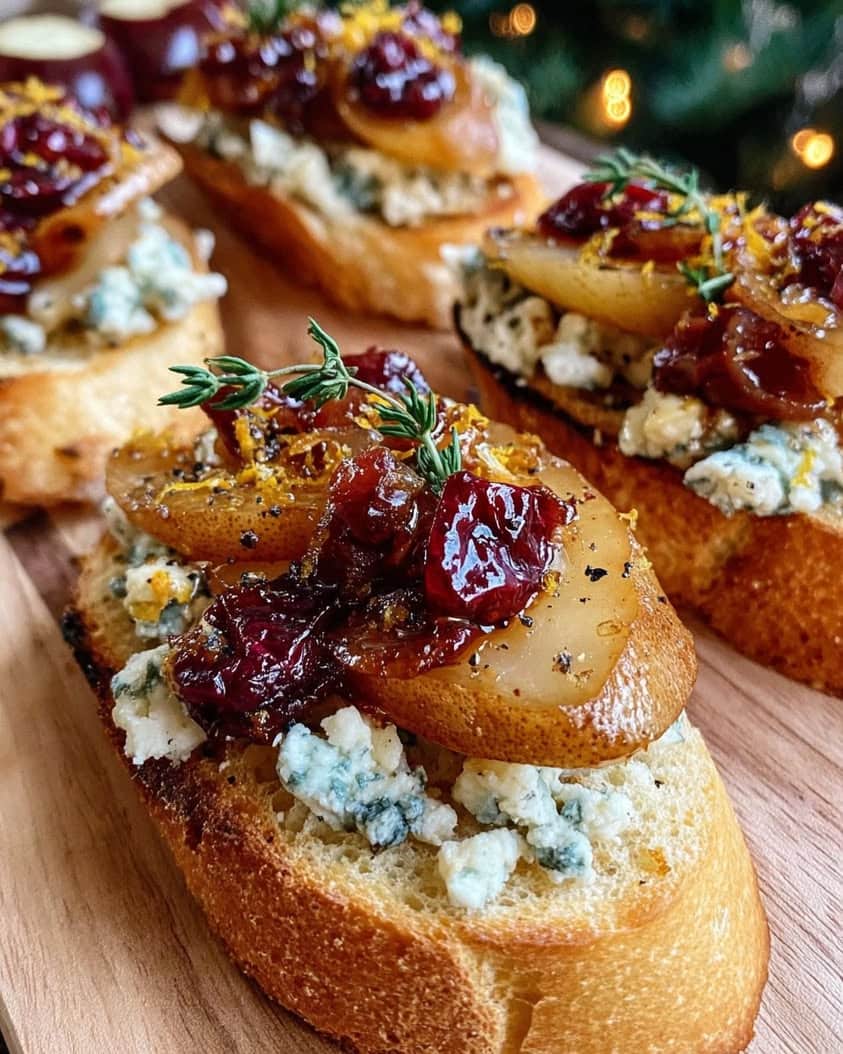
- Visual Appeal: Golden pear slices contrast beautifully with creamy blue cheese crumbles and jewel-toned cranberry relish. The colors create a festive, elegant presentation. A sprig of fresh thyme finishes each piece with a pop of green.
- Skill Level Needed: This recipe suits beginners and experienced cooks alike. Simple roasting and assembly techniques carry the dish. You only need basic knife skills and a hot oven to succeed.
- Special Equipment: A rimmed baking sheet, a sharp chef’s knife, and a small saucepan cover the essentials. A pastry brush helps with oiling the bread. No specialty tools are required.
Recipe Overview
- Difficulty Level: This recipe earns an easy rating because it relies on straightforward steps. Roasting pears and toasting bread require minimal attention. Assembling the crostini takes just minutes. Even novice cooks can execute this dish flawlessly on the first try.
- Category: This dish works as an appetizer, hors d’oeuvre, or party snack. It also functions as a light lunch when paired with a salad. Additionally, it fits beautifully on a holiday starter menu.
- Cuisine: The recipe draws from American entertaining traditions with French and Italian influences. Crostini originated in Italy as toasted bread with toppings. Blue cheese and pear pairings reflect classic European flavor combinations. Modern American cooks adapted these elements into a festive holiday bite.
- Cost: Expect to spend roughly 12 to 18 dollars for all ingredients. A baguette costs about 3 dollars, pears about 3 dollars, and blue cheese about 5 dollars. Cranberries and walnuts add another 4 dollars. These figures make the recipe budget-friendly for entertaining.
- Season: Fall and winter suit this recipe best because pears and cranberries peak during those months. The warm, spiced flavors complement cool-weather gatherings. However, you can prepare it year-round with quality imported pears.
- Occasion: Holiday parties, dinner parties, wine tastings, and potlucks all welcome this appetizer. It shines at Thanksgiving and Christmas celebrations. Casual weekend gatherings also benefit from its easy elegance.
Why You’ll Love This Recipe
The taste and texture appeal of this Roasted Pear and Blue Cheese Crostini recipe keeps guests coming back for more. Sweet, jammy pears melt into creamy, pungent blue cheese on a crisp base. Meanwhile, the cranberry walnut relish introduces tart bursts and a nutty crunch. Because each component contrasts with the next, every bite feels dynamic and exciting. Furthermore, the flavors echo classic holiday pairings that Americans love. As a result, this appetizer satisfies both adventurous eaters and traditional palates.
Convenience and preparation benefits make this recipe a host’s best friend. You can roast the pears and make the relish a day ahead. Then you simply toast the bread and assemble everything right before serving. Since the active work takes only about 20 minutes, you gain freedom to focus on other dishes. Additionally, the ingredients require no special shopping trips. Most supermarkets stock everything you need, and the recipe scales easily for larger crowds.
Nutritional advantages give this crostini surprising substance for an appetizer. Pears deliver fiber, vitamin C, and antioxidants that support digestive health. Walnuts contribute heart-healthy omega-3 fatty acids and protein. Cranberries add additional antioxidants and a bright vitamin boost. Although blue cheese and bread bring richness, modest portions keep the dish balanced. Consequently, you can enjoy this starter without derailing your wellness goals.
Social and entertaining value sets this recipe apart from ordinary appetizers. The crostini look impressive on a platter, and guests love the bold flavor combination. Because the pieces are handheld, they encourage mingling and easy conversation. Furthermore, the recipe invites compliments and recipe requests. Serving this dish signals thoughtfulness and elevates the whole event. Therefore, it works as a conversation starter as much as a snack.
Cost-effectiveness and accessibility round out the reasons to love this recipe. The ingredients stay affordable even during holiday season price bumps. You can substitute inexpensive blue cheese varieties without losing character. Pears remain widely available, and frozen cranberries work perfectly in the relish. Because the recipe uses simple pantry staples, it delivers restaurant-quality results on a home cook’s budget. Ultimately, this crostini offers maximum impact for minimal expense.
Historical Background and Cultural Significance
The origin story of crostini traces back to ancient Rome, where cooks topped toasted bread with olive oil and simple ingredients. Italians formalized the concept during the Renaissance as a way to showcase seasonal produce. Over centuries, the idea traveled across Europe and evolved into countless regional variations. The pear and blue cheese pairing emerged in northern Italy and France, where orchards and dairy farms thrived side by side. Consequently, the combination became a natural expression of local agriculture.
Cultural importance surrounds the pairing of fruit and cheese in European culinary traditions. In France, pears with Roquefort represent a classic dessert course. Italians embrace gorgonzola with sweet fruit in many antipasti. These traditions reflect a shared belief that contrasting flavors create harmony. Additionally, serving such combinations signals hospitality and refinement. As a result, the crostini carries cultural weight beyond its simple ingredients.
The evolution of this recipe reflects American entertaining trends over recent decades. During the 1980s and 1990s, crostini became popular at upscale dinner parties. Chefs began adding fruit and artisanal cheese to traditional toppings. Meanwhile, the cranberry walnut relish emerged from New England holiday traditions. Combining these elements created a distinctly American hybrid that celebrates both European technique and local flavors. Today, food bloggers and home cooks continue refining the recipe.
Regional variations appear across the United States and abroad. West Coast cooks often add arugula and honey to their crostini. Southern hosts might incorporate pecans instead of walnuts for the relish. In the Northeast, local maple syrup sometimes replaces honey in the pear glaze. Regardless of region, the core concept remains consistent. Therefore, this appetizer adapts to local tastes while preserving its essential character.
Ingredient Deep Dive
Pears hold a revered place in culinary history across cultures. Ancient Romans cultivated pear varieties and preserved them in honey. In American tradition, pears symbolize the autumn harvest and appear in desserts, salads, and preserves. Nutritionally, pears provide fiber, potassium, and vitamin C. Select firm but ripe pears with no soft spots for roasting. Bosc and Anjou varieties hold their shape beautifully. Store pears at room temperature until ripe, then refrigerate for up to five days. If pears are unavailable, apples or quince make excellent substitutes.
Roasting transforms pears into something transcendent. The heat concentrates their sugars and softens their flesh into a silky texture. Additionally, roasting reduces water content so the fruit doesn’t make the bread soggy. A light coating of honey and a sprinkle of thyme deepens the caramelization. Watch for golden edges and a tender center as your visual cue. Avoid overcrowding the pan because steam prevents browning. Once roasted, pears keep refrigerated for three days.
Blue cheese carries a long and storied history, particularly in Europe. Legend credits a French shepherd with discovering Roquefort after leaving bread and cheese in a cave. Today, blue cheese varieties range from mild gorgonzola to bold Stilton. Nutritionally, blue cheese supplies calcium, protein, and healthy fats in small portions. Choose cheeses with uniform blue veining and a creamy texture. The smell should feel robust but not ammonia-like. Store blue cheese wrapped in parchment, then foil, in the refrigerator for up to two weeks.
Cranberries represent a distinctly North American ingredient with deep cultural roots. Indigenous peoples used cranberries for food, medicine, and dye long before European settlers arrived. Today, cranberries star in holiday sauces and relishes across the country. They deliver vitamin C, antioxidants, and fiber. Choose firm, glossy berries without shriveled skins. Fresh cranberries keep refrigerated for several weeks and freeze beautifully for a year. Dried cranberries work as a convenient substitute in the relish.
Walnuts bring ancient history and modern nutrition together. Persian and Chinese cultures cultivated walnuts for thousands of years. In America, walnut trees grow abundantly in California, supplying most of the national crop. Walnuts provide omega-3 fatty acids, protein, and antioxidants. Select walnuts that feel heavy and smell fresh, never rancid. Store them in an airtight container in the refrigerator or freezer to prevent spoilage. Pecans or almonds substitute well if needed.
The baguette forms the foundation of any great crostini. French bakers perfected the long, crusty loaf centuries ago. Fresh baguettes offer a crisp exterior and soft interior ideal for toasting. Additionally, day-old bread works perfectly because toasting restores its texture. Choose a loaf with a golden crust and an inviting yeasty aroma. Slice on a slight diagonal for wider, more elegant pieces. Gluten-free baguettes or sourdough loaves serve as reliable alternatives.
Common Mistakes to Avoid
- Overcrowding the baking sheet causes pears to steam instead of roast. Give each slice space so hot air circulates freely. Work in batches if necessary.
- Using underripe pears results in hard, flavorless slices. Choose pears that yield slightly to gentle pressure at the neck. Ripen them on the counter before roasting.
- Skipping the toasting step leaves the bread soggy and weak. Always toast baguette slices until crisp and golden. This step builds a structural base that holds the toppings.
- Adding too much blue cheese overwhelms the delicate pear flavor. Use a light hand and crumble evenly. Balance matters more than abundance.
- Making the relish too far ahead dulls its brightness. Prepare it no more than two days before serving. Fresh lemon juice keeps the flavors vibrant.
- Assembling crostini too early causes sogginess. Add toppings within 30 minutes of serving. Keep components separate until the last moment.
- Burning the walnuts introduces bitter, acrid flavors. Toast them gently over medium heat and stir constantly. Pull them from the pan the moment they smell fragrant.
- Neglecting seasoning leaves the dish flat. Add a pinch of salt to the pears and a crack of black pepper to the cheese. Small touches make a big difference.
- Serving crostini cold mutes their appeal. Serve them slightly warm or at room temperature. Cold toppings feel less inviting on the palate.
- Using stale, flavorless bread undermines the whole dish. Taste your baguette before buying it. Fresh bread transforms the eating experience.
Essential Techniques
Proper roasting ranks as the most important technique in this recipe. Roasting concentrates flavor through caramelization and moisture loss. To master it, preheat the oven fully and coat pear slices evenly with oil and honey. Arrange them in a single layer with breathing room. Common pitfalls include overcrowding and underbaking, which prevent browning. Visual cues for success include golden edges, visible caramelization, and a tender texture that yields when pierced with a knife.
Toasting the baguette slices correctly builds a sturdy, flavorful foundation. Gentle, even toasting creates crunch without charring. Brush each slice with olive oil and bake at 375 degrees until golden, about 8 to 10 minutes. Alternatively, toast them in a skillet for more control. Avoid rushing with high heat, which burns the crust before the center dries. Success shows as an even golden color and a crisp snap when broken. The best sliced bread should feel firm and light, never soft or chewy.
Building the relish requires a delicate hand with heat and timing. Blooming the aromatics first releases their flavors, while adding cranberries later preserves their tart bite. Simmer gently until the berries burst and the mixture thickens. Stir frequently to prevent scorching, especially near the end. Pitfalls include overcooking, which turns the relish to jam, and undercooking, which leaves it watery. The ideal texture resembles a chunky, glossy compote that holds together on a spoon.
Assembling crostini demands speed and a light touch. Spread or crumble toppings evenly so each bite delivers balance. Work in an assembly line for efficiency and consistency. Avoid pressing down hard on the bread, which compresses the crust. Visual cues for proper assembly include even distribution of cheese and a small, attractive dollop of relish. Finish each piece with a thyme leaf and serve immediately. Clean edges and balanced toppings create a polished, professional appearance.
Pro Tips for Perfect Roasted Pear and Blue Cheese Crostini
- Roast pears cut-side down first to maximize caramelization before flipping. This technique creates deeper flavor and a prettier surface. Then flip and glaze for the final minutes.
- Warm the blue cheese briefly in the oven for 1 to 2 minutes before assembling. Slightly softened cheese spreads more evenly and coats the bread better. Avoid full melting, which makes it greasy.
- Add a tiny drizzle of honey over the finished crostini for extra shine and sweetness. This final touch balances the salty cheese and tart relish. Use sparingly so the dish stays elegant.
- Toast walnuts in a dry skillet rather than the oven for better control. You can watch and smell them constantly. This method prevents burning and takes only minutes.
- Slice the baguette on a strong bias for larger, more stable pieces. Wider slices hold toppings better and look more refined. Aim for half-inch thickness.
- Season the pears before roasting, not after. Salt penetrates the fruit and enhances sweetness from within. Add black pepper for a subtle savory edge.
- Make the relish with slight restraint on sugar so the tartness shines. Sweetness should balance, not dominate. Taste as you go and adjust accordingly.
- Serve on a dark or wooden platter to make the golden pears and crimson relish pop. Contrast makes food look more appetizing. Garnish with fresh thyme sprigs.
Variations and Adaptations
Regional variations bring local character to this versatile appetizer. Italian cooks might swap gorgonzola dolce for the blue cheese and add prosciutto. French hosts favor Roquefort and a drizzle of walnut oil for deeper flavor. In the American South, pecan relish and country ham appear alongside the pears. New England bakers sometimes add maple syrup to the roasting glaze. Each region adapts the classic formula to its pantry. Therefore, you can personalize the recipe without losing its essential charm.
Seasonal adaptations keep this crostini relevant year-round. In autumn, fresh cranberries and Bosc pears align with the harvest. Winter calls for orange zest in the relish and a touch of cinnamon in the pear glaze. During spring, consider swapping pears for roasted apricots and using feta instead of blue cheese. Summer versions can use fresh figs and goat cheese for a lighter profile. Adapting to the season ensures peak flavor and freshness.
Dietary modifications make the recipe accessible to more guests. For gluten-free needs, use gluten-free baguettes or seed crackers as the base. Dairy-free diners can substitute a cashew-based blue cheese alternative or omit the cheese entirely. Vegan versions benefit from whipped cashew cheese and maple syrup in place of honey. Each swap changes the flavor slightly but preserves the spirit of the dish. Always taste and adjust seasonings after substitutions.
Flavor variations let you customize the experience. Add balsamic glaze for tangy depth or fig jam for extra sweetness. A sprinkle of crushed red pepper introduces gentle heat. Swapping thyme for rosemary or sage changes the aromatic profile. Citrus zest in the relish brightens the whole bite. Experiment boldly because the recipe forgives small changes.
Texture modifications address different preferences. Crush toasted walnuts finer for a smoother relish. Add crisp pear slices raw for extra crunch alongside the roasted ones. A toasted seed topping introduces new dimension. Choose bread with a denser crumb for a heartier bite. Every adjustment tailors the dish to your audience.
Presentation alternatives expand serving possibilities. Serve the components as a crostini bar and let guests build their own. Layer everything into a flatbread for a shareable appetizer. Spoon the toppings into phyllo cups for bite-sized elegance. Arrange on crostini as miniature open-faced sandwiches. Each presentation offers a fresh way to enjoy the same flavors.
Serving and Presentation Guide
Plating techniques elevate this crostini from simple snack to elegant starter. Arrange pieces in a single layer on a slate, wooden board, or marble platter. Vary the angles slightly for organic visual interest. Group them close enough to feel abundant but far enough to prevent crowding. Leave space for a small garnish bowl of extra relish. Clean edges and intentional placement communicate care and professionalism.
Garnishing ideas add the finishing flourish that makes the dish memorable. A small thyme sprig on each piece signals freshness. Pomegranate arils scatter beautifully for holiday sparkle. Toasted walnut halves pressed into the relish add texture and visual appeal. A light dusting of flaky sea salt catches the light. Choose one or two garnishes to keep the look refined.
Traditional accompaniments round out the appetizer course. Salty cured meats like prosciutto or soppressata pair beautifully. A simple green salad with vinaigrette balances the richness. Cheese boards and olives complement the flavor profile. Sparkling water with citrus refreshes the palate between bites. These pairings create a cohesive, satisfying spread.
Modern serving suggestions bring contemporary flair to the table. Offer the crostini as part of a grazing table with varied textures. Present them on individual slate tiles for a restaurant-style touch. Pre-assemble half and offer the rest as a build-your-own station. Add small pairings cards describing the flavors. Interactive serving styles engage guests and spark conversation.
Temperature considerations affect how the crostini taste and feel. Serve slightly warm or at room temperature for the best experience. Warm bread and softened cheese create the most inviting texture. If made ahead, rewarm the bread briefly in the oven. Avoid serving from the refrigerator, which mutes aromas and flavors. Plan assembly so the crostini reach guests at their prime.
Portion control tips help you plan quantities accurately. Budget two to three crostini per guest for a passed appetizer. Increase to four pieces if serving as a primary starter. For large parties, offer smaller, bite-sized versions. Keep a count per platter to monitor consumption. Thoughtful portions prevent waste while satisfying appetites.
Wine and Beverage Pairing
Wine pairings can elevate this crostini into a memorable tasting experience. A crisp Sauvignon Blanc cuts through the richness of the blue cheese. Riesling with slight sweetness balances the tart cranberry relish. For red wine lovers, a fruity Pinot Noir complements the roasted pears. Sparkling wine adds festive energy and cleanses the palate. Avoid heavily oaked wines that clash with the delicate fruit.
Non-alcoholic alternatives ensure every guest enjoys a thoughtful pairing. Sparkling apple cider echoes the pear’s sweetness with bright acidity. Cranberry spritzers reinforce the relish flavors and add fizz. A lightly sweetened iced tea with lemon offers gentle refreshment. Chilled water with cucumber and mint cleanses the palate. Present these options in elegant glassware for equal ceremony.
Coffee and tea pairings work surprisingly well for afternoon gatherings. A light Darjeeling tea complements the fruit and cheese. Green tea with citrus notes freshens the palate between bites. For coffee, choose a medium roast with nutty undertones. Avoid dark, bitter roasts that overpower the food. Offer warm and iced versions depending on the season.
Temperature considerations apply to beverages as much as food. Serve white wines and ciders well chilled for crisp contrast. Red wines taste best slightly below room temperature. Hot tea and coffee should sit comfortably warm, not scalding. Sparkling options need proper chilling to maintain bubbles. Thoughtful temperatures enhance every sip and bite.
Serving suggestions complete the beverage experience. Set up a small drinks station near the appetizer platter. Offer tasting notes so guests pair with confidence. Provide both stemmed and stemless glassware for preference. Keep bottles chilled in ice buckets nearby. Attentive beverage service makes the whole event feel polished.
Storage and Shelf Life
Storage methods determine how well each component keeps after preparation. Store roasted pears in an airtight container in the refrigerator for up to three days. Keep the relish in a sealed jar for up to five days. Wrap blue cheese separately to prevent its aroma from spreading. Bread stays freshest at room temperature in a paper bag. Separate storage preserves the texture and flavor of each element.
Temperature requirements matter for food safety and quality. Refrigerate all perishable components below 40 degrees Fahrenheit. Bring items to room temperature before serving for best flavor. Avoid leaving dairy-based toppings at room temperature for more than two hours. Proper chilling slows bacterial growth and preserves freshness. Follow these guidelines for confident entertaining.
Container recommendations protect texture and prevent flavor transfer. Glass containers with tight lids work best for the relish. Use parchment or wax paper to wrap blue cheese. Store pears in shallow containers to avoid crushing. Keep bread in paper, not plastic, to maintain its crust. Label and date each container for easy tracking.
Signs of spoilage help you know when to discard components. Sour or ammonia-like smells indicate spoiled cheese. Mold on the relish or pears means it’s time to throw them out. Slimy textures or off colors signal problems. Bread develops visible mold or hard, stale textures. When in doubt, discard the item rather than risk illness.
Reheating instructions restore just-made quality to stored components. Warm bread in a 350-degree oven for 5 minutes. Reheat pears gently in a skillet or oven until just warm. Bring the relish to room temperature or warm it briefly on the stovetop. Never microwave blue cheese, which turns rubbery. Thoughtful reheating revives texture and aroma.
Freezing guidelines extend shelf life for advanced preparation. Freeze roasted pears in a single layer before transferring to bags. The relish freezes well for up to three months in sealed containers. Blue cheese freezes poorly, so buy it fresh. Baguettes freeze beautifully and reheat crisply. Plan freezing around each ingredient’s strengths.
Make Ahead Strategies
A prep timeline keeps holiday cooking calm and organized. Two days before the event, make the cranberry walnut relish and refrigerate it. One day ahead, roast the pears and toast the walnuts, then store them separately. The morning of the party, slice the baguette and crumble the cheese. This schedule spreads work across manageable windows. As a result, you avoid last-minute stress.
Storage between steps preserves quality without sacrificing flavor. Keep pears airtight and chilled to maintain moisture. Store the relish covered to prevent drying. Hold bread at room temperature in a paper bag. Keep cheese wrapped until assembly. Mindful storage ensures every component tastes fresh at serving time.
Quality impact assessment guides smart make-ahead choices. Roasted pears hold up beautifully for days, losing almost nothing. Relish actually improves overnight as flavors meld. Toasted bread softens quickly, so toast it the day of serving. Cheese stays fresh for weeks in proper storage. Prioritize freshness for the elements that degrade fastest.
Assembly tips enable fast, elegant serving. Set up an assembly line with bread, cheese, pears, and relish in order. Use small spoons and knives for clean placement. Assemble on the serving platter itself to save cleanup. Work quickly and enlist a helper for larger batches. Smooth workflow produces consistent, beautiful crostini.
Reheating guidelines protect quality during make-ahead service. Warm the bread separately, then assemble fresh toppings. Avoid reheating assembled crostini, which sogs the bread. If needed, refresh pears briefly in a warm oven. Serve relish at room temperature for the best flavor. Strategic reheating keeps textures ideal.
Fresh element additions restore vibrancy to make-ahead components. Add fresh thyme or lemon zest to the relish just before serving. Sprinkle flaky salt and a honey drizzle at the end. Toss in fresh pomegranate arils for color and crunch. These final touches make prepped food taste freshly made.
Scaling Instructions
Halving the recipe suits smaller gatherings without waste. Use one pear, half the baguette, and half the cheese. Reduce the relish ingredients proportionally, though extra relish keeps well. Keep oven temperature the same and shorten roasting time slightly. Watch visual cues rather than strict timing. Small batches demand closer attention but yield equally delicious results.
Doubling or tripling quantities makes party planning simple. Use multiple baking sheets to avoid overcrowding pears. Work in batches if your oven runs small. Scale the relish in a larger saucepan and simmer slightly longer. Buy extra baguettes and freeze any leftovers. Larger batches need organization but follow the same simple steps.
Equipment adjustments keep scaling smooth and efficient. Use a second rimmed baking sheet for extra pears. Prepare relish in a wide pot for faster evaporation. Clear counter space for larger assembly lines. Borrow extra platters or boards from friends. Planning ahead prevents bottlenecks during busy prep.
Timing modifications accompany larger or smaller batches. Small batches roast faster, so check pears early. Larger batches may need extra minutes and rotating pans. Relish takes longer to reduce in big pots. Stagger bread toasting if your oven is full. Adjust timing based on what you observe, not just the clock.
Storage considerations expand with larger quantities. Stock extra airtight containers for pears and relish. Keep extra cheese cool until needed. Store additional baguettes properly to preserve crust. Label containers clearly when making multiple batches. Organized storage supports stress-free entertaining at any scale.
Nutritional Deep Dive
The macro breakdown of this crostini reveals a balanced appetizer. Each piece delivers roughly 120 to 150 calories, with carbohydrates from bread and fruit leading the profile. Fat comes primarily from cheese, walnuts, and olive oil. Protein contributes modestly from cheese and walnuts. These proportions make the appetizer satisfying without being heavy.
Micronutrient analysis highlights surprising health benefits. Pears supply vitamin C, potassium, and fiber. Walnuts offer magnesium, omega-3 fatty acids, and vitamin E. Cranberries add antioxidants and vitamin C. Blue cheese contributes calcium and vitamin A. Together, these ingredients deliver meaningful micronutrients in small, enjoyable portions.
Health benefits of these ingredients support overall wellness. Fiber from pears and cranberries aids digestion and heart health. Omega-3s from walnuts support brain and cardiovascular function. Antioxidants fight oxidative stress. Moderate portions of cheese provide satiating protein and fat. Enjoyed mindfully, this appetizer fits a balanced lifestyle.
Dietary considerations matter for guests with specific needs. The recipe contains gluten from bread, dairy from cheese, and nuts. Honey makes it non-vegan. Plan substitutions for guests with allergies and label platters clearly. Communicating ingredients builds trust and inclusion. Thoughtful hosting accommodates all diners comfortably.
Portion analysis helps guests enjoy without overindulging. Two to three crostini make a satisfying appetizer portion. Since the flavors are rich, a little goes a long way. Pair with lighter fare to balance the menu. Encourage guests to savor rather than rush. Balanced portions support enjoyment and well-being.
Weight management tips integrate this dish into healthy eating. Use whole-grain baguettes for added fiber. Reduce oil slightly and rely on caramelization for flavor. Choose a stronger blue cheese and use less of it. Load more relish for crunch and nutrition. Small tweaks keep the dish aligned with health goals.
Dietary Adaptations
Gluten-free adaptations swap the baguette for gluten-free bread or sturdy crackers. Choose a gluten-free loaf with good structure to hold toppings. Toast it carefully, as gluten-free bread browns quickly. Verify that all other ingredients carry gluten-free labels. The resulting crostini taste just as delicious. Guests with celiac needs can enjoy the appetizer safely.
Dairy-free versions replace blue cheese with a cashew-based alternative or omit it entirely. Cashew cheese mixed with nutritional yeast mimics blue cheese tang. A drizzle of tahini adds richness in place of dairy fat. Skip the honey if using a vegan cheese that contains no animal products. Check labels on all substitutions. Thoughtful swaps preserve the salty, tangy profile.
Vegan adaptations address every animal ingredient in the recipe. Use maple syrup instead of honey for the pears. Substitute vegan blue cheese or a tangy cultured cashew spread. Ensure bread contains no dairy or eggs. Walnuts and cranberries are naturally vegan. Assembled thoughtfully, the dish satisfies plant-based guests beautifully.
Low-carb adaptations reduce the bread or use alternative bases. Slice baguettes thinly and consider using only half the bread. Alternatively, use cucumber rounds or endive leaves as the base. These swaps lower carbohydrates while keeping the toppings intact. Spoon the toppings generously for satisfying bites. Guests eating low-carb enjoy the full flavor experience.
Keto adaptations focus on high-fat, low-carb ingredients. Replace bread with celery boats, Parmesan crisps, or almond flour crackers. Choose full-fat blue cheese and add extra walnuts. Skip honey and use a sugar-free sweetener if needed. Cranberries contain sugar, so mind portion sizes. The resulting bites deliver keto-friendly richness.
Paleo adaptations require grain-free and dairy-free swaps. Use sweet potato rounds or plantain chips as the base. Replace blue cheese with a paleo-friendly nut cheese or omit it. Sweeten pears with a touch of maple syrup. Verify that walnuts and cranberries remain additive-free. Paleo diners can enjoy a creative version of the classic crostini.
Low-FODMAP adaptations suit guests with sensitive digestion. Use gluten-free bread made without high-FODMAP flours. Choose a small portion of blue cheese, which many tolerate. Keep cranberry relish modest in quantity. Limit honey and use pure maple syrup instead. Confirm walnut and bread labels. Careful selection supports comfortable enjoyment.
Other specific diets can also enjoy this recipe with planning. Mediterranean diets welcome the olive oil, fruit, and nuts. Flexitarian guests appreciate plant-forward versions. Heart-healthy diets benefit from portion awareness and nut emphasis. Consult a professional for medical dietary needs. Flexibility makes the crostini widely inclusive.
Troubleshooting Guide
Texture issues often arise from improper roasting or toasting. If pears turn mushy, reduce roasting time and check early. If bread feels soft, toast it longer at a moderate heat. For a relish that’s too loose, simmer a few extra minutes until glossy. Adjust textures step by step to achieve the ideal bite. Observation and small adjustments solve most problems.
Flavor balance problems have simple fixes. If the dish tastes too sweet, add a squeeze of lemon to the relish. When blue cheese overwhelms, use less next time and add more pear. If everything tastes flat, add salt and acid in small amounts. Taste components separately before assembly. Balanced seasoning at each stage creates harmony.
Temperature problems affect serving quality. If crostini cool too fast, serve on a warmed platter. If cheese melts too Print
Roasted Pear & Blue Cheese Crostini with Cranberry-Walnut Relish
- Total Time: 45 minutes
- Yield: 4
Description
A festive appetizer featuring toasted baguette slices topped with sweet roasted pears, tangy blue cheese, and a vibrant cranberry-walnut relish. Perfect for holiday gatherings or any special occasion.
Ingredients
- 1 French baguette, sliced into 1/2-inch thick rounds
- 2 tablespoons olive oil
- 2 ripe but firm pears (such as Bosc), cored and thinly sliced
- 4 ounces blue cheese, crumbled
- 1 cup fresh cranberries
- 1/2 cup chopped walnuts
- 1/4 cup granulated sugar
- 2 tablespoons water
- 1 tablespoon balsamic vinegar
- 1 teaspoon orange zest
- Salt and pepper to taste
Instructions
- Preheat oven to 400°F (200°C). Arrange baguette slices on a baking sheet, brush with olive oil, and toast for 5-7 minutes until lightly golden. Set aside.
- In a small saucepan, combine cranberries, walnuts, sugar, water, balsamic vinegar, and orange zest. Cook over medium heat, stirring occasionally, until cranberries burst and mixture thickens, about 10 minutes. Remove from heat and let cool slightly.
- Increase oven temperature to 425°F (220°C). Place pear slices on a parchment-lined baking sheet, brush with a little olive oil, and roast for 8-10 minutes until tender and lightly caramelized.
- To assemble, top each toasted baguette slice with a roasted pear slice, a sprinkle of blue cheese, and a spoonful of cranberry-walnut relish. Season with salt and pepper to taste. Serve warm or at room temperature.
Notes
You can customize the seasonings to taste.
- Prep Time: 15 minutes
- Cook Time: 30 minutes
- Method: Appetizer
- Cuisine: American