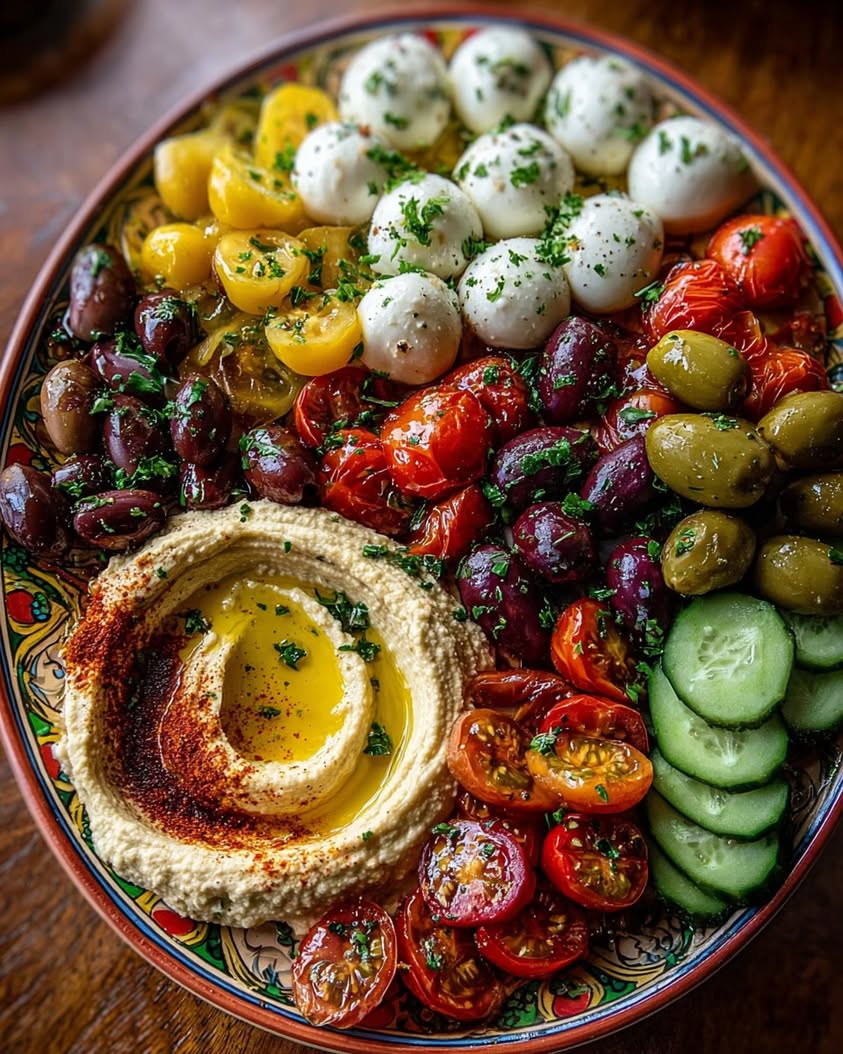
Craft a Stunning Mediterranean Mezze Platter with Hummus & Burrata: Your Ultimate Guide to Effortless Entertaining
Imagine a vibrant, sun-drenched table overflowing with colorful dips, glistening olives, and creamy cheeses. This is the magic of a Mediterranean mezze platter, a culinary tradition built for sharing and celebration. Today, we are crafting a stunning Mediterranean Mezze Platter with Hummus & Burrata, a centerpiece that transforms simple ingredients into an unforgettable experience. This guide will walk you through every step, ensuring your platter is not only beautiful but also bursting with authentic flavors.
Furthermore, a mezze platter is the ultimate expression of relaxed, communal dining. It invites conversation and encourages guests to explore different taste combinations at their own pace. Our version focuses on a perfect balance of textures and flavors, from the earthy smoothness of homemade hummus to the luxurious burst of fresh burrata cheese. Ultimately, this platter is about more than food; it is about creating a moment of connection and joy around your table.
Additionally, this Mediterranean Mezze Platter with Hummus & Burrata is incredibly versatile. You can easily tailor it to any season or dietary preference. Whether you are hosting a casual backyard gathering, an elegant cocktail party, or simply treating your family to a special weekend lunch, this platter delivers. Let us dive into the art of assembling a shareable feast that looks as incredible as it tastes.
Quick Recipe Highlights
- Flavor Profile: This platter offers a harmonious symphony of tastes. You will experience the nutty, garlicky depth of classic hummus, the briny punch of mixed olives, and the rich, milky sweetness of burrata. Fresh herbs and a drizzle of high-quality olive oil tie everything together with a bright, fragrant finish.
- Texture: The contrast in textures is key to the experience. Expect the velvety smoothness of hummus against the creamy, soft interior of burrata. Then, you will encounter the satisfying chew of warm pita bread, the juicy pop of cherry tomatoes, and the firm, salty bite of various olives.
- Aroma: The aroma is instantly inviting. Freshly chopped parsley and dill provide a green, herbal scent. Meanwhile, the toasted cumin in the hummus and the fruity notes of extra virgin olive oil create a warm, comforting fragrance that promises deliciousness.
- Visual Appeal: Presentation is paramount. A large wooden board or slate platter becomes a canvas for food art. Strategically place mounds of vibrant green hummus, white burrata, and ruby-red tomatoes. Subsequently, add pops of purple from Kalamata olives and green from Castelvetranos for a feast that delights the eyes first.
- Skill Level Needed: This recipe requires absolutely zero advanced cooking skills. It is an exercise in assembly and thoughtful presentation. The most complex task is making hummus from scratch, which is simply a matter of blending ingredients. Therefore, it is perfect for beginners and seasoned hosts alike.
- Special Equipment: You need only a few basic kitchen tools. A food processor or high-speed blender is ideal for achieving ultra-smooth hummus. Additionally, a good chef’s knife and cutting board are essential for prepping vegetables. Finally, a large serving board or platter is the foundation for your beautiful display.
Recipe Overview
- Difficulty Level: We rate this Mediterranean Mezze Platter with Hummus & Burrata as “Easy” for several reasons. First, there is no actual cooking involved unless you choose to warm your pita bread. The process is entirely about preparation and artistic arrangement. Consequently, it removes the stress of timing a hot meal, allowing you to focus on presentation and guest interaction.
- Category: This dish falls perfectly into multiple categories. It is an exemplary appetizer or starter for a larger meal. Moreover, it can easily serve as a light lunch or dinner on its own, especially when paired with a hearty grain salad. It is also the quintessential party food for any social gathering, from game day to book club.
- Cuisine: This platter draws direct inspiration from the broader Mediterranean and Middle Eastern culinary traditions. Mezze, meaning “taste” or “snack,” is a style of dining featuring small dishes, popular from Greece and Turkey to Lebanon and beyond. Our version incorporates classic elements like hummus and olives while adding a modern Italian touch with burrata.
- Cost: Creating this platter can be very cost-effective. Many components, like cucumbers and cherry tomatoes, are inexpensive. The cost fluctuates based on your choice of cheese and olives. For instance, using a premium burrata and imported olives will increase the price, while domestic options keep it budget-friendly. Overall, it offers high perceived value for a reasonable investment.
- Season: This Mediterranean Mezze Platter with Hummus & Burrata is truly a year-round star. However, it shines brightest in spring and summer when fresh, local produce is at its peak. The bright, fresh flavors complement warm weather perfectly. Conversely, in fall and winter, it brings a welcome burst of color and freshness to the table.
- Occasion: Its versatility makes it suitable for countless occasions. It is ideal for casual weekend entertaining, holiday parties, potlucks, or even a romantic picnic. Because it is served at room temperature, it travels well and does not require last-minute fuss. Essentially, it is a foolproof choice for any event where sharing and conversation are the main goals.
Why You’ll Love This Recipe
First and foremost, the taste and texture appeal of this Mediterranean Mezze Platter with Hummus & Burrata is undeniable. Every bite offers a new combination. You might drag a crisp cucumber slice through creamy hummus, then top it with a fragment of salty olive. Next, you could tear a piece of warm pita and use it to scoop up a luscious bite of burrata with a sun-dried tomato. This interactive, customizable eating experience keeps your palate engaged and delighted from start to finish. The balance of creamy, crunchy, briny, and fresh is meticulously designed for maximum enjoyment.
From a convenience standpoint, this recipe is a host’s dream. You can prepare almost every component ahead of time. Make the hummus a day in advance; its flavors only improve. Wash and chop your vegetables hours before your guests arrive. Then, when it is time to serve, simply arrange everything beautifully on your board. This approach eliminates the frantic last-minute cooking that often accompanies entertaining. Instead, you can relax and enjoy your own party, confident that your stunning Mediterranean Mezze Platter with Hummus & Burrata is ready to impress.
Nutritionally, this platter is a powerhouse of good-for-you ingredients. Chickpeas in the hummus provide plant-based protein and fiber. The vegetables are loaded with vitamins, antioxidants, and hydration. Olive oil and olives contribute heart-healthy monounsaturated fats. Even the burrata, while indulgent, offers calcium and protein. When enjoyed as part of a balanced diet, this spread supports overall wellness. It encourages eating a variety of whole foods in a mindful, shared setting, which is a cornerstone of the famously healthy Mediterranean diet.
The social and entertaining value of a mezze platter cannot be overstated. It naturally becomes the focal point of any gathering. Guests gather around, chatting and pointing as they build their perfect bites. It breaks the ice and encourages interaction in a way that a plated meal often does not. This Mediterranean Mezze Platter with Hummus & Burrata is designed for sharing, fostering a sense of community and connection. It tells your guests that the evening is about leisurely enjoyment and good company, not just a rushed meal.
Finally, this platter is remarkably cost-effective and accessible. You have complete control over the budget. You can splurge on one special item, like an aged balsamic glaze or fancy marinated olives, and save on others, like bell peppers or carrots. Most ingredients are readily available at any standard grocery store. Furthermore, the recipe is infinitely adaptable. If you cannot find burrata, use fresh mozzarella. If someone dislikes olives, add more nuts or roasted peppers. This flexibility ensures you can create a magnificent spread without stress or excessive expense.
Historical Background and Cultural Significance
The tradition of mezze has deep roots stretching across the Eastern Mediterranean and Middle East. Its origins are often traced to the Persian Empire, where the concept of “mazzeh” referred to a taste or snack. This practice of serving small dishes before a meal traveled and evolved through trade routes and cultural exchanges. In countries like Greece, Turkey, Lebanon, and beyond, mezze became more than an appetizer; it transformed into a leisurely dining experience unto itself. These small plates allow for prolonged conversation and socialization, reflecting a cultural priority on community and hospitality.
Cultural importance of mezze is immense. It is the centerpiece of social life in many regions. In a Lebanese “mouneh,” or in a Greek taverna, mezze represents generosity and abundance. The host’s status is often reflected in the variety and quality of the spread. Sharing food from a common platter signifies trust, friendship, and equality among diners. This Mediterranean Mezze Platter with Hummus & Burrata carries on this venerable tradition. It modernizes the concept while honoring its core principle: that the best meals are those shared slowly and joyfully with others.
The evolution of the mezze recipe is a story of adaptation and fusion. Originally, these spreads featured locally available ingredients: olives from the groves, cheese from nearby shepherds, herbs from the garden, and bread baked in communal ovens. As global trade expanded, new ingredients were incorporated. Tomatoes and peppers from the New World, for example, became staples. Today, modern interpretations like ours freely blend traditions, introducing elements like Italian burrata to the classic Levantine base of hummus and olives. This evolution shows the living, dynamic nature of food culture.
Regional variations of mezze are fascinating. In Greece, you will find tzatziki, dolmades, and taramasalata. In Turkey, the spread might include haydari, sigara borek, and various eggplant dishes. Lebanese mezze is famous for its tabbouleh, baba ghanoush, and kibbeh. Our Mediterranean Mezze Platter with Hummus & Burrata takes a pan-Mediterranean approach. It celebrates the common threads—like dips, cheeses, and marinated vegetables—that unite these cuisines. This approach makes the platter familiar yet exciting, offering a culinary tour of the sun-drenched coasts that inspire it.
Ingredient Deep Dive
Chickpeas (for Hummus): Also known as garbanzo beans, chickpeas are one of the oldest cultivated legumes, with origins in the Middle East over 7,000 years ago. They are a dietary cornerstone across Mediterranean and Indian cuisines. Nutritionally, they are a superstar, packed with plant-based protein, fiber, iron, and folate. For the smoothest hummus, canned chickpeas are perfectly acceptable; just be sure to rinse them well. For an extra-smooth texture, some cooks peel the chickpeas by rubbing them in a towel. You can substitute with canned white beans for a different, but still delicious, twist.
Tahini: This paste made from toasted, ground sesame seeds is the essential, irreplaceable ingredient in authentic hummus. It provides a distinct nutty flavor and creamy richness that balances the chickpeas. Tahini is also rich in healthy fats, calcium, and antioxidants. When selecting tahini, look for a brand with a runny consistency and no added oils or sugars; the ingredient list should just be sesame seeds. Stir the jar thoroughly before using, as the oil naturally separates. Store it in the refrigerator after opening to maintain freshness.
Burrata Cheese: Burrata is a relatively modern Italian invention from the early 20th century. “Burrata” means “buttered,” a hint at its decadent texture. It consists of a delicate mozzarella pouch filled with soft, stringy curds and cream. When you cut into it, this luxurious center spills out. It is best served at room temperature to maximize its creamy texture. Look for burrata that is packed in water and feels soft to the touch. If unavailable, fresh mozzarella (mozzarella di bufala is ideal) is the closest substitute, though you will miss the signature creamy center.
Mixed Olives: Olives are synonymous with the Mediterranean landscape and have been cultivated for over 6,000 years. They symbolize peace and wisdom in many cultures. Including a variety—like meaty Castelvetranos, pungent Kalamatas, and herb-marinated olives—adds complexity to your platter. Olives are a great source of vitamin E and monounsaturated fats. For the best flavor, purchase olives from the antipasto bar where they are stored in brine or oil. Avoid canned, pitted olives, which can be mushy and bland. Before serving, you can quickly marinate them in olive oil, citrus zest, and fresh herbs.
Extra Virgin Olive Oil: This is the liquid gold of the Mediterranean. The term “extra virgin” means the oil is from the first cold pressing of the olives, retaining the most flavor and health benefits. It is rich in polyphenols, antioxidants with anti-inflammatory properties. Use a high-quality bottle for drizzling over the finished platter and hummus, where its peppery, fruity notes will shine. A cheaper, lighter olive oil is fine for blending into the hummus itself. Store olive oil in a cool, dark place to prevent it from becoming rancid.
Common Mistakes to Avoid
- Using Cold Ingredients: Serving hummus and burrata straight from the refrigerator is a common error. Cold temperatures mute flavors and make textures less appealing. Always take your dips and cheese out at least 30 minutes before serving. This allows their true tastes and creamy consistencies to shine.
- Overcrowding the Platter: While abundance is the goal, a cluttered board looks messy and makes it difficult for guests to access items. Instead, arrange components in distinct, intentional groups with small gaps between them. This creates visual appeal and functional ease.
- Skipping the Garnish: A plain mound of hummus or a bare ball of burrata looks unfinished. A simple drizzle of olive oil, a sprinkle of paprika or sumac, and a few fresh herb leaves transform the platter from simple to spectacular. Garnishes add color, flavor, and a professional touch.
- Forgetting Textural Contrast: A platter with only soft items (hummus, burrata, roasted peppers) can feel monotonous. Always include crunchy elements like cucumber slices, radishes, toasted pita chips, or whole nuts. This contrast is key to an exciting eating experience.
- Using Stale or Low-Quality Pita: The bread vessel is crucial. Stale, dry pita is unappealing. Warm fresh pita bread in the oven or on a grill before serving. Alternatively, offer a mix of warm pita and crisp crackers or breadsticks for variety.
- Neglecting Dipping Vessels: Placing hummus directly on a wooden board can make it messy to scoop and can stain the wood. Instead, serve dips in small, shallow bowls or ramekins nestled onto the platter. This contains them and looks more elegant.
- Ignoring Dietary Restrictions: Not everyone eats dairy or gluten. While your Mediterranean Mezze Platter with Hummus & Burrata features cheese, ensure there are plenty of naturally gluten-free and vegan options like vegetables, olives, and hummus. Clearly label items if needed.
- Cutting Everything Too Far in Advance: Pre-cut vegetables can dry out or wilt. Chop sturdy veggies like carrots and bell peppers a few hours ahead, but wait until the last minute to slice cucumbers or fresh herbs to maintain their crispness and vibrant color.
Essential Techniques
Blending Ultra-Smooth Hummus: The key to restaurant-quality hummus is achieving a silky, light texture, not a pasty one. First, ensure your chickpeas are very well-cooked or thoroughly rinsed if canned. Using ice-cold water or aquafaba (the liquid from the can) while blending is the secret. Add it slowly as the food processor runs. The cold liquid helps create a fluffy, emulsified consistency. Process for a full 2-3 minutes; patience is essential. The hummus should be so smooth it holds peaks. Under-blending is the most common pitfall, resulting in a grainy dip.
Balancing Hummus Flavors: Great hummus is about perfect equilibrium. After your initial blend, taste critically. Does it need more salt? More lemon for brightness? More tahini for nutty depth? Adjust in small increments, blending between each addition. Remember, flavors will meld and mellow slightly as it chills. A final drizzle of olive oil on top before serving adds richness and sheen. The visual cue for success is a hummus that is pale, creamy, and lightly textured, not dense or dark.
Arranging a Visually Stunning Platter: This technique is about composition, not just piling food. Start by placing your anchor items: the bowl of hummus and the ball of burrata. Position them off-center for visual interest. Then, build outwards in groups. Create little piles of olives, mounds of vegetables, and stacks of bread. Use the natural colors to create contrast—place green cucumbers near red peppers. Finally, fill empty spaces with small garnishes like herb sprigs or lemon wedges. The goal is a lush, abundant, yet organized display that invites exploration.
Preparing Vegetables for Crudité: The cut of your vegetables affects both presentation and ease of eating. For carrots and cucumbers, slice them on a sharp bias into long, elegant ovals. Radishes can be halved or left whole with a bit of stem for a rustic look. Cherry tomatoes are best kept whole. Always pat vegetables dry after washing to prevent a watery platter. For peak crispness, you can store pre-cut veggies in ice water for an hour before drying and arranging. This technique, called “shocking,” keeps them incredibly fresh and crunchy.
Pro Tips for Perfect Mediterranean Mezze Platter with Hummus & Burrata
Choose a large, neutral-colored board. A wooden cutting board, marble slab, or slate platter provides a beautiful backdrop that makes the food colors pop. Avoid busy patterns that will distract from your culinary creation.
Embrace different heights for visual drama. Place the bowl of hummus on a small inverted dish or cup to give it elevation. This adds dimension and makes the platter look more professional and abundant.
Warm your serving platter slightly. If using a stone or ceramic platter, warm it in a low oven for a few minutes before arranging cold items. This prevents the cheese from getting too cold when it touches the surface.
Season as you go. Lightly salt your sliced cucumbers and tomatoes about 15 minutes before assembling. This draws out a little moisture and intensifies their flavor, making them taste fresher and more vibrant.
Offer a variety of dipping vehicles. Beyond pita, include sliced baguette, sturdy crackers, endive leaves, and even pretzel crisps. This caters to different preferences and dietary needs while adding more texture.
Add one unexpected element. Incorporate a small dish of honey for drizzling over the burrata, a sprinkle of za’atar on the hummus, or a handful of spicy marinated almonds. This surprise item will delight your guests and make your platter memorable.
Keep backup supplies handy. Have extra pita warming in the oven and a small bowl of extra olives in the kitchen. You can quickly refresh the platter as items get eaten without having to disassemble the entire display.
Use herbs as both garnish and ingredient. Do not just sprinkle chopped parsley on top. Leave a few whole sprigs of dill or rosemary on the board for guests to use as aromatic garnishes for their own plates.
Variations and Adaptations
For regional variations, lean into specific Mediterranean cuisines. For a Greek theme, replace the burrata with a block of feta, add tzatziki and dolmades, and use Kalamata olives exclusively. For a Lebanese twist, include baba ghanoush, tabbouleh, and pickled turnips. A Spanish-inspired board could feature manchego cheese, marcona almonds, and padrón peppers. Each variation takes the core concept of a Mediterranean Mezze Platter with Hummus & Burrata and redirects it on a delicious geographic journey.
Seasonal adaptations keep your platter feeling fresh year-round. In summer, highlight heirloom cherry tomatoes, grilled zucchini ribbons, and fresh basil. For fall, incorporate roasted squash hummus, figs, and candied walnuts. Winter calls for heartier items like roasted beet dip, persimmons, and spiced nuts. Spring is perfect for fresh peas, asparagus tips, and edible flowers. This approach ensures your Mediterranean Mezze Platter with Hummus & Burrata always reflects the best produce available.
Dietary modifications are straightforward. For a vegan platter, omit the burrata and add a vegan cheese alternative or a big scoop of dairy-free tzatziki made with coconut yogurt. Ensure all dips are vegan (check the tahini brand). For a gluten-free board, serve with gluten-free crackers, cucumber rounds, and rice cakes instead of pita. For a lower-carb or keto version, focus on high-fat items like olives, cheeses, and nuts, and use sliced bell peppers and celery as dippers instead of bread.
Flavor variations can personalize your hummus. Blend in roasted red peppers, sun-dried tomatoes, or a handful of fresh herbs like cilantro or dill for a green hummus. Add a spoonful of harissa for a spicy kick or some beetroot for a stunning pink color and earthy sweetness. The base recipe for your Mediterranean Mezze Platter with Hummus & Burrata is a perfect canvas for your own creative flavor experiments.
Serving and Presentation Guide
Begin plating with your largest items. Place the bowl of hummus and the whole burrata ball first, positioning them asymmetrically. This establishes the foundation. Next, arrange the olives in small, low-profile bowls or simply pile them in a corner of the board. Then, artfully group the vegetables by type, creating little mounds of color. Fan out cucumber slices or radish halves for a polished look. Finally, fill any gaps with bread, nuts, and herb sprigs. The final arrangement should look abundant but not chaotic, with a natural flow that guides the eye around the platter.
Garnishing is the final, crucial step. Drizzle high-quality olive oil over the hummus and burrata. Sprinkle the hummus with paprika, sumac, or a dusting of za’atar. Place a few whole basil or mint leaves on the burrata. Add a twist of freshly cracked black pepper over everything. Scatter some toasted pine nuts or sesame seeds for added texture. These small touches add layers of flavor, color, and sophistication, elevating your Mediterranean Mezze Platter with Hummus & Burrata from homemade to chef-worthy.
Consider traditional and modern accompaniments. Traditionally, mezze is served with anise-flavored spirits like ouzo or arak. For a modern touch, offer a crisp rosé wine, a citrusy craft beer, or a sparkling non-alcoholic beverage. Small side plates, cocktail napkins, and plenty of serving utensils are essential. Provide small spoons for the dips and cheese knives for the burrata. Encourage guests to mix and match flavors, perhaps suggesting a perfect bite: a cracker with hummus, a piece of burrata, and a sliver of olive.
Wine and Beverage Pairing
Wine pairings for a Mediterranean Mezze Platter with Hummus & Burrata should focus on high-acid, versatile wines that can cut through richness and complement a range of flavors. A dry Greek Assyrtiko or a Spanish Albariño, with their crisp citrus and mineral notes, are exceptional choices. A light-bodied, fruity Gamay or a Provençal rosé also works beautifully. For red wine lovers, a chilled, low-tannin red like a Beaujolais or a Frappato will not overpower the delicate flavors. The key is to avoid overly oaky or heavy wines that would clash with the fresh, vibrant components of the platter.
Non-alcoholic alternatives can be just as sophisticated. A sparkling lemonade or limeade provides refreshing acidity. Iced herbal teas, like mint or hibiscus, offer complex flavors without caffeine. For a more authentic touch, serve Ayran, a savory Turkish yogurt drink, or a glass of tart pomegranate juice. These beverages cleanse the palate between bites and enhance the Mediterranean experience. Always ensure drinks are well-chilled and served in attractive glassware to match the elegant presentation of your platter.
Storage and Shelf Life
Proper storage is crucial for leftovers. First, disassemble the platter. Store hummus in an airtight container in the refrigerator for up to 5 days. If a thin layer of liquid forms on top, simply stir it back in. Any leftover burrata should be consumed within 24 hours; it does not keep well once opened. Store it in its original water-filled container or submerged in fresh water in a sealed container. Cut vegetables should be stored separately in airtight containers with a paper towel to absorb moisture, lasting 2-3 days. Olives can be returned to their brine and refrigerated for weeks.
Understanding signs of spoilage keeps you safe. Discard hummus if it develops an off smell, visible mold, or an excessively sour taste. Burrata is very perishable; if it smells strongly sour or ammonia-like, or if the texture becomes slimy, throw it away. Vegetables that have become slimy or wilted beyond recognition should be composted. When in doubt, follow the golden rule: if you are uncertain about the freshness of any component of your Mediterranean Mezze Platter with Hummus & Burrata, it is better to err on the side of caution and discard it.
Make Ahead Strategies
You can prepare almost the entire Mediterranean Mezze Platter with Hummus & Burrata in advance. The hummus can be made 2-3 days ahead; its flavors improve with time. Store it in the fridge in a sealed container. Vegetables like carrots, bell peppers, and radishes can be washed, cut, and stored in separate containers with damp paper towels for up to a day. Even the olives can be marinated a day ahead. The key to a successful make-ahead strategy is to keep components separate until just before serving. This prevents sogginess and maintains the integrity of each item’s texture and flavor.
On the day of your event, follow a simple assembly timeline. Take the hummus and burrata out of the refrigerator 30-60 minutes before serving to come to room temperature. Slice any last-minute veggies like cucumbers. Warm your bread. Then, about 15 minutes before guests arrive, assemble your platter on the board. This last-minute assembly ensures everything looks fresh, vibrant, and inviting. Having a plan allows you to be a calm, present host, enjoying the party you worked so hard to create.
Scaling Instructions
Scaling this platter is simple because it is modular. For a smaller gathering, halve the recipe easily. Use one can of chickpeas for the hummus, one ball of burrata, and reduce vegetable quantities by half. The assembly process remains identical, just on a smaller board. For a larger crowd, double or triple the components. Consider creating multiple themed platters instead of one gigantic one—a “Dip Board” with multiple hummus varieties and a “Cheese & Olive Board.” This approach is more manageable and allows for better traffic flow around the food table.
When scaling up, pay attention to equipment and timing. You may need to make hummus in batches if your food processor is small. Ensure you have enough serving platters, bowls, and utensils. The prep time will increase linearly, so start earlier. The beauty of the Mediterranean Mezze Platter with Hummus & Burrata is its flexibility; it can elegantly serve an intimate dinner for two or become the centerpiece of a party for twenty with careful planning.
Nutritional Deep Dive
This platter offers a balanced macro profile. The hummus provides a combination of complex carbohydrates and plant-based protein from the chickpeas, along with healthy fats from tahini and olive oil. The burrata adds dairy-based protein and fat. The vegetables contribute minimal calories but are rich in micronutrients and fiber. The olives and olive oil are excellent sources of monounsaturated fats, which are beneficial for heart health. When enjoyed in moderation, this Mediterranean Mezze Platter with Hummus & Burrata fits well into a balanced diet, providing sustained energy from its mix of macronutrients.
Micronutrient analysis reveals a wealth of vitamins and minerals. Chickpeas are high in iron, folate, and phosphorus. Tahini is a good source of calcium, copper, and manganese. The variety of vegetables delivers vitamins A, C, and K, along with potassium. Olive oil is rich in vitamin E and antioxidants. Together, these components support various bodily functions, including immune health, bone strength, and inflammation reduction. This nutritional diversity is a hallmark of the Mediterranean diet, celebrated for its association with longevity and reduced disease risk.
Dietary Adaptations
For a gluten-free adaptation, the core of this Mediterranean Mezze Platter with Hummus & Burrata is already friendly. Simply replace the pita bread with gluten-free crackers, toasted gluten-free bread slices, or use vegetable “chips” like bell pepper strips and endive leaves as dippers. Ensure any store-bought dips or marinated items are certified gluten-free. This adaptation is simple and ensures everyone can enjoy the spread without concern.
Creating a vegan version is equally straightforward. Omit the burrata cheese. In its place, consider a vegan cheese alternative that softens at room temperature, or add a different protein-rich element like marinated baked tofu cubes or a scoop of vegan walnut “feta.” Double-check that your hummus recipe uses vegan ingredients (some store-bought tahini may have cross-contamination warnings). With these swaps, you maintain the spirit and abundance of the platter while making it entirely plant-based.
Troubleshooting Guide
If your hummus is too thick or grainy, the solution is almost always more liquid and more blending. With the food processor running, slowly add ice water, a tablespoon at a time, until it reaches a smooth, creamy consistency. Blend for a full 3-5 minutes. The friction from prolonged blending actually helps warm and soften the chickpea paste, leading to a smoother result. If it is too thin, you can thicken it by blending in a handful of extra chickpeas or a spoonful more of tahini.
If your platter looks sparse or unbalanced, do not panic. Fill visual gaps with inexpensive, colorful items. A handful of green grapes, a pile of whole nuts, a few dried apricots, or extra lemon wedges can add volume and color. Fresh herb sprigs are another excellent filler. Remember, abundance is key to the mezze aesthetic. If you run out of a key item like pita, quickly toast some sliced baguette or cut more cucumber rounds. Flexibility is your greatest asset when presenting a Mediterranean Mezze Platter with Hummus & Burrata.
Recipe Success Stories
Community feedback on this Mediterranean Mezze Platter with Hummus & Burrata consistently highlights its reliability as a crowd-pleaser. Many home cooks report that it has become their go-to dish for last-minute guests because it comes together from pantry staples and fresh finds. One reader shared how she used the basic template for her daughter’s graduation party, creating three different platters to feed over 50 people with minimal stress. Another found that introducing this interactive style of eating helped her picky eater children try new vegetables because they enjoyed building their own bites.
Photography tips from successful makers emphasize natural light. They recommend shooting the platter near a window but out of direct sunlight to avoid harsh shadows. Shooting from directly above (an overhead “flat lay”) captures the full, beautiful arrangement. Getting a close-up shot of a hand dipping a piece of bread into the creamy burrata or hummus adds a dynamic, inviting element. The vibrant colors of this Mediterranean Mezze Platter with Hummus & Burrata make it a naturally photogenic subject, perfect for sharing your success on social media.
Frequently Asked Questions
Q: Can I make the hummus without a food processor?
A: Yes, but it requires more effort. You can use a high-powered blender, though you may need to stop and scrape down the sides frequently. For a truly traditional method, you can use a mortar and pestle to mash the chickpeas into a paste before whisking in the other ingredients. The texture will be more rustic, but the flavor will still be excellent.
Q: How do I prevent the vegetables from making the board watery?
A: The key is to thoroughly dry all washed vegetables with a clean kitchen towel or paper towels before arranging them. For extra insurance, you can arrange cut vegetables like cucumbers and tomatoes on a separate small plate or napkin and then place that on the board, containing any residual moisture.
Q: What is the best way to warm pita bread?
A: For soft, warm pita, wrap stacks of 4-5 pitas in aluminum foil and warm in a 300°F oven for 10-15 minutes. For crisp pita chips, brush pita wedges with olive oil, sprinkle with salt, and bake at 400°F for 8-10 minutes until golden. Both methods work well for your Mediterranean Mezze Platter with Hummus & Burrata.
Q: Can I use store-bought hummus?
A: Absolutely. To elevate store-bought hummus, transfer it to a bowl, make a well in the
Print
Mediterranean Mezze Platter with Hummus, Olives & Burrata
- Total Time: 15 minutes
- Yield: 4
Description
A vibrant and shareable platter featuring creamy hummus, briny olives, luscious burrata, and an array of Mediterranean accompaniments, perfect for appetizers or light dining.
Ingredients
- 1 cup store-bought or homemade hummus
- 8 oz burrata cheese
- 1 cup mixed Mediterranean olives (such as Kalamata and Castelvetrano)
- 1 cup cherry tomatoes, halved
- 1 English cucumber, sliced
- 1/2 red onion, thinly sliced
- 1/4 cup fresh mint leaves
- 2 tbsp extra virgin olive oil
- 1 tbsp lemon juice
- 1 tsp za'atar seasoning
- Sea salt and black pepper to taste
- Warm pita bread or flatbread for serving
Instructions
- Arrange the hummus in a shallow bowl or directly on a large platter. Drizzle with a little olive oil and sprinkle with za'atar.
- Place the burrata in the center of the platter. Gently tear it open to expose the creamy interior.
- Scatter the olives, cherry tomatoes, cucumber slices, and red onion around the platter. Tuck fresh mint leaves throughout.
- Drizzle the entire platter with the remaining olive oil and lemon juice. Season lightly with sea salt and black pepper.
- Serve immediately with warm pita bread or flatbread on the side for scooping and dipping.
Notes
You can customize the seasonings to taste.
- Prep Time: 15 minutes
- Cook Time: 0 minutes
- Method: Appetizer
- Cuisine: Mediterranean