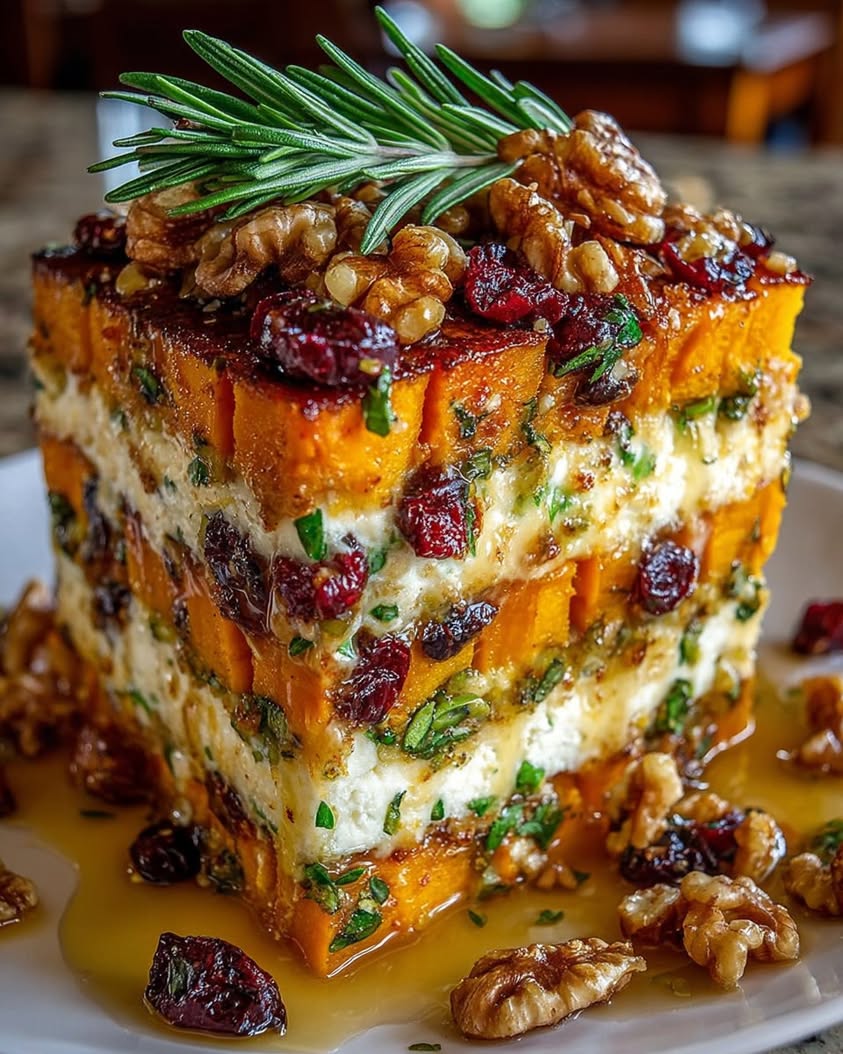
Layered Sweet Potato, Butternut Squash, Carrot Lasagna with Feta, Walnuts, and Cranberry-Honey Glaze: A Showstopping Vegetarian Centerpiece
This Layered Sweet Potato, Butternut Squash, Carrot Lasagna with Feta, Walnuts, and Cranberry-Honey Glaze transforms humble root vegetables into a stunning centerpiece that earns a spot on every holiday table. Golden ribbons of sweet potato, silky butternut squash, and tender carrot slices stack between no-boil lasagna noodles, while salty feta and toasted walnuts add bold contrast. A glossy cranberry-honey glaze drizzled over the top brings a sweet-tart finish that makes every bite memorable.
If you love vegetable-forward comfort food, this layered veggie lasagna with feta and cranberry glaze will quickly become a family favorite. The combination of roasted sweet potato, butternut squash, and carrot creates deep caramelized flavor, and the feta-walnut filling delivers richness without heaviness. Meanwhile, the cranberry-honey glaze ties everything together with bright acidity and natural sweetness. This is the kind of recipe that convinces skeptics that meatless meals can feel indulgent and celebratory.
Best of all, this vegetable lasagna recipe comes together with simple techniques and everyday ingredients. You do not need advanced culinary training to nail it, and you can prepare most components ahead of time. Whether you serve it for Thanksgiving, Christmas, a Sunday supper, or a dinner party, this sweet potato butternut squash lasagna delivers impressive results every single time. The layers look beautiful on the plate, the aroma fills the kitchen, and the flavors balance sweet, salty, creamy, and tangy notes in perfect harmony.
Quick Recipe Highlights
- Flavor Profile: Sweet roasted vegetables meet salty feta and earthy walnuts, while a cranberry-honey glaze adds bright tartness. The overall taste balances savory depth with a gentle sweetness that keeps every bite interesting.
- Texture: Tender pasta sheets soften against creamy squash and firm sweet potato slices. Crunchy toasted walnuts and crumbled feta add contrast, and the glaze brings a silky finish that coats the tongue.
- Aroma: Warm honey, tart cranberry, and roasted vegetables fill the kitchen as the lasagna bakes. Notes of nutmeg, sage, and toasted nuts deepen the aroma and signal comfort food at its finest.
- Visual Appeal: Layers of orange, gold, and cream create a striking cross-section when sliced. The ruby-red glaze drizzled on top adds a jewel-like finish that looks stunning on any table.
- Skill Level Needed: This recipe suits confident home cooks who can slice vegetables evenly and layer ingredients carefully. Basic knife skills and patience with assembly carry you through, and the oven handles the rest.
- Special Equipment: You need a 9×13 inch baking dish, a sharp chef’s knife or mandoline, and a skillet for toasting walnuts. Parchment paper helps with cleanup, and a small saucepan works for the glaze.
Recipe Overview
- Difficulty Level: This layered vegetable lasagna rates intermediate because it involves multiple components, including roasted vegetables, a feta-walnut filling, and a stovetop glaze. However, each step remains straightforward, and no single technique requires professional skill. Home cooks with some experience will find the process rewarding rather than stressful. First-timers can succeed too as long as they read through the full recipe before starting.
- Category: This dish works as a vegetarian main course for dinner, a holiday centerpiece, or a hearty side for large gatherings. It also shines as meal-prep comfort food that reheats beautifully throughout the week. Serve it as the star of a meatless Monday spread or alongside roasted proteins for a mixed table.
- Cuisine: The recipe draws on Italian lasagna traditions and layers in American holiday flavors. Sweet potato, butternut squash, and cranberry reflect New England and Southern influences, while feta brings a Mediterranean touch. The result is a globally inspired comfort dish that feels right at home in any U.S. kitchen.
- Cost: Expect moderate costs since root vegetables and pasta remain affordable year-round. Feta and walnuts add the most expense, and fresh cranberries appear cheaply during fall and winter. Overall, this lasagna feeds eight people generously for a reasonable per-serving price.
- Season: Fall and winter suit this recipe best because sweet potatoes, butternut squash, and cranberries peak in those months. Cooler weather also makes a baked, warming casserole especially appealing. You can make it year-round, though the flavors feel most natural during the holidays.
- Occasion: Serve this lasagna for Thanksgiving, Christmas dinner, or New Year’s Eve celebrations where a vegetarian main matters. It also fits dinner parties, potlucks, and Sunday family dinners. The gorgeous layers and festive glaze make it feel special enough for guests yet cozy enough for weeknights.
Why You’ll Love This Recipe
First, the taste and texture make this layered veggie lasagna with feta and cranberry glaze unforgettable. Roasting the sweet potato, butternut squash, and carrot concentrates their natural sugars and creates caramelized edges that taste almost sweet. The salty feta melts into the layers and balances that sweetness beautifully. Meanwhile, the toasted walnuts add a satisfying crunch and a nutty depth that keeps each bite dynamic. Finally, the cranberry-honey glaze delivers a tangy, glossy finish that ties every layer together with bright, seasonal flavor.
Second, convenience makes this vegetable lasagna recipe a practical choice for busy cooks. No-boil noodles eliminate a whole pot of boiling water, and you can roast the vegetables ahead of time. The feta-walnut mixture comes together in minutes, and the glaze simmers on the stove while the oven preheats. Cleanup stays manageable because everything bakes in one dish. You gain a stress-free path to an impressive meal without spending all day in the kitchen.
Third, the nutritional advantages give this dish real staying power. Sweet potato and butternut squash deliver beta-carotene, fiber, and potassium, and carrots add vitamin A and antioxidants. Feta contributes calcium and protein, while walnuts supply omega-3 fatty acids. Because the lasagna is vegetable-forward, it offers a lighter feel than traditional meat lasagna without sacrificing satisfaction. You can enjoy a generous portion and feel nourished rather than weighed down.
Fourth, social and entertaining value makes this recipe a host’s secret weapon. The striking layered cross-section and ruby-red glaze create a wow moment when you slice into it. Vegetarian guests finally get a main dish that feels as celebratory as the turkey or roast. The dish also travels well to potlucks and holds beautifully on a buffet. Serve it once, and guests will request it at every gathering.
Fifth, cost-effectiveness and accessibility keep this sweet potato butternut squash lasagna within reach for most households. Root vegetables rank among the cheapest produce available, especially in season. No-boil lasagna noodles cost little, and a modest amount of feta and walnuts goes a long way. The recipe uses pantry staples like honey, cinnamon, and sage. You get a holiday-worthy centerpiece without a premium grocery bill.
Historical Background and Cultural Significance
The origin story of this dish blends Italian lasagna tradition with American harvest cooking. Lasagna dates back centuries in Italy, where cooks layered pasta with cheese, sauce, and seasonal ingredients. Italian immigrants brought those traditions to the United States, where home cooks adapted them to local produce. Sweet potatoes, squash, and cranberries, all native to the Americas, eventually joined the layered format. This recipe represents that ongoing evolution, mixing Old World technique with New World ingredients.
Cultural importance shines through every layer because this lasagna celebrates the American harvest table. Sweet potato and butternut squash hold honored places in Southern and New England cooking respectively. Cranberries carry deep ties to Indigenous foodways and Thanksgiving traditions. Meanwhile, feta and walnuts nod to Mediterranean kitchens that prize contrasts of salty and sweet. When you serve this dish, you participate in a long conversation about how cultures share and reshape food.
The evolution of the recipe reflects modern eating habits as well. As plant-based eating grew in popularity, cooks began reimagining classic comfort foods without meat. Vegetable lasagnas moved from the sidelines to the center of the plate. Roasting techniques replaced simple boiling to build deeper flavor. Glazes like cranberry-honey emerged from holiday sauce traditions and found new life as finishing touches. This vegetable lasagna recipe captures that creative, health-conscious moment in home cooking.
Regional variations flourish across the country. In the South, cooks might add pecans instead of walnuts and a pinch of cayenne for heat. New England kitchens lean into cranberry flavor with extra glaze and a hint of maple. West Coast versions sometimes swap feta for goat cheese and add greens like kale or spinach. The Mediterranean influence grows stronger in some households through herbs like oregano and thyme. Every region leaves its fingerprint while keeping the sweet potato butternut squash lasagna spirit intact.
Ingredient Deep Dive
Sweet potatoes anchor this layered veggie lasagna with feta and cranberry glaze through their natural sweetness and vivid orange color. This root vegetable originated in Central and South America and spread worldwide centuries ago. Cultures from Africa to Asia to the American South built signature dishes around it. Nutritionally, sweet potatoes deliver beta-carotene, vitamin C, fiber, and potassium. When you shop, choose firm, smooth potatoes without soft spots or sprouts, and store them in a cool, dark place for up to a month. If you lack sweet potatoes, butternut squash or pumpkin makes a solid substitute.
Sweet potatoes also deserve attention for their versatility in layered cooking. Slicing them thin helps them cook evenly between pasta sheets, and roasting first deepens their flavor. Their starch content adds body to the lasagna and helps it hold together when sliced. Because they brown beautifully, they contribute visual appeal as well. Home cooks prize sweet potatoes for how well they absorb spices like cinnamon, nutmeg, and sage. Each of those spices appears in this recipe and amplifies the vegetable’s natural character.
Butternut squash brings silky texture and mellow sweetness to this vegetable lasagna recipe. Indigenous to North America, it became a staple of colonial and Native American cooking alike. Today it stars in soups, roasts, and casseroles across the country. The squash supplies vitamin A, vitamin C, fiber, and antioxidants, and its low calorie count suits lighter eating. Select a squash that feels heavy for its size with matte, unblemished skin, and store it whole in a cool room for up to three months. Frozen cubed squash or pumpkin puree works well when fresh squash is unavailable.
Butternut squash also earns praise for how gracefully it blends into layered dishes. When roasted, its edges caramelize and its interior turns creamy, almost like a sauce. That creaminess reduces the need for heavy cheese or cream in the lasagna. The squash’s mild flavor accepts warm spices and complements the stronger feta and cranberry notes. Cooks appreciate that one squash yields plenty of slices for a full pan. Its golden color also brightens the assembled layers and makes the final presentation glow.
Carrots add earthy sweetness and structural support to each layer of this sweet potato butternut squash lasagna. These root vegetables have fed humans for thousands of years across Europe and Asia. They reached the Americas during colonization and quickly became a garden staple. Carrots provide beta-carotene, fiber, and vitamin K, and they rank among the most affordable vegetables at any market. Choose firm, bright carrots with crisp texture, and store them in the refrigerator crisper for weeks. Parsnips offer a close substitute with a slightly sweeter, peppery edge.
Carrots also play an underrated role in layered cooking. Thin slices create neat, even rows that stack cleanly with the other vegetables. Their firmer texture holds shape during baking, which keeps the lasagna’s structure intact. Their sweetness deepens when roasted and pairs naturally with the honey in the glaze. Cooks value carrots for their year-round availability and consistent quality. A single bunch often covers the entire recipe, which keeps prep simple.
Feta cheese delivers the salty, tangy counterpoint that makes this layered veggie lasagna with feta and cranberry glaze so compelling. This brined cheese originated in Greece and has seasoned Mediterranean cooking for millennia. Its crumbly texture and bold flavor appear in salads, pastries, and baked dishes worldwide. Feta supplies calcium, protein, and vitamin B12, though its sodium content calls for moderate portions. Buy blocks packed in brine for the best flavor, and store them submerged in the refrigerator. Goat cheese or ricotta salata make reasonable substitutes if needed.
Feta also shines because it holds its identity inside a baked dish. Unlike mild cheeses that disappear into the background, feta stays salty and distinct in every bite. It melts just enough to bind layers without turning rubbery. The contrast between feta and the sweet vegetables keeps the palate engaged. Cooks love how a modest amount of feta flavors an entire pan. Its briny punch pairs especially well with the tart cranberry-honey glaze.
Walnuts contribute crunch, richness, and earthy depth to this vegetable lasagna recipe. These nuts have grown wild across Europe and Asia for thousands of years and later became a California crop. Cultures from Persia to France to the American South feature walnuts in both savory and sweet dishes. Nutritionally, walnuts lead all nuts in omega-3 fatty acids and also provide protein and antioxidants. Choose plump, lightly colored halves without a bitter smell, and store them in the freezer to prevent rancidity. Pecans or toasted pumpkin seeds work well as substitutes.
Walnuts earn their place through texture as much as flavor. Toasting them awakens their oils and deepens their nutty character. Scattered between layers, they add a pleasant surprise that breaks up the softness of the vegetables and cheese. Their slight bitterness balances the glaze’s sweetness. Cooks appreciate that walnuts remain affordable compared with many specialty nuts. A small handful transforms the entire dish.
Fresh cranberries and honey form the cranberry-honey glaze that crowns this sweet potato butternut squash lasagna. Cranberries are one of few fruits native to North America and hold deep ties to Indigenous foodways and Thanksgiving tables. Honey has sweetened human food since ancient times and varies in flavor by floral source. Cranberries deliver vitamin C and antioxidants, and honey adds natural sweetness with trace minerals. Select firm, glossy cranberries and refrigerate them for weeks, while honey keeps in the pantry indefinitely. Frozen cranberries or cranberry sauce make workable substitutes.
The glaze matters because it finishes the dish with brightness and shine. Simmering cranberries with honey softens their tartness and creates a pourable, jewel-toned syrup. Drizzling it over the baked lasagna adds color, aroma, and a tangy counterpoint to the rich layers. Cooks love that the glaze takes only minutes yet looks and tastes impressive. A little orange zest or cinnamon can deepen the flavor. This simple finishing touch elevates the entire recipe from good to unforgettable.
Common Mistakes to Avoid
- Slicing vegetables unevenly causes some pieces to turn mushy while others stay raw. Use a mandoline or a sharp knife and aim for consistent quarter-inch slices. Even slices cook at the same rate and create neat, stable layers.
- Skipping the roasting step robs the dish of caramelized flavor. Roasting concentrates sweetness and drives off excess moisture that could make the lasagna soggy. Give the vegetables time in a hot oven before assembly.
- Adding too much liquid leads to a soupy, collapsed lasagna. Drain any excess moisture from roasted vegetables and avoid overfilling the pan. The cheese and glaze supply plenty of richness without extra sauce.
- Undercooking the lasagna leaves noodles firm and layers cold in the center. Cover with foil for most of the bake, then uncover near the end for browning. A knife should slide through the center with no resistance.
- Rushing the rest period causes layers to slide apart when sliced. Let the lasagna rest fifteen to twenty minutes after baking. This allows the cheese to set and the layers to bind.
- Burning the walnuts turns their flavor bitter and acrid. Toast them over medium heat and stir constantly, removing them as soon as they smell nutty. They will continue to darken slightly off the heat.
- Overcooking the cranberry glaze creates a thick, sticky syrup that clumps instead of drizzles. Simmer gently until the berries burst and the mixture coats a spoon. Remove it from the heat before it thickens too much.
- Using cold cheese straight from the refrigerator prevents even melting. Let feta come to room temperature before crumbling and layering it. Room-temperature cheese melts smoothly and distributes flavor more evenly.
- Under-seasoning the vegetables leaves the whole dish flat. Season each layer of sweet potato, squash, and carrot with salt, pepper, and warm spices. Taste as you go and adjust before assembly.
- Baking in the wrong pan size throws off the layering and timing. Use a true 9×13 inch dish with deep sides. A smaller pan overflows, and a larger one dries out the edges.
Essential Techniques
Even vegetable slicing stands as the foundation of this layered veggie lasagna with feta and cranberry glaze. Uniform thickness guarantees that sweet potato, butternut squash, and carrot cook at the same rate. Master this by using a mandoline set to a quarter inch, or guide a sharp chef’s knife with your knuckles. Work slowly and keep your fingers curled away from the blade. Visual cues for success include translucent, even slices that stack flat without wobbling. Uneven slices cause raw patches or mushy spots that ruin the texture of the whole dish.
Roasting the vegetables ranks as the second essential technique because it builds flavor and controls moisture. High heat caramelizes natural sugars and gives the vegetables a deeper, sweeter taste. Toss the slices with olive oil, salt, and spices, spread them in a single layer, and roast at 425°F until tender and browned at the edges. Avoid crowding the pan, which steams instead of roasts. You will know the vegetables are ready when they bend easily and show golden-brown spots. This step also removes excess water so the finished lasagna holds its shape.
Toasting walnuts properly adds a layer of nutty complexity that defines this vegetable lasagna recipe. Raw walnuts taste flat and slightly bitter compared with toasted ones. Place them in a dry skillet over medium heat and stir constantly for three to five minutes. Watch for glossy oils to appear and a fragrant, toasted aroma. Common pitfalls include walking away and burning the nuts, which ruins their flavor. Visual cues for success include a slightly darker color and a crisp snap when broken.
Proper layering technique keeps this sweet potato butternut squash lasagna stable and beautiful. Start with a thin base of feta mixture to anchor the first noodles, then alternate pasta, vegetables, feta, and walnuts in even distributions. Press each layer gently to eliminate air pockets without crushing the noodles. Common pitfalls include overloading the center and neglecting the corners. Visual cues for success include a level, even surface after each layer. Good layering produces clean slices that show off the colorful cross-section.
Reducing the cranberry-honey glaze demands attention and a gentle hand. Combine cranberries, honey, and a splash of water in a small saucepan over medium heat. Stir until the berries burst and the liquid thickens enough to coat a spoon. Avoid boiling hard, which scorches the sugars. Common pitfalls include undercooking, which leaves a watery glaze, and overcooking, which turns it gummy. Visual cues for success include a glossy, syrupy texture that drizzles in ribbons.
The resting period completes the essential techniques for this layered veggie lasagna with feta and cranberry glaze. After baking, the lasagna needs time for the cheese to set and the layers to bind. Skip this step, and slices collapse on the plate. Let the dish rest fifteen to twenty minutes on a cooling rack before slicing. Common pitfalls include cutting too early out of impatience. Visual cues for success include a firm, settled surface and clean edges when you cut.
Pro Tips for Perfect Layered Sweet Potato, Butternut Squash, Carrot Lasagna
Use a mandoline for the vegetables because it delivers consistent quarter-inch slices in minutes. Uniform slices cook evenly and stack neatly, which makes the layers stable and attractive. If you lack a mandoline, a sharp chef’s knife and a steady hand work well.
Roast the vegetables on separate sheet pans so each type browns properly. Overcrowding steams the vegetables and prevents caramelization. Separate pans also let you pull each vegetable at its ideal doneness.
Season every layer as you build it, not just the vegetables. Sprinkle a little salt and pepper over the noodles and cheese too. Layered seasoning ensures that every bite tastes balanced rather than flat.
Toast the walnuts and cool them fully before layering. Warm walnuts release steam that can make the lasagna soggy. Cooling them also firms their texture so they stay crunchy through baking.
Warm the feta mixture slightly before assembly so it spreads easily. Cold feta tears the delicate no-boil noodles when you spread it. Room-temperature cheese glides across the pasta and distributes evenly.
Cover the lasagna with foil for the first portion of baking to trap steam and soften the noodles. Uncover for the final fifteen minutes so the top browns and the glaze sets. This two-stage approach guarantees tender layers and a beautiful golden surface.
Make the cranberry-honey glaze while the lasagna bakes so it stays warm and pourable at serving time. Reheat gently if it thickens too much. Warm glaze drizzles smoothly and soaks slightly into the top layer for the best flavor.
Let the lasagna rest before slicing and use a sharp knife in one clean motion. Wipe the knife between cuts for picture-perfect slices. Neat slices show off the colorful layers and make the dish look as good as it tastes.
Variations and Adaptations
Regional variations bring local character to this layered veggie lasagna with feta and cranberry glaze. Southern cooks might swap pecans for walnuts and add a pinch of cayenne to the glaze for gentle heat. New England kitchens could lean into maple syrup alongside honey and add extra cranberries. Mediterranean-leaning households might include oregano, thyme, and a layer of spinach. Each region’s pantry shapes the dish while the sweet potato butternut squash lasagna core stays intact.
Seasonal adaptations keep the recipe relevant all year. In fall, use fresh cranberries and add roasted apples or pears between the layers. Winter calls for extra warm spices like cinnamon, nutmeg, and cloves. Spring versions might lighten the dish with a fresh pea and mint layer. Summer cooks can grill the vegetables instead of roasting them for a smoky edge. Adapting with the seasons keeps this vegetable lasagna recipe fresh and exciting.
Dietary modifications make the dish accessible to more eaters. Gluten-free noodles create a gluten-free version without other changes. For dairy-free needs, swap feta for a dairy-free almond-based cheese or omit it and increase the walnuts. Vegan cooks can replace honey with maple syrup and use a plant-based feta alternative. Always taste and adjust seasoning after swaps because flavors shift.
Flavor variations let you remix the profile while keeping the structure. Add curry powder and golden raisins for an Indian-inspired spin on the glaze. Smoked paprika and chipotle in the feta mixture bring a Southwestern kick. A pesto swirl through the layers pushes the dish toward Italian summer flavors. Meanwhile, a drizzle of balsamic reduction instead of cranberry-honey glaze creates a tangier, more savory finish. Each variation keeps the layered veggie lasagna with feta and cranberry glaze idea alive while changing its personality.
Texture modifications suit different preferences. Add a crunchy breadcrumb topping for extra contrast if you love crisp edges. Blend some of the roasted butternut squash into a puree and spread it as a sauce layer for a creamier bite. Leave the sweet potato slices slightly thicker for a heartier chew. Conversely, slice everything paper-thin for a delicate, almost crepe-like texture. Adjusting texture keeps the recipe feeling new.
Presentation alternatives expand how you serve this sweet potato butternut squash lasagna. Bake it in individual ramekins for elegant dinner-party portions. Use a springform pan and unmold it to reveal the gorgeous layers tableside. Roll the filling into lasagna roll-ups for a fun twist that kids love. A cast-iron skillet version brings rustic charm to a casual supper. Each format preserves the recipe’s flavor while changing its visual story.
Serving and Presentation Guide
Plating techniques matter for this layered veggie lasagna with feta and cranberry glaze because the colorful cross-section deserves the spotlight. Cut clean squares with a sharp knife and lift them with a wide spatula onto warmed plates. Place the square slightly off-center to leave room for sides. Drizzle a ribbon of cranberry-honey glaze across the top and let a little pool on the plate. The combination of orange layers, cream cheese, and ruby glaze creates instant visual drama.
Garnishing ideas elevate the presentation with minimal effort. Scatter toasted walnuts and a few fresh cranberries around the plate for texture and color. A small sprig of fresh sage or thyme adds an earthy, aromatic touch. Crumble a little extra feta over the top for brightness. Microgreens bring a fresh, modern look. Keep garnishes simple so they highlight the lasagna rather than compete with it.
Traditional accompaniments round out the meal in a familiar way. A crisp green salad with a tangy vinaigrette cuts through the richness. Roasted Brussels sprouts or green beans add color and substance. Warm crusty bread helps soak up the glaze and cheese. Cranberry sauce on the side reinforces the seasonal theme. These classic pairings make the lasagna feel like part of a complete holiday spread.
Modern serving suggestions push the dish in fresh directions. Pair it with a shaved fennel and citrus salad for brightness. Serve over a bed of massaged kale for a hearty grain-bowl feel. Top with a fried egg for a showstopping brunch portion. Couscous or farro on the side adds a pleasant chew. These contemporary options suit casual dinners and trendy gatherings alike.
Temperature considerations ensure the best eating experience. Serve the lasagna hot from a brief rest so the cheese stays melted and the glaze stays fluid. Warm the plates for an elegant touch. If the lasagna cools too much, the cheese firms and the layers feel heavy. Reheat portions gently in the oven rather than the microwave to preserve texture.
Portion control tips help with both presentation and hospitality. A three-inch square satisfies most guests alongside sides, while heartier appetites may want a larger piece. Cut smaller portions when serving a buffet with many dishes. Provide a serving spoon for extra glaze so guests can add more. Generous but thoughtful portions keep the meal balanced and the dish stretching further.
Wine and Beverage Pairing
Wine pairings for this layered veggie lasagna with feta and cranberry glaze should balance sweetness, salt, and acidity. A dry Riesling offers bright acidity and a hint of fruit that complements the glaze. Sauvignon Blanc brings herbal notes that echo the sage and thyme. For red drinkers, a light Pinot Noir provides soft fruit without overwhelming the vegetables. Avoid heavily oaked wines, which clash with the delicate feta and cranberry flavors.
Non-alcoholic alternatives keep the pairing festive for every guest. Sparkling apple cider mirrors the cranberry’s fruitiness and adds festive bubbles. Cranberry spritzers with a splash of orange juice reinforce the glaze’s flavors. Iced hibiscus tea brings tartness and a beautiful ruby color. Ginger ale with lime offers gentle spice and refreshment. These drinks make the meal feel celebratory without alcohol.
Tea pairings suit a cozy, alcohol-free dinner. A lightly brewed black tea with orange peel complements the warm spices. Chamomile tea soothes and matches the dish’s comfort-food spirit. Rooibos adds natural sweetness and depth. Green tea with citrus keeps things fresh. Serve tea in warmed cups for a thoughtful touch that extends the meal.
Temperature considerations apply to beverages as well. Serve white wines well chilled and light reds slightly cool to preserve their fruit. Sparkling drinks should be ice cold for maximum refreshment. Warm tea and cider feel coziest in cold months. Match the drink’s temperature to the season and the meal’s mood.
Serving suggestions make beverage service effortless. Offer a small selection of two wines and one non-alcoholic option so guests feel cared for without decision fatigue. Set glasses and bottles on a side table so the main table stays uncluttered. Provide water with citrus slices throughout the meal. Thoughtful beverage service rounds out the experience of this sweet potato butternut squash lasagna.
Storage and Shelf Life
Storage methods determine how well this vegetable lasagna recipe holds up. Cool leftovers within two hours of baking and transfer them to airtight containers. Press plastic wrap directly onto the surface to prevent drying. Store the glaze separately so it stays fresh and pourable. Proper storage preserves flavor and texture for several days.
Temperature requirements keep the lasagna safe. Refrigerate leftovers at 40°F or below. Never leave the dish at room temperature for more than two hours, especially when it contains cheese. A refrigerator thermometer helps confirm safe temperatures. Cold storage slows bacterial growth and protects quality.
Container recommendations make reheating and serving easier. Use shallow glass containers that heat evenly and show off the layers. Divide large batches into single portions for quicker cooling and reheating. Label containers with the date so you use the oldest first. Glass also avoids stains and odors that cling to plastic.
Signs of spoilage help you know when to discard leftovers. Sour smells, slimy textures, or visible mold mean the lasagna has turned. The glaze may develop off odors or bubbles if it ferments. When in doubt, throw it out. Freshness matters more than saving a portion.
Reheating instructions protect texture and flavor. Warm portions in a 350°F oven covered with foil for fifteen to twenty minutes. The oven restores the crisp walnut edges and melts the cheese gently. Add a fresh drizzle of warmed glaze after reheating. Avoid the microwave for the whole dish, though single portions microwave acceptably.
Freezing guidelines extend shelf life for months. Wrap portions tightly and freeze for up to three months. Thaw overnight in the refrigerator before reheating for best texture. The noodles may soften slightly after freezing, but flavor holds well. Freeze the glaze separately and reheat gently before serving.
Make Ahead Strategies
Prep timeline planning makes this layered veggie lasagna with feta and cranberry glaze stress-free for entertaining. Roast the vegetables up to two days ahead and refrigerate them in separate containers. Make the feta-walnut mixture a day ahead. Prepare the glaze up to a week ahead and reheat it gently. Assemble the lasagna up to two days before baking, or freeze it unbaked for a month.
Storage between steps keeps components fresh and organized. Keep roasted vegetables in sealed containers with paper towels to absorb moisture. Store the feta mixture covered and cold. Hold the glaze in a jar in the refrigerator. Label each component with the date and the recipe name for quick identification.
Quality impact assessment helps you decide when make-ahead works best. Roasted vegetables hold quality beautifully and may even taste better after a day. The feta mixture stays fresh for two days. The glaze keeps its flavor for a week. Assembled unbaked lasagna bakes well from the refrigerator with a few extra minutes. Quality remains high across every make-ahead step.
Assembly tips streamline the process if you build the lasagna ahead. Assemble in the baking dish, cover tightly, and refrigerate for up to two days. Add five to ten minutes to the bake time if starting from cold. If freezing unbaked, thaw overnight before baking. Always bring the dish closer to room temperature while the oven preheats.
Reheating guidelines apply whether you bake from fresh, cold, or frozen. Bake covered with foil, then uncover for browning. Reheat the glaze on the stove or in the microwave and drizzle just before serving. Check the center with a knife for doneness. A brief rest after reheating improves slicing.
Fresh element additions brighten a made-ahead lasagna. Add toasted walnuts and fresh herbs just before serving to restore crunch and aroma. Drizzle warm glaze at the last moment so it looks glossy. A scatter of fresh cranberries adds color. These small touches make the dish taste freshly made even after days of prep.
Scaling Instructions
Halving the recipe works well for smaller households or intimate dinners. Use an 8×8 inch pan and reduce the bake time by about ten minutes. Halve the vegetables, pasta, feta mixture, and glaze. Watch the lasagna closely near the end of baking. Leftovers from a half batch still keep well for days.
Doubling or tripling the recipe suits holidays and large gatherings. Use two or three 9×13 inch pans rather than one oversized dish so the layers bake evenly. Increase the roasting time by working in batches or using multiple sheet pans. Make extra glaze because guests often want more. Keep pans on separate oven racks and rotate them for even browning.
Equipment adjustments matter when scaling. Multiple sheet pans and large mixing bowls make bigger batches manageable. Use a mandoline for large quantities of vegetables to save time. Extra cooling racks help with resting and serving multiple pans. A second small saucepan handles extra glaze.
Timing modifications keep scaled batches on track. A double batch requires extra prep and roasting time, so start earlier. Bake times stay similar per pan, though ovens may run slower with multiple dishes. Rotate pans halfway through and check doneness with a knife. Plan a generous resting period regardless of batch size.
Storage considerations expand with larger batches. Have plenty of airtight containers and freezer wrap ready. Divide leftovers promptly and label everything. Freeze portions in meal-sized packs for future dinners. The glaze stores in jars in the refrigerator for a week.
PrintLayered Sweet Potato, Butternut Squash, Carrot Lasagna with Feta, Walnuts, and Cranberry-Honey Glaze
- Total Time: 90 minutes
- Yield: 8
Description
A vegetarian lasagna featuring layers of sweet potato, butternut squash, and carrot, complemented by feta, walnuts, and a cranberry-honey glaze. Perfect for a cozy dinner.
Ingredients
- 2 large sweet potatoes, thinly sliced
- 1 small butternut squash, peeled and thinly sliced
- 3 large carrots, thinly sliced lengthwise
- 12 lasagna noodles
- 8 oz feta cheese, crumbled
- 1 cup walnuts, chopped
- 1/2 cup dried cranberries
- 1/4 cup honey
- 2 tablespoons olive oil
- Salt and pepper to taste
- 1 teaspoon dried thyme
- 2 cups béchamel sauce (or heavy cream)
Instructions
- Preheat oven to 375°F (190°C). Grease a 9×13 inch baking dish.
- Cook lasagna noodles according to package instructions; drain and set aside.
- In a small bowl, mix honey and dried cranberries. Set aside.
- Layer ingredients in the baking dish: spread a thin layer of béchamel, then a layer of noodles, followed by sweet potato slices, butternut squash, carrots, feta, walnuts, and a drizzle of the cranberry-honey mixture. Repeat layers, ending with noodles topped with béchamel and remaining feta and walnuts.
- Cover with foil and bake for 40 minutes. Remove foil and bake for another 15-20 minutes until golden and bubbly.
- Let rest for 10 minutes before serving.
Notes
You can customize the seasonings to taste.
- Prep Time: 30 minutes
- Cook Time: 60 minutes
- Method: Main
- Cuisine: American