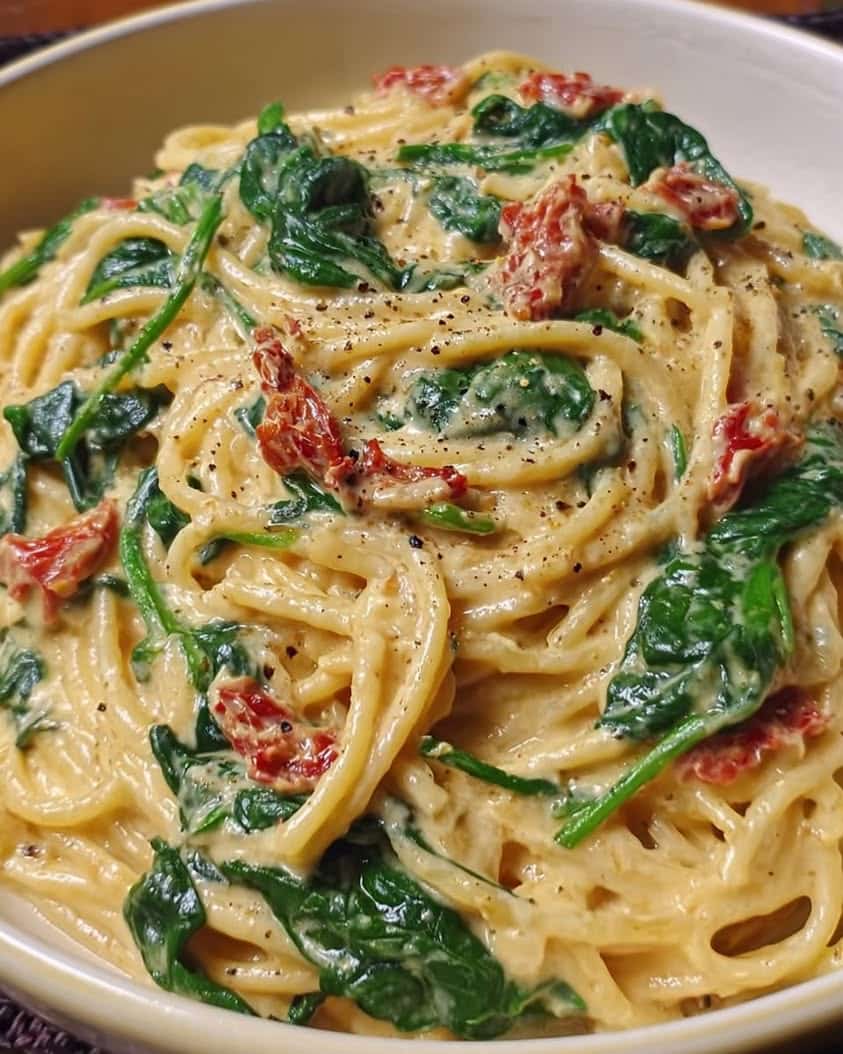
Spaghetti and Spinach with Sun-Dried Tomato Cream Sauce Recipe: A Restaurant-Worthy Dinner in 35 Minutes
This spaghetti and spinach with sun-dried tomato cream sauce recipe delivers bold Italian flavors without demanding hours in the kitchen. Because the sauce comes together in the same time it takes to boil pasta, you can serve a luxurious dinner on a busy Tuesday. The sun-dried tomatoes bring a sweet, tangy depth, while the cream softens every bite into pure comfort.
Moreover, this sun-dried tomato pasta recipe balances richness with fresh greens. The spinach wilts into the sauce and adds color, nutrients, and a mild earthy flavor. As a result, each forkful tastes indulgent yet surprisingly wholesome. If you love creamy pasta dishes, this spaghetti and spinach with sun-dried tomato cream sauce recipe will quickly become a family favorite.
Additionally, the ingredient list stays short and affordable. Most items live in your pantry already, so you can whip up this sun-dried tomato cream sauce pasta on short notice. Whether you cook for two or feed a crowd, the recipe scales easily. Therefore, keep this spaghetti and spinach with sun-dried tomato cream sauce recipe handy for weeknights, date nights, and last-minute guests.
Quick Recipe Highlights
- Flavor Profile: The sauce blends sweet sun-dried tomatoes, garlic, and Parmesan into a rich, savory cream. A hint of red pepper flakes adds gentle warmth. Overall, the flavors taste balanced and bold.
- Texture: Al dente spaghetti provides a satisfying chew, while the velvety cream sauce clings to every strand. Wilted spinach adds a soft, tender contrast. Together, they create a luscious mouthfeel.
- Aroma: Garlic and sun-dried tomatoes fill the kitchen with an irresistible scent. The basil and Parmesan deepen those aromas. Consequently, the smell alone draws everyone to the table.
- Visual Appeal: Deep red tomato pieces dot a pale, creamy sauce. Bright green spinach adds lively contrast. Therefore, the finished dish looks elegant enough for guests.
- Skill Level Needed: This recipe suits beginners because the steps stay simple. You only need basic knife skills and a pot of boiling water. Even novice cooks can nail this sun-dried tomato pasta recipe.
- Special Equipment: A large skillet and a stockpot handle the job well. A colander drains the pasta, and a wooden spoon stirs the sauce. You need no fancy gadgets at all.
Recipe Overview
- Difficulty Level: This dish ranks as easy because it uses one pan and one pot. The sauce requires only stirring and simmering, so no advanced techniques appear. Because the timing stays flexible, beginners feel confident. Therefore, anyone can master this spaghetti and spinach with sun-dried tomato cream sauce recipe.
- Category: This recipe works as a main course for lunch or dinner. Additionally, you can serve it as a hearty side for grilled proteins. Consequently, it fits many menus throughout the week.
- Cuisine: The dish draws from Italian-American cooking traditions. Sun-dried tomatoes hail from southern Italy, where cooks dry them under the sun. Cream sauces became popular in American Italian restaurants. As a result, this sun-dried tomato cream sauce pasta blends old-world ingredients with modern comfort.
- Cost: The whole meal costs roughly ten to twelve dollars for four servings. Pantry staples like pasta and garlic keep the price low. Sun-dried tomatoes and Parmesan make up most of the expense. Overall, this recipe offers excellent value.
- Season: You can enjoy this dish year-round because spinach stays available in stores. However, it shines in late summer when tomatoes peak and in winter when comfort food hits the spot. Consequently, the recipe adapts to any season.
- Occasion: This pasta suits casual family dinners and cozy date nights alike. Moreover, it works for potlucks because it holds heat well. Therefore, you can serve this spaghetti and spinach with sun-dried tomato cream sauce recipe for almost any gathering.
Why You’ll Love This Recipe
First, the taste and texture make this dish truly memorable. The sun-dried tomatoes deliver a concentrated sweetness that ordinary canned tomatoes cannot match. Meanwhile, the cream mellows the acidity and creates a silky coating for the pasta. Because the spinach wilts right into the sauce, every bite offers a mix of creamy, chewy, and tender elements. Additionally, the Parmesan adds a salty, nutty finish that ties everything together. As a result, this sun-dried tomato pasta recipe tastes like something you would order at a trattoria.
Second, convenience sets this recipe apart from other creamy pasta dishes. You boil pasta while the sauce simmers, so the whole meal takes about thirty-five minutes. Moreover, you use only one skillet for the sauce, which means less cleanup afterward. Because the ingredients come together quickly, you can make this spaghetti and spinach with sun-dried tomato cream sauce recipe even after a long workday. Therefore, it solves the weeknight dinner dilemma without sacrificing quality.
Third, the nutritional advantages give this dish extra appeal. Spinach packs iron, fiber, and vitamins A and C into every serving. Additionally, sun-dried tomatoes provide antioxidants like lycopene. The cream and Parmesan add richness, yet you control the portions. Because you cook at home, you avoid the excess sodium and preservatives found in jarred sauces. Consequently, this sun-dried tomato cream sauce pasta offers a smarter take on comfort food.
Fourth, the social and entertaining value makes this recipe a crowd-pleaser. Because the dish looks beautiful on a platter, guests admire it before the first bite. Moreover, the flavors appeal to both kids and adults, so picky eaters rarely complain. You can set out a big bowl and let everyone serve themselves. Therefore, this spaghetti and spinach with sun-dried tomato cream sauce recipe works wonderfully for casual dinner parties.
Finally, cost-effectiveness and accessibility round out the benefits. Every ingredient comes from a standard grocery store, so you need no specialty shopping trips. Additionally, the recipe uses affordable staples like dried pasta and frozen or fresh spinach. Because sun-dried tomatoes last for months in the pantry, you can stock them ahead. As a result, this sun-dried tomato pasta recipe delivers restaurant quality on a home-cooking budget.
Historical Background and Cultural Significance
Sun-dried tomatoes trace their roots to southern Italy, particularly the regions of Puglia and Sicily. For generations, Italian families dried ripe tomatoes on rooftops under the hot Mediterranean sun. This preservation method concentrated the flavor and extended the harvest through winter. Consequently, sun-dried tomatoes became a pantry staple in Italian kitchens. Over time, they traveled to American shores and found new life in creative pasta dishes like this one.
Furthermore, spaghetti itself carries deep cultural importance in Italian cuisine. Although legends claim Marco Polo brought noodles from China, historians trace pasta’s Italian origins back to the Middle Ages. By the nineteenth century, spaghetti became a symbol of Italian identity and hospitality. When Italian immigrants arrived in the United States, they brought their pasta traditions along. Therefore, spaghetti became one of the most beloved foods in American homes.
Meanwhile, cream sauces emerged as an Italian-American innovation. Traditional Italian cooking rarely pairs cream with tomato, yet American cooks embraced the combination. During the mid-twentieth century, creamy vodka sauces and tomato creams appeared on restaurant menus across the country. This sun-dried tomato cream sauce pasta recipe continues that tradition of Italian-American creativity. As a result, the dish reflects both old-world roots and new-world tastes.
Additionally, the recipe evolved as home cooks experimented with convenience ingredients. The invention of jarred sun-dried tomatoes made the flavor accessible year-round. Similarly, pre-washed baby spinach simplified the cooking process. Because modern cooks value speed without sacrificing flavor, recipes like this spaghetti and spinach with sun-dried tomato cream sauce recipe gained popularity. Therefore, the dish represents how classic ideas adapt to contemporary kitchens.
Ingredient Deep Dive
Spaghetti forms the foundation of this dish, and its history stretches across centuries. In Italy, dried pasta made from durum wheat became a reliable food because it stored well and cooked quickly. Today, spaghetti remains a symbol of Italian cooking around the world. For this sun-dried tomato pasta recipe, choose a high-quality brand that holds its shape. Bronze-cut pasta offers a rougher surface, which helps the sauce cling. Additionally, store dry pasta in a cool, dark place for up to two years. If you need a substitute, use linguine, fettuccine, or penne with equal success.
Nutritionally, spaghetti provides carbohydrates for energy along with some protein and fiber. Whole wheat versions add extra fiber and nutrients. When you select pasta for this spaghetti and spinach with sun-dried tomato cream sauce recipe, consider your dietary goals. Traditional semolina pasta delivers the classic texture most people love. Therefore, pick the variety that suits your table best.
Sun-dried tomatoes deliver the signature flavor of this sun-dried tomato cream sauce pasta. These intense, chewy morsels originated in southern Italy as a way to preserve summer harvests. The drying process removes water and concentrates natural sugars, which creates their distinctive sweet-tart punch. They also provide lycopene, an antioxidant linked to heart health. When shopping, choose plump, deep-red tomatoes packed in oil or sold dry. If you buy dry ones, rehydrate them in warm water for twenty minutes. Store oil-packed tomatoes in the refrigerator and dry ones in a cool pantry. For substitutes, roasted red peppers or tomato paste work in a pinch.
Spinach brings color, nutrients, and a mild earthy taste to this spaghetti and spinach with sun-dried tomato cream sauce recipe. This leafy green originated in ancient Persia and traveled to Europe through trade routes. Popeye made it famous in American culture as a source of strength. In truth, spinach offers iron, calcium, and vitamins A, C, and K. For the best results, use fresh baby spinach, which wilts quickly and tastes tender. Frozen spinach also works if you thaw and squeeze out the excess water. Store fresh spinach in the refrigerator and use it within a few days. Kale or Swiss chard make fine substitutes.
Heavy cream transforms the sauce into a velvety, luxurious coating for this sun-dried tomato pasta recipe. Cream has enriched sauces in European cooking for centuries, especially in French and Italian kitchens. It adds richness and helps meld the flavors of garlic, tomato, and cheese. Additionally, cream contains fat-soluble vitamins like A and D. Choose fresh heavy cream with no added stabilizers for the smoothest texture. Keep it refrigerated and use it within a week of opening. For lighter options, half-and-half or evaporated milk work, though the sauce turns out thinner.
Garlic and Parmesan round out the flavor base of this sun-dried tomato cream sauce pasta. Garlic has seasoned food for over five thousand years and remains a cornerstone of Mediterranean cooking. It offers antioxidants and bold aroma. Parmesan, a hard Italian cheese aged for months, brings salty, nutty depth. Together, they make the sauce taste complex despite the short ingredient list. Choose firm garlic bulbs with tight skins, and store them in a cool, dry spot. Buy real Parmigiano-Reggiano when possible, and grate it fresh for the best melt. Pecorino Romano or Grana Padano substitute nicely.
Common Mistakes to Avoid
- Overcooking the pasta ruins the texture of this spaghetti and spinach with sun-dried tomato cream sauce recipe. Always cook one minute less than the package directs. The pasta finishes cooking in the sauce and stays perfectly al dente.
- Skipping the pasta water weakens the sauce. This starchy liquid thickens the cream and helps it cling to every strand. Therefore, always reserve at least one cup before draining.
- Burning the garlic creates a bitter taste that ruins the whole dish. Garlic cooks fast, so add it after the tomatoes and keep the heat moderate. Stir constantly and pull the pan off the heat if needed.
- Using cold cream can curdle the sauce. Let the cream sit at room temperature for fifteen minutes before pouring it in. Slowly incorporate it while stirring for a smooth result.
- Adding spinach too early makes it mushy and dull. Fold it in at the very end, once the heat is off. The residual warmth wilts the leaves perfectly.
- Underseasoning the sauce leaves the dish flat. Taste after adding the Parmesan, then adjust with salt and pepper. Remember that cheese adds saltiness, so season gradually.
- Crowding the pan traps steam and prevents proper simmering. Use a large skillet so the sauce reduces evenly. If your pan runs small, cook the sauce in batches.
- Draining the pasta too soon wastes precious time. Finish the sauce first, then drain the pasta. This timing keeps everything hot when you toss it together.
- Ignoring the pasta water amount leads to a dry sauce. Add it gradually until the sauce coats the back of a spoon. You may not need the full cup.
- Rushing the simmer prevents the flavors from blending. Give the sun-dried tomato cream sauce at least five minutes to meld. Patience pays off with a richer taste.
Essential Techniques
First, mastering al dente pasta matters for this sun-dried tomato pasta recipe. Al dente means the pasta stays firm to the bite, not soft or mushy. To achieve it, taste the pasta a minute before the package time ends. When done, it should offer gentle resistance at the center. This technique matters because the pasta continues cooking in the hot sauce. As a result, slightly underdone pasta finishes perfectly. Common pitfalls include relying only on the timer, so always trust your teeth.
Second, emulsifying the sauce creates that glossy, restaurant-quality finish. Emulsification happens when fat and liquid bind together into a smooth blend. To master it, toss the pasta with the sauce over low heat while adding pasta water splash by splash. The starch in the water acts as a binder. Watch for a shiny, uniform coating on every strand. If the sauce looks greasy or separated, add more pasta water and keep tossing.
Third, blooming the tomato paste and sun-dried tomatoes deepens the flavor of this spaghetti and spinach with sun-dried tomato cream sauce recipe. Blooming means cooking aromatics in fat to release their oils. To do it well, saute the tomato paste and chopped tomatoes in the pan for two minutes before adding liquid. The mixture should darken slightly and smell fragrant. A common mistake involves rushing this step, which leaves the sauce tasting raw. Therefore, give the tomatoes proper time in the pan.
Fourth, wilting spinach correctly preserves its color and texture. Wilting means gently softening greens with heat until they collapse. To master this technique, add the spinach off the heat and toss until it just wilts. The leaves should turn bright green, not olive drab. Overcooking turns spinach slimy, so pull it early. This small detail keeps the dish looking fresh and vibrant.
Pro Tips for Perfect Spaghetti and Spinach with Sun-Dried Tomato Cream Sauce
Salt your pasta water generously, like the sea. This step seasons the spaghetti from the inside out. Consequently, the finished dish tastes fuller without extra salt later.
Slice sun-dried tomatoes into thin strips for even distribution. Big chunks overwhelm a single bite, while strips spread flavor throughout. Therefore, take an extra minute with the knife.
Toast the tomato paste for a deeper, richer taste. Let it cook until it turns brick red and smells sweet. This small move adds complexity to the sun-dried tomato cream sauce.
Grate Parmesan fresh instead of using the shaker can. Fresh cheese melts smoothly and tastes far better. Additionally, it avoids the anti-caking agents found in processed versions.
Reserve more pasta water than you think you need. You can always add it, but you cannot get it back once drained. This habit saves many creamy sauces from turning dry.
Finish the pasta in the sauce, not the other way around. Tossing everything in the skillet lets the starch and cream bind properly. As a result, every strand absorbs maximum flavor.
Add a squeeze of lemon at the end for brightness. The acid cuts through the richness and lifts all the flavors. However, use it sparingly so the cream stays balanced.
Taste before serving and adjust the seasoning one last time. Flavors shift as the sauce sits, so a final check keeps things consistent. Then serve immediately while the dish stays hot and glossy.
Variations and Adaptations
Regional variations offer endless ways to enjoy this sun-dried tomato pasta recipe. In southern Italy, cooks might add anchovies for a briny kick. Meanwhile, Tuscan versions could include white beans for extra protein and creaminess. Some American kitchens stir in rotisserie chicken to make the meal heartier. Because the base sauce adapts so well, you can borrow ideas from many regions. Therefore, treat this spaghetti and spinach with sun-dried tomato cream sauce recipe as a flexible canvas.
Seasonal adaptations keep the dish fresh all year long. In summer, toss in cherry tomatoes and fresh basil from the garden. During autumn, roasted butternut squash or mushrooms add cozy depth. Winter calls for extra Parmesan and a pinch more red pepper flakes. In spring, peas or asparagus bring bright color. As a result, the recipe never feels boring regardless of the calendar.
Dietary modifications make this sun-dried tomato cream sauce pasta accessible to more eaters. Gluten-free pasta works beautifully for celiac diners. For dairy-free needs, swap the cream for full-fat coconut milk and skip the Parmesan. Vegan cooks can use cashew cream and nutritional yeast for a cheesy taste. Each swap changes the dish slightly, yet the core flavor remains. Consequently, nearly everyone can enjoy this recipe.
Flavor variations let you customize the sauce to your mood. Add Italian sausage for a spicy, meaty twist. Smoked paprika lends a subtle smokiness that pairs well with cream. A splash of white wine before the cream adds sophistication. For heat lovers, increase the red pepper flakes or add chopped Calabrian chiles. Because the sauce welcomes new flavors, your options stay wide open.
Texture modifications help you tailor each bite. Toasted breadcrumbs sprinkled on top add crunch. Pine nuts or walnuts contribute a satisfying chew. If you prefer a smoother sauce, blend the sun-dried tomatoes before cooking. For a chunkier texture, leave them roughly chopped. Therefore, you control exactly how this sun-dried tomato cream sauce pasta feels on the palate.
Presentation alternatives suit every occasion. Serve the pasta in individual bowls for an elegant dinner. Family-style platters encourage sharing at casual gatherings. You can even bake the mixture with extra cheese for a pasta casserole. Each approach highlights the dish in a new way. As a result, this spaghetti and spinach with sun-dried tomato cream sauce recipe never looks the same twice.
Serving and Presentation Guide
Plating techniques shape the first impression of this sun-dried tomato cream sauce pasta. Twirl the spaghetti with tongs and place it in the center of a warm bowl. Then spoon extra sauce over the top so the dish looks glossy. Use a fork to lift a few strands for height and movement. Because warm plates keep the pasta hot, preheat them if time allows. This simple step elevates the entire experience.
Garnishing ideas add color and freshness to the finished dish. A sprinkle of chopped basil or parsley brightens the creamy sauce. Shaved Parmesan curls look elegant and taste delicious. For crunch, scatter toasted pine nuts or breadcrumbs across the top. A light dusting of red pepper flakes adds visual warmth. Therefore, choose garnishes that echo the flavors inside the dish.
Traditional accompaniments round out the meal in classic Italian style. A simple green salad with lemon vinaigrette balances the richness. Crusty garlic bread soaks up every drop of sauce. A glass of sparkling water with lemon cleanses the palate between bites. Because these sides stay light, the pasta remains the star. Consequently, dinner feels complete and satisfying.
Modern serving suggestions offer fresh ways to present the dish. Pair the pasta with roasted broccolini for extra greens. A side of burrata adds creamy luxury for special occasions. Grilled shrimp on top turns the meal into a surf-and-turf treat. For a lighter option, serve smaller portions with a hearty vegetable soup. As a result, this spaghetti and spinach with sun-dried tomato cream sauce recipe fits any table.
Temperature considerations matter more than most cooks realize. Serve the pasta hot, straight from the skillet, for the best texture. If the dish sits too long, the sauce thickens and the pasta clumps. Reheat gently with a splash of water or cream to restore the silky consistency. Warm bowls slow the cooling process. Therefore, plan your timing so everyone eats while the dish glows.
Portion control tips help you serve responsibly. A standard main-course portion measures about one and a half cups. For lighter appetites, offer one cup alongside a larger salad. When feeding a crowd, stretch the recipe with extra pasta and vegetables. Because the sauce stays rich, smaller portions satisfy fully. Consequently, this sun-dried tomato pasta recipe feeds a range of hunger levels.
Wine and Beverage Pairing
Wine pairings can transform this spaghetti and spinach with sun-dried tomato cream sauce recipe into a special occasion. A crisp white like Pinot Grigio cuts through the cream beautifully. Chardonnay with light oak adds buttery notes that echo the sauce. For red lovers, a medium-bodied Sangiovese or Barbera works well because the acidity balances the richness. Avoid heavy tannins, which clash with cream. Therefore, choose bright, food-friendly wines.
Non-alcoholic alternatives keep everyone included at the table. Sparkling water with lemon or lime refreshes the palate between bites. Italian sodas with a hint of citrus pair nicely with the tomato flavors. Iced herbal tea, such as chamomile or mint, offers a calming contrast. Because these drinks stay light, they never overpower the food. As a result, sober guests enjoy just as much.
Coffee and tea pairings might surprise you with this sun-dried tomato cream sauce pasta. A light roast coffee brings out the roasted notes in the tomatoes. However, keep the serving small so caffeine does not dominate. Herbal teas like basil or fennel complement the Italian herbs. For after dinner, an espresso alongside a small portion works beautifully. Consequently, these pairings add a sophisticated touch.
Temperature considerations apply to beverages too. Serve white wine well chilled, around forty-five to fifty degrees. Red wines taste best slightly below room temperature, near sixty degrees. Cold sparkling water stays refreshing throughout the meal. Warm drinks should arrive hot but not scalding. Because temperature shapes flavor perception, pay attention to these details.
Serving suggestions tie the whole experience together. Pour wine into clear glasses so guests admire the color. Offer water in stemmed glasses for a touch of elegance. Place drinks to the right of each setting, following standard etiquette. Refill glasses before they empty so no one feels neglected. Therefore, thoughtful service makes this spaghetti and spinach with sun-dried tomato cream sauce recipe feel restaurant-worthy.
Storage and Shelf Life
Storage methods determine how well leftovers of this sun-dried tomato pasta recipe keep. Cool the pasta within two hours of cooking to prevent bacterial growth. Then transfer it to an airtight container and press out excess air. Because cream sauces spoil faster than tomato-based ones, refrigerate promptly. Use shallow containers so the pasta cools evenly. Consequently, your leftovers stay safe and tasty.
Temperature requirements matter for food safety. Keep the pasta below forty degrees Fahrenheit in the refrigerator. Never leave it at room temperature for more than two hours. When reheating, bring it to an internal temperature of one hundred sixty-five degrees. These guidelines protect your family from foodborne illness. Therefore, follow them carefully every time.
Container recommendations improve both texture and flavor retention. Glass containers with locking lids work best because they resist stains and odors. Avoid thin plastic wraps that let air inside. If you must use plastic, choose BPA-free options with tight seals. Label each container with the date so you track freshness. As a result, this spaghetti and spinach with sun-dried tomato cream sauce recipe stores cleanly.
Signs of spoilage help you decide when to toss leftovers. Sour smells, sliminess, or mold mean the pasta has gone bad. Separation alone does not signal spoilage, but it does affect texture. When in doubt, throw it out rather than risk illness. Because dairy spoils quickly, stay cautious with creamy dishes. Therefore, inspect leftovers before every reheat.
Reheating instructions preserve the creamy texture of this sun-dried tomato cream sauce pasta. Warm the pasta gently on the stovetop with a splash of water, cream, or broth. Stir constantly until the sauce loosens and coats the noodles again. Microwaving works in a pinch, but cover the bowl and stir every thirty seconds. Avoid high heat, which toughens the pasta. Consequently, leftovers taste nearly as good as fresh.
Freezing guidelines extend the life of this dish for up to two months. However, cream sauces sometimes separate during freezing, so texture suffers slightly. To freeze, portion the pasta into freezer-safe bags and press flat. Thaw overnight in the refrigerator before reheating. Add a splash of fresh cream during reheating to restore creaminess. Therefore, freezing works best when you plan to eat the pasta soon.
Make Ahead Strategies
A prep timeline makes this spaghetti and spinach with sun-dried tomato cream sauce recipe stress-free. Up to three days ahead, chop the sun-dried tomatoes, garlic, and onion. Store each in a separate container in the refrigerator. Grate the Parmesan and refrigerate it in a sealed bag. On cooking day, everything waits ready to go. As a result, dinner comes together in record time.
Storage between steps protects quality during make-ahead preparation. Keep chopped vegetables refrigerated and covered to prevent drying. Store grated cheese in an airtight container so it stays moist. If you make the sauce ahead, cool it quickly and refrigerate within an hour. Then reheat gently with a splash of cream before tossing with fresh pasta. Because each component holds well, this plan saves busy cooks.
Quality impact assessment helps you decide what to prep ahead. Chopped aromatics lose little flavor when stored properly. Grated cheese stays fresh for several days. However, cooked pasta toughens when refrigerated, so always boil it fresh. The sauce itself keeps well for two to three days. Therefore, prep the components, not the finished dish, for the best result.
Assembly tips streamline the final cooking session. Set out all ingredients in the order you need them. Warm the serving bowls and have the colander ready. Because everything sits within reach, you avoid frantic searches mid-cook. This small habit makes this sun-dried tomato pasta recipe feel effortless.
Reheating guidelines for make-ahead sauce keep flavors bright. Warm the sauce over low heat, stirring often, until it simmers. Add pasta water or cream to reach the right consistency. Taste and adjust the seasoning right before serving. Then toss with freshly cooked spaghetti and spinach. Consequently, the dish tastes freshly made.
Fresh element additions lift make-ahead meals. Stir in baby spinach at the last moment for bright color. Top with fresh basil or parsley for a garden-fresh touch. A final shower of Parmesan adds melty richness. Because these touches take seconds, the dish never feels like leftovers. As a result, this spaghetti and spinach with sun-dried tomato cream sauce recipe works beautifully on any schedule.
Scaling Instructions
Halving the recipe suits smaller households perfectly. Use two cups of pasta and cut the cream to half a cup. Reduce the sun-dried tomatoes to one-third cup and keep the garlic at two cloves. Because a smaller pan reduces faster, watch the sauce closely. Cooking time drops by a few minutes. Therefore, this spaghetti and spinach with sun-dried tomato cream sauce recipe adapts easily for two.
Doubling or tripling the recipe feeds a hungry crowd. Use a large stockpot for the pasta and a wide Dutch oven for the sauce. Increase the cream and broth proportionally, but add the liquid gradually. The sauce may need extra simmering time to thicken. Taste and adjust the seasoning at the end. Consequently, you can serve this sun-dried tomato cream sauce pasta at any gathering.
Equipment adjustments keep large batches manageable. A sixteen-quart pot handles three pounds of pasta without crowding. Use two skillets if your largest pan cannot hold all the sauce. Tongs and a pasta fork make tossing easier. Because the right tools reduce stress, gather them before you start. As a result, big-batch cooking feels smooth.
Timing modifications matter when you scale the recipe. Boil pasta in batches so the water returns to a rolling boil quickly. Simmer the sauce a few minutes longer for larger volumes. Keep finished pasta warm with a drizzle of oil while the rest cooks. Because timing shifts with size, stay flexible. Therefore, plan extra minutes for larger batches.
Storage considerations change with bigger batches too. Cool large amounts of pasta in shallow pans so they chill fast. Divide leftovers into meal-sized portions for easy reheating. Label everything with the date. Because big batches create more leftovers, organization pays off. As a result, this sun-dried tomato pasta recipe rewards planning.
Nutritional Deep Dive
The macro breakdown of this spaghetti and spinach with sun-dried tomato cream sauce recipe shows a balanced meal. Each serving offers roughly five hundred calories, with carbohydrates from pasta leading the count. Protein arrives from Parmesan, spinach, and pasta, totaling about eighteen grams. Fat from cream and olive oil adds richness and satisfaction. Because the macros stay balanced, the dish fuels both body and appetite.
Micronutrient analysis reveals impressive benefits. Spinach delivers iron, calcium, and vitamins A, C, and K. Sun-dried tomatoes contribute lycopene and potassium. Parmesan adds calcium and phosphorus for strong bones. Garlic offers manganese and vitamin B6. Consequently, this sun-dried tomato cream sauce pasta nourishes far beyond basic calories.
Health benefits extend to heart and digestive wellness. The lycopene in tomatoes supports cardiovascular health. Fiber from spinach and whole wheat pasta aids digestion. Meanwhile, olive oil provides healthy monounsaturated fats. Because these ingredients work together, the dish supports overall wellbeing. Therefore, you can feel good about serving this spaghetti and spinach with sun-dried tomato cream sauce recipe.
Dietary considerations vary by individual needs. Those watching sodium should reduce the Parmesan and skip added salt. People managing blood sugar can use whole wheat pasta for a lower glycemic impact. If lactose intolerance affects you, choose lactose-free cream. Because the recipe adapts, nearly every diet finds a fit. As a result, this sun-dried tomato pasta recipe welcomes customization.
Portion analysis helps you plan balanced plates. A one-and-a-half-cup serving suits most adults at dinner. Pair it with a side salad to add volume without many calories. For athletes, a larger portion supplies needed carbohydrates. Because portion needs differ, serve according to appetite. Consequently, the recipe works for many lifestyles.
Weight management tips make this dish part of a healthy routine. Use half the cream and add extra pasta water for a lighter sauce. Bulk up the dish with more spinach or roasted vegetables. Choose a smaller pasta portion and fill the rest of the plate with salad. Because these tweaks cut calories, you enjoy comfort food without guilt. Therefore, this spaghetti and spinach with sun-dried tomato cream sauce recipe supports your goals.
Dietary Adaptations
Gluten-free versions of this sun-dried tomato pasta recipe work with simple swaps. Choose brown rice, chickpea, or corn-based pasta. Cook it carefully, since gluten-free pasta turns mushy fast. Taste often and drain as soon as it reaches al dente. The sauce needs no changes because cream, tomatoes, and spinach contain no gluten. As a result, celiac diners enjoy the same great flavor.
Dairy-free adaptations keep the creamy texture without lactose. Replace heavy cream with full-fat coconut milk or cashew cream. Use nutritional yeast in place of Parmesan for a cheesy taste. Add a pinch of salt to mimic the cheese’s savory punch. Because these swaps blend smoothly, the sauce stays rich. Therefore, this sun-dried tomato cream sauce pasta suits dairy-free diets.
Vegan modifications turn the dish into a plant-based favorite. Use cashew cream, oat cream, or blended silken tofu for the sauce. Skip the Parmesan and add nutritional yeast plus a touch of miso. Saute the garlic in olive oil as usual. Because plants supply all the flavor, no one misses the dairy. Consequently, vegans enjoy this spaghetti and spinach with sun-dried tomato cream sauce recipe fully.
Low-carb adaptations reduce the pasta without losing satisfaction. Swap spaghetti for zucchini noodles or hearts of palm noodles. Saute them briefly so they stay firm. The creamy sauce clings well to spiralized vegetables. Because the sauce carries the flavor, the dish still delights. As a result, low-carb eaters savor every bite.
Keto versions push the carb count even lower. Use zucchini noodles and increase the olive oil and Parmesan. Choose cream without additives for the sauce. Add grilled chicken or shrimp for extra protein. Because fat keeps you full, portions satisfy easily. Therefore, this sun-dried tomato pasta recipe fits keto macros with these tweaks.
Paleo adaptations avoid grains, dairy, and legumes. Use spiralized sweet potato or zucchini for the noodles. Replace the cream with coconut cream and skip the cheese. Add extra sun-dried tomatoes for depth. Because these ingredients align with paleo rules, the dish works well. Consequently, paleo diners enjoy a comforting pasta night too.
Low-FODMAP modifications help sensitive stomachs. Garlic and onion cause issues for some people, so use garlic-infused oil instead. Choose lactose-free cream and aged Parmesan, which contain little lactose. Keep the spinach portion moderate. Because these changes reduce fermentable carbs, digestion stays comfortable. As a result, this spaghetti and spinach with sun-dried tomato cream sauce recipe suits sensitive eaters.
Other specific diets find their own paths. Mediterranean diets embrace the olive oil, tomatoes, and greens. Vegetarian diners simply skip any meat additions. Pescatarians add shrimp or scallops for protein. Because the base recipe stays plant-forward, many diets include it easily. Therefore, this sun-dried tomato cream sauce pasta welcomes nearly everyone to the table.
Troubleshooting Guide
Texture issues often arise with creamy pasta sauces. If the sauce turns grainy, the cream likely curdled from high heat. Lower Print
Spaghetti & Spinach with Sun-Dried Tomato Cream Sauce
- Total Time: 45 minutes
- Yield: 4
Description
A creamy and flavorful pasta dish featuring sun-dried tomatoes, fresh spinach, and a luscious cream sauce. Perfect for a quick weeknight dinner.
Ingredients
- 12 oz spaghetti
- 2 tablespoons olive oil
- 1 small onion, finely chopped
- 3 cloves garlic, minced
- 1/2 cup sun-dried tomatoes, chopped
- 1 cup heavy cream
- 1/2 cup grated Parmesan cheese
- 4 cups fresh spinach
- Salt and pepper to taste
- Red pepper flakes (optional)
Instructions
- Cook spaghetti according to package instructions. Drain, reserving 1/2 cup pasta water.
- In a large skillet, heat olive oil over medium heat. Add onion and cook until softened, about 3 minutes.
- Add garlic and sun-dried tomatoes; cook for 1 minute until fragrant.
- Pour in heavy cream and bring to a simmer. Stir in Parmesan cheese until melted.
- Add spinach and cook until wilted, about 2 minutes.
- Add cooked spaghetti to the skillet and toss to coat. If sauce is too thick, add reserved pasta water as needed.
- Season with salt, pepper, and red pepper flakes if desired. Serve hot.
Notes
You can customize the seasonings to taste.
- Prep Time: 15 minutes
- Cook Time: 30 minutes
- Method: Main
- Cuisine: American