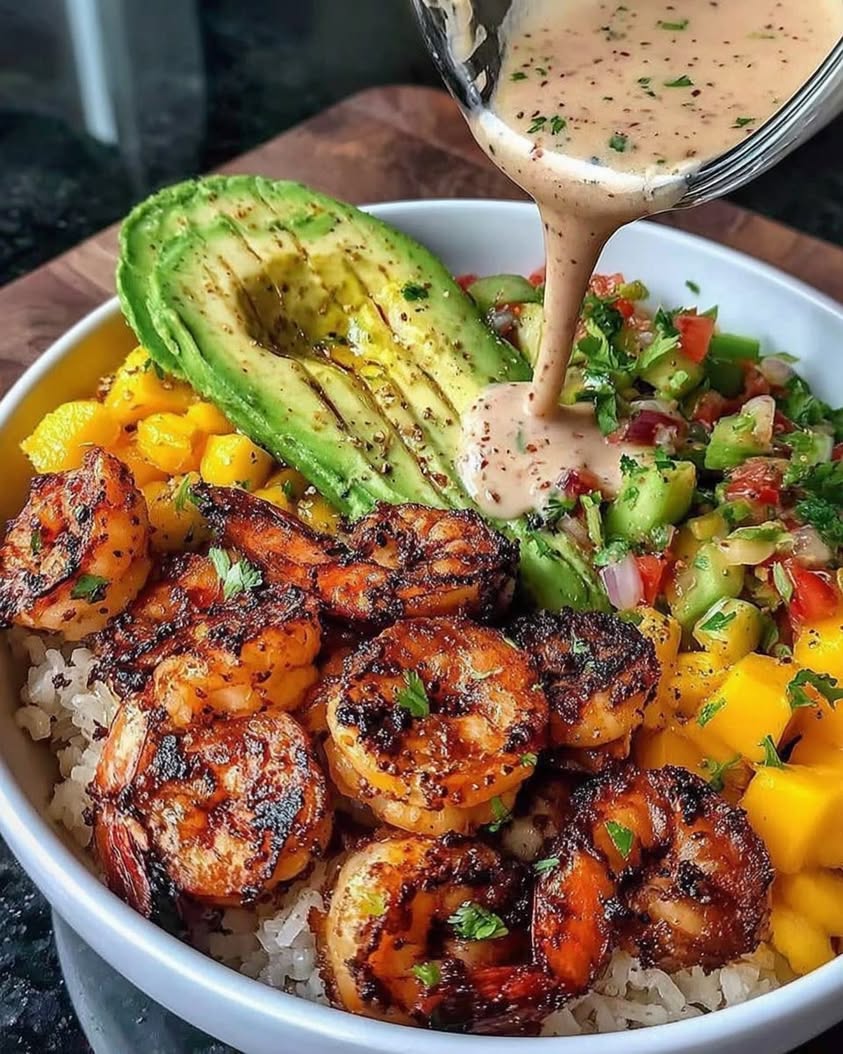
Shrimp and Avocado Bowls with Mango Salsa and Lime-Chili Sauce: A Fresh and Flavorful Weeknight Dinner
Shrimp and Avocado Bowls with Mango Salsa and Lime-Chili Sauce are the perfect answer when you crave something light yet satisfying. This recipe delivers a burst of tropical flavor with every bite. The combination of succulent shrimp, creamy avocado, and zesty mango salsa creates a meal that feels both indulgent and healthy. You will love how the lime-chili sauce ties everything together with a perfect kick of heat and tanginess.
These bowls are incredibly easy to prepare, making them ideal for busy weeknights or casual entertaining. The shrimp cook in just a few minutes, and the mango salsa comes together with simple chopping and stirring. For those following a balanced diet, this dish provides lean protein, healthy fats, and plenty of fresh vegetables. It is also naturally gluten-free and can be adapted for dairy-free or paleo lifestyles, which adds to its universal appeal at the dinner table.
Each bowl offers a vibrant color palette that is as beautiful as it is appetizing. The bright orange mango, pink shrimp, green avocado, and white rice create an eye-catching presentation. The aroma of lime zest and chili mingles with the sweet fragrance of mango, promising a sensory experience that delights from the first glance. This is a meal that makes you feel good about what you are eating because it is packed with nutrients and flavor.
Quick Recipe Highlights
- Flavor Profile: The dish balances sweet mango, tangy lime, and spicy chili against the savory richness of shrimp. Each bite offers a bright and refreshing taste that is not overly heavy. The lime-chili sauce provides a mild heat that complements rather than overwhelms.
- Texture: You get a wonderful contrast between the firm, juicy shrimp and the soft, buttery avocado. The mango salsa adds a juicy crunch from the bell peppers and onion, while the rice provides a satisfying base. The overall mouthfeel is both refreshing and substantial.
- Aroma: The scent of fresh lime zest and garlic wafts up as you prepare the sauce. The mango releases a sweet, tropical fragrance that mixes with the slight smokiness of cooked shrimp. The combination is inviting and makes your kitchen smell amazing.
- Visual Appeal: The bright colors of the mango, avocado, and shrimp make this bowl look like a work of art. The white rice provides a neutral canvas that lets every other ingredient pop. Garnishing with cilantro and lime wedges adds a professional touch that impresses guests.
- Skill Level Needed: This recipe is perfect for beginner cooks because the steps are straightforward and require no advanced techniques. You only need basic knife skills and the ability to cook shrimp until pink. Even someone new to the kitchen can achieve excellent results on the first try.
- Special Equipment: You need a sharp chef knife for dicing the mango and avocado safely. A small bowl for mixing the lime-chili sauce and a large skillet for cooking the shrimp are essential. A rice cooker or saucepan for preparing the rice is also necessary.
Recipe Overview
- Difficulty Level: We rate this recipe as easy because it involves simple, repetitive tasks like chopping and stirring. There are no complex cooking methods such as braising or sous vide. The entire process is forgiving, so minor adjustments in portion sizes or chop sizes do not ruin the final dish.
- Category: This recipe fits into the bowl food category, which is popular for meal prep and quick dinners. It works as a main dish for lunch or dinner and can be scaled down for a light appetizer. It also qualifies as a salad bowl if you substitute rice for greens.
- Cuisine: The dish draws heavy inspiration from Mexican and Latin American flavors, with the use of lime, chili, and avocado. The mango salsa brings a Caribbean twist that adds sweetness and brightness. This fusion creates a unique profile that feels familiar yet exciting.
- Cost: Using fresh mango and avocado does increase the cost slightly, but shrimp is the most expensive component. You can reduce expenses by using frozen shrimp and buying mangoes when they are in season. Overall, this meal is mid-range in cost and still affordable for a special dinner at home.
- Season: This recipe is best in the summer when mangoes are at peak ripeness and flavor. However, you can make it year-round by using frozen mango or finding good imports. The bright, light nature of the dish also makes it perfect for spring and early fall.
- Occasion: These bowls shine at casual dinner parties or family gatherings where you want to impress without stress. They also work wonderfully for meal prep because the components store well separately. You can serve them for a festive Cinco de Mayo celebration or a simple weekend lunch.
Why You Will Love This Recipe
The taste of Shrimp and Avocado Bowls with Mango Salsa and Lime-Chili Sauce is simply outstanding because every element complements the others perfectly. The sweetness of ripe mango contrasts beautifully with the spicy, tangy lime-chili sauce. The shrimp have a natural brininess that the sauce enhances, while the avocado adds a creamy, rich note that balances the acidity. Combined with fluffy rice, the flavors create a harmonious and memorable eating experience that feels both exotic and comforting.
Convenience is a major highlight here because the entire meal comes together in under 30 minutes. You can cook the rice ahead of time or use pre-cooked rice from the store to save even more minutes. The mango salsa can be prepared while the shrimp cook so you are not waiting around. Everything comes together quickly, which makes it perfect for those evenings when you want a homemade meal without spending hours in the kitchen.
Nutritionally, this bowl is a powerhouse that supports a healthy lifestyle without sacrificing flavor. Shrimp provides lean protein and essential nutrients like selenium and vitamin B12. Avocado offers heart-healthy monounsaturated fats and fiber, while mango delivers a hefty dose of vitamin C and antioxidants. The dish is naturally low in saturated fat and contains no added sugars, making it a smart choice for weight management or general wellness goals.
For social gatherings, these bowls are a crowd-pleaser because everyone can customize their own serving. You can set up a bowl bar with different toppings like extra chili flakes, crumbled feta, or fresh herbs. Guests love the interactive nature of building their own bowl, and the vibrant presentation looks beautiful on the table. It is a fun, low-pressure way to entertain that leaves everyone feeling satisfied and impressed.
Cost-effectiveness and accessibility also make this recipe a winner for home cooks. Shrimp is widely available in the frozen section and can be purchased in bulk when on sale. Mangoes and avocados are common in most grocery stores year-round, though they are cheapest during their respective seasons. The ingredients are common enough that you can find them at any major supermarket, and the total cost is reasonable for a meal that feels like restaurant quality.
Historical Background and Cultural Significance
The concept of a protein bowl with fresh salsa and sauce has deep roots in Latin American cuisine, where fresh ingredients are always celebrated. Mexicans have long enjoyed shrimp dishes flavored with lime and chili, often serving them with rice, beans, and avocado. Mango salsa is a more recent innovation that blends Mexican culinary traditions with Caribbean sweetness. This fusion reflects the cross-cultural exchange that defines modern Latin American cooking, especially in coastal regions where seafood and tropical fruit are abundant.
Shrimp holds cultural significance in many coastal communities throughout Mexico and Central America. It is a staple protein for fishermen and their families, often prepared simply with lime, garlic, and chili. The use of avocado in Mexican cuisine dates back to the Aztecs, who valued it as a rich, nutritious fruit. Combining these ingredients in a bowl format is a contemporary adaptation that respects tradition while embracing new ways of eating.
The evolution of this recipe mirrors the rise of bowl-based meals in modern food culture. Twenty years ago, you would likely find this dish served as a plated entree with components arranged separately. Today, the deconstructed bowl presentation allows for easier customization and faster preparation. Social media platforms like Instagram have popularized the colorful, visually striking bowl format, which in turn has influenced how restaurants and home cooks present food.
Regional variations of this concept exist across the Americas. In coastal Mexico, you might find a version called coctel de camaron, which is a shrimp cocktail with avocado and tomato. In the Caribbean, cooks add tropical fruits like pineapple and papaya to their salsas. The lime-chili sauce in our recipe takes inspiration from Mexican adobo sauces, which often combine citrus, chili, and garlic. Every region puts its own spin on the balance of sweet, sour, and spicy, proving how versatile this combination truly is.
Ingredient Deep Dive
Shrimp is the star protein in this Shrimp and Avocado Bowls with Mango Salsa and Lime-Chili Sauce recipe, and it has a rich history in global cuisine. In the Gulf of Mexico and along the Pacific coast of Latin America, shrimp has been a dietary mainstay for centuries. It is celebrated for its quick cooking time and delicate flavor, and it pairs perfectly with bright, acidic ingredients. Nutritionally, shrimp is low in calories yet high in protein, providing about 20 grams per 3-ounce serving. It also contains astaxanthin, a powerful antioxidant that supports heart and brain health.
When selecting shrimp, always look for raw, peeled, and deveined shrimp for convenience. Fresh shrimp should smell like the ocean and not have any ammonia odor. If buying frozen, choose bags where the shrimp are individually frozen to avoid clumping. Store raw shrimp in the coldest part of your refrigerator and use it within two days. For substitutions, you can use chicken, firm tofu, or even chickpeas for a vegetarian version, though the cooking times will vary.
Avocado is another essential ingredient that adds creaminess and healthy fats to the bowls. It originated in south-central Mexico and has been cultivated for over 5,000 years. Avocados are rich in monounsaturated fats, which can help lower bad cholesterol and reduce inflammation. They also provide potassium, vitamin K, and folate. When choosing an avocado, look for one that yields slightly to gentle pressure but is not mushy. To speed up ripening, place it in a paper bag with a banana at room temperature.
Mangoes are the foundation of the salsa and bring vibrant sweetness and color to the dish. They originate from South Asia but have become a staple in Latin American cuisine through trade and cultural exchange. Mangoes are an excellent source of vitamin C, vitamin A, and fiber. For the best salsa, choose mangoes that are fragrant at the stem end and yield slightly to pressure. Avoid mangoes with dark spots or wrinkled skin, which indicate over ripeness. You can substitute pineapple, papaya, or even diced peaches when mango is out of season.
Common Mistakes to Avoid
- One major mistake is overcooking the shrimp because they turn rubbery and tough. Shrimp cook very quickly, usually in 2 to 3 minutes per side, and are done when they curl into a C-shape and turn pink. You should remove them from the heat the moment they are opaque to preserve their tender texture.
- Another common error is using an unripe mango for the salsa because it will be sour and fibrous. An unripe mango has no sweetness and can ruin the balance of the dish. Always taste a small piece before chopping, and if it tastes tart, let it ripen at room temperature for a day or two.
- Dicing the avocado too small is a problem because it can turn mushy when tossed with other ingredients. Aim for cubes that are about half an inch so they hold their shape. Handle the avocado gently and add it at the end to prevent it from breaking down.
- Adding the lime-chili sauce too early can cause the avocado to brown because the acid speeds up oxidation. You should drizzle the sauce just before serving to keep the avocado looking fresh and green. This also prevents the mango salsa from becoming watery.
- Using cold shrimp directly from the refrigerator can cause uneven cooking. Always let the shrimp sit at room temperature for 10 minutes before cooking. This allows them to cook more evenly and reduces the risk of a raw center.
- Forgetting to drain the mango salsa after it sits can make the bowls watery. The salt draws moisture out of the mango and vegetables over time. Let the salsa sit in a colander for a few minutes before serving to remove excess liquid.
- Over-salting the shrimp is a frequent mistake because seafood is naturally briny. Use a light hand with salt and rely on the lime-chili sauce for seasoning. Taste the shrimp after cooking and adjust only if necessary.
- Not toasting the cumin and chili powder for the sauce is a missed opportunity for deeper flavor. Toasting spices in a dry pan for 30 seconds releases their essential oils and makes them more aromatic. This simple step elevates the entire dish.
- Cutting all components too far in advance can lead to a loss of freshness. The mango salsa is best made within an hour of serving, and the avocado should be cut last. Only the rice and shrimp can be prepared ahead without sacrificing quality.
- Skipping the fresh cilantro garnish is a small oversight that makes a big difference. Cilantro adds a bright, herbaceous note that ties all the flavors together. If you dislike cilantro, try fresh mint or basil as an alternative.
Essential Techniques
Perfectly cooking shrimp is a fundamental skill for this Shrimp and Avocado Bowls with Mango Salsa and Lime-Chili Sauce recipe. The key is to use high heat and a small amount of oil so the shrimp sear rather than steam. Place the shrimp in a single layer in a hot skillet and do not move them for the first 90 seconds. You want a golden-brown crust on one side before flipping. The visual cue for doneness is when the shrimp turn opaque pink and curl into a loose C-shape. Overcooking results in a tight O-shape, indicating tough, dry shrimp.
Dicing a mango cleanly without wasting fruit is a technique that takes practice but pays off. Start by identifying the flat, oval-shaped pit in the center of the mango. Slice off the two cheeks by cutting about a quarter inch away from the stem line on both sides. Score the flesh in a crosshatch pattern without cutting through the skin, then push the skin outward to create cubes. Use a spoon to scoop the cubes off the skin. This method prevents mangled pieces and ensures even, attractive salsa cubes.
Making a balanced lime-chili sauce requires careful attention to the ratio of acid to heat. Start with fresh lime juice as the base, then add a small amount of honey or agave to temper the acidity. The chili powder should be added gradually because different brands vary in spiciness. Whisk the sauce until the honey dissolves completely, then taste and adjust. A good sauce should have a bright, zesty flavor with a pleasant burn that lingers but does not overwhelm.
Pro Tips for Perfect Shrimp and Avocado Bowls with Mango Salsa and Lime-Chili Sauce
Always pat the shrimp dry with paper towels before cooking to ensure they sear properly. Excess moisture creates steam in the pan and prevents browning. Dry shrimp will develop a beautiful golden crust that adds texture and flavor.
Use a microplane or fine zester for the lime zest instead of a box grater. The zest contains flavorful oils that are essential for the lime-chili sauce. Avoid grating the white pith because it tastes bitter and can ruin the sauce.
Let the cooked shrimp rest on a paper-towel-lined plate for a minute after cooking. This absorbs any excess oil and keeps them crisp. It also prevents them from making the rice or salsa soggy when you assemble the bowls.
Chill the mango salsa in the refrigerator for 15 minutes before serving to intensify the flavors. The cold temperature makes the sweetness more pronounced and the textures more refreshing. This step is especially welcome on warm summer days.
For the creamiest avocado, slice it just before assembly and spritz it with lime juice. The lime juice prevents browning and adds a hint of acidity that complements the other flavors. Do not skip this simple step.
Make extra lime-chili sauce because you will want to drizzle it on everything. It keeps well in the refrigerator for up to a week and tastes great on grilled chicken, fish, or even tacos. Store it in a sealed jar and shake before use.
Consider using jasmine or basmati rice for a fragrant twist on the base. These rice varieties offer a floral aroma that pairs beautifully with the tropical flavors. If you are short on time, pre-cooked microwave rice works in a pinch.
Garnish with toasted sesame seeds or crushed peanuts for an unexpected crunch. This adds a nutty element that complements the creamy avocado and sweet mango. It also makes the bowl look more elegant and restaurant-worthy.
Variations and Adaptations
A popular regional variation involves swapping the shrimp for grilled fish like mahi-mahi or snapper. The firm, flaky fish stands up well to the bold sauce and salsa. You can also use cooked shredded chicken for a land-based version that is equally satisfying. Each protein brings its own unique character to the bowl while maintaining the fresh, vibrant spirit of the original.
Seasonal adaptations are easy because the mango salsa is endlessly flexible. In the fall, replace mango with roasted butternut squash or diced apples for a savory-sweet twist. In the winter, use pomegranate seeds and orange segments for a festive, bright salsa. These changes keep the recipe interesting year-round and let you use what is freshest.
Dietary modifications are straightforward for this recipe. To make it vegan, replace the shrimp with marinated and grilled portobello mushrooms or chickpeas. The lime-chili sauce is naturally vegan, and the avocado provides plenty of healthy fats. For a low-carb version, serve the bowl over cauliflower rice or a bed of mixed greens instead of white rice.
Flavor variations can transform the dish entirely. Try adding a splash of coconut milk to the lime-chili sauce for a creamy, Thai-inspired version. Stir in some minced garlic and ginger for an Asian twist. You can also add a sprinkle of smoked paprika or chipotle powder to the shrimp for a deeper, smokier flavor.
Texture modifications cater to personal preferences. If you prefer a chunkier salsa, dice the mango into larger pieces. For a smoother sauce, blend the lime-chili sauce with a small piece of avocado to make it creamy. The rice can be cooked with a little coconut oil for a richer, more fragrant base.
Presentation alternatives make this dish perfect for special occasions. Instead of a bowl, serve the components on a large platter for a beautiful family-style meal. You can also layer the ingredients in a glass jar for a portable mason jar salad that is great for lunch. The colorful layers look stunning and make a great impression.
Serving and Presentation Guide
The best plating technique for these bowls is to create distinct sections of rice, shrimp, salsa, and avocado. Start by spooning a generous serving of rice into the bottom of each bowl. Arrange the shrimp on one side of the rice and the mango salsa on the other. Place the avocado slices in the center so they remain the star of the presentation. This arrangement creates a beautiful color contrast that invites the eater to mix everything together.
Garnishing ideas elevate the visual appeal and add fresh flavor. A few sprigs of cilantro on top add a pop of green and a fragrant aroma. Thinly sliced red chili or a sprinkle of red pepper flakes adds a hit of color and heat. Lime wedges on the side encourage diners to add extra acidity if they desire. A light dusting of flaky sea salt just before serving enhances all the flavors.
Traditional accompaniments to this type of bowl include warm tortillas or tortilla chips on the side. The chips are perfect for scooping up extra salsa and avocado. You can also serve a side of black beans or refried beans for added heartiness. A simple green salad with a lime vinaigrette complements the bowl without overwhelming it.
Modern serving suggestions involve using a bed of quinoa or farro instead of rice for a nuttier flavor. You can also serve the bowl in a halved papaya or hollowed-out pineapple for a tropical presentation. For a party, set up a build-your-own bowl station with all components in separate bowls. This interactive approach allows guests to customize their meal and is always a hit.
Temperature considerations are important for the best eating experience. The shrimp should be served warm, while the mango salsa and avocado should be cold or at room temperature. The rice can be warm or at room temperature, depending on your preference. Serving the components at different temperatures creates a delightful contrast that keeps each bite interesting.
Portion control tips help you avoid overfilling the bowl. Use a one-cup measure for the rice and a half-cup measure for the mango salsa. Aim for about 4 to 5 ounces of shrimp per serving and half an avocado per person. This ratio provides a balanced meal that is satisfying without being overly heavy.
Wine and Beverage Pairing
For wine lovers, a crisp Sauvignon Blanc is an excellent choice because its acidity mirrors the lime in the sauce. The grassy, herbal notes in the wine complement the cilantro and avocado beautifully. A dry Riesling also works well, as its subtle sweetness balances the heat from the chili. These wines have enough character to stand up to the bold flavors without overpowering the delicate shrimp.
Non-alcoholic alternatives are plentiful and just as delicious. A sparkling limeade or club soda with a splash of grapefruit juice and a pinch of salt offers a refreshing, sophisticated option. Hibiscus iced tea, known as agua de jamaica in Mexican cuisine, provides a tart, floral note that pairs wonderfully with the mango salsa. These drinks cleanse the palate and enhance the tropical theme.
If you are serving this dish at a brunch or daytime event, consider a light Mexican beer like Modelo or Pacifico. The crisp, clean taste of the beer cuts through the richness of the avocado and the heat of the sauce. A lime wedge in the beer bottle ties the flavors together. For a cocktail, a classic margarita with fresh lime juice and a salt rim is a natural, crowd-pleasing partner.
Temperature considerations for beverages matter as much as for the food. Serve all beverages well-chilled to contrast with the warm shrimp and rice. Iced drinks refresh the palate between bites and help cool the mild heat from the chili. Avoid heavy, tannic red wines because they clash with the acidity and can taste metallic with the citrus.
Serving suggestions involve offering the beverage in a glass that matches the meal_tone. A stemless wine glass works for both wine and non-alcoholic spritzers. For beer, serve it in a chilled glass or straight from the bottle. Presenting the beverage in a nice glass elevates the entire dining experience and makes the meal feel more special.
Storage and Shelf Life
Proper storage of leftover Shrimp and Avocado Bowls with Mango Salsa and Lime-Chili Sauce requires separating the components. Store the shrimp, rice, mango salsa, and avocado in separate airtight containers. The mango salsa can keep for up to two days in the refrigerator, while the cooked shrimp stays fresh for about three days. The avocado should be eaten immediately because it browns quickly even with lime juice.
Temperature requirements for storage are standard for most leftovers. Keep all components at 40 degrees Fahrenheit or below to prevent bacterial growth. Do not leave the assembled bowls at room temperature for more than two hours. If you are meal prepping, store the salsa and rice together and add the shrimp and avocado just before serving to maximize freshness.
Container recommendations focus on minimizing air exposure. Use glass containers with tight-fitting lids for the mango salsa because they do not absorb odors. For the shrimp, a shallow container allows for rapid cooling. The avocado should be stored with the pit still attached and wrapped tightly in plastic wrap if you must save it, though it is best to cut fresh avocado daily.
Signs of spoilage are easy to spot with these fresh ingredients. If the mango salsa smells sour or develops a slimy texture, discard it immediately. Shrimp that has a strong fishy odor or a slimy coating is no longer safe to eat. The avocado will turn brown and develop a bitter taste when it spoils, so do not eat it if it looks discolored or feels mushy.
Reheating instructions apply only to the shrimp and rice. Gently reheat the shrimp in a skillet over medium heat with a splash of water or lime juice to add moisture. Do not use the microwave because it can make the shrimp rubbery. The rice can be reheated in the microwave with a damp paper towel over the bowl to add steam, or you can pan-fry it with a little oil.
Freezing guidelines for this recipe are limited because the fresh components do not freeze well. The cooked shrimp can be frozen for up to three months if you place them in a freezer-safe bag with the air pressed out. The mango salsa and avocado will become watery and mushy upon thawing, so freeze only the shrimp and rice separately. Thaw the shrimp overnight in the refrigerator before reheating.
Make Ahead Strategies
Your prep timeline for this Shrimp and Avocado Bowls with Mango Salsa and Lime-Chili Sauce can begin the day before. Cook the rice and let it cool completely before storing it in the refrigerator. You can also make the lime-chili sauce and store it in a sealed jar. These two components take the most time and are perfectly fine to prepare ahead.
Storage between steps requires keeping the rice and sauce separate from the fresh ingredients. The rice will stay fresh for up to five days in an airtight container. The lime-chili sauce should be kept in the refrigerator and shaken before use. Do not cut the mango, avocado, or cilantro until you are ready to serve because they lose quality quickly.
Quality impact assessment is important for make ahead plans. The rice and sauce suffer no quality loss from being made a day ahead. In fact, the sauce flavors meld together and become even better over time. The shrimp can be cooked earlier in the day and stored in the refrigerator, but the texture will be slightly less crisp than freshly cooked shrimp. For best results, cook the shrimp no more than three hours in advance.
Assembly tips for make ahead meals focus on layering. When you are ready to serve, warm the rice in the microwave or on the stovetop. Quickly sear the shrimp in a hot skillet for 30 seconds per side to refresh them. Then assemble the bowls with the fresh salsa and avocado. This approach takes just 10 minutes on serving day.
Reheating guidelines for the shrimp specifically require gentle heat. Place the shrimp in a skillet with a tablespoon of water and cover it with a lid for 60 seconds. The steam will rewarm the shrimp without drying them out. Then remove the lid and let any excess moisture evaporate before serving.
Fresh element additions like the avocado and cilantro must be added at the last minute. Cut the avocado just before serving and spritz it with lime juice. Chop the cilantro and sprinkle it over the bowls. These bright, fresh components bring the dish back to life and make it taste like you just made it from scratch.
Scaling Instructions
Halving the recipe is straightforward because all ingredients scale linearly. Use one avocado instead of two, half the mango, and half the shrimp. The cooking time for the shrimp remains the same because you will still cook them in a single layer in the skillet. You must simply reduce the pan size to avoid overcrowding. Use a small skillet so the oil distributes properly.
Doubling or tripling the recipe requires adjustments to your equipment and timing. Use a larger skillet or cook the shrimp in two batches to maintain proper searing. Overcrowding the pan causes the shrimp to steam instead of brown, which compromises texture. For the mango salsa, doubling the batch is easy because you only need a larger bowl for mixing.
Equipment adjustments for larger batches involve using a stockpot to cook the rice and a very large skillet or two skillets for the shrimp. You might need extra bowls for ingredient prep and storage. Plan to have enough serving bowls on hand, or consider using large platters for a buffet-style presentation. The lime-chili sauce can be made in a blender for a smoother consistency when doubling.
Timing modifications for scaled versions require some patience. Cooking rice for triple the recipe takes about the same time because the water-to-rice ratio remains constant. However, the shrimp cooking time stays consistent if you cook in batches. You will need about 20 minutes total for cooking three batches of shrimp. The salsa preparation time scales linearly, but you can ask a helper to chop ingredients to speed things up.
Storage considerations for scaled-up recipes are important because you will have leftovers. Portion the shrimp and rice into meal prep containers before adding the fresh components. The mango salsa should be stored separately and used within two days. The avocado will not store well, so only cut as many as you need for one meal. Prepare extra avocado daily if you plan to eat the leftovers over several days.
Nutritional Deep Dive
A single serving of Shrimp and Avocado Bowls with Mango Salsa and Lime-Chili Sauce provides a balanced macronutrient profile. You get about 35 grams of protein from the shrimp, which supports muscle repair and satiety. The healthy fats from avocado make up approximately 15 grams, primarily monounsaturated and polyunsaturated fats. The carbohydrates come mostly from the rice and mango, totaling around 45 grams, which provides steady energy.
Micronutrient analysis reveals impressive levels of vitamin C from the mango and lime. One serving supplies over 60 percent of your daily vitamin C needs, which supports immune function. The avocado provides potassium, which helps regulate blood pressure and muscle contractions. Shrimp contributes selenium, a mineral essential for thyroid health and antioxidant defense. The combination of these nutrients makes this bowl a nutritional powerhouse.
Health benefits from eating these bowls regularly include better heart health due to the unsaturated fats and low saturated fat content. The fiber from the avocado and mango aids digestion and promotes gut health. The protein content helps stabilize blood sugar levels, preventing energy crashes. This meal is also rich in antioxidants that combat inflammation and oxidative stress.
Dietary considerations are straightforward because the recipe is naturally free of gluten and dairy. It is also low in added sugars, relying on the natural sweetness of mango for flavor. The sodium level is moderate, but you can reduce it by controlling the salt added during cooking. Those watching their carbohydrate intake can swap the rice for cauliflower rice or zucchini noodles.
Portion analysis suggests that one serving is filling enough to be a complete meal. The combination of protein, fat, and carbohydrates creates a satisfying balance that prevents overeating. If you are very active, you can increase the portion of rice or add a side of black beans. For weight management, stick to the standard serving size and skip the extra tortilla chips.
Weight management tips from this recipe include focusing on the high protein and fiber content. These two nutrients promote a feeling of fullness that lasts for hours. Eating the avocado in moderation provides healthy fats that support metabolism. The bright flavors and satisfying textures also prevent the feeling of deprivation that often derails healthy eating plans.
Dietary Adaptations
For a gluten-free version, this recipe is already completely gluten-free as written. Ensure that any store-bought spice blends you use are certified gluten-free to avoid cross-contamination. The rice, shrimp, and all fresh produce are naturally safe. Serve the bowl with corn tortillas instead of flour tortillas if you want a side, and you will have a perfect gluten-free meal.
To make this dish dairy-free, no changes are necessary because the recipe contains no dairy. The creamy texture comes entirely from avocado, which is plant-based. The lime-chili sauce uses oil and honey instead of any cream or butter. This makes the recipe naturally suitable for those avoiding dairy products.
For a vegan adaptation, replace the shrimp with grilled portobello mushrooms or seasoned tofu. Slice the mushrooms into strips and cook them in a hot skillet with a little oil until they are golden and tender. The meaty texture of mushrooms works well with the bold flavors. For tofu, press it dry, cut it into cubes, and pan-fry it until crispy. Marinate the tofu in the lime-chili sauce before cooking for extra flavor.
To reduce carbohydrates, use cauliflower rice instead of white rice for a low-carb option. Grate the cauliflower into small pieces and sauté with a little oil for five minutes. The texture is similar to rice, and it absorbs the flavors well. The mango salsa can be used in moderation because mango contains natural sugars. For a keto version, limit the mango salsa to a small amount and increase the avocado portion to add more healthy fat.
For a paleo diet, the recipe is already suitable because it uses whole, unprocessed ingredients. The rice is not considered paleo by some strict definitions, so substitute it with additional vegetables or cauliflower rice. The honey in the sauce is paleo-friendly, but you can omit it if you prefer a lower sugar option. Serve the bowl in a large lettuce leaf wrap for a fully paleo experience.
For a low-FODMAP adaptation, you need to make a few substitutions. Green parts of scallions are safe, so use only the green tops instead of onion or shallot. Garlic in the sauce should be replaced with garlic-infused oil, which carries the flavor without the FODMAPs. You can also omit the garlic entirely and add extra chili for heat. The mango and avocado are both low-FODMAP in moderate portions.
Troubleshooting Guide
If the shrimp turns out rubbery and tough, it was likely overcooked. Shrimp take only 2 to 3 minutes per side, so watch them closely and remove them as soon as they turn pink and opaque. To salvage rubbery shrimp, chop them into small pieces and mix them into the bowl. The other components will help mask the texture, and the sauce will add moisture.
If the mango salsa tastes too sour, the mango may have been too tart. Balance the sourness by adding a pinch of sugar or a drizzle of honey. You can also mix in a few diced strawberries or a handful of blueberries to add natural sweetness. Taste the salsa and adjust the sweetness until it tastes pleasant and balanced.
If the avocado turns brown before you serve it, you did not add enough lime juice. The acid in the lime juice slows down the Print
Shrimp and Avocado Bowls with Mango Salsa & Lime-Chili Sauce
- Total Time: 21 minutes
- Yield: 4
Description
Fresh, vibrant bowls featuring juicy shrimp, creamy avocado, and a zesty mango salsa drizzled with a tangy lime-chili sauce. Perfect for a light and flavorful meal.
Ingredients
- 1 lb large shrimp, peeled and deveined
- 2 avocados, diced
- 1 cup cooked rice (white or brown)
- 1 mango, diced
- 1/2 cup cherry tomatoes, halved
- 1/4 cup red onion, finely chopped
- 1/4 cup fresh cilantro, chopped
- 1 jalapeño, seeded and minced
- 2 tablespoons lime juice
- 1 tablespoon olive oil
- 1 teaspoon chili powder
- 1/2 teaspoon salt
- 1/4 teaspoon black pepper
- For the lime-chili sauce: 1/4 cup Greek yogurt, 1 tablespoon lime juice, 1 teaspoon chili powder, 1/4 teaspoon salt
Instructions
- In a small bowl, combine mango, cherry tomatoes, red onion, cilantro, jalapeño, and 1 tablespoon lime juice to make the salsa. Set aside.
- In another small bowl, whisk together Greek yogurt, 1 tablespoon lime juice, 1 teaspoon chili powder, and 1/4 teaspoon salt to make the lime-chili sauce. Refrigerate until ready to use.
- Season shrimp with 1 tablespoon olive oil, 1 teaspoon chili powder, 1/2 teaspoon salt, and 1/4 teaspoon black pepper.
- Heat a skillet over medium-high heat. Cook shrimp for 2-3 minutes per side until pink and opaque.
- To assemble bowls, divide cooked rice among bowls. Top with diced avocado, shrimp, and mango salsa. Drizzle with lime-chili sauce and serve immediately.
Notes
You can customize the seasonings to taste. For extra heat, add additional jalapeño or a dash of cayenne to the sauce.
- Prep Time: 15 minutes
- Cook Time: 6 minutes
- Method: Main
- Cuisine: American