“`html
Greek Chicken Souvlaki Bowls with Creamy Garlic Sauce: Your New Weeknight Dinner Hero
Imagine tender, juicy chicken skewers fresh off the grill, seasoned with a vibrant blend of Mediterranean herbs and spices. Picture them nestled on a bed of fluffy rice or warm pita, surrounded by crisp cucumbers, sweet tomatoes, and tangy red onions. This is the magic of Greek Chicken Souvlaki Bowls with Creamy Garlic Sauce, and it is a meal that delivers both comfort and excitement.
These Greek Chicken Souvlaki Bowls with Creamy Garlic Sauce are more than just a dinner recipe. They are a complete experience, a celebration of bold flavors and fresh textures. The aroma of oregano and lemon mingling with sizzling chicken is absolutely intoxicating. Every bite offers a burst of Mediterranean sunshine, from the smoky char on the meat to the cool, refreshing crunch of the vegetables. The star of the show is, of course, the luscious garlic sauce, a creamy, tangy dip that brings everything together in perfect harmony.
This recipe is designed for real people with busy lives. It is straightforward enough for a Tuesday night yet impressive enough to serve to guests. You can prep the components ahead of time, which makes assembly a breeze. The beauty of these Greek Chicken Souvlaki Bowls with Creamy Garlic Sauce lies in their customizability. You can build your own bowl with your favorite toppings, making it a hit with picky eaters and adventurous foodies alike. So, fire up your grill or preheat your skillet, and get ready to create a truly memorable meal.
Quick Recipe Highlights
- Flavor Profile: This dish is a beautiful balance of savory, tangy, and herbaceous notes. The chicken is marinated in a classic Greek blend of lemon, garlic, oregano, and olive oil, creating a bright and zesty foundation. The creamy garlic sauce adds a rich, slightly pungent counterpoint, while the fresh vegetables contribute sweetness and acidity.
- Texture: You will experience a wonderful variety of textures in every bowl. The chicken is juicy and tender with slightly charred edges from the cooking process. The tzatziki-style garlic sauce is silky and smooth, the vegetables offer a refreshing crunch, and the rice or pita provides a soft, chewy base.
- Aroma: The aromas that fill your kitchen are deeply inviting and complex. The dominant notes are of garlic and lemon, which are immediately recognizable. There is a distinct herbal fragrance from the dried oregano, along with the rich, earthy scent of garlic toasting in olive oil. As the chicken cooks, a subtle smokiness develops, promising incredible flavor.
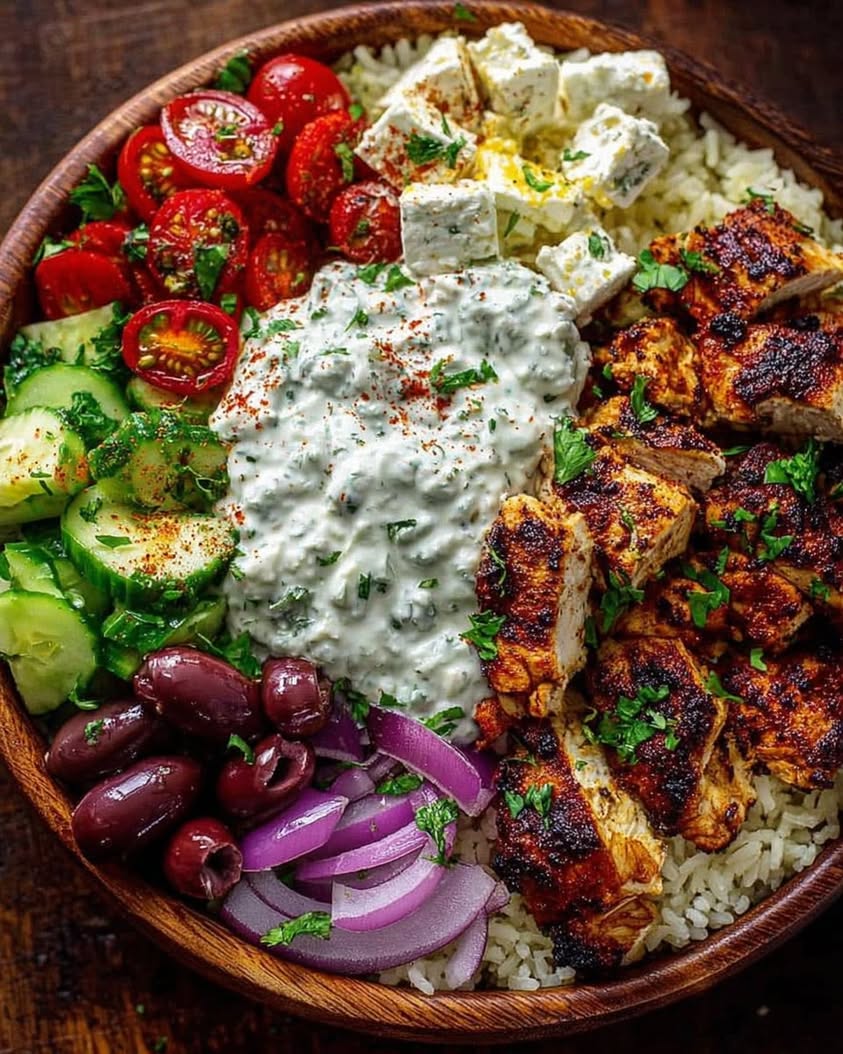
- Visual Appeal: These bowls are a feast for the eyes, full of vibrant colors and appealing contrasts. The golden-brown chicken pieces sit alongside bright green cucumber, deep red tomatoes, and purple-red onions. The creamy white garlic sauce is drizzled over the top, creating a beautiful and appetizing presentation that looks as good as it tastes.
- Skill Level Needed: This recipe is perfect for beginner and intermediate cooks alike. The techniques involved are fundamental, like marinating meat, grilling or pan-frying, and whisking together a simple sauce. With clear instructions and a few helpful tips, anyone can achieve fantastic results.
- Special Equipment: You do not need a huge kitchen arsenal to make these bowls. A standard grill, grill pan, or even a large skillet will work for the chicken. You will also need a few mixing bowls, a sharp knife for chopping vegetables, and a citrus juicer or reamer for fresh lemon juice.
Recipe Overview
- Difficulty Level: This recipe is categorized as easy because the steps are clear and the processes are forgiving. Marinating the chicken requires minimal effort but yields maximum flavor. Cooking the chicken is straightforward, and the garlic sauce comes together in minutes with a simple whisk. It is the perfect project for someone who wants a delicious homemade meal without a complicated list of techniques.
- Category: These bowls fit perfectly into the categories of main dish, weeknight dinner, and summer meal. They are also fantastic for meal prep, as the components can be stored separately and assembled quickly. You can serve them as a hearty lunch or a satisfying dinner.
- Cuisine: This dish is a beautiful celebration of Greek cuisine, which is famous for its fresh, simple, and incredibly flavorful ingredients. The foundation of the marinade and the flavor profile directly reflect the cooking of the Mediterranean region. The use of lemon, olive oil, garlic, and oregano is a hallmark of this culinary tradition.
- Cost: Making these bowls is very cost-effective, especially when you compare them to restaurant prices. Chicken thighs or breasts are generally affordable, and the marinade ingredients are pantry staples. Fresh vegetables like cucumber, tomato, and onion are inexpensive, and the sauce uses common items like yogurt and garlic.
- Season: While you can easily enjoy these bowls year-round, they are especially perfect for the spring and summer months. The bright, fresh flavors and the option to grill the chicken make them an ideal outdoor meal. When tomatoes and cucumbers are at their peak, this recipe truly shines.
- Occasion: This recipe is wonderfully versatile for any occasion. It is a fantastic choice for a casual family dinner on a weeknight. Additionally, it makes a spectacular dish for backyard barbecues, potlucks, or a festive weekend gathering where guests can build their own bowls.
Why You Will Love This Recipe
The taste and texture of these Greek Chicken Souvlaki Bowls with Creamy Garlic Sauce are absolutely addicting. The chicken emerges from the marinade incredibly tender and full of bright, citrusy flavor. Then, the creamy garlic sauce adds a rich, tangy element that instantly elevates the entire dish. Finally, the combination of warm meat, cool vegetables, and smooth sauce creates a perfect symphony in your mouth. You will find yourself craving these flavors again and again. The satisfaction you get from this meal is immediate and profound.
Additionally, the convenience of these bowls is a major win for your busy schedule. The marinade takes only five minutes to whisk together, and you can easily prepare the vegetables while the chicken marinates. Furthermore, the entire cooking process is fast, taking less than 20 minutes from start to finish. This means you can have a sophisticated, restaurant-quality meal on your table in under an hour. The clean-up is also minimal, making it an ideal choice for those evenings when you want a great meal without a huge mess.
From a nutritional standpoint, these bowls are a fantastic choice for a balanced lifestyle. The chicken provides lean protein, which is essential for building and repairing muscle tissue. Meanwhile, the fresh vegetables supply important vitamins, minerals, and dietary fiber. The yogurt-based garlic sauce offers a dose of probiotics and calcium. Therefore, you are getting a wide range of nutrients in a single, deeply satisfying meal. It is food that makes you feel good from the inside out.
Beyond personal enjoyment, these bowls are exceptional for social gatherings. They are naturally interactive because everyone can build their own perfect bowl. Guests can choose their preferred amount of sauce, vegetables, and even the base of rice or pita. This interactive nature makes dinner more fun and engaging. Furthermore, the vibrant colors and incredible aromas will surely impress your family and friends, making you look like a culinary star with very little effort.
Finally, the cost-effectiveness and accessibility of this recipe are hard to beat. Almost all the ingredients are readily available at any standard grocery store. You can also easily adapt the recipe based on what is on sale or currently in your fridge. Using chicken thighs, which are often more affordable than breasts, adds even more flavor and moisture. This means you can eat incredibly well without spending a lot of money. It is a budget-friendly way to travel to the Mediterranean from the comfort of your own kitchen.
Historical Background and Cultural Significance
The story of souvlaki begins in ancient Greece, where street vendors sold small pieces of grilled meat on skewers for a quick and satisfying meal. This simple method of cooking meat over an open fire has been a staple of Greek cuisine for thousands of years. The word souvlaki itself is a diminutive of the Greek word souvla, which means skewer. Therefore, the name directly describes the cooking method. This historical connection links a modern dinner bowl directly to the ancient agora.
In modern Greece, souvlaki holds an enormous cultural importance. It is considered the national street food, a beloved comfort food that transcends all social classes and age groups. You can find souvlaki stands on nearly every corner in cities like Athens and Thessaloniki. It is a food associated with casual gatherings, late-night snacks, and lively family outings. Eating souvlaki is more than just having a meal; it is participating in a deeply ingrained cultural ritual.
The evolution of souvlaki into the bowl form we enjoy today is a fascinating journey. Originally served simply on a plate with bread, the modern concept of the souvlaki bowl is a relatively recent innovation. This adaptation caters to the global demand for customizable, deconstructed meals like grain bowls. Chefs and home cooks began plating the components separately over rice, salad, or fries, allowing for a more diverse and visually appealing presentation. This shift has made the dish more accessible and popular worldwide.
Regional variations of souvlaki are plentiful and reflect local tastes. In Athens, a classic souvlaki pita is tightly wrapped with meat, tomato, onion, and tzatziki. In the northern parts of Greece, a different sauce or spice blend might be used. Some regions prefer pork, while chicken or lamb are more common in other areas. The bowl format itself represents a global variation, moving away from the strict street-food tradition. It is this incredible adaptability that has allowed souvlaki to remain a beloved dish for centuries.
Ingredient Deep Dive
Chicken is the star of these Greek Chicken Souvlaki Bowls with Creamy Garlic Sauce. In Greek cuisine, lamb was traditionally more prominent, but chicken has become a hugely popular protein for its versatility and mild flavor. It wonderfully soaks up the bold Mediterranean marinade. Nutritionally, chicken is a fantastic source of lean protein and essential B vitamins. For the best results, I recommend using boneless, skinless chicken thighs, as they have a higher fat content that keeps the meat incredibly moist and flavorful during cooking. You can store raw chicken in the refrigerator for up to two days before using it. If you have a dairy sensitivity, you could substitute the chicken with firm tofu or thick portobello mushrooms for a vegetarian variation.
Greek yogurt is the foundation of the creamy garlic sauce. This ingredient is a staple in Mediterranean cooking, known for its thick, tangy texture and probiotic benefits. It provides a healthier, more flavorful base compared to mayonnaise-based sauces. The nutritional benefits include a good amount of protein and calcium. When selecting yogurt, look for full-fat, plain Greek yogurt for the best flavor and consistency. It should be thick enough to hold its shape on a spoon. Store it in the refrigerator and use it within a week of opening. You can substitute it with a high-quality strained plant-based yogurt for a dairy-free version.
Fresh lemon juice and zest are non-negotiable for that signature bright flavor. Lemon is a cornerstone of Greek cooking, adding a necessary acidity that cuts through the richness of the meat and sauce. It also acts as a natural tenderizer in the marinade. Lemons are packed with vitamin C and antioxidants. Choose lemons that feel heavy for their size, as they will yield more juice. Store them at room temperature for a week or in the refrigerator for longer life. You can substitute with lime juice or a splash of white wine vinegar in a pinch, but the flavor profile will shift slightly.
Fresh garlic is the heart of the flavor in both the marinade and the sauce. Garlic is used extensively in Mediterranean cuisine for its pungent, earthy kick. It is praised for its numerous health benefits, including anti-inflammatory properties and immune support. When shopping for garlic, choose firm, tight-skinned bulbs that do not have any green sprouts. Store it in a cool, dark, and dry place, not in the refrigerator. You can substitute fresh garlic with garlic paste from a jar or even roasted garlic for a sweeter, mellower flavor. However, fresh garlic truly provides the best punch.
Dried oregano is the essential herb that defines Greek flavor. It has a robust, slightly peppery taste that is more aromatic than the Mexican variety. Oregano has been used since ancient Greece for its medicinal and culinary properties. It is rich in antioxidants. For this recipe, Mediterranean or Greek dried oregano is preferred. Store dried herbs in a sealed container away from heat and light to preserve their potency. A good substitute is a blend of dried thyme and marjoram, though the flavor will be subtly different. Fresh oregano can be used, but use about three times the amount as dried.
Common Mistakes to Avoid
- Do not skip the marinating time for the chicken. Even 30 minutes makes a big difference, but a full two hours infuses the meat with far more flavor. The marinade tenderizes the chicken and ensures it stays juicy during cooking.
- Do not overcook the chicken. Chicken breasts can dry out quickly, and thighs can become tough. Use a meat thermometer to ensure the internal temperature reaches 165°F. Let the meat rest for a few minutes before slicing to keep the juices inside.
- Do not use a chemical-based cleaning method for the grill or pan. Instead, use a wire brush and a bit of oil on a paper towel. This prevents food from sticking and creates those beautiful, flavorful char marks.
- Do not skip the resting time for the cooked chicken. This allows the juices to redistribute throughout the meat. If you slice it immediately, all those flavorful juices will end up on your cutting board instead of in your bowl.
- Do not use low-fat yogurt for the garlic sauce. It has a thinner consistency that can make the sauce watery. Full-fat yogurt provides the necessary thickness and a much richer, creamier texture.
- Do not add all the garlic at once to the sauce. Start with a smaller amount and taste it. Raw garlic can be very potent, and you want to control the intensity to your liking.
- Do not skip drying the cucumber before adding it to the sauce. Excess water from the cucumber will dilute the sauce and make it runny. Salting and squeezing the shredded cucumber removes the liquid.
- Do not overcrowd the pan when cooking the chicken. If you put too many pieces in at once, the temperature of the pan will drop, and the chicken will steam instead of sear. This prevents browning and flavor development.
- Do not forget to season your vegetables. A simple squeeze of lemon juice, a drizzle of olive oil, and a pinch of salt can make your tomatoes and cucumbers taste much brighter.
Essential Techniques
Marinating is a crucial technique for these Greek Chicken Souvlaki Bowls with Creamy Garlic Sauce. This process involves soaking the chicken in a flavorful, acidic liquid before cooking. The acid, from lemon juice or vinegar, helps break down tough muscle fibers, making the meat more tender. The oil and herbs in the marinade coat the meat, adding layers of flavor. To master this, ensure the chicken is fully submerged in the marinade. Use a non-reactive bowl, like glass or stainless steel, to prevent a metallic taste. The optimal marinating time is one to two hours. Marinating for longer than six hours can make the chicken mushy.
Grilling or pan-searing are the primary cooking methods for the chicken. Grilling imparts a smoky flavor and those classic char marks. To do this well, preheat your grill to medium-high heat and oil the grates. If you are using a pan, get it very hot before adding the chicken. Do not move the chicken around for the first few minutes of cooking. This allows a crust to form, which will release naturally from the pan. The internal temperature is your best guide for doneness. The meat is done when it reaches 165°F in the thickest part. Visual cues include golden-brown color and clear juices.
Making a yogurt-based sauce requires careful emulsion and seasoning. The key to a creamy, cohesive sauce is to control the liquid and incorporate the ingredients slowly. Start with a base of thick Greek yogurt. Then, add your shredded cucumber, garlic, lemon juice, and herbs. Whisk everything together until it is fully combined. If the sauce is too thick, add a tablespoon of water or milk at a time until you reach your desired consistency. Taste and adjust for salt and pepper. The final sauce should be thick enough to coat the back of a spoon but still pourable.
Building a cohesive bowl is an art that involves planning and balance. Start by choosing your base, such as warm rice, quinoa, or torn pita. Then, arrange the protein, the cooked chicken, in a prominent spot. Next, add your fresh vegetables, grouping them together in small piles around the bowl. Finally, drizzle the sauce generously over the top. A good bowl provides a little bit of everything in every bite. The goal is to create a balanced mix of flavors, textures, and colors in each spoonful. Pay attention to portion sizes to keep the bowl from becoming overcrowded.
Pro Tips for Perfect Greek Chicken Souvlaki Bowls with Creamy Garlic Sauce
For the absolute best flavor, marinate the chicken for at least two hours. The longer it sits, the deeper the herbs and lemon will penetrate the meat. This is a great step to do in the morning before you start your day.
Always bring the chicken to room temperature for about 20 minutes before cooking. This helps it cook more evenly, preventing the outside from burning while the inside remains raw. A cold piece of meat going into a hot pan causes uneven cooking.
Do not crowd the pan or grill grates. Give each piece of chicken a little space to breathe. This ensures that the heat can circulate and create a beautiful sear on the outside of the meat. Crowding will cause the chicken to steam and lose its texture.
Make your garlic sauce a day ahead of time if you can. The flavors will meld together beautifully in the refrigerator, resulting in a much more complex and delicious sauce. This is one of the best make-ahead tricks for this recipe.
Season your vegetables generously. A simple dressing of olive oil, lemon juice, salt, and pepper transforms them from plain side items into a bright, cohesive part of the bowl. Do not be shy with the seasoning.
Warm your pita or rice before serving it in the bowl. Cold bread or grains can make the whole bowl feel less satisfying. A warm base is comforting and helps to slightly soften the vegetables and sauce.
Variations and Adaptations
Regional variations of souvlaki offer a unique twist. The classic Athenian version often uses pork, marinated differently than chicken. You can try using pork shoulder or tenderloin for a more authentic, street-food-inspired flavor. Another regional difference is the sauce. Some areas of Greece serve their souvlaki with a spicy chili sauce alongside the tzatziki. This offers a wonderful heat that complements the cool yogurt. Exploring these variations can make you feel like a citizen of the world.
Seasonal adaptations are natural for this dish. During the summer, use peak-season tomatoes and cucumbers for the freshest possible taste. You can also grill your vegetables, like zucchini and bell peppers, to add a smoky char. In the colder months, you can add roasted vegetables like sweet potatoes or butternut squash. These root vegetables add a wonderful sweetness and heft to the bowl, making it more comforting during the fall and winter seasons.
Dietary modifications are easy to make for these bowls. For a gluten-free version, simply use rice or quinoa as a base instead of pita bread. For a dairy-free option, substitute the Greek yogurt in the sauce with a thick, plain coconut or almond-based yogurt. You can also make a simple tahini sauce with lemon juice, garlic, and water. For a vegan adaptation, marinate and cook extra-firm tofu or portobello mushrooms in the same Greek seasoning.
Flavor variations can change the entire personality of the dish. You can add smoked paprika or cumin to the chicken marinade for a deeper, earthier profile. Alternatively, add a pinch of red pepper flakes or a bit of harissa paste for some heat. For an herby twist, incorporate fresh mint and dill into the garlic sauce alongside the classic cilantro if desired. These small additions can make the recipe feel new and exciting every time you make it.
Presentation alternatives offer creative ways to serve this meal. Instead of a bowl, you can make a classic souvlaki wrap. Warm a large pita or flatbread, and layer in the chicken, vegetables, and sauce. Roll it up tightly and slice it in half for an easy handheld meal. You can also serve the deconstructed components on a large platter for a family-style dinner. This allows everyone to build their own perfect plate, which is great for entertaining.
Serving and Presentation Guide
Plating techniques for these Greek Chicken Souvlaki Bowls with Creamy Garlic Sauce can range from simple to dramatic. For a home-style presentation, simply layer the rice in the bottom of a wide bowl. Then, artfully arrange the sliced chicken, cucumbers, tomatoes, and onions on top. Finish by drizzling a generous amount of sauce over the meat and vegetables. For a more refined look, use a ring mold to shape the rice into a perfect circle on the plate.
Garnishing ideas can enhance both the flavor and the visual appeal of the dish. A sprinkle of fresh oregano or chopped parsley adds a pop of green and a fresh aroma. You can also add a few whole kalamata olives or a piece of lemon wedge on the side for a bright, acidic contrast. For a final touch, a light drizzle of extra-virgin olive oil over the top of everything adds richness and a beautiful sheen.
Traditional accompaniments for this dish are minimal but impactful. A side of warm, soft pita bread is almost mandatory for dipping into the garlic sauce and soaking up any juices. You might also serve a simple Greek salad on the side with feta cheese, olives, and a light vinaigrette. A classic side of roasted lemon potatoes or fries is also a very traditional and delicious pairing.
Modern serving suggestions often involve creative base options. You can serve these bowls over a bed of mixed greens for a lighter, low-carb version. Using a grain like farro, quinoa, or pearl couscous adds a nutty flavor and chewy texture. For a fun twist, serve the components in a large, warmed tortilla for a fusion-style wrap that is easy to eat on the go.
Temperature considerations are key for a perfect dining experience. The chicken should be served warm, ideally just off the grill or pan. The garlic sauce should be cold, so take it out of the refrigerator right before serving. The vegetables should be at room temperature, as this allows their natural flavors to shine. A pleasant contrast between the warm meat and cold sauce creates a delightful eating experience.
Portion control tips ensure that everyone gets a balanced and satisfying meal. A good rule of thumb is to use about six to eight ounces of raw chicken per person. For the base, aim for a half cup to one cup of cooked rice or grains. For vegetables, a generous handful of chopped cucumbers and tomatoes per bowl is ideal. Finally, do not skimp on the sauce, but start with two tablespoons and let people add more as desired.
Wine and Beverage Pairing
Wine pairings for these Greek Chicken Souvlaki Bowls with Creamy Garlic Sauce are a joy to explore. The bright, citrusy notes of the marinade call for a crisp, acidic white wine. A classic Greek Assyrtiko from the island of Santorini is an exceptional choice. Its high acidity and mineral notes perfectly cut through the richness of the sauce. Another wonderful option is a Sauvignon Blanc, which will complement the herbal flavors of oregano and garlic.
Non-alcoholic alternatives are abundant and delicious for this meal. A simple glass of sparkling water with a squeeze of fresh lemon and a sprig of mint is incredibly refreshing. This cleanses the palate between bites of the rich chicken and sauce. You could also try a Mediterranean-inspired iced tea, brewed with a bit of orange blossom and mint for a fruity aroma.
If you are serving this meal for a special occasion, a light red wine can also work beautifully. A Pinot Noir or a lighter-bodied Grenache would be a good choice. These wines have enough acidity to stand up to the lemon and garlic without overpowering the delicate chicken. Serve them slightly chilled for the best effect. A dry rosé is also a fantastic and very food-friendly option.
Temperature considerations for your beverages are just as important as for the food. White wines should be well-chilled, but not ice-cold, as that can mute their flavors. Red wines should be served at a cool room temperature, or even slightly chilled in the summer. For non-alcoholic drinks, plenty of ice is a must. Ensure you have a cooler or bucket of ice ready if you are serving outdoors.
Serving suggestions for beverages should focus on enhancing the experience. Offer a selection of both wine and non-alcoholic options to cater to all your guests. Provide appropriate glassware, such as stemware for wine and tall glasses for water or iced tea. Having a pitcher of water with lemon on the table is a very welcoming and practical touch for a meal with bold flavors like this one.
Storage and Shelf Life
Storage methods for the components of these bowls are crucial for maximizing their freshness. The cooked chicken should be stored separately from the vegetables and sauce. Place the chicken in an airtight container and refrigerate it immediately after it has cooled down. The vegetables, if already chopped, should be stored in a separate container lined with a paper towel to absorb excess moisture. The garlic sauce should be kept in a jar or airtight container.
Temperature requirements are simple but important. The refrigerator temperature should be at or below 40°F to keep the chicken and sauce safe from bacteria. Do not leave the cooked food out on the counter for more than two hours. If the room temperature is above 90°F, that window shrinks to just one hour. Always err on the side of caution with leftovers.
Container recommendations focus on maintaining texture and preventing odor transfer. Glass containers are excellent because they do not absorb smells or stains. If you use plastic, make sure it is BPA-free and designed for food storage. For the sauce, a small glass jar is ideal. Ensure all lids are tight-fitting to keep the food fresh and prevent your refrigerator from smelling like garlic and onions.
Signs of spoilage are easy to spot if you know what to look for. The chicken will develop a sour smell or a slimy texture if it has gone bad. The vegetables will become limp, watery, or develop mold. The garlic sauce may separate and develop a watery layer on top, though a little separation is normal. If the sauce smells strongly sour or yeasty, it is time to throw it out.
Reheating instructions are best for the chicken only. Reheat the chicken in a skillet over medium heat with a splash of water or broth to keep it moist. You can also reheat it in the microwave, but it will not be as crispy. Do not reheat the vegetables or the sauce, as they are meant to be served cold or at room temperature. The rice base can be reheated in the microwave or a pan with a little water.
Freezing guidelines suggest that the cooked chicken freezes very well. Place it in a freezer-safe bag or container, pressing out as much air as possible. It will maintain its best quality for up to three months. When you are ready to use it, thaw it overnight in the refrigerator. The sauce and fresh vegetables do not freeze well, as they will become watery and lose their texture upon thawing.
Make Ahead Strategies
A prep timeline is essential for making your dinner hour stress-free. You can start the process up to two days in advance. On day one, make the garlic sauce and store it in the refrigerator. On day two, prepare the chicken marinade by combining all ingredients and place the chicken in the bag. Also, chop all the vegetables and store them in separate containers. On the day you want to eat, simply cook the chicken and assemble the bowls.
Storage between steps is critical to keep everything fresh. The marinating chicken should stay in the refrigerator, not on the counter. The chopped vegetables will hold up beautifully for two days if they are stored in airtight containers with a paper towel. The garlic sauce will actually improve in flavor after a day in the fridge, as the garlic and herbs meld together.
Quality impact assessment is important to consider. The chicken will be just as delicious if it is made ahead and reheated. The sauce will taste even better the next day. The only component that might suffer slightly is the fresh vegetables, but they will still be very good if they are properly stored and dried. The overall quality of the bowls remains incredibly high when you use a make-ahead strategy.
Assembly tips for when you are ready to serve are simple. Warm the base of rice or pita. Reheat the chicken until it is hot. Arrange the cold vegetables and sauce on the side or on top. The final assembly should take no more than five minutes. This allows you to have a fantastic, home-cooked meal ready in no time at all, even on the busiest of nights.
Reheating guidelines focus on the chicken and base. The best way to reheat the chicken is in a hot skillet for a few minutes per side. This will revive the sear and keep the meat from drying out. The rice can be reheated in the microwave with a damp paper towel over it to steam it back to fluffiness. Never reheat the sauce or vegetables.
Fresh element additions are a great way to revive the meal. Just before serving, you can add a squeeze of fresh lemon juice over everything. A sprinkle of fresh herbs, like oregano or parsley, will add a burst of fresh flavor and color. A final drizzle of good olive oil can also make the dish feel newly prepared, even if some elements were made days ago.
Scaling Instructions
Halving the recipe is a straightforward process for a smaller household. Simply cut all the ingredients for the marinade, the chicken, the vegetables, and the sauce in half. You will likely use one or two chicken breasts or thighs. The cooking time may need to be slightly reduced as the pieces of meat will be smaller. The assembly steps remain the same.
Doubling or tripling this recipe is easy for a crowd or for meal prep. All the ingredients can be proportionally increased. For the marinade, simply multiply your quantities by two or three. You will need a larger skillet or to work in batches when cooking the chicken to avoid overcrowding. The garlic sauce can be whisked together in a larger bowl. Plan accordingly for more storage space.
Equipment adjustments are necessary when scaling up. If you are doubling the recipe, you may need two large skillets or one very large one. Alternatively, you can grill the chicken, which allows you to cook a large quantity at once. For the sauce, you will need a larger mixing bowl. Make sure your refrigerator has enough space to accommodate all the containers for the marinating chicken and the finished components.
Timing modifications are important to keep the meal cohesive. When cooking for a crowd, you will need to add about five to ten more minutes to the total cooking time because you will be working in batches. You can keep the cooked chicken warm on a baking sheet in a low oven (200°F) while you finish the rest. This ensures all the meat is hot and ready to serve at the same time.
Storage considerations become more significant when you are scaling up. You will need more containers to store the leftover components separately. Label the containers with the date so you can track how long they have been in the refrigerator. If you are meal prepping for the week, consider storing the sauce and the chicken separately from the fresh vegetables to maintain the best texture.
Nutritional Deep Dive
A macro breakdown of this bowl shows a balanced meal for energy and satiety. A standard serving provides a substantial amount of protein from the chicken, typically around 35 to 45 grams. The carbohydrates come from the rice or pita base and the vegetables. The healthy fats come from the olive oil in the marinade and the yogurt in the sauce. This macronutrient profile makes it a great post-workout meal or a satisfying dinner that will keep you full for hours.
Micronutrient analysis reveals a wealth of vitamins and minerals. The chicken provides B vitamins, particularly niacin and B6, which are essential for energy metabolism. The vegetables are rich in vitamin C from the tomatoes and lemon, vitamin K from the cucumbers, and antioxidants like lycopene from the tomatoes. The garlic sauce contributes calcium and probiotics. This meal is a dense source of essential nutrients for overall health.
Health benefits of this meal are numerous. The high protein content supports muscle maintenance and repair. The healthy fats from olive oil are beneficial for heart health. The fiber from the vegetables aids in digestion and promotes feelings of fullness. Additionally, the probiotics from the yogurt support a healthy gut microbiome. This is food that nourishes your body from the inside out.
Dietary considerations for this recipe are very favorable. It is naturally free from gluten if you avoid the pita and use rice or quinoa. It is also nut-free and soy-free if you use the standard ingredients. By substituting the yogurt, you can easily make it dairy-free. This makes it a very inclusive meal for a variety of dietary needs and restrictions. You can serve it with confidence to most people.
Portion analysis helps you control your calorie and macronutrient intake. A standard bowl with rice, six ounces of chicken, a cup of vegetables, and two tablespoons of sauce is a very satisfying meal. If you are watching your carbohydrate intake, you can simply reduce the amount of rice or swap it for extra greens. The protein and fat will still keep you full and satisfied.
Weight management tips using this recipe are effective. Because it is so high in protein and flavor, it naturally helps with portion control. You are less likely to overeat because you feel satisfied. You can also make the bowls Print
Greek Chicken Souvlaki Bowls with Garlic Sauce
- Total Time: 1 hour 10 minutes (with marinating)
- Yield: 4
Description
Tender marinated chicken skewers served over a bed of fluffy rice with fresh tomatoes, cucumbers, red onion, and a tangy homemade garlic sauce.
Ingredients
- 1.5 lbs boneless skinless chicken breasts, cut into cubes
- 1/4 cup olive oil
- 3 tbsp lemon juice
- 3 cloves garlic, minced
- 1 tsp dried oregano
- 1/2 tsp salt
- 1/4 tsp black pepper
- 2 cups cooked rice (white or brown)
- 1 cup cherry tomatoes, halved
- 1 cucumber, diced
- 1/2 red onion, thinly sliced
- 1/2 cup pitted Kalamata olives (optional)
- 1/4 cup crumbled feta cheese
- For the Garlic Sauce:
- 1/2 cup Greek yogurt
- 2 tbsp mayonnaise
- 1 tbsp lemon juice
- 2 cloves garlic, minced
- 1/2 tsp dried dill
- Salt to taste
Instructions
- In a bowl, whisk together olive oil, lemon juice, minced garlic, oregano, salt, and pepper. Add chicken cubes, toss to coat, cover, and marinate in the refrigerator for at least 30 minutes.
- While chicken marinates, prepare the garlic sauce: In a small bowl, combine Greek yogurt, mayonnaise, lemon juice, minced garlic, dill, and salt. Stir well and refrigerate until serving.
- Cook rice according to package directions if not already prepared.
- Thread marinated chicken onto skewers. Grill or pan-sear over medium-high heat for 6-8 minutes per side, until cooked through and lightly charred.
- To assemble bowls, divide rice among bowls. Top with tomatoes, cucumber, red onion, olives (if using), and feta cheese.
- Remove chicken from skewers and place on top of each bowl. Drizzle generously with garlic sauce and serve.
Notes
You can customize the seasonings to taste. For best results, marinate chicken overnight. Wooden skewers should be soaked in water for 30 minutes before grilling to prevent burning.
- Prep Time: 20 minutes (plus marinating)
- Cook Time: 20 minutes
- Method: Main
- Cuisine: Greek