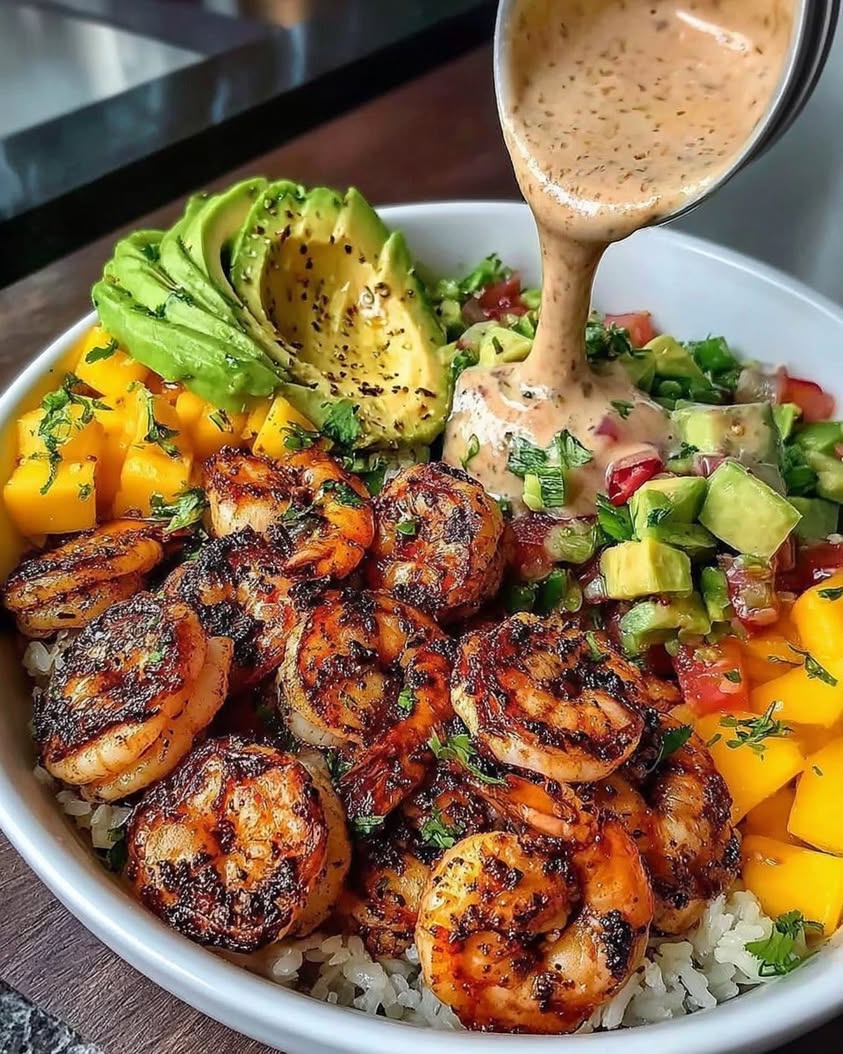
Shrimp and Avocado Bowls with Mango Salsa and Lime-Chili Sauce Recipe
This Shrimp and Avocado Bowls with Mango Salsa and Lime-Chili Sauce recipe is a vibrant and healthy meal that comes together in just over half an hour. You get succulent, perfectly cooked shrimp paired with creamy avocado, all topped with a sweet and tangy mango salsa and a zesty lime-chili sauce. This Shrimp and Avocado Bowls with Mango Salsa and Lime-Chili Sauce recipe is your perfect weeknight dinner that feels like a special treat.
Imagine a bowl filled with fluffy rice or crisp greens, then layered with tender shrimp, cool avocado slices, and a bright mango salsa. Every bite combines different temperatures and textures. The lime-chili sauce adds a spicy kick that cuts through the richness. This Shrimp and Avocado Bowls with Mango Salsa and Lime-Chili Sauce recipe is undeniably satisfying and impressively simple to put together.
If you are searching for a meal that packs flavor, looks beautiful, and supports a balanced diet, look no further. This Shrimp and Avocado Bowls with Mango Salsa and Lime-Chili Sauce recipe ticks every box. It works for a quick lunch, a casual family dinner, or even a more elegant evening meal. The whole dish feels light without ever feeling lacking. Prepare to taste a bowl full of sunshine and spice.
Quick Recipe Highlights
- Flavor Profile: The flavor is a dynamic balance of sweet mango, briny shrimp, creamy avocado, tangy lime, and spicy chili. It wakes up your whole palate.
- Texture: You get a wonderful mix of tender shrimp, soft avocado, juicy mango, and crisp fresh vegetables in the salsa. Every mouthful offers variety.
- Aroma: Aromas of seared shrimp, fresh lime zest, and ripe mango fill the air. It is incredibly inviting and promises a fresh meal.
- Visual Appeal: The bright orange mango, green avocado, white and pink shrimp, and red chili make a stunning presentation. It is a feast for the eyes.
- Skill Level Needed: This recipe is suitable for beginners. You need only basic knife skills and the ability to cook shrimp for a few minutes.
- Special Equipment: You need a sharp knife, a cutting board, a large skillet or grill pan, and a mixing bowl. Nothing too fancy is required.
Recipe Overview
- Difficulty Level: This recipe stands at an easy difficulty level because it uses simple techniques. The cooking process for the shrimp is short and hard to mess up. Assembling the bowl is just a matter of arranging ingredients. Time management is almost effortless with this dish.
- Category: You can classify this bowl as a main course salad or a grain bowl. It works perfectly for lunch or dinner. You can also serve it as a heavy appetizer for a party.
- Cuisine: This dish draws heavy inspiration from modern Cal-Mex cuisine, which blends California’s fresh produce with Mexican flavors. The use of mango salsa is a classic Baja California style preparation. The avocado and lime are staples in coastal Mexican cooking. The whole dish feels authentic yet totally approachable.
- Cost: The cost is moderate for this meal. Shrimp can be the priciest ingredient, especially if you buy large ones. Avocados and mangoes are seasonal and their prices fluctuate. Overall, it costs less than eating out for four people.
- Season: This bowl shines best during the summer months. Mangoes and avocados are at their peak then, offering the best flavor and value. However, you can enjoy it year round using good quality imported fruit.
- Occasion: This versatile meal fits many occasions. It is great for a quick weeknight dinner or a healthy lunch prep. You can also serve it at summer barbecues or casual get togethers.
Why You will Love This Recipe
The taste and texture appeal of this dish is undeniable. You get a sweet pop from the mango salsa that contrasts perfectly with the savory shrimp. The creamy avocado smooths out the heat from the chili sauce. It is a symphony of flavors and textures in one bowl. You will never get bored eating this.
The convenience and preparation benefits are huge for a busy cook. You can prep the mango salsa and the sauce ahead of time. Cooking the shrimp takes only a few minutes. Then you just assemble everything in bowls. This Shrimp and Avocado Bowls with Mango Salsa and Lime-Chili Sauce recipe cuts down on clean up and stress.
The nutritional advantages make this a smart choice. Shrimp offers lean protein with very few calories. Avocado provides healthy monounsaturated fats. Mango is packed with vitamin C and fiber. This meal keeps you full and energized without weighing you down. It supports a healthy lifestyle easily.
This recipe has excellent social and entertaining value. It looks gourmet and impressive when plated. Guests can assemble their own bowls for a fun interactive dinner. You can also make a large batch for a party crowd. It is a conversation starter and a crowd pleaser every time.
Cost effectiveness and accessibility are strong points here. The ingredients are readily available in most grocery stores year round. You can adjust the protein to use chicken or tofu if shrimp is too pricey. The mango salsa uses simple pantry staples. You get a restaurant quality meal for a fraction of the price.
Historical Background and Cultural Significance
The bowl format for this dish comes from the modern food bowl trend that gained popularity in the 2010s. However, the ingredients have deep roots in coastal Mexican cuisine. Fishermen in Baja California traditionally served fresh seafood with lime, chili, and mango salsa. This dish honors that heritage using a modern assembly style.
Shrimp has significant cultural importance in many global cuisines, especially in coastal communities. In Mexican coastal states like Sinaloa and Nayarit, shrimp is a crucial economic and culinary resource. The preparation of shrimp with citrus and chili is a time honored method. It represents the fresh, simple cooking style of the region.
The evolution of this recipe reflects the global fusion of culinary ideas. Chefs started combining tropical mango salsa with avocado and protein bowls. The lime-chili sauce replaces heavier dressings for a lighter feel. This recipe represents a healthy, modern twist on traditional seafood preparations.
Regional variations of this bowl are common across the Americas. In Florida, cooks might add hearts of palm or a citrus vinaigrette. In Hawaii, a macadamia nut crunch might top the dish. This basic Shrimp and Avocado Bowls with Mango Salsa and Lime-Chili Sauce recipe remains the most balanced and popular version. It perfectly captures the bright flavors of the Americas.
Ingredient Deep Dive
Shrimp is the star protein of this meal and has a rich cultural history. It has been a dietary staple for coastal civilizations for thousands of years. Shrimp is low in calories but incredibly high in protein and selenium. When you buy shrimp, always look for a firm texture and a mild, ocean fresh smell. Avoid shrimp that smells strongly of ammonia. You can store raw shrimp in the coldest part of your refrigerator for one to two days. You can also substitute cooked, chilled shrimp if you prefer a cold bowl.
Avocado provides the creamy, rich element that balances the spicy sauce. It originates from south central Mexico and has been cultivated for over 5,000 years. Avocados are loaded with heart healthy monounsaturated fats and potassium. When you choose an avocado, look for one that yields slightly to gentle pressure. A hard avocado needs more time to ripen at room temperature. Store ripe avocados in the refrigerator to slow down further ripening. You can substitute sliced jicama or even a poached egg for a different texture.
Mango is the source of sweet sunshine in the salsa. Mango is native to South Asia but has become a beloved ingredient in Mexican cooking. It provides ample vitamin A and vitamin C to support your immune system. You should look for a mango that gives slightly to a gentle squeeze and smells fragrant at the stem. A mango with a flat, soft spot is overripe. Store unripe mangoes on the counter and move ripe ones to the fridge. You can substitute ripe peaches or papaya for a different sweet note.
Lime and chili come together to form the tangy, spicy sauce. Lime has been used in Latin American cooking for centuries to brighten flavors. Chili peppers have their own ancient history in the Americas and add capsaicin. Together they create a sauce that wakes up the entire bowl. Select limes that are heavy for their size with no soft spots. For the chili, you can use fresh jalapeno, serrano, or a pinch of red pepper flakes. Store limes in the refrigerator for longer shelf life. The chili can be seeded to reduce heat.
Rice or greens form the base of this bowl. White rice is a neutral base that soaks up the lime-chili sauce beautifully. Brown rice adds more fiber and a nuttier flavor. Mixed greens offer a lighter, lower carb option. Rice has been a dietary pillar across Asia and Latin America for centuries. Greens are packed with vitamins and add a crisp texture. Store your base separately from the wet ingredients to prevent sogginess. You can substitute quinoa or cauliflower rice for more nutrition.
Common Mistakes to Avoid
- Overcooking the shrimp makes them rubbery and tough. Shrimp cook very quickly, usually in two to three minutes per side. Remove them as soon as they turn pink and opaque.
- Using an underripe avocado ruins the creamy texture you want. An underripe avocado is hard and tasteless. Always let it ripen fully before you use it.
- Making the mango salsa too far in advance results in a watery mess. The salt draws out moisture from the mango. Prepare the salsa no more than two hours before serving.
- Adding too much chili to the sauce can overwhelm every other flavor. You can always add more heat, but you cannot take it away. Start with a small amount and taste first.
- Chopping the ingredients into uneven sizes leads to a poor texture. The shrimp, avocado, and mango should be cut into similar sized pieces. This ensures each bite has a balanced mix.
- Skipping the step of patting the shrimp dry prevents a good sear. Wet shrimp will steam instead of browning beautifully. Use paper towels to dry them thoroughly before cooking.
- Forgetting to taste the lime-chili sauce before adding it to the bowl is a big mistake. Limes vary in acidity and sweetness. Adjust the salt and heat level to your liking first.
- Assembling the bowl too early makes the avocado brown and the base soggy. Keep all components separate until you are ready to serve. This preserves the texture and color of every ingredient.
Essential Techniques
Mastering the perfect sear on your shrimp is crucial for this recipe. You need a very hot pan with a thin layer of high smoke point oil like avocado oil. Place the shrimp in a single layer without crowding the pan. You should cook each side for one to two minutes until they are pink and lightly charred. Watch for the shrimp to curl into a loose C shape. An O shape means they are overcooked. Pat the shrimp dry before they hit the pan to maximize browning.
Making the mango salsa requires a consistent dice for the best texture. You first need to peel the mango with a vegetable peeler for a clean look. Cut off the two cheeks away from the large flat pit. Then slice the flesh into batons and finally into a small, uniform dice. You want pieces that are about a quarter inch in size. This ensures the salsa distributes evenly and looks professional. A sharp knife makes this process much smoother and safer.
Balancing the lime-chili sauce is a skill that comes with practice. You should start with the juice of one lime and a small amount of minced chili. Whisk in a little oil or water to thin the consistency. Taste a tiny drop on your finger to gauge the heat. You want the acid and the heat to be present but not dominant. A pinch of sugar or honey can balance out too much lime. Always season with salt last to bring all the flavors together.
Pro Tips for Perfect Shrimp and Avocado Bowls with Mango Salsa and Lime-Chili Sauce Recipe
Season the shrimp lightly with salt and a pinch of cumin before you cook them. Cumin adds a warm, earthy note that pairs perfectly with the chili and lime. It deepens the overall flavor of the bowl.
Use the freshest limes you can find for the sauce. Roll them firmly on the counter before cutting to release more juice. Fresh juice makes a noticeable difference compared to bottled lime juice.
Let the cooked shrimp rest for one minute on a clean plate. This allows the juices to redistribute inside the meat. Resting keeps the shrimp from being watery on your bowl.
Cut the avocado last, right before you assemble the bowls. A cut avocado begins to brown immediately when exposed to air. Tossing it in a little lime juice slows down the oxidation process.
Warm the base of your bowl slightly if you are using rice. A warm base contrasts beautifully with the cool avocado and mango salsa. This temperature dynamic makes the dish more interesting.
Use a microplane to zest a little lime peel over the finished bowl. The zest contains essential oils that burst with aroma. It adds a final bright note that elevates the whole presentation.
Do not discard the mango pit or the skin. You can scrape the pit for extra mango flesh for the salsa. The skin can be used to flavor water or infuse vinegar.
Variations and Adaptations
Regional variations of this bowl often reflect local ingredients. In the Pacific Northwest, cooks might add grilled salmon instead of shrimp. In the Caribbean, a drizzle of coconut milk would be common. This flexibility makes the basic recipe a great starting point for exploration.
Seasonal adaptations are easy to implement for this recipe. In the fall, you can substitute roasted butternut squash for the mango. In the spring, fresh strawberries make a surprising and sweet salsa. You can always adapt based on what looks best at your local market.
Dietary modifications are simple here. To make this dairy free, simply omit any cheese you might add. The recipe is naturally gluten free if you use a gluten free grain base. It is also very easy to make paleo or Whole30 compliant by using lettuce wraps instead of rice.
Flavor variations can keep this recipe fresh every time. Try a smoky chipotle version by adding chipotle powder to the sauce. An herby version with chopped cilantro and mint in the salsa is also delicious. You can even add a touch of ginger to the sauce for an Asian fusion twist.
Texture modifications depend on your preference. If you want more crunch, add toasted pepitas or sliced almonds on top. A more tender texture comes from using slightly riper avocados or softer mangoes. You can also add shredded cabbage for an extra crisp element.
Presentation alternatives can change the whole feel of the meal. Serve everything in a large lettuce cup for a handheld appetizer. You can also layer the ingredients in a clear glass jar for an impressive lunch. This basic bowl format is the most practical but not the only option.
Serving and Presentation Guide
Plating techniques start with a clean, wide bowl for the best visual effect. Spoon your chosen base into the center and spread it out slightly. Arrange the shrimp in a neat pile on one side of the bowl. Place the avocado slices and mango salsa on the other sides for color contrast.
Garnishing ideas take this bowl to the next level. A sprinkle of fresh cilantro leaves adds herbaceous aroma. Thinly sliced red chili or radish adds a pop of red color. A final drizzle of the lime-chili sauce over the top ties everything together.
Traditional accompaniments for this style of bowl include warm corn tortillas on the side. You can also serve it with a side of black beans or refried beans. A simple green salad with a light vinaigrette also pairs well.
Modern serving suggestions include turning this into a taco bar. Provide the filling in separate bowls and let everyone build their own. This works wonderfully for parties and family dinners.
Temperature considerations are important for the best experience. The shrimp should be served warm after cooking. The avocado and mango salsa should be cool but not ice cold. The base can be warm or at room temperature depending on your preference.
Portion control tips help you manage your meal size. The shrimp portion is about four to six ounces per person. Avocado should be half a medium avocado per serving. The mango salsa portion is about a half cup per person.
Wine and Beverage Pairing
Wine pairings for this dish should focus on high acidity and low tannins. A crisp Sauvignon Blanc from New Zealand or California is an excellent choice. The wine’s citrus notes match the lime in the sauce beautifully. A dry Riesling from Germany also works very well with the mango sweetness.
Non alcoholic alternatives include a sparkling limeade or a hibiscus iced tea. These drinks offer the same acidity and freshness without the alcohol. A ginger beer also adds a spicy kick that complements the chili sauce. You can also serve a simple agua fresca made from cucumber and lime.
Temperature considerations for beverages are straightforward with this meal. Serve white wines and sparkling drinks very cold for the best effect. Iced tea should be full of ice to contrast with the warm shrimp. Room temperature drinks will not feel as refreshing.
Serving suggestions involve offering the beverage in a tall glass with a lime wheel. The glass looks beautiful and the garnish adds a fresh scent. Keep the pitcher on the table for easy refills during a meal.
Storage and Shelf Life
Storage methods for this bowl require keeping components separate. Store the cooked shrimp in an airtight container for up to three days. Store the mango salsa separately to prevent it from getting watery. Keep the avocado unsliced until you are ready to eat it.
Temperature requirements are crucial for food safety. Keep everything refrigerated at 40 degrees Fahrenheit or below. Do not leave the assembled bowl out at room temperature for more than two hours. During hot weather, this window shrinks to one hour.
Container recommendations include glass containers for best quality. Glass does not absorb flavors or odors like plastic can. Use containers with tight fitting lids to lock in moisture and keep out fridge smells.
Signs of spoilage to watch for include a sour smell or slimy texture on the shrimp. The salsa may start to smell fermented or look bubbly. The avocado will turn brown and mushy, which is a clear sign to discard it.
Reheating instructions apply only to the shrimp and base. You can reheat shrimp gently in a skillet for a minute or two. You can also reheat rice in the microwave with a damp paper towel on top. Do not reheat the avocado or mango salsa.
Freezing guidelines are limited for this recipe. You can freeze the cooked shrimp separately for up to three months. Thaw it overnight in the refrigerator before using. The mango salsa and avocado do not freeze well and should be made fresh.
Make Ahead Strategies
Prep timeline starts with making the lime-chili sauce up to three days in advance. You can also prep the mango salsa up to two hours before serving. The avocado must wait until right before you plate the meal. This staggered approach saves time while maintaining quality.
Storage between steps is critical for maintaining freshness. Keep the sauce in a jar with a tight lid in the refrigerator. Store the mango salsa in a bowl covered with plastic wrap pressed onto the surface. This prevents oxidation and keeps the color bright.
Quality impact assessment shows that most elements can be prepped ahead without issue. The shrimp are best fresh but can be cooked a day ahead. The avocado suffers the most from being prepped too early. Plan to cut the avocado last for the best results.
Assembly tips for make ahead meals include keeping everything cold until serving. Warm the shrimp and base just before you put the bowls together. Arrange the components neatly for an attractive presentation.
Reheating guidelines for precooked shrimp are simple. Use a hot skillet with a tiny bit of water to steam them for twenty seconds. This restores their warmth without making them rubbery. Do not use a microwave for reheating shrimp.
Fresh element additions like extra cilantro or a squeeze of lime should be added right before serving. This brings back the bright, fresh flavor that faded during storage. A final garnish makes the bowl look freshly made.
Scaling Instructions
Halving the recipe is very straightforward for smaller households. Simply divide all ingredient quantities by two. You will need one half of a mango and one half of an avocado per serving. Cook the shrimp in a smaller skillet to accommodate fewer pieces.
Doubling or tripling the recipe for a crowd requires some adjustments. Use a very large skillet or work in batches to avoid overcrowding the shrimp. You will need a larger bowl for the mango salsa. The lime-chili sauce formula scales up easily using ratios.
Equipment adjustments for larger batches include using a sheet pan for the shrimp. You can bake the shrimp at 400 degrees Fahrenheit for six minutes instead of pan searing. This frees up stove space for other parts of the meal. A large serving spoon helps mix the larger salsa batch.
Timing modifications for scaled recipes are minimal. The shrimp cook time stays the same no matter the quantity. The cutting time increases proportionally with the amount of fruit and vegetables. Plan for an extra ten minutes of prep time for a doubled batch.
Storage considerations for scaled recipes mean you will have more leftovers. Store the extra shrimp and salsa in separate containers. They will keep for the same duration as a single batch. Do not freeze the assembled bowl components together.
Nutritional Deep Dive
The macro breakdown for this bowl is well balanced for a satisfying meal. A serving contains about 420 calories with 35 grams of protein. The fat content comes mostly from the avocado and a small amount of oil. The carbohydrates come from the mango and your chosen base.
The micronutrient analysis reveals an impressive array of vitamins and minerals. Shrimp provides selenium and vitamin B12 for energy metabolism. Avocado delivers potassium and vitamin K for heart and bone health. Mango is an excellent source of vitamin C, which supports the immune system.
Health benefits from this meal are numerous and well documented. The combination of protein and healthy fats keeps blood sugar stable. The fiber from the mango and base supports healthy digestion. The antioxidants in the chili and lime fight inflammation in the body.
Dietary considerations are positive for most eating patterns. This dish is naturally low in added sugars and saturated fats. It is rich in anti-inflammatory ingredients like olive oil and avocado. You can easily adjust the recipe to fit paleo, gluten free, or Whole30 diets.
Portion analysis helps you manage your daily nutritional needs. One serving of this bowl provides a substantial portion of your daily vegetable intake. It covers about half of your daily protein needs for an average adult. The portion size is generous enough to be very satisfying.
Weight management tips include using cauliflower rice for the base to lower carbs. You can also reduce the avocado to one quarter per serving to lower fat. The shrimp is naturally lean and high in protein, making it ideal for weight control.
Dietary Adaptations
Gluten free adaptation is already natural for this recipe. Just ensure your rice or grain base is certified gluten free. Avoid adding soy sauce to the sauce if you use it. The rest of the ingredients are naturally free of gluten.
Dairy free adaptation is also built into this recipe. There is no dairy in the traditional version of this bowl. Avoid adding cheese or sour cream as a garnish. Use a dairy free oil based dressing for the sauce.
Vegan adaptation requires changing the protein source. Replace the shrimp with firm tofu that you press and pan sear. You can also use canned chickpeas or white beans for a filling option. The mango salsa and avocado remain exactly the same.
Low carb adaptation focuses on removing high carb ingredients. Use a bed of mixed greens or shredded lettuce instead of rice. Reduce the mango to a smaller amount to cut natural sugar. Add extra avocado for healthy fat and satiety.
Keto diet adaptation follows the low carb guidelines strictly. Use extra olive oil and avocado to increase fat content. Keep the mango salsa portion very small or omit it entirely. Add a dollop of full fat coconut cream for more fat.
Paleo adaptation is very simple with this recipe. Use a sweet potato or cauliflower base instead of rice. Ensure your shrimp is wild caught and your oil is a paleo approved fat. The remainder of the ingredients are all Paleo compliant.
Low FODMAP adaptation requires careful ingredient choices. Use the green parts of scallions instead of onion in the salsa. Keep the mango portion to one quarter cup per serving. Avoid garlic and check your chili flakes for additives.
Troubleshooting Guide
Texture issues with rubbery shrimp mean you cooked them too long or at too low a heat. Next time, use a very hot pan and cook for no more than three minutes total. Remove shrimp as soon as they turn opaque and pink.
Flavor balance issues usually come from the lime-chili sauce being too strong. If the sauce is too sour, add a tiny pinch of sugar or honey. If it is too spicy, stir in a bit more oil or a spoonful of yogurt. Taste and adjust slowly.
Temperature problems occur when the components are not at the right stage. If the shrimp is cold, reheat it gently in a hot pan for thirty seconds. If the avocado is too warm, refrigerate it for ten minutes before slicing. Serve the base warm and the salsa cool for contrast.
Equipment challenges involve a poor quality knife that makes cutting difficult. A sharp chef knife makes the mango and avocado prep much safer and faster. A nonstick or well seasoned cast iron skillet is best for the shrimp. A microplane grater is useful for the lime zest.
Ingredient substitutions often require minor recipe adjustments. If you use frozen shrimp, thaw them completely and pat them very dry. If your mango is slightly underripe, it will add crunch but less sweetness. Adjust salt and lime juice to compensate for these changes.
Timing concerns center around managing the different prep stages. Chop the mango and vegetables for the salsa first. Then prepare the sauce while the shrimp rests. This staggered approach ensures everything is ready at the same time. Keep a plate for the finished shrimp ready before you start cooking.
Recipe Success Stories
Community feedback on this recipe has been overwhelmingly positive across social media. Many readers report that their families ask for this meal repeatedly. Several people mentioned that their picky eaters happily ate the shrimp for the first time. The bright colors appear to be a big draw for children.
Variation successes often involve the simple addition of extra vegetables. One reader added roasted corn to the salsa for a smoky sweetness. Another family uses leftover grilled chicken instead of shrimp for a heartier version. These adaptations show the recipe is very flexible and forgiving.
Adaptation stories highlight the recipe suitability for different lifestyles. A reader on a strict paleo diet used a spiralized zucchini base and loved it. Someone with a nut allergy shared that the recipe is naturally safe for their family. These stories show the wide appeal of the core combination.
Reader suggestions have improved the recipe over time. One suggestion was to add a pinch of smoked paprika to the shrimp seasoning. Another idea was to serve the bowl with warm tortilla chips on the side. We incorporated these excellent suggestions into the pro tips section.
Photography tips from readers show how they make the bowl look so appetizing. Using a white bowl makes the bright colors of the mango and avocado pop. A side view angle shows the layers of ingredients clearly. Natural lighting from a window produces the most beautiful photos.
Frequently Asked Questions
Can I use frozen shrimp for this recipe? Yes, you can use frozen shrimp successfully. Thaw them overnight in the refrigerator or run them under cold water in a colander for a few minutes. Pat them very dry with paper towels before cooking to ensure a proper sear.
How do I keep the avocado from turning brown? The best method is to cut the avocado right before serving. Toss the slices gently in the leftover lime juice from the sauce. This acid helps prevent oxidation and adds more flavor to the avocado.
Can I make the mango salsa spicier? Absolutely, you can increase the heat easily. Add a minced serrano pepper instead of a jalapeno for more heat. You can also leave the seeds and membranes in the chili pepper for extra spice.
Is this recipe good for meal prep? This recipe works best with some advance prep but not full assembly. You can cook the shrimp and make the sauce up to three days ahead. Cut the mango salsa and avocado fresh the day you plan to eat.
What can I use instead of rice for the base? Several options work wonderfully with this dish. You can use mixed greens, quinoa, cauliflower rice, or even cooked lentils. Each base gives the bowl a different texture and nutritional profile.
How long does the lime-chili sauce keep in the fridge? The sauce stores very well for up to one week in a sealed jar. The flavor may intensify slightly as it sits. Give the jar a good shake before using it as the ingredients can separate.
Can I grill the shrimp instead of pan searing them? Grilling is an excellent alternative that adds a smoky flavor. Thread the shrimp onto skewers for easier handling on the grill. Grill them over medium high heat for two to three minutes per side.
What if I cannot find a ripe mango? An underripe mango will still taste good but be more tart and crunchy. You can speed up ripening by placing the mango in a paper bag at room temperature. Check on it daily until it yields slightly to pressure.
Can I add black beans to this bowl? Adding black beans is a wonderful way to add more protein and fiber. Rinse a can of black beans and add them to the bowl before the other toppings. They absorb the lime-chili sauce beautifully.
How do I know when the shrimp is fully cooked? Cooked shrimp turns from grayish pink to a bright, opaque pink color. They will curl into a loose C shape and feel firm to the touch. Cut one open to check it is no longer translucent in the center.
Is this recipe safe for children? This bowl is very adaptable for children. You can omit or reduce the chili in the sauce for less heat. Cut the shrimp and avocado into smaller pieces for younger children. Most kids love the sweet mango salsa.
Can I use lime juice from a bottle? Fresh lime juice is strongly recommended for the best flavor. Bottled lime juice often tastes flat and has a metallic note. The difference is very noticeable in a simple sauce like this one.
Additional Resources
Related recipes that pair well with this bowl include a simple black bean soup or grilled corn salad. A light lime and cilantro vinaigrette dressing works well for a side salad. These accompaniments build a complete meal without too much extra work.
Technique guides that can help you master this recipe include videos on dicing a mango. Learning the proper method to segment a mango reduces waste and improves presentation. Another useful guide is how to devein and butterfly shrimp for a more even cook.
Ingredient information can be found for selecting the perfect avocado. Look for avocados that feel heavy and have a small nub remaining at the stem. Ripe avocados yield to gentle pressure at the neck end. Avoid avocados that have dark sunken spots.
Equipment recommendations start with a good quality chef knife for all the chopping. A sturdy cutting board with a non slip base makes prep safer. A cast iron skillet or heavy nonstick pan provides even heat for the shrimp.
Seasonal variations for this recipe allow you to enjoy it all year. In the winter, use grapefruit segments instead of mango for a citrusy salsa. In the spring, fresh pineapple makes an incredible substitute for mango. The basic format remains the same no matter the season.
PrintShrimp and Avocado Bowls with Mango Salsa & Lime-Chili Sauce
- Total Time: 25 minutes
- Yield: 4
Description
Fresh and vibrant bowls featuring succulent shrimp, creamy avocado, and a tangy mango salsa, all drizzled with a zesty lime-chili sauce for a perfect balance of flavors.
Ingredients
- 1 lb large shrimp, peeled and deveined
- 2 ripe avocados, diced
- 1 cup cooked white rice or quinoa
- 1 mango, diced
- 1/4 cup red onion, finely chopped
- 1 jalapeno, seeded and minced
- 1/4 cup fresh cilantro, chopped
- 2 tablespoons fresh lime juice
- 1 tablespoon honey
- 1 teaspoon chili powder
- Salt and pepper to taste
- 2 tablespoons olive oil
Instructions
- In a small bowl, combine diced mango, red onion, jalapeno, cilantro, and 1 tablespoon lime juice. Season with salt and set aside as mango salsa.
- Season shrimp with chili powder, salt, and pepper. Heat olive oil in a skillet over medium-high heat and cook shrimp for 2-3 minutes per side until pink and opaque.
- In another bowl, mix remaining lime juice with honey to create the lime-chili sauce base. Adjust seasoning with salt and chili powder if desired.
- Assemble bowls by dividing cooked rice or quinoa among serving dishes. Top with diced avocado, cooked shrimp, and mango salsa.
- Drizzle lime-chili sauce over each bowl and serve immediately.
Notes
You can customize the seasonings to taste. For extra heat, add more chili powder or sliced jalapeno to the sauce.
- Prep Time: 15 minutes
- Cook Time: 10 minutes
- Method: Main
- Cuisine: American