The Ultimate Guide to Building Roasted Tomato Caprese Towers
Welcome to the complete guide for crafting the perfect Roasted Tomato Caprese Towers. This recipe transforms a classic Italian salad into an elegant, stacked dish that impresses every time. You will love how the sweet, concentrated flavor of roasted tomatoes pairs with creamy fresh mozzarella and fragrant basil. Furthermore, each tower stands tall on your plate, making it a stunning centerpiece for any meal.
These Roasted Tomato Caprese Towers are ideal for home cooks who want to elevate their appetizer game. The secret lies in roasting the tomatoes until they are jammy and intensely savory. After that, you layer them with thick slices of mozzarella and fresh basil leaves. Finally, you drizzle a rich balsamic reduction over the top for a glossy finish. This recipe delivers a sophisticated taste without requiring professional skills.
Imagine the aroma of garlic and oregano filling your kitchen as the tomatoes caramelize in the oven. Meanwhile, the creamy mozzarella provides a cool, refreshing contrast to the warm, sweet tomatoes. Every bite offers a burst of summer flavors that feel both comforting and luxurious. These towers work perfectly for dinner parties, date nights, or even a special family meal. Let us dive into every detail so you can master this dish today.
Quick Recipe Highlights
- Flavor Profile: The roasted tomatoes deliver a deep, sweet, and slightly tangy base. Fresh mozzarella adds a mild, milky creaminess. Basil contributes a peppery, aromatic note. The balsamic reduction brings a sweet-tart finish that ties everything together perfectly.
- Texture: You get a wonderful contrast between the soft, jammy roasted tomatoes and the firm, springy mozzarella. The basil leaves add a tender, fresh bite. The overall mouthfeel is layered, satisfying, and not heavy at all.
- Aroma: The kitchen fills with the warm scent of roasted tomatoes, garlic, and dried herbs. Fresh basil adds a bright, green fragrance as you assemble the towers. The balsamic reduction provides a rich, slightly sweet aroma that complements the dish.
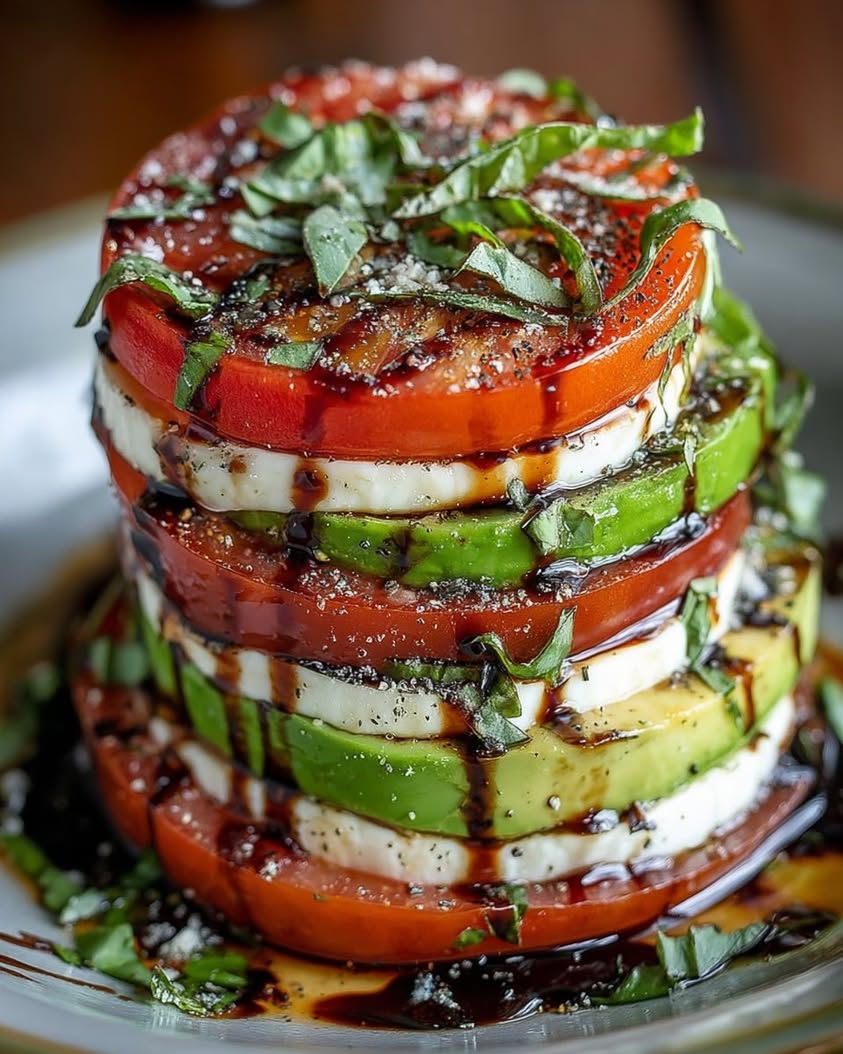
- Visual Appeal: These towers are tall, neat, and vibrant. Deep red tomatoes, white mozzarella, and green basil create a beautiful tricolor effect. The glossy balsamic glaze adds a professional, restaurant-quality shine. Every plate looks like a work of art.
- Skill Level Needed: A beginner can absolutely make this recipe. It requires basic knife skills for slicing tomatoes and mozzarella. The oven does most of the work during roasting. Assembly is straightforward with a simple stacking pattern. No advanced techniques are necessary.
- Special Equipment: You will need a baking sheet for roasting the tomatoes. A sharp knife for clean cuts is essential. A small saucepan for making the balsamic reduction. A spatula or tongs for handling the hot tomatoes. That is all you need for success.
Recipe Overview
- Difficulty Level: We classify this recipe as easy because it involves simple steps and common ingredients. The roasting process is forgiving and does not require precise timing. Stacking the towers is intuitive and fun. Even if you are new to cooking, you can confidently prepare this dish. The biggest challenge is waiting for the tomatoes to roast.
- Category: This dish fits perfectly as an appetizer or a light main course. It works well for lunch alongside a mixed green salad. For dinner, serve it as a starter before pasta or grilled meat. It also shines as a vegetarian centerpiece for a summer brunch. You can even serve smaller versions as hors d’oeuvres for parties.
- Cuisine: This recipe is rooted in Italian culinary tradition. The Caprese salad originates from the island of Capri, celebrating simple, high-quality ingredients. Roasting the tomatoes adds a modern twist while honoring the classic flavor combination. This dish reflects the Italian philosophy of letting fresh ingredients speak for themselves. You get the essence of Italy in every bite.
- Cost: The cost is moderate and very reasonable. You will need fresh mozzarella, which can be a bit pricey but is worth it for the texture. Ripe tomatoes are affordable, especially in summer. High-quality balsamic vinegar is an investment but a little goes a long way. The total cost is lower than ordering a similar dish at a restaurant.
- Season: This recipe is best during late summer and early fall. That is when tomatoes are at their peak sweetness and flavor. However, you can make it year-round with good-quality vine-ripened tomatoes. Roasting enhances even less-than-perfect winter tomatoes. The dish celebrates the bounty of the warmer months.
- Occasion: These towers are perfect for outdoor gatherings like barbecues and picnics. They add elegance to birthday parties and anniversary dinners. They are also fantastic for holiday appetizers, especially if you want a lighter option. Impress your guests at a dinner party with this visually stunning dish. Any occasion that calls for something special is the right time.
Why You Will Love This Recipe
The taste and texture combination is absolutely irresistible. Each bite delivers a burst of sweet, roasted tomato juice that mingles with the cool, creamy mozzarella. The fresh basil adds a pop of herbal freshness that cuts through the richness. Furthermore, the balsamic reduction provides a tangy, syrupy finish that enhances every component. You will find yourself craving these flavors long after the meal is over. The contrast between warm and cold elements makes each mouthful exciting and dynamic. This dish truly celebrates the beauty of simple ingredients at their best.
Convenience is a major benefit of this recipe. The prep time is only about 15 minutes, which is incredibly fast. While the tomatoes roast for 20 minutes, you can prepare the balsamic reduction and slice the mozzarella. That means minimal hands-on time and maximum flavor development. You can also roast the tomatoes in advance and assemble the towers later. This flexibility makes it perfect for entertaining when you want to reduce last-minute stress. Cleanup is simple because you only use one baking sheet and a small saucepan.
Nutritional advantages make this dish a smart choice. Tomatoes are rich in lycopene, a powerful antioxidant that supports heart health. The roasting process actually makes lycopene more bioavailable for your body to absorb. Fresh mozzarella provides protein and calcium for strong bones and muscles. Basil contains essential vitamins like vitamin K and vitamin A. This recipe is naturally gluten-free and low in carbohydrates. You can enjoy a satisfying, decadent-tasting meal that is also good for you.
Social and entertaining value cannot be overstated for these towers. They are a guaranteed conversation starter when you place them on the table. Guests will be impressed by the height, color, and elegant presentation. Each person gets their own individual tower, which feels personal and special. The dish encourages sharing and interaction as everyone admires the plating. Serving these towers shows that you put thought and care into the meal. They elevate any gathering from ordinary to memorable with very little effort.
Cost-effectiveness and accessibility make this recipe a winner. You only need a handful of ingredients that are available at any grocery store. The total cost is significantly less than ordering a similar appetizer at a fine dining restaurant. Roasting tomatoes is a budget-friendly way to make them taste luxurious. High-quality balsamic vinegar lasts a long time and can be used in many other recipes. You get a gourmet experience without breaking the bank. That is a win for your table and your wallet.
Historical Background and Cultural Significance
The Caprese salad has a fascinating origin story rooted in Italian history. It is named after the island of Capri, where it was supposedly created in the early 20th century. The story goes that a patriotic chef wanted to honor the Italian flag through food. He used red tomatoes, white mozzarella, and green basil to mimic the tricolor. This simple yet patriotic salad became a symbol of Italian culinary identity. Today, it remains one of the most recognized Italian dishes worldwide. The Roasted Tomato Caprese Towers pay homage to this history while adding a modern twist.
Cultural importance of the Caprese salad extends beyond just food. It represents the Italian philosophy of using minimal, high-quality ingredients. Each component is allowed to shine without heavy sauces or complicated preparations. This dish embodies the idea that simplicity is the ultimate sophistication. In Italy, a true Caprese salad is considered a measure of a cook’s respect for ingredients. People judge tomatoes, mozzarella, and basil quality even in a simple salad. This recipe carries that same cultural weight and expectation of excellence.
Evolution of the recipe has been gradual but meaningful. Originally, the salad was just sliced tomatoes, mozzarella, and basil with olive oil. Chefs began adding balsamic vinegar for extra depth and sweetness. Over time, creative variations like stacking the ingredients became popular. The roasted tomato version emerged as a way to intensify flavor, especially in cooler months. This evolution keeps the classic recipe relevant and exciting for modern palates. The Roasted Tomato Caprese Towers represent the next step in that delicious journey.
Regional variations of the Caprese exist throughout Italy and beyond. In some parts of Italy, people use buffalo mozzarella for a richer, creamier texture. Others prefer fior di latte, a cow’s milk mozzarella that is firmer. Some regions add a drizzle of pesto for an extra layer of flavor. In the United States, cooks often use larger tomatoes and thicker mozzarella slices. The roasting method is a relatively new innovation that adds warmth and complexity. Each variation reflects local tastes and available ingredients while honoring the original concept.
Ingredient Deep Dive
Tomatoes are the heart of this recipe and carry deep cultural significance. They originated in South America and were brought to Europe after the Columbian Exchange. Italians embraced tomatoes in the 18th century, transforming their cuisine forever. Nutritionally, tomatoes are packed with vitamin C, potassium, and lycopene. Lycopene is a powerful antioxidant linked to reduced risk of chronic disease. For selection, choose tomatoes that are firm but yield slightly to gentle pressure. They should be deeply colored and fragrant at the stem end. Roma or plum tomatoes work best because they have less water content and denser flesh. Store them at room temperature away from sunlight for maximum flavor. Never refrigerate fresh tomatoes because that ruins their texture. You can substitute with cherry tomatoes cut in half if you prefer a sweeter bite.
Balsamic vinegar is a crucial component that adds sweet-tart magic. It originates from Modena, Italy, where it has been produced for centuries. Traditional balsamic vinegar is aged in wooden barrels for years, developing complexity. For this recipe, a good quality but affordable balsamic works perfectly. Nutritionally, balsamic vinegar contains antioxidants and may help regulate blood sugar. When selecting, look for a vinegar that is thick, dark, and has a balanced sweet-sour flavor. Avoid cheap options that are thin and overly acidic. Store balsamic vinegar in a cool, dark place away from heat. For a richer flavor, you can use a balsamic glaze that is already reduced. You can substitute with a mixture of red wine vinegar and a pinch of sugar in a pinch.
Fresh mozzarella is the creamy counterpoint to the roasted tomatoes. It originated in Southern Italy, specifically around Naples and the Campania region. Traditionally, it is made from water buffalo milk, which gives it a rich, delicate flavor. Nutritionally, mozzarella provides protein, calcium, and phosphorus for bone health. It also contains probiotics that support gut health when made from fresh milk. For selection, look for mozzarella that is stored in brine or whey to keep it moist. It should be white, springy, and have a slight bounce when touched. Avoid mozzarella that looks dry, cracked, or has a rubbery texture. Store it in its original liquid in the refrigerator and use within a few days of opening. You can substitute with burrata for an even creamier texture or use plant-based mozzarella for a dairy-free option.
Common Mistakes to Avoid
- Do not skip roasting the tomatoes at a high enough temperature. A 400°F oven ensures proper caramelization and concentrated flavor. Lower temperatures will make the tomatoes watery and bland.
- Avoid using too much oil when roasting the tomatoes. A light drizzle is sufficient because excess oil makes them greasy. The tomatoes will release their own juices as they cook.
- Never stack the towers when the tomatoes are still hot from the oven. Let them cool for at least five minutes to prevent the cheese from melting. Warm tomatoes are fine, but piping hot ones will ruin the structure.
- Do not slice the mozzarella too thin. Thick slices, about half an inch, provide a satisfying bite and hold up better during stacking. Thin slices will collapse under the weight of the tomatoes.
- Avoid using dried basil in this recipe. Fresh basil is non-negotiable for that bright, peppery flavor. Dried basil will not provide the same texture or aromatic quality.
- Do not reduce the balsamic vinegar too much or too little. It should be syrupy and coat the back of a spoon. Over-reducing makes it bitter, while under-reducing makes it runny.
- Never assemble the towers too far in advance, more than 30 minutes before serving. The tomatoes will release liquid, making the towers soggy. The basil may also wilt and lose its freshness.
- Avoid using tomatoes that are underripe or overly ripe. Underripe tomatoes will be hard and lack sweetness. Overripe ones will turn mushy and release too much juice during roasting.
- Do not forget to season each layer with a pinch of salt and pepper. This step enhances the flavor at every level. Skipping it results in a flat, one-dimensional taste.
- Never overcrowd the baking sheet when roasting tomatoes. Leave space between each slice for proper air circulation. Crowding causes them to steam rather than caramelize.
Essential Techniques
Roasting tomatoes properly is the most important technique in this recipe. You want to achieve a deep caramelization that concentrates the natural sugars. To master this, slice the tomatoes into even half-inch rounds. Toss them with olive oil, salt, pepper, and dried herbs. Arrange them in a single layer on a lined baking sheet. Roast at 400°F for 20 minutes until they are softened and slightly browned. Look for the edges to wrinkle and the tops to look jammy. A common pitfall is pulling them out too early when they are still watery. The visual cue is that they should look dry and shrunken, not wet and plump.
Making a balsamic reduction requires patience and attention. This technique transforms ordinary vinegar into a rich, syrupy glaze. Pour one cup of balsamic vinegar into a small saucepan. Bring it to a gentle simmer over medium heat. Reduce the heat to low and let it bubble gently. Stir occasionally and watch for the volume to reduce by about half. The visual cue is when the mixture coats the back of a spoon and leaves a clear trail. A common mistake is letting it boil rapidly, which can burn the sugar. If the reduction becomes too thick, you can add a splash of warm water to thin it out. Remember that it will thicken further as it cools.
Stacking the towers requires a steady hand and a good sense of balance. Start with a roasted tomato slice as the sturdy base on your serving plate. Place a slice of mozzarella on top, centering it carefully. Add a fresh basil leaf, pressing it gently into the cheese. Repeat the layers until you have three or four stacks. For the top layer, finish with a tomato slice and a small basil sprig for garnish. The key to stability is making sure each layer is aligned vertically. A common pitfall is stacking too high, which causes the tower to wobble. Stick to three or four layers maximum for a stable, elegant presentation.
Pro Tips for Perfect Roasted Tomato Caprese Towers
Always salt the tomato slices lightly before roasting to draw out excess moisture. This step helps concentrate the flavor and prevents a watery final dish. Pat them dry gently with a paper towel before seasoning for best results.
Use a mandoline slicer for perfectly even tomato and mozzarella slices. Uniform thickness ensures consistent cooking and stable towers. If you do not have one, use a very sharp knife and take your time.
Let the roasted tomatoes come to room temperature before assembling the towers. This prevents the mozzarella from becoming too soft or melting. The contrast between room-temperature tomatoes and cold cheese is ideal.
Drizzle the balsamic reduction around the plate rather than directly on top of the tower. This keeps the structure intact and prevents sogginess. Guests can dip each bite into the glaze as they eat.
Add a microgreen garnish for an extra pop of color and freshness. Watercress, arugula, or small basil leaves work beautifully. This small detail elevates the visual appeal significantly.
Use a squeeze bottle for the balsamic reduction to create precise, elegant drizzles. This professional technique gives your plate a restaurant-worthy finish. You can also create small dots or swoops around the tower.
Chill the mozzarella slices for 10 minutes in the refrigerator before stacking. Firmer cheese stacks more easily and holds its shape better. This small step prevents the towers from sliding apart.
Toast pine nuts in a dry pan and sprinkle them over the plate for added crunch. The nutty flavor complements the tomatoes and cheese perfectly. This simple addition adds texture and visual interest.
Variations and Adaptations
Regional variations of this dish are fun to explore. In the American South, you can use fried green tomatoes for a tangy twist. In California, add slices of ripe avocado for extra creaminess. The Mediterranean version includes marinated artichoke hearts and kalamata olives. Each regional adaptation brings new flavors while keeping the core concept intact. You can experiment with herbs like thyme or oregano in the roasting process. The possibilities are endless and delicious.
Seasonal adaptations help you enjoy this recipe year-round. In summer, use heirloom tomatoes in various colors for a vibrant rainbow tower. In fall, add a thin slice of roasted butternut squash between the layers. In winter, use sun-dried tomatoes rehydrated in warm water for intense flavor. In spring, include tender asparagus spears that have been lightly blanched. Each season offers unique produce that can enhance the dish. You can always find a way to make these towers seasonal and fresh.
Dietary modifications make this recipe accessible to everyone. For a dairy-free version, use high-quality plant-based mozzarella made from cashews or coconut. For a vegan option, use marinated tofu or a thick cashew cream in place of cheese. For a low-sodium version, reduce the added salt and use low-sodium balsamic vinegar. For a lower-fat option, use part-skim mozzarella and reduce the olive oil. Each modification maintains the spirit of the original while accommodating different needs. You can serve these towers to almost anyone without worry.
Flavor variations can completely transform this dish. Add a layer of pesto between the tomato and mozzarella for a herby punch. Spread a thin layer of sun-dried tomato paste on the mozzarella for concentrated flavor. Infuse the olive oil with garlic and red pepper flakes for a spicy kick. Add a drizzle of honey over the balsamic reduction for extra sweetness. You can even sprinkle smoked paprika on the tomatoes before roasting. These variations give you endless options to keep the recipe exciting.
Texture modifications can change the entire eating experience. For a crunchier tower, add a layer of crispy prosciutto or pancetta. For a softer texture, use burrata instead of fresh mozzarella. For a more substantial bite, include a slice of crusty bread or crostini at the base. For a creamy element, spread a thin layer of whipped ricotta on each mozzarella slice. Each texture change adds a new dimension to the dish. You can customize the mouthfeel to match your preference.
Presentation alternatives let you get creative with plating. Instead of stacking vertically, you can arrange the layers in a spiral on the plate. You can also create a deconstructed version with all components arranged separately. For individual servings, build the towers in small ramekins or glasses. For a family-style presentation, create one large tower in the center of a platter. Each alternative offers a different visual appeal and dining experience. Choose the style that best suits your occasion.
Serving and Presentation Guide
Plating techniques for these towers are important for visual success. Always use a flat, wide plate that provides a stable base. Center the tower slightly off-center for a more dynamic composition. Use a clean, white plate to make the colors pop dramatically. Wipe any stray sauce or oil from the plate edge for a polished look. The goal is to create a clean, professional presentation that highlights the food. Practice makes perfect, so do not be afraid to adjust the placement.
Garnishing ideas can take your presentation to the next level. Add a few fresh basil leaves around the base of the tower for a green frame. Sprinkle flaky sea salt and cracked black pepper over the top for texture. Place a small oregano sprig on top for an herbal accent. Add a few drops of extra-virgin olive oil around the plate for a glossy finish. You can also add edible flowers like nasturtiums for a touch of elegance. Each garnish adds color, flavor, and visual interest.
Traditional accompaniments pair beautifully with this dish. A light arugula salad with lemon vinaigrette complements the richness of the cheese. Grilled bread rubbed with garlic is perfect for soaking up the balsamic reduction. A side of roasted vegetables like zucchini or eggplant adds heartiness. You can also serve the towers alongside a bowl of marinated olives. These accompaniments round out the meal and create a satisfying spread. Choose accompaniments that match the season and your menu theme.
Modern serving suggestions offer fresh ideas for presentation. Serve the towers on a bed of pesto or romesco sauce for a flavor boost. Place them on a long wooden board with other antipasti for a shareable feast. Use slate or marble serving boards for a contemporary, rustic look. You can also create a tower bar where guests build their own combinations. These modern approaches make the dish interactive and fun. Your guests will appreciate the creativity and thoughtfulness.
Temperature considerations are crucial for the best eating experience. The roasted tomatoes should be served at room temperature or slightly warm. The mozzarella should be cold and firm right from the fridge. The basil should be at room temperature for the best aroma. The balsamic reduction can be served at room temperature or slightly warm. Avoid serving any component piping hot or ice cold. The balance of temperatures creates a harmonious mouthfeel.
Portion control tips help you serve the right amount. One tower per person is typically sufficient for an appetizer. For a main course, consider serving two towers per person. The size of the tower should be proportional to the other dishes in your menu. If you are serving a heavy main course, keep the towers smaller. If the towers are the main event, make them taller and more substantial. Adjust the portion size based on your guests appetites and the occasion.
Wine and Beverage Pairing
Wine pairings for these Roasted Tomato Caprese Towers are classic and delightful. A crisp Italian Pinot Grigio complements the bright acidity of the tomatoes. The wine light, citrusy character balances the richness of the mozzarella. Alternatively, a light-bodied red like a Dolcetto or Barbera works well. These wines have enough acidity to cut through the cheese without overpowering the dish. For a sparkling option, a Prosecco adds a festive touch. The bubbles cleanse the palate between each bite of the tower.
Non-alcoholic alternatives are equally delicious and refreshing. A sparkling mineral water with a squeeze of lemon is a clean, crisp choice. A basil lemonade made with fresh basil syrup pairs beautifully with the dish. Unsweetened iced tea with a hint of mint also complements the herbal notes. For a more sophisticated option, try a kombucha with ginger and lemon. Each non-alcoholic drink cleanses the palate and enhances the flavors of the tower. Your guests who do not drink wine will feel just as included.
Coffee or tea pairings can work for brunch or lighter meals. A cold brew coffee with its smooth, low-acid profile is surprisingly good. An herbal tea like chamomile or mint offers a soothing contrast. For a more Italian approach, a classic espresso after the meal is perfect. The bitterness of the coffee balances the sweetness of the balsamic reduction. These pairings work best when serving the towers as a light lunch or brunch item. Consider the occasion when choosing your beverage.
Temperature considerations for beverages are important to match the dish. Wine should be served chilled but not ice cold, around 45-50°F. White wines and rosés should be well-chilled to maintain their crispness. Red wines should be served slightly cool, around 55-60°F. Non-alcoholic drinks are best served over ice with a slice of lemon or basil. Avoid serving warm beverages that might clash with the cool cheese of the tower. The beverage temperature should complement the warm and cold elements of the dish.
Serving suggestions for beverages can elevate the dining experience. Serve wine in proper stemware to allow the aromas to develop. Provide a tasting note card for each wine to engage your guests. For non-alcoholic options, use elegant glassware with fresh garnishes. Set up a small beverage station where guests can help themselves. This approach works well for casual gatherings and parties. Thoughtful beverage service shows that you care about every detail of the meal.
Storage and Shelf Life
Storage methods for leftover components require careful consideration. Store any unused roasted tomatoes in an airtight container in the refrigerator. They will stay fresh for up to three days. The mozzarella should be kept in its original brine in a sealed container. It will last for about five to seven days if properly stored. Fresh basil is best stored at room temperature in a glass of water with a plastic bag over the top. Never refrigerate basil because it will turn black and wilt quickly. The balsamic reduction can be stored in a sealed jar at room temperature for up to two weeks.
Temperature requirements are critical for food safety and quality. All dairy products must be kept at or below 40°F in the refrigerator. The roasted tomatoes should also be refrigerated if you are not serving them immediately. Never leave assembled towers at room temperature for more than two hours. For outdoor events in warm weather, reduce that time to one hour. Always use a food thermometer to check your refrigerator temperature. Proper temperature control prevents bacterial growth and keeps your food fresh.
Container recommendations help maintain the quality of each component. Use glass containers for the roasted tomatoes to prevent any off-flavors. Plastic bags are not ideal because they can trap moisture and cause mushiness. For the mozzarella, use the original container with its brine if possible. If you lose the brine, make a quick saltwater solution to keep the cheese moist. For the basil, use a tall glass or jar with water, similar to a flower vase. Cover the leaves loosely with a plastic bag to retain humidity.
Signs of spoilage are important to recognize for safety. Discard roasted tomatoes if they develop mold, a slimy texture, or an off smell. Mozzarella is spoiled if it becomes yellow, slimy, or has a sour, ammonia-like odor. The basil will be bad when the leaves are completely black and mushy. Balsamic reduction can develop mold if contaminated with water or food particles. Always use clean utensils when handling any component. When in doubt, throw it out for your safety.
Reheating instructions for the roasted tomatoes are simple. Place them in a 350°F oven for five to seven minutes until warmed through. You can also microwave them for 20-30 seconds if you are in a hurry. Never reheat the mozzarella because it will become tough and rubbery. The balsamic reduction can be gently warmed in a small saucepan over low heat. Add a splash of water if it has become too thick during storage. Do not reheat a fully assembled tower because the cheese will melt and the basil will wilt.
Freezing guidelines are limited for this recipe. You can freeze the roasted tomatoes in a single layer on a baking sheet. Once frozen, transfer them to a freezer-safe bag for up to three months. However, the texture will become softer after thawing. Do not freeze fresh mozzarella because it will become grainy and watery upon thawing. The basil and balsamic reduction should not be frozen at all. For best results, enjoy this dish fresh or within a few days of preparation. Freezing compromises the quality too much.
Make Ahead Strategies
Prep timeline is essential for stress-free entertaining. You can roast the tomatoes up to two days in advance and store them in the refrigerator. The balsamic reduction can be made up to a week ahead and stored at room temperature. Slice the mozzarella up to one day in advance and keep it in its brine. Wash and dry the basil leaves up to one day ahead and store them in the refrigerator wrapped in paper towels. This prep work means your active cooking time on serving day is only about 10 minutes. Planning ahead makes hosting much more enjoyable.
Storage between steps requires proper techniques to maintain quality. Store the roasted tomatoes in a glass container with a tight-fitting lid. Keep them in the refrigerator, but let them come to room temperature before serving. The mozzarella slices should stay in their brine or a saltwater solution. Remove them from the refrigerator about 10 minutes before assembly. The basil leaves should be dry before storage to prevent spoilage. Pat them gently with a paper towel before wrapping them. Proper intermediate storage prevents flavor loss and texture degradation.
Quality impact assessment helps you decide what to make ahead. Roasted tomatoes actually improve in flavor after a day in the refrigerator. The balsamic reduction stays perfect for weeks. Mozzarella slices maintain their quality well for one day. Fresh basil is the most delicate and is best used the same day you buy it. Overall, you can make most components ahead with minimal loss of quality. The only thing you should not prep ahead is the final assembly. Assembling too early ruins the structure and texture.
Assembly tips for when you are ready to serve are straightforward. Remove the mozzarella from the brine and let it drain on paper towels for a minute. Bring the roasted tomatoes to room temperature or warm them gently. Have all components lined up in the order you will use them. Stack the towers directly on the serving plates to avoid transferring them later. Drizzle the balsamic reduction at the very end to keep the components dry. Assemble no more than 30 minutes before serving for best results.
Reheating guidelines apply only to the tomatoes if they were refrigerated. Use a low oven at 300°F for about 10 minutes to warm them through. You can also use a toaster oven for smaller batches. Never microwave the tomatoes because they will become mushy. The mozzarella should stay cold until the moment of assembly. The basil should be added fresh at the end. Following these reheating guidelines ensures the best texture and flavor combination.
Fresh element additions can brighten up prepped components. Add a squeeze of fresh lemon juice over the tomatoes just before serving. Tear fresh basil leaves rather than chopping them for a more rustic look. Add a sprinkle of flaky sea salt and fresh cracked pepper at the very end. These fresh additions bring vibrancy to make-ahead components. Your guests will not know that you prepped most of the dish in advance. The final fresh touches make all the difference.
Scaling Instructions
Halving the recipe is straightforward and simple. Use one large tomato or two small Roma tomatoes instead of four. Use half the mozzarella and half the basil called for in the original recipe. The balsamic reduction can be made in a smaller saucepan using half a cup of vinegar. Roasting time remains the same because you are using the same oven temperature. You will get two towers instead of four. The proportions and flavors will remain perfectly balanced with this simple scaling.
Doubling or tripling the recipe requires some adjustments. Use two or three baking sheets to avoid overcrowding the tomatoes. Rotate the pans halfway through roasting for even cooking. You will need more counter space for assembly, so plan accordingly. The balsamic reduction can be doubled easily, but it will take a bit longer to reduce properly. Use a larger saucepan and watch it carefully to prevent burning. All other ingredients simply multiply by the desired factor without any special concerns.
Equipment adjustments are necessary when scaling up. Use larger mixing bowls for tossing the tomatoes with oil and herbs. You may need multiple cutting boards and knives to speed up prep. A large rimmed baking sheet is essential for even roasting. For doubling, use two standard baking sheets rather than one oversized one. For tripling, you may need to roast in batches if your oven is not big enough. Plan your equipment needs before you start cooking to avoid delays.
Timing modifications become important with larger batches. The roasting time for tomatoes remains the same, about 20 minutes. However, you will need extra time for slicing and prepping ingredients. Budget an additional 10 minutes for prep when doubling the recipe. Assembly will also take longer because you have more towers to build. The balsamic reduction time stays the same as long as you use the same saucepan size. Overall, expect the total time to increase by about 50 percent when you double the recipe.
Storage considerations change significantly with larger batches. Leftover roasted tomatoes and mozzarella should be stored separately. You can refrigerate extra components for up to three days. However, the basil will not keep well once it has been washed. Prepare only the amount of basil you will use for the towers. Leftover balsamic reduction can be stored for weeks and used in other recipes. Consider sharing the extra towers with friends or neighbors to avoid waste. Plan your storage space before you start cooking in large quantities.
Nutritional Deep Dive
Macro breakdown for one Roasted Tomato Caprese Tower is balanced and satisfying. Each tower contains approximately Print
Roasted Tomato Caprese Towers
- Total Time: 40 minutes
- Yield: 4
Description
A twist on the classic Caprese salad, these elegant towers feature roasted tomatoes, fresh mozzarella, and basil, drizzled with balsamic reduction.
Ingredients
- 4 large tomatoes, halved
- 1 ball fresh mozzarella, sliced into 8 rounds
- 8 fresh basil leaves
- 3 tablespoons olive oil
- 1 tablespoon balsamic vinegar
- 1/4 cup balsamic reduction
- Salt and pepper to taste
Instructions
- Preheat oven to 400°F (200°C). Line a baking sheet with parchment paper.
- Place tomato halves cut side up on the baking sheet. Drizzle with 2 tablespoons olive oil and season with salt and pepper.
- Roast tomatoes for 20-25 minutes until slightly caramelized. Let cool slightly.
- On a serving plate, layer a roasted tomato half (cut side down), followed by a slice of mozzarella, and a basil leaf. Repeat for a second layer, ending with a tomato half.
- Drizzle with remaining olive oil and balsamic reduction. Serve immediately.
Notes
You can customize the seasonings to taste.
- Prep Time: 15 minutes
- Cook Time: 25 minutes
- Method: Appetizer
- Cuisine: Italian