The Ultimate Garlic Chicken and Veggie Stir-Fry with Fluffy Rice Recipe
This Garlic Chicken and Veggie Stir-Fry with Fluffy Rice is a true weeknight hero that transforms simple ingredients into a spectacular meal. Imagine tender pieces of chicken breast seared to golden perfection, then tossed with vibrant bell peppers, crisp snap peas, and earthy mushrooms in a savory garlic sauce. The aroma of fresh garlic hitting a hot wok will fill your kitchen with an irresistible invitation to dinner.
What makes this chicken stir fry recipe so special is its incredible balance of flavors and textures, all while coming together in under 35 minutes. The garlic chicken is succulent and juicy, while the vegetables retain a delightful crunch that contrasts perfectly with the soft, fluffy rice. Each bite delivers a harmonious blend of savory, sweet, and umami notes that will satisfy your deepest cravings for takeout-quality food made right at home.
You will love how this healthy stir fry recipe empowers you to create restaurant-quality meals without the extra sodium or hidden preservatives. It is a complete meal in one pan, requiring minimal cleanup and maximum flavor payoff. Whether you are a busy professional or a home cook looking for a reliable go-to dinner, this Garlic Chicken and Veggie Stir-Fry with Fluffy Rice promises to become a staple in your weekly rotation.
Quick Recipe Highlights
- Flavor Profile: This dish delivers a punchy garlic-forward taste complemented by a subtle sweetness from the vegetables and a rich umami depth from the soy sauce and oyster sauce. A hint of sesame oil adds a nutty finish that ties everything together beautifully.
- Texture: The contrast is stunning with tender, juicy chicken pieces against the vibrant crunch of fresh vegetables. The fluffy rice acts as a soft, comforting base that absorbs all the delicious sauce.
- Aroma: The moment you add garlic to the hot oil, you will notice the fragrant, almost buttery scent that fills the room. The stir fry carries notes of toasted sesame and the earthy smell of vegetables caramelizing in the pan.
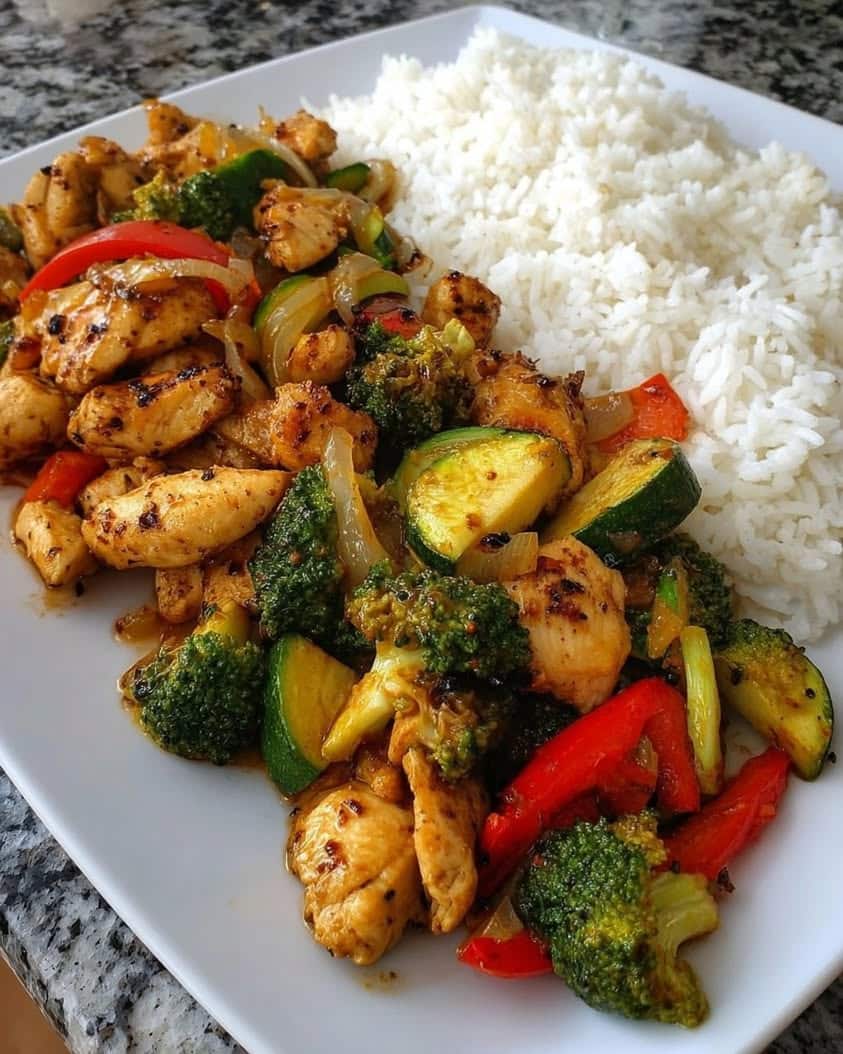
- Visual Appeal: This dish is a feast for the eyes with bright red peppers, green snap peas, and golden-brown chicken pieces resting on a bed of pearly white rice. The glossy sauce coats everything in an appetizing sheen that promises flavor in every bite.
- Skill Level Needed: This recipe requires basic knife skills for cutting vegetables and chicken into uniform pieces. The cooking process is straightforward, involving high heat and quick stirring, which makes it perfect for beginners and experienced cooks alike.
- Special Equipment: A wok or a large non-stick skillet is ideal for achieving that high-heat sear without overcrowding the pan. A sharp chef’s knife and a sturdy cutting board will make vegetable prep quick and effortless.
Recipe Overview
- Difficulty Level: We rate this recipe as easy because it uses simple techniques like slicing, marinating, and stir-frying. Even if you have never made a stir fry before, the clear steps and short cooking time make it very approachable. The key is having all ingredients prepped and ready before you turn on the heat.
- Category: This recipe fits perfectly into the stir fry, weeknight dinner, and quick meal categories. It also works well as a healthy lunch option when you want something satisfying but not heavy.
- Cuisine: While inspired by Chinese-American stir fry traditions, this recipe has been adapted for the modern home kitchen. The combination of soy sauce, ginger, and garlic reflects classic Asian cooking techniques, while the inclusion of accessible vegetables makes it universally appealing.
- Cost: This is a budget-friendly meal, with chicken breast being the most expensive ingredient. The vegetables are affordable and often available in bulk, and the pantry staples like soy sauce and rice are very economical. You can easily feed a family of four for under fifteen dollars.
- Season: This recipe shines year-round, but it is especially wonderful in spring and summer when vegetables are at their peak. The lightness of the dish also makes it a great choice for warmer months when you crave something satisfying but not too heavy.
- Occasion: This dish is perfect for busy weeknights when you need dinner on the table fast. It also works beautifully for casual entertaining or meal prep for the week ahead.
Why You Will Love This Recipe
The taste and texture of this Garlic Chicken and Veggie Stir-Fry with Fluffy Rice are absolutely irresistible. The chicken is marinated briefly in soy sauce and cornstarch, which keeps it incredibly tender and moist during the high-heat cooking process. The vegetables are cooked just enough to soften slightly while retaining their bright colors and satisfying crunch. The garlic sauce is the star of the show, coating every piece of chicken and vegetable with a glossy, flavorful layer that makes you want to scrape every last bit from the bowl.
Convenience is a major factor here because this whole dish comes together in about 30 minutes from start to finish. You can cook the rice while you prep the vegetables, and the actual stir-frying takes less than ten minutes. This means you can come home from a long day, put your feet up for a few minutes, and then have a delicious homemade dinner ready before you know it. The cleanup is minimal since everything cooks in one pan, giving you more time to relax and enjoy your meal.
Nutritionally, this recipe offers a well-rounded meal with lean protein from the chicken and a rainbow of vitamins and minerals from the colorful vegetables. You get a good dose of vitamin C from the bell peppers, fiber from the snap peas, and antioxidants from the garlic. When you serve it with fluffy rice, you also get complex carbohydrates for sustained energy throughout the evening. This is a meal that supports your health goals without sacrificing any flavor.
Socially, this dish is a crowd-pleaser that works for family dinners or when you have friends over. The vibrant colors and enticing aroma make it a conversation starter at the table. Guests will be impressed that you made such a flavorful dish from scratch, and they will appreciate the freshness of the ingredients. It is also easy to double the recipe if you are feeding a larger group, making it a versatile option for gatherings.
Cost-effectiveness is another compelling reason to love this recipe. By making your own stir fry at home, you save money compared to ordering takeout, and you have complete control over the quality of the ingredients. You can use leftover vegetables from the fridge, swap in whatever protein you have on hand, and adjust the spice level to suit your family’s preferences. This recipe encourages creativity and resourcefulness in the kitchen, helping you reduce food waste while eating delicious meals.
Historical Background and Cultural Significance
The stir fry technique has its roots in ancient China, where it was developed as a method to cook food quickly over high heat while preserving nutrients and flavor. This cooking style became particularly popular during the Han Dynasty when fuel was scarce, and people needed efficient ways to prepare meals. The wok, with its rounded bottom and high sides, was designed specifically for this purpose, allowing food to be tossed and stirred continuously over a flame.
In Chinese culture, stir frying represents the philosophy of balance and harmony in cooking. The combination of proteins, vegetables, and sauces reflects the principles of yin and yang, aiming for a meal that is both nourishing and satisfying. The garlic chicken and veggie stir fry, in particular, embodies this balance by incorporating the pungent warmth of garlic with the cooling freshness of vegetables and the grounding presence of rice.
The recipe has evolved significantly as it traveled across the globe, adapting to local ingredients and tastes. Chinese immigrants brought stir fry techniques to America in the 19th century, where they adapted their cooking to use available vegetables and proteins. The American version of chicken stir fry often includes bell peppers, broccoli, and carrots, which were more accessible than traditional Chinese greens like bok choy or gai lan.
Regional variations of this dish are fascinating and diverse. In Sichuan province, you will find versions with mouth-numbing Sichuan peppercorns and dried chilies. Cantonese cooks prefer a lighter touch with more ginger and spring onions. Japanese versions often incorporate teriyaki sauce for a sweeter profile, while Thai variations add fish sauce and basil for a fragrant twist. Each region puts its own spin on the basic formula, proving the versatility of this beloved cooking method.
Ingredient Deep Dive
Garlic is the undisputed star of this dish, and it has been revered for thousands of years not just for its flavor but for its medicinal properties. Ancient Egyptians used garlic as a healing herb, and it was given to laborers building the pyramids to boost their strength and stamina. In traditional medicine systems around the world, garlic is valued for its immune-boosting properties and its ability to fight infections. When selecting garlic for your stir fry, look for firm, plump bulbs with tight, unbroken skins. Avoid any that feel soft or have green sprouts emerging from the top. Store garlic in a cool, dark, well-ventilated place; it does not need refrigeration. For substitutions, you can use garlic paste from a jar in a pinch, though fresh garlic provides a more vibrant flavor that truly makes this dish shine.
Chicken breast is another essential component, offering lean protein that takes on the flavors of the marinade beautifully. Chicken has been a staple protein in American households for decades, valued for its versatility and relatively low cost compared to red meats. Nutritionally, chicken breast is packed with protein, B vitamins, and selenium, which supports immune function and thyroid health. When choosing chicken, look for breasts that are plump and pink with no off odors. It is best to buy fresh chicken and use it within two days, or freeze it for up to three months. If you want to substitute, boneless skinless chicken thighs work wonderfully because they have more fat and flavor. You can also use turkey breast, pork tenderloin, or even firm tofu for a vegetarian twist.
Bell peppers contribute sweetness and vibrant color to this stir fry, making the dish visually appealing while adding a boost of vitamin C. Red, yellow, and orange peppers are sweeter and more mature than green peppers, which have a slightly bitter edge. Peppers are native to the Americas and were brought to Europe by Columbus, where they became a staple in cuisines around the world. For this recipe, choose peppers that are firm and glossy with no soft spots. Store them in the refrigerator crisper drawer for up to a week. You can substitute any color bell pepper you have on hand, or use sliced zucchini, broccoli florets, or even asparagus for a different texture and taste.
Snap peas add a delightful crunch and a touch of natural sweetness that contrasts perfectly with the savory sauce. These edible-pod peas are a hybrid between snow peas and garden peas, developed in the late 20th century. They are rich in vitamin K, vitamin C, and fiber, making them a nutritious addition to any meal. When selecting snap peas, look for bright green pods that are firm and snap when bent. Avoid any that are limp or have brown spots. Store them in a perforated plastic bag in the refrigerator and use them within a few days for the best texture. If you cannot find snap peas, snow peas or trimmed green beans make excellent substitutes, offering a similar crunchy texture.
Fluffy rice is the perfect canvas for this stir fry, absorbing the savory sauce and providing a neutral base that lets the other flavors shine. Rice has been cultivated for thousands of years and is a staple food for more than half the world’s population. There are many varieties of rice, but long-grain white rice is the most common choice for stir fries because it cooks up light and separate. Jasmine rice adds a subtle floral aroma, while basmati rice offers a nutty fragrance. For best results, rinse the rice thoroughly before cooking to remove excess starch, which helps prevent it from becoming gummy. You can also use brown rice for a chewier texture and more fiber, though it will require a longer cooking time and more liquid.
Common Mistakes to Avoid
- Overcrowding the pan is one of the most common mistakes when making stir fry. If you add too many ingredients at once, the pan temperature drops, and the food steams instead of sears. You lose that beautiful golden-brown color and the complex flavor that comes from browning.
- Not prepping ingredients before you start cooking leads to chaos and burnt food. Stir frying happens very quickly, so you need everything chopped, measured, and within arm’s reach before you turn on the heat. This preparation step is called mise en place, and it is crucial for success.
- Using low heat defeats the purpose of stir frying. The whole technique relies on high heat to cook food quickly while preserving texture. If your pan is not hot enough, the chicken will release its juices and become tough instead of searing properly.
- Adding garlic too early causes it to burn and become bitter. Garlic should be added after the chicken is cooked and just before the vegetables, so it has time to become fragrant without scorching. Burnt garlic ruins the entire dish with its acrid taste.
- Skipping the marinating step for the chicken results in dry, flavorless meat. Even a brief 10-minute soak in soy sauce and cornstarch makes a huge difference in tenderness and taste. The cornstarch creates a protective coating that locks in moisture.
- Cutting ingredients into uneven sizes leads to some pieces being overcooked while others remain raw. For even cooking, chicken, peppers, and other vegetables should all be cut into similar bite-sized pieces. Uniformity is the key to a professional-looking dish.
- Overcooking the vegetables robs them of their crunch and vibrant color. Vegetables should still have some resistance when you bite into them, and they should look bright and glossy. A minute or two of cooking is usually enough for most vegetables.
- Using cold rice straight from the refrigerator can make your stir fry clumpy and uneven. Cold rice tends to stick together in clumps, and it can release moisture that steams the dish. Room temperature rice works much better for absorbing the sauce.
- Forgetting to taste and adjust seasoning before serving is a missed opportunity. The soy sauce brands vary in saltiness, and personal preferences differ. A quick taste test lets you add a pinch of salt, a dash of pepper, or a squeeze of lime to perfect the balance.
- Adding too much sauce at once makes the dish soupy rather than glossy and cohesive. A little sauce goes a long way in a stir fry, and you can always add more if needed. Aim for a light coating that enhances rather than drowns the ingredients.
Essential Techniques
High-heat searing is the foundation of any great stir fry, and mastering this technique transforms your cooking. When you add chicken to a screaming hot pan, the proteins on the surface immediately brown, creating complex flavors through the Maillard reaction. To master this technique, heat your wok or skillet over high heat until a drop of water dances and evaporates instantly. Add your oil, wait a few seconds for it to shimmer, then add the chicken in a single layer. Do not move the chicken for at least a minute; let it develop a deep golden crust before stirring. Visual cues for success include a rich brown color on the chicken and a pleasant nutty aroma rising from the pan.
Proper knife skills will elevate your stir fry from good to exceptional because uniform pieces cook evenly and look professional. The key is to keep your fingers curled inward like a claw while holding the ingredient, with your knuckles guiding the knife blade. For chicken, slice against the grain to ensure tenderness, and aim for bite-sized pieces about half an inch thick. When cutting vegetables, try to match the size of the chicken pieces so everything cooks at the same rate. Practice makes perfect, and you will notice your speed and confidence improving with each meal you prepare.
The order of adding ingredients to the pan is critical in stir fry cooking because different ingredients require different cooking times. Start with the protein, searing it until golden and almost cooked through, then remove it from the pan. Next, cook the aromatics like ginger for about 30 seconds, followed by the thicker vegetables that need more time, like peppers and carrots. Add quicker-cooking vegetables like snap peas and scallions toward the end. Finally, return the chicken to the pan along with the sauce, and toss everything together until the sauce thickens and coats each piece evenly.
Mastering sauce consistency is what separates a good stir fry from a spectacular one. The ideal sauce should be glossy and thick enough to cling to the ingredients without pooling at the bottom of the plate. The cornstarch slurry you add at the end is the key; it thickens quickly when heated and gives the sauce that beautiful sheen. To get it right, mix the cornstarch with cold water before adding it to the pan, and pour it in while stirring constantly. You will see the sauce transform from watery to silky within seconds, and it should coat the back of a spoon perfectly.
Pro Tips for Perfect Garlic Chicken and Veggie Stir-Fry with Fluffy Rice
Always pat your chicken dry with paper towels before marinating to remove excess moisture. This step ensures the marinade adheres properly and helps the chicken brown beautifully instead of steaming.
Use a high smoke point oil like avocado, peanut, or grapeseed oil for stir frying. Olive oil burns easily at high temperatures and can give the dish a bitter taste.
Cut your vegetables on a bias, meaning at a 45-degree angle, to create more surface area for the sauce to cling to. This technique also makes the vegetables look more elegant and restaurant-quality.
Cook your rice in advance and let it cool slightly before serving with the stir fry. Freshly cooked rice can be too moist and sticky, while slightly cooled rice has a better texture for absorbing the sauce.
Add a splash of rice vinegar or a squeeze of fresh lime juice at the very end to brighten the flavors. The acid cuts through the richness of the sauce and wakes up all the other flavors in the dish.
Toast your sesame seeds in a dry pan over medium heat for about a minute before using them as a garnish. Toasting brings out their nutty flavor and adds a pleasant crunch to the finished dish.
If your sauce is not thickening enough, mix an additional teaspoon of cornstarch with two teaspoons of cold water and add it to the pan. Continue stirring until the sauce reaches your desired consistency.
Taste your vegetables as you cook them to ensure they have the right texture. You want them to be tender-crisp, with a slight resistance when you bite into them, not mushy or raw.
Variations and Adaptations
Regional variations of this dish are endless and exciting to explore. For a Sichuan-inspired version, add a teaspoon of Sichuan peppercorns and a tablespoon of doubanjiang, a fermented broad bean paste, to the sauce. This adaptation brings a numbing heat and complex fermented flavor that is incredibly addictive. For a Thai twist, replace the soy sauce with fish sauce and add fresh Thai basil and sliced bird’s eye chilies. The result is a fragrant, spicy stir fry that pairs beautifully with jasmine rice.
Seasonal adaptations allow you to enjoy this dish all year long with the freshest produce available. In spring, use asparagus, sugar snap peas, and fresh peas. Summer brings an abundance of zucchini, yellow squash, and cherry tomatoes. Fall calls for hearty mushrooms, Brussels sprouts, and butternut squash. Winter offers sturdy greens like kale or Swiss chard, along with root vegetables like carrots and parsnips. Each season provides new textures and flavors to explore.
Dietary modifications are easy to implement without sacrificing taste. For a gluten-free version, use tamari or coconut aminos instead of soy sauce, and ensure your oyster sauce is gluten-free. To make the dish dairy-free, simply omit any butter and use only oil for cooking. For a vegan adaptation, replace the chicken with firm tofu, tempeh, or seitan, and use a vegan oyster sauce made from mushrooms. The cooking process remains the same, and the result is just as satisfying.
Flavor variations can completely transform the character of this dish. Try adding a tablespoon of gochujang, Korean chili paste, for a spicy-sweet kick. For a citrusy flavor, add the zest and juice of an orange or mandarin to the sauce. A teaspoon of five-spice powder gives the dish a warm, aromatic depth that is perfect for cooler weather. You can also experiment with different nut butters, like peanut or cashew butter, dissolved in the sauce for a rich, creamy texture.
Texture modifications allow you to customize the dish to your preferences. For extra crunch, add a handful of roasted cashews or peanuts at the end of cooking. Water chestnuts and bamboo shoots add a satisfying crispness that holds up well in the sauce. If you prefer a softer texture, cook the vegetables for an additional minute or two, or add a splash of water to the pan and cover it briefly to steam them. The beauty of this recipe is that you can adjust it to suit your exact tastes.
Presentation alternatives can make this dish feel special for different occasions. For a casual weeknight dinner, serve the stir fry in a large bowl with rice on the side. For a dinner party, plate individual portions by mounding the rice in the center of a plate and arranging the stir fry around it. You can also serve the dish in lettuce cups for a low-carb option, or stuff it into warmed tortillas for a fusion-style wrap that everyone will love.
Serving and Presentation Guide
Plating techniques can make your Garlic Chicken and Veggie Stir-Fry with Fluffy Rice look as good as it tastes. Start by placing a generous scoop of rice in the center of each plate, using the back of a spoon to create a small well in the middle. Spoon the stir fry mixture into the well, allowing some of the sauce to cascade down the sides of the rice. This creates a beautiful presentation that showcases the colorful vegetables and tender chicken against the white rice.
Garnishing ideas add the final touch that elevates your dish from home cooking to restaurant quality. Sprinkle toasted sesame seeds over the top for a nutty crunch and visual interest. Thinly sliced green onions or scallions add a pop of bright green color and a mild onion flavor. A few cilantro leaves provide freshness, and a drizzle of chili oil or sriracha adds a touch of heat and color. You can also add a wedge of lime on the side for squeezing over the dish just before eating.
Traditional accompaniments for this dish include egg rolls, spring rolls, or wontons as appetizers. A simple cucumber salad with rice vinegar and sesame oil makes a refreshing side that balances the richness of the stir fry. Hot and sour soup or egg drop soup are classic starters that complement the flavors beautifully. For a complete meal, consider serving the stir fry with a side of steamed edamame or a light miso soup.
Modern serving suggestions allow you to think outside the box. Serve the stir fry over cauliflower rice for a low-carb option that still feels satisfying. Use it as a filling for rice bowls topped with avocado, pickled vegetables, and a soft-boiled egg. You can also serve it over soba noodles or udon noodles for a heartier meal. The possibilities are limited only by your imagination and what you have in your pantry.
Temperature considerations are important for the best eating experience. The stir fry should be served piping hot, straight from the wok, while the rice should be warm but not steaming. If you need to hold the dish for a few minutes before serving, keep the stir fry covered loosely with foil to retain heat while preventing condensation from making it soggy. Avoid reheating the stir fry in the microwave, as it can make the vegetables limp and the chicken tough. Instead, reheat it in a hot wok or skillet for the best results.
Portion control tips help you serve the right amount for your needs. A standard serving size is about 6 ounces of chicken, one cup of vegetables, and three-quarters cup of cooked rice. This provides a balanced meal with approximately 400 to 500 calories, 35 grams of protein, and plenty of fiber and vitamins. Adjust the portions based on your appetite and dietary goals, and remember that leftovers reheat well for lunch the next day.
Wine and Beverage Pairing
Wine pairings for this Garlic Chicken and Veggie Stir-Fry with Fluffy Rice should complement the savory garlic and soy flavors without overpowering them. A light-bodied white wine like Pinot Grigio or Sauvignon Blanc works beautifully, with its crisp acidity cutting through the richness of the sauce. An off-dry Riesling is another excellent choice, as its slight sweetness balances the saltiness of the soy and the pungency of the garlic. For red wine lovers, a light red like Beaujolais or Pinot Noir provides enough fruitiness to match the dish without overwhelming it.
Non-alcoholic alternatives are just as satisfying and pair wonderfully with this meal. A chilled glass of sparkling water with a squeeze of lime cleanses the palate and refreshes between bites. Unsweetened iced green tea or jasmine tea offers a floral, slightly grassy flavor that complements the Asian-inspired seasonings. You can also try a ginger beer or ginger ale, whose spicy sweetness echoes the fresh ginger in the stir fry and adds a festive touch.
Beer pairings are a natural choice for this casual dish, with many options that enhance the flavors. A crisp lager like a pilsner or a pale lager provides a clean finish that does not compete with the food. An IPA with citrusy hop notes can stand up to the garlic and soy, while a wheat beer with its light body and subtle spice is a refreshing option. For a truly authentic experience, try a Japanese rice lager like Sapporo or Asahi, which are designed to pair with stir-fried dishes.
Sake pairings offer a traditional and delightful option for this meal. A dry, light sake like a junmai or ginjo sake complements the clean flavors of the chicken and vegetables without overwhelming them. The subtle rice notes in the sake echo the rice in the dish, creating a harmonious pairing. Serve sake slightly chilled or at room temperature, and take small sips between bites to appreciate how the flavors interact.
Serving suggestions for beverages include offering a selection and letting guests choose their preference. For a dinner party, consider a small tasting flight of two or three different beverage options. This could include a crisp white wine, a light beer, and a non-alcoholic option like sparkling water with cucumber. Always serve beverages slightly chilled for the best refreshment, and provide water on the table to help guests stay hydrated while enjoying the meal.
Storage and Shelf Life
Storage methods for leftover Garlic Chicken and Veggie Stir-Fry with Fluffy Rice are straightforward and help you enjoy this dish for days to come. Allow the stir fry to cool completely to room temperature before storing, which usually takes about 30 minutes. Then transfer it to an airtight container and refrigerate it promptly within two hours of cooking. The rice should be stored separately from the stir fry to prevent it from becoming soggy from the sauce.
Temperature requirements are important for food safety and quality. Your refrigerator should be set at 40 degrees Fahrenheit or below to keep leftovers safe. The stir fry will stay fresh for three to four days when stored properly, while the cooked rice can last for up to five days. If you plan to keep the leftovers longer, consider freezing them, as the stir fry freezes well for up to three months.
Container recommendations include glass containers with tight-fitting lids, which are ideal because they do not absorb odors or stains from the sauce. Avoid using metal containers, as the acidic ingredients can react with the metal and alter the flavor. If you use plastic containers, make sure they are BPA-free and designed for food storage. Portion the leftovers into individual servings so you can reheat only what you need, reducing waste and saving time.
Signs of spoilage are easy to spot if you know what to look for. The chicken should maintain its texture and color, and it should not have any slimy film or off odor. The vegetables may soften over time, but they should not become mushy or develop a fermented smell. If the sauce separates or becomes watery, that is a sign of moisture loss and texture breakdown. When in doubt, trust your senses and discard anything that looks, smells, or feels off.
Reheating instructions ensure that your leftovers taste almost as good as the original meal. The best method is to reheat the stir fry in a hot wok or skillet over medium-high heat, adding a splash of water or chicken broth to loosen the sauce. Stir constantly for two to three minutes until everything is heated through. Avoid using the microwave, which can make the chicken rubbery and the vegetables limp. For the rice, reheat it in the microwave with a damp paper towel on top to add moisture, or reheat it in a covered pan with a tablespoon of water.
Freezing guidelines help you preserve this dish for later use. To freeze, let the stir fry cool completely, then transfer it to a freezer-safe container or zip-top bag. Remove as much air as possible to prevent freezer burn, and label the container with the date. Frozen stir fry will maintain its best quality for up to three months. Thaw it overnight in the refrigerator before reheating, and do not refreeze leftovers once they have been thawed.
Make Ahead Strategies
Prep timeline planning can save you significant time on busy weeknights. Start by washing and chopping your vegetables up to two days in advance, storing them in airtight containers in the refrigerator. Slice the chicken and combine it with the marinade the night before, which also allows the flavors to penetrate more deeply. Measure out your sauce ingredients and store them in a small jar in the fridge. When you are ready to cook, all you need to do is heat your wok and start stir frying.
Storage between steps is crucial for maintaining freshness and quality. Store the chopped vegetables in separate containers or in a large container with paper towels to absorb excess moisture. The marinated chicken should be kept in the refrigerator in a sealed container, and it is best used within 24 hours for optimal freshness. The sauce can be made up to a week in advance and stored in the refrigerator, though you will need to whisk it again before using because the cornstarch will settle at the bottom.
Quality impact assessment helps you decide which steps to do in advance and which to leave for the day of cooking. Chopping vegetables and marinating chicken in advance has minimal impact on quality and actually enhances flavor. However, cooking the rice more than a day ahead can lead to drier texture, so it is best to cook the rice the same day or the day before. The stir fry itself should always be cooked fresh, as reheating compromises the texture of the vegetables and meat.
Assembly tips make the cooking process seamless and enjoyable. Take all your prepped ingredients out of the refrigerator about 15 minutes before cooking to let them come to room temperature. Arrange them in the order you will add them to the pan, with the chicken first, followed by aromatics, vegetables, and sauce. Have your serving dishes and garnishes ready so you can plate immediately after cooking. This organized approach reduces stress and ensures everything comes together perfectly.
Reheating guidelines for make-ahead components are straightforward and effective. For the rice, reheat it in the microwave with a damp paper towel for about two minutes, or in a covered pot with a splash of water over low heat. The sauce can be gently rewarmed in a small saucepan over low heat, whisking occasionally. If the sauce has thickened too much during storage, add a splash of water or chicken broth to thin it to your desired consistency.
Fresh element additions can brighten up a make-ahead meal and make it feel freshly prepared. Add a handful of fresh herbs like cilantro or Thai basil just before serving, along with a sprinkle of toasted sesame seeds. A squeeze of fresh lime juice adds acidity and freshness, and sliced green onions provide color and a mild onion flavor. These finishing touches take only a minute but make a big difference in the overall experience.
Scaling Instructions
Halving the recipe is simple and works well for one or two servings. Reduce all ingredient quantities by half, including the chicken, vegetables, and sauce ingredients. The cooking time will be slightly shorter because there is less food in the pan, so watch carefully to avoid overcooking. Use a smaller pan, such as a 10-inch skillet, to ensure proper heat distribution and prevent overcrowding. The marinade and sauce can be halved easily using standard measuring spoons.
Doubling or tripling the recipe requires some adjustments to maintain quality. You will need to cook the chicken in batches to avoid overcrowding the pan, which would cause it to steam instead of sear. Cook the vegetables in batches as well, keeping the cooked portions warm in a low oven or covered dish. Make a larger batch of sauce in advance, and have it ready to add in stages. Consider using a larger wok or a deep skillet to accommodate the increased volume.
Equipment adjustments are necessary when scaling the recipe. For larger batches, you may need to use your largest wok or a Dutch oven to have enough surface area for proper cooking. If you do not have a wok large enough, cook the ingredients in batches and combine them at the end. A sheet pan in a warm oven can keep cooked batches hot while you finish the rest. Have extra serving dishes ready, and consider using a chafing dish or slow cooker on warm setting to keep the finished dish at serving temperature.
Timing modifications are critical when scaling up. Cooking in batches will extend the total time by about 10 to 15 minutes per batch, so plan accordingly. The sauce will thicken faster in larger quantities, so add it gradually and adjust the cornstarch slurry as needed. Reheating the finished dish is not recommended for best quality, so try to serve it immediately after cooking. If you must reheat, do so in smaller batches in a hot pan to preserve texture.
Storage considerations become more important with larger batches. If you double the recipe, you will have leftovers for several days, so plan your storage containers accordingly. Portion the leftovers into individual servings for easy reheating and grab-and-go lunches. Remember that the vegetables will soften over time, so try to eat the leftovers within three days for the best texture. The sauce may thicken as it sits in the refrigerator, so Print
Garlic Chicken & Veggie Stir-Fry with Fluffy Rice
- Total Time: 30 minutes
- Yield: 4
Description
A quick and flavorful stir-fry featuring tender chicken breast, crisp vegetables, and a savory garlic sauce, served over fluffy white rice. Perfect for a busy weeknight dinner.
Ingredients
- 1 lb boneless skinless chicken breast, sliced thin
- 3 tbsp vegetable oil
- 4 cloves garlic, minced
- 1 red bell pepper, sliced
- 1 cup broccoli florets
- 1 medium carrot, julienned
- 1/2 cup snow peas
- 1/4 cup low-sodium soy sauce
- 2 tbsp oyster sauce
- 1 tbsp honey
- 1 tsp sesame oil
- 1/2 tsp red pepper flakes (optional)
- 2 cups cooked white rice (for serving)
- 2 green onions, sliced (for garnish)
Instructions
- In a small bowl, whisk together soy sauce, oyster sauce, honey, sesame oil, and red pepper flakes. Set aside.
- Heat 2 tbsp vegetable oil in a wok or large skillet over high heat. Add chicken slices and cook until golden and cooked through, about 4-5 minutes. Remove chicken and set aside.
- Add remaining 1 tbsp oil to the wok. Add minced garlic and cook for 30 seconds until fragrant.
- Add bell pepper, broccoli, carrot, and snow peas. Stir-fry for 2-3 minutes until vegetables are tender-crisp.
- Return chicken to the wok. Pour the sauce over everything and stir well. Cook for 1 minute until sauce thickens slightly.
- Serve immediately over fluffy white rice. Garnish with sliced green onions.
Notes
You can customize the seasonings to taste. Add more red pepper flakes for extra heat or substitute vegetables based on what you have on hand.
- Prep Time: 15 minutes
- Cook Time: 15 minutes
- Method: Main
- Cuisine: Asian