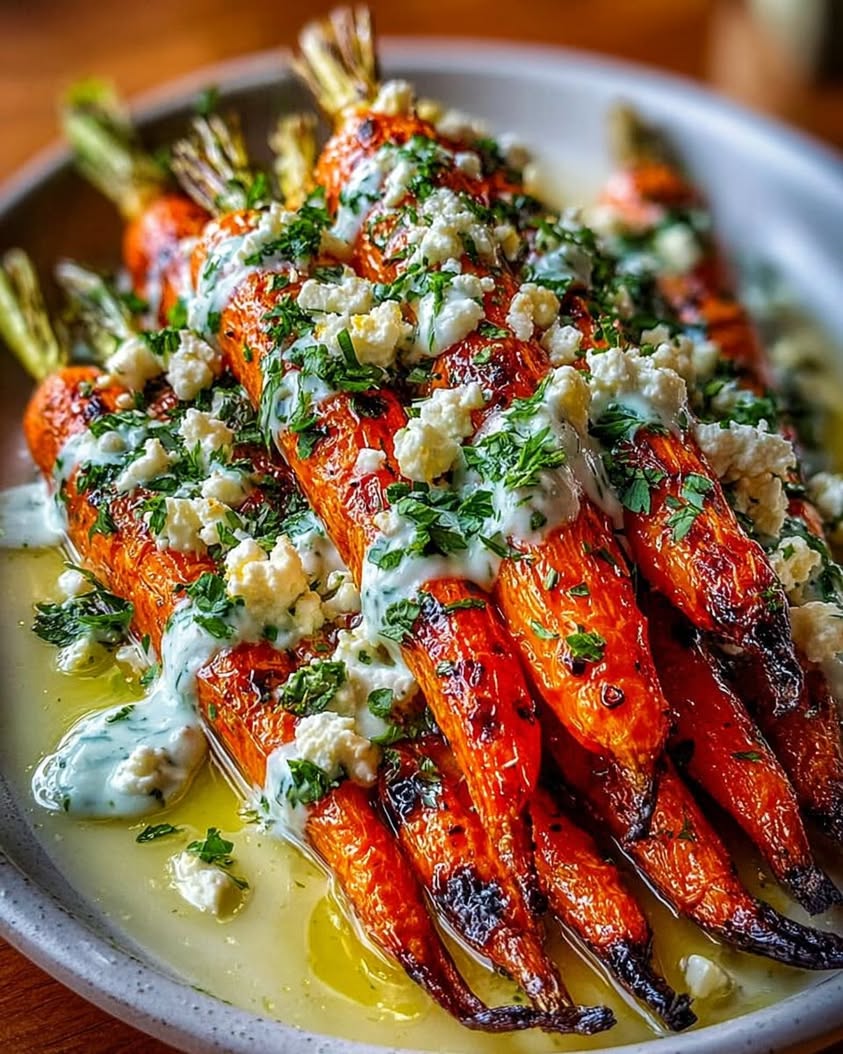
The Perfect Side Dish: Roasted Garlic Butter Carrots with Lemon Feta Sauce
Have you ever found yourself stuck in a dinner rut, serving the same steamed vegetables night after night? We have all been there. But today, let us break that cycle with a side dish that truly steals the show. This recipe for Roasted Garlic Butter Carrots with Lemon Feta Sauce is not just another vegetable side. It is a transformative dining experience. The humble carrot, often overlooked, gets a glorious makeover with rich garlic butter and a tangy, creamy sauce. It will make you reevaluate everything you thought you knew about cooked carrots.
Imagine the natural sweetness of carrots intensifying as they roast in the oven. Now, picture that sweetness meeting the savory depth of roasted garlic and the nuttiness of browned butter. That is the foundation of these Roasted Garlic Butter Carrots with Lemon Feta Sauce. The final flourish is a bright, salty, and creamy sauce that cuts through the richness perfectly. This dish brings a restaurant-quality elegance to your home kitchen. It is sophisticated enough for a holiday feast yet simple enough for a busy weeknight. The vibrant orange carrots against the white sauce create a stunning visual appeal that will impress your guests before they even take a bite.
We developed this recipe with the modern home cook in mind. We wanted a dish that delivers maximum flavor with minimal effort. The ingredients are simple, but the technique of roasting and creating a compound butter elevates them to new heights. The lemon feta sauce comes together in a blender or food processor in under two minutes. This ease of preparation means you can focus on the main course. The result is a versatile side that pairs beautifully with everything from roasted chicken to grilled steak. It is a celebration of simple ingredients, clever cooking methods, and bold, balanced flavors.
Quick Recipe Highlights
- Flavor Profile: These Roasted Garlic Butter Carrots with Lemon Feta Sauce offer a masterclass in balance. The carrots provide a deep, caramelized sweetness. The garlic butter adds savory, nutty richness. The lemon feta sauce brings bright acidity and salty tang to finish the dish.
- Texture: You get a wonderful contrast here. The carrots roast until tender with slightly caramelized, crispy edges. The flesh inside becomes soft and buttery. The sauce is smooth, creamy, and luscious, coating each carrot perfectly.
- Aroma: The kitchen fills with the intoxicating scent of garlic and butter roasting together. You will pick up the sweet, earthy notes of the carrots themselves. The final squeeze of lemon adds a fresh, clean finish to the overall aroma profile.
- Visual Appeal: This is a feast for the eyes. The bright orange carrots are glistening with butter and herbs. The white, creamy sauce creates a beautiful contrast on the plate. A sprinkle of fresh parsley or chives adds a final pop of green color.
- Skill Level Needed: This recipe is perfect for beginners. The techniques are straightforward roasting and simple sauce-making. There is no complicated knife work or advanced culinary skills required. You just need to follow the simple steps for a guaranteed success.
- Special Equipment: You will need a sheet pan for roasting the carrots. A small saucepan is required for making the garlic butter. A blender or food processor is best for creating the smooth lemon feta sauce. A sharp knife or peeler helps with the initial prep.
Recipe Overview
- Difficulty Level: We rate this recipe as Easy. The instructions are clear and straightforward. There is only one active cooking step for the carrots and a simple blending step for the sauce. You do not need to be a confident cook to achieve fantastic results with these Roasted Garlic Butter Carrots with Lemon Feta Sauce.
- Category: This dish sits perfectly in the vegetable side dish category. It is hearty enough to stand alongside a vegetarian main course. It also works beautifully as an accompaniment to any protein. You can serve it for a holiday dinner, a Sunday roast, or a simple Tuesday meal.
- Cuisine: While the technique leans toward modern American cooking, the flavors are Mediterranean-inspired. The combination of lemon, garlic, and feta cheese is a classic Mediterranean trio. Roasted vegetables are also a staple in many Mediterranean cuisines. This recipe brings these beloved flavors together in a cohesive dish.
- Cost: The ingredients are very budget-friendly. Carrots are one of the most affordable vegetables available. Garlic, butter, and lemons are pantry staples with a low unit cost. Feta cheese is the most expensive item, but you only need a small amount, making it a cost-effective choice.
- Season: These carrots are fantastic any time of year, but they shine in the fall and winter. This is when carrots are at their sweetest and most flavorful. The warm, comforting nature of roasted vegetables makes them perfect for colder months. However, the bright lemon sauce makes it light enough for spring and summer entertaining.
- Occasion: This versatile recipe fits many occasions. It is an elegant side for Thanksgiving, Easter, or Christmas dinner. It is also impressive enough for a dinner party with friends. However, it is simple enough to whip up for a regular family meal when you want something special.
Why You Will Love This Recipe
The primary reason to love this recipe is the explosive flavor combination. The natural sweetness of the roasted carrots works in perfect harmony with the savory, nutty garlic butter. Then, the cool, creamy, and tangy lemon feta sauce provides a bright counterpoint that wakes up your taste buds. It is a symphony of flavors that makes you forget you are eating a vegetable. The texture is equally compelling, with the tender, slightly caramelized carrots contrasting against the smooth sauce. This makes for a highly satisfying and memorable eating experience that will have you craving these carrots again and again.
From a convenience standpoint, this recipe is a dream. The active preparation time is only about ten minutes. Once the carrots are in the oven, you have hands-free time to prepare the rest of your meal. The sauce takes just two minutes in a blender. This means you can have a show-stopping side dish with very little effort. The ingredients are also incredibly simple and accessible. You likely already have butter, garlic, and lemons in your kitchen. Carrots and feta are easy to find at any grocery store. This makes it a perfect last-minute side dish for unexpected guests or a quick weekday upgrade.
Nutritionally, this dish offers several surprising advantages. Carrots are packed with beta-carotene, which your body converts into vitamin A. This vitamin is essential for good vision, immune function, and skin health. When you cook carrots with a source of fat, like butter, your body absorbs these fat-soluble vitamins much more effectively. The lemon feta sauce provides a good amount of protein and calcium from the feta and yogurt. This helps to balance the dish and make it more satiating. You get a delicious meal component that is also doing your body a solid turn.
This recipe has immense social and entertaining value. It looks and tastes incredibly sophisticated, making it a guaranteed conversation starter. Guests will be impressed by the elegant presentation and the complex flavors. You can serve it as part of a larger spread for a holiday or dinner party. It also works wonderfully as a side for a backyard barbecue or potluck. It holds up well and does not get soggy quickly. Knowing you have this reliable showstopper in your repertoire will give you confidence whenever you host a gathering. It makes you look like a culinary rockstar with almost no stress.
Finally, the cost-effectiveness and accessibility of this dish are undeniable. A bag of carrots costs under two dollars, and feta cheese is very reasonable. The other ingredients are pantry staples. This means you can create a restaurant-quality side dish for a fraction of the cost of eating out. It uses simple techniques that anyone can master. There is no need for exotic ingredients or expensive equipment. This accessibility means you can practice and perfect the recipe with very little risk. It is a high-reward, low-investment recipe that will become a permanent favorite in your home kitchen.
Historical Background and Cultural Significance
The carrot, as we know it today, has a long and winding history. Originally, wild carrots were white or purple and had a woody, bitter taste. They originated in the region of modern-day Afghanistan and were first cultivated for their leaves and seeds, not their roots. Through centuries of selective breeding, farmers developed the sweet, orange-rooted carrot we love today. The carrot gained immense popularity in Europe during the 17th century. Its sweet flavor made it a prized ingredient, especially during the winter months when other fresh vegetables were scarce. It became a staple of European peasant and noble cuisines alike.
Culturally, the carrot has significant importance in many traditions. In the Netherlands, the orange carrot is a national symbol, historically bred to honor the House of Orange. In many European and American traditions, carrots play a central role in holiday meals. They are a key component of the classic English Sunday roast. In Jewish cuisine, tzimmes, a sweet stew often made with carrots, is a traditional dish for Rosh Hashanah. This shows the carrot’s versatility and its deep roots in many cultural foodways. It is a vegetable that connects people to their history and traditions.
Our specific recipe for Roasted Garlic Butter Carrots with Lemon Feta Sauce is a modern evolution of these traditions. For centuries, people have been roasting carrots to bring out their natural sweetness. The addition of butter and garlic is a classic European technique that has been a staple for generations. The twist we offer comes from the Mediterranean lemon feta sauce. Feta cheese has been made in Greece for thousands of years. The combination of roasted flavors with a fresh, acidic, creamy sauce is a contemporary fusion that pays homage to both traditions. It is a bridge between classic comfort and modern culinary trends.
You can find regional variations of this principle across the globe. In North Africa, carrots are often roasted with cumin, coriander, and a touch of honey. In the Middle East, you might find them served with a tahini yogurt sauce. In France, glazed carrots cooked with butter and sugar are a classic bistro staple. In the United States, roasted carrots with a brown sugar glaze are a holiday favorite. Our recipe takes the core idea of sweet roasted carrots and adds the salty, tangy kick of feta and lemon. It is a beautiful synthesis of global flavors that works perfectly for the American palate.
Ingredient Deep Dive
Let us start with the star of the show: the carrots. Carrots have a rich cultural history, originally hailing from Persia. They have been a dietary staple worldwide for centuries, valued for their sweetness, color, and versatility. Nutritionally, carrots are famous for their high beta-carotene content. This powerful antioxidant helps protect your cells from damage. They are also an excellent source of vitamin K1, potassium, and fiber. When you select carrots, look for firm, smooth, and brightly colored roots. Avoid any that are limp, cracked, or have soft spots. For this recipe, you can use standard orange carrots, rainbow carrots for a beautiful variety, or even baby carrots. For storage, remove the tops if they are attached. Store the carrots in a plastic bag in the crisper drawer of your refrigerator. They will stay fresh for several weeks.
Butter is the carrier for all the rich flavor. For centuries, butter has been a cornerstone of European cuisine. It adds unparalleled flavor, richness, and helps create those beautiful caramelized edges on the vegetables. Nutritionally, butter contains fat-soluble vitamins like A, D, E, and K2. It also provides a source of healthy saturated fats. When selecting butter for this recipe, we recommend using unsalted butter. This gives you full control over the sodium level of the final dish. You can use salted butter, but be sure to reduce the added salt in the recipe. For storage, keep butter in its original wrapper in the refrigerator. It can also be frozen for several months. If you are dairy-free, a high-quality plant-based butter is an excellent substitute, although the flavor will be slightly different.
Garlic is the savory workhorse in this recipe. It has been used for both culinary and medicinal purposes for thousands of years, originating in Central Asia. It adds a pungent, savory depth when raw and a mellow, sweet, nutty flavor when roasted. Nutritionally, garlic is known for its potent compound allicin, which is linked to boosting the immune system and reducing inflammation. When you select garlic, look for bulbs that are firm, plump, and heavy for their size. Avoid any that are soft, shriveled, or have sprouting green shoots. You can store garlic at room temperature in a cool, dark, and well-ventilated area. Do not store it in the refrigerator, as this can cause it to sprout. Pre-minced garlic from a jar can be used in a pinch, but fresh garlic provides a much superior flavor.
Lemon juice and zest bring the necessary acid and brightness. Lemons are believed to have originated in the Himalayan foothills of India and were introduced to Europe by the Romans. In this dish, the lemon juice cuts through the richness of the butter and feta. The zest adds fragrant citrus oils without the acidity. Nutritionally, lemons are an excellent source of vitamin C. They also contain citric acid, which can help improve mineral absorption. When you select lemons, look for ones that are heavy for their size, which indicates more juice. The skin should be bright and smooth. You can store lemons at room temperature for about a week, or in the refrigerator for up to a month. For the best flavor, always use fresh lemon juice. Bottled juice is a poor substitute.
Feta cheese provides the salty, tangy, and creamy base for the sauce. Feta is a brined curd white cheese that originates from Greece. It has been made for thousands of years and is a protected designation of origin (PDO) product in the European Union. Nutritionally, feta is a good source of protein, calcium, and phosphorus. It is also lower in fat than many other cheeses. When you select feta cheese, look for blocks packed in brine. This keeps the cheese moist and flavorful. Avoid pre-crumbled feta, as it is often drier and less flavorful. The best feta will crumble easily but retain a creamy texture. You can store feta in its brine in a sealed container in the refrigerator for several weeks. Drain and rinse it well before using it in the sauce. Sheep milk feta is the most traditional, but cow milk feta or goat milk feta are excellent alternatives.
We must not forget the other core ingredient: plain Greek yogurt. The yogurt adds a wonderful creaminess and tang to the lemon feta sauce. It helps to lighten the texture compared to using only feta and oil. Nutritionally, Greek yogurt is packed with protein and probiotics, which are beneficial for gut health. It also provides calcium and vitamin B12. For this recipe, we recommend using full-fat or 2 percent plain Greek yogurt. The fat content helps create a smoother, more luxurious sauce. You can substitute with sour cream or a dairy-free yogurt alternative. If you use a thinner yogurt, like regular plain yogurt, the sauce will be thinner. You may need to adjust the consistency by using less or adding more feta.
Olive oil is used both for roasting the carrots and in the sauce. Olive oil is a cornerstone of the Mediterranean diet and has been used for thousands of years. It adds a fruity, peppery flavor and healthy monounsaturated fats. Nutritionally, olive oil is rich in antioxidants and anti-inflammatory compounds. It is excellent for heart health. For roasting, a good quality extra virgin olive oil is perfect. It can handle the oven heat well. For the sauce, using a lighter olive oil or a neutral oil like avocado oil is fine. The flavor of the extra virgin olive oil is nice, but the other flavors in the sauce are strong. You can store olive oil in a cool, dark cabinet. Do not store it near the stove or in direct sunlight, as heat and light degrade its quality.
Common Mistakes to Avoid
- Overcrowding the baking sheet is a major mistake. When you put too many carrots in the pan, they steam instead of roast. This prevents the beautiful caramelization and browning. Give the carrots enough space so they are in a single layer with a bit of room between them.
- Cutting the carrots unevenly is a problem. You should cut your carrots into similar-sized pieces. This ensures they all cook at the same rate. Thicker pieces will be undercooked while thinner pieces burn. Uniformity is key for perfect roasting.
- Forgetting to season the carrots before roasting is a missed opportunity. A good sprinkle of salt and pepper right before roasting is essential. Salt helps to draw out moisture and intensify the flavor. It also helps create a better crust on the carrots.
- Using cold butter straight from the fridge can cause issues. Cold butter will not melt evenly over the carrots. It will clump up in some spots and not coat others. Melt the butter with the garlic before tossing it with the carrots for the best distribution.
- Not drying the carrots properly is a common error. After you wash and peel your carrots, make sure they are completely dry. Excess moisture on the surface will create steam in the oven. This prevents the browning and caramelizing you want to achieve.
- Overcooking the garlic in the butter is easy to do. Garlic burns very quickly over high heat. You only need to cook it for a minute or two until it is fragrant. If it turns brown, it will taste bitter and ruin the butter.
- Using the wrong type of feta cheese for the sauce is a mistake. Crumbled, dry feta will not blend into a smooth sauce. Always use feta that is packed in brine. It is much more creamy and will blend into a silky sauce easily.
- Adding too much liquid to the sauce at once is a bad idea. Start with less lemon juice and olive oil. You can always add more to thin it out. It is much harder to fix a sauce that is too thin. You would have to add more feta and yogurt to thicken it.
- Roasting the carrots at a low oven temperature is inefficient. A high temperature, around 400 degrees Fahrenheit, is best. This high heat encourages quick caramelization and browning. It also helps keep the carrots tender on the inside but not mushy.
- Forgetting to flip the carrots halfway through roasting is a common oversight. The part of the carrot touching the pan gets more direct heat. Flipping them ensures they cook evenly on all sides. It also helps them develop a nice color all over.
- Not tasting the lemon feta sauce before serving is a wasted opportunity. The acidity of the lemon can vary. You might need a little more salt or a bit more lemon juice. Taste the sauce and adjust the seasoning to your preference.
Essential Techniques
Mastering the art of roasting vegetables is the most important technique here. Roasting uses dry, high heat to cook food. This method caramelizes the natural sugars in the carrots, creating deep, complex flavors. To master it, preheat your oven to 400 degrees Fahrenheit. A hot oven is crucial for immediate searing. Toss the carrots in oil and butter to coat them. Spread them in a single layer on a baking sheet. Crowding the pan lowers the temperature and causes steaming, not roasting. You must give them space. The visual cue for success is when the carrots are tender and can be pierced with a fork. They should also have browned, caramelized edges. Common pitfalls include using too low a temperature, not using enough fat, and overcrowding the pan.
Making a compound butter is another key technique you will use in this recipe. A compound butter is simply butter that has been flavored with other ingredients. In this case, we flavor it with roasted garlic. Why is this important? It allows the garlic flavor to infuse the butter evenly. This ensures every piece of carrot gets a consistent, delicious coating. To master it, melt the butter in a small saucepan over low heat. Add the minced garlic and cook, stirring frequently, until the garlic is fragrant and just starting to soften. This should only take about one or two minutes. A visual cue is when the butter is slightly foamy and the garlic is pale gold. Do not let the garlic turn brown, or it will become bitter. The common pitfall is cooking the garlic over too high a heat, which burns it quickly.
Emulsifying a sauce in a blender is a crucial skill for the lemon feta sauce. An emulsion is a mixture of two liquids that do not normally combine, like oil and water. The blender uses high-speed blades to break the oil into tiny droplets. These droplets are then suspended in the liquid base, which is the yogurt and feta. Why is this important? It creates a smooth, creamy, and stable sauce that will not separate. To master it, combine the feta, yogurt, lemon juice, zest, and a splash of olive oil in a blender. Blend on high until completely smooth and creamy. You might need to stop and scrape down the sides once or twice. The visual cue is a perfectly smooth, silky sauce with no lumps or visible oil separation. The common pitfall is not blending long enough, resulting in a grainy sauce.
Pro Tips for Perfect Roasted Garlic Butter Carrots with Lemon Feta Sauce
One of the best tips for perfectly roasted carrots is to parboil them first. Parboiling means boiling the carrots in salted water for just three to four minutes before roasting. This softens the exterior slightly, which allows for better caramelization in the oven. You will get a more tender interior without sacrificing the roasted edges. Pat them dry thoroughly after parboiling to avoid steaming.
When you are making the garlic butter, add a small pinch of red pepper flakes. This is a fantastic way to add a gentle warmth to the dish. The spicy kick will play wonderfully against the sweet carrots and the tangy feta sauce. It is a subtle addition that makes the flavor profile much more complex and interesting.
For the lemon feta sauce, let it sit at room temperature for about 10 minutes before serving. The cold from the refrigerator can mute the flavors. Allowing it to warm slightly will open up the taste of the feta and lemon. It will also have a better texture, becoming more fluid and easy to drizzle over the carrots.
Always toast your feta cheese slightly before adding it to the sauce. This is a secret for a deeper, more savory flavor. Crumble a bit of the feta on a baking sheet and bake it for 5 minutes until it is golden. Then, add it to the blender with the other ingredients. This adds a nutty, salty depth that standard feta cannot provide.
When you roast the carrots, think about the variety of shapes. Cutting some carrots into thin sticks and others into thick rounds can create a textural contrast. The thinner pieces will get very crispy and caramelized. The thicker pieces will remain more tender and soft. This mix of textures in one dish is a sign of a thoughtful cook.
The final pro tip involves the pan you use. A heavy-duty, rimmed baking sheet is your best friend for this recipe. It distributes heat evenly and prevents the carrots from burning on the bottom. Avoid using a thin, non-stick sheet pan, as it can cause hot spots and uneven cooking. A dark-colored pan tends to absorb and transfer heat better, promoting browning.
Do not discard the green carrot tops if you have them. They are perfectly edible and incredibly delicious. You can finely chop them and use them as a garnish for the finished dish. They add a fresh, earthy, slightly bitter note that is a lovely counterpoint to the sweet and rich flavors. It also reduces food waste, which is a great principle to follow.
Variations and Adaptations
There are many regional variations on the theme of roasted carrots. In the Middle East, you might find carrots roasted with cumin, coriander, and cinnamon. You can then finish them with a tahini-based sauce mixed with lemon and a touch of maple syrup. This creates a warm, spiced dish that is a complete departure from the Mediterranean flavor profile. It is a beautiful adaptation that highlights the versatility of the carrot. You can also try a North African version with harissa paste, which adds smoky heat. The lemon feta sauce can be swapped for a creamy labneh or yogurt sauce with mint.
Seasonal adaptations are easy to make with this recipe. In the spring, you can use a mix of rainbow carrots, including purple, yellow, and white varieties. The visual effect is stunning. You can also add fresh spring herbs like dill or tarragon to the garlic butter. In the fall and winter, you can roast the carrots with other root vegetables like parsnips or sweet potatoes. You can also add a drizzle of maple syrup or honey to the butter for extra sweetness. In the summer, you can use the sauce as a creamy dip for grilled vegetables or raw crudités.
Dietary modifications are straightforward for this dish. To make it gluten-free, you simply need to ensure your feta cheese is certified gluten-free. Most feta is naturally gluten-free, but it is always good to check. For a dairy-free version, you can substitute the butter with a high-quality plant-based butter. For the sauce, you can use a dairy-free feta alternative made from almonds or cashews. You can also use a thick coconut yogurt or a silken tofu based sauce with nutritional yeast for a cheesy flavor. The sauce will have a different texture and flavor, but it can still be very tasty.
Flavor variations are limitless with this recipe. You can add a tablespoon of balsamic vinegar to the garlic butter for a sweet and tangy glaze. You can also add a sprinkle of smoked paprika or zaatar spice to the carrots before roasting. For a spicier version, add a finely chopped jalapeno or a dash of cayenne pepper to the butter. The lemon feta sauce can be transformed by adding a clove of raw garlic, a handful of fresh mint, or a pinch of dried oregano. You can also use lime juice instead of lemon for a different citrus note.
Texture modifications can change the entire character of the dish. Instead of roasting the carrots whole or in sticks, you can cut them into a fine dice. This will create a more hash-like side dish. You can also smash the roasted carrots lightly with a fork before adding the sauce. This creates a more rustic, textured presentation. For a crunchier version, you can top the finished dish with toasted pine nuts, walnuts, or crispy chickpeas. These additions add a wonderful textural element to the creamy sauce and tender carrots.
Presentation alternatives can make this dish suitable for different occasions. For a formal dinner, you can arrange the roasted carrots in a neat, overlapping fan on a plate. Then, drizzle the sauce in a decorative pattern around them. For a casual family meal, you can serve the carrots in a large family-style bowl with the sauce dolloped on top. You can also serve the sauce on the side in a small bowl for dipping. For a buffet, you can layer the carrots on a platter and pour the sauce over the top. This creates a very vibrant and inviting display.
Serving and Presentation Guide
The plating technique for these carrots is simple but impactful. First, choose a wide, shallow bowl or plate. Spread a generous swoosh of the lemon feta sauce on the bottom of the plate. Using the back of a spoon, create a smooth, even base. Then, arrange the roasted garlic butter carrots neatly over the sauce. You can fan them out in a circle or arrange them in a neat pile. This technique allows the beautiful orange color of the carrots to stand out against the white sauce. It creates a clean, modern, and elegant look that is perfect for company.
Garnishing ideas are plentiful for this dish. A simple sprinkle of fresh, chopped parsley or chives adds a fresh, green accent. You can also use dill or mint for a different herbal note. A final drizzle of a high-quality extra virgin olive oil adds sheen and richness. A scattering of flaky sea salt, like Maldon, adds a satisfying crunch and a burst of salty flavor. Toasted pine nuts or sesame seeds add both texture and visual interest. A light dusting of smoked paprika or sumac can add a beautiful color and depth of flavor.
Traditional accompaniments for this side dish are roasted meats and poultry. It pairs beautifully with a classic roast chicken, a juicy steak, or a holiday turkey. The sweetness of the carrots complements the savory notes of the meat perfectly. You can also serve it alongside grilled fish, such as salmon or cod. The bright, tangy sauce is a wonderful counterpoint to the richness of the fish. For a vegetarian or vegan meal, serve it with a hearty grain like farro or quinoa and a side of roasted chickpeas for protein.
A modern serving suggestion is to use these carrots as a main course component. You can serve them over a bed of creamy polenta or herbed mashed potatoes. The creamy base soaks up the lemon feta sauce beautifully. You can also add a fried egg on top for a simple, yet impressive, lunch or dinner. Another modern idea is to serve the carrots as a topping for a grain bowl. Combine them with lentils, spinach, and a drizzle of the sauce for a satisfying and healthy meal.
Temperature considerations are key for the best experience. The carrots should be served warm, right out of the oven. They are at their crispiest and most flavorful at this point. The lemon feta sauce, however, should be cool or at room temperature. This temperature contrast between the warm carrots and the cool sauce is a wonderful sensory experience. It makes each bite feel more dynamic. If you need to reheat the carrots, do so in the oven, not the microwave. This will help them regain some of their crispness.
Portion control tips are always helpful. For a generous side dish, plan for about four to five medium carrots per person. For a smaller side or a buffet, three carrots per person is a good estimate. If you are serving a large crowd and want to be efficient, you can cut the carrots into smaller, bite-sized pieces. This makes them easier to serve and eat, and it helps you stretch the recipe further. Remember, you can always make extra sauce, as people love to have plenty to dip into.
Wine and Beverage Pairing
The perfect wine pairing for this dish can elevate the experience to a new level. The sweetness of the roasted carrots and the tanginess of the lemon feta sauce call for a crisp, aromatic white wine. A Sauvignon Blanc from the Loire Valley in France is an excellent choice. Its vibrant acidity and herbaceous notes will cut through the richness of the butter. It will also complement the lemon in the sauce beautifully. Another fantastic option is a dry Riesling from Germany or Alsace. Its touch of residual sweetness will echo the sweetness of the carrots, while its acidity cleanses the palate.
If you prefer red wine, a lighter style is best. A Pinot Noir from Oregon or Burgundy is a classic pairing. Its bright red fruit flavors and low tannins will not overpower the delicate carrots. You can also try a fruity, unoaked Tempranillo from Spain. Its notes of cherry and leather can stand up to the savory garlic butter. Avoid heavy, tannic reds like Cabernet Sauvignon or Syrah. They will clash with the sweetness of the carrots and make the dish taste metallic. The key is to choose a wine that complements the dish, not dominates it.
For non-alcoholic alternatives, there are many excellent choices. A sparkling water with a squeeze of lemon and a sprig of mint is a simple, refreshing, and palate-cleansing option. The effervescence helps to cut through the richness of the dish. A high-quality non-alcoholic white wine is another good choice. You can also try a kombucha with a citrus or ginger flavor. The tartness and effervescence work well with the dish. A cold, iced herbal tea, like a hibiscus or lemon verbena, is also a lovely accompaniment.
A light, sparkling wine is a wonderful choice for a celebratory occasion. A Prosecco or Cava works beautifully. The bubbles provide a delightful textural contrast to the creamy sauce and tender carrots. A dry rosé champagne is also excellent. Its subtle red fruit flavors and crisp acidity are a perfect match. If you are serving this dish as part of a larger meal, consider the wine you are pairing with the main course. The carrots should complement that wine. The wine pairing for the carrots is a guide, not a rule.
Temperature matters for your beverage choice. The white wine should be served well-chilled, around 45 to 50 degrees Fahrenheit. The red wine, like the Pinot Noir, should be served slightly cool, around 55 to 60 degrees Fahrenheit. This is often called “cellar temperature.” Do not serve red wine at room temperature. It will taste flat and alcoholic. Serve the non-alcoholic beverages very cold with plenty of ice. The contrast between the cool drink and the warm carrots is part of the enjoyment. It is a dynamic experience for the senses.
When you serve the wine, use the appropriate glassware for red or white wine. Aeration can help the wine open up. If you are serving a non-alcoholic option, consider a fun glass for a festive feel. The visual presentation of the drink matters. A lemon wheel or a sprig of mint makes the drink look polished. This attention to detail shows that you care about the entire dining experience. It makes the meal feel more special and thoughtful.
Storage and Shelf Life
Proper storage of leftover carrots is crucial to maintaining their quality. First, allow the roasted carrots to cool completely to room temperature. Do not leave them out for more than two hours. Once cool, transfer the carrots to an airtight container. You can store them in the refrigerator. Be sure to store the carrots and the Print
Roasted Garlic Butter Carrots with Lemon Feta Sauce
- Total Time: 35 minutes
- Yield: 4
Description
Sweet roasted carrots are elevated with a rich garlic butter glaze and a tangy, creamy lemon feta sauce. A simple yet elegant side dish perfect for any meal.
Ingredients
- 1 lb baby carrots, or large carrots cut into sticks
- 3 tbsp unsalted butter, melted
- 3 cloves garlic, minced
- 1/2 tsp salt
- 1/4 tsp black pepper
- 1/4 tsp smoked paprika (optional)
- 4 oz feta cheese, crumbled
- 1/4 cup plain Greek yogurt or sour cream
- 2 tbsp fresh lemon juice
- 1 tbsp olive oil
- 2 tbsp fresh parsley, chopped (for garnish)
Instructions
- Preheat oven to 400°F (200°C). Line a baking sheet with parchment paper.
- In a small bowl, mix the melted butter, minced garlic, salt, pepper, and smoked paprika.
- Place the carrots on the prepared baking sheet, pour the garlic butter mixture over them, and toss to coat evenly. Spread in a single layer.
- Roast for 20-25 minutes, tossing once halfway through, until carrots are tender and lightly caramelized.
- While carrots roast, make the sauce: In a small bowl, combine crumbled feta, Greek yogurt, lemon juice, and olive oil. Mash with a fork until smooth and creamy. Set aside.
- Once carrots are done, transfer to a serving platter. Drizzle or dollop the lemon feta sauce over the carrots, or serve it on the side. Garnish with fresh parsley.
Notes
You can customize the seasonings to taste. For extra heat, add a pinch of red pepper flakes with the garlic. Leftover sauce can be refrigerated for up to 3 days.
- Prep Time: 10 minutes
- Cook Time: 25 minutes
- Method: Side
- Cuisine: American