Greek Salad: The Ultimate Guide to Authentic Greek Horiatiki Salad Recipe
Imagine yourself sitting at a seaside taverna in Greece, the sun warming your skin and the Aegean Sea sparkling in the distance. Now picture a plate placed before you, a vibrant mound of chunky tomatoes, cool cucumber, and briny olives, all crowned with a thick slab of tangy feta cheese. That is the magic of a proper Greek salad, a dish known as its homeland as Horiatiki, which simply means village salad. This authentic Greek Horiatiki salad recipe is not just food. It is an experience, a taste of summer, and a celebration of simplicity that transports you to the Mediterranean with every single bite. Forget any preconceived notions of wilted lettuce or watery dressings. The traditional version relies entirely on the quality of its few, but perfect, ingredients.
What makes this authentic Greek Horiatiki salad recipe so incredibly special is its philosophy of less is more. You will find no lettuce here, no bell peppers, and certainly no balsamic vinegar. Instead, the star players are ripe, juicy tomatoes, crisp cucumbers, pungent red onions, and meaty Kalamata olives. These vegetables are then dressed simply with a generous splash of extra virgin olive oil, a squeeze of fresh lemon juice, and a dusting of dried oregano. The entire composition is then topped with a large slice of creamy, salty feta cheese. The result is a symphony of textures and flavors that is both refreshing and deeply satisfying. It is a salad that respects its ingredients, allowing each one to shine brightly and contribute its unique character to the final masterpiece.
Learning to make this authentic Greek Horiatiki salad recipe at home is one of the most rewarding culinary skills you can acquire. It requires no cooking, no complicated techniques, and only minutes of your time. Yet, the payoff is immense. You can bring a taste of the Greek islands to your dinner table any night of the week. Moreover, this salad is incredibly versatile. It works perfectly as a light lunch, a vibrant side dish for grilled meats or fish, or even as a centerpiece for a mezze spread. The key to its success lies in sourcing the freshest, highest quality ingredients you can find and understanding the importance of the proper cutting and assembly. Let us show you exactly how to master this timeless classic.
Quick Recipe Highlights
- Flavor Profile: This salad delivers a powerful punch of bright, tangy, and savory notes. The sweetness of ripe tomatoes balances the sharpness of red onion. The briny olives and creamy, salty feta cheese provide a rich, umami depth. A final drizzle of good olive oil adds a peppery, fruity finish. Every forkful is a balanced and complex experience.
- Texture: The texture is a beautiful study in contrasts. You get the juicy crunch from fresh cucumber and the firm, meaty bite of ripe tomatoes. The red onion offers a sharp, crisp snap, while the Kalamata olives provide a tender, briny pop. The crowning glory is the creamy, slightly crumbly feta cheese that melts on your tongue.
- Aroma: The primary aromatic note is the grassy, peppery scent of high-quality extra virgin olive oil. This is complemented by the fragrant, earthy aroma of dried oregano and the fresh, clean scent of lemon juice. The onions and tomatoes also release their distinct, garden-fresh fragrances when you cut them open.
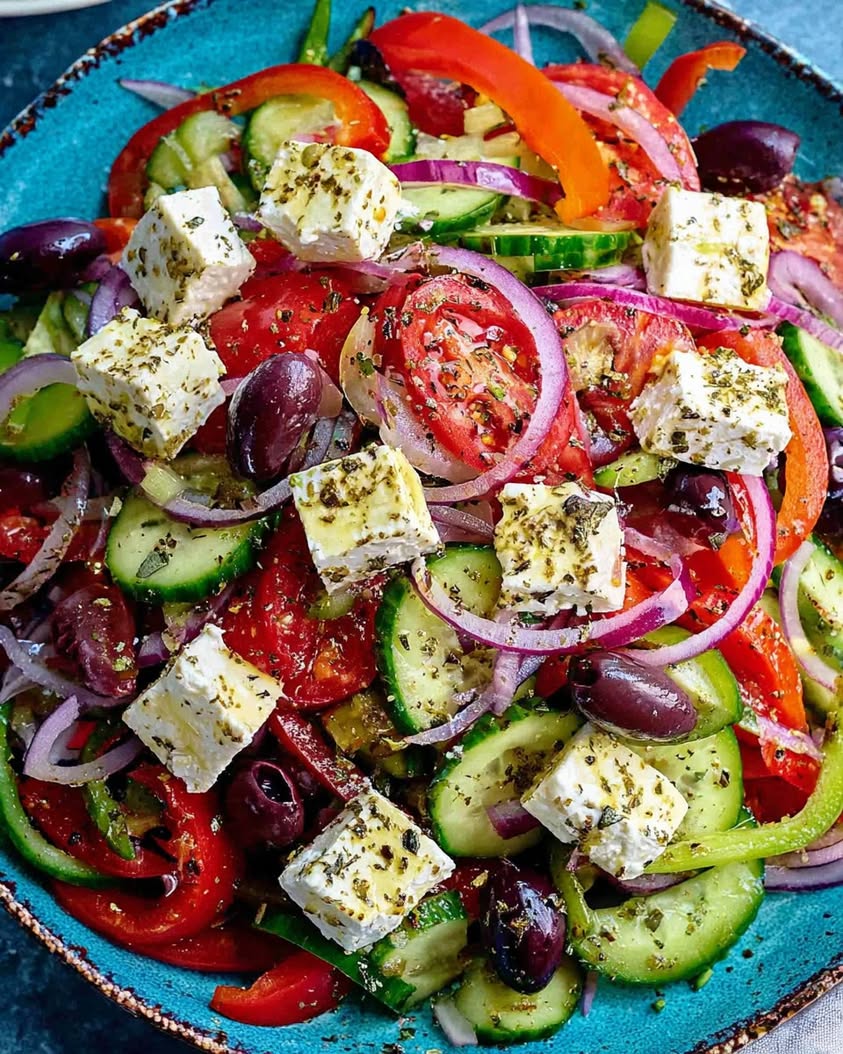
- Visual Appeal: This salad is a feast for the eyes. It features a stunning mosaic of red, green, purple, and white. Chunky red tomatoes and green cucumbers are scattered across the plate, punctuated by dark, glossy Kalamata olives and sharp rings of red onion. A pristine, white block of feta cheese sits proudly on top, often dusted with green oregano. It looks rustic, generous, and incredibly appetizing.
- Skill Level Needed: The skill level required is minimal, making it perfect for novice cooks. You only need to know how to chop vegetables into uniform, bite-sized chunks. There is no heat involved, no timing to worry about, and very few steps. The real skill lies in ingredient selection and not overcomplicating the final assembly.
- Special Equipment: You do not need any special equipment for this recipe. A sharp chef’s knife and a large cutting board are essential for preparing the vegetables. A large mixing bowl or serving platter is also necessary. Beyond that, you simply need a spoon for drizzling the olive oil and a small dish for the oregano and salt.
Recipe Overview
- Difficulty Level: We classify this recipe as easy because it involves absolutely no cooking techniques or heat management. The process is purely about chopping and assembling. As long as you can cut vegetables into chunks and drizzle oil, you can make this salad perfectly on your first try. It is a fundamental recipe that builds confidence in the kitchen.
- Category: This dish primarily functions as a side salad or a starter course. It is also a fantastic main course for a light lunch, especially during the hot summer months. When served alongside other small dishes like tzatziki, olives, and pita bread, it becomes a key component of a beautiful mezze or appetizer platter.
- Cuisine: This recipe is a cornerstone of Greek cuisine, specifically from the mainland and islands. The name Horiatiki itself refers to the rustic, simple food of the Greek countryside. This dish reflects the Greek culinary philosophy of celebrating fresh, seasonal produce with very few, but excellent, ingredients like olive oil, feta cheese, and oregano.
- Cost: The cost is moderate and depends heavily on the season and source. The most expensive ingredients are the feta cheese and extra virgin olive oil. Purchasing good quality feta from a deli counter and a mid-range bottle of imported Greek olive oil can cost around $12 to $15. The fresh vegetables are generally inexpensive, especially when they are in season.
- Season: The absolute best time to make this salad is during the peak of summer, from July through September. This is when tomatoes are at their most flavorful, sweet, and juicy. Cucumbers are also at their peak during this time. However, you can certainly make it year-round with good quality, vine-ripened tomatoes from a grocery store.
- Occasion: This salad is perfect for a wide range of occasions. It is ideal for casual weeknight dinners, backyard barbecues, and pool parties. It also fits beautifully into a more formal summer dinner party as a refreshing starter or vibrant side dish. It is a crowd-pleaser that impresses guests without causing stress for the host.
Why You Love This Recipe
First and foremost, you will adore the incredible taste and texture of this authentic Greek Horiatiki salad recipe. The combination of sweet, juicy tomatoes with cool, crisp cucumbers and sharp, pungent onions is a classic flavor profile for a reason. When you add the briny pop of a Kalamata olive followed by the creamy, salty richness of feta cheese, you get an explosion of diverse sensations in your mouth. The contrasting textures keep every bite interesting and engaging. It is a simple dish, but its sensory impact is anything but boring. It satisfies a deep craving for something fresh, clean, and utterly delicious.
Another compelling reason to love this recipe is its incredible convenience and speed. You can have this salad on the table in under fifteen minutes with almost no cleanup required. There is no cooking, no complicated sauces, and no waiting for anything to marinate. This makes it an absolute lifesaver for busy weeknights when you want a healthy, home-cooked meal but have very little time or energy. It is also a fantastic recipe for beginner cooks who are still building their kitchen confidence and want a guaranteed win. The simplicity reduces the stress of cooking while delivering a high-impact result.
From a nutritional standpoint, this salad is a powerhouse of health benefits. It is packed with vitamins and antioxidants from the fresh vegetables. Tomatoes are rich in lycopene, which is great for heart health. Cucumbers provide hydration and vitamin K. The olive oil is a fantastic source of healthy monounsaturated fats that are good for your brain and heart. The feta cheese adds protein and calcium, making the salad more satisfying. Plus, this dish is naturally low in carbohydrates and gluten-free. It fits perfectly into a balanced, whole-foods diet that supports overall wellness.
This authentic Greek Horiatiki salad recipe also offers fantastic social and entertaining value. It is a dish that looks incredibly impressive when you serve it on a large, rustic platter. Guests will be wowed by the beautiful colors and the generous block of feta cheese on top. Because you can assemble it so quickly, it allows you to spend more time with your friends and family and less time stuck in the kitchen. It also pairs beautifully with a wide variety of main courses, from grilled lamb chops to simple roasted chicken. It is a versatile, elegant, and effortless dish for any gathering.
Finally, this recipe is exceptionally cost-effective and accessible. The ingredient list is short and every item is readily available at almost any grocery store. Unlike fancy recipes that call for expensive cuts of meat or rare spices, this salad relies on everyday vegetables and a few high-quality pantry staples. By making this at home, you save a significant amount of money compared to ordering it at a restaurant. You can also control the quality of the ingredients, choosing organic produce or a specific brand of feta cheese to suit your budget and taste preferences.
Historical Background and Cultural Significance
The history of the Greek salad, or Horiatiki, is deeply rooted in the agricultural traditions of the Greek countryside. The word Horiatiki literally translates to village or rural, indicating its origins as a peasant dish made from whatever fresh produce was available to farmers. Historically, Greek farmers would take simple ingredients like tomatoes, cucumbers, olives, and a bit of cheese with them to the fields for a midday meal. There was no formal recipe, just a combination of the freshest seasonal vegetables from their gardens. This humble beginning is the very essence of the dish.
In Greek culture, this salad is far more than just a side dish. It represents a fundamental culinary philosophy that values simplicity, seasonality, and quality over complexity. It is a staple of every Greek table, from homes to high-end tavernas. Sharing a large bowl of Horiatiki is an act of hospitality and community. The salad embodies the Greek concept of filoxenia, which is a deep-seated tradition of welcoming guests and showing them generosity and warmth. The act of cutting the feta cheese and sharing it among your tablemates is a small but significant ritual of connection.
The evolution of the recipe is relatively straightforward. Before the introduction of the tomato to Europe from the Americas, a similar Greek peasant salad likely existed without it. Once tomatoes became widely adopted in Greek cuisine in the 19th and early 20th centuries, they quickly became the star of the dish. The specific combination of tomatoes, cucumber, feta, olives, and oregano then solidified into the canonical version we know today. The addition of lemon juice is a later refinement, as some purists believe that the acetic acid in vinegar damages the flavor of the olive oil.
Regional variations of the Horiatiki salad exist across the Greek mainland and islands. On the island of Crete, you might find it made with a local, slightly tangier feta cheese and a heavier hand with the oregano. In some mainland regions, capers or caper leaves are a common addition, adding a wonderful, salty brine. Some versions use green bell peppers, while other purists argue against it. In the northern parts of Greece, you might find a bit of shredded cabbage added in the winter. These subtle differences highlight the dish’s adaptability to local tastes and available ingredients, proving its living tradition.
Ingredient Deep Dive
Tomatoes. The tomato is the heart and soul of this dish. In Greek culture, the sun-ripened summer tomato is revered as a gift from the gods. Nutritionally, tomatoes are packed with lycopene, a powerful antioxidant linked to reduced risk of heart disease and cancer. They are also a good source of vitamins A, C, and K. When selecting tomatoes, look for ones that are heavy for their size, slightly soft to the touch, and have a deep, rich red color. The stem end should smell fragrant and sweet. Store them at room temperature away from direct sunlight, never in the refrigerator, as cold ruins their flavor and texture. If you cannot find excellent fresh tomatoes, you can use cherry tomatoes or vine-ripened Campari tomatoes as a substitute, though the texture will change slightly.
Cucumber. Cucumber adds a crucial element of cool, refreshing crunch that balances the richness of the feta and olive oil. In Greece, cucumbers are often enjoyed with their skin on for added texture and nutrients. They are very low in calories and high in water content, making them incredibly hydrating. Cucumbers also provide a good dose of vitamin K and several antioxidants. For the best texture, select firm, dark green cucumbers that are heavy for their size. Avoid any that are soft, shriveled, or have yellow spots. English or hothouse cucumbers are ideal because they have thin skin and fewer seeds. If using standard garden cucumbers, you may want to peel them partially and scoop out the watery seed core to prevent the salad from becoming soggy.
Feta Cheese. Feta cheese is the crowning glory of an authentic Greek Horiatiki salad recipe. This brined curd white cheese is traditionally made from sheep milk or a mixture of sheep and goat milk. Its flavor is tangy, salty, and slightly acidic, with a creamy yet crumbly texture. Culturally, feta has been produced in Greece for thousands of years and is a protected designation of origin product. It is a good source of protein and calcium, and it contains beneficial probiotics. When purchasing feta, always look for blocks stored in brine. You want a cheese that feels firm but not hard. The flavor should be bright and salty, not overly sour or rubbery. Store the block in its brine in the refrigerator, and it will last for several weeks.
Kalamata Olives. These dark, almond-shaped olives add a distinct briny and fruity flavor to the salad. They are named after the city of Kalamata in the Peloponnese region of Greece. Culturally, they are considered a national treasure and are also a protected designation of origin product. Kalamata olives are rich in healthy monounsaturated fats and contain powerful antioxidants like oleuropein, which has anti-inflammatory properties. When choosing olives, look for ones that are glossy, firm, and have a deep purple-black color. Avoid olives that look mushy or have a wrinkled appearance. They are typically sold in a brine or packed in olive oil. For storage, keep them in their liquid in the refrigerator for up to a few months.
Extra Virgin Olive Oil. The olive oil is not just a dressing ingredient. It is the soul of the salad. In Greek cuisine, olive oil is used as a primary cooking fat, a condiment, and a flavoring agent. High-quality extra virgin olive oil has a complex flavor profile ranging from grassy and peppery to fruity and buttery. It is incredibly healthy, packed with monounsaturated fats and powerful antioxidants that reduce inflammation. For this salad, you must use a good extra virgin olive oil. Look for a bottle from a specific region in Greece, with a harvest date on the label. The oil should smell fresh and vibrant, not stale or musty. Store it in a cool, dark place away from the stove.
Red Onion. Red onion provides a sharp, pungent kick that cuts through the richness of the other ingredients. In Greece, the red onion is a staple in the kitchen for its vibrant color and strong flavor. It has anti-inflammatory properties and is a good source of vitamin C and fiber. When selecting red onion, choose one that is firm with tight, papery skin. Avoid any that have soft spots or green sprouts. To use it in this salad, you want to slice it very thinly into half moons. If you find the raw onion too sharp, you can soak the slices in cold water for ten minutes to mellow the flavor. Store red onions in a cool, dry, dark place, away from potatoes, which can cause them to spoil faster.
Dried Oregano. Dried oregano is the signature spice of Greek cooking. It has an earthy, slightly floral, and minty flavor that pairs beautifully with tomatoes and olive oil. In Greece, wild oregano is often foraged from the mountains and has an incredibly intense aroma. This herb is rich in antioxidants and has antimicrobial properties. For this recipe, you must use good quality Greek dried oregano, not the ground powder variety. The leaves should be large and green. You rub them between your palms to release their oils before sprinkling them over the salad. Store dried oregano in an airtight container in a cool, dark place, and it will maintain its potency for about six months.
Common Mistakes to Avoid
- Using lettuce or leafy greens. This is the most common American mistake. A traditional Horiatiki contains no lettuce whatsoever. It is a chunky, rustic salad, not a leafy green one. Adding greens will water down the flavors and change the texture completely.
- Chopping the vegetables too small. The beauty of this salad is in its big, generous chunks. If you dice the tomatoes and cucumbers too finely, they will release too much juice and become mushy. Aim for pieces about one to one and a half inches in size.
- Using a vinaigrette or balsamic vinegar. An authentic Greek salad is dressed simply with olive oil, lemon juice, and salt. Balsamic vinegar is not Greek and its sweetness masks the delicate flavor of the olive oil. Acetic vinegar can also cause the feta to harden.
- Crumbling the feta cheese. Many restaurants crumble feta over the salad, but this is not the traditional method. The traditional way is to place a thick slab or slice of feta directly on top of the vegetables. This allows each person to take a piece with their forkful.
- Adding bell peppers. While some regional variations do include green bell peppers, they are not a core ingredient in a classic Horiatiki. They can add an unwanted bitter or watery element. Stick to the core ingredients for the most authentic version.
- Over-salting the vegetables. Feta cheese and Kalamata olives are naturally very salty. You only need a tiny pinch of salt for the tomatoes. It is always better to under-salt and let the feta provide the necessary saltiness.
- Refrigerating the tomatoes before serving. Cold tomatoes lose their flavor and become mealy in texture. You should always let your tomatoes come to room temperature before cutting and adding them to the salad. This is crucial for the best flavor.
- Using poor quality olive oil. The olive oil is the primary flavoring agent in the dressing. Using a cheap, bland, or rancid oil will ruin the entire salad. Invest in a good bottle of extra virgin olive oil from Greece or southern Italy.
- Waiting too long to serve. This salad is best eaten immediately after assembling. If you let it sit for too long, the salt will draw moisture out of the tomatoes and cucumbers, creating a watery mess at the bottom of the bowl. Serve it right away.
- Forgetting the lemon juice. The fresh lemon juice provides the necessary acid to balance the richness of the olive oil and the saltiness of the cheese. It brightens all of the flavors and is an essential part of the dressing.
Essential Techniques
Cutting the tomatoes. Mastering the cut for the tomatoes is essential for texture. First, remove the core of the tomato by cutting around it with a small knife. Then, cut the tomato in half through the equator, not the stem end. Lay each half flat on the cutting board and cut them into thick wedges or large chunks. The goal is to create pieces that are substantial enough to hold their shape but small enough to fit onto a fork easily. Avoid crushing the tomato as you cut it. A sharp knife is your best friend here, as a dull blade will simply smear the tomato flesh. You want clean cuts that preserve the internal compartments of the fruit, keeping the seeds and jelly intact for juiciness.
Slicing the red onion. Getting the right onion texture is crucial because raw onion can be overpowering. Start by cutting off the stem end and the very tip of the root end, but leave the root intact to hold the layers together. Peel the onion and then cut it in half from the top to the root. Place each half flat on the board, and then make very thin slices parallel to the board. This creates half-moon shapes. Alternatively, you can slice it from the top down to make thin rings. To mellow the sharp bite of the onion, place the slices in a small bowl of cold water for ten minutes, then drain and pat them dry thoroughly before adding them to the salad.
Dressing the salad. The dressing technique is more about assembly than mixing. In a large mixing bowl, combine your cut tomatoes, cucumbers, and onion slices. Season them very lightly with a pinch of salt and a generous amount of dried oregano. Drizzle over a good amount of extra virgin olive oil and squeeze the juice from half a fresh lemon over the top. Use your hands or two large spoons to gently toss everything together. The key is to coat the vegetables lightly without crushing them. You want each piece to be glistening with oil and seasoned evenly. After tossing, transfer the mixture to a serving platter in a single even layer.
Placing the feta cheese. This is the final and most iconic step. Do not crumble the feta. Instead, take your block of feta cheese and cut it into one or two large, thick slabs, about a half inch thick. Place the slab(s) directly on top of the dressed vegetables. Then, drizzle a little more olive oil over the feta itself. Sprinkle a bit more dried oregano on top of the cheese. The final touch is to grind a little black pepper over the entire salad. The point is to keep the cheese as a distinct component that you eat in combination with the vegetables, not mixed into the dressing.
Pro Tips for Perfect Greek Horiatiki Salad
Always use room temperature tomatoes for the best flavor. Keeping your tomatoes in the fridge robs them of their aromatic compounds and makes them mealy. Take them out of the refrigerator at least an hour before you plan to make the salad so they can come to room temperature. This small step makes a huge difference in the final taste. You will immediately notice a more intense sweetness and a better overall texture.
Invest in a good pepper mill and use fresh black pepper. Pre-ground pepper has very little flavor. Freshly ground black pepper has a pungent, floral aroma that complements the olive oil and tomatoes beautifully. Grind some generously over the salad after you add the feta. It adds a final layer of aromatic complexity that elevates the entire dish from simple to sublime.
Do not skip the step of rubbing the oregano between your palms. Dried oregano contains essential oils that are locked within the leaves. By rubbing the leaves between your hands before sprinkling them, you release those oils directly into the dish. This activates the herb, making its flavor more potent and aromatic. You will get a much more fragrant and flavorful result than simply sprinkling whole leaves on top.
Use the best olive oil you can afford. This is not a time to save money. The olive oil is the primary condiment and flavoring agent in the dressing. A high-quality, peppery extra virgin olive oil will transform the salad. Taste your olive oil before you use it. If it tastes bland or rancid, it will ruin your dish. Look for oils with a harvest date and a specific origin, like Kalamata or Crete.
Do not overdress the salad. You want the vegetables to be well-coated, not swimming in oil. You can always add more oil later, but you cannot take it away. Start with a generous drizzle, toss, and then assess. The vegetables should have a nice sheen but no pooling liquid at the bottom of the bowl. The dressing should cling to the pieces, not separate from them.
Serve the salad on a large, shallow platter rather than a deep bowl. This presentation is more traditional and also helps to prevent the vegetables from sitting in their own juices. A single layer of vegetables on a platter allows for better distribution of the dressing and makes it easier for guests to pick the pieces they want. It looks much more rustic and impressive as well.
Eat the salad immediately after you assemble it. This is a salad that does not improve with time. As it sits, the salt draws moisture from the tomatoes and cucumbers, creating a watery pool. The feta can also start to leach its saltiness into the oil. For the best texture and flavor, assemble the salad right before you serve it, preferably within five minutes of eating.
Variations and Adaptations
Regional variations across Greece offer interesting twists on the classic. On some of the Greek islands, especially the Cyclades, you will find capers or caper leaves added to the mix. These provide a wonderful, intensely briny and tangy pop that complements the olives beautifully. In other regions, you might see a small amount of sliced green bell pepper included, although this is a point of contention among purists. Some tavernas also add a few slices of hard-boiled egg or a piece of cured pork like pastourma for a heartier version, though this is moving towards a more modern interpretation.
Seasonal adaptations allow you to enjoy this salad year-round. During the winter months when tomatoes are at their worst, you can substitute high-quality sun-dried tomatoes or roasted cherry tomatoes for a burst of concentrated flavor. You can also add some crisp, shredded romaine lettuce in the winter to use up any available sturdy greens. However, the best adaptation is simply to wait for summer. The true spirit of the horiatiki is about celebrating the peak of the season, and no substitution fully replicates a sun-ripened summer tomato.
Dietary modifications are very straightforward for this recipe. It is naturally gluten-free and low in carbohydrates. For a dairy-free version, you can simply omit the feta cheese, though it will change the character of the salad significantly. You can also substitute the feta with a high-quality dairy-free feta-style product made from tofu or almonds. For a vegan version, the same dairy-free cheese swap applies, and the dish remains completely plant-based and satisfying. No other adjustments are needed as the rest of the ingredients are already vegan-friendly.
Flavor variations allow you to personalize the dressing. You can add a small clove of minced garlic to the olive oil and lemon juice before dressing the salad for a more pungent flavor. Another popular addition is a pinch of sumac, which adds a lovely lemony, tangy flavor that complements the tomatoes. Some people enjoy a sprinkle of fresh mint or flat-leaf parsley along with the oregano for added herbal complexity. Each of these additions creates a slightly different but delicious profile.
Texture modifications can change the eating experience. If you prefer a less watery salad, you can deseed the tomatoes and cucumbers before cutting them. To deseed a tomato, cut it in half and squeeze out the jelly-like seeds. For a cucumber, you can split it in half lengthwise and run a spoon down the middle to scoop out the watery seed core. This makes for a firmer, less juicy salad that holds up better for leftovers, though you lose some of the essential liquid that makes the dressing.
Presentation alternatives can make the salad more interactive. Instead of a platter, you can serve the salad in individual shallow bowls, with all the vegetables placed in the bowl and the feta cheese perched on top of each serving. For a large party, you can set up a mezze-style board with the horiatiki as one component alongside bowls of olives, tzatziki, warm pita, and dolmades. This allows guests to build their own plates and creates a more festive, sharing experience.
Serving and Presentation Guide
The most authentic plating technique involves a large, rustic platter. After tossing the vegetables with the oil and lemon, you spread them out in a single, even layer over the platter. You then place the slab of feta cheese directly in the center or slightly off to one side. This asymmetrical presentation looks very natural and appealing. The final touch is a drizzle of olive oil over the feta and a generous sprinkling of oregano. Avoid over-arranging the vegetables, as you want it to look rustic and tossed.
Garnishing ideas are simple but impactful. Beyond the standard oregano and black pepper, you can add a few whole Kalamata olives on top for visual contrast. A few fresh oregano sprigs placed on top of the feta add a lovely, aromatic garnish. Some people also like to scatter a few capers or caper leaves over the top for an extra pop of green. The key is to keep the garnishes simple and relevant to the dish. You should not use anything that distracts from the main ingredients.
Traditional accompaniments complete the Greek meal experience. This salad is almost always served alongside warm, crusty bread like a rustic country loaf or a crusty baguette. The bread is essential for sopping up the delicious juices and olive oil that collect at the bottom of the platter. It is also commonly served with grilled meats like souvlaki, lamb chops, or gyros. It pairs perfectly with other Greek dishes like moussaka or spanakorizo, acting as a bright, refreshing counterpoint to heavier, richer foods.
Modern serving suggestions can adapt the salad for different contexts. You can serve it as a filling for a Greek-style pita wrap. Simply chop the vegetables and feta into smaller pieces and stuff them into a warm pita with some tzatziki sauce. Another modern idea is to serve the salad in a hollowed-out tomato or cucumber boat for an elegant appetizer. It also makes a fantastic topping for bruschetta or crostini for a party appetizer, though you should drain the vegetables slightly to prevent the bread from getting soggy.
Temperature considerations are very important for the best experience. The salad should be served at room temperature or slightly cool, but never cold straight from the refrigerator. The vegetables should be at room temperature to maximize their flavor. The feta cheese can be slightly cool, but you should let it sit out for a few minutes before adding it to the salad. The olive oil can become cloudy and thick when cold, so it should always be at room temperature as well.
Portion control tips help you avoid waste. For a side salad, you should plan for about one large tomato, half a cucumber, a few slices of onion, a few olives, and a two-ounce portion of feta per person. For a main course lunch, you can double these quantities. The salad is very filling due to the feta and olive oil, so a moderate portion is usually satisfying. It is always better to make a bit less than too much, as the leftover vegetables will not be as good the next day.
Wine and Beverage Pairing
For wine pairings, you cannot beat a crisp, dry white wine from Greece. A classic pairing is a glass of Assyrtiko from the island of Santorini. This wine has high acidity and mineral notes that cut through the richness of the feta and olive oil while complementing the fresh vegetables. Another excellent choice is a Moschofilero from the Peloponnese, which offers floral aromas and a bright, zesty finish. A dry Greek rosé, known as a Kokkali, also works wonderfully, providing a balance of fruit and acidity. If you prefer red wine, a light, chilled red like a Xinomavro from Naoussa or a young, fruity Agiorgitiko from Nemea can be refreshing options.
For non-alcoholic alternatives, there are several excellent choices that fit the Greek theme. A traditional Greek lemonade, made with fresh lemon juice, a little sugar, and lots of ice, is a classic and refreshing pairing. You can also serve a tall glass of iced tea with a sprig of fresh mint. Another wonderful option is a sparkling water with a squeeze of lemon and a splash of orange blossom water for a fragrant, floral twist. The key is to have something that cleanses the palate and is not too sweet to overwhelm the delicate flavors of the salad.
For a coffee or tea pairing, you can consider a traditional Greek coffee after the meal. A small, strong cup of Greek coffee served with a glass of cold water is a perfect way to end the meal. The bitterness of the coffee provides a nice contrast to the saltiness of the feta and the acidity of the lemon. If you prefer tea, a cup of Greek mountain tea, which is an herbal tea made from the Sideritis plant, is a lovely, earthy option. It is known for its digestive benefits and has a mild, floral flavor that is very soothing.
When it comes to temperature considerations, you should always serve your beverage well-chilled. A white or rosé wine should be served at a temperature of about 45 to 50 degrees Fahrenheit. The lemonade or iced tea should be heavily iced. The Greek coffee should be served hot. The contrast between the cool salad and the hot or cold beverage is part of the enjoyment. For the coffee, you should serve it in small cups with a glass of cold water on the side, which is the traditional Greek way.
Serving suggestions for beverages are all about creating a relaxed, convivial atmosphere. For a dinner party, you can set up a self-serve drink station with a bottle of chilled wine, a pitcher of lemonade, and a bucket of ice. For a more formal meal, you can offer a welcome glass of wine or a spritzer as guests arrive. The beverage should be served before or alongside the salad, not after. The goal is to enhance the meal, not to distract from it. A simple, well-chosen drink makes the hor Print
Greek Salad (Traditional Horiatiki Recipe)
- Total Time: 15 minutes
- Yield: 4
Description
A classic Greek salad made with ripe tomatoes, crisp cucumber, red onion, Kalamata olives, and tangy feta cheese, all dressed in a simple lemon-oregano vinaigrette.
Ingredients
- 3 large ripe tomatoes, cut into wedges
- 1 English cucumber, halved and sliced
- 1/2 red onion, thinly sliced
- 1/2 cup Kalamata olives
- 4 ounces feta cheese, cut into thick slices or cubes
- 2 tablespoons extra virgin olive oil
- 1 tablespoon lemon juice
- 1 teaspoon dried oregano
- Salt and pepper to taste
Instructions
- Arrange tomato wedges, cucumber slices, red onion, and Kalamata olives on a large plate or shallow bowl.
- Top with feta cheese slices.
- In a small bowl, whisk together olive oil, lemon juice, dried oregano, salt, and pepper.
- Drizzle the dressing over the salad and serve immediately.
Notes
You can customize the seasonings to taste. For a more authentic touch, add a pinch of dried mint or capers.
- Prep Time: 15 minutes
- Cook Time: 0 minutes
- Method: Side
- Cuisine: Greek