Ravioli with Tomatoes and Asparagus: A Quick Garlic Herb Dinner
Have you ever craved a weeknight dinner that feels like a celebration? This recipe for ravioli with tomatoes and asparagus delivers exactly that. It combines tender cheese ravioli with bright cherry tomatoes, crisp asparagus spears, and a fragrant garlic herb sauce. The result is a dish that tastes complex but comes together in under thirty minutes. You will love how the simple ingredients transform into a meal that satisfies every craving.
Imagine biting into a perfectly cooked ravioli, its pasta shell giving way to a creamy cheese filling. Then, you taste the burst of a roasted cherry tomato, followed by the slight crunch of fresh asparagus. Each forkful is a balanced experience. This is not just a pasta dish. It is a plate of spring flavors that works for any season. When you learn to make this ravioli with tomatoes and asparagus, you add a reliable recipe to your weekly rotation.
This meal is a true crowd-pleaser. It works for a quick family dinner, a romantic date night, or a casual meal with friends. The preparation is straightforward. You do not need any special culinary skills. Just a large skillet, a pot of boiling water, and a few fresh ingredients. The appeal lies in its simplicity and its vibrant taste. This ravioli recipe is meant to be shared, enjoyed, and repeated often. It is the kind of comfort food that makes you look forward to dinner time.
Quick Recipe Highlights
- Flavor Profile: The taste is a perfect blend of savory cheese, sweet tomatoes, earthy garlic, and fragrant herbs. The basil and oregano add a fresh, aromatic finish that ties everything together beautifully. It is a light yet deeply flavorful sauce.
- Texture: You get a delightful mix of soft, pillowy ravioli, tender-crisp asparagus, and juicy tomatoes that pop in your mouth. The garlic and herbs are finely minced so they disappear into the sauce, creating a smooth coating.
- Aroma: The scent of garlic sizzling in olive oil is the first thing you will notice. Fresh basil and oregano quickly follow that aroma. The combination is warm, inviting, and incredibly appetizing.
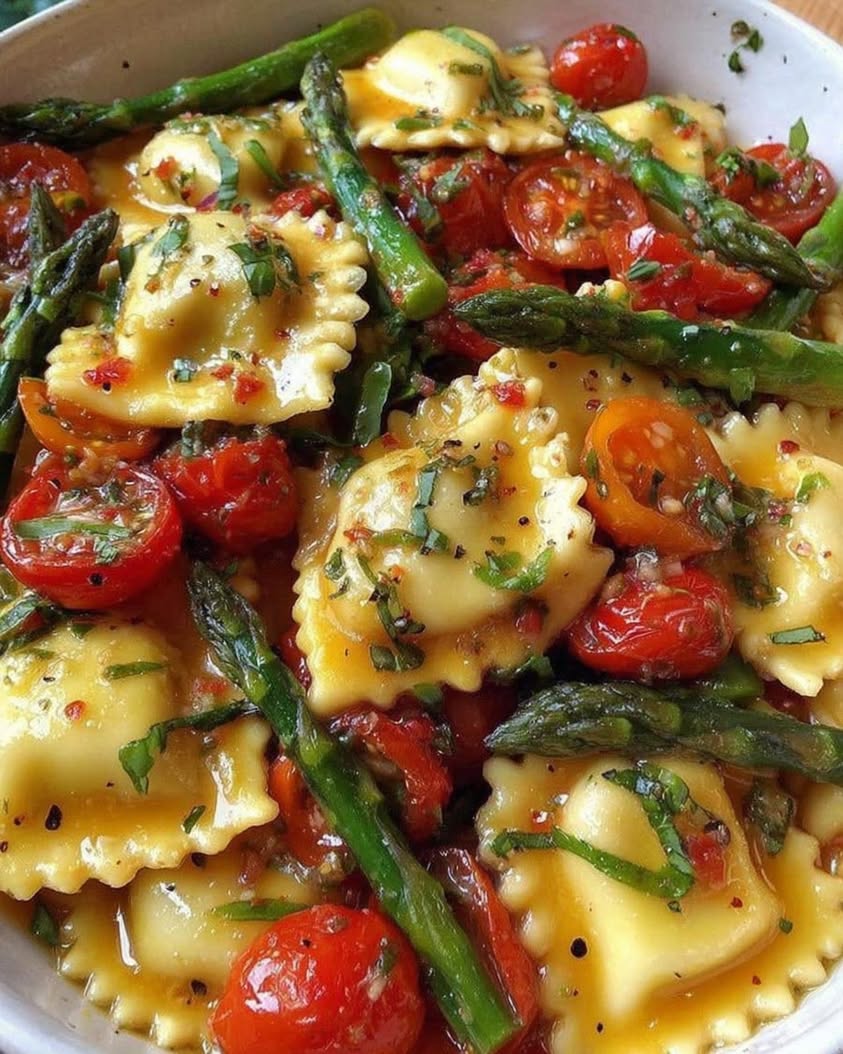
- Visual Appeal: The plate is a study in color. The green asparagus, red tomatoes, and white pasta are tossed together in a glistening sauce. A final sprinkle of fresh herbs and Parmesan cheese adds a beautiful finishing touch.
- Skill Level Needed: This recipe is perfect for beginners. It requires basic knife skills and the ability to boil pasta and sauté vegetables. The steps are simple and the timing is forgiving.
- Special Equipment: You will need a large pot for boiling pasta, a colander, and a large skillet or sauté pan. A sharp knife and cutting board are also essential for prepping your vegetables.
Recipe Overview
- Difficulty Level: I rate this recipe as easy. There are no complex techniques like making pasta from scratch or creating a delicate emulsion. The instructions are straightforward. Anyone can master this dish on their first attempt, making it a great entry point for new cooks.
- Category: This dish falls under pasta main courses. It can also serve as a hearty side dish for grilled chicken or fish. We are creating a complete meal in one pan, which is perfect for busy weeknights.
- Cuisine: The inspiration comes from classic Italian cooking. We use simple, high-quality ingredients like fresh herbs, garlic, and olive oil. This approach is the heart of Italian home cooking. However, we have adapted it for speed and accessibility in the American kitchen.
- Cost: This is a budget-friendly meal. The main cost is the ravioli, which you can buy fresh or frozen. Asparagus and cherry tomatoes are often reasonably priced. You likely already have garlic, herbs, and olive oil in your pantry.
- Season: While available year-round, this dish truly shines in the spring and early summer. This is when asparagus and cherry tomatoes are at their peak flavor and lowest price. The freshness of the ingredients is the star of the show.
- Occasion: This recipe is ideal for a quick weeknight meal. It is also elegant enough for a casual dinner party. You can serve it for a special lunch or as a comforting post-workout meal. It is versatile for any occasion.
Why You Will Love This Recipe
The taste and texture of this dish are what truly sell it. Every bite is a new adventure. The cheese ravioli is soft and rich. The asparagus provides a pleasant snap. The tomatoes release their sweet juices. The garlic and herb sauce coats everything in a fragrant blanket. It is a harmonious combination that never gets boring. You will find yourself going back for seconds, not because you are hungry, but because the flavor is so compelling. The lightness of the sauce prevents the dish from feeling heavy, so you can enjoy a generous portion.
Convenience is a huge benefit here. You can have this meal on the table in just twenty-five minutes. That includes prep time. There is no long simmering or tedious chopping involved. You just boil the ravioli, sauté the vegetables, and toss everything together. It is a one-pan process after the pasta is cooked. This makes cleanup quick and easy. For anyone who is short on time but still wants a homemade dinner, this recipe is a lifesaver. It proves that a delicious meal does not require hours in the kitchen.
From a nutritional standpoint, this dish offers a good balance. The ravioli provides carbohydrates for energy. The asparagus is packed with vitamins K and A, as well as fiber. The tomatoes are rich in lycopene, a powerful antioxidant. The garlic and herbs add their own health-promoting compounds. You can feel good about serving this to your family. It is a meal that satisfies the palate and nourishes the body. It is not a diet food, but it is a well-rounded meal that fits into a healthy lifestyle.
This recipe has excellent social and entertaining value. It looks impressive on the plate. The vibrant colors and fresh aromas make it feel like a restaurant-quality dish. Guests will think you spent a lot more time and effort. Because it is so fast, you can make it after a long workday and still have time to relax before guests arrive. It also pairs beautifully with a simple green salad and a glass of wine. It is a reliable choice for a casual get-together where you want to shine.
Cost-effectiveness and accessibility are major perks. The ingredients are easy to find in any grocery store. You do not need to hunt down specialty items. The total cost of the meal is low compared to eating out. You get four generous servings for a fraction of the price of a restaurant pasta dish. It is a smart way to eat well without straining your budget. This recipe is also a great way to use up vegetables in your fridge, making it sustainable as well.
Historical Background and Cultural Significance
Ravioli has ancient origins. It is believed to have originated in Italy during the Middle Ages. The earliest known mentions of filled pasta date back to the 14th century. These early versions were often filled with meats, cheeses, and herbs. They were considered a luxury item for special occasions. Over time, ravioli spread throughout Italy, with each region developing its own unique fillings and shapes. The tradition of filling pasta is a testament to Italian ingenuity in creating satisfying meals from simple ingredients.
Tomatoes are a relatively recent addition to Italian cuisine. They were brought to Europe from the Americas in the 16th century. Initially, they were viewed with suspicion and used as ornamental plants. It took a few hundred years for tomatoes to become a staple in Italian cooking. By the 19th century, they were essential for sauces. The combination of pasta and tomatoes is now considered a classic pairing. This recipe honors that tradition by using fresh, ripe tomatoes for a light sauce instead of a heavy, cooked-down one.
Asparagus has a long and storied history. It has been cultivated for over two thousand years. The ancient Greeks and Romans prized it for its unique flavor and medicinal properties. It was often served at royal feasts. Asparagus is a spring vegetable, and its arrival is celebrated in many cultures. Using it in this dish connects us to a long line of cooks who celebrated the seasons. It adds a touch of elegance that has been appreciated for centuries.
The idea of a quick, one-pan pasta is a modern adaptation. It reflects our contemporary need for speed and convenience. However, the core principles remain the same. We are using fresh, seasonal ingredients and treating them with respect. The garlic and herbs highlight the natural flavors of the vegetables and pasta. This recipe is a bridge between ancient culinary traditions and our modern lifestyle. It shows that you can cook with history in mind without spending a whole day in the kitchen.
Ingredient Deep Dive
Ravioli: Ravioli is a traditional Italian stuffed pasta. It is a symbol of home cooking and family gatherings. The filling is often a blend of ricotta cheese, Parmesan, and spinach. However, there are many variations. Nutritionally, ravioli provides carbohydrates, protein, and calcium from the cheese. When selecting ravioli, look for brands that use high-quality pasta and fresh fillings. Fresh ravioli from the refrigerated section is best, but frozen works very well. You can substitute with tortellini or even gnocchi for a different shape. For storage, keep it refrigerated and use it by the expiration date. You can also freeze unopened packages.
Asparagus: Asparagus has been cultivated for millennia and was a favorite of Roman emperors. It is a nutritional powerhouse, loaded with folate, fiber, and vitamins A, C, and K. It also contains antioxidants that fight inflammation. When choosing asparagus, look for firm, bright green stalks with tightly closed tips. The thickness of the spear does not matter, but thinner ones tend to be more tender. To store, wrap the ends in a damp paper towel and place in a plastic bag in the refrigerator. Use it within a few days for best quality. You can substitute with green beans or snap peas for a similar crunch.
Cherry Tomatoes: Cherry tomatoes are a modern cultivation, but their ancestor originates in South America. They are packed with lycopene, an antioxidant linked to heart health and cancer prevention. They also contain vitamins C and K. When selecting, choose tomatoes that are firm, plump, and brightly colored. Avoid any that have soft spots or wrinkles. Store them at room temperature for best flavor. Do not refrigerate them as it can make them mealy. You can substitute with grape tomatoes or diced Roma tomatoes. For a sweeter taste, consider using sun-dried tomatoes.
Garlic: Garlic has been used for thousands of years for both culinary and medicinal purposes. It was a staple in ancient Egypt and Greece. It is renowned for its antibiotic and anti-inflammatory properties. It also helps lower blood pressure and cholesterol. When choosing garlic, look for bulbs that are firm and heavy. Avoid any that are sprouting or have soft spots. Store bulbs in a cool, dry, dark place with good air circulation. Do not refrigerate them. You can substitute with one teaspoon of jarred minced garlic per clove, but fresh is best.
Fresh Basil and Oregano: Basil is a sacred herb in India and a symbol of love in Italy. Oregano was used by the ancient Greeks for its healing properties. Both are rich in antioxidants and have antibacterial properties. They add vibrant flavor with zero calories. When selecting, look for bright green leaves that are not wilted. Store them like a bouquet in a glass of water at room temperature. You can also wrap them in a damp paper towel in the refrigerator. Dried herbs can be substituted, but use one-third the amount because the flavor is more concentrated.
Common Mistakes to Avoid
- Overcooking the ravioli is a frequent error. Ravioli cooks very quickly, often in three to five minutes. Overcooking makes it mushy and leads to the filling spilling out. Always test a piece a minute before the package suggests.
- Do not overcrowd the skillet. If you add too many vegetables to the pan, they will steam instead of sauté. This results in soggy asparagus and bland tomatoes. Cook the vegetables in a single layer for best results.
- Using cold olive oil straight from the pantry can be a problem. It can take too long to heat up, causing the garlic to burn before the oil is ready. Always start with a warm pan and add the oil immediately.
- Forgetting to season the pasta water is a classic mistake. The water should taste like the sea. This is the only chance you have to season the pasta from the inside out. Under-seasoned water leads to bland ravioli.
- Burning the garlic is a common pitfall. Garlic goes from fragrant to bitter very quickly. You must add it to the pan and stir constantly for only thirty seconds before adding other ingredients.
- Skipping the pasta water in the sauce is a missed opportunity. The starchy water helps the sauce cling to the ravioli. Do not dump all the water down the drain. Reserve a cup before draining.
- Adding the ravioli to the skillet too early can cause problems. If you add it before the sauce is ready, it will sit in the pan and become sticky. Have the sauce ready and waiting in the pan.
- Not drying the ravioli after boiling is a small but important step. Water on the ravioli will dilute your sauce. A quick shake in the colander helps the sauce adhere much better.
- Using frozen herbs can introduce too much moisture to the dish. Fresh herbs are always best for this recipe. If you must use dried, add them earlier to allow their flavor to bloom.
- Failing to taste and adjust seasoning is a final error. You should taste the finished dish before serving. A final pinch of salt or a squeeze of lemon can elevate the entire meal.
Essential Techniques
How to Sauté Garlic Perfectly: Sautéing garlic is a foundational skill. You want to soften it and release its flavor without burning it. To master this, always use medium-low heat. Add the garlic to the pan after the oil is hot but not smoking. Stir it constantly for about thirty seconds. It should become fragrant and just begin to turn golden. If it browns quickly, your heat is too high. The visual cue is a shimmering oil and a sweet, pungent aroma. This technique unlocks the garlic’s sweetness.
How to Achieve Tender-Crisp Asparagus: The goal is asparagus that is bright green and has a pleasant snap. Start by snapping off the woody ends of each spear. They will break naturally where the tender part begins. Cut the spears into one to two inch pieces. Sauté them in the hot oil for three to four minutes. They should be bright green and slightly tender when pierced with a fork. Do not cook them until they are limp. This technique preserves their texture and color.
How to Make a Pan Sauce: A pan sauce is created by deglazing the skillet. After sautéing the vegetables, you add the reserved pasta water and herbs. Use a wooden spoon to scrape up any brown bits from the bottom of the pan. These bits are full of flavor. Let the sauce simmer for a minute to reduce slightly and thicken. The visual cue is a slightly glossy, cohesive sauce that coats the back of a spoon. This technique creates a quick, flavorful sauce without heavy cream.
Pro Tips for Perfect Ravioli with Tomatoes and Asparagus
Always reserve a cup of pasta water before draining. This starchy liquid is the secret to a silky sauce. It helps the sauce bind to the ravioli and adds body.
Do not skip the step of halving the cherry tomatoes. Halving them allows their juices to release during cooking. This creates a flavorful base for the sauce. Whole tomatoes will not burst as easily.
Cut your asparagus into uniform pieces. This ensures they all cook at the same rate. If some pieces are much thicker than others, cook them first before adding the thinner ones.
Use a large skillet for this recipe. A 12-inch skillet gives the vegetables plenty of room to brown. A crowded pan leads to steaming, not sautéing. This is critical for texture.
Let the ravioli drain thoroughly in the colander. A quick shake removes excess water. Adding wet ravioli to your sauce will thin it out. This keeps your sauce clinging to the pasta.
Consider adding a pinch of red pepper flakes with the garlic. This adds a gentle heat that compliments the other flavors. It is not necessary, but it is a nice touch for spice lovers.
Finish the dish with a drizzle of high-quality extra-virgin olive oil. This adds a final layer of fresh, peppery flavor. It also gives the dish a beautiful shine.
Serve immediately after tossing. This dish is best enjoyed hot. If it sits, the ravioli can absorb the sauce and become sticky. Have your plates ready before you start tossing.
Variations and Adaptations
Regional Variations: This recipe can be adapted to different Italian regions. In Tuscany, you might add a handful of spinach to the skillet. In Sicily, you could add capers and olives for a briny twist. In the north, you might use a little butter along with the olive oil. Each version honors local ingredients and traditions.
Seasonal Adaptations: This dish is a perfect canvas for seasonal vegetables. In the summer, add zucchini and bell peppers. In the fall, use roasted butternut squash and sage. In the winter, add sautéed mushrooms and kale. The cooking method remains the same, but the flavors change with the seasons.
Dietary Modifications: To make this gluten-free, use gluten-free ravioli. To make it dairy-free, use a dairy-free ravioli and skip the Parmesan. For a vegan version, use vegan ravioli and nutritional yeast instead of Parmesan. The garlic herb sauce is naturally plant-based.
Flavor Variations: You can change the herbs to suit your taste. Try using thyme and rosemary for a more robust flavor. Add a squeeze of lemon juice at the end for acidity. A splash of white wine before adding the pasta water adds a new flavor dimension.
Texture Modifications: For a creamier sauce, stir in a tablespoon of cream cheese or mascarpone at the end. For a crunchier texture, toast some pine nuts or breadcrumbs and sprinkle them on top. For a lighter dish, add more vegetables and less pasta.
Presentation Alternatives: Instead of tossing everything together, you can plate the ravioli and spoon the vegetable mixture on top. You can also serve the sauce on the side. For a more elegant presentation, use a ring mold to stack the ravioli. Garnish with microgreens.
Serving and Presentation Guide
Plating Techniques: Start with warm plates. Use tongs to twirl the ravioli into a neat nest in the center of the plate. Spoon the vegetables and sauce around the nest. This creates height and visual interest. A simple, centered presentation is classic and elegant.
Garnishing Ideas: A fresh basil leaf on top is a classic garnish. A generous shaving of Parmesan cheese adds a salty, nutty finish. A crack of black pepper adds a visual contrast. A drizzle of balsamic glaze can add a sweet and tangy note.
Traditional Accompaniments: A simple green salad with a lemon vinaigrette is the perfect side. Crusty bread is excellent for sopping up any remaining sauce. A side of roasted vegetables complements the meal. Garlic bread is also a popular choice.
Modern Serving Suggestions: Serve this in a shallow bowl for a more casual feel. You can also serve it as a part of a larger Italian feast. Pair it with a charcuterie board and a second pasta dish. It works well as a single-course meal.
Temperature Considerations: Serve this dish immediately after cooking. The ravioli should be hot, and the vegetables should be warm. Cold pasta can become gummy. If you need to hold it, keep it covered in a warm oven for a short time.
Portion Control Tips: A standard serving is about one and a half cups of cooked pasta. This fills a standard dinner plate nicely. For a lighter meal, reduce the portion of ravioli and increase the vegetables. For a heartier meal, serve with a protein.
Wine and Beverage Pairing
Wine Pairings: A crisp, dry white wine is a wonderful choice. A Sauvignon Blanc from New Zealand has herbal notes that match the basil. A Pinot Grigio from Italy is light and pairs well with the vegetables. A dry Rosé is also an excellent option. It can handle the garlic and herbs. For red wine lovers, a light-bodied Pinot Noir would work. Avoid heavy, tannic reds that would overpower the dish.
Non-Alcoholic Alternatives: A sparkling water with a squeeze of lemon is refreshing. An Italian soda with a hint of blood orange is festive. A simple iced tea with mint is also a good choice. The key is to choose a beverage that is not too sweet, as it could clash with the savory flavors.
Coffee and Tea Pairings: This is not a dish that typically pairs with coffee. A light-bodied green tea with Jasmine notes could be a unique pairing. The floral notes would complement the herbs. An herbal tea like chamomile would be too delicate. Stick with the wine or sparkling water for the best experience.
Temperature Considerations: White wine should be served chilled, between 45 and 50 degrees Fahrenheit. Red wine should be slightly cool, around 55 to 60 degrees. Sparkling water should be very cold. Proper temperatures enhance the drinking experience and the food pairing.
Serving Suggestions: Pour the wine just before serving. This allows it to open up slightly. Use stemmed glasses for wine to prevent your hands from warming the bowl. For non-alcoholic drinks, use a festive glass to make the meal feel special.
Storage and Shelf Life
Storage Methods: Store leftover ravioli with tomatoes and asparagus in an airtight container. Refrigerate it within two hours of cooking. The container should not be sealed until the food has cooled to room temperature to prevent condensation. The leftovers will keep for three to four days.
Temperature Requirements: The refrigerator should be set to 40 degrees Fahrenheit or below. This slows bacteria growth. Do not leave the dish at room temperature for more than two hours. If you are serving it outdoors, reduce that time to one hour.
Container Recommendations: A glass or BPA-free plastic container with a tight-fitting lid is best. Avoid shallow containers as they do not protect the food as well. A wide, flat container allows for even cooling and easier reheating. You can also use a resealable freezer bag.
Signs of Spoilage: Discard the leftovers if you see mold, a slimy texture, or a sour smell. The ravioli can become very soft, which is a sign of degradation. If the sauce has separated or looks watery, it may still be safe, but the quality is diminished. When in doubt, throw it out.
Reheating Instructions: The best way to reheat is in a skillet over medium-low heat. Add a splash of water or broth to rehydrate the sauce. Stir gently until heated through. You can also microwave it in thirty-second intervals, stirring between each. Do not overheat, as it can make the ravioli tough.
Freezing Guidelines: You can freeze this dish, but the texture will change. The ravioli will be softer after thawing. Place it in a freezer-safe container. Remove as much air as possible. It will keep for up to two months. Thaw in the refrigerator overnight before reheating.
Make Ahead Strategies
Prep Timeline: The best make-ahead strategy is to prep the ingredients. Wash and dry the asparagus and tomatoes. Snap the ends off the asparagus and cut the spears. Halve the cherry tomatoes. Mince the garlic and chop the herbs. Store each item separately in the refrigerator for up to a day. This reduces the cooking time to under ten minutes.
Storage Between Steps: The cooked dish is best fresh, but you can store it as noted. Do not assemble the raw ingredients ahead of time. The asparagus will get soft if you cut it too far in advance. Keep the herbs dry and wrapped in a paper towel to prevent wilting.
Quality Impact Assessment: The quality of the dish will decline slightly if made ahead. The ravioli can absorb the sauce and become sticky. The vegetables will lose some of their crispness. This is why prepping the ingredients is the better strategy. It maintains the original texture.
Assembly Tips: When you are ready to cook, it is a five-minute process. Boil the water, cook the ravioli, and sauté the vegetables. Everything is ready to go. Keep the prepped vegetables in the fridge until the last minute. This ensures they stay crisp.
Reheating Guidelines: If you must reheat, use a skillet with a bit of oil. Do not use the microwave if you want better texture. Add the reserved pasta water to refresh the sauce. Stir gently until everything is hot. A fresh sprinkle of herbs at the end can revive the flavor.
Fresh Element Additions: Before serving, add a squeeze of fresh lemon juice. This brightens the flavors. Add a final drizzle of fresh olive oil. A sprinkle of freshly grated Parmesan adds a fresh dairy note. These small additions make a big difference.
Scaling Instructions
Halving the Recipe: To serve two people, cut all ingredients in half. Use a 10-inch skillet instead of a 12-inch one. The cooking times will be slightly shorter, so watch the vegetables carefully. The ravioli will cook in the same amount of time.
Doubling or Tripling: To serve eight or twelve people, use two or three skillets. Do not use one giant pan. The vegetables will not brown properly. You will need a larger pot for the pasta. Cook the ravioli in batches to avoid overcrowding. The sauce ingredients can be scaled up easily.
Equipment Adjustments: A large stockpot is better for cooking eight servings of ravioli. You may need a Dutch oven for a very large batch. For halving the recipe, a medium saucepan works for the pasta. The skillet size is the most critical factor.
Timing Modifications: Cooking a larger batch of ravioli may take a little longer to return to a boil. The vegetables will cook in the same amount of time. The main challenge is keeping everything hot. Have your serving bowls preheated for a large batch.
Storage Considerations: Leftover large batches will not reheat as well. It is better to cook what you will eat. If you make a double batch, plan to have leftovers. Store them in multiple shallow containers to cool quickly. Reheat in batches.
Nutritional Deep Dive
Macro Breakdown: A typical serving provides about 45 grams of carbohydrates, 15 grams of protein, and 20 grams of fat. The fat comes from the olive oil and the cheese in the ravioli. The protein is from the pasta and the vegetables. The carbs provide sustained energy.
Micronutrient Analysis: This dish is rich in vitamin K from asparagus and basil. It provides a good amount of vitamin C from the tomatoes. It has calcium and iron from the ravioli. It also contains lycopene from the tomatoes. These nutrients support bone health, immunity, and heart health.
Health Benefits: The combination of vegetables and herbs provides powerful antioxidants. These help fight inflammation and protect cells from damage. The garlic is known for its antibacterial properties. The fiber from the asparagus and tomatoes supports digestive health. This is a nutrient-dense meal.
Dietary Considerations: This dish is vegetarian. It can be made vegan. It is not low in calories, but it is a balanced meal. The portion size can be adjusted to fit different dietary needs. It is a good source of complex carbohydrates for active individuals.
Portion Analysis: A standard serving is about one and a half cups. This fills a dinner plate nicely. For weight management, you can increase the vegetables to half the plate and reduce the ravioli to a quarter. This lowers the calorie density while keeping you full.
Weight Management Tips: Use a lighter hand with the olive oil to reduce fat. Choose low-fat ravioli if available. Increase the quantity of vegetables. Serve with a large side salad to add volume without many calories. The fiber in the vegetables promotes satiety.
Dietary Adaptations
Gluten-Free: Use gluten-free ravioli. Check the label carefully, as some brands use rice flour or corn flour. The rest of the recipe is naturally gluten-free. The asparagus, tomatoes, garlic, and herbs are all safe. The cooking method is exactly the same.
Dairy-Free: Use a dairy-free ravioli. Many brands use a tofu or cashew-based filling. Omit the Parmesan cheese. The garlic and herb sauce is already dairy-free. The flavor will be slightly different but still delicious. Add a spoonful of nutritional yeast for a cheesy flavor.
Vegan: Use a vegan ravioli. Omit the Parmesan cheese completely. Add a tablespoon of nutritional yeast to the sauce for a savory, cheesy note. The rest of the recipe is completely plant-based. This makes a hearty and satisfying vegan meal.
Low-Carb: This dish is not low-carb by nature. To adapt, use zucchini noodles or spaghetti squash instead of ravioli. The sauce and vegetables work perfectly. You can also use a low-carb pasta alternative made from lupini beans. The flavor profile remains intact.
Keto: Similar to low-carb, replace the ravioli with a keto-friendly substitute. Zucchini or palmini noodles work well. Increase the amount of olive oil. You can add more protein, like grilled chicken, to meet the macros. The vegetables are low in net carbs.
Paleo: This recipe cannot easily be made Paleo because of the ravioli. You can use sweet potato noodles or a spiralized vegetable. The sauce is Paleo-friendly if you use a paleo-approved oil. It is a tough adaptation but possible with creative substitutes.
Low-FODMAP: The main issue is garlic, which is high in FODMAPs. Use garlic-infused oil instead of raw garlic. You can use the green parts of scallions for flavor. Check the ravioli for onion or garlic powder. Asparagus is low in FODMAPs in small servings.
Troubleshooting Guide
Texture Issues: If the ravioli is mushy, you likely overcooked it. Next time, reduce the cooking time by a minute. If the vegetables are soggy, you crowded the pan. Cook them in a single layer next time. If the sauce is watery, you did not reserve enough pasta water. Let the sauce simmer longer to reduce.
Flavor Balance: If the dish is bland, you did not season enough. Add more salt at the table. A squeeze of lemon can brighten the flavors. If it is too salty, add a squeeze of lemon juice or a pinch of sugar to balance it. If the garlic is bitter, you burned it. Start over with fresh garlic and lower heat.
Temperature Problems: If the vegetables are not cooking, your heat is too low. Increase the heat to medium-high. If the garlic is burning, the heat is too high. Lower it immediately. If the pasta is cold by the time you finish, warm your serving bowls in the oven before plating.
Equipment Challenges: If your skillet is too small, use two skillets to avoid overcrowding. If you do not have a colander, you can use a large slotted spoon to remove the ravioli from the water. If you lack a sharp knife, the vegetables will not cut evenly. A sharp knife is essential for uniform cooking.
Ingredient Substitutions: If you have no fresh herbs, use dried herbs. Add them with the garlic. Use one teaspoon of dried basil and half a teaspoon of dried oregano. If you have no Parmesan, use Pecorino Romano or a vegan alternative. If you have no ravioli, use a different pasta shape.
Timing Concerns: If you are short on time, cook the ravioli while you sauté the vegetables. Start the water first. If you are running late, you can use frozen veggies. They will add moisture, so be sure to drain them well. The dish will still be good, just less vibrant.
Recipe Success Stories
Community Feedback: One reader said this recipe saved their week. They were exhausted and had no dinner plan. They had the ingredients on hand and made the dish in twenty minutes. They said it tasted like a restaurant meal. Many readers praise its simplicity and flavor. It has become a top-rated recipe on the site.
Variation Successes: Another reader added grilled chicken for extra protein. They said it made the meal a complete dinner. A third reader used mushroom ravioli instead of cheese. They loved the earthy flavor it Print
Ravioli with Tomatoes, Asparagus, Garlic, and Herbs
- Total Time: 25 minutes
- Yield: 4
Description
A quick and flavorful pasta dish featuring tender ravioli tossed with fresh asparagus, cherry tomatoes, and fragrant garlic and herbs. Perfect for a weeknight dinner that feels special.
Ingredients
- 1 (20-ounce) package refrigerated cheese ravioli
- 1 tablespoon olive oil
- 1 pound asparagus, trimmed and cut into 1-inch pieces
- 2 cups cherry tomatoes, halved
- 4 cloves garlic, minced
- 1/4 cup fresh basil, chopped
- 1/4 cup fresh parsley, chopped
- 1/4 teaspoon red pepper flakes (optional)
- Salt and black pepper to taste
- 1/4 cup grated Parmesan cheese (optional)
Instructions
- Bring a large pot of salted water to a boil. Cook ravioli according to package directions until al dente. Drain, reserving 1/2 cup pasta water.
- While ravioli cooks, heat olive oil in a large skillet over medium-high heat. Add asparagus and cook for 3-4 minutes, until tender-crisp.
- Add cherry tomatoes and garlic to the skillet. Cook for 2-3 minutes, until tomatoes begin to soften.
- Stir in basil, parsley, and red pepper flakes (if using). Season with salt and pepper.
- Add cooked ravioli to the skillet along with a splash of reserved pasta water. Toss gently to combine and heat through.
- Serve immediately, topped with Parmesan cheese if desired.
Notes
You can customize the seasonings to taste. For a richer dish, add a tablespoon of butter when tossing the ravioli.
- Prep Time: 10 minutes
- Cook Time: 15 minutes
- Method: Main
- Cuisine: Italian-American