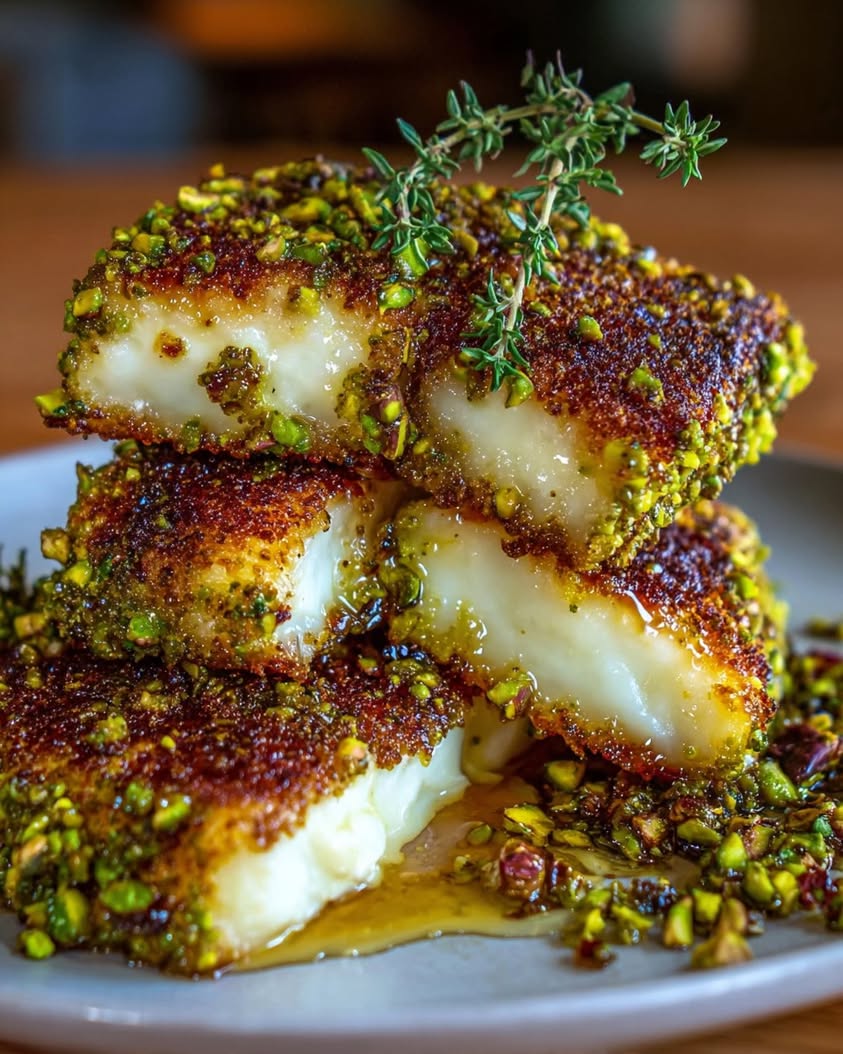
Pistachio-Crusted Halloumi with Honey and Thyme: A Sweet and Savory Recipe
This Pistachio-Crusted Halloumi with Honey and Thyme is a sweet and savory recipe that transforms simple ingredients into an unforgettable appetizer or light meal. The salty, firm halloumi cheese provides the perfect canvas for a crunchy pistachio crust, and the warm honey and thyme drizzle adds a delicate herbal sweetness. You will find that this Pistachio-Crusted Halloumi with Honey and Thyme comes together in under twenty minutes, making it ideal for busy weeknights or last-minute entertaining.
Imagine pulling a golden, crusted slice of halloumi from the pan. The nuts crackle slightly as you cut into it, revealing the soft, squeaky interior of the cheese. Then, you drizzle that fragrant honey and watch it pool around the warm cheese. The aroma of fresh thyme meets the rich scent of toasted pistachios, creating an irresistible invitation to the table. This recipe for Pistachio-Crusted Halloumi with Honey and Thyme delivers a gourmet experience with minimal effort, and you will love how quickly it becomes a favorite in your home.
The beauty of this Pistachio-Crusted Halloumi with Honey and Thyme lies in its balance. The saltiness of the halloumi contrasts beautifully with the sweet honey, and the thyme adds an earthy, floral note. This sweet and savory recipe works perfectly as a sharing plate, a salad topper, or even a main course when paired with a fresh green salad and crusty bread. You can easily prep the ingredients ahead of time, so you spend less time cooking and more time enjoying the company around you.
Quick Recipe Highlights
- Flavor Profile: This sweet and savory recipe combines salty halloumi with crunchy pistachios, sweet wildflower honey, and aromatic fresh thyme. The flavors are bold yet balanced, creating a sophisticated taste that pleases a crowd.
- Texture: The halloumi remains firm and slightly springy on the inside while the pistachio crust becomes golden brown and crunchy. The honey adds a smooth, sticky finish that coats each bite perfectly.
- Aroma: Toasted pistachios release a warm, nutty fragrance. Fresh thyme adds a woodsy, herbal note, and the honey caramelizes slightly in the pan, filling your kitchen with a sweet, inviting scent.
- Visual Appeal: The vibrant green pistachios create a stunning crust against the pale white halloumi. A drizzle of golden honey and a sprinkle of fresh thyme leaves add color and elegance to the plate.
- Skill Level Needed: This is an easy recipe that requires basic pan-frying skills. You only need to coat the cheese, sear it quickly, and finish with the honey and thyme topping.
- Special Equipment: You will need a sharp knife, a cutting board, a shallow bowl for the pistachio coating, and a non-stick skillet. No special gadgets are required for this simple dish.
Recipe Overview
- Difficulty Level: This sweet and savory recipe is classified as easy because it relies on simple techniques. You do not need advanced cooking skills to achieve a perfect crust. The active preparation time is very short, and the cooking process is straightforward. Anyone can master this Pistachio-Crusted Halloumi with Honey and Thyme on the first try.
- Category: This dish works beautifully as an appetizer, a starter, or a light main course. It also serves as a fantastic side dish for grilled meats or roasted vegetables. You can even slice it over salads for a protein-rich addition.
- Cuisine: This recipe draws inspiration from Mediterranean and Middle Eastern culinary traditions. Halloumi originates from Cyprus, where it is often grilled or fried and served with honey or fruit. The combination of nuts, cheese, and honey appears in many regional dishes across the Levant and Greece.
- Cost: Halloumi cheese costs between six and ten dollars per block depending on your location. Pistachios are pricier than other nuts, but you only need a small amount. Honey and fresh thyme are pantry staples for many cooks. The total cost for this dish is moderate, but the presentation feels premium.
- Season: This dish shines in late summer and early autumn when fresh herbs are abundant. However, it works year-round because halloumi and nuts are always available. During spring, you can add edible flowers for a festive touch. In winter, the warm honey and spices offer comforting flavors.
- Occasion: Serve this Pistachio-Crusted Halloumi with Honey and Thyme at dinner parties, holiday gatherings, or casual weeknight meals. It makes an impressive starter for a romantic dinner. You can also bring it to potlucks and barbecues, where it disappears quickly.
Why You Will Love This Recipe
The taste and texture combination in this Pistachio-Crusted Halloumi with Honey and Thyme is truly addictive. The salty halloumi contrasts perfectly with the sweet honey, and the crunch of pistachios adds a satisfying texture. Furthermore, the fresh thyme brings an herbal lift that prevents the dish from feeling heavy. Each bite delivers a unique blend of flavors, and you will find yourself reaching for another piece immediately. The sweetness of the honey balances the saltiness of the cheese so well that even people who usually avoid salty snacks enjoy this dish.
Convenience is a key reason to love this sweet and savory recipe. You can prepare the entire dish in under twenty minutes, from start to finish. That means you can whip it up after work without spending hours in the kitchen. Moreover, you can prep the pistachio coating and slice the halloumi a day in advance. When guests arrive, you simply pan-fry the cheese and drizzle the honey. The minimal active time makes this recipe perfect for spontaneous gatherings or busy weeknights when you still want something special.
Nutritionally, this dish offers several advantages. Halloumi is high in protein and calcium, which supports bone health and muscle function. Pistachios provide healthy fats, fiber, and antioxidants that promote heart health. Honey contains natural sugars and trace amounts of vitamins and minerals. While halloumi is higher in sodium than some cheeses, you can pair it with fresh vegetables to create a balanced meal. This sweet and savory recipe also feels satisfying without being overly heavy, so it fits well into a mindful eating lifestyle.
Social and entertaining value sets this dish apart from ordinary appetizers. When you serve Pistachio-Crusted Halloumi with Honey and Thyme, you present something unique and visually stunning. Your guests will be impressed by the thoughtful combination of ingredients and the elegant presentation. Additionally, this recipe works well for sharing because you can cut the halloumi into bite-sized pieces and place them on a platter with toothpicks. It encourages conversation and communal dining, making your gathering feel more interactive and warm.
Cost-effectiveness and accessibility make this recipe practical for everyday cooking. Halloumi is widely available at most grocery stores and specialty markets. Pistachios, while more expensive, are used in small quantities so one bag lasts for multiple recipes. Fresh thyme grows easily in a small herb garden, or you can buy a bunch for under two dollars. Honey is a kitchen staple that most people already have. The total investment for this sweet and savory recipe is reasonable, especially considering the impressive results you achieve.
Historical Background and Cultural Significance
Halloumi cheese has a long and storied history that dates back to the Byzantine period in Cyprus. This semi-hard, brined cheese was traditionally made from sheep or goat milk, though modern versions often include cow milk. The unique characteristic of halloumi is its high melting point, which allows it to be fried or grilled without losing its shape. Cypriot shepherds developed this cheese as a way to preserve milk in the hot Mediterranean climate. They discovered that the high salt content and the process of brining created a cheese that could withstand high temperatures, making it perfect for cooking over open fires.
The cultural importance of halloumi extends beyond Cyprus to the entire Eastern Mediterranean region. In Cyprus, halloumi is a national treasure and a source of culinary pride. It appears in breakfast spreads, lunch plates, and dinner entrees. The cheese is often served with fresh fruits, honey, or watermelon during the summer months. Furthermore, halloumi has become a symbol of Cypriot identity and heritage. The European Union granted halloumi Protected Designation of Origin status in 2021, which means only cheese made in Cyprus using traditional methods can be legally called halloumi.
The evolution of this recipe reflects broader trends in global cuisine. While Cypriots have always enjoyed halloumi with honey, the addition of a pistachio crust is a more modern innovation. Chefs around the world began experimenting with halloumi in the early 2000s as the cheese gained international popularity. The pistachio crust adds texture and visual appeal while honoring the traditional pairing of nuts and cheese in Middle Eastern cooking. Honey and thyme together create a flavor profile that bridges sweet and savory, a concept that has become increasingly popular in contemporary cuisine.
Regional variations of this dish demonstrate its adaptability. In Greece, cooks might use oregano instead of thyme and drizzle with local Greek honey. In Lebanon, sumac or zaatar might replace the thyme, and pomegranate molasses could substitute for honey. Some Turkish versions add crushed red pepper flakes for heat. These variations show how a simple concept can be transformed by local ingredients and preferences. The core idea of salty, crusted cheese with a sweet and herbal topping remains consistent, but the execution changes to reflect each region’s culinary identity.
Ingredient Deep Dive
Halloumi cheese carries significant cultural meaning in Cypriot and Mediterranean cuisine. For centuries, this cheese sustained shepherds and farmers who needed a durable protein source that did not require refrigeration. The traditional process involves heating milk, adding rennet, and pressing the curds before brining them in salt water. This method creates a cheese with a distinctive squeaky texture and a high salt content. Nutritionally, halloumi provides about 22 grams of protein per 100 grams, along with significant amounts of calcium and phosphorus. To select the best halloumi, look for blocks that are firm to the touch and have a pale white color without any discoloration. Store unopened halloumi in the refrigerator, and once opened, keep it in brine or wrap it tightly in plastic wrap. You can substitute halloumi with paneer for a similar texture, though paneer is less salty. Alternatively, firm tofu can work for a dairy-free version, but the texture will be softer.
Pistachios have been enjoyed for thousands of years, with evidence of their cultivation in ancient Persia and the Middle East. These green nuts were considered a delicacy among royalty and the wealthy. Today, pistachios are prized for their vibrant color, unique flavor, and impressive nutritional profile. They are rich in healthy monounsaturated fats, vitamin B6, and antioxidants like lutein and zeaxanthin. When selecting pistachios for this sweet and savory recipe, choose unsalted, shelled pistachios with a bright green color. Avoid nuts that appear yellow or have a rancid smell. Store pistachios in an airtight container in a cool, dark place for up to six months, or freeze them for longer storage. As a substitution, you can use toasted almonds, walnuts, or pecans. Each nut will change the flavor profile, but they all provide a satisfying crunch. For a nut-free option, use crushed pumpkin seeds or sunflower seeds mixed with a little sesame oil.
Honey has been a valuable food source and medicine since ancient times. Archaeologists have found honey in Egyptian tombs dating back over 4,000 years. In Greek mythology, honey was considered the food of the gods. Different varieties of honey offer unique flavor profiles, from the mild sweetness of clover honey to the bold, floral notes of orange blossom honey. Honey contains natural sugars, small amounts of vitamins and minerals, and antimicrobial compounds. For this Pistachio-Crusted Halloumi with Honey and Thyme, choose a high-quality honey that is not too thick or crystallized. Wildflower honey or thyme honey works particularly well because their complex flavors complement the cheese. Store honey at room temperature in a sealed container, away from direct sunlight. If your honey crystallizes, place the jar in warm water to liquefy it again. As a substitute, you can use maple syrup or agave nectar, though these alternatives have slightly different flavor profiles.
Fresh thyme brings an earthy, slightly floral aroma to this dish. Thyme has been used in Mediterranean cooking for centuries and also holds a place in traditional medicine as an antiseptic and digestive aid. The leaves contain thymol, a compound with antimicrobial properties. When selecting fresh thyme, look for bunches with bright green leaves that are not wilted or yellowing. The stems should be flexible, not brittle. Store fresh thyme in the refrigerator wrapped in a damp paper towel inside a plastic bag. It will last for up to two weeks with proper storage. If you grow your own thyme, harvest it in the morning after the dew has dried for the best flavor. Dried thyme can substitute fresh, but use only one third of the amount because dried herbs are more concentrated. You can also experiment with other herbs like fresh rosemary, sage, or oregano. Each herb creates a different but equally delicious variation of this sweet and savory recipe.
Common Mistakes to Avoid
- Do not use wet halloumi. Slice the halloumi and pat it dry with paper towels before coating it with pistachios. Excess moisture prevents the crust from adhering properly and creates steam that makes the cheese soggy.
- Avoid grinding the pistachios too finely. You want a coarse, crumbly texture that provides crunch. If you grind the nuts into powder, they will burn quickly in the pan and create a bitter taste. Pulse the pistachios in a food processor until they resemble coarse breadcrumbs.
- Do not overcrowd the pan. Cook the halloumi slices in a single layer with space between each piece. Overcrowding lowers the pan temperature and leads to steaming instead of searing. Cook in batches if necessary for the best crust.
- Never use high heat for the entire cooking time. Start with medium-high heat to sear the crust, then reduce to medium heat to cook the halloumi through. High heat burns the pistachios before the cheese warms up properly.
- Avoid flipping the halloumi too early. Let the first side cook undisturbed for two to three minutes until it forms a golden brown crust. Flipping too early pulls the coating off and results in uneven cooking.
- Do not skip the honey drizzle. The honey is essential for balancing the saltiness of the halloumi. Skipping it leaves the dish one-dimensional and less appealing. The warm honey also helps the thyme stick to the cheese.
- Never use pre-ground or stale pistachios. Pre-ground nuts lose their oils and flavor quickly. Always grind whole pistachios fresh for the brightest color and best taste. Stale nuts give the dish a flat, unpleasant flavor.
- Avoid adding salt to the crust. Halloumi is already very salty, so the pistachio coating does not need additional salt. Adding salt makes the dish overly salty and masks the delicate flavor of the honey and thyme.
- Do not let the cooked halloumi sit for too long. Serve it immediately after cooking while the cheese is warm and the crust is crunchy. As it cools, the cheese becomes rubbery and the crust softens from the honey.
- Never rinse halloumi before cooking. Some people believe rinsing reduces saltiness, but it actually removes the surface moisture needed for the crust to stick. If you want less salt, choose a low-sodium halloumi brand instead.
Essential Techniques
Coating the halloumi with pistachios requires a delicate touch. First, you must ensure the halloumi slices are dry, which allows the crushed nuts to adhere. Gently press the pistachios into both sides of each slice, using your fingers to pack them firmly. The key is to create an even, thin layer that covers the entire surface. Overcoating leads to thick clumps that fall off during cooking. Undercoating leaves bare spots that do not develop a crust. Visual cues include a complete coverage of green pistachio pieces with no white cheese visible. Practice this technique a few times to understand the right amount of pressure needed.
Pan-frying halloumi requires careful temperature management. Start by heating your non-stick skillet over medium-high heat, then add a small amount of oil with a high smoke point, such as avocado oil or grapeseed oil. The oil should shimmer but not smoke before you add the cheese. Place the coated halloumi slices in the pan and listen for a gentle sizzle. If the sizzle is too loud or aggressive, the oil is too hot. If there is no sound, the pan is not ready. Cook for two to three minutes per side, watching for the pistachios to turn golden brown. The edges of the cheese will become slightly translucent as it heats. When you flip the slice, the cooked side should be deeply golden with visible pistachio pieces.
Drizzling warm honey requires gentle heating to preserve its flavor. Pour the honey into a small saucepan or microwave-safe bowl. Warm it over low heat on the stove or in ten-second intervals in the microwave. The honey should become thin and pourable but not boiling hot. Boiling honey destroys its delicate floral notes and can caramelize it, creating a different flavor. Stir the warm honey gently before drizzling it over the cheese. To finish the dish, sprinkle fresh thyme leaves over the honey while it is still warm so they stick. Use your fingers to crush the leaves slightly before adding them to release their aromatic oils.
Flipping halloumi without damaging the crust requires a gentle approach. Use a thin, wide spatula to slide under each slice completely. Lift the slice slowly and support the entire piece to prevent the crust from cracking. If the crust sticks to the pan, wait another thirty seconds before trying again. A properly cooked crust releases easily when it is ready. Once flipped, press down gently on the slice with the spatula to ensure even contact with the pan. This technique helps the second side develop an equally golden crust. With practice, you will learn to flip the halloumi confidently without losing any coating.
Pro Tips for Perfect Pistachio-Crusted Halloumi with Honey and Thyme
Use a food processor to chop the pistachios instead of doing it by hand. Pulse the nuts in short bursts until they reach a coarse, crumbly texture. Stop before they turn into powder or butter. This method creates uniform pieces that stick to the cheese evenly.
Season the pistachio coating with a pinch of black pepper or red pepper flakes for added depth. The spice enhances the sweet and savory elements of the dish without overwhelming them. Start with a small amount and adjust based on your preference.
Let the coated halloumi rest for five minutes before cooking. This resting time allows the pistachios to adhere more firmly to the cheese. The crust stays intact during cooking, and you lose fewer pieces in the pan.
Cook the halloumi in clarified butter or ghee for a richer flavor. The nutty notes of browned butter complement the pistachios beautifully. If you use regular butter, watch it closely to prevent burning.
Arrange the cooked halloumi on a warmed plate before adding the honey. A cold plate cools the cheese too quickly, making the texture less appealing. Warm your serving plate in the oven at low heat or with hot water before using it.
Toast the pistachios lightly before grinding them for extra flavor. Spread the nuts on a baking sheet and toast them at 350 degrees Fahrenheit for five to seven minutes. Watch them carefully because they burn easily. This step deepens the nutty taste of the crust.
Add a squeeze of fresh lemon juice over the finished dish for brightness. The acid cuts through the richness of the cheese and honey, creating a more balanced flavor. Serve lemon wedges on the side so each person can adjust to their taste.
Double the honey and thyme mixture for drizzling over salads or roasted vegetables. The leftovers keep well in the refrigerator for up to one week. You can use this versatile combination to elevate many other dishes.
Variations and Adaptations
Regional variations of this sweet and savory recipe appear throughout the Mediterranean. In Greece, cooks often use a mixture of oregano and thyme for a more robust herbal flavor. They might also drizzle the cheese with thyme honey, which intensifies the herbal notes. In Turkey, the addition of crushed red pepper flakes or pul biber creates a spicy version that cuts through the richness. Some Cypriot versions include a sprinkle of sesame seeds along with the pistachios for extra texture and nuttiness. Each regional twist honors local ingredients while maintaining the core appeal of salty cheese with sweet honey.
Seasonal adaptations allow you to enjoy this dish year-round with fresh twists. In spring, add edible flowers like violets or nasturtiums for a colorful garnish. Summer brings the opportunity to serve the halloumi over a bed of ripe tomatoes and fresh basil. During autumn, substitute the thyme with fresh sage and add a drizzle of balsamic reduction. Winter iterations can include warming spices like cinnamon or cardamom in the honey. These seasonal changes keep the recipe exciting and connected to what is fresh at the market.
Dietary modifications make this sweet and savory recipe accessible to more people. For a gluten-free version, ensure your pistachios are pure with no wheat-based additives, which is usually the case. The recipe is naturally gluten-free because halloumi, nuts, and honey do not contain gluten. To make it dairy-free, substitute halloumi with firm tofu that has been pressed and pan-fried. The tofu lacks the saltiness of halloumi, so season the crust with a pinch of salt. For a vegan version, use grilled or pan-fried eggplant slices instead of cheese. The eggplant absorbs the honey and thyme flavors beautifully.
Flavor variations open up endless possibilities for this dish. Try using different nuts like toasted almonds, walnuts, or macadamia nuts. Each nut offers a unique flavor and texture profile. For a sweet and spicy version, add a pinch of cayenne or chipotle powder to the pistachio coating. Experiment with different honeys such as lavender honey, chestnut honey, or orange blossom honey for distinct floral notes. You can also swap the fresh thyme for other herbs like fresh rosemary, mint, or tarragon. Each herb creates a different aromatic experience.
Texture modifications can change the eating experience entirely. For a crunchier crust, toast the pistachios before grinding them and press them more firmly into the cheese. If you prefer a softer coating, mix the ground pistachios with a little breadcrumb or panko to create a lighter texture. You can also double-coat the halloumi by dipping it in egg wash before applying the pistachios. This technique creates a thicker, more substantial crust that stays very crunchy. For a smoother experience, grind the pistachios more finely, though you lose some of the satisfying crunch.
Presentation alternatives allow you to serve this dish in creative ways. Instead of serving whole slices, cut the cooked halloumi into bite-sized cubes and skewer them with toothpicks for a party appetizer. You can also slice the halloumi into sticks for a fun finger food option. Arrange the pieces on a bed of arugula or mixed greens with a drizzle of honey vinaigrette for a complete salad. For an elegant dinner plate, serve the halloumi alongside grilled asparagus and roasted cherry tomatoes. The variations in presentation make this sweet and savory recipe suitable for any occasion.
Serving and Presentation Guide
Plating techniques for this dish focus on maximizing visual impact and flavor distribution. Start by placing the warm halloumi slices in the center of a white or light-colored plate to make the green pistachios pop. Arrange the slices slightly overlapping for a dramatic effect. Drizzle the warm honey in a zigzag pattern over the top, allowing it to pool around the edges of the cheese. Finish with a generous sprinkle of fresh thyme leaves over the entire plate. The herbal garnish adds color and aroma while signaling the flavors within the dish.
Garnishing ideas extend beyond simple thyme leaves for a more elaborate presentation. Add a few edible flowers like pansies or borage for a pop of color. Scatter some extra whole pistachios around the plate for texture and visual interest. A light dusting of flaky sea salt, such as Maldon, over the honey adds a subtle crunch and enhances the salty-sweet contrast. Thin slices of fresh pear or apple placed alongside the cheese offer a fresh, crisp element that complements the richness. For a warm touch, add a small ramekin of extra honey on the side for dipping.
Traditional accompaniments for this dish reflect its Mediterranean roots. Serve the Pistachio-Crusted Halloumi with Honey and Thyme alongside warm pita bread or crusty sourdough for soaking up the honey and juices. A simple Greek salad with tomatoes, cucumbers, olives, and feta provides a fresh, tangy counterpoint. You can also offer a small bowl of olives and roasted red peppers for a more substantial mezze platter. The traditional pairing with watermelon in Cyprus adds a refreshing sweetness that balances the salty cheese perfectly.
Modern serving suggestions elevate this dish for contemporary palates. Serve the halloumi over a bed of quinoa or farro tossed with lemon juice and fresh herbs for a hearty grain bowl. Use the cheese as a topping for flatbread pizza along with arugula and balsamic glaze. Incorporate it into a wrap with roasted vegetables and tzatziki sauce for a satisfying lunch. For a brunch option, serve the halloumi alongside poached eggs and toasted sourdough for a decadent morning meal. These modern interpretations keep the dish relevant and versatile.
Temperature considerations are crucial for the best eating experience. Serve the halloumi immediately after cooking while it is still warm and the crust remains crunchy. The cheese cools quickly, so plan to cook it right before serving. If you need to hold it for a few minutes, place the cooked pieces on a wire rack set over a baking sheet in a warm oven at 200 degrees Fahrenheit. This method keeps the crust from becoming soggy. Do not cover the cheese with foil because trapped steam softens the coating. The honey should be warm and pourable when you add it, so heat it just before serving.
Portion control tips help you serve this dish appropriately for different occasions. As an appetizer, plan for three to four slices per person, which equals about half a standard halloumi block. As a main course, serve one whole block per person paired with substantial sides like grain salads or roasted vegetables. For a mixed appetizer spread, cut the halloumi into smaller bite-sized pieces and count on about six pieces per person. The richness of the cheese and honey means that a little goes a long way, so err on the side of smaller portions for larger groups.
Wine and Beverage Pairing
Wine pairings for this sweet and savory recipe focus on balancing the saltiness of the halloumi with the sweetness of the honey. A crisp, dry white wine like Sauvignon Blanc works beautifully because its acidity cuts through the richness. The herbal notes in the wine complement the fresh thyme. Alternatively, a dry rosé from Provence offers a refreshing option with berry flavors that do not clash with the pistachios. For white wine lovers, a Vermentino or Assyrtiko from Greece provides a mineral-driven profile that echoes the Mediterranean origins of the dish.
Red wine options also pair well if you choose lighter styles. A Pinot Noir with low tannins and bright acidity works because it does not overpower the delicate cheese. The red fruit flavors in the wine mingle nicely with the honey. A Gamay from Beaujolais offers a similar profile with even lighter body and subtle earthiness. Avoid heavy, tannic red wines like Cabernet Sauvignon because the tannins clash with the saltiness of the halloumi and make the dish taste bitter. For sparkling wine lovers, a dry Prosecco or Cava cleanses the palate between bites.
Non-alcoholic alternatives abound for serving this dish. A sparkling water with a squeeze of lemon and a sprig of fresh thyme echoes the flavors in the recipe. Mint and cucumber infused water offers a cooling, refreshing counterpoint to the warm cheese. For a more sophisticated option, serve a homemade lemonade with muddled thyme and a touch of honey. The herb and citrus notes mirror the dish, creating a cohesive dining experience. You can also offer a high-quality kombucha with floral or herbal notes for a probiotic-rich pairing.
Temperature considerations for beverages matter as much as the food. Serve white wines and rosés well-chilled between 45 and 50 degrees Fahrenheit. Light red wines benefit from a slight chill around 55 degrees Fahrenheit. Room temperature reds feel too warm for this dish. If you serve sparkling water or lemonade, keep it very cold with plenty of ice. The contrast between the warm cheese and cold beverage enhances the overall sensory experience. For hot beverages, consider a lightly brewed green tea with floral notes or an herbal infusion like chamomile with honey.
Serving suggestions for beverages include offering a tasting flight for wine enthusiasts. Pair the halloumi with small pours of a dry white, a light red, and a sparkling wine. Let guests compare how each wine interacts with the sweet and savory flavors. For a party, set up a beverage station with both alcoholic and non-alcoholic options so everyone can choose. Label each drink with pairing notes to help guests make informed choices. The interactive element turns the meal into a conversation starter and enhances the communal dining experience.
Storage and Shelf Life
Storage methods for leftover Pistachio-Crusted Halloumi with Honey and Thyme require careful handling. Unfortunately, this dish is best enjoyed fresh because the crust loses its crunch within minutes of cooking. However, if you have leftovers, let them cool completely to room temperature before storing. Place the slices in a single layer in an airtight container, separating layers with parchment paper to prevent sticking. Store the container in the refrigerator for up to two days. The honey and thyme topping should be stored separately in a small jar to prevent it from making the crust soggy.
Temperature requirements are critical for food safety. Halloumi is a fresh cheese that must remain refrigerated at 40 degrees Fahrenheit or below. Never leave cooked halloumi at room temperature for more than two hours. If you serve the dish outdoors during warm weather, reduce that time to one hour. When reheating, bring the cheese to an internal temperature of 165 degrees Fahrenheit to ensure safety. Use a food thermometer to check the center of the thickest slice for accuracy.
Container recommendations focus on maintaining texture and preventing odors. Choose a glass or BPA-free plastic container with a tight-sealing lid. Glass is preferable because it does not absorb odors or stains from the honey. Line the container with paper towels to absorb excess moisture, which helps preserve the crust texture. Avoid using aluminum containers because the honey can react with the metal and create an off flavor. Alternatively, wrap the halloumi slices individually in parchment paper and place them in a resealable plastic bag with the air pressed out.
Signs of spoilage include changes in texture, smell, and appearance. Fresh halloumi has a mild, milky aroma. If the cheese develops a sour or ammonia-like smell, it has gone bad and should be discarded. The texture of spoiled halloumi becomes slimy or sticky on the surface. Mold growth appears as fuzzy spots of white, green, or black. Do not attempt to cut away moldy portions because the mold can penetrate the entire block. Honey and thyme can also spoil if they develop mold or an off smell, so check the topping before using it.
Reheating instructions aim to restore some of the original texture. The best method is to use a non-stick skillet over medium heat. Add a small amount of oil and reheat the halloumi for about one minute per side. This method crisps the crust slightly, though it will not be as crunchy as fresh. Alternatively, you can reheat the halloumi in an air fryer at 375 degrees Fahrenheit for two to three minutes. Microwaving is not recommended because it makes the cheese rubbery and the crust soggy. If you want to serve the leftover honey, warm it gently before drizzling it over the reheated cheese.
Freezing guidelines apply mainly to uncooked, coated halloumi rather than the finished dish. You can prepare the halloumi slices with the pistachio coating and freeze them for up to three months. Arrange the coated slices on a baking sheet lined with parchment paper and freeze until solid. Then transfer the frozen slices to a freezer-safe bag or container. To cook, do not thaw the cheese first. Cook from frozen, adding one to two extra minutes per side. The frozen coating may not adhere as well, but the flavor remains intact. Do not freeze cooked halloumi because the texture degrades significantly upon thawing.
Make Ahead Strategies
Prep timeline for this sweet and savory recipe focuses on efficiency. Up to two days before serving, you can crush the pistachios and store them in an airtight container at room temperature. You can also slice the halloumi and arrange it on a plate, covered with plastic wrap, in the refrigerator. On the day of serving, remove the halloumi from the refrigerator thirty minutes before cooking to let it come to room temperature. This step ensures even cooking and prevents the cheese from shocking the hot pan. The fresh thyme should be washed and dried, then stored in a damp paper towel in a sealed bag in the refrigerator.
Storage between steps requires attention to moisture control. After crushing the pistachios, keep them in a cool, dry place away from sunlight. If you live in a humid climate, store the nuts in the refrigerator to prevent rancidity. The sliced halloumi should be stored with paper towels between layers to absorb any moisture that accumulates. Change the paper towels if they become wet. The honey does not need refrigeration, but keep it in a sealed jar at room temperature. The thyme should stay dry because wet herbs wilt quickly and lose their flavor.
Quality impact assessment helps you decide which steps to prepare ahead. The pistachio coating loses some texture if it sits on the cheese for more than twenty-four hours because the salt from the cheese softens the nuts. Therefore, wait to coat the halloumi until just before cooking for the best results. The honey and thyme mixture can be prepared a day in advance and stored at room temperature. Fresh thyme loses its aromatic punch after a few days, so plan to add it fresh rather than pre-mixing it with honey. The overall quality remains high if you follow these timing guidelines.
Assembly tips streamline the final cooking process. Set up a small assembly station with the sliced halloumi, crushed pistachios in a shallow bowl, and a clean plate for the coated slices. Have the honey measured and ready in a small bowl, and pick the thyme leaves ahead of time. Organize your skillet, spatula, and serving plate so everything is within reach. This mise en place approach reduces cooking time and prevents mistakes. When you are ready to serve, Print
Pistachio-Crusted Halloumi with Honey and Thyme
- Total Time: 25 minutes
- Yield: 4
Description
A delightful vegetarian dish featuring salty halloumi cheese encrusted with crunchy pistachios, pan-fried to golden perfection, and drizzled with honey and fresh thyme.
Ingredients
- 8 oz halloumi cheese, sliced into 1/2-inch thick pieces
- 1/2 cup shelled pistachios, finely chopped
- 2 tablespoons all-purpose flour
- 1 large egg, beaten
- 2 tablespoons olive oil
- 2 tablespoons honey
- 1 teaspoon fresh thyme leaves, plus more for garnish
- Flaky sea salt, for finishing
Instructions
- Place the chopped pistachios in a shallow bowl. In another shallow bowl, place the flour. In a third bowl, beat the egg.
- Pat the halloumi slices dry with paper towels. Dredge each slice first in the flour, shaking off excess, then dip into the beaten egg, and finally coat evenly with the chopped pistachios, pressing gently to adhere.
- Heat olive oil in a large non-stick skillet over medium heat. Add the pistachio-crusted halloumi slices in a single layer (work in batches if needed). Cook for 2-3 minutes per side, until golden brown and crisp.
- Remove the halloumi to a serving plate. Drizzle immediately with honey and sprinkle with fresh thyme leaves and a pinch of flaky sea salt.
- Serve warm, garnished with additional thyme if desired.
Notes
You can customize the seasonings to taste.
- Prep Time: 15 minutes
- Cook Time: 10 minutes
- Method: Appetizer
- Cuisine: Mediterranean