Pear, Brie, and Cranberry Flatbread with Thyme: A Rustic Autumn Appetizer
If you crave a dish that balances sweet and savory flavors with almost no effort, this Pear, Brie, and Cranberry Flatbread with Thyme will quickly become your go-to recipe. Imagine biting into a warm, crispy flatbread topped with creamy melted brie, juicy pear slices, and tart dried cranberries. The fresh thyme adds an earthy aroma that ties everything together. This Pear, Brie, and Cranberry Flatbread with Thyme works beautifully as an appetizer for holiday gatherings, a light lunch, or even a fancy snack on a cozy evening. Because the recipe requires just a handful of ingredients and minimal hands-on time, you can whip it up on a whim.
The combination of pear and brie is a classic pairing in many restaurants, but adding cranberries and thyme elevates the flatbread to a new level. The cranberries bring a pop of ruby red color and a tangy kick that cuts through the richness of the cheese. Meanwhile, the thyme infuses every bite with a subtle herbal note. Even though this Pear, Brie, and Cranberry Flatbread with Thyme looks impressive, it remains forgiving for beginners. You do not need a culinary degree to nail this recipe. As long as you slice the pears evenly and watch the broiler, you will achieve a restaurant-quality flatbread at home. This dish also lets you customize the base, the cheese amount, and the sweetness level. Consequently, you can adapt it to your family’s taste preferences without stress.
What makes this Pear, Brie, and Cranberry Flatbread with Thyme truly special is its versatility. You can serve it as a party appetizer cut into small squares, or you can present it as a main course with a side salad. The contrast between the soft, buttery brie and the crisp flatbread creates a satisfying mouthfeel. Additionally, the natural sugars in the pear caramelize slightly in the oven, deepening the flavor. The dried cranberries plump up a bit from the heat, becoming tender and sweet-tart. Fresh thyme leaves remain bright green and fragrant, adding a lovely visual and aromatic touch. Because you use store-bought flatbread or naan, the recipe comes together in about thirty-five minutes from start to finish. That speed makes it perfect for last-minute entertaining or a busy weeknight dinner. Without a doubt, this Pear, Brie, and Cranberry Flatbread with Thyme delivers gourmet flavor with minimal fuss.
Quick Recipe Highlights
- Flavor Profile: This flatbread offers a delightful balance of sweet, savory, and tangy notes. The pears bring natural sweetness, the brie adds a creamy, mild tang, and the cranberries introduce a bright tartness. Fresh thyme contributes an earthy, slightly floral finish that lingers pleasantly.
- Texture: You get a crisp, golden-brown base from the flatbread, a gooey and molten cheese layer, and soft, juicy pear slices. The dried cranberries provide a chewy contrast, while the thyme leaves add a subtle crunch. Overall, the texture is complex yet harmonious.
- Aroma: As the flatbread bakes, the kitchen fills with the nutty scent of melted brie and the sweet perfume of roasted pears. The thyme releases a warm, herbal fragrance that makes the dish feel cozy and inviting. Even before you take a bite, the aroma promises comfort.
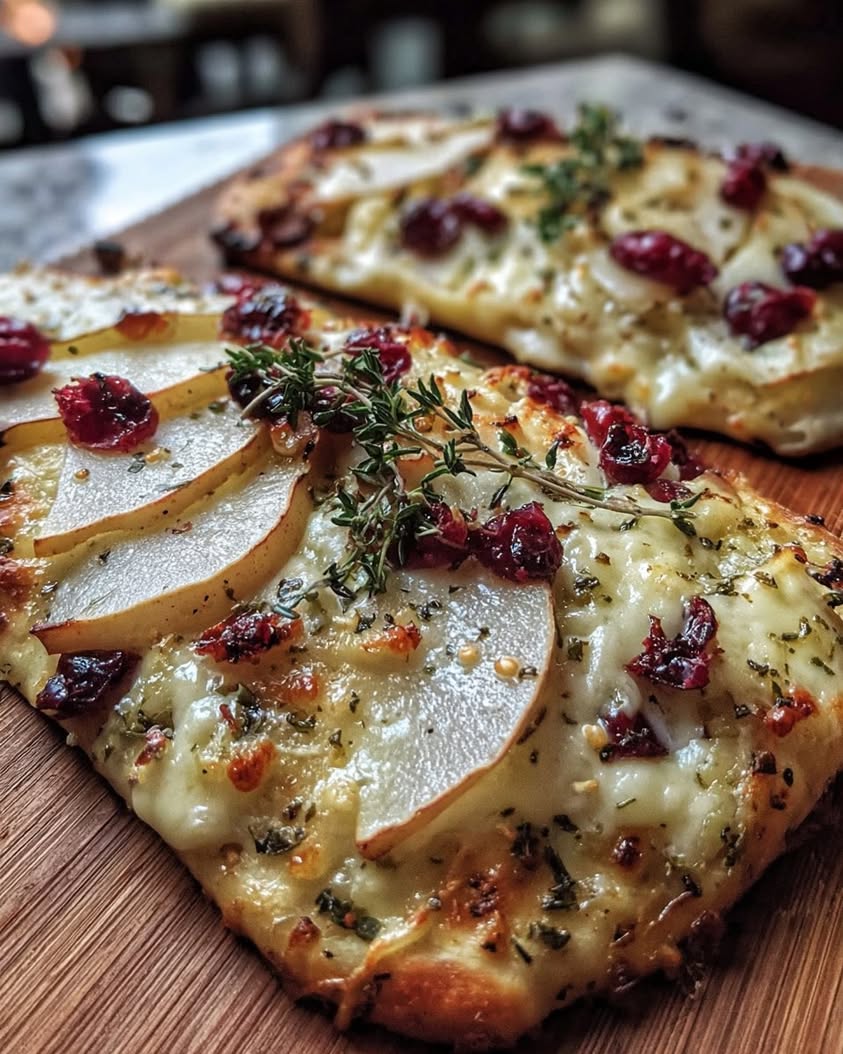
- Visual Appeal: The golden flatbread serves as a canvas for ivory brie, pale yellow pear slices, and deep red cranberries. Scattered green thyme leaves add a fresh pop of color. The final drizzle of honey or balsamic glaze gives a glossy sheen that catches the eye.
- Skill Level Needed: This recipe suits absolute beginners because it involves no kneading, no complex knife skills, and no tricky timing. You simply layer ingredients and bake. The only minor challenge is watching the broiler to prevent burning, but that requires only a minute of attention.
- Special Equipment: You need a baking sheet or a pizza stone, a sharp knife for slicing pears and brie, and a basting brush for oil or glaze. A microplane or zester helps if you want to add lemon zest. Parchment paper makes cleanup easier, but it is optional.
Recipe Overview
- Difficulty Level: I rate this Pear, Brie, and Cranberry Flatbread with Thyme as Easy because it uses few ingredients and simple techniques. You do not need to proof dough, temper cheese, or monitor precise temperatures. The oven does most of the work. As a result, even a novice cook can serve this dish with confidence.
- Category: This recipe fits multiple categories, including appetizer, snack, light lunch, and even a vegetarian main course. You can also classify it as a party finger food or a holiday side dish. Because it satisfies both vegetarians and meat-eaters, it works for diverse gatherings.
- Cuisine: The flatbread draws inspiration from Mediterranean and American fusion cooking. Flatbreads originated in many cultures, from Middle Eastern lavash to Italian focaccia. This version combines French brie, American cranberries, and Middle Eastern thyme to create a modern, borderless dish. Consequently, it feels both familiar and exciting.
- Cost: The total cost for four servings ranges between eight and twelve U.S. dollars, depending on cheese quality and seasonal pear prices. Brie often costs the most, but you can find affordable wedges at most supermarkets. Cranberries and thyme are inexpensive, and flatbread or naan costs just a few dollars.
- Season: Autumn and winter are the best seasons for this Pear, Brie, and Cranberry Flatbread with Thyme because pears and cranberries peak then. However, you can make it year-round with refrigerated cranberries or frozen pears. The warm, baked nature of the dish suits cooler weather especially well.
- Occasion: Serve this flatbread at holiday parties, Thanksgiving gatherings, Christmas Eve dinners, or New Year’s Eve celebrations. It also shines at casual weekend brunches or wine-and-cheese nights. Because it looks elegant but takes little effort, it works for both formal and informal events.
Why You’ll Love This Recipe
First, the taste and texture appeal of this Pear, Brie, and Cranberry Flatbread with Thyme will win you over immediately. The creamy brie melts into every crevice of the crispy flatbread, creating a luxurious mouthfeel. Sweet pear slices soften in the oven and release their juices, which mix with the cheese. The dried cranberries add a chewy, tart surprise in every bite. Meanwhile, fresh thyme cuts through the richness with its herbal, slightly peppery notes. Because these flavors contrast so well, your palate never gets bored. You will crave this balance of sweet, salty, creamy, and tangy again and again. Additionally, the textural contrast between the crisp base and the gooey toppings keeps each bite interesting.
Second, the convenience and preparation benefits make this recipe a weeknight hero. You need only fifteen minutes of prep time, most of which involves slicing pears and brie. The oven does the rest in twenty minutes. Because you use store-bought flatbread or naan, you skip the lengthy process of making dough from scratch. Cleanup is minimal since you line a baking sheet with parchment paper. Furthermore, the ingredient list is short: flatbread, brie, pear, dried cranberries, thyme, olive oil, and optional honey. You likely already have some of these items in your pantry. As a result, you can decide to make this Pear, Brie, and Cranberry Flatbread with Thyme on a whim and still have dinner on the table quickly.
Third, the nutritional advantages of this dish might surprise you. Pears provide dietary fiber, vitamin C, and antioxidants that support digestive health. Cranberries deliver a dose of vitamin C and proanthocyanidins, which help fight urinary tract infections. Brie offers protein, calcium, and vitamin B12, though it also contains saturated fat. Thyme contributes small amounts of iron, manganese, and vitamin K. When you use whole-grain flatbread, you add even more fiber. Because this recipe uses modest amounts of cheese and no heavy cream, it remains lighter than many gratins or casseroles. Portion control is easy since you cut the flatbread into four or eight pieces. Consequently, you can enjoy a satisfying, nutrient-diverse meal without overindulging.
Fourth, the social and entertaining value of this Pear, Brie, and Cranberry Flatbread with Thyme is enormous. Nothing brings people together like a warm, cheesy flatbread fresh from the oven. You can set it in the center of the table and let guests tear off pieces. It pairs beautifully with wine, sparking conversation and relaxation. Because it looks artisanal and colorful, it impresses without stressing out the host. You can assemble it ahead of time and bake it just before guests arrive. The recipe scales easily for larger crowds, so you can double or triple it. Whether you host a intimate dinner or a big holiday party, this flatbread fits right in. In fact, many hosts report that it disappears faster than any other appetizer.
Fifth, the cost-effectiveness and accessibility of this recipe make it a smart choice for budget-conscious cooks. Brie might seem fancy, but a small wedge costs less than a pound of shrimp or a steak. Pears are affordable in autumn, and dried cranberries last for months in the pantry. Thyme grows easily on a windowsill or costs under two dollars at the store. Flatbread or naan from the supermarket bakery section is inexpensive. When you compare the cost per serving to restaurant flatbreads, which often cost twelve to fifteen dollars each, this homemade version saves you a lot. Moreover, you can find all ingredients at regular grocery stores, not just specialty shops. Therefore, this Pear, Brie, and Cranberry Flatbread with Thyme democratizes gourmet eating for everyone.
Historical Background and Cultural Significance
The origin story of flatbread stretches back thousands of years to ancient civilizations in the Middle East, Egypt, and India. People baked flatbreads on hot stones or in clay ovens because they required no yeast and cooked quickly. Meanwhile, brie cheese originated in the Brie region of France, near Paris, as early as the eighth century. French monks and farmers developed soft-ripened cheeses like brie, which eventually became a symbol of French gastronomy. Cranberries, on the other hand, are native to North America. Indigenous peoples in what is now the northeastern United States and eastern Canada harvested wild cranberries for food, medicine, and dye. Thyme has grown wild in the Mediterranean for millennia and symbolized courage in ancient Greece. When you combine these ingredients, you create a dish that tells a story of global exchange and culinary creativity. This Pear, Brie, and Cranberry Flatbread with Thyme thus represents a delicious intersection of Old World and New World traditions.
The cultural importance of each component adds depth to this recipe. In France, brie is called the “king of cheeses” and often appears on celebration tables. Serving brie signals hospitality and refinement. In the United States, cranberries hold a sacred place at Thanksgiving dinners, where cranberry sauce accompanies turkey. Pears have symbolized fertility, longevity, and abundance in Chinese and European art. Thyme appears in both Mediterranean and Middle Eastern cooking as a sign of strength and purification. When you make this Pear, Brie, and Cranberry Flatbread with Thyme, you participate in these cultural narratives. You honor French cheese-making, Native American harvest traditions, and Mediterranean herbal wisdom. Because food carries memory and meaning, this flatbread becomes more than just a snack. It becomes a small celebration of human history on a single baking sheet.
The evolution of this recipe reflects modern American fusion cuisine, which began gaining popularity in the 1980s and 1990s. Chefs started combining ingredients from different culinary traditions without strict rules. The pear and brie pairing appeared on restaurant menus in the 1990s, often as a grilled sandwich or a tart. Cranberries joined the mix as a seasonal twist, especially in New England and the Pacific Northwest. Thyme entered as a savory herb to balance the sweetness. Home cooks then adapted these restaurant ideas into simpler flatbread versions using store-bought dough. Over time, food bloggers and social media spread the recipe widely. Now, the Pear, Brie, and Cranberry Flatbread with Thyme appears on countless holiday tables. Its evolution shows how recipes live and change as they pass from chef to chef and kitchen to kitchen.
Regional variations of this flatbread exist across the United States and beyond. In New England, cooks might use sharp cheddar instead of brie and add maple syrup. In the South, a drizzle of honey and a sprinkle of pecans appear often. On the West Coast, chefs might add arugula after baking for a peppery fresh finish. In France, a similar tart uses comté or camembert with poached pears. In Italy, a flatbread called focaccia might feature gorgonzola, pear, and walnuts. Each region adapts the basic formula to local tastes and available ingredients. Consequently, the Pear, Brie, and Cranberry Flatbread with Thyme becomes a template rather than a rigid rule. You can travel the world through variations without leaving your oven. This flexibility ensures the recipe remains relevant and beloved for generations.
Ingredient Deep Dive
Pears bring natural sweetness, fiber, and a soft texture that contrasts beautifully with crispy flatbread. Culturally, pears have appeared in European art and literature for centuries as symbols of abundance and comfort. Nutritionally, one medium pear offers about six grams of fiber, which supports digestion and heart health. It also provides vitamin C, vitamin K, and copper. When selecting pears, choose firm but slightly yielding fruit. Bosc and Anjou pears hold their shape well during baking, while Bartlett pears become very soft. Avoid pears with bruises or mushy spots. Store pears at room temperature until ripe, then refrigerate them for up to five days. If you lack pears, substitute apples, peaches, or even figs. Each alternative changes the flavor but still works deliciously.
Brie cheese delivers creaminess, protein, and a mild, buttery flavor that melts into a gooey layer. Historically, brie has graced French royal tables since the Middle Ages and remains a symbol of indulgence. Nutritionally, brie provides calcium, vitamin B12, and phosphorus, though it contains saturated fat and cholesterol. When buying brie, look for a soft, slightly springy wheel with a white bloomy rind. Avoid brie with brown spots or an ammonia smell, which indicates spoilage. Store brie in the refrigerator wrapped in parchment paper, not plastic, to let it breathe. If you want a substitute, camembert works almost identically, while cream cheese or goat cheese offer different but tasty results. For a dairy-free version, use a cashew-based vegan brie alternative.
Dried cranberries contribute tartness, chewiness, and a ruby red color that brightens the flatbread. Native Americans used cranberries for food, medicine, and fabric dye long before European settlers arrived. Nutritionally, dried cranberries contain fiber, vitamin C, and antioxidants called proanthocyanidins. However, they often include added sugar, so check labels if you watch your intake. When selecting dried cranberries, choose plump, soft ones without excessive clumping. Store them in an airtight container in a cool, dark pantry for up to six months. If you cannot find dried cranberries, substitute raisins, dried cherries, or chopped dried apricots. Fresh cranberries also work if you chop them finely and toss them with a little honey before baking.
Fresh thyme provides an earthy, slightly floral, and peppery note that lifts the entire dish. Ancient Greeks burned thyme as incense and used it for courage before battles. Nutritionally, thyme offers vitamin C, vitamin A, iron, and manganese in small amounts. When buying thyme, look for bright green leaves without yellowing or wilting. Store fresh thyme in the refrigerator wrapped in a damp paper towel inside a plastic bag. Alternatively, freeze thyme leaves in ice cube trays with olive oil. If you lack fresh thyme, use dried thyme, but reduce the amount by half because dried herbs are more concentrated. Rosemary, oregano, or sage make fine substitutes, though each brings a different character.
Flatbread or naan serves as the sturdy, crispy base that holds all the toppings. Flatbreads have fed humans for thousands of years across the Middle East, Africa, and Asia. Nutritionally, flatbread provides carbohydrates, some protein, and fiber if you choose whole-grain versions. When selecting flatbread, look for soft, pliable pieces without cracks or dryness. Store flatbread in a sealed bag at room temperature for two days or freeze it for up to three months. If you cannot find flatbread, use pita, focaccia, pizza dough, or even flour tortillas. Each base changes the texture, but all taste wonderful. For a low-carb option, use a cauliflower crust or a portobello mushroom cap.
Common Mistakes to Avoid
- Overloading the flatbread with too many toppings. This mistake makes the base soggy and prevents the cheese from melting evenly. Keep layers thin and leave a small border around the edges. Otherwise, you end up with a messy, undercooked center.
- Slicing the brie too thick. Thick brie slices melt slowly and may remain cold in the middle. Cut brie into quarter-inch slices or cubes so it melts evenly. Thin slices also distribute more evenly across the flatbread.
- Using underripe or overripe pears. Underripe pears taste bland and hard, while overripe pears turn mushy and release too much liquid. Choose pears that yield slightly to gentle pressure. This ensures a tender but not soggy texture.
- Forgetting to preheat the oven fully. A cold oven leads to uneven baking and a flatbread that never crisps. Preheat for at least fifteen minutes at the specified temperature. Use an oven thermometer if your oven runs hot or cold.
- Burning the thyme under the broiler. Thyme leaves are delicate and burn quickly. If you use the broiler, add thyme after broiling or watch it every ten seconds. Alternatively, bake at a lower temperature and skip the broiler entirely.
- Skipping the oil or glaze on the crust. A light brush of olive oil prevents the flatbread from drying out and helps toppings adhere. Without oil, the crust can become tough and cracker-like. You can also brush with melted butter for richer flavor.
- Cutting the flatbread immediately after baking. Hot cheese needs a few minutes to set. If you cut too soon, toppings slide off and create a mess. Wait at least three to five minutes before slicing. This rest also prevents burns.
- Using cold brie straight from the refrigerator. Cold brie tears and crumbles instead of slicing cleanly. Let brie sit at room temperature for twenty to thirty minutes before slicing. This small step makes assembly much easier.
- Neglecting to pat the pear slices dry. Excess moisture from cut pears can make the flatbread soggy. Pat slices with a paper towel before layering. This simple trick keeps the crust crisp.
- Adding honey before baking. Honey burns quickly at high heat and turns bitter. Drizzle honey after baking instead. This preserves its sweet, floral notes and keeps the presentation glossy.
Essential Techniques
Slicing pears evenly is the first essential technique for this Pear, Brie, and Cranberry Flatbread with Thyme. Uneven slices cook at different rates, leaving some pieces mushy and others crunchy. To master this, use a sharp chef’s knife and cut pears into quarter-inch thick slices. First, cut the pear in half lengthwise, then scoop out the seeds with a spoon. Place the flat side down and slice crosswise. Common pitfalls include cutting too thick or letting the knife slip on the curved skin. For success, look for uniform, translucent slices that bend slightly without breaking. If a slice looks ragged, trim it or set it aside for snacking. Even slices guarantee even baking and a beautiful presentation.
Melting brie properly is another key technique. Brie needs gentle, even heat to become gooey without turning rubbery or releasing oil. To master this, cut brie into thin slices or small cubes and distribute them evenly. Do not pile cheese in the center, or the edges will dry out before the middle melts. Common pitfalls include using cold brie, which melts unevenly, or overheating, which causes the cheese to separate. For success, watch for a glossy, slightly puffed surface with no brown spots. The cheese should sag when you lift a slice but not run off the flatbread. If you see oil pooling, you have overcooked it. Reduce the temperature next time and check earlier.
Balancing sweet and tart flavors requires careful layering. The pears bring sweetness, cranberries bring tartness, and brie brings richness. To master this balance, taste a small piece of pear and a cranberry together before baking. If the pear tastes very sweet, add a few extra cranberries. If the cranberries seem too sour, drizzle a little honey after baking. Common pitfalls include adding too much honey or too many cranberries, which overwhelms the brie. For success, aim for a ratio of roughly two pear slices to one tablespoon of cranberries per flatbread. The thyme then bridges the flavors with its herbal note. Adjust next time based on your palate.
Preventing a soggy crust is crucial for this Pear, Brie, and Cranberry Flatbread with Thyme. Moisture from pears, cheese, and cranberries can seep into the base. To master this, brush the flatbread with olive oil before adding toppings. You can also sprinkle a thin layer of breadcrumbs or grated parmesan to create a barrier. Common pitfalls include using wet pear slices or overcrowding the toppings. For success, bake on the lower-middle rack so the bottom crisps while the top melts. If the center still feels soft, return it to the oven for two minutes. A crisp crust makes every bite satisfying.
Pro Tips for Perfect Pear, Brie, and Cranberry Flatbread with Thyme
First, bring all ingredients to room temperature before assembling. Cold brie slices tear, and cold pears release less sweetness. Let brie and pear sit on the counter for twenty minutes. This small step makes layering easier and improves melting. Second, use a pizza stone if you have one. A preheated stone creates a crispy bottom crust that mimics a wood-fired oven. If you lack a stone, preheat your baking sheet in the oven for ten minutes before placing the flatbread on it. Third, pat pear slices dry with a paper towel. Excess juice creates steam, which makes the crust soggy. Drying the pears takes thirty seconds and pays off big.
Fourth, do not skip the fresh thyme. Dried thyme works in a pinch, but fresh thyme offers a brighter, more complex aroma. Strip the leaves from the stems by running your fingers downward. Discard the woody stems. Fifth, add the cranberries in two stages. Sprinkle half before baking for soft, plump cranberries, and half after baking for a chewy texture. This double addition gives you the best of both worlds. Sixth, finish with a drizzle of honey or balsamic glaze after baking. Heat dulls honey’s floral notes, while balsamic glaze turns bitter in the oven. Add these finishing touches once the flatbread leaves the oven.
Seventh, cut the flatbread with a pizza wheel or sharp knife after resting. A dull knife crushes the crust and smears the cheese. A pizza wheel glides through cleanly. Eighth, serve immediately for the best texture. The flatbread stays crisp for about ten minutes. If you must hold it, keep it in a warm oven at two hundred degrees Fahrenheit, uncovered. Covering it traps steam and ruins the crust. Ninth, experiment with a light sprinkle of flaky sea salt after baking. The salt amplifies the sweetness of the pears and the tartness of the cranberries. Tenth, make two flatbreads if you serve more than four people. This recipe disappears quickly, and doubling takes almost no extra effort.
Variations and Adaptations
Regional variations of this Pear, Brie, and Cranberry Flatbread with Thyme abound. In France, cooks might use camembert and poached pears with walnut oil. In Italy, gorgonzola and prosciutto join pear and honey on a focaccia base. In the American South, pecans and bourbon-soaked cranberries add a Southern twist. In New England, sharp cheddar and maple syrup replace brie and honey. Each region brings its own pantry staples to the formula. Because flatbread is a universal canvas, you can travel the world without leaving your kitchen. Try one regional variation each month to keep dinner exciting.
Seasonal adaptations let you enjoy this dish year-round. In spring, substitute fresh strawberries or rhubarb for cranberries and pears. In summer, use peaches, nectarines, or plums with basil instead of thyme. In autumn, apples, figs, and fresh cranberries shine. In winter, roasted grapes and rosemary add a cozy note. Because seasonal produce tastes best and costs less, you save money while eating better. Adjust the cheese to match the fruit: goat cheese works with berries, while blue cheese pairs with apples. The thyme can become mint, basil, or sage depending on the season.
Dietary modifications make this Pear, Brie, and Cranberry Flatbread with Thyme accessible to almost everyone. For a gluten-free version, use a gluten-free flatbread or a cauliflower crust. For dairy-free, replace brie with a cashew-based vegan cheese or a thick almond ricotta. For vegan, skip honey and use agave or maple syrup, and choose a vegan cheese. For low-carb, use a almond flour crust or a portobello mushroom cap. For keto, use a fathead dough crust and omit the cranberries or use a few unsweetened dried cranberries. For paleo, use a sweet potato or cassava crust and omit dairy. For low-FODMAP, use lactose-free brie and avoid honey, using maple syrup instead. Each adaptation changes the texture slightly, but the flavor profile remains delicious.
Flavor variations let you customize the flatbread to your mood. Add a pinch of cinnamon or nutmeg to the pears for a warmer note. Spread a thin layer of fig jam or whole-grain mustard under the cheese. Replace thyme with rosemary, sage, or tarragon. Add crumbled bacon or prosciutto for meat-eaters. Sprinkle toasted walnuts or pecans for crunch. Drizzle chili honey for a sweet-heat kick. Each variation takes just one extra ingredient and five extra seconds. Because the base recipe is so simple, you can experiment without fear. Keep notes on your favorite combinations for future reference.
Texture modifications let you adjust the mouthfeel. For a crunchier flatbread, bake the base alone for five minutes before adding toppings. For a softer, bread-like texture, cover the flatbread with foil for the first ten minutes of baking. For a gooier cheese pull, add an extra layer of brie. For a lighter dish, use less cheese and more pear. For a chewier bite, use dried cranberries instead of fresh. For a creamier bite, mash the brie with a fork before spreading. Each tweak changes the eating experience. Try one modification at a time to learn what you love most.
Presentation alternatives let you serve this Pear, Brie, and Cranberry Flatbread with Thyme in creative ways. Cut it into small squares for a cocktail party. Cut it into wedges for a main course. Roll it up like a wrap for a portable lunch. Top it with a fried egg for brunch. Serve it on a wooden board with grapes and nuts for a cheese board. Stack two flatbreads with extra cheese in the middle for a stuffed version. Cut it into strips for dipping into soup. Each presentation suits a different occasion. Because the recipe is forgiving, you can present it however you like.
Serving and Presentation Guide
Plating techniques for this Pear, Brie, and Cranberry Flatbread with Thyme matter because we eat with our eyes first. Place the flatbread on a large wooden cutting board or a slate platter. Leave the edges rustic and uncut until guests arrive. Then slice into wedges or squares with a sharp pizza wheel. Arrange the pieces slightly overlapping for a generous look. Scatter a few extra fresh thyme leaves and dried cranberries around the board. Add small bowls of honey and balsamic glaze for drizzling. The colors of gold, ivory, red, and green pop against a dark board. Avoid overcrowding the platter, which makes the food look messy.
Garnishing ideas elevate the flatbread from simple to stunning. After baking, drizzle honey in a zigzag pattern using a spoon. Sprinkle flaky sea salt and cracked black pepper. Add a few fresh arugula leaves for a peppery bite and bright green color. Crumble extra brie on top for a rustic look. Grate lemon zest over the top for a citrusy aroma. Toasted walnuts or pecans add crunch and visual interest. A light dusting of cinnamon or nutmeg adds warmth. Each garnish takes seconds but makes a big impression. Choose two or three garnishes that complement your flavor variation.
Traditional accompaniments for this flatbread include a simple green salad with lemon vinaigrette. A bowl of warm soup, such as butternut squash or tomato, turns it into a full meal. A cheese board with grapes, nuts, and olives rounds out the spread. Pickled vegetables add a tangy contrast. A glass of dry white wine or sparkling cider pairs beautifully. For a heartier meal, serve alongside roasted chicken or pork tenderloin. Because the flatbread is rich, keep sides light and acidic. This balance keeps the meal from feeling heavy.
Modern serving suggestions include cutting the flatbread into small bites for a cocktail hour. Serve it on a mirror or marble tray for a trendy look. Pair it with a craft cocktail like a rosemary gin fizz or a cranberry mule. Offer it as a vegetarian option at a barbecue alongside grilled meats. Pack it in a lunchbox with a small container of honey for dipping. Use it as a base for a savory breakfast with a poached egg on top. The flatbread adapts to any modern dining trend. Because it looks Instagram-worthy, guests will snap photos before eating.
Temperature considerations matter because this Pear, Brie, and Cranberry Flatbread with Thyme tastes best warm. Aim to serve it within ten minutes of leaving the oven. The cheese should be molten, the crust crisp, and the pears warm. If the flatbread cools, the cheese firms up and the crust softens. Reheat it in a toaster oven or air fryer for three minutes, not a microwave. A microwave makes the crust rubbery and the cheese greasy. For outdoor events, keep the flatbread in a insulated carrier for up to thirty minutes. Serve on heated plates if possible to extend warmth.
Portion control tips help you serve the flatbread elegantly. For an appetizer, cut each flatbread into sixteen small squares. For a light lunch, cut into four large wedges. For a main course, cut into two halves and serve with a side salad. For a party, plan two to three squares per guest if other appetizers exist. For a standalone meal, plan one whole flatbread per person. Because the dish is rich, smaller portions satisfy most appetites. Let guests take more if they want. This approach reduces waste and keeps the presentation neat.
Wine and Beverage Pairing
Wine pairings for this Pear, Brie, and Cranberry Flatbread with Thyme should balance the creamy cheese and sweet-tart fruit. A dry Riesling offers crisp acidity and a hint of sweetness that mirrors the pears. A Sauvignon Blanc brings grassy, citrusy notes that cut through the brie. A lightly oaked Chardonnay provides buttery richness that complements the cheese. For red wine lovers, a Pinot Noir offers soft tannins and red fruit flavors. A Beaujolais or Gamay works similarly. Avoid heavily oaked Cabernet Sauvignon or Shiraz, which overwhelm the delicate flavors. Sparkling wine, such as Champagne or Cava, cleanses the palate beautifully. Serve white wines chilled to fifty-five degrees Fahrenheit and reds at sixty degrees.
Non-alcoholic alternatives include sparkling apple cider, which echoes the pear’s sweetness. Cranberry juice mixed with sparkling water and a squeeze of lime offers tart refreshment. Iced hibiscus tea provides a ruby color and floral notes. Ginger ale with a sprig of thyme makes a festive mocktail. Chilled chamomile tea pairs well with the herbal thyme. For a warm option, spiced apple cider with cinnamon sticks feels cozy. Kombucha, especially ginger or cranberry flavors, adds probiotics and fizz. Each alternative matches the flatbread’s flavor profile without alcohol. Offer two or three options so guests can choose.
Coffee and tea pairings work surprisingly well with this savory-sweet flatbread. A light roast coffee with floral notes complements the thyme. A Earl Grey tea with bergamot echoes the citrusy notes in some variations. A chamomile tea soothes and matches the creamy brie. A green tea with jasmine adds a delicate aroma. For an after-dinner treat, a shot of espresso cuts through the richness. Avoid dark roasts or heavily smoked teas, which clash with the fruit. Serve coffee black or with a splash of cream, and tea without sugar. These pairings turn the flatbread into a complete tasting experience.
Temperature considerations for beverages matter as much as for the food. White wines and sparkling wines should be well chilled, around forty-five to fifty degrees Fahrenheit. Red wines taste best slightly below room temperature, around sixty degrees. Non-alcoholic sparkling ciders and kombuchas should be refrigerator cold. Warm teas and coffees should be hot but not boiling. Iced teas and mocktails need plenty of ice. Serving beverages at the wrong temperature dulls their flavors. Use a thermometer if you want precision. Otherwise, follow the general rules above.
Serving suggestions for beverages include offering a self-serve station. Place wine bottles in a cooler with ice and a towel. Set out stemless wine glasses for easy holding. For mocktails, pre-mix in a pitcher and add ice just before serving. Offer garnishes like thyme sprigs, lemon wedges, and cranberries. Label each beverage so guests know what they drink. Keep water glasses Print
Pear, Brie, and Cranberry Flatbread with Thyme
- Total Time: 45 minutes
- Yield: 4
Description
A delicious flatbread topped with sweet pears, creamy brie, tart cranberries, and fresh thyme. Perfect as an appetizer or light meal.
Ingredients
- 1 pre-made flatbread or pizza dough
- 1 ripe pear, thinly sliced
- 8 oz brie cheese, sliced
- 1/2 cup dried cranberries
- 1 tablespoon fresh thyme leaves
- 2 tablespoons honey
- 2 tablespoons olive oil
- Salt and pepper to taste
Instructions
- Preheat oven to 400°F (200°C).
- Place flatbread on a baking sheet. Brush with olive oil and season with salt and pepper.
- Arrange pear slices and brie slices evenly over the flatbread. Sprinkle with dried cranberries and half of the thyme leaves.
- Bake for 10-12 minutes, until cheese is melted and crust is golden.
- Drizzle with honey and sprinkle with remaining thyme. Serve warm.
Notes
You can customize the seasonings to taste.
- Prep Time: 15 minutes
- Cook Time: 30 minutes
- Method: Main
- Cuisine: American