Layered Mediterranean Eggplant, Zucchini, Yellow and Red Bell Pepper Lasagna with Creamy Garlic Herb Three-Cheese Drizzle: A Vibrant Veggie Masterpiece
This Layered Mediterranean Eggplant, Zucchini, Yellow and Red Bell Pepper Lasagna with Creamy Garlic Herb Three-Cheese Drizzle brings the sun-soaked flavors of the Mediterranean straight to your dinner table. Imagine tender ribbons of roasted eggplant and zucchini mingling with sweet, blistered bell peppers, all nestled between sheets of pasta and blanketed in a velvety garlic herb cheese sauce. Each forkful delivers a symphony of garden-fresh vegetables, aromatic herbs, and rich, creamy cheese that will make you forget this dish happens to be meatless. The vibrant layers of purple, green, yellow, and red create a stunning visual centerpiece that looks as spectacular as it tastes.
What makes this Mediterranean vegetable lasagna truly special is the creamy garlic herb three-cheese drizzle that cascades over each layer. We combine creamy ricotta, nutty Parmesan, and gooey mozzarella with fresh basil, oregano, and roasted garlic to create a sauce that elevates every bite. This isn’t your average vegetable lasagna recipe. The roasted vegetables develop deep, caramelized flavors that pair beautifully with the bright tomato sauce and herb-infused cheese. Whether you serve this layered vegetable lasagna for a family Sunday dinner or a holiday gathering, guests will request the recipe before they finish their first helping.
Home cooks across the United States have embraced Mediterranean-style cooking for its fresh ingredients, bold flavors, and healthful profile. This eggplant zucchini lasagna fits perfectly into that tradition while delivering the comfort and satisfaction of classic lasagna. The creamy garlic herb three-cheese drizzle adds an indulgent touch that balances the lightness of the vegetables. You will love how the vegetables hold their shape and texture, creating distinct layers instead of turning into a mushy casserole. This recipe rewards careful preparation with a show-stopping result that proves vegetable-forward cooking can be every bit as crave-worthy as traditional meat-based dishes.
Quick Recipe Highlights
- Flavor Profile: The dish balances sweet roasted bell peppers, earthy eggplant, and mild zucchini against a savory tomato sauce and a garlicky, herb-forward three-cheese drizzle. Fresh basil and oregano add brightness, while Parmesan contributes a salty, umami-rich finish.
- Texture: Roasted vegetables retain a tender yet firm bite that contrasts with creamy ricotta and stretchy mozzarella. The pasta sheets add structure, and the drizzle provides a silky, luxurious mouthfeel in every layer.
- Aroma: As the lasagna bakes, roasted garlic and fresh herbs fill your kitchen with an irresistible fragrance. The scent of blistered peppers and caramelized eggplant signals a deeply satisfying meal is on the way.
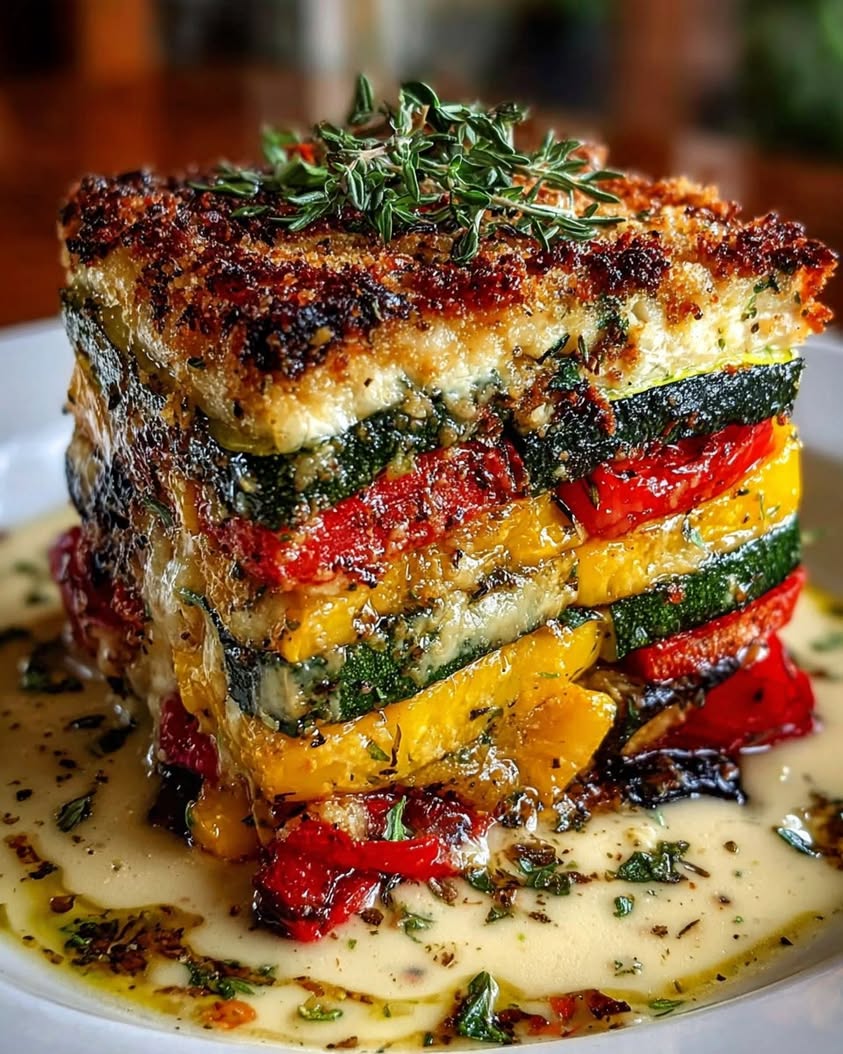
- Visual Appeal: Distinct bands of purple eggplant, green zucchini, yellow and red peppers create a rainbow effect that photographs beautifully. A golden, bubbling cheese top and a drizzle of herb sauce complete the presentation.
- Skill Level Needed: This recipe suits confident beginner to intermediate cooks who can roast vegetables and layer a casserole. The techniques are straightforward, though the layering requires a bit of patience and organization.
- Special Equipment: You need a large baking dish, sheet pans for roasting vegetables, a mixing bowl for the cheese drizzle, and basic kitchen tools like a knife and cutting board. A mandoline slicer helps create even vegetable slices, though a sharp knife works well.
Recipe Overview
- Difficulty Level: This layered Mediterranean lasagna lands at a moderate difficulty because it involves multiple steps including roasting vegetables, mixing the cheese drizzle, and assembling layers. However, none of the individual techniques are complicated. The main challenge lies in managing timing and keeping the layers organized. Home cooks with basic kitchen experience will succeed with this recipe.
- Category: This dish works beautifully as a vegetarian main course for dinner, a hearty brunch centerpiece, or a potluck contribution. It also serves as an impressive holiday entree for meatless guests. Leftovers make excellent weekday lunches.
- Cuisine: Mediterranean cuisine inspires this recipe, drawing from Italian lasagna traditions and the vegetable-forward cooking of Greece, southern Italy, and the Levant. The combination of eggplant, zucchini, and bell peppers reflects the produce abundant across the Mediterranean region. The creamy garlic herb drizzle nods to Italian cheese sauces while keeping the flavors fresh and herbaceous.
- Cost: This recipe costs approximately 18 to 24 dollars to prepare, depending on seasonal vegetable prices and cheese quality. Eggplant, zucchini, and bell peppers offer affordable volume, while the three cheeses represent the largest expense. Making the tomato sauce from scratch saves money compared to jarred options.
- Season: Late summer and early fall represent the ideal season for this vegetable lasagna because eggplant, zucchini, and bell peppers reach peak flavor and affordability. However, the ingredients remain available year-round, making this recipe accessible in any season. Winter cooks can rely on greenhouse-grown peppers and imported zucchini.
- Occasion: Serve this Mediterranean vegetable lasagna for Sunday family dinners, holiday celebrations, dinner parties, or meal prep Sundays. It suits both casual gatherings and elegant occasions. The impressive presentation makes it a natural choice for entertaining.
Why You’ll Love This Recipe
The taste and texture of this Mediterranean vegetable lasagna deliver everything a comfort food lover craves while celebrating fresh produce. Roasted eggplant becomes silky and rich, zucchini stays tender with a slight bite, and bell peppers turn sweet and jammy in the oven. These vegetables absorb the flavors of olive oil, garlic, and herbs during roasting, developing complexity that raw vegetables simply cannot match. Meanwhile, the creamy garlic herb three-cheese drizzle melts into every crevice, creating pockets of tangy ricotta, sharp Parmesan, and stretchy mozzarella. The pasta sheets provide just enough structure to hold each generous portion together. Every bite offers a perfect balance of creamy, savory, sweet, and herbaceous notes that keeps you coming back for more.
Convenience and preparation benefits make this eggplant zucchini lasagna a practical choice for busy home cooks. You can roast the vegetables and prepare the cheese drizzle up to two days in advance, then assemble and bake when ready to serve. The recipe yields eight generous servings, providing plenty of leftovers for lunches or future dinners. Cleanup stays manageable because you use sheet pans for roasting and a single baking dish for assembly. The active cooking time totals only about 35 minutes, with the oven doing most of the work. This layered vegetable lasagna also freezes beautifully, so you can stash half the batch for a future no-effort meal. For anyone who loves make-ahead cooking, this recipe quickly becomes a staple.
Nutritional advantages abound in this vegetable-forward lasagna recipe. Eggplant delivers fiber and antioxidants, zucchini contributes potassium and vitamin C, and bell peppers pack a serious vitamin A and C punch. Tomatoes provide lycopene, while fresh herbs add beneficial plant compounds. The three-cheese drizzle offers protein and calcium without overwhelming the dish with excess saturated fat, especially when you choose part-skim ricotta and mozzarella. Compared to traditional meat lasagna, this recipe reduces calories and saturated fat while increasing fiber and micronutrient content. You get a satisfying, filling meal that supports a balanced eating pattern. Even picky eaters who typically avoid vegetables enjoy this dish because the roasting process mellows any bitterness and concentrates natural sweetness.
Social and entertaining value sets this Mediterranean vegetable lasagna apart from everyday weeknight dinners. The layered presentation of purple, green, yellow, and red vegetables creates a stunning visual that impresses guests before they even take a bite. Vegetarians and meat-eaters alike find plenty to love, making this dish a safe choice when you host a crowd with mixed dietary preferences. You can assemble the lasagna in advance and slide it into the oven while you socialize. The recipe scales easily for larger gatherings, and you can serve it buffet-style without worrying about the dish falling apart. Guests often request the recipe, sparking conversations about Mediterranean cooking and seasonal produce. This vegetable lasagna turns a simple dinner party into a memorable occasion.
Cost-effectiveness and accessibility make this eggplant zucchini lasagna a smart addition to your recipe rotation. The main ingredients, eggplant, zucchini, and bell peppers, rank among the most affordable vegetables at U.S. supermarkets, especially during summer months. Canned tomatoes and dried herbs keep the pantry cost low, and you probably already have olive oil, garlic, and onions on hand. The three cheeses represent the primary investment, but part-skim varieties and store-brand options reduce the price without sacrificing flavor. Compared to meat-based lasagna, this recipe often costs less per serving while delivering more vegetables per portion. You can also customize the recipe based on sales and seasonal availability, swapping vegetables as needed. The result is an accessible, budget-friendly meal that feels far more special than its price tag suggests.
Historical Background and Cultural Significance
The origin story of vegetable lasagna stretches back centuries to the Mediterranean region, where cooks layered pasta, vegetables, and cheese long before tomatoes arrived from the Americas. Italian lasagna traditions date to ancient Rome, when early versions featured layers of flatbread or pasta with cheese and seasonings. As pasta-making techniques spread throughout Italy, regional cooks began incorporating local vegetables such as eggplant, zucchini, and peppers into their lasagnas. Southern Italian cooks, particularly in Campania and Sicily, developed eggplant-based dishes like melanzane alla parmigiana that inspired later vegetable lasagna recipes. The layered Mediterranean vegetable lasagna we know today emerged from this rich culinary heritage, blending Italian pasta traditions with the abundant produce of the Mediterranean basin.
Cultural importance surrounds this dish because it represents the Mediterranean approach to eating, which emphasizes vegetables, olive oil, herbs, and moderate amounts of cheese. In Greece, Turkey, and the Levant, cooks stuff and layer eggplant and peppers into casseroles that showcase seasonal bounty. These dishes often appear at family gatherings, religious celebrations, and community meals, where sharing food strengthens social bonds. The layered vegetable lasagna embodies this spirit of generosity and abundance. Meanwhile, in southern Italy, vegetable lasagnas appear on Sunday dinner tables and holiday menus as meatless alternatives that still feel festive and indulgent. This recipe connects home cooks today to generations of Mediterranean cooks who celebrated vegetables as the star of the meal rather than a side dish.
The evolution of this recipe reflects changing American tastes and the growing popularity of Mediterranean cooking in the United States. During the twentieth century, Italian-American lasagna typically featured meat, sausage, and ricotta, becoming a staple of red-sauce restaurants and family gatherings. As interest in plant-based eating and Mediterranean diets grew in recent decades, cooks began experimenting with vegetable-forward lasagnas. The creamy garlic herb three-cheese drizzle represents a modern touch, adding a sauce-like element that traditional lasagnas lack. Food bloggers and home cooks popularized layered vegetable lasagnas on social media, where their vibrant colors photograph beautifully. Today, this eggplant zucchini lasagna stands as a testament to how traditional recipes evolve while staying rooted in culinary tradition.
Regional variations of vegetable lasagna appear across the Mediterranean and beyond, each reflecting local produce and preferences. In Greece, cooks prepare moussaka with eggplant, zucchini, and a creamy bechamel, offering a cousin to this lasagna. In Sicily, eggplant parmigiana layers fried eggplant with tomato sauce and cheese, skipping pasta entirely. Lebanese and Syrian cooks fill baked eggplant with spiced vegetables and top with cheese or yogurt sauce. In Provence, France, ratatouille-inspired vegetable gratins layer zucchini, eggplant, and peppers with herbs. American cooks have added their own spins, incorporating portobello mushrooms, spinach, or butternut squash. This recipe draws from all these traditions while adding a garlic herb cheese drizzle that feels distinctly modern and crowd-pleasing.
Ingredient Deep Dive
Eggplant holds a central place in Mediterranean cooking, with historical roots stretching back thousands of years to India and China before spreading to the Middle East and Europe. Ancient cooks valued eggplant for its meaty texture and ability to absorb flavors. Today, eggplant provides a satisfying, low-calorie base for this vegetable lasagna. Nutritionally, eggplant delivers fiber, potassium, vitamin B6, and antioxidants like nasunin, found in the purple skin. When selecting eggplant, look for firm, glossy specimens with no soft spots. Smaller eggplants tend to have fewer seeds and less bitterness. Store eggplant in the refrigerator crisper drawer for up to five days. If you dislike eggplant’s slight bitterness, choose Japanese or Chinese varieties, which taste milder.
Selecting the right eggplant makes or breaks the texture of this layered Mediterranean lasagna. Choose eggplants that feel heavy for their size and have smooth, unblemished skin. Press gently near the stem; a ripe eggplant gives slightly but bounces back. Avoid eggplants with brown spots or wrinkly skin. For this recipe, medium-sized globe eggplants work best because they slice into even rounds. After slicing, salt the eggplant and let it rest for 15 to 20 minutes to draw out moisture and bitterness. This step improves the final texture and prevents the lasagna from becoming watery. Pat the slices dry and roast them with olive oil until golden brown. Substitution options include portobello mushroom caps or butternut squash slices for cooks who prefer different vegetables.
Zucchini brings a light, fresh flavor and tender texture to this Mediterranean vegetable lasagna. This summer squash originated in the Americas and later became a staple across Europe and the Mediterranean. Nutritionally, zucchini supplies vitamin C, potassium, and fiber with very few calories. The hydration and mild flavor make zucchini an ideal partner for richer ingredients like cheese and tomato sauce. When selecting zucchini, choose firm, medium-sized squash with glossy skin and no soft spots. Smaller zucchini have fewer seeds and firmer flesh. Store zucchini in the refrigerator for up to one week. Slice zucchini lengthwise into thin planks for this lasagna, or use rounds if you prefer. Salting zucchini slightly before roasting reduces excess moisture and concentrates flavor.
Zucchini offers excellent substitution options and storage flexibility. If zucchini is unavailable, try yellow summer squash, which looks beautiful in the layers. You can substitute thin eggplant slices or even thinly sliced parsnips for a different flavor profile. Store zucchini unwashed in a perforated plastic bag in the crisper drawer. Wash just before using. For longer storage, blanch zucchini slices and freeze them for up to three months. When incorporating zucchini into the lasagna, roast it separately from the eggplant because it cooks faster. This prevents the zucchini from turning mushy while the eggplant finishes roasting. You want the zucchini to retain some bite so the layers hold their shape when sliced.
Yellow and red bell peppers add sweetness and vibrant color to this eggplant zucchini lasagna. Bell peppers originated in the Americas and spread worldwide, becoming integral to Mediterranean cooking. Red peppers offer more vitamin C and beta-carotene than green ones, while yellow peppers contribute a milder, fruity sweetness. Both peppers provide antioxidants and fiber that support a healthful diet. When selecting bell peppers, look for firm, glossy specimens with thick walls and green stems. Avoid peppers with soft spots or wrinkled skin. Store bell peppers in the refrigerator crisper drawer for up to one week. Red and yellow peppers roast beautifully, developing blistered skin and caramelized edges that intensify their sweetness. Roasted red peppers also work well in this recipe, saving time during assembly.
Bell peppers transform this vegetable lasagna with their concentrated sweetness and cheerful color. You can substitute jarred roasted red peppers if fresh ones are out of season, draining and patting them dry before layering. For a spicier version, add a few slices of poblano or Anaheim pepper. Store fresh bell peppers in the refrigerator, and dice or slice them just before roasting to preserve their texture. When roasting, make sure the pepper pieces are roughly the same size so they cook evenly. You want them tender and slightly charred at the edges, not soft and watery. Toss them with olive oil and a pinch of salt, then spread them on a sheet pan in a single layer. This technique ensures proper caramelization and prevents steaming.
The creamy garlic herb three-cheese drizzle defines this recipe and deserves careful ingredient attention. Ricotta provides the creamy base, Parmesan adds salty depth, and mozzarella brings stretch and gooeyness. Use whole-milk ricotta for the richest texture, or part-skim ricotta for a lighter option. Freshly grated Parmesan tastes dramatically better, so grate it yourself rather than buying pre-shredded. For mozzarella, low-moisture blocks work best because they melt smoothly without releasing too much water. Fresh basil and oregano give the drizzle its herbaceous character, while roasted garlic infuses mellow sweetness. Add a drizzle of extra-virgin olive oil and a pinch of red pepper flakes for complexity. Blend the ingredients until smooth for a pourable sauce, or leave it slightly chunky for a more rustic texture. This cheese drizzle can be made up to three days in advance and stored in the refrigerator.
The three-cheese drizzle offers plenty of substitution options to suit different dietary needs. For a dairy-free version, use cashew ricotta and dairy-free mozzarella. Nutritional yeast adds a Parmesan-like flavor in vegan variations. For a lower-fat version, increase the ricotta proportion and reduce the mozzarella. Fresh herbs can be swapped for dried herbs in a pinch, though fresh herbs provide brighter flavor. Garlic lovers can add extra roasted garlic or even caramelized onions. A squeeze of lemon juice brightens the drizzle and cuts through the richness. Store leftover drizzle in an airtight container in the refrigerator for up to four days. Reheat gently over low heat or at room temperature before drizzling over the lasagna. This versatile sauce also works as a pasta sauce, a dip for vegetables, or a spread for sandwiches.
Common Mistakes to Avoid
- Skipping the salting step for eggplant: Many cooks rush past this step, but salting draws out moisture and reduces bitterness. Without salting, the eggplant releases water during baking, making the lasagna soggy and diluting the flavors.
- Overcooking the vegetables during roasting: Roasted vegetables should retain some texture so they hold up during baking. Overcooking them turns the layers into mush and makes the lasagna difficult to slice.
- Using watery ricotta straight from the container: Place ricotta in a fine-mesh strainer for 15 minutes to drain excess liquid before mixing the drizzle. This step prevents the lasagna from becoming watery and improves the creamy texture.
- Not draining roasted vegetables on paper towels: Roasted zucchini and eggplant release moisture, and placing them directly into the lasagna creates soggy layers. Drain them on paper towels for a few minutes before layering.
- Under-seasoning each layer: Lasagna layers need seasoning at every stage, from the roasted vegetables to the cheese drizzle to the tomato sauce. Taste each component before assembling to ensure the final dish is well-seasoned.
- Overcrowding the baking dish: Use a dish large enough to hold the ingredients without overflowing. A 9×13-inch dish works well for this recipe. Overcrowding causes bubbling over and uneven cooking.
- Adding too much sauce: Excess sauce makes the lasagna heavy and wet. Use just enough tomato sauce to coat each layer without drowning the vegetables and pasta.
- Cutting the lasagna too soon: Let the lasagna rest for at least 15 minutes after removing it from the oven. This allows the layers to set and prevents the filling from spilling out when sliced.
- Using dried herbs in the cheese drizzle only after mixing: Rehydrate dried herbs in olive oil for a few minutes before incorporating them. This releases their flavors and prevents dry herb bits in the creamy drizzle.
- Skipping the top layer of mozzarella: The final layer of mozzarella creates the golden, bubbly crust that makes lasagna so appealing. Do not forget to add it before baking.
- Using fresh mozzarella in the layers: Fresh mozzarella contains too much water for lasagna and causes sogginess. Use low-moisture mozzarella for the best results.
- Not covering the lasagna during the first part of baking: Covering the dish with foil prevents the top from browning too quickly. Remove the foil during the last 15 minutes to let the cheese bubble and turn golden.
Essential Techniques
Roasting vegetables correctly ranks as the most important technique in this Mediterranean vegetable lasagna. Roasting concentrates flavors, drives off excess moisture, and creates caramelization that adds sweetness and depth. Preheat your oven to 425 degrees Fahrenheit and use two sheet pans to prevent crowding. Toss the eggplant, zucchini, and bell peppers separately, since they have different cooking times. Spread the pieces in a single layer and avoid overlapping them. Roast the eggplant for 20 to 25 minutes, the zucchini for 15 to 18 minutes, and the peppers for 15 to 20 minutes. Look for golden edges and tender, not mushy, texture. Common pitfalls include overcrowding the pans and using too little oil. Visual cues for success include browned edges and a slightly shriveled appearance.
Layering the lasagna properly ensures every slice holds together and delivers the right balance of ingredients. Start with a thin layer of tomato sauce on the bottom of the baking dish to prevent sticking. Add a layer of pasta sheets, followed by the roasted vegetables, tomato sauce, and a drizzle of the garlic herb cheese mixture. Repeat the layers, ending with a final layer of pasta topped with sauce and mozzarella. Press each layer gently to eliminate air pockets, but do not compact the ingredients too much. A common pitfall involves overfilling the dish, which causes the layers to slide apart after slicing. Visual cues for success include a flat, even top before baking and distinct layers visible after slicing. Letting the lasagna rest before slicing allows the layers to set properly.
Mixing the creamy garlic herb three-cheese drizzle requires attention to texture and flavor balance. Start by draining the ricotta to remove excess liquid. Mix the ricotta, grated Parmesan, and a portion of the mozzarella in a bowl. Add roasted garlic, chopped fresh basil and oregano, a drizzle of olive oil, and seasonings. Stir until evenly combined, then taste and adjust. The drizzle should taste creamy, rich, herbaceous, and well-seasoned. A common pitfall involves under-mixing, which leaves lumps of ricotta, or over-mixing, which makes the drizzle too thin. Visual cues for success include a smooth, spreadable consistency and a vibrant green-flecked appearance. Use a spoon to drizzle the cheese mixture over the layers rather than spreading it flat, creating the characteristic drizzle effect.
Managing moisture throughout the cooking process ensures a firm, sliceable lasagna rather than a watery casserole. Pat all vegetables dry after rinsing and salting. Drain ricotta thoroughly. Use low-moisture mozzarella. Simmer the tomato sauce until it thickens slightly. Drain roasted vegetables on paper towels before layering. Avoid adding too much sauce. Let the lasagna rest after baking to allow steam to escape and the layers to set. A common pitfall includes rushing the moisture management steps. Visual cues for success include a lasagna that slices cleanly and holds its shape on the plate. If the lasagna looks watery after slicing, return it to the oven uncovered for another 10 minutes to evaporate excess moisture.
Controlling the oven temperature and baking time ensures the lasagna heats through without drying out or burning. Preheat the oven to 375 degrees Fahrenheit for baking the assembled lasagna. Cover the dish with aluminum foil during the first 30 minutes of baking to prevent the top from over-browning. Remove the foil for the last 15 to 20 minutes to allow the cheese to bubble and turn golden. Insert a knife into the center to check that the lasagna is heated through. A common pitfall involves baking at too high a temperature, which browns the top before the center heats through. Visual cues for success include a bubbling tomato sauce at the edges and a golden, melted cheese top. Let the lasagna rest for 15 minutes before slicing to allow the filling to set.
Pro Tips for Perfect Mediterranean Vegetable Lasagna
Roast the vegetables on separate sheet pans to manage their different cooking times. Eggplant takes longer than zucchini, and bell peppers fall somewhere in between. Keeping them separate prevents overcooking and ensures each vegetable reaches its ideal texture. You can roast all three at once if you use multiple pans. This saves time while maintaining quality.
Make the creamy garlic herb three-cheese drizzle a day in advance to let the flavors meld. Roasted garlic, fresh herbs, and cheese benefit from resting overnight. The drizzle becomes even more flavorful when the herbs infuse into the dairy. Just stir it well before using and add a splash of milk if it thickens too much.
Use a mandoline slicer to create uniform eggplant and zucchini slices. Consistent thickness ensures even roasting and neat layers. A mandoline saves time and produces professional-looking results. If you do not own one, use a sharp chef’s knife and aim for slices about a quarter inch thick. Uniform slices stack beautifully and cook evenly.
Salt the eggplant and let it rest before roasting to draw out moisture and bitterness. This simple step takes 15 to 20 minutes but dramatically improves the texture and flavor of the final dish. Pat the slices dry after salting and rinse if the salt seems excessive. This technique applies to zucchini as well, though zucchini needs less time.
Choose a good-quality tomato sauce or make your own from canned San Marzano tomatoes. The sauce forms the backbone of the lasagna’s flavor, so invest in a brand you trust or simmer canned tomatoes with garlic and olive oil. Homemade sauce takes only 20 minutes and tastes far superior to most jarred options. Season the sauce with salt, pepper, and a pinch of sugar to balance acidity.
Let the lasagna rest for 15 to 20 minutes after baking before slicing. This step makes a significant difference in how the slices hold together. Resting allows the cheese to set and the layers to settle. If you skip this step, the lasagna will slide apart on the plate. Use the resting time to prepare a salad or set the table.
Use a 9×13-inch baking dish with straight sides for even layering and clean slices. Straight sides help the lasagna hold its shape and make portioning easier. Glass or ceramic dishes work well and conduct heat evenly. Avoid deep casserole dishes that make layering difficult and create uneven ratios of pasta to filling.
Add a layer of fresh spinach or arugula between the pasta and roasted vegetables for extra color and nutrition. Greens wilt during baking and add a pop of green to each slice. You can also substitute basil leaves for spinach. This optional addition increases the vegetable content and adds a peppery note.
Variations and Adaptations
Regional variations of this Mediterranean vegetable lasagna reflect different culinary traditions and local produce. Greek cooks might add cinnamon and allspice to the tomato sauce, echoing moussaka flavors. Sicilian cooks could swap ricotta for a creamy bechamel sauce. Lebanese cooks might top the lasagna with a drizzle of tahini yogurt sauce instead of the cheese mixture. Spanish cooks might incorporate smoked paprika and manchego cheese. Each variation tells the story of its region’s flavors and ingredients. Home cooks can use these ideas as inspiration for their own personalized versions.
Seasonal adaptations keep this recipe fresh and affordable throughout the year. In summer, use peak-season eggplant, zucchini, and bell peppers for the best flavor. In fall, substitute roasted butternut squash or sweet potatoes for the zucchini. In winter, rely on jarred roasted red peppers and imported eggplant. In spring, add asparagus spears or fresh spinach to the layers. Adjust roasting times and liquid content based on the vegetables you choose. Seasonal cooking connects you to the rhythms of the year and often delivers better flavor at lower prices.
Dietary modifications make this Mediterranean vegetable lasagna accessible to a wider range of eaters. For gluten-free versions, use gluten-free lasagna noodles or substitute thin slices of eggplant or zucchini for the pasta sheets entirely. For dairy-free and vegan versions, use cashew ricotta, dairy-free mozzarella, and nutritional yeast. For a lower-carb version, skip the pasta and double the vegetable layers. Each modification requires small adjustments to texture and moisture, so pay attention to the final consistency.
Flavor variations allow you to customize the lasagna to your taste preferences. Add a layer of pesto for a basil-forward version. Drizzle balsamic glaze over the top for sweetness and acidity. Add crushed red pepper flakes to the tomato sauce for heat. Stir chopped kalamata olives and capers into the tomato sauce for a briny, Mediterranean twist. Use smoked mozzarella for a deeper, smoky flavor. Experiment with different herbs like thyme, rosemary, or mint. The recipe provides a flexible framework for endless flavor exploration.
Texture modifications help you control the final consistency of the lasagna. For a firmer lasagna, roast the vegetables longer to remove more moisture. For a creamier lasagna, increase the ricotta in the drizzle. For a crunchier top, add a layer of breadcrumbs mixed with Parmesan and olive oil before baking. For a more tender bite, use thinner pasta sheets or no-boil noodles. Adjust the amount of sauce based on whether you prefer a drier or wetter lasagna. Each modification requires a small trade-off, so taste as you go and adjust accordingly.
Presentation alternatives let you serve this Mediterranean vegetable lasagna in different formats. Bake individual portions in ramekins for an elegant dinner party presentation. Make lasagna rolls by rolling each pasta sheet with filling and standing them upright in the baking dish. Assemble the lasagna in a cast iron skillet for a rustic, family-style look. Serve the lasagna in bowls with extra sauce for a cozy, comfort-food feel. Cut the lasagna into smaller squares and serve as appetizers. Each presentation style changes the dining experience while using the same delicious recipe.
Serving and Presentation Guide
Plating techniques for this layered Mediterranean lasagna focus on showing off the beautiful layers. Use a sharp knife to cut clean squares and lift them with a spatula. Place the square slightly off-center on the plate and drizzle extra tomato sauce around the base. Add a spoonful of the creamy garlic herb three-cheese drizzle on the side or across the top for visual interest. A sprinkle of fresh basil leaves and a pinch of red pepper flakes adds color and texture. Serve the lasagna in warm bowls to keep it hot and make the most of the sauce. A small side salad with arugula and lemon vinaigrette complements the rich lasagna.
Garnishing ideas transform a simple slice of lasagna into a restaurant-quality presentation. Use fresh basil leaves, torn just before serving, to release their aroma. Finely grate fresh Parmesan over the top for a snowy, elegant finish. Drizzle a ribbon of extra-virgin olive oil over the slice for shine. Add a few roasted cherry tomatoes or a sprinkle of toasted pine nuts. A pinch of flaky sea salt and cracked black pepper adds texture and flavor. For a pop of color, add a few microgreens or a slice of fresh red pepper. Garnishes should enhance the flavors, not overpower them.
Traditional accompaniments for this Mediterranean vegetable lasagna include a simple green salad dressed with olive oil and lemon. Garlic bread or focaccia makes a satisfying side for mopping up extra sauce. A side of roasted vegetables or a vinegary marinated bean salad balances the richness. For a heartier meal, serve with a bowl of minestrone or a simple lentil soup. Traditional Italian meals often start with antipasto, and bruschetta with tomatoes and basil makes a perfect appetizer. These classic sides complement the Mediterranean flavors without competing for attention.
Modern serving suggestions offer fresh ways to enjoy this layered vegetable lasagna. Serve the lasagna on a bed of arugula dressed with balsamic vinegar for a light, peppery contrast. Pair it with a glass of crisp white wine or a light red. Serve leftovers at room temperature as part of a picnic or grazing platter. Cut the lasagna into small squares and top with a dollop of pesto for an elegant appetizer. For brunch, serve alongside eggs and a fruit salad. These modern serving ideas keep the recipe interesting throughout the week.
Temperature considerations affect how the lasagna tastes and feels in your mouth. Serve the lasagna hot from the oven after resting, when the cheese is melted and the layers are warm throughout. Let it sit for 15 minutes to allow the layers to set before slicing. Reheat leftovers in the oven at 350 degrees Fahrenheit for 15 to 20 minutes, or microwave individual portions on medium power. Avoid overheating, which dries out the cheese and makes the pasta mushy. Room-temperature lasagna works well for picnics and lunchboxes. Let it cool completely before packing and store in an insulated container to maintain food safety.
Portion control tips help you serve the right amount without waste. A 9×13-inch lasagna yields eight generous portions or twelve smaller ones. Use a knife to mark portions before serving, especially when feeding a crowd. Smaller portions work well for children or as part of a buffet with multiple dishes. Larger portions suit hungry adults or main-course servings. Pair each portion with a generous side salad to balance the plate and add freshness. Additional sauce on the side allows guests to adjust the moisture level. Store leftover portions in individual containers for grab-and-go lunches during the week.
Wine and Beverage Pairing
Wine pairings for this Mediterranean vegetable lasagna should consider the tomato sauce, roasted vegetables, and rich cheese drizzle. A medium-bodied red like Sangiovese or Chianti pairs beautifully with the tomato-based sauce and herbal notes. Montepulciano d’Abruzzo offers dark fruit flavors that stand up to the eggplant and peppers. For white wine lovers, a crisp Vermentino or Falanghina cuts through the richness of the cheese. A dry rosé from Provence makes a versatile pairing that works with the vegetables and the three-cheese drizzle. Avoid heavily oaked wines, which overpower the lighter vegetable flavors. Serve red wines slightly below room temperature and whites well-chilled.
Non-alcoholic alternatives ensure everyone at the table has a satisfying beverage. Sparkling water with lemon and basil refreshes the palate between bites. A homemade Italian soda with blood orange or lemon syrup complements the Mediterranean flavors. Iced tea with mint provides a familiar, crowd-pleasing option. San Pellegrino or other mineral waters pair beautifully with the meal and aid digestion. For something more festive, a Print
Layered Mediterranean Eggplant, Zucchini, Yellow & Red Bell Pepper Lasagna with Creamy Garlic Herb Three-Cheese Drizzle
- Total Time: 45 minutes
- Yield: 4
Description
A vibrant and healthy lasagna that layers roasted eggplant, zucchini, and bell peppers with a rich, creamy garlic-herb three-cheese sauce. This vegetarian dish is packed with Mediterranean flavors and makes a stunning centerpiece for any meal.
Ingredients
- 2 medium eggplants, sliced into 1/4-inch rounds
- 2 medium zucchini, sliced into 1/4-inch rounds
- 1 yellow bell pepper, sliced into strips
- 1 red bell pepper, sliced into strips
- 3 tablespoons olive oil
- Salt and pepper to taste
- 8 lasagna noodles (oven-ready or cooked according to package)
- For the cheese drizzle: 1 cup ricotta cheese
- 1 cup shredded mozzarella cheese
- 1/2 cup grated Parmesan cheese
- 2 cloves garlic, minced
- 2 tablespoons chopped fresh basil
- 1 tablespoon chopped fresh oregano
- 1/2 teaspoon salt
- 1/4 teaspoon black pepper
- 1/2 cup milk (or more for desired consistency)
- For garnish: additional fresh basil and oregano
Instructions
- Preheat oven to 400°F (200°C). Line two baking sheets with parchment paper. Arrange eggplant and zucchini slices on one sheet and bell pepper strips on the other. Brush vegetables with olive oil and season with salt and pepper. Roast for 20-25 minutes, until tender and lightly browned.
- In a medium bowl, combine ricotta, mozzarella, Parmesan, minced garlic, basil, oregano, salt, and pepper. Stir in milk gradually until the mixture is creamy and spreadable. Set aside.
- Reduce oven temperature to 375°F (190°C). Spread a thin layer of the cheese mixture on the bottom of a 9×13-inch baking dish. Place a layer of lasagna noodles over the cheese. Top with half of the roasted eggplant and zucchini, then half of the bell peppers. Dollop with half of the remaining cheese mixture. Repeat layers: noodles, remaining vegetables, and remaining cheese mixture. Finish with a final layer of noodles and spread any remaining cheese mixture on top.
- Cover with foil and bake for 25 minutes. Remove foil and bake for an additional 10-15 minutes, until bubbly and lightly golden. Let stand for 10 minutes before serving. Garnish with fresh basil and oregano.
Notes
You can customize the seasonings to taste.
- Prep Time: 15 minutes
- Cook Time: 30 minutes
- Method: Main
- Cuisine: American