Mediterranean Veggie Stack with Feta & Orange Honey: A Fresh Summer Delight
This Mediterranean Veggie Stack with Feta & Orange Honey is the kind of dish that turns a simple dinner into a memorable occasion. Imagine layers of smoky grilled eggplant, tender zucchini, and sweet bell peppers, all stacked high and finished with a tangy, creamy feta spread and a drizzle of bright orange honey. It is a celebration of summer produce and Mediterranean flavors, designed to impress without demanding hours in the kitchen. The contrast between the warm, charred vegetables and the cool, salty feta creates a harmony that feels both indulgent and wholesome.
I remember the first time I built this stack for a backyard gathering. The vibrant colors of the vegetables against the white plate caught everyone’s eye before they even took a bite. The aroma of oregano and garlic mingled with the floral notes of orange honey, and the first taste was a revelation. The earthy squash, the sweet peppers, and the tangy cheese all came together in a symphony of textures and tastes. This Mediterranean Veggie Stack with Feta & Orange Honey quickly became a requested favorite, and I am thrilled to share it with you today.
What makes this recipe truly stand out is its versatility. It works beautifully as a main course for a light lunch, a stunning side dish for grilled meats, or even a vegetarian centerpiece for a dinner party. The preparation is straightforward, focusing on high-quality ingredients and simple techniques. You do not need any fancy equipment, just a grill or grill pan and a good knife. This is Mediterranean cooking at its best: fresh, flavorful, and incredibly satisfying. So let us explore how to create this masterpiece and bring a taste of the Mediterranean coast to your table.
Quick Recipe Highlights
- Flavor Profile: This dish delivers a beautiful balance of smoky, sweet, and tangy notes. The charred vegetables provide a deep, earthy flavor, while the creamy feta adds a salty, tangy contrast. The orange honey drizzle brings a floral sweetness that ties everything together with a bright finish.
- Texture: You will experience a wonderful interplay of textures here. The vegetables are tender yet firm after grilling, offering a slight chew. The feta spread is smooth and creamy, while the honey drizzle adds a touch of stickiness. The toasted walnuts sprinkle in a welcome crunch.
- Aroma: The scent of grilling vegetables is intoxicating, with notes of smoke and caramelization. Fresh oregano and garlic release their fragrant oils as they cook. The orange honey adds a sweet, citrusy aroma that is both warm and inviting.
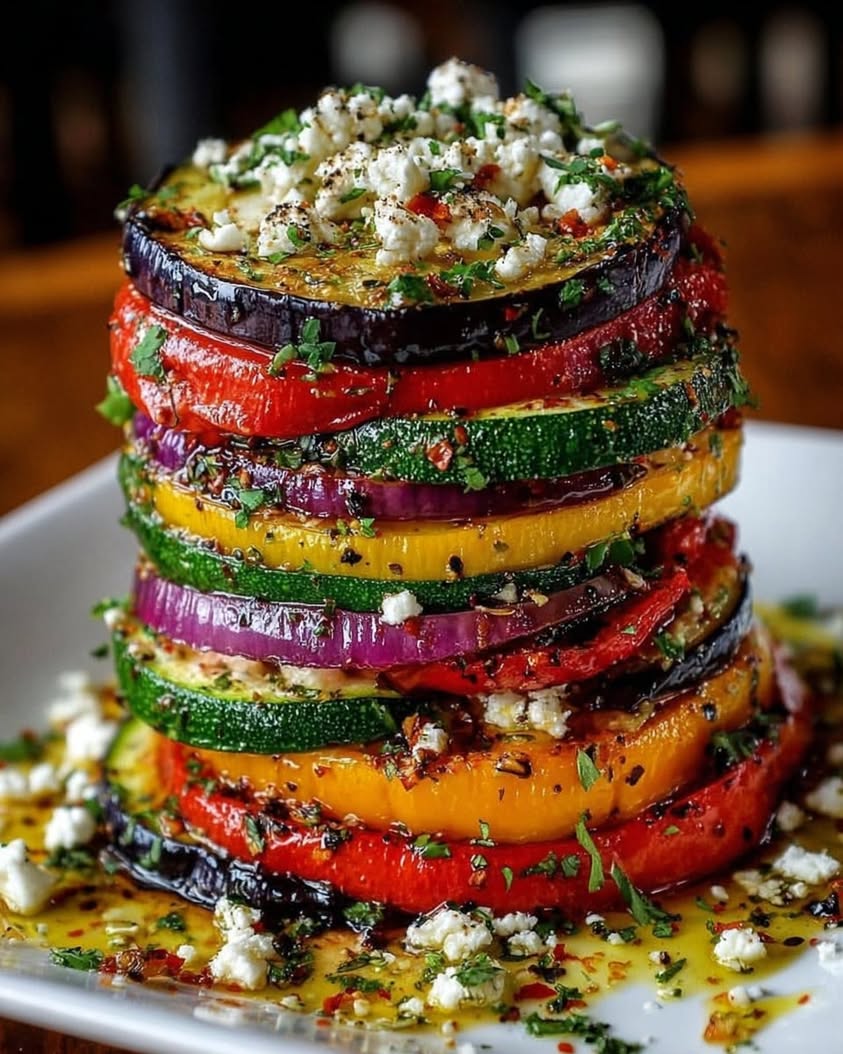
- Visual Appeal: This stack is a feast for the eyes. The bright red, orange, and green of the vegetables create a vibrant palette. The creamy white feta and the golden honey drizzle add beautiful contrasting colors. It looks as impressive on a plate as it does in a magazine.
- Skill Level Needed: This recipe is approachable for home cooks of all levels. The techniques are simple, involving grilling and layering. A bit of patience is needed for building the stack, but no advanced culinary skills are necessary.
- Special Equipment: You will need a grill or a grill pan for achieving those beautiful char marks. A good quality chef’s knife and a cutting board are essential for prepping the vegetables. A small saucepan is needed for warming the honey.
Recipe Overview
- Difficulty Level: I classify this as a medium difficulty recipe, not because it is complicated, but because it requires a bit of attention to detail. Grilling the vegetables to the perfect tenderness without burning them takes some practice. Building the stack neatly also requires a steady hand. However, the steps are easy to follow, and the rewards are well worth the effort.
- Category: This dish fits beautifully into several categories. It is a fantastic vegetarian main course, a hearty side dish, or an elegant appetizer. It also works well as part of a mezze spread, alongside hummus and olives. Its versatility makes it a great addition to your weekly dinner rotation.
- Cuisine: The culinary roots of this dish are firmly planted in the Mediterranean tradition. It draws inspiration from Greek, Turkish, and Italian cuisines, where grilling vegetables and combining them with fresh cheese is a time-honored practice. The use of oregano, olive oil, and feta cheese are classic hallmarks.
- Cost: The cost for this recipe is quite reasonable, especially when summer vegetables are in season. Eggplant, zucchini, and bell peppers are typically affordable. Feta cheese and honey are pantry staples that you might already have. The total cost for a meal serving four is very budget-friendly.
- Season: The best season for this dish is undoubtedly summer. This is when eggplants, zucchini, and bell peppers are at their peak of flavor and abundance. Grilling is also a more enjoyable activity during warmer months. However, you can adapt it for other seasons by using roasted vegetables.
- Occasion: This recipe is perfect for a wide range of occasions. It is an impressive dish for a casual summer dinner party or a quiet weekend lunch. It also makes a wonderful contribution to a potluck or a picnic. Its vibrant presentation makes it a star on any table.
Why You’ll Love This Recipe
Let’s talk about the taste first. This Mediterranean Veggie Stack with Feta & Orange Honey offers a flavor journey that is both complex and comforting. Every bite delivers the smoky char of the grilled vegetables, the creamy tang of the feta, and the sweet, floral kiss of the orange honey. The combination is so perfectly balanced that you will find yourself craving it long after the meal is over. It is the kind of flavor that makes you feel like you are dining at a seaside taverna, even if you are just in your own backyard.
Convenience is another huge benefit. Despite its elegant appearance, this dish comes together in about 40 minutes. The active prep time is only 20 minutes, leaving the grill to do most of the work. You can even grill the vegetables ahead of time and assemble the stacks just before serving. This makes it an excellent choice for busy weeknights or when you are entertaining and want to minimize last-minute stress. It is a high-impact dish with a low-stress approach.
Nutritionally, this is a power meal. The vegetables are loaded with fiber, vitamins, and antioxidants. Eggplant is rich in fiber and manganese, while bell peppers provide a huge dose of vitamin C. Zucchini is low in calories but high in water and nutrients. The feta cheese adds protein and calcium, and the olive oil and walnuts provide healthy fats. It is a meal that nourishes your body while delighting your taste buds, proving that healthy food can be incredibly delicious.
From a social perspective, this dish is a showstopper. When you bring the stacked plates to the table, your guests will be genuinely impressed. It looks like something from a fine dining restaurant, but you made it yourself. It encourages conversation and shared appreciation for good food. It is also a great conversation starter about Mediterranean cuisine and the joy of cooking with seasonal produce. Your guests will not only enjoy the meal but will also remember the experience.
Finally, this recipe is extremely cost-effective and accessible. The ingredients are easy to find at any grocery store, especially during the summer months. You can often find high-quality eggplants and zucchini for a very low price. Feta cheese is a relatively affordable cheese, and honey is a staple. This means you can create a luxurious, gourmet-style meal without spending a lot of money. It is a testament to the fact that the best cooking often comes from simple, humble ingredients.
Historical Background and Cultural Significance
The origins of this vegetable stack recipe can be traced back to the ancient traditions of the Mediterranean region. Communities across Greece, Turkey, and Italy have long celebrated the bounty of summer vegetables. Grilling over an open fire is one of the oldest cooking methods, and it remains central to Mediterranean cuisine. The practice of layering these vegetables with cheese and herbs is a natural evolution of these rustic cooking traditions, creating a dish that is both simple and sophisticated.
Culturally, sharing grilled vegetables with family and friends is a fundamental part of Mediterranean life. It symbolizes hospitality, abundance, and the joy of simple pleasures. In Greek culture, mezze platters often feature similar ingredients, encouraging a communal dining experience. The addition of feta cheese, a staple of Greek cuisine, and orange honey, a nod to the region’s famous citrus groves, deepens this cultural connection. This dish is a celebration of community and shared meals.
The evolution of this recipe over time reflects a global appreciation for Mediterranean flavors. As travel and trade increased, these humble ingredients found their way into kitchens worldwide. Chefs and home cooks began experimenting with different layering techniques and flavor combinations. The introduction of a sweet honey drizzle is a more modern twist, perhaps inspired by North African or Middle Eastern cuisine, where sweet and savory pairings are common. This evolution shows how a recipe can travel and transform while staying true to its roots.
Regional variations are abundant and fascinating. In Turkey, you might see a similar dish called “Imam Bayildi,” which is a stuffed eggplant dish that uses many of the same ingredients. In Italy, “Melanzane alla Parmigiana” layers eggplant with tomato sauce and cheese. This Mediterranean Veggie Stack with Feta & Orange Honey takes inspiration from all these traditions but creates its own unique identity. It is a modern interpretation that honors the past while looking forward, a true testament to the enduring appeal of Mediterranean cooking.
Ingredient Deep Dive
Let’s start with the eggplant. This vegetable has a long and storied history, originating in India and spreading through the Middle East to Europe. It has been cultivated for over 1,500 years. Nutritionally, eggplant is a powerhouse of fiber, potassium, and manganese. It is also rich in antioxidants like nasunin, which is known for its brain health benefits. When selecting eggplant, look for ones that are firm, glossy, and heavy for their size. Avoid any with soft spots or blemishes. Store them in a cool, dry place and use them within a few days. If you cannot find eggplant, thick slices of portobello mushrooms make an excellent substitute.
Zucchini, another key ingredient, is a summer squash that originated in the Americas. It was brought to Europe by explorers and became a staple of Mediterranean cuisine. It is incredibly low in calories but high in water, fiber, and vitamin C. The skin is packed with antioxidants. When choosing zucchini, look for small to medium ones that are firm and have a bright green color. Larger ones can be watery and less flavorful. Store them in the refrigerator in a plastic bag and use them within a week. Yellow summer squash is a perfect substitute if zucchini is not available.
Red bell peppers are a sweet, vibrant addition to this stack. They are native to Central and South America and are a rich source of vitamin C, vitamin A, and antioxidants. The red variety is simply a fully ripened green pepper, which is why it is sweeter. For the best flavor, select peppers that are firm, glossy, and heavy. They should have no wrinkles or soft spots. Store them in the refrigerator in a plastic bag for up to a week. You can substitute with yellow or orange bell peppers for a different color and a slightly milder flavor.
Feta cheese is the creamy, tangy heart of this dish. It is a brined curd cheese from Greece, traditionally made from sheep’s milk or a mixture of sheep and goat milk. It has a crumbly texture and a salty, tangy flavor that is iconic in Mediterranean cuisine. Nutritionally, feta is a good source of calcium, protein, and B vitamins. When buying feta, look for blocks that are stored in brine, as this keeps them moist and flavorful. Avoid pre-crumbled feta, as it can be dry. Store it in its brine in the refrigerator and use it within a few weeks.
Finally, the orange honey is the secret weapon of this recipe. Honey has been used in the Mediterranean region for thousands of years, both as a sweetener and for its medicinal properties. The addition of orange zest and juice transforms it into something special. The floral notes of the honey complement the citrus perfectly. For the best results, use a high-quality, local honey. When making the honey drizzle, use fresh orange juice and zest for the brightest flavor. You can substitute with lemon honey or even a balsamic reduction for a different flavor profile.
Common Mistakes to Avoid
- Overcooking the vegetables is a common pitfall. Grilled vegetables should be tender but still have a bit of structure. If you overcook them, they become mushy and fall apart when you try to stack them. Watch them carefully and remove them from the grill as soon as they have nice char marks and are fork-tender.
- Underseasoning the vegetables is another frequent error. A simple sprinkle of salt and pepper before grilling is crucial. Salt helps draw out moisture and enhances the natural flavors of the vegetables. Do not be shy with the seasoning, as it will make a big difference in the final taste.
- Skipping the salting step for the eggplant can lead to bitterness. Eggplant contains a compound that can be bitter. Salting the slices and letting them sit for 20 minutes draws out excess moisture and any bitterness. Rinse and pat them dry before grilling for the best results.
- Using cold feta cheese directly from the refrigerator will result in a less creamy spread. Let the feta come to room temperature for about 20 minutes before mashing it with olive oil. This allows it to become softer and more spreadable, creating a better texture in the stack.
- Applying the honey too early can cause it to burn on the hot vegetables. The honey drizzle should be added just before serving. If you add it too early, the heat from the vegetables can make it runny or even burn it, ruining its delicate flavor.
- Building the stack on a wet plate will cause it to slide apart. Make sure your serving plates are completely dry. After grilling, let the vegetables rest for a minute on a paper towel to absorb any excess moisture before you start layering. This ensures a stable stack.
- Forgetting to toast the walnuts is a missed opportunity for texture. Toasted walnuts add a wonderful nutty crunch that contrasts beautifully with the soft vegetables and creamy cheese. Always toast them in a dry skillet for a few minutes until fragrant before adding them as a garnish.
- Using too much oil on the grill can cause flare-ups. Just brush a light coating of olive oil on the vegetables and the grill grates. Too much oil will create smoke and uneven cooking. A light touch is all you need for perfect char marks.
- Not letting the grilled vegetables rest before stacking can make the stack unstable. Hot vegetables are more fragile and can break apart. Let them rest for a minute or two until they are warm but not steaming. This helps them hold their shape better.
- Skipping the fresh oregano is a missed opportunity for authentic flavor. Dried oregano is a good substitute in a pinch, but fresh oregano has a brighter, more aromatic flavor that truly elevates this dish. Do not leave it out if you can help it.
Essential Techniques
Mastering the grilling technique is essential for this recipe. Grilling over medium-high heat is ideal because it creates beautiful char marks while cooking the vegetables evenly. Make sure your grill grates are clean and lightly oiled to prevent sticking. Place the vegetable slices in a single layer and do not move them for the first few minutes. This allows the heat to create a nice sear. You will know they are ready to flip when they have distinct grill marks and are starting to soften. The visual cue is a dark brown, charred pattern on the surface. Patience is key here, as moving them too early will tear the skin.
The art of building a stable stack is another crucial skill. Start with the largest, most stable slices at the bottom, such as the eggplant or bell pepper. Spread a generous layer of the feta mixture on each slice as you stack them. This acts as a glue, holding the layers together. Use a light touch when placing each new layer to avoid crushing the ones below. For the final stack, aim for a neat, even tower. If the stack feels wobbly, you can use a toothpick to hold it together, but this is rarely necessary if you have built it carefully.
Creating the orange honey drizzle is a simple but important technique. The key is to warm the honey gently so it becomes pourable without boiling it. Heating it too high can destroy the delicate floral flavors. Combine the honey, orange zest, and orange juice in a small saucepan over low heat. Stir gently until the honey is fluid and the ingredients are well combined. The visual cue is a smooth, golden liquid with small flecks of orange zest. Let it cool for a minute before drizzling to avoid a runny mess on your plate.
Pro Tips for Perfect Mediterranean Veggie Stack
First, always use a mandoline slicer for the eggplant and zucchini if you have one. It ensures even slices that cook uniformly, which is essential for a neat stack. Even slices also stack more neatly together. If you do not have a mandoline, just try to cut your vegetables as evenly as possible by hand.
Second, do not overcrowd the grill. If you put too many vegetables on the grill, they will steam instead of charring. Work in batches if necessary. This allows the heat to stay high and creates those beautiful, smoky grill marks that are essential for the flavor. A hot grill is your best friend here.
Third, let the feta mixture come to room temperature before using it. This makes it much easier to spread and creates a creamier texture. You can even whip it with a fork or a small food processor for an extra smooth consistency that will blend beautifully with the vegetables.
Fourth, taste your orange honey before drizzling. The sweetness of honey can vary, and the acidity of oranges can differ. Adjust the balance by adding a pinch of salt to the honey if it is too sweet, or a little more honey if it is too tart. This final adjustment makes a huge difference.
Fifth, consider grilling the vegetables a few hours ahead of time. This is a fantastic make-ahead strategy. Just let them cool completely and store them in an airtight container in the refrigerator. When you are ready to serve, simply bring them to room temperature and assemble the stacks. The flavors actually improve as they marinate together.
Sixth, for a smoky flavor without a grill, use a cast-iron grill pan. It will give you similar char marks and smoky flavor right on your stovetop. Just make sure the pan is very hot before adding the vegetables. A little bit of smoke is a good sign that you have the temperature right.
Seventh, garnish with fresh herbs just before serving. A sprinkle of fresh oregano or mint adds a pop of color and a burst of fresh flavor. It also adds a professional touch that makes the dish look even more inviting. A final drizzle of good quality extra virgin olive oil also goes a long way.
Eighth, do not be afraid to adjust the layers to your preference. You can use more of one vegetable than another, or add other grilled vegetables like onions or asparagus. The foundation is flexible, so feel free to get creative with what you have on hand.
Variations and Adaptations
Regional variations can inspire your own twist on this dish. In Provence, you might add a layer of tapenade or a sprinkle of herbes de Provence. In Spanish cuisine, you could substitute the feta with a creamy manchego cheese and add some roasted red peppers. The possibilities are endless, and each regional touch brings a whole new dimension to the basic concept of the stack. Exploring these variations is a wonderful way to learn more about Mediterranean cooking.
Seasonal adaptations are a great way to keep this recipe fresh year-round. In the fall, you can substitute summer vegetables with roasted butternut squash, caramelized onions, and baby spinach. In the spring, grilled asparagus and artichoke hearts make wonderful layers. The honey drizzle works with any seasonal vegetables, and the feta remains a constant, creamy anchor. This adaptability makes it a recipe you can return to again and again.
Dietary modifications are easy to accommodate. For a dairy-free version, substitute the feta with a plant-based feta or a creamy tofu sauce that has been seasoned with nutritional yeast and lemon juice. For a gluten-free version, this recipe is naturally gluten-free as written. To make it vegan, use a vegan cheese alternative and skip the honey, replacing it with a maple syrup and orange drizzle. Each modification is simple and effective.
Flavor variations can completely transform this dish. Try adding a pinch of smoked paprika or cumin to the feta mixture for a deeper, smokier flavor. You can also swap the oregano for fresh basil or mint for a different herbal note. For a spicier kick, add a pinch of red pepper flakes to the honey drizzle. These small changes can create entirely new taste experiences while keeping the core structure of the stack intact.
Texture modifications are also possible. For a crunchier stack, add a layer of toasted pine nuts or crumbled crispy chickpeas between the vegetables. For a softer, more melt-in-your-mouth experience, you can briefly roast the vegetables instead of grilling them. This creates a different texture profile that is equally delicious but more tender. The choice is yours.
Presentation alternatives can change the whole feel of the dish. Instead of a tall stack, you can arrange the grilled vegetables in a fanned pattern on the plate and top them with the feta and honey. This is a more relaxed, rustic presentation that is still very beautiful. You can also serve the components deconstructed and let people build their own stacks at the table. This is a great idea for a dinner party.
Serving and Presentation Guide
Plating this dish is a key part of the experience. Use a large, flat white plate to allow the colors to shine. Start by placing a small dollop of the feta mixture in the center of the plate to anchor the stack. Then, carefully build your vegetable tower in the center. The height of the stack creates visual drama, so aim for at least four layers. The final stack should be centered and upright, a true centerpiece on the plate.
Garnishing is where you can add a final touch of artistry. A drizzle of the orange honey should be the first garnish, flowing down the sides of the stack in a controlled stream. Then, sprinkle the toasted walnuts and fresh oregano leaves over the top. A few extra crumbles of feta around the plate add a rustic feel. The goal is to make the plate look abundant and intentional, not cluttered.
Traditional accompaniments for this dish include a simple green salad with a lemon vinaigrette and some crusty bread. The bread is perfect for soaking up any leftover honey and feta that spills onto the plate. A side of warm pita bread or grilled flatbread also works wonderfully. These additions round out the meal and add heartiness. Do not forget a bowl of olives on the side for a true Mediterranean feel.
Modern serving suggestions include serving the stack as a main course for a light, healthy dinner. It can also be served as a smaller appetizer for a cocktail party. For a more substantial meal, consider placing the stack on a bed of cooked quinoa or couscous. This adds protein and makes it a more filling meal. The versatility of this dish is one of its greatest strengths.
Temperature considerations are important for the best eating experience. The vegetables should be warm or at room temperature, while the feta spread is best at room temperature for optimal creaminess. The honey drizzle should be warm and fluid. Combining these different temperatures creates a pleasant contrast in the mouth. Serve the stacks immediately after assembling to maintain this balance.
Portion control tips are helpful for serving. This recipe as written makes four generous main course servings or eight appetizer servings. When building the stacks, use one medium slice of each vegetable per stack for a main course, or half a slice for an appetizer. This ensures each person gets a balanced portion. You can always add more layers if you want a larger stack.
Wine and Beverage Pairing
For wine pairings, a crisp, dry white wine is a classic choice. A Sauvignon Blanc from New Zealand or a dry Riesling from Germany will cut through the creamy feta and complement the honey’s sweetness. Their high acidity also matches the charred vegetables beautifully. If you prefer a rosé, a dry Provencal rosé is an excellent choice. Its light body and subtle fruit aromas will not overpower the delicate flavors of the dish. A Sicilian Grillo is another wonderful option with its bright citrus notes that echo the orange honey.
For non-alcoholic alternatives, a sparkling water with a splash of orange juice is an excellent choice. It mimics the brightness of the wine pairings and adds a festive touch. A hibiscus iced tea is another great option. Its tartness and floral notes echo the flavors of the Mediterranean and the honey. A simple lemonade or limeade also works beautifully, with its acidity cutting through the richness of the cheese.
If you are considering coffee or tea, a cup of strong Greek coffee is a wonderful way to end the meal. Its bitterness contrasts nicely with the sweet honey and creamy feta. A herbal tea like mint or chamomile is also a good choice. Mint is particularly fitting, as it is a common herb in Mediterranean cuisine. These pairings provide a satisfying conclusion to the dining experience.
Temperature considerations for your beverages are crucial. White wines and rosés should be served chilled to maximize their refreshing qualities. Sparkling water and iced tea should also be well chilled. If you choose coffee or tea, serve them hot to create a nice contrast with the food. The right temperature enhances the overall dining experience and complements the dish perfectly.
Serving suggestions for beverages include using appropriate glassware. A stemmed wine glass for the wine, a highball glass for the sparkling water, and a proper teacup for the coffee all add to the occasion. Presentation matters just as much for the drinks as it does for the food. A small garnish like a lemon twist in the sparkling water is a nice touch that ties everything together with the citrus theme.
Storage and Shelf Life
Storing leftover vegetable stacks requires some care. It is best to store the components separately if you plan to have leftovers. The grilled vegetables can be stored in an airtight container in the refrigerator for up to three days. The feta mixture should be stored in a separate container. The honey drizzle is best made fresh, but you can store it in a sealed jar at room temperature for a week. Assembled stacks do not store well, as they become soggy and lose their structure.
Temperature requirements for storage are straightforward. The refrigerator is the best place for the cooked vegetables and the feta mixture. Keep the refrigerator at a consistent temperature of 40 degrees Fahrenheit or below. The honey drizzle can be stored at room temperature in a cool, dark place. Do not freeze any of these components, as the texture of the vegetables will degrade significantly upon thawing. Freezing is not recommended for this dish.
Container recommendations are important for preserving quality. Use airtight glass or plastic containers for the vegetables and the feta. A glass jar with a tight-fitting lid is perfect for the honey drizzle. Make sure the containers are clean and dry before storing. This prevents moisture from building up and causing spoilage. Proper containers will keep your leftovers tasting fresh for as long as possible.
Signs of spoilage are easy to spot. The vegetables will become slimy or develop a sour smell if they have gone bad. The feta mixture may develop a watery layer on top or a sour odor. The honey drizzle is quite stable, but if you see any mold or fermentation, discard it. Always trust your senses. If anything looks or smells off, it is better to be safe and throw it away.
Reheating instructions are simple. For the grilled vegetables, you can reheat them in a dry skillet over medium heat for a few minutes, or in a 350-degree Fahrenheit oven for about five minutes. Microwaving is not recommended, as it makes them soggy. The feta mixture should be served cold or at room temperature, so do not reheat it. The honey drizzle can be gently rewarmed in a small saucepan or microwave if needed. Always reheat gently to avoid burning.
Freezing guidelines are straightforward: do not freeze this dish. The high water content in the vegetables makes them prone to becoming mushy and watery when frozen and thawed. The feta will also become grainy and lose its creamy texture. For the best possible eating experience, enjoy this dish fresh or reheat the components as described. Plan your portions accordingly to minimize leftovers.
Make Ahead Strategies
Preparing this dish ahead of time is a fantastic way to reduce stress on the day of serving. The best make-ahead strategy is to grill the vegetables a day in advance. Let them cool completely, then store them in an airtight container in the refrigerator. They will keep for up to three days. The flavors actually meld together nicely overnight, and the texture remains excellent. This is my go-to approach for dinner parties.
Storage between steps is crucial for success. After grilling the vegetables, let them cool on a paper towel-lined baking sheet to absorb any excess moisture. Then, transfer them to a single layer in a container. The feta mixture can also be made a day ahead. Store it in a separate container and bring it to room temperature before serving. The honey drizzle is best made fresh on the day of serving, but it can be made a few hours ahead and reheated gently.
Assessing the quality impact of making things ahead is important. The vegetables will not lose any flavor or texture when stored properly. The feta mixture may become slightly firmer, but letting it come to room temperature solves this. The honey drizzle might crystallize a bit, but a gentle reheating will restore its fluidity. Overall, the quality impact is minimal, and the convenience gain is significant. This is a very forgiving recipe for make-ahead preparation.
Assembly tips for make-ahead serving are simple. Do not assemble the stacks until you are ready to serve. Take the grilled vegetables and feta mixture out of the refrigerator about 30 minutes before serving to let them come to room temperature. Then, build the stacks on individual plates. This ensures the best texture and presentation. The final assembly takes less than five minutes.
Reheating guidelines for the grilled vegetables if made ahead are also simple. If you prefer the vegetables warm, you can reheat them in a 350-degree Fahrenheit oven for about five minutes. You can also use a dry skillet over medium heat. Avoid the microwave, as it makes them soggy. If you are serving them at room temperature, no reheating is necessary. Both options work beautifully.
Fresh element additions are a great way to brighten a make-ahead dish. Just before serving, add a fresh sprinkle of chopped herbs like oregano or mint. A final drizzle of fresh olive oil and a squeeze of lemon juice can also revive the flavors. These fresh touches make the dish taste as if it was just made, even if you prepared most of it a day ahead. They add vibrancy and life to the plate.
Scaling Instructions
Halving this recipe is very easy. Simply reduce all the ingredient quantities by half. For the vegetables, this means using one medium eggplant, one medium zucchini, and one bell pepper instead of two of each. The feta mixture can be easily halved, and the honey drizzle can be made with a smaller quantity. The cooking times will remain about the same. This is a great option for a dinner for two or a smaller gathering.
Doubling or tripling this recipe for a larger crowd is also straightforward. Double or triple all ingredient quantities as needed. The main challenge is that you will need to grill the vegetables in batches to avoid overcrowding the grill. This will increase the total cook time, so plan accordingly. The feta mixture and honey drizzle can be made in larger batches without issue. The assembly process will take longer, but the steps remain the same.
Equipment adjustments are necessary when scaling up. A large stockpot or mixing bowl might be needed for the ingredients. You will also need more space for prepping and storing the ingredients. If you are grilling for a crowd, a large outdoor grill is best, but you can also use two grill pans on the stovetop. Make sure you have enough serving plates for everyone.
Timing modifications are important when scaling. Grilling will take longer because you will be working in batches. Plan for an extra 10 to 15 minutes for each additional batch of vegetables. The honey drizzle and feta mixture are quick to make even in larger quantities. The assembly time will also increase, as you will be building more stacks. Allocate extra time for the final steps.
Storage considerations for a scaled-up batch are also important. You will need larger containers for the vegetables and feta mixture. If you are preparing everything in advance, make sure you have enough refrigerator space. The leftovers from a doubled batch can last for a few days, so you can enjoy the dish for multiple meals. Just follow the storage guidelines as before.
Nutritional Deep Dive
From a macro breakdown perspective, this dish is well-balanced. It provides a good mix of carbohydrates from the vegetables, healthy fats from the olive oil, feta, and walnuts, and a moderate amount of protein from the feta. The exact numbers will vary based on the size of your vegetables and the amount of oil used, but a typical serving provides around 15-20 grams of fat, 20-25 grams of carbohydrates, and 8-10 grams of protein. This makes it a satisfying and energizing meal.
PrintMediterranean Veggie Stack with Feta & Orange Honey
- Total Time: 40 minutes
- Yield: 4
Description
A vibrant and healthy stack of roasted Mediterranean vegetables topped with creamy feta cheese and drizzled with a sweet orange honey glaze.
Ingredients
- 1 large eggplant, sliced into 1/2-inch rounds
- 2 zucchinis, sliced into 1/2-inch rounds
- 1 red bell pepper, sliced into rings
- 1 red onion, sliced into rings
- 3 tablespoons olive oil
- 1 teaspoon dried oregano
- Salt and pepper to taste
- 1/2 cup crumbled feta cheese
- For the Orange Honey: 1/4 cup honey, 2 tablespoons fresh orange juice, 1 teaspoon orange zest
Instructions
- Preheat oven to 400°F (200°C).
- In a large bowl, toss eggplant, zucchini, bell pepper, and onion with olive oil, oregano, salt, and pepper.
- Arrange vegetables in a single layer on a baking sheet. Roast for 20-25 minutes, flipping halfway, until tender and lightly charred.
- While vegetables roast, prepare the orange honey: In a small saucepan, combine honey, orange juice, and orange zest. Warm over low heat for 2-3 minutes, stirring. Remove from heat.
- To assemble, stack roasted vegetables on a plate. Top with crumbled feta cheese.
- Drizzle the orange honey over the stack. Serve warm or at room temperature.
Notes
You can customize the seasonings to taste. For added protein, include grilled chicken or chickpeas.
- Prep Time: 15 minutes
- Cook Time: 25 minutes
- Method: Main
- Cuisine: Mediterranean