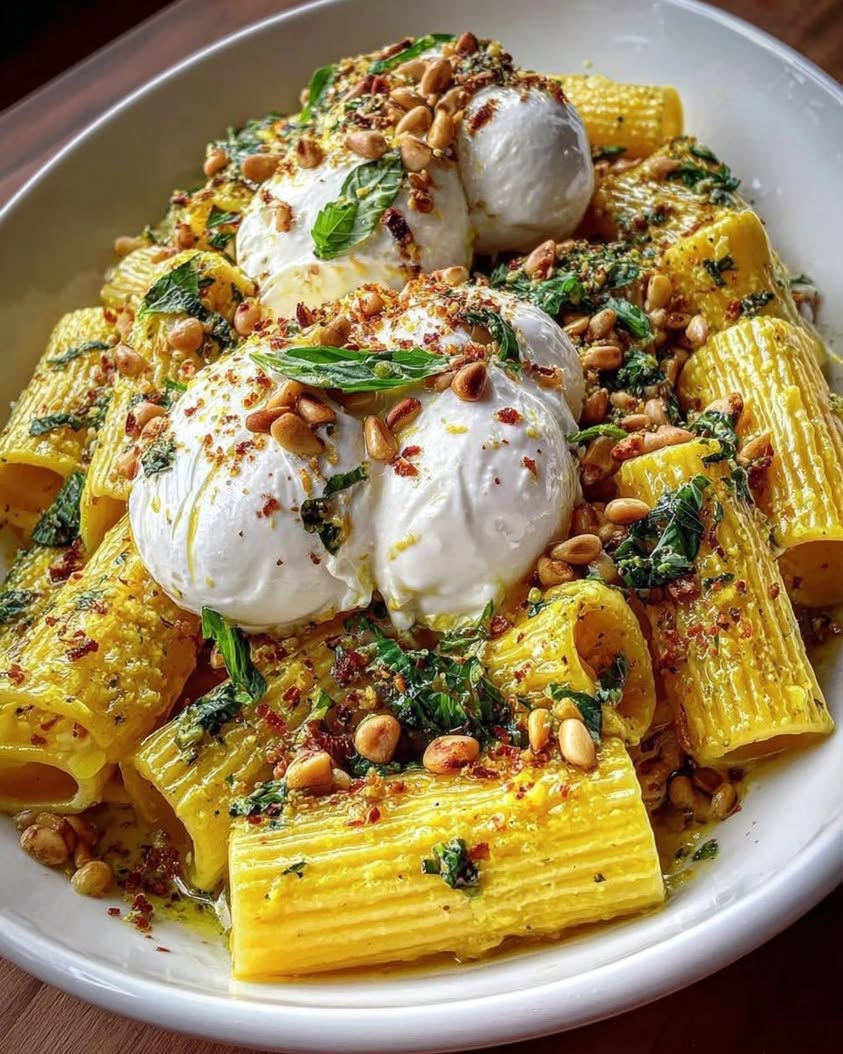
Ultimate Lemon Basil Rigatoni with Burrata and Pine Nuts Recipe: A Bright and Creamy Pasta Dish
Welcome to your new favorite weeknight dinner, the Ultimate Lemon Basil Rigatoni with Burrata and Pine Nuts Recipe. This dish brings together the bright, zesty flavor of fresh lemon with the aromatic sweetness of basil, all wrapped around perfectly cooked rigatoni pasta. The creamy, luxurious burrata cheese melts into the warm pasta, creating a silky sauce that coats every ridge and crevice. Toasted pine nuts add a delightful crunch and nutty depth, making each bite a perfect balance of textures and tastes that will transport you straight to a cozy Italian trattoria.
Moreover, this lemon basil rigatoni with burrata and roasted pine nuts recipe is surprisingly simple to prepare, making it an ideal choice for both busy weeknights and elegant dinner parties. The ingredient list is short and accessible, yet the combination yields a restaurant-quality meal that feels indulgent and special. Additionally, the preparation process takes only about 25 minutes from start to finish, which means you can have a gourmet dinner on the table without spending hours in the kitchen. Therefore, this recipe proves that incredible flavor does not require complicated techniques or a lengthy list of exotic ingredients, just quality components and a little love.
Consequently, this dish has quickly become a staple in many home kitchens because it satisfies a wide range of palates and preferences. The creamy burrata provides a milder alternative to traditional mozzarella, and its rich, buttery interior offers a decadent creaminess without needing a heavy cream sauce. As a result, the lemon and basil keep the overall flavor profile fresh and light, preventing the dish from feeling overly heavy or greasy. Furthermore, the roasted pine nuts introduce a warm, toasty element that beautifully complements the fresh herbs, adding a sophisticated touch that will impress your family and guests alike.
Quick Recipe Highlights
- Flavor Profile: This lemon basil rigatoni with burrata and roasted pine nuts recipe delivers a vibrant combination of bright, citrusy lemon zest and juice balanced by the sweet, peppery notes of fresh basil. The creamy, slightly tangy burrata mellows the acidity, while the pine nuts offer a warm, earthy richness that rounds out every single forkful.
- Texture: The sturdy, tube-shaped rigatoni provides a satisfying chewy bite with ridges perfectly designed to catch the creamy burrata and small pieces of basil. The exterior is silky and smooth from the melted cheese, while the interior maintains a pleasant al dente firmness. Toasted pine nuts contribute a delicate crunch that contrasts beautifully with the soft, velvety texture of the pasta and cheese.
- Aroma: As the pasta cooks, the air fills with the inviting scent of toasted pine nuts, which releases a buttery, nutty fragrance. When you add the fresh lemon zest and basil, bright, citrusy, and herbaceous aromas take over, promising a light yet flavorful meal. The final addition of burrata introduces a subtle, milky sweetness that makes the entire kitchen smell irresistible.
- Visual Appeal: This dish is a feast for the eyes, featuring vibrant green basil leaves scattered amongst al dente rigatoni and creamy white blobs of burrata. The golden, toasted pine nuts provide a warm contrast against the bright green and white, while a sprinkle of lemon zest adds tiny pops of sunny yellow. Overall, the presentation is fresh, colorful, and elegant, making it perfect for serving at a dinner party or a special family meal.
- Skill Level Needed: This recipe is wonderfully accessible for cooks of all levels, from beginners to experienced home chefs. The techniques involved are straightforward, such as boiling pasta, toasting nuts in a dry skillet, and roughly chopping herbs. Moreover, the assembly is simple, requiring you to toss hot pasta with the remaining ingredients, which allows the heat to melt the burrata naturally, creating a gorgeous sauce without any fuss.
- Special Equipment: You will need a large pot for boiling the pasta and a large skillet or sauté pan for toasting the pine nuts and combining the ingredients. Additionally, a good quality chef’s knife and cutting board are essential for mincing garlic and chopping basil. A citrus zester or fine grater is also helpful for easily removing the fragrant lemon zest without the bitter white pith.
Recipe Overview
- Difficulty Level: We rate this lemon basil rigatoni with burrata and roasted pine nuts recipe as easy because it involves minimal cooking skills and simple, foolproof steps. The entire process is forgiving, and there is very little that can go wrong. Even if you slightly overcook the pasta or use a little extra lemon, the dish will still taste delicious. Therefore, this is an excellent choice for novice cooks who want to create an impressive meal with confidence.
- Category: This versatile dish falls into several categories, including quick weeknight dinners, elegant first courses, and satisfying main courses. It works beautifully as a vegetarian main dish, providing plenty of protein and healthy fats from the burrata and pine nuts. Furthermore, it can be served as a side dish or a pasta course in a larger Italian-inspired feast, pairing wonderfully with grilled vegetables or a simple green salad.
- Cuisine: This recipe draws deeply from the traditions of Italian cuisine, particularly the regions of Southern Italy and Puglia, where burrata cheese originates. The combination of pasta with fresh herbs, citrus, and high-quality cheese is a hallmark of simple, rustic Italian cooking. Additionally, the practice of using minimal, high-quality ingredients to let natural flavors shine is a core principle of Italian culinary philosophy. Therefore, this dish is a wonderful representation of authentic, home-style Italian food.
- Cost: The ingredients for this recipe are generally affordable and accessible, with most items available at standard grocery stores. Rigatoni pasta is a budget-friendly staple, and fresh basil and lemons are inexpensive, especially in the summer months. Burrata is the most expensive component, but it costs less than premium imported cheeses. Pine nuts can be pricey, but a little goes a long way, so a small package will last for several recipes, making the overall cost quite reasonable.
- Season: While you can enjoy this lemon basil rigatoni with burrata and roasted pine nuts recipe year-round, it truly shines during the late spring and summer months. This is because fresh basil is at its peak flavor and abundance during this time, often available in home gardens or at farmers’ markets. Moreover, the bright, citrusy flavor profile is perfectly suited for warmer weather, offering a lighter alternative to heavy, tomato-based pasta sauces that are more comforting in the colder months.
- Occasion: This stunning dish is versatile enough for a range of occasions, from a quick and satisfying after-work dinner to a centerpiece for a festive weekend gathering. It is ideal for serving at al fresco summer dinners, birthday celebrations, or as a romantic meal for two. Its elegant appearance and delicious taste also make it an excellent choice to impress dinner party guests, as it looks and tastes like it came from a high-end restaurant, but is so simple to prepare at home.
Why You Will Love This Recipe
First and foremost, the taste and texture combination in this dish is simply divine. The creamy, luxurious burrata melts into a luscious sauce that clings perfectly to the ridged rigatoni, while the bright lemon and aromatic basil cut through the richness with fresh, vibrant notes. Therefore, every single bite offers a delightful contrast between the silky, soft cheese, the chewy, satisfying pasta, and the crunchy, toasted pine nuts, creating a truly unforgettable culinary experience. This is comfort food elevated to a new level of elegance.
Furthermore, the convenience and preparation benefits are undeniable, as this entire gourmet meal comes together in under thirty minutes. There is minimal chopping involved, the cooking process is straightforward, and you only need a few pots and pans to get the job done. Consequently, this recipe is perfect for busy individuals and families who want to enjoy a wholesome, homemade dinner without stress and without slaving over a hot stove for hours. It also makes for a fantastic last-minute meal when unexpected guests arrive, saving you time and energy.
Additionally, the nutritional advantages of this dish are noteworthy, as it offers a well-balanced profile that is both satisfying and nutritious. The burrata provides a good source of protein and calcium, while the pine nuts contribute healthy monounsaturated fats, vitamin E, and magnesium. Moreover, the fresh lemon and basil are packed with antioxidants and vitamin C, adding a boost of immune-supporting nutrients. This makes the recipe a smart choice for those seeking a delicious meal that aligns with a health-conscious lifestyle.
Furthermore, the social and entertaining value cannot be overstated, as this dish is guaranteed to impress your guests with minimal effort required. Its beautiful presentation, vibrant colors, and restaurant-quality flavor will make you look like a culinary star. Because it is served in a large bowl or on individual plates, it fosters a sense of sharing and community, making it a wonderful centerpiece for a dinner party or a family meal where everyone can help themselves to seconds and enjoy the company of one another.
Also, the cost-effectiveness and accessibility of the ingredients make this an easy, go-to recipe for anyone. All the components are readily available in most supermarkets throughout the United States, and most are pantry staples that you might already have on hand. The total cost is quite reasonable, especially when you consider the high-end result. Therefore, this recipe offers exceptional value, allowing you to create a special, decadent meal without breaking the bank or making a special trip to a specialty food store.
Historical Background and Cultural Significance
First, the origins of this recipe showcase the beauty of combining simple, regional ingredients that have a rich history in Italian cooking. The pasta, rigatoni, gets its name from the Italian word “rigato,” meaning “ridged,” which refers to the lines on its surface designed to hold sauce perfectly. Originating in central and southern Italy, rigatoni has been a beloved pasta shape for centuries, celebrated for its hearty size and ability to catch chunky sauces, small vegetables, and creamy cheese mixtures effectively.
Then, the burrata cheese, which is the star of this dish, carries a fascinating cultural significance from the Puglia region of Italy. Burrata, which means “buttery” in Italian, was created in the early 20th century as a way to use leftover mozzarella scraps. The outer shell is solid mozzarella, while the inside, known as stracciatella, is a soft, creamy mixture of shreds soaked in cream. This cheese is a testament to the Italian principle of making delicious food from humble beginnings, transforming waste into a treasured delicacy.
Furthermore, the evolution of this recipe reflects a broader trend in modern Italian cooking where chefs and home cooks began incorporating fresh, bright ingredients like lemon and basil into traditional creamy pasta dishes. While butter and cream were once the go-to for richness, the desire for lighter and more vibrant flavors led to the innovative use of fresh herbs and citrus. This evolution demonstrates the adaptability and creativity inherent in Italian culinary traditions, which honor tradition while embracing contemporary tastes and preferences.
Also, regional variations of this dish can be found throughout Italy, with each area adding its own local twist to the core combination of pasta, cheese, and herbs. In some regions, cooks might add cherry tomatoes or a pinch of red pepper flakes for a touch of heat, while others might use a different pasta shape like penne or fusilli. The use of pesto, a similar sauce made with basil and pine nuts, is also common in Liguria, showing the popularity of these ingredients across different Italian provinces and culinary landscapes.
Ingredient Deep Dive
First, let us examine the pasta itself, which is the hearty foundation of this meal. Rigatoni is a tube-shaped pasta that is larger than penne but smaller than ziti, and its ridges and wide opening are perfect for capturing chunky sauces and small pieces of cheese. The sturdy texture of rigatoni stands up well to robust sauces and holds its shape beautifully when tossed, making it an excellent choice for this particular recipe. Moreover, for optimal nutritional value, you can easily substitute whole wheat or legume-based rigatoni to add more fiber and protein to the dish.
Then, the burrata is the creamy heart of this recipe, bringing a luxurious texture and a mild, milky flavor that is both delicate and rich. When you cut into the soft outer shell, the creamy center spills out and mixes with the hot pasta to create an instant, silky sauce. For selecting the best burrata, look for a ball that feels slightly springy, not overly firm, and check that it is packed in brine to maintain its moisture. You should store burrata in the refrigerator and allow it to come to room temperature before serving for the best flavor and texture.
Furthermore, fresh lemon is an essential component that provides the bright, acidic pop that balances the rich cheese and nuts. The recipe uses both the zest and the juice of the lemon, capturing the fragrant, citrusy oils from the peel and the tart, tangy liquid from the flesh. For freshness, choose lemons that are firm, heavy for their size, and have a bright, smooth yellow skin. When shopping, always buy a couple extra so you can adjust the acidity to your preference, and store them at room temperature if you plan to use them within a week.
Also, the fresh basil leaves are irreplaceable in this dish, offering a sweet, aromatic, and slightly peppery flavor that is synonymous with summer. Basil belongs to the mint family and is a cornerstone of Mediterranean cuisine, often used in pesto, salads, and sauces. To select the freshest basil, look for vibrant green leaves without any dark spots or wilting edges. For storage, trim the stems and place the bunch in a glass of water like a bouquet, loosely covered with a plastic bag, and keep it on the counter or in the refrigerator, changing the water daily to extend its life.
Finally, the pine nuts, also known as pignoli, are the final key to achieving textural perfection and flavor depth. These small, tear-shaped seeds come from certain varieties of pine trees and have a rich, buttery, and slightly sweet taste that intensifies with toasting. They are a crucial ingredient in many Mediterranean dishes, most notably pesto alla genovese, and they add a wonderful crunch that contrasts with the creamy pasta. Pine nuts should be stored in an airtight container in the freezer, as they contain high levels of oil and can go rancid quickly at room temperature.
Common Mistakes to Avoid
- Overcooking the pasta until it is mushy and soft, losing the essential al dente texture. This common error ruins the dish since soft pasta won’t hold the sauce well, resulting in a gummy, unappealing bowl of food. Aim to cook the rigatoni until it is tender but still has a slight bite, and always reserve some pasta water to adjust the sauce consistency if needed.
- Burning the pine nuts by leaving them unattended on the stove, creating a bitter and unpleasant taste. Pine nuts have a high oil content and go from perfectly toasted to burnt in a matter of seconds, so constant vigilance is required. To avoid this mistake, keep the heat on medium-low, shake the pan frequently, and remove them from the skillet as soon as they turn a golden brown once they begin to emit a nutty aroma.
- Adding the lemon juice too early in the cooking process, which can cause it to lose its bright, fresh flavor and become bitter. The acidity of the lemon is most potent when it is added at the end, just before serving, so its vibrant character shines through. Therefore, you should toss the pasta with the zest during the mixing phase and reserve the juice to squeeze over the top just before serving.
- Forgetting to rinse the pasta after cooking, which allows excess starch to build up and make the sauce gummy. However, it is important to not rinse the pasta either, as we need some starch to help bind the sauce together. The trick is to not rinse the pasta and instead transfer it directly from the pot to the skillet using tongs, allowing a little bit of residual cooking water to carry over and help emulsify the sauce.
- Adding the basil leaves too early, causing them to wilt, turn dark, and lose their aromatic qualities. Fresh basil should be treated as a finishing ingredient, not a cooked one, so its delicate oils and flavors remain intact. Therefore, tear or chiffonade the basil leaves right before serving and toss them into the hot pasta only at the very end, reserving a few whole leaves for a beautiful garnish.
- Using dried basil instead of fresh, which results in a completely different, less vibrant, and slightly musty flavor profile. Dried herbs are a fine substitute in many dishes but they lack the bright, fresh, and peppery essence of fresh basil that is essential here. In this recipe, if you do not have fresh basil, it is better to use a small amount of fresh parsley or mint rather than dried herbs to maintain the dish’s freshness.
- Skipping the pasta water and letting the sauce become too dry when you combine the ingredients. The starchy water is a secret weapon of Italian cooking, as it acts as an emulsifier to create a silky, cohesive sauce that clings to the pasta beautifully. Consequently, you should always reserve at least one cup of the cooking water before draining, adding it a tablespoon at a time until you achieve the perfect sauce consistency for the dish.
- Using cold burrata straight from the refrigerator, which will not melt properly into the hot pasta and will remain cold and clumpy in the center. For a truly creamy and luxurious sauce, the burrata needs to be at room temperature or at least warmed slightly by tossing it with the hot pasta. Therefore, you should remove the burrata from the fridge about 20 minutes before you plan to assemble the dish, allowing it to come to room temperature for best results.
- Overloading the pasta with extra ingredients like tomatoes, chicken, or a heavy cream sauce, which overwhelms the delicate lemon basil flavor profile. This recipe is designed to be simple, and adding too many extra components will mask the beauty of the core ingredients. Instead, let the flavors of lemon, basil, burrata, and pine nuts be the stars, keeping any additions very light and minimal, such as a small handful of arugula for a peppery kick.
- Chopping the basil instead of tearing it, which can bruise the leaves and cause them to turn brown and weep their oils prematurely. Torn or chiffonade basil leaves release more of their aromatic oils than chopped leaves and present a prettier appearance. To chiffonade basil, simply stack a few leaves, roll them tightly, and slice them into thin ribbons with a sharp knife, rather than chopping, to protect the delicate structure.
Essential Techniques
First, the technique of cooking pasta to the perfect al dente texture is crucial for the success of this dish. You must use a large pot of generously salted, rapidly boiling water, as the pasta needs enough room to move around and cook evenly, while the salt seasons it from the inside out. Importantly, cook the rigatoni for one to two minutes less than the package instructions specify, as the pasta will continue to cook slightly when you toss it with the hot sauce and creamy burrata, ensuring it remains firm to the bite and holds its shape perfectly.
Then, the art of toasting pine nuts is a critical step to unlock their full, nutty potential and is easier than you might imagine. Yes, you can toast them in a dry skillet over medium-low heat, shaking the pan frequently so they brown evenly and do not burn. This dry-toasting method draws out the natural oils and yields a golden color and a rich aroma, which enhances the overall nutty flavor of the recipe. As a result, you should watch them carefully and remove them from the heat as soon as they are fragrant to avoid over-toasting.
Furthermore, zesting a lemon is a fundamental technique for capturing the flavorful citrus oils without the bitter white pith underneath. You should use a microplane or fine grater, running it lightly over the lemon’s surface in one direction, being careful not to press too hard and grate the pith, which imparts an unpleasant bitterness. This yellow outermost layer is packed with aromatic essential oils that will infuse the entire dish with an intense lemon fragrance, making it a crucial step for achieving that fresh flavor.
Also, making a rough chop of the fresh basil is essential for releasing its aromatic potential, rather than leaving large leaves intact. A quick and efficient way to do this is to stack the leaves, roll them into a tight cylinder, and slice crosswise to create thin ribbons, which is known as a chiffonade. These elegant ribbons are perfect for distributing evenly throughout the pasta and provide a more refined texture than large, unwieldy pieces, allowing its flavor to be present in most bites.
Pro Tips for Perfect Lemon Basil Rigatoni with Burrata and Pine Nuts Recipe
One of the most important tips is to save a cup of the starchy pasta water before you drain the rigatoni, as this is your secret weapon for a perfect sauce. The reserved water helps to loosen the sauce, making it silky and smooth, and it binds all the ingredients together perfectly. Therefore, do not forget this step, because the sauce can become clumpy or dry without the extra moisture to help emulsify it.
Furthermore, consider adding a pinch of red pepper flakes to the dish for a subtle kick of heat that can elevate the entire flavor profile. The gentle spiciness (optional, of course) pairs so beautifully with the creamy burrata and bright lemon, adding another layer of complexity to the dish. Start with just a pinch and add more to taste, so you do not overpower the fresh, delicate flavors of the basil and citrus that are central to this recipe.
Additionally, do not skip the step of letting the burrata come to room temperature before adding it to the hot pasta, as this is the best way to achieve a luxurious, creamy texture. A cold cheese will not emulsify properly, leaving lumps of cold cheese scattered throughout your dish instead of a smooth sauce. Through simple planning, you can ensure a perfect melt by taking the burrata out of the fridge when you begin boiling the water.
Moreover, you can make this dish your own by adding a handful of halved cherry tomatoes just before serving for an extra pop of sweetness and color. While the classic recipe is beautiful as is, the tomatoes provide a juicy, acidic burst that complements the lemon and basil wonderfully. Keep in mind that tomatoes are best added at the very end of cooking so they just get warmed through, retaining their texture and fresh, vibrant taste.
Variations and Adaptations
For regional variations, you can adapt this dish to suit other Italian culinary styles, adding sun-dried tomatoes for an intense, umami-rich flavor that is characteristic of Southern Italy. Alternatively, you can use a spicy Calabrian chili paste to infuse the dish with a fiery kick, a tradition from the Calabria region. Additionally, a sprinkle of crispy pancetta or guanciale would introduce a savory, salty element that reflects the cooking style of central Italy, making for a heartier version of the meal.
For seasonal adaptations, this lemon basil pasta can be adjusted to feature the best produce available at different times of the year. In the spring, you can add a generous handful of fresh peas or sautéed asparagus tips to introduce a sweet, earthy flavor and a pleasant crunch. In the fall or winter, you might swap the fresh basil for baby spinach or arugula, adding their hearty greens to the warm pasta, and you could also substitute roasted squash for a sweeter, more robust element.
For dietary modifications, this recipe is a fantastic base that can be tailored to various nutritional needs. To make it gluten-free, simply use a high-quality gluten-free rigatoni, which is now widely available and not compromising on texture. For a vegetarian version, the recipe is already vegetarian, and for a vegan adaptation, you can use a high-quality vegan burrata alternative or a tofu-based ricotta to achieve a similar creamy texture without the dairy. These adjustments ensure everyone can enjoy this dish.
For flavor variations, you can easily experiment with other fresh herbs to create a different yet equally satisfying taste profile. For instance, swapping the basil for fresh mint or parsley yields a more subtle, clean flavor, while adding a little oregano or thyme brings an earthy warmth to the dish. In addition, you can introduce other citrus fruits like lime or orange for a fun twist, using their zest and juice to provide a different aromatic character.
For texture modifications, you can play with different pasta shapes and added ingredients to change the mouthfeel. Using a textured pasta like fusilli or farfalle will create a different eating experience, while adding a crispy breadcrumb topping, made with panko, garlic, and olive oil, will provide a satisfying, crunchy finish. For a bit more protein, grilled chicken or sautéed shrimp can be added, turning this side dish into a heartier main course without altering the core flavors.
For presentation alternatives, you can serve this pasta in a large, rustic bowl for a family-style dinner, allowing guests to serve themselves. Alternatively, for a more formal dinner party, you could plate the pasta individually, twirling it into neat nests and topping each one with a generous piece of creamy burrata. This final step creates an elegant, restaurant-worthy presentation that is sure to impress and looks gorgeous, especially with a final drizzle of high-quality extra-virgin olive oil and a few basil leaves.
Serving and Presentation Guide
For plating techniques, you should aim to create a beautiful, inviting bowl of pasta that looks as good as it tastes, as we know we first eat with our eyes. Start by placing the dressed rigatoni in the center of a shallow bowl, using tongs to create a slight height and swirl. Afterward, gently tear the burrata with a spoon and place it on top, letting the creamy center begin to melt and cascade into the pasta. To finish, you will want to twirl the pasta slightly into a neat, elegant nest, which not only looks refined but also holds the sauce and cheese better.
For garnishing ideas, the final touches are what make this dish truly shine and should not be overlooked as an afterthought. A generous sprinkle of the toasted pine nuts over the top adds both crunch and visual interest, while a few fresh, whole basil leaves provide a pop of green. A final grating of lemon zest over the entire dish adds a burst of color and a potent aroma, and a drizzle of high-quality extra-virgin olive oil will add a glossy finish, making the dish look especially luxurious and inviting, inviting immediate family to dig in.
For traditional accompaniments, you can serve this pasta alongside a simple green salad dressed with a light vinaigrette to add a fresh, crisp contrast. Crusty Italian bread is also a classic addition, perfect for sopping up any leftover creamy sauce from the bottom of the bowl, ensuring no delicious drop is wasted. These simple sides allow the lemon basil rigatoni to take center stage, while rounding out the meal and making it feel substantial and complete for everyone.
For modern serving suggestions, you can get creative by serving the pasta in unique ways that add a contemporary twist to a classic dish. Consider serving smaller portions in individual mini skillets or beautiful ceramic ramekins for a charming, rustic presentation. You could also use a large, flat platter to spread the pasta out, allowing it to cool slightly and creating a more striking visual composition that is perfect for sharing among a group of friends or family.
For temperature considerations, this lemon basil rigatoni is best served hot and fresh, immediately after assembling, when it is at its most flavorful and creamy. At this point, the burrata has just begun to melt, the pasta is still al dente, and the basil is vibrant. The key is to not let the dish sit too long, as it will cool down and the cheese will solidify. Therefore, it is best to serve it right away, and since the dish comes together so quickly, that is always an easy option.
For portion control tips, a standard serving size for this dish is about two cups of cooked pasta, making it a filling yet balanced meal. This amount provides a good portion of carbohydrates for energy, along with healthy fats and protein from the cheese and nuts, which helps you feel satisfied. For a more modest portion or an appetizer, you can reduce the serving size to one cup and offer it as a starter course, which is perfect for formal dinners. Conversely, for large appetites, you can easily serve them a large, heaping portion, as this dish is light enough not to cause heaviness immediately.
Wine and Beverage Pairing
For wine pairings, a crisp, dry white wine is the perfect complement to the bright, citrusy flavors of this dish. A Pinot Grigio, with its light body and subtle notes of green apple and pear, works effortlessly and is the classic choice for such recipes. Alternatively, a Sauvignon Blanc from New Zealand or California offers zesty tropical and citrus notes that can beautifully echo the lemon and basil, making it a fantastic partner to this vegetarian pasta.
For non-alcoholic alternatives, a sparkling water with a generous squeeze of fresh lemon is the most refreshing and fitting choice. The effervescence helps cleanse the palate between bites of the rich, creamy burrata, just as a sparkling wine would in the traditional culture. A homemade lemonade or an iced tea with a hint of mint also makes for a lovely, thirst-quenching accompaniment that enhances the overall dining experience without overpowering the delicate flavors of the meal.
If you are open to a red wine, a light-bodied, low-tannin red like a Pinot Noir or a young Chianti can also be a surprising success with this dish. The fruity notes in the wine and its soft, silky texture work well with the creamy cheese. However, it is best to serve this red, unoaked, and slightly chilled, so that it can still be refreshing against the pasta, and so they do not overwhelm the more delicate, fresh components of this beautiful, green dish.
For those who enjoy cooking with wine, a splash of dry white wine in the skillet with the garlic would be a lovely addition. This technique can deglaze the pan, lifting up all the delicious browned bits and adding another layer of flavor to the sauce. Just be sure to use a wine you would also enjoy drinking from a glass, because the quality of the wine truly affects the overall taste of the food, as a general rule.
Storage and Shelf Life
First, for storage methods, you should place any leftover lemon basil rigatoni in an airtight container and store it in the refrigerator promptly after it cools down. The pasta is best eaten fresh, but leftovers can be enjoyed within 2 to 3 days if stored properly. Before storing, allow the pasta to cool completely to room temperature to prevent condensation, which can make it watery and soggy, and therefore you should always seal the container well to protect the flavor and texture.
Then, for temperature requirements, the cooked pasta should be chilled within two hours of cooking to prevent the growth of bacteria, and your refrigerator should be set at or below 40 degrees Fahrenheit. Keeping the pasta at a safe temperature is the number one rule of food safety, so be disciplined with the timeline. The creamy cheese sauce makes the dish perishable, so ensuring you promptly refrigerate it after you finish your meal is the best way to maintain its overall quality and safety.
Furthermore, for container recommendations, using a glass or BPA-free plastic container with a tight-fitting lid is the best choice for storing your leftovers. These containers do not easily absorb odors, and they prevent the pasta from drying out and absorbing weird flavors from other items in your fridge. Alternatively, you can use a zip-top bag, ensuring you squeeze out as much air as possible before sealing it, which helps to keep the pasta fresher for a few more days.
Also, for signs of spoilage, it is important to know when to throw your leftovers away to avoid a tummy ache. If you notice a sour, unappealing smell coming from the container, or if you see any visible mold growing on the pasta, it has gone bad. Additionally, a slimy texture or a change in color indicates spoilage, and you should discard the entire batch at that point, as consuming spoiled dairy and pasta can lead to foodborne illness.
For reheating instructions, you should add a splash of water or milk to the pasta to revive the sauce, as reheating can cause it to dry out, and then reheat in a skillet. Place the pasta in a pan over medium-low heat, add a splash of water, and toss it around until it is heated through thoroughly. You can also use a microwave with a damp paper towel over the bowl to help re-introduce some moisture, but the skillet method is better for preserving the texture by allowing the sauce to re-emulsify.
For freezing guidelines, you can freeze this pasta, but it is not recommended because the texture will change and the cream sauce may separate when thawed. If you must freeze it, do so for up to a month in an airtight container, but know the quality will not be the same. The dairy-based sauce is prone to becoming grainy and watery after defrosting, so it’s best to eat it fresh or within a few days of making.
Make Ahead Strategies
First, you can prep some of the individual components ahead of time to save valuable minutes on a busy day. For example, you can toast the pine nuts a day in advance and store them in an airtight container at room temperature. Similarly, you can zest and juice the lemons a day ahead and wash and dry the basil leaves, storing them wrapped in a paper towel in a container in the fridge, so they are ready to go.
Then, for storage between steps, it is best to store components separately rather than mixing everything together. The cooked pasta should be tossed with a tiny bit of olive oil to prevent sticking and then stored in a zip-top bag in the refrigerator, but the burrata should be kept in its brine for freshness. By keeping everything divided, you can assemble the dish quickly and fresh, without worrying about soggy basil or clumped pasta degrating the other ingredients.
Furthermore, for the quality impact assessment, you should note that prepping ingredients in advance will slightly alter their optimal flavor and texture. Basil can lose some of its vibrant color and will be less aromatic if chopped too far in advance, while toasted pine nuts can soften up. However, the time saved is valuable, and the final taste of the pasta will still be excellent, though not quite as Print
Lemon Basil Rigatoni with Burrata & Roasted Pine Nuts
- Total Time: 45 minutes
- Yield: 4
Description
Bright, creamy, and nutty — this elegant pasta dish combines zesty lemon, fresh basil, rich burrata, and toasted pine nuts for a restaurant-quality meal in under an hour.
Ingredients
- 12 oz rigatoni pasta
- 1/4 cup pine nuts
- 2 tbsp unsalted butter
- 2 cloves garlic, minced
- 1 tsp lemon zest
- 1/4 cup fresh lemon juice
- 1/2 cup heavy cream
- 1/2 cup grated Parmesan cheese
- 1/2 cup pasta water (reserved)
- 1 cup fresh basil leaves, roughly chopped
- 8 oz burrata cheese, torn
- Salt and black pepper to taste
Instructions
- Bring a large pot of salted water to a boil. Cook rigatoni according to package directions until al dente. Reserve 1/2 cup of pasta water, then drain.
- Meanwhile, in a dry skillet over medium heat, toast pine nuts until golden and fragrant, about 3-4 minutes. Set aside.
- In the same skillet, melt butter over medium heat. Add garlic and sauté for 1 minute until fragrant. Stir in lemon zest and lemon juice, then pour in heavy cream. Bring to a gentle simmer and cook for 2-3 minutes until slightly thickened.
- Reduce heat to low. Whisk in Parmesan cheese until melted and smooth. Season with salt and pepper to taste.
- Add the cooked rigatoni to the skillet, tossing to coat in the sauce. Add reserved pasta water as needed to reach a silky consistency.
- Remove from heat and gently fold in chopped basil and half of the toasted pine nuts.
- Serve immediately, topping each portion with torn burrata, remaining pine nuts, and extra basil leaves.
Notes
You can customize the seasonings to taste. For a lighter version, replace cream with half-and-half or use vegetable broth, and reduce Parmesan slightly.
- Prep Time: 15 minutes
- Cook Time: 30 minutes
- Method: Main
- Cuisine: Italian