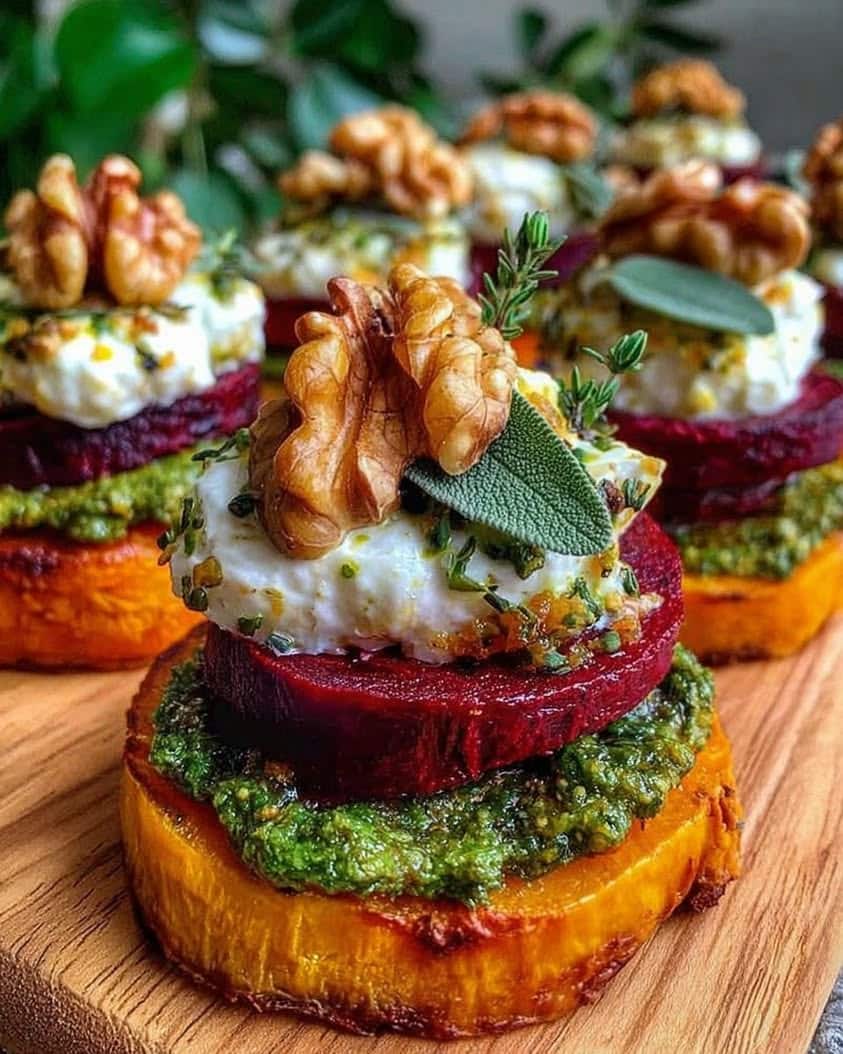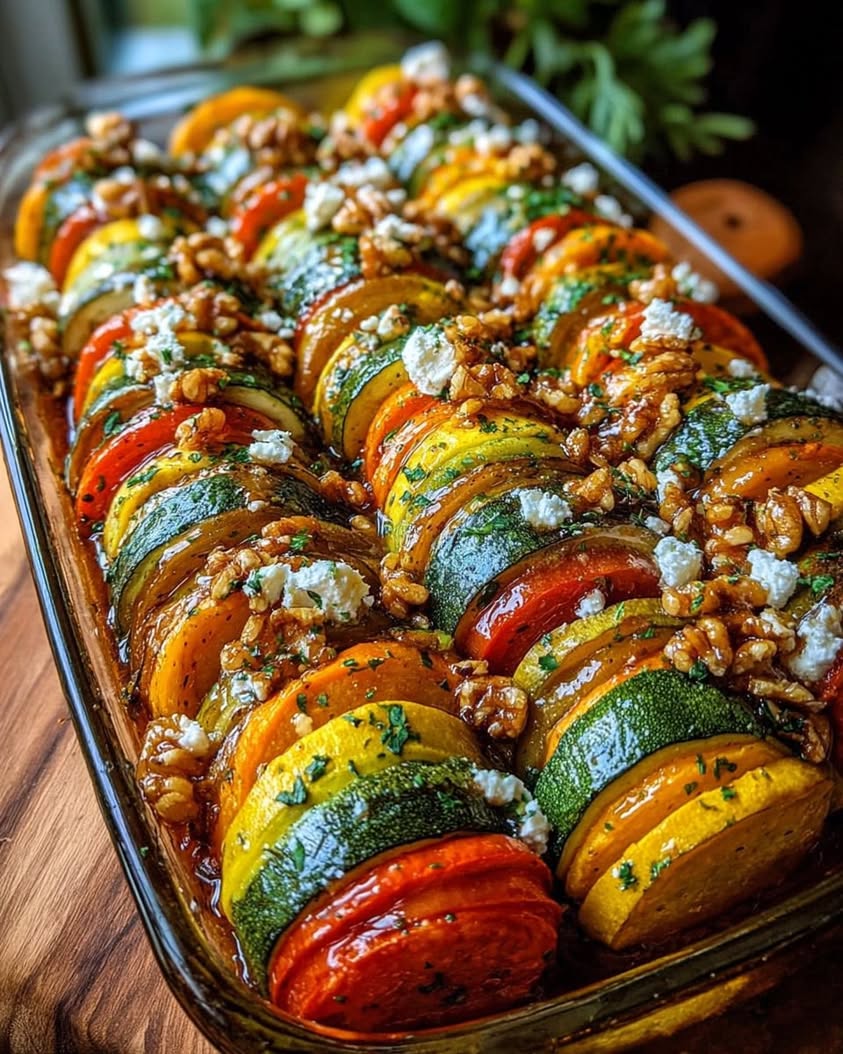
Layered Roasted Vegetable Bake with Sweet Potato, Zucchini, Tomato, Feta and Walnut Honey Glaze
This Layered Roasted Vegetable Bake with Sweet Potato, Zucchini, Tomato, Feta and Walnut Honey Glaze is the kind of dish that makes you look forward to dinner all day long. It is a stunning centerpiece that brings together earthy sweet potatoes, tender zucchini, juicy tomatoes, and salty feta cheese, all topped with a crunchy, sweet walnut honey glaze. The moment you pull this bake from the oven, the aroma fills your kitchen with a promise of something truly special. Each layer is roasted to perfection, creating a harmonious blend of textures and flavors that will impress your family and friends alike. This recipe is all about celebrating fresh produce and turning simple ingredients into a memorable meal.
What makes this vegetable bake so appealing is its incredible versatility and ease. You do not need to be a professional chef to create this beautiful dish. It is forgiving and adaptable, so you can swap in vegetables you have on hand. The process of layering the ingredients is straightforward, and the result looks like it came from a fine dining restaurant. The sweetness of the sweet potatoes and the honey glaze balances perfectly with the tangy feta and the acidity of the tomatoes. Whether you serve this as a hearty main course with a side salad or as a spectacular side dish for roasted chicken or fish, this roasted vegetable bake always delivers. It is comfort food that is both wholesome and exciting.
There is something deeply satisfying about a baked dish that is packed with layers of flavor. The sweet potato slices soften and caramelize as they roast, while the zucchini retains a slight bite. The feta cheese melts and browns in spots, creating salty pockets of goodness. And then there is the topping. The walnut honey glaze adds a delightful crunch and a floral sweetness that ties everything together. This is not just a vegetable side dish; it is the star of the show. You will find yourself reaching for seconds and thinking about the leftovers the next day. This Layered Roasted Vegetable Bake with Sweet Potato, Zucchini, Tomato, Feta and Walnut Honey Glaze is a celebration of simple, seasonal cooking at its best.
Quick Recipe Highlights
- Flavor Profile: This bake is a beautiful balance of savory, sweet, and tangy elements. You get the earthy sweetness from the sweet potatoes and honey glaze, which is perfectly countered by the salty, creamy feta cheese and the bright acidity of the roasted tomatoes. The zucchini adds a mild, grassy note that rounds out the profile.
- Texture: The contrast of textures is what makes this dish so addictive. The roasted sweet potatoes become soft and almost buttery, while the zucchini stays tender with a bit of resistance. The feta forms delicious browned crusts, and the walnut honey glaze provides a satisfying, crunchy topping that shatters as you take a bite.
- Aroma: As this bakes, your kitchen will fill with the warm, inviting scent of roasting vegetables and honey. The savory notes of garlic and oregano will mingle with the sweet, nutty aroma of walnuts and honey. It is an appetizing fragrance that promises a comforting and delicious meal.
- Visual Appeal: This is a visually stunning dish. The vibrant orange of the sweet potatoes, the deep green of the zucchini, and the bright red of the tomatoes create a beautiful mosaic. The white and golden brown feta crumbles add contrast, and the glossy walnut honey glaze on top makes it look like a work of art.
- Skill Level Needed: This recipe is perfect for confident beginners and intermediate home cooks. The techniques are basic, but the layering requires a bit of attention to create an even, attractive presentation. Anyone who can slice vegetables can master this dish.
- Special Equipment: You will need a sharp knife and a cutting board for slicing the vegetables. A 9×13 inch baking dish or a similarly sized gratin dish is ideal. A small skillet is needed for the glaze. No other specialized equipment is required.
Recipe Overview
- Difficulty Level: We rate this as a medium difficulty recipe. The technique of slicing vegetables to a uniform thickness is a basic skill that is easy to learn. The layering process is straightforward. The only mildly challenging part is ensuring the vegetables are roasted to the correct doneness without over-browning them. With clear instructions, you can easily achieve a fantastic result on your first try.
- Category: This dish fits perfectly as a vegetarian main course. It is substantial enough to be the center of a meal, especially when paired with a grain like quinoa or a crusty loaf of bread. It also excels as a side dish for roasted poultry, lamb, or fish, making it a versatile addition to any dinner table.
- Cuisine: This recipe draws inspiration from Mediterranean flavors. The combination of vegetables, feta cheese, and honey is a classic theme found in Greek and Turkish cuisines. The use of oregano and roasted vegetables is a hallmark of rustic, sun-drenched cooking from that region. It is a modern take on traditional ingredients.
- Cost: This is an economical and budget-friendly dish. Sweet potatoes, zucchini, and tomatoes are typically very affordable, and feta cheese is a cost-effective way to add a lot of flavor. Walnuts and honey are pantry staples for many. The total cost for this meal is quite low, especially when compared to the impressive results. You are paying for quality ingredients, not expensive cuts of meat.
- Season: This dish is best enjoyed in the late summer and early autumn. This is when zucchini and tomatoes are at their peak of flavor and abundance. Sweet potatoes are harvested in the fall, making this a perfect seasonal celebration. You can make it year-round with good quality produce, but it truly shines with garden-fresh ingredients.
- Occasion: This Layered Roasted Vegetable Bake is ideal for a relaxed family dinner or a more formal gathering. It is elegant enough for a holiday table or a dinner party, but simple enough for a Tuesday night. It is also a wonderful dish to bring to a potluck because it travels well and looks incredibly impressive when you set it down.
Why You Will Love This Recipe
The taste and texture of this baked dish are truly unforgettable. The combination of sweet, savory, tangy, and salty flavors is perfectly balanced. You get the creamy, soft texture of the roasted sweet potatoes alongside the tender zucchini. The burst of acidity from a tomato cuts through the richness. Then you will discover pockets of salty, browned feta cheese that add a complex, savory depth. The crowning achievement is the walnut honey glaze. It provides a sweet, sticky crunch that contrasts beautifully with the soft vegetables. Each forkful offers a different combination of these elements, making every bite a delightful new experience that your palate will love.
Beyond the flavor, this recipe offers incredible convenience and preparation benefits. The work is mostly in the slicing, which is a simple task. Once the vegetables are prepped, you simply layer them in a dish, drizzle with oil and seasonings, and let the oven do the work. This is a hands-off approach that gives you time to prepare other dishes or simply relax. There is no stirring, no watching the stovetop, and no complicated steps. It is a very forgiving recipe that is hard to mess up. This makes it a perfect choice for a busy weeknight when you want a wholesome meal without a lot of fuss or a stressful kitchen experience.
From a nutritional standpoint, this vegetable bake is a powerhouse of goodness. It is loaded with colorful vegetables that are rich in essential vitamins, minerals, and antioxidants. Sweet potatoes are an excellent source of vitamin A and fiber. Zucchini provides vitamin C and potassium. Tomatoes are packed with lycopene, a powerful antioxidant. Feta cheese adds protein and calcium, all while being lower in fat than many other cheeses. The walnuts in the glaze contribute healthy omega-3 fatty acids. This is a meal that nourishes your body and leaves you feeling satisfied and energized, not sluggish and weighed down. You can feel good about serving this to your family.
This recipe also excels in its social and entertaining value. When you bring this bake to the table, it is a conversation starter. The beautiful layers and glossy glaze create a stunning presentation that makes your guests feel special. It is a dish that looks far more complicated than it is, which will make you look like a star in the kitchen. It is perfect for serving a crowd because it is easy to scale up and holds its temperature well. Whether it is a holiday dinner or a casual get-together, this roasted vegetable bake provides a touch of elegance without a lot of stress. It is a meal that brings people together over good food and shared appreciation.
Finally, this recipe is wonderfully cost-effective and accessible. All of the ingredients are easy to find at any grocery store or farmers market. They are generally very affordable, especially when vegetables are in season. There are no exotic or expensive items on the list. This makes it a great choice for feeding a family on a budget without sacrificing quality or taste. The ingredients are also very versatile, meaning you can often use what you already have in your kitchen. You can substitute different vegetables or cheeses easily. This accessibility means you can make this impressive dish anytime you want, turning a simple weeknight dinner into a special occasion without breaking the bank.
Historical Background and Cultural Significance
The inspiration for this Layered Roasted Vegetable Bake with Sweet Potato, Zucchini, Tomato, Feta and Walnut Honey Glaze comes directly from the rich culinary traditions of the Mediterranean and the Middle East. The core technique of layering and roasting vegetables has been a staple of these cuisines for centuries. In Greek villages, trays of vegetables like eggplant, zucchini, and tomatoes are baked with olive oil and herbs. These rustic dishes, often called briam or tourlou, are simple, nourishing, and designed to make the most of a seasonal harvest. They are a testament to a food culture that values resourcefulness and the pure flavor of fresh produce.
The specific combination of salty feta cheese with sweet honey is a classic flavor pairing that appears across the region. You see it in Greek pastries like spanakopita or in the simple, elegant combination of baked feta drizzled with honey. The addition of walnuts to a sweet honey mixture is a technique deeply rooted in Greek and Turkish kitchens. Walnuts grow abundantly in the Mediterranean climate, and honey has been a cherished ingredient since ancient times. The combination creates a balance of flavors that is both ancient and timeless. This recipe honors that tradition by using this beloved pairing as a dramatic, crunchy topping for the vegetables.
Over time, this concept of a layered vegetable bake has spread and evolved as it has traveled across the globe. Chefs and home cooks have adapted it to use local ingredients and personal preferences. In the United States, we have embraced the sweet potato as a vegetable with a longer growing season and a natural sweetness that caramelizes beautifully when roasted. The substitution of sweet potatoes for more traditional Mediterranean roots like potatoes shows how a recipe can adapt to new environments while keeping its soul intact. This version with walnuts and honey adds a distinctively Greek touch to a very American staple.
Regional variations of this dish are endless and are a delight to explore. In Turkey, a similar dish might be called imam bayildi, which is a more specific preparation of eggplant. In Italy, you see a similar approach with a Parmigiana di Verdure, which often uses layers of fried or roasted vegetables and cheese. In the Provence region of France, a tian is a famous layered vegetable bake made with a stricter, overlapping pattern of sliced vegetables. Each culture puts its own stamp on the dish by using different spice blends, cheeses, or glazes. This Layered Roasted Vegetable Bake is a beautiful example of a global culinary idea, brought into focus with the specific and delicious ingredients of sweet potato, zucchini, feta, and a walnut honey glaze.
Ingredient Deep Dive
Sweet potatoes are the heart of this Vegetable Bake. They are a symbol of sustenance and comfort in many cuisines, particularly in the American South and parts of Africa and Asia. Their natural sweetness deepens and caramelizes with roasting, creating a rich, almost buttery texture. Nutritionally, they are a powerhouse of vitamin A, providing over 400 percent of your daily needs per serving. They are also high in fiber and potassium. When selecting sweet potatoes, look for ones that are firm, smooth, and free of bruises or soft spots. Smaller to medium sweet potatoes are often sweeter and easier to slice. Store them in a cool, dark, and dry place, but not in the refrigerator. If you cannot find sweet potatoes, you can substitute with regular potatoes, butternut squash, or parsnips for a different flavor profile.
Zucchini brings a tender, mild, and slightly sweet flavor to the bake. It is a summer squash that is incredibly versatile and is a staple in Mediterranean gardens. It is very low in calories but provides a good amount of vitamin C and potassium. The texture of zucchini is what makes it so valuable in this recipe. When roasted, it becomes tender but does not turn to mush if sliced thickly. Look for zucchini that are firm, glossy, and about 6 to 8 inches long. Smaller zucchini have fewer seeds and better flavor. Store them in a plastic bag in the refrigerator crisper drawer. Yellow squash is an excellent substitute if you want to add more color. You can also use eggplant, which has a similar texture when cooked.
Tomatoes add a crucial burst of acidity and sweetness. They are the backbone of so many cuisines, from Italian to Mexican to Mediterranean. Tomatoes are rich in lycopene, a powerful antioxidant that is better absorbed when the tomatoes are cooked. For this bake, Roma or plum tomatoes are a great choice because they have a lower water content and a denser flesh, which helps them hold up better during roasting. You want them to be ripe but still firm. Cherry tomatoes also work well, but you should use them whole or halved. Store tomatoes at room temperature until they are ripe, then you can refrigerate them for a few days. Sun-dried tomatoes are not a good substitute here, but you can use roasted red peppers from a jar for a different but pleasant flavor.
Feta cheese is the star of the salty, tangy flavor profile. It is a brined curd white cheese that is a hallmark of Greek cuisine. It adds a creamy, salty, and slightly tangy element that perfectly balances the sweetness of the honey and sweet potatoes. Feta is also lower in fat and calories than many other cheeses, and it provides a good amount of calcium. Look for feta that is stored in brine, which keeps it moist and flavorful. A block of feta is usually better than pre-crumbled, as it is more flavorful and creamy. You can substitute it with goat cheese for a similar tangy flavor, or with halloumi for a more firm, salty cheese that will not melt as much. For a vegan option, use a firm, crumbled tofu that has been marinated in lemon juice and salt.
Walnuts and honey form the magical glaze. Walnuts are a prized nut in many cultures, known for their richness and brain-boosting omega-3 fatty acids. They are a symbol of wisdom and fertility in some traditions. For this recipe, you will need raw walnut halves or pieces. Look for walnuts that smell fresh and nutty, not rancid. Store them in the refrigerator or freezer to maintain their freshness. Honey is a natural sweetener that has been used since ancient times. A good quality, local honey will have a more complex flavor. The honey in this glaze should be a runny, liquid variety. Maple syrup can be used as a substitute for a different kind of sweetness. The combination of walnuts and honey is not just a topping; it is a transformative element that adds crunch and sweetness.
Common Mistakes to Avoid
- Do not slice the vegetables into different thicknesses. This is a critical error. If some slices are much thicker than others, they will not cook evenly. You will end up with some crunchy pieces and some mushy ones. Take the time to slice everything to a uniform 1/4 inch thickness.
- Do not skip the initial seasoning and oiling of each vegetable layer. You might think that the glaze will provide enough flavor, but it is not enough. Each layer must be seasoned with salt, pepper, and herbs to build a deep, savory base for the dish. Do not be shy with the olive oil either.
- Do not crowd the baking dish too much. You want the vegetables to be in a single, even layer for the best roasting. If you pile them too high, they will steam instead of roast. This will prevent the caramelization and browning that gives the dish its rich flavor and appealing texture.
- Do not use a watery or overly ripe tomato. If your tomatoes are too soft and watery, they will release too much liquid into the dish. This will make the bottom of the bake soggy instead of allowing the vegetables to roast properly. Choose firm, dense Romas or cherry tomatoes.
- Do not burn the walnut honey glaze. The glaze goes on the top of the bake and needs to be added partway through the cooking time. If you add it too early, the honey will burn before the walnuts are toasted. Watch the bake closely in the final minutes to prevent the glaze from becoming bitter.
- Do not forget to let the bake rest before serving. The dish is incredibly hot straight from the oven. If you try to serve it immediately, the layers will fall apart and the oils will be too hot. A rest of 10 minutes allows the dish to set up, making it easier to serve and more pleasant to eat.
- Do not use low-fat or fat-free feta cheese. The full-fat version melts and browns much better, creating those delicious, salty, and creamy pockets of flavor. The low-fat version will often turn rubbery and crumbly, and it will not contribute the same richness to the dish.
- Do not prepare the glaze too far in advance. The honey can solidify or the walnuts can become soggy if the glaze sits for too long. Make the glaze while the bake is in the oven or just before you need to add it. This ensures it has the perfect texture for spreading.
- Do not be afraid to use a little garlic. A recipe that is too bland is a missed opportunity. Do not just add garlic to the oil; try tucking slivers of fresh garlic between the layers of vegetables. It will infuse the entire dish with a wonderful aromatic flavor.
- Do not skip checking the oven halfway through cooking. Ovens vary in temperature. It is a good practice to check on your bake after 25 to 30 minutes. You might need to rotate the dish or tent it with foil if the top is browning too quickly.
Essential Techniques
The most important technique for this Layered Roasted Vegetable Bake is achieving uniform slicing. This is crucial for even cooking. Vegetables that are all the same thickness will cook at the same rate. You want your sweet potatoes, zucchini, and tomatoes to be about a 1/4 inch thick. Using a sharp chef’s knife is the most efficient method. Alternatively, you can use a mandoline slicer, which is fantastic for absolute precision. If you use a mandoline, always use the safety guard to protect your fingers. The result is a professional-looking dish where every piece is cooked to the exact same tenderness. If your slices are inconsistent, you are setting yourself up for failure, so this is the one step you want to get right.
Another key technique is the layering method itself. You are not just dumping vegetables into a dish. You are creating an organized pattern that helps the dish cook evenly and look beautiful. Typically, you start with a layer of sweet potatoes because they need the most time to cook. Then you layer the zucchini, and then the tomatoes. As you arrange them, try to slightly overlap them in a shingle pattern. This creates a dense, cohesive bake. It also ensures that every bite has a bit of each vegetable. Do not just layer them in one pile. Spread them out evenly across the entire baking dish. This layered structure is what makes the dish both visually appealing and structurally sound when you serve it.
The technique of the walnut honey glaze is a small but vital step. You need to toast the walnuts first in a dry skillet. This is done over medium heat for just a few minutes until they are fragrant. Be careful not to burn them. Once you pour the honey over the nuts, you are creating a glossy, sticky coating. The honey will bubble and thicken slightly. This process is simple but transformative. The toasting of the nuts deepens their flavor, and the heat from the honey helps it soak into the nuts slightly. When you drizzle this over the vegetables halfway through the bake, you are not just adding a sweet topping. You are creating a crust that will become crunchy and caramelized in the oven, providing a stunning contrast to the soft vegetables.
Pro Tips for Perfect Layered Roasted Vegetable Bake
For the best results, do not be afraid to use a generous amount of olive oil. You will be seasoning each layer of vegetables. A light hand with the oil will make the vegetables dry out. A heavy hand will ensure they become tender, caramelized, and delicious. You want to see a little pool of oil in the bottom of the dish. It acts as both a cooking medium and a flavor carrier.
When you season, use a fine sea salt or kosher salt. It dissolves better and distributes more evenly than coarse salt. Sprinkle the salt from a height to ensure it covers the surface evenly. Do not forget the black pepper, which adds a gentle warmth. Freshly ground oregano is also a wonderful addition. Rub it between your palms over the dish to release its oils.
If you want to add more depth of flavor, you can add a sprinkling of red pepper flakes for some heat. The sweet and savory base of the dish works very well with a little bit of spice. You can also add some minced garlic or garlic powder to each layer. Do this with care, as raw garlic can be strong. Tucking whole garlic cloves between the layers is a nicer, milder approach.
Do not rush the roasting process. You want the vegetables to become very tender and for the top to be beautifully browned. The edges of the feta cheese should be golden. A good visual cue is when the sweet potatoes are easily pierced with a fork. If they are still firm, the bake needs more time. The glaze should be bubbly and the nuts should look deeply toasted.
For a cleaner presentation, you can carefully arrange the vegetables in neat, concentric circles. This is more time-consuming but looks very elegant for a dinner party. For a more rustic, family-style meal, you can simply arrange them in overlapping rows, which is faster and just as beautiful. Either way, the dish will be a showstopper.
If you are using a glass or ceramic baking dish, remember that it retains heat differently than metal. A metal pan will often produce a crispier bottom. A glass or ceramic dish is more gentle and is preferred for this recipe because it promotes even cooking without burning the bottom. Make sure your dish is of good quality and is heatproof up to 400 degrees Fahrenheit.
Finally, consider the temperature of your ingredients. If you have time, letting the sliced sweet potatoes sit in a bowl with a little salt for 15 minutes can draw out some moisture. This can help them roast crispier. However, this is not a necessary step for a tender bake. It is a pro tip for those who want a slightly more concentrated flavor in their sweet potatoes.
Variations and Adaptations
Regional variations on this baked vegetable dish are a wonderful way to explore global cuisines. For a Greek-inspired version, you can add some sliced red onion, bell peppers, and a generous amount of oregano and mint. The classic briam uses these ingredients and is often baked with a top layer of potato. For a French inspiration, try a tian. You will need to use a shallower dish and arrange your vegetable slices (sweet potato, zucchini, and tomato) in a very tight, upright spiral pattern. This creates a denser, more elegant presentation that is served alongside roasted meats.
Seasonal adaptations are incredibly easy with this recipe. In the spring, you can use asparagus and early green garlic along with the zucchini. In the fall, add some sliced fennel and a few chopped sage leaves. You can also swap the sweet potatoes for butternut squash or pumpkin. In the summer, when tomatoes are at their peak, you can use many different varieties. Try a mix of cherry tomatoes, yellow tomatoes, and heirloom slices for a more colorful and flavorful dish. The basic technique of layering and roasting is a template that welcomes seasonal produce.
Dietary modifications allow almost everyone to enjoy this dish. To make it vegan, simply omit the feta cheese and replace it with a crumbled, well-seasoned tofu or a vegan feta alternative. The dish is already gluten-free, which is a major plus for many people. For those on a low-carb or keto diet, you can substitute the sweet potatoes with more zucchini, cauliflower, or eggplant. You can also reduce the amount of honey in the glaze or replace it with a monk fruit sweetener, though this will change the final flavor and texture slightly. The recipe is very adaptable to different dietary needs.
Flavor variations can transform the bake into something entirely different. If you want a more Italian flavor, use a blend of fresh basil, oregano, and thyme. A sprinkle of parmesan cheese between the layers adds a salty, nutty flavor that is different from feta. For a Moroccan twist, season the vegetables with cumin, coriander, and cinnamon, and drizzle with a tahini and lemon dressing instead of the honey glaze. You can also add a layer of cooked lentils or chickpeas for a more substantial, protein-rich main course. The possibilities for flavor exploration are almost endless.
Texture modifications can adjust the dish to your preference. If you like a very soft, almost ratatouille-like consistency, you can roast the vegetables for a longer time at a slightly lower temperature, around 350 degrees Fahrenheit. If you prefer a firmer, more caramelized texture, use a higher temperature, around 400 degrees Fahrenheit, and do not cover the dish. You can also broil the dish for the last minute of cooking to get a very crispy, brown top on the cheese and glaze. Adding a layer of cooked farro or quinoa in the middle of the bake will add a wonderful chewy texture.
Presentation alternatives can make this dish feel entirely new. Instead of a large baking dish, you can make individual servings in small ramekins or gratin dishes. This is perfect for a dinner party, as each person gets their own beautifully layered portion. You can also serve this bake as a topping for a large, toasted piece of bread, creating a sort of bruschetta or tartine. For a more rustic look, you can serve it directly from the baking dish at the table, allowing everyone to scoop out their own portion. The dish is flexible enough to fit any presentation style you choose.
Serving and Presentation Guide
Plating this Layered Roasted Vegetable Bake is easier than you might think. The key is to use a large, flat serving spoon or a spatula to lift out portions. Gently insert the spoon under a portion and lift it out, trying to keep the layers intact. Place it in the center of a plate or a wide, shallow bowl. Do not try to move it too much after you have placed it. The layers will naturally want to hold together, and a gentle hand will yield a beautiful stack of vegetables.
Garnishing ideas can elevate the presentation from good to great. A sprinkle of fresh herbs is the most effective way to finish the dish. Chopped fresh parsley, mint, or basil adds a pop of green and a fresh flavor that contrasts with the roasted notes. A few extra crumbles of feta cheese on top can look very appealing. A light drizzle of olive oil or a balsamic reduction over the plate adds a touch of elegance and a hint of acidity. The garnishes should be simple and complementary, not overwhelming the main dish.
Traditional accompaniments for this dish often include a hearty grain. Couscous or quinoa are popular choices because they soak up the delicious juices from the bake. A simple green salad with a lemon vinaigrette is a classic pairing that provides a crisp, fresh contrast. Crusty bread is also a wonderful addition, perfect for sopping up the flavorful oil and honey glaze from the plate. For a more substantial meal, you can serve it alongside grilled lamb chops or a piece of roasted chicken.
Modern serving suggestions are all about simplicity and personalization. You can treat this bake as a deconstructed salad. Serve a large spoonful over a bed of arugula or mixed greens. The warmth of the vegetables will slightly wilt the greens, making a lovely warm salad. You can also serve it as a component of a grain bowl, with a base of farro, some roasted chickpeas, and a dollop of yogurt or tahini. The versatility of this dish makes it easy to build a modern, healthy, and satisfying meal around it.
Temperature considerations are very important. This dish is best served warm, not piping hot. Letting it rest for 10 minutes after it comes out of the oven allows the flavors to meld and the structure to set. If you serve it too hot, the oils will be too liquid and the layers will be unstable. It is also delicious at room temperature, which makes it a perfect dish for a picnic or a buffet. You can prepare it in advance and let it cool naturally. If you need to reheat it, do so gently in a warm oven to prevent the glaze from burning.
Portion control tips are helpful for serving this hearty dish. As a main course, one serving is roughly one-sixth of the 9×13 inch baking dish, which is a generous portion. As a side dish, you can expect to get 8 to 10 servings. It is a dense dish, so a little goes a long way. Using a kitchen scale can ensure even portions if you are serving a crowd. A good rule of thumb is to cut the bake in the pan into squares or rectangles before you start serving. This makes it much easier to lift out clean, consistent portions.
Wine and Beverage Pairing
Wine pairing for a vegetable bake like this is a joy because the flavors are so complex. A medium-bodied red wine is a fantastic choice. A Grenache or a Côtes du Rhône has notes of red fruit and spice that will complement the sweetness of the sweet potatoes and the tanginess of the tomatoes. The wine’s moderate tannins will not overpower the feta cheese. For white wine lovers, a rich, oaked Chardonnay works beautifully. The buttery notes of the wine will mirror the creamy texture of the roasted vegetables and the feta. A white wine with some weight is essential to stand up to the honey glaze.
Non-alcoholic alternatives are also very effective with this dish. A sparkling water with a splash of lemon or lime is a classic, refreshing choice. The bubbles help to cleanse the palate between bites. You can also try a good quality non-alcoholic beer, such as a wheat beer or a light lager. For a more sophisticated drink, consider a iced green tea with a hint of mint and a touch of honey. The grassy and floral notes of the tea will match the vegetables well. A chilled hibiscus tea, which has a tart and fruity flavor, is another excellent choice that mirrors the acidity of the dish.
If you are serving this baked vegetable dish for a brunch or a light lunch, a coffee or tea pairing is a lovely option. A strong, dark roast coffee can stand up to the richness of the feta and the honey glaze. The bitter notes of the coffee will contrast nicely with the sweetness. For tea, a chai latte is a wonderful choice. The warm spices of the chai, such as cinnamon and cardamom, echo the roasted flavors of the bake. A rooibos tea, with its naturally sweet and nutty flavor, is also an excellent and caffeine-free pairing that will not compete with the dish.
Temperature considerations are key when serving drinks. If you have a red wine, serve it slightly below room temperature, around 60 degrees Fahrenheit. A white wine should be well chilled. For non-alcoholic drinks, always serve them very cold. For a smooth or creamy pairing like a chai latte, a warm temperature is comforting. If you are having a picnic, this dish is excellent at room temperature, so a slightly warmer beverage, like a sparkling water that is not too cold, can be pleasant. The most important thing is that the beverage should not compete with the dish but should either complement or contrast it.
Serving suggestions for the beverage are simple. For a dinner party, you can offer a selection of two wines or one wine and a non-alcoholic option. Pour the wine into appropriate glasses. For non-alcoholic drinks, serve them in a tall glass with ice and a slice of citrus or a fresh herb sprig. If you are serving the bake as a main course, you can offer a carafe of water infused with cucumber and mint on the table. This is a light, fragrant addition that encourages everyone to stay hydrated and is a wonderful palate cleanser. The right beverage will elevate the entire dining experience.
Storage and Shelf Life
Proper storage methods are crucial for enjoying leftovers of this dish. Allow the bake to cool completely to room temperature. This is important because putting hot food in the refrigerator will raise the internal temperature of the fridge and can cause condensation, which will make the vegetables soggy. Once it is cool, transfer it to an airtight container. A glass container with a tight-fitting lid is ideal. You can also cover the baking dish tightly with plastic wrap or aluminum foil if it is the same size. Do not leave it out on the counter for more than two hours after cooking.
Temperature requirements for storage are straightforward. The bake must be stored in the refrigerator at or below 40 Print
Layered Roasted Vegetable Bake with Sweet Potato, Zucchini, Tomato, Feta & Walnut Honey Glaze
- Total Time: 45 minutes
- Yield: 4
Description
A hearty and flavorful layered vegetable bake featuring sweet potatoes, zucchini, and tomatoes, topped with creamy feta and a delightful walnut honey glaze.
Ingredients
- 2 large sweet potatoes, thinly sliced
- 2 zucchinis, thinly sliced
- 3 ripe tomatoes, sliced
- 1 cup crumbled feta cheese
- 1/2 cup chopped walnuts
- 3 tablespoons honey
- 2 tablespoons olive oil
- 1 teaspoon dried oregano
- Salt and pepper to taste
Instructions
- Preheat oven to 375°F (190°C).
- In a bowl, toss sweet potato slices with 1 tablespoon olive oil, oregano, salt, and pepper.
- Layer sweet potatoes in a greased baking dish.
- Add a layer of zucchini slices, then a layer of tomato slices.
- Sprinkle crumbled feta cheese evenly over the top.
- Bake for 25-30 minutes until vegetables are tender.
- In a small pan, combine walnuts, honey, and remaining olive oil. Cook over medium heat for 2-3 minutes until walnuts are coated and fragrant.
- Drizzle walnut honey glaze over the baked dish.
- Serve warm.
Notes
You can customize the seasonings to taste. For a vegan version, omit feta and use maple syrup instead of honey.
- Prep Time: 15 minutes
- Cook Time: 30 minutes
- Method: Main
- Cuisine: Mediterranean