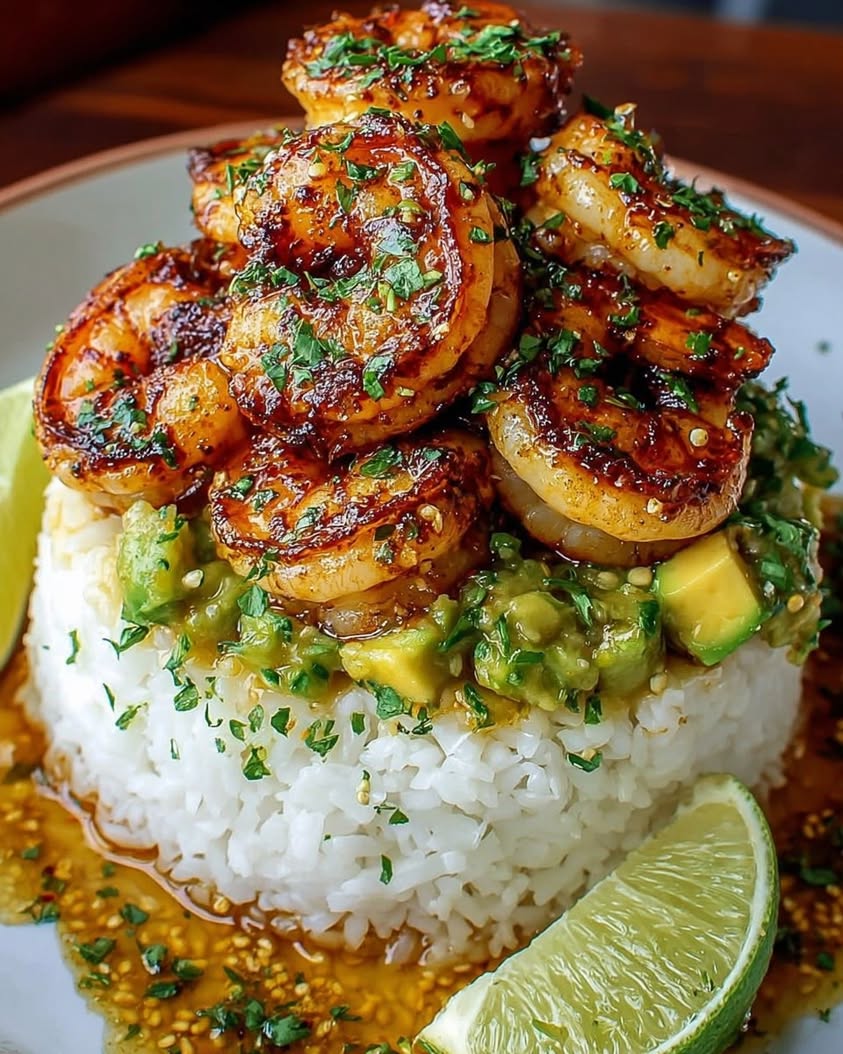
The Perfect Honey Lime Shrimp and Avocado Rice Stack: A Fresh and Flavorful Meal
Are you ready to elevate your dinner game with a dish that delivers both stunning presentation and incredible flavor? The Honey Lime Shrimp and Avocado Rice Stack is exactly what you need. This recipe combines succulent shrimp glazed with a sweet and tangy honey lime sauce, creamy avocado, and perfectly seasoned rice, all stacked high for a visually impressive meal. You will love how quickly it comes together, making it perfect for busy weeknights or a special weekend dinner. The bright, citrusy notes from the lime beautifully complement the natural sweetness of the honey, creating a balanced sauce that coats every piece of shrimp.
What makes this Honey Lime Shrimp and Avocado Rice Stack so special is the delightful contrast of textures and temperatures. The warm, juicy shrimp sit atop cool, velvety avocado slices, which rest on a bed of fluffy, slightly warm rice. A final drizzle of extra honey lime sauce and a sprinkle of fresh cilantro tie everything together. You do not need to be a professional chef to create this restaurant-quality dish. With a few simple ingredients and straightforward steps, you can bring the vibrant flavors of coastal cuisine right into your own kitchen. This meal is not just food it is an experience that will impress your family and friends.
We also appreciate how adaptable this recipe is for different dietary needs. You can easily swap the rice for quinoa or cauliflower rice to lower the carbs, and the shrimp provides a lean source of protein. The healthy fats from the avocado add richness and keep you feeling satisfied. Whether you are looking for a quick lunch, a light dinner, or a dish to serve at your next gathering, this Honey Lime Shrimp and Avocado Rice Stack checks every box. Get ready to see how simple ingredients can create something truly memorable. Let us dive into the details so you can make this perfect stack tonight.
Quick Recipe Highlights
- Flavor Profile: You will experience a wonderful balance of sweet honey, zesty lime, and savory garlic. The shrimp absorb these flavors beautifully, while the avocado adds a mild, buttery note. A touch of chili or red pepper flakes can add a subtle heat if you desire.
- Texture: The texture journey is a highlight of this dish. You get the satisfying snap of perfectly cooked shrimp, the creamy smoothness of ripe avocado, and the fluffy, slightly firm grains of seasoned rice. Every bite offers a new sensation.
- Aroma: The kitchen will fill with the incredible aroma of garlic and shallots sizzling in butter, followed by the sweet and citrusy scent of honey and lime. Fresh cilantro adds a final, clean herbal note that is simply irresistible.
- Visual Appeal: This stack is a feast for the eyes. You will see vibrant pink shrimp, pale green avocado, white rice, and bright green cilantro arranged in neat, vertical layers. The contrast of colors and heights makes for an impressive plate.
- Skill Level Needed: This recipe is ideal for beginners and experienced cooks alike. The techniques are fundamental, including sautéing shrimp and assembling a simple stack. You do not need any advanced culinary skills to achieve a beautiful result.
- Special Equipment: You will need a medium skillet for cooking the shrimp and a small bowl for mixing the sauce. For the stack, a simple ring mold or a clean tuna can with both ends removed will help you shape the rice and layers perfectly.
Recipe Overview
- Difficulty Level: We rate this recipe as Easy because it uses straightforward cooking methods and requires minimal active time. The ingredients are easy to find and the assembly is intuitive. Even if you rarely cook, you can master this Honey Lime Shrimp and Avocado Rice Stack on your first try.
- Category: This dish fits perfectly into the main course category for dinner. It works wonderfully as a light lunch or a hearty appetizer if you make smaller stacks. You can also serve it as part of a larger spread for a fiesta or summer barbecue.
- Cuisine: The flavor profile draws inspiration from Latin American and coastal cuisine, where fresh seafood and citrus are staples. The use of honey, lime, and avocado is classic, while the rice base provides a satisfying foundation. It feels both familiar and exciting.
- Cost: The overall cost is moderate and budget-friendly. Shrimp can be purchased frozen for a better price, and avocados are affordable when in season. The other ingredients like rice, honey, and lime are pantry staples that you likely already have.
- Season: This recipe is truly perfect for spring and summer when avocados are at their peak and you crave bright, refreshing flavors. However, because the ingredients are available year-round, you can enjoy it anytime you need a taste of sunshine.
- Occasion: Use this recipe for a quick weeknight dinner, a romantic date night at home, or as a show-stopping dish at a casual get-together. It is also excellent for meal prep because you can cook the components ahead and assemble them later.
Why You Will Love This Recipe
The taste and texture combination in this Honey Lime Shrimp and Avocado Rice Stack is simply addictive. Imagine biting through a plump, juicy shrimp that is coated in a sticky, sweet-tangy glaze. Immediately after, you get the cool, smooth creaminess of the avocado, which cuts through the sweetness perfectly. The warm rice underneath soaks up any extra sauce, ensuring no flavor goes to waste. This symphony of tastes and textures makes every single bite exciting. You will find yourself looking forward to the next forkful before you have even finished the first one. It is a balanced dish that satisfies every craving at once.
Convenience is a major win with this recipe. From start to finish, you can have this meal on the table in under 40 minutes. The prep work is minimal, involving just dicing a shallot, juicing a lime, and slicing an avocado. While the rice cooks, you can quickly prepare the sauce and cook the shrimp. Assembly takes only a minute or two per plate. Cleanup is also a breeze because you only use one skillet and a few bowls. This recipe proves that you do not have to spend hours in the kitchen to create something that looks and tastes like it came from a professional kitchen.
Nutritionally, this dish is a powerhouse. Shrimp provides a lean source of high-quality protein, which is essential for muscle repair and keeping you full. Avocados are loaded with heart-healthy monounsaturated fats and fiber, which help with satiety and nutrient absorption. The rice offers complex carbohydrates for sustained energy. A squeeze of fresh lime adds a boost of vitamin C. This combination makes for a well-rounded meal that supports your health goals without feeling restrictive. You can feel good about serving this to your family because it is delicious and genuinely good for you.
From an entertaining perspective, this recipe shines because of its visual impact. When you plate a perfectly stacked tower of shrimp, avocado, and rice, your guests will be genuinely impressed. It looks like you spent a lot more time on it than you actually did. Because you can prepare the components ahead of time, you can spend more time with your guests and less time in the kitchen. Simply cook the shrimp and rice, store them separately, and assemble the stacks right before serving. This makes it an ideal choice for dinner parties or holiday gatherings where you want to make a statement without the stress.
Finally, this recipe is incredibly cost-effective and uses ingredients that are widely available. Shrimp is often sold in bulk at a reasonable price, especially if you buy frozen. Avocados are a great value when they are in season, and rice is one of the most affordable pantry staples. The sauce uses just a few common ingredients like honey, lime, and garlic. You do not need any exotic or expensive items to create this elevated dish. This accessibility means you can enjoy a taste of luxury any night of the week without breaking your budget. It is a smart choice for anyone looking to eat well on a reasonable budget.
Historical Background and Cultural Significance
The combination of seafood and citrus is a tradition that spans many cultures and centuries. Coastal communities around the world have always used acidic fruits like lime and lemon to brighten and preserve fresh fish and shellfish. In Latin America, particularly in countries like Mexico and Peru, lime is a cornerstone of the cuisine. The practice of marinating or glazing shrimp with citrus has deep roots, providing a way to enhance flavor without heavy sauces. This recipe honors that tradition by using fresh lime juice as a primary flavor component, creating a connection to these vibrant culinary histories.
Avocado holds a special place in Mesoamerican culture, having been cultivated for thousands of years. The ancient Aztecs and Mayans prized the fruit for its rich flavor and nutritional value. Today, avocado is a global phenomenon, loved for its creamy texture and versatility. In this Honey Lime Shrimp and Avocado Rice Stack, the avocado serves a dual purpose. It provides a cooling contrast to the warm shrimp and adds a layer of healthy indulgence. Including avocado in this dish pays homage to its long history as a cornerstone of Latin American cooking, bringing authenticity to every bite.
The evolution of stacking food into neat towers became popular in modern fine dining, a technique often associated with nouvelle cuisine in the 1970s and 1980s. Chefs began using ring molds to create height and structure on the plate, turning simple ingredients into artful presentations. This recipe takes that high-concept technique and makes it accessible to home cooks. We are not creating a fussy, complicated dish. We are using a simple tool to elevate a humble combination of ingredients into something that feels special and celebratory. It shows how culinary trends can be adapted for everyday cooking.
Regional variations of this type of dish are endless. In the Caribbean, you might find a version with coconut rice and mango salsa. In the southern United States, shrimp and grits offer a similar contrast of textures. In Southeast Asia, a similar dish might feature fish sauce and cilantro. Our version with honey and lime represents a fusion of these ideas, focusing on balance and freshness. We have chosen ingredients that are easy to source and flavors that are universally appealing. This recipe is a testament to how a simple, well-executed idea can travel across cultures and adapt to local tastes, becoming a new classic in your home.
Ingredient Deep Dive
Shrimp. Shrimp is a beloved seafood choice worldwide, valued for its sweet flavor and quick cooking time. Culturally, it features prominently in coastal cuisines from Creole to Thai. Nutritionally, it is an excellent source of lean protein, selenium, and vitamin B12, while being low in calories and fat. To select the best shrimp, look for ones that smell like the ocean, not fishy. Fresh shrimp should have firm flesh and a slightly translucent appearance. For storage, keep them in the coldest part of your refrigerator and use them within two days. If using frozen, thaw them overnight in the fridge or under cold running water. Substitution options include chicken, tofu, or scallops if you need a different protein.
Avocado. The avocado has a rich history dating back to ancient Central America, where it was considered a fertility fruit. It is packed with monounsaturated fats, which are heart-healthy, along with fiber, potassium, and vitamins K, C, and E. When selecting an avocado, choose one that yields slightly to gentle pressure but is not mushy. The stem nub should pop off easily to reveal green underneath. To store a whole avocado, keep it at room temperature until ripe, then move it to the refrigerator. Once cut, keep the pit in the unused portion and squeeze lime juice over it to prevent browning. You can substitute it with mango for a sweeter profile or with a poached egg for a different creamy texture.
Honey. Honey has been used for thousands of years as a natural sweetener and medicine. Different varieties, like clover or orange blossom, offer subtle flavor differences that can change the final dish. Nutritionally, honey provides antioxidants and has antibacterial properties, though it is still a form of sugar. For selection, look for raw, unfiltered honey for the most complex flavor. Store it in a cool, dark place, and if it crystallizes, simply warm the jar in a bowl of hot water. You can substitute honey with maple syrup for a different sweetness or with agave nectar for a milder taste, though the flavor profile will shift slightly.
Lime. Limes are a staple in many world cuisines, particularly in Latin America and Southeast Asia. They add acidity that balances sweetness and richness. Limes are an excellent source of vitamin C and flavonoids. For the best flavor, choose limes that are heavy for their size and have a glossy skin. Roll them on the counter before juicing to extract the most juice. Store limes in the refrigerator for up to two weeks. If you cannot find limes, you can substitute lemon or even a splash of white wine vinegar for acidity, though the flavor will be different. Fresh lime juice is always superior to bottled for its bright, clean taste.
Rice. Rice is a staple food for more than half of the world’s population, with origins in Asia. It provides a neutral base that absorbs other flavors well. Nutritionally, rice provides carbohydrates for energy and some B vitamins. For this stack, we recommend a medium-grain rice like jasmine or basmati for its fluffy texture and mild fragrance. To store uncooked rice, keep it in an airtight container in a cool, dark place. Cooked rice should be refrigerated and used within four days. You can substitute sushi rice for a stickier texture that holds the stack together better, or use brown rice for more fiber. Cauliflower rice is a great low-carb alternative.
Shallot. Shallots are a member of the allium family, with a milder, sweeter flavor than onions. They have been cultivated for centuries in Europe and Asia. They provide a subtle savory base for the sauce. Nutritionally, they contain antioxidants and sulfur compounds. When selecting shallots, choose ones that are firm with papery skin and no soft spots. Store them in a cool, dry, well-ventilated area. A small yellow onion or leek can serve as a suitable substitute, though the flavor will be a bit stronger. You should always mince shallots finely so they blend seamlessly into the sauce without being overpowering.
Cilantro. Cilantro, also known as coriander leaves, is a divisive herb with a bright, citrusy flavor. It is essential in many Mexican, Indian, and Middle Eastern dishes. It is a good source of vitamins A, C, and K. To select cilantro, look for vibrant green leaves with no yellowing or wilting. Store it by trimming the stems and placing them in a glass of water, covering the leaves with a plastic bag, and refrigerating. It will last about a week this way. If you are one of the people who dislikes cilantro due to a genetic sensitivity, you can substitute flat-leaf parsley or fresh mint for a different, but still fresh, herbal note.
Common Mistakes to Avoid
- Overcooking the shrimp is the most common error. Shrimp cook very quickly, often in just two to three minutes per side. Since they become tough and rubbery when overdone, watch for them to turn pink and curl into a loose C shape, then remove them from the heat immediately.
- Using an underripe avocado will ruin the texture of your stack. A hard avocado will not be creamy and may even be bitter. You should test the avocado by gently pressing the skin; it should yield slightly without feeling mushy.
- Skipping the step of rinsing the rice can make your stack gummy. Rinsing removes excess starch, which leads to fluffier, separate grains. You should rinse the rice in a fine-mesh sieve under cold water until the water runs clear.
- Making the sauce too thin will prevent it from coating the shrimp properly. You should simmer the honey lime mixture for a minute or two to allow it to reduce and thicken slightly, which helps the glaze stick to the shrimp.
- Using too much oil in the pan can make the shrimp greasy. You only need a small amount of oil or butter to cook the shrimp. Excess oil will also make the stack feel heavy and unappealing.
- Forgetting to season the rice well will result in a bland base. Plain rice can taste very neutral. You should cook the rice in broth or add salt, a little butter, and some lime zest to give it flavor.
- Assembling the stack too early can make it fall apart. If you let the components sit for too long, the rice can dry out, and the avocado can brown. Assemble the stacks just before you plan to serve them.
- Cutting the avocado too thick or too thin can cause problems. Thin slices may not support the weight of the shrimp, while thick slices can make the stack unstable. Aim for slices that are about a quarter-inch thick for the best structure.
- Overcrowding the pan when cooking the shrimp is a mistake. If you add too many shrimp at once, the pan temperature drops and the shrimp steam instead of sear. You should cook them in a single layer, in batches if necessary.
- Not patting the shrimp dry before cooking prevents a good sear. Moisture on the surface of the shrimp creates steam, which interferes with browning. You should use paper towels to pat the shrimp completely dry before seasoning them.
Essential Techniques
How to Cook Shrimp Perfectly. Mastering the art of cooking shrimp is critical for this recipe. The process starts with properly thawed and dried shrimp. You will heat a skillet over medium-high heat and add a small amount of butter or oil. Once the fat shimmers, add the shrimp in a single layer. The key is to let them sear undisturbed for about two minutes. You will see the bottom edges turn pink and opaque. Flip them over and cook for another minute or two, just until they are fully pink and curled. A common pitfall is moving them around too much, which prevents browning. The visual cue for success is a golden-brown sear on the outside and a juicy, slightly translucent interior that is no longer opaque.
How to Make a Perfect Honey Lime Sauce. This sauce is the heart of the dish, and the technique is simple but important. You will start by sautéing minced shallot and garlic in a little butter until they are soft and fragrant, which takes about one minute. Then, you will add the honey, fresh lime juice, and a pinch of salt. The key is to whisk the mixture constantly as it heats. You should let it simmer gently for a minute or two until it thickens slightly and becomes syrupy. A common mistake is to let it boil too vigorously, which can burn the honey and make it bitter. The visual cue for success is a sauce that coats the back of a spoon and glistens with a smooth, amber color.
How to Assemble a Stable Rice Stack. Building a stack that holds its shape is all about your technique with the rice. First, you need to season the cooked rice and let it cool slightly so it is warm but not steaming hot. Place your ring mold on the serving plate. Use a spoon to add a layer of rice, pressing it down gently but firmly with the back of the spoon or a small glass. Then, you will add a layer of avocado slices in a neat, overlapping pattern. Finally, top with the glazed shrimp. Use a spoon to gently press down the layers again to ensure they are compact. The final step is to lift the ring mold straight up slowly and steadily. A common pitfall is rushing this lift, which can cause the stack to topple. The visual cue for success is a clean, tall, and stable tower with clearly defined layers.
How to Slice an Avocado for Stacks. Slicing an avocado properly ensures you get perfect, uniform pieces that are easy to layer. Start by cutting the avocado lengthwise around the pit. Twist the two halves to separate them. Remove the pit by tapping it with the blade of your knife and twisting gently. Next, you will slice the avocado while it is still in the skin. Use a paring knife to make even, lengthwise slices, cutting down to the skin but not through it. Finally, use a large spoon to scoop the slices out in one piece. A common mistake is trying to slice the avocado after removing it from the skin, which can result in uneven, mashed pieces. The visual cue for success is a fan of uniform, intact slices that are about a quarter-inch thick.
Pro Tips for Perfect Honey Lime Shrimp and Avocado Rice Stack
For the best flavor, try toasting your rice in a dry pan before cooking it. This simple step adds a nutty depth that complements the sweet and tangy shrimp beautifully. You can also cook the rice in chicken or vegetable broth instead of water to infuse it with even more savory flavor. Always taste the broth and adjust the salt level before adding the rice.
Do not discard the juice from the cooked shrimp pan. After you remove the shrimp, there will be delicious browned bits stuck to the bottom of the skillet. Add a splash of water or extra lime juice to deglaze the pan and scrape up those flavorful bits. You can then pour this pan sauce over the finished stacks for an extra flavor boost that tastes like you spent hours on it.
Consider using a small cookie scoop or a measuring cup to portion your rice. This guarantees that each stack will be the same size and shape, leading to a more polished and professional presentation. Uniformity is key when you are stacking multiple servings, as it makes the entire meal look more intentional and appealing on the table.
To prevent the avocado from sliding around, create a small well in the center of the rice layer. Use the back of a spoon to gently press a shallow indent in the rice before you add the avocado. This gives the avocado slices a place to settle, which helps anchor the stack and prevents it from shifting when you add the shrimp on top.
If you are making this dish for a crowd, you can keep the components warm separately. The rice can stay warm in a covered pot. The shrimp can be kept warm on a plate in a low oven. When you are ready to serve, simply assemble the stacks quickly. This approach allows you to present a hot, fresh dish to everyone at the same time without any last-minute rush.
Experiment with different types of honey to change the flavor profile. A dark, robust honey like buckwheat honey will give a deeper, more molasses-like flavor, while a light, floral honey like orange blossom will keep the dish brighter. Each honey variety will bring its own unique nuance to the final glaze, so feel free to try what you have on hand.
For a little extra texture, add a sprinkle of toasted sesame seeds or crushed peanuts on top of the final stack. This adds a pleasant crunch that contrasts with the creamy avocado and soft shrimp. The nuttiness also pairs wonderfully with the honey lime glaze, adding another layer of complexity to the dish.
Do not be afraid to double the sauce recipe. You will be glad you have extra to drizzle over the finished stacks or to serve on the side for dipping. The sauce is so delicious that you will want every last drop. A little extra sauce also helps to moisten the rice and keep the whole dish from feeling too dry.
Variations and Adaptations
You can explore regional variations by using different types of rice. For a Latin-inspired version, try using cilantro-lime rice, which you can make by stirring fresh lime juice, zest, and chopped cilantro into the cooked rice. For an Asian twist, use jasmine rice and add a splash of soy sauce and sesame oil to the cooking water. The base of this recipe is so versatile that you can adapt the rice to fit any flavor profile you are craving.
Seasonal adaptations are easy with this recipe. In the summer, you can add fresh corn kernels or diced mango to the stack for sweetness and crunch. In the fall, try substituting the avocado with roasted butternut squash or sweet potato slices for a warmer, earthier flavor. These seasonal swaps keep the dish exciting and let you take advantage of the freshest produce available throughout the year.
Dietary modifications work beautifully here. To make this dish gluten-free, use tamari or coconut aminos if you are adding soy sauce to the rice, and ensure your other ingredients are certified gluten-free. For a dairy-free version, simply use a high-quality olive oil or avocado oil instead of butter when cooking the shrimp and shallots. You can also use a vegan butter substitute if you prefer a richer flavor.
Consider flavor variations by adding different herbs and spices. You can add a pinch of smoked paprika to the shrimp seasoning for a smoky depth. A little minced jalapeno or a dash of cayenne pepper in the sauce will give it a spicy kick. You can also add a teaspoon of grated fresh ginger along with the garlic for a warm, aromatic note that pairs well with the lime.
Texture modifications can change the entire experience. If you want a crunchier stack, try using panko breadcrumbs to lightly bread the shrimp before cooking. You can also add a layer of crispy fried wonton strips or crushed tortilla chips between the avocado and the rice. For a softer texture, try using a soft polenta instead of rice for the base, which will be creamy and comforting.
Presentation alternatives are endless if you want to skip the ring mold. You can simply arrange the components in a neat row on a long plate for a modern, deconstructed look. Another idea is to serve the shrimp and avocado over a bed of rice in a bowl, which is more casual and rustic. For a fun appetizer, make mini stacks on a platter using small biscuit cutters, perfect for parties.
Serving and Presentation Guide
To achieve the most stunning presentation, you should focus on clean lines and height. When you lift the ring mold, do it slowly and steadily to maintain the integrity of the stack. Use a sharp knife to make sure the edges of the stack are clean and free from stray grains of rice. A final wipe of the plate with a clean, damp paper towel removes any smudges or drips, making the plate look perfectly polished.
Garnishing is where you can add your personal touch. A few sprigs of fresh cilantro placed on top of the stack add a pop of green. Thin slices of lime or lemon arranged neatly on the plate provide a visual clue to the citrus flavor in the dish. You can also drizzle a little extra honey lime sauce around the plate in a decorative swoop to add color and flavor to the presentation.
Traditional accompaniments for this dish include a simple side salad dressed with a light vinaigrette. The acidity of the salad will complement the richness of the avocado and the sweetness of the shrimp. You can also serve it with black beans or a light corn salsa on the side to round out the meal and add more texture and color to the plate.
Modern serving suggestions include serving the stack on a bed of mixed greens or a slaw for added crunch. You can also use a black plate to make the colors of the shrimp and avocado really pop. For a brunch twist, serve it with a poached egg on top, which adds another layer of richness and a beautiful visual element when the yolk breaks.
Temperature considerations are important for the best eating experience. The shrimp and rice should be served warm, while the avocado is best at room temperature or slightly cool. This contrast is a key part of the dish appeal. If you refrigerate the rice, make sure to reheat it properly in the microwave or on the stovetop with a splash of water before assembling to ensure it is warm and fluffy.
For portion control, one stack is typically a satisfying main course for most people. If you are serving the stacks as an appetizer, you can make them smaller using a small ring mold or a shot glass turned upside down. For a larger appetite, you can serve two stacks per person or add a side of roasted vegetables to increase the volume of the meal without adding too many calories.
Wine and Beverage Pairing
For wine pairings, a crisp, unoaked white wine is your best friend here. A Sauvignon Blanc from New Zealand or a dry Riesling from Germany has the bright acidity needed to cut through the richness of the avocado and the sweetness of the honey. The citrus notes in these wines will echo the lime in the sauce, creating a harmonious pairing. A Vermentino or a Pinot Grigio also work well, offering a clean finish that cleanses the palate between bites.
If you prefer a non-alcoholic alternative, you have many great options. A sparkling water with a splash of lime juice and a hint of agave syrup is a simple, elegant choice that mimics the flavors of the dish. You can also brew a hibiscus iced tea, which has a tart, cranberry-like flavor that stands up well to the sweet and savory elements. A chilled coconut water is another excellent option that offers natural sweetness and a tropical vibe.
When considering beer pairings, look for something light and crisp. A Mexican lager like Corona or Pacifico is a classic choice that is refreshing and not too heavy. A witbier or a Belgian white ale, with its hints of coriander and citrus peel, will complement the cilantro and lime beautifully. Avoid heavy stouts or IPAs, as their bitterness and roasted flavors can clash with the delicate sweetness of the shrimp.
Temperature is crucial for your beverage. White wines should be served well-chilled, between 45 and 50 degrees Fahrenheit. Beer should also be cold. For non-alcoholic drinks, serve them over plenty of ice to keep them refreshing. The contrast between the cold drink and the warm food enhances the overall dining experience, making each sip feel crisp and invigorating.
When serving, consider pouring the drink into a stemmed glass to elevate the presentation. For wine, a white wine glass is appropriate. For beer, a tall pilsner glass shows off the color and carbonation. For non-alcoholic options, a highball glass with a lime wedge on the rim looks attractive. These small details make the meal feel more special and thoughtful, whether you are dining alone or with company.
Storage and Shelf Life
For storage, you should always separate the cooked shrimp and rice from the fresh avocado and sauce. The avocado will brown quickly when exposed to air, so it is best to slice it fresh just before serving. The cooked shrimp and rice can be stored together in an airtight container in the refrigerator for up to three days. You can also store the honey lime sauce separately in a small jar or bowl.
Temperature requirements are straightforward. All cooked components should be refrigerated within two hours of cooking to prevent bacterial growth. Keep your refrigerator at or below 40 degrees Fahrenheit for food safety. If you are keeping the shrimp warm for a party, use a slow cooker on the warm setting or a chafing dish to maintain a safe temperature above 140 degrees Fahrenheit.
Container recommendations are important for maintaining quality. Use glass or BPA-free plastic containers with tight-fitting lids. A container with a divider is ideal for keeping the shrimp and rice separate from each other. If you are storing the sauce, a small glass jar with a screw-top lid works perfectly. Avoid using containers that are too large, as the extra air space can cause the food to dry out faster.
Signs of spoilage to watch for include a sour or off odor coming from the shrimp or rice. The shrimp should not have a slimy texture, and the rice should not smell musty or fermented. If you see any mold growth, discard the entire batch. Always trust your senses. If something looks or smells wrong, it is safer to throw it away than to risk getting sick.
For reheating, you should be gentle to avoid toughening the shrimp. The best method is to reheat the shrimp and rice separately in a skillet over low heat with a splash of water or broth. Cover the pan to create steam and heat them through, which takes about three to four minutes. You can also use the microwave, but heat in short thirty-second bursts to prevent the shrimp from turning rubbery.
Freezing guidelines are helpful for meal prep. You can freeze the cooked shrimp and rice together in a freezer-safe container for up to two months. The texture of the shrimp may become slightly softer upon thawing, but the flavor will remain good. For best results, thaw the container overnight in the refrigerator before reheating. The avocado cannot be frozen because its texture becomes mushy and watery after thawing.
Make Ahead Strategies
You can plan your prep timeline to make dinner even faster. Up to two days in advance, you can cook the rice, let it cool completely, and store it in an airtight container in the refrigerator. You can also peel and devein the shrimp, if needed, and store them in a covered bowl in the fridge. The honey lime sauce can be made up to three days ahead and stored in a jar. This way, you only have to cook the shrimp and assemble the stacks on the day you plan to serve.
When you are storing the components between steps, you must be careful about moisture. The rice should be spread on a baking sheet to cool quickly before refrigerating, which prevents it from becoming sticky and clumpy. The shrimp should be stored in a single layer on a plate covered with plastic wrap. The sauce should be kept in its own container so it does not make the shrimp soggy if you store them together.
The quality impact on the dish is minimal when you make these components ahead. The rice may need a splash of water when you reheat it to restore its fluffy texture. The sauce might thicken in the fridge, but you can easily thin it out with a little warm water or extra lime juice. The only component that you should absolutely make fresh is the avocado, as it will brown and become mushy if sliced too far in advance.
Assembly tips for make-ahead success are simple. When you are ready to serve, reheat the rice and the sauce. Cook the fresh shrimp in the sauce. While the shrimp cooks, slice the avocado. Then, assemble the stacks immediately. This entire process takes about ten minutes, which is incredibly efficient. You can also warm the plates in a low oven to help keep the stacks hot once they are assembled.
Reheating guidelines are crucial for the best texture. For the rice, place it in a microwave-safe bowl, add a tablespoon of water, cover it with a damp paper towel, and microwave for one to two minutes, fluffing with a fork halfway through. For the shrimp, the skillet method is best to avoid rubberiness. You should never boil the shrimp or microwave them for too long, as this will destroy their delicate texture.
PrintHoney Lime Shrimp & Avocado Rice Stack
- Total Time: 45 minutes
- Yield: 4
Description
A vibrant and flavorful stack of seasoned rice, creamy avocado, and honey-lime glazed shrimp, perfect for a refreshing main course.
Ingredients
- 1 cup jasmine rice
- 1 1/2 cups water
- 1 pound large shrimp, peeled and deveined
- 2 tablespoons honey
- 2 tablespoons fresh lime juice
- 1 tablespoon soy sauce
- 1 clove garlic, minced
- 1 teaspoon lime zest
- 1 avocado, sliced
- Salt and pepper to taste
- 2 tablespoons olive oil
- Fresh cilantro for garnish
Instructions
- Cook jasmine rice in water according to package directions, then let cool slightly and season with salt.
- In a small bowl, whisk together honey, lime juice, soy sauce, garlic, and lime zest.
- Season shrimp with salt and pepper. Heat olive oil in a skillet over medium-high heat. Cook shrimp until pink, about 2 minutes per side.
- Pour honey-lime mixture over shrimp and toss to coat, cooking for 1 more minute until glaze thickens.
- To assemble, place a ring mold on a plate. Layer rice, then avocado slices, then shrimp. Press gently and remove mold. Garnish with cilantro.
Notes
You can customize the seasonings to taste.
- Prep Time: 15 minutes
- Cook Time: 30 minutes
- Method: Main
- Cuisine: American