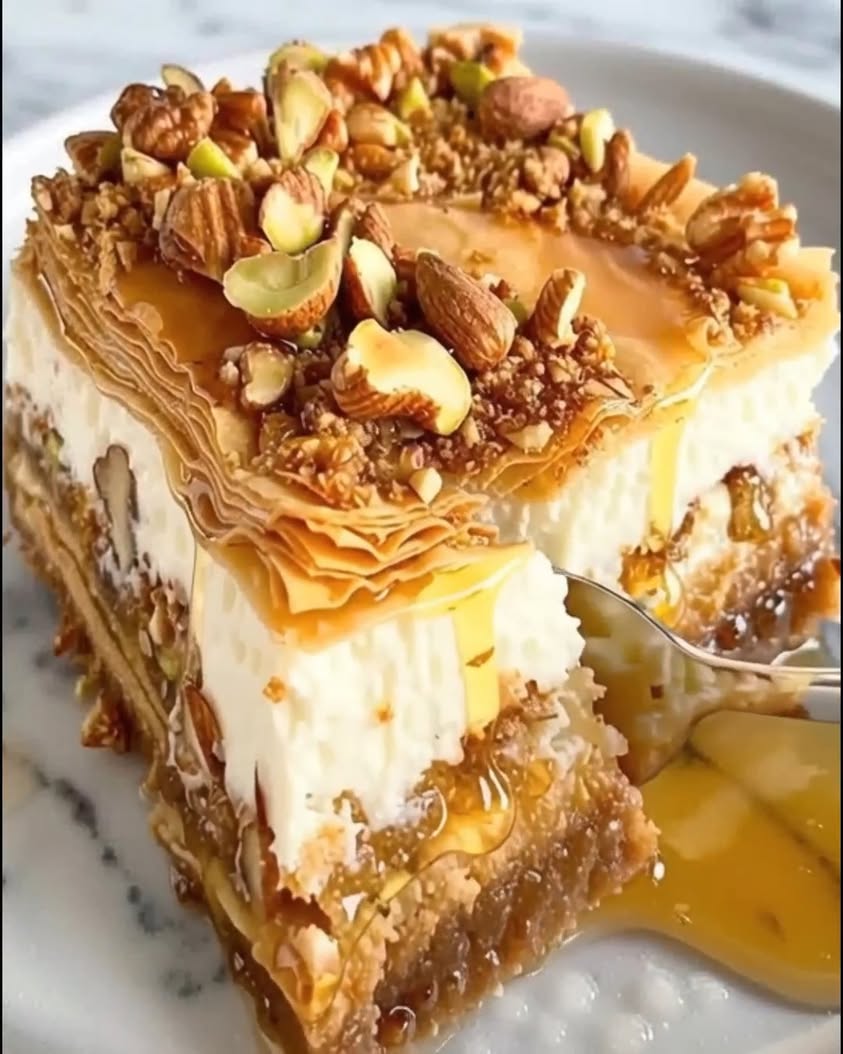
Honey Baklava Cheesecake: A Decadent Fusion Dessert Recipe
Imagine the rich, creamy texture of a classic New York cheesecake meeting the flaky, nutty, honey-soaked layers of traditional baklava. This Honey Baklava Cheesecake recipe creates that exact magical fusion. Consequently, you get a show-stopping dessert that honors two beloved culinary traditions in one unforgettable slice. The process involves layering a buttery phyllo crust with a spiced nut mixture, then pouring over a luxuriously smooth honey-infused cheesecake filling. Ultimately, the result is a dessert with incredible depth of flavor and a stunning visual appeal perfect for any celebration.
The aroma that fills your kitchen while baking this Honey Baklava Cheesecake is absolutely intoxicating. Firstly, you will smell the warm notes of cinnamon and toasted walnuts. Then, the sweet scent of honey and butter from the phyllo layers will waft through the air. Finally, the rich, comforting smell of baking cream cheese ties everything together. This dessert is a true sensory experience long before you take the first bite. Moreover, it offers a fantastic make-ahead option for stress-free entertaining, as it needs several hours to chill and set perfectly.
Creating this masterpiece might seem daunting, but I will guide you through each step with clear instructions. Importantly, the key lies in the preparation and understanding a few simple techniques. For instance, handling the delicate phyllo dough requires a bit of patience, but the payoff is immense. Additionally, ensuring your cream cheese is perfectly at room temperature guarantees a silky, lump-free filling. Therefore, even intermediate bakers can achieve professional-looking results with this detailed Honey Baklava Cheesecake guide. Let’s embark on this delicious baking adventure together.
Quick Recipe Highlights
- Flavor Profile: This Honey Baklava Cheesecake delivers a complex symphony of tastes. You experience the tangy richness of cream cheese balanced by the floral sweetness of honey. Simultaneously, warm cinnamon and the earthy, buttery crunch of walnuts and pistachios create a perfect backdrop.
- Texture: The texture contrast is phenomenal. Expect a creamy, dense cheesecake filling that melts on your tongue. This contrasts beautifully with the shatteringly crisp, buttery layers of phyllo dough and the crunchy nut mixture in every single bite.
- Aroma: Baking fills your home with an irresistible fragrance. Key aromatic notes include sweet honey, toasted nuts, warm cinnamon, and the rich, comforting scent of browned butter and baked dairy. It is truly an olfactory delight.
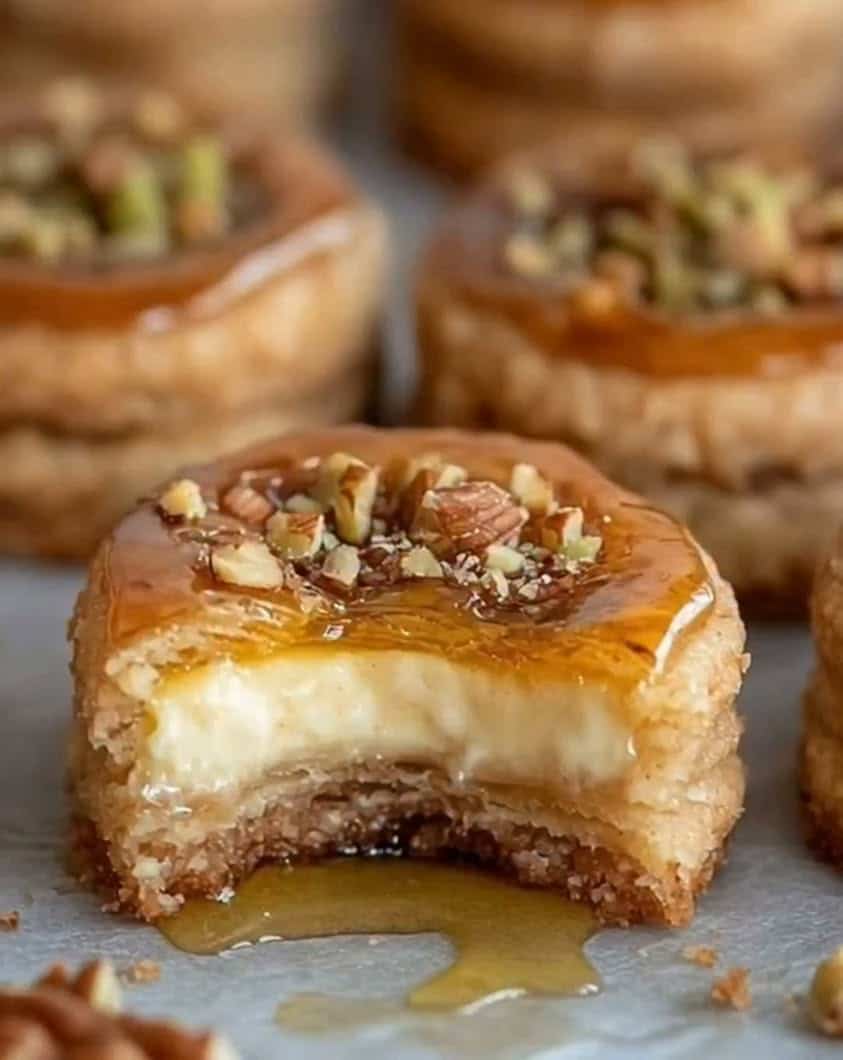
- Visual Appeal: The presentation is stunning with visible, golden layers of phyllo on the bottom and sides. A generous topping of chopped pistachios and a glossy honey syrup drizzle adds vibrant green color and shine, making it a centerpiece dessert.
- Skill Level Needed: This recipe is ideal for bakers with some experience who are comfortable with multi-step processes. You need patience for layering phyllo and precision for preparing the cheesecake filling. However, careful following of instructions yields fantastic results.
- Special Equipment: Essential tools include a 9-inch springform pan for easy release, a stand or hand mixer for the filling, and a pastry brush for buttering the phyllo. A food processor also helps for finely chopping the nuts efficiently.
Recipe Overview
- Difficulty Level: I rate this Honey Baklava Cheesecake as intermediate due to its multi-component nature. The recipe requires managing phyllo dough, which can dry out quickly, and executing a water bath for the cheesecake to prevent cracking. However, the steps are sequential and very manageable with organization.
- Category: This dessert falls squarely into the special occasion and celebration dessert category. It is rich, indulgent, and designed to impress. You can also consider it a fusion pastry that blends cheesecake and Middle Eastern pastry techniques beautifully.
- Cuisine: The recipe is a creative fusion of American dessert culture (the cheesecake) and Eastern Mediterranean/Middle Eastern pastry tradition (the baklava elements). It respectfully combines ingredients and methods from both worlds to create something new and exciting.
- Cost: The cost is moderate to high, given the quality ingredients. Premium cream cheese, real honey, pistachios, and phyllo dough are the main investments. Fortunately, a single Honey Baklava Cheesecake yields many servings, making the cost per slice quite reasonable for a luxury dessert.
- Season: This dessert is fantastic year-round but feels particularly special during fall and winter holidays. The warm spices and nuts evoke cozy feelings. Conversely, it is also a stunning showpiece for spring gatherings and summer parties when served chilled.
- Occasion: It is perfect for festive occasions like Thanksgiving, Christmas, Eid, or dinner parties. Moreover, it makes an unforgettable birthday cake alternative or a grand finale for a special family meal. Any event deserving of a spectacular dessert is the right occasion.
Why You’ll Love This Recipe
You will adore the unparalleled taste and texture of this Honey Baklava Cheesecake. Every forkful delivers a luxurious experience, starting with the crisp, buttery phyllo shattering to reveal the dense, honey-kissed cheesecake. Then, you hit the layer of spiced, crunchy nuts that provides the signature baklava character. The flavor balance is masterful, with the tangy cream cheese cutting through the sweetness of the syrup. Ultimately, it satisfies a deep craving for something both rich and complex, familiar yet excitingly new. This dessert does not just taste good; it creates a lasting memory.
The convenience and preparation benefits are significant for a dessert of this caliber. While it requires attention, much of the work happens in stages you can manage. For example, you can prepare the nut mixture and syrup ahead of time. Furthermore, the cheesecake itself must chill for hours or overnight, meaning you can bake it a day before your event. This make-ahead nature transforms a seemingly complex dessert into a practical choice for entertaining. You get to present a stunning masterpiece without the last-minute kitchen frenzy.
From a nutritional perspective, this indulgent treat offers more than just empty calories. Notably, the nuts provide healthy fats, protein, and essential minerals like magnesium and zinc. Honey, while a sugar, contains trace enzymes and antioxidants lacking in refined sugar. Of course, this Honey Baklava Cheesecake is a celebration dessert to be enjoyed in moderation. However, understanding the components allows you to appreciate it fully, knowing you are consuming real, whole-food ingredients rather than artificial flavors and fillers.
The social and entertaining value of this dessert cannot be overstated. Presenting a homemade Honey Baklava Cheesecake instantly elevates any gathering. It sparks conversation, as guests are always intrigued by the fusion concept. Sharing a slice feels like offering a gift, a tangible expression of care and effort. This dessert has the power to become a legendary part of your family’s or friend group’s tradition. People will request it for years to come, making it your signature showstopper.
Finally, considering cost-effectiveness and accessibility, this recipe delivers incredible value. Compared to buying a specialty dessert of similar complexity from a bakery, making it at home saves a considerable amount of money. The ingredients, while specific, are generally available in well-stocked supermarkets or international grocery stores. Investing in a package of phyllo dough opens up a world of baking possibilities beyond this single recipe. Therefore, this Honey Baklava Cheesecake is an accessible luxury that rewards your effort with both flavor and financial savings.
Historical Background and Cultural Significance
The origin story of this dessert is a modern tale of culinary innovation. Traditional baklava has roots stretching back centuries through the Ottoman Empire, with layers of phyllo, nuts, and syrup. The New York-style cheesecake, meanwhile, evolved in America through Jewish delis and diners in the early 20th century. The fusion Honey Baklava Cheesecake is a contemporary invention, likely born from creative pastry chefs and home bakers seeking to merge two iconic, texturally contrasting desserts. It represents the global, interconnected nature of modern food culture where traditions inspire new creations.
The cultural importance of each component is profound. Baklava holds a place of honor in many Eastern Mediterranean, Middle Eastern, and Balkan cultures, often prepared for religious festivals, weddings, and celebrations. It symbolizes sweetness and prosperity. Cheesecake, in its American form, is a staple of diners and family gatherings, representing comfort and indulgence. By combining them, this Honey Baklava Cheesecake pays homage to both traditions. It creates a bridge between cultures on a plate, celebrating shared human love for sweet, rich, celebratory foods.
The evolution of the recipe follows a natural path of culinary experimentation. As phyllo dough became more widely available in freezer sections worldwide, home bakers began experimenting beyond traditional pastries. The concept of using phyllo as a crust for cheesecake emerged as a flavorful alternative to graham crackers. Adding a nut layer and honey syrup was a logical, brilliant next step to fully capture the baklava essence. Today, countless variations of this Honey Baklava Cheesecake exist online and in cookbooks, each baker adding their personal touch to the fusion formula.
Regional variations of the concept are already appearing, reflecting local tastes. In some versions, the nut mixture might feature pecans or almonds instead of the classic walnut-pistachio blend. The spices might shift from cinnamon to include cardamom or cloves. The cheesecake flavor itself might be infused with orange blossom water or rose water to deepen the Middle Eastern connection. This adaptability shows the recipe’s strength as a framework. The core idea of a phyllo-crusted, honey-nut cheesecake is versatile enough to welcome interpretation, ensuring the Honey Baklava Cheesecake continues to evolve.
Ingredient Deep Dive
Phyllo dough is the architectural wonder of this crust. These tissue-thin sheets of unleavened flour dough have a history spanning centuries across the Eastern Mediterranean. When brushed with butter and layered, they bake into incredibly flaky, crisp shards that define the texture of baklava. Nutritionally, phyllo is lower in fat than pie crust, as the fat is added during assembly. Select fresh or thawed frozen phyllo, and always keep it covered with a damp towel to prevent drying. You can store unused sheets tightly wrapped in the refrigerator for a few days or refreeze them.
Cream cheese is the heart of the filling. The block-style, full-fat variety is non-negotiable for a dense, sliceable texture. American cream cheese became popular in the late 19th century. For this Honey Baklava Cheesecake, ensure your cream cheese is at full room temperature to blend smoothly without lumps. Cold cheese will lead to a grainy filling. Store unopened packages in the fridge. For substitutions in a pinch, a mix of mascarpone and Greek yogurt can mimic the tang and richness, though the texture will be slightly softer.
Honey is the unifying sweetener with deep cultural resonance. It has been a prized food since ancient times, symbolizing wealth and pleasure. In this recipe, its floral notes elevate the dessert beyond mere sweetness. Opt for a high-quality, flavorful honey like orange blossom, wildflower, or even a darker buckwheat honey for robust flavor. Honey contains antioxidants and has antimicrobial properties. It also helps keep the cheesecake moist. For storage, keep honey in a sealed container at room temperature; crystallization is natural and reversible with gentle warming.
The nut mixture typically combines walnuts and pistachios. Walnuts provide an earthy, slightly bitter base note and are rich in omega-3 fatty acids. Pistachios add a vibrant green color, a sweeter flavor, and a touch of luxury. Toasting the nuts before chopping is a critical step; it deepens their flavor and improves crunch. You can customize the blend with almonds, pecans, or hazelnuts based on preference or availability. Store nuts in the freezer to maintain freshness and prevent their oils from turning rancid. Always taste them before using to ensure they are not stale.
Common Mistakes to Avoid
- Using cold cream cheese: This is the top cause of a lumpy filling. Your cream cheese, eggs, and sour cream must all be at true room temperature to emulsify smoothly into a silky batter.
- Letting phyllo dough dry out: Phyllo becomes brittle and unworkable within minutes of exposure to air. Always keep the stack covered with plastic wrap and a damp kitchen towel while you work layer by layer.
- Overmixing the filling after adding eggs: Once you incorporate the eggs, mix just until combined. Overbeating incorporates too much air, which can cause the cheesecake to puff and fall, leading to cracks.
- Skipping the water bath: Baking the cheesecake in a water bath provides gentle, even heat and steam. This is crucial for preventing the top from cracking and ensuring a creamy, not rubbery, texture.
- Pouring hot syrup on a hot cheesecake: The honey syrup should be warm, not scalding hot, when you drizzle it. Pouring it over a just-baked, piping hot cheesecake can make the filling weep and the top soggy.
- Not sealing the springform pan properly for the water bath: Failing to wrap the pan tightly in heavy-duty foil can allow water to seep in and create a soggy crust. Use a double layer of foil for safety.
- Cutting the cheesecake before it’s fully chilled: Impatience leads to a messy slice. The Honey Baklava Cheesecake needs ample time in the fridge to set its structure. Overnight chilling is ideal for clean cuts.
- Using a dull knife to slice: A dull knife will crush the beautiful layers. Use a thin, sharp knife, dipping it in hot water and wiping it clean between each cut for pristine slices.
Essential Techniques
Layering and buttering phyllo is fundamental. This technique creates the signature flaky, crisp crust. Why is it important? Each butter-brushed sheet bakes into a separate, delicate layer. To master it, work quickly with one sheet at a time, keeping the rest covered. Use a soft pastry brush and melted, cooled butter. Apply a thin, even coat; too much butter will make it greasy, too little will leave it dry. The visual cue for success is a stack of sheets that looks uniformly moistened and pliable, not soggy or transparent with butter.
Preparing a perfectly smooth cheesecake filling is another key technique. The importance lies in achieving a luxurious, creamy texture without air bubbles that cause cracks. Mastery requires all dairy ingredients to be at room temperature. Beat the cream cheese alone first until completely smooth, scraping the bowl often. Then add sugar and beat again. Finally, add eggs one at a time, mixing on low speed just until incorporated. The common pitfall is rushing or mixing on high speed, which incorporates too much air. The successful batter will be thick, glossy, and lump-free.
Executing a water bath (bain-marie) is non-negotiable for a crack-free top. This technique provides gentle, moist heat that cooks the cheesecake evenly and prevents the surface from drying out and splitting. To do it, wrap the bottom of your springform pan securely in heavy-duty foil. Place it in a larger roasting pan, then pour the cheesecake batter in. Finally, pour hot water into the roasting pan until it comes halfway up the sides of the springform. The main pitfall is leaking; double-wrap the pan with foil. Success means your cheesecake emerges from the oven with a flat, slightly jiggly center and no cracks.
Pro Tips for Perfect Honey Baklava Cheesecake
Toast your nuts on the stovetop for maximum control. Stir them constantly in a dry skillet over medium heat until fragrant. This method prevents burning better than the oven and takes just minutes.
Add a tablespoon of flour or cornstarch to the cheesecake filling. This little trick helps stabilize the structure, further guarding against cracks and making for a cleaner slice.
Use clarified butter or ghee for brushing the phyllo. It has a higher smoke point and less water content than regular butter, resulting in a crisper, more golden crust without sogginess.
Run a thin knife around the edge of the cheesecake after baking. Do this before it cools completely. It allows the cake to contract away from the pan as it chills, minimizing surface cracks.
Simmer your honey syrup with a strip of lemon or orange zest. The citrus oils will brighten the flavor and cut the sweetness, adding a sophisticated layer to the final drizzle.
For the nut layer, chop the nuts by hand for the best texture. A food processor can quickly turn them into paste. You want small, distinct pieces for a pleasant crunch, not a mealy powder.
Let all components come to similar temperatures before assembly. The phyllo crust should be cool, the nut layer room temp, and the filling just mixed. This prevents the butter in the crust from melting prematurely.
When adding the syrup, start with just half. Drizzle it over the chilled cheesecake, let it absorb for 15 minutes, then decide if you want to add more. This prevents an overly soggy bottom layer.
Variations and Adaptations
For regional variations, explore different nut and spice combinations. A Greek-inspired version might use only walnuts and a generous amount of cinnamon. A Persian variation could feature cardamom and rose water in the syrup, with a garnish of dried rose petals. A Texas twist might use pecans and a dash of bourbon in the honey syrup. These adaptations keep the core Honey Baklava Cheesecake concept fresh and allow you to connect it to different culinary heritages or personal preferences.
Seasonal adaptations are simple and effective. In autumn, incorporate finely chopped dried figs or dates into the nut layer and add a pinch of allspice. For a winter holiday version, mix a teaspoon of orange zest into the cheesecake filling and garnish with candied orange peel. In spring, flavor the honey syrup with lavender or a touch of vanilla bean. Summer calls for a lighter garnish of fresh berries and a mint leaf alongside the nuts and syrup. This ensures your dessert always feels timely and special.
Dietary modifications are entirely possible. For a gluten-free Honey Baklava Cheesecake, use a certified gluten-free phyllo dough, which is increasingly available. A dairy-free version requires vegan cream cheese and plant-based butter for the phyllo. For a lower-sugar option, reduce the honey in the syrup and use a sugar substitute blend in the filling, though texture may vary. Always inform guests of substitutions, as the nut content remains, making it unsuitable for those with tree nut allergies without a complete nut-free adaptation using seeds.
Serving and Presentation Guide
Plating techniques should highlight the dessert’s beautiful layers. Serve each slice on a plain, white plate to make the colors pop. Use a cake server or pie server for easy transfer. If you sliced with a hot knife, you might need to gently nudge the slice onto the server with an offset spatula. Wipe any smeared syrup from the plate edge for a clean look. For a restaurant-style presentation, you can drizzle a little extra honey syrup in an artistic pattern on the plate before placing the slice.
Garnishing ideas go beyond the traditional chopped pistachios. A light dusting of ground cinnamon or edible gold flakes adds instant elegance. A small dollop of lightly sweetened whipped cream or a scoop of vanilla bean ice cream provides a temperature contrast. A single, perfect candied walnut or a twist of orange zest on top looks stunning. Fresh edible flowers, like pansies or violets, are beautiful for spring and summer gatherings. Remember, garnish should complement, not overwhelm, the star of the show—the Honey Baklava Cheesecake itself.
Traditional accompaniments are simple. In Middle Eastern culture, strong black coffee or bitter tea is the classic pairing to balance the sweetness. For a modern take, offer a selection of digestifs like dessert wine, aged rum, or a cinnamon-infused liqueur. On the side, a small bowl of plain, thick Greek yogurt can be a refreshing counterpoint. If serving at a large party, consider offering both the cheesecake and small cups of Turkish coffee for an immersive experience that honors the dessert’s inspiration.
Wine and Beverage Pairing
Wine pairings should complement the honey and nut flavors without competing. A late-harvest Riesling or Gewürztraminer, with their inherent sweetness and notes of apricot and spice, are magnificent choices. Alternatively, a rich, nutty Oloroso Sherry or a Madeira mirrors the toasted nut components beautifully. For red wine lovers, a lighter-bodied, low-tannin red like a Brachetto d’Acqui or a Lambrusco Dolce can work surprisingly well. The key is to choose a wine that is at least as sweet as the dessert to avoid a bitter aftertaste.
Non-alcoholic alternatives are just as important. A sparkling apple cider provides effervescence and acidity to cut through the richness. For a warm option, a cardamom-spiced chai tea or a strong cinnamon-infused herbal tea makes a cozy companion. Iced mint tea or a lemonade spiked with a little rose water offers a refreshing contrast for summer servings. You can even create a “mocktail” syrup using the same honey, lemon, and water from the recipe, chilled and topped with soda water for a bespoke pairing.
Coffee and tea pairings are natural fits. A robust, unsweetened Turkish coffee or Greek coffee is the most traditional and authentic match. Its intense, bitter grounds contrast the sweet cheesecake perfectly. For tea, consider a smoky Lapsang Souchong, a spiced Masala Chai, or a floral Earl Grey. Serve coffee and tea hot and strong. The temperature contrast with the chilled cheesecake is part of the pleasure. Always offer sugar on the side for guests to adjust their drink’s sweetness to their personal taste.
Storage and Shelf Life
Storage methods are straightforward but crucial for maintaining texture. Once cooled and set, keep the Honey Baklava Cheesecake covered in the springform pan or on a cake stand with a tight dome. Refrigeration is mandatory due to the dairy content. The ideal temperature is your refrigerator’s main compartment, not the door where temperature fluctuates. For the best texture and to prevent the phyllo from getting soggy, consume it within 3-4 days. The syrup will continue to soften the layers over time, so the texture evolves each day.
Container recommendations focus on protection. If using the springform pan, simply press a layer of plastic wrap directly onto the surface of the cheesecake, then cover the whole pan with foil. If you’ve removed it from the pan, place it on a cardboard cake round and use a proper cake carrier or a large, inverted bowl. Do not store it near strong-smelling foods, as the cheesecake can absorb odors. If you need to stack items in the fridge, place it on the top shelf to avoid anything dripping onto it.
Freezing guidelines can extend the shelf life significantly. Freeze the cheesecake before adding the final honey syrup drizzle. Wrap the entire chilled cheesecake (or individual slices) tightly in plastic wrap, then in a layer of heavy-duty aluminum foil. Place it in an airtight container or freezer bag if possible. It will keep well for up to 2 months. To serve, thaw it overnight in the refrigerator. Then, prepare a fresh batch of warm honey syrup to drizzle over the top just before serving. This restores the glossy finish and optimal flavor.
Make Ahead Strategies
Your prep timeline can span several days for stress-free assembly. Day 1: Make the honey syrup and let it cool completely; store it in a jar in the fridge. Toast and chop the nuts; store them in an airtight container at room temperature. Day 2: Bake the cheesecake in the morning or afternoon. Let it cool completely on the counter, then refrigerate it overnight, undecorated. Day of Serving: Unmold the cheesecake, drizzle with the warmed syrup, and garnish with nuts. This staggered approach breaks the work into manageable sessions and ensures the flavors have time to meld perfectly.
Storage between steps is simple with planning. The cooled syrup can live in the fridge for up to two weeks. The toasted, chopped nuts will stay fresh in a sealed container at room temperature for about a week, or in the freezer for a month. The fully baked and cooled cheesecake (without syrup) can be refrigerated, well-wrapped, for up to two days before final assembly. Do not add the syrup more than a few hours before serving, as it will make the bottom phyllo layers very soft. This staged storage maximizes freshness and minimizes day-of workload.
Scaling Instructions
Halving the recipe is perfect for a smaller household. Use a 6-inch or 7-inch springform pan. Halve all ingredients precisely. The bake time will be slightly less—start checking for doneness around the 45-minute mark. The water bath is still essential. The layers will be proportionally thinner, so handle the phyllo with extra care to maintain defined layers. This smaller Honey Baklava Cheesecake will yield 6-8 generous slices and is a wonderful option for an intimate dinner party.
Doubling or tripling the recipe requires planning. For a double batch, you can make two separate 9-inch cheesecakes. I do not recommend using a single, larger pan (like a 10×15-inch) as the baking dynamics and structural integrity change too much. Making two identical cakes ensures even baking and the classic tall slice profile. You will need to mix the filling in batches unless you have a very large mixer bowl. The reward is having one cake to serve and one to freeze for a future event, which is a fantastic time-saver.
Nutritional Deep Dive
A macro breakdown for a typical slice reveals a rich, energy-dense dessert. It is high in fats from the cream cheese, butter, and nuts, providing sustained energy. Carbohydrates come primarily from the honey, sugar, and phyllo flour. Protein is present from the dairy and nuts, though not in high amounts. This is not a low-calorie food, and that is perfectly fine. It is a celebratory indulgence where the focus is on quality ingredients and incredible flavor. Enjoying a moderate slice as part of a balanced diet is a completely healthy approach to dessert.
Micronutrient analysis shows some beneficial components. Nuts contribute vitamin E, magnesium, and healthy monounsaturated fats. Honey contains trace amounts of minerals like iron, zinc, and potassium, along with antioxidants. Dairy provides calcium and vitamin A. While these are present, the primary purpose of this Honey Baklava Cheesecake is pleasure and celebration, not nutrient density. The takeaway is that you are consuming real food ingredients that offer more than just sugar and empty calories, which is a positive aspect of homemade desserts over highly processed alternatives.
Dietary Adaptations
A gluten-free adaptation is very achievable. Seek out certified gluten-free phyllo dough, which is made with alternative flours like rice and tapioca. Brands like Fillo Factory and others offer this product. Ensure all other ingredients, like spices, are certified GF. The method remains identical. The texture of the crust may be slightly different but will still be deliciously crisp. Always inform guests that the dish is prepared gluten-free, especially if you are serving those with celiac disease, to ensure no cross-contamination occurred in your kitchen.
For a dairy-free version, use high-quality vegan cream cheese and plant-based butter sticks (not spreads) for the phyllo layers. Brands like Miyoko’s or Kite Hill work well for baking. The sour cream can be replaced with a plain, unsweetened vegan yogurt or vegan sour cream. The filling may be slightly softer, so ensure it is thoroughly chilled before serving. The honey is plant-based, but for a strict vegan version, you would need to substitute the honey with a vegan syrup like agave or maple, which will alter the classic flavor profile but still yield a tasty dessert.
Troubleshooting Guide
If your phyllo crust is soggy, the cause is usually excess moisture. Next time, ensure your butter is not too hot when brushing, and make sure the nut layer is completely cool before adding the filling. If the bottom is soggy after baking, it may be due to a leak in the foil during the water bath. For the current cake, you can carefully blot any excess surface moisture with a paper towel. Serve it with a scoop of ice cream to distract from the texture, and know that it will still taste wonderful.
If the cheesecake filling cracked, do not despair. First, the cracks are purely cosmetic and do not affect flavor. Second, you can easily disguise them with the nut garnish and generous honey drizzle. To prevent future cracks, ensure you are not overmixing the batter, are using a water bath, and are allowing the cake to cool gradually in the turned-off oven with the door ajar. A small crack is a badge of honor for many home bakers—it shows you made a real cheesecake!
Recipe Success Stories
Community feedback on this Honey Baklava Cheesecake has been overwhelmingly positive. Many home bakers report it becoming their most-requested dessert for potlucks and family holidays. A common theme is the surprise and delight of guests who cannot believe it was made at home. Several readers have shared that they successfully adapted it for gluten-free family members with great results. Others have made it for cultural fusion weddings, combining the heritage of both partners in a single, meaningful dessert. These stories highlight the recipe’s power to connect people and create joy.
Reader suggestions have led to some brilliant variations. One baker added a layer of finely chopped dried apricots to the nut mixture for a tart contrast. Another infused the honey syrup with a split vanilla bean and a star anise pod for a deeper flavor. A creative parent made a “baklava cheesecake bar” version in a 9×13 pan for a school bake sale, which sold out instantly. These adaptations show the recipe’s versatility. I encourage you to make it your own once you have mastered the basic formula. Your personal touch might become the next great variation.
Frequently Asked Questions
Can I use frozen phyllo dough? Absolutely. Thaw it overnight in the refrigerator, not on the counter. Once thawed, keep it in its packaging until you are ready to use it to prevent drying.
My springform pan leaks. How do I prevent a soggy crust? Double or even triple-wrap the outside bottom and sides of the pan with heavy-duty aluminum foil. Ensure there are no tears. Placing the wrapped pan in a slow cooker liner bag is another foolproof barrier.
Can I make this without a water bath? I strongly advise against it. The water bath is critical for even, gentle cooking and preventing cracks. If you truly cannot, bake at a very low temperature (275°F) and expect more surface browning and potential cracking.
How do I know when the cheesecake is done baking? The edges should be set, and the center should have a slight, gentle jiggle—like Jell-O—when you nudge the pan. An instant-read thermometer inserted into the center should read 150°F.
Why did my nut layer sink into the filling? This happens if the nut layer is too chunky or too heavy. Ensure you chop the nuts finely and press them into an even layer on the phyllo before adding the batter. Do not just sprinkle them loosely.
Can I use pre-chopped nuts? You can, but I recommend giving them a quick chop anyway for uniformity. Pre-chopped nuts are often drier and less flavorful than whole nuts you toast and chop yourself.
How far in advance can I add the honey syrup? For the best texture, add the syrup no more than 2-3 hours before serving. This allows it to soak in slightly but keeps the phyllo layers from becoming completely soft.
Can I use a different type of honey? Yes, and I encourage it! Different honeys will impart different flavors. A strong, dark honey like buckwheat will create a deeper, molasses-like flavor, while a light clover honey will be milder.
My cheesecake is browning too fast on top. What should I do? Tent it loosely with a piece of aluminum foil for the remainder of the baking time. This will shield it from direct heat while allowing it to continue cooking through.
Is it normal for the cheesecake to pull away from the sides as it cools? Yes, this is completely normal and desirable. It means it is contracting as it should. Running a knife around the edge before cooling helps ensure it pulls away evenly.
Additional Resources
For related recipes, explore other phyllo-based desserts like spanakopita (savory spinach pie) or sweet bougatsa. If you love the cheesecake component, a classic New York-style cheesecake is a great foundational recipe to master. For more honey desserts, consider Greek honey cookies (melomakarona) or a simple honey cake. Each of these will build your skills and flavor understanding, making you a more confident baker overall. They also share common ingredients, making your grocery trips more efficient.
Technique guides are invaluable for mastering components. Look for detailed videos or articles on “how to work with phyllo dough” to see the buttering process in action. A guide on “preventing cheesecake cracks” will reinforce the water bath and cooling methods. Understanding “how to toast nuts properly” ensures you never burn a batch again. Investing time in learning these fundamental techniques will improve not just this Honey Baklava Cheesecake, but all your future baking projects. Good technique is the true secret ingredient in any great recipe Print
Honey Baklava Cheesecake
- Total Time: 45 minutes
- Yield: 4
Description
A decadent fusion dessert combining creamy cheesecake with the nutty, honey-soaked layers of traditional baklava.
Ingredients
- 1 cup graham cracker crumbs
- 1/4 cup melted butter
- 2 cups chopped walnuts and pistachios
- 1/2 cup honey
- 1 teaspoon ground cinnamon
- 24 oz cream cheese, softened
- 3/4 cup granulated sugar
- 3 large eggs
- 1 teaspoon vanilla extract
- 1/2 cup sour cream
- 1/4 cup honey for topping
Instructions
- Preheat oven to 325°F (163°C). Mix graham cracker crumbs with melted butter and press into the bottom of a springform pan.
- In a bowl, combine chopped nuts, 1/2 cup honey, and cinnamon. Spread half of the nut mixture over the crust.
- Beat cream cheese and sugar until smooth. Add eggs one at a time, then mix in vanilla and sour cream.
- Pour cheesecake batter over the nut layer. Top with remaining nut mixture.
- Bake for 50-60 minutes until set. Let cool, then chill for at least 4 hours. Drizzle with honey before serving.
Notes
You can customize the seasonings to taste.
- Prep Time: 15 minutes
- Cook Time: 30 minutes
- Method: Main
- Cuisine: American