Homemade Italian Wedding Soup: A Cozy One-Pot Comfort Food Recipe
There is something deeply satisfying about a bowl of Homemade Italian Wedding Soup. This classic recipe brings together tender meatballs, delicate pasta, and vibrant greens in a savory broth that warms you from the inside out. When you make this Homemade Italian Wedding Soup from scratch, you create a meal that feels both elegant and comforting. The aroma of simmering broth with garlic and herbs fills your kitchen, promising a hearty and nourishing experience.
This Homemade Italian Wedding Soup recipe is perfect for busy weeknights or lazy weekends. You can prepare the meatballs ahead of time, and the entire soup comes together in one pot. The flavors are balanced and rich, with the savory meatballs complementing the earthy greens and the al dente pasta. Each spoonful delivers a combination of textures and tastes that will satisfy your entire family. Moreover, this soup is surprisingly simple to make, requiring only basic cooking techniques and readily available ingredients.
The appeal of this Homemade Italian Wedding Soup lies in its versatility and depth. You can easily adjust the greens, using spinach, escarole, or kale depending on your preference. The broth, made with chicken stock and a touch of Parmesan rind, develops a wonderful umami flavor that forms the backbone of the dish. When you serve this soup with a sprinkle of fresh Parmesan and a crusty piece of bread, you have a complete and memorable meal. This dish is a true celebration of simple, wholesome ingredients coming together in perfect harmony.
Quick Recipe Highlights
- Flavor Profile: This soup offers a harmonious blend of savory and slightly salty notes from the meatballs and Parmesan broth. The fresh herbs like parsley and oregano add an aromatic lift, while the greens provide a subtle bitterness that balances the richness.
- Texture: You experience a wonderful contrast of textures in every bite. The meatballs are tender and juicy, the pasta provides a soft chew, and the greens offer a slight wilting tenderness. The broth itself is light yet satisfyingly silky.
- Aroma: The key aromatic notes are garlic, onion, and fresh herbs simmering in chicken stock. As the meatballs cook, they release savory scents that mingle with the earthy aroma of greens and the nutty fragrance of Parmesan cheese.
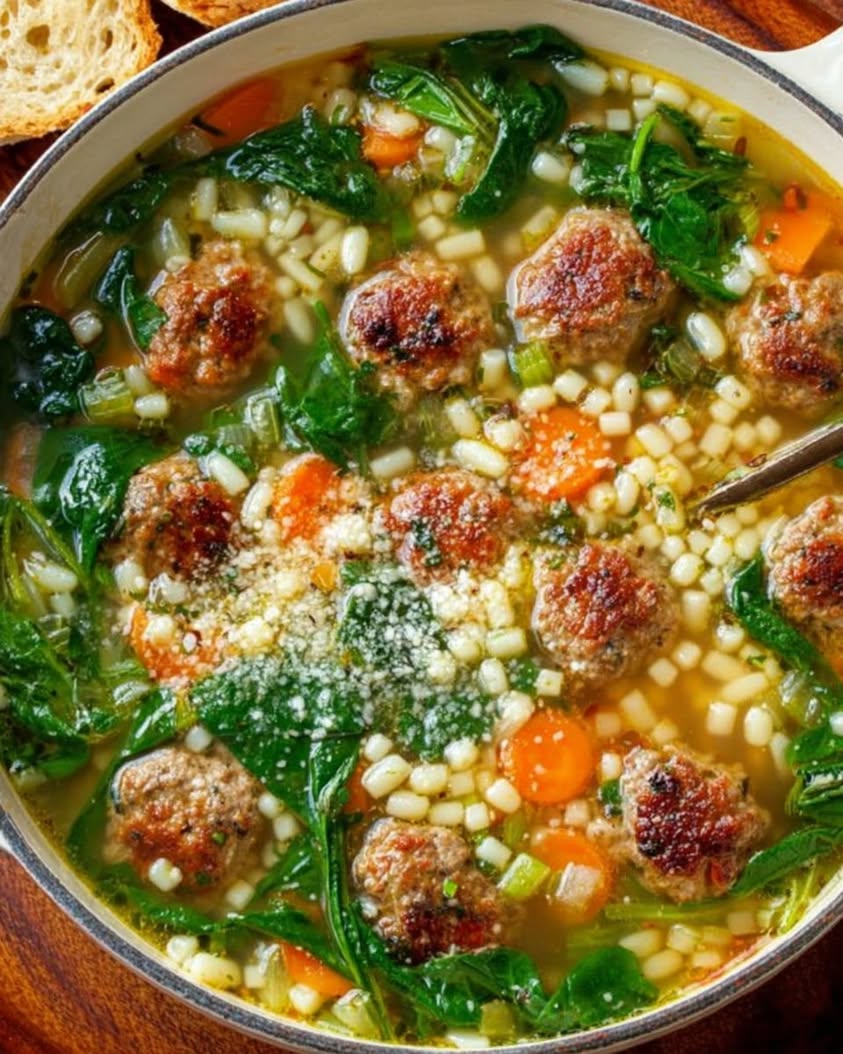
- Visual Appeal: This soup is visually stunning with vibrant green spinach floating in a golden broth. The perfectly round meatballs and delicate acini di pepe pasta create an appealing mosaic of shapes and colors. A final dusting of red pepper flakes and Parmesan adds a beautiful finishing touch.
- Skill Level Needed: You need only basic cooking skills to master this recipe. Forming meatballs and simmering a soup are fundamental techniques that any home cook can handle. The recipe is forgiving and straightforward, making it ideal for beginners.
- Special Equipment: You do not need any specialized equipment for this recipe. A large soup pot or Dutch oven, a mixing bowl for the meatballs, and a ladle are all you require. A microplane for grating fresh Parmesan is helpful but not essential.
Recipe Overview
- Difficulty Level: This recipe is rated as easy because it uses simple techniques that build upon each other. You form meatballs by hand, sauté aromatics, and simmer the soup. There are no complicated steps like tempering eggs or creating a roux that might challenge a novice cook.
- Category: This dish falls squarely into the soup category, but it functions as a complete main course. It is hearty enough for dinner yet light enough for a satisfying lunch. You can also serve it as a starter for a larger Italian-inspired meal.
- Cuisine: This recipe comes from the Italian culinary tradition, specifically from the region of Campania. The name “Italian Wedding Soup” likely derives from the phrase “minestra maritata,” which means “married soup.” This refers to the wonderful marriage of greens and meat in the broth.
- Cost: This soup is very economical to prepare. Ground pork or beef is affordable, and you use only a small amount per serving. Chicken stock, canned tomatoes, and pasta are pantry staples that cost very little. Fresh spinach and Parmesan add flavor without breaking your budget.
- Season: You can enjoy this soup year-round, but it is especially welcome during the fall and winter months. The warm broth and hearty ingredients provide comfort on cold, rainy days. In spring, you can use tender young greens like baby spinach for a lighter version.
- Occasion: This soup is perfect for a casual family dinner or a cozy gathering with friends. It also makes an excellent meal for meal prep, as the flavors deepen overnight. Serve it on a snowy evening or when someone in your household is feeling under the weather.
Why You Will Love This Recipe
The taste and texture of this Homemade Italian Wedding Soup are truly exceptional. The miniature meatballs are seasoned with garlic, Parmesan, and fresh parsley, giving them a savory depth that infuses the entire broth. When you bite into a meatball, it is tender and moist, not dry or dense. The acini di pepe pasta adds a delightful pop of texture, and the wilted spinach provides a fresh, earthy counterpoint. Every spoonful offers a new combination of flavors that keeps you coming back for more.
This recipe offers incredible convenience and preparation benefits. You can make the meatballs a day in advance and store them in the refrigerator until you are ready to cook. The entire soup comes together in a single pot, which means minimal cleanup after dinner. Additionally, this soup freezes beautifully, so you can double the recipe and save half for a busy weeknight later on. The hands-on time is surprisingly short, making it a practical choice for anyone with a hectic schedule.
From a nutritional standpoint, this soup is a well-balanced meal. You get lean protein from the meatballs, complex carbohydrates from the pasta, and a wealth of vitamins from the spinach. The broth is hydrating and nourishing, and the use of olive oil provides healthy monounsaturated fats. You can easily control the sodium by using low-sodium chicken stock. This soup fills you up without weighing you down, making it a smart choice for health-conscious cooks.
This Homemade Italian Wedding Soup also holds great social and entertaining value. It is a dish that impresses guests with its depth of flavor and beautiful presentation, yet it is approachable and familiar. When you serve this soup from a large tureen at the center of the table, it encourages a communal, family-style meal. It pairs wonderfully with a crusty loaf of bread and a simple green salad, creating an impressive yet effortless dinner party menu.
Finally, this recipe is incredibly cost-effective and uses accessible ingredients. Ground meat, pasta, stock, and spinach are all items you can find at any grocery store for a reasonable price. A little Parmesan goes a long way in adding flavor, and you likely already have garlic and onions in your pantry. This soup stretches a small amount of meat into a satisfying meal for several people, making it a smart choice for budget-friendly cooking.
Historical Background and Cultural Significance
The origins of Italian Wedding Soup are rooted in the peasant traditions of Southern Italy. The name does not come from actual wedding celebrations but rather from the Italian phrase “minestra maritata,” which means “married soup.” This term refers to the perfect marriage, or union, of two key ingredients: the greens and the meat. In the poor rural kitchens of Campania, cooks would combine whatever wild greens were available with small amounts of cured or fresh pork, creating a nourishing and flavorful meal from humble beginnings.
Culturally, this soup represents the resourcefulness and creativity of Italian home cooking. It exemplifies the principle of cucina povera, or “poor kitchen,” where nothing goes to waste and simple ingredients are transformed into something extraordinary. The soup was traditionally made for large family gatherings and Sunday dinners, serving as a way to feed many people affordably. It is a dish that connects modern cooks to their ancestral roots, carrying forward a legacy of practical and delicious home cooking.
The evolution of this recipe is interesting and reflects changing tastes and ingredient availability. Early versions of the soup used a mix of bitter wild greens like escarole, chicory, and dandelion greens. Meat was often a luxury, so cooks used sausage or a ham bone to flavor the broth rather than meatballs. Over time, as meat became more accessible, the tiny, tender meatballs became the signature feature. The pasta was also a later addition, with cooks choosing small shapes like acini di pepe or orzo that fit neatly on a spoon.
Regional variations of this soup are common throughout Italy and among Italian-American communities. In some parts of Italy, the soup is made with beef or veal meatballs, while others use a combination of pork and beef. Some recipes call for adding eggs and cheese to the broth for a richer texture, similar to stracciatella. In the United States, Italian-American cooks often add more meat and cheese, creating a heartier version. You might also find variations that use turkey or chicken meatballs for a lighter alternative, proving the recipe’s enduring adaptability.
Ingredient Deep Dive
Ground pork is a foundational ingredient in this Homemade Italian Wedding Soup, providing rich flavor and tender texture to the meatballs. Italian cuisine has a long history of using pork in everything from sausages to ragu, as pigs were easy to raise and provided versatile meat. Nutritionally, pork is a good source of thiamin, selenium, and high-quality protein. When selecting ground pork, look for meat that is bright pink with a fresh smell and a moderate amount of fat, about 20 percent, which ensures juicy meatballs. Store it in the coldest part of your refrigerator and use it within one to two days of purchase. You can substitute ground turkey or chicken for a leaner option, though the flavor will be milder.
Fresh spinach is another crucial ingredient that adds color, nutrition, and a delicate flavor to the soup. Spinach is native to Persia and was introduced to Europe by the Moors, eventually becoming a staple in Italian cooking. It is packed with iron, vitamin K, vitamin A, and folate, making it a nutritional powerhouse. For this recipe, you should select fresh spinach leaves that are vibrant green and crisp, avoiding any that are yellowing or slimy. Store spinach unwashed in a plastic bag in the refrigerator and use it within a few days. You can substitute escarole for a more traditional, slightly bitter taste, or kale for a heartier texture that requires a longer cooking time.
Acini di pepe pasta is the traditional choice for this soup, but you have many substitution options. This tiny, bead-shaped pasta is perfect for soups because it cooks quickly and fits neatly on a spoon. Pasta of this shape has been made in Italy for centuries, with different regions having their own tiny pasta varieties. It offers a pleasant, soft chew that complements the tender meatballs and greens. You can substitute orzo, stelline, or even pastina, adjusting the cooking time according to the package directions. Store dried pasta in a cool, dry pantry where it will keep for months.
Chicken stock forms the liquid base of the soup and contributes significant flavor. Homemade stock is ideal, but a quality store-bought low-sodium version works very well. The stock should be rich and savory, forming the backdrop for all the other ingredients. You can use vegetable stock for a lighter flavor or beef stock for a deeper, more robust taste. To enhance the stock, many cooks add a Parmesan rind to the pot while the soup simmers, which infuses the broth with an incredible umami depth.
Parmesan cheese is essential for both the meatballs and the final garnish. True Parmigiano-Reggiano has a granular, crystalline texture and a nutty, salty flavor that is unmatched. It adds a savory richness that elevates the entire dish. When buying Parmesan, look for wedges with the rind still attached, and grate it fresh just before using to preserve its aroma. Store the cheese wrapped in wax paper in the refrigerator. You can substitute Grana Padano or Pecorino Romano for a slightly different flavor profile, with Pecorino being saltier and more pungent.
Common Mistakes to Avoid
- Overworking the meatball mixture is a common error that leads to dense, tough meatballs. You should mix the ingredients gently until they just come together. Overmixing develops the gluten in the breadcrumbs and compacts the meat, resulting in a rubbery texture.
- Using cold ingredients for the meatballs can cause them to fall apart in the soup. Your ground meat, eggs, and grated cheese should be at room temperature before mixing. Cold fats and proteins do not bind together well, leading to a crumbly mixture.
- Adding the pasta too early creates a mushy soup. You should cook the pasta separately or add it to the soup only during the last few minutes of cooking. Overcooked pasta absorbs too much broth and loses its texture.
- Skipping the step of searing the meatballs results in a less flavorful broth. Browning the meatballs in a little olive oil before adding the liquid creates a fond on the bottom of the pot. This fond adds a deep, savory flavor to your soup.
- Failing to season the broth properly is a missed opportunity for depth. You need to taste the broth after adding the meatballs and adjust the salt and pepper. A well-seasoned broth makes all the difference in this simple soup.
- Adding the greens all at once can cause them to clump together. You should add the spinach in handfuls, stirring gently until each batch wilts down before adding the next. This ensures even distribution and prevents a big mass of greens.
- Using low-quality Parmesan cheese sacrifices a lot of flavor. Pre-grated cheese contains anti-caking agents that prevent it from melting smoothly. Always grate your Parmesan fresh from a wedge for the best taste and texture.
- Neglecting to stir the soup can lead to the pasta sticking to the bottom of the pot. Acini di pepe is very small and can easily scorch. Give the soup a gentle stir every minute or so during the last stage of cooking.
- Making the meatballs too large is a common mistake that affects cooking time and proportion. Each meatball should be about the size of a small marble, about one inch in diameter. Large meatballs take too long to cook and overwhelm the delicate soup.
- Forgetting to let the soup rest before serving is an oversight. Allowing the soup to sit for five minutes off the heat lets the flavors meld together. It also brings the soup to a safe, enjoyable serving temperature.
Essential Techniques
Forming the meatballs correctly is the most important technique for this recipe. You should use a gentle touch to roll the mixture into uniform, bite-sized balls. Overhandling the meat creates a dense, tough final product. The goal is to shape them just enough to hold together without compacting the meat. A visual cue for success is a smooth, round ball that holds its shape without cracking. If the mixture feels too wet, you can add a little more breadcrumb, but do not add too much or the meatballs will be dry. Chilling the formed meatballs for fifteen minutes before browning helps them hold their shape better in the hot pan.
Building flavor through the sauté and fond development is a fundamental technique. You should start by sautéing your onions, carrots, and celery in olive oil until they are soft and translucent. This process, called a soffritto, creates the aromatic base for your entire soup. Once you add the meatballs to the pot, let them brown without moving them too much. The browned bits that stick to the bottom of the pot, known as fond, are pure flavor. When you deglaze the pot with a splash of white wine or stock, you scrape up these bits and incorporate that deep, savory flavor into your broth.
Simmering the soup gently is crucial for developing flavor without breaking down the ingredients. A rapid boil will cause the meatballs to become tough and the pasta to turn mushy. You should bring the soup to a gentle boil after adding the broth, then immediately reduce the heat to a low simmer. The surface of the soup should show small, lazy bubbles. This gentle heat allows the flavors from the meatballs, aromatics, and Parmesan rind to infuse the broth slowly. You should maintain this temperature for about ten minutes before adding the pasta.
Properly incorporating the greens ensures they maintain their color and texture. You should add the spinach in batches, stirring gently with a wooden spoon until each batch wilts completely. This process takes only a minute or two in the hot broth. Overcooking the spinach causes it to lose its vibrant green color and turn into a slimy, unappealing mess. You want the spinach to be just wilted, still retaining a little structure and a bright green hue. Adding the spinach at the very end of the cooking process helps preserve its nutritional value and fresh flavor.
Pro Tips for Perfect Homemade Italian Wedding Soup
Use a combination of ground pork and ground beef for the most flavorful meatballs. The pork adds fat and richness, while the beef contributes a hearty, savory taste. This mixture ensures your meatballs are juicy and not too lean or greasy.
Toast your pasta in a dry skillet for one minute before adding it to the soup. This simple step adds a nutty, deeper flavor to the pasta that enhances the overall taste of the finished dish. Be careful not to burn it, as it darkens quickly.
Add a Parmesan rind to the broth while it simmers for an incredible boost of umami. The rind releases its flavor slowly, infusing the entire soup with a rich, cheesy depth. Remove the rind before serving, as it becomes very soft.
Let the soup sit for at least fifteen minutes after it finishes cooking before serving. This resting period allows the flavors to meld together beautifully. You will notice a significant improvement in the depth and harmony of the broth.
Use a microplane to grate your Parmesan cheese finely for a garnish that melts instantly. Pre-shredded cheese does not have the same melting quality or fresh flavor. The fine grate also distributes more easily over each serving.
Make your meatballs a day in advance and store them in the refrigerator. This step not only saves time but also allows the flavors of the garlic, herbs, and cheese to meld together. The meatballs will be even more flavorful the next day.
Reserve some pasta cooking water if you cook the pasta separately. If your soup thickens too much upon standing, you can add a splash of this starchy water to loosen it. This trick also adds a little extra body to the broth.
Variations and Adaptations
Regional variations of this soup across Italy offer exciting opportunities for adaptation. In Tuscany, cooks might add cannellini beans for a heartier texture and extra protein. In Rome, the soup is sometimes made with tiny pasta shapes like pastina, which cook in minutes. For a taste of the South, you could add a pinch of chili flakes to the broth for a gentle heat that cuts through the richness. You can also try using different greens like chicory or Swiss chard, adjusting the cooking time based on their tenderness.
Seasonal adaptations allow you to make this soup with whatever produce is at its peak. In the spring, you can use fresh fava beans and tender young peas for added sweetness and color. Summer brings an abundance of fresh herbs like basil and thyme, which you can stir in just before serving. In autumn, swap the spinach for kale or collard greens, which hold up well in the simmering broth. Winter is the perfect time to add root vegetables like diced carrots or parsnips for extra heartiness.
Dietary modifications make this recipe accessible to many different needs and preferences. To make the soup gluten-free, simply use gluten-free breadcrumbs in the meatballs and replace the pasta with a gluten-free variety, such as rice or quinoa pasta. For a dairy-free version, omit the Parmesan cheese from the meatballs and garnish with a dairy-free alternative or a sprinkle of nutritional yeast. You can also use egg replacer or a flax egg to bind the meatballs if you need an egg-free option.
Flavor variations can significantly change the character of this soup. For a more Mediterranean twist, add a teaspoon of dried oregano and a tablespoon of capers to the broth. A squeeze of fresh lemon juice just before serving brightens the entire dish and adds a welcome acidity. You could also experiment with different herbs in the meatballs, such as basil, marjoram, or a pinch of nutmeg. Smoked paprika adds a lovely subtle smokiness, while a dash of Worcestershire sauce adds depth and umami.
Texture modifications allow you to customize the soup to your liking. If you prefer a thicker, more stew-like consistency, reduce the amount of broth by one cup and let the soup cook down a little longer. For a thinner soup, simply add an extra cup of stock. You can also blend a cup of the soup using an immersion blender to create a slightly thicker, creamier base while keeping the meat and pasta intact. Finally, you can add a spoonful of cooked rice instead of pasta for a different texture and a gluten-free starch option.
Presentation alternatives can elevate this soup from a simple weeknight meal to an impressive dinner party dish. Serve the soup in small, shallow bowls and garnish with a drizzle of high-quality olive oil and a sprinkle of fresh parsley. You can also float a poached egg on top of each serving for a richer, more luxurious version. For a beautiful contrast, add a few thin slices of crispy prosciutto on top just before serving. A final crack of black pepper and a generous shower of fresh Parmesan always makes a stunning presentation.
Serving and Presentation Guide
Plating this soup with care enhances its visual appeal and elevates the dining experience. Use wide, shallow bowls that allow the beautiful colors of the broth, meatballs, and greens to be seen clearly. Gently ladle the soup into the center of the bowl, ensuring each serving gets a fair share of meatballs and pasta. You can use a slotted spoon to arrange a few extra meatballs on top for a dramatic presentation that highlights the key ingredient. The goal is to create a visually balanced bowl that looks as good as it tastes.
Garnishing ideas can transform your Homemade Italian Wedding Soup from simple to spectacular. A generous shower of freshly grated Parmesan cheese is the classic choice, adding a nutty, salty finish. A drizzle of extra-virgin olive oil adds a fruity aroma and a luxurious sheen to the broth. Freshly chopped parsley or basil brings a pop of green and a fresh, herbaceous note. A small sprinkle of red pepper flakes adds a gentle heat and a touch of color that contrasts beautifully with the golden broth.
Traditional accompaniments are essential for creating a complete and satisfying meal. A crusty loaf of Italian or sourdough bread is perfect for dipping into the savory broth. A simple side salad with a bright vinaigrette provides a fresh, acidic counterpoint to the rich soup. You can also serve the soup alongside a classic Italian antipasto platter with olives, cured meats, and marinated vegetables for a more elaborate spread. These accompaniments round out the meal and make it feel more substantial.
Modern serving suggestions offer a fresh take on this classic dish. You can serve the soup in individual mini Dutch ovens or cast-iron crocks for a rustic, communal feel. For a more formal dinner, use clear glass bowls that show off the beautiful layers of ingredients. You can also serve the soup as a starter in small espresso cups for a cocktail party or appetizer, garnishing each with a single tiny meatball and a herb leaf. These bite-sized servings are an unexpected and delightful twist.
Temperature considerations are crucial for the best eating experience. This soup should be served piping hot, as the broth and meatballs cool down quickly in the bowl. You should reheat the soup to a gentle simmer before serving to ensure it is hot through. If you are serving the soup at a buffet, keep it in a slow cooker set to warm to maintain the ideal temperature. Avoid serving the soup lukewarm, as the flavors become muted and the fat in the broth can become unpleasantly greasy.
Portion control tips help you manage servings and leftovers effectively. A standard serving of this soup is about one and a half to two cups, which is hearty enough for a main course. The recipe yields approximately eight servings, making it ideal for a family dinner or for planned leftovers. When storing leftovers, separate the soup into individual containers for easy grab-and-go lunches. This practice prevents you from reheating the entire batch multiple times, which can degrade the texture of the pasta and greens.
Wine and Beverage Pairing
Wine pairings for this Homemade Italian Wedding Soup should focus on wines that complement the savory, herbal, and slightly earthy flavors of the dish. A light to medium-bodied Italian red wine like a Chianti or Dolcetto is an excellent choice. The bright acidity of these wines cuts through the richness of the meatballs and broth, while their red fruit flavors do not overpower the delicate soup. Alternatively, a crisp, dry white wine like a Pinot Grigio or Verdicchio works beautifully, as its minerality and citrus notes enhance the fresh flavors of the greens and herbs.
Non-alcoholic alternatives are just as capable of enhancing this meal. A sparkling water with a squeeze of fresh lemon or lime provides a refreshing palate cleanser that echoes the acidity of wine. A chilled glass of dry cider can also be a delightful pairing, as its slight tartness and subtle fruitiness complement the savory broth. For a warming beverage, especially in colder months, you can serve a cup of unsweetened hot tea, such as a chamomile or a mild green tea, which will not compete with the soup’s flavors.
Coffee and tea pairings are not typically served with this soup, but you can consider a few options. A light, crisp black tea like Darjeeling can be a good match, offering a delicate floral note that complements the herbs. If you prefer coffee, an Americano with a splash of milk can be a nice contrast after the meal, but serve it separately rather than alongside. The strong, bitter notes of a dark roast coffee would clash with the delicate broth, so a smoother, more balanced blend is preferable.
Temperature considerations for your beverage are important for the overall dining experience. White wines and non-alcoholic drinks should be served well-chilled, which helps to refresh the palate between spoonfuls of hot soup. Red wines should be served slightly below room temperature, around 60 to 65 degrees Fahrenheit, to allow their flavors to open up without being muted by the heat of the soup. Serving a warm beverage like tea alongside a hot soup can be comforting, but it may cause you to feel overheated, so cold drinks are generally preferred.
Serving suggestions for beverages can add a thoughtful touch to your meal presentation. For a dinner party, you can offer both a red and white wine option and let guests choose their preference. For a casual family dinner, a large pitcher of iced water with lemon slices and fresh mint is always a good idea. If you are serving a beer, a light lager or a crisp pilsner works well, as they are refreshing and have enough carbonation to cleanse the palate. Always provide non-alcoholic options like sparkling water or a fruit-infused water to accommodate all your guests.
Storage and Shelf Life
Proper storage methods are essential for maintaining the quality of your leftover soup. Allow the soup to cool completely to room temperature before storing it. Placing hot soup directly into the refrigerator can raise the internal temperature and compromise the safety of other foods. Once cooled, transfer the soup to airtight containers. You should divide the soup into smaller portions for faster reheating and to minimize waste. Glass or BPA-free plastic containers with tight-fitting lids work best for this purpose.
Temperature requirements are critical for food safety and flavor retention. Your refrigerator should be set to 40 degrees Fahrenheit or below to keep the soup safe for consumption. The soup will maintain its best quality for up to five days when stored properly in the refrigerator. For longer storage, you can freeze the soup for up to three months. When freezing, leave about an inch of headspace in the container, as the liquid will expand as it freezes. Label each container with the date so you can track its freshness.
Container recommendations focus on materials that preserve flavor and prevent contamination. Glass containers are excellent because they are non-porous and do not absorb odors or flavors. They are also microwave-safe, which makes reheating convenient. If you use plastic containers, ensure they are designed for food storage and are labeled as freezer-safe. Airtight containers are crucial for preventing the soup from absorbing other odors from your refrigerator or freezer.
Signs of spoilage are important to recognize to avoid foodborne illness. If you notice a sour or off smell, discard the soup immediately. Mold growth on the surface is another clear sign that the soup has spoiled and should not be eaten. Changes in texture, such as the broth becoming slimy or the meatballs developing a sticky film, also indicate spoilage. If the greens have turned a dull, muddy brown and have a slimy texture, the soup is no longer safe to consume.
Reheating instructions are key to enjoying your leftovers as much as the original meal. The best method is to reheat the soup gently on the stovetop in a saucepan over medium-low heat. You should stir occasionally to ensure even heating and to prevent the pasta from sticking. If the soup has thickened too much during storage, you can add a splash of water or chicken stock to thin it to your desired consistency. Microwave reheating is also acceptable, but be sure to use a microwave-safe bowl and stir the soup halfway through to eliminate cold spots.
Freezing guidelines require a few special steps to maintain quality. Pasta tends to become soft and mushy after freezing and thawing, so you can freeze the soup without the pasta if you plan to store it for a long time. Then, cook fresh pasta and add it when you reheat the soup. Greens like spinach also lose their texture after freezing and thawing, so you can add fresh greens during the reheating process. These steps ensure your frozen soup tastes almost as good as the day you made it.
Make Ahead Strategies
A prep timeline helps you manage your time efficiently when making this soup. You can form the meatballs up to two days in advance and store them in the refrigerator in a single layer on a baking sheet. On the day you plan to serve the soup, you can begin by sautéing the aromatics and browning the meatballs. This approach breaks the work into manageable steps and reduces the workload on the day of serving. You can also chop the vegetables and measure out the herbs a day ahead, storing them in the refrigerator in sealed containers.
Storage between steps is critical to maintain freshness and safety. The raw meatballs should be kept covered in the refrigerator until you are ready to cook them. If you prepare the soffritto in advance, store it in an airtight container and it will keep for up to three days. The broth base can also be made ahead and stored for up to five days in the refrigerator. Separating these components allows you to cook the soup in stages without compromising on quality or safety.
A quality impact assessment helps you decide which steps to do ahead. Making the meatballs in advance actually improves their flavor because the garlic, herbs, and cheese have time to meld. However, cooking the pasta ahead of time is not recommended, as it will become soft and lose its appealing texture. The broth can be prepared a day or two in advance, and the flavor will deepen and improve overnight. Adding the greens and pasta at the last minute ensures they retain their best texture and vibrant color.
Assembly tips make the final step of cooking seamless and efficient. On the day you serve the soup, start by browning the meatballs in a large pot. Then, add your pre-made soffritto and let it cook for a minute to warm through. Pour in your pre-made broth and bring it to a simmer. Add the pasta and cook it according to the package directions. Finally, stir in the fresh spinach and allow it to wilt. This streamlined process takes only about 20 minutes from start to finish.
Reheating guidelines are essential if you are serving the soup later in the day. If you have assembled the entire soup ahead of time, reheat it gently on the stovetop over low heat. You may need to add a little more stock or water to thin it, as the pasta will continue to absorb liquid. Stir the soup occasionally to prevent it from sticking to the bottom. If the greens have lost their bright color, you can stir in a handful of fresh spinach just before serving to revive the visual appeal.
Fresh element additions can revive a make-ahead soup and restore its original quality. A squeeze of fresh lemon juice just before serving brightens the flavors and adds a welcome acidity. A fresh grating of Parmesan cheese adds a salty, nutty finish that was lost during storage. A drizzle of fresh olive oil before serving adds a fruity aroma and a luxurious mouthfeel. Fresh herbs like parsley or basil, added just before serving, bring a vibrant, fresh note that makes the soup taste like it was just made.
Scaling Instructions
Halving the recipe is straightforward and works well for smaller households. You simply cut all the ingredient quantities in half. A half recipe will yield about four servings, which is perfect for a small family or a couple. You should use a smaller pot, such as a three-quart saucepan, to prevent the soup from simmering too broadly, which can cause the liquid to evaporate too quickly. The cooking times remain essentially the same, but you should monitor the pasta absorption more closely.
Doubling or tripling the recipe is excellent for feeding a crowd or for stocking your freezer. When you double the recipe, make sure you use a pot large enough, such as an eight-quart stockpot. The meatball mixture will be larger, so you can use a stand mixer with a paddle attachment to combine it gently. The cooking time for the meatballs may increase slightly because you will have more of them in the pan. You should also allow for a longer simmering time to ensure all the ingredients are heated through and the flavors meld.
Equipment adjustments are necessary when scaling this recipe up or down. For a halved recipe, a smaller, heavy-bottomed pot like a Dutch oven works perfectly. For a doubled recipe, you need a larger stockpot that can hold the increased volume without boiling over. If you are tripling the recipe, you may need to sear the meatballs in batches to avoid overcrowding the pot, which would cause them to steam instead of brown. Adequate surface area is crucial for developing good flavor through browning.
Timing modifications are important to consider when scaling the recipe. A smaller batch of soup will come to a boil and cook much more quickly than a larger batch. You should start checking the pasta for doneness a minute earlier than the package suggests. For a larger batch, the soup will take longer to come to a boil after adding the broth. The meatballs and pasta will also take a little longer to cook through because of the larger volume of liquid.
Storage considerations change when you scale the recipe up significantly. A triple batch will yield a lot of soup, so you need to have a plan for storage. You can freeze the soup in one-gallon freezer bags laid flat, which saves space and thaws quickly. Alternatively, you can pressure can the soup for long-term pantry storage, though you must follow safe canning guidelines. For a doubled recipe, a large container in the refrigerator is fine for a few days, but dividing into portion-sized containers is more practical.
Nutritional Deep Dive
This Homemade Italian Wedding Soup provides a balanced macronutrient profile that is satisfying without being heavy. A typical serving contains about 350 to 400 calories, with a good balance of protein, carbohydrates, and fat. The meatballs provide around 20 grams of high-quality protein, which is essential for muscle repair and satiety. The pasta contributes approximately 30 grams of complex carbohydrates, offering a steady release of energy. The fat content, around 15 grams per serving, comes primarily from the meat and olive oil, providing healthy sources of energy.
This soup is a good source of several essential micronutrients. The spinach is rich in iron, vitamin K, and vitamin A, which support bone health, vision, and immune function. The Parmesan cheese provides calcium and phosphorus, both critical for strong bones and teeth. The carrots contribute vitamin A and beta-carotene, a powerful antioxidant. The broth provides a decent amount of sodium, so using low-sodium stock can help manage your salt intake. Overall, this soup offers a diverse array of vitamins and minerals in a single, delicious meal.
The health benefits of this soup are numerous, making it a smart choice for a Print
Homemade Italian Wedding Soup
- Total Time: 45 minutes
- Yield: 6
Description
A classic Italian soup with tender meatballs, hearty greens, and small pasta in a savory broth. Perfect for a comforting meal.
Ingredients
- 1 lb ground pork
- 1/2 cup breadcrumbs
- 1 egg, lightly beaten
- 2 cloves garlic, minced
- 1/4 cup grated Parmesan cheese
- 1 teaspoon salt
- 1/2 teaspoon black pepper
- 1 tablespoon olive oil
- 8 cups chicken broth
- 1 cup small pasta (like acini di pepe or orzo)
- 4 cups fresh spinach, chopped
- 1/2 cup grated Parmesan cheese (for garnish)
- Fresh parsley, chopped (for garnish)
Instructions
- In a large bowl, combine ground pork, breadcrumbs, egg, minced garlic, Parmesan, salt, and pepper. Mix until just combined, then form into small 1-inch meatballs.
- Heat olive oil in a large pot over medium heat. Add the meatballs in batches and brown on all sides, about 5 minutes. Remove and set aside.
- Pour chicken broth into the same pot and bring to a boil. Add the pasta and cook according to package directions until al dente.
- Return the meatballs to the pot and reduce heat to a simmer. Cook for 10 minutes to allow flavors to meld.
- Stir in the chopped spinach and cook until wilted, about 2 minutes. Adjust seasoning with salt and pepper if needed.
- Ladle soup into bowls and garnish with Parmesan cheese and fresh parsley. Serve hot.
Notes
You can customize the seasonings to taste. For a heartier soup, add cooked cannellini beans or diced carrots with the broth.
- Prep Time: 15 minutes
- Cook Time: 30 minutes
- Method: Main
- Cuisine: Italian