French Onion Short Rib Soup with Gruyère Toast: A No-Wine Comfort Bowl
Imagine a cold winter evening when the wind rattles the windows and the only thing you crave is something deeply savory, rich, and utterly satisfying. This French onion short rib soup with Gruyère toast delivers that exact experience, but it skips the wine entirely without sacrificing any depth of flavor. The beef short ribs become meltingly tender after hours of slow cooking, and they infuse the broth with a gelatinous richness that feels like pure comfort in every spoonful. You get the classic caramelized onions that define French onion soup, but they pair with beef that shreds apart at the slightest touch, creating a texture contrast that makes each bite exciting.
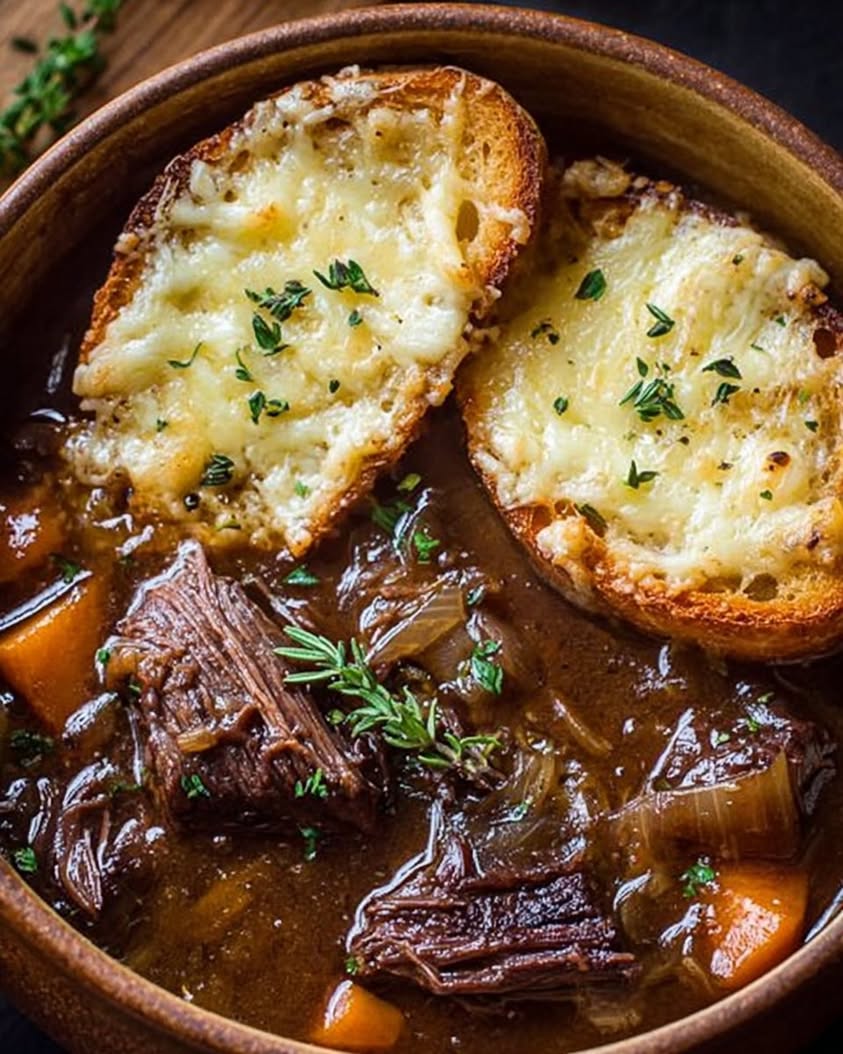
The magic of this French onion short rib soup comes from building layers of umami through technique rather than relying on alcohol. You brown the short ribs until they form a deep mahogany crust, and you cook the onions slowly until they turn jammy and sweet. A splash of good balsamic vinegar and a bit of Worcestershire sauce step in to replace the complexity that wine usually provides, so the broth stays complex and balanced. The Gruyère toast on top delivers that iconic stretchy cheese pull, and it turns golden and bubbly under the broiler, creating a crispy crown that floats on the surface of the soup. This recipe transforms a classic French bistro dish into a hearty, meaty meal that satisfies on every level.
What makes this recipe special is how it bridges the gap between a soup and a stew without feeling heavy or overly complicated. The short ribs add protein and richness, and the broth thickens naturally from the collagen released during cooking, so you get a silky texture without adding any cream or flour. The onions melt into the broth, and the herbs like thyme and bay leaves weave through everything, creating an aromatic experience that fills your kitchen with an irresistible scent. Whether you serve this for a cozy family dinner or a special weekend gathering, this French onion short rib soup with Gruyère toast earns a permanent spot in your cold-weather rotation.
Quick Recipe Highlights
- Flavor Profile: This soup delivers a deep, savory umami punch with sweet notes from caramelized onions and a subtle tang from balsamic vinegar. The beef adds a hearty, meaty foundation that complements the rich, nutty flavor of melted Gruyère cheese.
- Texture: You experience a beautiful contrast between the tender, pull-apart short ribs and the soft, broth-soaked bread underneath the crispy cheese topping. The broth itself feels velvety and smooth, nearly coating your spoon with every scoop.
- Aroma: Your kitchen fills with the sweet, almost buttery scent of slowly caramelizing onions mixed with earthy thyme and savory beef. The moment you slide the soup under the broiler, the aroma of toasting bread and melting cheese becomes irresistible.
- Visual Appeal: The deep amber broth contrasts with the golden Gruyère crust, and the shredded short ribs peek out from beneath the bubbly cheese surface. Fresh thyme leaves add a pop of green that makes the bowl look restaurant-worthy.
- Skill Level Needed: This recipe requires patience with caramelizing onions and browning meat, but it does not demand advanced culinary techniques. Anyone comfortable with basic kitchen tasks can produce excellent results on their first attempt.
- Special Equipment: You need a heavy-bottomed Dutch oven for even heat distribution and a rimmed baking sheet for broiling the toasts. A sharp chef knife makes slicing onions easier, and kitchen twine helps bundle the herbs neatly.
Recipe Overview
- Difficulty Level: I classify this as moderate because caramelizing the onions properly takes attention and time, but the steps are straightforward. You do not need to julienne vegetables or temper eggs, so the technique stays accessible. Most home cooks can manage this recipe with careful reading and a bit of patience.
- Category: This dish works as a main course soup that fills you up completely, but you can serve smaller portions as a starter for a dinner party. It bridges soup and stew categories, offering the spoon-ability of soup with the substance of a braised beef dish.
- Cuisine: The recipe draws heavily from French bistro traditions, specifically the classic French onion soup that originated in 18th-century Paris. The addition of short ribs nods to American comfort food, creating a fusion that feels both rustic and refined. The cooking method uses classical French techniques like deglazing and slow simmering.
- Cost: Short ribs cost more than standard beef stew meat, but you need only about two pounds for six servings. Gruyère cheese adds expense too, but it melts beautifully and delivers authentic flavor. Overall, you spend around twenty-five to thirty dollars for a meal that feels luxurious.
- Season: This soup shines brightest from late autumn through early spring when cold weather demands warming, hearty meals. The caramelized onions provide natural sweetness that balances the darkness of winter, and the rich broth helps combat seasonal chill. You can still enjoy it on cool summer evenings if you crave comfort food.
- Occasion: Serve this for a Sunday supper when you want to impress without spending the whole day in the kitchen. It works perfectly for game day gatherings, holiday dinners, or any time you need to feed a hungry crowd with something memorable. The make-ahead nature of the soup also makes it ideal for casual entertaining.
Why You Will Love This Recipe
The taste of this soup hits every savory note you could want, starting with the deep beefiness from slow-cooked short ribs. The onions caramelize until they almost melt into the broth, and they add a natural sweetness that balances the umami flavors perfectly. When you spoon up a bite that includes a piece of short rib and a strand of onion, you get a flavor combination that feels both familiar and extraordinary. The Gruyère toast adds a nutty, salty element that ties everything together, and the crispy edges of the cheese provide textural contrast against the soft bread underneath.
Convenience plays a big role in why this recipe deserves a spot in your regular rotation. You do all the active work in about twenty-five minutes, and then the soup simmers mostly unattended for nearly three hours. This hands-off approach means you can prep other dishes, relax with a book, or tackle weekend chores while dinner cooks itself. The recipe also freezes beautifully, so you can make a double batch and save half for a busy weeknight. You reheat the soup gently on the stove and broil fresh toasts right before serving, so the final result tastes just as good as the day you made it.
From a nutritional perspective, this soup offers solid protein from the beef short ribs, which also provide collagen that supports joint health. The onions contain prebiotic fibers that feed your gut bacteria, and they deliver quercetin, a powerful antioxidant. You get calcium and protein from the Gruyère cheese, and the homemade broth controls sodium better than any canned alternative. Carrots and celery add vitamins A and K, making this a surprisingly balanced meal. You feel full and satisfied after a bowl, and that satiety lasts for hours without the heavy feeling that often follows cream-based soups.
Socially, this French onion short rib soup with Gruyère toast makes for an impressive entertaining option because it looks dramatic when you bring the bubbling bowls to the table. Guests always ooh and ahh over the cheese crust, and the aroma that hits them as you set down the bowls creates instant anticipation. You can prepare the soup base completely ahead, and then you only need to assemble the toasts and broil them right before serving. This strategy keeps you out of the kitchen when guests arrive, so you can enjoy their company instead of rushing around. The dish feels special enough for holidays but approachable enough for casual get-togethers.
Cost-effectiveness matters because short ribs deliver more flavor per dollar than many premium cuts when you cook them low and slow. Gruyère costs more than typical Swiss cheese, but you use it only for the topping, so a small wedge suffices. The remaining ingredients like onions, carrots, celery, and broth cost very little, and you probably already have most of the pantry staples. When you break down the total cost per serving, this meal costs less than a comparable restaurant bowl, and you get the added satisfaction of cooking it yourself. The recipe scales easily too, so you can feed a crowd without breaking your budget.
Historical Background and Cultural Significance
French onion soup as we know it traces its roots back to 18th-century Paris, where it began as a humble peasant dish made from simple ingredients. Onions grew abundantly and stored well through winter, and cooks simmered them in broth to create a nourishing meal for little money. The addition of stale bread and melted cheese came later, likely as a way to use up leftovers while making the soup more filling. King Louis XV reportedly enjoyed a version of onion soup, though historians debate the accuracy of that story. What everyone agrees on is that French onion soup became a staple in Parisian markets and taverns by the mid-1800s.
Cultural significance of French onion soup extends beyond France to become a global symbol of comfort and bistro cooking. The dish represents the French culinary philosophy of transforming modest ingredients into something extraordinary through careful technique. It appears on menus worldwide as a benchmark for authentic French cuisine, and it often serves as a gateway dish for people exploring European cooking. The soup also carries associations with late-night meals after parties or theatre performances, since Parisian vendors historically sold it in the early morning hours. This connection to conviviality and shared experience gives the soup a special place in food culture.
The evolution of this recipe reflects changing tastes and ingredient availability over the centuries. Early versions used only water and onions because meat was scarce for most people, but wealthier households added beef broth and sometimes wine. The cheese toast topping emerged around the early 20th century when Gruyère and Emmental became more widely available. Contemporary versions often include additional proteins like short ribs to appeal to modern appetites for heartier meals. The no-wine adaptation that I share here makes the recipe accessible to those who avoid alcohol for dietary, religious, or personal reasons, and it uses alternative acids to achieve similar flavor depth.
Regional variations of French onion soup abound across France and around the world. In Provence, cooks sometimes add tomatoes and rosemary to the broth, creating a brighter flavor profile. Lyonnaise versions often include a splash of cognac or brandy, while Alsatian interpretations use Munster cheese for a stronger, funkier topping. American versions tend to be heartier with more cheese and bread, and they sometimes incorporate beef stock that borders on demi-glace in richness. Asian fusion interpretations introduce ingredients like miso or soy sauce to boost umami, creating a bridge between French tradition and Eastern flavors. Each variation tells a story about local ingredients and cultural preferences.
Ingredient Deep Dive
Beef Short Ribs: Short ribs come from the chuck or plate section of the cow, and they contain significant marbling and connective tissue. This fat and collagen break down during long cooking, creating the silky, unctuous texture that makes this soup so satisfying. Native to various beef-eating cultures, short ribs feature prominently in Korean barbecue, Jewish braises, and American comfort food. Nutritionally, they provide excellent protein, iron, and B vitamins, particularly B12 which supports nerve function. When selecting short ribs, look for meaty pieces with good fat distribution and avoid those with too much surface fat or dry-looking edges. Store them in the coldest part of your refrigerator and cook within two days, or freeze them for up to three months. For a more economical option, use chuck roast cut into large chunks, though the texture will differ slightly.
Yellow Onions: Yellow onions balance sweetness and pungency better than white or red onions for caramelizing. They contain natural sugars that concentrate and brown during slow cooking, producing the deep, sweet flavor that defines this soup. Onions have been cultivated for over five thousand years, and they appear in cuisines around the world as a foundational aromatic. Nutritionally, onions provide vitamin C, fiber, and quercetin, an antioxidant linked to reduced inflammation and improved heart health. Choose onions that feel heavy for their size with tight, papery skin and no soft spots or green sprouts. Store them in a cool, dark, well-ventilated place away from potatoes, which release gases that cause onions to spoil faster. For a sweeter result, use Vidalia or Walla Walla onions when they are in season during late spring and summer.
Gruyère Cheese: Gruyère is a Swiss cheese named after the town of Gruyères in the Fribourg canton. It undergoes a long aging process that develops its characteristic nutty, slightly sweet flavor and excellent melting properties. This cheese contains high levels of calcium and protein, and it offers a good source of phosphorus for bone health. The aging process also creates tyrosine crystals that add a pleasant crunch in aged versions. For this soup, choose a younger Gruyère that melts smoothly without becoming greasy, typically aged four to six months. Store Gruyère wrapped in wax paper inside a loosely sealed plastic bag in the cheese drawer of your refrigerator. If Gruyère is unavailable, use Swiss Emmental or Comté cheese, though the flavor profile will shift slightly toward more nutty and less earthy notes.
Balsamic Vinegar: Balsamic vinegar comes from the Modena region of Italy, where it is traditionally made from reduced grape must and aged in wooden barrels. This vinegar provides the acidity and complexity that wine usually contributes to French onion soup, making it an excellent substitute. The aging process concentrates sugars and develops layers of flavor ranging from tart to syrupy sweet. Nutritionally, balsamic vinegar contains antioxidants from the grape skins, and it adds negligible calories while enhancing flavor dramatically. For this recipe, use a good-quality but not necessarily expensive traditional balsamic, avoiding the cheap versions that are often just colored vinegar with sweeteners. Store balsamic vinegar in a cool, dark cabinet away from heat sources, and it will keep for years. You can substitute red wine vinegar plus a pinch of sugar or sherry vinegar for a different but equally valid flavor profile.
Beef Broth: Homemade beef broth provides the richest foundation for this soup, but high-quality store-bought options work well too. The broth carries the umami flavors from the short ribs and onions, acting as the canvas for all other ingredients. For the best results, use a low-sodium broth so you can control the final salt level yourself. Campbell’s, Swanson, and Kitchen Basics all produce acceptable options, though organic versions often have cleaner flavor. If you make broth from scratch, roast the bones first to develop deeper color and complexity. Store homemade broth in the refrigerator for up to five days or freeze it in portion-sized containers for up to six months. Vegetable broth can substitute for a lighter version, but the soup will lose significant depth and body.
Common Mistakes to Avoid
- Rushing the onion caramelization: Onions need at least forty minutes over medium-low heat to develop proper sweetness and color. If you turn the heat too high, they burn on the outside while remaining raw inside, creating bitter flavors instead of sweet caramel notes. Patience pays off with a golden-brown, jammy texture that forms the backbone of the entire soup.
- Skipping the browning step for short ribs: You must sear the short ribs until they form a deep brown crust on all sides before adding liquid. This browning triggers the Maillard reaction that creates hundreds of flavor compounds, and without it, the soup tastes flat and one-dimensional. Do not crowd the pot to ensure proper browning, because excess moisture prevents the crust from forming.
- Adding too much liquid at the start: The short ribs release moisture as they cook, and starting with too much broth dilutes the final flavor. Add enough liquid to barely cover the meat, and you can always add more broth later if needed. The goal is a concentrated, rich broth rather than a watery soup that lacks intensity.
- Using pre-shredded cheese: Pre-shredded Gruyère contains anti-caking agents like cellulose or starch that prevent smooth melting. Grate your own cheese from a block for a creamy, stretchy texture that forms the perfect crust under the broiler. The extra minute of grating transforms the final texture dramatically.
- Forgetting to season in layers: Add salt and pepper when browning the meat, when cooking the onions, and again when the soup finishes simmering. Layering seasoning throughout the cooking process builds more complex flavor than adding it all at the end. Taste the broth before serving to adjust salt levels accordingly.
- Overloading the bowls with bread: Too much bread soaks up all the broth and leaves you with a dry, bready mess rather than soup. Use one or two slices of baguette per bowl, and make sure they fit in a single layer so the cheese covers everything evenly. The bread should absorb some broth but leave plenty for spooning.
- Broiling too far from the element: Place the oven rack in the top third position, about four to six inches from the broiler element. If the rack sits too low, the cheese melts before it browns, and the bread dries out without achieving the crispy, bubbly texture you want. Watch the bowls closely because broiling happens quickly.
- Using wet or stale bread: Fresh baguette works best because it holds its structure under the broiler and absorbs broth at the right rate. Very stale bread turns into mush too quickly, and extremely fresh bread may not toast properly. Day-old baguette from a bakery provides the ideal texture and density.
- Neglecting to skim fat: Short ribs render significant fat during cooking, and leaving it in the soup creates a greasy mouthfeel that overwhelms other flavors. Refrigerate the soup overnight or use a fat separator to remove the solidified fat layer before reheating and serving. A defatted broth tastes cleaner and more refined.
- Serving in bowls that cannot broil: Use oven-safe soup crocks or ramekins that withstand high broiler heat without cracking. Ceramic bowls labeled oven-safe work well, but check the manufacturer guidelines for temperature limits. Transferring the soup to metal bowls works too, though they conduct heat differently.
Essential Techniques
Caramelizing Onions: Start with a wide, heavy-bottomed pot to give the onions maximum surface area for even cooking. Slice the onions into uniform half-rings about a quarter-inch thick to ensure they cook at the same rate. Cook them over medium heat with butter and a pinch of salt, stirring every five minutes, for forty to fifty minutes until they turn deep golden brown. The salt draws out moisture, and the butter adds richness while preventing sticking. If the onions start to brown too quickly, reduce the heat immediately and add a tablespoon of water to slow the process. The visual cue for success is a uniformly brown color with no black or burnt spots, and the texture should be jammy and almost spreadable.
Searing Short Ribs: Pat the short ribs completely dry with paper towels before seasoning, because moisture prevents browning. Heat a thin layer of oil in your Dutch oven until it shimmers but does not smoke, then add the ribs in a single layer without crowding. Leave them undisturbed for three to four minutes per side to develop a deep crust, and use tongs to turn them carefully. The meat should release easily from the pan when properly seared, and if it sticks, give it another minute before trying again. A well-seared crust on all sides creates the foundation for the entire broth flavor, so take your time with this step. Deglaze the pan after removing the ribs by adding a splash of broth or water and scraping up the browned bits.
Deglazing the Pot: After removing the seared short ribs, you see brown bits stuck to the bottom of the pot that contain concentrated flavor. Pour in a half cup of beef broth or water and scrape vigorously with a wooden spoon to dissolve those bits into the liquid. This technique, called deglazing, captures all the flavor from the searing process and incorporates it into the broth. Do not skip deglazing because those browned bits represent pure umami that would otherwise go to waste. The liquid should come to a simmer as you scrape, and it will reduce slightly before you add the remaining broth and return the meat to the pot. A wooden spoon with a flat edge works best for dislodging stubborn bits without scratching your cookware.
Broiling the Cheese Toasts: Position an oven rack in the top third of your oven and preheat the broiler on high for at least five minutes. Place the filled soup bowls on a rimmed baking sheet to catch any drips, then float the baguette slices on top of the broth. Pile the grated Gruyère generously over the bread, making sure it overlaps the edges of the bowl slightly. Broil for two to four minutes, rotating the sheet halfway through, until the cheese is bubbly and deeply browned in spots. Watch carefully because broiling happens quickly, and burnt cheese tastes bitter and ruins the dish. Let the bowls rest for two minutes before serving to allow the molten cheese to set slightly.
Pro Tips for Perfect French Onion Short Rib Soup
- Use a mix of butter and oil for caramelizing the onions: Butter adds flavor but burns at a lower temperature, so combining it with a neutral oil like canola gives you the best of both. The oil raises the smoke point while the butter contributes richness, resulting in perfectly caramelized onions without burnt edges.
- Add a teaspoon of sugar to the onions during cooking: A small amount of granulated sugar speeds up caramelization and deepens the color, especially if your onions are not super sweet. The sugar dissolves into the moisture and helps create that jammy, restaurant-quality texture. Do not overdo it because you want savory sweetness, not candy-like flavor.
- Tie the herbs in a bundle with kitchen twine: A bouquet garni of thyme sprigs, bay leaves, and parsley stems makes removal before serving much easier than picking individual leaves. Tie the bundle tightly so nothing escapes into the soup, and press it below the liquid surface for maximum extraction. Discard the bundle when the soup finishes cooking.
- Chill the soup overnight before serving for best flavor: The flavors continue to meld and deepen as the soup rests, and chilling makes it easy to remove the solidified fat layer. Reheat the defatted soup gently on the stove, and the broth tastes noticeably richer and more complex than on day one.
- Use a microplane to grate fresh nutmeg over the cheese before broiling: A light dusting of freshly grated nutmeg complements the nutty flavor of Gruyère and adds an aromatic note that elevates the entire dish. Just a few passes over the microplane are enough for all six servings.
- Slice your baguette at a steep angle for larger surface area: Cutting the bread on a bias creates oval slices that cover more of the soup surface and hold more cheese. Angled slices also resist sinking into the broth better than flat rounds because they have more structural integrity.
- Reserve some broth to add before serving if the soup thickens too much: The collagen from the short ribs can make the broth gelatinous, especially after refrigeration. Stir in a bit of hot beef broth or water while reheating to achieve the perfect soupy consistency rather than a stew-like texture.
- Serve with a side of Dijon mustard for dipping the cheese toasts: The sharp, tangy mustard cuts through the richness of the cheese and beef, cleaning your palate between bites. Place a small dollop on the side of each bowl or offer it at the table in a small dish.
Variations and Adaptations
Regional Variations: You can adapt this French onion short rib soup to reflect different culinary traditions by adjusting the herbs and seasonings. For an Italian-inspired version, add a Parmesan rind to the broth while it simmers and use provolone cheese instead of Gruyère. A Provencal variation includes a pinch of saffron threads, diced tomatoes, and fresh rosemary, which brightens the broth and adds a floral note. For a German twist, use dark beer instead of balsamic vinegar and top the toasts with Emmental cheese and a sprinkle of caraway seeds.
Seasonal Adaptations: During summer months, you can lighten this soup by using less short rib and adding fresh corn kernels or diced zucchini during the last thirty minutes of cooking. Springtime versions benefit from the addition of fresh peas and a handful of chopped sorrel stirred in right before serving. Autumn versions can incorporate roasted butternut squash cubes or sliced mushrooms, which add earthiness and body. Winter versions stay classic but can include parsnips or turnips for root vegetable sweetness.
Dietary Modifications: For a gluten-free adaptation, use gluten-free bread for the toasts and verify that your Worcestershire sauce is certified gluten-free. Many commercial Worcestershire sauces contain malt vinegar, which comes from barley, so check labels carefully. For a dairy-free version, use a high-quality vegan cheese that melts well, such as those made from cashews or coconut oil, and substitute the butter with olive oil for cooking the onions. Lactose-intolerant individuals can often tolerate aged Gruyère because aging breaks down most of the lactose, but use aged Gouda or Parmesan as alternatives if needed.
Flavor Variations: You can add a tablespoon of tomato paste when cooking the onions to deepen the umami and add a subtle acidity that mimics wine. A teaspoon of fish sauce stirred into the broth adds savory depth without tasting fishy, because the anchovy notes meld with the beef. For a smoky variation, use smoked paprika or a chipotle pepper in adobo sauce, which brings heat and complexity. A mushroom-forward version incorporates dried porcini mushrooms rehydrated in hot water, with the soaking liquid added to the broth for intense earthy flavor.
Texture Modifications: If you prefer a chunkier soup, leave the short ribs in larger pieces rather than shredding them completely before serving. For a smoother texture, puree the broth with an immersion blender after removing the meat, then return the shredded short ribs to the pot. A thicker, stew-like consistency works well if you reduce the broth by simmering it uncovered for an extra thirty minutes after removing the meat. For a more refined presentation, strain the broth through a fine-mesh sieve to remove any small bits of herbs or onion fragments.
Presentation Alternatives: Instead of serving individual bowls, serve the soup from a large tureen with the cheese toasts arranged on a separate platter for family-style dining. You can also prepare the toasts separately by broiling the cheese on baguette slices and floating them in each bowl at the table for a dramatic effect. For a modern twist, serve the soup in small cast-iron skillets or mini cocottes that go from oven to table directly. Garnish each bowl with fresh thyme leaves, a drizzle of aged balsamic vinegar, or a sprinkle of flaky sea salt just before serving.
Serving and Presentation Guide
For plating individual portions, use oven-safe soup crocks that hold about twelve to sixteen ounces each. Ladle the hot soup into each crock, leaving about an inch of space at the top for the bread and cheese. Place one or two baguette slices on top, pressing them gently into the broth until they absorb some liquid but still float. Pile a generous amount of grated Gruyère over the bread, extending it slightly over the edges of the crock for that dramatic cheese drip. Broil until bubbly and browned, then transfer the hot crocks to small plates or trivets for serving. The presentation should look rustic and hearty, with the cheese forming a golden lid that cracks slightly when you break through it with your spoon.
Garnishing ideas include a few fresh thyme leaves scattered over the molten cheese, which adds color and a subtle herbaceous aroma. A light drizzle of aged balsamic glaze just before serving provides a tangy-sweet counterpoint to the richness and adds visual contrast. For special occasions, add a few shavings of fresh black truffle over the cheese toasts just before serving, though this is entirely optional. A small bouquet of microgreens placed on the side of the crock adds an elegant touch. Keep garnishes minimal because the soup itself carries plenty of visual appeal without overwhelming decoration.
Traditional accompaniments include a simple green salad with a sharp vinaigrette to cut through the richness of the soup. A side of pickled vegetables, such as cornichons or pickled onions, provides acidity that refreshes the palate between bites. Crusty bread is unnecessary since the toast tops the soup, but you can serve extra baguette slices for dipping. For a more substantial meal, add a charcuterie board with cured meats and soft cheeses before serving the soup. The soup pairs well with a light dessert like poached pears or a citrus sorbet to cleanse the palate afterward.
Modern serving suggestions include presenting the soup in wide, shallow bowls that show off the short ribs and broth. This presentation style works well for Instagram-worthy photos because it displays all the components clearly. For a brunch or lunch option, serve smaller portions of the soup in espresso cups or shot glasses as an amuse-bouche. Temperature considerations matter because the soup should be piping hot when it goes under the broiler, and it should rest for only two minutes before serving to keep the cheese at its peak stretchiness. Portion control tips suggest one crock per person for a main course, or half a crock for an appetizer course in a multi-course meal.
Wine and Beverage Pairing
Even though this French onion short rib soup uses no wine in the cooking process, you can still pair it beautifully with wine for serving. A full-bodied red wine like a French Côtes du Rhône or an American Cabernet Sauvignon complements the beefy richness of the broth. The tannins in these wines cut through the fat from the short ribs and cheese, providing a palate-cleansing effect between bites. A slightly chilled Beaujolais Nouveau offers a fruity, low-tannin option that works well with the caramelized onions. For white wine drinkers, an oaked Chardonnay from California provides enough body to stand up to the soup without overwhelming it.
Non-alcoholic alternatives include a strong black tea like Assam or English Breakfast, which has enough tannin and body to match the soup. A kombucha with ginger and apple notes provides acidity and bubbles that refresh the palate similarly to wine. For a warming option, serve hot apple cider with a cinnamon stick, which complements the sweetness of the caramelized onions. A sparkling water with a squeeze of lemon offers a simple, cleansing option that lets the soup flavors shine. You can also serve a non-alcoholic red wine alternative made from grape must, which mimics the complexity of wine without the alcohol.
Beer pairings work exceptionally well with this soup, particularly darker styles like brown ales or porters. The roasty notes in a porter complement the caramelized onions, while the carbonation cuts through the richness of the cheese. A Belgian dubbel offers dark fruit flavors and a slightly sweet finish that matches the balsamic vinegar notes in the broth. For a lighter option, a crisp lager or pilsner cleanses the palate between rich spoonfuls. Cider also works, with a dry English-style cider providing acidity that mirrors the vinegar in the recipe.
Serving suggestions for beverages include offering a small glass of the paired drink alongside the soup bowl, not poured over it. Provide the beverage at cellar temperature for red wine, chilled for beer and white wine, and hot for tea or cider. Place the drink on the right side of the soup bowl for easy access. Encourage guests to alternate between a sip and a spoonful to experience how the flavors interact. For a complete experience, consider serving a digestif like an herbal liqueur after the meal to aid digestion and extend the evening.
Storage and Shelf Life
Store the soup base without the bread and cheese topping in an airtight container in the refrigerator for up to five days. The broth continues to develop flavor as it sits, and the collagen from the short ribs may cause it to become gelatinous when cold. This texture change is normal and reverses when you reheat the soup. For longer storage, freeze the soup base in portion-sized containers for up to three months. Use freezer-safe glass jars or plastic containers, leaving an inch of headspace for expansion during freezing. Label each container with the date and contents so you know exactly what you have.
Temperature requirements for storage are simple: keep the soup below forty degrees Fahrenheit in the refrigerator and at zero degrees Fahrenheit in the freezer. The temperature fluctuates if you open the refrigerator door frequently, so store the soup toward the back where the temperature stays most stable. For the best quality, consume refrigerated soup within three days and frozen soup within two months. The soup remains safe to eat beyond these timeframes, but the flavor and texture may degrade. Always reheat the soup to a rolling boil before serving to ensure food safety, especially if you have stored it for several days.
Container recommendations include glass Mason jars with plastic lids, which do not absorb odors and allow you to see the contents. Avoid using plastic containers that stain easily or absorb flavors from previous uses, because the beef broth can leave lingering smells. If you freeze the soup, use containers specifically designed for freezing that withstand temperature changes without cracking. You can also freeze the soup in freezer bags laid flat, which saves space and thaws more quickly. Remove as much air as possible from the bags before sealing to prevent freezer burn.
Signs of spoilage include an off odor Print
French Onion Short Rib Soup with Cheesy Gruyère Toast (No Wine)
- Total Time: 2 hours 50 minutes
- Yield: 4
Description
A hearty and comforting soup featuring tender short ribs, caramelized onions, and a rich beef broth, topped with a cheesy Gruyère toast. No wine is used, but the deep flavors come from browning and aromatics.
Ingredients
- 2 lbs bone-in short ribs
- 2 tablespoons olive oil
- 4 large yellow onions, thinly sliced
- 4 cloves garlic, minced
- 2 tablespoons all-purpose flour
- 6 cups beef broth (low-sodium)
- 2 cups water
- 1 teaspoon dried thyme
- 2 bay leaves
- Salt and black pepper to taste
- 1 tablespoon Worcestershire sauce (optional)
- 4 slices French bread (1-inch thick)
- 2 cups shredded Gruyère cheese
- Butter for toasting bread
Instructions
- Season short ribs generously with salt and pepper. In a large pot or Dutch oven, heat olive oil over medium-high heat. Sear short ribs on all sides until deeply browned, about 3-4 minutes per side. Remove ribs and set aside.
- Reduce heat to medium. Add sliced onions and a pinch of salt. Cook, stirring occasionally, for about 20-25 minutes until onions are soft and deeply caramelized. Add minced garlic and cook for 1 more minute.
- Sprinkle flour over the onions and stir well to coat, cooking for 1 minute to remove raw flour taste.
- Slowly pour in beef broth and water while stirring to prevent lumps. Add dried thyme, bay leaves, and Worcestershire sauce if using. Return the short ribs to the pot, along with any accumulated juices.
- Bring to a boil, then reduce heat to low. Cover and simmer for 2 to 2.5 hours, until short ribs are very tender and falling off the bone. Remove short ribs, shred the meat from the bones, discard bones, and return the shredded meat to the soup. Season with additional salt and pepper to taste. Remove bay leaves.
- For the toast: Preheat broiler. Lightly butter both sides of bread slices and place on a baking sheet. Broil until golden, about 1-2 minutes per side. Top each toast with a generous amount of shredded Gruyère cheese. Broil again until cheese is melted and bubbly.
- Ladle the soup into bowls and top each with a cheesy Gruyère toast. Serve immediately.
Notes
You can customize the seasonings to taste. For extra depth, add a splash of balsamic vinegar or mushroom powder. The soup can be made a day ahead for even better flavor.
- Prep Time: 20 minutes
- Cook Time: 2.5 hours
- Method: Main
- Cuisine: French