The Ultimate Cheesy Spinach Artichoke & Mushroom Stuffed Baguette Recipe: A Crowd-Pleasing Appetizer
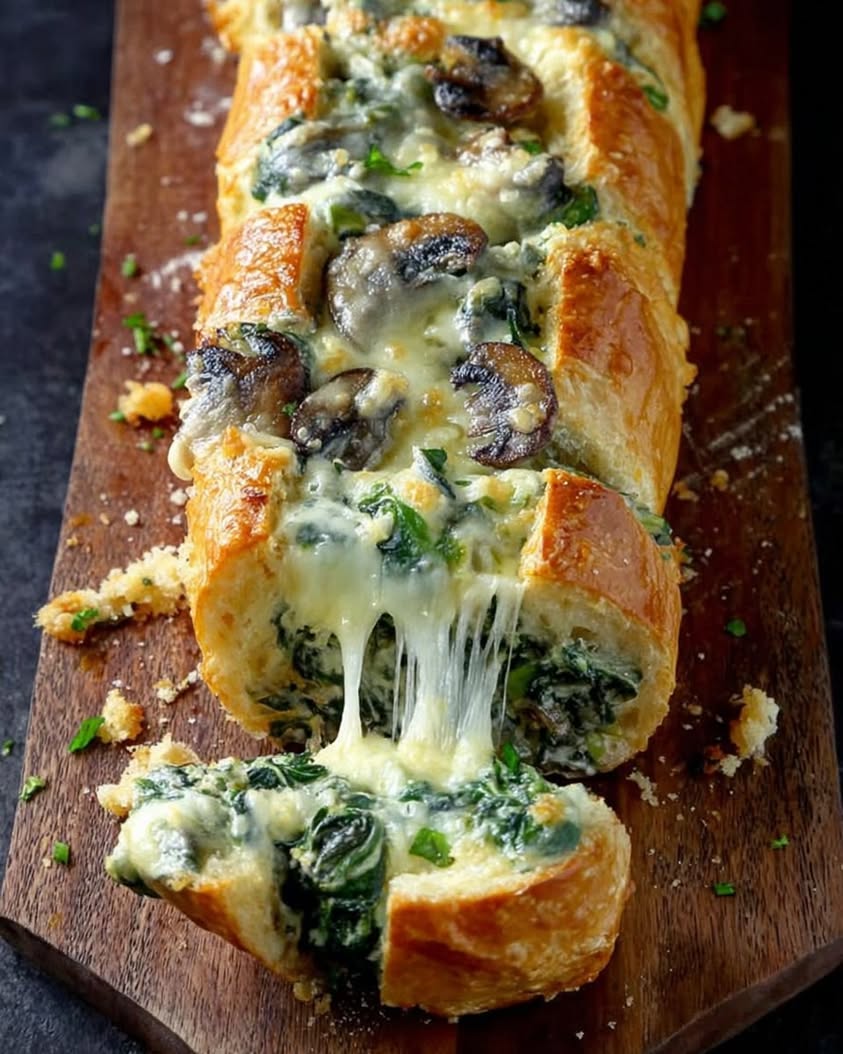
Imagine pulling a warm, golden baguette from the oven, its crust crackling as you slice into it to reveal a river of melted cheese, tender spinach, earthy mushrooms, and tangy artichoke hearts. This Cheesy Spinach Artichoke & Mushroom Stuffed Baguette Recipe delivers exactly that experience. It transforms the classic, beloved dip into a portable, shareable, and utterly satisfying main course or appetizer. The combination of creamy cheeses, savory vegetables, and crusty bread creates a symphony of textures and flavors that will impress your family and guests alike. This is not just a recipe; it is an experience in comfort food elevated to a new level of deliciousness.
We crafted this Cheesy Spinach Artichoke & Mushroom Stuffed Baguette Recipe to be both accessible and impressive. You do not need to be a professional chef to achieve restaurant-quality results. The ingredients are straightforward, the assembly is simple, and the final product looks stunning on any table. Furthermore, this recipe is incredibly versatile. You can serve it as a hearty appetizer for a game day party, a satisfying vegetarian main course for a weeknight dinner, or a show-stopping side dish for a holiday gathering. The aroma of garlic, cheese, and herbs baking into the bread will fill your home with an irresistible invitation to the table.
For the best results, the key lies in the quality of your ingredients. Use a fresh, sturdy baguette that can hold the filling without becoming soggy. A mix of mozzarella for stretch and Parmesan for a sharp, nutty depth creates the perfect cheese pull. Fresh spinach adds a vibrant color and mild flavor, while artichoke hearts contribute a unique, slightly tangy texture. The mushrooms bring an earthy umami that rounds out the entire dish. We will guide you through each step, ensuring your stuffed baguette turns out perfectly golden, cheesy, and packed with flavor every single time. Get ready to create a new family favorite.
Quick Recipe Highlights
- Flavor Profile: This stuffed baguette delivers a rich, savory, and deeply satisfying flavor. The creamy cheese base melds with the earthy notes from the mushrooms and the tangy brightness from the artichoke hearts. A hint of garlic and a touch of red pepper flakes provide a subtle warmth that enhances the overall experience.
- Texture: The textural contrast is the star of this dish. You get a crispy, crusty exterior from the baked baguette, giving way to a soft, pillowy interior. The filling itself is wonderfully creamy and luscious, with tender pieces of spinach and mushroom and slightly firm artichoke hearts adding pleasant bites throughout.
- Aroma: The aroma is intoxicating and inviting. As the baguette bakes, your kitchen fills with the scent of toasting bread, nutty melted cheese, and fragrant garlic. The earthy notes from the mushrooms and the fresh, green scent of spinach complete this mouthwatering olfactory experience.
- Visual Appeal: Visually, this dish is a showstopper. The golden-brown crust of the baguette contrasts beautifully with the green flecks of spinach and the pale artichoke hearts peeking through the melted, bubbly cheese. A final sprinkle of fresh parsley adds a pop of vibrant color.
- Skill Level Needed: This recipe is perfect for beginner cooks and experienced home chefs. The techniques are basic: sautéing vegetables, mixing a filling, and hollowing and stuffing a baguette. There are no complex steps, making it a reliable and confidence-building dish to prepare.
- Special Equipment: You will need a sharp serrated knife to cut the baguette, a large skillet for sautéing the vegetables, a mixing bowl, a spoon for hollowing out the bread, and a baking sheet lined with parchment paper for easy cleanup.
Recipe Overview
- Difficulty Level: We rate this recipe as easy because it involves fundamental cooking techniques like sautéing and mixing. The assembly is straightforward, and there is no need for advanced knife skills or complex culinary methods. Most home cooks can prepare this with confidence, even on a busy weekday.
- Category: This dish fits perfectly into several categories. It is a fantastic party appetizer, a hearty vegetarian main course, a satisfying side dish for soups or salads, and even a delicious, handheld lunch option. Its versatility is one of its greatest strengths.
- Cuisine: While inspired by the classic American dip, this stuffed baguette has roots in Italian and French culinary traditions. The use of crusty bread, garlic, olive oil, and a combination of cheeses like mozzarella and Parmesan are hallmarks of Italian cooking. The concept of stuffing bread is also found in French cuisine.
- Cost: Preparing this recipe is very cost-effective. The primary ingredients, such as a baguette, spinach, mushrooms, and cheese, are typically inexpensive and widely available. Artichoke hearts can be purchased canned or frozen for a reasonable price, making this dish an affordable way to create something special.
- Season: This is a fantastic year-round recipe. In the spring, fresh spinach and artichokes are at their peak. During the fall and winter, the warm, cheesy, and hearty nature of the dish provides comfort on cold evenings. It is equally enjoyable at a summer barbecue or a winter holiday party.
- Occasion: The Cheesy Spinach Artichoke & Mushroom Stuffed Baguette is perfect for a wide range of occasions. Serve it at game day parties, potlucks, holiday gatherings like Thanksgiving or Christmas, or as a special weeknight dinner. It also makes a wonderful contribution to a brunch buffet.
Why You Will Love This Recipe
The taste and texture combination is simply irresistible. You get a crunchy, satisfying crust from the baked baguette, which gives way to a decadently creamy and cheesy center. The spinach adds a fresh note, the artichokes provide a unique tang, and the mushrooms bring a deep, savory umami flavor. Every bite offers a perfect balance of textures and tastes that will leave you reaching for more. It is comfort food that feels sophisticated and incredibly rewarding to eat.
Convenience is a major factor in this recipe’s appeal. The entire process, from prepping ingredients to pulling the finished baguette from the oven, takes just about 35 minutes. The active prep time is even shorter, making it an ideal choice for busy weeknights when you want a delicious, homemade meal without spending hours in the kitchen. The steps are simple and linear, meaning you can easily multitask while the vegetables sauté or the bread bakes.
There are also surprising nutritional advantages to this dish. Spinach is packed with vitamins A, C, and K, as well as iron and antioxidants. Mushrooms are a great source of B vitamins and selenium. Artichokes are rich in fiber and folate. When combined with good-quality cheese for calcium and protein, this stuffed baguette offers more nutritional value than you might expect from such an indulgent-tasting meal. It is a satisfying way to enjoy your vegetables.
This recipe truly shines as a social and entertaining option. It is designed to be shared, making it the perfect centerpiece for a gathering. Guests can easily pull off pieces of the cheesy bread, encouraging a communal and fun dining experience. It eliminates the need for individual plates and forks for a casual party, and its stunning presentation will make you look like a culinary hero. You can prepare it ahead of time and bake it just before your guests arrive.
Finally, this recipe is incredibly cost-effective and accessible. The ingredients are all readily available at any grocery store and are generally inexpensive. A single baguette stretched with a rich, vegetable-packed filling can feed several people, making it a budget-friendly option for feeding a crowd. You can easily substitute ingredients based on what you have on hand, making it a flexible and economical choice for any home cook.
Historical Background and Cultural Significance
The concept of stuffing bread is ancient, dating back to medieval European cuisine. Cooks would hollow out stale loaves to create edible vessels for stews and fillings, preventing food waste and creating a portable meal. This practice evolved into various stuffed bread dishes across the continent, from Italian focaccia with fillings to French pain farci. The stuffed baguette is a modern, convenient evolution of this time-honored tradition.
The specific filling of spinach, artichoke, and cheese has a more recent history, rooted in American culinary culture. The spinach artichoke dip, a creamy, baked appetizer, became wildly popular in the United States during the 1970s and 1980s. It was a staple of chain restaurants like TGI Fridays and Applebee`s, and it quickly became a home entertaining favorite. Its creamy texture and rich flavor profile made it a classic.
The evolution of this dip into a stuffing for bread is a natural progression. Home cooks and chefs alike began looking for new ways to enjoy the beloved flavor combination. Stuffing it into a baguette transforms it from a dip, which requires chips or bread for scooping, into a complete, self-contained dish. This adaptation makes it more portable, easier to serve, and even more satisfying to eat. The addition of mushrooms is a more recent, sophisticated twist.
Various regional adaptations exist. Some versions use sourdough boules or Italian bread instead of a baguette. Others add protein like shredded chicken to make it a more substantial main course. Some recipes incorporate different cheese blends, like Gruyere for a nuttier flavor or Monterey Jack for extra melt. This flexibility shows the recipe’s adaptability and its ability to be personalized to different tastes and regional preferences.
Ingredient Deep Dive
Artichokes hold a celebrated place in Mediterranean cuisine, particularly in Italian and Greek cultures. They are the edible flower bud of a thistle plant, prized for their unique, slightly sweet and nutty flavor. Nutritionally, artichokes are excellent sources of dietary fiber, antioxidants, and folate. When selecting artichoke hearts, look for ones packed in water or brine, which have a milder flavor and softer texture than those in oil. Store unopened cans in a cool, dark pantry, and transfer leftover artichokes to a sealed container in the refrigerator for up to five days. For a substitution, grilled or roasted red peppers offer a different but complementary sweet and smoky flavor.
Spinach is a powerhouse of nutrition, originating from ancient Persia and cultivated globally. It is rich in iron, calcium, vitamins A, C, and K, and various antioxidants. For this recipe, fresh spinach is preferred for its vibrant color and fresh flavor. Select leaves that are bright green, crisp, and free from any yellowing or wilting. You can store fresh spinach in a plastic bag in the refrigerator’s crisper drawer for up to a week. When choosing a substitute, arugula will add a peppery bite, or kale can be used but requires a longer sauté time to tenderize its tougher leaves.
Mushrooms, specifically cremini or baby bella, are excellent choices for this filling. They belong to the fungus kingdom and have been used in cuisines worldwide for centuries for their unique, savory umami flavor. Mushrooms are low in calories and a great source of B vitamins and selenium. When selecting, choose mushrooms that are firm, plump, and dry with closed caps. Store them in a paper bag in the refrigerator, which allows them to breathe better than plastic and prevents sliminess. For a different flavor profile, you can substitute shiitake mushrooms for a more intense, earthy taste.
Cheese is the heart of this recipe, and choosing the right blend is crucial. Mozzarella is ideal for its incredible meltability and stretch, creating that iconic, gooey cheese pull. Parmesan, on the other hand, adds a sharp, salty, and nutty depth that enhances the overall savory profile. For the best results, buy a block of whole-milk low-moisture mozzarella and grate it yourself, as pre-shredded cheese contains anti-caking agents that hinder melting. Similarly, grate Parmesan fresh from a wedge for superior flavor. Store both cheeses in the refrigerator, tightly wrapped in their original packaging or wax paper.
The baguette serves as the vessel for all these flavors, and its selection is key. A good baguette should have a crisp, golden-brown crust and a soft, airy crumb inside. A fresher baguette is easier to hollow out without tearing, but a slightly stale one can hold the filling better without becoming soggy. Look for a baguette that is about 18-24 inches long. You can store a baguette at room temperature in a paper bag for a day or two. For an alternative, a sturdy ciabatta loaf or a round sourdough boule will also work wonderfully.
Common Mistakes to Avoid
- Do not over-sauté the vegetables. Cooking them until they are completely limp and watery will result in a soggy filling. Sauté them just until they have wilted and released their initial moisture, then remove them from the heat.
- Avoid using pre-shredded cheese. These cheeses are coated with starch and cellulose to prevent clumping, which also prevents them from melting into a smooth, creamy sauce. You must grate your own cheese from a block for the best texture.
- Do not skip the step of hollowing out the baguette. Leaving too much bread inside will create a thick, doughy center that cannot properly cook. You want a thin shell that will toast beautifully and hold a generous amount of filling.
- Avoid over-stuffing the baguette. While you want a generous filling, packing it so tightly that the bread splits will cause the filling to leak out during baking. Leave just a little bit of room for the filling to expand.
- Do not use a soft, fluffy bread like a hot dog bun or sandwich bread. The baguette must have a sturdy crust to support the heavy, moist filling. A soft bread will fall apart and become a soggy mess.
- Avoid adding the bread crumbs from the hollowed baguette to the filling unless you enjoy a stodgy texture. These crumbs can be saved for making bread pudding or stuffing, but do not add them to this recipe.
- Do not bake the stuffed baguette without first sealing the foil tightly. The foil traps steam, which helps the filling heat through and the cheese melt without the bread burning. The final uncovered bake is just to crisp the crust.
- Avoid using frozen spinach that has not been thoroughly thawed and squeezed dry. Frozen spinach contains a lot of water, and if you add it to the filling, it will turn the whole dish into a watery, unappetizing mess.
Essential Techniques
Properly hollowing out a baguette is a fundamental technique for this recipe. You must remove the soft interior crumb while leaving a sturdy, intact shell. Start by cutting a V-shaped trough along the top of the baguette, or cut the baguette in half lengthwise. Using your fingers or a small spoon, gently pull out the soft bread, being careful not to tear the crust. The goal is to create a thin, hollowed-out shell. This technique ensures that the crust toasts properly and that the filling has plenty of room. A common pitfall is poking a hole through the bottom, so work gently and patiently. Visual cues for success include a thin, even layer of bread remaining attached to the crust.
Sautéing the vegetables correctly is crucial for flavor development and texture. Start by heating your skillet over medium heat and adding a little olive oil. Sauté the mushrooms first as they release the most water and need to brown. Cook them undisturbed for a few minutes to develop color. Then, add the garlic and cook for just 30 seconds until fragrant. Finally, add the spinach in batches, stirring until it wilts. The goal is to cook the vegetables just enough to soften them and remove excess moisture, not to become mushy. Common pitfalls include crowding the pan, which steams the vegetables instead of browning them, and cooking them over too high a heat, which can burn the garlic.
Assembling the stuffed baguette is a simple but important step. You first want to combine the cream cheese with the mozzarella, Parmesan, and seasoning in a large bowl. This creates the base of the filling. Then, fold in the sautéed and slightly cooled vegetables and the artichoke hearts. Mix everything until it is evenly combined. Spoon this mixture into the hollowed baguette shell, pressing gently to fill any gaps. You can leave the filling slightly mounded on top for a more dramatic presentation. The visual cue for success is a filling that is dense, cohesive, and evenly distributed along the length of the bread.
Pro Tips for Perfect Cheesy Spinach Artichoke & Mushroom Stuffed Baguette
For the best flavor, use a combination of cheeses. Do not rely on just one type. The mozzarella provides the melt and stretch, while Parmesan adds a sharp, salty punch that balances the richness. A little bit of cream cheese also adds a creamy tang that is essential to the classic dip flavor.
You must squeeze all the excess water out of the artichoke hearts. They are often packed in brine or oil. Pat them dry with paper towels before chopping them. This prevents them from making the filling watery and ensures the final dish has a perfectly creamy, not soupy, consistency.
To guarantee a crispy crust, do not skip the final uncovered baking step. After you have baked the baguette wrapped in foil, open the foil and bake it for another 5-7 minutes. This allows the steam to escape and the crust to crisp up beautifully, creating that satisfying contrast with the soft filling inside.
Let the baked baguette rest for about 5 minutes before slicing. This rest period is crucial. It allows the filling to set up just slightly, making it much easier to slice cleanly without the cheese oozing out everywhere. The slices will hold their shape better and look more appealing when served.
Do not be shy with the seasoning. The richness of the cheese and the vegetables can handle a good amount of salt, pepper, and garlic. A pinch of red pepper flakes adds a lovely, subtle heat that cuts through the richness. A squeeze of lemon juice at the end can brighten all the flavors.
You can easily customize the filling. If you want a more robust flavor, add some cooked bacon or crumbled sausage. For a touch of freshness, fold in some chopped sun-dried tomatoes or fresh basil right before stuffing the baguette. The base recipe is a perfect canvas for your own creativity.
Variations and Adaptations
Regional variations of this stuffed bread are common across the United States. In the South, you might find it stuffed with collard greens and pimento cheese for a distinct regional twist. On the West Coast, cooks often add sun-dried tomatoes, roasted red peppers, and fresh basil to the filling, creating a more vibrant, Mediterranean-inspired version. These variations reflect local tastes and available ingredients.
Seasonal adaptations can help you make the most of fresh produce throughout the year. In the spring, use fresh, tender artichokes and young spinach for the best flavor. In the summer, incorporate grilled vegetables like zucchini and bell peppers. During the fall, add roasted butternut squash or caramelized onions to bring a touch of sweetness and earthiness to the dish.
Dietary modifications are easy to implement. For a gluten-free version, use a gluten-free baguette or a sturdy gluten-free loaf. The dairy-free option can be achieved by using dairy-free cream cheese, mozzarella, and Parmesan alternatives made from nuts or soy. For a vegan adaptation, all cheese can be replaced with high-quality vegan alternatives, and you can add extra nutritional yeast for a cheesy flavor.
Flavor variations are endless. For a Mexican-inspired version, add black beans, corn, and a blend of Monterey Jack and cheddar cheese. For an Italian version, use ricotta and provolone cheese and add chopped kalamata olives and oregano. Experimenting with different spice blends, such as smoked paprika or Cajun seasoning, can completely transform the character of the dish.
You can also make texture modifications. For a crunchier filling, add toasted pine nuts or chopped walnuts. For a smoother filling, you can pulse the sautéed vegetables in a food processor before mixing them with the cheese. This is a great way to make the dish more appealing to picky eaters or children.
Serving and Presentation Guide
Plating is simple but impactful. Slice the baked baguette into 2-inch thick pieces using a serrated knife. Arrange the slices on a large, beautiful platter, slightly overlapping them to create an inviting display. For a more formal presentation, you can leave the baguette whole and serve it on a wooden board with a sharp knife for guests to cut their own pieces.
Garnishing ideas can elevate the visual appeal of the dish. A fresh sprinkle of chopped parsley or chives adds a bright green color and a fresh flavor contrast. A light drizzle of balsamic glaze provides a beautiful dark swirl and a touch of acidity. A few extra shavings of Parmesan cheese over the top will make it look even more indulgent.
Traditional accompaniments include a side of warm, rich marinara sauce for dipping. The acidity of the tomato sauce cuts through the richness of the cheese beautifully. A simple side salad with a lemon vinaigrette also helps to balance the meal, adding a fresh and crisp element that contrasts nicely with the warm, soft bread.
For a modern serving suggestion, you can serve the slices on small appetizer plates with a dollop of pesto or a dollop of sour cream. For a brunch setting, serve it alongside a frittata or a fresh fruit salad. The versatility of this dish means it can be easily adapted to fit any menu.
Temperature considerations are important for the best experience. This dish is best served warm, right out of the oven. If you are serving it at a party, you can keep it warm in a low-temperature oven (around 200 degrees Fahrenheit) for up to 30 minutes. You should avoid serving it cold, as the cheese will harden and the bread will become chewy.
Wine and Beverage Pairing
A crisp, unoaked white wine is a classic and excellent pairing for this dish. The acidity and freshness of a Sauvignon Blanc or a Pinot Grigio will cut through the richness of the cheese and the earthy flavors of the mushrooms and artichokes. A dry, light-bodied Riesling from the Alsace region is also a wonderful choice, as its subtle fruit notes complement the dish without overpowering it.
For red wine lovers, a light-bodied red is the way to go. A Pinot Noir, especially from Oregon or Burgundy, is a fantastic option. Its delicate tannins and bright red fruit flavors will not clash with the creamy filling. A Beaujolais, made from the Gamay grape, is another great, low-tannin choice that is very food-friendly.
If you prefer non-alcoholic alternatives, a sparkling water with a squeeze of lemon or lime is a perfect palate cleanser. A high-quality, dry sparkling apple cider also works wonderfully. The bubbles and acidity help to refresh your palate between rich bites of the stuffed baguette.
For a beer pairing, a Belgian-style witbier or a hefeweizen is a fantastic choice. These wheat beers are light, slightly cloudy, and often have notes of coriander and citrus peel, which complement the creamy and herby flavors of the dish. A crisp pilsner or a pale ale are also good, safe options.
For serving suggestions, always serve beverages well-chilled. White wines and beers should be in the refrigerator for a few hours before serving. Light red wines like Pinot Noir can benefit from being slightly chilled as well. This will make the pairing feel more refreshing and enhance the overall tasting experience.
Storage and Shelf Life
Proper storage is essential for maintaining the quality of any leftover stuffed baguette. You should allow the baguette to cool completely to room temperature before storing. This prevents condensation from forming inside the container, which would make the bread soggy. Once cooled, wrap the whole baguette or individual slices tightly in aluminum foil or plastic wrap.
Temperature requirements are specific for food safety and quality. You must store the wrapped baguette in the refrigerator. The dairy and vegetable filling is a perishable item, so it should not be left out at room temperature for more than two hours. In the refrigerator, the stuffed baguette will stay fresh for up to three days.
Container recommendations will impact the texture of the leftovers. While foil or plastic wrap works best for individual slices, a large, airtight container is better for storing the whole baguette. For best results, place a paper towel in the bottom of the container to absorb any excess moisture, and change the towel daily if storing for more than a day.
Signs of spoilage are important to recognize. If the cheese develops a sour smell, if there is any visible mold on the bread or the filling, or if the texture becomes slimy, the leftover baguette must be discarded immediately. Do not attempt to salvage parts of it; the spoilage can spread quickly through the moist environment.
Reheating instructions will help you revive the texture. The best way to reheat a stuffed baguette slice is in the oven or a toaster oven. Preheat the oven to 350 degrees Fahrenheit, place the slice on a baking sheet, and heat for about 10 minutes. This will help re-crisp the crust and re-melt the cheese. The microwave is not recommended, as it will make the bread rubbery and tough.
Make Ahead Strategies
A detailed prep timeline can save you significant time on the day you plan to serve the dish. You can complete many steps up to two days in advance. For example, you can sauté the spinach, mushrooms, and garlic. You can also drain and chop the artichoke hearts. Store these cooked vegetables in a sealed container in the refrigerator.
Storage between steps is crucial for maintaining quality. The cooked vegetables should be cooled completely before you put them in the fridge. You should also keep them separate from the baguette. The cheese can be grated and stored in a sealed bag in the refrigerator up to two days ahead. This assembly-line approach makes the final preparation quick and easy.
A quality impact assessment is positive for this recipe. In fact, making the filling a day in advance allows the flavors to meld and deepen, resulting in an even more delicious final dish. The bread, however, is best when baked fresh. If you assemble the whole baguette a day ahead, the filling may make the bread slightly less crispy than if baked immediately.
Assembly tips for making ahead are simple. You can completely assemble the stuffed baguette up to a few hours before baking. Wrap it tightly in plastic wrap and store it in the refrigerator. When you are ready to bake, remove it from the fridge, let it sit at room temperature for 15 minutes while the oven preheats, and then bake as instructed. You might need to add 5 extra minutes to the baking time.
Fresh element additions are best done right before serving. For example, if you want to add fresh herbs like basil or chives, do so after the baguette has baked. A final squeeze of fresh lemon juice just before serving also adds a brightness that can be lost if it is added too far in advance.
Scaling Instructions
If you want to halve the recipe for a smaller gathering, it is very easy to do. Simply use one half of a baguette and halve all of the ingredient quantities. You will need to adjust the baking time slightly, as a smaller stuffed baguette will cook faster. Start checking for doneness after about 15 minutes of total baking time.
For doubling or tripling the recipe for a large party, the process is just as simple. You will need to use multiple baguettes. You can mix the entire batch of filling in a large bowl and then divide it evenly among the breads. The baking time will remain the same when baking multiple baguettes on a single large baking sheet, but you might need to rotate the pan halfway through for even browning.
Equipment adjustments are necessary when scaling up. You will likely need your largest skillet to sauté the vegetables in batches to avoid overcrowding. A very large mixing bowl is essential for combining the large volume of filling. You may also need to use two baking sheets to fit all of the baguettes without them touching.
Timing modifications are minimal but important. When doubling the vegetables, allow extra time for the sautéing process as you will need to work in batches. The baking time for the baguettes themselves, however, will generally remain the same as written for a single baguette, provided you do not crowd the pan.
Storage considerations for larger batches are straightforward. Leftovers can be stored in the same way as a single batch. Make sure to cool all baguettes completely before wrapping them individually and storing them in the refrigerator. They reheat beautifully, so you can enjoy the feast for several days after your party.
Nutritional Deep Dive
A macro breakdown of this dish shows it is a balanced meal. The primary macronutrients come from carbohydrates in the bread, protein and fat from the cheese, and additional fat from the olive oil. The vegetables contribute a minimal amount of carbohydrates in the form of fiber. Portion control is key, as the calorie density can be high due to the cheese and bread.
A micronutrient analysis reveals that this dish is surprisingly rich in essential vitamins and minerals. Spinach is an excellent source of iron, which is crucial for blood health, and vitamin K, which is important for bone health. Artichokes provide a good amount of dietary fiber and folate. Mushrooms are one of the few natural food sources of vitamin D.
The health benefits of the ingredients are noteworthy. The high calcium content from the cheese supports strong bones and teeth. The antioxidants found in spinach and artichokes, such as lutein and quercetin, help fight inflammation and protect cells from damage. The fiber from the artichokes and spinach supports healthy digestion.
Dietary considerations should be noted. This recipe is primarily vegetarian. It is also high in calcium and can be a good source of iron. However, it is not suitable for those on a low-fat diet, and the sodium content can be high due to the cheese and artichokes. Those with lactose intolerance may need to use dairy-free alternatives.
For portion analysis, a standard serving of two slices makes a satisfying meal. One slice is a good serving size for an appetizer. By controlling your portion size, you can enjoy this indulgent dish as part of a balanced diet. Pairing it with a large green salad is an excellent way to round out a meal.
Dietary Adaptations
For a gluten-free adaptation, the primary change is the bread. You must use a high-quality gluten-free baguette or loaf. When hollowing it out, be gentle as gluten-free bread can be more fragile. The filling itself is naturally gluten-free, so you only need to make sure your other ingredients, like cheese, do not have any additives. The baking time may need to be reduced slightly.
For a dairy-free adaptation, you will need to replace all the cheese. Use a high-quality dairy-free cream cheese for the base. For the mozzarella, look for a dairy-free shred that melts well. For the Parmesan, you can use a dairy-free grated alternative or add nutritional yeast for a cheesy flavor. The result will be just as creamy and delicious.
For a vegan adaptation, you combine the dairy-free changes above with the absence of all animal products. Ensure your baguette is vegan (many are accidentally vegan, but check the label). Use the same dairy-free cheese alternatives and add a little more nutritional yeast for a deeper flavor. This version is still incredibly satisfying and packed with flavor.
For a low-carb or keto adaptation, you must replace the baguette. You can use hollowed-out portobello mushrooms, large zucchini boats, or even bell peppers as the vessel for the filling. This completely changes the nutritional profile, drastically reducing the carbohydrates. The filling itself is naturally low-carb and high in fat and protein, making it perfect for keto.
For a paleo adaptation, you need to remove all dairy and grains. Use a paleo-friendly bread alternative, or serve the filling in roasted sweet potatoes or bell peppers. Replace the cheese with a cashew-based cheese sauce or simply increase the amount of sautéed vegetables. This version will be rich, flavorful, and entirely paleo-compliant.
Troubleshooting Guide
Texture issues are the most common problem. If your filling is too watery, you likely did not squeeze enough moisture from the spinach and artichokes. To fix this, you can try baking the baguette for a few extra minutes with the foil open to allow steam to escape. For future batches, be very diligent about drying your vegetables. If the bread is soggy, next time use a staler baguette and avoid overfilling it.
Flavor balance can also be tricky. If your dish tastes bland, you probably did not add enough salt or seasoning. The cheese is rich and can mute other flavors. Make sure to season the vegetable mixture well with salt, pepper, and garlic before combining it. A final pinch of red pepper flakes or a squeeze of lemon juice can also brighten the dish significantly.
Temperature problems often arise during baking. If the cheese is not melted and the filling is cold in the center after the recommended baking time, your oven might be running cool. Make sure your foil is tightly sealed to trap the steam. If you are making the baguette from the fridge, it will need extra time. A food thermometer inserted into the center should read at least 165 degrees Fahrenheit.
Equipment challenges are easy to overcome. If you do not have a serrated knife, you can use a sharp chef`s knife, but you must be very careful not to crush the bread. If you do not have a large skillet, you can sauté the vegetables in batches. A baking sheet with a lip is recommended to catch any cheese that may bubble over. Parchment paper makes cleanup much easier.
Ingredient substitutions can cause issues. If Print
Cheesy Spinach Artichoke & Mushroom Stuffed Baguette
- Total Time: 45 minutes
- Yield: 6
Description
A warm, melty baguette stuffed with creamy spinach artichoke dip, sautéed mushrooms, and three types of cheese. Perfect as a hearty appetizer or vegetarian main dish.
Ingredients
- 1 large baguette (about 20 inches)
- 2 tablespoons butter
- 8 ounces mushrooms, sliced
- 2 cloves garlic, minced
- 1 (10-ounce) package frozen chopped spinach, thawed and squeezed dry
- 1 (14-ounce) can artichoke hearts, drained and chopped
- 4 ounces cream cheese, softened
- 1/2 cup sour cream
- 1/2 cup mayonnaise
- 1 cup shredded mozzarella cheese
- 1/2 cup grated Parmesan cheese
- 1/2 teaspoon salt
- 1/4 teaspoon black pepper
- 1/4 teaspoon red pepper flakes (optional)
- 1/2 cup shredded mozzarella cheese (for topping)
- 2 tablespoons chopped fresh parsley (for garnish)
Instructions
- Preheat oven to 375°F (190°C). Line a baking sheet with parchment paper.
- Slice the baguette in half lengthwise. Hollow out some of the bread from each half, leaving a 1/2-inch shell. Reserve the removed bread for another use (like breadcrumbs).
- In a medium skillet, melt butter over medium heat. Add mushrooms and cook until golden and most liquid has evaporated, about 5-7 minutes. Add garlic and cook 1 minute more. Remove from heat.
- In a large bowl, combine the spinach, artichoke hearts, cream cheese, sour cream, mayonnaise, 1 cup mozzarella, Parmesan, salt, pepper, and red pepper flakes. Stir in the cooked mushrooms and garlic until well combined.
- Divide the filling evenly between the two baguette halves, pressing it firmly into the hollowed area. Place the halves on the prepared baking sheet.
- Sprinkle the remaining 1/2 cup mozzarella cheese over the filling.
- Bake for 15-20 minutes, until the cheese is melted and bubbly and the bread is lightly golden.
- Let cool for 5 minutes, then slice crosswise into individual servings. Garnish with parsley before serving.
Notes
You can customize the seasonings to taste. For extra crunch, toast the baguette halves for 5 minutes before filling. This dish can be assembled ahead and refrigerated; bake just before serving.
- Prep Time: 20 minutes
- Cook Time: 25 minutes
- Method: Main
- Cuisine: American