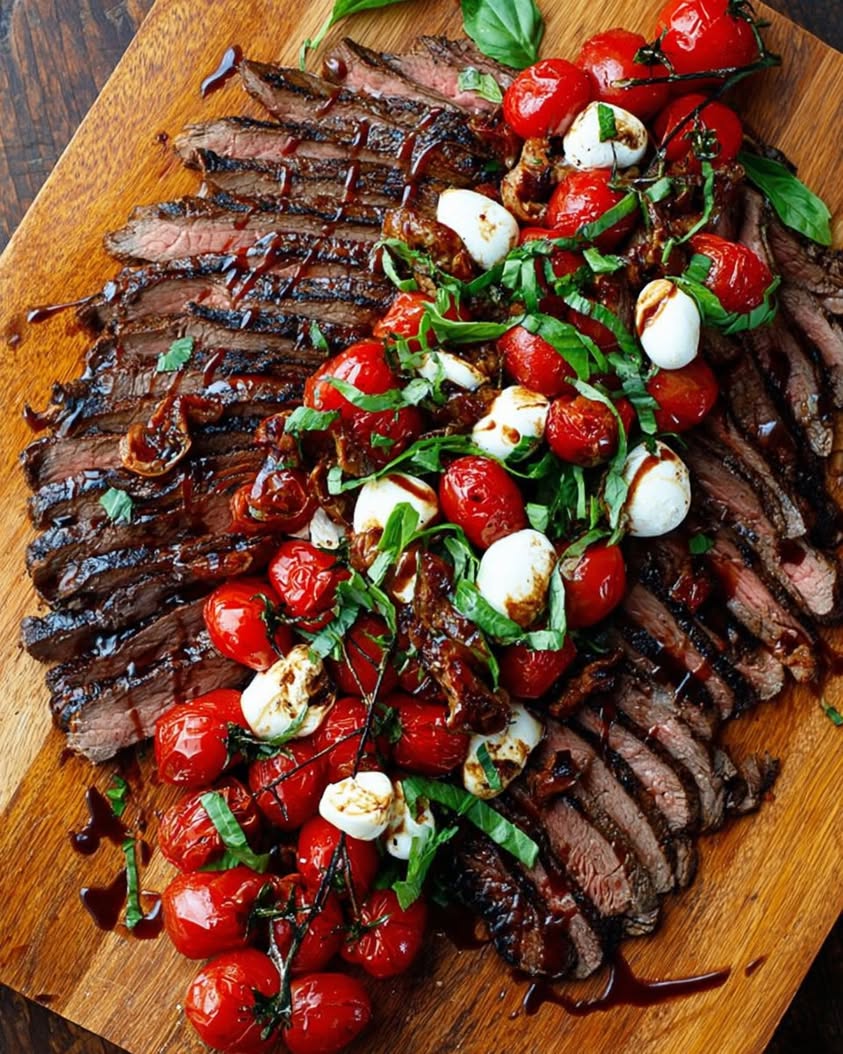
The Ultimate Grilled Flank Steak with a Balsamic Caprese Twist
This Grilled Flank Steak with a Balsamic Caprese Twist redefines your typical summer dinner. You get the smoky, charred perfection of a grilled flank steak, but then you top it with a vibrant, fresh caprese salad that has been kissed with a rich balsamic glaze. This combination creates a symphony of flavors and textures that tastes both familiar and excitingly new. Every bite offers a perfect balance of savory beef, creamy mozzarella, sweet tomatoes, and aromatic basil.
When you fire up the grill for this Grilled Flank Steak with a Balsamic Caprese Twist, you are committing to a meal that impresses without demanding hours of prep work. The flank steak cooks quickly over high heat, and the caprese topping comes together in just minutes while the meat rests. This recipe proves that you do not need complicated techniques or exotic ingredients to create a restaurant-quality dish right in your own backyard. The key is using high-quality components and letting their natural flavors shine.
This dish works beautifully for a weeknight family dinner, but it also steals the show at summer gatherings. You can serve it sliced over a bed of arugula for a light main course salad, or pair it with crusty bread and roasted vegetables for a heartier meal. The versatility of this Grilled Flank Steak with a Balsamic Caprese Twist makes it a reliable go-to recipe that you will find yourself making again and again throughout the warmer months.
Quick Recipe Highlights
- Flavor Profile: The savory umami of grilled flank steak meets the sweet acidity of ripe tomatoes and balsamic glaze. Fresh mozzarella provides a mild, creamy counterpoint while basil adds a peppery, aromatic finish. The overall effect is bright, rich, and incredibly satisfying.
- Texture: You get a crisp, charred crust on the steak that gives way to tender, juicy slices. The tomatoes offer a soft, juicy burst, while the mozzarella provides a smooth, springy bite. The balsamic glaze adds a silky, slightly sticky finish that ties everything together.
- Aroma: The smell of beef searing on a hot grill fills the air with a smoky, savory scent. When you add the fresh basil and balsamic reduction, you introduce herbaceous and sweet notes that make your mouth water. The combination is irresistible and signals a delicious meal.
- Visual Appeal: Deep brown grill marks contrast beautifully with the bright red tomatoes, white mozzarella, and vibrant green basil leaves. The dark, glossy balsamic glaze drizzled over the top adds a professional, elegant finish. This dish looks stunning on any plate.
- Skill Level Needed: This recipe requires some basic grilling knowledge to achieve the perfect doneness on the steak. However, the caprese topping is incredibly simple. If you can manage a hot grill and wield a sharp knife, you can absolutely make this dish with confidence.
- Special Equipment: You need a charcoal or gas grill that can reach high heat. A good set of tongs is essential for flipping the meat. A sharp chef’s knife makes slicing the steak against the grain much easier. A small saucepan is necessary for reducing the balsamic vinegar.
Recipe Overview
- Difficulty Level: We rate this Grilled Flank Steak with a Balsamic Caprese Twist as a medium difficulty recipe. The grilling portion demands attention to timing and temperature to avoid overcooking the lean flank steak. You need to feel comfortable estimating doneness, preferably by using an instant-read thermometer. However, the assembly is straightforward and forgiving.
- Category: This dish fits perfectly as a main course for lunch or dinner. It works wonderfully for casual weeknight meals but elevates easily for special occasions. You can also slice the steak and serve it as an impressive appetizer or part of a larger buffet spread.
- Cuisine: This recipe draws heavy inspiration from classic Italian summer cooking. The caprese salad is a cornerstone of Italian antipasti, celebrating the peak flavors of summer tomatoes and basil. We then marry that tradition with the American love for grilled beef, creating a fusion that respects both culinary backgrounds.
- Cost: The flank steak is the most expensive ingredient, but it remains more affordable than other cuts like ribeye or filet mignon. Fresh mozzarella and heirloom tomatoes add to the cost but are worth the investment. A single bottle of balsamic vinegar lasts for many reductions. You can serve this meal for a family of four for a moderate cost compared to dining out.
- Season: Summer is the absolute best time to make this recipe. Tomatoes and basil reach their peak flavor and sweetness during the hot months. Grilling season is in full swing, and the bright, fresh flavors of the caprese topping perfectly complement the heat. You can make it year-round with good-quality greenhouse tomatoes, but summer brings the best results.
- Occasion: This Grilled Flank Steak with a Balsamic Caprese Twist suits many occasions. It is an excellent choice for a romantic date night dinner at home. It also works perfectly for backyard barbecues, family reunions, or any gathering where you want to serve something memorable without spending all day in the kitchen.
Why You Will Love This Recipe
The first reason you will adore this recipe is the incredible taste and texture combination. You get the deep, beefy flavor of a perfectly grilled flank steak that has developed a smoky, caramelized crust. Then you layer on the bright, acidic sweetness of ripe tomatoes and the creamy richness of fresh mozzarella. The balsamic glaze adds a touch of sweetness and tang that ties every single component together. Every forkful offers a new and delightful sensation.
Another major advantage of this Grilled Flank Steak with a Balsamic Caprese Twist is its convenience. The entire cooking process takes less than thirty minutes from start to finish. The steak cooks in under ten minutes on the grill, and you prepare the caprese topping while it rests. This means you can have a sophisticated, impressive meal on the table faster than you could order delivery. It is the perfect solution for busy weeknights when you still crave something special.
This recipe also offers solid nutritional advantages. Flank steak is a lean cut of beef that is packed with protein and essential nutrients like iron and B vitamins. Fresh mozzarella provides calcium and a satisfying dose of protein. Tomatoes are rich in lycopene, a powerful antioxidant, and basil offers a variety of anti-inflammatory compounds. This meal is naturally gluten-free and, with a simple swap for the cheese, can be made dairy-free as well.
You will love this dish for its social and entertaining value. When you bring a platter of this grilled steak to the table, it creates a moment. Guests are immediately drawn to the beautiful colors and layers. You can slice the steak and arrange it on a large board for a family-style serving that encourages sharing and conversation. It feels celebratory and generous without requiring extensive advance preparation or stress.
Finally, this Grilled Flank Steak with a Balsamic Caprese Twist is cost-effective and accessible. Flank steak offers great value for its flavor and tenderness when cooked correctly. The remaining ingredients are pantry staples or easy-to-find fresh items. You do not need a special grill or a professional kitchen to achieve fantastic results. This recipe proves that simple, quality ingredients and a few solid techniques can create a meal that tastes like it came from a high-end steakhouse.
Historical Background and Cultural Significance
The caprese salad, or insalata Caprese, traces its origins to the island of Capri off the coast of Italy. Some stories suggest that it was created in the early 20th century to celebrate the colors of the Italian flag. The red tomatoes, white mozzarella, and green basil represent the national colors of Italy. This simple salad became a global symbol of Italian summer cooking, emphasizing fresh, high-quality ingredients prepared with minimal interference.
Grilling flank steak has a different cultural lineage rooted in American cooking traditions. Flank steak became popular in the United States for its robust flavor and relative affordability. It is a staple of Tex-Mex cuisine, often marinated and grilled for fajitas. The technique of grilling this cut quickly over high heat became a hallmark of backyard cooking across the country. This recipe honors that tradition of simple, fire-kissed beef.
The evolution of this particular dish represents a modern culinary trend of fusion and creativity. Chefs and home cooks began looking for ways to combine the best elements of different cuisines. The idea of taking a classic Italian caprese salad and placing it on a grilled flank steak is a natural evolution. It brings together the smoky, savory world of American grilling with the fresh, bright world of Italian summer cooking.
Regional variations of this concept have appeared in many places. Some cooks use a balsamic marinade for the steak itself, infusing the meat with Italian flavors before it ever hits the grill. Others add a drizzle of pesto or a sprinkle of red pepper flakes for heat. In some versions, the caprese topping becomes a warm, wilted salad with grilled tomatoes. Each variation celebrates the core idea of pairing rich beef with the brightness of fresh summer produce.
Ingredient Deep Dive
Flank steak comes from the abdominal muscles of the cow and is known for its pronounced grain and rich, beefy flavor. It has a long history in various cuisines, from British steak and kidney pie to Korean bulgogi. Nutritionally, it is an excellent source of high-quality protein, iron, zinc, and B vitamins, particularly B12. When selecting flank steak, look for a piece that is uniform in thickness, which ensures even cooking. You want a deep, cherry-red color with minimal visible fat on the outside. Store it in the coldest part of your refrigerator and use it within two days of purchase. You can substitute skirt steak or sirloin flap if you cannot find flank steak.
Fresh mozzarella, specifically mozzarella di bufala, is a fresh cheese made from water buffalo milk. It has a delicate, milky flavor and a soft, springy texture that is completely different from the firmer, drier mozzarella used for pizza. This cheese is a cornerstone of Italian cooking and provides a creamy counterpoint to the bold flavors of the steak. Look for balls of fresh mozzarella packed in brine or whey, which keeps them moist and flavorful. Store it in its liquid in the refrigerator and plan to use it within a few days of opening for the best texture. If you cannot find fresh mozzarella, you can use burrata for an even more decadent, creamy experience.
Ripe, in-season tomatoes are the heart of any good caprese salad. Heirloom tomatoes offer the best flavor and a beautiful array of colors, from deep red to striped green and golden yellow. They are rich in lycopene, vitamin C, and potassium. When you choose tomatoes, give them a gentle squeeze. They should yield slightly to pressure without being mushy. They should also smell fragrant and earthy at the stem end. Store ripe tomatoes at room temperature on the counter, never in the refrigerator, as cold kills their flavor. Grape or cherry tomatoes can work in a pinch, but large, slicing tomatoes give you the best presentation.
Balsamic vinegar of Modena is a dark, sweet, and tangy vinegar that is aged in wooden barrels. Traditional balsamic vinegar can age for over twelve years, but a good-quality commercial balsamic works perfectly for this glaze. It adds a complex sweetness and acidity that balances the richness of the steak and cheese. When you reduce it, you concentrate its sugars and create a syrupy, luxurious glaze. Look for a balsamic vinegar that lists grape must as the first ingredient and has a thick, syrupy consistency. Store your vinegar in a cool, dark cabinet. For a different flavor, you can use a fig balsamic or a pomegranate molasses.
Fresh basil is an aromatic herb that is essential to the caprese flavor profile. It has a sweet, peppery flavor with hints of anise and mint. Basil has a long history in Mediterranean and Asian cuisines and is prized for its volatile oils, which provide its distinctive aroma. Choose basil with bright, unwilted leaves and no dark spots or yellowing. Store it like a bouquet of flowers, with the stems in a glass of water on the counter, loosely covered with a plastic bag. Never chop basil too far in advance because it will oxidize and turn black. Use whole or torn leaves for the best presentation and flavor.
Common Mistakes to Avoid
- You cook the steak straight from the refrigerator. A cold steak cooks unevenly on the grill. You should let the flank steak sit at room temperature for about 20 to 30 minutes before grilling to ensure a more even internal temperature.
- You cut the steak with the grain instead of against it. Flank steak has long, pronounced muscle fibers. If you do not cut perpendicular to these fibers, every bite will be incredibly tough and chewy. Always slice thinly against the grain.
- You skip resting the meat after grilling. When you cut into a steak immediately, all of the flavorful juices run out onto the cutting board. You must let the steak rest for at least 5 to 10 minutes tented with foil so the juices redistribute.
- You use low-quality balsamic vinegar for the glaze. Thin, acidic vinegar will not reduce properly and can taste harsh. You should use a decent quality balsamic vinegar with some natural sweetness for the best glaze.
- You do not pat the steak dry before seasoning. Excess moisture on the surface of the meat prevents a good sear. You need to pat the steak completely dry with paper towels before you apply the salt and pepper.
- You overcrowd the grill or the pan. If you put a crowded pan on the heat, the temperature drops and the steak steams instead of searing. You should leave enough space around the steak for hot air to circulate.
- You use pre-shredded or low-moisture mozzarella cheese. This type of cheese does not have the same creamy texture and mild flavor. You must use fresh mozzarella packed in water or whey for an authentic caprese experience.
- You dress the caprese topping too far in advance. If you add the balsamic glaze and salt to the tomatoes too early, they will release too much water and become mushy. You should assemble the topping just before serving.
- You grill the steak over inconsistent or low heat. Flank steak needs a very hot grill to develop a good crust without overcooking the interior. You should ensure your grill reaches at least 450 to 500 degrees Fahrenheit before adding the meat.
- You forget to season the tomatoes. Tomatoes need salt to bring out their sweetness and flavor. You should sprinkle a little flaky sea salt on the tomato slices before adding the cheese and basil.
Essential Techniques
Mastering the perfect sear on your flank steak is the most important technique for this recipe. A proper sear creates a deep, brown crust that is packed with savory, caramelized flavor. You achieve this by ensuring your grill is screaming hot and that your steak is completely dry. Place the steak on the grill and do not move it for at least 4 to 5 minutes. This patience allows the Maillard reaction to occur, creating that coveted crust. The visual cue for a good sear is a deep, golden-brown color with distinct, dark grill marks. If you try to flip the steak too early, it will stick and tear.
Slicing flank steak against the grain is a non-negotiable technique for ensuring a tender result. The grain of flank steak runs in long, parallel lines from one end of the steak to the other. You need to identify the direction of these lines and then position your knife perpendicular to them. When you slice across the grain, you shorten those long muscle fibers, making each bite much easier to chew. The visual cue is that you see small, tight circles of muscle fibers on the cut face of the meat instead of long, stringy lines. A very sharp knife makes this task much safer and more precise.
Reducing balsamic vinegar into a glaze is a simple cooking technique that transforms a common ingredient into a luxurious finishing sauce. You pour the balsamic vinegar into a small saucepan and bring it to a gentle simmer over medium heat. Then you let it cook, stirring occasionally, until it has reduced by about half and coats the back of a spoon. The visual cue is that the bubbles become larger and slower, and the liquid becomes syrupy and thick. Be careful not to boil it too aggressively or let it reduce too far, as it can become bitter. The glaze will thicken further as it cools.
Resting the grilled steak is a critical step that directly impacts the juiciness of the final dish. As the steak cooks, the heat pushes the juices toward the center of the meat. If you cut into it immediately, those juices will flood out onto your cutting board. By allowing the steak to rest for 5 to 10 minutes after grilling, you give the muscle fibers time to relax and reabsorb the juices. The visual cue is that the steak stops steaming and the internal temperature continues to rise slightly, a process called carryover cooking. Tent the steak loosely with foil to keep it warm without trapping too much steam.
Pro Tips for Perfect Grilled Flank Steak with a Balsamic Caprese Twist
Always use an instant-read thermometer to check the internal temperature of your steak. This removes all the guesswork and ensures consistent results. For medium-rare, you should pull the steak off the grill at 130 to 135 degrees Fahrenheit. Remember that the temperature will rise by about 5 degrees during the resting period.
Do not marinate the flank steak for too long if you are using an acidic marinade. The acid in citrus or vinegar can start to break down the proteins too much, making the meat mushy. A 30-minute to 2-hour marinade is plenty of time to add flavor without compromising the texture.
Use a high smoke point oil, like avocado or grapeseed oil, on your grill grates. This prevents the steak from sticking and helps create a good sear. You should oil the grates with a paper towel dipped in oil, holding it with long tongs.
Season the flank steak generously with kosher salt and black pepper just before grilling. The coarse salt crystals adhere well to the meat and help form a crust. Do not season the steak too far in advance, as the salt can draw out moisture.
For the balsamic glaze, you can add a small spoonful of honey or brown sugar while it reduces. This adds extra sweetness and body, creating a glaze that clings beautifully to the steak and cheese. Taste it as it reduces and adjust the sweetness to your preference.
When you assemble the dish, layer the sliced steak slightly overlapping on a serving platter. Then arrange the caprese topping directly on top or to the side. This presentation looks gorgeous and allows guests to take the perfect portion of each component.
You can grill the tomatoes briefly for a smoky twist on the caprese. Slice the tomatoes in half and place them cut-side down on the grill for a minute or two. This adds a subtle char and deepens their sweetness.
Always use room temperature cheese for the best flavor and texture. Fresh mozzarella straight from the refrigerator can be firm and less flavorful. Let the cheese sit out for 20 to 30 minutes before you slice it.
Variations and Adaptations
Regional variations of this concept appear in many Italian-American restaurants. Some cooks add a generous dollop of basil pesto under the caprese topping for an extra layer of herbaceous flavor. Others incorporate roasted red peppers or grilled zucchini into the mix. You can find versions that use a balsamic-marinated portobello mushroom cap instead of the steak for a vegetarian option. Each regional adaptation brings a unique local influence to the core idea.
Seasonal adaptations are easy to make with this flexible recipe. In late summer, use a mix of heirloom tomatoes in different colors for a stunning visual effect. In the spring, you can add fresh, tender asparagus spears that you have grilled alongside the steak. During early fall, swap the fresh tomatoes for slow-roasted cherry tomatoes for a deeper, more concentrated flavor. You can even use preserved tomatoes in the winter for a taste of summer.
Dietary modifications allow almost everyone to enjoy this dish. For a dairy-free version, simply omit the mozzarella or substitute a high-quality vegan cheese alternative. This recipe is naturally gluten-free, making it safe for those with celiac disease. If you are following a low-carb or keto diet, this meal is perfect because it is naturally very low in carbohydrates. The flank steak provides high protein and fat, and the caprese adds minimal carbs.
Flavor variations let you customize the dish to your taste. You can add a sprinkle of red pepper flakes for a touch of heat that contrasts nicely with the creamy cheese. A squeeze of fresh lemon juice over the finished dish brightens all the flavors. You can also use a different finishing oil, like a basil-infused olive oil or a chili oil, for a different aromatic profile. A dusting of smoked paprika on the steak before grilling adds a subtle smoky note.
Texture modifications change the mouthfeel of the final dish. You can chop the caprese components into smaller dice and toss them together for a relish-like topping that distributes more evenly. Alternatively, you can leave the components in larger, more rustic slices for a more dramatic presentation. Grilling the entire caprese salad briefly on a grill pan creates a warm, slightly wilted texture that pairs beautifully with the hot steak.
Presentation alternatives make this recipe suitable for different serving styles. For a dinner party, you can serve the steak whole on a carving board and arrange the caprese components around it for a beautiful tableside presentation. For a casual cookout, you can slice the steak and toss it with the caprese components for a hearty salad. You can also serve the components separately and let guests build their own plates.
Serving and Presentation Guide
Plating this Grilled Flank Steak with a Balsamic Caprese Twist requires a thoughtful approach to showcase its beauty. Start with a large, warm serving platter or individual plates. Slice the rested flank steak against the grain into 1/4-inch thick pieces. Arrange the slices in an overlapping, slightly fan-shaped pattern down the center of the platter. This creates a visual anchor for the dish.
Garnishing ideas add the final touch of color and flavor. Drizzle the balsamic glaze over the steak in a controlled, artistic pattern. Then arrange the fresh mozzarella slices and tomato slices alternately along the line of steak. Tuck whole or torn basil leaves in between the cheese and tomatoes. You can finish with a light sprinkle of flaky sea salt and a crack of fresh black pepper.
Traditional accompaniments for this dish include a simple green salad or grilled vegetables. A side of crusty bread is perfect for sopping up any extra balsamic glaze and juices on the plate. You can also serve it with roasted potatoes or a creamy polenta for a more substantial meal. The key is to keep the sides simple so they do not compete with the star of the show.
Modern serving suggestions include serving the dish over a bed of arugula or mixed greens. The peppery greens provide a wonderful contrast to the rich steak and creamy cheese. You can also use the sliced steak and caprese topping as a filling for a warm, crusty sandwich. This makes for an excellent leftover lunch the next day.
Temperature considerations are crucial for the best eating experience. The steak should be served warm, ideally right after its resting period. The caprese components should be at room temperature, which allows their flavors to fully develop. If the mozzarella is too cold, it will feel firm and less creamy. If the tomatoes are too cold, they lose their sweetness.
Portion control tips help you serve the perfect amount. For a main course, plan on about 6 ounces of cooked flank steak per person. This usually translates to a 1.5 to 2 pound steak for a family of four. For the caprese, plan on one large tomato and two ounces of fresh mozzarella per person. This ensures everyone gets a generous serving of both the meat and the topping.
Wine and Beverage Pairing
Wine pairings for this Grilled Flank Steak with a Balsamic Caprese Twist can elevate the dining experience. A medium-bodied red wine like a Chianti Classico or a Barbera works beautifully. The acidity in the wine matches the acidity in the tomatoes and balsamic, while the fruit complements the beef. A Sangiovese-based wine also offers savory and herbal notes that echo the basil. For a more robust option, a Malbec from Argentina provides dark fruit flavors and a smooth finish.
Non-alcoholic alternatives are equally delicious and satisfying. A sparkling water with a splash of balsamic vinegar and a sprig of fresh basil creates a sophisticated mocktail. You can also serve a high-quality, unsweetened iced tea with a hint of lemon. A non-alcoholic red wine substitute made from dealcoholized wine or grape juice can mimic the pairing experience. The goal is to find a beverage that offers acidity and depth to balance the rich flavors.
Coffee and tea pairings work well if you are serving this dish for a late lunch or dinner. A robust, dark roast coffee provides a bitter, smoky counterpoint to the sweet tomatoes and tangy balsamic. For a lighter option, a chilled green tea with its grassy, slightly astringent notes can cleanse the palate. The key is to avoid overly sweet or flavored beverages that would clash with the savory profile.
Temperature considerations for your beverage matter as much as the food. Red wine should be served slightly below room temperature, around 60 to 65 degrees Fahrenheit. Non-alcoholic beverages should be well-chilled. If you are serving coffee, ensure it is hot and freshly brewed for the best aromatic experience. The temperature contrast between a warm steak and a cool beverage is part of the enjoyment.
Serving suggestions for your beverage include using stemless wine glasses or tumblers for a more casual feel. You can garnish a glass of red wine with a sprig of fresh basil for a thematic touch. For non-alcoholic drinks, serve them in a rocks glass with ice. The visual presentation of your drink should match the elegant yet approachable nature of the meal.
Storage and Shelf Life
Proper storage methods ensure you can enjoy leftovers from this Grilled Flank Steak with a Balsamic Caprese Twist. You should store the steak and the caprese topping separately. The steak can be wrapped tightly in plastic wrap or placed in an airtight container. The caprese components should be stored in a separate container because the tomatoes release moisture that can make the steak soggy.
The temperature requirements for safe storage are critical. You must refrigerate any leftovers within two hours of cooking. The refrigerator should be set to 40 degrees Fahrenheit or below. If you are serving the dish outdoors in warm weather, you should be especially vigilant about not leaving it out for too long. Bacteria grow rapidly in the danger zone between 40 and 140 degrees.
Container recommendations include using glass or ceramic containers with tight-fitting lids. These materials do not absorb odors or flavors from the food. You can also use high-quality plastic containers that are BPA-free. Avoid storing the steak in metal containers because the acidity from the balsamic can react with the metal and create a metallic taste.
Signs of spoilage to watch for include any slimy texture on the steak or a sour, off smell. The tomatoes might become excessively mushy or develop mold. The mozzarella can become slimy or develop a sour, ammonia-like smell. If you see any of these signs, you should discard the leftovers immediately. When in doubt, it is always safer to throw it away.
Reheating instructions are important to maintain the quality of the leftovers. The best method for reheating the steak is to slice it and then warm it briefly in a hot skillet or on a grill pan. This helps revive the crust without overcooking the meat. You can also reheat it in a low oven at 250 degrees Fahrenheit until just warm. The caprese topping should be served cold or at room temperature and should not be reheated.
Freezing guidelines suggest that the grilled flank steak freezes very well. You should wrap the cooled steak tightly in plastic wrap and then in a layer of aluminum foil. It will maintain its best quality for up to three months. The caprese topping does not freeze well at all because the tomatoes and mozzarella will become watery and mushy upon thawing. You should always prepare the caprese fresh.
Make Ahead Strategies
Prep timeline planning makes this recipe even easier for entertaining. You can make the balsamic glaze up to one week in advance and store it in a sealed jar in the refrigerator. You can also wash and dry the basil leaves up to one day ahead. The tomatoes should be sliced no more than two hours before serving to maintain their texture and flavor.
Storage between steps is straightforward for this recipe. The balsamic glaze will thicken significantly when cold, so you should let it come to room temperature before drizzling it over the dish. The basil should be stored wrapped in a damp paper towel inside a plastic bag in the refrigerator. The tomatoes should be stored uncut at room temperature until you are ready to use them.
Quality impact assessment shows that most components do not suffer from advance preparation. The balsamic glaze actually improves with time as the flavors meld. The grilled steak, if cooked ahead, will lose some of its crust when reheated but remains delicious. The only component that truly suffers from being made ahead is the fresh caprese topping, which becomes watery and sad after a few hours.
Assembly tips for a seamless dinner party experience are helpful. You can grill the steak up to an hour before serving and let it rest at room temperature. Then you slice it right before serving and arrange it on the platter. You can prepare all the caprese components on a separate plate and then assemble everything together at the table. This approach keeps the dish looking fresh and beautiful.
Reheating guidelines for the steak if you cook it ahead require a gentle touch. You should avoid using a microwave because it will steam the meat and ruin the crust. Instead, reheat the sliced steak in a hot, dry skillet for about 30 seconds per side. You can also reheat it under the broiler for a minute or two, watching it carefully to avoid burning the balsamic glaze.
Fresh element additions can revive the dish if you are using leftover steak. You can make a new caprese topping with fresh tomatoes, mozzarella, and basil. A new drizzle of balsamic glaze also helps restore the fresh flavor. Consider adding a handful of fresh arugula under the steak for a peppery crunch that contrasts with the leftovers.
Scaling Instructions
Halving the recipe for two people requires some simple math. You should use a one-pound flank steak instead of a two-pound one. The cooking time will actually stay about the same because the thickness of the steak is similar. You will need to halve all the caprese ingredients as well. The balsamic glaze reduction is easiest to make in a small batch, so you can use about 1/4 cup of vinegar instead of 1/2 cup.
Doubling or tripling the recipe for a crowd is very straightforward. You will need to use two or three separate flank steaks because they do not come much larger than two pounds each. You should grill the steaks in batches if they do not all fit on your grill. The caprese topping ingredients scale up easily, but you should assemble it in batches to keep the tomatoes from getting waterlogged.
Equipment adjustments are necessary when scaling up. You may need a larger serving platter or two separate platters to hold all the steak. You will need a larger skillet or multiple pans if you are using a stovetop method instead of a grill. The balsamic glaze reduction will take longer to reduce because of the larger volume, so you need to be patient and watch it carefully.
Timing modifications are important when cooking for a crowd. The steaks may need slightly different cooking times depending on their thickness. You should use a thermometer to check each one individually. You can keep the cooked steaks warm in a low oven while you finish grilling the rest. The caprese topping should be assembled just before serving, so plan your timing accordingly.
Storage considerations for a large batch are different. You will likely have more leftovers, so you need to plan for proper storage. Separate the components as described earlier to maximize their shelf life. You can also slice the leftover steak and freeze it in single-serving portions for easy future meals. The balsamic glaze can be stored in a jar in the refrigerator for weeks.
Nutritional Deep Dive
Macro breakdown of this Grilled Flank Steak with a Balsamic Caprese Twist shows a balanced profile. Each serving of the steak provides approximately 25 to 30 grams of high-quality protein. The fresh mozzarella adds another 6 to 8 grams of protein per serving. The fats come mostly from the cheese and any oil used in cooking, totaling around 15 to 20 grams of fat per serving. The carbohydrates are minimal, coming primarily from the natural sugars in the tomatoes and balsamic Print
Grilled Flank Steak with Balsamic Caprese Twist
- Total Time: 35 minutes
- Yield: 4
Description
A juicy grilled flank steak topped with fresh mozzarella, tomatoes, basil, and a balsamic reduction glaze.
Ingredients
- 1 1/2 lbs flank steak
- 2 tablespoons olive oil
- 2 cloves garlic, minced
- 1 teaspoon salt
- 1/2 teaspoon black pepper
- 1 cup cherry tomatoes, halved
- 8 oz fresh mozzarella, sliced
- 1/4 cup fresh basil leaves
- 1/2 cup balsamic vinegar
- 1 tablespoon honey
Instructions
- In a small bowl, combine olive oil, minced garlic, salt, and pepper. Rub mixture all over the flank steak and let marinate at room temperature for 30 minutes.
- Meanwhile, make the balsamic reduction: In a small saucepan, bring balsamic vinegar and honey to a simmer over medium heat. Cook until thickened and reduced by half (about 8 minutes), stirring occasionally. Set aside to cool.
- Preheat grill to medium-high heat. Grill flank steak for 5-7 minutes per side for medium-rare, or until desired doneness. Let rest for 5 minutes.
- Thinly slice the flank steak against the grain. Arrange slices on a serving platter.
- Top with fresh mozzarella slices, cherry tomato halves, and fresh basil leaves.
- Drizzle balsamic reduction over the top and serve immediately.
Notes
You can customize the seasonings to taste.
- Prep Time: 15 minutes
- Cook Time: 20 minutes
- Method: Main
- Cuisine: Italian-American