Greek Loaded Hummus: A Vibrant Mediterranean Appetizer Recipe
Imagine a classic creamy hummus transformed into a vibrant, edible landscape of Mediterranean flavors. This Greek loaded hummus recipe does exactly that. It takes the beloved chickpea dip and elevates it with a colorful, fresh, and tangy topping that is as beautiful as it is delicious. Consequently, this dish is perfect for anyone wanting to impress guests with minimal effort. The combination of textures and tastes creates a truly memorable appetizer.
This Greek loaded hummus is more than just a dip. It is a complete flavor experience that celebrates the bright, fresh ingredients of Greek cuisine. Every bite delivers a harmonious blend of creamy, crunchy, briny, and tangy notes. Moreover, it is incredibly versatile, serving as a stunning centerpiece for a party platter or a satisfyingly healthy snack. Ultimately, this recipe proves that simple ingredients, when combined thoughtfully, can create something extraordinary.
The best part about this Greek loaded hummus recipe is its accessibility. You do not need to be a professional chef to create this restaurant-quality appetizer. With a few fresh ingredients and a good food processor, you can have this stunning dish ready in about fifteen minutes. Therefore, it is the ultimate solution for last-minute entertaining or when you crave a nutritious and flavorful treat. This recipe is a guaranteed crowd-pleaser that will have everyone asking for your secret.
Quick Recipe Highlights
- Flavor Profile: This Greek loaded hummus bursts with the classic Mediterranean flavors of lemon, garlic, and olive oil from the base, beautifully complemented by the salty feta, briny Kalamata olives, and sweet cherry tomatoes in the topping. The fresh herbs add a final, aromatic punch that ties everything together.
- Texture: The experience begins with the ultra-smooth and creamy hummus base. Subsequently, you encounter the delightful contrast of crunchy cucumber, juicy tomatoes, and the soft crumble of feta cheese. This variety makes every scoop interesting and satisfying.
- Aroma: As soon as you prepare this dish, the fresh scents of chopped dill and parsley fill the air. Furthermore, the aroma of high-quality extra virgin olive oil and a hint of garlic creates an inviting fragrance that promises a delicious taste.
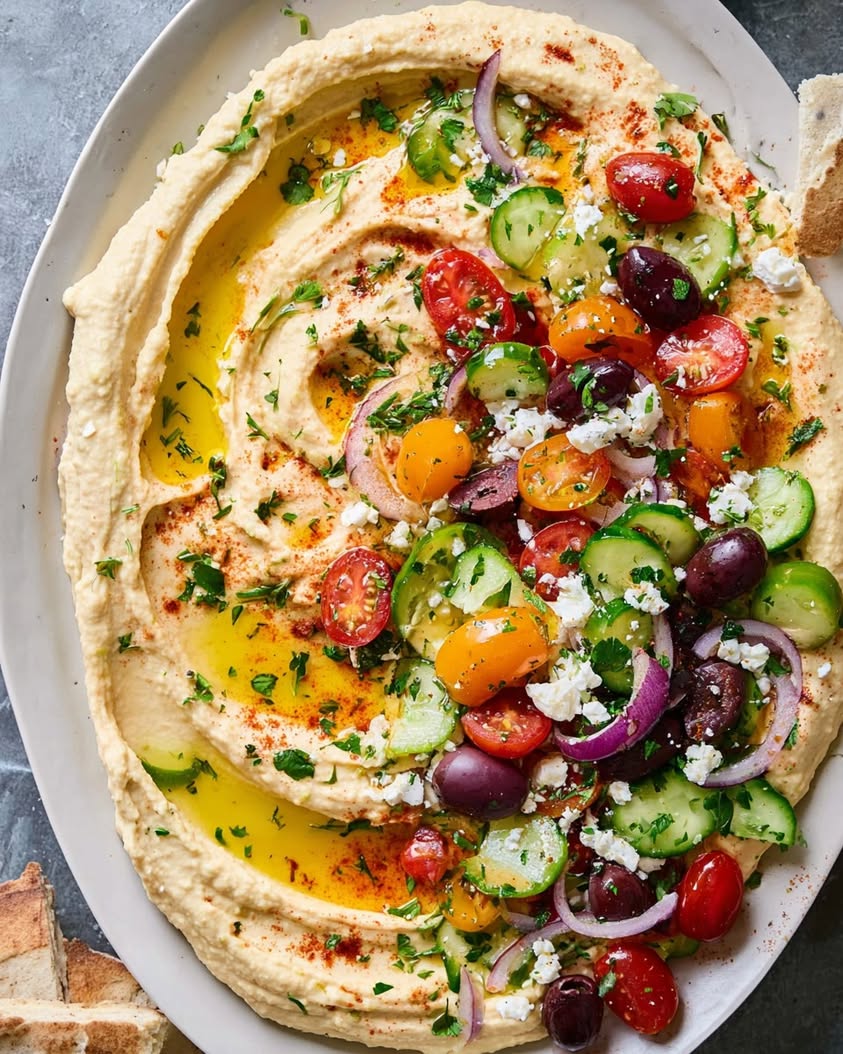
- Visual Appeal: The presentation is a feast for the eyes. A swirl of pale beige hummus acts as a canvas for a vibrant mosaic of red tomatoes, green cucumber, purple onions, black olives, and white feta. A final drizzle of olive oil adds a gorgeous sheen.
- Skill Level Needed: This is a beginner-friendly recipe requiring no cooking. The primary skills involve simple vegetable chopping and using a food processor or blender to achieve a smooth hummus consistency. Anyone can master this dish on the first try.
- Special Equipment: A food processor or high-powered blender is essential for creating the perfectly smooth hummus base. Additionally, a sharp knife and cutting board are needed for prepping the fresh vegetable toppings. A good citrus juicer is also helpful for extracting lemon juice.
Recipe Overview
- Difficulty Level: We rate this Greek loaded hummus recipe as “Easy” because it involves no complex techniques or cooking steps. The process is essentially assembly after making a simple puree. The most challenging aspect is achieving a smooth hummus texture, which a good food processor handles effortlessly.
- Category: This dish falls squarely into the appetizer and snack category. It is ideal for parties, gatherings, or a healthy afternoon bite. Furthermore, it can also serve as a light lunch or dinner when paired with a hearty salad or grilled protein.
- Cuisine: This recipe is inspired by the vibrant flavors of Greek and broader Mediterranean cuisine. It incorporates hallmark ingredients like chickpeas, olive oil, lemon, feta, and Kalamata olives. While hummus has Levantine origins, the loaded topping here gives it a distinctly Greek character.
- Cost: Making this Greek loaded hummus at home is very cost-effective, especially compared to buying a similar prepared appetizer. A can of chickpeas, some tahini, lemon, and a selection of fresh vegetables are relatively inexpensive. The most significant cost may be a block of good feta cheese and quality olive oil.
- Season: This recipe is perfect for spring and summer when fresh tomatoes, cucumbers, and herbs are at their peak flavor and most affordable. However, it works year-round because many of the topping ingredients, like olives and onions, are readily available. It brings a taste of sunshine to any table.
- Occasion: This Greek loaded hummus is incredibly versatile for occasions. It is perfect for casual game-day snacking, elegant cocktail parties, potlucks, or family movie nights. It also makes a fantastic addition to a Mezze platter or a healthy option for office gatherings.
Why You’ll Love This Recipe
First and foremost, the taste and texture of this Greek loaded hummus are utterly irresistible. The creamy, garlicky hummus base provides a rich and satisfying foundation. Then, the loaded topping adds bursts of freshness, saltiness, and acidity that cut through the richness. Every single bite offers a new combination of flavors and textures, from the juicy pop of a tomato to the creamy crumble of feta. This complexity keeps you coming back for more, ensuring the bowl is always the first to empty at any gathering.
From a convenience standpoint, this recipe is a true lifesaver. It comes together in about fifteen minutes with no cooking required, making it the ultimate last-minute appetizer. You can easily prepare the hummus base ahead of time and simply add the fresh toppings right before serving. Furthermore, it requires minimal cleanup, especially if you use a store-bought hummus as your base for an even quicker version. This efficiency means you can spend less time in the kitchen and more time enjoying your company.
Nutritionally, this Greek loaded hummus is a powerhouse. Chickpeas are an excellent source of plant-based protein and fiber, which help keep you full and satisfied. The fresh vegetables in the topping add vitamins, minerals, and antioxidants. Additionally, olive oil provides heart-healthy monounsaturated fats. Choosing this dip over heavier, cream-based options is a delicious way to support your health goals without sacrificing flavor. It is a snack you can feel genuinely good about eating.
For social and entertaining value, this dish is unmatched. Its stunning, colorful presentation immediately draws people in and becomes a natural conversation starter. It encourages sharing and interaction as guests gather around the platter with pita bread or vegetables. Because it is both visually impressive and universally loved, it takes the pressure off the host. You can confidently serve this Greek loaded hummus knowing it will be a hit with virtually every guest, regardless of their typical dietary preferences.
Finally, this recipe is remarkably cost-effective and accessible. The ingredients are common and easy to find at any standard grocery store. Making a large batch for a party is far more economical than purchasing pre-made gourmet dips. You also have complete control over the quality of ingredients, allowing you to opt for organic vegetables or a premium olive oil if you choose. This accessibility means you can enjoy a taste of the Mediterranean anytime the craving strikes, without a restaurant price tag.
Historical Background and Cultural Significance
The story of hummus is ancient and hotly debated, with several countries in the Middle East claiming its origin. Historical records suggest that chickpeas have been cultivated and consumed in the Levant region for over ten thousand years. The earliest known written recipes for a dish similar to hummus, featuring mashed chickpeas with vinegar and herbs, appear in 13th-century cookbooks from Cairo. However, the combination of chickpeas, tahini, lemon, and garlic that defines modern hummus likely solidified in the region centuries later. This simple, nutritious paste became a staple food, valued for its affordability, shelf stability, and energy density.
Hummus holds deep cultural significance across the Eastern Mediterranean. It is more than just food; it is a symbol of shared heritage, community, and hospitality. Traditionally served as part of a mezze spread, it embodies the social dining culture where meals are long, shared affairs with many small dishes. In many households, the recipe is passed down through generations, with each family boasting their own “secret” ratio of ingredients. Consequently, hummus has become a culinary touchstone, a dish that connects people to their history and to each other around the table.
The evolution of hummus from a traditional paste to a global phenomenon is fascinating. For centuries, it remained a regional specialty. Then, in the late 20th century, as global travel and interest in vegetarian and healthy eating grew, hummus began to appear on international menus. Food manufacturers started producing packaged versions, making it accessible worldwide. This globalization led to creative adaptations and “loaded” versions, like this Greek style, which top the classic base with vibrant, region-specific ingredients. This evolution shows how traditional foods can adapt and thrive in new contexts.
Regional variations of hummus are vast and reflect local tastes and ingredients. In Lebanon, it is often served with a drizzle of olive oil, paprika, and whole chickpeas. In Palestine, it might be topped with ful (fava beans) or ground meat. Israeli cuisine popularized the addition of whole, warm chickpeas and a generous pour of olive oil. Our Greek loaded hummus recipe is a modern fusion that applies the Greek salad concept to the hummus canvas. This variation highlights how versatile the base is, welcoming influences from neighboring culinary traditions to create something new and exciting.
Ingredient Deep Dive
Chickpeas (Garbanzo Beans): Chickpeas are the heart and soul of hummus, providing its distinctive flavor, creamy texture, and nutritional backbone. Cultivated since ancient times in the Mediterranean and Middle East, they are one of the world’s oldest crops. Nutritionally, they are a superstar, packed with plant-based protein, dietary fiber, folate, iron, and phosphorus. For the smoothest Greek loaded hummus, use canned chickpeas for convenience, but be sure to rinse them well. If you have time, peeling the chickpeas by rubbing them in a towel will result in an incredibly silky texture. You can also cook dried chickpeas from scratch with a pinch of baking soda to soften their skins.
Tahini: Tahini, a paste made from ground sesame seeds, is the second critical component that defines authentic hummus flavor. It adds a rich, nutty, and slightly bitter depth that balances the chickpeas. Originating in Persian cuisine, it spread throughout the Ottoman Empire. It is an excellent source of healthy fats, calcium, and B vitamins. Always stir your tahini well before using, as the oil separates. For the best flavor, choose a tahini made from hulled sesame seeds that is light in color and has a smooth, pourable consistency. A good tahini should taste rich and nutty, not unpleasantly bitter.
Extra Virgin Olive Oil: High-quality extra virgin olive oil (EVOO) is non-negotiable for both the hummus and the finishing drizzle. It contributes a fruity, peppery flavor and luxurious mouthfeel. Olive oil cultivation is central to Mediterranean culture and history. It provides monounsaturated fats and antioxidants like oleocanthal, which has anti-inflammatory properties. For this Greek loaded hummus, use your best EVOO for the final garnish, where its flavor will shine. You can use a milder, good-quality olive oil for blending into the hummus base. Store olive oil in a cool, dark place to prevent rancidity.
Feta Cheese: Feta cheese brings the essential salty, tangy punch that makes this a “Greek” loaded hummus. This brined curd cheese, protected by a PDO (Protected Designation of Origin) status, must be made in Greece from sheep’s milk or a sheep/goat blend. It adds protein and calcium but is also high in sodium. For the best texture and flavor, buy feta in a block packed in brine, not pre-crumbled. Crumble it yourself just before serving to maintain its moist, creamy texture. The salty brine from the feta can even be used sparingly to season the hummus or dressing.
Kalamata Olives: These distinctive, almond-shaped olives from the Messina region of Greece are a key identifier of Greek cuisine. Their deep purple color, meaty texture, and rich, winey flavor add complexity and a beautiful visual contrast. They are a source of healthy monounsaturated fats and vitamin E. Always choose Kalamatas with the pits in and pit them yourself for superior flavor and texture; pre-pitted olives can be mushy and bland. Their brine is also flavorful and can be used in dressings or to add a salty note to other dishes.
Common Mistakes to Avoid
- Using Unrinsed Canned Chickpeas: The liquid in canned chickpeas, called aquafaba, is starchy and can make your hummus taste metallic or overly beany. Always drain and rinse your canned chickpeas thoroughly under cold water. This simple step ensures a clean, fresh chickpea flavor in your final Greek loaded hummus.
- Skipping the Ice Water Trick: Adding a few tablespoons of ice-cold water while blending the hummus is a chef’s secret. The cold water helps the fat from the tahini and olive oil emulsify with the chickpea puree, resulting in a lighter, fluffier, and incredibly smooth texture. Room temperature water will not achieve the same effect.
- Underseasoning the Hummus Base: Hummus needs aggressive seasoning to stand up to the bold toppings. Do not be shy with the salt, lemon juice, and garlic. Always taste the base on its own before adding toppings. It should be flavorful enough to eat by itself; the toppings will complement, not carry, the dish.
- Using Stale or Low-Quality Tahini: Tahini can go rancid or develop a harsh, bitter taste over time. Taste your tahini before using it. Good tahini should smell and taste nutty and pleasant. Investing in a high-quality brand makes a dramatic difference in the depth of flavor of your Greek loaded hummus.
- Overprocessing the Toppings: The vegetables for the topping should be chopped into small, distinct pieces, not minced into a mush. You want to preserve their individual textures and colors. A rough, rustic chop is perfect and saves time while providing the necessary contrast to the creamy base.
- Adding Toppings Too Early: If you load the hummus with the fresh vegetable toppings too far in advance, the vegetables will release their water (especially the cucumbers and tomatoes). This will create a soggy, watery layer on top of your beautiful dip. Always add the toppings just before serving.
- Forgetting to Garnish: The final drizzle of olive oil, sprinkle of herbs, and maybe a pinch of paprika or sumac are not just decorative. They add crucial layers of flavor, aroma, and visual appeal that complete the dish. Never skip the finishing touches on your Greek loaded hummus.
- Using a Blender Instead of a Food Processor for a Small Batch: While a high-powered blender can work, a food processor is ideal for hummus. It allows the mixture to move freely, creating a smoother texture. A blender often requires more liquid to get things moving, which can lead to a runny hummus if you are not careful.
Essential Techniques
Blending for Maximum Smoothness: Achieving a perfectly smooth hummus is the most important technique. Start by processing the tahini and lemon juice first; this “whitens” the tahini and creates a creamy emulsion. Then add the chickpeas, garlic, and spices. Process for a full three to five minutes, scraping down the sides often. The long processing time breaks down the chickpea fibers completely. Finally, with the processor running, slowly drizzle in the ice water. This incorporates air and creates a light, fluffy, almost mousse-like consistency that is the hallmark of great hummus.
Balancing Flavors: Hummus is a balance of five key elements: chickpea earthiness, tahini nuttiness, lemon acidity, garlic sharpness, and salt. The technique is to add and adjust incrementally. After initial blending, taste critically. Does it need more brightness? Add lemon. Is it missing depth? More tahini. Is it bland? More salt. Is the garlic too sharp? Let it sit for 30 minutes; the flavor will mellow. The goal for your Greek loaded hummus base is a harmonious blend where no single ingredient overpowers the others.
Preparing the “Loaded” Topping: The technique here is about knife skills and composition. Chop all vegetables into a consistent, small dice—about the size of a pea or a little larger. This ensures every scoop gets a bit of everything. Crumble the feta with your fingers for irregular, interesting pieces rather than uniform crumbs. Combine the vegetables, olives, and herbs in a bowl, but hold the feta. Toss them with a tiny bit of olive oil and lemon juice to enhance their flavors before scattering them artfully over the hummus, then add the feta on top.
Plating for Visual Impact: Presentation transforms this dish from a dip to a centerpiece. Use the back of a spoon to create deep, swirling grooves in the hummus in your serving bowl. These grooves will catch the olive oil and create shadows, adding dimension. Pile the vegetable topping generously in the center, letting some spill over the edges. Finally, drizzle a generous stream of your best olive oil in a circular motion over everything and finish with a final sprinkle of fresh herbs. This technique makes your Greek loaded hummus look professionally crafted.
Pro Tips for Perfect Greek Loaded Hummus
Peel Your Chickpeas: For the absolute smoothest, silkiest hummus texture, take the extra five minutes to peel the chickpeas. Simply rub the rinsed chickpeas in a clean kitchen towel; the skins will pop right off. This removes the tough outer skin that can cause graininess.
Let the Hummus Rest: After blending, cover your hummus base and let it rest at room temperature for at least 30 minutes before serving. This allows the flavors to meld and deepen, and the garlic’s sharp edge will soften beautifully.
Use Garlic Paste, Not Just Minced: To distribute garlic flavor evenly without biting into a sharp chunk, create a paste. Sprinkle coarse salt over your minced garlic on the cutting board, then use the flat side of your knife to scrape and mash it into a smooth paste.
Chill Your Serving Bowl: For a refreshing touch, especially in summer, place your empty serving bowl in the freezer for 10-15 minutes before assembling. The chilled bowl will help keep the hummus cool and refreshing for longer on your table.
Toast Your Pita: Instead of serving plain pita bread, cut it into wedges, brush with olive oil, sprinkle with za’atar or oregano, and toast until crisp. This provides a sturdier, more flavorful vehicle for scooping up your loaded hummus.
Reserve Some Toppings: When assembling, hold back a small portion of each colorful topping—a few tomato pieces, a slice of olive, a curl of onion. Use these to create a small, intentional garnish on top after the main pile, enhancing the visual appeal.
Season in Layers: Season the hummus base well. Then, lightly season the chopped vegetable mixture with a pinch of salt and pepper. Finally, season the whole dish with the finishing salt and herbs. This layered seasoning ensures every component tastes its best.
Variations and Adaptations
Regional Variations: Explore other Mediterranean loaded hummus ideas. For a Turkish twist, top with spiced ground lamb (lahmacun-style), pine nuts, and parsley. An Italian version could feature sun-dried tomatoes, fresh basil, mozzarella pearls, and a balsamic glaze. A Lebanese “Fattet Hummus” style involves topping with warm chickpeas, toasted pita chips, yogurt, and pine nuts.
Seasonal Adaptations: Adapt the toppings to what is fresh. In fall, use roasted cubes of butternut squash, toasted pumpkin seeds, and a drizzle of pomegranate molasses. In winter, top with roasted Brussels sprout leaves, crispy shallots, and a sprinkle of grated lemon zest. Spring calls for fresh peas, radish slices, and mint.
Dietary Modifications: For a vegan Greek loaded hummus, simply omit the feta cheese. Add extra olives and capers for saltiness, or use a vegan “feta” made from marinated tofu or almonds. To increase protein, mix a handful of cooked lentils into the hummus base or sprinkle shelled hemp seeds on top.
Flavor Variations: Infuse the hummus base itself with different flavors. Blend in roasted red peppers for a vibrant color and sweet flavor. Add a handful of fresh spinach or basil to the food processor for a green hummus. For a smoky note, add a teaspoon of smoked paprika or use a chipotle pepper in adobo.
Texture Modifications: If you prefer texture in your base, reserve 1/4 cup of the whole chickpeas after rinsing. Pulse them into the finished hummus just a few times to create a chunkier, more rustic texture before spreading it in the bowl and adding the loaded toppings.
Presentation Alternatives: Serve individual portions in small jars or glasses for a party. Layer the hummus at the bottom, then add the chopped toppings, creating a parfait effect. Alternatively, spread the hummus on a large platter, creating a very thin layer, and artfully arrange the toppings in distinct sections for a “deconstructed” look.
Serving and Presentation Guide
Plating Techniques: Choose a wide, shallow bowl or a rimmed platter to give yourself ample space for presentation. Use a spatula or the back of a large spoon to spread the hummus, creating swirls and waves. Do not just dump it in the center; spread it almost to the edges, leaving a slight border. The textured surface will hold the toppings and olive oil better than a flat one.
Garnishing Ideas: Beyond the standard toppings, consider edible flowers like nasturtiums for a special occasion. A sprinkle of sumac adds a beautiful red hue and tangy flavor. A few whole chickpeas or Kalamata olives placed strategically can look elegant. For fresh herbs, use whole dill sprigs or parsley leaves in addition to the chopped herbs.
Traditional Accompaniments: Warm, soft pita bread is the classic and perfect choice. Offer both wedges for tearing and whole small pitas. For a healthier scooping option, provide a colorful array of raw vegetable crudités like bell pepper strips, carrot sticks, endive leaves, and Persian cucumber slices. Do not forget lemon wedges on the side for those who want an extra brightening squeeze.
Modern Serving Suggestions: Use this Greek loaded hummus as a sophisticated spread on gourmet sandwiches or wraps. It makes an excellent topping for grilled chicken or fish, adding moisture and flavor. You can even thin it out slightly with more lemon juice and olive oil to create a vibrant, chunky salad dressing for a Greek-inspired salad.
Temperature Considerations: Hummus is best served at cool room temperature. If refrigerated, take it out about 20-30 minutes before serving to allow the flavors to wake up and the texture to soften. The vegetable toppings should always be fresh and cool. Avoid serving it ice-cold, as it mutes the flavors and makes the texture too firm.
Portion Control Tips: This recipe generously serves 6 as an appetizer. For a larger crowd, you can easily double it. As a guide, plan for about 1/3 to 1/2 cup of hummus per person when it is part of a larger mezze spread. If it is the main appetizer with limited other options, plan for closer to 1/2 cup per person.
Wine and Beverage Pairing
Wine Pairings: The bright acidity and salty flavors of this Greek loaded hummus call for wines with good acidity and minimal oak influence. A crisp, dry Greek white like Assyrtiko from Santorini is a perfect regional match, cutting through the richness with its citrus and mineral notes. Alternatively, a New Zealand Sauvignon Blanc with its grassy, grapefruit character works wonderfully. For a red option, choose a light-bodied, low-tannin wine like a Beaujolais Villages or a Greek Xinomavro rosé, which will not clash with the acidity or salt.
Non-Alcoholic Alternatives: Sparkling water with a squeeze of lemon or lime is a classic, refreshing palate cleanser. For something more special, try a homemade cucumber-mint lemonade; the cool flavors complement the Mediterranean profile beautifully. A tart pomegranate juice spritzer (pomegranate juice mixed with soda water) also pairs excellently, mirroring the fruity acidity in the dish.
Coffee/Tea Pairings: While not a typical pairing for appetizers, if serving this later in the day, a medium-roast coffee with low acidity would be a fine companion. For tea, consider a mint tea, which is common in Mediterranean regions and aids digestion, or a light, floral herbal infusion like chamomile or lemon verbena.
Temperature Considerations: All beverages should be served well-chilled. White wines and rosés should be at a cool 45-50°F (7-10°C). Sparkling waters and non-alcoholic spritzers are best over ice. The contrast between the cool, refreshing drink and the flavorful, room-temperature dip is key to a balanced tasting experience.
Serving Suggestions: Offer a variety of beverage options to cater to all guests. Place bottles of chilled white wine and sparkling water in ice buckets near the serving area. Have a pitcher of a signature non-alcoholic spritzer ready to pour. Providing options ensures everyone can find a perfect drink to accompany your delicious Greek loaded hummus.
Storage and Shelf Life
Storage Methods: Store the hummus base and the vegetable toppings separately for optimal quality. Place the plain hummus in an airtight container. Keep the chopped vegetable mixture (excluding fresh herbs) in a separate sealed container. The feta cheese should be stored in its original brine or in a small container covered with water.
Temperature Requirements: All components must be refrigerated. The hummus and toppings will keep best at a consistent temperature below 40°F (4°C). Do not leave the assembled dip at room temperature for more than two hours to prevent bacterial growth, especially since the fresh vegetables can introduce moisture.
Container Recommendations: Use glass containers with tight-fitting lids for storage. Glass is non-porous and will not absorb odors or flavors from the garlic and lemon in the hummus. If using plastic, ensure it is BPA-free and designed for food storage to prevent any chemical transfer.
Signs of Spoilage: Discard the hummus if you notice any off smells, such as sourness or fermentation beyond the normal tang of lemon. Visible mold, however slight, is an absolute discard signal. If the texture becomes excessively watery or slimy, or if the color changes significantly, it is time to throw it out.
Reheating Instructions: Hummus is not typically reheated. If it becomes too cold and firm from the fridge, simply let it sit at room temperature for 20-30 minutes to soften. Stirring it well can also help restore a creamy texture. Never microwave hummus, as it can separate and become grainy.
Freezing Guidelines: You can freeze the plain hummus base for up to 3 months. Freezing may slightly alter the texture, making it a bit grainier when thawed. To mitigate this, stir in a fresh tablespoon of olive oil or lemon juice after thawing. Do not freeze the loaded hummus with toppings, as the vegetables will become mushy and waterlogged.
Make Ahead Strategies
Prep Timeline: The hummus base can be made up to 3 days in advance. In fact, its flavor often improves after a day in the fridge. Chop the vegetables (cucumber, tomato, onion) 1 day ahead and store them together in a sealed container. Crumble the feta and chop the fresh herbs on the day of serving for the best texture and color.
Storage Between Steps: Keep the advance-prepared components in their separate containers in the refrigerator. If the hummus base seems thick after chilling, stir in a teaspoon or two of cold water or lemon juice to loosen it to a spreadable consistency before assembling your Greek loaded hummus.
Quality Impact Assessment: Making the hummus ahead has a positive impact, allowing flavors to meld. Pre-chopping vegetables saves time but may lead to slight moisture loss; they will still be perfectly fine within a 24-hour window. The only elements that truly suffer from advance prep are the fresh herbs, which wilt, and the feta, which can dry out.
Assembly Tips: On the day of serving, take the hummus out of the fridge 30 minutes early. Spread it in your serving dish. Drain any accumulated liquid from the chopped vegetables. Combine the vegetables and herbs, then pile them onto the hummus. Add the crumbled feta, drizzle with oil, and garnish. This final assembly takes just 5 minutes.
Reheating Guidelines: As a cold dish, no reheating is needed. The goal is to bring the components to a cool room temperature. If you must speed up the process, you can let the sealed container of hummus sit in a bowl of lukewarm water for 5-10 minutes, then stir well. Do not use direct heat.
Fresh Element Additions: The key to a make-ahead strategy is adding the fresh elements last. Always add the final drizzle of high-quality olive oil, the last sprinkle of herbs, and any delicate garnishes like a pinch of sumac or paprika right before you present the dish to your guests.
Scaling Instructions
Halving the Recipe: Halving this Greek loaded hummus recipe is straightforward for a smaller snack. Simply divide all ingredient quantities by two. Use a smaller food processor bowl if you have one, or make it in a standard-sized processor—it will still work. The blending time may be slightly less. Halving is perfect for yielding 3 servings or a generous portion for two people.
Doubling or Tripling: For a party, doubling or tripling is easy. Use a large food processor, or make the hummus base in batches to avoid overfilling the bowl. You may need to blend each batch a bit longer to achieve the same smoothness. For the toppings, simply multiply the quantities. Consider presenting one very large, impressive platter or multiple smaller bowls placed around your serving area.
Equipment Adjustments: When scaling up, your standard food processor may not hold a triple batch. Process the hummus in two separate batches, then combine them in a large bowl and whisk briefly to ensure uniformity. For very large quantities, a commercial-grade food processor or even a stand mixer with a paddle attachment can be used to combine pre-blended batches.
Timing Modifications: The active prep time will increase linearly when you scale up, mainly due to the increased volume of vegetables to chop. However, the hummus blending time per batch remains roughly the same. Factor in extra time for assembling a larger platter or multiple dishes. The make-ahead strategy becomes even more valuable for large-scale preparation.
Storage Considerations: A larger batch of hummus base will stay fresh for the same 3-4 days in the fridge, but ensure it is stored in a proportionally larger, airtight container or divided into several containers. Do not assemble the loaded hummus in one giant bowl if you will not consume it all at once; assemble smaller portions as needed to keep leftovers fresh.
Nutritional Deep Dive
Macro Breakdown: A serving of this Greek loaded hummus provides a balanced mix of macronutrients. The chickpeas and tahini offer a substantial amount of plant-based protein and healthy fats, which promote satiety. The olive oil contributes monounsaturated fats, while the fresh vegetables add complex carbohydrates and fiber. This combination provides sustained energy without a heavy calorie load, making it an excellent choice for a satisfying snack or appetizer.
Micronutrient Analysis: This dish is rich in essential vitamins and minerals. Chickpeas provide iron, folate, and phosphorus. Tahini is an excellent source of calcium, copper, and manganese. The fresh tomatoes contribute vitamin C and lycopene, an antioxidant. Cucumbers offer hydration and vitamin K, while onions provide quercetin. Together, they create a nutrient-dense food that supports various bodily functions from bone health to immune support.
Health Benefits: Regularly consuming dishes like this Greek loaded hummus is linked to several health benefits. The fiber from chickpeas and vegetables supports digestive health and helps regulate blood sugar. The healthy fats from olive oil and tahini are heart-protective. The array of antioxidants from the colorful vegetables helps combat oxidative stress and inflammation in the body.
Dietary Considerations: This recipe is naturally vegetarian and can easily be made vegan by omitting the feta. It is also gluten-free, provided you serve it with gluten-free dippers. For those on a low-sodium diet, be mindful of the salt content from the canned chickpeas, feta, and olives; you can use low-sodium chickpeas, reduce added salt, and rinse the olives.
Portion Analysis: One serving (approximately 1/2 cup of the loaded hummus) is a satisfying portion that Print
Greek Style Loaded Hummus
- Total Time: 15 minutes
- Yield: 4
Description
A creamy hummus topped with fresh Greek-inspired vegetables, feta cheese, and a drizzle of olive oil for a vibrant and flavorful appetizer or snack.
Ingredients
- 1 can (15 oz) chickpeas, drained and rinsed
- 1/4 cup tahini
- 3 tablespoons fresh lemon juice
- 2 cloves garlic, minced
- 2 tablespoons extra virgin olive oil, plus more for drizzling
- 1/2 teaspoon salt
- 1/4 teaspoon black pepper
- 1/4 cup water (adjust for desired consistency)
- 1/2 cup cherry tomatoes, halved
- 1/2 cup cucumber, diced
- 1/4 cup red onion, finely chopped
- 1/4 cup Kalamata olives, pitted and sliced
- 1/4 cup crumbled feta cheese
- 1 tablespoon fresh parsley, chopped
Instructions
- In a food processor, combine chickpeas, tahini, lemon juice, garlic, olive oil, salt, and pepper. Blend until smooth, adding water gradually until the hummus reaches your preferred creamy texture.
- Spread the hummus evenly on a serving plate or shallow bowl.
- Top the hummus with cherry tomatoes, cucumber, red onion, Kalamata olives, and crumbled feta cheese.
- Drizzle with additional olive oil and sprinkle with fresh parsley before serving.
- Serve immediately with pita bread, crackers, or fresh vegetables for dipping.
Notes
You can customize the seasonings to taste.
- Prep Time: 15 minutes
- Cook Time: 0 minutes
- Method: Appetizer
- Cuisine: Greek