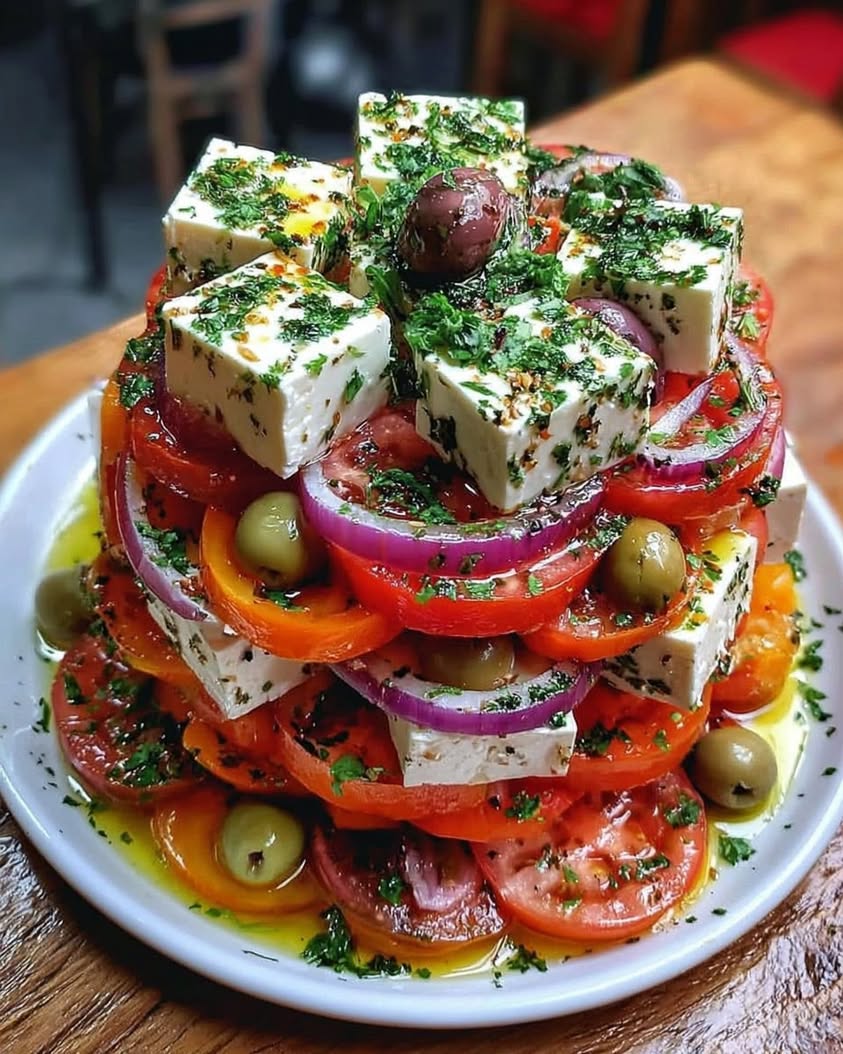
How to Build the Perfect Greek Feta Salad Tower in Minutes
Imagine a dish that brings the vibrant flavors of the Mediterranean right to your table in under fifteen minutes. That is the magic of learning how to build the perfect Greek Feta Salad Tower in minutes. This recipe is not just a salad; it is an experience. You layer creamy feta cheese, crisp cucumbers, juicy tomatoes, and briny olives into a stunning vertical presentation that impresses everyone. The tower stands tall on your plate, offering a delightful contrast of textures and tastes. Each bite delivers a burst of freshness, from the tangy feta to the sweet bell peppers. This dish captures the essence of a Greek summer, making it perfect for any season. It is a showstopper that requires no cooking, proving that simplicity often yields the best results. You will find that preparing this meal is both relaxing and rewarding. The colors alone, with deep greens, bright reds, and white cheese, create a visual treat. Sharing this tower at a dinner party sparks conversation and joy. It is a testament to how fresh ingredients can shine when arranged thoughtfully. This recipe invites you to slow down and appreciate the beauty of whole foods. Whether you are a seasoned cook or a beginner, this salad tower offers a foolproof path to a delicious outcome. The best part is the flexibility, as you can adjust ingredients to suit your taste. Get ready to transform simple components into an elegant dish that feels special every time.
Building this salad tower means embracing the art of layering. You start with a robust base, perhaps a bed of crisp romaine or peppery arugula. Then you add the core ingredients, each one contributing its own distinct personality. The feta cheese, with its salty and creamy profile, becomes the star of the show. You cut it into thick slabs or crumble it roughly for added texture. Juicy tomatoes, preferably vine-ripened or heirloom, add sweetness and acidity. Cucumbers provide a refreshing crunch that cuts through the richness of the cheese. Red onions offer a sharp bite that balances the other flavors. Kalamata olives bring a briny depth that ties everything together. A simple dressing of olive oil, lemon juice, and oregano completes the picture. The tower structure encourages you to eat with your eyes first. As you slice through the tower, the layers tumble gracefully, mixing on the plate. This interactive element makes the meal more engaging and fun. You can customize the height and diameter based on your serving needs. The process is intuitive, allowing you to focus on creativity rather than strict rules. Mastering this dish gives you a reliable tool for quick, impressive meals. It works beautifully as a light lunch or a side for grilled proteins. The nutritional profile leans heavily on vegetables and healthy fats from olive oil. You will feel satisfied without feeling heavy. This tower also stores well, making it a convenient option for meal prep.
The appeal of this recipe lies in its versatility and speed. You can assemble the tower in the morning and keep it chilled until serving. The flavors actually meld together over time, enhancing the overall taste. You do not need any special equipment, just a sharp knife and a flat plate. The technique involves careful stacking to ensure stability. You can use a ring mold for a cleaner look or freehand it for a rustic feel. The key is to compact each layer gently without crushing the ingredients. This method ensures the tower holds its shape when you remove the mold. The visual impact of a tall, colorful stack cannot be overstated. It contrasts beautifully with traditional bowl-style salads. Serving this dish at a gathering makes a strong statement about your cooking skills. Yet the actual work takes only minutes, leaving you more time to enjoy your company. The ingredients are widely available at any grocery store. You do not need to hunt down exotic items. This accessibility makes the recipe approachable for every home cook. The cost per serving is surprisingly low, given the high-quality feel. You can feed a family of four for under fifteen dollars. That makes it a budget-friendly option for entertaining. The health benefits are substantial, as each serving provides a wealth of vitamins and antioxidants. You can feel good about serving this to your loved ones. Learning how to build the perfect Greek Feta Salad Tower in minutes truly changes the way you think about salads.
Quick Recipe Highlights
- Flavor Profile: This salad tower delivers a bold combination of tangy feta, sweet tomatoes, and briny olives. The lemon dressing adds a bright, citrusy note that lifts each bite. The overall taste is balanced, with salty and acidic elements playing together harmoniously.
- Texture: You experience a satisfying crunch from fresh cucumbers and romaine lettuce. The creamy feta cheese melts in your mouth, contrasting nicely with the crisp vegetables. The olives offer a firm, chewy texture that adds depth to the eating experience.
- Aroma: Fresh oregano and lemon zest create an inviting, herbaceous scent. The ripe tomatoes release a sweet, earthy fragrance as you cut them. The aroma of extra virgin olive oil rounds out the sensory profile beautifully.
- Visual Appeal: The tower showcases vibrant green cucumbers, red tomatoes, and white feta cheese stacked in neat layers. The contrast of colors is striking and appetizing. The vertical presentation makes the dish look tall and elegant on the plate.
- Skill Level Needed: This recipe requires only basic knife skills and a willingness to layer ingredients. You do not need any advanced cooking techniques or experience. It is perfect for beginners who want to create an impressive-looking dish with minimal effort.
- Special Equipment: You benefit from using a ring mold or a clean can with both ends removed for shaping. A sharp chef’s knife simplifies the slicing of vegetables and cheese. You also need a flat serving plate to build the tower on.
Recipe Overview
- Difficulty Level: I chose Easy for this recipe because the steps are straightforward and require no heat. You simply chop, layer, and serve. There is no room for error, as the ingredients forgive imperfect cuts. The assembly is intuitive, making it accessible for cooks of all levels. You can focus on presentation without stressing about timing or temperature.
- Category: This dish works perfectly as a main course salad or a shareable appetizer. It also functions well as a side dish for grilled meats or fish. You can serve it for lunch, dinner, or even a festive brunch. The versatility makes it a go-to recipe for many meal occasions.
- Cuisine: The flavor profile draws heavily from Greek culinary traditions. The use of feta cheese, olives, and oregano is classic in Mediterranean cooking. This dish honors the Greek emphasis on fresh, simple ingredients. The technique of layering also reflects the region’s love for communal eating and sharing. You taste the sun-drenched coastal influence in every component.
- Cost: The total cost for this salad tower is very reasonable, around twelve to fifteen dollars. Feta cheese and good olive oil are the most expensive items. The vegetables are affordable and often in season. You can reduce costs further by using store-brand ingredients or buying in bulk. This makes the recipe budget-friendly for weekly meal planning.
- Season: I recommend making this tower during the summer months when tomatoes and cucumbers are at their peak. The flavors are more vibrant and sweet during this time. However, you can enjoy it year-round using greenhouse vegetables. The bright, refreshing nature of the dish makes it ideal for warm weather eating. It pairs well with outdoor gatherings and picnics.
- Occasion: This dish shines at casual barbecues, dinner parties, and holiday meals. It also works well for meal prep, as the components stay fresh for several days. You can take it to potlucks or serve it as a light office lunch. The impressive presentation makes it suitable for celebrations like birthdays or anniversaries. It never fails to draw compliments from guests.
Why You Will Love This Recipe
You will love the taste and texture appeal of this salad tower because it delivers a burst of freshness with every forkful. The creamy feta cheese pairs beautifully with the crisp cucumbers and juicy tomatoes. The briny Kalamata olives add a savory punch that balances the sweet and acidic notes. The simple lemon and oregano dressing ties everything together without overpowering the natural flavors. Each layer offers a distinct experience, making every bite slightly different. The contrast between soft and crunchy textures keeps your palate engaged. You will find yourself reaching for another serving because the flavors are incredibly satisfying. The dish feels light yet substantial enough to serve as a main course. The fresh ingredients speak for themselves, requiring minimal manipulation. This purity allows the quality of your produce to shine through. You can taste the care in every component, from the ripe tomatoes to the fragrant herbs. The overall sensation is one of clean, vibrant eating that leaves you feeling energized.
The convenience and preparation benefits of this recipe are remarkable. You can assemble the entire tower in less than fifteen minutes with no cooking required. That means you save time and energy while still producing a restaurant-quality dish. The steps are intuitive, so you do not need to consult the recipe constantly. You can easily double or triple the recipe for a crowd without extra stress. The ingredients are common and easy to find at any grocery store. You do not need to hunt for specialty items or make advance preparations. The dish holds up well in the refrigerator for several hours before serving. This makes it an excellent make-ahead option for parties or busy weeknights. The cleanup is minimal, involving just a cutting board and a knife. You do not dirty any pots, pans, or mixing bowls. The simplicity of the process encourages you to cook more often. You will rely on this recipe when you need a quick and impressive meal. The time savings give you more opportunities to relax and enjoy your food.
The nutritional advantages of this Greek Feta Salad Tower are significant for your overall health. Each serving is packed with fiber from the fresh vegetables, which supports healthy digestion. The cucumbers and tomatoes are low in calories but high in water content, helping you feel full. Feta cheese provides calcium and protein, while olive oil offers heart-healthy monounsaturated fats. The olives contribute antioxidants and beneficial plant compounds. You get a good dose of vitamins A and C from the tomatoes and bell peppers. The red onions add quercetin, a powerful anti-inflammatory compound. The total calorie count remains moderate, making it suitable for weight management. The dish is naturally gluten-free, catering to those with dietary restrictions. You control the amount of salt and oil, allowing you to tailor it to your needs. The balance of carbohydrates, protein, and fat keeps your energy stable. You will feel satisfied without experiencing a blood sugar spike. This salad tower aligns well with Mediterranean diet principles, which are linked to longevity.
The social and entertaining value of this dish is immense. When you serve a tall, colorful tower, it immediately becomes the centerpiece of the table. Guests will stop and admire the presentation before taking photos. The interaction of slicing the tower and watching it collapse gently adds a playful element. You can involve your guests in the assembly, making it a fun group activity. The dish is forgiving, so even kids can help stack the layers. It sparks conversations about cuisine, travel, and cooking techniques. The vibrant colors and fresh aromas create an inviting atmosphere. You can pair it with other Mediterranean dishes like grilled chicken or spanakopita. The tower serves as a conversation starter, breaking the ice at gatherings. Your guests will perceive it as a high-effort dish, even though it is not. This perception elevates your status as a host without adding to your workload. You will receive compliments and requests for the recipe. The shared experience of eating the tower brings people together around the table.
The cost-effectiveness and accessibility of this recipe make it a reliable staple. You can purchase all the ingredients for roughly the same price as a fast-food meal. Yet the quality and presentation far exceed what you would get at a restaurant. The ingredients are available year-round, so you never have to compromise. You can adjust the quantities based on your budget, using more or less feta as needed. The recipe uses basic pantry items like olive oil and oregano that you likely already have. This lowers the barrier to making it on a whim. The dish stretches well, allowing you to feed more people with less total cost. You can use slightly less feta and more vegetables to reduce expenses further. The leftovers stay fresh for a day or two, reducing food waste. You can repurpose leftovers into a chopped salad or wrap. The versatility extends to ingredient swaps, letting you use what is on hand. You can substitute goat cheese for feta or add avocado for extra creaminess. The recipe adapts to your pantry, making it truly accessible for all households.
Historical Background and Cultural Significance
The origins of the Greek salad, known locally as horiatiki, trace back to rural Greek villages. Farmers would harvest vegetables from their fields and combine them with simple ingredients. The traditional version includes tomatoes, cucumbers, onions, olives, and feta cheese. There is no lettuce in the classic recipe, as it was not commonly grown in the region. The dressing consists of olive oil, oregano, and sometimes lemon juice. This simplicity reflects the agricultural roots of Greek cuisine. The salad was originally a peasant dish, using whatever was available. Over time, it gained popularity in tavernas and homes across Greece. The modern version you see today evolved in the 1960s as tourism increased. Restaurants began standardizing the recipe to cater to international palates. The addition of bell peppers and lettuce came later, influenced by Western tastes. Despite these changes, the core ingredients remain the same. The salad embodies the Greek philosophy of using fresh, seasonal produce. It represents a connection to the land and sea that defines Greek culture. The dish is so loved that UNESCO recognized the Mediterranean diet as an intangible cultural heritage. This salad tower is a contemporary twist on that age-old tradition.
Culturally, the Greek salad holds a special place in daily life and celebrations. You find it at every taverna, family dinner, and festive gathering. It is a symbol of hospitality and sharing in Greek culture. Hosts often serve it as a first course to welcome guests. The vibrant colors reflect the Greek flag, adding a layer of national pride. The salad also represents the concept of filoxenia, or love of strangers. Sharing food is an essential part of Greek social interaction. The salad offers a way to connect with others through simple, honest ingredients. In many households, the recipe passes down through generations. Grandmothers taught their children how to select the ripest tomatoes and creamiest feta. The salad is a source of comfort and nostalgia for many Greeks. It reminds them of summer vacations and family reunions. The act of chopping vegetables together becomes a bonding ritual. The dish transcends socioeconomic boundaries, enjoyed by rich and poor alike. It is a democratic food that brings people together. The Greek Feta Salad Tower honors this tradition while adding a modern visual flair.
The evolution of the recipe mirrors changes in Greek society over the decades. Originally, the salad was a rustic mix of roughly chopped vegetables. As tourism grew, chefs began presenting it more artfully on the plate. The concept of layering ingredients into a tower emerged in the early 2000s. This innovation responded to the demand for Instagram-worthy dishes. Chefs in upscale restaurants started using ring molds to create clean shapes. The tower format became popular because it looked elegant and sophisticated. Home cooks quickly adopted the technique for its impressive results. The recipe adapted to include new ingredients like avocado and roasted peppers. Some variations use grilled halloumi instead of feta for a different texture. Others add protein like grilled shrimp or chicken to make it a full meal. The dressing also evolved, with balsamic reductions and herb oils appearing on menus. Despite these changes, the spirit of the original remains intact. The focus stays on fresh, high-quality ingredients treated with respect. The tower simply offers a new way to experience familiar flavors. This evolution shows how traditional dishes can stay relevant in modern times. It bridges the gap between rustic roots and contemporary dining trends.
Regional variations of the Greek salad exist across Greece and the Mediterranean. In Crete, you might find the salad made with paximadi, a barley rusk, instead of bread. In the northern regions, cooks add cabbage or shredded carrots for extra crunch. Some islands use capers instead of olives for a different briny hit. In Cyprus, they use a similar dish called spanopitta or incorporate halloumi cheese. The Turkish version, called coban salatasi, includes parsley and mint. In Lebanon, fattoush adds toasted pita bread and sumac. Each region adapts the salad to its local produce and culinary traditions. The use of herbs varies widely, with some preferring dill over oregano. The dressing can include vinegar, pomegranate molasses, or even yogurt. The Greek Feta Salad Tower incorporates these influences by allowing customization. You can add capers for a Cretan twist or mint for a Turkish feel. The versatility ensures the dish never feels repetitive. You can explore different flavor profiles while keeping the core concept. This adaptability is what makes the salad a global favorite. It respects local tastes while honoring its Greek origins. The tower format provides a canvas for regional creativity.
Ingredient Deep Dive
The feta cheese is the soul of this salad tower, bringing a tangy and creamy element. It originated in Greece over six thousand years ago, making it one of the oldest cheeses in the world. The name feta comes from the Italian word fetta, meaning slice, reflecting how it is traditionally cut. Nutritionally, feta provides high-quality protein and calcium for strong bones. It contains less fat and fewer calories than many other cheeses, making it a healthier choice. Feta is rich in conjugated linoleic acid, which may support fat loss. When selecting feta, look for blocks stored in brine for the best flavor. The texture should be firm but crumbly, not dry or rubbery. Avoid pre-crumbled feta, as it often contains additives to prevent clumping. Store feta in its brine in the refrigerator, where it stays fresh for up to two weeks. You can substitute with goat cheese for a milder flavor or tofu for a vegan option. The salty character of feta balances the sweetness of the tomatoes perfectly. It also provides a creamy contrast to the crisp vegetables. The cheese is so integral that omitting it changes the entire character of the dish.
The tomatoes you choose make a significant difference in the final flavor of the tower. Roma tomatoes are ideal because they have fewer seeds and firmer flesh. Heirloom varieties offer a broader range of sweetness and acidity. Beefsteak tomatoes provide large, juicy slices that stack well. Tomatoes are rich in lycopene, a powerful antioxidant linked to heart health. They also deliver high levels of vitamin C and potassium. Look for tomatoes that are heavy for their size with a deep red color. Avoid tomatoes that are rock hard or have blemishes. Store tomatoes at room temperature away from direct sunlight to preserve flavor. Never refrigerate them, as cold temperatures destroy their texture and taste. You can substitute with roasted red peppers or sun-dried tomatoes for a different profile. The acidity of tomatoes cuts through the richness of the feta and olive oil. Their juice helps moisten the other ingredients as the tower sits. The natural sugars caramelize slightly when tomatoes are at peak ripeness. This sweetness enhances the overall flavor balance of the dish. Tomatoes bring a summer freshness that is hard to replicate with other ingredients.
Cucumbers add a crisp, refreshing element that contrasts with the creamy cheese. They are composed of over ninety-five percent water, making them incredibly hydrating. English cucumbers are perfect for this tower because they have thin skins and fewer seeds. They do not require peeling, saving you preparation time. Regular cucumbers work as well but may need seeding to avoid excess moisture. Kirby cucumbers are another good option with a crunchy texture. Cucumbers provide small amounts of vitamin K and potassium. They are very low in calories, adding bulk to the salad without adding fat. When selecting cucumbers, look for firm specimens with bright green color. Avoid any that have soft spots or wrinkled ends. Store cucumbers in the refrigerator and use them within a week. You can substitute with zucchini or jicama for a similar crunch. The mild flavor of cucumbers acts as a blank canvas for other tastes. They absorb the dressing nicely, becoming more flavorful over time. Their crunch adds a satisfying auditory element to the eating experience. The cucumber layers help stabilize the tower structurally.
Kalamata olives contribute a rich, briny flavor that deepens the overall taste profile. These almonds-shaped olives come from the Kalamata region of Greece. They are typically cured in red wine vinegar or brine, giving them a distinct tang. Olives are packed with monounsaturated fats, which support heart health. They also contain vitamin E and iron, essential for immune function. Look for olives with smooth, glossy skin and a deep purple-black color. Avoid olives that appear shriveled or have a slimy texture. Store opened jars in the refrigerator and consume within a month. You can substitute with Castelvetrano olives for a milder flavor or with capers for a different briny hit. The saltiness of olives enhances the other flavors in the tower. They add a chewy texture that contrasts with the soft cheese and crisp vegetables. The presence of olives gives the dish an authentic Mediterranean feel. They also provide a beautiful color contrast against the white cheese and green cucumbers. You can slice them in half or leave them whole for different presentations. The olives hold up well, retaining their shape even after the tower is assembled.
Red onions bring a sharp, pungent flavor that cuts through the richness of the other ingredients. They are native to Central Asia and have been cultivated for over five thousand years. Red onions contain quercetin, a flavonoid with anti-inflammatory properties. They are also a good source of vitamin C and fiber. Look for onions that are firm with dry, papery skins. Avoid any that have soft spots or signs of sprouting. Store onions in a cool, dark place away from potatoes to prevent sprouting. You can reduce the sharpness by soaking sliced onions in cold water for ten minutes. For a milder flavor, substitute with shallots or green onions. The vibrant purple color of red onions adds visual interest to the tower. They provide a necessary acidic bite that balances the creamy feta. The crunch of raw onion adds another layer of texture to the dish. The sulfates in onions complement the herbal notes of oregano nicely. You can control the onion intensity by using more or less to your taste. The onions soften slightly as they sit in the dressing, becoming sweeter over time.
Common Mistakes to Avoid
- Do not use pre-crumbled feta cheese because it often contains anti-caking agents that affect the texture. The crumbles also do not stack well and may cause the tower to collapse. Always buy a block of feta and cut it yourself for the best structure.
- Avoid adding too much moisture by skipping the step of patting ingredients dry. Wet cucumbers and tomatoes make the tower slide apart. Use paper towels to absorb excess liquid before assembling to maintain stability.
- Do not cut vegetables into uneven pieces because this creates an unstable foundation. Uniform slices stack more securely and look more professional. Take the time to measure each piece for consistency.
- Never overdress the salad by adding dressing directly to the layers. The dressing should be drizzled lightly on top or served on the side. Too much liquid causes the tower to sag and lose height.
- Avoid using a plate that is too small for the tower base. The tower needs a stable, flat surface with enough room around it. A small plate makes the tower look cramped and increases the risk of tipping.
- Do not skip the resting time after assembling the tower. Letting it sit for five minutes allows the flavors to meld and the structure to settle. Rushing this step leads to a less cohesive final product.
- Avoid using overripe tomatoes that are too soft and watery. They will not hold their shape and create a mess. Choose tomatoes that are firm but ripe for the best results.
- Never refrigerate the assembled tower for more than a few hours because the vegetables release moisture. The tower becomes soggy and loses its crisp texture. Assemble it close to serving time for the best experience.
- Avoid using dried oregano instead of fresh for the garnish because dried herbs lack the vibrant aroma. Fresh oregano adds a bright, herbaceous note that elevates the dish. Use dried oregano only in the dressing mixture.
- Do not press the layers down too hard when stacking because this crushes the vegetables and extracts juice. Gently compact each layer to maintain structure without damaging the ingredients. The goal is stability, not compression.
Essential Techniques
Mastering the technique of even slicing is crucial for a stable and attractive Greek Feta Salad Tower. You need to cut each ingredient into uniform pieces so they stack neatly. Start by using a sharp chef’s knife to ensure clean cuts without crushing the food. For cucumbers, slice them into rounds about a quarter-inch thick. For tomatoes, cut them into similarly sized rounds, removing the core first. For feta cheese, use a moist knife to prevent sticking and cut into even squares. The consistency in size allows each layer to sit flat on the one below. Uneven pieces create gaps that cause the tower to lean or collapse. This technique also ensures that every bite contains a balanced mix of flavors. You can practice on a few vegetables to get the feel for the correct thickness. The visual appeal of uniform layers cannot be overstated. It transforms a simple salad into an elegant presentation. This skill transfers to other layered dishes like lasagna or parfaits. Take your time with the slicing, as rushing only leads to frustration. The payoff is a tower that stands tall and looks professionally made. You will feel a sense of accomplishment when you remove the mold and see perfect layers.
The layering technique itself determines the structural integrity of your tower. You must build the tower on a sturdy base, such as a thick slice of cucumber or tomato. This base anchors the tower and prevents it from sliding on the plate. Place a ring mold in the center of your serving plate to guide the stacking. Start with the most stable ingredients at the bottom, like cucumber and tomato rounds. Add a layer of red onion and olives, spreading them evenly. Then add a layer of feta cheese, pressing lightly to compact it. Repeat the layers in the same order until you reach the desired height. Each layer should be slightly smaller in diameter than the one below to create a tapered effect. This taper provides structural stability and visual appeal. After adding all layers, gently press down on the top with your palm. This compacts the tower without crushing the ingredients. Let the tower rest for five minutes before carefully removing the ring mold. Lift the mold straight up with a slight twisting motion. The tower should hold its shape if the layers are firm and even. This technique ensures a professional-looking result every time.
Pro Tips for Perfect Greek Feta Salad Tower
Use a sharp serrated knife to cut the tomatoes without crushing their delicate flesh. A dull blade presses down and releases the juices prematurely. A serrated edge saws through the skin cleanly, preserving the structure of the tomato. This small change makes a big difference in the final presentation.
Chill the feta cheese in the freezer for ten minutes before cutting. Cold feta holds its shape better and cuts into clean, even slices. The cold cheese also stays firmer during assembly, preventing it from smearing onto other ingredients. This trick is especially helpful if your kitchen is warm.
Add a thin layer of hummus or tzatziki between the vegetable layers for extra flavor and binding. This addition creates a cohesive element that holds the tower together. It also introduces a new flavor dimension that complements the existing ingredients. Use about a tablespoon per layer for the best balance.
Wipe the ring mold with a paper towel between uses to prevent sticking. Residual oil or moisture from previous layers can cause the mold to grip the ingredients. A clean mold slides off smoothly, preserving the tower’s shape. Keep a damp towel nearby for quick cleaning.
Serve the tower on a bed of arugula or mixed greens to catch any falling pieces. The greens add color and texture to the plate while reducing waste. They also provide a secondary salad experience when the tower collapses. Choose greens that hold up well, like arugula or baby spinach.
Prepare all ingredients in advance and assemble the tower just before serving. This strategy ensures the vegetables stay crisp and the cheese remains firm. You can store the components separately in the refrigerator for up to a day. The assembly itself takes only a few minutes.
Drizzle the dressing over the top of the tower just before serving to maintain height. The dressing will slowly drip down the sides, coating each layer. This method prevents the lower layers from becoming soggy. It also creates a glistening appearance that looks appetizing.
Use a microplane to grate lemon zest over the top for an extra burst of citrus aroma. The zest adds a bright, fragrant note that wakes up the flavors. It also provides a beautiful green and yellow garnish. Add the zest just before serving for maximum impact.
Variations and Adaptations
Regional variations of the Greek Feta Salad Tower can add exciting new flavors. You can add roasted red peppers from the Mediterranean region for a smoky sweetness. This addition highlights the pepper’s natural sugars and adds a vibrant red color. The roasted flavor complements the briny olives and creamy feta. You can also include artichoke hearts, which are common in Italian cuisine. They bring a tangy, slightly nutty flavor that pairs well with lemon. For a Turkish twist, incorporate sumac and fresh mint into the dressing. These ingredients add a tangy, herbaceous note that brightens the tower. You can also add grilled halloumi cheese instead of feta for a salty, chewy texture. Halloumi holds up better when grilled because it does not melt. This variation works well for those who want a more substantial cheese presence. Each regional adaptation respects the core concept while celebrating local ingredients. You can explore different combinations to find your favorite.
Seasonal adaptations allow you to enjoy this tower year-round. In the spring, use fresh peas, radishes, and young spinach leaves. These ingredients add a sweet, earthy flavor and a pop of color. Summer is the ideal time for peak tomatoes and cucumbers. Use heirloom varieties in different colors for a rainbow effect. In the fall, add roasted butternut squash or pumpkin seeds for warmth and crunch. The sweetness of the squash balances the tangy feta nicely. In the winter, incorporate citrus segments like orange or grapefruit for a burst of acidity. Use winter greens like kale or endive for a sturdier base. You can also add pomegranate seeds for a jewel-like garnish. Each season offers unique ingredients that keep the tower interesting. You never get bored because the flavor profile shifts with the calendar. This adaptability makes the recipe a year round staple in your kitchen.
Dietary modifications make this tower accessible to a wide range of eaters. For a gluten-free version, simply ensure your dressing uses gluten-free vinegar. The ingredients themselves are naturally gluten-free, so no major changes are needed. For a dairy-free version, use tofu feta or a vegan cheese alternative. You can also crumble seasoned tofu that mimics the texture of feta. For a vegan adaptation, omit the cheese entirely and use avocado for creaminess. Add nutritional yeast for a cheesy flavor without dairy. For a low-carb version, reduce the amount of sweet bell peppers and increase cucumber and olives. You can also add more protein like grilled chicken or shrimp. For a keto-friendly version, use full-fat feta and add extra olive oil. The healthy fats keep you in ketosis while satisfying your appetite. These modifications ensure that everyone can enjoy the tower regardless of dietary restrictions.
Flavor variations allow you to customize the tower to your personal taste. You can add fresh basil for a sweet, peppery note that contrasts with the oregano. Dill adds a fresh, slightly anise-like flavor that works well with cucumber. For a spicy kick, add crushed red pepper flakes or sliced jalapenos. The heat cuts through the creamy feta and adds excitement. You can also use a balsamic reduction instead of the lemon dressing for a sweeter, more complex flavor. The balsamic adds a rich, tangy depth that caramelizes slightly. For a smoky flavor, use smoked paprika in the dressing or sprinkle it on top. This adds a subtle smokiness that complements the olives. You can also add capers for an extra briny punch. Each variation gives the tower a new personality while keeping the base structure intact.
Texture modifications let you adjust the mouthfeel to your preference. For a creamier tower, add a layer of mashed avocado or hummus between the vegetables. This introduces a smooth element that contrasts with the crisp veggies. For a crunchier tower, add toasted pine nuts or slivered almonds on top. The nuts provide a satisfying crunch and a nutty flavor. You can also use panko breadcrumbs toasted in olive oil for extra texture. For a softer tower, let the ingredients sit for thirty minutes before serving. The vegetables release their juices, softening the overall texture. You can also grill the vegetables beforehand for a charred, smoky texture. Grilled zucchini and eggplant add a tender, silky feel. Each texture modification changes the eating experience significantly. You can experiment to find your preferred combination.
Presentation alternatives offer creative ways to serve the same delicious flavors. Instead of a tall tower, you can present the ingredients in a deconstructed style on a large platter. Arrange the vegetables in rows with the feta in the center for a beautiful spread. You can also serve the salad in individual glass jars or cups for a portable option. The layers show through the glass, creating a striking visual. For a family-style dinner, use a large shallow bowl and arrange the ingredients in concentric circles. This style encourages sharing and interaction. You can also use mini ring molds to create individual towers for each guest. This personal presentation makes everyone feel special. For a rustic feel, skip the mold and freehand the layers. The slightly imperfect shape adds charm. Each alternative presents the same ingredients in a new light.
Serving and Presentation Guide
Plating techniques for the Greek Feta Salad Tower focus on height and stability. Always choose a plate with a wide flat surface to support the base of the tower. A white plate makes the colors pop, while a dark plate adds drama. Center the tower on the plate and surround it with a drizzle of dressing. You can also add a few extra olives or herbs around the base for decoration. The goal is to create a focal point that draws the eye upward. Use a ring mold to achieve clean, straight edges for a professional look. Remove the mold carefully to avoid disturbing the layers. You can also use a spatula to gently nudge any stray ingredients back into place. The tower should look neat and symmetrical from every angle. For a more casual presentation, allow the ingredients to spill out slightly. This rustic approach feels approachable and homey. Whichever style you choose, consistency in the layers is key. Take a moment to step back and assess the presentation before serving. Adjust any ingredients that look out of place.
Garnishing ideas can elevate the visual appeal of your tower significantly. Fresh herbs like Print
Greek Feta Salad Tower
- Total Time: 15 minutes
- Yield: 4
Description
A stunning layered salad inspired by Greek flavors, with creamy feta, ripe tomatoes, cucumbers, olives, and a tangy vinaigrette. Served as a tower for an elegant presentation.
Ingredients
- 8 oz feta cheese, sliced into 1/4-inch thick slabs
- 2 large ripe tomatoes, sliced into 1/4-inch rounds
- 1 large cucumber, sliced into 1/4-inch rounds
- 1/2 cup kalamata olives, pitted and halved
- 1/4 cup red onion, thinly sliced
- 1/4 cup extra virgin olive oil
- 2 tablespoons red wine vinegar
- 1 teaspoon dried oregano
- 1/2 teaspoon salt
- 1/4 teaspoon black pepper
- Fresh mint or basil for garnish
Instructions
- In a small bowl, whisk together olive oil, red wine vinegar, dried oregano, salt, and black pepper to make the vinaigrette.
- On a serving plate, arrange a slice of tomato as the base. Top with a cucumber slice, then a slice of feta. Repeat layering to create a tower of alternating tomato, cucumber, and feta. Use the largest slices at the bottom for stability.
- Once the tower is assembled, scatter the kalamata olives and red onion slices around the base.
- Drizzle the vinaigrette over the tower and the surrounding ingredients. Garnish with fresh mint or basil leaves. Serve immediately.
Notes
You can customize the seasonings to taste. For a more robust flavor, add a sprinkle of za’atar or sumac. This dish is best enjoyed fresh; if preparing ahead, keep components separate and assemble just before serving.
- Prep Time: 15 minutes
- Cook Time: 0 minutes
- Method: Appetizer
- Cuisine: Greek