5 Easy Greek Feta & Cucumber Bite Skewers for Party Appetizers
Imagine the crunch of a crisp cucumber cube paired with the creamy, tangy bite of feta cheese. Now picture that combination threaded onto a simple skewer, drizzled with a bright Mediterranean dressing. These Greek feta and cucumber bite skewers for party appetizers are the perfect solution for your next gathering. They are incredibly simple to assemble. However, they deliver a massive impact in both flavor and visual appeal. This no-cook recipe is a lifesaver for busy hosts who want something healthy, elegant, and utterly delicious.
The beauty of this appetizer lies in its simplicity. A fresh cucumber chunk provides a cool, hydrating base. A cube of authentic feta adds a salty, creamy counterpoint. A plump Kalamata olive brings a briny depth. A sweet cherry tomato provides a burst of juice. It is a perfect bite every single time. You can prepare these skewers in under fifteen minutes. Therefore, they are a fantastic last-minute option for unexpected guests. They are also a wonderful way to incorporate more vegetables into your party menu without sacrificing taste.
These bite-sized skewers are more than just a snack. They are a conversation starter. They are a colorful addition to any appetizer table. Their bright colors and fresh ingredients naturally draw people in. Guests love the interactive nature of picking them up. Because the components are chunky and satisfying, these skewers feel substantial. They are the ultimate healthy finger food. You will find yourself making them for every barbecue, potluck, and holiday party. Get ready to watch them disappear in minutes.
Quick Recipe Highlights
- Flavor Profile: This appetizer delivers a bright, tangy, and savory experience. The salty feta and briny olives perfectly balance the sweet tomatoes and crisp cucumber. A simple oregano vinaigrette ties everything together with herbal notes.
- Texture: You get a satisfying crunch from the fresh cucumber. The feta offers a soft, creamy mouthfeel that contrasts beautifully with the juicy pop of a cherry tomato. The olives add a slight firmness.
- Aroma: The primary aromas come from fresh cucumber and ripe tomatoes. The feta adds a pleasant, milky tang. The dried oregano in the dressing contributes a warm, earthy Mediterranean fragrance.
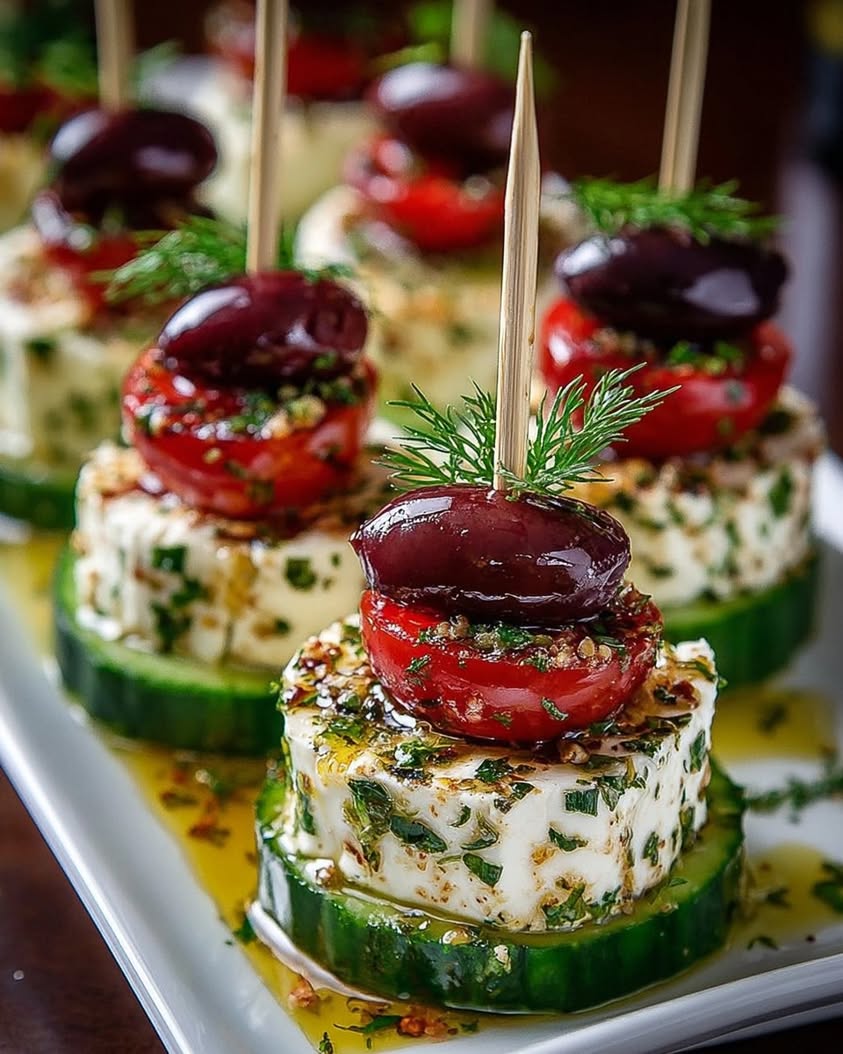
- Visual Appeal: These skewers are a visual feast. You will see vivid green cucumber, pure white feta, deep purple olives, and bright red tomatoes. The contrast is stunning against a white platter.
- Skill Level Needed: This is a no-cook, beginner-friendly recipe. You only need basic knife skills to cube the ingredients. Even young children can help assemble the skewers. It is truly that easy.
- Special Equipment: You will need short cocktail skewers or toothpicks. A sharp knife and a cutting board are also necessary. A small bowl for mixing the dressing is helpful.
Recipe Overview
- Difficulty Level: This recipe is rated as easy because it requires no cooking or advanced techniques. The primary task is cutting ingredients into even, bite-sized cubes. Assembly is straightforward and intuitive. Anyone can master this recipe on their first try.
- Category: These skewers are primarily served as appetizers or hors d’oeuvres. They are perfect for cocktail parties and casual get-togethers. They can also be served as a side dish for grilled meats. Therefore, they fit into the party food category perfectly.
- Cuisine: This recipe is inspired by the classic flavors of Greek cuisine. The combination of feta, cucumber, tomato, and olives is a staple of the Mediterranean diet. It reflects the simple, fresh, and healthy cooking style of Greece. The use of oregano and olive oil is also distinctly Greek.
- Cost: This is a very budget-friendly appetizer. Cucumbers and tomatoes are generally inexpensive. Feta cheese can be found at reasonable prices in most grocery stores. A jar of Kalamata olives will last for multiple uses. The total cost for a large tray of skewers is quite low.
- Season: This recipe shines during the summer months. This is when cucumbers and tomatoes are at their peak flavor and lowest cost. The fresh, cool nature of the dish is also perfect for hot weather. However, you can easily find good quality ingredients year-round.
- Occasion: These skewers are perfect for summer barbecues and pool parties. They are also elegant enough for holiday gatherings and bridal showers. Game day parties and casual weeknight dinners are also great opportunities to serve them. They are versatile for any event.
Why You’ll Love This Recipe
First and foremost, the taste and texture combination is simply addictive. The cool cucumber offers a refreshing crunch that cleanses your palate. The creamy feta provides a rich, salty tang that coats your tongue. Then the tomato bursts with sweet juice, and the olive adds a final briny kick. Each small bite is a complete flavor experience. Consequently, it satisfies multiple cravings at once. You get savory, salty, sweet, and fresh all in one mouthful. This contrast makes it far more exciting than a standard cheese and cracker platter.
Convenience is another major reason to love this recipe. Because there is zero cooking involved, you avoid heating up your kitchen. This is a huge advantage during the summer months. Furthermore, the assembly process is quick and simple. You can easily have a beautiful appetizer ready in under 15 minutes. This allows you to spend more time with your guests and less time in the kitchen. Moreover, the cleanup is incredibly easy. You only use a cutting board, a knife, and a bowl. There are no pots or pans to wash.
From a nutritional standpoint, these skewers are a guilt-free indulgence. Cucumbers are incredibly low in calories and high in water content. They are excellent for hydration and provide a good dose of vitamin K. Tomatoes are packed with lycopene, a powerful antioxidant. Feta cheese is a good source of calcium and protein. The olives provide healthy monounsaturated fats. Therefore, you can enjoy this appetizer without any worry. It aligns perfectly with a healthy lifestyle while still feeling like a treat.
These skewers also provide incredible social and entertaining value. Their visual appeal makes them stand out on any buffet table. They are a finger food, which encourages mingling and conversation. Guests can easily pick them up and chat without needing a plate and fork. This creates a more relaxed and interactive social atmosphere. Because they are bite-sized, people can try one and easily move on to other foods. They are the perfect starter to get a party flowing.
Finally, this recipe is incredibly cost-effective and accessible. The ingredients are available in almost any grocery store. You do not need any special or expensive ingredients. A single cucumber and a block of feta can make a large number of skewers. This makes it an excellent choice for feeding a crowd on a budget. You can also buy ingredients in bulk to save even more money. It is a high-value appetizer that looks and tastes far more expensive than it is.
Historical Background and Cultural Significance
The specific combination of cucumber, tomato, feta, and olives is a cornerstone of Greek cuisine. It is a modern take on the traditional Greek village salad, known as Horiatiki. This salad has been a staple in Greek homes for centuries. Farmers and villagers would combine whatever fresh produce was available with a block of tangy feta. This simple, no-cook meal represented the essence of the Mediterranean diet. It was a testament to the beauty of using fresh, high-quality, seasonal ingredients.
Feta cheese itself has a protected designation of origin status in the European Union. This means that true feta can only be produced in certain regions of Greece. It has been made in this region for thousands of years. The process of brining the cheese gives it its signature salty, tangy flavor and crumbly texture. It is a point of immense national pride. Therefore, including real feta in this recipe connects you to a deep culinary history.
The ritual of sharing food is central to Greek culture. Meals are often long, social affairs with family and friends. Appetizers, or mezedes, are a crucial part of this tradition. They are meant to be shared, encouraging conversation and connection. This skewer recipe embodies that spirit perfectly. It is designed for communal eating. It encourages people to gather around a platter and share food together. This social aspect is just as important as the food itself.
Regional variations of this combination exist throughout Greece and the broader Mediterranean. In some areas, capers replace the olives for a different kind of brininess. Other regions might add a sprinkle of sumac for a tangy, lemony twist. Some versions include pieces of pita bread for added carbohydrate. The core idea, however, remains the same. It is always about combining fresh vegetables with a salty, creamy cheese. This adaptability speaks to the recipe’s enduring appeal.
Ingredient Deep Dive
Feta cheese is the heart of this appetizer. Its history dates back to ancient Greece, where sheep and goat milk cheeses were preserved in brine. Culturally, it is a symbol of Greek identity. Nutritionally, feta is high in calcium and protein. It also contains beneficial probiotics. For selection, always look for feta stored in brine, not pre-crumbled. The brine ensures the cheese stays moist and flavorful. The block should feel firm but not hard. It should be white with a slightly crumbly texture. For storage, keep the block submerged in its brine in the refrigerator. It can last for several weeks this way. If you cannot find authentic Greek feta, a good quality French feta is a decent substitute. Avoid low-fat feta as it lacks the creamy texture and flavor.
English cucumber is the best choice for this recipe. Its thin skin and small seeds make it perfect for eating raw. It does not require peeling, which saves time and adds color. Nutritionally, cucumbers are incredibly hydrating. They are low in calories and provide vitamin K and potassium. For selection, choose cucumbers that are firm, dark green, and without soft spots. They should feel heavy for their size. To store, keep them in the refrigerator crisper drawer. They are best used within a week of purchase. If English cucumbers are unavailable, you can use a standard garden cucumber. However, you should peel it first and remove its larger seeds.
Cherry tomatoes provide a sweet, acidic burst in every bite. They are native to South America but are now grown worldwide. Nutritionally, they are rich in vitamin C and lycopene. To select the best tomatoes, look for ones that are firm, plump, and brightly colored. They should have a sweet, fruity aroma. Avoid any that are soft or have wrinkles. Store them at room temperature for the best flavor. Never refrigerate them as this ruins their texture and taste. If cherry tomatoes are not in season, you can use grape tomatoes. They are slightly less sweet but work well as a substitute.
Kalamata olives add a distinctly briny, fruity flavor. These dark purple almonds-shaped olives are from the Peloponnese region of Greece. They are cured in red wine vinegar and olive oil. This gives them their characteristic taste. Nutritionally, they are a good source of healthy monounsaturated fats. For selection, choose olives that are shiny and plump. Avoid any that look shriveled or have a slimy texture. You can buy them pitted to save time. Store them in their brine in the refrigerator. They will keep for several months. If you cannot find Kalamata olives, Castelvetrano olives are a sweeter, milder alternative.
Common Mistakes to Avoid
- Using pre-crumbled feta cheese is a common error. This cheese is often dry and coated with anti-caking agents. It will not cube well and lacks the creamy, moist texture of block feta. Always buy a block of feta in brine for the best result.
- Cutting the cucumber pieces too large is problematic. Large chunks are difficult to eat in one bite. They can also unbalance the skewer and make it top-heavy. Aim for uniform, half-inch cubes for the perfect size.
- Cutting the ingredients into different sizes creates an uneven look. When all pieces are uniform, the skewers look professional and elegant. Inconsistent sizes also mean some bites will be vegetable-heavy and others cheese-heavy.
- Skipping the dressing is a missed opportunity. A simple drizzle of olive oil, lemon juice, and oregano takes these skewers to the next level. It adds moisture and a complex layer of flavor. The dressing is essential for the authentic Greek profile.
- Assembling skewers too far in advance can lead to soggy results. The salt from the feta and olives will draw water out of the cucumbers. To prevent this, assemble them no more than two hours before serving.
- Using soft tomatoes that are past their prime ruins the texture. The skewer needs that firm pop of a cherry tomato. Overly ripe tomatoes will become mushy and fall apart when threaded onto the skewer.
- Overloading each skewer with too many pieces makes them unstable. A simple pattern of one olive, one cheese cube, one tomato, and one cucumber is ideal. This ensures each bite has a balanced flavor profile.
- Forgetting to pat the cucumber dry is a small but important detail. Excess moisture will dilute the dressing. It can also make the cucumbers slide off the skewer. Always pat them dry with a paper towel before assembly.
Essential Techniques
The most important technique for this recipe is precise and uniform knife cutting. Start by cutting the cucumber into thick rounds, about one and a half inches high. Then, stack a few rounds and cut them into sticks. Finally, cut the sticks into uniform cubes. This method ensures every piece is the same size. The same technique applies to the feta cheese. Always use a sharp knife to get clean cuts through the soft feta. A dull knife will just crumble the cheese. Uniform pieces are not just for looks. They ensure that every skewer has a balanced flavor. Moreover, they stack and pack together nicely on a serving platter.
Mastering the assembly process is also a key skill. First, prepare all your components in separate bowls. This makes the line assembly process much faster and smoother. Next, take a short cocktail skewer or toothpick. Thread an olive onto the skewer first. The olive acts as an anchor. Then add a cube of feta. Follow this with a cherry tomato. Finally, finish with a cucumber cube at the top. This order keeps the ingredients in place. The olive and tomato provide friction against the other items. The cucumber holds the top spot without sliding off. You will develop a rhythm quickly once you start assembling.
A common pitfall is dressing the skewers incorrectly. You should not drench them in dressing. Instead, use a basting brush to lightly coat each skewer. Alternatively, you can drizzle the dressing over the entire platter right before serving. The goal is a light, even coating. Too much dressing will make the skewers soggy and messy. It will also overwhelm the delicate flavors of the fresh ingredients. The dressing should enhance, not mask, the natural taste. Focus on a light hand for the best outcome. The visual cue for success is a subtle, glossy sheen on the ingredients.
Pro Tips for Perfect Greek Feta & Cucumber Bite Skewers
Always buy a block of feta cheese that is stored in brine. This guarantees the cheese will be moist and creamy. Cubing it while it is still cold makes the process much easier. The cheese holds its shape better when it is firm.
To prevent the feta from sticking to your knife, dip the blade in cold water between cuts. This simple trick ensures clean, neat cubes. It prevents the cheese from crumbling and wasting. Your presentation will look professional.
For extra flavor, marinate the feta cubes in olive oil, lemon zest, and oregano for 30 minutes before assembly. This infuses the cheese with a deeper, more complex flavor. It elevates the entire appetizer significantly.
Use a vegetable peeler to create thin ribbons of cucumber for a more elegant presentation. While cubes are classic, ribbons offer a different texture and a fancier look. You can wrap the ribbon around the other ingredients on the skewer.
If you are making these for a large party, set up an assembly line. Have one person cut the ingredients, another person threads the skewers, and a third person arranges and dresses them. This will make the process incredibly fast.
To keep the skewers organized and hygienic, use a block of styrofoam or a large grapefruit as a base. Simply stick the other end of the skewer into the base. This creates a beautiful, upright display for your appetizer.
Variations and Adaptations
Regional variations can change the flavor profile entirely. In Turkey, you might replace the feta with a mild, white Beyaz peynir. A sprinkle of sumac would be added for a tangy, citrusy note. In Cyprus, a piece of Halloumi cheese could be grilled and added for a chewy, salty texture. The olives might be swapped for local Cypriot green olives. Each region puts its own unique stamp on this classic combination.
Seasonal adaptations allow you to use what is fresh at the market. In the summer, use the best heirloom cherry tomatoes for their intense sweetness. In the fall, you can add small cubes of roasted butternut squash. In the spring, a few fresh mint leaves add a bright, refreshing element. The base recipe is a template that you can adapt easily to any season. This keeps the recipe feeling new and exciting all year long.
Dietary modifications make this recipe inclusive. For a dairy-free version, replace the feta with a high-quality marinated tofu or a dairy-free feta alternative. For a gluten-free version, the recipe is naturally gluten-free. Just double-check your olives and dressing ingredients for any hidden wheat. For a low-carb or keto diet, this recipe is already perfect. The cucumber, olives, and feta are all low in carbohydrates. You can simply enjoy it as is.
Flavor variations can be introduced through the dressing. Try a lemon-herb dressing with fresh dill and mint. Add a pinch of red pepper flakes for a touch of heat. A balsamic glaze drizzle offers a sweet and tangy alternative. You can also experiment with different types of olives, such as green Castelvetrano or spicy Arbequina olives. Each change creates a new dimension of taste.
Texture modifications are also easy to make. To add crunch, toss in some toasted pine nuts or slivered almonds. You can include a small piece of roasted red pepper for a soft, sweet contrast. For a creamier element, add a spoonful of tzatziki sauce to the platter. The options for adjusting the texture are limited only by your imagination.
Presentation alternatives can transform the skewers for different events. For a more formal occasion, use long, thin wooden skewers and stand them upright in a ceramic vase. For a casual barbecue, serve them on a rustic wooden board. You can even arrange the ingredients on a skewer in a pattern, like the colors of your favorite sports team. The visual presentation is a key part of the experience.
Serving and Presentation Guide
When plating these skewers, start with a large, flat platter. Arrange the skewers in neat rows or a circular pattern. Overlap them slightly to create a sense of abundance. The bright colors of the ingredients will naturally create a beautiful mosaic. You can also place a small bowl of extra dressing in the center of the platter for dipping. This adds an interactive element for your guests.
Garnishing ideas can elevate the visual appeal dramatically. A sprinkle of fresh chopped dill or mint over the top adds a pop of green. Some torn basil leaves offer a beautiful contrast. A light dusting of black pepper or dried oregano completes the look. Edible flowers, like violas, are also a lovely addition for a special occasion. The garnish should always be fresh and complement the flavors of the dish.
Traditional accompaniments for these skewers include warm pita bread and a bowl of creamy tzatziki sauce. You can also serve them alongside a Greek salad for a more substantial meal. Hummus, baba ghanoush, and other Mediterranean dips pair wonderfully. These accompaniments turn the skewers into the centerpiece of a larger spread. They also offer your guests variety.
For a modern serving suggestion, try a deconstructed approach. Arrange all the ingredients separately on a large board with the toothpicks on the side. Let your guests build their own skewers. This interactive format is very popular at parties. It allows people to customize their bites. It also reduces the prep work for you, the host.
Temperature considerations are crucial. These skewers are best served cold or at room temperature. If you are making them ahead, keep them chilled in the refrigerator. Take them out about 15 minutes before serving. This allows the flavors to come together without becoming too cold. Never serve them hot from the sun or a warm kitchen. The freshness is lost at higher temperatures.
Portion control tips are helpful for large parties. Plan for about 3 to 4 skewers per person if serving as an appetizer. If they are part of a larger buffet with many options, 2 skewers per person is sufficient. For a cocktail party where they are the main snack, plan for 5 to 6 per person. Always make a few extra, as they tend to disappear quickly.
Wine and Beverage Pairing
For wine pairings, a crisp, dry white wine is the classic choice. A Greek Assyrtiko is a perfect match. Its high acidity and mineral notes cut through the creamy feta perfectly. A Sauvignon Blanc or a dry Pinot Grigio from Italy are also excellent choices. The citrus and green flavors in these wines mirror the fresh ingredients in the skewers. For a red wine option, a very light, chilled red like a Beaujolais works well. The low tannins and fruity notes avoid overwhelming the delicate flavors.
For non-alcoholic alternatives, a classic lemonade is a fantastic choice. Its tartness echoes the lemon in the dressing. You can also serve sparkling water with a slice of cucumber and a sprig of mint. This keeps the theme refreshing and hydrating. A good quality grape juice, such as a white grape juice, also pairs well. It is sweet enough to balance the salty feta. These options ensure every guest has a perfect drink to enjoy.
If you are hosting a brunch, a glass of dry Prosecco or Cava is wonderful. The bubbles provide a textural contrast to the crunchy vegetables. A Bloody Mary is also a surprisingly good match. The savory, tomato-based flavors of the drink complement the Mediterranean ingredients. For a dinner gathering, a crisp Greek beer, like a Fix or a Mythos, is an authentic and refreshing choice. The light, clean taste of the beer is a fantastic palate cleanser.
Temperature considerations for your beverage are as important as the food. All white wines, sparkling wines, and beers should be served well-chilled. Red wines being served with this light dish should also be slightly chilled, around 55 degrees Fahrenheit. For non-alcoholic drinks, they should be served ice cold. The contrast between the cold drink and the cool, fresh skewer is delightful. A warm drink would clash with the refreshing nature of the appetizer.
Serving suggestions for the beverages include offering a self-serve bar. Set up a bucket of ice for the beers and wines. Have a large pitcher of homemade lemonade or iced tea ready. Place glasses and garnishes nearby. This allows guests to help themselves. It creates a relaxed, party atmosphere. You can also offer a signature cocktail, like a Greek Mule with ouzo and ginger beer.
Storage and Shelf Life
Proper storage methods are essential for maintaining quality. If you have leftover assembled skewers, you can store them. However, it is highly recommended to store the components separately. The biggest issue is the cucumber releasing moisture. This will make everything mushy overnight. If you must store assembled skewers, do so in an airtight container. Line the container with a paper towel to absorb excess moisture.
Temperature requirements are strict. All components must be kept refrigerated at 40 degrees Fahrenheit or below. Feta cheese, olives, and fresh vegetables are all perishable. Leaving them out at room temperature for more than two hours is a food safety risk. If you are serving them outdoors in warm weather, this window is reduced to one hour. Always use a chilled platter or set the platter on a bed of ice.
Container recommendations are straightforward. For the feta cheese, keep it in its original brine in a sealed glass or plastic container. For the cut vegetables, store them in airtight containers or zip-top bags with a paper towel. The paper towel absorbs excess moisture and keeps the vegetables crisp. For the olives, keep them in their brine in their original jar. Never store different components together in one container. Their moisture levels and flavors are too different.
Signs of spoilage are easy to spot for fresh ingredients. Cucumbers will become soft, wrinkled, and sometimes slimy. They will also develop a sour smell. Feta cheese will develop a sharp, ammonia-like smell. It may also become slimy or excessively dry. Cherry tomatoes will get soft and their skins may split. They may also develop mold. Olives can develop a slimy film or an off-putting odor. Discard any ingredient at the first sign of spoilage.
Reheating instructions are not applicable to this recipe. This is a cold appetizer. It should never be reheated or cooked. The goal is to serve it cool or at room temperature for the best texture and flavor. If it has been refrigerated, allow it to sit at room temperature for about 15 minutes before serving. This brings the ingredients back to their ideal serving temperature.
Freezing guidelines are very clear. You should never freeze assembled skewers. The cucumber will become mushy and watery upon thawing. The feta cheese will change texture and become grainy. The tomatoes will burst. The entire dish will be ruined. If you want to prep ahead, you can freeze the feta cheese in its brine. However, it is much better to keep all components fresh in the refrigerator.
Make Ahead Strategies
A successful prep timeline is the key to stress-free hosting. You can complete almost all of the work up to 24 hours in advance. Start by washing and drying all of your produce. Then, cut your cucumber, tomatoes, and olives. Store them separately in airtight containers in the refrigerator. Cut your feta cheese and store it in a small container with a drizzle of olive oil. This prevents it from drying out. Prepare your dressing and store it in a jar in the refrigerator.
Storage between steps is crucial for maintaining quality. Never combine the cut ingredients until you are ready to assemble. The cucumber will leach water and make the others soggy. The feta can also make the vegetables slimy. Keep everything in separate, sealed containers. Line the vegetable containers with a paper towel to catch any excess moisture. This simple step can add an extra day of freshness to your prepped ingredients.
When assessing the quality impact of making ahead, the flavor actually improves. The feta sitting in olive oil and herbs will absorb those flavors. The dressing that you will drizzle later will also taste more complex. The texture of the vegetables, however, can decline. Cucumbers can lose some of their crunch. To mitigate this, do not cut the cucumber more than 24 hours in advance. For the best crunchy texture, cut the cucumber on the day you plan to serve.
Assembly tips include taking the prepped ingredients out of the refrigerator 15 minutes before you start. This allows them to come to a slightly cooler than room temperature. This makes them easier to handle. Thread the skewers quickly and arrange them on your platter. Then, drizzle the dressing over the top right before serving. This ensures the vegetables stay crisp. The final drizzle is the finishing touch.
Reheating guidelines do not apply to this dish. However, you can revive slightly wilted vegetables. If your cucumbers have lost some crunch, try soaking them in ice water for 15 minutes. This will crisp them back up. Pat them dry thoroughly before using them. This is a great trick if you accidentally cut them too far in advance.
Adding fresh elements at the last minute can dramatically improve the final dish. Add the dressing and any fresh herbs, like mint or dill, just before serving. A final squeeze of fresh lemon juice over the top adds brightness. A few cracks of black pepper also make a difference. These finishing touches bring the dish to life. They make it taste as fresh as possible.
Scaling Instructions
When halving this recipe, the math is simple. Use half a cucumber, half a block of feta, half a pint of tomatoes, and half a cup of olives. The dressing ingredients are also halved. The main challenge is cutting the ingredients consistently. With half the block of feta, it may be slightly more fragile to cube. Use a very sharp knife and proceed slowly. The cooking time remains zero.
Doubling or tripling the recipe is very easy for a crowd. The only adjustment is in your knife work. You will need a larger cutting board and more bowls for the prepped ingredients. A food processor can help if you are making an enormous batch. However, it is not recommended because of the risk of pulverizing the ingredients. The best method is to set up an assembly line with helpers. The total time will increase with the volume, but it is a linear increase.
Equipment adjustments are necessary when scaling up significantly. You will need a large serving platter or multiple smaller ones. You may also need a larger bowl for mixing the dressing. The most important piece of equipment is the skewers. For a large batch, buy a big bag of them. You will use more than you think. For a small batch, a few dozen is plenty. The same equipment works for all scales.
Timing modifications are minimal. The single serving takes about 15 minutes. Doubling the recipe will take about 25 to 30 minutes. Tripling it will take around 40 minutes. This is because of the increased cutting time. The assembly time also increases, but it is a fast process. You can save time by sectioning your ingredients into piles and building multiple skewers at once. The process is very linear.
Storage considerations change with larger batches. You cannot store assembled skewers for very long. It is best to store the components separately in large, airtight containers. This uses a lot of refrigerator space, so plan ahead. If you are making a triple batch, you may need to clear out a shelf. The dressing can be stored at room temperature if it contains only oil and vinegar. If it has lemon juice, store it in the refrigerator.
Nutritional Deep Dive
Macro breakdown of one skewer is very favorable for a healthy diet. One serving contains approximately 45 calories. It has about 3 grams of fat, mostly from the cheese and olives. It provides 1 gram of protein. The carbohydrate content is around 2 grams. It also contains a negligible amount of sugar and fiber. This makes it a very low-calorie, nutrient-dense appetizer. It is a wonderful choice for weight-conscious eaters.
Micronutrient analysis reveals a surprising amount of vitamins and minerals. The cucumber contributes a good amount of vitamin K. This vitamin is essential for blood clotting and bone health. The tomatoes provide vitamin C and lycopene. Lycopene is a powerful antioxidant linked to heart health. Feta cheese is a good source of calcium and phosphorus. These minerals are vital for strong bones and teeth. The olives contribute vitamin E and healthy fats. It is a surprisingly well-rounded snack.
Health benefits extend beyond the basic nutrients. The combination of healthy fats from the cheese and olives helps with satiety. This means you will feel full and satisfied with fewer calories. The high water content of the cucumber aids in hydration. This is especially beneficial during hot weather. The antioxidants in the tomatoes help combat inflammation. This is a snack that supports your overall well-being.
Dietary considerations are very inclusive. This recipe is naturally gluten-free. It is also low in carbohydrates. It is suitable for a Mediterranean diet. For those watching their sodium intake, the feta and olives are high in salt. You can mitigate this by using a low-sodium feta and rinsing the olives. It is also easy to make vegetarian. It is not suitable for vegans in its current form, but it can be adapted.
Portion analysis is simple. One skewer is a very small portion. A typical serving of 3 to 4 skewers totals around 135 to 180 calories. This is a very reasonable amount for an appetizer. You can enjoy several skewers without significant caloric guilt. This makes it a fantastic choice for parties where you want to indulge without overdoing it. It allows you to sample other foods without feeling stuffed.
Weight management tips are built into this recipe. Because it is so low in calories and high in volume, it is a great food for weight loss. The crunch of the cucumber and the rich flavor of the feta provide a satisfying experience. It helps to curb cravings for less healthy, high-calorie snacks. Print
Greek Feta & Cucumber Bite Skewers
- Total Time: 15 minutes
- Yield: 6
Description
Refreshing and tangy skewers perfect for appetizers or light snacks, combining crisp cucumber, creamy feta, and briny olives with a zesty Greek dressing.
Ingredients
- 1 large cucumber, sliced into 1/2-inch rounds
- 8 oz feta cheese, cut into bite-sized cubes
- 1/2 cup Kalamata olives, pitted
- 1/4 cup cherry tomatoes, halved
- 1/4 cup extra-virgin olive oil
- 2 tablespoons red wine vinegar
- 1 teaspoon dried oregano
- 1/2 teaspoon garlic powder
- Salt and pepper to taste
- Fresh dill or parsley for garnish (optional)
- Wooden skewers or toothpicks
Instructions
- In a small bowl, whisk together the olive oil, red wine vinegar, oregano, garlic powder, salt, and pepper to create the dressing.
- Arrange the cucumber rounds, feta cubes, olives, and cherry tomato halves on a platter.
- Thread each skewer with one cucumber round, one feta cube, one olive, and one tomato half (or alternate as desired).
- Drizzle the skewers with the prepared dressing and let them marinate for 10 minutes at room temperature.
- Garnish with fresh dill or parsley if using, and serve immediately.
Notes
You can customize the seasonings to taste. For a lighter option, reduce the olive oil or add a squeeze of lemon juice.
- Prep Time: 15 minutes
- Cook Time: 0 minutes
- Method: Appetizer
- Cuisine: Greek