Greek Feta and Cucumber Bite Skewers: Easy Appetizer Recipe for Summer
Summer entertaining deserves a star appetizer that combines simplicity with big flavor. This Greek Feta and Cucumber Bite Skewers: Easy Appetizer Recipe for Summer delivers exactly that with every single mouthful. You will love how the cool, crisp cucumber pairs beautifully with the tangy, creamy feta cheese. A drizzle of good olive oil and a sprinkle of fresh herbs elevate these bites from simple to stunning. These skewers work perfectly for backyard barbecues, pool parties, or any warm-weather gathering where you want to impress guests without spending hours in the kitchen.
The beauty of this easy appetizer recipe for summer lies in its no-cook convenience. You simply chop, skewer, and serve with minimal effort required. The contrasting textures create an exciting experience for your palate as the crunchy cucumber gives way to the soft, briny feta. Fresh mint or dill adds an aromatic brightness that screams summer. Every element comes together in a harmonious blend that tastes like the Mediterranean coast on a sunny day. Guests always reach for seconds, and you will love how quickly the platter empties.
This Greek Feta and Cucumber Bite Skewers: Easy Appetizer Recipe for Summer appeals to everyone from kids to adults because it feels special yet familiar. The presentation looks elegant and thoughtful, making it perfect for parties where you want to look like a pro. Since no heating is required, you can assemble these skewers ahead of time and relax while your guests arrive. The combination of simple, fresh ingredients allows the quality of each component to shine. You will find yourself returning to this recipe again and again throughout the warm months.
Quick Recipe Highlights
- Flavor Profile: The tangy, salty feta cheese contrasts with the mild, refreshing cucumber for a bright and savory bite. A drizzle of extra virgin olive oil adds fruity richness, while fresh herbs contribute an aromatic, slightly peppery finish.
- Texture: Each skewer offers a delightful crunch from the cucumber that transitions into the soft, crumbly texture of the feta cheese. The overall mouthfeel feels light, cool, and satisfying without being heavy or greasy.
- Aroma: The clean scent of fresh cucumber mingles with the grassy, peppery notes of extra virgin olive oil. Fresh dill or mint adds an herbaceous fragrance that instantly transports you to a Greek seaside taverna.
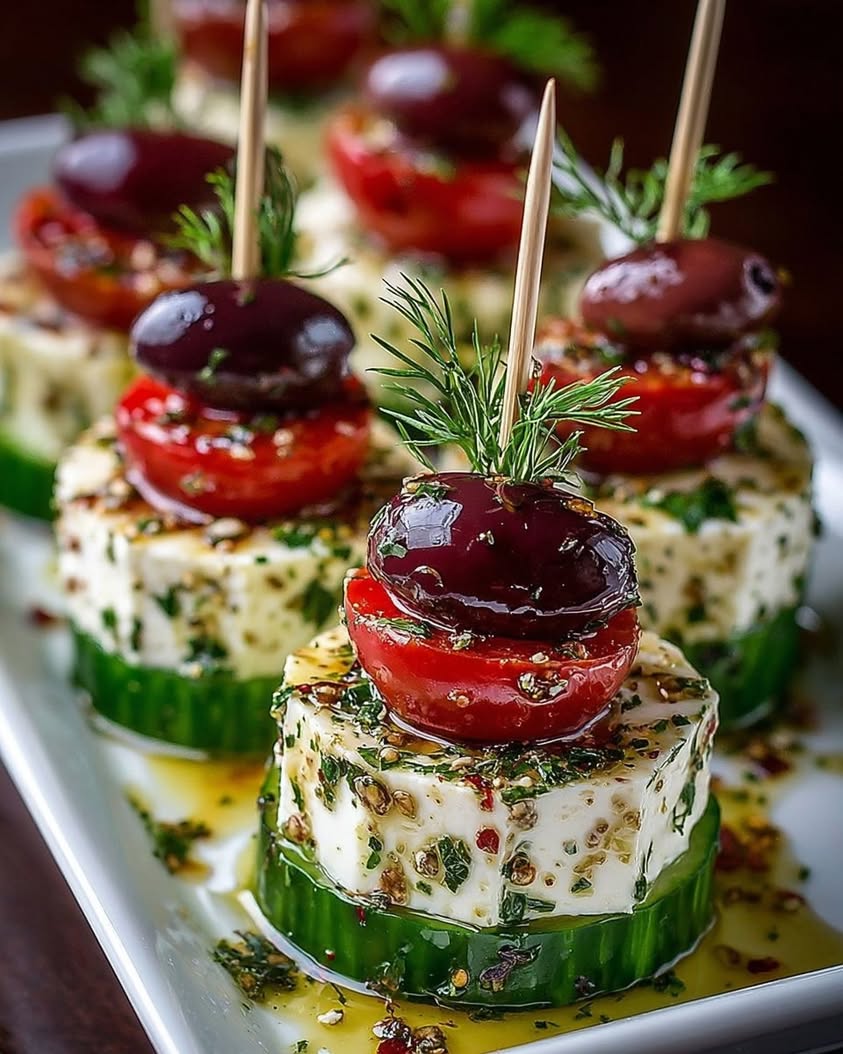
- Visual Appeal: Bright green cucumber chunks alternate with creamy white feta cubes, creating a simple yet striking color contrast. A drizzle of golden olive oil and a sprinkle of fresh herbs add visual interest and a professional finish.
- Skill Level Needed: This recipe requires absolutely no cooking experience, making it perfect for beginner cooks and kids. Anyone who can safely handle a knife and thread ingredients onto a skewer can master this dish on the first try.
- Special Equipment: You will need a sharp knife for cutting uniform cucumber and feta chunks. Short wooden or bamboo skewers work best, but you can also use toothpicks for smaller, single-bite portions.
Recipe Overview
- Difficulty Level: This recipe earns an easy rating because it involves only basic knife skills and assembly. There are no complicated techniques, temperature controls, or timing concerns to worry about. Even someone with zero kitchen experience can create beautiful, tasty skewers in under twenty minutes. The simplicity makes this a confidence-building recipe for anyone learning to cook.
- Category: This dish fits perfectly as an appetizer, starter, or party snack for any casual or semi-formal gathering. It also works wonderfully as a light lunch or a healthy side dish when paired with grilled meats. You can even serve it as a refreshing addition to a brunch spread or picnic basket.
- Cuisine: This recipe draws inspiration from traditional Greek and Mediterranean culinary traditions. The combination of fresh vegetables, briny feta cheese, and quality olive oil reflects the core principles of Greek cuisine, which emphasizes simple, fresh ingredients prepared without heavy sauces or complicated methods. The flavors celebrate the sun-drenched landscape of the Mediterranean region.
- Cost: The ingredients in this recipe cost very little, making it an economical choice for feeding a crowd. A block of feta cheese and a few cucumbers will set you back only a few dollars, while olive oil and herbs are pantry staples you likely already own. You can serve a platter of twenty skewers for roughly the same price as one store-bought appetizer tray.
- Season: Summer is the absolute best season for this recipe because cucumbers are at their peak freshness and flavor. The cool, hydrating qualities of cucumber make these skewers especially refreshing on hot days. However, you can enjoy them year-round since cucumbers are available in most grocery stores during every season.
- Occasion: These skewers shine at backyard barbecues, pool parties, Fourth of July celebrations, and casual family gatherings. They also work beautifully for more formal events like bridal showers, baby showers, or cocktail parties. The portable nature of skewers makes them ideal for potlucks and picnics where you need easy transport.
Why You’ll Love This Recipe
The taste and texture combination in this easy appetizer recipe for summer creates an addictive eating experience that keeps people coming back for more. The cool, watery crunch of the cucumber provides the perfect foundation for the tangy, salty bite of the feta cheese. As you chew, the flavors meld together with the fruity olive oil and fresh herbs, creating a complete flavor profile that satisfies without overwhelming. Each skewer delivers a perfect ratio of ingredients, so every bite tastes balanced and intentional. The freshness of the ingredients shines through without any heavy sauces or complicated seasonings masking their natural goodness.
The convenience factor of this recipe cannot be overstated for busy home cooks who want to entertain without stress. You can prepare the entire dish in under fifteen minutes with no cooking required whatsoever. There is no oven to preheat, no stove to watch, and no timing to coordinate with other dishes. You can wash and chop the cucumbers, cube the feta, and assemble the skewers all while chatting with guests or watching the kids. Cleanup involves nothing more than a quick rinse of your cutting board and knife. This ease allows you to focus on enjoying your gathering rather than slaving away in a hot kitchen.
Nutritionally speaking, this Greek Feta and Cucumber Bite Skewers: Easy Appetizer Recipe for Summer offers a guilt-free snacking option that fits into a health-conscious lifestyle. Cucumbers provide hydration and essential vitamins like vitamin K and potassium with very few calories. Feta cheese delivers protein and calcium, making these skewers more satisfying than typical carb-heavy appetizers. The olive oil contributes healthy monounsaturated fats that support heart health and help you absorb fat-soluble vitamins from the vegetables. You can feel good about serving these to guests who follow various dietary preferences since they naturally accommodate low-carb and gluten-free lifestyles.
From a social and entertaining value perspective, these skewers create an instant conversation starter and encourage mingling among guests. The handheld format makes it easy for people to grab a skewer while holding a drink and chatting without needing a plate or fork. The colorful presentation adds visual appeal to your appetizer table and signals to guests that you put thought into the menu. People love the interactive nature of eating from a skewer, and the portion control helps prevent overeating during cocktail hour. These factors combine to make this recipe a reliable crowd-pleaser for any social occasion.
The cost-effectiveness and accessibility of ingredients make this recipe a practical choice for budget-conscious entertainers. A single block of feta cheese costs significantly less than a cheese platter or charcuterie board, yet it provides a similar wow factor. Cucumbers are among the most affordable vegetables at the grocery store, especially during the summer months when they are in season. You can easily adjust the quantities based on your guest count without worrying about expensive leftovers. Most of the herbs and olive oil are pantry staples that you likely already have on hand, reducing your shopping list to just two or three items.
Historical Background and Cultural Significance
The origins of this Greek Feta and Cucumber Bite Skewers: Easy Appetizer Recipe for Summer trace back to the traditional Greek meze culture, where small dishes are shared among friends and family over long, leisurely meals. Meze, derived from the Turkish word meaning taste or snack, represents a social dining style that has existed in the Mediterranean region for centuries. Greek tavernas have long served simple plates of fresh vegetables paired with feta cheese as part of these shared spreads. The concept of skewering ingredients together emerged as a practical way to create easy-to-eat portions that could be enjoyed while standing or mingling in casual settings.
Feta cheese holds deep cultural importance in Greece, where it has been produced for thousands of years using traditional methods. The cheese is made from sheep milk or a mixture of sheep and goat milk, then brined in salty water to develop its characteristic tangy flavor and crumbly texture. Feta became a protected designation of origin product in 2002, meaning only cheese produced in specific regions of Greece can legally bear the name. This cultural pride in feta reflects the broader Greek philosophy of honoring simple, high-quality ingredients rather than complicated preparations. Cucumbers, too, have been cultivated in the Mediterranean basin for millennia, valued for their cooling properties in the hot Greek climate.
The evolution of this recipe from traditional Greek salads to modern skewered appetizers represents a natural progression of culinary creativity. The classic Greek salad, known as horiatiki, traditionally combines cucumbers, tomatoes, olives, and feta cheese in a bowl with olive oil and oregano. Someone cleverly realized that these same ingredients could be deconstructed and reimagined into portable skewered versions for easier entertaining. This adaptation maintains the authentic flavors while updating the format for contemporary party settings. Food bloggers and home cooks worldwide have embraced this transformation, sharing their own variations across social media platforms and recipe websites.
Regional variations of this basic concept appear throughout the Mediterranean and Middle East, each adapting the recipe to local tastes and available ingredients. In Turkey, similar skewers might feature beyaz peynir, a white cheese similar to feta, alongside cucumber and fresh mint. Lebanese versions often include olives and cherry tomatoes with halloumi cheese that can be grilled before serving. Italian cooks might replace feta with fresh mozzarella and add basil leaves for a Caprese-inspired twist. These regional adaptations demonstrate how a simple idea can travel across borders while maintaining its essential character as a fresh, no-cook appetizer that celebrates local dairy and produce.
Ingredient Deep Dive
Feta cheese stands as the centerpiece of this recipe, bringing a distinctive tangy, salty flavor that defines Greek cuisine. The cultural significance of feta reaches back to ancient Greece, where Homer referenced cheese-making in the Odyssey around 800 BCE. Nutritionally, feta provides a respectable amount of calcium for bone health, along with protein for satiety and muscle maintenance. Compared to many other cheeses, feta contains fewer calories and less fat, making it a relatively waistline-friendly option. When selecting feta at the store, choose blocks stored in brine rather than pre-crumbled varieties, as the brine helps maintain moisture and flavor. Store unused feta submerged in its brine in the refrigerator, where it will keep for several weeks. For a dairy-free substitution, marinated tofu or vegan feta alternatives work well, though the flavor profile will change slightly.
Cucumbers contribute the refreshing, hydrating element that makes these skewers so suitable for warm-weather entertaining. Cucumbers have been cultivated for over 3000 years, originating in India before spreading to Greece and Rome through ancient trade routes. From a nutritional standpoint, cucumbers are composed of approximately 96% water, making them exceptionally hydrating and low in calories. They also contain antioxidants like flavonoids and tannins that help reduce inflammation in the body. For the best results, choose English or Persian cucumbers, which have thinner skins and fewer seeds than standard garden cucumbers. Store cucumbers in the refrigerator crisper drawer, ideally wrapped in a paper towel inside a plastic bag to absorb excess moisture. If you need a substitute, zucchini or jicama can provide similar crunch, though the flavor will differ notably.
Extra virgin olive oil serves as the finishing touch that binds the flavors together and adds a luxurious mouthfeel to each skewer. Olive oil has been a cornerstone of Mediterranean cuisine for thousands of years, with archaeological evidence suggesting olive cultivation began around 6000 BCE in the Eastern Mediterranean. The health benefits of olive oil are well-documented, particularly its high content of monounsaturated fats and antioxidants like oleocanthal, which has anti-inflammatory properties. Look for olive oil in dark glass bottles labeled extra virgin, which indicates the highest quality with minimal processing. Store olive oil in a cool, dark cabinet away from heat and light to preserve its flavor and prevent rancidity. For a different flavor profile, you can substitute avocado oil or a light walnut oil, though the taste will shift away from traditional Greek notes.
Fresh herbs like dill or mint provide the aromatic finish that elevates these simple skewers into something truly special. Dill has been used in Greek cooking since ancient times, valued both for its culinary applications and its medicinal properties as a digestive aid. Mint offers similar digestive benefits while adding a cool, refreshing note that complements cucumber beautifully. Both herbs are rich in antioxidants and essential oils that contribute to overall wellness. When selecting fresh herbs, look for bright green leaves without wilting or yellowing, and avoid bunches with slimy stems. Store fresh herbs upright in a glass of water with a plastic bag loosely covering the leaves, changing the water every couple of days. Dried herbs can work in a pinch, but fresh herbs provide a brightness that significantly improves the final dish.
Common Mistakes to Avoid
- Using pre-crumbled feta cheese instead of block feta can lead to dry, crumbly skewers that fall apart during assembly. Block feta stays moist and holds its shape better when cut into cubes.
- Cutting cucumber pieces too large or unevenly causes the skewers to look unbalanced and makes them difficult to eat in one bite. Aim for uniform half-inch cubes for the best appearance and eating experience.
- Skipping the step of patting cucumber cubes dry with paper towels introduces excess moisture that makes the skewers slippery and dilutes the olive oil dressing. Dry cucumbers help all the flavors adhere better.
- Assembling skewers too far in advance can result in soggy cucumbers that lose their satisfying crunch. If you must prep ahead, keep the components separate and assemble within two hours of serving.
- Drizzling olive oil directly onto the assembled platter can create a greasy mess that soaks into the presentation board. Drizzle oil over the skewers individually using a small spoon for better control.
- Overcrowding the skewers with too many ingredients makes them difficult to handle and eat gracefully. Three to four pieces per short skewer provide the ideal balance of visual appeal and functionality.
- Forgetting to season with salt and pepper results in flat-tasting skewers that lack depth of flavor. A light sprinkle of flaky sea salt enhances all the other ingredients beautifully.
- Using low-quality olive oil with a harsh or bitter taste can ruin the delicate flavor balance of these simple skewers. Always use the best extra virgin olive oil you can afford for uncooked applications.
- Omitting fresh herbs altogether leaves the recipe tasting incomplete and missing that signature Greek freshness. Even a small amount of dried oregano can work if fresh herbs are unavailable.
- Storing assembled leftovers incorrectly causes the cucumbers to release water and the feta to become slimy. Remove leftover skewers from the platter and store components separately if possible.
Essential Techniques
Cutting uniform cubes of both cucumber and feta cheese is the most important technique for this Greek Feta and Cucumber Bite Skewers: Easy Appetizer Recipe for Summer. Start by trimming the ends off your cucumber and cutting it into two-inch sections. Stand each section on its flat end and slice downward in even increments to create long planks, then cut those planks into strips, and finally into cubes. For the feta, use a sharp knife to cut the block into half-inch slices, then cut those slices into strips, and finally into cubes matching the cucumber size. Uniform pieces ensure that each skewer looks professional and that every bite contains a consistent ratio of ingredients. Practicing this technique will improve your knife skills overall and make future recipes that require uniform cuts much easier.
Properly drying the cucumber cubes before assembly significantly improves the final texture and presentation of your skewers. Cucumbers naturally release water when cut, which can make your skewers slippery and dilute the olive oil and seasonings. After cutting your cucumber cubes, spread them in a single layer on a clean kitchen towel or several layers of paper towels. Gently pat the cubes dry, pressing lightly to absorb surface moisture without crushing the delicate flesh. Let them sit for a few minutes while you prepare the other ingredients, then give them another gentle pat just before assembling. This simple step makes a noticeable difference in how well the olive oil and herbs cling to the cucumber and how long the skewers hold up before serving.
Assembling the skewers with the right order and spacing creates an appetizer that looks as good as it tastes. Start by placing a feta cube on the skewer first, as it tends to be softer and benefits from being secured between firmer cucumber pieces. Add a cucumber cube next, then another feta cube, and finish with a final cucumber piece for a balanced, symmetrical appearance. Leave a small gap at the bottom of the skewer so guests have a clean handle to hold without touching the food. This assembly technique ensures that the feta stays intact and that the skewers look polished and intentional rather than haphazard. Take your time with this step, and your guests will notice the care you put into the presentation.
Pro Tips for Perfect Greek Feta and Cucumber Bite Skewers
Chill your serving platter in the refrigerator for fifteen minutes before arranging the skewers to keep them cool and refreshing for longer. The cold surface helps maintain the cucumber crunch and prevents the feta from softening too quickly in warm outdoor temperatures. Room temperature serving plates cause the ingredients to warm up faster, especially during summer gatherings where the sun beats down.
Toast the wooden skewers in a dry skillet for a minute or two before using them to add a subtle nutty flavor that complements the Mediterranean ingredients. The heat also helps remove any excess splinters or rough edges that could be unpleasant for guests. Allow the skewers to cool completely before assembling your appetizers to avoid melting the feta cheese.
Marinate the cubed feta in olive oil, lemon juice, and herbs for fifteen minutes before assembling the skewers for an extra layer of flavor. The feta absorbs the aromatic oils and citrus notes, resulting in a more complex and satisfying taste in every bite. Reserve some of the marinade to drizzle over the finished skewers just before serving for a glossy, appetizing finish.
Add a small cherry tomato or kalamata olive to each skewer for a pop of color and an extra burst of Mediterranean flavor. The sweetness of the tomato balances the saltiness of the feta, while the briny olive adds depth and complexity. This simple addition transforms the skewers from simple to spectacular with very little extra effort.
Use a vegetable peeler to create cucumber ribbons instead of cubes for a more elegant, modern presentation that will impress your guests. The ribbons drape gracefully around the feta cubes and create a beautiful texture on the platter. This technique requires a bit more practice but yields stunning results that look like they came from a professional kitchen.
Season the cucumber cubes lightly with salt and let them sit for five minutes before patting dry to draw out excess moisture and concentrate their flavor. The salt pulls water from the cucumber cells, resulting in crunchier cubes that hold up better on the skewer. Rinse the salt off quickly if you prefer less saltiness, then dry thoroughly before assembly.
Historical Background and Cultural Significance
The tradition of serving cheese and vegetables together in Greek cuisine dates back to ancient symposia, where wealthy Greeks would gather to discuss philosophy while enjoying simple foods. These gatherings emphasized moderation and the appreciation of quality ingredients rather than elaborate preparations. The concept of meze, or small sharing plates, evolved from these early social dining customs and remains central to Greek hospitality today. Modern Greek tavernas continue this tradition by offering a variety of small dishes that encourage conversation and communal eating. This recipe for Greek Feta and Cucumber Bite Skewers: Easy Appetizer Recipe for Summer carries forward that same spirit of sharing and celebration.
The cultural importance of feta cheese in Greek identity cannot be overstated, as it represents centuries of pastoral tradition and regional knowledge passed down through generations. Greek shepherds developed the technique of brining cheese as a preservation method in the warm Mediterranean climate long before refrigeration existed. This method not only preserved the cheese but also created its distinctive tangy flavor that Greeks have come to cherish as a national treasure. The European Union protected designation of origin status granted to feta in 2002 recognized the unique connection between this cheese and the Greek landscape. Every bite of feta in these skewers connects you to this rich cultural heritage.
Modern food culture has embraced the concept of skewered appetizers as a practical solution for contemporary entertaining needs. The rise of cocktail parties and standing receptions created demand for foods that could be eaten with one hand while holding a drink in the other. Food bloggers and home cooks responded by adapting traditional recipes into portable, skewered formats that maintain authentic flavors. This Greek Feta and Cucumber Bite Skewers: Easy Appetizer Recipe for Summer exemplifies this trend, taking classic Greek salad ingredients and presenting them in a party-friendly format. The recipe has spread across social media platforms, with countless variations appearing on Pinterest, Instagram, and food blogs worldwide.
Regional adaptations of this recipe appear throughout the Mediterranean basin, each reflecting local tastes and available ingredients. In Cyprus, cooks might substitute halloumi cheese, which holds up better when grilled and offers a salty, chewy texture. Turkish versions often include sumac and red pepper flakes for a tangy, spicy kick that differs from the traditional Greek preparation. Lebanese adaptations might incorporate fresh mint and lemon zest more heavily, emphasizing the bright, citrusy notes. These regional variations demonstrate the flexibility of the basic concept and its ability to adapt to different cultural palates while remaining true to its Mediterranean roots.
Variations and Adaptations
Regional variations of this appetizer reflect the diverse culinary traditions found throughout the Mediterranean region. In the Greek islands, cooks often add a small caper berry or caper leaf to each skewer for an extra briny punch that complements the feta beautifully. Cypriot versions substitute halloumi cheese, which can be grilled first to create a warm, squeaky texture that contrasts with the cold cucumber. Turkish variations might include a drizzle of pomegranate molasses for a sweet-sour note that balances the saltiness of the cheese. Exploring these regional twists allows you to travel the Mediterranean from your own kitchen.
Seasonal adaptations help this recipe remain relevant throughout the year, not just during the summer months. In the spring, add fresh pea shoots or microgreens to the skewers for a tender, vegetal crunch that signals the season. Autumn versions might incorporate roasted red peppers or grilled zucchini alongside the cucumber for a heartier, warmer flavor profile. Winter adaptations could include a sprinkle of sumac or za’atar for warming, earthy notes that combat the cold weather blues. Each season offers unique opportunities to refresh this basic template with what is freshest and most flavorful.
Dietary modifications ensure that this recipe can accommodate guests with various food allergies and lifestyle preferences. For a completely dairy-free version, substitute cubed avocado or marinated tofu for the feta cheese, maintaining the creamy texture while eliminating dairy. Vegan adaptations can use store-bought vegan feta alternatives made from cashews or tofu, which mimic the tangy, salty flavor of traditional feta. Low-sodium diets benefit from using reduced-salt feta cheese or rinsing regular feta in cold water before cubing to remove excess salt. These modifications allow everyone to enjoy the refreshing experience of these skewers regardless of dietary restrictions.
Flavor variations offer endless possibilities for customizing this recipe to suit your personal taste preferences. Spice lovers can add a pinch of red pepper flakes or a drizzle of harissa paste to the olive oil for a fiery kick that wakes up the palate. Herb enthusiasts might experiment with fresh oregano, thyme, or basil in addition to or instead of the traditional dill or mint. Citrus fans can add lemon zest and a squeeze of fresh lemon juice to the olive oil dressing for a brighter, more acidic flavor profile. These variations keep the recipe interesting and encourage you to experiment with different combinations.
Texture modifications allow you to customize the mouthfeel of these skewers based on your preferences or what you have available. For a softer, more delicate texture, use Persian cucumbers, which have thinner skins and fewer seeds than standard English cucumbers. If you prefer extra crunch, leave the skin on your cucumber cubes and choose firm, fresh specimens without any soft spots. For a smoky element, grill the feta cubes briefly on a hot griddle before assembling, which creates a warm, melty center surrounded by a golden crust. These texture adjustments can transform the eating experience significantly.
Presentation alternatives help you adapt this recipe for different occasions and serving styles. For a formal dinner party, arrange the skewers vertically in a tall glass or vase filled with rice or beans for stability and height. Casual gatherings benefit from a simple wooden board or slate platter with the skewers arranged in concentric circles. Individual serving options include placing a few skewers in small shot glasses or mini mason jars for each guest. These presentation ideas allow you to match the visual style to the tone of your event.
Serving and Presentation Guide
Plating techniques for this Greek Feta and Cucumber Bite Skewers: Easy Appetizer Recipe for Summer can dramatically affect how your guests perceive the dish. Arrange the skewers in a circular pattern on a large round platter, fanning them outward like spokes of a wheel for visual impact. Alternatively, create straight lines of skewers across a rectangular board, leaving small gaps between each row for a clean, modern look. Consider using a platter with a contrasting color, such as white marble or dark slate, to make the green cucumber and white feta pop visually. The arrangement should make it easy for guests to grab a skewer without disturbing the others.
Garnishing ideas add the finishing touch that elevates your presentation from home cooking to restaurant quality. Sprinkle fresh dill fronds or small mint leaves over the arranged skewers just before serving for a burst of green color and aromatic appeal. Add a few edible flowers like nasturtiums or borage blossoms for a whimsical, garden-party aesthetic that feels special. A light dusting of flaky sea salt and cracked black pepper over the top adds visual texture and a final seasoning boost. These garnishes should complement rather than overwhelm the simple beauty of the skewers themselves.
Traditional accompaniments for this recipe typically include warm pita bread, olives, and a simple Greek salad for a complete meze experience. A bowl of tzatziki sauce on the side provides a cool, garlicky dip that guests can spoon over their skewers for extra moisture and flavor. Roasted red pepper spread or hummus also pairs beautifully, offering creamy alternatives to the olive oil drizzle. These accompaniments round out the appetizer spread and give guests options for customizing their eating experience.
Modern serving suggestions include incorporating these skewers into a larger grazing board or charcuterie spread for a visually stunning buffet. Place the skewers alongside marinated olives, stuffed grape leaves, and grilled pita wedges for a Mediterranean-themed board that feeds a crowd. For a healthier presentation, arrange the skewers on a bed of arugula or mixed greens, which also catches any olive oil drips. These modern approaches appeal to contemporary entertaining trends while honoring the traditional flavors of the recipe.
Temperature considerations are important for maintaining the quality of this no-cook appetizer throughout your event. Serve the skewers chilled but not ice-cold, as extreme cold numbs the taste buds and masks the delicate flavors of the ingredients. If you are serving outdoors in hot weather, place the platter on a bed of ice or use a chilled serving tray to keep everything cool. Avoid leaving the skewers out for more than two hours at room temperature, especially in warm weather, to ensure food safety and optimal texture.
Portion control tips help you calculate how many skewers to prepare based on your guest count and event type. For a cocktail party where other appetizers will be served, plan for three to four skewers per person for the first hour of mingling. If this is the only appetizer before a meal, increase the portion to five or six skewers per guest. For a light lunch or standalone snack, a serving of eight to ten skewers per person provides a satisfying portion. Always make extra, as these skewers tend to disappear faster than you expect.
Wine and Beverage Pairing
Wine pairings for these skewers should complement the briny feta and fresh cucumber without overpowering their delicate flavors. A crisp, dry Assyrtiko from the Greek island of Santorini offers high acidity and minerality that cuts through the richness of the olive oil and cheese. Unoaked Sauvignon Blanc from New Zealand or California also works beautifully, with its herbal notes echoing the fresh dill or mint. For a red option, a light-bodied, chilled Xinomavro or a young Pinot Noir provides enough acidity to refresh the palate without overwhelming the flavors. Avoid heavily oaked wines that would mask the clean, bright notes of the appetizer.
Non-alcoholic alternatives allow everyone to enjoy a thoughtful pairing regardless of their drinking preferences. A sparkling water with a squeeze of lemon and a sprig of mint echoes the refreshing qualities of the cucumber and herbs in the dish. Iced green tea with a hint of mint or lemon provides a gentle, earthy counterpart to the tangy feta. For a more elaborate option, blend cucumber water with a splash of lime juice and simple syrup for a refreshing mocktail that mirrors the ingredients in the skewers. These non-alcoholic options ensure that designated drivers and nondrinkers feel included in the pairing experience.
Temperature considerations for beverages served alongside this cold appetizer help maintain the overall refreshing quality of the meal. Chill white wines and sparkling options thoroughly before serving, aiming for a temperature between 45 and 50 degrees Fahrenheit. If serving red wine, chill it slightly to around 55 degrees, as this keeps the wine refreshing without muting its flavor. Non-alcoholic beverages should be served over ice or straight from the refrigerator to complement the cool cucumber and feta. Warm beverages would create an unpleasant temperature contrast with these chilled skewers.
Serving suggestions for beverages at your gathering include setting up a small drink station where guests can help themselves throughout the event. Provide a choice of two or three wine options along with non-alcoholic alternatives so everyone finds something they enjoy. Label each wine with a small card describing its flavor profile and why it pairs well with the appetizer. This thoughtful touch impresses guests and helps them appreciate the intentional pairing you have created for your gathering.
Storage and Shelf Life
Storage methods for assembled skewers require careful attention to prevent the cucumber from releasing excess moisture and making the feta soggy. If you have leftover assembled skewers, remove them from the serving platter and arrange them in a single layer in an airtight container. Place a paper towel in the bottom of the container to absorb any moisture that the cucumbers release during storage. Store the container in the refrigerator and consume the leftovers within 24 hours for the best texture and flavor. After 24 hours, the cucumbers will begin to soften noticeably.
Temperature requirements for storing these skewers prioritize food safety while maintaining quality. Keep all components at or below 40 degrees Fahrenheit to prevent bacterial growth, especially since the recipe includes dairy in the form of feta cheese. If you are transporting the skewers to a picnic or gathering, pack them in a cooler with ice packs to maintain a safe temperature. Never leave assembled skewers at room temperature for more than two hours, or one hour if the outdoor temperature exceeds 90 degrees. Following these temperature guidelines ensures that your appetizer remains safe to eat.
Container recommendations for storage focus on maintaining the integrity of the ingredients while preventing crushing or damage. Use a shallow, wide container rather than a deep one to avoid stacking skewers on top of each other, which can break the feta cubes. Glass or BPA-free plastic containers with tight-fitting lids work well for short-term storage. If you must stack multiple layers, separate them with wax paper or parchment paper to prevent sticking and damage. Avoid using containers that are much larger than necessary, as excess air space can lead to faster moisture loss.
Signs of spoilage are important to recognize so you can avoid serving compromised food to your guests. Discard any skewers where the cucumber has become slimy, wrinkled, or has developed an off odor, as these indicate the vegetable has begun to spoil. Feta cheese that has developed an unusually strong ammonia smell or has changed color should also be discarded. If you notice any mold growth on either component, discard the entire batch rather than trying to salvage individual pieces. When in doubt, throw it out to prioritize food safety.
Freezing guidelines for this recipe are not recommended because the high water content in cucumbers does not freeze well. Frozen cucumbers become mushy and waterlogged when thawed, completely destroying the desired crunchy texture. Feta cheese also suffers in the freezer, becoming crumbly and losing its creamy, moist quality. If you must preserve leftover ingredients, freeze the cubed feta cheese separately in an airtight container for up to three months, but plan to use it in cooked dishes rather than raw applications. Cucumbers should never be frozen and are best used fresh for this recipe.
Make Ahead Strategies
Prep timeline for this Greek Feta and Cucumber Bite Skewers: Easy Appetizer Recipe for Summer focuses on component preparation rather than full assembly to maintain quality. Up to 24 hours before serving, wash and dry the cucumbers thoroughly, then store them whole in the refrigerator. Cube the feta cheese up to eight hours ahead and store it in an airtight container with a small amount of its brine to Print
Greek Feta & Cucumber Bite Skewers
- Total Time: 15 minutes
- Yield: 4
Description
Fresh and light appetizer skewers featuring creamy feta, crisp cucumber, cherry tomatoes, and Kalamata olives drizzled with a tangy Greek vinaigrette — perfect for parties or a quick snack.
Ingredients
- 1 large English cucumber, cut into 1-inch chunks
- 8 oz feta cheese, cut into 1-inch cubes
- 1 cup cherry tomatoes, halved
- 1/2 cup Kalamata olives, pitted
- 1/4 cup red onion, thinly sliced
- 2 tbsp extra-virgin olive oil
- 1 tbsp red wine vinegar
- 1 tsp dried oregano
- Salt and pepper to taste
- Fresh mint leaves for garnish (optional)
Instructions
- In a small bowl, whisk together olive oil, red wine vinegar, dried oregano, salt, and pepper to make the dressing.
- Thread a cucumber chunk, a feta cube, a cherry tomato half, a Kalamata olive, and a slice of red onion onto a short skewer or toothpick. Repeat with remaining ingredients.
- Arrange the skewers on a serving platter and drizzle the dressing over the top.
- Garnish with fresh mint leaves if desired, and serve immediately at room temperature or chilled.
Notes
You can customize the seasonings to taste.
- Prep Time: 15 minutes
- Cook Time: 0 minutes
- Method: Main
- Cuisine: American