Greek Feta & Cucumber Bite Skewers: Easy No-Cook Summer Appetizer
If you need a crowd-pleasing appetizer that comes together in minutes without turning on the stove, these Greek Feta & Cucumber Bite Skewers are exactly what you are looking for. This easy no-cook summer appetizer layers creamy feta, crisp cucumber, sweet cherry tomatoes, and briny Kalamata olives onto small skewers for a bite that tastes like a Greek islands vacation. Because you assemble rather than cook, you can throw this Greek Feta & Cucumber Bite Skewers recipe together right before guests arrive, and it still looks like you fussed for hours.
The magic of this Greek Feta & Cucumber Bite Skewers recipe lives in the contrast of textures and flavors. Cool cucumber snaps when you bite into it, while salty feta crumbles softly against your tongue. Juicy tomatoes burst with sweetness, and the olives add a savory, tangy punch that ties everything together. A quick drizzle of olive oil, a squeeze of lemon, and a sprinkle of oregano transform these simple ingredients into something that feels restaurant quality. In fact, once you master this easy no-cook summer appetizer, you will reach for it all season long.
Beyond taste, this Greek Feta & Cucumber Bite Skewers recipe wins on convenience. You need no oven, no stovetop, and almost no cleanup. Furthermore, the ingredients are affordable and easy to find at any grocery store. Whether you serve them at a backyard barbecue, a bridal shower, or a simple family gathering, these Greek Feta & Cucumber Bite Skewers deliver big flavor with minimal effort. Consequently, they have become a staple in many home cooks rotation, and once you try them, you will understand why.
Quick Recipe Highlights
- Flavor Profile: These skewers balance salty, tangy, and fresh notes in every bite. The feta brings a creamy saltiness, while the lemon and oregano add bright Mediterranean charm. Meanwhile, the tomatoes and olives round out the flavor with sweetness and umami.
- Texture: You get a satisfying crunch from the cucumber that contrasts beautifully with the soft feta. The tomatoes pop juicily, and the olives deliver a firm, meaty chew. As a result, each skewer keeps your palate interested from first bite to last.
- Aroma: Fresh dill, oregano, and lemon zest waft up the moment you set the platter down. The olive oil carries these aromatics across the table. Consequently, guests often smell these skewers before they even see them.
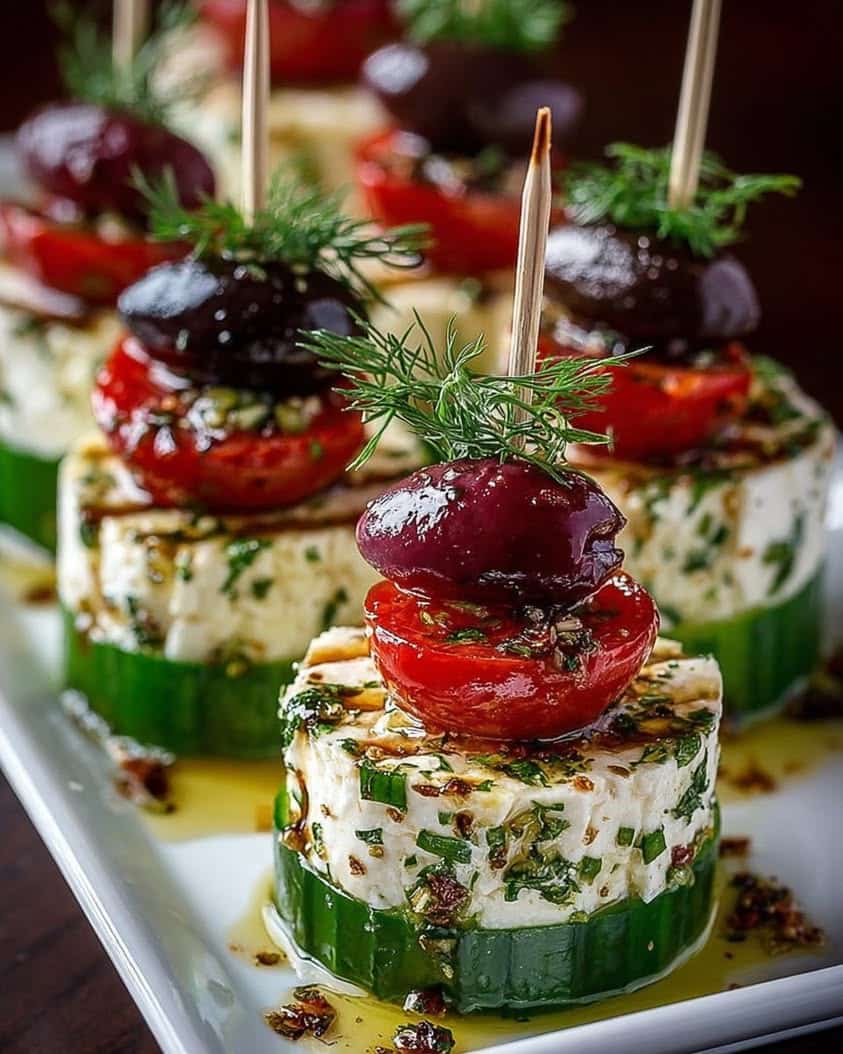
- Visual Appeal: Bright green cucumber, snowy white feta, ruby red tomatoes, and deep purple olives create a stunning color palette. Because the colors pop against a white platter, these skewers photograph beautifully for parties or social media.
- Skill Level Needed: This Greek Feta & Cucumber Bite Skewers recipe requires almost no cooking skill at all. If you can chop vegetables and thread them onto a stick, you can make this dish. Therefore, it is perfect for beginners, kids helping in the kitchen, or anyone short on time.
- Special Equipment: You only need a sharp knife, a cutting board, and a package of small bamboo skewers. A small whisk or jar helps mix the dressing. Additionally, a melon baller adds a fun touch if you want round cucumber pieces.
Recipe Overview
- Difficulty Level: This recipe earns its Easy rating because it involves zero cooking and minimal knife work. You simply chop, assemble, and drizzle. Furthermore, the ingredients tolerate imprecise measurements, so you cannot really mess it up. Even a first-time cook can nail this Greek Feta & Cucumber Bite Skewers recipe on the first try.
- Category: These skewers work as an appetizer, a party snack, or a light side dish. You can also serve them as part of a mezze platter alongside hummus, tzatziki, and pita. Because they are bite-sized, they fit any grazing table or buffet setup.
- Cuisine: This recipe draws directly from Greek and broader Mediterranean culinary traditions. Greek cooking celebrates simple, fresh ingredients dressed with olive oil, lemon, and herbs. Consequently, these skewers honor that philosophy by letting each component shine without heavy sauces or complicated techniques.
- Cost: You can expect to spend roughly ten to fifteen dollars to feed twelve people. Feta and olives cost the most, while cucumbers and tomatoes remain budget friendly. Overall, this Greek Feta & Cucumber Bite Skewers recipe delivers excellent value for entertaining.
- Season: Summer is the star season for this dish because cucumbers and tomatoes peak in flavor and price. However, thanks to greenhouse growing, you can make these skewers year round. Still, they taste best from June through September when produce is at its juiciest.
- Occasion: Serve these skewers at barbecues, picnics, potlucks, baby showers, and holiday gatherings. They also shine as a healthy afternoon snack or a light lunch addition. Because they need no heat, they travel well to outdoor events.
Why You’ll Love This Recipe
First and foremost, the taste and texture of these Greek Feta & Cucumber Bite Skewers keep people coming back for more. Each bite delivers a symphony of flavors that hits every taste bud. The salty feta melts slightly against the cool cucumber, while the tomato adds a sweet burst. Meanwhile, the olive contributes a rich, briny depth that lingers pleasantly. Because the lemon and oregano tie everything together, the skewers taste bright and refreshing rather than heavy. Consequently, even people who usually avoid vegetables find themselves reaching for a second or third skewer.
Convenience sets this easy no-cook summer appetizer apart from most party recipes. You need no oven, no grill, and no stove, which means your kitchen stays cool on hot days. Additionally, you can assemble the entire platter in about fifteen minutes flat. Cleanup amounts to a cutting board, a knife, and maybe a small bowl for the dressing. Therefore, you spend less time scrubbing dishes and more time enjoying your guests. For busy hosts, that trade-off alone makes this Greek Feta & Cucumber Bite Skewers recipe worth memorizing.
Nutritionally, these skewers pack a respectable punch without weighing you down. Feta provides calcium and protein, while cucumbers contribute hydration and fiber. Tomatoes deliver vitamin C and lycopene, and olives supply healthy monounsaturated fats. Furthermore, olive oil adds heart-healthy fat that helps your body absorb fat-soluble vitamins. As a result, you can feel good about serving this Greek Feta & Cucumber Bite Skewers recipe to family and friends alike. It satisfies without stuffing anyone before the main course arrives.
Socially, these skewers shine because they encourage mingling and easy eating. Guests can grab one with their fingers and keep chatting without juggling plates and forks. Because they look impressive on a platter, they spark compliments and conversation. Additionally, the bite-size format suits both formal cocktail hours and casual backyard hangouts. Therefore, whether you host a wedding shower or a Sunday football gathering, this Greek Feta & Cucumber Bite Skewers recipe fits right in and keeps the party moving.
Finally, cost-effectiveness makes this recipe a smart choice for feeding a crowd. A single block of feta stretches across many skewers, and seasonal vegetables cost very little. Moreover, you can buy olives and olive oil in bulk and use them across multiple dishes. Because the recipe scales easily, you can double or triple it without doubling your stress. In short, this easy no-cook summer appetizer gives you maximum impact for minimal money, which is why so many hosts keep it in their regular rotation.
Historical Background and Cultural Significance
The origins of this dish trace back to the mezze tradition that runs throughout Greece and the eastern Mediterranean. For centuries, Greek cooks have served small plates of cheese, olives, vegetables, and bread before the main meal. These bites encouraged conversation and slowed the pace of dining. Consequently, the idea of combining feta, cucumber, tomato, and olives into a single bite follows a very old custom. Although the skewer format is modern, the flavor combination is deeply traditional and rooted in everyday Greek hospitality.
Culturally, feta holds a special place in Greek identity. In fact, Greece protects feta as a product of designated origin, meaning true feta comes only from Greece and must meet strict production standards. Families across the Greek islands and mainland make their own versions of brined cheese. Therefore, when you serve these Greek Feta & Cucumber Bite Skewers, you participate in a food tradition that stretches back thousands of years. Each salty, creamy crumble carries that heritage forward.
Over time, home cooks and chefs have adapted the classic Greek salad into countless formats, including skewers, cups, and stuffed vegetables. The skewer version gained popularity as entertaining became more casual and hosts wanted grab-and-go options. Additionally, food blogs and social media accelerated the spread of these colorful bites. As a result, the Greek Feta & Cucumber Bite Skewers recipe has become a recognizable party staple far beyond the Mediterranean. Its evolution shows how a simple idea can travel across cultures and still stay true to its roots.
Regional variations abound across the Mediterranean and beyond. In Greece, cooks might add green bell pepper or red onion to the skewer. In Cyprus, they often include halloumi alongside or instead of feta. Meanwhile, American hosts frequently drizzle balsamic glaze for extra sweetness and shine. Some versions swap olives for capers, and others sprinkle zaatar instead of oregano. Because the base flavors are so flexible, this Greek Feta & Cucumber Bite Skewers recipe invites endless regional and personal interpretation.
Ingredient Deep Dive
Feta anchors this entire recipe with its salty, tangy personality. This brined cheese originated in Greece and appears in countless Mediterranean dishes, from salads to pastries. Nutritionally, feta offers calcium, protein, and vitamin B12, though it does carry a fair amount of sodium. When you shop, look for blocks packed in brine rather than pre-crumbled varieties, because the block version stays moister and creamier. Store feta in its brine in the refrigerator for up to a month, and change the brine if it becomes cloudy. If you need a substitute, try goat cheese, ricotta salata, or a firm sheep milk cheese.
Cucumber brings the crisp, cooling backbone to these skewers. This ancient vegetable originated in India and spread across the Mediterranean long ago, where it became a staple of Greek salads and dips. Cucumbers are mostly water, which makes them hydrating and low in calories, and they provide small amounts of vitamin K and potassium. Choose cucumbers that feel firm and heavy for their size with unblemished skin. Store them in the crisper drawer, wrapped loosely, for up to a week. If you cannot find cucumber, use zucchini rounds, jicama, or even crisp apple slices for a similar crunch.
Cherry tomatoes add sweetness, acidity, and a gorgeous pop of color. Tomatoes originated in the Americas and only reached Mediterranean cooking after the Columbian exchange, yet they became essential to Greek cuisine. These little fruits deliver vitamin C, lycopene, and potassium, all of which support heart health. Pick tomatoes that feel heavy and smell sweet near the stem, and avoid any with soft spots. Keep them at room temperature rather than in the fridge to preserve flavor. When tomatoes are out of season, grape tomatoes or even roasted red pepper pieces work well.
Kalamata olives contribute a bold, briny depth that no other ingredient can match. These purple-black olives come from the Kalamata region of Greece and typically cure in red wine vinegar or brine. They contain healthy monounsaturated fats and antioxidants, though they are salty like feta. Select olives from an olive bar or a jar with simple ingredients, and skip any that taste metallic or mushy. Store them in their brine in the refrigerator for several months. If Kalamata olives are unavailable, use Castelvetrano or Niçoise olives for a different but still delicious result.
Olive oil, lemon, and oregano form the simple dressing that ties this Greek Feta & Cucumber Bite Skewers recipe together. Extra virgin olive oil adds fruity richness and heart-healthy fats, while lemon brings brightness and vitamin C. Oregano, a staple herb in Greek cooking, contributes earthy, slightly peppery notes. Choose a fresh lemon over bottled juice, and use dried Greek oregano if you can find it. Store olive oil away from heat and light, keep lemons in the fridge, and keep dried oregano in a cool, dark cabinet. In a pinch, use white wine vinegar for lemon or thyme for oregano.
Common Mistakes to Avoid
- Using pre-crumbled feta instead of a block. Pre-crumbled feta dries out quickly and lacks the creamy texture that makes this recipe shine. Always buy feta packed in brine and cut it yourself for the best results.
- Cutting cucumber slices too thin. Thin slices turn limp and slide off the skewer, so aim for thick rounds that hold their shape. A sturdy cucumber piece also gives each bite a satisfying crunch.
- Skipping the salt and pepper. Even though feta and olives are salty, a light sprinkle of salt and pepper wakes up the tomatoes and cucumber. Without it, the skewers can taste flat.
- Assembling too far in advance. These skewers look best when fresh, and the tomatoes begin to weep after an hour or two. If you must prep ahead, keep components separate and assemble right before serving.
- Forgetting to soak wooden skewers. If you plan to make these more than an hour ahead, soak bamboo skewers in water so they do not dry out or splinter. This step takes seconds but saves frustration.
- Drenching the skewers in dressing. A light drizzle enhances the flavors, but too much oil makes everything slippery and messy. Use a gentle hand and toss gently rather than pouring.
- Using dried-out or mealy tomatoes. Flavorless tomatoes drag down the whole skewer, so taste before you buy. If your tomatoes lack sweetness, a pinch of flaky salt helps them along.
- Ignoring the order of ingredients. Place sturdy items like cucumber and olive at the ends to anchor the skewer. Soft feta belongs in the middle so it does not crumble off the tip.
- Serving them ice cold. Feta and vegetables taste best at cool room temperature because the flavors open up. Pull the platter from the fridge fifteen minutes before guests arrive.
- Overcrowding the skewer. Packing too many pieces onto one stick makes eating awkward and causes ingredients to fall apart. Leave a little breathing room between each item.
Essential Techniques
Even though this Greek Feta & Cucumber Bite Skewers recipe requires no cooking, a few techniques separate a good platter from a great one. First, learn to cube feta cleanly. A sharp, thin knife works best, and wiping the blade between cuts keeps the cubes neat. If your feta crumbles, do not worry, because rustic chunks taste just as good. However, uniform cubes slide onto skewers more easily and look more polished. Practice gentle pressure rather than sawing, and you will get clean, creamy cubes every time.
Second, master the art of seeding cucumbers when they are watery. Some cucumbers, especially larger ones, hold excess liquid that can make the skewers soggy. Cut the cucumber in half lengthwise, then run a spoon down the center to scoop out the seeds. This step takes thirty seconds and keeps your skewers crisp. After seeding, slice the cucumber into thick half moons or rounds. As a result, your easy no-cook summer appetizer stays fresh and crunchy instead of turning into a puddle.
Third, learn to build a balanced skewer. Start and end with sturdy ingredients like cucumber or olives, and place delicate feta and tomato in the middle. This order protects soft items and creates a pleasing visual rhythm. Additionally, alternate colors so each skewer shows green, white, red, and purple. A balanced skewer not only looks better but also delivers the perfect ratio of flavors in every single bite.
Fourth, practice tossing gently with dressing rather than pouring it on. Place the skewers on a platter, then use a spoon or small whisk to drizzle the olive oil and lemon mixture. Alternatively, brush the dressing onto each skewer for even coverage. This method prevents soggy spots and keeps the presentation clean. As a result, your Greek Feta & Cucumber Bite Skewers recipe looks as good as it tastes, and guests notice the care you put in.
Pro Tips for Perfect Greek Feta & Cucumber Bite Skewers
Chill your feta for twenty minutes before cutting to make clean cubes easier. Cold feta holds its shape better and crumbles less under the knife. Once cubed, let it come to room temperature for serving. This small step makes a big difference in presentation.
Use English or Persian cucumbers if you can find them. These varieties have thinner skins, fewer seeds, and a crisper bite than standard cucumbers. Consequently, you can skip seeding entirely in most cases. Their flavor also tastes sweeter and less watery.
Add a thin slice of red onion between the tomato and cucumber for a subtle bite. Red onion brings color and a gentle heat that balances the creamy feta. If raw onion feels too strong, soak the slices in cold water for ten minutes before assembling.
Finish the platter with flaky sea salt and cracked black pepper right before serving. Flaky salt adds a delicate crunch and brightens every ingredient. Because the salt sits on top rather than dissolving, each bite gets a little sparkle.
Serve the skewers on a bed of fresh dill or parsley for a gorgeous green backdrop. The herbs add aroma and make the colors pop even more. Furthermore, guests can grab a few herb leaves along with their skewer for extra freshness.
Keep a small bowl of tzatziki or hummus nearby for dipping. While these skewers taste great on their own, a creamy dip adds another layer of Mediterranean flavor. Additionally, the dip helps balance the saltiness of the feta and olives.
Make the dressing in a jar so you can shake it and drizzle in seconds. Combine olive oil, lemon juice, oregano, salt, and pepper, then shake until emulsified. This technique saves time and lets you store extra dressing for later use.
Line your serving platter with a paper towel if you assemble ahead. The towel absorbs any moisture from the cucumbers and keeps the presentation tidy. Remove the towel before serving so the platter looks clean and polished.
Variations and Adaptations
Regional variations let you tour the Mediterranean without leaving your kitchen. In Greece, cooks often add green bell pepper and red onion to mirror a classic horiatiki salad. In Italy, you might swap feta for mozzarella pearls and drizzle balsamic glaze for a Caprese style twist. Meanwhile, Middle Eastern versions use labneh instead of feta and sprinkle sumac for a tangy, lemony finish. Because the base formula is so flexible, you can adapt this Greek Feta & Cucumber Bite Skewers recipe to almost any cuisine.
Seasonal adaptations keep this easy no-cook summer appetizer relevant all year. In spring, use radishes and snap peas for a fresh, crunchy twist. During fall, roasted butternut squash cubes and dried cranberries add warmth and sweetness. In winter, marinated artichoke hearts and roasted red peppers bring brightness when fresh produce is scarce. Therefore, you never have to retire this recipe, no matter the calendar.
Dietary modifications make these skewers accessible to nearly everyone. For a dairy-free version, use a plant-based feta alternative made from almond or coconut. If you follow a vegan diet, skip the cheese entirely and add marinated tofu cubes. For a low-sodium diet, rinse the olives and use less feta. Because each ingredient stands alone, swaps rarely ruin the overall flavor.
Flavor variations let you play with the dressing and herbs. Try a zaatar and honey drizzle for a sweet-savory profile, or a pesto and lemon combination for an Italian spin. You might also add a pinch of red pepper flakes for heat. Additionally, a balsamic reduction adds richness and shine. Each tweak creates a different but equally delicious Greek Feta & Cucumber Bite Skewers recipe.
Texture modifications help you customize each bite. Add toasted pine nuts or crushed pita chips for crunch, or wrap the feta in prosciutto for a chewier, richer experience. If you prefer softer textures, use marinated mozzarella and skip the olives. Because texture drives enjoyment, tweaking it lets you match the skewers to your crowd.
Presentation alternatives make this dish fit any event. Instead of bamboo skewers, use decorative toothpicks for a cocktail party or small forks for a seated dinner. You can also serve the components in small cups or on cucumber rounds for a bite-size look. Therefore, the same ingredients can become an elegant hors d’oeuvre or a casual snack depending on how you plate them.
Serving and Presentation Guide
Plating techniques turn simple skewers into a showpiece. Arrange them in a fan pattern on a large white platter so the colors stand out. Alternatively, stand them upright in a short glass or bowl filled with coarse salt, which holds them in place and looks striking. For a rustic feel, lay them on a wooden board lined with grape leaves or parchment. Whichever method you choose, leave space between skewers so the arrangement feels airy rather than crowded.
Garnishing ideas elevate the visual appeal without much effort. Scatter fresh dill, mint, or parsley across the platter for a burst of green. Add lemon wedges around the edge so guests can squeeze extra juice over their skewers. A light dusting of crumbled feta or a few extra olives fills gaps and adds interest. Finally, a drizzle of olive oil right before serving gives everything a glossy, appetizing sheen.
Traditional accompaniments anchor this dish in its Mediterranean roots. Serve the skewers alongside warm pita triangles, bowls of hummus, and tzatziki. A simple Greek salad, stuffed grape leaves, and spanakopita round out a mezze spread. Additionally, a small dish of olives and a block of feta on the side complete the theme. Guests love building their own plate from these classic options.
Modern serving suggestions offer fresh ways to enjoy these skewers. Set them on a charcuterie board between cured meats and cheeses for a trendy grazing table. Or place them beside a grain bowl for a light lunch. You can even serve them as a garnish on top of a chilled soup. Because they pair well with so many dishes, this Greek Feta & Cucumber Bite Skewers recipe adapts to any menu.
Temperature considerations matter more than you might think. Feta and vegetables taste best slightly cool rather than ice cold, so let the platter sit out for ten to fifteen minutes. If you serve outdoors in hot weather, keep the platter in the shade and refresh it every thirty minutes. On the other hand, if the day is cool, the skewers hold beautifully for over an hour. Consequently, you can relax and enjoy the party instead of fussing over the food.
Portion control tips keep your spread organized and prevent waste. Plan on two to three skewers per guest if you serve other appetizers, and four to five if these are the main bites. Arrange them in small batches so you can replenish the platter without overwhelming the table. Furthermore, keeping extras in the fridge lets you refill quickly when the first round disappears.
Wine and Beverage Pairing
Wine pairings enhance the salty, tangy flavors of these skewers beautifully. A crisp Sauvignon Blanc cuts through the richness of feta with its bright acidity. Similarly, an unoaked Chardonnay offers a smooth, buttery contrast to the olives. For red lovers, a light Pinot Noir or a chilled Beaujolais works without overpowering the delicate vegetables. Additionally, a dry Greek white like Assyrtiko pairs perfectly with the Mediterranean theme and adds an authentic touch.
Non-alcoholic alternatives keep the party festive for every guest. Sparkling water with lemon and fresh mint feels refreshing and pairs well with the herbal notes in the skewers. Iced green tea with a squeeze of lime offers a gentle, earthy backdrop. You might also try a virgin Greek mojito with muddled mint, lime, and soda. Each of these options complements the fresh flavors without competing with them.
Coffee and tea pairings may seem unusual for appetizers, but certain options work well. A light, unsweetened iced tea mirrors the crisp cucumber and tomato. Meanwhile, a mild green tea complements the herbal oregano without overwhelming the palate. If you serve these skewers at a brunch, a cold brew coffee with a splash of oat milk provides a pleasant contrast. Therefore, you can match beverages to your event, not just the food.
Temperature considerations apply to drinks as much as food. Serve white wines and sparkling options well chilled for maximum refreshment. Reds taste best slightly below room temperature, around sixty degrees. For non-alcoholic options, plenty of ice keeps things cool on hot days. Because these skewers shine in warm weather, cold drinks naturally fit the mood.
Serving suggestions tie the beverage and food experience together. Set up a small drink station near the skewer platter so guests can grab both in one stop. Offer lemon wedges and fresh mint as garnish options for drinks. You might also provide a pitcher of water with cucumber slices to echo the recipe. Consequently, the whole table feels cohesive and thoughtfully arranged, which guests always appreciate.
Storage and Shelf Life
Storage methods determine how long your Greek Feta & Cucumber Bite Skewers stay fresh. If you have leftovers, remove them from the skewers and store the components separately in airtight containers. This approach prevents the feta from absorbing too much liquid and keeps the cucumber crisp. Additionally, you can store the dressing in a small jar on its own. As a result, you can reassemble fresh skewers the next day with minimal effort.
Temperature requirements matter because feta and fresh vegetables spoil quickly at warm temperatures. Always refrigerate leftovers within two hours of serving, and sooner if the room is warm. Keep the fridge at or below forty degrees Fahrenheit for safety. Because these ingredients are perishable, do not leave them out overnight. Following these rules keeps your food safe and tasty.
Container recommendations help preserve quality. Use glass containers with tight lids for the cucumber, tomato, and olives, and separate the feta into its own container. If you keep feta in brine, it stays moist for longer. For the dressing, a small mason jar works perfectly. By keeping components apart, you maintain the best possible texture when you reassemble.
Signs of spoilage tell you when to toss leftovers. Wilted, slimy cucumbers, mushy tomatoes, and sour-smelling feta all signal that the food has gone bad. Additionally, any mold on the cheese or cloudy brine means you should discard it. Trust your nose and eyes, because fresh ingredients should smell clean and look bright. When in doubt, throw it out.
Reheating instructions do not apply to this recipe because it is served cold. However, if you used roasted vegetables in a variation, you can gently warm them before reassembling. Never microwave the feta, because it turns rubbery and releases oil. Instead, let cold components sit at room temperature for ten minutes before serving. This simple step restores the flavors and textures you loved the first time.
Freezing guidelines are limited for this dish. Cucumbers and tomatoes turn mushy after freezing, so they do not thaw well. Feta, however, freezes reasonably well if you wrap it tightly and use it within two months. Olives also freeze without much quality loss. Consequently, you can freeze the cheese and olives for later use, but plan to buy fresh cucumbers and tomatoes when you reassemble.
Make Ahead Strategies
A prep timeline keeps you organized when entertaining. Start by washing and chopping the vegetables up to four hours ahead, then store them in separate containers in the fridge. Cube the feta and mix the dressing at the same time. When guests arrive, you only need five minutes to assemble the skewers. This Greek Feta & Cucumber Bite Skewers recipe rewards planning without demanding it.
Storage between steps protects quality at every stage. Keep cucumbers and tomatoes in airtight containers lined with a paper towel to absorb moisture. Store feta in its brine until the moment you cube it. Additionally, keep the dressing in a jar at room temperature so the olive oil stays liquid. Each step stays fresh, and assembly becomes a breeze.
Quality impact assessment helps you decide what to prep ahead. Chopped cucumbers hold well for a few hours, but they lose crunch after a full day. Tomatoes taste best when cut close to serving, since their flavor fades with refrigeration. Feta cubes stay fresh for two days in brine, and the dressing keeps for a week. Therefore, prep the sturdy items first and save the delicate ones for the last minute.
Assembly tips make the final step quick and stress free. Set out all components in bowls along with a stack of skewers. Thread each skewer in the same order so the platter looks uniform. If kids or guests want to help, let them build their own, which turns assembly into a fun activity. Consequently, the process becomes part of the party rather than a chore.
Reheating guidelines do not apply here, but bringing the skewers to room temperature does. Pull the platter from the fridge fifteen minutes before serving so the feta softens slightly. This short rest makes a noticeable difference in flavor and texture. Meanwhile, you can finish other party tasks without worrying about the food.
Fresh element additions right before serving boost the final result. Sprinkle chopped dill, a squeeze of lemon, and a pinch of flaky salt over the platter. These last-second touches add brightness and texture that prepped-ahead skewers sometimes lack. As a result, your easy no-cook summer appetizer tastes like you made it from scratch just moments ago.
Scaling Instructions
Halving the recipe works well for small gatherings or a personal snack. Use half a block of feta, one cucumber, a pint of tomatoes, and a handful of olives. The dressing halves easily, though you may want to keep a little extra on hand. Because the recipe requires no cooking, halving causes no timing issues. Consequently, you can enjoy these skewers any night of the week.
Doubling or tripling the recipe suits larger parties and holiday events. Buy two or three blocks of feta and extra vegetables, then set up an assembly line. Recruit a friend or family member to help thread skewers, which speeds things up considerably. Additionally, make extra dressing in a larger jar so you never run short. The Greek Feta & Cucumber Bite Skewers recipe scales beautifully because it involves no baking or precise chemistry.
Equipment adjustments become necessary when you scale up. You may need a second cutting board, a larger platter, and extra skewers. If you triple the recipe, consider using two platters so the skewers do not crowd. A small bowl for each ingredient also helps multiple people assemble at once. With a bit of organization, a big batch comes together as easily as a small one.
Timing modifications matter when you scale, because chopping takes longer than you expect. Give yourself thirty to forty minutes for a triple batch instead of fifteen. If you prep vegetables the night before, the assembly on party day takes only minutes. Therefore, plan your schedule around the chopping, not the assembly.
Storage considerations change with larger batches. Use multiple containers rather than cramming everything into one. Keep feta in its brine and store vegetables in separate bins. If you assemble skewers ahead, layer them on a platter with parchment between rows. This approach keeps them neat and prevents sticking, even when you make dozens at once.
Nutritional Deep Dive
The macro breakdown of this Greek Feta & Cucumber Bite Skewers recipe favors balance. Each skewer delivers roughly sixty to eighty calories, with about four grams of protein and five grams of fat. Carbohydrates stay low, around three grams per skewer, thanks to the vegetables. Meanwhile, the olive oil contributes heart-healthy monounsaturated fats. Because portions are small, these skewers fit easily into most eating plans.
Micronutrient analysis reveals a surprisingly rich profile. Feta supplies calcium, phosphorus, and vitamin B12, which support bone health and energy. Tomatoes deliver vitamin C, vitamin K, and lycopene, an antioxidant linked to heart health. Cucumbers add hydration and small amounts of vitamin K and potassium. Additionally, olives contribute vitamin E and beneficial plant compounds that fight inflammation. In short, this easy no-cook summer appetizer packs real nutrition into a tiny package.
Health benefits extend beyond basic nutrition. The Mediterranean diet, which inspires this recipe, consistently ranks among the healthiest eating patterns in the world. Olive oil supports cardiovascular health, while fresh vegetables provide fiber and antioxidants. Because the recipe avoids processed ingredients, you get clean fuel without additives. Consequently, you can serve this Greek Feta & Cucumber Bite Skewers recipe proudly at any gathering, knowing it nourishes as well as delights.
Dietary considerations matter for guests with specific needs. Feta contains dairy, so those with lactose intolerance may need an alternative. Olives and f Print
Greek Feta & Cucumber Bite Skewers
- Total Time: 15 minutes
- Yield: 4
Description
Refreshing and tangy bite-sized skewers featuring creamy feta, crisp cucumber, and juicy tomatoes, perfect for a light appetizer or snack.
Ingredients
- 1 block (8 oz) feta cheese, cut into 1-inch cubes
- 1 large cucumber, cut into 1-inch chunks
- 1 pint cherry tomatoes
- 1/2 red onion, cut into 1-inch pieces
- 1/4 cup extra virgin olive oil
- 2 tablespoons red wine vinegar
- 1 teaspoon dried oregano
- Salt and black pepper to taste
- Wooden skewers, soaked in water
Instructions
- In a small bowl, whisk together olive oil, red wine vinegar, dried oregano, salt, and pepper.
- Thread feta, cucumber, tomato, and red onion onto skewers, alternating ingredients.
- Arrange skewers on a serving platter and drizzle with the dressing.
- Let marinate for at least 10 minutes before serving.
Notes
You can customize the seasonings to taste.
- Prep Time: 15 minutes
- Cook Time: 0 minutes
- Method: Appetizer
- Cuisine: Greek