Greek Feta & Cucumber Bite Skewers: A Refreshing Appetizer Recipe
Searching for the perfect no-cook appetizer that bursts with Mediterranean flavor? Look no further than this simple recipe for Greek Feta & Cucumber Bite Skewers. These delightful little bites are a guaranteed crowd-pleaser, offering a refreshing and tangy taste of Greece in every single mouthful. Moreover, they are incredibly easy to assemble, making them the ideal solution for busy hosts who want to impress without stress.
Imagine the crisp, cool crunch of fresh cucumber paired with the creamy, salty tang of authentic Greek feta cheese. Then, picture a juicy cherry tomato adding a burst of sweetness, all tied together with the aromatic punch of Kalamata olives and fresh oregano. This recipe captures the essence of a Greek salad on a convenient, handheld stick. Consequently, it is perfect for summer parties, holiday gatherings, or any occasion where you need a light and flavorful starter.
The beauty of these Greek Feta & Cucumber Bite Skewers lies in their elegant simplicity. You need only a handful of fresh, high-quality ingredients and about fifteen minutes of your time. Additionally, they are naturally gluten-free and can be easily adapted for various dietary preferences. Ultimately, this appetizer recipe delivers maximum flavor with minimal effort, proving that the best dishes are often the simplest ones.
Quick Recipe Highlights
- Flavor Profile: These skewers deliver a vibrant Mediterranean taste. The dominant flavor is the salty, tangy creaminess of the feta, beautifully balanced by the fresh, mild cucumber. Meanwhile, the Kalamata olive adds a briny depth, and the fresh oregano provides a final herbal lift.
- Texture: You experience a wonderful contrast in every bite. First, there is the satisfying, watery crunch of the cucumber. Next, you encounter the soft, crumbly texture of the feta cheese. Finally, the juicy pop of the tomato and the firm flesh of the olive complete the sensory experience.
- Aroma: The aroma is fresh and herbaceous. Primarily, you will notice the distinct scent of fresh oregano, which is earthy and slightly peppery. Furthermore, the briny smell of the olives and the clean, green fragrance of the cucumber create an inviting olfactory preview.
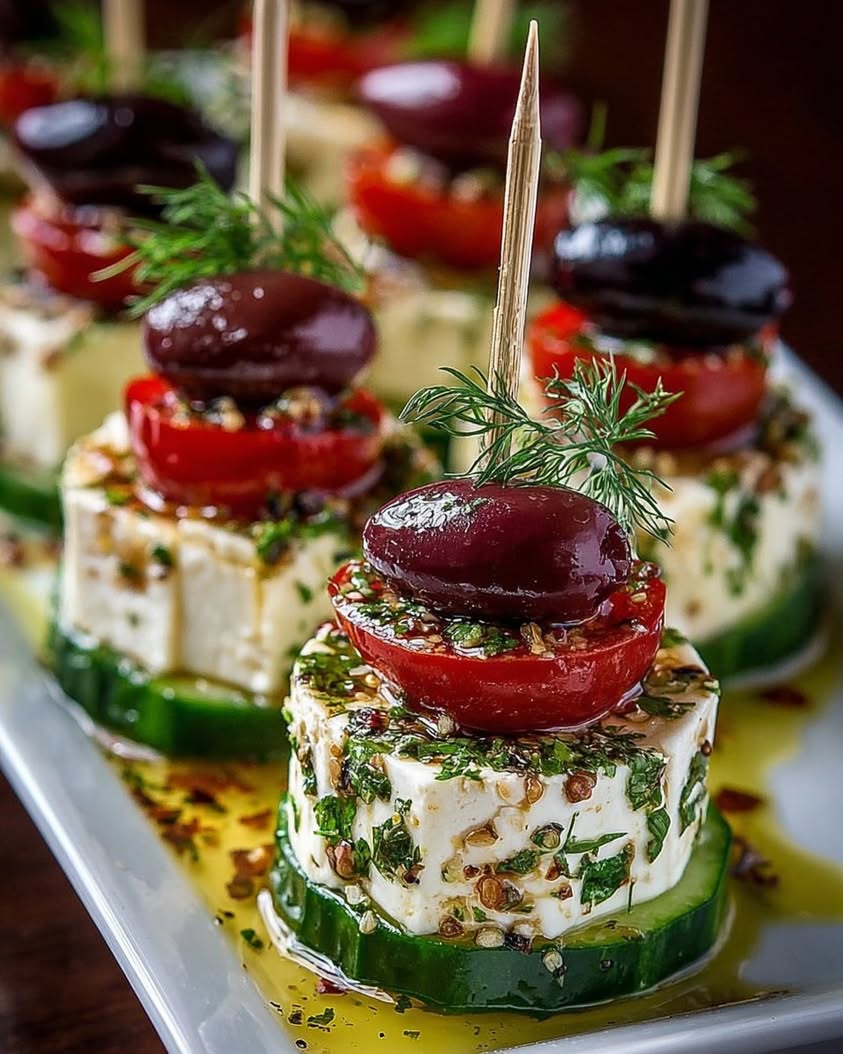
- Visual Appeal: These skewers are a feast for the eyes with their vibrant colors. The bright red tomatoes, creamy white feta, deep green cucumber, and purple-black olives create a stunning, festive presentation on any platter. Their uniform, stacked appearance looks both professional and playful.
- Skill Level Needed: Absolutely no cooking skills are required. This is a beginner-friendly recipe that involves only simple assembly. The key skill is careful threading of the ingredients onto skewers to prevent them from breaking.
- Special Equipment: You only need small appetizer skewers, which are readily available. Wooden or bamboo skewers work perfectly. Optionally, a sharp knife and cutting board are needed for prepping the cucumber and feta into cubes.
Recipe Overview
- Difficulty Level: This recipe is classified as “Easy” because it involves no cooking, baking, or complex techniques. The entire process is straightforward assembly. Anyone, regardless of culinary experience, can successfully create these appetizers. The only caution is to handle the feta gently to avoid over-crumbling.
- Category: This dish falls squarely into the appetizer and snack category. It is designed as a finger food for parties and gatherings. Additionally, it can serve as a light lunch component or a refreshing side dish for grilled meats.
- Cuisine: The recipe is firmly rooted in Greek and broader Mediterranean cuisine. It draws direct inspiration from the classic Greek salad, known as Horiatiki. The use of feta, olives, oregano, and tomato is quintessentially Greek, celebrating the region’s focus on fresh, simple ingredients.
- Cost: This is a very cost-effective appetizer. The main expense is a block of quality Greek feta cheese. Cucumbers, cherry tomatoes, and olives are generally inexpensive, especially in season. Overall, you can make a platter for a crowd for a fraction of the cost of store-bought hors d’oeuvres.
- Season: These skewers are perfect for spring and summer. The ingredients are at their peak freshness and most affordable during warmer months. Their cool, refreshing nature is particularly welcome in hot weather, though they make a bright addition to holiday spreads year-round.
- Occasion: They are incredibly versatile for entertaining. Serve them at cocktail parties, barbecues, picnics, bridal or baby showers, and holiday buffets. They also make a great healthy after-school snack or a light addition to a weekday lunchbox.
Why You’ll Love This Recipe
You will adore the incredible taste and texture of these Greek Feta & Cucumber Bite Skewers. Each component plays a harmonious role, creating a mini flavor explosion. The creamy saltiness of the feta perfectly cuts through the watery cucumber, while the tomato adds a necessary sweetness. Furthermore, the briny olive and aromatic oregano tie all the flavors together, resulting in a perfectly balanced bite that is both satisfying and refreshing. It is a true celebration of Mediterranean simplicity on a stick.
The convenience factor of this appetizer recipe is unbeatable. Since there is zero cooking involved, you avoid heating up your kitchen. You can assemble the entire platter in about fifteen minutes, which is a game-changer for last-minute hosting. Additionally, you can prep the components ahead of time and thread them shortly before serving. This makes it an incredibly stress-free option that allows you to enjoy your own party instead of being stuck in the kitchen.
From a nutritional standpoint, these skewers offer several advantages. They are packed with fresh vegetables, providing hydration from the cucumber and vitamins from the tomato. Feta cheese offers a good source of calcium and protein, while olives contribute healthy fats. Importantly, this is a gluten-free and vegetarian-friendly option that caters to various dietary needs. It is a guilt-free appetizer that feels indulgent but is made from wholesome ingredients.
The social and entertaining value of this dish is exceptionally high. Firstly, the skewer format is inherently fun and easy for guests to eat while mingling. The vibrant, colorful presentation immediately elevates your appetizer spread. Moreover, because the flavors are universally appealing, these skewers are a safe bet for pleasing a diverse crowd. They encourage conversation about their fresh taste and simple elegance, often becoming the star of the party.
Finally, the cost-effectiveness and accessibility of this recipe are major wins. You likely have most of the seasonings already, and the core ingredients are affordable and available at any grocery store. Compared to elaborate hot appetizers or purchased platters, this homemade version saves significant money. Consequently, you can feed a large group delicious, high-quality food without straining your budget, proving that impressive entertaining does not require expensive or complicated dishes.
Historical Background and Cultural Significance
The origin of these skewers is a modern, handheld interpretation of the ancient Greek salad. The traditional Greek salad, or Horiatiki, dates back centuries as a peasant dish made from whatever fresh vegetables and cheese were available. Farmers and villagers would combine tomatoes, cucumbers, onions, olives, and feta, seasoning it simply with oregano and olive oil. This recipe cleverly deconstructs that classic combination, arranging its core components on a skewer for easy, mess-free eating. It is a contemporary twist on a timeless culinary tradition.
These Greek Feta & Cucumber Bite Skewers hold cultural significance as ambassadors of Greek meze culture. In Greece, meze are small dishes meant for sharing and socializing, often accompanied by drinks. This appetizer recipe perfectly embodies that spirit. It encourages communal eating and conversation. The ingredients themselves are staples of the Greek diet, reflecting the country’s geography and climate, which are ideal for growing cucumbers, tomatoes, and olives, and for raising sheep and goats for feta cheese.
The evolution of this specific recipe is a product of modern entertaining needs. As casual gatherings and finger-food parties became popular globally, home cooks and chefs sought ways to serve classic flavors in more convenient formats. The skewer presentation solved the problem of serving a salad-like dish without plates and forks. This evolution shows how traditional cuisines adapt to contemporary lifestyles while preserving their essential character. It is a testament to the versatility and enduring appeal of Mediterranean flavors.
Regional variations of the core concept exist throughout the Mediterranean. For instance, in Turkey, one might find skewers with cucumber, cherry tomatoes, and cubes of beyaz peynir cheese. In the Middle East, a similar idea might use halloumi cheese instead of feta. The specific use of Greek feta, Kalamata olives, and Greek oregano, however, anchors this version firmly in its Hellenic roots. Exploring these variations offers a delicious glimpse into the interconnected foodways of the region.
Ingredient Deep Dive
Let us start with the star: Greek Feta Cheese. Authentic Greek feta is a Protected Designation of Origin (PDO) product, meaning it must be made in Greece from at least 70% sheep’s milk, often blended with goat’s milk. This gives it a uniquely tangy, salty, and slightly acidic flavor with a creamy yet crumbly texture. Nutritionally, it is a good source of calcium, protein, and probiotics. When selecting feta, look for blocks packed in brine for the best flavor and texture. For substitutions in a pinch, other crumbly salty cheeses like Bulgarian sirene or French feta can work, but the taste profile will shift.
Next, the English Cucumber provides the crucial crisp, cooling element. Unlike standard cucumbers, the English or “hothouse” variety has thinner skin, fewer seeds, and a milder taste, making it perfect for eating raw. It is over 95% water, making it incredibly hydrating and low in calories. It also provides vitamin K and potassium. Choose a cucumber that is firm, deeply green, and free of soft spots. For a different texture, you could use Persian cucumbers, which are even smaller and sweeter. Avoid waxy coatings by giving it a good scrub or peeling it lightly.
The Cherry Tomato brings a vital pop of sweetness and juiciness. These small tomatoes are typically sweeter and less acidic than their larger counterparts. They are rich in lycopene, an antioxidant, and vitamins A and C. Select tomatoes that are firm, brightly colored, and still attached to their vine if possible, as this often indicates better flavor. In winter, grape tomatoes can be a sweeter alternative. For the best result, always bring tomatoes to room temperature before serving to maximize their flavor.
Finally, the Kalamata Olive is the flavor anchor. Named after the city of Kalamata in southern Greece, these olives are dark purple, almond-shaped, and have a rich, fruity, and distinctly wine-like flavor. They are typically preserved in vinegar or olive oil. They contribute healthy monounsaturated fats and a deep, briny complexity. Purchase them pitted for ease. If unavailable, other good-quality black olives like Gaeta can substitute, though the flavor will be different. Avoid using bland, canned black olives, as they lack the necessary depth.
Common Mistakes to Avoid
- Using pre-crumbled feta cheese. This cheese is often drier, less flavorful, and coated in anti-caking agents. Always buy a block of feta in brine and cube it yourself for superior creaminess and taste.
- Cutting the cucumber too far in advance. Cucumber releases water and can become soggy. For the freshest crunch, cut and assemble the skewers within an hour of serving.
- Skewering the feta too aggressively. Feta is a crumbly cheese. If you force the skewer through, it may break apart. Gently twist the skewer as you push it through the cube to help it penetrate cleanly.
- Forgetting to pat ingredients dry. Moisture from washed tomatoes or olives can dilute the dressing and make the feta slimy. Always dry all components thoroughly with a paper towel before assembly.
- Using dried oregano instead of fresh. While dried oregano has its place, this fresh appetizer recipe relies on the bright, aromatic quality of fresh herbs. Dried oregano will taste dusty and overpowering.
- Making the skewers too large or heavy. Overloading a skewer makes it difficult to eat in one or two polite bites. Keep the components modestly sized and limit the number of pieces per skewer.
- Skipping the olive oil drizzle. A light coating of good extra virgin olive oil is not just for sheen; it carries the flavors of the oregano and helps meld the ingredients together. Do not omit this finishing step.
- Assembling too early. If left assembled for more than 2-3 hours, the salt from the feta and olives will draw out moisture from the cucumber and tomato, creating a puddle on the platter. Assemble close to serving time.
Essential Techniques
The first essential technique is cubing the feta cheese. Start by removing the feta from its brine and patting it dry gently. Use a sharp knife to cut it into even, bite-sized cubes. A sharp knife creates clean cuts and minimizes crumbling. If the cheese is very soft, you can briefly chill it in the freezer for 10-15 minutes to firm it up. The goal is neat cubes that will hold their shape on the skewer without falling apart.
Next, mastering the skewering order is key for structural integrity. Always start and end with a sturdier ingredient, like the tomato or olive, to act as an anchor. Thread the ingredients in your chosen order, using a gentle twisting motion to guide the skewer through the center of each piece. Ensure the skewer goes through the core of the cucumber cube and the center of the feta to prevent splitting. Consistent, centered threading makes the skewers look professional and ensures they hold together when picked up.
Pro Tips for Perfect Greek Feta & Cucumber Bite Skewers
Soak wooden skewers in water for 20-30 minutes before using. This prevents them from burning if you decide to briefly grill the skewers for a warm variation, and it also stops them from absorbing moisture from the ingredients and becoming brittle.
Use a melon baller to create small, round scoops of cucumber instead of cubes. This creates a beautiful, elegant presentation and provides a little cup that cradles the feta cheese nicely.
For an extra flavor boost, marinate the feta cubes in a little olive oil, lemon zest, and chopped fresh oregano for 30 minutes before assembling. This infuses the cheese with even more Mediterranean essence.
If serving outdoors, consider placing the finished platter of skewers on a bed of ice in a shallow pan. This keeps everything refreshingly cool and crisp, especially important on a hot day.
Create a visually stunning platter by alternating the order of ingredients on different skewers. For example, make some with tomato-feta-cucumber-olive and others with olive-cucumber-feta-tomato. The variety looks fantastic.
Add a very light drizzle of high-quality, thick balsamic glaze over the assembled skewers just before serving. The sweet acidity complements the salty feta and briny olives beautifully.
Variations and Adaptations
For regional variations, explore cheeses from neighboring cultures. Try using halloumi from Cyprus; you can lightly grill the halloumi cubes before skewering for a warm, squeaky texture. Alternatively, use Italian bocconcini (small mozzarella balls) for a milder, creamier profile, essentially creating a Caprese skewer with cucumber. Spanish Manchego cheese offers a firm, nutty alternative that pairs wonderfully with marcona almonds added to the skewer.
Seasonal adaptations are simple and effective. In summer, add a small wedge of fresh peach or nectarine between the tomato and feta for a sweet surprise. In autumn, include a cube of roasted butternut squash. For a winter holiday version, use rosemary sprigs instead of oregano and add a cranberry in place of the olive. Spring calls for adding a fresh pea shoot or a snap pea to the skewer for a green crunch.
Dietary modifications are straightforward. For a vegan version, substitute the feta with a firm, marinated tofu cube or a commercially available vegan feta alternative. To make it dairy-free, use the same vegan cheese or simply omit the cheese and add an extra vegetable like a marinated artichoke heart. For a lower-sodium version, seek out low-sodium feta and olives, and rinse the olives thoroughly before using.
Serving and Presentation Guide
Plating techniques can transform these simple skewers. Instead of laying them flat, consider using a narrow, rectangular platter and leaning the skewers against each other in a crisscross pattern, like a teepee. Alternatively, stand them upright in a tall, narrow vessel filled with dry lentils or decorative stones to create a dramatic, vertical presentation. For a rustic look, arrange them on a slab of slate or a wooden board.
Garnishing ideas extend beyond the skewer itself. Scatter the platter with whole fresh oregano sprigs, lemon wedges, or a few extra Kalamata olives. A light dusting of dried Greek oregano or a sprinkle of flaky sea salt over the top just before serving adds texture and highlights the ingredients. You can also drizzle the finishing olive oil in a zigzag pattern across the entire platter for a chef’s touch.
Traditional accompaniments include other Greek meze like dolmades (stuffed grape leaves), spanakopita, or a bowl of tzatziki for dipping. For a complete spread, serve alongside grilled pita bread wedges and a simple lentil salad. They also pair wonderfully with grilled seafood or lamb, acting as a fresh, acidic counterpoint to the rich, smoky meats.
Wine and Beverage Pairing
For wine pairings, you want something that complements the saltiness and acidity. A crisp, dry white wine like Assyrtiko from Santorini is the classic Greek choice, its citrus and mineral notes cutting through the fat of the feta. A New Zealand Sauvignon Blanc with its grapefruit and herbaceous qualities also works beautifully. If you prefer rosé, a dry Provencal rosé with its strawberry and citrus notes is a perfect summer match. For red wine lovers, a light, low-tannin red like a Beaujolais or a Greek Xinomavro can be surprisingly good.
Non-alcoholic alternatives should be equally refreshing. Sparkling water with a squeeze of lemon or lime is always a winner. For a more crafted option, make a virgin oregano lemonade by muddling fresh oregano in lemonade. Iced herbal teas, like mint or chamomile, are also excellent companions. A cucumber-mint infused water served in a elegant pitcher echoes the flavors on the skewer and keeps guests hydrated.
Storage and Shelf Life
Storage methods are crucial for maintaining quality. Unassembled, the components can be stored separately. Keep cubed feta submerged in its brine in an airtight container in the refrigerator for up to 5 days. Store cut cucumber in a sealed container with a paper towel to absorb moisture for 1-2 days. Cherry tomatoes and olives can be kept in their containers in the fridge. Once assembled, the skewers are best consumed within 2-3 hours at room temperature or within 24 hours if refrigerated, though the cucumber will soften.
Signs of spoilage are usually visual and olfactory. Discard the skewers if the feta develops an off smell (beyond its normal tang), becomes slimy, or shows any mold. If the cucumber becomes excessively watery and mushy, it is past its prime. The tomatoes may wrinkle and become overly soft. Because this is a fresh dish with no preservatives, always err on the side of caution and enjoy it soon after making.
Make Ahead Strategies
Your prep timeline can be spread over two days for maximum convenience. The day before your event, cube the feta and store it in brine. Wash and dry the cherry tomatoes and olives. You can even make the oregano-olive oil dressing and keep it in a jar at room temperature. On the day of the event, cut the cucumber and begin assembly 1-2 hours before guests arrive. This staggered approach ensures every element is at its peak.
For storage between steps, use airtight containers with clear separation. The feta must stay in liquid to prevent drying. The cucumber must stay dry to prevent sogginess. Keep tomatoes and olives in their own containers. This compartmentalized prep prevents flavor transfer and moisture migration, which are the biggest enemies of this appetizer’s perfect texture.
Scaling Instructions
Halving the recipe is simple for smaller gatherings. Simply divide all ingredient quantities by two. The assembly time will be roughly halved as well. No equipment adjustments are needed. Be mindful that you may have leftover brine from a feta package, which you can save for marinades or salad dressings.
Doubling or tripling for a large crowd requires minor logistical planning. You will need a very large platter or multiple serving dishes. Consider setting up an assembly line with stations for each ingredient to streamline the process. Timing remains the same per skewer, but the total assembly time will increase linearly. Ensure you have enough refrigerator space to store components if prepping in advance.
Nutritional Deep Dive
A macro breakdown for one skewer is favorable. It is relatively low in carbohydrates, with most coming from the tomato and cucumber. The fat content comes primarily from the healthy monounsaturated fats in the olive and the saturated fat in the feta, which provides satiety. Protein is present from the cheese. This balance makes it a satisfying snack that won’t cause a blood sugar spike. It is also naturally low in sugar.
The micronutrient analysis reveals a good mix of vitamins and minerals. Cucumber provides vitamin K for bone health. Tomatoes are famous for their lycopene and vitamin C content. Feta cheese is an excellent source of calcium and phosphorus. Olives contribute iron and vitamin E. Together, they offer a spectrum of antioxidants and essential nutrients in a very small package, contributing to overall wellness.
Dietary Adaptations
For a gluten-free adaptation, this recipe is naturally compliant. Just ensure that any pre-made dressings or marinades you might use are certified gluten-free. The core ingredients—vegetables, cheese, olives, oil, and herbs—contain no gluten. This makes it a very safe and delicious option for anyone with celiac disease or gluten sensitivity.
Creating a vegan version requires a thoughtful cheese substitute. Many stores now carry excellent almond- or coconut-based vegan feta cheeses that mimic the crumbly texture and tangy flavor. Alternatively, use extra-firm tofu pressed, cubed, and marinated in lemon juice, nutritional yeast, and salt. Replace the honey in any dressing with agave syrup or maple syrup. The result is a plant-based appetizer that still delivers the desired flavor contrasts.
Troubleshooting Guide
If you encounter texture issues like soggy cucumber, the cause is almost always excess moisture or assembly too far in advance. The solution is to always pat ingredients bone-dry and assemble within two hours of serving. If your feta is crumbling excessively, it might be too warm or of a drier variety. Try chilling it before cubing and use a very sharp knife with a gentle sawing motion instead of pressing down hard.
For flavor balance problems, such as the skewers tasting too salty, you may have used an overly salty feta or olives. To fix this, you can rinse the olives lightly and soak the feta cubes in cold water or milk for 5-10 minutes to draw out some salt, then pat them dry. If the skewers taste bland, you likely skimped on the seasoning. Ensure you are using high-quality, flavorful ingredients and do not forget the final drizzle of good olive oil and a crack of black pepper.
Recipe Success Stories
Community feedback on this Greek Feta & Cucumber Bite Skewers appetizer recipe has been overwhelmingly positive. Many home cooks report that this has become their “go-to” party dish because it always disappears first. One reader shared that she made them for a baby shower and received multiple requests for the recipe. Another mentioned that her children, who normally avoid olives, will eat them happily when presented on these fun skewers. The consistent theme is their reliability and crowd-pleasing nature.
Variation successes from readers are inspiring. One person added a small cube of watermelon in the summer for a sweet and salty combination that was a huge hit. Another substituted the oregano with fresh dill for a different herbal profile that paired wonderfully with a seafood main course. A creative cook even made a “dessert” version using honey-marinated feta, cucumber, and a grape, drizzled with a balsamic reduction. These adaptations show the fantastic versatility of the basic formula.
Frequently Asked Questions
Can I make these skewers the night before? It is not recommended to fully assemble them the night before. The salt will draw moisture from the cucumber, making everything watery. Instead, prep all components separately and store them in airtight containers in the fridge. Then, assemble the skewers 1-2 hours before your event for the best texture.
What can I use instead of wooden skewers? If you do not have skewers, you can simply serve the ingredients as a deconstructed salad in a bowl. Alternatively, use decorative toothpicks for a similar single-bite experience. For a fancier look, some stores sell edible “skewers” like chives or slender stalks of rosemary.
Is there a way to make these less messy to eat? To minimize drips, ensure your cherry tomatoes are not overly ripe and juicy. You can also use smaller, firmer grape tomatoes. Patting all ingredients very dry before assembly is the best way to prevent excess liquid from pooling on the platter and dripping when eaten.
Can I add meat to these skewers? Absolutely. A small cube of grilled chicken, a folded slice of prosciutto, or a single pepperoni slice can be added for a heartier appetizer. If adding meat, ensure it is fully cooked and cooled before threading to maintain food safety.
How do I transport these to a potluck? Transport the unassembled components in separate containers with ice packs in a cooler. Bring your skewers and a platter separately. Assemble on-site to guarantee they are fresh and crisp. If you must transport them assembled, lay them in a single layer on a tray, cover tightly with plastic wrap, and keep them cool.
My feta is very soft and won’t cube neatly. What should I do? Soft feta is often very creamy and delicious. To make it easier to cube, place the whole block in the freezer for 10-15 minutes to firm up slightly. Use a sharp knife dipped in hot water for cleaner cuts. If it still crumbles, embrace it and create more rustic, free-form pieces.
Are these skewers keto-friendly? Yes, they can be. The primary ingredients are low in carbohydrates. Just be mindful of the tomato, as it contains some natural sugars. One skewer fits easily into a ketogenic diet. You can make it even more keto by adding an extra olive or a slice of avocado instead of the tomato.
Can I grill these skewers? You can lightly grill them for a warm variation, but do so carefully. Use soaked wooden skewers. Grill for just 1-2 minutes, turning once, just to get grill marks and warm the ingredients slightly. The cucumber will soften quickly, and the feta may melt, so watch them closely.
What’s the best way to cut the cucumber? For uniform cubes, slice the cucumber into thick rounds (about 3/4-inch), then cut each round into quarters. If your cucumber is very wide, you may want to cut it in half lengthwise first, then slice and quarter for more manageable bite-sized pieces.
How long can leftover assembled skewers last in the fridge? They will be safe to eat for up to 24 hours, but the quality will decline. The cucumber will lose its crispness and become limp. For the best eating experience, it’s ideal to consume them the same day they are assembled.
Additional Resources
For related recipes, consider exploring other easy Mediterranean appetizers. A classic tzatziki dip with pita chips is a perfect companion. Dolmades (stuffed grape leaves) offer a more traditional cooked option. For a heartier skewer, try souvlaki-style chicken or shrimp skewers with a similar oregano-lemon marinade. A simple Greek lemon potatoes or a horiatiki salad would complete a full Greek feast beautifully.
If you enjoyed the technique of building flavor-packed appetizer skewers, you can apply it to countless other cuisines. Try an Italian version with mozzarella, basil, tomato, and a drizzle of balsamic. Or a Mexican-inspired skewer with cotija cheese, corn, cherry tomato, and a cilantro lime drizzle. The concept of threading fresh, complementary ingredients onto a stick is a global one, limited only by your imagination and taste preferences.
PrintGreek Feta & Cucumber Bite Skewers
- Total Time: 15 minutes
- Yield: 4
Description
A refreshing and easy-to-make appetizer featuring tangy feta cheese, crisp cucumber, and briny olives on skewers, perfect for summer gatherings or quick snacks.
Ingredients
- 1 large cucumber, cut into 1-inch cubes
- 8 ounces feta cheese, cut into 1-inch cubes
- 1 cup cherry tomatoes, halved
- 1/2 cup Kalamata olives, pitted
- 2 tablespoons extra virgin olive oil
- 1 teaspoon dried oregano
- 1/4 teaspoon black pepper
- Wooden skewers (about 4 inches long)
Instructions
- Thread one piece of cucumber, one cube of feta, one cherry tomato half, and one olive onto each skewer, repeating the order as desired.
- Arrange the assembled skewers on a serving platter in a single layer.
- Drizzle the skewers with olive oil and sprinkle evenly with dried oregano and black pepper.
- Serve immediately or chill in the refrigerator for up to 30 minutes before serving for a cooler bite.
Notes
You can customize the seasonings to taste.
- Prep Time: 15 minutes
- Cook Time: 0 minutes
- Method: Appetizer
- Cuisine: Greek