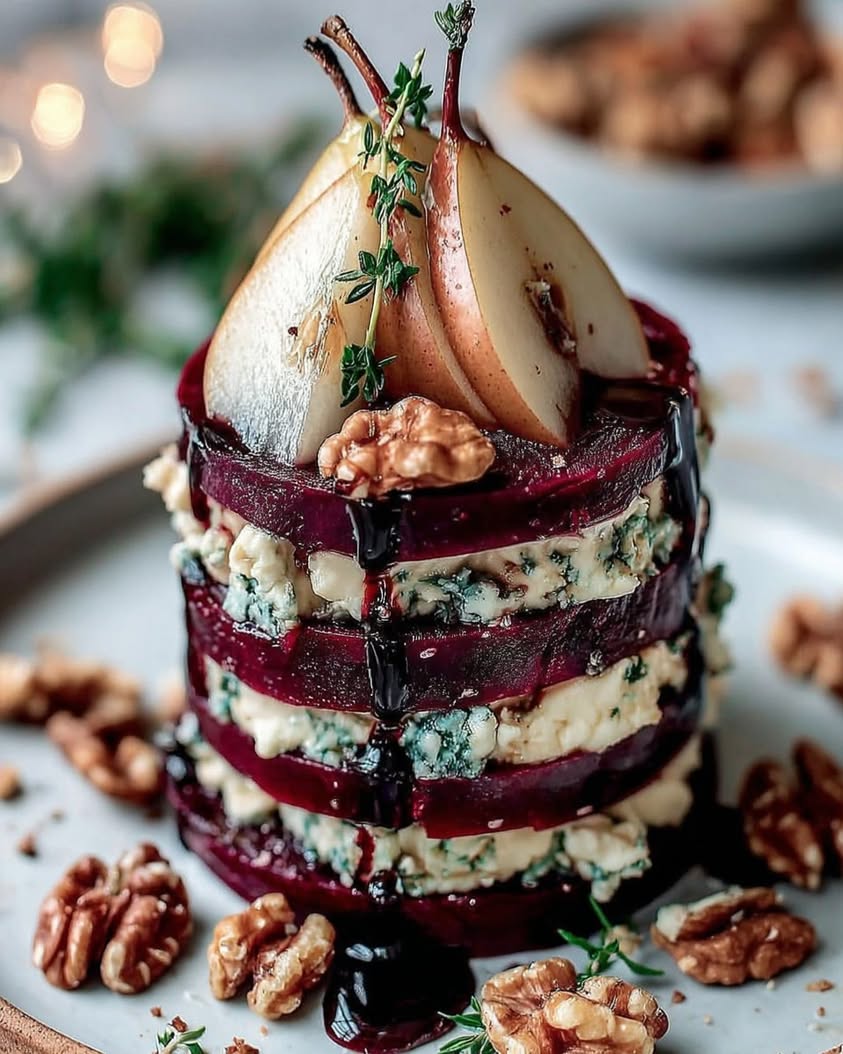
Elegant Roasted Beet Towers with Blue Cheese, Pear & Balsamic: A Stunning Appetizer
These elegant roasted beet towers with blue cheese, pear, and balsamic glaze are a true showstopper. They combine earthy sweetness, creamy tang, and a syrupy finish for an unforgettable appetizer. Moreover, this dish delivers a stunning visual presentation that will impress any guest. Ultimately, it transforms simple, wholesome ingredients into a gourmet experience.
The process begins with roasting beets to concentrate their natural sugars. Then, you layer them with ripe pear and crumbled blue cheese. Finally, a drizzle of reduced balsamic glaze ties all the flavors together beautifully. Consequently, each bite offers a perfect harmony of textures and tastes. This recipe is perfect for anyone wanting to elevate their entertaining game.
Imagine serving these vibrant, jewel-toned towers at your next dinner party. They are surprisingly simple to assemble once the components are ready. Additionally, they can be partially prepared ahead of time for stress-free hosting. This elegant roasted beet towers recipe is a celebration of seasonal produce and sophisticated flavor pairing.
Quick Recipe Highlights
- Flavor Profile: These elegant roasted beet towers offer a complex dance of sweet, earthy, tangy, and sharp notes. The natural sugar of the roasted beets and pear perfectly balances the pungent blue cheese. Meanwhile, the balsamic glaze adds a necessary acidic and syrupy counterpoint that brings everything into focus.
- Texture: You will experience a wonderful contrast between the tender, dense roasted beets and the crisp, juicy pear. The creamy, crumbly blue cheese melts slightly on contact, creating a luxurious mouthfeel. Furthermore, the sticky balsamic glaze adds a final glossy layer that enhances every component.
- Aroma: As the beets roast, they fill your kitchen with a warm, earthy, and subtly sweet fragrance. The aroma of the reducing balsamic vinegar is sharp and tangy, which then mellows into a rich, caramel-like scent. Finally, when plated, the scent of fresh pear and funky cheese creates an irresistible invitation.
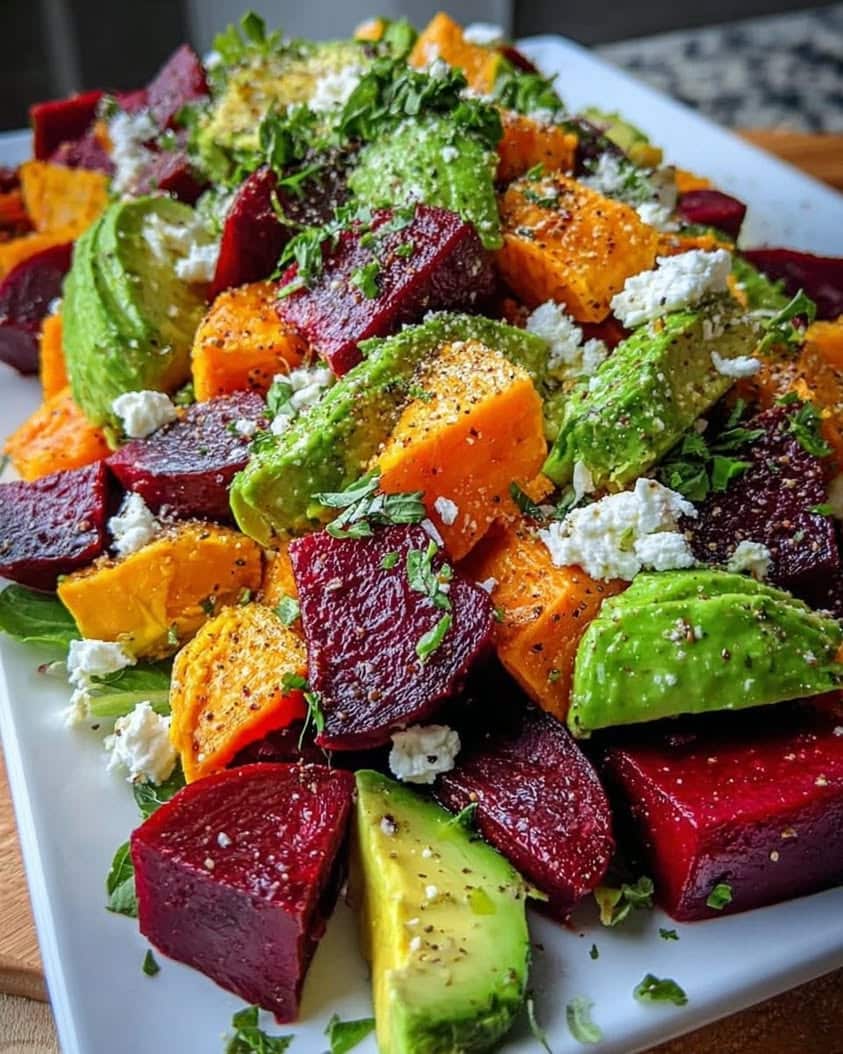
- Visual Appeal: The deep crimson of the beets creates a stunning base for these elegant roasted beet towers. Contrasting with the pale green or white pear and the snowy blue cheese crumbles, the presentation is dramatic. A final dark drizzle of balsamic glaze adds artistic flair and professional polish.
- Skill Level Needed: This recipe requires basic knife skills for peeling and slicing, along with patience for roasting and reducing. The assembly is straightforward but benefits from a careful hand for neat stacking. Overall, it is an accessible project for a confident home cook looking to create something special.
- Special Equipment: You will need a good vegetable peeler, a sharp chef’s knife, and a sturdy cutting board. A mandoline slicer is highly recommended for achieving uniformly thin beet and pear slices. Additionally, a small saucepan for the glaze and a baking sheet for roasting are essential.
Recipe Overview
- Difficulty Level: We rate these elegant roasted beet towers as medium difficulty. The individual steps are simple, but the recipe involves multiple components that require timing and attention. For instance, roasting the beets takes the longest, while reducing the glaze needs watchfulness to prevent burning. However, the assembly process itself is quite forgiving and even fun.
- Category: This dish fits perfectly into the appetizer or starter category for a formal meal. Alternatively, it can serve as a sophisticated salad course when plated over a bed of delicate greens. It also makes an excellent passed hors d’oeuvre for a cocktail party if assembled in smaller, bite-sized portions.
- Cuisine: While not tied to one specific tradition, these elegant roasted beet towers draw inspiration from modern European and New American cuisine. The combination of roasted root vegetables, cheese, and fruit is classic in French and Italian cooking. The presentation, however, is decidedly contemporary and chef-driven.
- Cost: This is a moderately priced appetizer, as its main ingredients are seasonal vegetables and cheese. Organic beets and a high-quality blue cheese will increase the cost, while standard options keep it budget-friendly. The pear and balsamic vinegar are typically low-cost items you may already have on hand.
- Season: This recipe shines in the fall and winter when beets and pears are at their peak of flavor and sweetness. However, with the year-round availability of these items, you can make these elegant roasted beet towers anytime. They offer a welcome burst of color and freshness during the colder months.
- Occasion: This dish is ideal for holiday gatherings, dinner parties, anniversary meals, or any event where you want to impress. It is also a wonderful choice for a romantic date night at home. Because the components can be prepped ahead, it removes last-minute stress from special occasions.
Why You’ll Love This Recipe
First and foremost, the taste and texture appeal of these elegant roasted beet towers is extraordinary. Each layer contributes a distinct sensation, from the earthy firmness of the beet to the juicy snap of the pear. The blue cheese then introduces a creamy, salty complexity that makes the flavors pop. Finally, the sweet-tart balsamic glaze wraps everything in a glossy, flavorful embrace. Consequently, every bite is a mini journey that delights the senses and leaves you wanting more.
Next, consider the convenience and preparation benefits this recipe offers. Although the total time is ninety minutes, most of it is hands-off roasting and reducing. Therefore, you can prepare other parts of your meal or simply relax while the oven does the work. Furthermore, you can roast the beets and make the glaze a full day in advance. This make-ahead flexibility makes hosting significantly easier and more enjoyable.
Additionally, these elegant roasted beet towers come with notable nutritional advantages. Beets are packed with fiber, folate, and beneficial nitrates that support heart health and stamina. Pears add more fiber and vitamin C, while blue cheese provides calcium and protein. Together, they create a dish that is as wholesome as it is decadent. You can feel good about serving something that nourishes your guests beautifully.
The social and entertaining value of this dish cannot be overstated. Its dramatic, restaurant-quality presentation is guaranteed to elicit compliments and conversation. It shows a high level of care and culinary skill, making guests feel truly special. Moreover, it is a naturally gluten-free and vegetarian option that caters to various dietary preferences. Serving these towers sets a tone of elegance and thoughtfulness for the entire meal.
Finally, these elegant roasted beet towers are surprisingly cost-effective and accessible. The ingredient list is short and relies on whole foods rather than expensive processed items. Even the optional upgrade to a premium aged balsamic is a small splurge for a big impact. Essentially, you are creating a gourmet experience without a gourmet price tag. This recipe proves that impressive cooking is about technique and flavor pairing, not just expensive ingredients.
Historical Background and Cultural Significance
The story of these elegant roasted beet towers begins with the humble beetroot itself, a vegetable with ancient origins. Historically, wild beet greens were consumed in the Mediterranean region, while the root was used medicinally. The modern sweet beet we know today was developed in Germany and Central Europe in the 16th century. Consequently, roasting beets to enhance their sweetness became a staple technique in Eastern European and Russian cuisine, often paired with sour cream or vinegar.
Culturally, the combination of cheese and fruit is a timeless pairing found across many culinary traditions. The French have long enjoyed pears with Roquefort, while Italians pair figs with gorgonzola. This classic sweet-and-savory duality forms the flavor heart of our elegant roasted beet towers. The addition of the beet, a hearty root vegetable, grounds the pairing and adds substantial texture and earthiness. Therefore, the recipe is a modern fusion of these enduring, cross-cultural flavor principles.
The evolution of this specific recipe is a testament to modern plating trends and the elevation of vegetable-centric dishes. In fine dining, chefs began presenting food in vertical stacks or “towers” in the late 20th century to add height and drama to the plate. Applying this technique to rustic ingredients like beets and pears created a striking contrast. Thus, the elegant roasted beet towers recipe was born from a desire to make wholesome food look and feel luxurious.
Regional variations of this concept are plentiful, showcasing the adaptability of the core idea. In the American South, you might find a version with candied pecans and a bourbon glaze. A Mediterranean adaptation could feature goat cheese instead of blue and a honey-lemon drizzle. Some chefs incorporate microgreens or edible flowers between the layers for added color and flavor. Ultimately, the basic framework of roasted vegetable, fruit, cheese, and glaze is a canvas for endless creativity.
Ingredient Deep Dive
Let us start with the star: beets. These vibrant root vegetables have been cultivated for thousands of years and are prized for their earthy sweetness and stunning color. Nutritionally, they are a powerhouse of folate, manganese, potassium, and dietary fiber. When selecting beets, look for firm, smooth globes with vibrant greens still attached if possible, as this indicates freshness. Store them unwashed in the refrigerator for up to two weeks. For a variation, try golden beets for a milder, stain-free version of these elegant roasted beet towers.
Next, blue cheese brings the necessary pungent, salty contrast. This category of cheese, veined with Penicillium mold, has origins dating back to the 7th century in France. It offers a significant amount of calcium, protein, and beneficial fats. Choose a blue cheese that crumbles easily, such as a domestic Maytag or an Italian Gorgonzola Dolce for a milder flavor. Always bring cheese to room temperature before serving to maximize its aroma and creaminess. For a different profile, a firm goat cheese or a creamy feta can be excellent substitutes.
The pear provides a crucial layer of fresh, juicy sweetness and crisp texture. Pears are a symbol of longevity and prosperity in many Asian cultures and have been enjoyed since prehistoric times. They are an excellent source of vitamin C, fiber, and antioxidants. Select pears that are firm but yield slightly to gentle pressure at the stem for perfect ripeness. To prevent browning after slicing, a quick toss in lemon juice is effective. Anjou or Bosc pears work wonderfully here due to their firm flesh that holds its shape during assembly.
Finally, the balsamic glaze is the flavorful glue that binds the dish. Authentic traditional balsamic vinegar, or Aceto Balsamico Tradizionale, is a protected product from Modena, Italy, aged for years in wooden casks. While we use a more accessible commercial balsamic for reduction, it still adds antioxidants and a complex sweet-tart flavor. The reduction process concentrates the sugars and acids, creating a syrup. You can enhance it with a teaspoon of honey during reduction for extra depth. For a shortcut, a high-quality store-bought glaze is perfectly acceptable.
Common Mistakes to Avoid
- Underseasoning the Beets: Simply roasting beets is not enough. You must toss them in oil, salt, and pepper before they go in the oven. Otherwise, the foundational layer of your elegant roasted beet towers will taste flat and bland. Season each component thoughtfully for a balanced final dish.
- Overcooking the Pears: The pear slices must remain crisp to provide textural contrast. If they are too ripe or sliced too thin, they will become mushy and disappear in the stack. Consequently, use firm, just-ripe pears and slice them just before assembly to maintain their integrity.
- Using a Weak Balsamic: Not all balsamic vinegars are created equal. A very cheap, overly acidic vinegar will not reduce to a sweet, syrupy glaze. It may remain tart and thin. Therefore, invest in a moderately priced balsamic with a naturally sweeter profile for the best results in your glaze.
- Neglecting to Peel the Beets: The skin of a roasted beet, while edible, can be tough and slightly bitter. Peeling them after roasting ensures the velvety, smooth texture essential for elegant roasted beet towers. The skin slips off easily when the beets are cool enough to handle.
- Building Towers That Are Too Tall: While impressive, an overly tall tower is difficult to eat gracefully. Aim for 3-4 layers total for stability and a manageable bite. A wide, stable base is more important than excessive height for both presentation and practicality.
- Skipping the Cooling Step: Assembling the towers with hot beets will melt the cheese prematurely and wilt the pear. You must allow the roasted beets to cool completely to room temperature. This ensures clean layers and distinct textures in every bite.
- Drizzling Glaze Too Early: If you add the balsamic glaze too long before serving, it can soak into the beet layers and make them soggy. The glaze should be the final touch applied just before the dish goes to the table. This preserves the visual appeal and varied textures.
- Using a Dull Knife or Mandoline: Slippery, round beets and pears are challenging to slice. A dull blade requires more pressure, increasing the risk of serious cuts. Always use a sharp chef’s knife or mandoline with the guard for uniform, safe slices.
Essential Techniques
Roasting Beets to Perfection: This technique is crucial for developing the deep, caramelized sweetness in your elegant roasted beet towers. Wrapping beets in foil creates a mini steam oven that cooks them evenly and makes peeling effortless. The key is to roast until a paring knife slides into the center with just a little resistance. Over-roasting leads to mushy beets that cannot hold a stack. You will know they are done when the skins wrinkle slightly and the aroma is intensely earthy and sweet.
Reducing Balsamic Glaze: Reducing vinegar concentrates its flavor and natural sugars, transforming it from a dressing into a sauce. Use a small, heavy-bottomed saucepan over medium-low heat to prevent scorching. The mixture will bubble and reduce by about half, coating the back of a spoon. A common pitfall is walking away, as it can go from syrupy to burnt very quickly. The visual cue for success is a consistency similar to warm honey that will drizzle in a thick ribbon.
Uniform Slicing: Consistent thickness in your beet and pear slices is non-negotiable for stable, professional-looking towers. A mandoline is the best tool for this job, allowing you to dial in an exact thickness, typically around 1/4 inch. If using a knife, take your time and aim for even pressure. Uneven slices create wobbly towers and inconsistent bites. This technique ensures each layer contributes equally to the structure and eating experience.
Strategic Assembly: Building the towers is a simple but mindful process. Start with your largest, flattest beet slice as a stable base on the serving plate. Add a pear slice, then a modest sprinkle of blue cheese, pressing down gently. Repeat, alternating and offsetting the slices slightly for a staggered, rustic look. The goal is balance, not height. The final tower should be sturdy enough to move but delicate enough to highlight the beautiful layers.
Pro Tips for Perfect Elegant Roasted Beet Towers
Wear disposable gloves when peeling and slicing the roasted beets to avoid stained hands for days. This simple step makes the process much cleaner and more pleasant.
For an extra flavor dimension, toss the warm, peeled beets in a teaspoon of fresh thyme or chopped rosemary before they cool. The herbs will adhere to the slightly sticky surface.
If your pears are not perfectly ripe, you can quickly poach the slices in simple syrup for 60 seconds to soften them slightly and enhance their sweetness.
Use a small spoon or a squeeze bottle to apply the balsamic glaze. This gives you maximum control for creating elegant drizzles and dots on the plate.
Place a small bed of delicate arugula or microgreens on the plate before building the tower. It adds color, a peppery note, and prevents the beet from sliding.
For a stunning variation, use a combination of red and golden beets in alternating layers. The visual effect is breathtaking and highlights the architecture of the dish.
Let the blue cheese sit out for 20-30 minutes before crumbling. Cold cheese crumbles into hard bits, while room-temperature cheese offers softer, creamier crumbles.
If making ahead, store the components separately and assemble no more than an hour before serving. This preserves the distinct textures of each layer perfectly.
Variations and Adaptations
Consider regional variations to tailor the dish to different culinary themes. For a French twist, use Roquefort cheese and add a layer of toasted walnuts. A Nordic version might incorporate a dollop of horseradish cream and fresh dill. Meanwhile, an American fall variation could include a layer of spiced candied pecans and a maple-balsamic glaze. These adaptations keep the core concept fresh and exciting for repeated enjoyment.
Seasonal adaptations are wonderfully straightforward. In spring, substitute thin slices of fresh fennel for the pear and use a lemon-herb vinaigrette. Summer invites the use of grilled peach or nectarine slices and a basil-infused oil. For a deeper winter version, try roasted sweet potato rounds and a pomegranate molasses drizzle. Each seasonal shift celebrates the best produce available at that time.
Dietary modifications make this dish inclusive. For a vegan elegant roasted beet tower, replace blue cheese with a crumbled almond feta or a whipped cashew cheese. A nut-free version can use a sunflower seed-based “cheese.” To make it Whole30 or paleo, omit the cheese and drizzle with a compliant balsamic reduction, focusing on the beet and pear pairing. There is always a way to adapt the framework.
Experiment with flavor variations by infusing the olive oil used for the beets. Try garlic-infused, truffle, or citrus oil for a different base note. You can also mix a little orange zest or a pinch of cayenne into the blue cheese crumbles. Another idea is to brush the pear slices with a touch of honey or maple syrup before layering for extra caramelization.
Texture modifications can cater to different preferences. For a crunchier tower, add a very thin, toasted slice of baguette or a crisp rye cracker between the beet and pear. For a creamier experience, spread a thin layer of fromage blanc or mascarpone on the beet slice before adding the pear. You can also finely chop toasted nuts and press them onto the sides of the tower for a coated effect.
Presentation alternatives offer creative freedom. Instead of towers, deconstruct the salad by chopping the beets and pears and tossing them with cheese and glaze in a bowl. For a passed appetizer, use a small round cutter to create uniform beet and pear circles and stack them on a cracker. Another beautiful option is to lay the slices in a colorful, overlapping spiral on a large platter for a family-style presentation.
Serving and Presentation Guide
Mastering plating techniques elevates these elegant roasted beet towers from homemade to restaurant-quality. Use a large, white or neutral-colored plate to make the vibrant colors pop. Wipe the plate edge clean after plating for a professional finish. Consider the “clock” method: place the tower at 6 o’clock on the plate and drizzle the glaze in a sweeping arc from 10 to 2 o’clock. This creates dynamic negative space and visual interest.
Garnishing ideas should be minimal and edible to complement, not clutter. A single small frond of fresh dill, chervil, or micro cilantro adds a touch of green. Edible flowers like nasturtiums or pansies introduce unexpected color. A final flake of Maldon sea salt on top of the tower enhances all the flavors and adds a subtle crunch. A few scattered pomegranate arils in the fall provide jewel-like bursts of tartness.
Traditional accompaniments for a dish like this are light and simple. A small side of lightly dressed bitter greens, like arugula or frisée, balances the sweetness. For a heartier starter, serve alongside a warm, crusty baguette to soak up any extra glaze and cheese. In a formal multi-course meal, a clear consommé or a light fish course would follow beautifully.
Modern serving suggestions embrace flexibility. For a chic cocktail party, assemble mini one-bite towers on endive spears or small toast rounds. As part of a brunch spread, these towers pair wonderfully with quiche and sparkling wine. You can also slice a completed tower in half crosswise and plate the cut side up to reveal the stunning interior layers—a true chef’s move.
Temperature considerations are key. The components should all be at cool room temperature for the ideal eating experience. Cold beets straight from the fridge can mute their flavor, while warm beets melt the cheese too much. Assemble the towers about 30 minutes before serving, allowing them to settle and the flavors to marry slightly without losing texture.
Portion control is built into the recipe, with each tower being a perfect single-serving appetizer. If serving as a salad course, one tower per person is standard. For a heavier hors d’oeuvre at a standing party, you can make the towers half the size. Always consider the rest of your menu; this is a rich starter, so subsequent courses should be appropriately lighter.
Wine and Beverage Pairing
Selecting wine pairings for these elegant roasted beet towers requires balancing sweet, earthy, and pungent flavors. A classic choice is a slightly sweet Riesling or Gewürztraminer, whose acidity and fruit notes cut through the richness of the cheese and complement the beet’s earthiness. Alternatively, a light-bodied Pinot Noir with low tannins and red fruit flavors pairs beautifully without overpowering the dish. For a more adventurous match, try a dry Rosé from Provence, which offers acidity and berry notes that bridge all the components.
Non-alcoholic alternatives can be just as sophisticated. A sparkling elderflower cordial with soda water mirrors the floral notes in the pear and cuts through the cheese. For a warmer option, a gently sweetened ginger-lemon tea provides a cleansing, spicy contrast. A tart cherry or pomegranate spritzer made with 100% juice and club soda also complements the sweet-and-savory profile wonderfully.
While not a typical coffee course, if serving these towers at a brunch or late morning gathering, consider beverage timing. A dry sparkling wine like Prosecco or Cava is a classic brunch pairing that works excellently here. For a non-alcoholic brunch option, a high-quality grapefruit juice or a blood orange mimosa (with NA sparkling wine) offers a bright, citrusy counterpoint to the earthy beets.
Temperature considerations are paramount for both alcoholic and non-alcoholic drinks. White wines, Rosés, and sparkling beverages should be well-chilled, typically between 45-50°F. Light reds like Pinot Noir are best served slightly cool, around 55°F, to highlight their fruit and acidity. Non-alcoholic spritzers and juices should be very cold to provide a refreshing contrast to the room-temperature towers.
Serving suggestions extend to the glassware and presentation. Serve wines in their appropriate glasses to enhance aroma and taste. For non-alcoholic options, use elegant highball or champagne flutes to make them feel special. Always offer beverages immediately upon guests’ arrival or as the first course is served to ensure the pairing is experienced from the very first bite.
Storage and Shelf Life
Understanding storage methods is crucial for maintaining quality. Store all components separately in airtight containers in the refrigerator for up to 2 days before assembling. Cooked, peeled beets will keep for 3-4 days. The balsamic glaze can be stored at room temperature in a sealed jar for up to 2 weeks. Never store assembled towers, as they will become soggy and unstable within hours.
Temperature requirements are straightforward: refrigeration is essential for all prepped ingredients except the glaze. The ideal refrigerator temperature is below 40°F. If you need to hold assembled towers for a short period before serving, you can keep them on a tray in the fridge for no more than 60 minutes. However, condensation can form, so it is best to assemble at the last moment.
Container recommendations help preserve freshness. Use glass or BPA-free plastic containers with tight-fitting lids. Place a paper towel at the bottom of the container for beet and pear slices to absorb excess moisture and prevent sogginess. Store the crumbled blue cheese in a separate small container, pressing plastic wrap directly onto the surface before sealing to prevent drying.
Recognizing signs of spoilage is important for food safety. Discard beets or pears if they develop an off smell, become slimy, or show visible mold. Blue cheese is already moldy, but discard if unusual colors (green, black not the blue veins) appear or if it smells excessively ammonia-like. The balsamic glaze is a preservative itself but should be discarded if it develops fermentation bubbles or an odd smell.
Reheating instructions are simple: do not reheat. This is a cold or room-temperature dish. If your beets are cold from the fridge, let them sit out for 20-30 minutes to take the chill off before assembling. The goal is to avoid serving components that are too cold, as it numbs the flavors.
Freezing guidelines are not recommended for this recipe. Freezing will utterly destroy the texture of the beets and pears, turning them mushy and watery upon thawing. The blue cheese can be frozen, but its texture will become crumbly and dry. The balsamic glaze can be frozen in an ice cube tray for future use, but the core components of the towers do not freeze well.
Make Ahead Strategies
Creating a prep timeline reduces day-of stress significantly. Two days ahead, you can roast, peel, and slice the beets, storing them layered with parchment paper in a container. One day ahead, prepare the balsamic glaze and let it cool, and wash and core the pears (but do not slice them). On the day of serving, simply slice the pears, crumble the cheese, and assemble. This staged approach makes entertaining effortless.
Storage between steps is key to maintaining quality. As mentioned, keep beets, glaze, and cheese separate. For the pears, leaving them whole until the last possible moment is the best defense against oxidation. If you must slice them early, submerge the slices in a bowl of cold water with a squeeze of lemon juice for up to 2 hours, then pat very dry before using.
Assess the quality impact of each make-ahead step. Roasting beets ahead actually improves their flavor, allowing it to deepen. The glaze also benefits from resting, as the flavors meld. The only component that suffers from advance prep is the pear, due to browning and texture loss. Therefore, prioritize pear slicing as your final task before guests arrive.
Assembly tips for make-ahead success involve organization. Set up a small assembly station with your containers of beets, pears, cheese, and glaze. Have your serving plates and any garnishes ready. Work on a clean surface and build all towers in one go for consistency. This assembly-line method is fast and ensures each guest gets an equally beautiful tower.
If you must assemble more than an hour in advance, take special precautions. Build the towers on their serving plates, then cover each plate loosely with a large, inverted bowl or a dome lid. Do not use plastic wrap, as it will stick and disrupt the glaze. Refrigerate for no more than 60 minutes, then remove 10 minutes before serving to take the chill off.
Plan for fresh element additions after storage. Even if you pre-assemble, add a final fresh garnish like a herb sprig or a new drizzle of glaze right before serving. This gives the dish a just-made appearance and a burst of fresh aroma. It is the simple trick that makes a prepped dish feel instantly vibrant.
Scaling Instructions
Halving the recipe is simple for a smaller, intimate dinner. Use one large or two small beets, half a pear, and about 2 ounces of blue cheese. The balsamic glaze recipe can be halved, but it is easier to make the full amount and save the rest for another use. All cooking times remain the same; only the quantity of ingredients changes. This is perfect for a romantic meal for two.
Doubling or tripling the recipe for a large party requires some forethought. You will need multiple baking sheets to roast the beets in a single layer without crowding. Consider roasting them in batches. For the glaze, it is best to make multiple separate batches in different pans rather than one huge batch, which will take forever to reduce and may burn. Assemble towers in batches just before serving to keep them fresh.
Equipment adjustments are necessary when scaling up. If you own multiple baking sheets and oven racks, you can roast more beets simultaneously. A large, rimmed sheet pan lined with parchment can hold many beet slices for cooling. For assembly, prepare a large tray with all your components for an efficient workflow. Ensure you have enough serving plates or platters for the final presentation.
Timing modifications are minimal when scaling, as roasting time per batch remains constant. The main increase in time will be for prep—peeling and slicing more beets. Enlist help for this task or use a food processor with a slicing attachment if you have one. The assembly time will linearly increase with the number of towers, so factor that into your schedule.
Storage considerations become more complex with larger batches. You will need more containers and more refrigerator space. Label containers clearly (“Beets – Day 1,” “Cheese – Day 2”) to stay organized. For a very large event, consider pre-building towers on sheet pans lined with parchment and carefully covering them, but only if serving within 30 minutes of assembly.
Nutritional Deep Dive
A macro breakdown of one elegant roasted beet tower reveals a balanced profile. It provides complex carbohydrates from the beets and pear for sustained energy, along with a moderate amount of healthy fats and protein from the blue cheese and olive oil. The dish is relatively low in saturated fat, especially if you use a lighter hand with the cheese. It is also naturally low in sodium, allowing you to control the salt level. This makes it a satisfying starter that won’t overwhelm the palate or the stomach.
The micronutrient analysis is impressive. Beets are an excellent source of folate, essential for cell function and tissue growth, and manganese, important for bone health and metabolism. Pears contribute vitamin C and copper. Blue cheese adds a significant amount of calcium and phosphorus for bone strength, along with vitamin B12. Together, they deliver a wide spectrum of vitamins and minerals in a single, delicious package.
Specific health benefits are linked to the key ingredients. The nitrates in beets may help lower blood pressure and improve athletic performance by enhancing blood flow. The fiber in both beets and pears supports digestive health and promotes a feeling of fullness. The probiotics in blue cheese can contribute to a healthy gut microbiome. Consuming this dish is a flavorful way to support overall wellness.
Dietary considerations are mostly positive. The recipe is naturally gluten-free and vegetarian. It can be adapted to be vegan or dairy-free with simple substitutions. For those on a low-carb or keto diet, the beets and pear are higher in carbs, so portion size would need to be very small or the fruit omitted. Always check with your dietary guidelines to see how it fits.
Portion analysis shows that one tower is a sensible serving size for an appetizer, typically containing 150-200 calories depending on the amount of cheese and oil used. It provides enough substance to take the edge off hunger without spoiling the meal to come. The visual impact of the tower also contributes to mindful eating, encouraging you to savor each deliberate bite.
Weight management tips include being mindful of the balsamic glaze, which is concentrated sugar. You can reduce the amount used or thin it with a little water or vinegar. Using a strong, high-quality cheese means you can use less for the same flavor impact. Also, ensuring your beet slices are a consistent 1/4-inch helps control the carbohydrate portion per tower accurately.
Dietary Adaptations
For a gluten-free version, these elegant roasted beet towers are already perfect as written. Simply ensure that any store-bought balsamic glaze you use is certified gluten-free, as some may contain additives with gluten. This dish is an excellent, safe choice for guests with celiac disease or gluten sensitivity, offering full flavor without compromise.
A dairy-free adaptation replaces the blue cheese with a plant-based alternative. Look for a high-quality vegan blue cheese or a tangy, crumbly almond or cashew-based “feta.” Another option is to use mashed avocado seasoned with nutritional yeast and a pinch of salt for creaminess and umami. The result will be different but equally delicious and inclusive.
Creating a vegan elegant roasted beet tower combines the dairy-free cheese substitution with checking the sweetener in your balsamic glaze. Ensure the glaze is made with sugar that is vegan (not processed with bone char). You can also add a protein element like toasted pumpkin seeds or chickpeas between layers for more substance. The earthy-sweet core of the dish remains beautifully intact.
For a low-carb or keto adaptation, the pear is the main challenge due to its sugar content. You can replace the pear slice with a thin slice of crisp, cold jicama or radish for crunch. Alternatively, use a very small amount of pear for flavor and focus on the beets and cheese. Beets are moderate in carbs, so keep the beet slices thin and the tower to 2-3 layers max.
A Paleo version requires omitting the cheese and ensuring the balsamic glaze is free from refined sugars. Use a glaze reduced from a high-quality balsamic vinegar without caramel color or additives. Increase the healthy fat by adding a layer of sliced avocado or a drizzle of high-quality olive oil. The dish then focuses on the pure, whole-food pairing of roasted vegetable and fruit.
For a Low-FODMAP adaptation, the pear and potentially the garlic (if used in oil) are issues. Use a firm, low-FODMAP fruit like a thin slice of orange (peeled) or a few raspberries. Ensure the balsamic glaze is used sparingly (1 tsp per serving is typically low-FODMAP). The blue cheese is usually tolerated in 40g servings, so use a measured amount. Always consult Print
Roasted Beet Blue Cheese Towers with Pear & Balsamic Glaze
- Total Time: 45 minutes
- Yield: 4
Description
Elegant and earthy roasted beet slices layered with creamy blue cheese, fresh pear, and a sweet-tangy balsamic glaze for a stunning appetizer or light main.
Ingredients
- 3 large beets, peeled and sliced into 1/4-inch rounds
- 2 tablespoons olive oil
- Salt and black pepper to taste
- 4 ounces blue cheese, crumbled
- 1 ripe pear, thinly sliced
- 1/2 cup balsamic vinegar
- 2 tablespoons honey
- Fresh arugula for serving
- Chopped walnuts for garnish
Instructions
- Preheat oven to 400°F (200°C). Toss beet slices with olive oil, salt, and pepper. Arrange on a baking sheet and roast for 25-30 minutes until tender. Let cool.
- In a small saucepan, combine balsamic vinegar and honey. Simmer over medium heat for 10-15 minutes until reduced to a syrupy glaze. Set aside to cool slightly.
- On serving plates, layer roasted beet slices with blue cheese crumbles and pear slices to form small towers. Drizzle with balsamic glaze, garnish with arugula and walnuts.
Notes
You can customize the seasonings to taste.
- Prep Time: 15 minutes
- Cook Time: 30 minutes
- Method: Appetizer
- Cuisine: American