Greek-Style Beef Meatballs with Creamy Sun-Dried Tomato Tzatziki: A Mediterranean Dinner Winner
Greek-Style Beef Meatballs with Creamy Sun-Dried Tomato Tzatziki bring the warm, sun-soaked flavors of the Mediterranean straight to your dinner table. Therefore, if you crave a meal that feels both comforting and vibrant, this recipe delivers on every level. Juicy, herb-packed beef meatballs sear to a golden brown, and then they nestle into a cool, tangy tzatziki that sings with sun-dried tomatoes. As a result, every bite balances rich, savory depth with bright, creamy freshness. Consequently, this dish quickly becomes a weeknight favorite and a weekend showstopper alike.
Meanwhile, the magic of this Greek-Style Beef Meatballs with Creamy Sun-Dried Tomato Tzatziki recipe lies in its simplicity. You need just one bowl for the meatballs and one bowl for the sauce. Furthermore, the ingredient list stays short, yet each component pulls real weight. Fresh dill, garlic, oregano, and mint infuse the beef with authentic Greek character. In addition, the sun-dried tomato tzatziki adds a modern twist that traditional tzatziki rarely offers. As a result, you get a dish that honors tradition while still feeling fresh and new.
Above all, this recipe suits busy home cooks who refuse to sacrifice flavor. You can prep the meatballs ahead, and then you simply sear and simmer them when hunger strikes. Similarly, the creamy sun-dried tomato tzatziki comes together in minutes with a few quick folds. Therefore, whether you serve these Greek-Style Beef Meatballs with Creamy Sun-Dried Tomato Tzatziki over rice, tucked into pita, or piled on a salad, the result always delights. In short, this meal earns a permanent spot in your rotation.
Quick Recipe Highlights
- Flavor Profile: These meatballs deliver savory, garlicky beef with a gentle herbal finish. The creamy sun-dried tomato tzatziki adds tang, sweetness, and a subtle smoky note. Together, the flavors taste bold yet balanced.
- Texture: Each meatball stays tender and juicy on the inside with a lightly browned crust outside. The tzatziki brings a cool, velvety smoothness that coats every bite. Consequently, the contrast keeps each mouthful exciting.
- Aroma: Fresh dill, oregano, and mint perfume the kitchen as the meatballs sear. Garlic and sun-dried tomatoes deepen the aroma in the sauce. As a result, the scent alone draws everyone to the table.
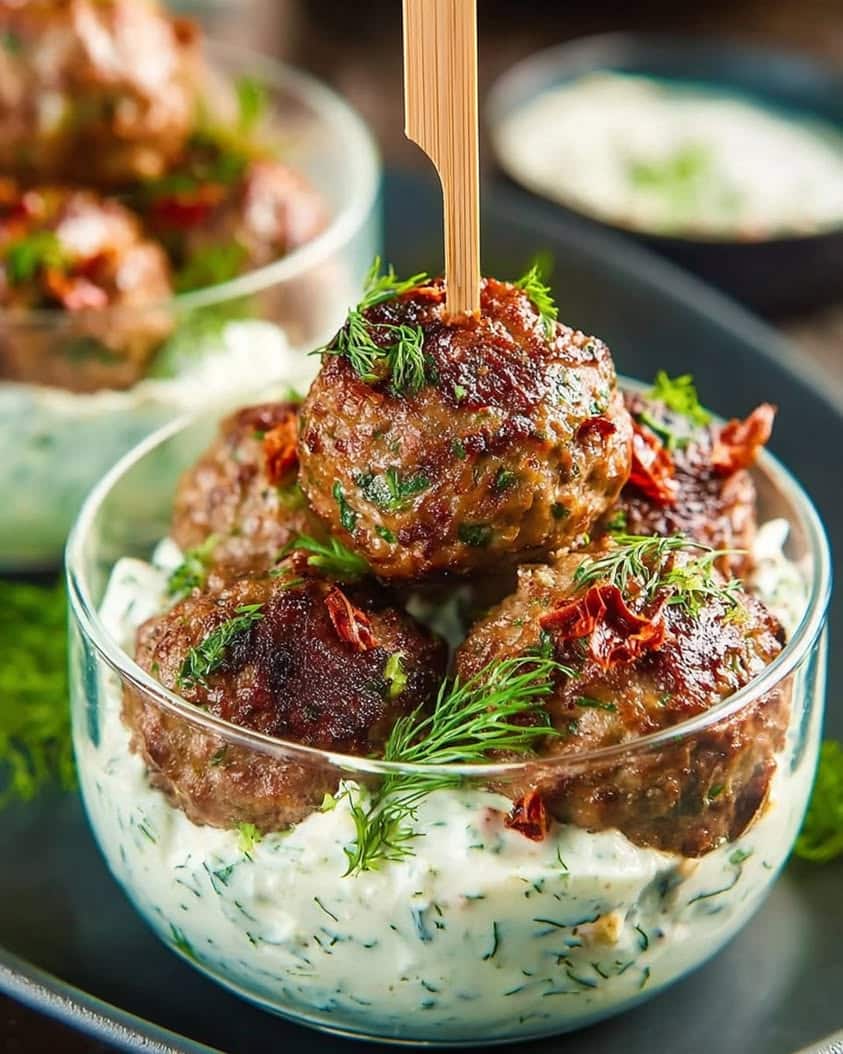
- Visual Appeal: Golden-brown meatballs rest on a swath of pale pink tzatziki flecked with red tomato bits. A scatter of fresh herbs and lemon zest adds bright color. Therefore, the plate looks restaurant-worthy with minimal effort.
- Skill Level Needed: This recipe welcomes beginners because the steps stay straightforward. You simply mix, shape, sear, and stir. Consequently, even a first-time cook can nail this Greek-Style Beef Meatballs with Creamy Sun-Dried Tomato Tzatziki dish.
- Special Equipment: You need a large mixing bowl, a skillet, and a spoon for the sauce. A small cookie scoop helps shape even meatballs, but your hands work fine too. Therefore, no fancy tools or gadgets are required.
Recipe Overview
- Difficulty Level: I rate this recipe Easy because it uses basic techniques and pantry staples. Mixing and shaping meatballs requires no special training, and the sauce comes together with simple stirring. Furthermore, the cooking time stays short, so there is little room for error. As a result, home cooks of all levels succeed with this dish.
- Category: This recipe works as a main course for dinner, and it also shines as an appetizer when you shape smaller meatballs. In addition, you can serve it for meal prep lunches throughout the week. Consequently, it fits many eating occasions.
- Cuisine: The dish draws deeply from Greek culinary tradition, where herbs, garlic, and yogurt define the flavor landscape. At the same time, the sun-dried tomato tzatziki adds a Mediterranean-Italian crossover touch. Therefore, it honors Greek roots while embracing creative fusion. Ultimately, it represents modern Mediterranean cooking at its best.
- Cost: Ground beef, yogurt, and fresh herbs make up the bulk of the expense. However, sun-dried tomatoes and feta add a few extra dollars. Overall, you can feed four people for roughly twelve to sixteen dollars. Consequently, it remains an affordable dinner option.
- Season: You can enjoy these Greek-Style Beef Meatballs with Creamy Sun-Dried Tomato Tzatziki year-round. Nevertheless, they taste especially refreshing in spring and summer when fresh dill and mint peak. In contrast, the cozy flavors also warm up cold autumn evenings. Therefore, the recipe adapts to any season.
- Occasion: This dish suits casual family dinners, weekend gatherings, and even holiday spreads. Additionally, it works beautifully for potlucks because it travels well. As a result, you can serve it for almost any event.
Why You’ll Love This Recipe
First and foremost, the taste and texture of these Greek-Style Beef Meatballs with Creamy Sun-Dried Tomato Tzatziki win people over instantly. The beef stays juicy because the mix includes grated onion and a touch of yogurt, which lock in moisture. Meanwhile, the herbs layer in fresh, grassy notes that cut through the richness. In addition, the creamy sun-dried tomato tzatziki adds tang and a hint of sweetness that complements the savory meat. Consequently, each bite feels complete and satisfying. Above all, the balance of flavors keeps you coming back for more.
Secondly, convenience makes this recipe a weeknight hero. You need only forty minutes from start to finish, and most of that time requires minimal attention. Furthermore, you can mix the meatball ingredients in one bowl and stir the sauce in another. Therefore, cleanup stays quick and painless. In addition, the recipe uses common grocery store items, so no specialty shopping trip is needed. As a result, you can whip up this Greek-Style Beef Meatballs with Creamy Sun-Dried Tomato Tzatziki dish on any busy evening.
Thirdly, the nutritional profile offers real advantages. Lean ground beef supplies protein, iron, and vitamin B12, which support energy and muscle health. Meanwhile, Greek yogurt delivers probiotics and calcium for gut and bone health. Additionally, sun-dried tomatoes contribute antioxidants like lycopene. Consequently, this meal nourishes your body while pleasing your palate. Therefore, you never have to choose between healthy and delicious.
Fourthly, this recipe shines when you entertain. The presentation looks elegant, yet the preparation stays stress-free. Furthermore, you can double the batch without complicating the process. In addition, guests love the interactive nature of building pita wraps or bowls. Therefore, it sparks conversation and creates a fun dining experience. As a result, your gatherings feel special without extra effort.
Finally, cost-effectiveness and accessibility make this dish a smart choice. The ingredients cost far less than takeout, and you likely already own most spices. Moreover, the recipe scales easily for larger crowds or smaller households. Consequently, you get maximum value from every grocery dollar. In short, this Greek-Style Beef Meatballs with Creamy Sun-Dried Tomato Tzatziki recipe delivers restaurant quality at a fraction of the price.
Historical Background and Cultural Significance
Greek meatballs, known as keftedes, trace their origins to ancient Mediterranean cooking traditions. Even centuries ago, cooks combined ground meat with herbs, onions, and bread to stretch expensive protein. Furthermore, the practice spread across Greece and the surrounding islands, where each region added its own flair. Therefore, keftedes became a staple in Greek homes and tavernas alike. As a result, the dish carries deep cultural roots that still resonate today.
Culturally, these meatballs represent hospitality and family gathering in Greece. Families serve keftedes at celebrations, Sunday dinners, and festive occasions. Additionally, they often appear as meze, or small plates, alongside olives, cheese, and bread. Consequently, the dish symbolizes generosity and shared joy. Meanwhile, the creamy tzatziki that accompanies them reflects Greece’s long love affair with yogurt. In short, this recipe connects you to a rich culinary heritage.
Over time, the recipe evolved as cooks moved and shared ideas. Greek immigrants brought keftedes to the United States, where new ingredients became available. Subsequently, creative cooks began folding sun-dried tomatoes into tzatziki for extra depth. In addition, modern chefs embraced the combination and popularized it in Mediterranean fusion restaurants. Therefore, the version you cook today reflects both tradition and innovation. As a result, this Greek-Style Beef Meatballs with Creamy Sun-Dried Tomato Tzatziki dish tells a story of adaptation.
Regional variations abound across Greece and beyond. For instance, some cooks add mint, while others prefer oregano or parsley. Furthermore, island versions sometimes include grated potato or bread soaked in milk for extra tenderness. In addition, northern regions occasionally fry the meatballs in olive oil, while others bake them. Meanwhile, the tzatziki varies too, with some families adding cucumber and others skipping it. Consequently, no single correct version exists, and that flexibility invites endless experimentation.
Ingredient Deep Dive
Ground beef forms the heart of these Greek-Style Beef Meatballs with Creamy Sun-Dried Tomato Tzatziki. Historically, Greek cooks prized lamb, yet beef became common in diaspora kitchens. Nutritionally, beef provides high-quality protein, iron, zinc, and B vitamins. When you shop, choose ground beef with about eighty percent lean meat for the best juiciness. Furthermore, store it in the coldest part of your fridge and use it within two days. If you prefer, ground lamb or a beef-lamb blend works beautifully as a substitute.
Greek yogurt gives the tzatziki its signature creaminess and tang. This strained yogurt has fed Mediterranean families for thousands of years and remains central to Greek cuisine. Moreover, it offers probiotics, calcium, and protein with relatively few calories. Look for full-fat Greek yogurt for the richest texture, and check that it contains live cultures. Store it covered in the refrigerator for up to two weeks. If you need a substitute, thick labneh or sour cream works in a pinch.
Sun-dried tomatoes bring concentrated sweetness and umami to the creamy tzatziki. Southern Italian cooks pioneered drying tomatoes in the sun to preserve summer harvests. Additionally, these tomatoes pack lycopene, fiber, and vitamin C. Choose oil-packed tomatoes for softer texture, or rehydrate dry-packed ones in warm water. Keep them submerged in oil in the refrigerator for several weeks. Therefore, if you lack sun-dried tomatoes, roasted red peppers offer a similar sweet-tangy punch.
Fresh dill and mint define the herbal character of Greek cooking. Ancient Greeks believed herbs carried healing powers, and they used them generously in daily meals. Furthermore, dill aids digestion, while mint soothes the stomach. Select bright, perky leaves with no wilting, and rinse them well before chopping. Wrap leftover herbs in damp paper towels and refrigerate them for up to a week. Consequently, dried herbs work as a backup, though fresh ones deliver far better flavor.
Garlic amplifies every layer of this dish, from the meatballs to the sauce. This pungent bulb has flavored Mediterranean food for over five thousand years. In addition, garlic offers antioxidants and supports immune health. Pick firm, tight heads with no soft spots or green sprouts. Store garlic in a cool, dry place away from sunlight for several weeks. As a result, if you run out, garlic powder or shallots make reasonable stand-ins.
Common Mistakes to Avoid
- Overmixing the meatball mixture. When you work the beef too long, the proteins tighten and the meatballs turn dense. Therefore, mix gently until everything just combines.
- Using very lean beef. Meat that lacks fat dries out during cooking. Consequently, choose an eighty-twenty blend for juicy results.
- Skipping the resting time. If you shape and cook immediately, the meatballs may crumble. Instead, chill them for fifteen minutes so they hold together.
- Crowding the pan. Too many meatballs in one skillet steam instead of sear. Therefore, cook them in batches for proper browning.
- Flipping too early. Meatballs need a crust before you turn them. As a result, wait until they release easily from the pan.
- Under-seasoning the mixture. Bland meatballs ruin the dish. Consequently, taste a tiny cooked sample before shaping the rest.
- Grating the onion too coarsely. Large onion pieces create gaps in the meatballs. Therefore, grate it finely or squeeze out excess liquid.
- Serving tzatziki cold from the fridge. Ice-cold sauce mutes the flavors. Instead, let it sit at room temperature for ten minutes before serving.
- Forgetting to drain the sun-dried tomatoes. Excess oil makes the tzatziki greasy. Consequently, pat the tomatoes dry before chopping.
- Rushing the sauce. If you stir too aggressively, the yogurt thins out. Therefore, fold gently for a thick, creamy result.
Essential Techniques
Grating onion directly into the meat mixture ranks among the most important techniques for tender meatballs. Grating breaks the onion into tiny pieces that distribute evenly, and it releases juice that moistens the beef. To master this step, hold the onion over the bowl and use the large holes of a box grater. Furthermore, catch all the juice, because it adds flavor. A common pitfall involves grating too much and making the mix wet, so squeeze excess liquid if needed. Consequently, the mixture should feel moist but still hold its shape.
Gentle mixing protects the texture of your Greek-Style Beef Meatballs with Creamy Sun-Dried Tomato Tzatziki. When you stir vigorously, the meat proteins develop elasticity and turn rubbery. Instead, use your fingertips to fold the ingredients until just combined. In addition, stop as soon as you see no dry patches. A common mistake involves overworking the mix out of habit, so slow down and trust the process. As a result, your meatballs stay light and tender.
Searing creates the flavorful crust that defines great meatballs. High heat triggers browning, which builds deep, savory notes through the Maillard reaction. To master searing, preheat your skillet until a drop of water sizzles, then add oil. Furthermore, leave space between meatballs so steam escapes. A frequent pitfall involves moving the meatballs too soon, so wait for them to release naturally. Therefore, watch for a golden-brown surface before flipping.
Folding the tzatziki gently preserves its thick, creamy body. Yogurt breaks down when stirred hard, and the sauce turns watery. To master this technique, use a spatula and fold from the bottom up. Additionally, add the tomatoes and herbs last for even distribution. A common mistake involves whisking the mixture, which destroys the texture. Consequently, you should see a cohesive, spoonable sauce when you finish.
Pro Tips for Perfect Greek-Style Beef Meatballs with Creamy Sun-Dried Tomato Tzatziki
First, chill the shaped meatballs for at least fifteen minutes before cooking. This brief rest helps them hold together and prevents crumbling in the pan. Consequently, you get clean, round meatballs every time.
Second, use a small cookie scoop to portion the mixture evenly. Uniform sizes cook at the same rate, so nothing dries out. Furthermore, the scoop speeds up the shaping process significantly.
Third, toast the dried oregano in your palm before adding it. Rubbing the herb between your hands releases its oils and boosts the aroma. As a result, the meatballs taste more fragrant and authentic.
Fourth, add a tablespoon of yogurt to the meat mixture. This small addition tenderizes the beef and adds a subtle tang. Therefore, the meatballs stay moist even if you accidentally overcook them slightly.
Fifth, let the tzatziki rest for ten minutes before serving. This rest allows the garlic, dill, and tomato flavors to meld. Consequently, the sauce tastes fuller and more complex.
Sixth, squeeze fresh lemon over the finished dish. The acid brightens the rich beef and creamy sauce. In addition, the citrus cuts through the fat for a cleaner finish.
Seventh, warm your pita or flatbread before serving. Warm bread feels more inviting and pairs better with the cool tzatziki. Therefore, a quick stint in a dry skillet does wonders.
Eighth, garnish with feta crumbles for extra salty tang. The cheese adds texture and a classic Greek touch. As a result, the final plate looks and tastes even more impressive.
Variations and Adaptations
Regional variations let you explore the breadth of Greek cooking. For instance, a Cretan-style version uses lamb instead of beef and adds a splash of red wine. Meanwhile, island cooks often include mint and skip the sun-dried tomatoes entirely. Therefore, you can shift the flavor profile by swapping herbs or meats. In addition, some mainland versions bake the meatballs in tomato sauce rather than searing them. Consequently, each region offers its own delicious interpretation.
Seasonal adaptations keep this dish fresh all year. In summer, fold fresh cucumber and ripe tomatoes into the tzatziki for a garden-fresh twist. Conversely, in winter, roast the tomatoes first to deepen their sweetness. Furthermore, spring invites fresh peas and asparagus on the side, while autumn welcomes roasted squash. As a result, you can enjoy Greek-Style Beef Meatballs with Creamy Sun-Dried Tomato Tzatziki in every season.
Dietary modifications make the recipe accessible to more eaters. For a gluten-free version, use almond flour or crushed pork rinds instead of breadcrumbs. Additionally, dairy-free cooks can swap the yogurt for a coconut or almond-based alternative. Meanwhile, a vegan adaptation uses plant-based ground meat and cashew cream. Therefore, almost anyone can enjoy this dish with small adjustments.
Flavor variations let you customize the profile. For a spicy kick, add red pepper flakes or harissa to the meat mixture. Moreover, a smoky version uses smoked paprika and a touch of cumin. In addition, a lemony twist incorporates extra zest in both the meatballs and the sauce. Consequently, you never tire of the same flavors.
Texture modifications change the eating experience. If you prefer a crunchier exterior, roll the meatballs in panko before searing. Alternatively, for a lighter dish, bake them on a sheet pan instead of frying. Furthermore, you can thin the tzatziki with a little water for a drizzling sauce. As a result, texture becomes another creative outlet.
Presentation alternatives suit every occasion. Serve the meatballs in a bowl over rice, or tuck them into warm pita with extra veggies. Additionally, skewer smaller meatballs for an appetizer platter. Meanwhile, a mezze spread with olives, hummus, and pita chips turns dinner into a feast. Therefore, the dish adapts to any table.
Serving and Presentation Guide
Plating techniques elevate this dish from home cooking to something special. Start by spreading a generous swoosh of sun-dried tomato tzatziki across the base of a shallow bowl. Then, arrange three or four meatballs on top, slightly overlapping. Furthermore, drizzle a little olive oil and sprinkle fresh dill for color. Consequently, the plate looks polished with minimal effort.
Garnishing ideas add visual and flavor interest. Crumbled feta brings salty pops of white, while lemon zest adds bright yellow flecks. Additionally, a few halved cherry tomatoes echo the sun-dried tomato theme. Meanwhile, microgreens or fresh parsley lend a garden-fresh touch. As a result, the garnish makes the dish photo-ready.
Traditional accompaniments ground the meal in Greek culture. Warm pita bread, Greek salad, and roasted potatoes all pair beautifully. Moreover, a side of hummus or baba ganoush rounds out the mezze spirit. In addition, pickled onions or olives add briny contrast. Therefore, serve these classics for an authentic experience.
Modern serving suggestions appeal to contemporary tastes. Try a grain bowl with quinoa, farro, or couscous beneath the meatballs. Alternatively, layer everything into a wrap with shredded lettuce and cucumber. Furthermore, a low-carb option piles the meatballs over cauliflower rice or zucchini noodles. Consequently, the dish fits many dietary preferences.
Temperature considerations matter for the best experience. Serve the meatballs hot and the tzatziki cool, so the contrast pops. Furthermore, do not let the sauce sit out longer than two hours. Meanwhile, warm the pita just before serving for the best texture. As a result, every element reaches the table at its peak.
Portion control tips help you plan meals efficiently. Four meatballs with a quarter cup of sauce suits a standard dinner portion. Additionally, smaller appetizer portions use two meatballs each. Meanwhile, hearty appetites may want five or six meatballs with extra sides. Therefore, adjust based on your guests and the rest of the menu.
Wine and Beverage Pairing
Wine pairings can transform this meal into a memorable experience. A crisp Assyrtiko from Santorini offers bright acidity that cuts through the rich beef. Alternatively, a dry rosé brings red-fruit notes that complement the sun-dried tomatoes. Furthermore, a medium-bodied Xinomavro adds earthy depth that echoes the herbs. Therefore, Greek wines make especially fitting choices.
Non-alcoholic alternatives keep the meal refreshing for everyone. Sparkling water with lemon and mint cleanses the palate between bites. Additionally, a cucumber-lime cooler mirrors the tzatziki flavors beautifully. Moreover, homemade iced tea with a hint of honey offers gentle sweetness. As a result, every guest finds a satisfying drink.
Coffee and tea pairings may surprise you, yet they work well. A light Greek coffee delivers bold intensity that matches the seasoned beef. Meanwhile, a mint herbal tea cools the palate and echoes the fresh herbs. In addition, iced hibiscus tea adds tartness that balances the creamy sauce. Consequently, after-dinner sips feel just as thoughtful.
Temperature considerations affect how drinks interact with the food. Serve white wines well chilled, around forty-five to fifty degrees Fahrenheit, for maximum crispness. Meanwhile, reds taste best slightly below room temperature to avoid overwhelming the dish. Furthermore, keep non-alcoholic options ice cold for refreshment. Therefore, thoughtful temperatures enhance every sip.
Serving suggestions complete the pairing picture. Pour wine into stemmed glasses to concentrate aromas, and offer water alongside. Additionally, set out lemon wedges so guests can brighten their drinks. Moreover, chill glasses ahead of time for an extra touch. As a result, the beverage service matches the care you put into the food.
Storage and Shelf Life
Storage methods determine how well leftovers keep their quality. Place cooled meatballs in an airtight container, and store the tzatziki separately to prevent sogginess. Furthermore, press plastic wrap directly onto the sauce surface to limit air exposure. Consequently, both components stay fresh longer.
Temperature requirements keep food safe. Refrigerate meatballs and tzatziki at or below forty degrees Fahrenheit. Additionally, never leave them at room temperature for more than two hours. Meanwhile, transport leftovers in a cooler if you travel. Therefore, proper chilling protects both flavor and safety.
Container recommendations make a real difference. Glass containers resist stains and odors better than plastic. Furthermore, choose containers with tight-fitting lids to seal in moisture. In addition, smaller containers cool faster, which reduces bacterial risk. As a result, your leftovers taste better the next day.
Signs of spoilage help you know when to discard food. Sour smells, sliminess, or discoloration signal that the meatballs or sauce have turned. Moreover, mold on the tzatziki means you should toss the entire batch. Meanwhile, meatballs that feel sticky or smell off should go straight into the trash. Consequently, trust your senses before reheating.
Reheating instructions preserve texture and flavor. Warm meatballs gently in a covered skillet over medium-low heat with a splash of water. Alternatively, microwave them in short bursts until heated through. Furthermore, never reheat the tzatziki, because heat breaks the yogurt. Therefore, serve the sauce cold alongside the warm meatballs.
Freezing guidelines extend shelf life significantly. Freeze cooked meatballs in a single layer on a sheet pan, then transfer them to freezer bags. Additionally, label the bags with the date for easy tracking. Meanwhile, tzatziki does not freeze well because it separates, so make it fresh. As a result, you always have meatballs ready for quick meals.
Make Ahead Strategies
A prep timeline keeps everything organized. You can mix and shape the meatballs up to twenty-four hours ahead and refrigerate them covered. Furthermore, make the tzatziki a day in advance so the flavors deepen. In addition, chop herbs and grate onion the night before to save time. Consequently, dinner comes together in twenty minutes on the day you cook.
Storage between steps protects quality. Keep raw shaped meatballs in a single layer so they hold their shape. Moreover, cover the tzatziki tightly and refrigerate it until serving. Meanwhile, store chopped herbs in damp paper towels inside sealed bags. As a result, every component stays fresh until you need it.
Quality impact assessment helps you plan realistically. Meatballs actually taste better when the seasoning melds overnight, so advance prep improves flavor. Additionally, tzatziki thickens as it chills, which many cooks prefer. However, fresh herbs lose brightness after a couple of days, so add a final sprinkle before serving. Therefore, make-ahead tactics mostly enhance the dish.
Assembly tips streamline the final steps. Reheat the meatballs while you spoon tzatziki onto plates. Furthermore, warm the pita at the same time for efficient service. In addition, set out garnishes in small bowls so guests can help themselves. Consequently, assembly takes minutes.
Reheating guidelines keep textures intact. Use low, gentle heat so the meatballs stay juicy rather than drying out. Moreover, add a splash of broth or water to the pan to create steam. Meanwhile, avoid the microwave on high, which toughens the meat. As a result, leftovers taste nearly as good as fresh.
Fresh element additions revive make-ahead meals. A squeeze of lemon, a scatter of dill, or a drizzle of olive oil refreshes the flavors. Additionally, crisp cucumber stirred into the tzatziki adds crunch. In short, small finishing touches make a big difference.
Scaling Instructions
Halving the recipe suits smaller households. Simply divide every ingredient by two, and use a smaller skillet to keep the meatballs crowded correctly. Furthermore, cooking time stays nearly the same because the meatballs remain the same size. Meanwhile, watch the pan closely since smaller batches brown faster. As a result, you get a perfectly portioned meal for two.
Doubling or tripling works well for crowds. Multiply the ingredients and cook the meatballs in batches to avoid steaming. Additionally, use a large mixing bowl to combine everything evenly. Furthermore, plan extra time for shaping, though cooking time per batch stays constant. Consequently, you can feed a party without stress.
Equipment adjustments keep large batches manageable. Use two skillets at once, or switch to a sheet pan and bake the meatballs at four hundred degrees for about eighteen minutes. Moreover, a stand mixer with a paddle attachment speeds up mixing, though you must still avoid overworking the meat. In addition, larger bowls and storage containers prevent spills. Therefore, the right tools make scaling simple.
Timing modifications matter when you scale up. Larger batches take longer overall, even if each meatball cooks at the same rate. Furthermore, stagger the cooking so finished batches stay warm in a low oven. Meanwhile, make the tzatziki in a bigger bowl and chill it until serving. As a result, everything reaches the table hot and fresh.
Storage considerations grow with batch size. Cool large quantities quickly by spreading meatballs on sheet pans before refrigerating. Additionally, divide the tzatziki into smaller containers so you only open what you need. Moreover, label everything with dates to track freshness. Consequently, big batches stay safe and organized.
Nutritional Deep Dive
The macro breakdown of this dish supports a balanced diet. Each serving delivers roughly thirty grams of protein from the beef and yogurt, which promotes satiety. Furthermore, healthy fats from olive oil and beef provide lasting energy. Meanwhile, carbohydrates stay moderate, mostly from the yogurt and any bread you serve. Therefore, the meal fits many nutrition plans.
Micronutrient analysis reveals impressive benefits. Beef supplies iron, zinc, and vitamin B12, which support blood and immune health. Additionally, Greek yogurt contributes calcium and probiotics for digestion. Moreover, sun-dried tomatoes add lycopene and vitamin C. As a result, the dish nourishes the body in multiple ways.
Health benefits extend beyond basic nutrition. Protein and fat slow digestion, which helps stabilize blood sugar. Furthermore, herbs like dill and mint offer antioxidants and digestive support. In addition, garlic provides compounds linked to heart health. Consequently, the recipe supports overall wellness.
Dietary considerations help you plan around restrictions. The core recipe contains dairy from yogurt and optional feta, plus eggs if you use them as a binder. Furthermore, breadcrumbs introduce gluten. Meanwhile, the dish is naturally low in sugar. Therefore, review the ingredient list if you follow specific diets.
Portion analysis guides sensible eating. Four meatballs with a quarter cup of sauce lands around four hundred fifty calories, depending on the beef blend. Additionally, sides like rice or pita raise the total. Moreover, extra tzatziki adds modest calories thanks to yogurt’s protein. As a result, mindful portions keep the meal balanced.
Weight management tips help you enjoy the dish while meeting goals. Choose leaner beef and bake rather than fry to cut fat. Furthermore, serve over vegetables instead of grains to reduce carbs. In addition, measure the tzatziki to control portions. Consequently, you can savor this Greek-Style Beef Meatballs with Creamy Sun-Dried Tomato Tzatziki meal on almost any plan.
Dietary Adaptations
Gluten-free versions simply swap the breadcrumbs for almond flour or crushed pork rinds. Additionally, check that your spices and sun-dried tomatoes contain no hidden gluten. Furthermore, serve with gluten-free pita or over rice. As a result, celiac diners enjoy the dish safely.
Dairy-free adaptations replace Greek yogurt with coconut or almond yogurt. Moreover, skip the feta or use a dairy-free alternative. In addition, choose oil-packed sun-dried tomatoes without added cheese. Consequently, the dish stays creamy without dairy.
Vegan versions use plant-based ground meat and cashew-based yogurt. Furthermore, bind the mixture with flax eggs instead of regular eggs. Additionally, nutritional yeast adds a cheesy note in place of feta. As a result, plant-based eaters enjoy a satisfying meal.
Low-carb adaptations remove breadcrumbs and serve the meatballs over greens. Moreover, the tzatziki already fits low-carb goals thanks to yogurt’s modest carb count. In addition, add extra olive oil for satiety. Therefore, the dish suits carb-conscious eating.
Keto versions use almond flour as a binder and full-fat yogurt in the sauce. Furthermore, keep portions moderate since yogurt contains some carbs. Additionally, pair with cauliflower rice to stay within macros. Consequently, keto dieters can indulge too.
Paleo adaptations skip dairy and grains entirely. Instead, use almond flour and a dairy-free tzatziki made from coconut cream. Moreover, choose grass-fed beef for quality. In addition, load up on fresh vegetables. As a result, the meal aligns with paleo principles.
Low-FODMAP versions require careful onion and garlic handling. Use the green parts of scallions and garlic-infused oil instead. Furthermore, confirm that your yogurt and tomatoes contain no high-FODMAP additives. Meanwhile, limit portions of sun-dried tomatoes if you are sensitive. Therefore, sensitive eaters can still enjoy the flavors.
Other specific diets may need small tweaks. For a heart-healthy version, choose lean beef and bake the meatballs. Additionally, reduce added salt and rely on herbs for flavor. Furthermore, use low-fat yogurt if your plan calls for it. Consequently, nearly every eating style finds a path to this dish.
Troubleshooting Guide
Texture issues often stem from overmixing or dry meat. If your meatballs turn out dense, mix the next batch more gently and choose fattier beef. Furthermore, add a spoonful of yogurt or milk to restore moisture. Meanwhile, chilling the mix helps it bind without extra handling. As a result, you achieve tender meatballs.
Flavor balance problems usually trace back to seasoning. If the meatballs taste flat, add more salt, garlic, or oregano. Additionally, a squeeze of lemon brightens the whole dish. Furthermore, if the tzatziki tastes too tangy, stir in a little honey or olive oil. Consequently, small adjustments restore harmony.
Temperature problems can ruin texture. If the pan runs too hot, the meatballs burn outside while staying raw inside. Therefore, lower the heat and cover the skillet to finish cooking. In contrast, a cool pan steams the meatballs instead of browning them. As a result, preheat properly and adjust as you go.
Equipment challenges arise in any kitchen. If your skillet lacks space, cook in batches or use a sheet pan. Furthermore, a dull knife makes chopping herbs frustrating, so sharpen it first. In addition, a small bowl forces messy mixing, so grab a larger one. Consequently, a few smart swaps solve most problems.
Ingredient substitutions require thought. If you lack sun-dried tomatoes, roasted red peppers work well. Moreover, dried dill can replace fresh in a pinch, though use less. Furthermore, ground chicken or turkey substitutes for beef, though add extra fat for moisture. Print
Greek-Style Beef Meatballs with Creamy Sun-Dried Tomato Tzatziki
- Total Time: 45 minutes
- Yield: 4
Description
Juicy beef meatballs infused with Greek flavors, served with a creamy sun-dried tomato tzatziki sauce. Perfect for a weeknight dinner or party appetizer.
Ingredients
- 1 lb ground beef
- 1/2 cup breadcrumbs
- 1/4 cup grated onion
- 2 cloves garlic, minced
- 1/4 cup chopped fresh parsley
- 1 tsp dried oregano
- 1/2 tsp ground cumin
- 1/2 tsp salt
- 1/4 tsp black pepper
- 1 large egg
- For the tzatziki: 1 cup Greek yogurt
- 1/2 cup grated cucumber, squeezed dry
- 1/4 cup sun-dried tomatoes, chopped
- 1 tbsp lemon juice
- 1 tbsp olive oil
- 1 clove garlic, minced
- 1/4 tsp salt
- 1/4 tsp black pepper
- Fresh dill for garnish (optional)
Instructions
- In a large bowl, combine ground beef, breadcrumbs, grated onion, minced garlic, parsley, oregano, cumin, salt, pepper, and egg. Mix gently until just combined.
- Shape mixture into 1-inch meatballs. Place on a plate and refrigerate for 15 minutes to firm up.
- While meatballs chill, prepare tzatziki: In a medium bowl, mix Greek yogurt, grated cucumber, sun-dried tomatoes, lemon juice, olive oil, garlic, salt, and pepper. Cover and refrigerate until ready to serve.
- Preheat oven to 400°F (200°C). Line a baking sheet with parchment paper.
- Arrange meatballs on the baking sheet and bake for 20-25 minutes, until cooked through and browned.
- Alternatively, heat a large skillet over medium heat with a little olive oil and cook meatballs for 10-12 minutes, turning until browned on all sides.
- Serve meatballs warm with the creamy sun-dried tomato tzatziki sauce on the side or drizzled over. Garnish with fresh dill if desired.
Notes
You can customize the seasonings to taste.
- Prep Time: 15 minutes
- Cook Time: 30 minutes
- Method: Main
- Cuisine: Greek