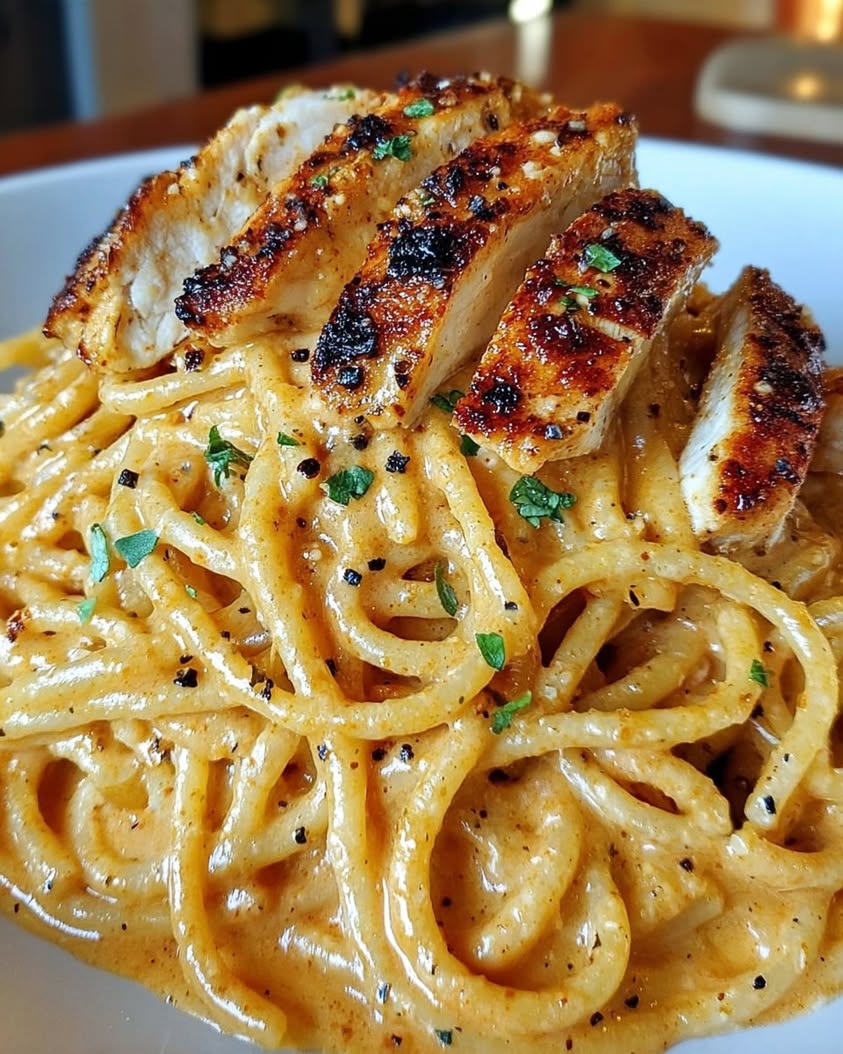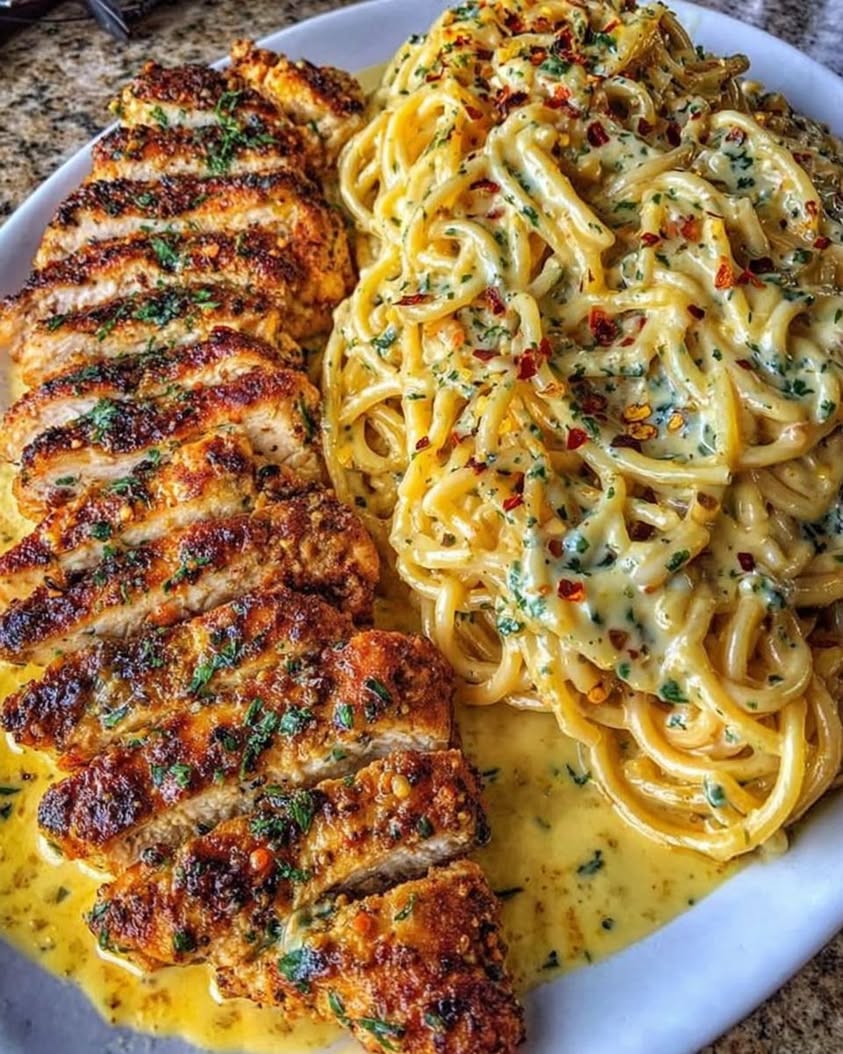
Garlic Parmesan Chicken Spaghetti in Spicy Cajun Cream Sauce: The Ultimate Comfort Food With a Kick
Imagine a dish that combines the rich, savory comfort of a classic pasta dinner with the bold, fiery spirit of Louisiana cooking. That is exactly what you get with this Garlic Parmesan Chicken Spaghetti in Spicy Cajun Cream Sauce. This recipe transforms simple, everyday ingredients into a restaurant-quality meal that will make your kitchen smell incredible. The tender chicken, the perfectly cooked spaghetti, and the luscious, creamy sauce all come together in a symphony of flavors that will have everyone at the table asking for seconds.
The magic of this dish lies in its incredible balance of flavors. You get the sharp, nutty taste of Parmesan cheese, the aromatic punch of fresh garlic, and the deep, smoky heat of Cajun seasoning. All of these elements melt into a velvety cream sauce that coats every single strand of spaghetti. It is the kind of meal that feels both indulgent and accessible, perfect for a busy weeknight or a special weekend dinner. When you take that first bite, you will understand why this has become a favorite in so many homes.
This Garlic Parmesan Chicken Spaghetti in Spicy Cajun Cream Sauce is not just a recipe; it is an experience. The process of searing the chicken until golden brown, then building the sauce in the same pan, creates layers of flavor you simply cannot achieve with a shortcut. Furthermore, the final sprinkle of fresh parsley and extra Parmesan makes the presentation look incredible. Get ready to create a meal that is comforting, exciting, and absolutely unforgettable. Let us dive into the details of what makes this dish so special.
Quick Recipe Highlights
- Flavor Profile: This dish delivers a wonderful complexity of tastes. The creamy sauce is rich and savory, with a sharp bite from the Parmesan cheese and a distinct garlic aroma. The Cajun seasoning adds a warm, spicy kick that builds slowly and adds depth without being overwhelming. Every bite is a perfect mix of savory, spicy, and cheesy goodness.
- Texture: You will love the variety of textures in this meal. The chicken breasts are seared to a golden brown, creating a crisp exterior while staying incredibly juicy and tender inside. The spaghetti, cooked al dente, provides a satisfying chew that holds onto the creamy sauce beautifully. The sauce itself is silky smooth and coats the pasta perfectly.
- Aroma: The moment you start cooking, your kitchen will fill with an incredible fragrance. The smell of fresh garlic sizzling in butter is the first thing to hit you, followed by the warm, earthy scent of Cajun spices. As you add the cream and Parmesan, a rich, nutty aroma develops that is pure comfort food heaven.
- Visual Appeal: This dish is a feast for the eyes as much as it is for the palate. The creamy sauce has a beautiful golden color, thanks to the Cajun seasoning and the rendered chicken drippings. The golden-brown chicken pieces sit proudly on top of the glistening pasta, and a sprinkle of bright green parsley and white Parmesan cheese creates a stunning final touch.
- Skill Level Needed: You do not need to be a professional chef to make this recipe work. It is quite straightforward and perfect for home cooks of all levels. The techniques involved are basic, such as searing chicken, boiling pasta, and making a simple pan sauce. Anyone following the instructions carefully will achieve fantastic results.
- Special Equipment: For this recipe, you primarily need a large, heavy-bottomed pot for boiling the spaghetti and a large, deep skillet or Dutch oven for cooking the chicken and making the sauce. A good set of tongs is very helpful for turning the chicken and tossing the pasta. A sharp knife and cutting board are necessary for prepping the ingredients.
Recipe Overview
- Difficulty Level: This recipe earns an easy rating because the steps are simple to follow and do not require any advanced cooking techniques. The ingredients are easy to find at any grocery store. The main challenge is simply timing the pasta and the sauce to finish at the same time, which is easy to manage. As long as you have your ingredients prepped and ready to go, the cooking process is smooth and stress-free.
- Category: This dish fits perfectly into the main course category for dinner. It is a hearty, complete meal that includes protein, carbohydrates, and dairy. Furthermore, it works wonderfully as a comfort food meal, a family dinner, or even an impressive dish for guests. It is a versatile recipe that can be served for casual weeknight dinners or dressed up for a special occasion.
- Cuisine: This recipe is a wonderful fusion of Italian-American and Southern Cajun culinary traditions. The base of spaghetti, garlic, Parmesan, and cream sauce is classic Italian-American comfort food. Meanwhile, the bold, spicy Cajun seasoning is a hallmark of Louisiana cooking. This combination creates a unique and delicious hybrid that celebrates the best of both worlds, delivering familiar comfort with an exciting twist.
- Cost: Making this dish is quite budget-friendly, especially considering how impressive it tastes. Chicken breast is a relatively affordable protein, and spaghetti is one of the cheapest pantry staples. Parmesan cheese and heavy cream are the most expensive ingredients, but a little goes a long way. Overall, you can feed a family of six for a very reasonable price, making it a great option for feeding a crowd without breaking the bank.
- Season: This dish is perfect for any season, but it is especially comforting during the cooler months of fall and winter. The warm, creamy sauce and spicy kick are ideal for a chilly evening. However, the recipe is light enough to be enjoyed year-round, especially if you serve it with a side salad. It is a reliable crowd-pleaser that works for cozy nights in and festive gatherings alike.
- Occasion: This Garlic Parmesan Chicken Spaghetti in Spicy Cajun Cream Sauce is versatile enough for many occasions. It is a fantastic choice for a simple family dinner on a Tuesday. Additionally, it makes a great meal to bring to a potluck or to serve at a casual dinner party. Because it is so visually appealing and delicious, it can easily be the star of a celebratory meal, like a birthday or holiday dinner.
Why You Will Love This Recipe
The first and most obvious reason to love this recipe is its incredible taste and texture. Each forkful is a perfect blend of creamy, cheesy, spicy, and savory flavors. The tender chicken and al dente pasta are coated in a sauce that is both rich and light at the same time. The slight heat from the Cajun seasoning is perfectly balanced by the coolness of the cream and the saltiness of the Parmesan. It is a truly satisfying and balanced dish that hits all the right notes for a perfect meal.
Another major benefit is the convenience and ease of preparation. This entire meal comes together in just one skillet and one pot, which means less cleanup for you. The cooking process is quick and efficient, taking only about 40 minutes from start to finish. This makes it an ideal choice for busy weeknights when you want a homemade meal without spending hours in the kitchen. Moreover, the ingredients are simple and inexpensive, so you can make this meal any time without a special trip to a gourmet store.
From a nutritional perspective, this dish also has some strong points. Chicken breast is an excellent source of lean protein, which is essential for building and repairing muscle. Spaghetti provides carbohydrates for energy, and the cream and cheese provide calcium and healthy fats. When you use good-quality ingredients and control the portions, this is a well-rounded meal that can fit into a balanced diet. It is a delicious way to get a satisfying dinner that provides sustained energy and important nutrients.
This recipe also has great social and entertaining value. It is the kind of dish that impresses guests with its deep flavors and beautiful presentation, yet it is incredibly easy to make. You can prepare it without feeling stressed, leaving you with more time to spend with your company. The aroma alone will welcome your guests into your home and get them excited for the meal. It is a fantastic choice for a dinner party where you want to serve something special without a lot of fuss.
Finally, the cost-effectiveness and accessibility of this recipe make it a true winner. You can find all of the ingredients at your local grocery store for a very reasonable price. Chicken, pasta, cream, and cheese are all common items that are frequently on sale. This means you can create a luxurious-tasting meal that is both easy on your wallet and your schedule. It is a wonderful example of how simple, humble ingredients can be transformed into something extraordinary with the right combination of flavors.
Historical Background and Cultural Significance
The concept of combining pasta with a creamy, cheesy sauce has its roots in Italian-American cuisine, which developed in the late 19th and early 20th centuries when Italian immigrants adapted their traditional recipes with American ingredients. Dishes like Fettuccine Alfredo became incredibly popular for their simple yet indulgent combination of pasta, butter, and Parmesan cheese. This tradition of rich, creamy pasta dishes forms the foundation upon which our modern recipe is built.
On the other side of the equation, Cajun cuisine has a long and storied history originating in Louisiana. The Cajun people, who were French-Canadian settlers, developed a unique style of cooking based on local ingredients and French techniques. They used a variety of spices, including cayenne pepper, paprika, and garlic, to create bold, aromatic dishes. The famous Cajun seasoning blend is a direct result of this cultural heritage, designed to add heat and depth to everything from seafood to meat.
The evolution of this specific recipe is a perfect example of modern American fusion cooking. Chefs and home cooks began to experiment with combining the creamy, comforting base of Italian-American pasta dishes with the bold, dynamic flavors of Cajun and Creole cuisine. This cross-cultural experimentation led to a new genre of dishes, like Cajun Chicken Pasta, which became a staple in many restaurants and homes. It represents a culinary melting pot where different traditions meet and create something entirely new.
Regional variations of this dish are common, reflecting local tastes and available ingredients. Some cooks add bell peppers and onions to the sauce for more texture and sweetness. Others use andouille sausage, a smoked pork sausage from Louisiana, to add a smoky, spicy flavor. Some versions even use shrimp or crawfish instead of chicken. These variations show how a basic formula can be adapted and personalized, making it a truly versatile and living recipe. It is a dish that continues to evolve with each cook who makes it.
Ingredient Deep Dive
Chicken breast is the star protein in this dish and has a strong cultural significance as a versatile and healthy meat. It is a cornerstone of modern American cooking, prized for its lean protein and mild flavor that absorbs other ingredients well. Nutritionally, chicken breast is an excellent source of B vitamins, which help with energy metabolism, and selenium, an important antioxidant. To select the best chicken, look for breasts that are plump and have a pinkish color. Store it in the refrigerator and cook it within a day or two of purchase. For this recipe, you can use boneless, skinless thighs for a juicier, richer result if you prefer.
Spaghetti is the classic pasta choice, but the word itself means “little strings” and has been a staple of Italian cuisine for centuries. It provides the perfect vehicle for the creamy sauce, with its long, thin strands that capture every bit of flavor. Nutritionally, it provides complex carbohydrates for sustained energy. When selecting spaghetti, look for brands made from 100% durum wheat semolina for the best texture. Store it in a cool, dry place in an airtight container. If you want a whole-grain option, whole-wheat spaghetti works well, or you can use any long pasta like fettuccine or linguine.
Heavy cream is essential for creating the rich, velvety texture of the sauce. It has a high fat content, typically around 36%, which allows it to thicken beautifully without curdling. Culturally, cream has been a symbol of luxury and indulgence in European cooking for centuries. It provides a wonderful source of calcium and fat-soluble vitamins. When buying heavy cream, check the expiration date and give the carton a shake to ensure it is not too thick (which can be a sign of early spoilage). Store it in the coldest part of the refrigerator. For a lighter option, you can use half-and-half, though the sauce will be thinner.
Parmesan cheese is another key ingredient providing a sharp, salty, and nutty flavor. Authentic Parmigiano-Reggiano is a hard, granular cheese from Italy with a protected designation of origin. It is aged for at least 12 months, giving it its complex flavor. Nutritionally, it is high in protein and calcium. For the best flavor, always buy a block of Parmesan and grate it yourself rather than using pre-shredded cheese, which contains anti-caking agents that prevent smooth melting. Store your Parmesan wrapped in wax paper in the refrigerator. You can substitute Grana Padano or Pecorino Romano for a similar but distinct flavor profile.
Garlic is a foundational flavor in almost every cuisine around the world. It has been used for both culinary and medicinal purposes for thousands of years. Its pungent, sharp flavor mellows and sweetens when cooked, providing the aromatic backbone of this dish. Garlic is rich in compounds like allicin, which has been linked to various health benefits, including immune support. When selecting garlic, look for firm, dry bulbs with tight skins. Store it in a cool, dark, and well-ventilated area. For this recipe, fresh garlic is non-negotiable. Garlic powder will not give you the same aromatic depth or texture.
Cajun seasoning is a spice blend that is the heart of the spicy element in this dish. A typical blend includes paprika, cayenne pepper, garlic powder, onion powder, oregano, and thyme. It is a staple of Louisiana cooking and adds a warm, smoky, and spicy flavor. You can buy a pre-made blend, but making your own allows you to control the heat level and salt content. Store your seasoning in an airtight jar in a cool, dark place to keep it vibrant. If you do not have Cajun seasoning, you can use Creole seasoning, which is similar but often contains more herbs and is slightly less spicy.
Common Mistakes to Avoid
- Overcooking the chicken is a very common error. Chicken breast can go from juicy to dry in a matter of minutes. Always use a meat thermometer to check for an internal temperature of 165 degrees Fahrenheit. Then, let it rest for a few minutes before slicing to allow the juices to redistribute.
- Not seasoning the pasta water is a missed opportunity. The pasta water should taste like the sea. This is the only chance you have to season the pasta itself from the inside out. If you do not salt the water heavily, the entire dish will taste flat.
- Using pre-shredded cheese is a mistake that affects the sauce texture. Pre-shredded cheese is coated in cellulose to prevent clumping, which prevents it from melting smoothly into a creamy sauce. Always grate your own Parmesan from a block for the best results.
- Adding the cream too early or at too high a temperature can cause it to curdle and split. Always add the cream over low to medium heat and stir gently. Do not let the sauce boil vigorously once the cream is added, as high heat can cause it to separate.
- Overcrowding the pan when searing the chicken is a common problem. If you put too many pieces of chicken in the skillet at once, they will steam instead of sear. You will miss out on that beautiful golden-brown crust and the deep flavor it provides. Cook the chicken in batches if necessary.
- Undercooking the pasta is a frequent issue, especially when you plan to finish cooking it in the sauce. Your spaghetti should be cooked to just al dente, or slightly underdone. It will continue to cook for a minute or two in the hot sauce, so do not cook it all the way through in the water first.
- Skipping the deglazing step means you lose a lot of flavor. After you remove the chicken, there will be browned bits stuck to the bottom of the pan, called fond. This is pure flavor. When you add the chicken broth, scrape these bits up to incorporate them into your sauce.
- Adding all the Cajun seasoning at once can result in an unevenly spicy sauce. Seasoning blends can vary in heat, so it is wise to start with a smaller amount, taste the sauce, and then add more as needed. This way, you can control the spice level perfectly.
- Using a pan that is too small for the sauce and pasta will make the dish difficult to toss. Make sure your skillet is large enough to hold the cooked spaghetti along with the finished sauce. A 12-inch skillet or a Dutch oven is ideal for this recipe.
- Forgetting to reserve pasta water is a common and costly mistake. The starchy pasta water is a secret weapon for any pasta dish. It helps to emulsify the sauce and gives it the perfect consistency to cling to the pasta. Always scoop out a cup before draining.
Essential Techniques
Searing the chicken is a fundamental technique for building flavor. It involves cooking the chicken in a hot pan with a little oil until the surface turns a deep golden brown. This process, called the Maillard reaction, creates hundreds of new flavor compounds that add incredible depth and complexity to the final dish. To master it, pat your chicken breasts completely dry with paper towels before seasoning. A dry surface is essential for a good sear. Be sure the pan is hot before you add the oil, and then do not move the chicken for 4 to 5 minutes. When it releases easily from the pan, it is ready to flip. A common pitfall is moving the chicken too soon, which will cause it to tear. The visual cue for success is a beautiful, deep brown crust that covers the surface of the meat.
Deglazing the pan is a simple but powerful technique to capture all the flavor left behind after searing. Those browned bits in the pan, known as the fond, are packed with concentrated flavor. To deglaze, you pour a liquid, such as chicken broth or wine, into the hot pan and use a wooden spoon to scrape up all those browned bits. This action dissolves them into the liquid, creating the foundation for your sauce. The importance of this step cannot be overstated. It builds the base flavor of your entire sauce. To master it, use a liquid that complements the dish, like a low-sodium chicken broth. A common pitfall is using a pan that is too cool, which will prevent the bits from releasing. The visual cue for success is a clear, deglazed pan where all the fond has been incorporated into a bubbling liquid.
Creating a smooth emulsion with a cream sauce is a key technique for a luxurious texture. An emulsion is a mixture of two liquids that do not normally combine, like fat and water. In this case, the fat is the cream, and the water is from the broth and the moisture in the pasta. To create a stable emulsion, you need to combine them with gentle heat and constant stirring. The starch from the Parmesan cheese and the pasta water helps to stabilize the sauce. To master it, always add the cream to the pan over low to medium heat and whisk or stir it constantly. Never let the sauce boil vigorously after you have added the cream, as this can break the emulsion and cause it to curdle. The visual cue for success is a silky, homogenous sauce that coats the back of a spoon without any separation.
Pro Tips for Perfect Garlic Parmesan Chicken Spaghetti in Spicy Cajun Cream Sauce
Use a meat mallet to pound your chicken breasts to an even thickness, about half an inch. This is the number one tip for perfectly cooked chicken. When the breasts are a uniform thickness, they will cook evenly, so the thin ends do not dry out while the thick center is still raw. This simple step makes a huge difference in the final texture of your dish.
Cook your pasta in well-salted water and time it so that it is ready right as your sauce finishes. The pasta water is your best friend. Do not just drain it and forget it. Reserve at least one cup of that starchy water before you drain the pasta. You will use it to thin out the sauce and help it cling to the spaghetti.
When you add the cooked spaghetti to the sauce, use tongs to toss it thoroughly. Do not just dump the pasta on top. Lift and turn the pasta constantly for a minute or two. This action helps the sauce emulsify and coat every single strand of spaghetti evenly. If the sauce seems too thick, add a splash of the reserved pasta water until it reaches the perfect consistency.
Always grate your Parmesan cheese fresh from a block. This cannot be overstated. The pre-shredded stuff in a bag contains anti-caking agents that will make your sauce grainy and prevent it from melting smoothly. Invest a few extra seconds to grate your own, and your sauce will be velvety and smooth.
Do not be shy with the Cajun seasoning. However, start with a smaller amount and taste the sauce as you go. Different brands of Cajun seasoning have different levels of heat and salt. Add it gradually until the sauce has a pleasant warmth that builds on your palate, not just a sharp, overpowering burn.
Let the cooked chicken rest on a cutting board for at least five minutes before you slice it. This is a crucial step for retaining moisture. If you cut into the chicken immediately, all the juices will run out onto the board, leaving you with dry, tough meat. Resting allows the juices to redistribute themselves throughout the meat, keeping it tender and moist.
Slice the chicken against the grain for the most tender bites. Look at the breast and you will see faint lines running in one direction, which is the grain of the meat. Cutting perpendicular to these lines shortens the muscle fibers, making the meat significantly easier to chew and more tender.
Variations and Adaptations
Regional variations of this dish are plentiful, especially in the Southern United States. A popular version from Louisiana adds smoked andouille sausage alongside the chicken. The sausage is sliced and seared until crispy, adding a deep, smoky flavor and a great textural contrast. Another regional twist includes the addition of “the holy trinity” of Cajun cooking: diced onion, bell pepper, and celery. These are sautéed in the pan after the chicken is removed, adding sweetness and a vegetal depth to the sauce.
Seasonal adaptations are a great way to keep this recipe exciting year-round. During the summer, you can add fresh vegetables like diced zucchini, yellow squash, or fresh corn kernels. Sauté them in the pan after the chicken and before making the sauce. In the fall, roasted butternut squash or pumpkin can be pureed and added to the cream sauce for a sweet, earthy twist. A sprinkle of fresh herbs like basil in the summer or thyme in the fall can also beautifully complement the season.
Dietary modifications make this recipe accessible to many people. For a gluten-free version, simply use your favorite gluten-free spaghetti. The rest of the ingredients are naturally gluten-free. For a dairy-free adaptation, you can substitute the heavy cream with full-fat canned coconut milk and use a high-quality dairy-free Parmesan alternative. For a lower-carb version, serve the creamy chicken over zucchini noodles or spaghetti squash instead of pasta. The rich sauce works beautifully with these lighter options.
Flavor variations are limited only by your imagination. To add a smoky flavor, you can use smoked paprika or a dash of liquid smoke in the sauce. For a richer, more decadent version, add a tablespoon of cream cheese to the sauce as it simmers, which will make it even creamier and more tangy. If you prefer a bit of heat from fresh peppers, you can sauté a finely diced jalapeno or serrano pepper along with the garlic. Experimenting with different flavors is part of the fun.
Texture modifications can significantly change the experience of the dish. For a smoother sauce, you can use an immersion blender to puree the sauce before adding the pasta and chicken. For a chunkier version, add more diced vegetables or even some roasted mushrooms. To make it extra crispy, you can bread the chicken pieces and pan-fry them until golden and crunchy before slicing and adding them to the finished dish. Each textural change creates a slightly different meal.
Presentation alternatives can elevate this dish from a simple dinner to a stunning centerpiece. Instead of slicing the whole chicken breast, you can cut it into bite-sized cubes before searing. This makes the chicken easier to distribute evenly throughout the pasta. Another option is to serve the spaghetti on a platter, arrange the sliced chicken on top, and then drizzle a little extra sauce over everything. A final sprinkle of fresh parsley and red pepper flakes adds a pop of color and fresh flavor.
Serving and Presentation Guide
Plating techniques for this dish can enhance the dining experience significantly. For a classic, rustic presentation, use a large pair of tongs to twirl a portion of pasta into a neat nest in the center of a warmed, shallow bowl. Then, fan a few slices of the seared chicken breast over the top of the pasta. This creates height and visual interest on the plate. Finally, spoon a little extra sauce from the pan over the chicken so it glistens.
Garnishing ideas can take your dish from great to restaurant-quality. A generous sprinkle of freshly grated Parmesan cheese is an absolute must. Follow that with a scattering of fresh, chopped flat-leaf parsley for a bright, herbaceous note and a lovely green color. For an extra touch of heat and color, you can add a pinch of red pepper flakes or a sprinkle of smoked paprika. You can also top it with a few fresh basil leaves or a drizzle of high-quality olive oil.
Traditional accompaniments for this rich pasta dish are simple and light to balance the meal. A crisp green salad with a bright vinaigrette dressing is the perfect side. The acidity of the dressing cuts through the richness of the cream sauce. Another classic side is garlic bread, which is perfect for sopping up any leftover sauce from the bowl. Roasted vegetables, such as broccoli or asparagus, also complement the dish beautifully.
Modern serving suggestions can make this dish feel new and exciting. You can serve the pasta family-style in a large, beautiful skillet or on a big platter in the center of the table, letting everyone serve themselves. For a more casual presentation, you can serve it in individual, oven-safe bowls and sprinkle the Parmesan on top, then run it under the broiler for a minute to create a bubbly, golden crust. This is an impressive way to present the dish.
Temperature considerations are crucial for the best eating experience. This dish should be served hot, immediately after it is finished. The cream sauce is at its best when it is piping hot and the pasta is just cooked. Letting it sit for too long will cause the sauce to thicken and cool, and the pasta will absorb too much liquid. Warm your serving bowls in the oven on low heat for a few minutes before plating to help keep the food hot longer.
Portion control is important for a satisfying meal. For a balanced dinner as a main course, a serving size of approximately 1.5 to 2 cups of pasta with chicken is appropriate. This provides a good amount of protein, carbs, and fat. If you are serving the dish as part of a larger spread with other side dishes, you can reduce the portion size to about 1 cup. Paying attention to portion sizes helps in managing calorie intake while still enjoying a delicious meal.
Wine and Beverage Pairing
Wine pairings for this dish should consider the creamy sauce and the spicy kick. An off-dry Riesling is an excellent choice because its slight sweetness helps to tame the heat from the Cajun seasoning while its acidity cuts through the richness of the cream. Another great option is a Viognier, which has a full body and floral, stone fruit flavors that complement the savory notes of the chicken and garlic. A light, unoaked Chardonnay also works nicely.
Non-alcoholic alternatives can be just as satisfying. A tall glass of iced sweet tea is a classic Southern pairing that works wonderfully with the Cajun spices. The sweetness of the tea is a perfect counterpoint to the heat. Another fantastic option is a sparkling water with a squeeze of lemon or lime. The effervescence and acidity help to cleanse the palate between bites, preparing you for the next delicious forkful.
Beer pairings are a popular and excellent choice for this dish. A crisp, light American lager like a Pabst Blue Ribbon or a Coors Banquet cuts through the creamy richness without overwhelming the palate. For a more flavorful option, a Belgian-style witbier, with its notes of coriander and citrus, is a wonderful match. A hoppy IPA can also work, but be mindful of the bitterness level; a slightly fruitier IPA is better than a very bitter one.
Temperature considerations are vital for beverages. White wines should be served chilled, around 45 to 50 degrees Fahrenheit. Beer is best served cold as well. If you are serving a red wine, go for a lighter option like a Pinot Noir, and serve it at a slightly cooler temperature, around 55 to 60 degrees Fahrenheit. The general rule is that the beverage should refresh the palate and not add to the feeling of heaviness from the rich dish.
Storage and Shelf Life
Proper storage methods are essential for maintaining the quality and safety of your leftovers. Allow the Garlic Parmesan Chicken Spaghetti in Spicy Cajun Cream Sauce to cool down completely at room temperature, but do not leave it out for more than two hours. Once cooled, transfer it to an airtight container. This prevents the pasta from absorbing odors from the refrigerator and helps to keep the sauce from drying out.
Temperature requirements are important for food safety. Store your leftovers in the refrigerator at a temperature of 40 degrees Fahrenheit or below. This slows down the growth of any bacteria. Your dish will stay fresh and tasty for up to three to four days in the fridge. Make sure your refrigerator is set to the correct temperature to maintain the quality of the food.
Container recommendations focus on maintaining flavor and texture. Glass or BPA-free plastic containers with tight-fitting lids are the best choice. Glass is non-porous and will not absorb any stains or odors from the sauce. If you are using a plastic container, make sure it is specifically designed for leftovers. Avoid using metal containers, as the acidic ingredients in the sauce can react with the metal and affect the taste.
Signs of spoilage are easy to spot and should be taken seriously. If you see any visible mold growth, which can appear as fuzzy spots of green, white, or black, you must throw the entire dish away. A sour or rancid smell is another clear indicator that the food has gone bad. Finally, if the texture of the sauce appears separated, watery, or slimy, it is no longer safe to eat.
Reheating instructions are key to restoring the dish to its former glory. The best method for reheating is on the stovetop. Place the leftovers in a skillet over medium-low heat and add a splash of milk, cream, or chicken broth. This helps to rehydrate the pasta and restore the creaminess of the sauce. Stir gently and heat until it is piping hot. Microwaving is faster but can make the chicken rubbery and the pasta mushy.
Freezing guidelines are helpful for long-term storage. While this dish can be frozen, the texture will change upon thawing because of the cream-based sauce. For the best results, freeze the sauce and chicken separately from the pasta. Place the cooled components in freezer-safe bags or containers. It can be frozen for up to two months. Thaw it in the refrigerator overnight before reheating on the stove. The pasta will be much softer after freezing, so it is best to serve it immediately after reheating.
Make Ahead Strategies
A well-planned prep timeline is the secret to a stress-free dinner. You can start up to two days in advance. First, slice your chicken breasts and season them with salt, pepper, and some Cajun seasoning. Store them in an airtight container in the fridge. You can also grate your Parmesan cheese and mince your garlic ahead of time. Having these ingredients prepped and ready will make the actual cooking process fly by.
Storage between steps is important for maintaining freshness. Your seasoned chicken can stay in the refrigerator for up to 48 hours. The grated Parmesan should be stored in a sealed bag or container, and the minced garlic can be kept in a small jar with a little olive oil to prevent it from drying out. Just be sure to keep these components separate so the garlic does not overpower the other ingredients.
A quality impact assessment is necessary when making this dish ahead. The chicken and sauce actually benefit from a day of rest, as the flavors have time to meld and deepen. However, the pasta will continue to absorb the sauce, becoming softer and less distinct. The best approach is to make the sauce and chicken completely, but cook the pasta fresh the day you plan to serve the dish. This minimizes the negative impact on texture.
Assembly tips for the night of serving are very straightforward. Cook the spaghetti to al dente. While it is boiling, reheat your fully cooked sauce and sliced chicken in a large skillet over medium heat. Once the pasta is done and drained, add it directly to the hot sauce. Toss everything together with a splash of reserved pasta water to loosen the sauce. This method gives you a dish that tastes freshly made with almost no effort on the night you serve it.
Reheating guidelines for a full make-ahead meal involve a bit more care. If you have already combined the pasta and sauce, reheat it on the stovetop with a generous addition of liquid (chicken broth, milk, or cream) to counteract the liquid the pasta has absorbed. You will need to stir it gently and more often to prevent it from sticking. This method works best if the dish was not fully combined ahead of time.
Fresh element additions can revitalize a reheated dish. Just before serving, add a fresh squeeze of lemon juice to brighten up the flavors. A handful of fresh, chopped parsley will add a pop of color and a fresh, herbal note. A final shower of freshly grated Parmesan will also feel new and luxurious. These small additions can make a big difference in the perceived freshness of the meal.
Scaling Instructions
Halving the recipe is a simple process if you are cooking for a smaller group. Simply reduce all quantities by half. Use one chicken breast instead of two Print
Garlic Parmesan Chicken Spaghetti in Spicy Cajun Cream Sauce
- Total Time: 35 minutes
- Yield: 4
Description
A rich and creamy pasta dish featuring tender chicken, garlic, Parmesan, and a spicy Cajun kick. Perfect for a comforting dinner that packs heat.
Ingredients
- 8 oz spaghetti
- 2 boneless skinless chicken breasts, sliced thin
- 2 tbsp olive oil
- 4 cloves garlic, minced
- 1 1/2 cups heavy cream
- 1/2 cup chicken broth
- 1 cup grated Parmesan cheese
- 1 tbsp Cajun seasoning
- 1/2 tsp red pepper flakes (adjust to taste)
- Salt and black pepper to taste
- 2 tbsp chopped fresh parsley for garnish
Instructions
- Cook spaghetti according to package directions; drain and set aside.
- Season chicken slices with 1 tsp Cajun seasoning, salt, and pepper. Heat olive oil in a large skillet over medium-high heat. Cook chicken until golden and cooked through, about 4-5 minutes per side. Remove and set aside.
- In the same skillet, add minced garlic and cook for 30 seconds until fragrant. Reduce heat to medium. Pour in heavy cream and chicken broth, stirring to scrape up browned bits.
- Add remaining Cajun seasoning, red pepper flakes, and Parmesan cheese. Stir until cheese melts and sauce thickens, about 3-4 minutes. Taste and adjust salt/pepper.
- Return chicken to the skillet. Add cooked spaghetti and toss to coat evenly. Cook for 1-2 minutes until heated through.
- Serve immediately, garnished with fresh parsley and extra Parmesan if desired.
Notes
You can customize the seasonings to taste. For less heat, reduce red pepper flakes or use mild Cajun seasoning. For more heat, add a dash of hot sauce.
- Prep Time: 15 minutes
- Cook Time: 20 minutes
- Method: Main
- Cuisine: American