Rich & Creamy Garlic Butter Steak Bites Alfredo Rigatoni Recipe
If you have been searching for a dinner recipe that feels luxurious yet comes together quickly, this Rich & Creamy Garlic Butter Steak Bites Alfredo Rigatoni Recipe is exactly what you need. The combination of tender, seared steak bites and a silky Alfredo sauce creates a meal that tastes like it came from a high-end Italian restaurant. But don’t let that fancy feel fool you. This dish is surprisingly simple to make at home, and the ingredients are easy to find at any grocery store. The aroma of garlic butter mingling with parmesan cheese will fill your entire kitchen, and your family will be drawn to the table before you even call them. It is a perfect choice for a busy weeknight when you want something special without a lot of fuss. The steak bites cook quickly in a hot skillet, and the Alfredo sauce comes together in the same pan, which means less cleanup for you. Every bite delivers a satisfying crunch of browned beef followed by the creamy smoothness of the pasta sauce. This recipe is truly a crowd pleaser, and it will quickly become a regular request in your meal rotation.
The magic of this Rich & Creamy Garlic Butter Steak Bites Alfredo Rigatoni Recipe lies in its simplicity. You start by cutting sirloin steak into bite sized cubes, then season them generously with salt and pepper. As the steak bites sear in a hot pan with butter and garlic, they develop a deep, savory crust that locks in all the juices. Meanwhile, you boil rigatoni pasta until it is al dente, and you reserve some of the pasta water to help thicken the sauce later. The Alfredo sauce itself is a quick combination of heavy cream, butter, garlic, and freshly grated parmesan cheese. When you toss the cooked rigatoni with the sauce and then top it with the steak bites, you get a beautiful contrast of textures. The rigatoni tubes are perfect for holding the creamy sauce, and the steak bites provide a hearty, protein packed pop. This recipe is also incredibly versatile. You can add spinach, mushrooms, or sun dried tomatoes if you want to incorporate more vegetables. And if you prefer a different pasta shape, any short cut pasta like penne or ziti works just as well. The key is to use a pasta that can catch the sauce inside its ridges or tubes.
One of the best things about this Rich & Creamy Garlic Butter Steak Bites Alfredo Rigatoni Recipe is how forgiving it is. Even if you are not an experienced cook, you can still achieve amazing results. The steak bites are almost impossible to overcook as long as you pay attention to the color. You want them browned on the outside but still tender on the inside. The Alfredo sauce is equally foolproof. Just keep the heat low when you add the cheese so it melts smoothly without clumping. And if the sauce gets too thick, you can thin it out with a splash of the reserved pasta water. This recipe also stores well. Leftovers taste just as delicious the next day, though you may need to add a little milk or cream when reheating to bring back the creamy consistency. Whether you are cooking for a romantic date night or feeding a hungry family, this dish delivers on every front. It is comforting, indulgent, and satisfying in all the right ways. So let us dive into what makes this recipe so special and how you can make it perfectly every time.
Quick Recipe Highlights
- Flavor Profile: This dish features a perfect balance of savory, rich, and buttery flavors. The garlic butter steak bites add a deep umami note, while the creamy Alfredo sauce brings a mild, cheesy richness that complements the beef beautifully.
- Texture: You get a wonderful contrast of textures here. The steak bites are crispy on the outside and tender on the inside, and the rigatoni pasta offers a satisfying chewiness. The Alfredo sauce is velvety smooth and coats every piece of pasta evenly.
- Aroma: The smell of garlic and butter sizzling in a hot pan is irresistible. As the steak sears, you will also pick up notes of black pepper and the nuttiness of parmesan cheese. This aroma alone will make everyone hungry.
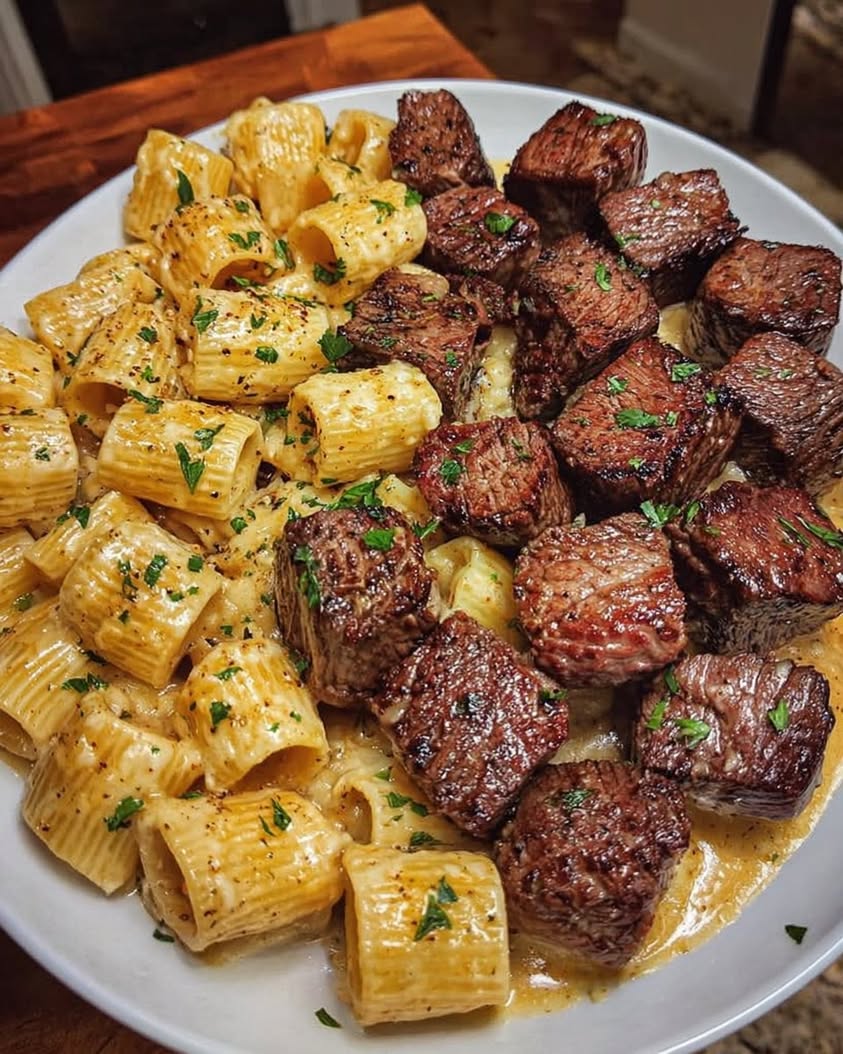
- Visual Appeal: This dish looks impressive with its golden brown steak bites sitting on top of a creamy, pale yellow pasta. A sprinkle of fresh parsley or a dusting of extra parmesan adds a pop of green and white that makes the plate look restaurant ready.
- Skill Level Needed: This recipe is suitable for beginners who have basic knife skills and can follow simple instructions. The most challenging part is timing the steak cooking so it stays tender, but even that is manageable with a little practice.
- Special Equipment: You need a large skillet or cast iron pan for searing the steak and making the sauce. A large pot for boiling pasta, a colander for draining, and a sharp knife for cutting the steak into even pieces are also essential.
Recipe Overview
- Difficulty Level: I classify this recipe as medium difficulty because it involves multiple components that need to be timed correctly. You have to cook the steak bites, make the Alfredo sauce, and boil the pasta all at the same time. However, the steps themselves are straightforward, anyone can manage this with a little focus. The sauce requires gentle heat to prevent scorching, and the steak benefits from a hot pan for good browning. With practice, you can easily make this recipe without breaking a sweat.
- Category: This recipe fits perfectly into main dish categories like comfort food, pasta dinners, and quick weeknight meals. It also works well for special occasions like date nights or dinner parties because of its elegant presentation. You can serve it as a hearty lunch too, especially on weekends when you want something filling.
- Cuisine: This dish draws inspiration from Italian American culinary traditions. The Alfredo sauce originates from Rome, but the American version is creamier and richer. The garlic butter steak bites add a steakhouse twist that feels very American. This fusion of flavors is familiar and comforting, appealing to a wide range of palates.
- Cost: The total cost for this recipe is moderate. Beef sirloin can be a bit pricey, but it is still more affordable than premium cuts like ribeye. A block of good parmesan cheese is an investment, but it lasts a long time. Heavy cream and butter are pantry staples for many households. Overall, you can expect to spend around $20 to $25 for four servings, which is quite reasonable for a restaurant quality meal.
- Season: This dish is perfect for fall and winter when you crave warm, comforting food. But I honestly make it all year round because it is so satisfying. In the summer, you can pair it with a crisp side salad and a light wine to balance the richness. The creaminess of the sauce is especially welcome on chilly evenings.
- Occasion: This recipe is versatile enough for many occasions. It is great for Sunday dinners with the family, intimate date nights, or even casual get togethers with friends. Because it looks fancy, it works well for holiday meals like Valentine’s Day or Christmas Eve. You can also meal prep the components separately and assemble them quickly on busy nights.
Why You’ll Love This Recipe
The taste and texture of this Rich & Creamy Garlic Butter Steak Bites Alfredo Rigatoni Recipe are simply outstanding. When you take your first bite, you experience the satisfying crunch of the seared steak exterior. Then you get the juicy, tender interior of the beef. The rigatoni pasta is perfectly cooked so it has a slight resistance to the bite, which is known as al dente. And the Alfredo sauce is incredibly smooth and rich without being heavy. It coats the pasta completely, and the garlic flavor is present but not overpowering. The combination of these elements creates a harmony that feels indulgent but not excessive. Every mouthful delivers a mix of textures and flavors that keep you going back for more.
Convenience and preparation benefits make this recipe a lifesaver for busy cooks. You only need one skillet for the steak and the sauce, which means fewer dishes to wash afterward. The entire cooking process takes about 40 minutes from start to finish. That is faster than ordering takeout in many cases. The ingredients are simple and easy to find. You probably already have butter, garlic, and pasta in your pantry. You just need to pick up steak and cream from the store. The recipe is also forgiving if you need to adjust the timing. If the pasta finishes before the steak, you can drain it and let it sit in the pot. If the sauce thickens too much, you can thin it with pasta water. This flexibility reduces stress in the kitchen.
Nutritional advantages are worth noting when you enjoy this dish in moderation. The steak provides a good amount of protein, which helps keep you full and supports muscle health. Protein also stabilizes blood sugar levels, so you do not experience energy crashes after eating. The dairy ingredients like heavy cream and parmesan supply calcium for strong bones. Garlic has known anti inflammatory properties and can support immune function. While this dish is high in calories and fat due to the cream and butter, it is perfectly acceptable as an occasional treat. You can also make small adjustments like using half and half instead of heavy cream or adding vegetables to boost the fiber content. Overall, this recipe offers a well rounded nutritional profile when paired with a side of greens.
Social and entertaining value is high with this dish. It looks and tastes impressive, so your guests will think you spent hours in the kitchen. But you know the secret is that it is actually quite easy to pull off. You can prepare the components ahead of time and then quickly combine them when your guests arrive. The visual appeal of the steak bites on top of the creamy pasta makes for a beautiful presentation. You can serve it straight from the skillet for a rustic, family style look. Or you can plate individual portions for a more formal dinner. Either way, your guests will be impressed. This recipe is a great conversation starter because it feels special without being pretentious.
Cost effectiveness and accessibility make this recipe a smart choice for home cooks. Beef sirloin is much cheaper than ribeye or filet mignon, but it still delivers great flavor when cooked properly. A little bit of good quality parmesan goes a long way because its flavor is so concentrated. Heavy cream is affordable and available at any grocery store. Rigatoni is one of the cheapest pasta shapes, and a box costs less than two dollars. When you compare the cost per serving to a restaurant meal, you are saving a significant amount of money. Plus, you get to control the quality of the ingredients. You can use organic cream, grass fed beef, or imported parmesan if your budget allows. This recipe is accessible to almost anyone, and it delivers a high end experience at a fraction of the cost.
Historical Background and Cultural Significance
The origin story of Alfredo sauce is a fascinating tale from early 20th century Rome. A restaurateur named Alfredo di Lelio created the sauce for his pregnant wife who had lost her appetite. He simply tossed fresh fettuccine with butter and parmesan cheese to create a mild, comforting dish. The original version was much lighter than the creamy American version we know today. It relied solely on the emulsification of butter and cheese with pasta water to create a silky sauce. American tourists who visited his restaurant fell in love with the dish and brought the recipe back to the United States. Once in America, the sauce evolved to include heavy cream, which made it richer and more indulgent. This adaptation became wildly popular in Italian American cuisine.
Cultural importance of Alfredo sauce cannot be overstated in Italian American cooking. It represents a fusion of Italian tradition with American tastes for richness and convenience. The sauce is often associated with comfort and celebration. Many families have their own version of Alfredo sauce passed down through generations. The addition of steak bites in this recipe adds an American steakhouse element that feels perfectly natural today. It reflects how cooking continues to evolve as different cultures influence each other. This dish is a testament to the adaptability of Italian cuisine in the global context. It honors the original simplicity of Alfredo di Lelio’s creation while embracing modern tastes for protein packed meals.
The evolution of this recipe shows how home cooks have adapted it over time. Originally, Alfredo sauce was only paired with fettuccine noodles. But cooks quickly realized that any pasta shape works well, especially those with ridges or tubes that hold sauce better. Rigatoni became a popular choice because its large size and ridges catch the creamy sauce efficiently. The addition of protein like chicken, shrimp, or steak became common as people sought more filling meals. Steak bites in particular offer a satisfying texture contrast and a rich flavor that complements the creamy sauce. The garlic butter component is a nod to classic steakhouse preparations where steaks are finished with butter and garlic for extra flavor.
Regional variations of this dish reflect local tastes and ingredient availability. In the American South, you might find Alfredo sauce with a touch of hot sauce or Cajun seasoning for a spicy kick. On the West Coast, cooks might add roasted vegetables like broccoli or bell peppers for a healthier twist. In the Midwest, the dish is often made with a heavier hand on the cheese, resulting in an even creamier sauce. Some Italian purists argue that cream has no place in traditional Alfredo sauce, but the American version has become a beloved classic in its own right. This recipe honors both traditions by keeping the sauce simple but rich, and by using high quality ingredients that let the flavors shine. The global popularity of this dish is a testament to its universal appeal.
Ingredient Deep Dive
Beef sirloin is the star protein in this Rich & Creamy Garlic Butter Steak Bites Alfredo Rigatoni Recipe. Culturally, beef has been a symbol of prosperity and celebration in many societies, and sirloin is a prized cut for its balance of flavor and tenderness. Nutritionally, beef sirloin is an excellent source of high quality protein, iron, zinc, and B vitamins. Iron supports healthy blood cells and energy levels, while zinc boosts immune function. When selecting sirloin, look for bright red color with white or cream colored fat marbling. The marbling ensures tenderness and flavor during cooking. Store fresh sirloin in the coldest part of your refrigerator and use it within two days. For longer storage, wrap it tightly in plastic wrap and freeze for up to three months. If you cannot find sirloin, you can substitute with top round, flank steak, or even ribeye for a more luxurious option. Just adjust cooking times accordingly because different cuts have different tenderness levels.
Garlic is another essential ingredient that brings aromatic depth to this dish. Garlic has been used for thousands of years in many cultures, not just for flavor but also for its medicinal properties. It contains compounds like allicin that have anti bacterial and anti inflammatory effects. Garlic also supports heart health by helping to lower blood pressure and cholesterol. When buying garlic, choose bulbs that are firm and heavy with tight, unbroken skin. Avoid any bulbs that feel soft or show signs of sprouting. Store garlic in a cool, dry, dark place with good airflow. Do not refrigerate it because cold temperatures can cause it to sprout. A whole bulb can last several weeks under proper conditions. If you are in a pinch, you can use jarred minced garlic, but the flavor will be milder. For the best results in this recipe, use fresh garlic cloves that you mince yourself just before cooking.
Heavy cream is the foundation of the Alfredo sauce, providing its signature richness and velvety texture. Heavy cream has a high fat content, usually around 36 to 40 percent, which allows it to thicken naturally when simmered. Nutritionally, it is high in fat and calories, but it also contains fat soluble vitamins like A, D, E, and K. When selecting heavy cream, check the expiration date and look for a fresh, clean smell. Ultra pasteurized cream has a longer shelf life but may not thicken as well as pasteurized cream. Store heavy cream in the coldest part of your refrigerator and keep it tightly sealed. Use it within a week of opening. If you do not have heavy cream, you can substitute with half and half for a lighter sauce, though it will not be as thick. For a dairy free option, full fat coconut cream works surprisingly well, though it adds a slight coconut flavor.
Parmesan cheese provides the savory, nutty depth that defines the Alfredo sauce. Authentic Parmigiano Reggiano comes from specific regions in Italy and is aged for at least 12 months. It has a granular texture and a complex flavor that you cannot replicate with pre shredded cheeses. Nutritionally, parmesan is high in calcium and protein, making it a relatively nutrient dense cheese. When buying parmesan, always choose a block rather than pre shredded versions. Pre shredded cheese often contains anti caking agents that prevent smooth melting. Look for parmesan with a hard, rind covered exterior and a pale yellow interior with small crystals. The crystals are actually amino acids that develop during aging and contribute to the umami flavor. Store parmesan wrapped in wax paper inside a plastic bag in the refrigerator. It can last for months if stored properly. You can also freeze parmesan for even longer storage. For a more affordable option, grana padano is a good substitute, though it is slightly less sharp.
Common Mistakes to Avoid
- One common mistake is overcooking the steak bites. Because the pieces are small, they cook very quickly. If you cook them too long, they become tough and dry. Always use high heat and cook them just until browned on the outside. The center should remain slightly pink for optimum tenderness.
- Another mistake is using pre shredded cheese for the Alfredo sauce. Pre shredded cheese contains cellulose and other anti caking agents that prevent it from melting smoothly. This results in a gritty sauce instead of a silky one. Always grate your own parmesan from a block for the best texture.
- Adding the cheese to a boiling hot sauce can cause it to clump and separate. The high heat denatures the proteins too quickly, creating a lumpy mess. Always remove the pan from heat before adding the parmesan and stir gently until it melts.
- Not reserving pasta water is a common oversight. The starchy pasta water helps thin the sauce while adding body. It also helps the sauce cling to the pasta better. Save at least a cup before draining the pasta.
- Overcrowding the pan when searing the steak bites leads to steaming instead of browning. The meat releases moisture that creates steam, preventing a proper crust. Cook the steak in batches if necessary to ensure each piece gets direct contact with the hot pan.
- Underseasoning the dish is a frequent problem. Alfredo sauce can taste flat without enough salt because the cheese provides a mild saltiness. Season the steak generously with salt and pepper, and taste the sauce before serving to adjust the seasoning.
- Using low heat for the Alfredo sauce can cause it to take too long to thicken. However, using high heat can burn the cream and garlic. Medium low heat is the sweet spot where the sauce thickens gently without scorching.
- Not tossing the pasta with the sauce immediately can result in a dry dish. The pasta continues to absorb moisture as it sits. Toss the hot pasta with the sauce right away so it absorbs the flavors and stays creamy.
- Choosing the wrong pan can affect the outcome. A non stick pan may not allow the steak to develop a good crust. Cast iron or stainless steel pans are better for achieving browning because they hold heat well and promote caramelization.
- Failing to rest the steak bites before serving is another mistake. Resting allows the juices to redistribute throughout the meat. If you cut into them immediately, the juices run out and leave the steak dry. Let them rest for a couple of minutes off the heat.
Essential Techniques
Mastering the searing technique for the steak bites is crucial for this recipe. Searing at high heat creates the Maillard reaction, which is a chemical process that browns the surface and develops complex flavors. To do this properly, dry the steak pieces thoroughly with paper towels before seasoning. Moisture is the enemy of browning because it creates steam. Heat your pan over medium high heat until a drop of water sizzles and evaporates immediately. Add a thin layer of oil with a high smoke point like avocado or canola oil. Then add the steak bites in a single layer without touching each other. Leave them undisturbed for about two minutes to allow a crust to form. Then flip them and cook for another minute or two. The internal temperature should reach about 130 degrees Fahrenheit for medium rare. Remember that the steak will continue to cook slightly after you remove it from the pan.
Creating a smooth Alfredo sauce requires gentle handling of the dairy ingredients. Start by melting butter in the same pan you used for the steak. The brown bits left behind from the steak will add extra flavor to the sauce. Add minced garlic and cook it for about 30 seconds until fragrant. Be careful not to burn the garlic because it becomes bitter. Then pour in the heavy cream and bring it to a gentle simmer. Simmering means you see small bubbles around the edge of the pan, not a full rolling boil. Let the cream reduce slightly for about two minutes. Then remove the pan from heat completely. This step is important because the residual heat is enough to melt the parmesan cheese without causing it to separate. Add the grated parmesan a little at a time, stirring constantly with a wooden spoon or whisk. Keep stirring until all the cheese is fully incorporated and the sauce is smooth.
Timing the pasta cooking to align with the steak and sauce is a skill that improves with practice. Start boiling a large pot of salted water before you begin cooking the steak. Salt the water generously until it tastes like the sea. Add the rigatoni and cook it according to the package directions, but aim for al dente which means firm to the bite. The pasta will continue to cook slightly when you toss it with the hot sauce, so undercooking it by a minute is actually beneficial. Reserve a cup of the starchy pasta water before draining. This water contains dissolved starch that helps thicken and bind the sauce. When you toss the drained pasta with the Alfredo sauce, add a splash of pasta water and stir vigorously. The starch helps the sauce coat the pasta evenly. Add more pasta water a little at a time if the sauce seems too thick.
Resting the steak bites after cooking is a technique that should never be skipped. When meat cooks, the juices are forced toward the center by the heat. If you cut into the steak immediately, those juices spill out onto the plate, leaving the meat dry and less flavorful. Resting allows the juices to redistribute evenly throughout the meat fibers. For steak bites, a resting period of three to five minutes is sufficient. Simply transfer the cooked steak bites to a plate and tent them loosely with aluminum foil. This keeps them warm while the juices settle. The result is steak bites that are juicy and tender in every single piece. This small step makes a huge difference in the final quality of the dish.
Pro Tips for Perfect Garlic Butter Steak Bites Alfredo Rigatoni
First, always use a meat thermometer to check the doneness of your steak bites. Guessing by color alone can be unreliable, especially if the lighting in your kitchen is poor. A thermometer takes the guesswork out of cooking and ensures consistent results every time.
Second, cut the steak into uniform pieces about one inch in size. If the pieces are different sizes, some will overcook while others remain undercooked. Uniform pieces also cook more evenly and look more appealing on the plate.
Third, do not skip the step of deglazing the pan. After you remove the steak, there will be browned bits stuck to the bottom of the pan. These bits are full of flavor. When you add the butter and garlic, scrape them up with a wooden spoon to incorporate that flavor into the sauce.
Fourth, use freshly cracked black pepper rather than pre ground pepper. Freshly cracked pepper has a more robust, aromatic flavor that enhances the beef and the cream sauce. It also adds a pleasant visual speckle to the finished dish.
Fifth, consider adding a pinch of nutmeg to the Alfredo sauce. Nutmeg is a traditional addition to cream based sauces in Italian cooking. It adds a subtle warmth and depth that elevates the sauce without being detectable as a distinct flavor.
Sixth, serve the dish immediately after tossing the pasta with the sauce. The Alfredo sauce continues to thicken as it cools, and the pasta absorbs more liquid over time. For the best texture and flavor, present the dish right away while everything is hot and creamy.
Variations and Adaptations
Regional variations of this dish can make it feel entirely new. In the southern United States, cooks often add a pinch of cayenne pepper or smoked paprika to the steak seasoning for a spicy kick. You could also add a splash of Worcestershire sauce to the steak while it cooks for a deeper umami flavor. In coastal areas, some versions substitute the steak with seared shrimp or scallops. The cooking time is shorter for seafood, so you need to adjust accordingly. In the Midwest, you might find this dish topped with crispy fried onions for added crunch. These regional twists show how flexible the base recipe really is.
Seasonal adaptations allow you to enjoy this recipe all year long. In the spring, add fresh asparagus spears or peas to the pasta during the last two minutes of cooking. The bright green vegetables add color and a fresh flavor contrast. In the summer, incorporate cherry tomatoes that burst in the pan and add acidity to balance the richness. In the fall, sautéed mushrooms and a sprinkle of fresh thyme create a earthier version that pairs well with the season. In the winter, add roasted butternut squash cubes for sweetness and color. Each seasonal adaptation keeps the dish interesting and aligned with what is fresh at the market.
Dietary modifications make this recipe accessible to more people. For a gluten free version, use gluten free rigatoni or any gluten free pasta shape. The rest of the ingredients are naturally gluten free. For a dairy free adaptation, replace the heavy cream with full fat coconut cream and use a dairy free butter substitute. You can also use nutritional yeast instead of parmesan for a cheesy flavor without dairy. For a lower fat version, use half and half instead of heavy cream and reduce the butter slightly. The sauce will be thinner but still delicious. For a vegetarian version, omit the steak entirely and add roasted vegetables like zucchini, bell peppers, and cherry tomatoes. The vegetables provide texture and flavor that still make the dish satisfying.
Flavor variations can transform this recipe into something completely different. For a smoky flavor, use smoked paprika or chipotle powder in the steak seasoning. For an herby version, add fresh basil or oregano to the Alfredo sauce. For a garlic lover’s version, double the amount of garlic and roast it first for a sweeter, milder flavor. For a cheesy variation, mix in some shredded mozzarella or provolone along with the parmesan for extra stretchiness. Each of these variations creates a distinct taste experience while keeping the base recipe intact.
Serving and Presentation Guide
Plating techniques can elevate your dish from home cooked to restaurant quality. Start by twirling the pasta into a neat nest using tongs or a fork. Place the pasta nest in the center of a shallow bowl or plate. Arrange the steak bites around the top of the pasta nest so they are visible. Drizzle a little extra Alfredo sauce over the top for visual appeal. Finish with a sprinkle of freshly grated parmesan and some chopped fresh parsley. This arrangement highlights the steak as the star while showing off the creamy pasta underneath.
Garnishing ideas add color and freshness to the dish. Fresh parsley is the classic choice because its bright green color contrasts nicely with the creamy sauce. You can also use fresh basil for a more aromatic garnish. A light grating of black pepper over the top adds visual dots that look appealing. For a touch of elegance, add a few shavings of parmesan cheese using a vegetable peeler. Thin slices of raw garlic are not recommended because they can be overpowering. A light drizzle of extra virgin olive oil just before serving can add a glossy shine and a fruity note.
Traditional accompaniments for this dish include a simple side salad and crusty bread. A side salad with a tangy vinaigrette cuts through the richness of the Alfredo sauce. Crisp greens like romaine or arugula work well. Crusty bread is perfect for sopping up any extra sauce left on the plate. Garlic bread is another popular option that pairs perfectly with the garlic notes in the dish. You can also serve roasted vegetables like broccoli or green beans on the side for added nutrition and color contrast.
Modern serving suggestions include presenting the dish in individual cast iron skillets for a rustic, Instagram worthy look. This method keeps the food hot longer and makes each person feel special. Alternatively, you can serve the pasta on a large platter family style and let everyone help themselves. For a lighter presentation, use wide rimmed pasta bowls that allow the sauce to pool around the edges. The key is to serve the dish hot because the sauce thickens as it cools. If you are dining outdoors, consider keeping the skillet on a trivet over a small candle to maintain warmth.
Wine and Beverage Pairing
Wine pairings for this Rich & Creamy Garlic Butter Steak Bites Alfredo Rigatoni Recipe should complement the richness of the cream sauce and the savory beef. A medium bodied red wine like a Chianti or Merlot works well because its acidity cuts through the cream. The red fruit flavors also complement the beef without overpowering it. For white wine lovers, a full bodied Chardonnay with oaky notes mirrors the buttery flavors in the dish. The creaminess of the wine matches the creaminess of the sauce. Avoid tannic wines like Cabernet Sauvignon because they can clash with the dairy and create a metallic aftertaste. The ideal wine should have enough acidity to refresh the palate between bites.
Non alcoholic alternatives are also excellent choices. A sparkling water with a squeeze of lemon or lime provides a refreshing contrast that cleanses the palate. The acidity of the citrus helps cut through the richness of the dish. For a more festive option, try a non alcoholic sparkling wine or a ginger ale. The bubbles add a celebratory feel. If you prefer something warm, a glass of iced tea with a hint of lemon offers a classic pairing that does not compete with the flavors of the dish. Herbal teas like chamomile or mint are not recommended because they can be too delicate against the strong flavors.
Temperature considerations for beverages are important for the best dining experience. Red wines should be served slightly below room temperature, around 60 to 65 degrees Fahrenheit. White wines should be chilled to about 50 degrees. Non alcoholic drinks are best served cold to provide a temperature contrast to the hot pasta. If you are serving a hot beverage like coffee after the meal, wait at least 20 minutes so the flavors of the dish settle. Coffee with a splash of cream can be a satisfying finish that echoes the creamy notes of the Alfredo sauce.
Storage and Shelf Life
Storage methods for leftover Garlic Butter Steak Bites Alfredo Rigatoni require careful handling to maintain quality. Allow the dish to cool completely before storing. Then transfer it to an airtight container. Press a piece of plastic wrap directly onto the surface of the pasta before sealing the lid. This prevents a skin from forming on the sauce. Store the container in the refrigerator and consume within three to four days. The sauce will thicken as it chills, which is normal. When you reheat it, the sauce will become creamy again with a little added liquid.
Temperature requirements are critical for food safety. Keep the leftovers below 40 degrees Fahrenheit at all times. Do not leave the dish at room temperature for more than two hours after cooking. If you are serving the dish at a party, use a chafing dish or slow cooker on the warm setting to keep it above 140 degrees. When storing in the refrigerator, place the container on a middle shelf rather than the door. The door experiences temperature fluctuations every time you open it, which can compromise the food. For longer storage, you can freeze the dish, though the texture of the cream sauce may change slightly upon thawing.
Container recommendations include glass or plastic containers with tight fitting lids. Glass is ideal because it does not absorb odors or stains. However, plastic containers are lighter and less likely to break. Avoid using metal containers because acidic ingredients in the sauce can react with the metal and cause off flavors. Divide the leftovers into individual portions before storing. This way, you only reheat what you need without repeatedly warming the entire batch. Portion containers also make meal prep for the week much easier.
Signs of spoilage include an off smell, mold growth, or a change in texture. If the sauce develops a sour smell or if you see any fuzzy spots of mold, discard the entire container immediately. Do not try to salvage any part of it because bacteria can spread throughout the dish. A slightly watery texture is normal after refrigeration, but if the sauce separates into a greasy liquid and solid clumps, it has likely gone bad. Always use your senses to judge if the food is still safe to eat.
Make Ahead Strategies
Prep timeline can help you get ahead of dinner preparation. Up to one day in advance, you can cut the steak into bite sized pieces and store them in a sealed container in the refrigerator. You can also grate the parmesan cheese and store it in a zip top bag. Measure out the heavy cream and keep it in the refrigerator. On the day of cooking, you can boil the rigatoni pasta until it is slightly underdone, then toss it with a little olive oil to prevent sticking. Store the pasta in a covered container at room temperature for up to a few hours. When you are ready to serve, simply reheat the pasta briefly in boiling water or a microwave before tossing with the sauce.
Storage between steps requires attention to temperature. If you prepare the steak bites ahead of time, such as cooking them the day before Print
Garlic Butter Steak Bites & Creamy Alfredo Rigatoni
- Total Time: 35 minutes
- Yield: 4
Description
Tender seared steak bites in garlic butter served over a bed of rich, creamy Alfredo rigatoni. A comforting and indulgent meal perfect for any night.
Ingredients
- 1 pound sirloin steak, cut into bite-sized pieces
- 3 tablespoons butter
- 4 cloves garlic, minced
- Salt and black pepper to taste
- 12 ounces rigatoni pasta
- 1 cup heavy cream
- 1/2 cup grated Parmesan cheese
- 1/4 cup chopped fresh parsley
- 1 tablespoon olive oil
Instructions
- Bring a large pot of salted water to a boil. Cook rigatoni according to package directions until al dente. Drain and set aside.
- Season steak pieces with salt and pepper. Heat 1 tablespoon olive oil in a large skillet over high heat. Add steak and sear until browned on all sides, about 3-4 minutes. Remove steak from skillet.
- Reduce heat to medium. Add butter and minced garlic to the skillet. Cook for 1 minute until fragrant.
- Pour in heavy cream and bring to a simmer. Stir in Parmesan cheese until melted and sauce thickens slightly, about 2 minutes.
- Add cooked rigatoni to the sauce and toss to coat. Return steak bites to the skillet and stir gently.
- Top with fresh parsley and serve immediately.
Notes
You can customize the seasonings to taste.
- Prep Time: 15 minutes
- Cook Time: 20 minutes
- Method: Main
- Cuisine: American