Caramelized Butternut Squash, Carrots, Broccoli and Sweet Potato with Feta, Walnuts and Cranberry Honey Glaze
This Roasted Fall Vegetables with Feta, Walnuts and Cranberry Honey Glaze recipe transforms humble root vegetables into a stunning centerpiece for your autumn table. The natural sugars in the butternut squash and sweet potato caramelize beautifully under high heat, creating a golden crust that yields to a tender, creamy interior. Each bite offers a delightful contrast between the sweet vegetables, tangy feta cheese, crunchy walnuts, and the sticky sweet tartness of the cranberry honey glaze.
You will love how this dish brings together the best flavors of the harvest season. The broccoli adds a slight bitterness and char that balances the sweetness of the other vegetables perfectly. The crumbled feta provides a salty, creamy element that cuts through the richness of the honey glaze. Furthermore, the toasted walnuts offer a satisfying crunch and earthy undertone that makes every forkful engaging and memorable.
What makes this recipe truly special is how it transforms simple, everyday ingredients into something extraordinary. The cranberry honey glaze is the star of the show, coating each vegetable in a glossy, sticky finish that clings to every crevice. As the vegetables roast, the glaze reduces and concentrates, creating a complex flavor profile that is both sweet and tart with hints of warmth from optional spices like cinnamon or thyme.
Quick Recipe Highlights
- Flavor Profile: This dish delivers a perfect harmony of sweet caramelized vegetables, tangy crumbled feta, earthy toasted walnuts, and a bright cranberry honey glaze. The sweet potatoes and butternut squash provide natural sweetness, while the broccoli adds a slightly bitter char that balances the other flavors beautifully.
- Texture: You will experience a wonderful variety of textures with every bite. The vegetables become tender and creamy on the inside with caramelized edges, the feta stays soft and crumbly, and the walnuts add a satisfying crunch that contrasts perfectly with the sticky glaze.
- Aroma: As this dish roasts, your kitchen will fill with the warm, inviting scent of caramelizing vegetables and honey. The cranberry honey glaze adds a fruity sweetness, while the optional fresh herbs like rosemary or thyme contribute an earthy, aromatic quality that signals comfort and home cooking.
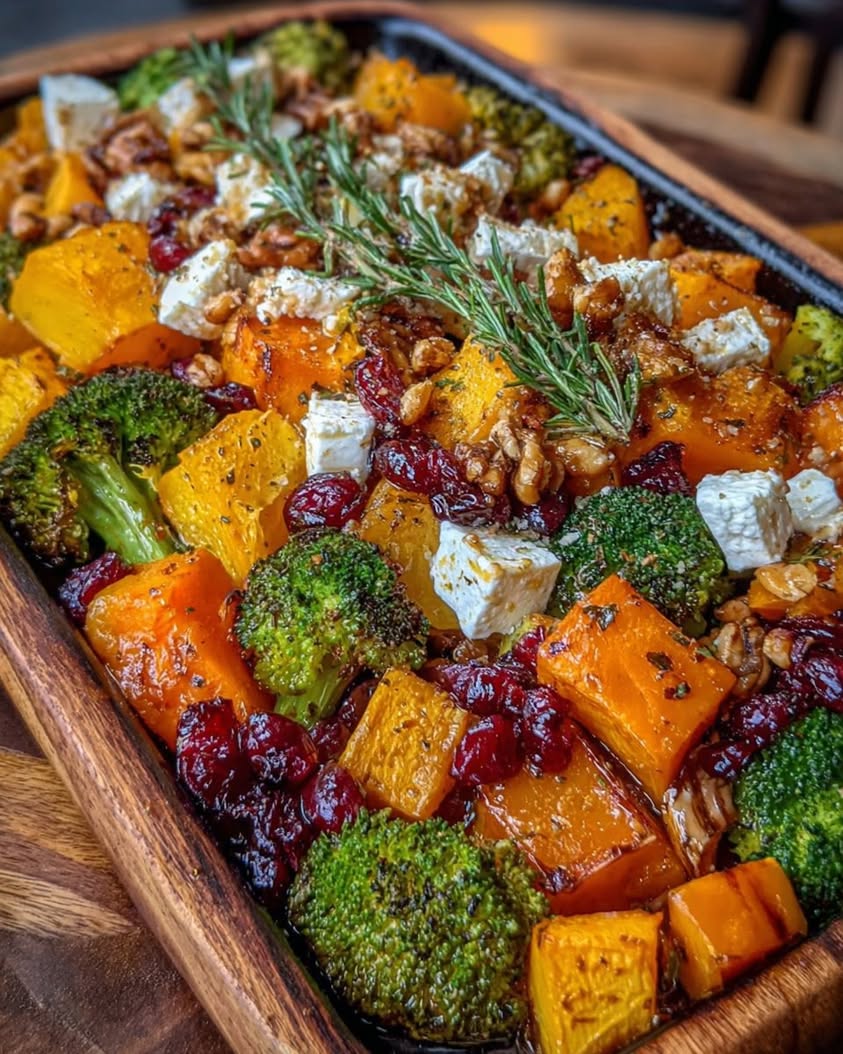
- Visual Appeal: The vibrant orange of the sweet potatoes and butternut squash, the bright green of the broccoli, the pure white of the feta, and the deep amber of the glaze create a visually stunning presentation. The glossy sheen from the honey glaze makes the vegetables look appetizing and professionally prepared.
- Skill Level Needed: This recipe is approachable for beginner cooks yet impressive enough for experienced home chefs. The techniques are straightforward, involving simple chopping, roasting, and glazing. You do not need advanced knife skills or complicated cooking methods to achieve excellent results.
- Special Equipment: You will need a large baking sheet or sheet pan, a sharp knife for cutting the vegetables, and a small saucepan for making the cranberry honey glaze. A silicone brush is optional for applying the glaze but helpful for even coating.
Recipe Overview
- Difficulty Level: This recipe earns an easy rating because it uses basic cooking techniques that any home cook can master. The most challenging part is cutting the vegetables into uniform pieces, which ensures even cooking. Other than that, you simply toss the vegetables with oil, roast them, make the glaze, and combine everything together with the toppings. You do not need to monitor the dish constantly or execute complex steps.
- Category: This dish fits perfectly as a side dish for holiday dinners, a vegetarian main course for weeknight meals, or a hearty addition to your meal prep rotation. It works equally well as a warm salad served over greens or as a standalone vegetable medley. The versatility of this recipe means you can serve it for casual family dinners or elegant dinner parties.
- Cuisine: While this recipe draws inspiration from modern American harvest cooking, it also incorporates elements from Mediterranean cuisine with the use of feta cheese and walnuts. The combination of roasted vegetables with cheese and nuts is a hallmark of many culinary traditions, from Greek to Middle Eastern. The cranberry honey glaze adds a distinctly American touch that celebrates the flavors of autumn.
- Cost: This recipe is very budget friendly, especially during the fall season when butternut squash, sweet potatoes, and broccoli are at their peak and most affordable. Feta cheese and walnuts are moderately priced but used in small quantities, making this dish economical for feeding a crowd. The cranberry honey glaze uses pantry staples like honey and dried cranberries, keeping overall costs low.
- Season: This dish is designed for autumn and early winter when root vegetables are at their peak flavor and nutritional value. The combination of sweet potatoes, butternut squash, and cranberries screams fall harvest. However, you can enjoy this recipe year round by using seasonal vegetables or frozen alternatives when fresh options are unavailable.
- Occasion: This recipe shines at Thanksgiving dinners, Christmas celebrations, and any fall gathering where you want to impress guests with a beautiful, flavorful vegetable dish. It also works wonderfully for weekly meal prep, as the flavors continue to develop overnight. You can serve it as a hearty side at potlucks or as a festive addition to your regular dinner rotation.
Why You Will Love This Recipe
First and foremost, the taste of this dish is absolutely unforgettable. The caramelization process brings out the natural sugars in the butternut squash and sweet potatoes, creating a deep, almost nutty sweetness that you cannot achieve with other cooking methods. When you combine that with the bright, tangy cranberry honey glaze, the salty feta, and the earthy walnuts, every bite is a symphony of flavors that dance on your palate. The contrast between the warm vegetables and the room temperature toppings creates a pleasant temperature experience that makes this dish feel special.
In terms of convenience, this recipe is a dream come true for busy home cooks. You can prepare all the vegetables ahead of time and store them in the refrigerator until you are ready to roast. The cranberry honey glaze can be made up to a week in advance and simply reheated before serving. The actual hands on time is minimal, mostly spent chopping vegetables and whisking the glaze together. The oven does most of the work, freeing you up to prepare other dishes or spend time with your guests.
From a nutritional standpoint, this dish is packed with vitamins, minerals, and antioxidants that support overall health. Butternut squash and sweet potatoes are excellent sources of vitamin A, which is essential for eye health and immune function. Broccoli provides vitamin C, fiber, and cancer fighting compounds like sulforaphane. The walnuts add healthy omega 3 fatty acids that support brain health, and the feta cheese offers calcium and protein. This combination makes this dish as nourishing as it is delicious.
This recipe also excels at social gatherings and entertaining. The vibrant colors and glossy finish make it a showstopper on any buffet table. Your guests will be impressed by the sophisticated flavors and beautiful presentation, yet you can tell them honestly that it was simple to prepare. The dish holds well at room temperature, making it perfect for potlucks and holiday dinners where timing can be unpredictable. Furthermore, the recipe can easily be doubled or tripled to feed a crowd without compromising quality.
Finally, the cost effectiveness and accessibility of this recipe make it a winner for any budget. All the ingredients are widely available at any grocery store, and most are pantry staples during the fall season. You can often find butternut squash and sweet potatoes on sale, making this dish incredibly affordable to prepare. The walnuts and feta are used in modest amounts, so a small package goes a long way. This means you can create a restaurant quality dish at home for a fraction of the cost.
Historical Background and Cultural Significance
The tradition of roasting vegetables dates back thousands of years to when humans first discovered that applying heat to root vegetables made them more digestible and flavorful. Ancient civilizations across Europe, Asia, and the Americas all developed their own methods of roasting vegetables over open fires. The combination of sweet and savory elements in roasted vegetable dishes has been a staple in many cultures, from the honey glazed carrots of medieval Europe to the maple roasted squash of Native American cuisine. This practice of enhancing vegetables with sweeteners and fats is deeply rooted in our culinary history.
In modern American cooking, roasted vegetables have become a cornerstone of home cuisine, particularly during the fall and winter months. The introduction of feta cheese to roasted vegetable dishes reflects the growing influence of Mediterranean flavors on American palates. Walnuts have been used in cooking for thousands of years, with evidence of their consumption dating back to ancient Persia and Greece. The cranberry, native to North America, has been used by Indigenous peoples for centuries both as food and medicine, making this recipe a celebration of cross cultural culinary exchange.
The specific combination of roasted sweet potatoes, butternut squash, and broccoli with feta and walnuts is a relatively modern creation that emerged from the farm to table movement. This culinary philosophy emphasizes using seasonal, locally sourced ingredients and preparing them in ways that highlight their natural flavors. The cranberry honey glaze represents a contemporary twist on traditional glazes, using the natural sweetness of honey and the tartness of cranberries to create a complex sauce that elevates simple vegetables into something truly special.
Regional variations of this dish appear throughout the United States. In New England, cooks might substitute maple syrup for honey and add dried blueberries instead of cranberries. Southern versions often include pecans instead of walnuts and use a sorghum syrup glaze. In the Pacific Northwest, you might find this dish made with local hazelnuts and a blackberry honey glaze. These regional adaptations demonstrate how a simple concept can be customized to reflect local ingredients and culinary traditions while maintaining the core appeal of roasted vegetables with cheese, nuts, and a sweet glaze.
Ingredient Deep Dive
Butternut squash has been cultivated in the Americas for over 5,000 years and was a staple food for indigenous peoples long before European contact. This pear shaped squash is prized for its sweet, nutty flavor and smooth, creamy texture when cooked. Nutritionally, butternut squash is an excellent source of vitamin A, providing over 450 percent of the daily recommended intake per cup. It also contains significant amounts of vitamin C, potassium, and fiber. When selecting butternut squash, look for ones that feel heavy for their size with a firm, tan colored skin free from soft spots or blemishes. Store whole squash in a cool, dark place for up to a month, or refrigerate cut squash in an airtight container for up to five days. You can substitute acorn squash or pumpkin if butternut is unavailable.
Sweet potatoes have a rich history dating back to prehistoric times in Central and South America. They were brought to Europe by Christopher Columbus and eventually spread to Asia and Africa. Sweet potatoes are nutritional powerhouses, packed with beta carotene, vitamin C, manganese, and fiber. Their natural sweetness intensifies during roasting, making them a perfect candidate for this dish. When buying sweet potatoes, choose ones that are firm, smooth, and free from cracks or soft spots. Store them in a cool, dark place but not in the refrigerator, as cold temperatures can alter their flavor. Garnet, jewel, and Japanese sweet potatoes all work well for this recipe, each offering slightly different levels of sweetness and texture.
Broccoli belongs to the Brassica family of vegetables, which includes cabbage, kale, and Brussels sprouts. It was developed from wild cabbage in the Mediterranean region over 2,000 years ago and gained popularity in the United States in the early 20th century. Broccoli is renowned for its high levels of vitamin C, vitamin K, fiber, and sulforaphane, a compound associated with cancer prevention. For this recipe, choose broccoli crowns with tight, dark green florets and firm stems. Avoid broccoli with yellowing florets or limp stems. Store broccoli in the refrigerator in a perforated plastic bag for up to a week. You can substitute cauliflower or Romanesco for a similar texture and flavor profile.
Feta cheese has been produced in Greece for thousands of years, with references to cheesemaking appearing in Homer’s Odyssey. True feta is made from sheep’s milk or a mixture of sheep and goat milk and is aged in brine, which gives it its characteristic salty, tangy flavor and crumbly texture. Feta is a good source of calcium, protein, and vitamin B12. When purchasing feta, look for blocks stored in brine rather than pre crumbled varieties, which tend to be drier and less flavorful. Store feta in its brine in the refrigerator for up to three weeks. For a milder flavor, you can use goat cheese, or for a dairy free option, try a firm tofu marinated in salt and lemon juice.
Walnuts are one of the oldest tree foods known to humans, with evidence of their use dating back to 7,000 BCE in Persia. They are the only nut that provides a significant source of alpha linolenic acid, a plant based omega 3 fatty acid. Walnuts also contain antioxidants, vitamin E, and melatonin, which may support heart health and brain function. Choose walnuts that smell fresh and nutty, not rancid or musty. Store them in an airtight container in the refrigerator or freezer to prevent them from going rancid due to their high oil content. Pecans or almonds make excellent substitutes, though they will alter the flavor profile slightly.
Cranberries are native to North America and were used by Native Americans for food, medicine, and dye long before European settlement. Pilgrims likely learned about cranberries from indigenous peoples and incorporated them into their own cooking. Cranberries are packed with antioxidants, particularly proanthocyanidins, which may help prevent urinary tract infections. For this recipe, you will use dried cranberries to make the glaze, which concentrates their tart sweetness. Look for dried cranberries without added sugar if possible, though regular varieties work fine. You can substitute dried cherries, dried currants, or even raisins for a different flavor profile. Store dried cranberries in a cool, dry place for up to six months or in the refrigerator for longer storage.
Common Mistakes to Avoid
- Overcrowding the baking sheet: When you crowd the vegetables on the pan, they steam instead of roast, preventing proper caramelization. Always use a large enough sheet pan to give each piece space. If necessary, use two pans and rotate them halfway through cooking.
- Cutting vegetables unevenly: Uniform pieces ensure even cooking. If some pieces are larger than others, the smaller pieces will burn while the larger ones remain undercooked. Take the time to cut your vegetables into similar sized chunks, aiming for about one inch cubes.
- Skipping the drying step: Wet vegetables will not caramelize properly. After washing your vegetables, pat them completely dry with a clean kitchen towel or paper towels. Any excess moisture creates steam that prevents browning.
- Not tossing vegetables halfway through: For even browning, you must flip the vegetables at least once during roasting. This ensures that all sides get exposure to the hot pan and develop those beautiful caramelized edges. Use a spatula to gently turn them over after 20 minutes of roasting.
- Adding cheese too early: Feta cheese should be added after the vegetables finish roasting. If you add it during the last few minutes of cooking, it will melt and become greasy. Sprinkle the feta on the hot vegetables right before serving for the best texture.
- Forgetting to toast the walnuts: Toasting walnuts brings out their natural oils and enhances their nutty flavor. If you use raw walnuts directly from the package, they will taste flat and lack the crunchy texture that makes this dish special. Toast them in a dry pan for 2 to 3 minutes until fragrant.
- Using too much glaze: The cranberry honey glaze is potent, and a little goes a long way. Start with half the glaze, toss the vegetables, then add more if needed. Over glazing can make the dish overly sweet and soggy.
- Not preheating the oven long enough: A properly preheated oven is crucial for caramelization. Give your oven at least 20 minutes to reach the correct temperature before putting the vegetables in. Opening the oven door too frequently also drops the temperature.
- Storing leftovers improperly: If you plan to store leftovers, keep the feta and walnuts separate from the vegetables to prevent them from becoming soggy. Add these toppings fresh when you reheat the dish for the best texture and flavor.
- Overcooking the vegetables: Different vegetables cook at different rates. Check the broccoli earlier than the root vegetables, as it can become mushy quickly. Remove tender vegetables from the pan and return the heartier ones to the oven to finish cooking.
Essential Techniques
Caramelization is the chemical process that occurs when sugars in vegetables are exposed to high heat, typically above 320 degrees Fahrenheit. This reaction creates hundreds of new flavor compounds that add depth, sweetness, and complexity to your roasted vegetables. To achieve proper caramelization, you need high heat, dry surfaces, and adequate space on the pan. The vegetables should not be piled on top of each other, and they should be tossed with enough oil to coat them evenly. You will know caramelization is happening when you see deep golden brown spots forming on the edges and surfaces of the vegetables. The smell will shift from raw to nutty and sweet, and the vegetables will shrink slightly as moisture evaporates.
Cutting vegetables into uniform pieces is more important than many home cooks realize. When all pieces are roughly the same size, they cook at the same rate, ensuring that no pieces are underdone or burnt. For this recipe, aim for one inch cubes for the sweet potatoes and butternut squash. The broccoli should be cut into florets of similar size, with the stems peeled and sliced into bite sized pieces. Use a sharp chef’s knife for clean cuts that will not crush the vegetables. A mandoline can help achieve uniform cuts, though practice is needed to use it safely. Visual cues for properly cut vegetables include pieces that look consistent in shape and size when spread on the pan.
Making the cranberry honey glaze requires careful attention to temperature and timing. Start by combining honey, dried cranberries, and a splash of water or orange juice in a small saucepan. Heat the mixture over medium heat, stirring constantly, until the cranberries soften and release their flavor. The glaze is ready when it thickens slightly and coats the back of a spoon, typically after 5 to 7 minutes of simmering. Do not let the mixture boil too vigorously, as this can cause the honey to crystallize or burn. The glaze should be glossy and fluid but not watery. Let it cool slightly before drizzling over the vegetables, as it will continue to thicken as it cools. If the glaze becomes too thick, you can thin it with a teaspoon of warm water.
Toasting walnuts is a simple but essential technique that transforms their flavor and texture. Place the walnuts in a dry skillet over medium heat and cook, shaking the pan frequently, until they become fragrant and lightly browned. This process takes about 3 to 5 minutes, depending on the size of the pieces. You will know they are done when you can smell their nutty aroma and see slight browning on the edges. Be careful not to walk away, as nuts can burn quickly. Immediately transfer the toasted walnuts to a plate to cool, as they will continue to cook from residual heat in the pan. This step can be done up to a week in advance, storing the cooled nuts in an airtight container.
Pro Tips for Perfect Roasted Fall Vegetables with Feta, Walnuts and Cranberry Honey Glaze
First, always roast your vegetables on a preheated baking sheet. Place the empty pan in the oven while it preheats, then carefully add your oiled vegetables to the hot surface. This technique gives you an immediate sear that jump starts the caramelization process and creates those coveted crispy edges.
Second, use a combination of oils for the best flavor and browning. Avocado oil has a high smoke point that prevents burning, while a small amount of olive oil adds fruity notes. Mix them together in a 3 to 1 ratio of avocado to olive oil for optimal results that will not smoke up your kitchen.
Third, season your vegetables generously with salt before roasting. Salt draws out moisture and helps create a crispy exterior. Do not be afraid to season well, as the salt will balance the sweetness of the glaze and the vegetables. You can always add more salt at the end, but it is hard to fix under seasoned vegetables.
Fourth, let the vegetables rest for a few minutes after roasting before adding the glaze. This brief rest allows the internal temperature to stabilize and the exterior to crisp up further. If you add the glaze immediately, the steam will make the glaze runny and prevent it from sticking properly.
Fifth, reserve some of the toasted walnuts and feta for garnish on top. While mixing most of the toppings through the vegetables ensures every bite has flavor, the garnish on top creates a beautiful presentation that makes the dish look professionally made. This simple trick elevates the visual appeal significantly.
Sixth, taste a piece of each vegetable before serving to check for doneness. Sweet potatoes and butternut squash should be tender enough to pierce easily with a fork but not mushy. Broccoli should be tender with some bite remaining and slightly charred edges. Adjust cooking time accordingly if needed.
Seventh, serve this dish warm or at room temperature for the best flavor. The glaze thickens as it cools, so if you serve it piping hot, it will be more fluid. Room temperature serving allows the flavors to meld together and makes the dish more forgiving for entertaining, as you do not have to worry about timing.
Variations and Adaptations
Regional variations of this dish reflect the diverse culinary landscape of the United States. In the South, cooks often substitute pecans for walnuts and use a sorghum syrup glaze that adds a distinct, molasses like sweetness. Some Southern versions include a pinch of cayenne pepper or smoked paprika for heat that contrasts beautifully with the sweet vegetables. In the Northeast, you might find this dish made with maple syrup instead of honey and local apples added to the roasting pan for extra sweetness and texture. New Englanders frequently use dried blueberries or cherries in place of cranberries for a different tart profile.
Seasonal adaptations allow you to enjoy this recipe throughout the year. In spring, substitute asparagus and new potatoes for the butternut squash and broccoli. A lemon honey glaze with fresh herbs like dill and chives brightens the dish for warmer months. Summer versions can feature zucchini, bell peppers, and cherry tomatoes with a balsamic honey glaze. For winter, add roasted Brussels sprouts and parsnips to the mix, using a pomegranate molasses glaze for a festive touch. These seasonal changes keep the recipe fresh and exciting while maintaining the core concept of roasted vegetables with cheese, nuts, and a sweet glaze.
Dietary modifications make this recipe accessible to many different eating styles. For a vegan version, omit the feta cheese and use a sprinkle of nutritional yeast for a cheesy flavor, or substitute a plant based feta alternative made from tofu or cashews. The glaze is naturally vegan as it uses honey, but you can substitute agave nectar or maple syrup if desired. For a gluten free version, this recipe is naturally gluten free as written, but always check that your dried cranberries and any spice blends are certified gluten free if celiac disease is a concern. The dish is also nut free if you omit the walnuts or substitute pumpkin seeds or sunflower seeds for a similar crunch.
Flavor variations allow you to customize this dish to your taste preferences. For a Mediterranean twist, add olives, sun dried tomatoes, and fresh oregano to the vegetables before roasting. Use a lemon herb glaze instead of cranberry honey for a brighter flavor profile. For a spicy version, add chili flakes or diced jalapeno to the glaze and use cotija cheese instead of feta. An Indian inspired version could include garam masala, turmeric, and cumin in the seasoning, with a tamarind honey glaze and a sprinkle of toasted cashews and fresh cilantro.
Texture modifications can change the eating experience entirely. For extra crunch, add a breadcrumb topping made from panko mixed with melted butter and herbs, sprinkled over the vegetables during the last 10 minutes of roasting. For a softer, more cohesive dish, mash some of the roasted sweet potato and butternut squash and serve as a base for the remaining vegetables. You can also puree a portion of the roasted vegetables and use it as a sauce beneath the whole vegetables for a more elegant presentation.
Presentation alternatives make this dish suitable for different occasions. For a casual weeknight dinner, serve the vegetables in a large family style bowl with toppings scattered on top. For holiday entertaining, arrange the vegetables on a platter in concentric circles, alternating colors for visual impact. Individual servings in small cast iron skillets or ramekins make for an impressive dinner party presentation. You can also serve this dish as a salad by placing the warm vegetables over a bed of arugula or mixed greens, which will wilt slightly from the heat.
Serving and Presentation Guide
Plating this dish beautifully requires attention to color contrast and height. Start with a warm serving platter or a large wooden board that provides a neutral background for the vibrant vegetables. Arrange the roasted vegetables in a single layer, slightly overlapping but still showing the individual pieces. Drizzle the cranberry honey glaze in a zigzag pattern over the vegetables, then sprinkle the crumbled feta evenly across the top. Finish with the toasted walnuts scattered generously over everything, and add a final light drizzle of glaze for shine.
Garnishing ideas can take this dish from simple to spectacular. Fresh herbs like rosemary sprigs, thyme leaves, or chopped parsley add a pop of green that contrasts with the orange and gold vegetables. A sprinkle of flaky sea salt on top just before serving enhances the flavors and adds a pleasant crunch. Edible flowers like nasturtiums or chive blossoms add an elegant touch for special occasions. A drizzle of good quality balsamic reduction or extra virgin olive oil can also add visual appeal and complexity.
Traditional accompaniments for this dish include roasted meats like chicken, turkey, or pork, which complement the sweet and savory flavors perfectly. It also pairs well with grain based dishes like quinoa, farro, or wild rice, which soak up the extra glaze and dressing. For a complete vegetarian meal, serve alongside a hearty lentil soup or a crusty sourdough bread to round out the meal. The dish can also be served as a warm salad on a bed of arugula with a simple vinaigrette.
Modern serving suggestions include using this dish as a stuffing for roasted acorn squash halves or as a topping for flatbreads and pizzas. You can also serve it inside lettuce cups for a low carb option or as a filling for tacos with a drizzle of crema. For brunch, serve this as a side alongside scrambled eggs or frittata for a hearty morning meal. The versatility of this dish means you can let your creativity guide you in how you serve it.
Temperature considerations are important for the best eating experience. This dish is best served warm, ideally within 15 minutes of finishing the glaze application. However, it also holds well at room temperature for up to an hour, making it perfect for buffet style serving. If you need to reheat the dish, place it in a 350 degree oven for 10 minutes to restore some crispness. Avoid microwaving, as this will make the vegetables soggy and the feta rubbery.
Portion control tips help you serve the right amount for your group. As a side dish, plan for about one cup of the finished dish per person. As a main course for vegetarians, increase the portion to one and a half to two cups. When serving at a holiday meal with many other dishes, you can reduce the portion to three quarters of a cup per person. The recipe as written serves six as a side dish but can easily be adjusted for your specific needs.
Wine and Beverage Pairing
Wine pairings for this dish should complement the sweetness of the vegetables and glaze while balancing the tangy feta and earthy walnuts. A crisp, unoaked Chardonnay works beautifully, as its acidity cuts through the richness of the honey glaze. For white wine lovers, a dry Riesling or a Pinot Gris from Alsace offers floral notes that echo the honey and cranberry flavors. If you prefer red wine, a light bodied Pinot Noir with its red fruit flavors and low tannins pairs wonderfully without overwhelming the vegetables. A Gamay from Beaujolais is another excellent option, offering bright acidity and subtle earthy notes that match the walnuts.
Non alcoholic alternatives are equally satisfying with this dish. Sparkling water with a splash of cranberry juice and a squeeze of lime mimics the tartness of the glaze and cleanses the palate between bites. A non alcoholic mulled cider, served warm or cold, echoes the autumnal flavors of the dish. For a sophisticated option, try a non alcoholic sparkling wine or a shrub made with apple cider vinegar and honey. Herbal teas like chamomile or mint provide a calming contrast to the robust flavors of the meal.
If you are serving this dish for brunch, consider coffee or tea pairings. A dark roast coffee with chocolate notes complements the caramelized vegetables and walnuts beautifully. For tea lovers, a smoky Lapsang Souchong or a robust Assam stands up to the strong flavors of the dish. Chai tea with its warming spices like cinnamon and cardamom echoes the optional spices you might add to the glaze. Iced tea with a hint of honey and lemon is a refreshing option for warmer days.
Temperature considerations for beverages are worth noting. White wines should be served chilled but not ice cold, as extreme cold dulls their flavors. Red wines benefit from being served slightly below room temperature, around 60 to 65 degrees Fahrenheit. Non alcoholic beverages can be served over ice for a refreshing contrast to the warm vegetables. If serving hot beverages like coffee or tea, make sure they are hot but not scalding to avoid overpowering the delicate flavors of the dish.
Serving suggestions for beverages include offering a wine flight with small pours of three different wines so guests can experiment with pairings. For a non alcoholic option, create a mocktail bar with various juices, sparkling water, and garnishes so guests can customize their drinks. When serving this dish at a holiday meal, consider a signature cocktail like a cranberry rosemary spritzer that incorporates flavors from the dish itself.
Storage and Shelf Life
Proper storage methods are essential for maintaining the quality of this dish. If you have leftovers, remove the feta and walnuts before storing, as these toppings become soggy and lose their texture when refrigerated. Place the vegetables in an airtight container and refrigerate for up to four days. Store the feta and walnuts separately in their own containers. The cranberry honey glaze can be stored in a jar in the refrigerator for up to two weeks.
Temperature requirements for storage are straightforward. The vegetables must be cooled to room temperature before refrigerating to prevent condensation, which causes sogginess. Do not leave the dish out at room temperature for more than two hours, as this increases the risk of foodborne illness. The refrigerator should be set to 40 degrees Fahrenheit or below for safe storage. If you plan to freeze the dish, use a freezer safe container and leave some headspace for expansion.
Container recommendations depend on how you plan to use the leftovers. Glass containers with tight fitting lids are ideal because they do not absorb odors and allow you to see the contents. For freezing, use containers specifically designed for freezer storage to prevent freezer burn. Portion the vegetables into individual servings for easy reheating. Avoid using metal containers for storing the glaze, as the acidity can react with the metal and affect the flavor.
Signs of spoilage to watch for include any off smells, mold growth, or changes in texture like excessive sliminess. The vegetables should smell fresh and sweet, not sour or fermented. If the feta develops an ammonia like smell or becomes excessively slimy, discard it. The walnuts may become rancid, which you can detect by a bitter or unpleasant smell. When in doubt, throw it out to be safe.
Reheating instructions are important for preserving the quality of leftovers. The best method is to reheat the vegetables in a 350 degree oven for 10 to 15 minutes, which restores some of the caramelized edges. You can also reheat them in a skillet over medium heat, stirring occasionally, until heated through. Avoid microwaving, as this will make the vegetables soggy and the glaze watery. Add the feta and walnuts fresh after reheating for the best texture.
Freezing guidelines can extend the shelf life of this dish significantly. You can freeze the roasted vegetables without the toppings for up to three months. Place the cooled vegetables on a baking sheet in a single layer and freeze until solid, then transfer to a freezer bag or container. This prevents the pieces from freezing together into a solid block. To use, thaw overnight in the refrigerator, then reheat as directed. The glaze can also be frozen in an ice cube tray for easy portioning.
Make Ahead Strategies
A prep timeline helps you manage your time effectively when making this dish for a special occasion. Up to three days before serving, you can wash, peel, and chop all the vegetables and store them in separate containers in the refrigerator. The cranberry honey glaze can be made up to two weeks in advance and stored in the refrigerator. The walnuts can be toasted up to one week ahead and kept in an airtight container. On the day of serving, simply toss the vegetables with oil, roast, glaze, and top with the prepared components.
Storage between steps requires careful attention to prevent quality loss. Chopped vegetables should be stored in airtight containers with a paper towel to absorb excess moisture. Replace the paper towel if it becomes wet. The glaze should be stored in a glass jar and brought to room temperature before using, as it will be too thick to drizzle when cold. Toasted walnuts should be completely cooled before storing to prevent condensation from making them soggy. Keep all components in the refrigerator except the walnuts, which can be stored at room temperature.
Quality impact assessment is important when making this dish ahead of time. The vegetables will lose some of their crispy edges when reheated, but Print
Caramelized Butternut Squash, Carrots, Broccoli & Sweet Potato with Feta, Walnuts & Cranberry-Honey Glaze
- Total Time: 45 minutes
- Yield: 4
Description
A vibrant roasted vegetable medley with a sweet-tart cranberry-honey glaze, topped with salty feta and crunchy walnuts. Perfect for a festive side dish or a hearty vegetarian main.
Ingredients
- 1 small butternut squash, peeled, seeded, and cut into 1-inch cubes
- 3 medium carrots, peeled and cut into 1-inch pieces
- 2 cups broccoli florets
- 1 large sweet potato, peeled and cut into 1-inch cubes
- 3 tablespoons olive oil
- Salt and pepper to taste
- 1/2 cup dried cranberries
- 1/4 cup honey
- 2 tablespoons apple cider vinegar
- 1/4 cup crumbled feta cheese
- 1/4 cup chopped walnuts
- Fresh parsley for garnish (optional)
Instructions
- Preheat the oven to 425°F (220°C). Line a large baking sheet with parchment paper.
- In a large bowl, combine butternut squash, carrots, broccoli, and sweet potato. Drizzle with olive oil, season with salt and pepper, and toss to coat evenly.
- Spread the vegetables in a single layer on the prepared baking sheet. Roast for 25-30 minutes, flipping halfway through, until tender and caramelized.
- While vegetables roast, prepare the glaze: In a small saucepan, combine dried cranberries, honey, and apple cider vinegar. Bring to a simmer over medium heat, then reduce heat and cook for 2-3 minutes until cranberries plump and mixture thickens slightly. Remove from heat.
- Transfer roasted vegetables to a serving platter. Drizzle with the cranberry-honey glaze and toss gently to coat.
- Top with crumbled feta cheese and chopped walnuts. Garnish with fresh parsley if desired. Serve warm or at room temperature.
Notes
You can customize the seasonings to taste. For extra warmth, add a pinch of cinnamon or smoked paprika to the vegetables before roasting. Walnuts can be toasted for added crunch.
- Prep Time: 15 minutes
- Cook Time: 30 minutes
- Method: Main
- Cuisine: American